Monthly Archives: August 2017

Sustenance

Sustenance does not come only from food and drink. In my own food memory, I am sustained by vivid recall of meals I had, with whom I had them, the service and the conversation and the ambience of the room; sometimes, though, when I remember such an event, I have only a vague recall of what I actually ate – only that the meal itself was an indispensable part of the memorable event.

Natalie Chanin’s “Friends of the Café” dinners at her Alabama Chanin factory in Florence (www.alabamachanin.com) provide many levels of sustenance – only a part of which comes from the food and drink and the amazing chefs that create them.

My most recent Florence dinner was helmed by Asha Gomez, a native of India who has been in the United States for several decades and who has been creating food memories in Atlanta for most of the past ten years.

The Gomez “Friends of the Café” dinner on a Thursday in August anticipated the beginning of Billy Reid’s annual “Shindig” weekend. Reid, the other internationally acclaimed fashion designer based in Florence (www.billyreid.com), hosts a late summer event featuring his clothing line, concerts and screenings, and chefs and meals in various venues that create a “go to” weekend for arts, fashion, food, camaraderie, and innovation in the Shoals.

Alabama Chanin’s pre-Shindig dinner is always sold out and includes the regulars who travel from near and far for her dinner as well as fashion, food, and entertainment professionals in town for Shindig.

The sustenance comes from being in a place where forward-thinking Southerners and others are gathered together and one realizes that – despite the headlines and political turmoil and despite the international joke that Washington, D.C. has become – we are not alone.

The sustenance comes from the “Friends” events’ long-standing relationship with Southern Foodways Alliance (www.southernfoodways.org), which is the beneficiary of proceeds from most of the dinners. John T. Edge, Director of SFA, is a regular attendee at the dinners and his passionate introduction to the recent meal and to Asha Gomez was a masterful and positive statement on current events, a response to the “immigrant” issue as exemplified by Gomez, and a positive evocation of the forward-thinking and amalgamated South “just over the horizon – always just over the horizon.”

Gomez’s book on cooking, My Two Souths: Blending the Flavors of India into a Southern Kitchen (Running Press, 2016), is an honestly detailed journey into her life and how her two souths, southern India and the American South, have created the sensibility of her aesthetic and cuisine. In her opening comments preceding the dinner, she balked at the word “fusion” – calling it “the other f-word.” Her food is personal, evolving from her roots in Kerala, India, and ever-expanding with the discovery of new foodways, new ingredients, and the commonalities contained therein. For Gomez, Southern fried chicken was nothing new; she brought her own strong tradition of fried chicken from Kerala.

Gomez claims both Southern India and the Southern U.S. as “home” and her food is a reflection and immersion into the rich compatibility of those shared homes, shared and unique flavorings, and Gomez’s personal interpretation of all of it.

Gomez understands why someone like me might be skeptical about Indian cuisine. I have been known to say that it is my least favorite of the international cuisines readily available in the States. I like the taste profile, the ingredients, and the spices of Indian cuisine well enough but have never been enchanted with its presentation in many Indian restaurants I have tried – usually at the urging of more enthusiastic friends. Gomez knows that the cuisine of her homeland is not represented by “the $4.99 buffets” and other iterations common to the American landscape and seeks to exalt it in a more authentically representative manner.

Sustenance comes in meeting new friends and getting better acquainted with others. My friend Cindy and I were seated at a table full of food professionals in town for Shindig. I was seated next to John T. Edge and across from Vanessa and Rick, a lovely Florence couple, and the conversation was lively and far-reaching. “I hear you’re in town to sign your 300th book,” I said to Edge. “Only 250, I think,” he blithely replied (actually, it’s over a dozen). John T. Edge’s latest, The Potlikker Papers (Penguin Press, 2017), is billed as “A Food History of the Modern South.”

Cindy was sitting beside a group of pastry chefs and other food professionals from New Orleans and the hilarity was pretty much non-stop off to my right side.

The evening commenced with hearty passed hors d’oeuvres including black pepper and black salt spiced roasted cashews, fry bread with mint chutney and quick pickled carrots, and curry chicken samosa pockets. The featured beverage, the “Muscadine Vine,” was a combination of muscadine wine, vinho verde. Prosecco, lime, and mint which successfully tamed and enhanced the tricky sweetness of muscadine wine. 

A first course of Sunday Vegetable Stew featured chunky vegetables in a lovely coconut milk base. A Kerala Fish Curry with kichidi grits and tempered mustard oil was the second offering. The fish beautifully rested on a lush bed of perfectly seasoned and perfectly cooked grits and the sauce melded the flavors in a pleasing manner.

Beef Biryani was the third course, served family style. In My Two Souths, Gomez describes biryani as a “celebration dish” and describes the traveling biryani chefs of India as being similar to American barbecue pit masters. Her version for the recent dinner featured chunks of beef over rice with an intensely diverse panoply of spices and seasonings. Each course was accompanied by a complementary wine pairing.

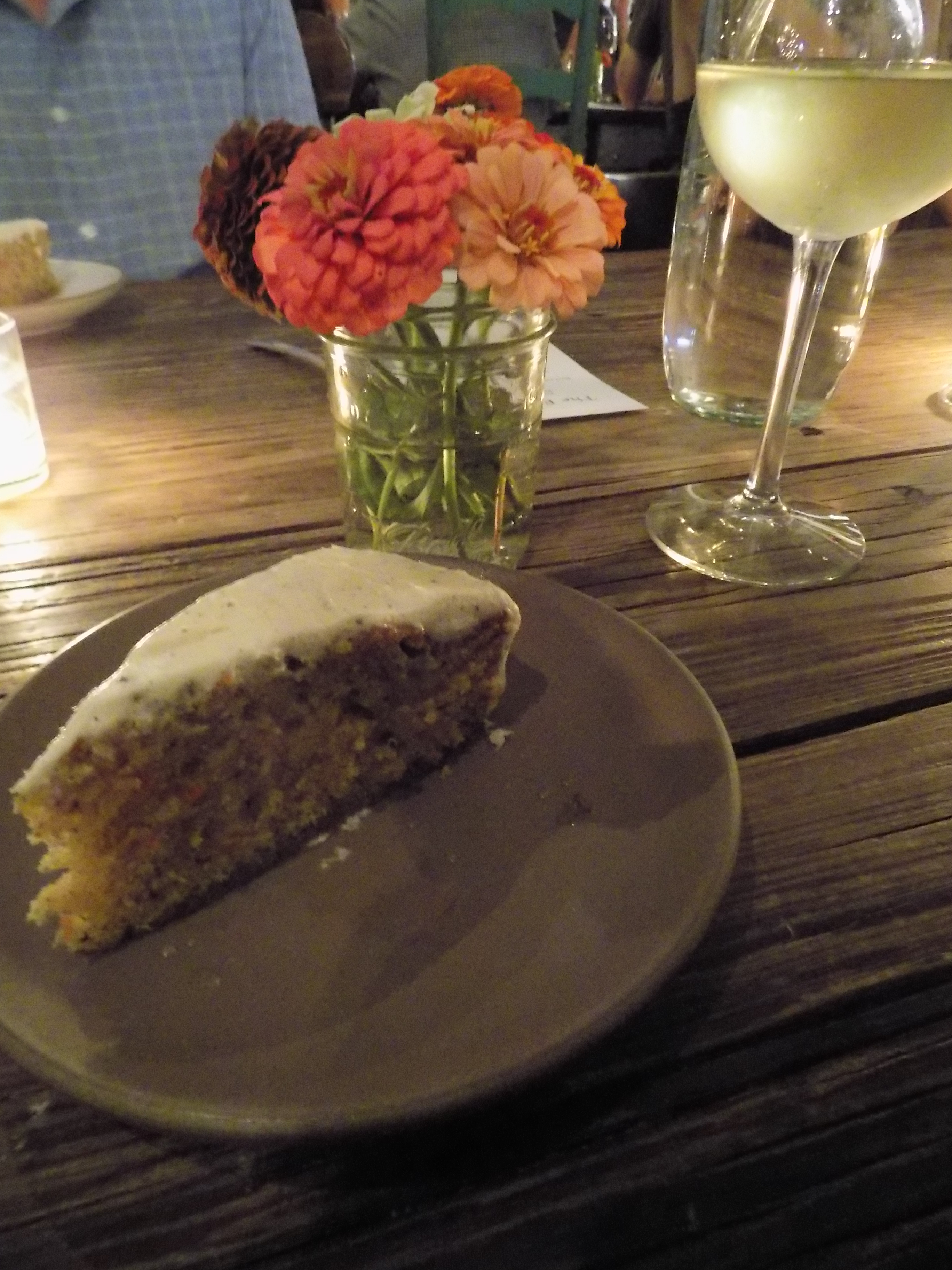
After three very hearty and satisfying dishes, the undisputed star for the diners at my table seemed to be the dessert course. The Three Spice Carrot Cake arrived to a chorus of delighted responses and the first bite did not disappoint.
The sustenance of the evening came to fruition with the sustenance of the actual meal that brought us all together in a spirit of community and enlightenment. During Edge’s opening remarks about the Southern community being forged throughout the region by forward-thinking people of all stripes, Natalie Chanin quipped about it being found “in a former tee-shirt factory in the industrial section of Florence, Alabama.” She was right. The “Friends of the Café” events are forging that community three or four times a year at her factory and in events like Shindig.

I always leave these events with rejuvenated inspiration. I admit that I still have a somewhat wary relationship with Indian cuisine, but Asha Gomez has opened my mind and broadened my perspective. Indian restaurants may not become my first dining choice, but I will eagerly consume and find sustenance in the boundary-breaking cuisine of Asha Gomez. 

Taste of New Orleans 2017

Bright Star (www.thebrightstar.com), a 2010 James Beard “American Classics” award-winner, has always had a touch of New Orleans and Creole cuisine on its daily menu. Opened by Greek immigrant Tom Bonduris in 1907 when Bessemer – just thirteen miles from downtown Birmingham – was a bustling factory town in its own right, the restaurant is designated as the oldest restaurant in Alabama. The family-owned stalwart, which has been owned and operated by Jim and Nick Koikos since 1966, is a prime example of Birmingham’s culinary tradition of Greek-flavored restaurants with deep Southern roots.

Bright Star has a classic “meat and three” menu by day and transforms into more upscale dining for evening service. It is known for its seafood. People unfamiliar with Birmingham often don’t realize that the city is only a few hours from the Gulf and daily deliveries of fresh seafood are commonplace in area restaurants. Gulf shrimp, snapper, and crab are menu features and fried snapper throats are a house specialty at the Bright Star. The Greek-style beef tenderloin is another popular offering and the restaurant has one of the best seafood gumbos around.

About five or so hours down I-59 from Bessemer is New Orleans. A Bright Star tradition since 1990 has been the annual “Night in New Orleans” event in which a guest chef from a New Orleans restaurant takes over the Bright Star kitchen to offer a special menu of that chef’s Louisiana-influenced dishes.

“Night in New Orleans” usually occurs in August and past guest chefs include Jamie Shannon and Tory McPhail of Commander’s Palace, Richard Bickford and Marcus Woodham of Tujaque’s, and Jared Tess of John Besh’s Luke.

For the 2017 edition, the Bright Star staff pulled out the beads and featured a special menu from Thomas Finch, Executive Chef of Cellardoor (www.cellardoornola.com), a newish restaurant in a circa-1830s building on Lafayette Street in the Central Business District.

Finch and Cellardoor are new to me but he’s a native of the New Orleans area, from the North Shore of Lake Pontchartrain around Slidell.  He has done his requisite term of service in the Commander’s Palace kitchen and has picked up knowledge in culinary school and around the world.

As is usual for the New Orleans event, the Bright Star offered a two-sided menu. One side featured Bright Star classics like Greek-style snapper, Greek-style tenderloin, Greek-style chicken, and Snapper Almondine along with gumbo, crab claws, and shrimp cocktail and a selection of the restaurant’s famous pies.

Chef Finch’s offerings included appetizers of Crispy Oyster and Pork Belly Rockefeller and Soft Shell Crab Bisque, and a Creole Tomatoes and Crab Boil Mozzarella Salad. The chef’s featured entrees were Cracklin’ Crusted Red Snapper, Gulf Shrimp Lafayette, and BBQ Braised Boneless Beef Short Ribs.

I opted for the oyster and pork belly appetizer which was a pleasing line-up of crisp fried oysters and braised belly. The “Rockefeller” sauce was a modern take on a traditional classic – a green puree spread generously on the plate.

The tastes of New Orleans were prevalent in the entrée. I ordered the red snapper which was generously topped with brown butter poached lobster and presented over a creamy smooth salsa verde. This dish is where the true complexity of New Orleans cuisine was capsulized with a nice level of spice and a multitude of tastes popping forth in each bite. The crispy snapper crust complemented the mild and tasty meat and all was enhanced by the rich sweetness of the lobster.

Chef Finch’s dessert offering was Oreo Beignets. The classic tradition of the New Orleans beignet was modified with an Oreo twist, full of chocolate flavor and dusted with powdered sugar. The plate of three beignets arrived on a brandy praline sauce with a scoop of vanilla ice cream.

The Bright Star has been a family tradition in my family for decades. It’s nice to grab the opportunity to share in the Koikos family’s “Night in New Orleans” tradition every few years. 

In a Summer without Peaches

This year’s first trip down to Chilton County to get peaches at Jimmie’s Peach Stand on Highway 82 was delayed a couple of weeks; it usually happens on Mothers’ Day weekend but when I arrived at the stand near the end of May there were few baskets left for the day. Mrs. Harrison and her son, Lynn, told me their peach crop was going to be truncated this year.

According to news reports, the same sparsity occurred throughout the 2017 Southern peach crop.  I had worried about the effect that a late brutal cold snap might have on this year’s peaches but the Harrisons assured me that it had not been that but the lack of enough cold weather in the 2016-17 winter.

So, I bought all of the peaches the stand had left that day to try to satisfy the promises I had made to people in North Alabama.

For years, I have tried to save a Jimmie’s peach to have on Labor Day night. The people at Jimmie’s said this year’s crop would likely be finished by mid-June; it usually lasts until the end of July and has been known to go deep into August. I promised to make one more trip to Chilton County before the stand closed for the season; I never made it back down but the one basket of Jimmie’s peaches I had this year was as delicious as always and quickly gone.

In the meantime, I tried to satisfy my peach cravings with the offerings of the Tennessee River Valley closer to my house and by trips to the Saturday morning Pepper Place Market and the Alabama Truck Farmers Market in Birmingham. Often, when I got to Pepper Place, the vendors with peaches were sold out early in the day due to smaller than usual supplies.

And the prices went up – sometimes drastically – for what peaches there were.

My favorite Tennessee River Valley peach vendor, Isom’s in Athens, was a no-show this year at the Thursday evening Greene Street Market that I frequent in Huntsville. I settled for a couple of other Greene Street vendors with peaches but was disappointed in the product. So far I’ve had the best luck with Reeve’s Peach Stand on highway 36 outside Hartselle.

I haven’t seen a single local fig this year but that has become commonplace. My friends with fig trees have been lamenting the lack of figs for several years now.

My time spent in my own yard has been limited during the warm season due to travel back and forth to Birmingham but the drought ended this summer and my back yard, which is usually pretty hopeless by the heat of August, is still lush and green. The grass is being cut weekly and needs it more often than that.

That very late freeze in the spring killed off some of the house plants that had already been moved outside and many of the outside plants were already in bud and bloom when the freeze got them so the schedule has been off this year. The Brunson begonia, an ancient begonia that I grew from cuttings friends gave me several years ago, was a casualty of the freeze as were a schefflera and nine-foot ficus, but other things sprang back to life, I acquired new plants, and “volunteer” plants filled the gaps.

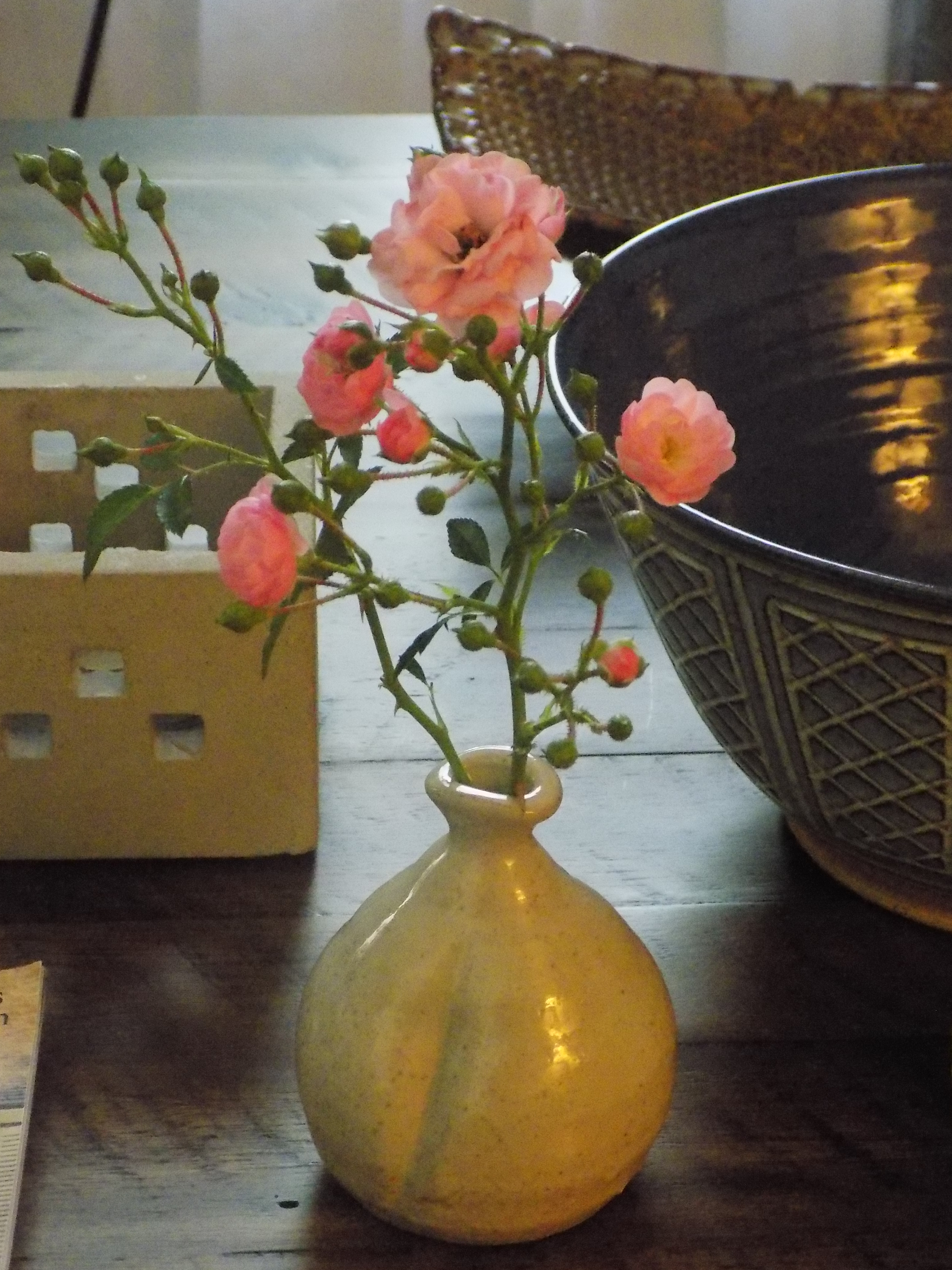
My grandfather’s wild rose took the freeze as a minor setback and then took off with a vengeance. Its blooms and buds have occupied my back yard and occupied a small bud vase on the coffee table in the living room all season. Another wild rose at the back gate that my friends Scott and his daughter Cecilia foraged with me from the lake across the street from their house has had to be pruned back several times already; it produced exactly one bloom this year, which is exactly three less than it produced last year – but it is still a welcoming and lively green and thorny thing outside the gate.

The small beds and containers in the front yard recovered quickly after the freeze and have reemerged more prolific than ever. A pony-tail palm that I have nurtured for almost twenty years in the same concrete container given to me by my Granddaddy Harbison almost thirty years ago lives in the house most of the year and had just been moved outdoors when the freeze hit while I was out of town. I had given up on it but now it seems rejuvenated by its near-death experience and is coming back even more elegantly than before.

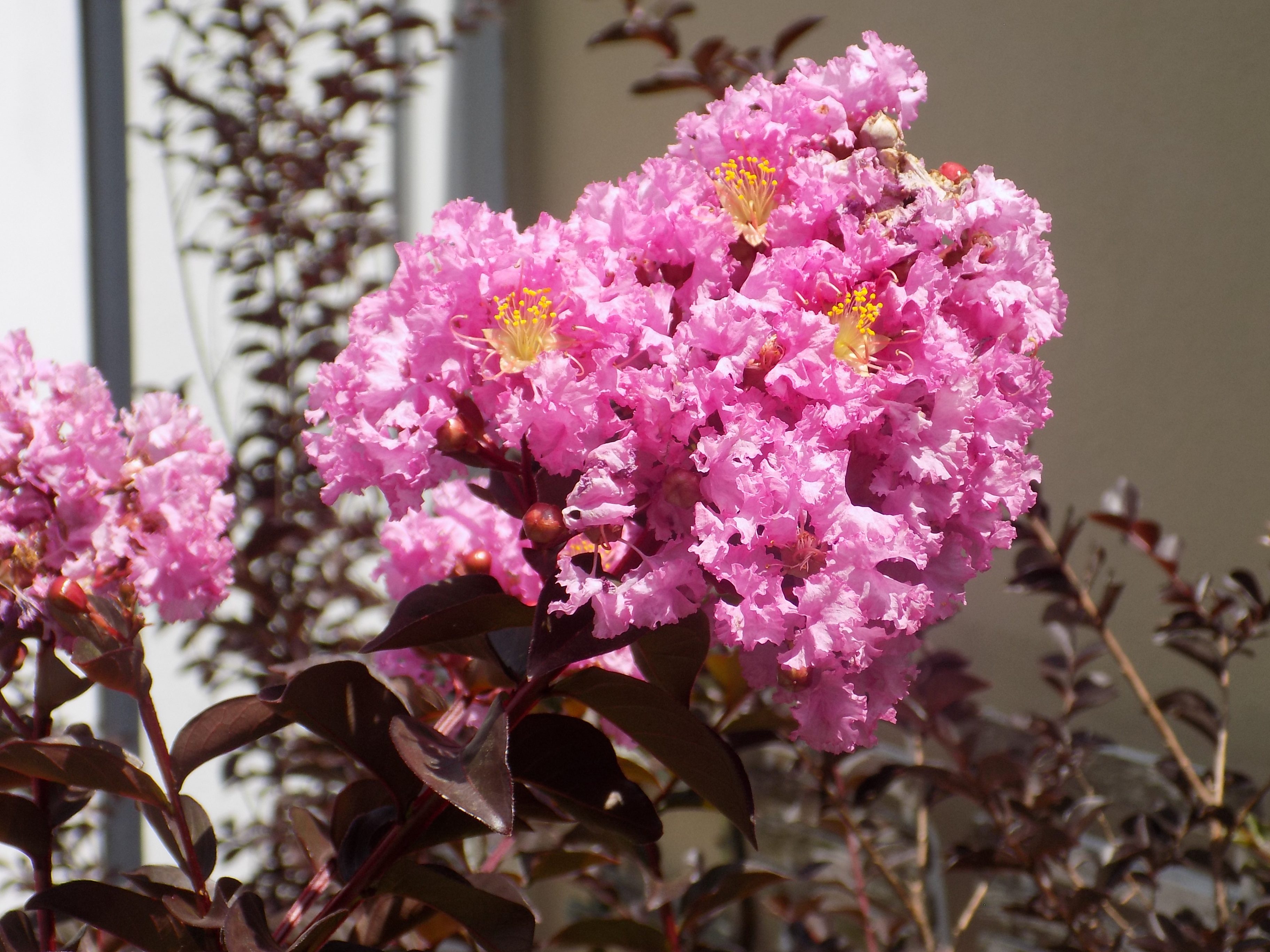
The four crape myrtles outside the back door were flourishing until the freeze killed them back; they have only just now recovered and begun to bloom. The Rose of Sharon – which has become a tree – is still full of white blooms but is cowered by the neighbor’s towering cherry tree which encroaches on its sunlight. My Rose of Sharon seems to be dying away slowly. I sit and wonder how to address the situation: My neighbor loves her cherry tree and it puts on a magnificent show for the two or three weeks it is in bloom in early spring. I appreciate the opportunity to share the view and shade as it overhangs my back fence.

But it is becoming very evident that my Rose of Sharon can’t compete much longer and I contemplate how to fill in the gap in the back corner of my yard that its loss will create.

The season’s greatest surprise, though, is the redbud that I picked up at a plant giveaway at Mother’s church over a year ago. It was essentially a stick in the ground with one struggling leaf when I got it. I put it in my back room with a lot of light and nursed it through the winter with no success. I moved it outside and it was trying to bud until it became another of the casualties of that late freeze.

It sat there, in its container, in the corner of the yard by the house like a dead stick because I didn’t have time to get rid of it. The guy who cuts my grass assured me that there was no hope. By June the little redbud began to bud and now it’s flourishing. I think I’ll let it winter inside for one more year and put it in the ground next spring. 

My time enjoying my little postage stamp of yard has been limited this year, but it still has provided hours of stolen pleasure with many weeks to go. I’m already hatching plans for next year’s improvements and looking forward to next summer being one with an abundance of peaches to savor; I will have to make up for my summer without peaches.

Sam Shepard (1943-2017)

  At the start of my directing classes, I often mention a quote by Sam Shepard that I read somewhere a long time ago. The playwright says that what he likes about live theatre is the same thing he likes about music: “It goes out into the air,” he says, “and it disappears.”

The first show I directed in graduate school was Shepard’s “Fool for Love” and when I was a young director starting out I said that I would be happy to direct nothing but Sam Shepard plays for the rest of my career.

That didn’t happen and I did broaden my horizons but I kept close track of Shepard as both a playwright and as an actor and looked for the opportunities to pull his plays into the classroom when I was a teacher. I only directed one more Shepard play, “Action,” for the public; in that play, a roasted Thanksgiving turkey is torn apart and a raw fish appears in a tub of water. In True West, radios, toasters, and typewriters are beaten to a pulp with a golf club. Shepard’s plays are demons to prop.

I frequently use Shepard’s plays and monologues in acting and directing classes and still harbor a desire to direct and act in his long monologue, “Killer’s Head,” in which a blind-folded guy strapped in the electric chair rambles on about horses and the blue pickup truck he plans to buy today.

I plan to pair Shepard’s True West with Suzan-Lori Parks’s Topdog/Underdog in my fall directing class. It seems to be an interesting project for analysis – two plays exploring brothers in conflict.

When I heard about Shepard’s death, at 73, a few days ago, I felt like an old friend was gone. My first memories of Shepard are probably from reviews of off-off Broadway productions in the Village Voice in the early ‘70s. I think the first time I heard about Patti Smith was when she and Shepard had collaborated on the play Cowboy Mouth. In addition to writing plays, Shepard was an erstwhile drummer for the Holy Modal Rounders and co-wrote with Bob Dylan. His plays sounded like hallucinations of American life, of family life, of the lie of the American dream; they sounded like the kinds of statements I wanted to bring to life as a director.

When I began to read those early plays, I was not disappointed. They are full of humor and pathos, complex and transient characters who might live in an altered reality just a few blocks away, and images that never leave the memory.

Shepard’s popularity spread as much due to coolness of character and nonchalance to increasing fame as to the skill and beauty of his writing. No one else could wear jeans and a tee with such effortless style. The camera loved him and it was inevitable that he would become a strong presence in film. His face, the squint, the shock of brown hair that he constantly pushed back, the crooked teeth that seemed to add to the appeal rather than diminish it, and his lanky gait made him the logical subject for photographers like Bruce Weber (whose portrait of Shepard illustrates this essay).

He was ornery, opinionated, and cantankerous, even when he was young. He took advantage of his aging and a changing society around him to become even more of a character. “I don’t have a computer,” he said. “I don’t have an Internet. I don’t have the e-mail. I don’t have any of that shit.”

His plays are a joy for actors and directors because he leaves so much room to explore, so much acreage for the imagination to roam. There are no answers, I imagine him saying, and that’s the answer.

One of the most enduring Shepard images – in plays and films full of enduring images – is the tale of the eagle and the tom cat that ends Curse of the Starving Class. The eagle and the tom cat are fighting over lamb testes and the eagle lifts the cat into the air:

…They fight like crazy in the middle of the sky. That cat’s tearing his chest out, and the eagle’s trying to drop him, but the cat won’t let go because he knows if he falls he’ll die. …And the eagle’s being torn apart in midair. The eagle’s trying to free himself from the cat, and the cat won’t let go. …And they come crashing down to the earth. Both of them come crashing down. Like one whole thing.

In Shepard’s works, like in Harold Pinter’s plays, the playwright introduces an outsider into the dysfunction who tries to find some logic and order in the turmoil and often just confuses things further.  Shepard’s Pulitzer Prize-winning Buried Child memorably uses this device and Martin, May’s hapless date, serves that purpose in “Fool for Love.”

In “Fool for Love,” the bed in the middle of the room creates the literal and figurative obstacle between the doomed lovers, Eddie and May. They bicker and fight and embrace under the watchful but distracted eye of a spectral Old Man who may be their common biological father.

“HEEZ MY HAAAAAAAAAAAAAAAART!!!” Beth wails about the man who almost killed her in A Lie of the Mind.

Sam Shepard wrote plays in which the love spiral and the death spiral are often indistinguishable.

Sam Shepard has gone out into the air now, and disappeared. His plays will be around as long as theatre-goers like a challenge.