Tag Archives: Alabama music

Lee Bains

Lee Bains | photo by Rick Journey

I love words. The first thing I noticed when I discovered the music of Lee Bains and the Glory Fires was Bains’s masterful use of language in lyrics. I was first drawn to the music by a title, actually: Their 2012 debut album is called There Is a Bomb in Gilead. Growing up in Alabama, attending a Baptist church, reading the Bible, that title’s play on the much-recorded spiritual “There Is a Balm in Gilead,” from a passage in the book of Jeremiah, struck a chord and I had to check it out. Now, in 2026, those lyrics from fourteen years ago seem especially prescient for the current Netanyahu/Trump-driven mess in the Middle East. It begins:

Children of Abraham, don’t say you ain’t been warned,
For there will come a burning day.
Strait are the checkpoints to your enemy’s house,
And narrow is the way.

Bains’s hard-driving and unapologetic lyrics continue to be front and center in music that Rolling Stone describes as “Southern Gospel Punk.” After … Bomb in Gilead, other infectious albums and those addicting lyrics followed: Dereconstructed (2014); Youth Detention (Nail My Feet Down to the Southside of Town) (2017); Live at the Nick (2018); and Old-Time Folks (2022).

Lee Bains is a native of Birmingham, now living in Atlanta, and when he’s not touring with his music, he’s working as a handyman. His working class Southern roots inform his writing and his authentic, unfettered, and progressive resistance gives voice to the things that many Southerners are thinking but some may be hesitant to say. In “We Dare Defend Our Rights,” his response to Alabama’s state motto (which was adapted in 1939 by Marie Bankhead Owen, a “Lost Cause” advocate, in a contentious mood), he shout/sings “Show me what you can build up / Show me what you can burn down.” In songs like “God’s A-Working, Man” and “(In Remembrance of the) 40-Hour Week,” he extols the virtues and laments the hardships of those who actually work hard for the money. I’ll admit that I basically stopped keeping up with new bands around the time Talking Heads and Television split up, but Bains’s music hits me in a visceral way; it’s energizing.

In 2021, Bains accomplished a bit of a writing coup when several of his poems – not to be confused with his lyrics – were published as part of a photo essay called “Work Lunch” in The New Yorker. Now, those poems will be published as part of his upcoming book of poetry titled Work Lunch (Hub Press; publication date: 10/13/2026). I suggest you preorder it now.

In the meantime, Bains has a new live solo album, Free South 2025, that was just released. His international tour for the new album kicked off with a performance at Seasick Records in Birmingham’s Lakeview District on August 7. By the time this essay is posted, he’ll be performing in Norway and traveling on to Sweden and the United Kingdom before returning to the U.S., launching his book, and going back on tour with his solo music. See www.thegloryfires.com for the tour schedule.

Lee Bains at Seasick Records | photo by Rick Journey

The Seasick event was an intimate affair, a homecoming of sorts, and Bains seemed at ease with people he knew as they gathered among the stacks of vinyl. Like Springsteen, he often introduces his songs with personal reflections and occasional battle cries – and he’s not shy about sharing his points of view. His guitar work is outstanding and his songs are delivered with grit, energy, and passion. The set kicked off with a snarling rendition of “Old-Time Folks” and was relentless from then on. Anyone who is a student of the South and the issues that afflict the South and the nation as a whole will find something to recognize and connect to in Bains’s music. Chuck Reece, writing for The Bitter Southerner after the 2014 release of Dereconstructed, opines “I think this kid Lee has made the record I’ve been waiting for somebody to make since before he was even born.” He goes on to say it’s “the most important record to address the Southern thing in 13 years, since Drive-By Truckers’ 2001 ‘Southern Rock Opera’. And it may be the most important record about the South ever released.” The first time I read that, I thought Woah boy, get a grip, but then I thought Can you name another contender? Nope. I can’t, actually.

I recently introduced myself to Lee Bains in the hopes of writing a magazine article about him and his poetry. He was agreeable and we’re going to try to work in some conversations while he’s on tour, promoting the book, and generally working nonstop. In the course of the introduction, I mentioned that both of my grandfathers had been steelworkers in Birmingham. He responded, “Being the grandson of two steelworkers is about as Birmingham a story as it gets!”

Lee Bains | photo by Rick Journey

Poet / Musician / Handyman Lee Bains’s trajectory from East Lake to wherever he’s going next seems to be a pretty singular Birmingham story, too.

.

Book Review: The Ballad of Fiddling Tom Freeman

A couple of days ago, I posted an essay about my great-grandparents, Houston and Dura McCarn, who are featured in Joyce H. Cauthen’s riveting new book, The Ballad of Fiddling Tom Freeman: Music, Murder, & Moonshine in Bug Tussle, Alabama. My review of Cauthen’s book is freshly in print in Alabama Writers’ Forum’s First Draft magazine. Open this file to read the full review:

Edward Journey review of Cauthen Ballad of Fiddling Tom Freeman

Roman Street Wednesdays

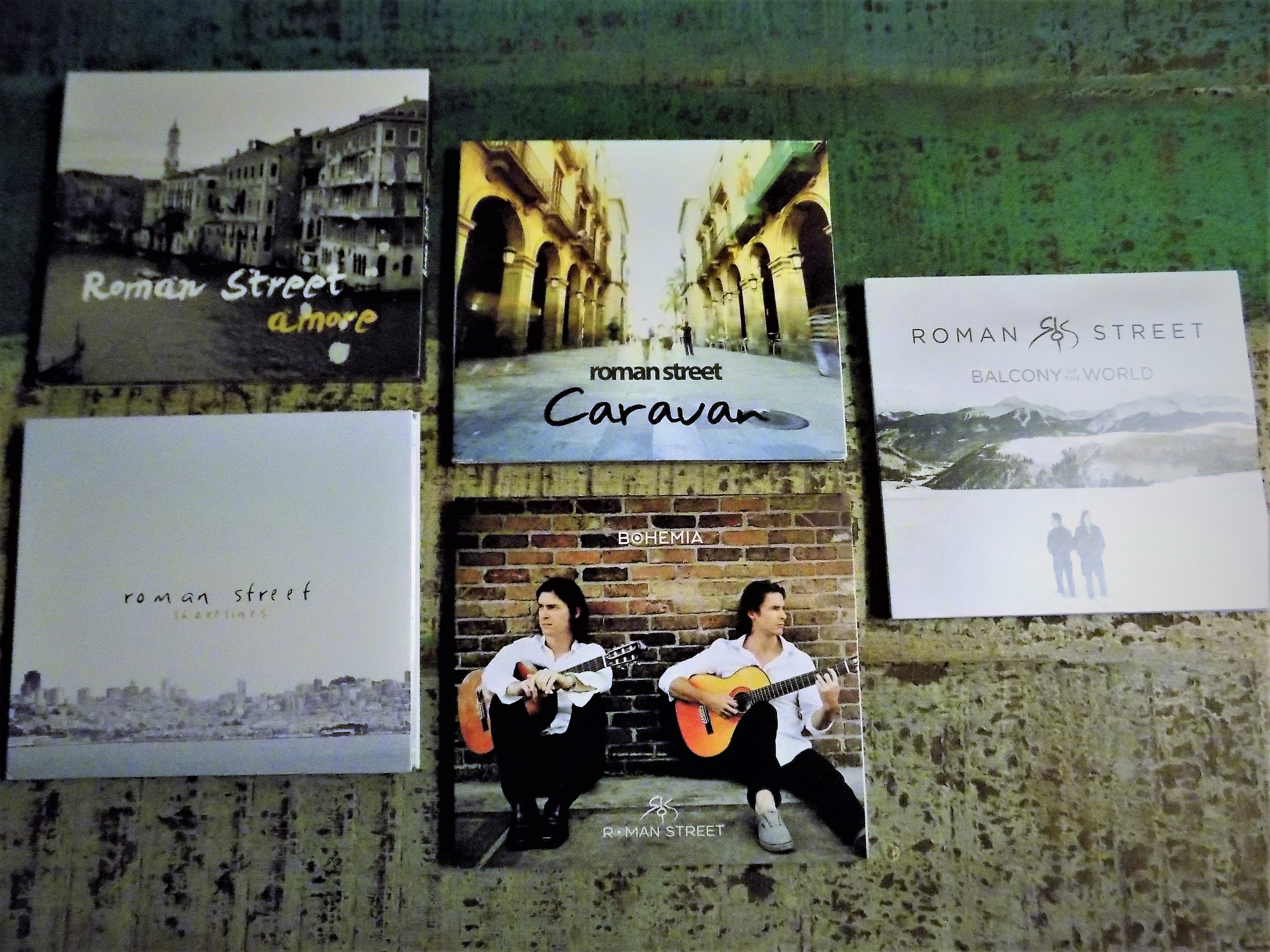
During this period of staying at home and changing habits, new habits emerge. For example, on Wednesday morning for the past few weeks, I have awakened with the song “Rio San Juan” from the Roman Street album, Caravan, playing in my head (http://www.romanstreet.com). Roman Street, the Mobile Bay-based jazz guitar duo of brothers Josh and Noah Thompson, has commenced a series of “Quarantine Jams” from Josh’s dining room every Wednesday night at 7:30 p.m. CDT on their Facebook page (www.facebook.com/Roman-Street).

I have followed Roman Street for several years now. I first learned about the band through a chance meeting in the Quiet Room at the Grand Hotel spa in Point Clear. When Noah went back for his spa treatment, Josh and I struck up a conversation in which he told me that they were locally-based musicians. He had an infectious enthusiasm and I was inspired to check out the band.

Later that day, I looked up Roman Street’s website and discography and realized that Roman Street has performed around the world, got part of their musical training in Europe, and have had singles on the Billboard charts over the years. The next night, at a dinner party in Fairhope, I asked a local musician about Roman Street and he assured me that they are “the real deal.” I was embarrassed that I was just learning about them.

Since then, I have seen the band in concert a couple of times and have followed their progression through guitar-based albums with an impressive cast of guest and semi-regular musicians. Roman Street is comfortable in a variety of styles and defies categories, although ‘smooth jazz” and “jazz fusion” often come to mind. Their music is dominated by original compositions along with an occasional cover. Like most performers, their live performance schedule is currently on hold due to the pandemic.

I have caught most of the “Quarantine Jams.” So far, Roman Street has devoted each program to playing through their albums in order, commenting as they go and bantering with the comments of their audience on texts and the Facebook page. This week (May 13), they completed their discography tour with the freshly released album Balcony of the World. Even though they have caught up with their albums, the jams will continue over the next several weeks with a session of audience-requested cover arrangements scheduled for Wednesday, May 20.

I plan to be watching and listening.

The weekly Wednesday jams have become appointment listening for me. Roman Street’s brand of music that is both energetic and mellow has become my companion on frequent drives between north Alabama and Birmingham.

They are, indeed, the “real deal.”

A Joyful Noise

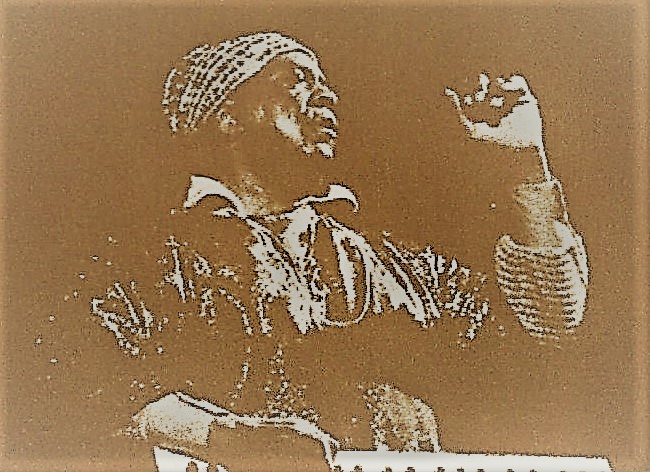
Sun Ra

“Calling Planet Earth – I am a different order of being …”

So says Sun Ra in Robert Mugge’s 1980 documentary, “Sun Ra: A Joyful Noise.” I was inspired to view the movie by Richard Brody’s recent spectacular review in the New Yorker, a review that is arguably as thoughtful and well-crafted as Mugge’s film itself.

Mugge’s hand-held cameras sometime follow Sun Ra around in random sequence; sometimes the musician walks ‘round and ‘round the camera. Occasionally, Sun Ra leaves the frame as the camera stops to ponder some detail in the room. In one memorable sequence, the camera is stationary, focused on a cityscape, as Sun Ra walks back and forth, in and out of the camera’s view, giving his thoughts on what is important to him as an artist of the universe.

He has a lot to say. “They say that history repeats itself,” he says, “but history is his story; it is not my story … Nature never repeats itself. Why should I repeat myself?”


Sun Ra was a son of Birmingham. Born Herman Poole (“Sonny”) Blount, he was a prodigious musician at an early age, playing Birmingham clubs. In the 1930s, he spent a year as a music education major at what is now Alabama A&M University.

Somewhere along the way – and the accounts vary – he had a transformative experience that convinced him that he had been transported to the planet Saturn and returned to planet Earth in a space ark to spread a new and forward-looking philosophy to the delusional Earthlings. He legally changed his name to Le Sony’r Ra, began to call his band the “Arkestra,” and the living myth was born. Sun Ra had the privilege of largely creating his own mythology while arguing for a “mythocracy opposed to your theocracy and democracy.”

He is critical of human inhabitants of Earth, arguing that “Man has failed – spiritually, educationally, mentally.” Standing in front of the White House, Sun Ra says that “you can’t have justice if you penalize people for doing wrong and don’t do anything for them if they’re doing right.”

Sun Ra’s philosophy often makes sense and shows an acute wisdom; occasionally, it might seem a little absurd. Either way, one should always watch his eyes. He seems conscious of exactly what he’s doing and saying and playing all the time, no matter how outrageous it may seem in the moment. It has been observed that sometimes Sun Ra felt that too many musicians take themselves too seriously; his music and philosophical observations seem to be both a response to his innate intelligence and a reaction to taking oneself too seriously.

In an early sequence of the film, vocalist June Tyson sings of Sun Ra as “the living myth, the living mystery.” Those words “myth” and “mystery” recur often throughout Mugge’s portrait of the man. Sun Ra is little known outside certain circles, but he retains a devoted following and immense respect among serious jazz aficionados. I was surprised when two novels I read recently featured cameo appearances by Sun Ra.

Mugge’s film does not deal with biography. It is most concerned with Sun Ra’s present, around 1980. Much of the film is shot in Philadelphia environs and clubs and in the communal rowhouse in Philadelphia’s Germantown neighborhood where Sun Ra lived with much of his band – a band that taps into his musical vision and his taste for wild and outlandish garb and adornment that appear to be a fusion of the Space Age, Egyptian Africana, and psychedelics.

When I was first exposed to Sun Ra and his Arkestra’s music, sometime during my college years, I didn’t “get it.” Much of it sounded like untamed cacophony with minimal focus or forethought. Over time, the more I listened and got to know musicians with an interest in jazz, the more I appreciated Sun Ra.

“A Joyful Noise” lends credence to testimony of Sun Ra’s virtuosity. Saxophonist John Gilmore, a long-time member of the Arkestra, comments that he finds Sun Ra’s technique “… ahead of Bird and Monk” and later evokes Charles Mingus, too. Sun Ra’s knowledge of intervals and harmony, he says, are so “highly advanced” that he decided to “stop” and devote his career to the Arkestra. He stayed with Sun Ra from the 1950s. Gilmore led the group after Sun Ra’s death, and until his own death in the ‘90s.

Gilmore is one of many examples of the quality of musician Sun Ra sought and attracted. At one point in the film, Sun Ra states that he chooses musicians who believe in “arkestration, precision, and discipline.” In rehearsals captured by Mugge, Sun Ra is a diligent and precise task-master. His musicians – in rehearsal and performance – show both attention and awe. Sun Ra’s choreographic conducting in performance appears surreal and spontaneous while simultaneously controlled and conscious.

The concerts feel trance-like – in observation of both the musicians and the audience experiencing the music. In his lifetime, Sun Ra was called a “catalyst.” “A catalyst,” he says, “changes everything, but remains the same.”

I don’t always understand Sun Ra and his music, but I always enjoy the effort.

The title of Mugge’s film comes from a story Sun Ra tells in the documentary. When he and members of the Arkestra lived communally in the Philadelphia rowhouse, they would rehearse any time – day or night – that Sun Ra had the urge to create. Once, when the police came to the door in response to a complaint, they told Sun Ra that neighbors had complained about the “music.” He informed them that he wasn’t playing “music” – “I was making a joyful noise – that’s what the Bible said.”


Sun Ra had strokes in his final years and was brought back to Birmingham to be cared for by family members. He died in 1993. I was surprised to learn that he is buried at Elmwood, the 120-year-old Birmingham cemetery where my father is buried. Out of over 130,000 plots at Elmwood, I discovered that Sun Ra happens to be buried in the block just across the way from my father.

Occasionally, I spot license plates in Elmwood from far-flung places with people looking around for something in that vicinity. Occasionally, those people look like forward-thinking musician-types. If they’re looking for Sun Ra, I am happy to point out the place where his Earthly remains are resting.