When We Were Gun: A Narrative Poetry Cycle by Deborah Schupack was the 2025 winner of The Louisville Review‘s National Poetry Contest. I recently reviewed it for North American Review.
Grace
Points of view and frames of reference have been changed by the times in which we exist. My mother was recently discharged from the hospital to a rehab facility. Her transport was late arriving and we had fallen asleep in the hospital room. Around 11:00 p.m., the lights flashed on abruptly and woke us up. Two burly paramedics came quickly into the room, followed by a frantic nurse saying, “They’re here.” There was a mad rush, gathering bags, the exchange of paperwork, transfer from hospital bed to stretcher – we were swept out of the room in less than five minutes.
The next day, describing the experience to a friend, I heard myself say, “It felt like an ICE raid.” That is a comparison that wouldn’t have come to mind a year ago. But this is the state of America in 2026. (In December, I had to go to three post office branches to find stamps. We’re not talking special stamps or holiday stamps – just regular postage stamps. “Great” indeed.)
December and January have been fraught with emergency rooms, ICUs, hospital rooms, rehabs, and home health care. Because of a prescription mixup, the cycle had to be repeated. This past holiday season has felt at times like the annual “Airing of Grievances” at Festivus.
It is not my intent to air grievances but to acknowledge those moments of grace encountered in trying times. It seems that with hardship, pain, and stress, the moments of grace become more heightened and profound – more deeply felt. I was raised in an evangelical church but my spirituality evolved in a much more private and personal way. In challenging times, moments of spontaneous kindness take on an added texture and are an assurance that there is still good and caring in a troubled and troubling world where cruelty, monsters, and crazed madmen seem to be taking control. Even a few moments watching the backyard bird feeders can be an effective balm in troubled times. Letting one’s mind rest becomes key.
The phrase “thoughts and prayers” is as hollow as the politicians who say it on auto-drive whenever an event occurs that they have no plan to substantively address (sorry, there’s a grievance there). But it means something when a true expression of concern comes from a person who genuinely seems to care. When I departed a parking deck after several sleepless nights of sitting at a hospital bedside recently, the attendant took my payment and then leaned in, placing a hand on my shoulder. She said, “Everything will be alright, sir. Now go try to get some rest.” She knew without knowing and there was a moment of relief and transcendence as I pulled onto the busy street.
I rescheduled a doctor’s appointment recently due to caregiving responsibilities. In talking to the scheduler, I mentioned in passing that my mom was in ICU. As I went on, the scheduler said, “Wait! Tell me her name.” I told her Mother’s name and she said, “As soon as we hang up, I’ll pray for her.” I know she did.
Over the weekend, the woman who replaced me in my old faculty position sent a video. It was my former student who was a recent finalist on “The Voice.” My faculty colleague met her at a reception and asked if she’d like to say hello to me. The message was sweet and loving and began with “Hello, Mr. Journey, it’s Jazmine … I wonder if you even remember me …” Of course I remembered her and had followed her success on “The Voice.” I had wondered if she even remembered me. The message came – again I was sitting beside a bed in a rehab center – at a low point. It gave me a boost of energy and distraction to move forward. Hearing from successful former students is a reminder that my teaching years were worth something.
Afterward, I learned that the colleague who sent the video and her sister were in the process of caregiving for their own mother in the hospital. You never know what burdens the person you pass on the street or in the store might be dealing with. You never know what’s going on behind the scenes – what prompted that tart retort or insensitive comment, that teary response.
Mother’s most recent hospital stay was at St. Vincent’s, arguably Birmingham’s oldest hospital, founded by the Sisters of Charity in 1898. It has served my great-grandmother, my grandmother, and my mother since the days when the Sisters wandered the halls in full habit. St. Vincent’s was a private Catholic hospital until the church decided to divest itself of its healthcare interests. UAB, Birmingham’s branch of the University of Alabama System, with its medical center, saw the opportunity to once again feed its Trumpian zeal to swallow Birmingham’s Southside whole (grievance) and heeded the call. The good news is that St. Vincent’s is still with us; the bad news is that decline in healthcare seems to occur whenever UAB takes over a well-established medical facility.
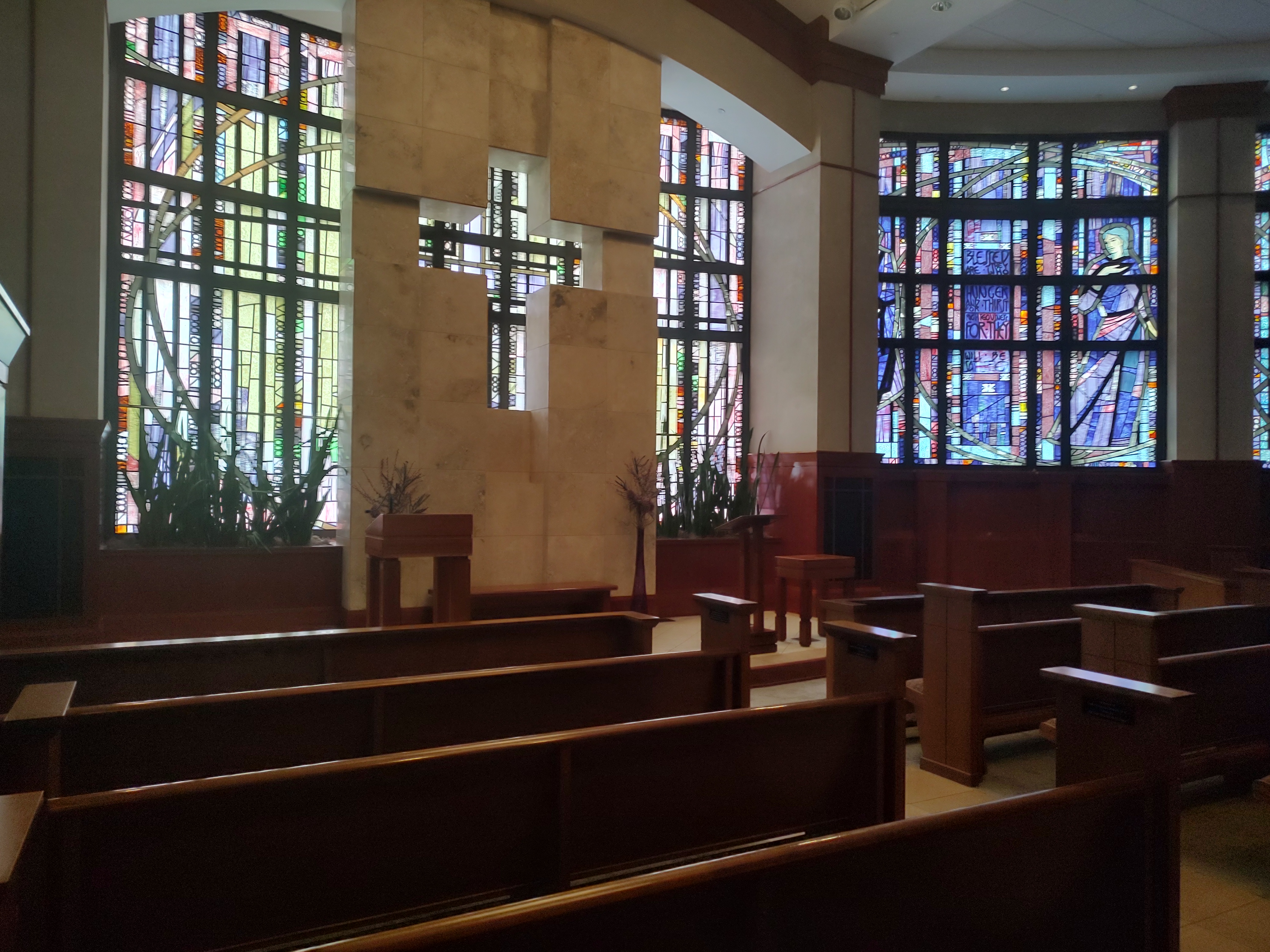
With the takeover, UAB began to clear out the Catholic iconography of the facility, throw the UAB logo on everything, and treat the fragments that were left as historic relics. Fortunately, the hospital’s serene Chapel has been kept, sans the crucifix that once hung above the altar as well as other Catholic-specific artifacts.

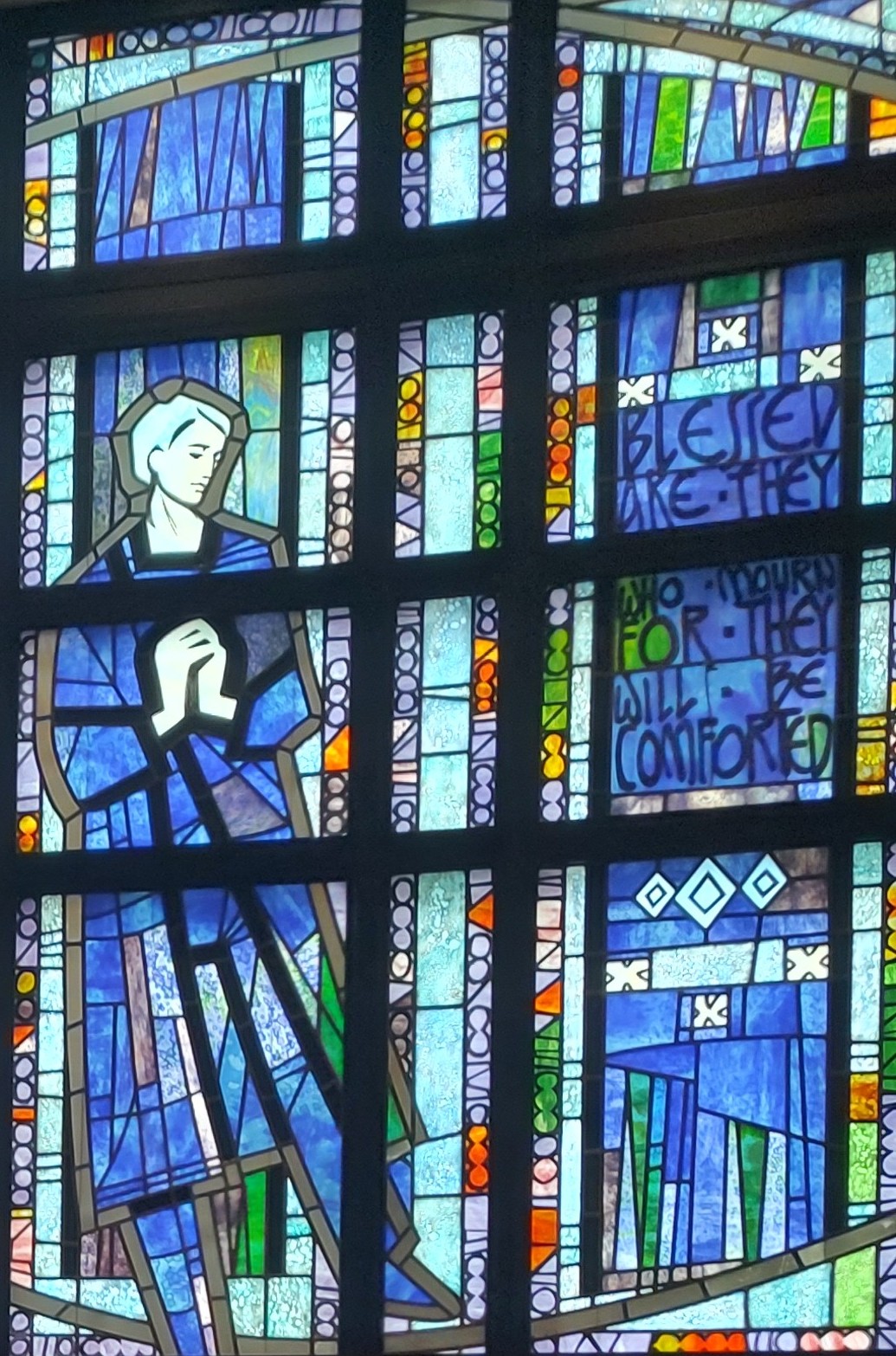
The Chapel at St. Vincent’s was across the main hospital from my mother’s room, but I sought it out on a recent Saturday morning. The stained glass windows, inspired by the Beatitudes, remain. The room is a spot for meditative grace and quiet reflection. A few stolen moments can “restoreth my soul” in the midst of the intense strain of a busy hospital environment.
Inspiration was never my strongest trait as a writer or a speaker; a natural skepticism comes through no matter how serious my intent. But I’ve learned to seek out moments of inspiration and cherish them. It might be a moment of solitude or a piece of restorative music. Since Bob Weir of the Grateful Dead passed, I find myself listening to “Cassidy,” my favorite song by the Dead, regularly. That brings back warm memories of times past.
The graceful moment might be a friendly remark in a grocery checkout line or a private chat with a hospital nurse. Recently, I heard from relatives I haven’t heard from in a while. A cousin called with sobering news and, in the midst of a thoughtful conversation, we started laughing at a memory of an afternoon spent as ten-year-olds “helping” our grandmother paint a bathroom. These stolen moments are all around if we just look for them. More importantly, we need to recognize and cherish them as they happen.

Book Review: The Road to Tender Hearts
“Like Chekhov, Hartnett can find the human comedy in the drama of flawed characters she clearly loves.” My review of Annie Hartnett’s The Road to Tender Hearts was just published at the Alabama Writers’ Forum website. You can read it here.
We Spoke of Foghorns
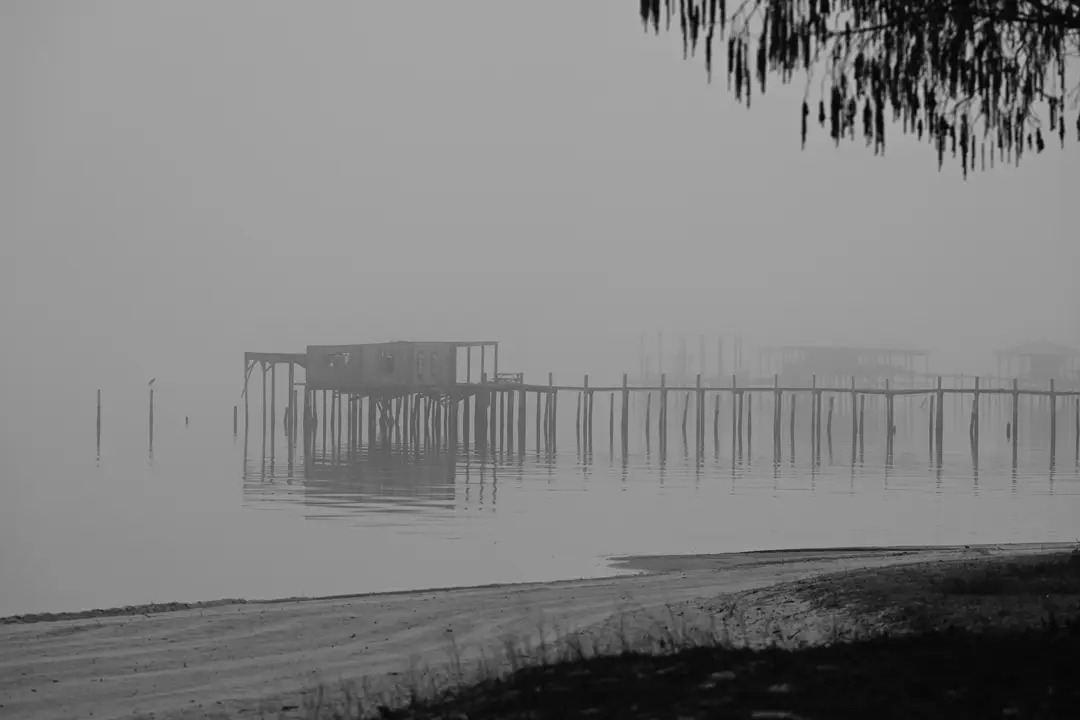
We spoke of foghorns on the night I dined at Southern Roots, a restaurant at the Grand Hotel at Point Clear on the Eastern Shore of Mobile Bay. A fog advisory had been issued and a thick fog sat on the waters of the bay outside the window wall of the restaurant.
Years ago, while I was staying at the Grand, a similar fog had come through. As I was sitting on the balcony before I went to bed, foghorns started sounding on the bay. That deep and mournful sound moved up and down the bay. It was the first time I had heard foghorns anywhere but in the movies and I sat for a long time savoring the moment. Finally, I went to bed. The haunting sounds of the foghorn were still audible in the dark room and I fell into a sound and deep sleep.
It was an experience I have longed to repeat. I began to mention the foghorns to other people around the Eastern Shore and was surprised that I seemed to be the only one who had heard them. Some of the locals said they had never heard foghorns on the bay. Before long, I began to wonder if I might have dreamed or imagined them. It’s a sound that would certainly be at home in a dream.
I looked up foghorns on Mobile Bay and found enough information to assure me that my memory of foghorns years back was not delusional. But I also found out that foghorns are nearly extinct due to modern technology such as radar and GPS. Nowadays, “the Coast Guard has converted the vast majority of foghorns so that they no longer sound automatically in fog, only on an as-needed basis when activated by mariners with radios.” So I did hear the foghorns that night, but only because some boat in the bay was trying to navigate the waters on a foggy night – an idea that retains the mystery and romance of the sounds, resonating beyond my seeing, and makes me miss them even more.
I asked my server at Southern Roots if she had ever heard the foghorns; she had not, but she found the idea intriguing as we both gazed into the fog of the bay. She agreed that the sound, if she heard it, must be magical and full of intrigue. I told her that I had read of residents’ complaints about the sound back when they were more common. Also, I told her of my night listening to the sounds from my balcony perch. We agreed that only a grump would find the sound offensive or obtrusive. But there are always grumps to find offense.
The server decided that they should bring the foghorns back, that she should tell somebody. I agreed, but countered that there was now technology to supersede the need and the effort would probably be useless. She understood but decided that foghorns should be brought back, “if only for the tourists.” She was caught up in the mystery and romance of my lived experience, remembered so vividly after so many years. She wanted that for herself.
I ended the meal with the requisite brandy Alexander, in memory of my friends Janet and Russell, and took the long way back to my room, walking in the silent fog along the bay. I wondered if my memory of that long ago solitary experience of foghorns might be lessened if the sound were to become more commonplace. In these days, it is the memories that sustain us. It is the longing that moves us forward.
Fall Risk
It’s December and I went down to Fairhope and Baldwin County for my annual getaway. There were new restaurants to discover, old favorites to visit, a perfect massage treatment with Claudia at the Grand Hotel, an Advent service at the Anglican church at Point Clear, drives along the bay and past orchards of satsumas and pecans, interactions with writer friends, and general rest, reading, and relaxation. The weather took a gloomy turn so a planned visit to write about the oyster beds at Murder Point on the Gulf of Mexico will have to wait for another year.
On the second full day, at lunch after the massage, I got a phone call that my mother had a medical incident the previous night. She was resting and recovering in the hospital and I was assured that there was no need to cut my trip short – that she was well cared for where she was. After that call, it was a juggling game of should I stay or should I go. I decided to spend the night and decide the next morning.
The next morning, after church, I decided to have lunch and decide. After lunch, I decided that since I only had another day left in my trip, I might as well stay unless something happened that would require me to head back to Birmingham. You see how this is going to go.
So, on that last full day of indecision, I stumbled, twisted my ankle, and had to be helped up to my room. Since I couldn’t put weight on my left foot, the ever-gracious security staff at the hotel brought a wheelchair up and carried me to the ER of the local hospital. That’s how the last day of the getaway I look forward to all year turned into a seven-hour stint in the ER.
I am no stranger to hospitals in the past decade; stoicism is the key whenever you find yourself in one. Everybody at the ER at Thomas Hospital was great, even though it was a day-long affair. Unfortunately, it wasn’t my first time there; I took a fall at the pool about fifteen years ago and was witness to Thomas’s brand of medical hospitality. I am not clumsy (he said, after the fall) and those two tumbles fifteen years apart are the only falls I’ve taken during that time.
Which brings me to the reckoning of the wristbands. When I was admitted to the ER, I was given three wristbands. The first was my identification, with name and birthdate. The second red band was for an allergy alert. I had a reaction to penicillin as a young boy and have been told to avoid penicillin. (If you must have a drug allergy, penicillin is the way to go; there are so many things you can take instead.) The third wristband, yellow, said “FALL RISK.”
Sitting for hours, trying not to stare at the other suffering people all around, one seeks out distractions. At some point, I decided to study my wristbands. The name and birth date checked out. It was the parenthetical that drew focus. “(70-year-old man)” it said. It didn’t seem quite real, but there it was. ALLERGY was something I am used to and that one got a passing glance. Then there was FALL RISK. There I lingered. “(70-year-old man).” “FALL RISK.”
FALL RISK was there, obviously, because I was in the ER as the result of a fall. But the idea of being described as a fall risk suddenly made me feel very old. The people in the Thomas waiting room that I had thought of as “the old ones,” on their walkers and crutches and in their wheelchairs, were suddenly my peers. As I departed hours later in a wheelchair with an orthopedic boot and a new set of crutches, I joked to the nurse that over time I would morph my awkward stumble into a skiing accident.
_______________________________________________
I have tried to model my attitude toward getting older on humorist Garrison Keillor, who is in his eighties now and shares his essays online at “Garrison Keillor and Friends.” Keillor (perhaps too often) begins his contemporary essays by stating that “I’m an old man.” But he celebrates the fact that he can leave behind concerns that he had when he was younger and cherishes little things that he once didn’t attend to. His is a fresh, frank, sometimes repetitive and self-indulgent, take on life and the events of the day. I try to keep it in mind as I spend hours on end with my mom at her rehab facility, observing her fellow clients. I refer to the experience as my “Ghost of Christmas Yet to Come” – a specter I hope to somehow avoid.
________________________________________________
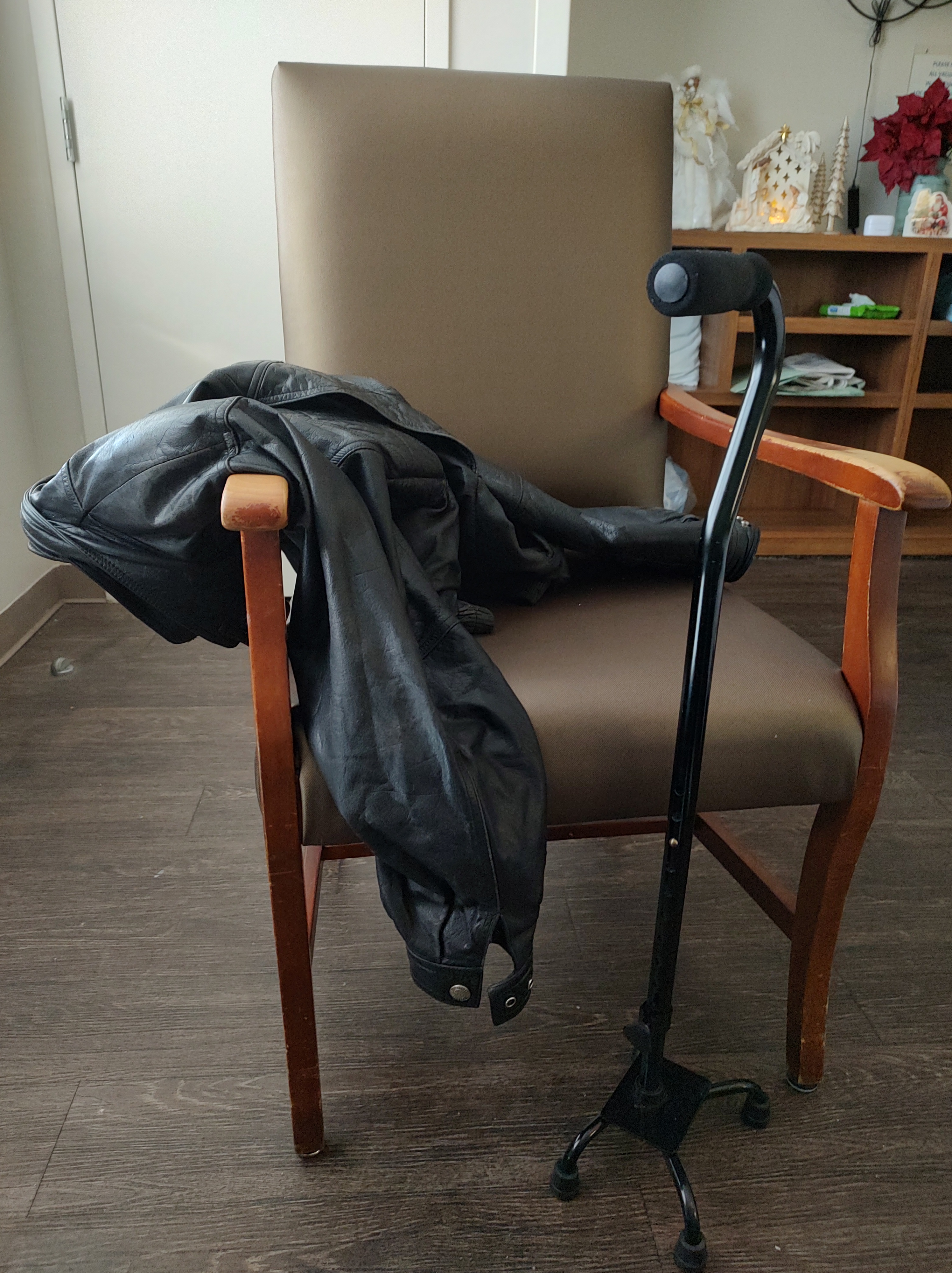
I realize that it’s a form of bigotry to say that I have respect for the aging process and old people while resisting the inevitability of becoming one myself. And while I do not try to hide my aging, I feel a need to defy aging stereotypes. Sometimes, validation comes at unexpected moments. Last night, after a 50+ hour session of sitting up with my mother at her rehab facility, I ducked out to the grocery store to pick up some things. The weather here has turned cold and I was wearing my most vintage item of clothing – a black leather jacket that I picked up in Indiana in 1994. As I was paying, the teenager who was bagging my groceries said, “Man, that jacket is dope.” When I realized that he wasn’t being ironic, I thanked him. “How old is that jacket?” he asked.
“A lot older than you,” I replied. “Over thirty years.”
To which he replied, “I want to have a jacket like that one day.”
As I left the store, I felt a little less tired. The limp from that skiing injury was somehow less pronounced.
Book Review: Grey Wolfe LaJoie’s “Little Ones”
Occasionally a book comes across my review desk that takes me totally by surprise. Little Ones by Grey Wolfe LaJoie is one of those books. I was happy to review it for Alabama Writers’ Forum. You can read it here:
Fall, Again
For years, whenever I open my mother’s refrigerator, one quote stands out among the reminders of doctor appointments, handyman numbers, Bible verses, and proverbs hung on the door (including the occasional Bible verse from Proverbs). It’s a quote from George Washington Carver that says, “How far you go in life depends on your being tender with the young, compassionate with the aged, sympathetic with the striving, and tolerant of the weak and the strong – because someday you will have been all of these.” Recently, I ran across another Carver quote that stuck with me as I took a walk around the neighborhood. He said, “I love to think of nature as an unlimited broadcasting system, through which God speaks to us every hour, if we will only tune in.” 
Here in the middle of the Deep South, Fall does not provide a grandiose display like it does in New England. Nature saves Southern grandiosity for the Spring. And the weather is so unpredictable that who really knows what to expect from day to day? A couple of weeks ago, there was a taste of Winter to come and the same people who had been griping about the heat for months instantly cursed the cold. Now, we’re flirting with record highs and unseasonably mild nighttime lows and even the birds and the bugs seem a bit confused about where to go and what to do. On a recent walk, wasps seemed to be swarming and flies seemed to be waiting to dash inside any opened door. A day later, they had hastily retreated, only to reappear again with equal haste later in the week.
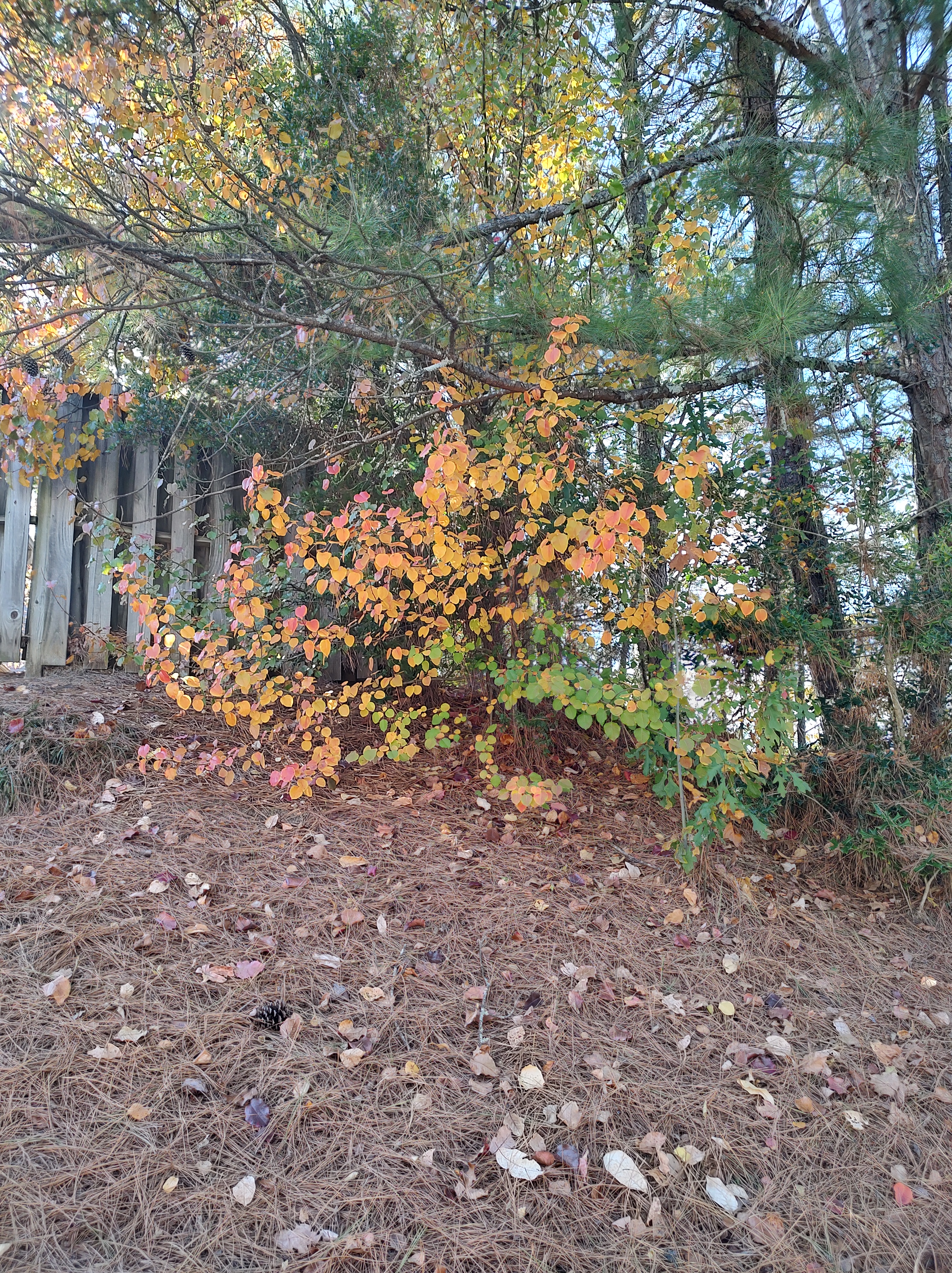
On today’s walk, with a pleasant breeze, leaves – both falling and fallen – came into focus. The neighborhood is dominated by longleaf pines and the trees on the mountain tend to blend into rusty tones of gold and bronze this time of year. Out the back and down the mountain, gold and burgundy are visible beyond the fences. But it was the images in miniature that pulled my attention. There were thick displays on the branches and others, in crumbling piles, on the sidewalk, in the grass, as Fall’s detritus creates fleeting seasonal abstractions. As nature’s broadcasts stimulated Carver’s scientific mind, the beauty of its moments provide a welcome distraction from the tedium and drama of the day-to-day. 
It’s Fall, again. Leaves are falling, Thanksgiving is pending, and Christmas decor is being rushed in the neighborhoods. My less scientific mind ponders if there might be a law of physics to explain how the days can last forever while the years pass in a flash. 
Book Review: “The Old Breed” by W. Henry Sledge
In W. Henry Sledge’s new book, The Old Breed … The Complete Story Revealed, he provides a sequel, of sorts, to With the Old Breed, the influential World War II classic by his father, Eugene Sledge. “Henry Sledge, who was raised in a house full of mementos of the war, was a son who asked questions, listened, and remembered. His personal narrative throughout the book gives perspective on how the war impacted his father for the rest of his life.” My review is available at Alabama Writers’ Forum.
Tallulah
Not long after Lulu died in September, my mother got anxious to get another dog for “company.” The fact that I am staying with her full-time now doesn’t seem to count.
A neighbor took it upon himself to find Mom a dog and started forwarding regular posts of dogs needing to be rehomed. Most of them were no-go. Too young. Too old. Too male. Too big. Finally, Luna popped up. She was advertised as a three-year-old chihuahua, affectionate and calm. Her family was letting her go because their two youngest children didn’t know how to play with a dog. I texted that my mother might be interested and showed my mom the photo and description. Mom was interested and the phone rang soon after.
The woman said that they loved Luna and hated to let her go. They had gotten her from another lady who decided she didn’t need a dog. Luna had been with them for seven months and “we’d love to keep her …” She sang Luna’s praises and said we could come meet her that day if we wanted to. She lived about an hour away. I asked Mom if she wanted to meet the dog and she said yes without hesitation. I was pretty sure we’d be bringing a dog back later.
After an hour-long drive, we met the woman and Luna at a city park. Mom stayed in the car as she petted Luna’s head and I asked what I hoped were the right questions about food, house training, shots. The woman wasn’t sure about many things. Finally, I took a deep breath and asked if the dog had been spayed. Not sure, but she thought she’d had a litter of puppies at some point. I was sure the dog hadn’t been spayed. I looked at Mother. “Mom, she probably hasn’t been spayed.” The response was immediate – “We’ll get her spayed.”
I already knew the answer to my next question. “Do you want to take her?”
“Yes. I like her.”
Luna rode with us back to Mother’s house and was a perfect, well-behaved passenger with no signs of anxiety. I called the vet, told them Mom had adopted a new dog and we needed to get her checked out. Told them she likely needed to be spayed. Made an appointment for Saturday morning. Luna seemed to adjust to the house quickly but was hesitant to go outside without me. As she explored, I noticed that she was spotting blood. I tried to check her underside but she wasn’t having it. Finally, I let Mom know what I was seeing.. “She seems to be bleeding a bit. Do you think she’s in heat?”
Mom assured me that she was not and that I should take her to the vet the next day. Early the next morning, after cleaning up little bloody spots on the floor, I called the clinic and asked if they might work her in that day. I explained the problem and the receptionist said, “She’s in season. See you Saturday.” They’re calling it “in-season” now.
Thus began my training to be a canine gynecologist. I found out about the four phases of female dog heat and saw that Luna was in the first phase. I bought a wrap to keep the bleeding in check but Luna was having none of it. In the meantime, Mom, whose first response to the news had been “What have I done?” was becoming attached to her new buddy. “What have I done?” became “Poor thing, she can’t help it.”
The name, however, was a problem. Lulu had been “Luna” before Mother changed it. And now she had another Luna. She has some sort of aversion to that name and vowed she’d get used to it this time, but it kept causing her trouble. She wanted to say “Lulu” or “Lula” or anything but “Luna.” Finally, she decided to rename the dog but agreed that a new name should not be too far removed from the one Luna had been used to for three years.
Inspiration hit. Not long ago, I reviewed a book about the Bankhead political family of Alabama. An offspring of that family was Tallulah Bankhead, an acclaimed and colorful actor of the early twentieth century stage. Tallulah was prone to outrageous and unfettered behavior and, in a movie magazine interview, she lamented how long she had been without a man. “I need a man!” she moaned. Her Aunt Marie, back in Alabama, wrote a letter to her niece, scolding her for her outbursts and accusing her of the “yapping of a hot canine …”
“I have a solution,” I said. “You have a hot canine – name her Tallulah and call her ‘Lula’. She’ll have a name you’re more comfortable with and I’ll have a story.”
So “Lula” it is. The vet declared her healthy, gave her shots, and will schedule surgery after her current situation has passed. I am learning first-hand about the second stage of heat as I follow Lula around with a damp rag to wipe up the tiny bloody spots. The female’s tail takes on a snaky life of its own. Based on my canine gyno training, this is her way of signaling that she, in Tallulah’s words, “needs a man.” And, as the Persian proverb says, “This too shall pass.”
The Land of Strict Embargoes
If Alabama had to choose a secular saint, I suspect it would be Harper Lee (1926-2016), the author of To Kill a Mockingbird. She only published the one novel, and a few other things along the way. So, it came as a bit of a surprise when HarperCollins announced the upcoming publication of a selection of Lee’s previously published and “newly discovered” writing under the title, The Land of Sweet Forever. And that’s about all we know.
I explore the upcoming book, and posthumous publications in general, in an essay for First Draft, the quarterly publication of Alabama Writers’ Forum. Read it here: