Tag Archives: Grateful Dead

On Reading “On the Road” (again?)

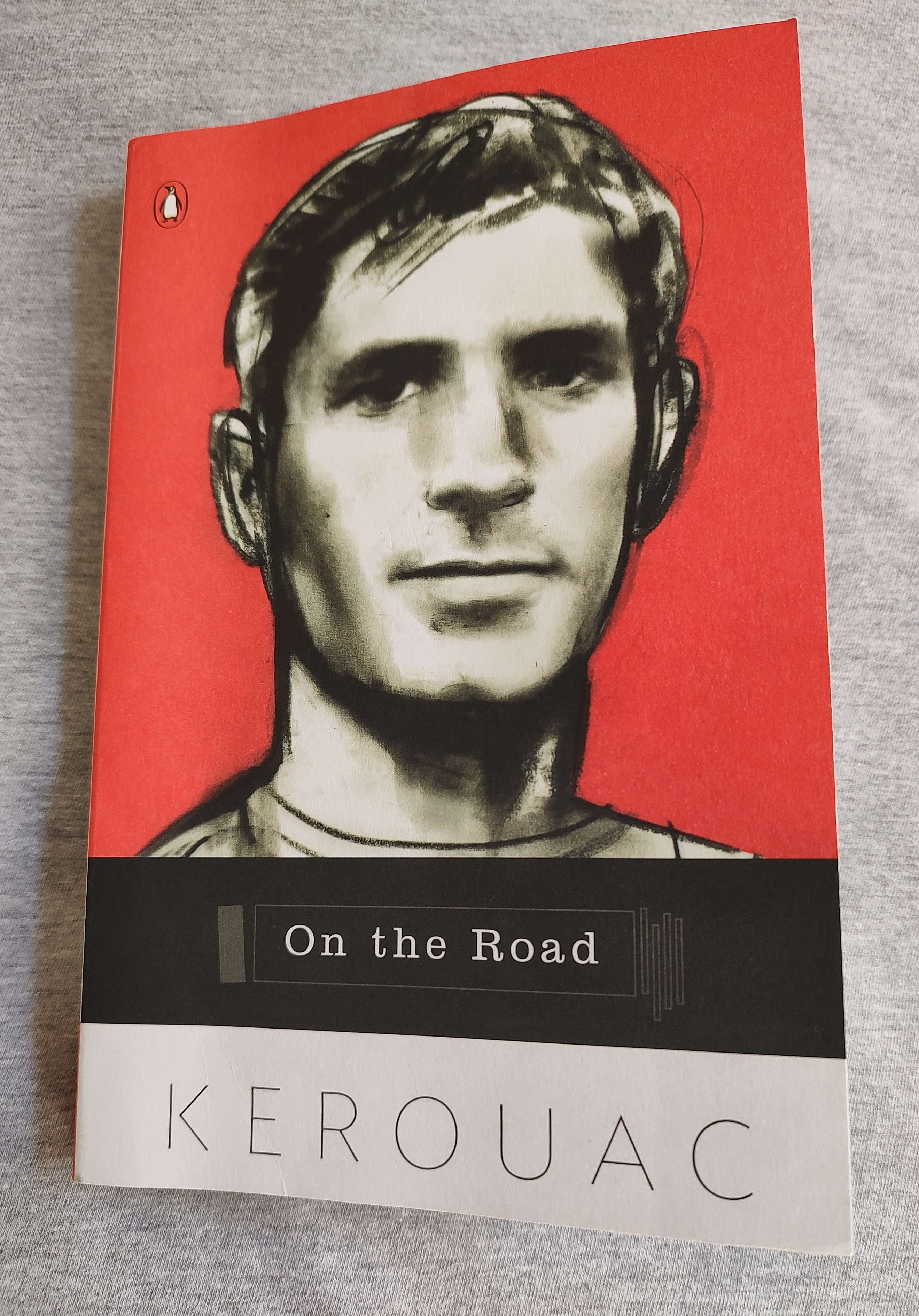
It’s June, the days are sultry, and the wanderlust sets in. But since summer travel is not in my plans this year, I decided to read On the Road. Or re-read. I’m not really sure. Jack Kerouac’s beat novel is so endemic to American culture in the second half of the twentieth century, it’s one of those books we know even if we never read it. I read it recently and I’m still not sure if I had read it previously. It felt familiar.

I know I’ve read other Kerouac, so it only makes sense that I surely read On the Road years ago. An early ‘60s television series, “Route 66,” was inspired by On the Road; I watched it when I was barely in elementary school and, for third grade me, it defined what it meant to be “cool,” for better or worse. So my references for On the Road predate my knowledge that there was a book by that name.

For the record, The Subterraneans is still my favorite Kerouac book. I lent so many copies of The Subterraneans that were never returned that the last time I bought it, I bought two copies so I would be sure to have at least one copy in my library. I did lend out that other copy and, of course, it was never returned.

The impetus for my recent reading of On the Road was a book about the Grateful Dead. Here Beside the Rising Tide by Jim Newton purports to be a biography of Jerry Garcia, but it really becomes a chronicle of the counterculture of Garcia’s time. While reading it, Neal Cassady’s name occasionally popped up and set me to thinking about On the Road. Kerouac’s Dean Moriarty in On the Road and other books is a barely disguised version of the author’s buddy, Neal Cassady, who was a muse for the Beat writers and is iconic in ’50s and ’60s counterculture. He drove the bus for Ken Kesey’s Merry Pranksters and the Electric Kool-Aid Acid Tests, for which the Grateful Dead was the house band (bus band?). The Grateful Dead song “Cassidy” is the first song I want to hear when a member of the Dead passes on; even though the song’s namesake is the daughter of a Grateful Dead roadie, Neal Cassady is present in the lyrics.

So, I just finished reading On the Road, perhaps for the first time. And I really like it, again maybe. But I have issues: I have always thought of Neal Cassady as one of my counterculture heroes, but I really got tired and annoyed with Dean Moriarty while reading the book (“Yass! Man! Go! Go! Phew! Yass! Ahem! …”). I knew guys like Cassady, mainly in college and grad school. I enjoyed hanging with them back then, as I recall. You might know the type: frantic, charismatic, a maverick, always on the make and take, womanizer, manizer, pretentious in an aw shucks way, in their seventh year of working toward a B.A. in philosophy. They’re fun but tend to get boring and tiresome and you just want them to shut up sometimes. Or, better yet, go away for a while.

I get the sense at times that Sal Paradise, the book’s Kerouac stand-in, feels that way about Dean. Sal hangs and goes the distance with Dean throughout the book. He misses Dean when he’s not there. Sal clearly wants Dean’s approval, but he doesn’t always present him in the most flattering terms. I’m reminded of a friend of mine who was raised in a very middle of the road Midwest family. Occasionally, though, he tried to take a walk on the wild side, or at least visit it. He told me once that every morning as he looked in the bathroom mirror, he said to himself Don’t be shocked by anything that happens today. I can imagine Sal Paradise doing that, but he’d never reveal it.

From a twenty-first century perspective, it’s hard to know where to even start in terms of On the Road’s treatment of women. It’s staggering to realize that there was a time fairly recently when those sorts of attitude toward women would have been deemed acceptable on any level. You might say Well it’s a product of a different time and a different mindset. But then, you look around and see what’s happening around us today – among the billionaires on private islands, at the Pentagon, on the grounds of the UFC next door to what used to be “the People’s House” – and maybe the mindset hasn’t changed so much after all. I’m sorry to get all wound up: I just read a pastor’s letter “explaining” why women shouldn’t be allowed behind the pulpit. My irritation is deep. I’m keeping the faith but losing my religion.

Perhaps my reaction to Dean Moriarty and the rest is just the collateral damage of maturity. I’m sure I didn’t feel such reservations when I first knew of Cassady and read Kerouac and the Beats. In a recent column, octogenarian Garrison Keillor writes, “Jumpin’ Jack Flash, it’s a gas, gas, gas is all well and good when you’re in your twenties but when the Stones come back fifty years later and fans with walkers and canes are dancing, is this something we really need to see?” I see what he means.

But when all is said and done, I really enjoyed reading On the Road. Yes, despite everything.

You dig? Cool! Ahem.
UPC at Alabama

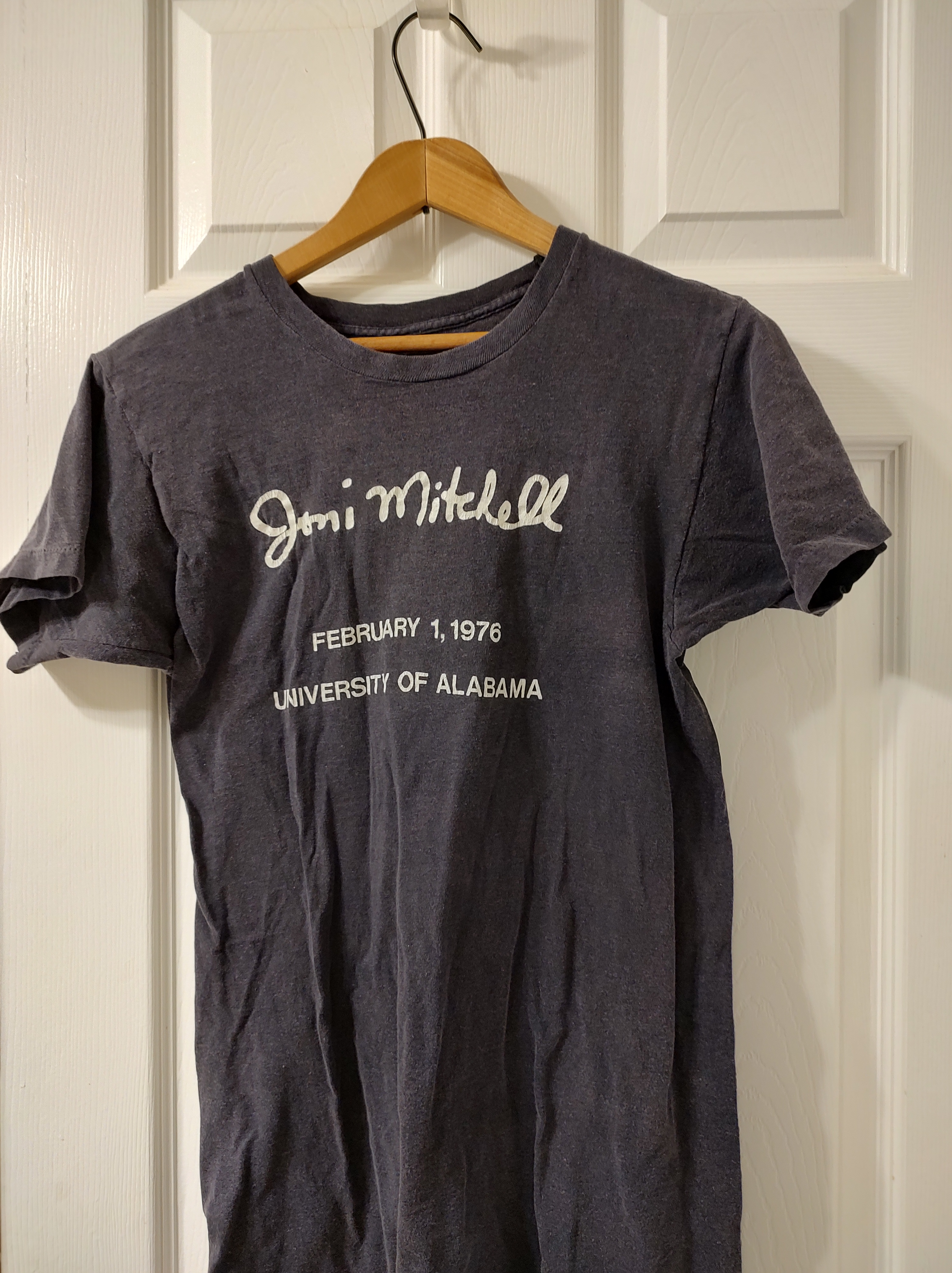
Joni Mitchell

When I started attending the University of Alabama in the mid-70s, Paul “Bear” Bryant’s Crimson Tide dynasty was at its peak. Family moves had meant that I attended six junior and senior high schools in three states and I was determined to stay at one university for the full four years and dive into everything college life had to offer. Everything, that is, except Greek life – it was the post-60s Seventies and Greek participation was at a historic low, even at Alabama. That was fine with me. In the summer before I started, I received a recruitment letter from the Interfraternity Council. I was a scrappy guy back then and took out a red pen, marked the grammar and spelling errors, and sent the letter back with a note to get back to me when they found somebody who could proofread their correspondence; I never heard back.

But I did go to the Supe Store, bought one of those crimson felt “A” hats, and attended every home football game in the days when half the home games were still played at Birmingham’s Legion Field and Tuscaloosa’s Denny Stadium held a mere 60,000.

Tuscaloosa was a great college town in those years. The Strip had not been gentrified and was lined with indie businesses – laundromats, book stores, barber shop, movie theater, clothes shops, head shops, deli, waterbed store, Sneaky Pete’s, Kwik Snak, Krystal, Morrison’s Cafeteria, and a Greek-oriented men’s clothing store (where I bought button-downs to be ironic). Legislation at that time did not allow bars within a certain distance of the campus, so there were none. When the law changed, the Strip began to change drastically.

I continued to follow Alabama football, but ditched the felt hat and immersed myself in all the other things a university has to offer. The music scene, readings, concerts, art shows, lectures, movies, plays – I enhanced my education through extracurricular activities.

Leon Redbone

The University Program Council at Alabama was a truly stand-out organization. It was student-run and was the most productive producer of a wide range of high-quality entertainment in the region with large concerts at the Coliseum, and smaller concerts, speakers, and events at venues including Morgan Hall, Foster Auditorium, the theater at Ferguson Center, and the Bama Theatre downtown. I hesitate to try to list acts that played on the campus because I will inevitably leave out something amazing.

Allman Brothers Band


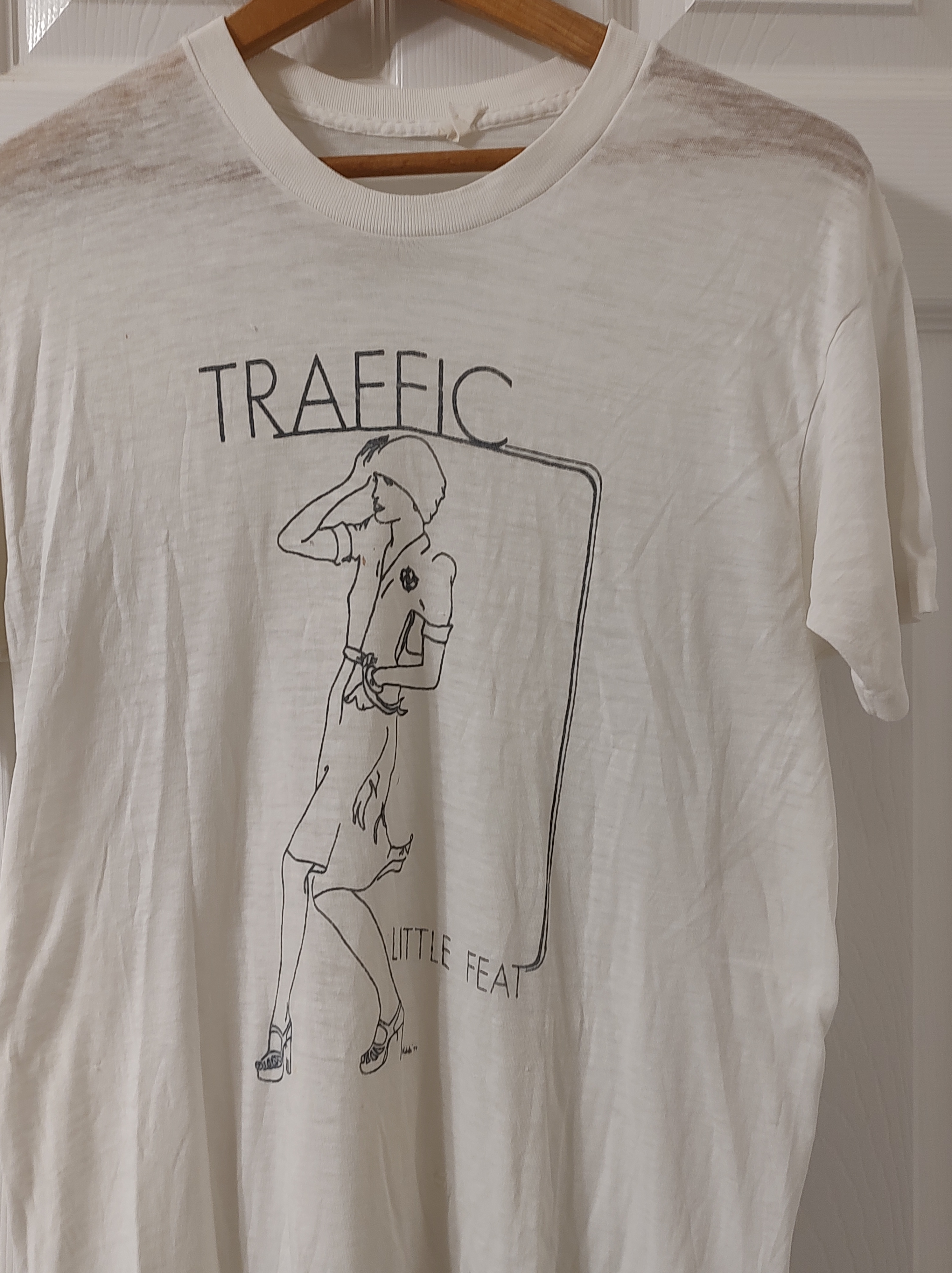
I soon became a UPC volunteer and began to get more responsibilities as I worked within the organization. I often worked “Security” and over time I began to get assigned to backstage “Artist Relations” duties. I have often remarked that it’s amazing what we’d do for a free tee-shirt back then, but we also had the opportunity to see a lot of the top acts and influential people of that era. I still have a few of those tee-shirts, wrinkled and way too small to wear. My favorite design, for Traffic / Little Feat, was worn so much that it has become see-through.

Here are a few memories:

  1. At a drum solo during a Jethro Tull concert, Ian Anderson came and sat next to me backstage and tried to start a conversation. I admitted to him that I had a “splitting headache” and didn’t really feel like chatting.
  2. When the Rolling Stones were in town, a friend was working at an ice cream shop. On the afternoon of the concert, a group of people came in and ordered ice cream. When they left, my friend asked, “Who was that blind guy?” It was Stevie Wonder, the Stone’s opening act.
  3. The mother of one of the Commodores insisted that I eat with the family backstage after she declared me “too skinny.”
  4. After supervising the removal of furniture from Robert Palmer’s dressing room after a concert (he had opened for Gary Wright), on my final check I found Palmer – fully dressed, soaking wet, still looking great – reclining in the shower. I apologized, saying that I wouldn’t have removed the furniture if I had realized he was still there. “It’s fine; I’m not using the furniture,” he replied.
  5. Working backstage during a Lily Tomlin stand-up appearance, she invited me to come to her dressing room and eat with her. Apparently, people felt a need to feed me back then.
  6. I picked up the phone at the UPC office before one of Elvis Presley’s several Tuscaloosa appearances to find Col. Tom Parker on the other end. He insisted that no women should be backstage because “women can’t control themselves in the presence of Elvis.” I assured him that the women of our backstage crew were totally professional and would contain themselves.
  7. I worked the Ferguson Center box office for presales of Elvis tickets. Patrons were outraged that Elvis tickets were $20. It was outrageous then. Most UPC events had $2-3.00 student prices and general admission was usually around $5 at the time.
  8. Buckingham Nicks, a band that had a large following in the Birmingham metro due to rigorous radio airplay, did two Morgan Hall concerts just days before Lindsey Buckingham and Stevie Nicks announced they were joining Fleetwood Mac.
  9. Backstage before the Grateful Dead concert, their traveling chef fed me a bite and introduced me to Jerry Garcia. I’m missing a finger on my left hand and Garcia was missing a finger on his right hand. I thought a good conversation opener would be to say to Garcia that “We share a deformity.” It wasn’t.
  10. During that same Grateful Dead concert, I somehow found myself rolling a toy truck back and forth in front of the stage with the toddler son of band members Keith and Donna Godchaux.
  11. Muddy Waters opened for Eric Clapton. Need I say more?
  12. At the Joni Mitchell concert – well, I’ve told that one too many times, probably. There’s another essay about my very brief encounter with Joni somewhere on this website.

Traffic / Little Feat

These memories are ignited by a new website launched by David Muscari and others who were involved in the University Program Council back in the ‘60s and ‘70s. I heard from David for the first time since college not long ago, asking for my input and support on a new website to chronicle the history of a unique and significant period in the history of the University of Alabama. While I was communicating with David, I also reconnected with Barry Bukstein, who was the brainchild behind UPC’s “Laughter under the Stars” series which gave me that opportunity to hang for a few minutes with Lily Tomlin.

UPC was a life-changing volunteer opportunity for so many people as well as a way to expose a large audience to diverse voices, world-class artists and entertainment, and cultural enrichment. The new website is a snapshot of an integral period of the University and the nation.

UPC logo

Whether you are an Alabama student or alum or have never set foot on the campus, the website is a great way to brush up on what was going on at a very specific time in our cultural history. It was a lot of work by a lot of people. And it was a lot of fun. It was key to my education and beyond. Check it out: https://www.upcalabama.com