I saw Joan Baez don a grey Confederate soldier’s cap, probably picked up at some local tourist stand, to sing Robbie Robertson and The Band’s “The Night They Drove Old Dixie Down” at a pop-up concert in Mobile. It was April 1976 and the event was one of the two Mobile performances of Bob Dylan’s legendary “Rolling Thunder Revue.”
I skipped a final exam to be there.
The song is poor fictional Virginia farmer Virgil Caine’s lament about his plight at the end of the Civil War. The song, written by a Canadian musician, was not perceived as “racist” at the time. But I doubt that Baez could comfortably perform the song in a cheap Confederate soldier’s cap in 2020; I would have a difficult time applauding it now – with all of the baggage it has come to contain. Even so, it is an undeniably great song and Baez gave an indisputably great performance.
At a time when we are trying to become an anti-racist society, we are challenged to become more conscious of race than at any time in my existence. I learned early on that it is rude to label people based on their race and ethnicity or gender or religion or sexual orientation. Now it is demanded.
White Southerners have often been accused of “living in the past.” I’m afraid we’ve reached a time when the entire nation is living in the past and we’re too paralyzed to move forward.
I taught at an HBCU (Historically Black College / University) for the last eighteen years of my career before retiring in May. On occasion, a student would find out I was from Birmingham (mostly – my family moved around a lot) and ask me what part of town. I would answer that we lived in “Green Acres” during my elementary school years and those familiar with the city would jaw-drop and say, “Journey, you’re from the hood!”
Green Acres was not called “the hood” in the ‘60s when I lived there, but times and places change. If I wanted to really blow my students’ minds, I would mention that my dad graduated from Ensley High School.
During those years, Green Acres was an all-white school. It was almost a decade after Brown v. Board and Birmingham city schools were still in the process of integrating. The city had operated its schools on the principle of neighborhood accessibility and, while there were communities of color close to Green Acres, the nearest were in the county – not the city – school system. More diverse parts of the city – especially closer to the city center – were more quickly integrated, but the regrettable “white flight” to the suburbs was gaining steam.
In the interesting time in which we are living, I find myself looking back on my early years in the still much-segregated South. I may have been in the city that Martin Luther King, Jr. declared the “most segregated city in America” in 1963, but, even then, I found the claim somewhat dubious; it was what one might expect from an Atlantan.
I was never oblivious to the struggles going on in my city and around the country. George Wallace was our governor and Bull Connor was wielding his power in Birmingham and forging sores the city has not yet been fully able to erase.
I was in elementary school when the 16th Street Baptist Church was bombed by Klansmen. That was the same year that Wallace was grandstanding in the schoolhouse door at the University of Alabama to symbolically block the entrance to Black students. It was the time of the Selma marches; the third effort made it beyond the Edmund Pettus Bridge and captured the imagination of the world when it reached the Alabama Capitol steps.
I was not “raised” by a Black woman, as some of my friends claim they were, but Black people were ubiquitous wherever I went in the city. Neighborhoods were still considered segregated, but if you walked through the opening in the shrubbery in my Grandparents’ Harbison Fairfield Highlands back yard, you were in a Black community. My grandfather and I would take his dogs for walks through that neighborhood where he seemed to be on a mutual first-name basis with all of the people we met.
My Grandparents’ Journey house was in the shadow of U.S. Steel’s Ensley Works. Their neighborhood was considered segregated, but directly across the street from them were blocks of houses entirely occupied by Black people. The idea of segregation on that street was more of a ludicrous technicality than a reality. Also, my Grandfather Journey was less “neighborly” than Granddaddy Harbison.
Kiddieland was a small amusement park in one corner of the old state fairgrounds in Five Points West. I remember one Saturday at Kiddieland, I got to the coveted first row of the modest roller coaster. Mother and Dad were sitting the ride out so I had the seat to myself until the ride operator put an African American kid about my age in the seat next to me. I looked over and smiled and said “hey” before the ride took off. My seatmate remained silent until we were about to climb the first rise; then he looked over at me and said, “You soda cracker!” Ruined my ride.
On many days, when I was still pre-school age, Mother and Grandmother Harbison took me shopping. On one of those days, at Goldstein & Cohen, a department store in downtown Ensley, Mother was trying on dresses while I was waiting and hanging out in the women’s department. I got thirsty and took a drink from a water fountain. A sales clerk quickly moved in and scolded me; I had apparently drunk from the “wrong” fountain. My mother, hearing the kerfuffle, rushed out, still buttoning her dress, grabbed my arm, informed the sales clerk that she would decide when her child needed discipline, and took me out.
In those years, my father’s office was in downtown Birmingham, at 20 S. 20th Street. He worked for a national company that manufactured and sold printing equipment. As I quickly learned, everybody – on whichever extreme of the political spectrum – needed printing presses to get their messages out. Dad’s territory included churches and schools, department stores and groceries, political and activist organizations, newspapers, and government offices.
I remember one time driving in the car with Mother to Dad’s office. On a downtown street, we were met with a Civil Rights protest coming toward us from the next block. Mother muttered “March,” deftly maneuvered the car down the next block, and we arrived at 20 S. 20th Street without delay.
In the summer months, when school was out, Mother and I would occasionally accompany Dad around central Alabama as he made his calls. I especially remember one trip when Mother was not along – either because she was pregnant with my brother or because she was home with the baby.
Dad’s calls took us to his usual clients – small town printers, newspapers, and churches, schools, colleges, etc. In Sumter County, he called on a print shop housed on a farm. It was a Black-run operation and Dad probably told me its name, but all I remember now is that he referred to it as some sort of “separatist organization.”
Years later, I learned that the earliest incarnations of the Black Panther Party were in Alabama in 1965 with Stokely Carmichael’s leadership of the Lowndes County Freedom Organization. I still try to connect the possible dots between that and my Dad’s clients in Sumter County.
The main reason that summer day with my dad stands out is for his final sales call of the day. After leaving Sumter County in late afternoon, we went through Tuscaloosa on the way back to Birmingham. There, in early evening, Dad made one last business call on a business called Imperial Press in a tight two-story building on the main street of downtown Tuscaloosa.
As we pulled into the parking place, Dad said, “It’s called Imperial Press; it’s a front for the Klan.”
Not only was it a front, but we entered the place to be greeted by Bobby Shelton, the “Grand Wizard” (what a silly organization; what pathetic, silly titles and costumes).
I couldn’t wait to get away, but I sat patiently in Shelton’s office while my dad conducted his business, just as he had done at every organization we visited during the course of that day. I looked at framed signed photographs inscribed to their “friend Bobby” by prominent politicians of the time.
Dad was a salesman and all of these diverse characters were his clients. As we drove back to Birmingham, I expressed my pre-teen repugnance and embarrassment at meeting the Klan. Dad asked me how I felt about the Sumter County “separatists” (I still wish I could remember the name of the group) and I told him they seemed “nicer.” “Did they seem ‘nicer’,” he asked rhetorically, “because they were a different race and you didn’t feel embarrassed by them?”
My dad was no Atticus Finch, but he was a good man who often gave me perspectives that I have clung to for life.
In 1973, I was a freshman at Alabama when I watched Gov. Wallace crown Terry Points as the first African American Homecoming Queen at the University. Soon after, Sylvester Jones, my classmate at Birmingham’s Shades Valley High, was elected the first African American Vice President of Alabama’s SGA. In my senior year, Cleophus Thomas, a friend from the University’s Program Council, was elected UA’s first African American SGA President. (I had run against Cleo, a sorority girl, and an umbrella-pilfering frat boy on the platform of abolishing SGA, a principle I still believe in.)
In 1988, shortly after midnight on a June night, the 25th anniversary of Wallace’s Stand in the Schoolhouse Door, my friend Clay and I climbed to the balcony of Foster Auditorium to commemorate the anniversary. It’s odd that none of these events seemed to have happened in as quick succession as they did. It all felt like distant history from June 1963.
Decades later, in a classroom at the HBCU, a student asks me once again where I’m “from.”
“Birmingham,” I answer for the umpteenth time.
Her eyes squint and her mouth wrinkles into a sneer. “You’re not really from Birmingham.”
I start to respond, but realize that she has decided the only way to legitimately be from Birmingham is to be Black and from Birmingham.
A student who knows me leans to her and says, “His dad graduated from Ensley. He’s really from Birmingham.”
I decide to let the whole exchange hang there. But it still bothers me: I’m not sure I truly belong anywhere.
Diane McWhorter, a writer from the privileged Birmingham suburb of Mountain Brook, wrote a Pulitzer Prize-winning book, Carry Me Home, in 2001. Her journalistic research and documentation about the Birmingham campaign of the Civil Rights movement are impressive. McWhorter makes the mistake, however, of putting herself and her lily-white upbringing into the narrative by weaving in a shaggy dog story about her father’s conjectural involvement in the 16th Street Baptist Church bombing (almost certainly a fictional conjecture).
McWhorter leveraged her book into a career of sorts, commenting on race relations in the South whenever someone wants her point of view. She presents herself in Carry Me Home as an ingenuous Mountain Brook girl, somehow oblivious to what’s going on just a few miles over the mountain from her house.
McWhorter is only a few years older than me.
When I read her book, I kept thinking, if you were growing up there and then, How could you not know?

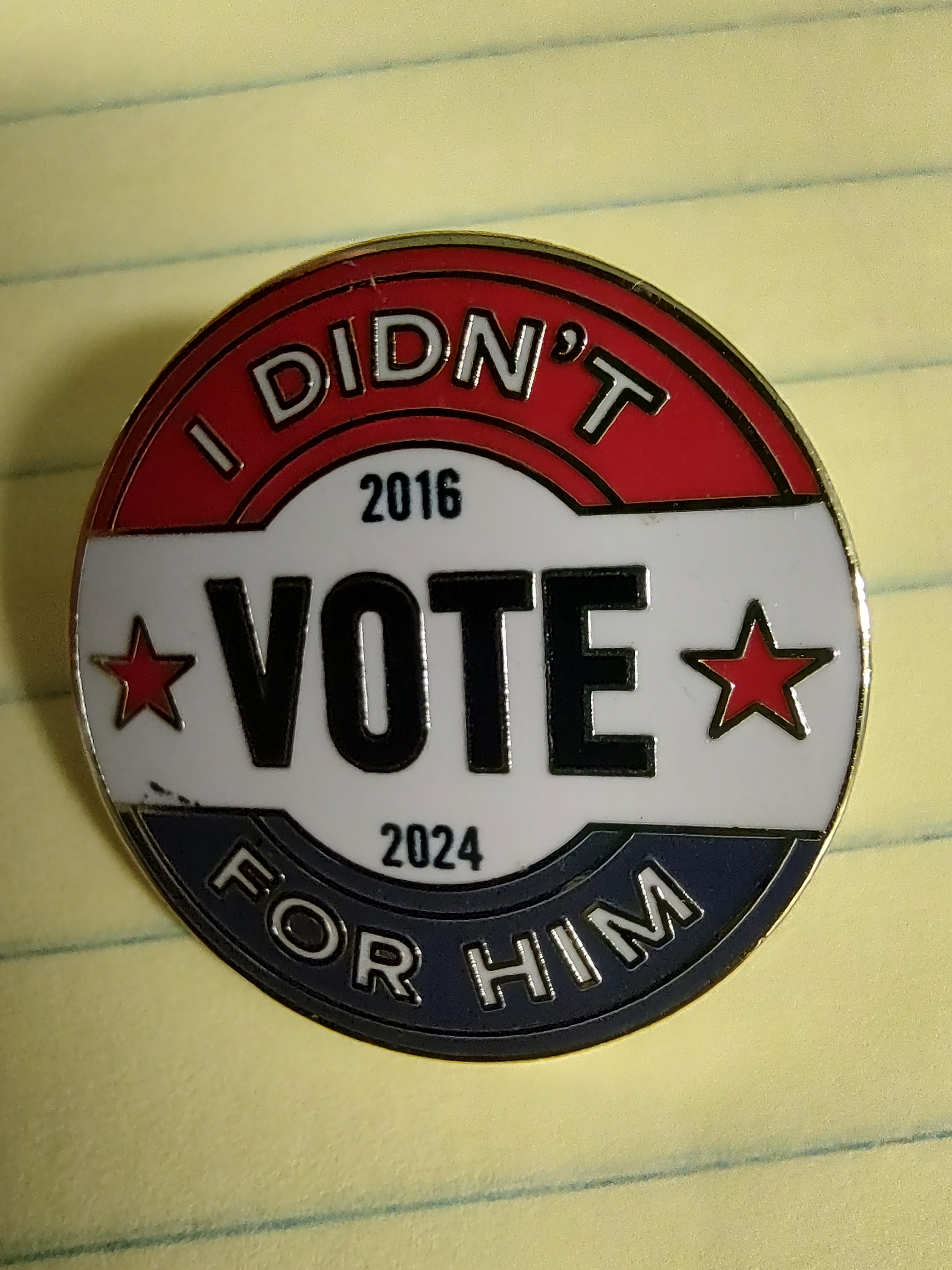 It’s a hopeful act to vote for a Democrat for state-wide office in Alabama these days. And an insurrectionist president, his complicit Department of Justice, and his reactionary Supreme Court majority are assisting in the dismantling of our once proud country and hard-fought election rights. They have made it easier for Republicans in state governments, like Alabama’s, to ignore both legal and moral considerations. The current American President is a scofflaw, a felon, a tax evader, a compulsive liar, a foul-mouthed misogynist, a failed businessman, and a warmonger (shall I go on?) and that makes his followers better able to follow their own worst instincts. What’s worse, they try to disguise those instincts as “conservative values” or, even worse, “Christian values.”
 Professional Southerner