Tag Archives: Grover and Jean Journey

A Eulogy for Mother

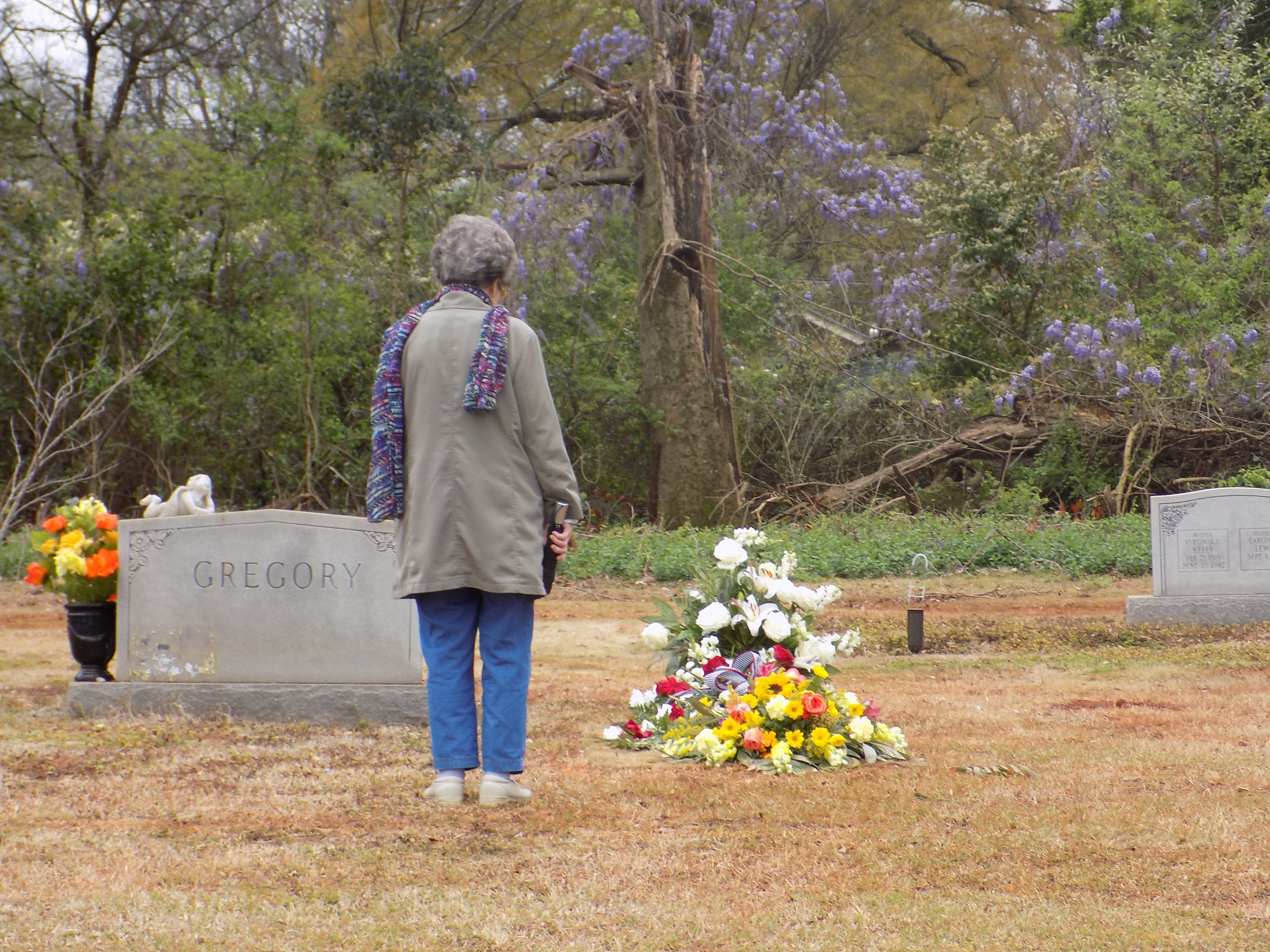
Mother at Dad’s grave (2016)

When my parents, Grover and Jean Journey, moved back to Birmingham after living in Tuscaloosa for almost four decades, Dad decided to sell their burial plots in Tuscaloosa and buy plots at Elmwood, Birmingham’s sprawling historic cemetery. As he put it, “I don’t want your mother traipsing by herself back and forth to Tuscaloosa all the time to visit my grave if I go before she does.” They bought four plots. On my next visit to Birmingham, Mother was anxious to show where she and Dad would be laid to rest (and where I would lie if I decided to take advantage of one of the two extra plots). As Mom walked across the cemetery lawn to find the exact location of their new real estate, I thought this scene will come back to haunt me one day.

Dad passed away in 2016 and he was right: for a long time, Mom “traipsed” out to Elmwood daily, usually alone, to visit Dad’s grave. Mother died ten years after Dad, on June 22 of this year, one day before she would have turned 92. I had been staying with her full time as a caregiver for over four years and had watched as her health declined and her energy and spirit waned. You think you’re prepared, but I’m not sure that you ever really are. Her passing was peaceful and, as far as I can tell, painless.  She died at her home; I was there along with my brother, Rick, and his wife, Jennifer; and she knew that her great friends, Virginia and Herbert Thomas (Mom’s favorite pastor), and their daughter Cindy were on their way from Tuscaloosa for a visit.

The service on June 26 was simple. I think she would have been pleased. The pianist, Kaye Davis, opened the memorial with “What a Friend We Have in Jesus.” At a family funeral in the ‘80s, Mom told me that she would like that played at her funeral. I’m glad I remembered. Herb Thomas officiated, of course. Rick introduced a video tribute he had prepared. He set it to the song “I Can See Clearly Now” by Johnny Nash (“I can see clearly now, the rain has gone …”) which had special significance for Mother after she lost an eye to cancer forty years ago. She had told Rick back then that the song made her kind of sad, but also kind of happy. It was a triumphant video; Mother was smiling and laughing in almost every shot. One of Mother’s neighbors, who had not known about the cancer and the loss of the eye, commented that, “She never let her cancer define her.” Mother would have liked that. She outlived her cancer by forty years.

After the video, Kaye played an arrangement of Beethoven’s “Moonlight Sonata” with the hymn, “It Is Well with My Soul” that Mother had been moved by in a concert Kaye had given several years ago. Brother Herb gave a personal, moving, and comforting eulogy and, after the benediction, an old arrangement of a gospel song, “Going Home” by the Johnson Brothers, was played to end the service. Mother had that song played at Dad’s funeral and told me that she and Dad had agreed that they would play it at each other’s memorials.

My brother, nephew, and I were among the pallbearers and I did flash back to that sunny afternoon when Mom walked across the grounds to show me where she would be buried. Brother Herb recited scripture, prayed, and those gathered sang the “Doxology.” We did our best. I hope she would have been pleased.

_________________________

When Mother chose the monument for their graves in 2016, she asked that two intertwined wedding bands and the words “Together Forever” be engraved under the family name. And now her remains are back with Dad’s for eternity. During Mother’s most intense period of grieving after Dad passed away, I suggested that – as a distraction – she might sit down and write the story of her life and see what good memories that exercise might elicit. I found it in her papers the other day; it begins with the day she met Dad.

There’s really no way to talk about Jean Journey without talking about Grover. They supported each other and never tired of doing things together. When Dad died, I wrote that “they were a formidable team for over 63 years. They were independent and occasionally stubborn. As a team, they didn’t always agree; Mother was never the kind of wife who felt bound to abide by her husband’s opinions and Dad always respected and valued that in her. He didn’t try to run her life and she didn’t try to run his.” However, she always helped and supported him in his work and he always helped and supported her in hers.

Early in their marriage, they lived in Chicago while Dad was stationed at 5th Army Headquarters. Mother worked for an insurance company. When Mother got pregnant with me, they both turned down promotions at their respective jobs to request a transfer south to be closer to family for the arrival of their first-born. Mom always talked about their time in Chicago. They were just kids and the place seemed to be an adventure for them. In their photos from that time – at museums, in Grant Park, along Lake Michigan – they look so happy. Mother always wondered what their lives would have been like if they had settled in Chicago.

The marriage took them to many places as Dad worked with a national company that transferred with every promotion, but they always seemed to land back in Alabama. Wherever they went, they involved themselves with volunteer opportunities in church or schools or other community projects. They were never busier, however, than they were when Dad took a job in Tuscaloosa and eventually became an administrator at the University of Alabama, where he would stay until he retired.

In Tuscaloosa, Mother had opportunities to work with children. She was never happier than when she was holding a baby or talking to a child – hers or anybody else’s. Her favorite charities were those that served children. She especially liked supporting St. Jude Children’s Research Hospital and Ronald McDonald House at Children’s of Alabama. She and Dad taught four and five-year-olds in Sunday School for years and stayed in touch with many of them as they grew up.

Their work in the PTAs of Tuscaloosa City Schools seemed to become legendary for a time. When Dad became president of the City Council of PTAs, Mom was active on a daily basis, visiting the schools, finding out the teachers’, principals’, and students’ needs, and getting it done. I was grown and living out-of-state during much of that time, but whenever I would visit my parents in Tuscaloosa they had school and church projects in the works and were busy fielding phone calls from people soliciting their assistance for other projects. In those days, Mother’s energy seemed boundless.

Mother and Dad were partners in every aspect of their lives. Whenever health issues arose, they became tireless advocates for each other. When Mother lost her eye in the ‘80s, Dad brought her back. Knowing her affinity for gardening, he brought a truckload of dirt to the house, dumped it next to the drive, and she used gardening as a therapy tool. Knowing her fear of driving with only one eye, he stopped on the side of a road and told her to drive the rest of the way home. From that point on, she loved to go for drives by herself until her health began to preclude it. Late in Dad’s life, when he became ill and disabled, Mother challenged his doctors to do more and was determined to bring him home again. When she couldn’t, something in her seemed to break. Over those ten years, I watched her steady decline.

Mother always longed for grandchildren. I didn’t provide her with any but when Rick and Jennifer’s son, Truman, was on the way, Mom’s friends in Tuscaloosa were so excited that Jean was finally having a grandbaby that the people at their church threw a baby shower for her and Dad. Truman’s birth gave both of my parents a fresh spark of energy, it seemed. They cherished their time with him growing up and I always hoped that my mother would be able to see him grown. She did; Truman graduated from college in May.

_________________________

I debate whether or not I should bring up Mother’s political point of view since that topic is so polarizing these days. But as she would often say, “Other people seem to have no problem telling me what they support, so why should I hold back?” She always eschewed political party affiliations and tended to support candidates she felt were honest and compassionate. Growing up, and for most of my life, I perceived my mother as being politically passive. She seldom failed to vote, but she didn’t spend a lot of time worrying about it. Years ago, when she told me who she was going to vote for in a specific election and I challenged her reasons, she blithely replied, “I don’t know … he just amuses me.”

That blithe spirit changed, however, when the current Resident of the White House came to office in 2017. Mother was appalled by everything he said and did; by his lack of morals, ethics, and dignity; by his cruelty, his sexism, his racism. She was horrified by everything he stood for. She became increasingly vocal about it. She became a bit of a news junkie and would talk back to the television whenever the face of “that thing” appeared. The only relief she took from the troubling events of January 6, 2021, was in the fact that his actions on that day had “finished” him politically. So it was of great concern to her when he was “baaaaack” like some dreaded poltergeist. Mother was a person of strong faith and she was shaken by the support for the Resident from within her faith community. It was a source of despair for her. I often heard her say, “Why can’t they see him for what he is?” I was proud of my mother’s belated political outspokenness. We discussed it often and agreed that the existential threat we’re facing was serious enough that we had to speak up. Once, recently, I suggested that maybe it was time we hit the streets in protest. “I would if I could,” she forcefully pronounced. And I know she meant it.

_________________________

A few weeks ago, I tripped over an obstacle in downtown Birmingham and had a fall. Rick had stayed with Mother that day to give me a break. He knew what had happened but had not told Mom. When I finally got back to Mom’s house after a trip to the emergency room, my eyes were swollen, my head was bandaged, and I had a pronounced limp. I walked in and stood next to her bed. She looked up, gave me that look, and said, “What have you done now?”

As I was healing from those injuries, and as my swollen eyes evolved into two impressive shiners, the first thing Mother asked when she called for me every morning was that I show her my face. One morning when I went to her bedside, early in my healing process, she said, “Now let me look.” I leaned down so she could see. She muttered oh my as she evaluated the shiners that were purple and green by then and the bandages covering much of my forehead. “You look awful!” she said. And then, after a moment, she burst into the kind of hearty laughter that I hadn’t heard from her in years. I joined in and we laughed for several minutes. It would almost subside and then it would burst forth again. It was the last time we laughed together.

God, I miss her. She would have scolded me for that previous sentence, telling me not to take His name in vain. I wasn’t.
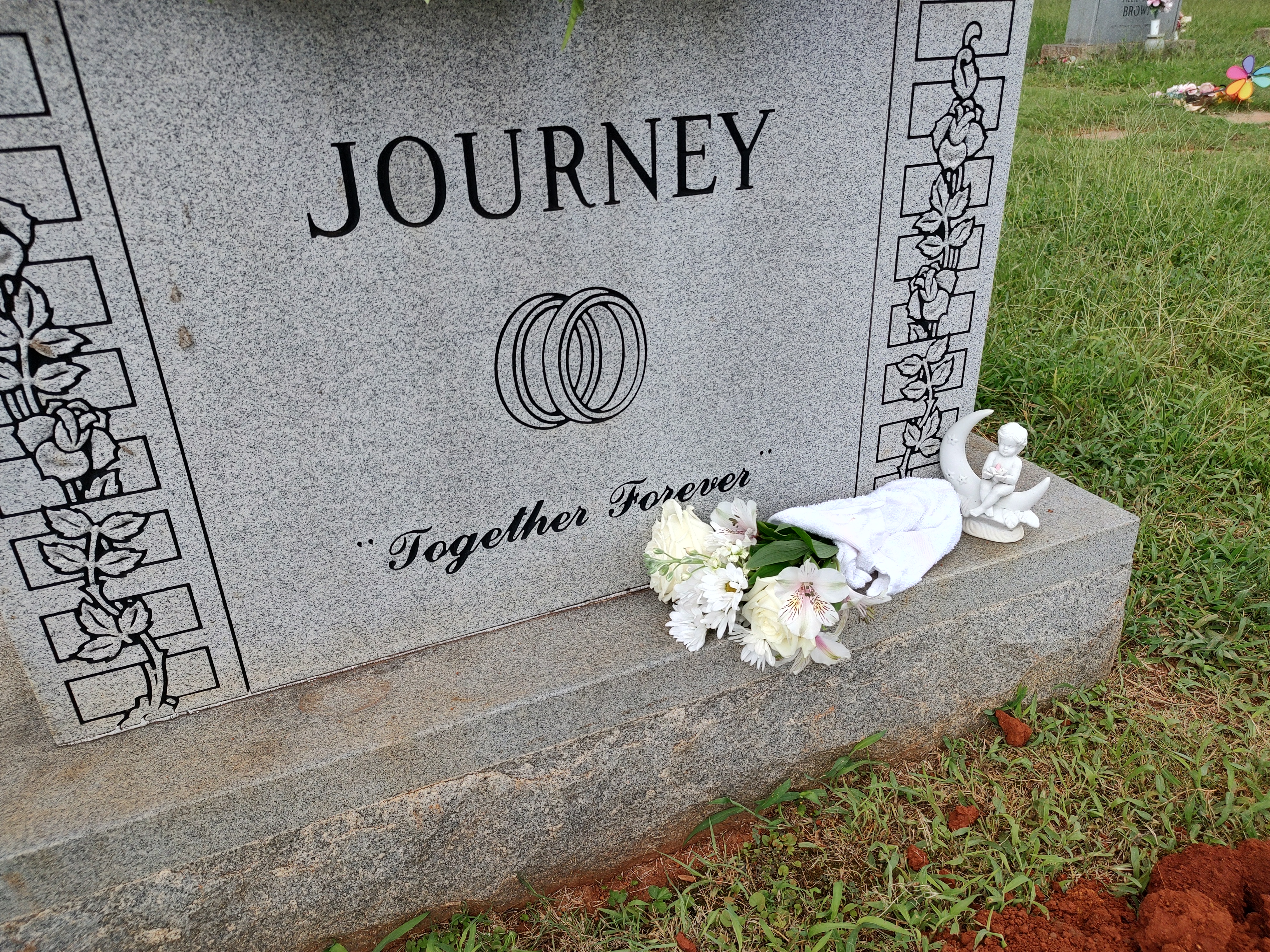
Mother and Dad’s grave (2026)

Ensley

DSCN0435 Each person’s Ensley narrative varies but the through-line boils down to this: Ensley is a proud and tight-knit community on the west side of Birmingham that once was a bustling steel-making industrial center with omnipresent smokestacks, industrial barns and sheds, shift whistles, train traffic, and massive blast furnaces. Because it was a 24-hour town full of shift-workers, many Ensley businesses in the early to mid-20th century were 24/7 operations.

The jazz standard “Tuxedo Junction” is about a club at an Ensley streetcar crossing. Erskine Hawkins, a Birmingham native, is the composer of that tune. My favorite rendition is Glenn Miller and his Orchestra’s chart-topping 1940 big band arrangement.

When U.S. Steel shut down its Ensley works in the early-1970s, the area’s population and businesses began to disperse.

DSCN0399Today, ghosts of Ensley abound; much of the community is semi-abandoned and desolate. Birmingham media have a tendency to report anything that occurs in western Birmingham as happening in “Ensley” and you have the additional burden of a bad rep and the not always accurate impression of an abundance of crime.

Crime is definitely a problem these days in Ensley but the community seems to get more blame than it deserves. Recently, when I was visiting my mother in her over-the-mountain Birmingham neighborhood, a local television news report was covering a recent shooting in “Ensley.” When the address of the crime was given Mother looked at me and said “That’s a Central Park address – why are they calling it Ensley?” For some reason any bad news from the west side of the city automatically gets attributed to Ensley.

DSCN0430Katherine Webb’s 2014 article “Who Is Ensley?” in Weld (www.weldbham.com/blog/2014/01/29/who-is-ensley) provides a good overview of efforts to resurrect present-day Ensley from the challenges it has encountered since the steel mills were shut down. The article provides plenty of first-person evidence of the pride that still hangs strong in the community.

My father was raised on Avenue D and Mother moved around the corner from him to 25th Street as a teenager. Ensley was the starting point for Grover and Jean Journey’s 63-year marriage. Dad and Mother left Ensley for good in the early 1950s but Dad never ceased to be a proud “Ensley boy.” DSCN0429

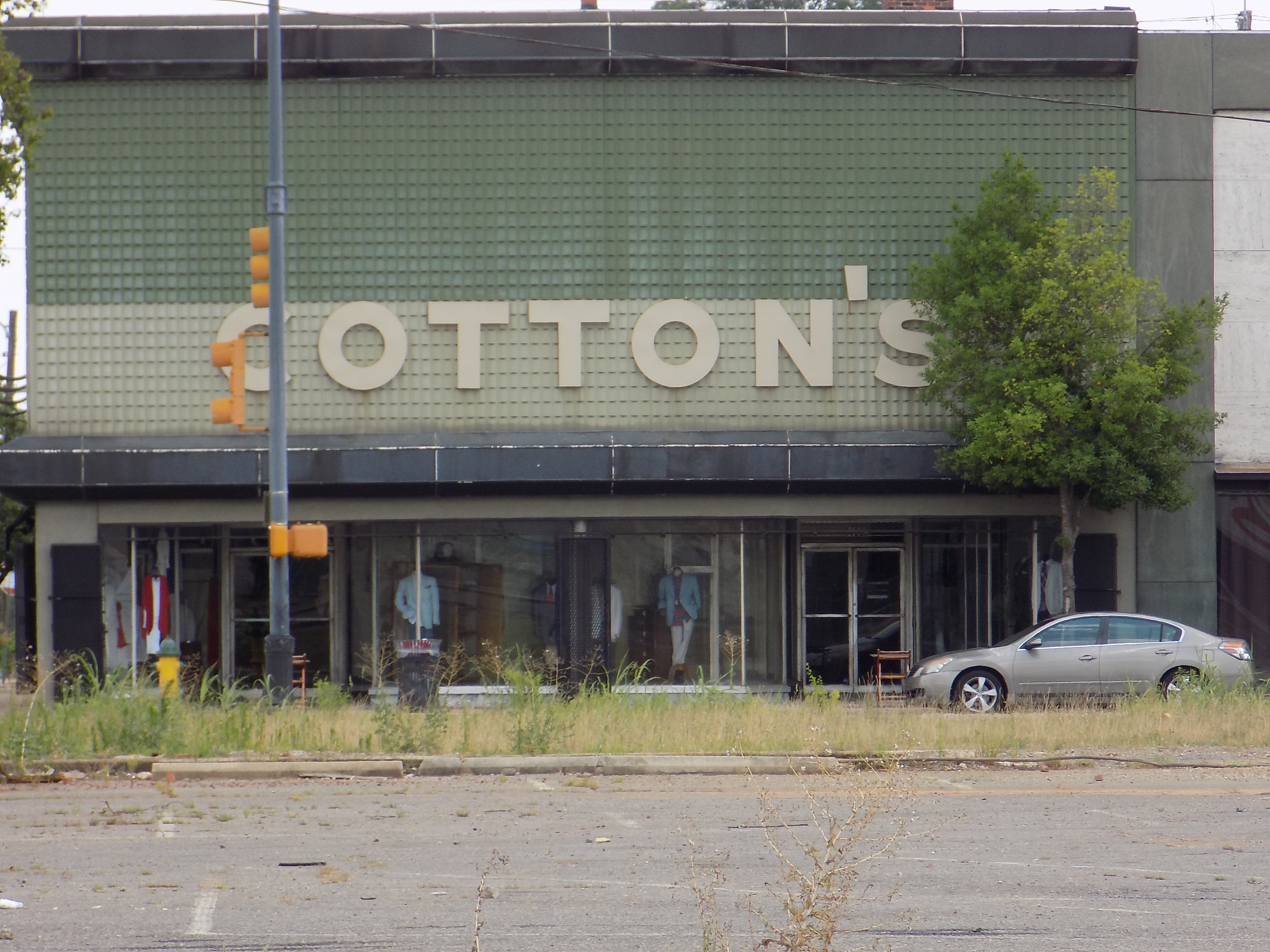
Mother still talks about shopping in Ensley as a young woman and I remember visiting Ensley department stores such as Cotton’s and Goldstein & Cohen with Mother and Grandmother when I was a little boy. Dad’s first job was at the poultry shop that Fred Trucks owned over on Avenue E. Marino’s grocery store, which operated then, still operates on Avenue E across from what used to be Ensley Lanes bowling alley.

One could get a meat and three at Ensley Grill or “all you can eat” catfish at Catfish King’s Avenue E location in the building that was once the Franklin Theatre. In Catfish King, tables were set along each side of a center aisle on raised sections that once held rows of theatre seats and the stage was still there (the grand drape too, as I recall).  These places were still around when I hit my teens.

Dad’s childhood home, in drastically altered form, is still standing and inhabited on Avenue D but the house that Mother’s family lived in around the corner is gone. A house that was once owned by Mother’s grandfather, Houston McCarn – who lived in Cullman but invested in Birmingham real estate when the city was still young, still stands on the corner down the street from Dad’s house. It has been long abandoned.  DSCN0407

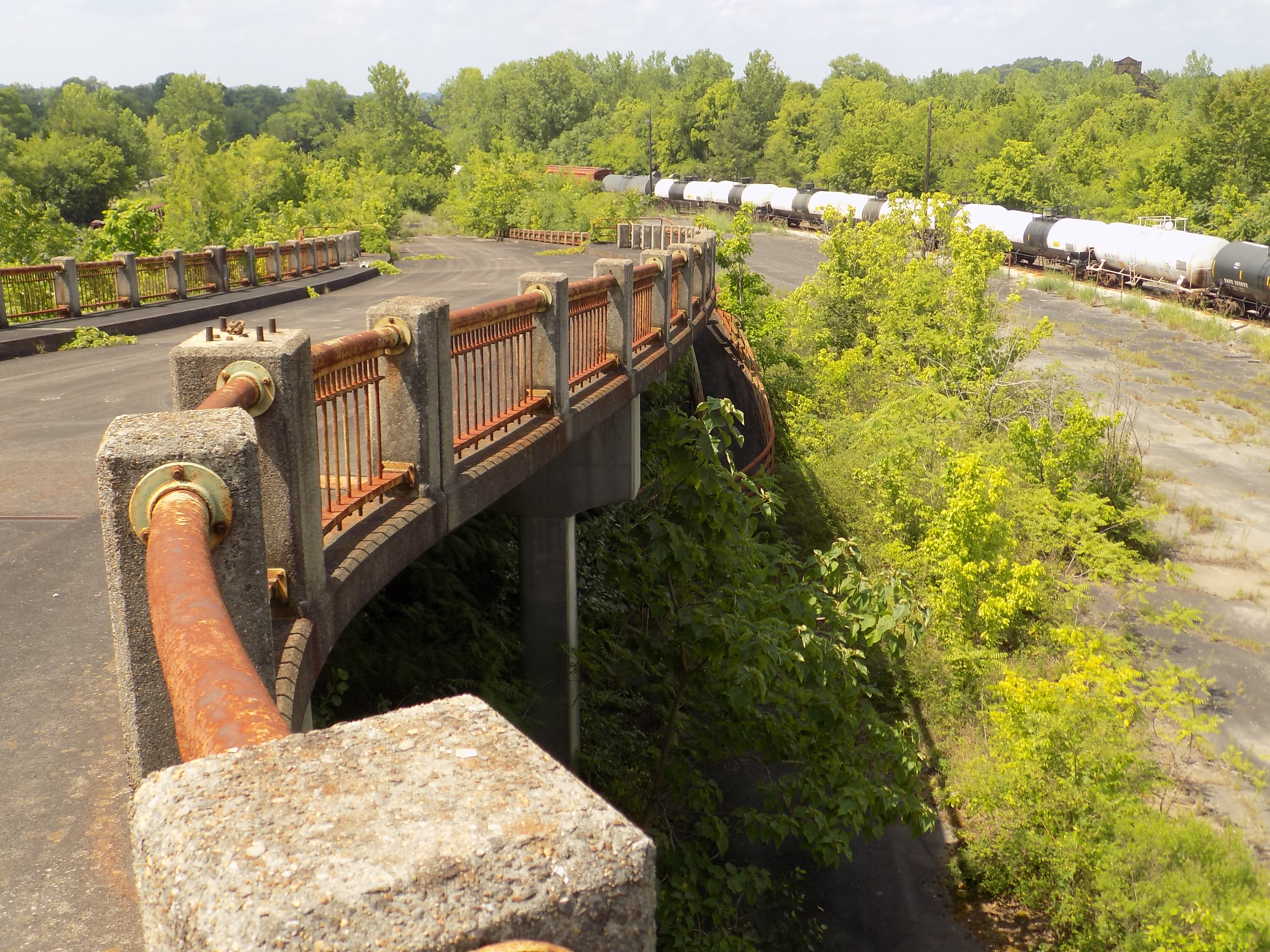
It is these ghosts of the past and the hope for community renewal that still draw me to Ensley. But my main draw these days is an ongoing fascination with the beauty and decay of the former Ensley industrial sites that were abandoned when the steel mills shut down. The railroad tracks are still active through the site and the viaduct over the tracks where 20th Street-Ensley becomes Birmingport Road heading out to the river is a good spot to linger and observe the buildings and remaining stacks that are being rapidly reclaimed by nature.

On a clear day, peering down from the middle of the Ensley viaduct toward Fairfield, you can see to U.S. Steel’s Fairfield plant where the remaining blast furnace was idled in 2015. Fairfield and Ensley steelmaking operations have gone from tens of thousands of workers at their peak to a few hundred at the pipe mill in Fairfield today.

On a hot June morning, the mimosas are prolific at the Ensley plant. Rusty railings and sagging metal buildings with broken windows sit along abandoned roads that used to teem with trucks and industrial vehicles. The few remaining stacks stand tall amid the ruin and rubble. A train creeps through the site, taking loads to more remote locations that are not yet abandoned. DSCN0420

In the modern post-industrial era, things come and go more quickly than in earlier epochs but, to me at least, these 20th century industrial remains have a pride and dignity equal to that of ancient ruins of early civilizations. The craggy, mineral-laden ground that now nourishes the mimosas, poke weed, kudzu, and wild vegetation of the Ensley ruins is the same ground that nourished my family in a recent past that seems impossibly far away.

I will always go back to check on Ensley. DSCN0404

Eulogy

DSCN0193  My father, Grover E. Journey, died on March 21 at a hospital in Mississippi. Mother and I were on the way to Mississippi when we got the word that he was gone. My brother had left a couple of hours earlier but it was a five hour drive; none of the family got there before Dad passed away.

The service was held on Thursday, March 24, at Elmwood Chapel in Birmingham. Three Baptist ministers – Dad’s current pastor and two preacher friends he knew for decades – shared memories, prayer, and scripture. At Mother’s request the song “Going Home” was played — burned from a homemade audio cassette from the 80s of a scratchy gospel quartet vinyl LP from the 60s that Mother and Dad loved. My brother, Rick, assembled a beautiful video of visual images chronicling Dad’s life, set to Bob Seger’s “Like a Rock.”  On the printed program were the lyrics to “The Far Side Banks of Jordan” that I knew from a Johnny and June Carter Cash duet on June’s final album, Press On.

At the brief graveside service in Elmwood Cemetery, after the prayers and scripture, jazz trumpeter Chuck King stepped up to the casket and played “Yea, Alabama!” – the University’s fight song. At the end there was a chorus of “Roll Tide!” from the mourners. My Dad would love that final touch. His grave in Elmwood is not that far from Coach Bryant. It was a sad occasion but also a fitting celebration of a full and well-lived life.

My brother introduced his video and there wasn’t really any discussion of a eulogy from me, although it was mentioned and I declined. My role was to help expedite the week as much as possible. The ministers and the video eloquently said most of what needed to be said. Jim McCain, a minister who was also a neighbor and decades-long friend, got in some witty quips in a very moving remembrance of Dad as a friend and “a good man.” My favorite was his comment that “Grover would sell his lawnmower to eat at the Bright Star,” referencing that favorite restaurant.

At the visitation prior to the service, there were people — strangers to me and people I knew — who were compelled to recount various kindnesses  and assistance Dad had offered to them over the years. One man said, “I am the man I am today because of your dad.”

Since then, I have wondered what I would have said if I had spoken and what I might have said that was different from what the ministers – Tony Barber, Jim McCain, and Herbert Thomas – had so beautifully said – all of it punctuated by the images on Rick’s video.

These are some of the things I might have mentioned:

Dad and Mother were a formidable team for over 63 years. They were independent and occasionally stubborn. As a team, they didn’t always agree; Mother was never the kind of wife who felt bound to abide by her husband’s opinions and Dad always respected and valued that in her. He didn’t try to run her life and she didn’t try to run his. However, she would help him in his work and he would help her in hers. I remember when I was a kid and Dad would bring in extra work to help with family finances; we would all chip in and help – sometimes long into the night. Sometimes Mother would take on extra work with the same results – a family project.

There were times growing up when I was a little jealous of my parents’ relationship. They were always good parents to me but they had such a tight bond that I sometimes felt a little out of the loop.

Mother and Dad were long-time Sunday School teachers in the 4- and 5-year-old classes at Circlewood Baptist. Many of their Sunday School kids stay in touch and have gone on to distinguished and successful lives, thanks in part to “Miss Jean” and “Mr. Grover” and others who taught with them for many of those years. I remember many Saturday nights when Mother and Dad would be preparing projects for the next morning’s class.

Mother and Dad were partners in PTAs throughout their sons’ education, but especially with my brother when they were settled in Tuscaloosa (we moved frequently when I was growing up so there were lots of starts and stops in my education). Eventually, my parents moved through the ranks to become officers in Tuscaloosa’s City Council of School PTAs, with Dad eventually serving as city-wide president for the PTAs.

My parents engineered the early success of the shoebox Christmas ministry there at Circlewood, spending hours and hours each fall collecting, monitoring, and delivering thousands of gift shoeboxes packed full of goodies and necessities to be distributed to children around the world. From that start, Circlewood’s Christmas shoebox outreach is still going strong and has grown to be one of the largest among churches in the region.

Dad and Mother had each other’s back through thick and thin. Whenever there was a health crisis, they pulled together and pulled through, advocating for one another each step of the way. Occasionally they fought for each other. On more than one occasion I told my parents that I wouldn’t want to be their doctor; they would challenge the medical professionals if they felt they were not being treated well or accurately. I realize now that with the current state of healthcare, their attitude is a wise one.

Dad was always a good provider and took care of his family through good times and bad. I didn’t fully appreciate the extent of his commitment to Mother until she had malignant melanoma in 1986 and lost an eye to the cancer. Dad encouraged her and supported her every step of the way – convincing her that she could start driving again, bringing her out into the world again, convincing her that she could go on. She has pressed on with dignity and grace for over thirty years now.

When it was Mother’s turn to become a health advocate for Dad, she stepped in with strength and courage. She was resolute and uncompromising every step of the way. During the final five months of his life, while Dad was continuously hospitalized, Mother was at the hospital for hours every day – until Dad was moved 315 miles away to a facility in Mississippi. As soon as she entered the room he would reach out his hand for her and kiss her. She would sit and hold his hand for hours and when she would leave he would always kiss her goodbye.

When Dad got to the point where he couldn’t speak for himself, Mother did her homework, got multiple opinions, asked many questions, and made strong and often tough decisions. Once, when Mother was talking to a respiratory therapist who had also become a friend, she was second-guessing herself and some of her decisions and said, “… but I think if the roles were reversed he would have made the same decisions for me.” I was in the room and was the only one who was watching Dad during this conversation. When Mother said she thought he would have made the same decisions for her, Dad’s eyes darted to Mother and he shook his head “Yes.” I was the only one who saw that but it put my mind at ease that he was on board with the extreme measures being taken to try to prolong his life.

There are many other memories as well. Dad’s barbecue was some of the finest I’ve ever tasted. His fried chicken wings were amazing and unique and I have never found their match since. Dad didn’t like to make reservations or over-plan a trip; this lead to some pretty roundabout and adventurous vacations and road trips over the years. He was an “Ensley boy” – growing up on Avenue D in the shadows of the steel mills – and anybody who knows Birmingham in the early to mid-20th century knows immediately what that phrase means. Dad would talk about the Ensley boys going across town to take on the Woodlawn boys on occasion.

He would talk about riding his bike with his brothers and cousins from Ensley to a swimming hole on Shades Creek and in later years he would sometimes drive around on Sunday looking for that favorite swimming spot. He never could find it and I suspect it’s located somewhere in what is now the Robert Trent Jones golf course at the Ross Bridge resort.

Dad was a lifelong and die-hard Alabama football fan. Once, he had to take on Bear Bryant; Dad was setting up the Coliseum for winter registration and Bryant, the athletic director as well as football coach, insisted he needed it for a basketball practice. “That Journey man,” as Bear referred to him, held his ground and said, “Coach, I have been told to prepare the Coliseum for registration tonight and that is what I’m going to do.” Registration set-up went on as planned. I never heard where the basketball team practiced that day.

There are plenty of other memories to sustain me. All in all, however, one can’t adequately memorialize Dad without talking about the strength and commitment of his marriage to Mother. I know that would please him.