Author Archives: gedwardjourney

Unknown's avatar

About gedwardjourney

Edward Journey is a writer, theatre artist, and retired university professor. "Professional Southerner" is an online journal focusing on topics -- Southern and other -- that stoke Edward's interests. Edward may be reached at likatrip@yahoo.com.

Peaking

  Each morning, the sun rises over Green Mountain to my east. Upon waking, I go and look out my bedroom window to gauge the coming day. This morning was stunning. Temperatures dipped below freezing overnight, frost was on the ground and rooftops, and a thick fog obscured the half disk of sunlight peeking over the mountain, ivory through grey mist. The whole world had a silver fringe.

My first impulse was to delay getting ready for work, to go back to bed, and to read a few more pages of Proust. I read a paragraph that was close to three dense pages long and decided it was time to put the book away and meet the promising day ahead.

By the time I returned home, from work, the sky was a clear blue, the sun was low on the horizon on the other side of the house, and Green Mountain was clearly visible through the second-floor windows as I stole time to read a few more pages of my book. As I finished, a half moon was newly visible and Venus was the brightest light amid the emerging stars.

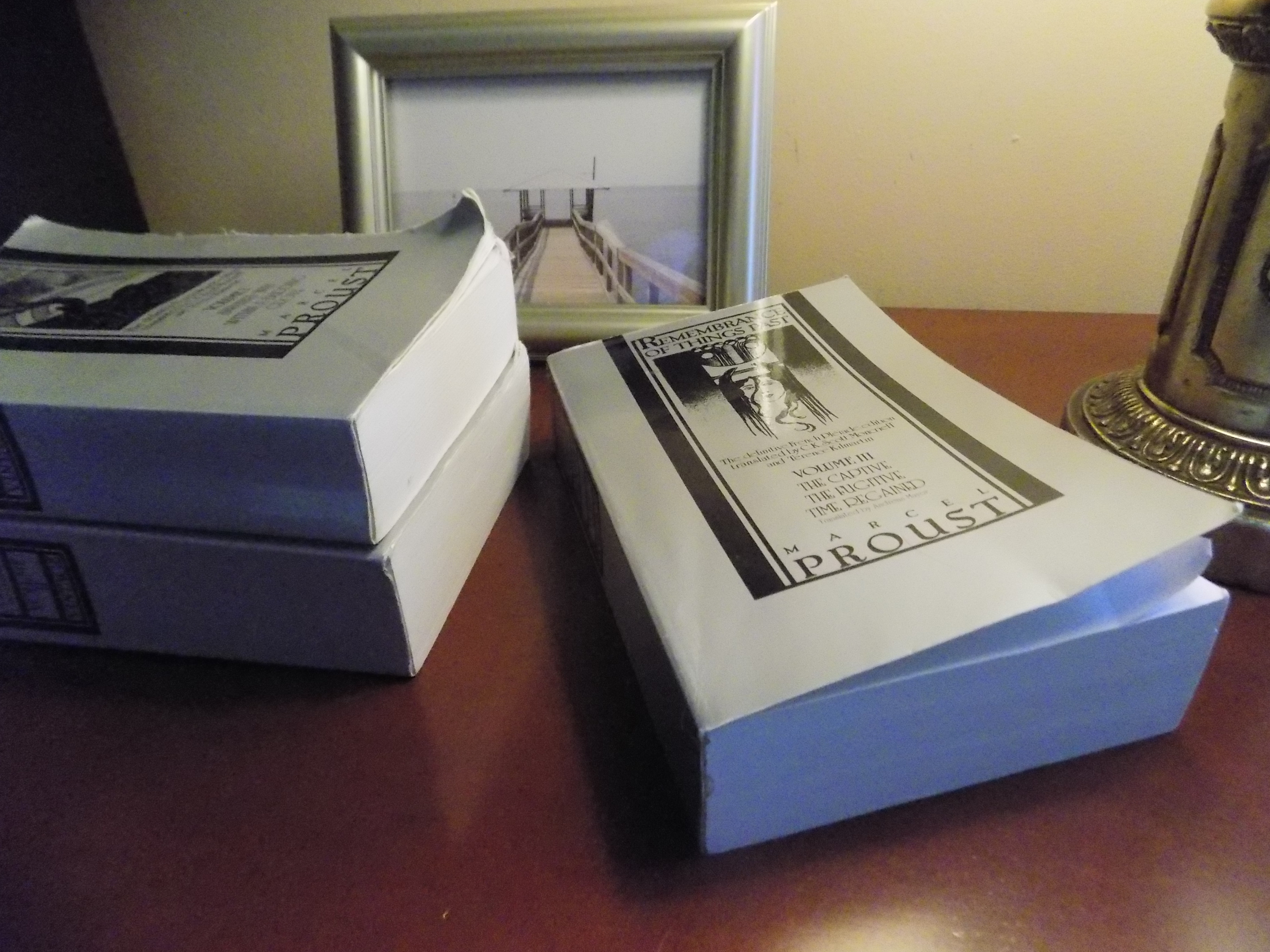
I wrote in summer 2018 that I was tackling an English translation of Marcel Proust’s A la recherche du temps perdu (translated as Remembrance of Things Past or In Search of Lost Time), the daunting seven-volume 20th-Century French masterpiece that has been called the literary Mount Everest (“Climbing Mount Proust”). My incentive for reading the novel was my fondness for the “madeleine passage,” in which the taste of a madeleine pastry dipped in tea brings forth a flood of childhood memories for the novel’s narrator. I have evoked that passage so many times over the years that I finally felt guilty that I had not read most of the 3400-plus pages that surround it.

I didn’t plan to write any more essays about Proust’s book until I finish, but I feel a need to report that I’m still at it. In December, I peaked the summit; now, perhaps, I am well into the downhill slide. I’m hoping to eventually be one of the relative few to have finished the task. I was reading through one of the volumes before a faculty meeting a few weeks ago when an English professor asked me what I was reading. She shuddered, “I would never!” when I told her; she laughed, and I questioned my sanity for a moment.

I questioned my motives, too. Why am I spending such time and effort on a book that I probably won’t be able to discuss with others since I only know maybe a couple of people who have even tried to read it? What am I getting out of this beyond the personal satisfaction of a task completed? When I’m gone, what difference will it make that I read a dense and daunting book over the course of two or three years?

The truth is, I’m enjoying it. It’s a pleasant and eye-opening respite to travel back to a compulsively indulgent French comedy of manners and social satire from a century ago. Proust’s Narrator is not identified by name, but the author occasionally teases the reader with the insinuation that his Narrator is Marcel, something the reader assumes from the start.

The novel is a fever dream, laboriously exploring all ramifications of even the smallest and most nuanced event. Proust spends extensive pages describing the introductions of the Narrator into a salon, only to have the Narrator remind the reader that the events that he has examined in such detail, at such length, only comprise a few moments in time.

I am currently reading the fourth volume, “Cities of the Plain,” also translated “Sodom and Gomorrah,” in which the implicit becomes more explicit. Proust’s melding of time and transience is as potent as his manipulation of sense memory. The author’s voluptuous descriptions are often entertaining and very often outright funny. In discussing over-the-top praise for a simple bow, the Narrator considers how flattery often favors the gesture over the person who made it, concluding that “one indirectly reminds a servant who smells that the practice of taking a bath is beneficial to the health.”

My reading of Proust has prompted me to research and learn more about the Dreyfus Affair than I ever knew from history. The Dreyfus Affair and the anti-Semitism it embodies are often mentioned and divisive topics within the Narrator’s social circle. One’s acceptance or rejection in “society” might be based on one’s stance about that fin de siècle French scandal. One examines it today and finds parallels to other politics and other religious biases. One hesitates in its ramifications.

Most of all, my immersion into Proust feeds my ongoing interest in memory and the ways in which memory is formed. He writes

The images selected by memory are as arbitrary, as narrow, as elusive as those which the imagination had formed and reality has destroyed. There is no reason why, existing outside ourselves, a real place should conform to the pictures in our memory rather than to those in our dreams.

I’m hooked. Pay homage to memory.

Breathe

On the day before I leave for my annual December pilgrimage to Point Clear, I notice an online horoscope for my sign that reads

A strong craving for solitude tempts you to ask people to leave you alone today. Many animals hibernate for the sake of rest and revitalization; you’re not purposely pushing anyone away to hurt their feelings … Let everyone know you are not vanishing from their lives; you just need more sleep. This is one of those occasions when cuddling with your individuality rejuvenates the beast within…

I do not put much stock in astrology, but occasionally a horoscope – like a fortune cookie – will hit the nail on the head (not sure how I feel about rejuvenating “the beast within,” however).

I have made this December trip so many times that there is no longer pressure. I’ve thoroughly explored the landscape down here and don’t feel a need to venture forth too much if I don’t want to.

On this drive down, I am weary.

There is a time in that drive when I exit I-65 South onto AL 225 toward Spanish Fort. Taking that exit, I breathe. I open the car window to breathe in that air “below the salt line.” The air is brisk and chill and I savor its tonic.


By the time I drive through the gates of the Grand Hotel (www.grand1847.com), I am calm and relaxed. After checking in at the gate, driving onto the grounds, I hear the gate attendant say “Mr. Journey is here. He’s driving a gray Ford.”

Although I have heard the prompt, it pleases me when the valet opens my door with a warm “Welcome back, Mr. Journey.” I used to be a professional director and stage manager and I appreciate that attention to detail.

The low pre-winter sunset is intense on my balcony as I unpack and settle in for the all too brief pre-Christmas respite. The afternoon cannon firing at bayside occurs just as I open the balcony doors of my room in the spa building.

On a late afternoon stroll around the lagoon, with holiday lights beginning to flicker on, the squawking ducks, clamoring for food, distract me from the great blue heron standing like a statue just a few feet away. I have just enough time to snap a photo of the stately bird before he glides across the water, landing on the other side with a fish in tow which he quickly ingests.

This year, the lighting in the lagoon area has taken on a theme of arches, with Christmas trees sprinkled liberally along the walkways. In addition to archways scattered throughout the area, the natural arches created by the dipping branches of the ancient live oaks are dramatically accented along the way. The three fountains that dot the lagoon spray up like magnificent sparklers. The effect at dusk, with the golden lights illuminating the dripping Spanish moss and the silver lights on the fountains, is as magical as any magic I’m willing to believe in at this stage of life.


My annual Christmas present to myself – a warm stone massage with Claudia – is scheduled for my first morning at the Grand. I arrive at the spa early to relax in the calm of the quiet room and to catch up on news of my favorite attendants; Al Agee retired a couple of months ago after many decades at the Grand, and J.C., who was off that day, is still around. Michael, the attendant on duty, is a charming character and – like Al and J.C. – he has good stories to share.

I have described my massage with Claudia as “the shortest eighty minutes of my year.” On several occasions during the session, I hear myself expel a deep breath, often as bundles of nerves and tension begin to fade away.

Is it any wonder that I spend my year anticipating this annual respite?


With the Grand resort’s recent upgrades and renovation, the new Southern Roots restaurant is a most welcome addition, providing an inventive, locally-oriented menu featuring locally-sourced produce, seafood, meats, and desserts. The mixologists provide an inventive daily inspiration in the adjoining 1847 Bar. Everything is exceptional. I normally go out for dinner when I stay at the Grand but will be taking more meals on-site now.

Down the road in Fairhope, Dragonfly Foodbar continues to offer an inventive menu of tastes fueled by Asian and Mexican influences. I seat myself in a dining room at Dragonfly that is between two more crowded rooms and amuse myself with the interesting juxtaposition of music coming from each side. As one room plays classic rock, the other plays upbeat holiday tunes. This results in vivid aural contrasts: “It’s Raining Men” competes with “Carol of the Bells” followed by Elton John singing “Tiny Dancer” on my left with “Sleigh Ride” bouncing along to my right.

I tell the server that the random musical contrasts are pretty trippy. “Yeah,” she smiles, “I kinda love it.”

The trippy music trend continues later in the trip as I am sitting at 1847. Elvis Presley’s rendition of “Winter Wonderland” is playing in Southern Roots while, across the Grand Hall at the Bayside Grill, a live musician performs Leonard Cohen’s “Hallelujah.” And I would swear that I simultaneously hear The Supremes’ “The Happening” ghosting in from somewhere in the distance.

The Wash House (www.washhouserestaurant.com), a long-time favorite just down the road from the Grand, is bustling with holiday and birthday celebrations on the night I am there. I decide at the last minute to dine at the more quiet bar tucked away to the side of the main dining room. Seafood is always fresh and local at the Wash House.

The next night, at Camellia Café (www.camelliacafe.com), I start my meal with a half dozen Isle Dauphine oysters from west Mobile Bay near Dauphin Island. These tasty oysters are harvested not far from where my current favorite Murder Point bivalves originate near Bayou La Batre.


Interspersed among my dining experiences are drives around the bay, the search for interesting landscapes and architecture, and the opportunity to photograph favorite spots, both new and old. The dock at one of the city parks along Scenic 98 has long been a favorite. Later, I pull up to Harrison Farms on the main highway for bags of satsumas, to B&B Pecan Co. for local pecans, and to Punta Clara Candy Kitchen for preserves to include in the traditional New Year’s Day meal.

The Sacred Heart Chapel, just down the road from the Grand, is a small church from 1880 facing the bay. It’s closed in the winter, but its grounds provide a pleasant stroll. It’s a quiet spot that has seen its share of hurricanes and battering weather over almost a century and a half, with a porch that is a good spot to rest and take a breath.


The final full day is a special one – although rain persists throughout the day. Early, I go down to Bucky’s, the hotel’s stalwart lounge in the main building, and enjoy West Indies salad, a Mobile original – a chilled salad of crabmeat, chopped onions, oil and vinegar, and seasoning. Later, I return to Bucky’s to join friends Deborah, Jeana, and Emily for a generous and delicious serving of fried crab claws that takes us all back to memories of Grand visits in the past. Emily, who manages a Mexican restaurant near Mobile, introduces me to the Paloma.

On that final evening, I join the Brunson family at Allison and Richard Brunson’s home on the bay. As soon as the front door opens, the aromas of homemade gumbo have filled the house. It’s lovely to sit at table with my friends and their family. As the only one around the table who is not a Mobile native, I enjoy hearing the reminiscences of long-ago days of a Mobile childhood. After an exceptionally delicious slice of Allison’s pecan pie for dessert, I go back to the hotel to rest for my rainy drive back to Birmingham in the morning.

All of these moments go into my storehouse of Christmas memories.


After checking out of the hotel, I have one more errand before I hit the road: I stop at Market by the Bay (www.marketbythebay.com) on the way through Daphne and pick up a shrimp po’boy to go. Back in the car, I put the open-faced sandwich on the passenger seat beside me and pop succulent fried shrimp as I drive. The sandwich is gone by the time I get to I-65, take a breath, and merge onto the crowded highway.

Breathe. And savor the holidays.

Christmas Card – 2019

For a university professor, there comes a feeling of freedom that is hard to explain after a college commencement. The stress of weeks of advising, calculating grades, assessing final exams, and fielding last-minute (and often questionable) excuses, yields to a few hours of everybody dressing in medieval robes and going through an ancient ceremony of finality and (hopefully) new beginnings. Commencement. And only one more faculty meeting standing between me and the short holiday break ahead.


My Christmas cards went out a few minutes earlier than usual this year. As a rule, I don’t want the cards postmarked any earlier than December 1. This year, I waited until later on November 30 to mail the cards from the main post office in downtown Birmingham; after they were put in the box, I saw that the last Saturday pick-up was 8:00 p.m.

It was approximately 7:45 when I noticed that.

I began to get text and email acknowledgements of my cards’ receipt on December 1 and, indeed, the postmark was November 30. Nobody but I would notice or care about that little trivia.

That annual Christmas card – usually with a photograph of an older Alabama church building – has become a year-long project which I have written about in the past. As soon as the cards go out around December 1, I start searching for another image to feature next year. That decision is usually made some time in January; the next few months are spent revisiting the image and thinking about messages when I have some free time and need a break.

The message changes over the course of the year, depending on what’s happening in the world. Some variation of “Peace” has been a constant since 9/11/2001.

In the first few years of the project, I usually stuck with a basic “Merry Christmas” and “Peace on Earth” type message. This year, the “Merry Christmas” was accompanied by “Peace | 2020 | Hope.” That means something to me, whether recipients get it or not. I feel like 2020 may be a watershed year for our world, not unlike 1968 was in my youth, and I look forward to it with both excitement and trepidation.

My Christmas card combines my interests in photography, history, ecclesiastical architecture, and architecture and nature in general. It is always a way to touch base with those I don’t always hear from during the year. The card “restores my soul.” I have written in the past about how each card I address (over 200 this year) becomes a “brief meditation” on that recipient.

My church this year is a 2018 photograph of St. Francis at the Point, a pretty white Anglican church in the charming village of Point Clear on Mobile Bay. It is just down the way from the Grand Hotel where I try to spend a few days each December between commencement and Christmas. On occasion, if my Point Clear trip coincides with a Sunday morning, I will attend an Advent service at St. Francis. On a sunny December morning, with sunlight streaming through the abundant clear glass windows, it is a perfect place for reflection, hope, and meditation. The building is actually a 21st Century structure, dedicated in 2001, but it captures the essence of a style of church architecture that inspires me to grab the camera. The little St. Francis at the Point Chapel, originally built in 1898, sits near the newer building; it adorned my card a few years ago.

My Christmas card is an act of celebration of the holidays and the season to come. It is looking forward to a freshly-pressed year hanging on the line and just almost, almost within our reach – with all of the potential that image represents.

Commencement.

Chapel – St. Francis at the Point

Impending December

Thirty years ago, as the first day of December eased in on a cold midnight, I was sitting at the City Pier on the New London, Connecticut, waterfront. I was in the former whaling center and seaport on tour with a theatre group and had just completed a long and difficult work day in a long and occasionally demanding schedule.

As late and as cold as it was, I had walked through the quiet, empty town toward the water in a light snow to let the frigid sea air clear my head. The walk to the waterfront includes a charming statue of an earnest Eugene O’Neill as a boy, writing intently on his tablet. The acclaimed playwright spent boyhood summers at his family’s Monte Cristo Cottage a couple of miles down the harbor.

As I sat at the harbor, I listened to George Winston’s classic 1982 album December on my Walkman. That music became a frequent companion on the fall 1989 tour. It relaxed me in particularly stressful times.

As each December approaches, I find myself thinking about the soothing music of December. It speaks to the title’s power of suggestion that I only think about that album when December approaches; I would never think of listening to it after New Year’s Eve. Winston’s meditative solo piano perfectly captures the mood of the winter holiday season with its long dark nights, bittersweet memories, pensive moods, and festive gatherings.

December is upon us in this Thanksgiving week of late November. Holiday decorations are beginning to pop up in neighborhoods and stores are already a frenzy of commercial Christmas “cheer.” I plan to find my Christmas wreath at this Saturday’s Pepper Place Market in downtown Birmingham. My Christmas cards are boxed up and ready to be taken to the post office on December 1.

Everything in Alabama will seem to grind to a standstill on the afternoon of November 30 as the annual Iron Bowl football game between Alabama and cross-state rival Auburn occurs – the 84th time that this rivalry has been played. For years it was played in Birmingham’s Legion Field; now it alternates between Tuscaloosa and Auburn. It is as entrenched as any holiday tradition.

My annual December trip to the Grand Hotel on Mobile Bay is on hold. I took too long to figure out my dates and there seem to be no rooms at the inn. I will keep working on it, and I could always go somewhere else – or even take a room somewhere near Point Clear – but the pull of the Grand is strong for me this time of year and I am determined to still make it happen. Memories of Spanish moss hanging from holly trees on the lagoon are always a strong pull.

Another piece of music that comes to mind around December is Joni Mitchell’s classic, “River,” which writer Dan Chiasson calls “the song that, almost two thousand years late, made the Christmas season bearable.” “It’s coming on Christmas,” Mitchell sings, “They’re cutting down trees / Putting up reindeer / Singing songs of joy and peace // Oh I wish I had a river I could skate away on …”

I prefer my rivers unfrozen, but the sentiment is clear. As dear as the Christmas holiday is, it can also be a time of stress and tension and feelings of loss. Whenever I hear somebody say, “I’ll be glad when the holidays are over,” I cringe a little.

But I get it, too.

In the meantime, I will celebrate the holidays and – like my mother’s dog, Lulu – I will seek out my warm spot in the sunshine until I find a river I can sail away on.

Waning October

Maybe it’s because I’ve been reading Proust. Or maybe it’s because I watched part of a Bob Ross marathon on public television over the weekend. Maybe it’s because I heard Prince’s “When Doves Cry” night before last. Whatever it is, as I began to winterize my back yard yesterday, I found myself more attuned than usual to detail and the melancholy of changing seasons.

October was more manic than usual in this Tennessee River Valley region of north Alabama. There were drought-like conditions for a while, accompanied by record-breaking heat. Now the weather is more seasonal, but there is minimal fall color on local foliage. This will be a year when it rains, leaves turn brown, wind comes, and leaves blow down.

I have watched the weather closely, wanting to keep house plants outside as long as possible before moving them indoors. With a first freeze forecast for this weekend, I decided it was time to pull the trigger and move things in.

Only a few things needed to be brought inside this year. The ponytail palm I have kept for twenty years still resides snugly in the concrete pot inherited from my grandfather. A philodendron, remaining from a memorial arrangement of plants sent to my father’s funeral, is being tricky; a few months outdoors seemed to be reviving the plant to its former glory but it has dwindled again. It’s hoped that a few months being pampered in a sunny spot just inside the back door will revive it.

The braided ficus now hovers over the philodendron, standing again in its cold weather spot welcoming anyone entering through the back door. It will probably shed leaves for a while due to the shock of being moved from outdoors to inside – a distance of perhaps eight feet – but it always recovers quickly, brightening up the indoors during the drearier months.

An unexpected import to my library was a container full of basil that has spent the warm weather just outside the back door. I usually allow nature to take its course with the backyard container herbs but the basil is still so healthy that it was moved in, taking a spot in a back window. It’s on the table where I like to eat my summer tomato sandwiches, dressed with basil from those same plants. I’m challenged to see how long into the chilly season I can keep home-grown fresh basil and pesto.

Most of the outdoor plants that will remain outdoors seem oblivious to the encroaching cold. My grandfather’s wild rose, planted along the back walk, has taken advantage of the milder weather to sprout a whole new bunch of blooms and buds. Based on weather forecasts, those may be gone by this time next week. The hydrangea is beginning to retreat. For several years now it has refused to bloom. Every year at this time I vow to do the needed soil amendments to help it flower again next year and every year at this time I regret putting it off for another year.

The redbud, which had such an impressive growth spurt over the summer, has already dropped all but two of its heart-shaped leaves. Based on the success of the little tree this year, I am finally confident that it will survive to flourish next year. Meanwhile, the camellia seems healthy and strong and should be showing crimson blooms within the weeks to come. A fragrant tea olive, planted outside the back gate, is putting on a final fall show of delicate white blossoms.

There was no time to pursue many of my desired garden goals this year, but the one I committed to was nurturing a pot-grown wild rose at my back gate (opposite the tea olive). Over the years, I have tried to train a flowering plant to climb over my back fence and gate. Jasmine never took the hint, but this wild rose, which has become a fast-growing and wildly prolific mainstay at the back gate, is taking well to being trained. It doesn’t look like much now, but I look forward to the two or three weeks in early spring when it blossoms and creates a sweetly fragrant welcome when I arrive home.

Even as the yard is made ready for cooler weather, I make mental notes of changes and improvements to be made come spring. These thoughts of next year propel me forward to face the long nights and dreary cold days ahead.


Fall Feast in the Shoals

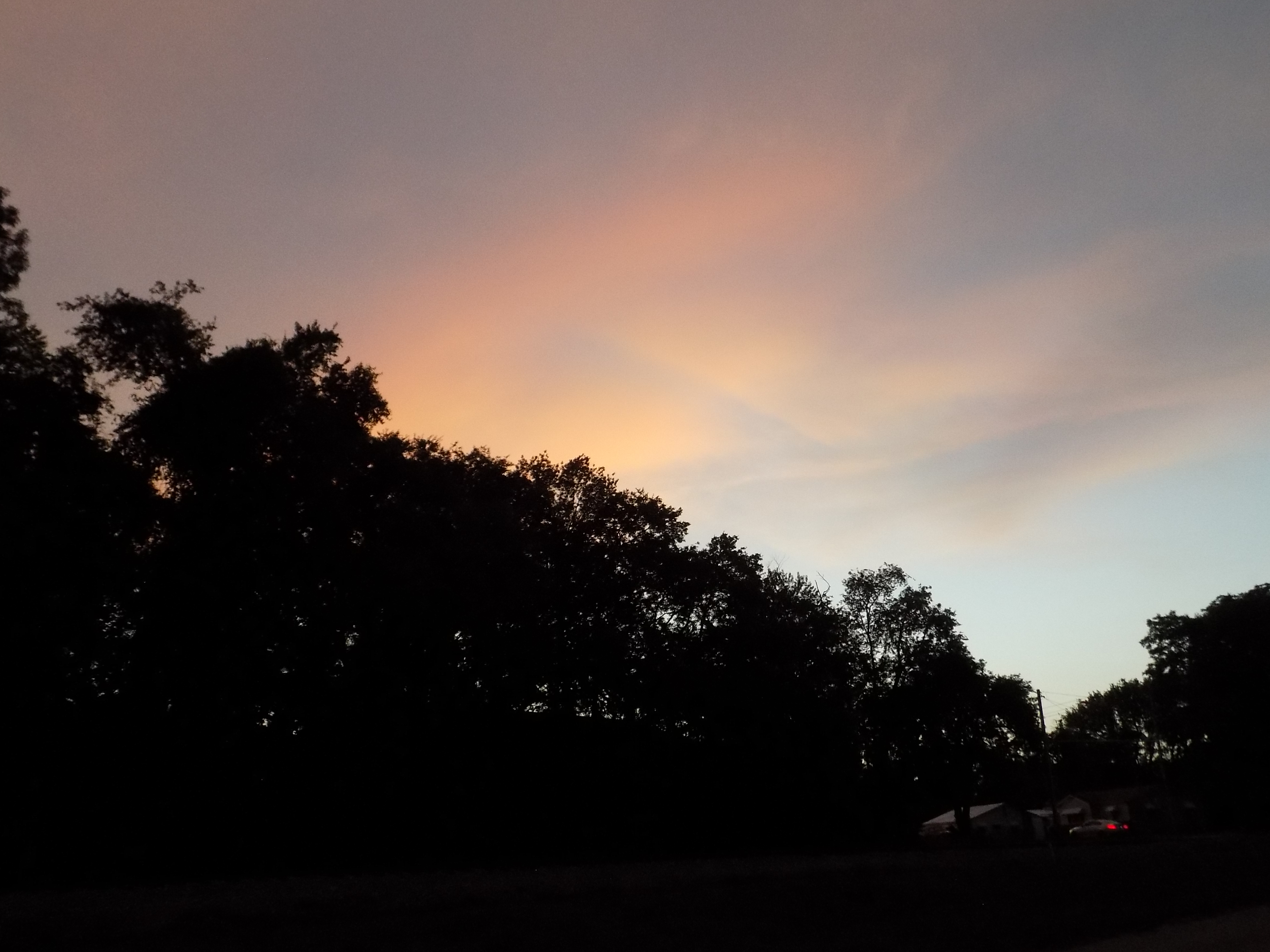
The cotton was shimmering in the low-slung October sun as my friend Anne and I travelled into the Shoals. When we parked at the Alabama Chanin Factory in Florence, a faint rainbow was showing amid pink sunset clouds.

It was time for another Friends of the Café dinner at the Alabama Chanin Factory (www.alabamachanin.com) – a dinner series that draws interesting people from the Shoals and beyond to the former tee-shirt factory on the edge of Florence, Alabama.

Due to fall’s early sunsets, the inviting fashion showroom and dining area were already dusky and shadowy – the skylights providing scant illumination; the room was mostly lit by the glow of candles from a bevy of tables awaiting a sumptuous feast by guest chef Tandy Wilson.

James Beard Award-winner and Nashville native son Tandy Wilson’s City House (www.cityhousenashville.com) is a pioneer of Nashville’s currently vaunted culinary scene. City House and Wilson are celebrated for a menu with a strong Italian influence highlighted by fresh and local Southern accents. The Florence dinner was a perfect example of that blend with Italian dishes featuring seasonal ingredients paired with fine Italian wines. All Friends of the Café events are fundraisers for worthy causes. The Tandy Wilson dinner benefits Project Threadways, a nonprofit that records, studies, and explores the history of the textile industry in the Shoals community, and the American South.

The evening kicked off with a welcome “Fall Indulgence” of Prosecco and apple cider garnished with rosemary and an apple slice. Appetizers began to circulate through the crowd, including a gnocchi fritto topped with a tomato conserva and crostini topped with peanut crema, chicken crackling, and mint. The pre-show showstopper for me, however, was a crispy meatball with a peach-based Jezebel glaze. Each time those meatballs floated past on trays carried by the Alabama Chanin staff, I could not resist.

After thirty minutes of mingling and chat, the diners were seated for a performance by Single Lock Records (www.singlelock.com) artist Caleb Elliott, featuring selections from his debut album, Forever to Fade. Elliott’s label calls his sound “swamp-art-rock.” That works — but I’d call it a soulful contemporary version of the classic Muscle Shoals Sound with thoughtful lyrics, poignant vocal phrasings, and lushly inventive orchestrations. I’ve been listening to ­Forever to Fade ever since the event and highly recommend this engaging musician/singer/songwriter.

The musician’s more pared down selections at the Factory featured Elliott, with his sensuous lyrics, guitar, and bass, and violinist Kimi Samson, providing string and vocal accompaniment. After a long week, this pre-dinner entertainment was a revelation. Elliott and Samson’s performance in the dimly lit room was beautiful; as they played, the staff continued to glide  surreally through in the glow of candlelight — offering up appetizers to the seated diners. It was one of the most transcendent of many magical moments I’ve experienced in that venue in the past five years.

By the time the pre-dinner activities concluded, we had become acquainted with a tableful of interesting people including artists, musicians, educators, and fashion, medical, and communications professionals from the Shoals and beyond. One couple – originally from the Shoals – was visiting from Germany, where they have lived for several decades. Everyone at the table, it seemed, had a common connection with Tuscaloosa and the University of Alabama. Once again, I had leverage for my slightly tongue-in-cheek observation that “Florence is the center of the universe, and all roads pass through Tuscaloosa.”

I might have overdone it with the meatball appetizer, but I managed to find room for the first of four courses that Chef Wilson distinguished by combining a load of ingredients in ways that allowed each to shine through and have its moment (or more) on the palate.

The first course featured three family-style dishes starting with a salad of hearty greens with alici (fresh anchovies) and a generous creamy mozzarella made by Chef Wilson in the Factory kitchen that morning. Part two of the first course was a sour corn cake with roasted squash embellished with mint, chilies, and sumac. That first course culminated with roasted octopus accompanied with soup beans, charred cabbage, bacon, chilies, garlic, and toasted bread crumbs.

The octopus might have raised an eyebrow or two at my table, but I bit into it eagerly and had  the best bite of octopus I have enjoyed in my life thus far. I hope Chef Wilson would not be offended if I compare it to the rich, succulent texture of fatback. As the bowl made its way back around the table, I hoped to find a piece of octopus remaining, but no such luck.

The second course was more minimal with a simple spaghetti “cacio e pepe” served with a roasted vegetable ragu, fried bread, and parsley. The simplicity of the dish was an elegant complement to the complex flavors that preceded it.

The centerpiece of the third course was a roasted pork loin. Chef Wilson explained that he thinks his version of his Nana’s marinade, which accompanied the pork, was a pretty good recreation of his grandmother’s closely guarded recipe; he confessed, however, that other family members do not agree that his kitchen nailed it. The marinated pork loin was succulent and singular, but the bed it rested on is what caught my attention and intrigued me even more. The room temperature accompaniment to the pork was a multi-textured mix of cauliflower, pomegranate, almond, red onion, and parsley. The mouthfeel of the pork with the chewy crunch of the other ingredients is a food memory I will carry with me for a long time.

Finally, the dessert was apple crostada with oat pecan streusel. It’s hard to imagine a better finale to an early fall feast. The accompanying extra brut was a fine way to offer a toast with the new friends at table, and to wish that we all might again converge at the Factory for another memorable meal in 2020.

A Legacy of Cotton

Lincoln Mill, built in 1900 near downtown Huntsville, Alabama, was once the largest cotton mill in a town that thrived on cotton production in the first half of the 20th Century. When Lincoln Mill shut down in 1955, the buildings were repurposed to house NASA offices. Now, the remaining Mill #3 has become a base for innovative technology and other concerns that seek to define Huntsville in the 21st Century.

Remnants of the historic mill village remain in structures like Lincoln School, the mill commissary, and numerous residential sites – duplexes and single-family houses – originally built to house mill workers and management.

Lincoln Mill #3

Upon moving to Huntsville, I was intrigued by the remaining evidence of the area’s cotton production that was scattered throughout the area. Not that long ago, the Memorial Parkway / Highway 231/431 corridors were still lined with significant fields of cotton. Today, most of those fields have disappeared – victims of urban growth and development – but at this time of year, and despite semi-drought conditions, I am heartened when the fluffy white cotton bursts forth and what remains of the local cotton harvest commences.

Cotton production in the South has been stigmatized by a regrettable history. For me, however, it still represents a part of my personal family history; my foreparents in north Alabama worked their own modest farms without the assistance of enslaved people and, into the 20th Century, without assistance from anyone outside immediate family. My Grandfather Harbison worked his family farm until the 1940s when he moved his family and his skills to the steel-based factories of Birmingham.

I vividly recall a trip, as a young boy, to visit relatives in Cullman County in mid-October. It was cotton-picking time and my older cousins strapped a sack over my shoulder and led me into their family field to help pick cotton. I probably wasn’t out there for a very long time, but I have always cherished the memory of the time I helped with the harvest of such an important and enduring crop. That brief adventure provides a connection to my family’s farming legacy.

Decades later, in 2012, I was one of many volunteers from far-flung places who helped to maintain a seven-acre field of organic cotton near Trinity, Alabama, in Morgan County. When I went there, my job was to weed. Chemicals were not being used with the crop and weeds were prodigious. It was an experiment by the Florence-based fashion designers Natalie Chanin and Billy Reid to gauge the feasibility of growing their own totally organic cotton crop in north Alabama. I’m not sure of the conclusions of the experiment, but for me the yield produced one of my favorite tee-shirts of all time and a scarf which has been repurposed as a table runner. .


Holtz Leather Co. – exterior

Holtz Leather Company (www.holtzleather.com) is located in the former Lincoln Commissary, not far from the campus where I teach. The recently renovated 1920’s-era building is also home to Preservation Co., a family-owned architectural antiques business. I wish I had more excuses to stop by the Holtz retail shop because each visit makes me happy.

Holtz is a family-owned business offering high quality leather goods. The showroom smells of leather and displays an array of distinctive and authentic wares. Belts, wallets, bags, portfolios, purses, and journals are among the distinctive designs available from Holtz Leather. The company catalog is itself a thing of craft and beauty, as readable as a compelling piece of literature.

I first came to Holtz to purchase engraved journals for my teenaged nephew and a couple of favorite girls who are the daughters of friends. As is the case with all good gifts, I yearned for a Holtz journal of my own.

Instead, I stopped off at the Holtz showroom when I needed a new leather belt. The sales associate led me to choose my waist size, my color, my buckle, and the monogram for the loop. I left with a custom belt, crafted while I watched. The whole process took less than ten minutes.

Ian finishing a belt

Holtz Leather Co. – interior


A few days ago, I needed another belt and went through the custom process again with an equally attentive associate, Ian. The Holtz showroom is transformative; one looks out the expansive street-side windows and imagines the days of the factory workers whose long and hard labor had such an impact on the local economy. At the same time, Holtz employees like Ian are exalting the handmade traditions of the place with their own skills and returning a small slice of Huntsville to some semblance of its admirable, but disappearing, roots.


About forty-five miles southwest of Huntsville, Red Land Cotton (www.redlandcotton.com) in Moulton, Alabama, is an even more direct tribute to Southern cotton culture. The Yeager family grows and monitors its own cotton fields in northwest Alabama to create luxurious heirloom linens that are totally produced in the American South. Their slogan is “Heirloom Offerings from Our Farm to Your Home” and their story, lovingly presented through videos and essays on their company website, is a hopeful and inspiring one.

Red Land Cotton linens are grown and ginned in Alabama, spun and woven in South Carolina, and finished in Georgia, using minimal processing and chemicals. Finally, the cotton returns to Moulton to be sewn, sold, and shipped to consumers across the country. Red Land collections include bed and bath linens – including linens for baby beds, quilts, and a line of women’s loungewear.

Mark Yeager was inspired to produce heirloom linens by memories of the sheets he slept on as a boy at his grandmother’s house. These memories led to taking a 1920s heirloom bed sheet, sending it off for an engineering analysis of its construction, and producing a thicker yarn than one finds in contemporary store-bought sheets.

Red Land Cotton linens have only been available for a few years but I have heard enough good things about them that I decided to invest in a set recently. The package arrived promptly and the packaging was beautiful. I’m not sure that I’ve ever been excited about a new set of bed linens before but the Red Land Cotton experience felt special.

Once the sheets were washed and put on the bed, they did not disappoint. They are sturdy and comfortable and lend themselves to a rich and deep night’s sleep.


With the holidays soon to be upon us, it’s sometimes hard to find quality items from local purveyors using local workers and materials. The quality family-owned businesses like Holtz Leather and Red Land Cotton give assurance that such companies are still out there if we just keep our eyes and ears open. These fresh new businesses, built on tradition and on the relics of the Southern cotton legacy, are forward-thinking treasures to be supported.

Automatic Seafood and Oysters

Some things are worth the wait. Three years ago, Chef Adam Evans presented a dinner for Alabama Chanin’s “Friends of the Café” series that still ranks among my favorites of over two dozen meals eaten at that venue. Evans had just completed a successful run at The Optimist and other Atlanta restaurants, and, since I’d rather have a colonoscopy than go to Atlanta, I had only admired him based on his press from afar. It was a pleasure to experience his menu and see that he lived up to his reputation. The course I most remember from that night was perhaps the simplest – a garden salad assembled with ingredients gathered from the chef’s grandfather’s garden that morning.

Evans is a Shoals native and the rumor in Florence that night was that he was working on a new restaurant concept for Birmingham. That rumor put Evans’s Birmingham restaurant on my radar and I began to do regular searches for “Chef Adam Evans Birmingham.”

My diligence did not yield much information until the Southern Foodways Alliance (SFA) Winter Symposium in Birmingham in February 2018. The opening night reception was held on the loading dock of an abandoned factory on 5th Avenue S. in the Lakeview District. Chef Evans had grills set up off the loading dock and picnic tables were arranged for seating. It was a delicious, charming, and bare bones affair.

The theme for that symposium was “Narratives that Transform” and John T. Edge, SFA Executive Director, announced that the space where we had gathered for our opening night reception was the future site of Adam Evans’s new restaurant, and that the narrative begun that night would conclude at the 2019 SFA Winter Symposium with an opening night reception in the finished restaurant on that very site.

Now that I had a location, I drove past that corner of 5th Avenue every weekend to check on the progress. There wasn’t much to see for several months, but then windows began to appear and a restaurant began to take shape at what used to be the Automatic Sprinkler Corporation factory. Still, by January 2019, I was skeptical that there would be a finished restaurant in time for the symposium in February.

The SFA Winter Symposium 2019 held its opening night reception at Good People Brewing.


Automatic Seafood and Oysters (www.automaticseafood.com) opened in April. I was anxious to eat there as soon as possible but a good opportunity did not present itself until August, when my friend Christina drove down from Huntsville to join me for dinner during Sidewalk weekend.

If you ask about my favorite types of restaurants, my answers will be all over the map. I like any place where one can eat authentic and well-prepared food, whatever the price point and style, and where the ambience is warm and friendly. But one of my very favorites is an urban seafood place with a comfortable vibe and delicious and imaginative food. Birmingham’s Ocean (www.birminghamocean.com) on 20th Street S. has been a long-time favorite. Non-residents don’t realize that Birmingham is only about four hours from the Gulf of Mexico and trucks with fresh catches come into the city daily. I still won’t eat seafood in land-locked states, but it is always fresh and available in Birmingham.

With all of those points in mind, Automatic Seafood and Oysters is a new favorite to add to my lists. The interior, designed by Suzanne Humphries Evans, combines an open layout with furnishings that seem upscale and special while also recalling a seafood shack on the Gulf. Large floor-to-ceiling windows on the north and east facades add to the open feel. The restaurant is located in a transitioning neighborhood that still has an industrial feel, so the decision to put the main entrance off the street on the north side allows entry onto a terraced green lawn, away from the bustle and traffic of the street-side.

Servers are friendly, knowledgeable, and attentive and the menu is full of seasonal options. Christina commented that she’d like to order a bite of everything. Instead, our meal started off with crab claws and freshly shucked oysters from the large and beautiful oyster bar located in a corner of the room. For contrast, I ordered Canadian oysters from Prince Edward Island and Murder Point oysters from Bayou La Batre, Alabama (www.murderpointoysters.com). The briny, buttery Murder Points were the best Gulf oysters I’ve ever had, and possibly the best oysters I’ve ever had, period.

My main course was a simply roasted grouper that was prepared, seasoned, and presented to perfection. Christina’s cobia dish was equally detailed. Conversation waned as we savored two beautifully prepared seafood dishes. Our generous shared side of basmati rice with smoked fish, curry, and peanuts was an ideal accompaniment to both dishes.

For dessert, there were several tempting choices but we chose brown sugar cake with peaches and cream. It was a perfect finale – a little decadent, but not too sweet.

Automatic Seafood and Oysters is a bright new jewel on an already vibrant Birmingham culinary landscape. After three years of waiting, I am happy to say my high expectations were met and exceeded. I look forward to my next of many visits to come.

I Want My Sidewalk 2019

 Birmingham’s Sidewalk Film Festival (www.sidewalkfest.com) is always the final full weekend in August before college football season commences. Although the festival events begin several days before the weekend main event, Sidewalk, for me, always begins on Friday evening and ends late on Sunday night. During that time, there are several hundred screenings of every variety of shorts, documentaries, animation, and feature-length moving pictures at venues throughout the northside of downtown.

2019 marked the 21st edition of Sidewalk. In the early years, I would pride myself on how many screenings I could cram into a 48-hour period. Nowadays, I study the schedule carefully, curate a schedule that fits my time, and allow myself time to breathe. At Sidewalk, it’s impossible to see everything one might want to see; that’s part of the charm and mystique.

Sidewalk’s most exciting new addition to downtown Birmingham this year is the Sidewalk Cinema and Film Center, a two-theatre complex in the basement level of the Pizitz building that will screen indie films 365 days a year. With the two screens at the Pizitz, the Alabama, the Lyric, the Carver, Red Mountain Theatre’s cabaret space, and the McWane Center’s IMAX, Birmingham’s downtown “theatre district” is once again living up to its name.

Friday, August 23

Traditionally, my Sidewalk weekend begins with lunch at Chef Frank Stitt’s Chez Fonfon. My weekend pass is waiting at the Central Ticket Office at the Pizitz, around the block from the Alabama, Sidewalk’s most storied venue (www.alabamatheatre.com).

In the early days of Sidewalk, the Opening Night presentation was often a cutting-edge film which might open to mixed response. I remember the grumbling after John Sayles’s Silver City opened Sidewalk in 2004. It wasn’t Sayles’s best, but I was happy to catch a new Sayles movie on a big screen in Birmingham.

Since those days, the Opening Night film is most often a goofy documentary geared to a broad general audience. Although I enjoy being there for the opening festivities, I am sometimes likely to leave when the feature starts. A few years ago, when they opened with a documentary about some cat that was a sensation on the internet, I didn’t even bother to attend opening night.

This year, the opening feature is I Want My MTV. The 2019 documentary, directed by Tyler Measom and Patrick Waldrop, premiered in May at the Tribeca Film Festival. I Want My MTV is both informative and a great feel-good way to open Sidewalk 21. Alan Hunter, one of the original MTV veejays interviewed in the doc, is a Birmingham native, a founder of Sidewalk, and, for many years, was the very popular opening night emcee for the festival.

A short documentary, “Lost Weekend,” is screened prior to the feature. “Lost Weekend,” by Birmingham filmmakers Bradford Thomason and Brett Whitcomb, chronicles the climaxes and misadventures of a young Pennsylvania man who wins a 1980s MTV contest in which the prize is a weekend for two to hang out in Detroit with Van Halen’s concert tour. Everything you expect to happen in that scenario, happens.

Alan Hunter is on hand to help introduce the feature film, which focuses on the genesis and early years of what was then a music video network that became a major force of 1980s popular culture.

As the Opening Night movie ends, the sell-out Alabama Theatre audience flows onto 3rd Avenue North in front of the theatre for the opening night street party. I have no doubt a good time will be had by all, but I walk through the festivities and straight to my room at the Tutwiler Hotel.

Saturday, August 24

When I arrive back at the Alabama on a bright and sunny Saturday morning, I don’t quickly comprehend why there are “cigarette girls” in the theatre lobby offering packs of candy cigarettes to patrons. However, I am there to attend a screening of the new documentary, Mike Wallace Is Here, directed by Avi Belkin, and am about to watch an hour and a half of on-screen smoking from a time when on-screen cigarette smoking was common, even for reporters on the job.

The life of Wallace, the legendary investigative news man who is best remembered for his decades on “60 Minutes,” is examined in detail in a fascinating no-holds-barred way that is reminiscent of the interviewing style of Wallace himself. His detailed examination into every story he covers is as incisive and prickly with Bette Davis and Barbra Streisand as it is with the Ayatollah Khomeini and John Ehrlichman.

After the screening, I grab a quick bite at the Pizitz Food Hall and head to the Alabama School of Fine Arts for a block of Alabama- and politically-themed documentary shorts. My favorite is Carroll Moore’s “Dawoud Bey: The Birmingham Project,” an examination of Bey’s photography mission to capture images of children the same age as the “four little girls” of the Birmingham church bombing were when they were murdered in 1963. He also includes homage to the two young boys who were murdered later in the day during the bombing’s aftermath.

“Call Me,” directed by Megan Friend and Norris Davis, is a most entertaining exploration of the rhymes and reasons behind attorney Alexander Shunnarah’s ubiquitous billboards that cover the state of Alabama. The 9-minute short includes the full 48-second Alexander Shunnarah / Jurassic Park parody by Kelly Coberly.

Other documentaries in the block explore political activism to get out the vote (“Woke Vote”); emergency responders in Tuscaloosa (“Druid City Strong”); photographic documentation of abandoned buildings in Birmingham (“Walls of Jericho”); diversity and inclusion in a rural Alabama climbing expedition (“The People of Climbing”); student debt (“A Generation Drowning”); and a 70-year-old murder case that went unpunished (“Murder in Mobile”).

From the School of Fine Arts, it’s a short walk to Birmingham Museum of Art for Vita and Virginia (2018), a British film directed by Chanya Button. This is another biographical exploration of the tortured romance of Virginia Woolf (Elizabeth Debicki) and Vita Sackville-West (Gemma Arterton). This latest one is adapted from the 1992 play of the same name by actor/playwright Eileen Atkins.

Vita and Virginia lingers over the cat and mouse game that leads up to the affair of Woolf and Sackville-West in the artistic communities of 1920s England – particularly the Bloomsbury group. The story is told realistically, but with the occasional inclusion of tangled imagery that seeks to capture Virginia Woolf’s mental instability and emotional confusion. There is a stilted, stagey formality to the dialogue at times, but one adjusts to the play’s pace and structure. Atkins based much of her play on the letters of the two title characters; there are some fine moments when the camera rests on a face speaking directly into the camera, delivering emotional and occasionally laughably over-the-top declarations.

Despite noble and occasionally brave performances, Debecki and Arterton seem miscast to me.

Among the supporting actors, Peter Ferdinando delivers an understated, complex, and compassionate performance as Leonard Woolf and Isabella Rossellini has a fine turn as Vita’s snarky mother, Baroness Sackville.

By the time Vita and Virginia is over, a passing thunderstorm drenches downtown and Museum maintenance staff is scrambling to deal with puddles and leaks outside the main entrance as I make haste to get back to the Tutwiler to change and join a friend for dinner.

Sunday, August 25

I will not go to church today, but I waken to the pealing of church bells throughout the city – not an unpleasant way to meet the day. And I plan to attend something equally spiritual and, to my tastes, more inspirational.

A few months ago, when I first heard the buzz about the new Aretha Franklin documentary, Amazing Grace (1972/2018), I remember thinking I hope that’s scheduled to play Sidewalk this year.

It was.

In 1972, director Sydney Pollack and his crew filmed the two-night recording session of what would be Aretha Franklin’s best-selling live gospel album, Amazing Grace. The recording took place in the sanctuary of the New Temple Missionary Baptist Church in Los Angeles. Franklin was supported by legendary gospel singer James Cleveland, the Southern California Community Choir, and an all-star group of musicians. Mick Jagger and Charlie Watts are spotted in the audience.

For some reason, during Pollack’s recording of the two services, the audio and video were not synched, the footage was deemed unusable, and eventually the film was presumed lost.

Fast forward to the early 2000s: the “unusable footage” is rediscovered, producer Alan Elliott supervises a team of digital experts in the rehabilitation of the “lost” footage, and the resulting movie is a revelation. During her lifetime, Franklin kept suing to halt screenings of the reconstructed movie. After her death, the family consented to the release and it is finally being shared with audiences world-wide.

No real effort was made to mold the concert into something “cinematic.” Much of the footage is raw and immediate, with awkward camera movement, sloppy zooms, finding focus – all still there for the world to see.

So is raw emotion – James Cleveland breaking down in sobs at one point; the choir clearly overcome by the event they are witnessing and being a part of; Rev. C.L. Franklin – Aretha’s father – jumping up to wipe the sweat from her face and neck as she plays the piano. His handkerchief completely covers her face at one point just before she starts to sing. The audience, lost in emotion and awe, becomes a part of the power of the film and Pollack’s camera crew scrambles to capture it all.

You must see it.

As the Sidewalk audience gathers outside the Lyric Theatre for the screening, ladies distribute church fans on the sidewalk. When the audience is seated in the theatre, Birmingham-based gospel singer Belinda George Peoples emerges from the wings to sing “Amazing Grace” a capella. By the end of Peoples’s performance, the audience is singing along.

The event feels more like a church service than a movie screening as the audience claps and sways with Aretha’s powerful sound on songs like “What a Friend,” “Wholy Holy,” “God Will Take Care of You,” and the title song. There’s a very effective medley of the gospel standard “Precious Lord (Take My Hand)” with Carole King’s “You’ve Got a Friend.”

But the song that gets to me most is Franklin at the piano playing and singing “Never Grow Old,” with the camera closing in tight. It moves me to see a young Aretha Franklin (she was 29 when the album was made) plaintively repeating the phrase “never grow old” and its contemplation of eternity. Mick Jagger is there, also 29-years-old at the time, and, in the Lyric, I am sitting a few seats down from a friend I knew in college in the ‘70s.

When our work here is done and the life crown is won

And our troubles and trials are over

All our sorrow will end, and our voices will blend

With the loved ones who’ve gone on before

Never grow old, never grow old

In a land where we’ll never grow old

I leave the theatre and drive across town to have lunch with Mother. I have a list of movies I plan to see later on Sunday afternoon, but – blessedly assured that I have gotten what I came for – I actually feel a little sanctified as I hit the road for home.

Archival photo of Alabama Theatre, Birmingham; 1934

Friends of the Cafe | Chef Cheetie Kumar | Conversion

 I have often confessed that my least favorite ethnic cuisine is Indian — Asian Indian (curse you, Christopher Columbus). This bias is borne by an aversion to the texture of much Indian food served in American restaurants, which all too often tastes and looks like baby food to my eye and palate. Also, and probably most importantly, since the 1980s I have often been dragged to Indian restaurants by people I didn’t particularly like. Personal and cultural prejudices are often odd things to pinpoint.

Having once again made my confession, I confess further that I have always enjoyed the blends of spices and ingredients of Indian cuisine. I vividly remember a vendor distributing samples of her Indian foods on the grounds of the New Orleans Jazz and Heritage Festival in 1983; I hypnotically followed her back to her tent to savor more.

But, then, people and mediocrity muddled my perceptions.

A couple of years ago, Chef Asha Gomez and fabulous food inspirations from her birthplace in southern India and her adopted home of the American South made me once again and seriously rethink my reaction to Indian cuisine. This revelation came, not surprisingly, at a Friends of the Café event at the Alabama Chanin factory in Florence – the source of many of my recent food-related revelations (www.alabamachanin.com).

More recently, I have been reading Kevin Alexander’s new book, Burn the Ice: The American Culinary Revolution and Its End (Penguin Press, 2019), and one of my favorite threads in this wonderfully readable narrative is the story of Anjan and Emily Mitra and the evolution of their San Francisco restaurant DOSA and beyond (www.dosasf.com). Their effort to fight the stereotypes of Indian food with authentic and heartfelt cuisine makes me long for what I have obviously been missing.

Now, last week, Chef Cheetie Kumar – born in India, filtered through the Bronx, and the chef/owner of Raleigh’s Garland (www.garlandraleigh.com) — sealed the deal for me with an enthusiastically complex five-course meal at the most recent Friends of the Café dinner in Florence. My hesitation about authentic Indian cuisine has mostly been eradicated as of last week. Kumar’s Florence menu was not exclusively Indian, but the Indian details and techniques were a compelling presence throughout the evening.

I am being converted to a finer appreciation of Indian cuisine.

The August edition of the Friends of the Café events tends to be particularly frenetic since it occurs as a sort of preamble to fashion designer Billy Reid’s “Shindig,” a weekend of music, food, and fashion throughout the Shoals community.

The Friends of the Café events are always fund-raisers, often for Southern Foodways Alliance. John Paul White (www.johnpaulwhite.com), a talented musician on the Shoals-based Single Lock Records roster (www.singlelock.com), performed soulfully and authentically before and after the meal. The loquacious Eric Solomon of European Cellars, who curated the wines with Chef Kumar, spoke often and at length about his pairings.

Chef Kumar, who did not appear until after the memorable five-course meal was complete, was the star of the evening. Her dishes were complex but not complicated, beginning with the three passed appetizers that circulated through the café and designer’s show room as the guests assembled. Puffy profiteroles with hot honey and a smoked fish dip with pickled shallot on rye toast were among the appetizers, but I kept leaning in for a bite of the curry leaf polenta with spicy tomato chutney.

When the diners were seated, the diversity of flavor profiles continued to blend and surprise. At my table were Kelly Fields, the James Beard Award-winning Outstanding Pastry Chef of 2019, and her thoughtful sous chef from Willa Jean, a great place I discovered a couple of years ago in New Orleans (www.willajean.com). They were in town to prepare a course for a meal at one of Muscle Shoals’ legendary sound studios on Saturday night of Shindig. It was enlightening to eavesdrop on my tablemates’ expert analyses of each dish as it was presented.

The first seated course was a watermelon and peanut chaat followed by coconut-poached royal red shrimp, creamed corn and tapioca pudding, with Bengali five spice. The third course consisted of a memorable Punjabi grilled summer squash casserole with soft paneer cheese and a fragrant roasted tomato vinaigrette. I think that third dish was my favorite in an evening full of lovely tastes – mainly for the inventive, flavorful, and unexpected use of the summer squash.

The meaty fourth course was a lemongrass summer brisket – big chunks of brisket with fingerling potatoes and pickled green tomatoes in a fresh, steamy, and fragrant broth. Finally, the refreshing dessert course was buttermilk cardamom panna cotta with peaches, olive oil granita, pickled blueberries, meringue, and almonds.

Kumar, a self-taught chef, is also the guitarist for the rock band, Birds of Avalon. I haven’t heard Birds of Avalon yet, but I will attest to Cheetie Kumar’s rock stardom in the kitchen. The meal she presented was thoughtful and imaginative, with diverse and balanced ingredients. It was a meal that will be remembered.

The Friends of the Café dinner series continues to provide an enlightening food education and the introduction to a splendid array of food artists and artisans – both in the kitchen and as fellow guests at the table.