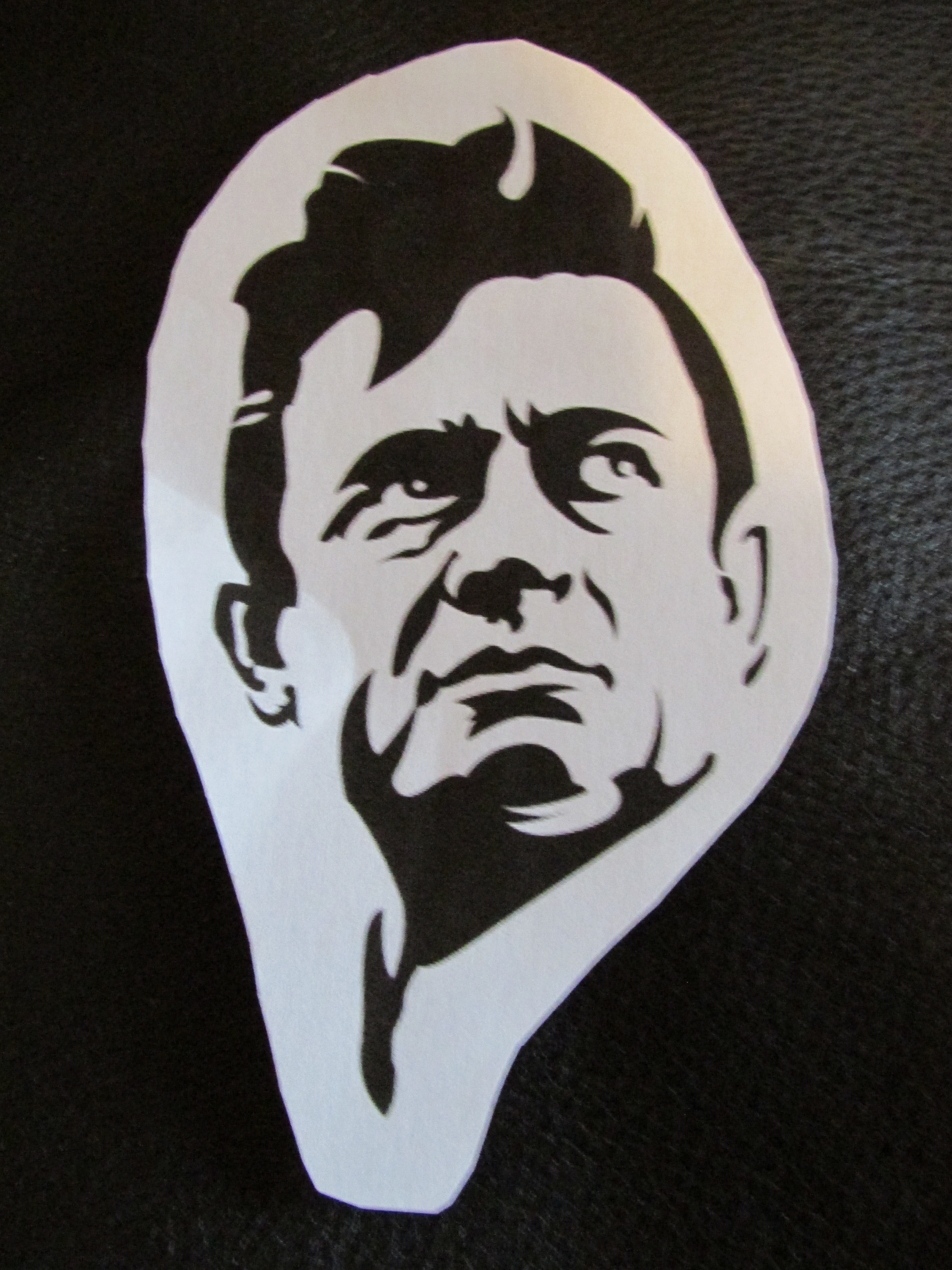
 I still remember 1968, of course, as a watershed year in the U.S. and world events. Vietnam was going full-force and the nightly news always opened with that day’s casualties from the war. Johnny Watts, a family friend from our Birmingham neighborhood, was one of that year’s casualties. I had spent much of the early part of the year as an inquisitive little news junkie watching assassinations, riots, televised funerals, the May ’68 Paris protests, and out-of-control political conventions in Chicago and Miami Beach. In November 1968 Richard Nixon was elected. ‘Nuff said.
In fall 1968 I was a surly teenager who was miserable when my father’s job transferred the family from Birmingham to Nashville. The Nashville junior high school I transferred to was far behind the Birmingham school I had transferred from in most of my courses and I dreaded getting out of bed each morning. I look back now and realize that I was a nightmare for my parents during that time.
Looking back, there’s not much to redeem my year in Nashville from late-1968 to late-1969. But I find that much of what I remember and think fondly of – and it had its moments – is centered on the music and entertainment industry, fitting recollections for a year in “Music City.” We moved to a suburban area called Antioch and it turned out that Dolly Parton – then a young singer on Porter Wagoner’s television show – lived down the street. She would wave to my little brother as she drove past the house in one of her Cadillacs (gifts from Porter, we were told) on Saturday afternoons on the way to perform at the Opry.
One Saturday morning, Dad had business on Nashville’s Broadway and we had driven into town with him. Mother, my brother Rick, and I were sitting in the car waiting when Mother said, “That’s Bill Monroe.” I looked up to see a very distinguished man wearing a suit and a grey hat strolling down Broadway. There was the “Father of Bluegrass” and, while it didn’t fully register then, it totally registers now that here was the man who invented one of the most complex and culturally pristine genres of American music.
It was the late ‘60s and I was a Rolling Stones and rock ‘n’ roll fan but the move to Nashville forced me to attend to Nashville’s pervasive country music culture. This wasn’t totally foreign to me since I had family members who played bluegrass and my Granddaddy Harbison was an avid listener to country music.
Besides Dolly Parton down the street, local television stations would air a smorgasbord of syndicated country shows on the weekends. I wouldn’t admit it but I would watch the thirty-minute syndicated shows of Porter Wagoner, Bill Anderson, Marty Robbins, Billy Walker, Lester Flatt and Earl Scruggs, and others late into the night. The Happy Goodman Family and other gospel groups had Sunday morning gospel shows. I am a little amazed that I remember this. I am more amazed that I’m owning up to it.
A Nashville indie television station aired an afternoon teen dance program called “17 Time.” It is thanks to “17 Time” that the Ohio Express song “Chewy Chewy” will be forever etched in my mind. My brother, who was a toddler and could not have known better, loved “Chewy Chewy” and it was on our turntable incessantly. While I’m venting, the same toddler also made “Bang Shang a Lang” by The Archies a staple in the house. You owe me big time, Rick; actually, I just re-listened to both of those bubblegum hits and I have to admit that they’re both pretty catchy in an insipid way.
The 1968 Elvis Presley television special “Elvis” aired on December 3, 1968, less than a month after we moved to Nashville. I remember lingering with my 21-month-old brother in the television section at Sears while Mother and Dad were buying things for the house (or maybe Christmas presents). I caught a few minutes of the acoustic set with Elvis performing in the round with messy hair and a black leather jacket. Elvis had been relegated to teeny bopper movies by this point in his career but it was obvious that this television special denoted something big and new in his future. I wished I had stayed home to watch it and the next day, at my new school, Elvis was all my classmates were talking about.
“Did you see Elvis last night?” one asked.
“I saw a little of it while I was at Sears,” I said.
“Oh man,” came the reply. “Elvis is back!”
Apparently that was the consensus since that telecast will forever be known as the “Elvis Comeback Special.”
On the day I enrolled at my new Nashville school, a new girl was enrolling with me. She was moving to town from Los Angeles and her dad, she said, was a television producer. This was fitting since it was days after Nixon had won the presidency with his “Southern Strategy” and the entertainment world was looking to Nashville and the South for inspiration and ratings.
Within weeks, in early 1969, two of the major networks announced television variety shows that would be filmed in Nashville. ABC was going to shoot “The Johnny Cash Show” as a summer replacement variety show. CBS was going to shoot a cornpone answer to NBC’s popular “Laugh-In” and call it “Hee Haw.” Local television reported that the cast and creative staff of “Hee Haw” took a hayride from the airport to downtown. It was a corny publicity stunt but it was supposed to signify that Hollywood was coming to Nashville. The Cash show and “Hee Haw” began production in 1969. Nashville entertainment was getting the big head and going mainstream.
Even though I pretended to be too sophisticated to watch “Hee Haw,” I will say that I often did and that “Gloom, Despair and Agony on Me,” one of its signature songs, summed up my adolescent angst at the time. Years later, when I was griping about something to my friend Clay Christian, I was taken aback when I realized that he was softly mouthing “Gloom, Despair, and Agony on Me.” I got over my bad self and started to sing along: “Deep dark depression, excessive misery / If it weren’t for bad luck I’d have no luck at all / Gloom, despair, and agony on me.” It’s no “He Stopped Loving Her Today,” but it’s a classic in its own right.
That may have cemented my friendship with Clay forever.
As entertaining as all of these things may have been, the major event was “The Johnny Cash Show.” Cash was already a popular entertainer in my household and this was before he had quite achieved massive hipster cool beyond the rockabilly set. The show was filmed in Ryman Auditorium when it was still the home of the Grand Ole Opry.
When ABC began shooting shows I did not rest until my parents got tickets to a taping. On a Tuesday night my mother, our next door neighbor, and I traveled to the Opry House to see the show. My dad and the husband next door babysat Rick and the neighbors’ baby. Here’s context: Standing in line at the Opry House, people nearby were debating the merits of the 1966 Mike Nichols film Who’s Afraid of Virginia Woolf? starring Elizabeth Taylor and Richard Burton. Mike Nichols died yesterday.
When we were finally seated in the Ryman and waiting for the taping to begin, I excused myself to go to the restroom. I had no idea where the restroom was and just started walking down the nearest stairs I found. Finally, when I got to the bottom of the stairs, I walked down a hallway. I didn’t see a restroom but heard voices from a room off the hall. I walked into the room and found myself in what I suppose was a dressing room. Johnny Cash, Carl Perkins, and the Statler Brothers, instruments in hand, were sitting there.
Conversation stopped. “Do you know where the restroom is?” I said. I realized later how ridiculous that sounds.
I don’t remember who told me to go back up the stairs but somebody did and I eventually found the restroom. I made my way back to my seat. I’m not sure I mentioned what had just happened.
Eventually, the show started up. On a darkened stage, a spot hit the man in black, He strummed a chord on his guitar, turned and looked at the camera, and snarled, “Hello … I’m Johnny Cash.”
Think about this: It was Johnny Cash performing on the Ryman stage. His back-up singers were June Carter and the Carter Family. Mother Maybelle Carter, the matriarch of twentieth century country music, was on that stage along with her daughters — June’s sisters – Anita and Helen. Carl Perkins and the Tennessee Three were playing. The Statler Brothers were backup singers and comic relief.
The guests that night were singers Gordon Lightfoot and Evie Sands. Dan Blocker, who played “Hoss Cartwright” on the iconic TV western “Bonanza,” was a guest on that show also but he was not present for the taping we attended. He was only announced and talked about as if he were there. His actual performance came at later tapings and was spliced into the finished product.
A comedy duet, Dick Clair and Jenna McMahon, provided comedy relief. Clair and McMahon were probably pretty innocuous as a quipping married couple but they seemed terribly witty and urbane to me at age 14. Because I had seen them at Cash’s show, I kept up with Clair and McMahon on the television sitcom and variety circuit for years. Dick Clair would be among the many entertainment talents who died of AIDS in the 80s.
It was a television taping so there was lots of downtime while sets and new set-ups were underway. I’m sure my mother and our neighbor got bored but I was mesmerized the whole night. I enjoyed watching Johnny Cash and June Carter banter when the cameras weren’t on.
That was the only taping of the Cash show that I got to attend. The taping I saw turned out to be the second show aired in the summer of 1969. The first show had Joni Mitchell and Bob Dylan as guests. “Best of” videos are available and I strongly recommend them to anyone interested in music.
The Cash show is still legendary among fans of American popular music of every genre. I almost made a list of the artists who appeared but couldn’t figure who I might possibly leave out.
Johnny Cash’s album, “Johnny Cash at San Quentin,” was released in the summer of 1969 as the television show premiered. It was a constant on my turntable for years. I can truthfully say that I was a Johnny Cash fan before it was cool (outside country circles) to be a Johnny Cash fan.
Over 34 years later, my phone rang around 3:00 a.m. on a September morning. The call was from my brother, Rick, who was the anchor of an early morning news program at the time. He was on the set reviewing the overnight news breaks.
“Don’t panic, Mother and Dad are fine,” he said. “And I would never call at this hour but in this case I thought I should make an exception … Johnny Cash is dead. I thought you’d want to know.”
His was the first of many calls I got that day.