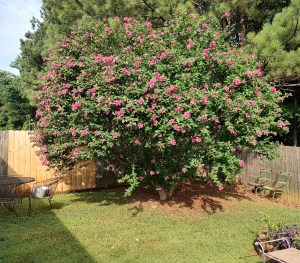
 The Rose of Sharon in a corner of the backyard hums with the sounds of bees plying their trade among its fuchsia blooms. Walking out the back door, the sounds of birds and wind through the forest beyond cannot drown out the steady buzz of the bees at work; it sounds like the tree itself is humming its mantra. In addition to bees, the Rose of Sharon attracts butterflies and hummingbirds. On a recent damp morning, I caught sight of a cardinal chasing a hummingbird out of the middle of the tree, something I have never seen before; it left me to wonder what the cardinal has going on in the depths of the tree.
This tree was a gift to my mother from a woman who owns a nursery in Tuscaloosa. It was a stick, but she assured Mother that it would become a presence in the yard. I’ve had Roses of Sharon in my own yards that eventually perished of old age and strain, but this one seems bound for antiquity. That stick has become a towering tree spreading a generous shade across a large chunk of the yard.
As I stay at my mother’s house to assist her, I have tried to find time to take on her plantings and keep them fresh. After a refresh of the plants in a circular bed beneath a tall crape myrtle, the focus of my effort became a small sitting area outside the front door. It’s not a porch, not quite a stoop since it has no step up, but it is a pleasant place to sit on a dusky evening as the heat of the day begins to wane and neighbors begin to take their evening walks – mostly with a dog or toddlers in tow.
This year, red mandevilla frames the entrance, caladiums sit on stands, and a wall-hung planting of red and white begonias and creeping jenny frame my mom as she takes her evening break. Coral bells, a potted hydrangea, and a Katrina-rose from my house complete the setting.
June has been unusually hot – more like August heat – this year. I, who never complain about heat in the summer, have been surprised with the intensity of the heat and, even though I enjoy hot weather, the specter of climate change is undeniable. Warnings of a “flash drought” are in our local weather forecast and I attempt to be prudent with watering, but I also want to keep the plants alive; lately, if a day goes by without rain or a watering, even the hardier native plants begin to droop. 
______________________________________________________
The most recent “first world problem” on this street is a plant thief who stalked the neighborhood and everybody knows who she is. When people first began to report stolen plants, the first suspect was a neighbor who has been known to wander too far into people’s yards with a flashlight in the wee hours of the morning and even browse through other people’s trash and recyclables on occasion. There were guarded sidewalk chats and everyone seemed to jump to the same conclusion. A blurry video from a doorbell camera showed a woman of similar stature and style of dress, shopping plants with a flashlight, and stealing a plant from a front porch. We thought the culprit had been identified.
But then, another neighbor crossed the street to share video from his security camera. This was very clear video and showed a different woman, also from the neighborhood, wandering onto his front porch, wielding a flashlight, and picking up and walking off with a specimen tree in a pot. The video was time stamped about 4:30 a.m. Soon after, still another neighbor showed another clear video of that very same woman about thirty minutes later, still trolling. That “obvious” first suspect was, it seemed, exonerated.
No plants were missing from my mother’s property, but on the night in question I woke up to see a flashlight in the front of the house in the middle of the night. I turned on a light, the flashlight went away, I assumed it was the woman we first suspected on her nightly rounds, turned over, and went back to sleep.
After the plant thief was identified to everybody’s satisfaction, it became a habit to slow down when passing her house to see what was up with the pilfered plants. A variety of plants in pots and in the ground were there; they were of all varieties with no obvious pattern or connection in how they were displayed and planted. There seemed to be one of everything, which makes sense considering how they were apparently acquired.
This is a quiet, safe, and serene neighborhood with little fodder for scandal and gossip, so tongues were wagging. “If she wanted a plant, why couldn’t she ring a doorbell at a decent hour and ask for a cutting?” went one observation. “Heck,” said another, “if she had asked, I might have just given her the whole pot.”
Others suggested more passive-aggressive approaches: “I think we should all take a potted plant to her driveway and just leave it there.” Another suggested that the HOA should give her the neighborhood’s “Beautification Award” as a way of saying We know what you did.
In a place where practically every resident has some kind of security surveillance, why would this person, who lives in the neighborhood, go barefaced to front doors and brazenly pick up and walk off with property? That house will be known as “the plant thief’s house” for a long time.
________________________________________________
Oh well. The neighborhood gossip cycle has moved on and the plant thefts are no longer a topic of conversation. The evenings are hot and steamy, but a breeze provides a bit of relief and dogs are walked, babies are strolled, and neighbors catch up with each other’s travel. A beach boy/surfer type, a friendly fellow fairly new to the neighborhood, strolls by shirtless with a George Hamilton tan and we worry about his health due to over-exposure to the sun. “I guess he hasn’t heard that that’s bad for you,” is one comment.
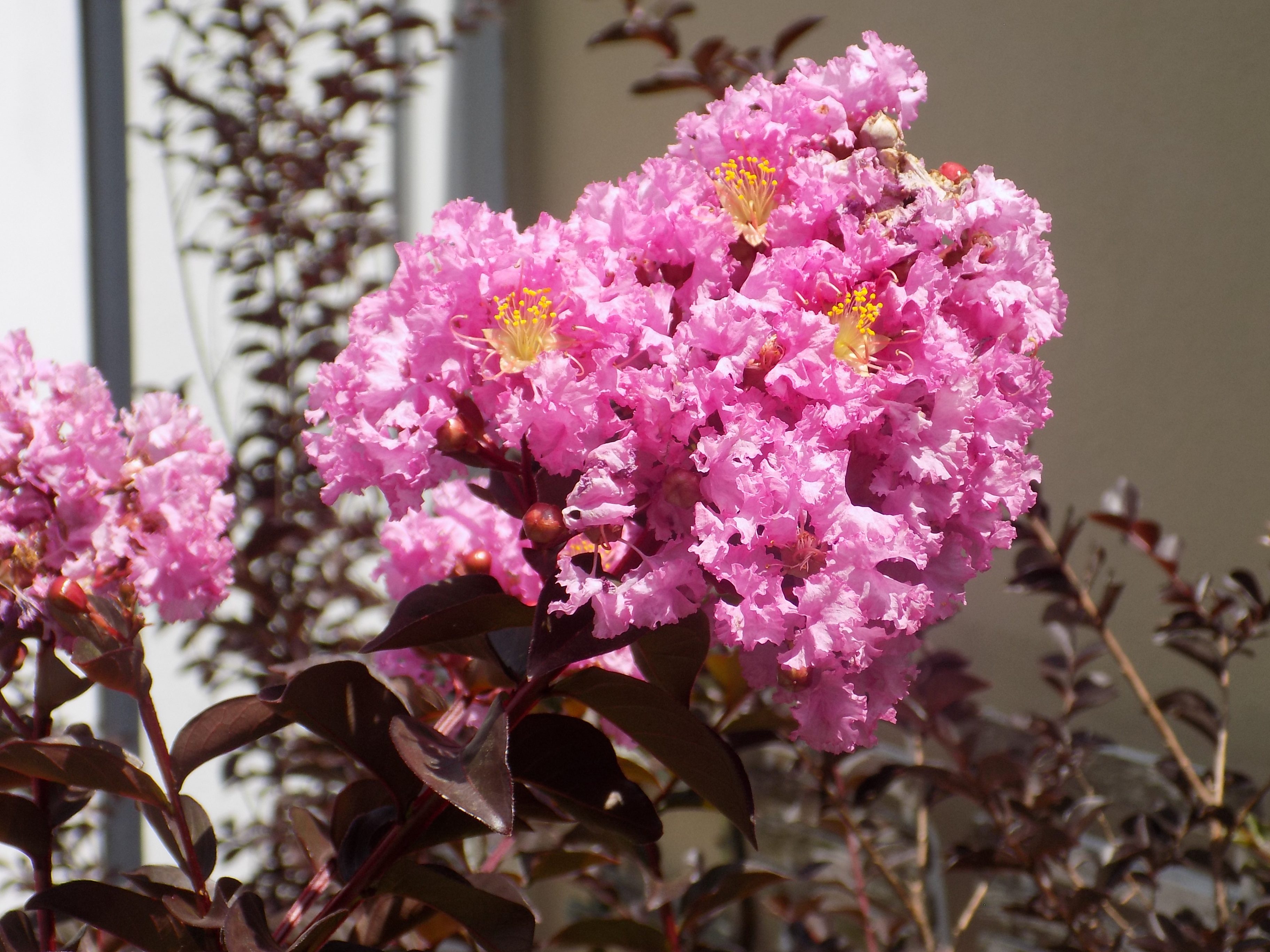
Water hoses come out to refresh the scalded plants in moderation and we discuss whose crape myrtle is in full flower and whose is taking its sweet time this year, wondering what level of blame can go to climate change. Even the ever-loyal vincas are looking a little drained.
We worry about the election but have to be careful what we say, and to whom, since we realize that many in the neighborhood may not share our views about the convicted felon and his cult (although my usually apolitical mother has taken the passionate stance that she must try to help people see the light and frets that the felon’s unfitness ought to be obvious to anybody “with a lick of sense”).
The summer moves on, and much too quickly, as we monitor the plant pilcher’s yard – which seems to evolve daily; there have been no further reports of missing plants so that yard has become merely a blasé point of passing interest.
The bees labor on, unfettered by any drama that surrounds them. A wary wasp sidles down the inside of a small water fountain to get a drink and is startled when the fountain suddenly spurts. It’s those little things that make the summer special.


 My mother’s father, Leonard Harbison, was raised on a farm with a dozen siblings, was a farmer when he started to raise his own family, and eventually moved to Birmingham with my grandmother and their three children to take a factory job. Wherever they went, Leonard’s yard was the envy of the street. He would have plots in bloom and would occasionally dig out another plot to fill up as needed. Common houseplants would find their way to grow and flourish in the outdoor setting. A poinsettia, gifted for Christmas, would be put in the ground and live as a leafy green plant for years.
 Last week, I was bringing groceries in through the front door and was stopped by a volunteer in one of the pots. I put down the bags and saw that it was a caladium making its way through the begonia growth. I had been caught in my hastiness: When I was planting this year’s plants in the pot, I only replaced the top layer of soil. A caladium from last year was left behind and had burst forth. The large leaf’s green and scarlet color scheme was a bright addition to the planned foliage it invaded. I had to take a photo of the embellishment that made my original plan so much better and more eye-catching.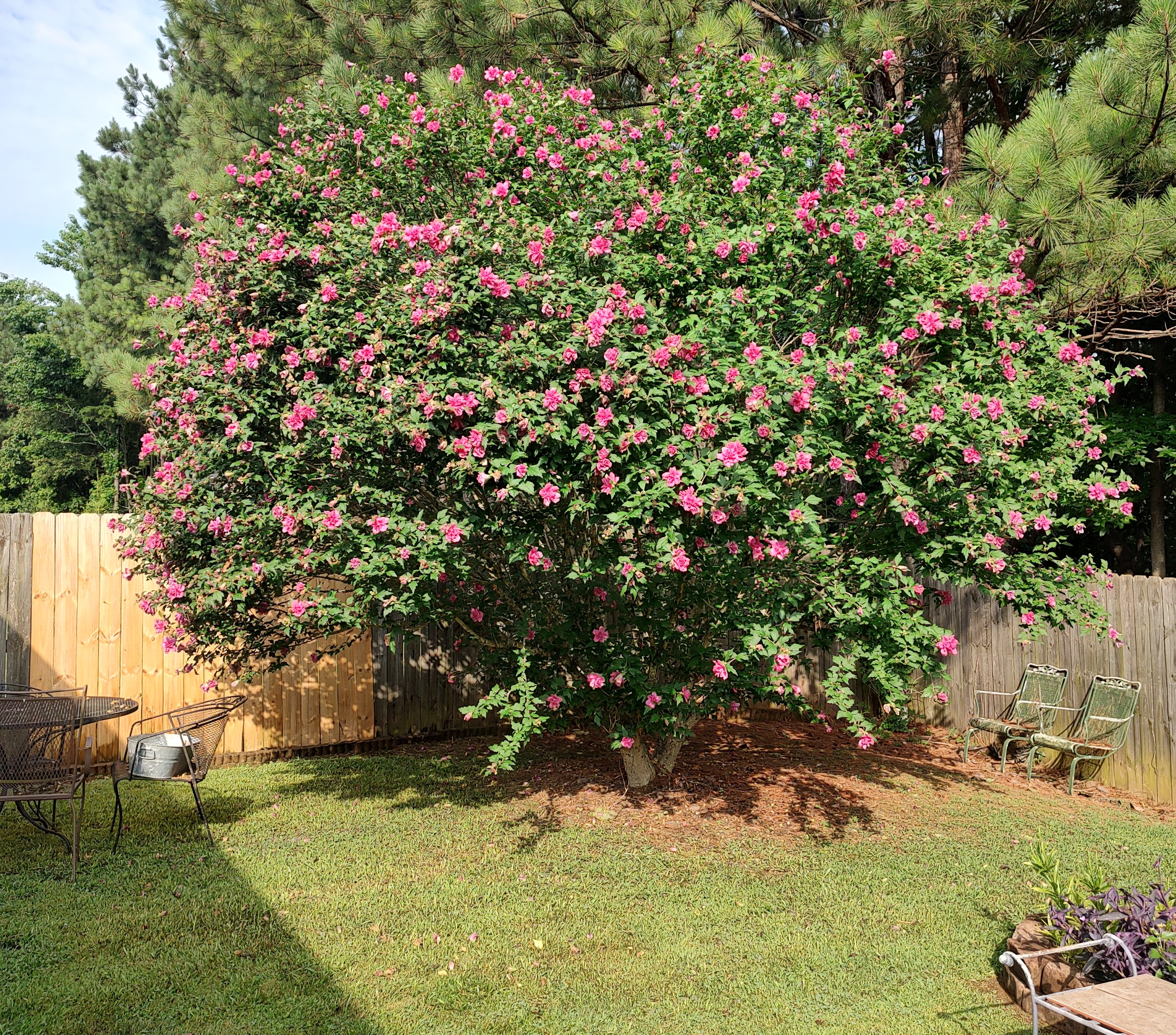






 Professional Southerner