Category Archives: Alabama

South of the Salt Line

IMG_1004   Fairhope, AL. I first learned the phrase “south of the Salt Line” from the great boulevardier and Mobile native Eugene Walter, who is worthy of his own post and will get one from me soon enough. It was Walter’s contention, based on growing up in his beloved Mobile, that “folks who live below Alabama’s salt line are a little crazy.”

He means “crazy” in a good way. Walter’s philosophy is extensive but it has to do with the belief that Southerners who live with ocean salt in the air tend to be a little less uptight, reserved, and conservative. He felt it applied to people in south Alabama, the Mississippi coast, and the environs of New Orleans in particular. I hope he’s right because whenever I travel down this way, regardless of the weather, I like to roll down the window and breathe a little of the salt air. It frees me up, somehow. On the other hand, there are a lot of Republicans down here.

An added benefit of my annual sojourns to the Grand Hotel in Point Clear is my proximity to the chain of little Baldwin County towns south of the Salt Line along the Eastern Shore of Mobile Bay. When I hit the northeastern start of the Bay, I travel through Spanish Fort, Daphne, Montrose, and Fairhope prior to my arrival in Point Clear and The Grand on Scenic Hwy. 98. IMG_0999Continuing past The Grand along Scenic 98 to regular 98, I cross the Fish River and Weeks Bay and arrive in Magnolia Springs.

I could spend my entire vacation on the grounds of the Grand and in the environs of Point Clear, but explorations of the surrounding communities make the trip richer and even more special. I like to contrast Baldwin County’s Eastern Shore with a popular stretch of Highway 30-A in the Florida panhandle that has become a mecca for striving professionals. The village of Seaside is lovely and had the best intentions but its appeal and success have caused a desecration of 30-A in many ways. The once undeveloped byway is now congested with developments, each seeing how they might out-pastel and out-gentrify the other. 30-A developers slash the landscape and then build homes and business districts evocative of the turn of the previous century, causing gridlock, exorbitant prices, and desecration of a once pristine local landscape. The towns of Alabama’s Eastern Shore naturally have the authenticity and character that all of those Seaside-inspired communities struggle mightily to achieve.
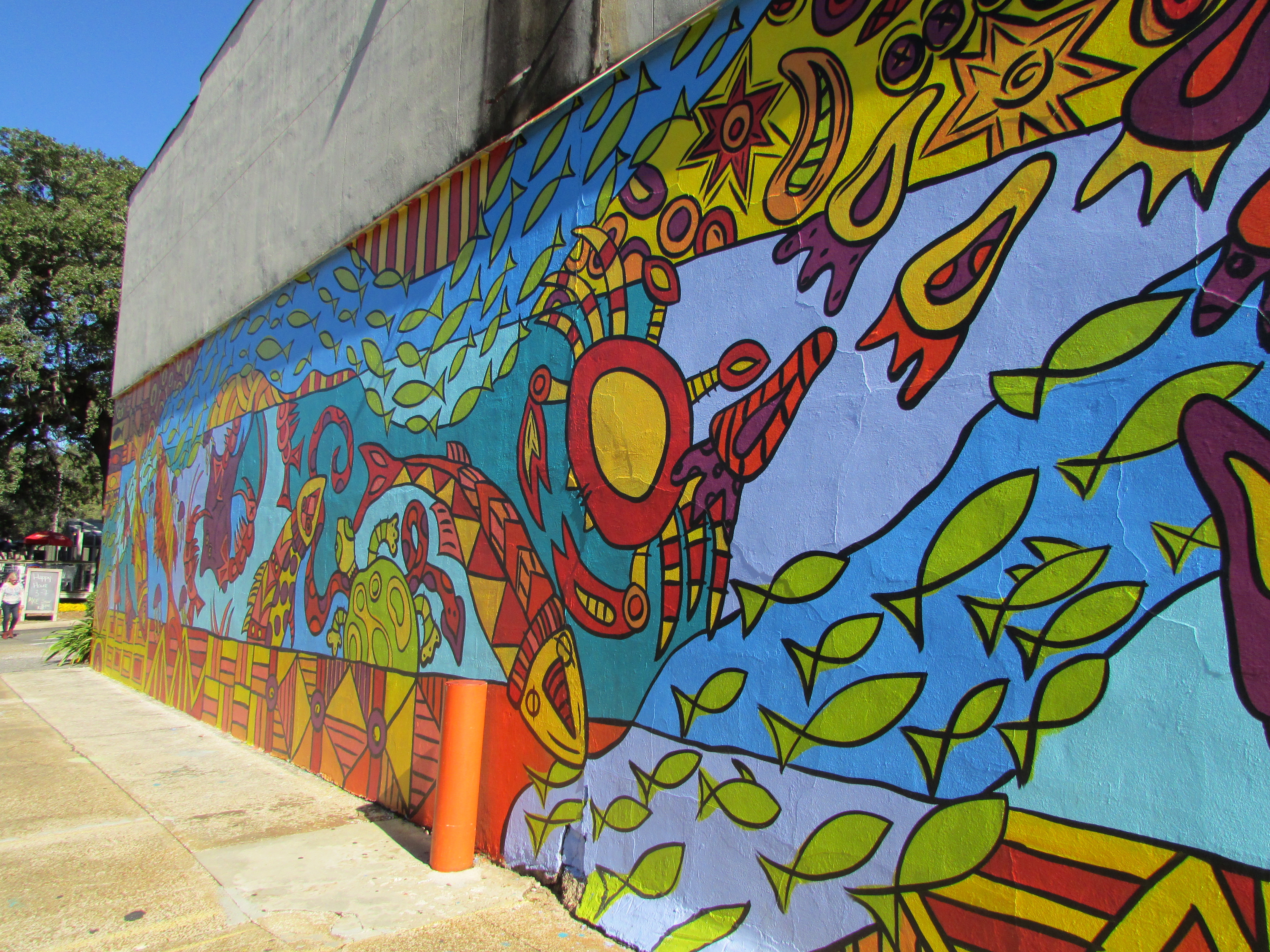
IMG_0982Fairhope, Alabama, was founded in 1894 as a utopian “single tax” colony. Historically, it was a place that encouraged progressive free thinking. The downtown is thriving with locally-owned businesses and the area is a draw for artists and writers. There are art galleries, specialty shops, antiques, and other treasures throughout the walkable downtown which is beautifully and seasonably landscaped year-round. Page and Palette (www.pageandpalette.com) is a particularly fine independent bookstore. The Kiln (www.thekilnstudio.com) is a ceramics gallery and studio that I never fail to visit and usually I walk out with new items for gifts or for my ceramics collection. Owner/artist Susie Bowman has beautiful tastes and a beautiful shop.

Over time, I have found my favorite Fairhope eateries at each end of the price spectrum.

IMG_1006 Last night I had another great meal at Camellia Café in downtown Fairhope (www.camelliacafe.com). Chef Ryan Glass presents an impressive array of fine dining options in a cozy and relaxed setting. Down the street from Camellia Café on Section Street is Master Joe’s (www.masterjoessushi.com), a startlingly fine sushi place in the middle of fried fish territory.

Other great options downtown include Panini Pete’s (www.paninipetes.com), a bustling place that spills out into an attached conservatory and onto the courtyard of Fairhope’s French Quarter shopping district. I love the muffaletta panini but everything on the menu is worth a try. In a new downtown location – or new to me, anyway – is Dragonfly Foodbar (www.dragonflyfoodbar.com). IMG_0980 “Foodsmith” Doug Kerr presents an ever-changing menu of creative small plates, bowls, and tacos. Dragonfly continually offers fine dining dishes at affordable prices in a dive-y setting. Now that they have moved from the former hot dog stand location on Fairhope Avenue to larger digs on Church Street the wait is no longer hours like it used to be.

Farther out, Wintzell’s (www.wintzellsoysterhouse.com), with a Fairhope location just down scenic 98 from The Grand, is a Mobile establishment that has branched out with a handful of locations on the coast and farther inland. It provides a large variety of seafood options with its signature Gulf oysters served “fried, stewed, or nude.” Wintzell’s is usually the destination on my first night in the area, a familiar and comfortable place after a long drive.

Market by the Bay (www.marketbythebay.com) has added a Fairhope location to complement its original location in Daphne. I like to order the Market’s shrimp po’ boy that has so much shrimp in it that I have started calling it “box full o’ shrimp.” The Market’s location in Daphne is a great seafood market in addition to a cozy eatery.

Closer to The Grand in Point Clear is the Wash House restaurant (www.washhouserestaurant.com). The Wash House is located in a rustic building, part of which housed the washing facility for the large country house on the main road. IMG_0987 I have dined alone and with friends at the Wash House on many occasions and the experience always feels like a special occasion. The restaurant is behind the old farm house that is now the home of Punta Clara Kitchen (www.puntaclara.com). Punta Clara is my local stop for pralines to carry back home. They sell all kinds of handmade specialty foods, jams, jellies, and preserves. Punta Clara Kitchen products are usually well-represented at my New Year’s Day lunch for friends.

I always enjoy traveling the expanse of Baldwin County but I usually find myself staying in the area surrounding Point Clear and The Grand resort. IMG_0990 A short trip down the coast on Highway 98 takes me through huge pecan groves, farms, and homes. Shortly after crossing the Fish River and Weeks Bay, I arrive in the town of Magnolia Springs, which is as idyllic as its name suggests.  Residents along the Magnolia River in Magnolia Springs still get mail delivered by boat to boxes on the edges of their piers. Live oaks arch over the narrow streets and I usually find myself ditching the car and taking long leisurely walks through the streets and along the river. A popular dining option in Magnolia Springs is Jesse’s (www.jessesrestaurant.com). IMG_0997

For those who wonder why I always return to the same place for my December getaway, it’s hard to explain the attraction of the place unless they experience it for themselves. When I first started coming down here, I felt an obligation to venture away from Point Clear and would plan side trips into Mobile, or down to Gulf Shores and Orange Beach, or over into coastal Mississippi. Eventually, I realized that it was enough – and exactly what I needed – to just come to The Grand and relax, occasionally venturing out to places that are minutes away. I feel like there is still plenty of Baldwin County to discover and explore.

With that in mind, I take a deep and relaxing breath of salt-infused air, take a left when I ought to take a right, and check out the next treasure south of the Salt Line. IMG_0962
Postcard from The Grand

     IMG_0938  Point Clear, AL. People have been coming to a hotel at this spot for rest and rejuvenation since the 1830s. For me, a visit to The Grand Hotel in Point Clear, Alabama, (www.Mariott.com/Point-Clear) has become an annual December event. I occasionally get down here at warmer times of the year but the pre-Christmas visit is my constant.

IMG_0948


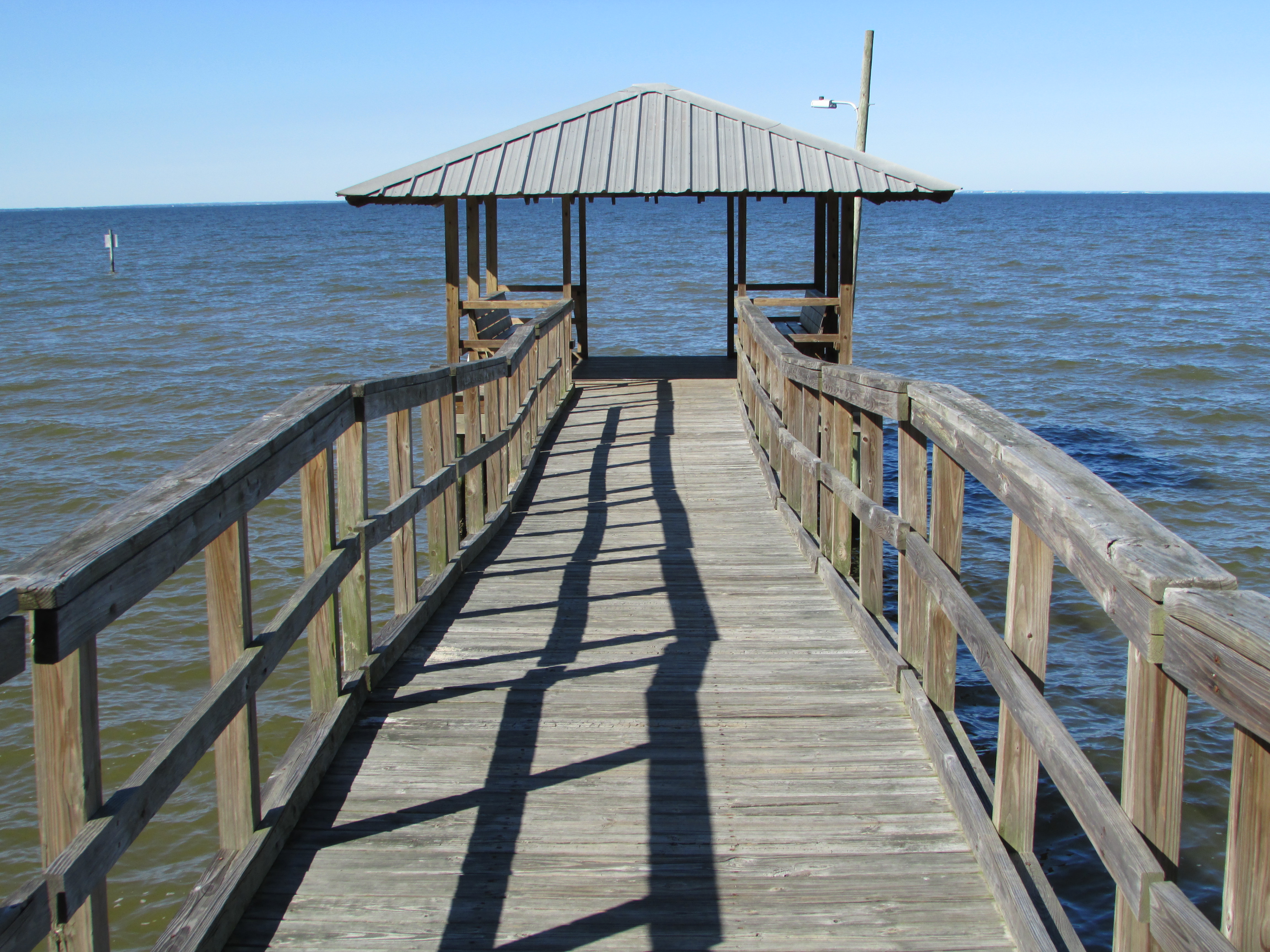
The Grand Hotel is located on the Eastern Shore of Mobile Bay, a short distance south of the town of Fairhope, at a point where the bay broadens as it gets closer to the Gulf of Mexico. The various buildings overlook the Bay and out toward the Gulf on one side and a peaceful lagoon surrounded by ancient, Spanish moss-dripping live oaks and walking paths on the other. The grounds are expansive and beautifully landscaped with paths along the bay. Pathways open to the public radiate beyond the resort and one is welcome to stroll past the private sides of bay-front Point Clear homes and get a sense of local living.

In the warm months the place bustles. A huge swimming pool is full of sun-worshippers and all kinds of outdoor activities – biking, kayaking, croquet, beach bonfires, etc. – are available throughout the grounds.

Now, in December, it is more quiet and less crowded and I have found that this trip is a perfect and much-needed way to shake off my job after a demanding semester and to brace for the holidays with family and friends.

IMG_0941

As might be expected from such a place, there is a feel of tradition. Hurricane Katrina did massive damage to the Alabama coast in 2005 and the hotel was closed for over a year while renovations occurred. When I returned in December 2006 after the renovation, I was relieved to see that the restoration had taken pains to restore the look and feel of the place prior to the storm.

The site has history and tradition and it manages to retain the feel without overwhelming one with the past. Every afternoon there is a small military procession through the grounds ending at a Civil War-era cannon. After the hotel’s military history is recounted – it served as a military hospital during the Civil War, was fired upon during the Battle of Mobile Bay, and the grounds include a Confederate cemetery containing the remains of many casualties of the Battle of Vicksburg (which happened 250 miles away) – the cannon is fired and can be heard throughout the area.

While the cannon fires outside, an afternoon tea is held around the grand fireplace every afternoon at 4:00. There is a blazing fire and a huge Christmas tree this time of year.

IMG_0927

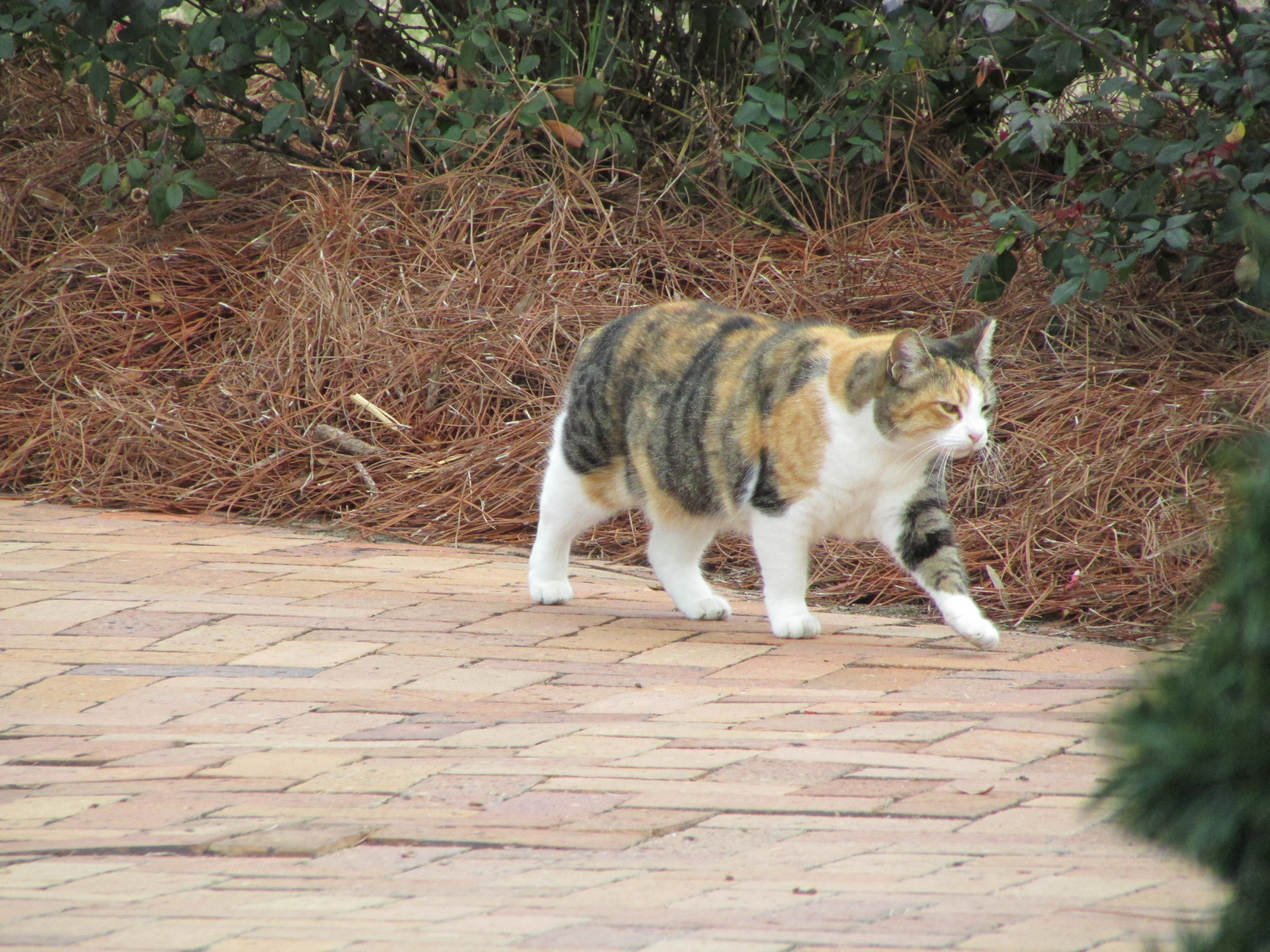
Outside Bucky’s Birdcage Lounge, also located in the main building, is a sunset bell that is rung thirty minutes before sunset each day. It is a reminder to move toward the lounge and toward the Bay-front to observe and celebrate what is almost always a spectacular sunset. “Bucky” Miller was a beloved employee of the Grand for 61 years and a life-sized statue of Bucky stands outside his namesake lounge, his hand extended in greeting. Bucky’s cats still roam the grounds – or by now maybe Bucky’s cats’ descendants. I was greeted by one of Bucky’s cats as I went into the main building for check-in yesterday.

IMG_0933    IMG_0925

I have heard about the Grand my whole life but I didn’t start coming down for regular visits until over a decade ago in the early 2000s. Several years ago an acquaintance who used to come to the Grand for decades remarked, when I told him I was about to come down, “I hear the Grand isn’t so ‘grand’ anymore.” (Isn’t there always that guy?) Things change and the events of the past may not be happening with the velocity they once had, but my Grand experience is always peaceful and invigorating and exactly as grand as I want it to be. The fact that I always splurge and treat myself to a massage at the hotel’s highly-rated spa makes my experience that much more grand.

In the earlier years of the Grand’s history, it was owned by individuals and families. It is now a Marriott resort owned by Retirement Systems of Alabama, part of Alabama’s much lauded Robert Trent Jones Golf Trail (the property includes Lakewood Country Club). The staff is international and far-flung in origin but there are many locals who work here too and there are faces and names that are familiar to me trip after trip. It may all be an act, but I will say that the employees at the Grand always seem happy and they make every guest feel special and welcome. It’s a wonderful place for families and couples but I am usually here as a single and feel totally at home and comfortable as such.

IMG_0959

I was already in my 40s when my recurring “Grand experience” began. I know people who started coming here with their families when they were very young. There are always happy children and young people at play when I make my visits. However, I have always felt that I started coming at just the right time for me – at a time when I was looking for stability and peace of mind in my life. I worry that if I had started my annual treks even a decade earlier I might have found the place a little staid and slow.

I have a long list of places I still want to visit in this world, but, for me, if I want to relax and regroup, coming back to a place I know and a place where I feel like I can just sit on the balcony and while the day away with a good book is the ticket to a perfect vacation (New Orleans is another of those places for me). After staying in buildings all over the resort, I now have and always request my favorite room in the Spa building. IMG_0911


So, the Grand it is and the Grand it will be for this December and, I hope, many Decembers to come.

IMG_0939


“… a brief meditation …” : Why I Mail Christmas Cards

IMG_0444   My Christmas cards went in the mail on December 1. I started designing my own Christmas cards over a decade ago and it has become something many of my correspondents seem to appreciate. And expect.

I looked forward to receiving and looking at Christmas cards when I was a child and many of the people who sent cards to my parents every year were people I never met but felt I knew from the stories my mother would share about them each December when the card arrived. Genevieve O’Brien in Chicago, Christine Allen in Georgia, and Doris and Bill Fuller in Fort Worth are among the annual cards we received without fail from people I never met. When I was grown and out on my own, I would send Christmas cards as often as I could but sometimes work schedules or finances would make it prohibitive.

From a very young age I had set opinions about Christmas greetings and Christmas décor. For example, I am a Southerner and never quite understood why so many Southerners would buy into the Madison Avenue version of Christmas and send out pristine snow scenes and winter scenes depicting images that were not part of my reality of the season growing up in Alabama. I have traveled and worked all over the country and I have had white Christmases a few times. But the Christmases of most of my life have been bracing Alabama Christmases with a chill in the air and no snow. Actually, I’m not a fan of snow and have never once dreamed of a white Christmas.

A number of years ago I decided to design my own Christmas cards and feature photographs that represented December in the South. I developed rules: 1) The photograph had to be taken during the month of December and 2) the photograph had to be taken somewhere in Alabama. Those are the only hard and fast rules but over time most of the photographs have been of old country churches I have discovered around the state. A couple of times the image has been landscapes around Mobile Bay where I try to spend some time each December.

The only exception was in 2005, the year of Hurricane Katrina. I didn’t design the card that year; instead, I purchased museum holiday cards with a detail from a still life of a bountiful holiday table which somehow reminded me of good times on the Gulf and in New Orleans.

I developed rituals: I try to get my card to the printer around October 1 each year. I start signing and addressing the cards by November 1. On December 1, my cards are in the mail. Over time the mailing list has gotten quite large. Most of the people on my list don’t send cards anymore. For me, however, it’s a way of keeping in touch with old friends and acquaintances all over the world. Some of them are people I may never see again but I like to keep a connection. I’ve moved around a lot in my life and the Christmas card list is something that keeps me in touch and grounded.

Most people who know about or receive my Christmas cards are grateful and look forward to them each year. Someone might ask if I’ve picked next year’s image yet or they’ll send me a new mailing address to ensure that they won’t miss this year’s card.

But occasionally someone will grouse “I don’t know why you do it. Who has the time? It’s so expensive. And so much trouble.” Here’s my response: If you don’t want to do it, don’t do it. I do it because it gives me pleasure. I look forward to it. I want to do it.

With each card I sign and with each address I write on an envelope, it’s a brief meditation on that recipient.

When I first moved to Huntsville, there was a lady, Grace Clark, who lived in my apartment complex. We didn’t see each other often, but whenever we did we’d have a very pleasant conversation. I added her to my Christmas card list. She never mentioned my cards but when I moved from that apartment to my house I kept sending Christmas cards to Mrs. Clark. A couple of years ago, when Christmas was past, I received a note from a woman I didn’t know. She was Mrs. Clark’s daughter telling me that her mother had recently passed away. She told me that when she was going through her mother’s papers, she found a stack of my Christmas cards. Mrs. Clark had saved each one over the years.

If you don’t have time to send Christmas cards, I totally understand. I’m busy too. I have no time for Facebook and Twitter. We each choose what we have time to do.

This year’s image, by the way, is St. Luke’s Church (c. 1850), a cedar church in Cahaba. Cahaba is a ghost town and state park now, but it was Alabama’s first state capital from 1820-1826.

Happy Holidays.IMG_0456


Sustainability and Soul

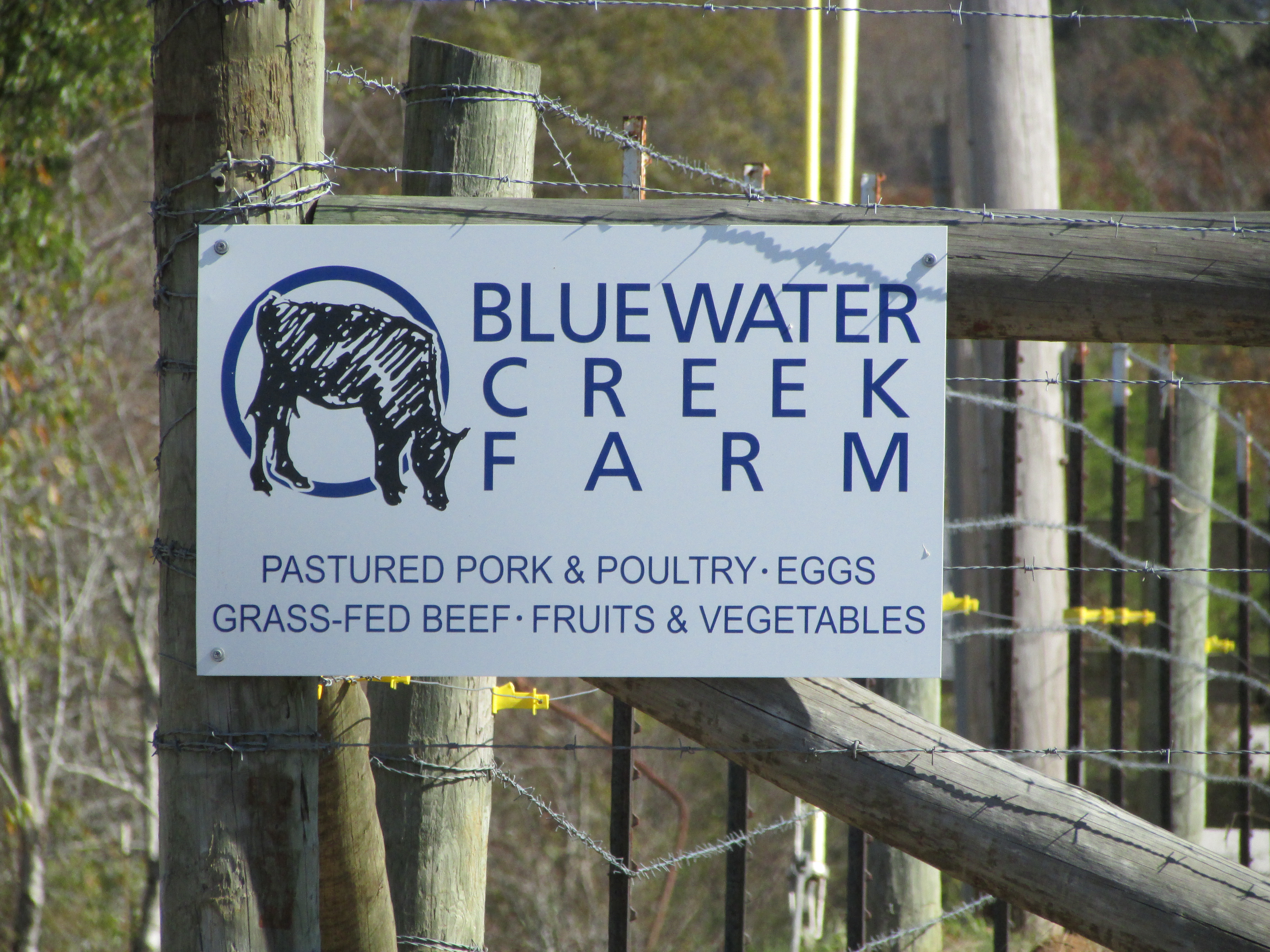
IMG_0837 Bluewater Creek Farm (www.bluewatercreekfarm.com) is a family-owned sustainable farm near Killen, Alabama, in the Shoals area of the far northwest corner of Alabama. It is run by Liz and Collins Davis in partnership with Liz’s parents, Donna and Doug Woodford. Today I drove over there for the first time to check out today’s farm stand and to join a tour of the farm led by Liz. The more time I spend in the Shoals lately the more I’m convinced that it may be the center of the universe.

I was unaware of Bluewater Creek Farm until August when I was in the Shoals — in Florence — for my second “Friends of the Café” event  at the Alabama Chanin Factory. We were lucky enough to sit across the table from Donna and Doug who enthusiastically told about their family and granddaughter Abby. They were thrilled that Liz, Collins, and Abby had recently returned from northern California to start Bluewater Creek Farm. Collins had run farms in California and other places and now they are back in Alabama.

Doug, who is a physician and advocate of holistic nutrition, spoke passionately about his and Liz’s work in nutritional therapy, and Doug and Donna enthusiastically shared news of the activities on the farm as well as pictures of Abby. Doug also had impressive pictures of chickens and bulls from the farm.

What impressed me most was the passion and commitment with which this couple discussed the work they and their family are doing.

I was happy to see Donna and Doug at the next “Friends of the Café” event in October, and this time Liz and Collins were there too. I contacted Liz to get on the farm’s mailing list and that led to the trip today. Bluewater Creek Farm’s stated mission is “to produce nutrient dense, clean food in a sustainable way… this means using farming practices that work with nature. This in turn shows respect for the living beings in our care, and makes a positive impact on our local environment.”

IMG_0808

This family makes a convincing case for their philosophy and seeing the labor-intense way in which they practice what they preach drives home the benefits and sanity of their cause. I, like most Americans, have only fairly recently become educated to the benefits of the “slow food,” “No Farms, No Food,” and “Eat Fresh, Eat Local” movements. It is this rising consciousness and education of the general public which has led to the emergence of great local farmers’ markets in virtually every community, to locally owned restaurants serving locally grown foods, to an understanding of why these issues increasingly matter, and to more sustainable farms like Bluewater Creek.

Previous generations knew this first-hand. Most Americans of the 21st century are learning it anew. Availability nurtures advocacy.

Liz’s tour included the planting beds, still full of lush greens and root vegetables on the first day of November (after the first truly cold night of the season); a visit with the farm’s heritage pigs, including a bunch of tiny piglets; cattle in the pasture, including the grass-fed, heat tolerant South Poll breed; and a bunch of happy grass-fed chickens, joined by a lone turkey (it’s close to Thanksgiving; I didn’t have the heart to ask).

IMG_0803

When the tour was over, I continued down the path to Bluewater Creek. I never lived on a farm and have spent minimal amounts of my life in the country and around farms. Yet I find, especially lately, that being alone out in nature gives me a peace and sense of ease that I don’t get in any other environment. It has become my best and most reliable form of release.

IMG_0832

On the walk back from the creek to the Barn, I met Liz on the road. We had a nice chat about future plans for the farm. “I’m not trying to preach organic farming,” she said. “I just want to show people what we’re doing and they can decide for themselves.”

Before leaving Bluewater Creek Farm I stopped by the Barn, a converted horse barn now used for events and classes, to visit for a minute with Donna. This was the location of the farm stand with the farm’s various products being sold. I bought some meat, peppers, beets, and beet greens to supplement what I had already gotten at my local farmers’ market a couple of days ago. I also got some honey that had been jarred today. I was too late for eggs. They had just sold out.

That’s okay. I’ll be back. IMG_0836


Red State Blues

I am a liberal in a conservative state that I love. I accept that; in fact, I embrace it since I know that change comes from within. The whole “red state/blue state” labeling has irritated me since Tim Russert made it a household phrase in the 2000 election cycle. I think that labeling system oversimplifies and stereotypes the complex and diverse populations of each state. Those smug and cutesy “I am a blue dot in a red state” car decals nauseate me.

But I am constantly being reminded that I am in a supposedly solid red state. In next week’s midterm elections, the Alabama Democrats did not even bother to field a candidate for some key races. I will not cast a vote in those particular races. The Alabama Democrats are presenting a “Democratic” candidate who was recently a Republican (and before that he was a Democrat) for governor. I will not cast a vote in that race either. I don’t vote for Republicans – never have and likely never will, but I can’t in good conscience vote for certain “Democrats” that I can’t trust. The current Alabama Democratic gubernatorial candidate calls to mind “Shorty” Price, a man who was a perennial (and perennially defeated) Alabama candidate back in the 1950s through 1970s. If there’s an election, this guy will be in it.

I still hear people who pompously declare that they “vote for the candidate, not the party.” That sounds like a noble position and I used to pay lip service to that notion. But now I think the candidate has made a conscious decision which party to affiliate with and if the affiliation is with a party that consistently stands for things that I disagree with or abhor then I have to question the integrity and wisdom of the choice.

Some candidates switch parties for political expediency; that’s certainly not somebody I want to support. If politicians switch parties because that is the only way they think they can get elected in their state or district, then I have to question their convictions and fitness for elective office to begin with. Politics is a game to career politicians, but I can’t forget that their actions or lack thereof affect real people.

Political advertising in Alabama is as troublesome as it is throughout the nation as the candidates strive to divide us rather than unite us and keep fighting moot battles for political gain. In Alabama, local ads and politicians seem to be competing to see who can use the word “conservative” most often. I personally have strong “family values” but I’m not sure that the “family values” extolled by the local candidates are in keeping with my personal definition of the term.

My conservative mother surprised me in the spring during primary season when she said, “It must be frustrating to be a liberal in Alabama. It must feel like nobody wants your vote.” That’s true. I’ve developed a thick skin. I’ve gotten used to local Democrats who feel they have to brandish a firearm to get elected.

When it was announced earlier this year that Birmingham is a finalist for the 2016 Democratic National Convention, I was impressed with what a smart choice that could be for the party. It would show a confidence and aggressiveness that the Democratic Party seems to be lacking of late – sort of like when the Southern Baptists decided to have their national conference in Salt Lake City a few years back. True enough, Alabama generally goes Republican in presidential elections, but Birmingham is a Democratic city and the statement the DNC would be making in choosing Birmingham would be one of the more progressive and intelligent moves that party has made in a while. I don’t expect it to happen because, truth be told, I’m not too thrilled with the Democrats these days either.

In the meantime, I will continue to be amused and confounded by political advertising and politicians and I will continue to vote my conscience and values. To steal (liberally and loosely) from Faulkner, I shall continue to endure until the day I once again prevail.

The Chukker Nation

59343_10151206185029021_891945282_n  A girl I sort of dated in college told me that she thought I looked like “the love child of Mick Jagger and Jackson Browne.” This was the ‘70s. She was delusional; I was young and flattered.

I had forgotten the comment (really, I had!) until somebody forwarded this photo to me from Facebook. It was taken (as far as I can figure since I remember the shirt) by photographer John Earl sometime in the very early ‘80s. I am the skinny guy in the down right corner with a lot of attitude. The photo made me gasp since I had forgotten myself as that skinny, that young, and with that hairstyle. But then the Mick and Jackson love child statement came to mind. Or is that guy in that picture maybe “Zoolander-esque”? Or Zoolander-esque-ish?

The picture was taken in the Chukker, a Tuscaloosa fixture for 47 years from 1956 to Halloween 2003. It was a bar. It was a dive. And it was one of the great and legendary watering holes in the world (friends have reported seeing Chukker tee-shirts in Paris). I was born in 1955 so I was a minute older than the Chukker. But here’s the deal: My parents opened a typewriter business on 22nd Avenue in downtown Tuscaloosa in 1957 and their shop was around the corner from the Chukker, new at the time but already a dive. Back then, the Chukker was a lunch spot – a grill if you will – in the daytime and reverted to its bar status at night.

I know my parents would probably rather not admit to this, but I remember going to the Chukker as a young child to pick up coffee in the morning and sandwiches at noontime for Mother and Dad. So my personal memories of the Chukker go back to about 1958. It was a different time and toddlers could freely roam Tuscaloosa city streets. I was – I’ll admit it – too much of a spoiled brat to go to day care back then and my accommodating parents made a sort of nursery/playroom for me in the back of their business.

I had the run of the streets in many ways since the shopowners in the area knew me and would look out for me. My parents still have a small bookcase that I decided I needed back then. I spotted it and my 4-year-old self told Mr. McGraw at the furniture store to put it on my parents’ account. He did. I am pretty sure that my mother’s cedar chest still has a drawing of little me that was drawn by an itinerant artist who set up shop for a while in the Chukker in the ‘50s. And I vividly remember ringing the bell at the Salvation Army booth during the Tuscaloosa JayCee’s Christmas parade with my stuffed Coca-Cola Santa under my arm, making a haul for charity. As a toddler in Tuscaloosa I was a “street kid” in the purest (and most innocent) sense of the term

When the family moved back to Tuscaloosa in 1972, the Chukker was still there. And it was still there when I was an undergraduate in college. It was only after I finished college (the first time) and I was still living in Tuscaloosa that I went with friends back to the Chukker. Back then, it was much like I remembered it, but it was a full-fledged bar and its reputation seemed to change biannually. It was reputed to be, at various times, an “artists’ bar,” a “biker bar,” a “blues bar,” a “bohemian bar,” a “gay bar,” a “lesbian bar,” an “old hippy bar,” a “punk rock bar,” a “redneck bar,” a “writers’ bar” … I could go on.

What it was, though, was an inclusive community that happened to be a bar. One always felt looked after at the Chukker. One always found someone one wanted to talk to and get to know.

My friend Bill and I were at the Chukker when I heard that John Lennon had been killed. That was no small feat since the bar had no phone at that time. I directed my first, and unexpectedly successful, production of Gertrude Stein plays at the Chukker. Bruce Hopper, the owner at that time, asked me if I wanted to do a show in the bar’s performance space. I told him that I did but I couldn’t guarantee an audience for the avant garde plays of Gertrude Stein. He said “do it” and we sold out nightly.

A film student shot a short film of my friend Deb and me walking in a circle in the Chukker courtyard on the day that Andy Warhol died. We walked round and round and talked about Andy and Andy’s death. I never saw the finished product but someone told me, many years later, that they saw it at a screening somewhere. “You’re the guy walking in circles in that Warhol film.” Yes, I guess I am.

My friend Clay would spend hours, it seemed, glued to the Chukker’s Galaga machine. My Galaga attempts were generally over in under a minute. Clay and I played a lot of pool at the Chukker also. My pool skills were unpredictable at best; I chose to refer to them as “Zen-like.” Clay was one of the few people who had the patience to play pool with me; I even won a game on occasion.

An ersatz and quirky art collection was housed at the Chukker – mostly the work of artists who hung out at the place during their Tuscaloosa sojourn. Some was hanging on the walls and some was painted directly on the walls. “The Sistine Chukker,” Tom Bradford’s Michelangelo homage on the bar’s ceiling, was the most legendary piece of the Chukker collection. For many years, I would welcome newcomers to Tuscaloosa with a postcard of the Sistine Chukker.

The great Tuscaloosa-based Celtic group Henri’s Notions was practically the house band at the Chukker for a while. Forecast, The Indigo Girls, The Replacements, Johnny Shines, Richard Thompson, and Sun Ra all played the Chukker, as did any number of local bands trying to be R.E.M. during that band’s heyday. In fact, I took a long time to warm up to R.E.M. because of the English department “R.E.M. wannabe” bands that sprang up in Tuscaloosa at the time. The real R.E.M. itself adjourned to the Chukker after a concert on the University campus, bringing a substantial number of the concert-goers with them, when Michael Stipe announced to the audience that that’s where they were going after the show. I invited Billy Joel to the Chukker after one of his Tuscaloosa concerts; he declined. Jimi Hendrix may or may not have played there and Keith Richards may or may not have played pool there. Abbie Hoffman DID have a beer there because I was there when he did it. There was always a “Chukker Nation Reunion” on the Saturday between Christmas and New Years’s Day.

“Quarter beer night” on Mondays was a longstanding tradition. One could go on the roof of the building next to the place (the building, in fact, where the furniture store where I bought those bookshelves used to be) and watch the cars converge from every direction at 9:00 p.m. on Monday (remember that convergence scene in Field of Dreams?) and watch most of the same cars leave again at 10 when the hour of 25 cent beer was over.

I had not been at the Chukker for many years when I heard it was closing its doors on Halloween 2003. In fact, the closing was reported on CNN. It was ultimately the victim of a Tuscaloosa downtown renewal. There’s a park where the Chukker and my parents’ typewriter shop used to be, and a fountain nearby. It’s a nice enough place, but a little bittersweet if you remember what used to be.

I went down on Halloween 2003 to be a witness. So did many other people. I didn’t stay long that night, and I was disappointed that I arrived just as Henri’s Notions finished their final Chukker set, but the place was packed; it seemed that every time the door opened that night, it contained a face that I had not seen in ages. Truly, people flew from across the country to be present at the Chukker’s closing night. I visited with the guys from Henri’s Notions, Sandra and Michael, Fred and Jennifer, and other people I knew. I didn’t stay long; I didn’t even have a beer. But I was there.

And then I was not there anymore. It was all I could do not to turn around for one last look as I walked out of the Chukker door for the final time. But I didn’t. I just kept walking.

Community and Fatback

IMG_0753 Last night was another memorable evening at the Alabama Chanin Factory (www.alabama.chanin.com) in Florence, Alabama. Natalie Chanin and her tireless staff hosted another “Friends of the Café” dinner event featuring executive chef Drew Robinson and Nicholas Pihakis of Birmingham-based Jim ’N Nick’s Bar-B-Q (www.jimnnicks.com). The October 10 event was the fourth and final “Friends of the Café” dinner for 2014. I am already looking forward to the 2015 schedule.

My friend Cindy Edwards and I were lucky enough to attend three of the four 2014 dinners. The previous two were fundraisers for Southern Foodways Alliance (www.southernfoodways.org), of which I am a “dues paying” member. Last night’s event benefits “The Fatback Collective Fund.” The Fatback Collective is an impressive array of “chefs, writers, and pig cookers” who are supporting a philosophy of sustainable and humanely raised pork, local ingredients, support of community, and sharing of knowledge. They fundraise for many compatible causes and provide assistance in their communities when tragedy strikes. For example, Fatback Collective recently sponsored a series of successful fundraisers for a South Carolina pitmaster who lost his pit to fire in 2013.

Last night’s meal was a juxtaposition of all of the elements that contribute to the Fatback philosophy. During the cocktail hour, featuring a “Donkey’s Daddy” cocktail, mushroom tamales were served to each table. That was followed by a four course meal featuring local ingredients including produce from the Jones Valley Teaching Farm (www.jonesvalleyteachingfarm.org) in downtown Birmingham, Gulf shrimp, Fatback Pig Project porchetta, and guinea hens from White Oak Pastures in Georgia (www.whiteoakpastures.com). Each course featured beer pairings from Birmingham’s Good People Brewing Company (www.goodpeoplebrewing.com).

Chanin is accomplishing her goal of supporting and sustaining her community in many ways and these dinners are just a part of that big and impressive picture. As a result of these events, a community of like-minded individuals is finding each other – sharing thoughts and energy.

Last night it was a pleasure to once again visit with Donna and Doug Woodford of Bluewater Creek Farm  (www.bluewatercreekfarm.com). Bluewater Creek Farm is a family-owned sustainable farm in the Shoals area of northwest Alabama. Doug was proudly showing off pictures of a very handsome rooster and of a recent acquisition, a South Poll Grass Cattle bull. I learned that South Poll is an Alabama-based cattle breed that is bred to thrive on a grass-based diet and to tolerate the heat of the Southern summer (www.southpoll.com). I was also pleased to learn that Bluewater Creek’s most recent batch of chickens recently started laying.

Nancy Campbell and Charles Day, friends from Tuscaloosa, were also back at the dinner last night. We met at the July dinner and have remained in contact ever since. They shared news of a recent visit to a saltwater shrimp farm in Greene County, Alabama – 150 miles inland from the Gulf of Mexico. This was exciting news to me. Charles has also begun to cultivate domestic culinary mushrooms. The spores are shipped to him and it was fascinating and tempting to learn about the process. It also gave me a nifty idea for my food-minded nephew’s 11th birthday present.

A number of websites are referenced in this post. I hope that readers will be inspired to check out one or more of them and participate as their interests and means dictate. They are all causes that mean something to me and deserve our support and commitment.

An amazing and innovative meal. Camaraderie with a community of people with shared interests and values. New knowledge and understanding. The “Friends of the Café” dinners in Florence have quickly become an essential ingredient in the process of strengthening a commitment to culture, community, and the values that will help change our world and move us steadily forward.

Weeding Organic Cotton

IMG_0724 In 2012 I received an email from Billy Reid’s organization with an interesting proposition. It seemed that Natalie Chanin and Billy Reid, both fashion designers based in Florence, Alabama, were experimenting with growing organic cotton in a small field near Trinity, a town between Decatur and the Shoals area of Alabama. The email asked for volunteers to come out to the field to help weed – no small task when you’re growing organic.

Natalie Chanin’s Florence-based label, Alabama Chanin, features handmade garments made with American-grown organic cotton. The problem is, there is no organic cotton grown in Alabama that she can use and she has to source her cotton from some place in Texas. The purpose of the Trinity experiment was to see what kind of luck they’d have growing their organic cotton locally. A September 5, 2014, edition of The New York Times “T” magazine blog chronicles the Alabama Chanin cotton harvest.

Back in 2012 I heeded the call out of curiosity and because it isn’t every day that one is invited to weed in a fashion designer’s organic cotton field.

I drove to Trinity one sunny Saturday morning and the only other person in the field that morning was Lisa Lentz; she and her husband had lent the project the seven acres to plant the cotton. I didn’t have too much time to spend in the field that morning but I weeded hard while I was there and learned more details about the project from Lisa. I had worked in a cotton field once before; when I was a young boy, on a visit to Cullman County, Alabama, with my mother and grandmother, my Cullman County cousins got a kick out of putting their skinny city cousin in the field for a while with a sack over his shoulder. I wasn’t very useful out in the field that morning but I remember it was rough on the hands and hard work to remove the cotton and place it in the sack.

It was equally challenging to pull weeds in Trinity in 2012 but I drove away with a sense of accomplishment, sore knees, and a curiosity about how the experiment would work out. There were subsequent appeals a few weeks after my morning of weeding for volunteers to pick the cotton ready for harvest. I had conflicts that kept me from going back out but was glad I had a connection to the project. A friend, when I told him I had spent a morning weeding organic cotton, smirked a little and asked how organic cotton clothes would feel any different from any other cotton clothing. I was surprised he asked that since he is very environmentally conscious and fuels one of his vehicles with recycled cooking oil. I explained that it wasn’t so much the feel of the cotton but the toxic chemicals that were not going into the earth and the water supply that mattered.

In July of this year, I was at the Alabama Chanin Factory for a Friends of the Café event and asked Natalie Chanin about the status of the Trinity organic cotton project. She told me the finished cotton was in the factory being turned into tee-shirts. When the tee-shirts went on sale a couple of weeks ago, I had to grab one. It may be the most expensive tee-shirt I’ve ever owned, but I definitely feel I had a hand – and knees – in the effort. And, back to my friend’s comment about what difference organic cotton makes: It’s likely all psychological – but it is probably the most comfortable tee-shirt I’ve ever put on my body.