Category Archives: food

On Food Memory and Alabama Literature

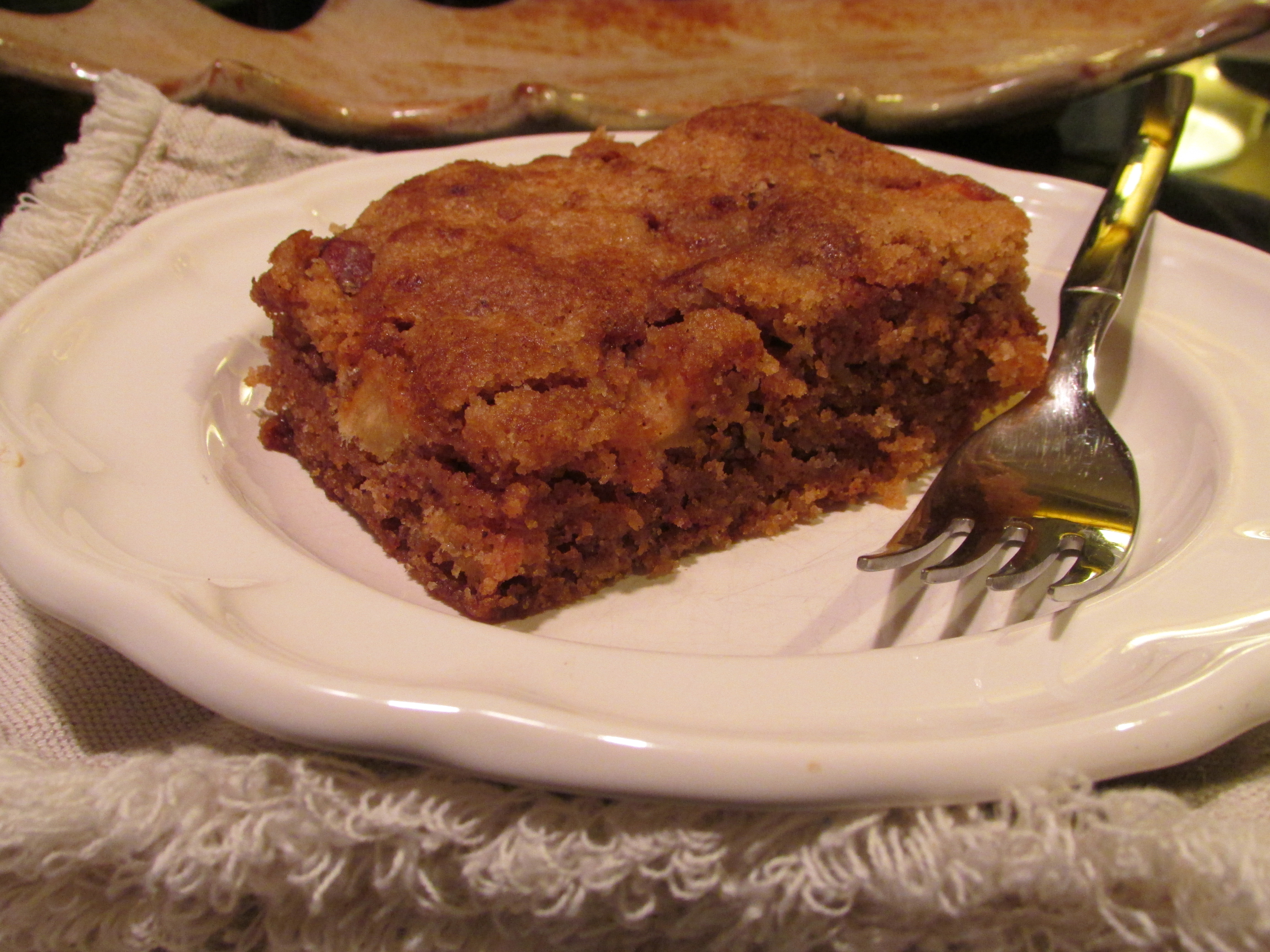
2014-01-01 02.22.58   Harper Lee’s To Kill a Mockingbird is about to have an additional impact on Alabama in the form of current legislation proposing that the Lane Cake, which has an undisputed Alabama provenance and is mentioned several times in Lee’s novel, be designated as the state’s official dessert.

I am often intrigued with the ways in which writers use food. Good writing about food is all around us – in cookbooks and food magazines and newspapers; in memoirs and novels and short stories and scripts for performance on stage or screen. In much culinary writing, including that of the legendary food critics James Beard and Craig Claiborne, the idea of “food memory” is pervasive. The powerful connections that food tastes and smells evoke are a shared sensibility providing powerful associations, emotions, and longings.

It is this sense of the sacrament of food which has led me increasingly to seek out and savor food writing. Writers – whether they intend to or not – use this idea of “food memory” to stoke and create a shared sense of ritual and place with the reader. As my career took me around the country and far from Alabama and the South, I found that some of the most visceral emotional connections that I have to my roots are memories of food and of food associated with family.

Food is frequently prominent in the writing of a number of writers with Alabama roots including Rick Bragg, Mary Ward Brown, Mark Childress, Melissa Delbridge, Fannie Flagg, Charles Gaines, Winston Groom, Zora Neale Hurston, and others. In looking at Alabama authors and their writing about food, it is hard to find something that is truly unique about a certain community because rich or poor, black or white, rural or urban, our food heritage is so universally “local.” “Southern cooking” and “soul food” are essentially the same and a love for barbecue is ubiquitous. I looked for obvious delineations but I found instead that there were constants. Is it any wonder, really, that many of the earliest battlegrounds of the Civil Rights movement were department store lunch counters?

Scout’s assertion in To Kill a Mockingbird that “Neighbors bring food with death and flowers with sickness and little things in between” captures a key memory of Southern existence. We are defined by the tastes and memories of our youth. This is one of the reasons that Sook’s declaration that “it’s fruitcake weather” resonates so vividly for readers of Capote’s “A Christmas Memory” whether we grew up in Monroeville’s dusty streets or under the sooty skies of mid-20th century Birmingham. I grew up in Birmingham and did not have first-hand experience with the adventures Capote describes but still, because of that story, I thought I had a clear sense of when “fruitcake weather” had arrived on crowded Avenue N in Birmingham’s Green Acres neighborhood.

In Capote’s lesser-known Monroeville story “The Thanksgiving Visitor” he describes nostalgia for the breakfast repasts of

ham and fried chicken, fried catfish, fried squirrel (in season), fried eggs, hominy grits with gravy, black-eyed peas, collards with collard liquor and cornbread to mush it in, biscuits, pound cake, pancakes and molasses, honey in the comb, homemade jams and jellies, sweet milk, buttermilk, coffee chicory-flavored and hot as Hades.

Capote’s litany of memory inspired me to pull down a favorite passage in James Agee’s Let Us Now Praise Famous Men. The book’s subject matter is firmly entrenched in the soil of Alabama’s Black Belt. Here is Agee’s description of the Depression-era Hale County tenant family’s breakfast ritual:

the gestures of a day here begin; and in just such silence and solitude: the iron lids are lifted; the kindling is laid in the grate: and the lids replaced: and a squirting match applied beneath: and the flour is sifted through shaken window-screen, and mixed with lard and water, soda, and a little salt: the coffee is set on the stove, its grounds afloat on the cold water: more wood laid in: the biscuits poured, and stuck into the oven: and the meat sliced and sliding, spitting, in the black skillet: and the eggs broken, and their shells consigned; and the chairs lifted from the porch to the table, and the sorghum set on, and the butter, sugar, salt, pepper, a spoon straightened, the lamp set at the center; the eggs turned; the seething coffee set aside; the meat reheated; the biscuits looked at; the straight black hair, saturated with sweat and smoke of pork, tightened more neatly to the head between four black pins; the biscuits tan, the eggs ready, the coffee ready, the meat ready, the breakfast ready.

Norman McMillan, in his memoir Distant Son, tells us that

Summers meant lots of food. We didn’t think about it that way but we were more or less vegetarians. During the summer when we were at home, each lunch table was filled with seven or eight bowls every day. Pans of golden cornbread or plates of thick biscuits accompanied the vegetables. Except for white meat, which was used to season the vegetables, we saw little meat at all. Occasionally Daddy would bring steak home, and after pounding it with the side of a saucer he would fry it and make gravy. At times we raised a few chickens and we also ate squirrel and rabbit in the winter, and sometimes even possum and coon.

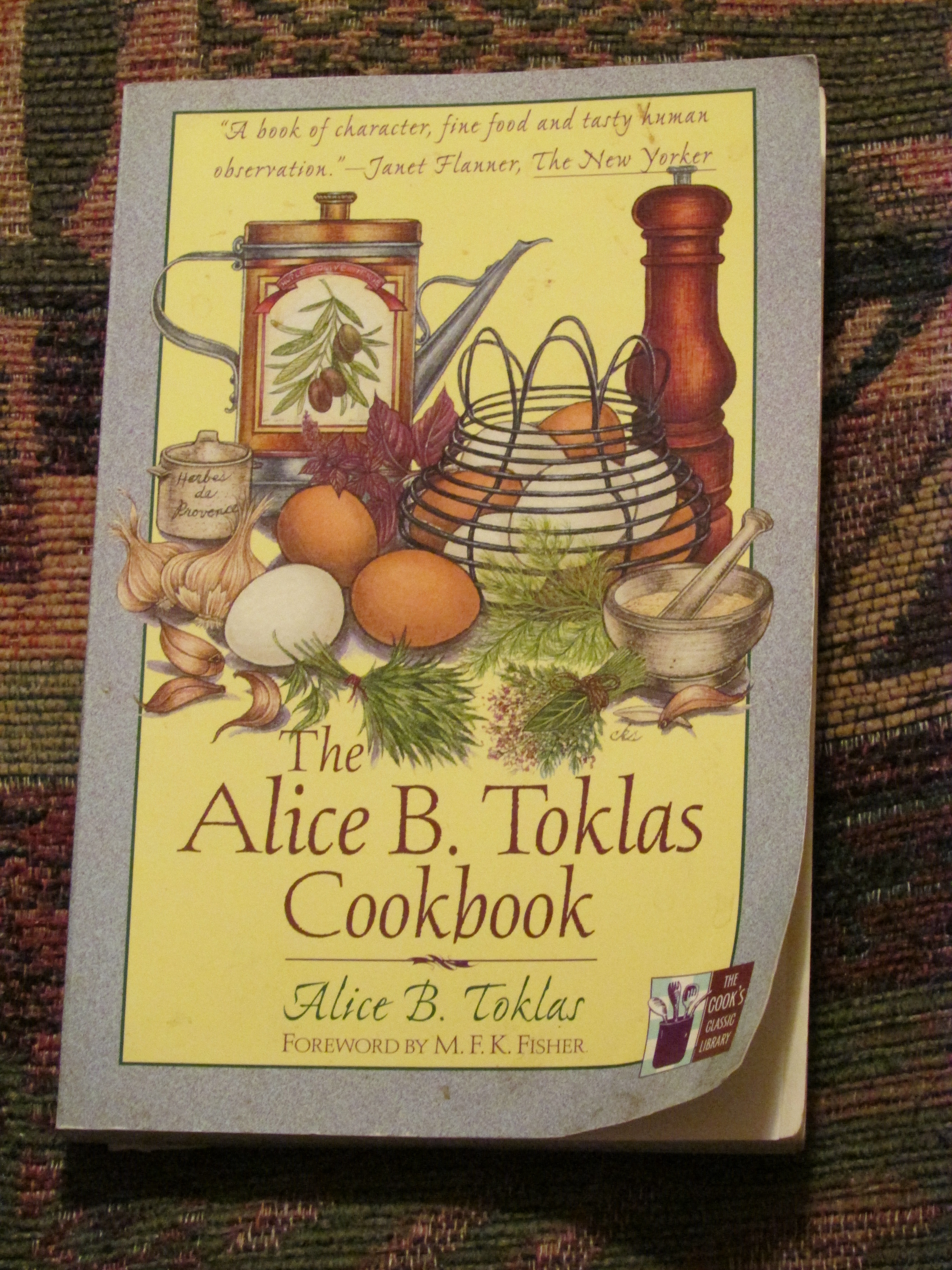
From the time I received a copy of The Alice B. Toklas Cookbook as a gift I have savored cookbooks which also have a literary flair. Birmingham and Cullman, Alabama’s native son Frank Stitt went from studying philosophy at Berkeley to becoming an acclaimed chef and restaurateur. As the owner of Highlands Bar and Grill in Birmingham, a perennial finalist for the annual James Beard “Outstanding Restaurant” award, he is the acknowledged master of contemporary Alabama food. His 2004 cookbook Frank Stitt’s Southern Table includes the following discourse on tradition:

As an adult, I came to appreciate the blessing as a time to open our minds to a greater awareness of the beauty of the food we are about to eat. Instead of asking my family to endure a rote blessing, I wanted to pay homage to food as a sacrament. I have since refined this idea, incorporating it into the at-table stories I share with friends and family. I want everyone to come to understand the ancient rhythms of life, to know what it felt like to break bread at my mother’s table, to understand why upon walking by my maternal grandmother’s long-closed smokehouse I was transported back to the days when our people slaughtered their own hogs. I want them to understand that such acts were honorable, that to harvest a hog with your own hands, by the sweat of your own brow, was to know intimately the consequences and benefits of humanity.

Pat Conroy’s entertaining The Pat Conroy Cookbook includes a chapter entitled “The Pleasures of Reading Cookbooks No One Has Ever Heard Of” which includes lengthy considerations of several Junior League and church-sponsored cookbooks, including several from Alabama. One passage in Cotton Country, the Decatur Junior League cookbook, particularly pleases Conroy. He quotes this passage describing Mrs. Barrett Shelton Sr.’s Stuffed Country Ham:

To call this merely “Stuffed Ham” is an injustice. “Spectacular” is the only word to describe this ham: spectacular in appearance and taste. Trouble – perhaps – but for a buffet dinner or cocktail party mainliner, nothing could do more for your reputation as a good cook or hostess.

This passage sends Conroy into a spasm of appreciation. He writes,

Have you ever seen three sentences more confidently rendered by a hand so fine and sure – the disdainful dashes surrounding that intimidating “perhaps” and that bold, two-eyed colon stopping you in mid-stream for emphasis. A small history of the South could be composed just by studying the cadences and assuredness of position in Mrs. Barrett Shelton Sr.’s place in Decatur society. It would be paradisiacal for me to pass down a Decatur street and have the imperious Mrs. Shelton whisper to a group of lunching friends, “Mr. Conroy’s new in town, but I think he has the makings of a cocktail party mainliner.”

Indeed, much of my favorite food writing takes on such a lyrical and meditative tone. Mobile’s inimitable Eugene Walter seasons his recipe for pot likker with this advice: “Take a day off and wash wash wash 3 or 4 big bunches of fresh (yes, I said fresh) turnip greens, younger the better. Then sit down and pluck the leaves. … This takes time. Sit down, put on some Mozart.”

I find that there are few “grand themes” about the place of food in writing. There are, instead, comforts. The comforts come in familiarity, common ritual, and respect for the sacrament of being at table with friends, with family, with peers and, on occasion, with adversaries.
Eating around Chattanooga

IMG_1202    Chattanooga, TN. My parents honeymooned in Chattanooga, Tennessee, in the early 1950s. Knowing that from an early age has given me a sense of familiarity with Chattanooga that probably exceeds my actual knowledge and experience of the place.

When I was a very young elementary school student, I traveled with my parents from Birmingham to Chattanooga for a weekend getaway in the early ‘60s. We hit the highlights of the time which included Rock City, Ruby Falls, the Incline railway, and the Confederama.

The Confederama, unfortunately, fell victim to political correctness and now exists farther up Lookout Mountain, I hear, in an altered and watered-down form as “The Battles for Chattanooga Museum” in Point Park somewhere near Rock City. As I recall the Confederama from 50+ years ago, it was a relief diorama of the area around Chattanooga with lights and teeny soldier replicas illustrating the Civil War battles; as I recall, there was a distinct Confederate bias. I remember thrilling to the tiny red flashes of guns being fired as a somber recording gave the history lesson.

We are entering the last month of the 150th anniversary of the Civil War, an anniversary that began in 2011. When I was an elementary school student in the early 1960s, the Civil War Centennial was ubiquitous. I have been saddened – but not surprised – that the nation has seemed hesitant to discuss that defining moment of our national history for the sesquicentennial. Perhaps right now it’s just too complicated to evaluate.

The annual Spring convention of Southeastern Theatre Conference (SETC) is the largest theatre convention in the United States. I have been attending it most years since 1983 with a few gaps here and there. Because of the logistical demands of the event, a few southeastern cities seem to be on the convention’s regular rotation and Chattanooga has been the most frequent host city of the event over the past decade.

I spent hours each day at the convention; this year my main obligations were presenting a paper and attending editorial board meetings for Southern Theatre magazine. I decided that in my rare off-time I wanted to check out the current new culinary offerings of Chattanooga, a town in perpetual transition.

Even though it was my plan to adventure into some new eateries, as it turned out I only dined at Chattanooga restaurants I had enjoyed on previous visits. My desire to return speaks well for the restaurants and the fact that each managed to surprise and delight me anew speaks volumes.

IMG_1217When I arrived in Chattanooga on Wednesday evening, I realized that I hadn’t eaten all day and wandered down Broad Street toward the aquarium and the river to check out the options. Among all of the options I remembered a good SETC meal several years back at Easy Bistro and Bar (www.easybistro.com) in a space that used to house “the world’s first Coca-Cola bottling plant.” It’s a lovely space and a good respite from the abundant tourists on the street in that tourist-driven part of town. The chef is New Orleans native Erik Niel and the menu is adventurous and ever-changing and reflects the influences of New Orleans adapted for the hills, rivers, lakes, and tastes of eastern Tennessee. I decided to try a couple of small plates and had Crispy Chicken Skins 3-Ways and a lovely and filling beet salad with feta and onions. Both dishes were creative, beautifully plated, and delicious.

Thursday was a busy day full of meetings – bitterly cold and windy with sleet and rain all day – and my dining plans were limited to grabbing quick snacks at the convention and hotel.

I presented my convention paper on Friday morning and had already planned to treat myself to lunch at Public House (www.publichousechattanooga.com), a Chattanooga eatery I discovered and loved in 2012. I ordered a couple of small plates at Public House three years ago and have such fond memories of a plate of fried chicken livers with grits and a plate of pimento cheese with fried pickles that I debated eating the same things all over again. But in the interest of expanding my knowledge of the Public House menu I opted for a vegetable plate so I could sample an assortment of dishes. I ordered perfectly prepared collard greens, cheesy mashed potatoes, and a rich mac and cheese combo.

IMG_1209Public House is located in a downtown development called Warehouse Row and is one of those places that emphasizes environmental consciousness and lists many of its local and specialty purveyors on the menu. The space is full of windows and the design is simple, warm, and inviting. Many items on the menu are traditional Southern favorites as mentioned earlier but the preparation and presentation is skilled and a meal there feels uptown and special. The pimento cheese is exceptional – a member of the wait staff told me they use the same recipe that I use (Miss Verba’s from Frank Stitt’s Southern Table cookbook) – and even though I didn’t order it this visit, I found it delightfully stuffed in an olive.

My server at Easy had strongly recommended the restaurant’s weekend brunch so I made a second trip to Easy and managed to get there in time for Saturday’s brunch after my last session at the convention. For brunch I had Easy’s version of Eggs Jonathan which was Eggs Benedict with fried oysters added. Once again, it was delicious.

Before heading back to the hotel, I wandered down to the riverfront close to the aquarium and up a hill past the Hunter Museum to the Bluff View Art District (www.bluffviewartdistrict.com) with its River Gallery Sculpture Garden overlooking the Tennessee River. IMG_1206  After a rigorous convention and the ice and snow of this past February, it seemed like a good portent of Spring approaching and was a relaxing brief escape. Chattanooga’s City Center is compact and very walkable but there is also a good free shuttle that travels between the aquarium and the Choo-Choo, the town’s old train station that is now a hotel.

Over the years, it has become traditional for me to meet with a group of friends for a stress-free meal on Saturday night of the SETC convention. This is after the papers have been presented, the workshops presented and attended, the auditions are ended, and the booths are struck. Six of us decided to congregate at Porter’s Steakhouse (www.porterssteakhouse.com) on the street level of The Read House, the historic downtown hotel where I was staying. Sometimes a traditional steakhouse with good company is the perfect way to relax and this Porter’s fit the bill entirely. We enjoyed an exuberant meal, excellent and very patient service, and an evening full of anecdotes and laughter. I go back three decades with some of the people in my dining party and there is always plenty to talk about and to catch up and reminisce about. And there are always plenty of things to laugh about. IMG_1214

A perusal of websites shows a wide range of opinions about Porter’s at The Read House but this is my second time to end a Chattanooga SETC there and I was totally pleased. My steak was cooked perfectly and everybody in my group had good comments about their meals. When we were all full, a dessert cart was rolled up and we decided to order one of everything and share. The perfect way to cap the evening was when Russell, a member of our group, revealed that he had ordered a Brandy Alexander for everybody at the table. This is the sort of classic establishment where you know that a Brandy Alexander will be done correctly and ours were.

Whenever I leave an SETC convention, I am utterly exhausted and feel a need to sleep for a few days. It’s a nice thought but work always starts again bright and early on Monday morning. IMG_1199

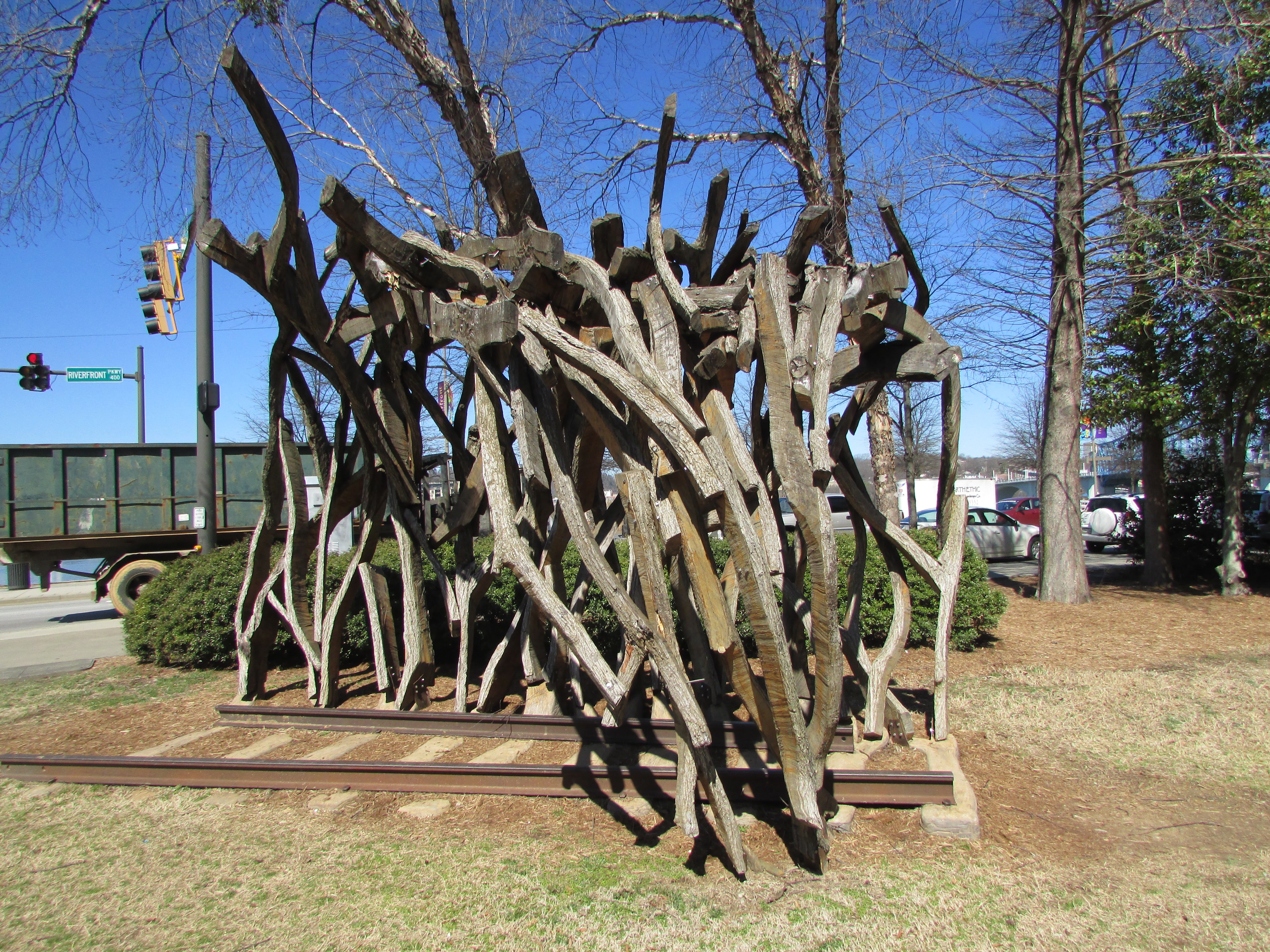
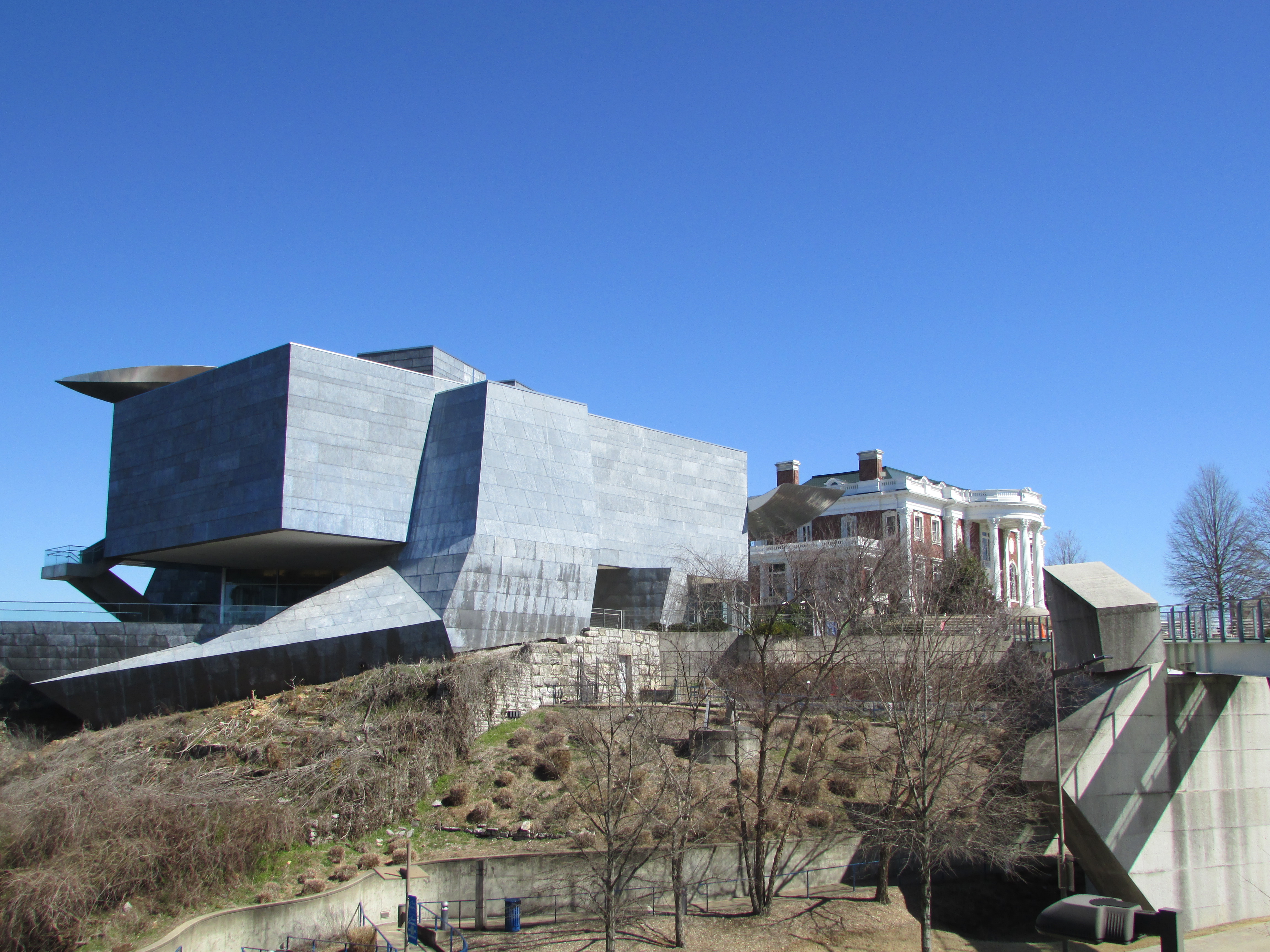
Note on artworks pictured: The sculpture overlooking the river is “Icarus” by Russell Whiting in the River Gallery Sculpture Garden. The end photo is “Roll Wave” by Christopher Fennell, on the riverfront near the aquarium. The lead photograph is the Hunter Museum of American Art.

A Menu for the End of the Carnival Season

IMG_1134  My attraction to Mardi Gras is directly tied to my attraction to the Gulf Coast. Growing up inland, Mardi Gras always seemed mysterious and somehow “foreign” and like a place I’d rather be. I would see news reports of the activities in New Orleans and Mobile and other celebrations on a smaller scale along the Gulf and they seemed to be in stark contrast to the grey late-winter life around me. I was raised in the Southern Baptist church and we did not observe Ash Wednesday. When I realized the Christian tie-in to the revelry of Mardi Gras and better understood the season that begins on Epiphany and ends precisely at midnight on Shrove Tuesday, that knowledge gave the events of the season even more mystery and appeal.

Age, experience, and knowledge began to de-mystify the events of the carnival season leading up to Mardi Gras and more and more the events began to move farther inland. When I was living and teaching in Indiana in the 90s, I began to throw beads at the end of my Fat Tuesday classes to give myself a sense of connection to my home region. Huntsville, where I live now, had its 2nd annual Mardi Gras parade on Saturday, February 14, but it’s a sad substitute for the real deal on the coast.

I am a bit of a traditionalist and a purist when it comes to the proper way to do things and I bristle a bit at the fact that one can now stand beneath a New Orleans Bourbon Street balcony and be showered with Mardi Gras beads on virtually any night of the year. In my mind, Mardi Gras beads should only be thrown in the season. And then they should be packed away until the following January.

The appeal of tradition and the desire to recapture the mystique of “The Season” on the Gulf Coast of the Deep South is one of the reasons Joe Cain Day, observed in Mobile on the Sunday preceding Fat Tuesday (and the subject of my previous essay), has engaged me.

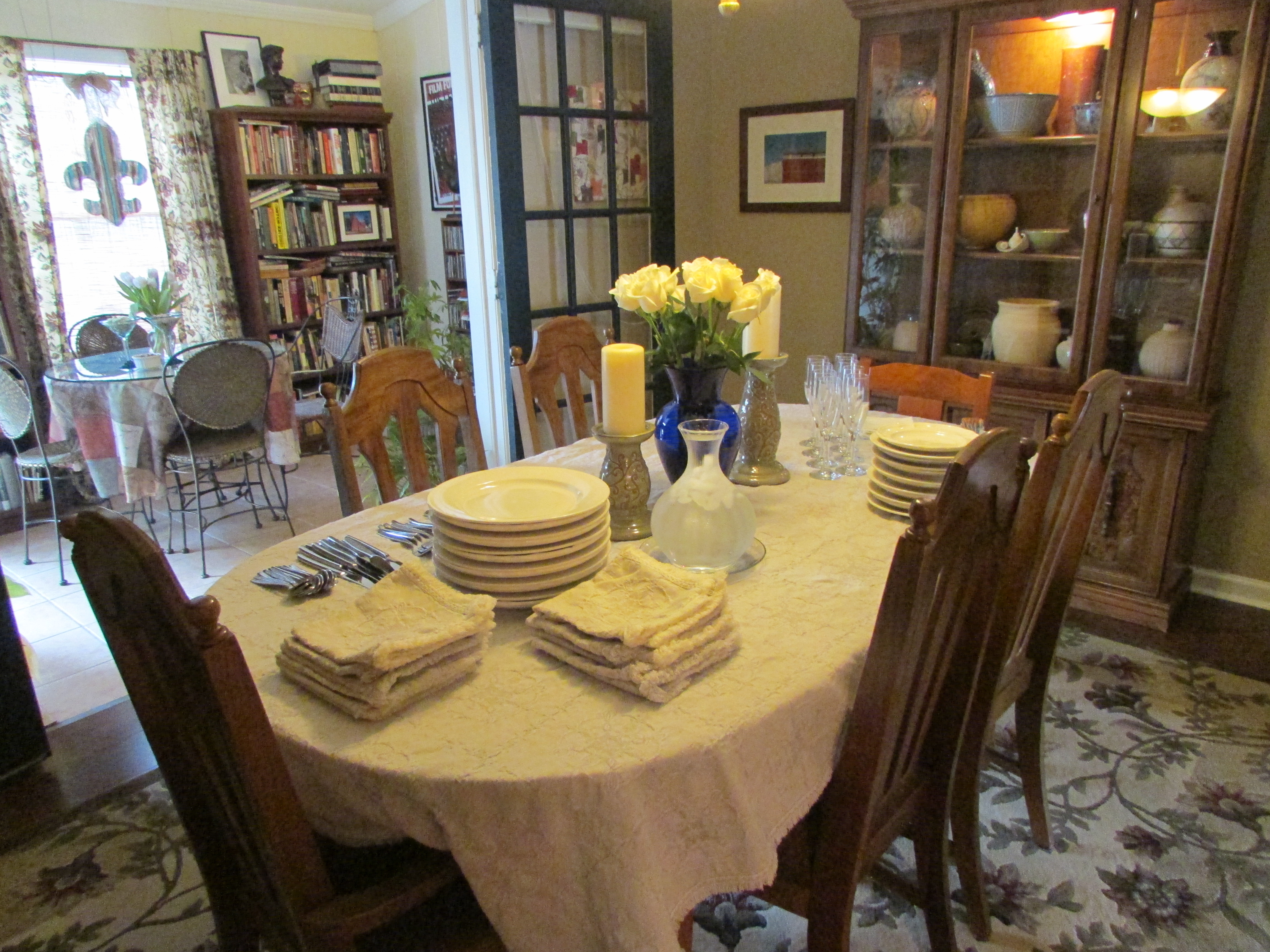
I hosted my first Joe Cain Day celebration this Sunday, February 15, and it brought some levity to a blustery February afternoon in north Alabama as still another cold front – “the weather of northern aggression” I call it – moved into the area. On the invitations I wrote “Masks and mourning attire optional.” My guests, some of them wearing masks and almost all dressed in some form of black in “mourning” for Joe Cain, enjoyed the respite before the cold and icy work week resumed.

IMG_1128One of my favorite images in New Orleans is that of Mardi Gras beads that never came down to earth during parades and got caught in the live oaks along the parade routes. They hang there throughout the year, gradually fading but always a reminder that the season has gone but will always come back again in January. I look for these stray beads on streetcar rides along St. Charles. With that image in mind, I threw beads from my second story bedroom window on the day before the party and let them catch in the cherry tree in my front yard so that my guests would have that image of beads in the trees upon arrival. (Now I will spend the rest of February retrieving Mardi Gras beads from the cherry tree.)

I designed the menu to reflect regional and seasonal tastes and as usual there was much more food than was needed. I made a lot of the food myself. I purchased other things from favorite vendors. Here’s my menu.

A Joe Cain Day Celebration / February 15, 2015

Boiled Peanuts

Cheese Straws

Breads, Toasts, and Crackers for dipping and spreading

Gumbo

Lobster and Shrimp Salad

Alabama Gulf Shrimp w/cocktail and garlic buttermilk sauces

Hot Seafood Dip w/ shrimp and crabmeat

Mardi Gras Chicken

Chocolate Truffles

Moon Pies

King Cake

Bloody Marys, Hurricane Punch and assorted beverages

The gumbo was ordered from Wintzell’s (www.wintzellsoysterhouse.com), a Mobile-based oyster house and restaurant that makes one of my favorite gumbos. The King Cake, a carnival season standard, came from Paul’s Pastry Shop (www.paulspastry.com) in Picayune, Mississippi. My friends G. Todd and Anita brought a couple of other dishes — a crawfish beignet with a savory sauce and crostini topped with shrimp, red pepper jelly, and sweet potato. The chocolates were from the Chocolate Gallery in Huntsville (www.chocolategalleryal.com).

IMG_1133“Mardi Gras Chicken” was a clear favorite of the day. When I was on the Gulf Coast in December, I was toying with the idea of a Joe Cain Day party. I asked my friends, the Brunsons – who are natives of Mobile, for a dish that their mother, Jean Brunson, would have made for Mardi Gras and Joe Cain Day. The response was unanimous – “Mardi Gras Chicken!” – and a recipe was produced. Mrs. Brunson was the caterer for the First Baptist Church of Mobile for many years and had a sizable repertoire. “Mardi Gras Chicken” is really an adaptation of a chicken tetrazinni recipe but Mrs. Brunson always made it around Mardi Gras and her children still refer to it as “Mardi Gras Chicken.”

I made my own revisions to the recipe and my adaptation of Mrs. Brunson’s adaptation is what I’m offering here. It’s a hit.

Mardi Gras Chicken

1¼ lbs. boiled chicken

1 large pkg. rotelli pasta

1 cup green, red, and yellow peppers, diced

1 medium onion, chopped

6 pieces of celery, diced

6 strips of pimento, chopped

2 cans of cream of mushroom soup

¾ cup of sour cream

1 cup of sharp cheddar cheese, finely grated

4 ozs. almonds, minced

Cook rotelli pasta in chicken broth. Since it will be baked in a casserole, it is best to cook it until it is fairly limp. Drain pasta. Add chicken to pasta (chop chicken into fairly large bites). Add peppers, onion, celery, and pimento. Stir in cream of mushroom soup, sour cream, and ½ cup cheese.

Place mixture in large casserole dish and top with ½ cup cheese and minced almonds. Bake at 350 degrees for I hour.

Happy Mardi Gras!

IMG_1146

The Bright Star


     100_2314  Bessemer, AL It seems that every family has a restaurant where it convenes for special events and commemorations – the place where the family goes to celebrate graduations, birthdays, and anniversaries, and to gather after funerals and hospital visits and other more somber occasions. For my family, that restaurant in the Birmingham area is The Bright Star west of the city in Bessemer. The Bright Star, Alabama’s oldest restaurant, opened in 1907 and has been family-owned ever since. The Bright Star was awarded as an “America’s Classic” by the James Beard Foundation in 2010.

Mine is a family of strong, vocal, and often divergent opinions on pretty much everything, including food. The Bright Star is one of the places that is in every family member’s “comfort zone.” In addition to being a safe choice, it also has a good and diverse menu with offerings for every taste. I always look forward to eating at The Bright Star, whether it is a quick lunch or a leisurely evening meal.

Frank Stitt triggered Birmingham’s ascent on the national culinary map with the opening of Highlands Bar and Grill in the 1980s. But the culinary history of the Birmingham area is full of the stories of Greek families and immigrants who opened restaurants. Many of their descendants are still restaurateurs into the 21st century. The Bright Star is the anchor of that Greek-influenced dining tradition in Birmingham with off-shoots that range from fine dining establishments to fish markets, barbecue joints, and hot dog stands.

The Bright Star was started by Tom Bonduris and has been continuously owned by Bonduris and Koikos family members ever since. Jimmy and Nick Koikos, sons of long-time owners Bill and Tasia Koikos, are the current faces of the restaurant, along with a large and long-serving support staff. Much of my recent planning with the restaurant has been coordinated through the invaluable  and gracious help of Jimmy and Nick’s niece, Stacey Craig, and maître d’ Marlon Tanksley. The restaurant always bustles and the place is full of regulars as well as people who are traveling through or have made the effort to come to Bessemer just to check it out.

The Bright Star has grown over the years in its current building in the middle of downtown Bessemer. The vibe of The Bright Star reminds some of New Orleans’ Galatoire’s. (It is a lesser known fact that the first Galatoire’s was in downtown Birmingham before Jean Galatoire ended up in New Orleans and opened his iconic Bourbon Street bistro.) The Bright Star menu that features seafood and steaks in the evenings serves a classic Southern “meat and three” lunch menu each day. The shredded cabbage with the signature slaw dressing is a staple, as is a superior bread pudding and an array of fine pies. The Bright Star serves one of my favorite gumbos. Tipping its hat to the New Orleans influences on the menu, The Bright Star does an annual “Taste of New Orleans” event in August that usually features the executive chef of New Orleans’ Commander’s Palace.

Fresh seafood is delivered daily and Alabama Cattlemen’s Association has named Bright Star’s beef the best steak in Alabama. The large foyer entrance to the restaurant is full of memorabilia including awards, national magazine and newspaper articles, and archival photographs of the many celebrities and dignitaries who have enjoyed a meal at The Bright Star. One finds photos of Sandra Bullock and her father dining there among an array of celebrities and sports figures from earlier times.

The main dining room is flanked with highly varnished pastoral murals painted by an itinerant German painter in 1915. A century of varnishing and cigarette smoke creates a warm glow from the murals and the combination of the murals and the high wooden booth backs creates an intimate and cozy feeling in the large room, even as the aisles are full of servers and patrons coming and going.

Far in the back of the main dining room is the enclosed booth that was Alabama Coach Paul “Bear” Bryant’s favorite booth. For a recent birthday dinner, my mother reserved the Bryant booth and I dined there for the first time with a large portrait of “the Coach” looking down from the west wall.

When The Bright Star turned 100 in 2007, a book, A Centennial Celebration of The Bright Star Restaurant, was released. The book, a project by nieces of Jim and Nick Koikos with assistance from Niki Sepsas, is a compilation of history, memories, recipes, and photographs of the restaurant. IMG_1119

Bessemer, a vibrant industrial town in the early 20th Century, lost much of its industry in the 1970s and has suffered economic downturns and redefinition. Through it all The Bright Star has endured. I was in the restaurant this past weekend and am convinced that The Bright Star will be serving good meals to happy patrons for generations to come.

Note: The top image is a detail from Scott Smith’s assemblage, “Ensley” (2010), featuring the menu listing for The Bright Star’s “famous snapper almondine.” “Ensley” was a commission celebrating my parents’ marriage. Each pin represents a place they have lived during the marriage. Images of Ensley, the Birmingham neighborhood where they met, and other aspects of their marriage are represented, including images from The Bright Star menu.

“I Love You, Alice B. Toklas”

IMG_1114   I bought my first Gertrude Stein book, The Autobiography of Alice B. Toklas, at the late great Smith and Hardwick Bookstore on 20th Street in downtown Birmingham in the ‘70s when I was an undergraduate at Alabama. Smith and Hardwick was one of those amazing bookstores with an outstanding jumble of books on two levels in seeming disarray. It was owned by the Praytor sisters – Virginia and Anna – and by Anna Praytor alone when Virginia died in 1974.

If you were looking for a particular title in the store and couldn’t figure out where it might be in the dusty stacks, one of the Misses Praytor always seemed to know exactly where it was located. Here’s what great locally-owned bookstores were like back then: I was in school in Tuscaloosa and if there was a book I needed I would telephone Miss Anna Praytor in Birmingham. She would mail the book the same day and enclose a handwritten bill and thank you.

The Autobiography of Alice B. Toklas (1933) was Stein’s own autobiography told in the voice of Toklas, her long-time companion, secretary, cook, confidante, hostess, and handler. Alice B. Toklas (1877-1967) and Gertrude Stein (1874-1946) met on Toklas’s first day in Paris in 1907 and were never apart until Stein’s death thirty-nine years later. The Autobiography of Alice B. Toklas was a huge hit and led to Stein and Toklas’s triumphant first tour of the U.S. that spanned seven months in 1934 and 1935. Stein captured the experience of the American tour and other events in a 1937 book titled Everybody’s Autobiography. Whatever else Gertrude Stein may have been, she was never modest.

Over the years I have been fascinated with Gertrude Stein and have directed and adapted her plays, delivered papers about her oeuvre and influence, and conducted acting workshops based on the enigmatic short ditties she referred to as “plays.”

And the more I have learned about Stein, the more interested I have become in Toklas and her quirky and ongoing influence. Eugene Walter knew Toklas (of course) in Paris in the ‘50s and “adored [her] because she had this little moustache, and I swear she waxed it.” He says that upon meeting her “Right away you could see cat and monkey” (his two favorite creatures). “She had a logical mind, but she also had the gift of the parenthesis.”

Walter and Toklas exchanged cooking ideas and recipes and it was The Alice B. Toklas Cookbook (1954) that brought Toklas a surge of attention after Stein’s death. The Cookbook is really a fascinating memoir with recipes presented in a witty, earnest, and distinctive voice. In a chapter entitled “Murder in the Kitchen,” Toklas discusses the unpleasant tasks of preparing live animals for the kitchen: “The first victim was a lively carp brought to the kitchen in a covered basket … So quickly to the murder and have it over with.”

As Toklas assesses and deals with the fish she observes:

The carp was dead, killed, assassinated, murdered in the first, second, and third degree. Limp, I fell into a chair, with my hands still unwashed ready for a cigarette, lighted it, and waited for the police to come and take me into custody. After a second cigarette my courage returned and I went to prepare poor Mr Carp for the table.

Later in the same chapter Toklas describes her preparation of “Six white pigeons to be smothered, to be plucked, to be cleaned and all this to be accomplished before Gertrude Stein returned for she didn’t like to see work being done.”

In addition to being very readable, educational, and entertaining, the Cookbook continues to inspire into the 21st Century. A brief passage in Toklas’s chapter entitled “Servants in France” about the hiring of an Indo-Chinese cook named Trac inspired the creation of a beautiful and award-winning 2003 novel, The Book of Salt, by Monique Truong. Truong’s seductive and meditative book explores a fictional Vietnamese cook, Binh, who comes into the Stein-Toklas household.

No doubt the part of the Cookbook which caused the most stir is a recipe for “Haschich Fudge” in a section of the book called “Recipes from Friends.” The marijuana brownie recipe “which anyone could whip up on a rainy day” was given to Toklas by Brion Gysin and is described as “an entertaining refreshment for a Ladies’ Bridge Club or a chapter meeting of the DAR.” The chapter of recipes from friends was inserted to fill the book out and Toklas might have been clueless about what she was presenting with the fudge recipe. Even so, the American publishers left the recipe out of the first American edition but it was included in others and became notorious and sort of a code, especially when the hippie movement of the 1960s took hold.

That recipe is the reason that a fairly insipid and badly dated 1968 Peter Sellers comedy directed by Hy Averback is called I Love You, Alice B. Toklas! Sellers plays “Harold Fine,” a strait-laced attorney who falls in with a group of very stereotypical hippies and is especially enamored of one particular hippie, Nancy, played by Leigh Taylor-Young. Nancy, of course, bakes Alice’s brownie recipe that fuels much of the frolic. The title song, penned by Elmer Bernstein (who was no hippie) and performed by Harpers Bizarre, has the refrain “I love you, Alice B. Toklas / And so does Gertrude Stein.” Other lyrics evoke “Coriander baby elephants singing ‘Silent Night’/ Sweet cinnamon and nutmeg Che Guevara.” (The ladies would be so proud.)

Sly references to Toklas’s fudge recipe had a way of sneaking in to pop culture. In a 1969 episode of the sitcom “Bewitched,” Samantha’s mother Endora is offered a cookie. Endora asks if it’s from an Alice B. Toklas recipe. When she’s told it’s not, Endora says, “… I’ll pass.”

My favorite recipe from the cookbook is “Oeufs Francis Picabia” from the chapter titled “Dishes for Artists.” Here it is:

Break 8 eggs into a bowl and mix them well with a fork, add salt but no pepper. Pour them into a saucepan – yes, a saucepan, no, not a frying pan. Put the saucepan over a very, very low flame, keep turning them with a fork while very slowly adding in very small quantities ½ lb. butter – not a speck less, rather more if you can bring yourself to it. It should take ½ hour to prepare this dish. The eggs of course are not scrambled but with the butter, no substitute admitted, produce a suave consistency that perhaps only gourmets will appreciate.

I am no gourmet, and this recipe is too rich to serve a lot, but I have prepared it and can attest to the fact that it is delicious.

In 1963, needing money, Alice B. Toklas finally got around to writing her own autobiography. It is called What Is Remembered. Even though she outlived Gertrude Stein by over two decades, she chose to end her own life’s story with the death of Gertrude Stein.

Discovering Eugene Walter

IMG_1111 During graduate school I briefly worked a part-time job as a reader for a press clipping service. This is another of those occupations that is now totally obsolete but I love to read and enjoyed the job. It’s clearly a great job for a liberal arts guy. The staff of readers would have our favorite newspapers and would try to make sure that the favorites were in our stack of papers to be read. I had personal picks among the large dailies and there were a few of the small-town weeklies that I tried to grab because of a particularly charming or quirky local columnist or point of vew.

“The Boulevardier” was the title of a column written by Eugene Walter and published in Azalea City News and Review, an alternative weekly newspaper in Mobile at the time. My first reaction was Who is this guy and why haven’t I heard of him before if he’s been all of the places and done all the things he claims?

The more I read, however, the more fascinated I became with the scope of knowledge and experience of a true, uncompromising, unpretentious, and erudite Renaissance man. Too late, I began to track down the biographical details of Eugene Walter (1921-1998) and realized that even if the majority of his claims were tall tales and fabrications, he still lived a more eventful and meaningful life than most everybody else.

“I don’t drive a car, I don’t wear blue jeans, and I don’t go to football games,” said Eugene Walter, but here are just a few of the things that he did do:

  1. Worked with the Civilian Conservation Corps as a highway sign painter.
  2. Served as an army cryptographer in World War II.
  3. With collaborators, staged some of the first “Happenings” in the garden of New York’s Museum of Modern Art.
  4. Worked on a Paris-based multilingual international literary journal, Botteghe Oscure. He later relocated to Rome as the journal’s editor.
  5. Published a short story in the first Paris Review for which he served as a founding and contributing editor.
  6. Published his first novel, The Untidy Pilgrim, while living in Paris. It won the Lippincott Prize for best first novel.
  7. Published his first volume of poetry, Monkey Poems, during the Paris years.
  8. While in Rome, acted and worked as an assistant and translator for master Italian filmmaker Federico Fellini. He appeared in Fellini’s masterpiece and in many other films for Fellini and other directors including Blake Edwards and Lina Wertmuller.
  9. Wrote the lyrics for Nino Rota’s signature song “What Is a Youth?” for Franco Zeffirelli’s Romeo and Juliet. This theme song for the very popular film was an international hit.
  10. Wrote the best-selling classic American Cooking: Southern Style (1971) for the Time-Life Foods of the World cookbook series.

He was born and grew up in Mobile, served the military in the Arctic Circle, lived in New York City in the 1940s, lived in Paris in the 1950s, lived in Rome throughout the 1960s into the 1970s, and moved back to his beloved but changed Mobile for a number of social and productive years from the late-1970s until his death. “Sooner or later Southerners all come home, not to die, but to eat gumbo,” he said. As he lived and traveled around the world, he always carried a Thom McAn shoebox full of Alabama red clay with him and stored it under his bed – “So I always slept on Alabama soil.”

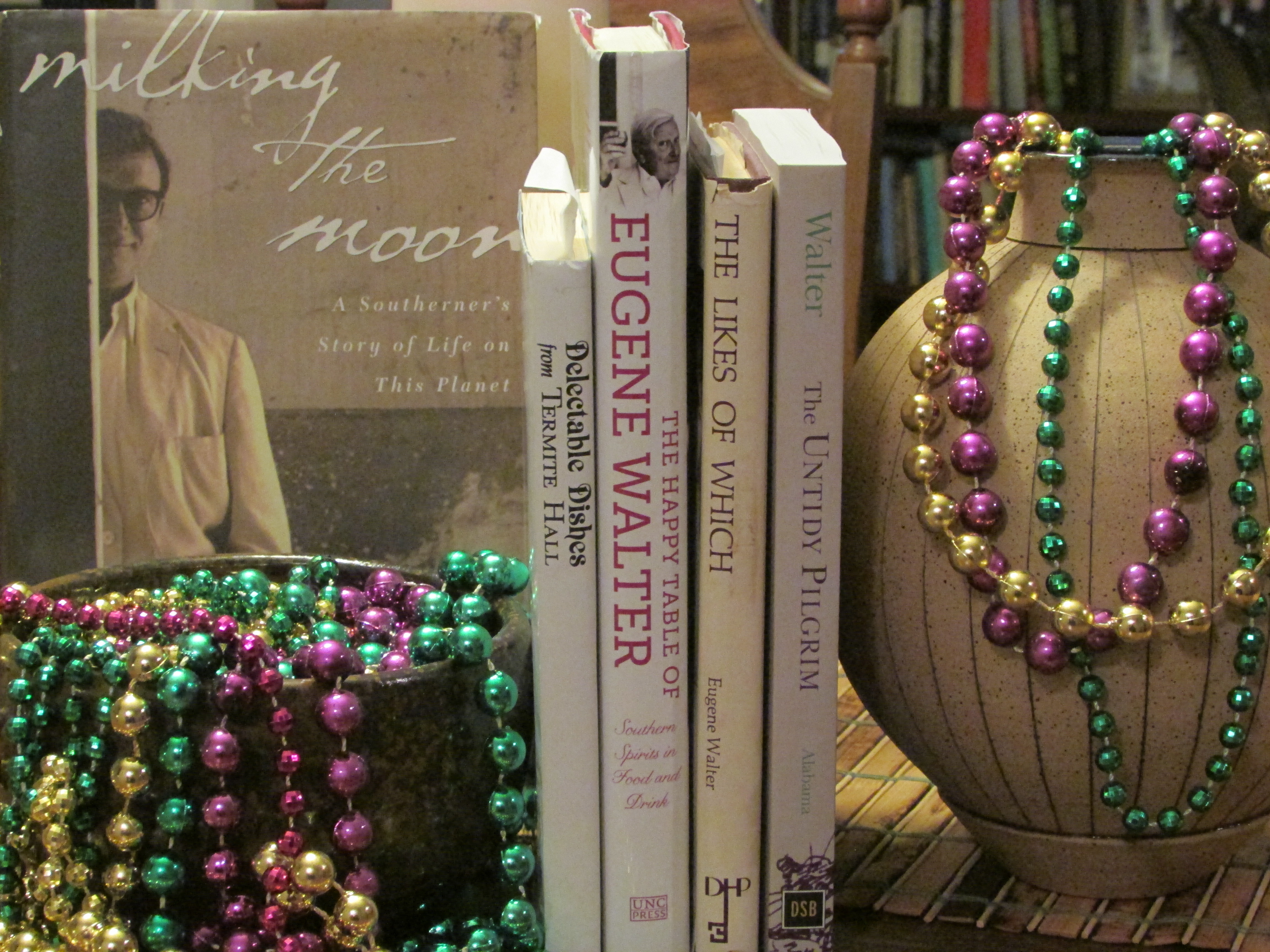
American Cooking: Southern Style is out-of-print, very precious, and somewhat hard to find in a good affordable copy. If you’re interested in food, grab it when you find it. Walter did other food-related books in his lifetime including Delectable Dishes from Termite Hall: Rare and Unusual Recipes (1982); and Hints and Pinches (1991). Posthumously, in 2011, The Happy Table of Eugene Walter: Southern Spirits in Food and Drink was published. The Happy Table was compiled from an unpublished manuscript and other recipes and food writing from Walter and focuses on “Southern Beverages and a Grand Selection of Southern Dishes Employing Spiritous Flavorings.”

His books on food are full of wonderfully vivid recipes and unvarnished opinions. “Baby turnip roots just boiled to a point, not mushy, dressed with butter, cream, salt and a generous flecker of nutmeg, are the sign of a highly civilized household.”

In The Happy Table … Walter writes, “For a real feast, you must have two kinds of meat and two kinds of bread, and there must always be more than enough food to serve the number of guests.” (My grandmother would add that one of the reasons for this abundance is to “be sure there is something on the table that everybody likes” and I still follow her mandate.)

His advice to cooks is simple and timely: “seek fresh, avoid chemicals, keep a light hand, rise to the occasion, try what you don’t know, have fun … and good eating, you-all!”

Don’t get him started on ready-ground pepper (or do, it’s very entertaining): “Never use the dead dust sold as ready-ground pepper. … dead dust is only dead dust. Many restaurants which pretend to be first class, and with prices which corroborate their pretensions, do not have pepper mills … either take your own pepper mill with you, or smash an ashtray when the waiter says they don’t have one.” As random and serendipitous as Walter’s pronouncements may sound, his food-related books are meticulously researched and the scope of his knowledge and historical grasp is constantly impressive.

Writer Pat Conroy, a personal friend of Walter, devotes a whole chapter to him in The Pat Conroy Cookbook (2004). Conroy writes that while he lived in Rome, shortly after Walter had returned to Mobile, “I met more Italians who were in love with the whole state of Alabama just because Eugene Walter had sprung so fully formed and elegant from that Deep South state. Many Italians were fully prepared to like me because they knew my native state of Georgia was contiguous to the one that had produced the incomparable Eugene Walter.”

In 2001, Milking the Moon: A Southerner’s Story of Life on This Planet was published. It is the life story of Walter in his own inimitable words as he told it to Katherine Clark in a series of recorded conversations near the end of his life. Be warned that once you pick it up, it is hard to put it down. He begins, “You may think you don’t know me but you have probably seen me on late-night television playing either an outlaw or a hanging judge… If you’ve ever seen Fellini’s 8 ½, I’m the tacky American journalist who keeps pestering Marcello Mastroianni with obnoxious questions. And if you haven’t seen , you need to: it’s one of the great films of this century.”

I re-watched not long ago and particularly watched for Eugene Walter’s appearances. He’s one of those performers who glows on the screen – not so much for his acting ability as for his sheer joy in acting. He smiles broadly, his eyes are shining and shifting with mischievous glee, and he is totally present every moment he’s in a scene. I couldn’t help thinking about the similar impact Tim Blake Nelson’s performance as Delmar had for me in the Coen Brothers’ O Brother, Where Art Thou? In each case, the glee of the actor in the performance is memorable and contagious.

Reading Walter’s work, one constantly has the urge to call somebody and quote a passage. But that’s a risky exercise since once you get started, you can’t stop. Almost every word on the page is quotable.

Eugene Walter knew everybody. The 23-page “Cast of Characters” at the end of Milking the Moon reads like a Who’s Who of important and famous people of the 20th Century. He threw dinner parties for whomever happened to be of interest to him wherever he happened to live. He claimed to have three pubic hairs which were gifted to him by actress Tallulah Bankhead in her dressing room after her performance in The Skin of Our Teeth at a Broadway theatre during his early sojourn in New York (but then, who didn’t have such a treasure from Tallulah at that time?).

I was familiar with Walter’s short stories but I recently read that first novel, The Untidy Pilgrim, for the first time. It is the story of a young man from central Alabama who comes to Mobile – “south of the salt line” – to work in a bank and study law. “Down in Mobile they’re all crazy,” the novel begins, “because the Gulf Coast is the kingdom of monkeys, the land of clowns, ghosts, and musicians, and Mobile is sweet lunacy’s county seat.”

Of course the stable and well-intentioned young man (who is never named) is quickly caught up in the intrigues and pleasures of his new surroundings and his Mobile friends and relatives. He is introduced to the colorful characters, artists, and underside of Mobile and encouraged to play hooky from his 8-5 grind. He samples the indiscreet pleasures around him and is taken into the fold by his more cavalier south Alabama relatives and Miss Nonie Fifield – “Fiffy” – from whom he rents a room.

As with all of Walter’s writing, I found the novel compelling and terrifically entertaining. And I was pleasantly surprised when the ending of the book was a somewhat conventional one – which was not at all what I expected given what I know about Eugene Walter. The book plays around with the reader’s expectations, dips its toes in the unexpected and bizarre, and then catches the reader off-guard by concluding in a sweet and almost conventional way. That unpredictable predictability left me smiling and satisfied at the end.

Eugene Walter spent much of his life in poverty, had a limited formal education, and died practically destitute, but happy. “I haven’t been smashed by the educational system, the financial system, the political system,” he said. He lived his life on his own terms and with style. When he died, a jazz funeral procession took him through the streets of Mobile for burial at Church Street Cemetery. The cemetery had been closed for a century but the city gave special permission for his interment.

Over the years, I have talked to a few people who met Eugene and each one seems simultaneously entranced, intrigued, befuddled, and half in love with the guy. He was what one might call an eccentric in every sense but his charm was evident to all kinds of people. “When I was growing up in Mobile,” he said, “there was no such thing as an eccentric, because individuality was permitted.”

I wish I had known to meet him.

Alabama Barbecue and the “White Sauce” Anomaly

100_1583   It is often written that there is no indigenous “Alabama-style” of barbecue and it seems that circumstance may be a key to our abundance of options. Opinions about barbecue in Alabama – indeed, throughout the South – are as strong as those about football, religion, or politics. Everybody has a favorite place and favorite style and it is often based on tradition and habit as much as quality and taste.

I don’t put much stock into website rankings, but a 2014 online study by “Estately Blog,” using five statistical criteria for all fifty states, ranked Alabama as the most “Barbecue-Crazed State in America.” Among the criteria in which Alabama ranked highest are the overall percentage of restaurants devoted to barbecue (1st — 8.27% of all restaurants in the state are barbecue places according to this report) and number of barbecue restaurants per capita (3rd). I have seen previous reports that ranked Alabama as 1st in that “per capita” category also.

With such an abundance to choose from, I long ago stopped taking the time to grill out or barbecue since there are so many better options from which to choose.

A few days ago, I saw another online article with the title “Are These the Most Iconic Restaurants in Every State?” I try to avoid those articles because it’s inevitable that they’ll annoy me; that’s the reason they’re there. But it was about food and I had to take a look. Before I opened the webpage I began to imagine the possibilities and the various ways to define “iconic” and wondered what might be the selection for Alabama. Candidates that immediately came to mind were Highlands Bar and Grill, the fine dining restaurant in Birmingham’s Five Points South; The Bright Star, the Bessemer institution for over a century; and Dreamland, the superior barbecue joint in Tuscaloosa.

The website’s choice, alas, was Big Bob Gibson Bar-B-Que (www.bigbobgibson.com) in Decatur. Congratulations to them for their designation but this is one of those selections where personal taste has to speak up. (“They’re not even the best barbecue in Decatur,” said a friend who is a longtime resident of Decatur.) I was aware of Big Bob Gibson’s and know they are a force on the competition circuit. I even like their food fine. But it seems that their “iconic” status is based on something this Alabamian was unaware of until he moved to the Tennessee Valley of north Alabama: white sauce slathered on barbecue (chicken, usually). This is not a béchamel but a mayonnaise-based sauce for barbecued meat.

White sauce is a staple for most barbecue places in this part of north Alabama. I was unaware of its existence until I moved to the area over twelve years ago. I tried it out – more than once and at more than one place – and I don’t like it. I like all of the ingredients – mayonnaise, vinegar, pepper, occasionally horseradish – but I declared the combination “nasty” the first time I tried it and have not waivered on subsequent attempts. I know people who love it and they are entitled to their taste. It’s not for me. I have met people who claim that they ship it by the case to people who want it and can’t get it in other parts of the country. Feel free to give them my share. Please.

To add insult to injury – and I think this was fueled by the Food Network – the sauce is now commonly being referred to as “Alabama sauce.” I first heard this appelation on the Food Network and have now encountered it in other national media including PBS. This rankles me a bit. I could live with it being called “Decatur Sauce” or “Tennessee Valley Sauce” or “North Alabama Sauce.” Jim ‘n Nick’s, a Birmingham stalwart, refers to it as “Morgan Co. White Sauce.” I’m good with that. But I find that white barbecue sauce is an anomaly outside north Alabama. And my vote is for it to stay that way.

Since the website listings of “iconic” eateries chose to represent Alabama with barbecue, I began to brainstorm my favorite Alabama restaurants for barbecue. The first names that came to mind were places around Birmingham and the part of Alabama that is most familiar to me. I have eaten Bob Sykes Bar-B-Q (www.bobsykes.com) most of my life. Its location in Bessemer, just outside Birmingham, is always busy and the product is consistent. It’s a good sauce and the pulled pork is my favorite. Jim ‘n Nick’s Community Bar-B-Q (www.jimnnicks.com) is a Birmingham-based brand that has only been around since 1985 (short-lived by barbecue standards) but has quickly become iconic with its support of community, locally grown ingredients, and far-reaching philanthropy backed up by truly high quality product. There are now Jim ‘n Nick’s in a number of states and the corporate and quality policies are consistent throughout the franchise. Corporate policy forbids freezers at Jim ‘n Nick’s.

For me, and for many Alabamians who grew up away from the pull of Big Bob’s white sauce, the barbecue mecca for Alabama is still Tuscaloosa County. There is some difference of opinion on who tops the Tuscaloosa ‘cue culture but it’s a happy dilemma since the debate focuses on two long-time joints – Dreamland and Archibald’s.

The original Dreamland (www.dreamlandbbq.com) was opened by “Big John” Bishop in 1958, the year Bear Bryant came to coach at Alabama. It is located in the community of Jerusalem Heights in southeast Tuscaloosa fairly near US Hwy. 82 and I-59/20. Turn onto Jug Factory Road, drive the curvy road to the top of the hill, and take a right to Dreamland. Follow your nose if you get turned around and you will sometimes know the place by the happiest parking lot dogs to be found.

Dreamland has franchised and can be found in other locations but Jerusalem Heights, the “OG,” is the end of the barbecue rainbow for me. The original place used to serve only ribs and white bread (“No Fries, No Slaw, Don’t Ask” said a sign over the register at one time) and that is enough. It’s a cinderblock temple with noisy screen doors. “Alabama” is a Native American word meaning “Here We Rest” and that is the phrase that comes to mind whenever I am in Mr. Bishop’s original Jerusalem Heights establishment. The ribs are available as a sandwich, a plate, or a slab, and the sauce is amazing with sweet undertones beneath a bold vinegary bite.

While I would have to vote for Dreamland as the best and most iconic barbecue in the state, cross the river from Tuscaloosa into Northport and there is amazing and even more rustic competition from Archibald’s. The late writer Barry Hannah introduced me to Archibald’s in the late ’70s. It is basically a shed surrounding a pit with a few seats on the inside and a few picnic tables around the small parking lot. The menu is minimal but the quality is splendid, and the sauce is more mustardy. Archibald’s is a little bit off the beaten path and I haven’t eaten there nearly as often as I’ve eaten at Dreamland but I’d venture to guess that if I had been introduced to Archibald’s first, it might be my favorite. As it is, it’s almost a toss-up between Dreamland and Archibald’s for me.

And there’s not a drop of white sauce to be found at either place.

A Menu for the New Year

IMG_1101  A couple of decades ago, when I stopped actively celebrating New Year’s Eve, I started cooking a big meal for New Year’s Day and use New Year’s Eve to prep the food.

It’s always a simple menu using the Southern good luck staples that we always had for New Year’s Day growing up – pork, greens, and black-eyed peas. If that’s your basic menu, cornbread is a given. Over time, I realized that such a healthy and hearty meal should be shared and began to invite friends and family over for the meal to celebrate the beginning of a new year.

In recent years it has become “a thing” and my menu constantly evolves while the basics remain the same. Since many of the same people attend regularly, I constantly make notes and look for ways to add new touches and tastes. In 2014, for example, I served baked grits from the recipe used at Frank Stitt’s Highlands Bar and Grill in Birmingham as a base over which to ladle the black-eyed peas. It was a delicious riff on traditional ingredients.

Around Thanksgiving of 2014 I was talking with a new colleague and friend and holiday plans came up. I asked her if she would be around for New Year’s Day and told her that if she was, she was invited to my house for lunch. She said she would like to come and I told her that it would be nothing fancy, “just the New Year’s staples.”

“Herring?” she asked.

That caught me off-guard. “Well, no, actually,” I said. “I meant pork, black-eyed peas, and turnip greens.”

The conversation ended soon after but I was intrigued and started researching and found that herring is a New Year’s good luck food in Germany, Scandinavia, and some eastern European locations. I resolved then and there to add herring in some form to my New Year’s lunch menu this year.

IMG_1100

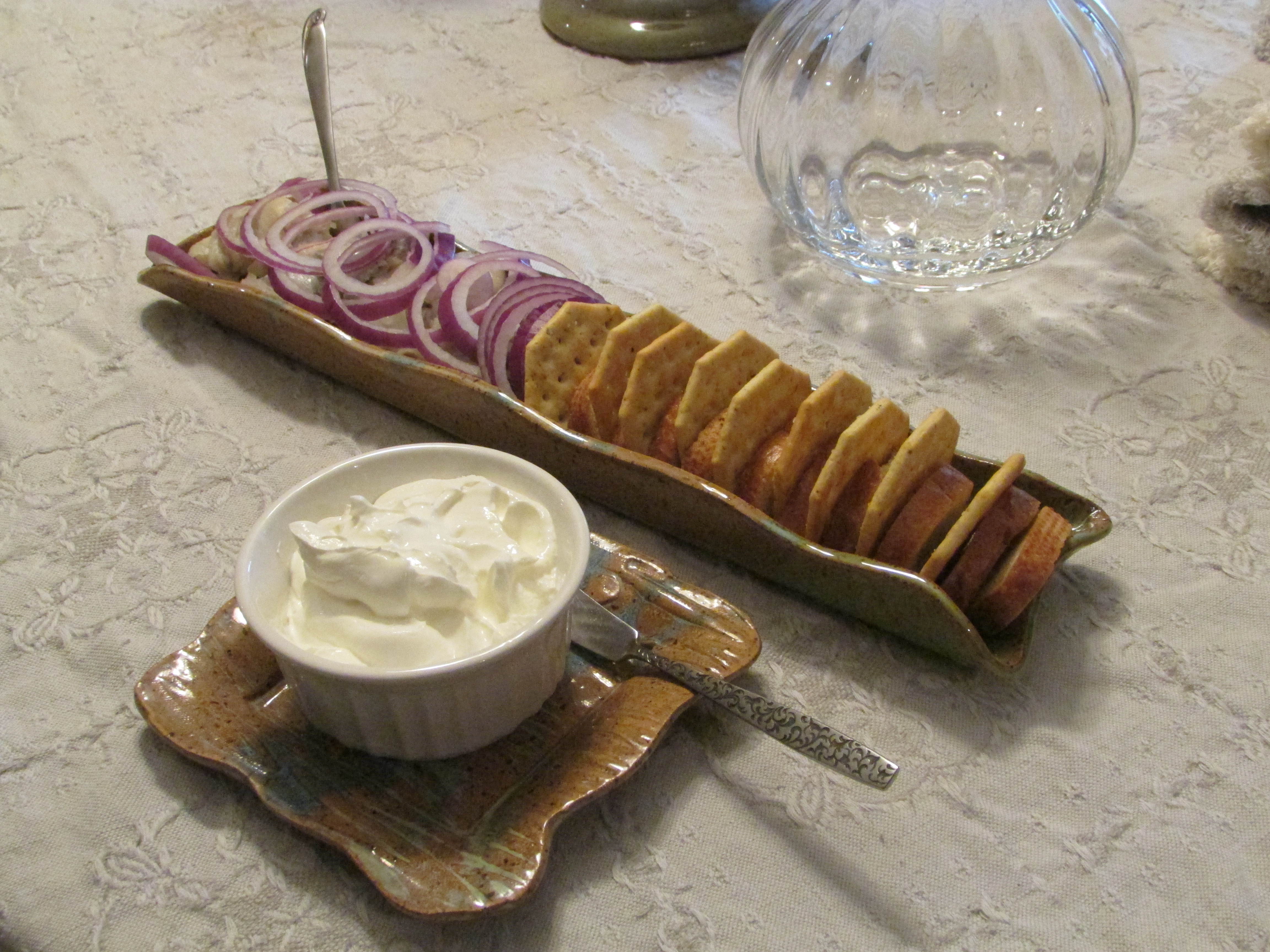
I decided to serve a herring appetizer. As guests arrived on New Year’s Day, in addition to various pralines, hard candies, and pecans, there was a serving dish with herring in white wine sauce with red onion slivers scattered around. Toasts and crackers were laid out on which to layer the herring. Sour cream was available at the side as a spread for the fish. It was a very tasty and popular appetizer. It may become a new tradition for the meal at my house.

After all the guests arrived and toasts were made, the lunch main menu was pretty standard for Southern homes on New Year’s Day:

Pork Roast with dry rub of coffee, brown sugar, seasoned salt, and orange zest
Seasoned Black-Eyed Peas
Seasoned Mixed Greens
Ambrosia
Cornbread

The seasoning for the greens and peas included hog jowl. The ambrosia is adapted from a simple ambrosia from chef Scott Peacock. His elegant classic includes only orange, coconut, sugar, and sherry. Mine uses satsumas from south Alabama for the citrus and adds pecan pieces and cherry slices.

The pork roast dry rub is worth sharing. I had jotted down a recipe from somewhere for a meat dry rub using coffee, granulated sugar, and seasoned salt. I experimented with it until I came up with the one I used on New Year’s Day. All of my guests left the lunch with a jar of this rub and it’s one you can easily make.

Dry Rub for Meat
1 part ground coffee (I used Community Coffee)
1 part brown sugar
1 part seasoned salt
1/2 part orange zest

Put all ingredients into a jar. Seal the lid and shake to mix thoroughly. Rub the meat with a good olive oil and then generously rub the meat with the dry rub.

We were ten at table – seven adults and three young people aged 11 and younger. For dessert, each guest was served a single madeleine and reminded of how Proust’s madeleine was a trigger for memory in Remembrance of Things Past. Whatever…

The adults enjoyed the madeleines and the kids scarfed them down; I doubt that anyone was too concerned about Proust.

It was a lovely meal and a lovely afternoon. A soft rain began as the guests began to leave. As the last guest departed, we had a quick “post-mortem” of the event. “The afternoon was full of laughter,” she said. “That’s what I needed — an afternoon filled with laughter.”

May 2015 be filled with happy laughter.

South of the Salt Line

IMG_1004   Fairhope, AL. I first learned the phrase “south of the Salt Line” from the great boulevardier and Mobile native Eugene Walter, who is worthy of his own post and will get one from me soon enough. It was Walter’s contention, based on growing up in his beloved Mobile, that “folks who live below Alabama’s salt line are a little crazy.”

He means “crazy” in a good way. Walter’s philosophy is extensive but it has to do with the belief that Southerners who live with ocean salt in the air tend to be a little less uptight, reserved, and conservative. He felt it applied to people in south Alabama, the Mississippi coast, and the environs of New Orleans in particular. I hope he’s right because whenever I travel down this way, regardless of the weather, I like to roll down the window and breathe a little of the salt air. It frees me up, somehow. On the other hand, there are a lot of Republicans down here.

An added benefit of my annual sojourns to the Grand Hotel in Point Clear is my proximity to the chain of little Baldwin County towns south of the Salt Line along the Eastern Shore of Mobile Bay. When I hit the northeastern start of the Bay, I travel through Spanish Fort, Daphne, Montrose, and Fairhope prior to my arrival in Point Clear and The Grand on Scenic Hwy. 98. IMG_0999Continuing past The Grand along Scenic 98 to regular 98, I cross the Fish River and Weeks Bay and arrive in Magnolia Springs.

I could spend my entire vacation on the grounds of the Grand and in the environs of Point Clear, but explorations of the surrounding communities make the trip richer and even more special. I like to contrast Baldwin County’s Eastern Shore with a popular stretch of Highway 30-A in the Florida panhandle that has become a mecca for striving professionals. The village of Seaside is lovely and had the best intentions but its appeal and success have caused a desecration of 30-A in many ways. The once undeveloped byway is now congested with developments, each seeing how they might out-pastel and out-gentrify the other. 30-A developers slash the landscape and then build homes and business districts evocative of the turn of the previous century, causing gridlock, exorbitant prices, and desecration of a once pristine local landscape. The towns of Alabama’s Eastern Shore naturally have the authenticity and character that all of those Seaside-inspired communities struggle mightily to achieve.

IMG_0982Fairhope, Alabama, was founded in 1894 as a utopian “single tax” colony. Historically, it was a place that encouraged progressive free thinking. The downtown is thriving with locally-owned businesses and the area is a draw for artists and writers. There are art galleries, specialty shops, antiques, and other treasures throughout the walkable downtown which is beautifully and seasonably landscaped year-round. Page and Palette (www.pageandpalette.com) is a particularly fine independent bookstore. The Kiln (www.thekilnstudio.com) is a ceramics gallery and studio that I never fail to visit and usually I walk out with new items for gifts or for my ceramics collection. Owner/artist Susie Bowman has beautiful tastes and a beautiful shop.

Over time, I have found my favorite Fairhope eateries at each end of the price spectrum.

IMG_1006 Last night I had another great meal at Camellia Café in downtown Fairhope (www.camelliacafe.com). Chef Ryan Glass presents an impressive array of fine dining options in a cozy and relaxed setting. Down the street from Camellia Café on Section Street is Master Joe’s (www.masterjoessushi.com), a startlingly fine sushi place in the middle of fried fish territory.

Other great options downtown include Panini Pete’s (www.paninipetes.com), a bustling place that spills out into an attached conservatory and onto the courtyard of Fairhope’s French Quarter shopping district. I love the muffaletta panini but everything on the menu is worth a try. In a new downtown location – or new to me, anyway – is Dragonfly Foodbar (www.dragonflyfoodbar.com). IMG_0980 “Foodsmith” Doug Kerr presents an ever-changing menu of creative small plates, bowls, and tacos. Dragonfly continually offers fine dining dishes at affordable prices in a dive-y setting. Now that they have moved from the former hot dog stand location on Fairhope Avenue to larger digs on Church Street the wait is no longer hours like it used to be.

Farther out, Wintzell’s (www.wintzellsoysterhouse.com), with a Fairhope location just down scenic 98 from The Grand, is a Mobile establishment that has branched out with a handful of locations on the coast and farther inland. It provides a large variety of seafood options with its signature Gulf oysters served “fried, stewed, or nude.” Wintzell’s is usually the destination on my first night in the area, a familiar and comfortable place after a long drive.

Market by the Bay (www.marketbythebay.com) has added a Fairhope location to complement its original location in Daphne. I like to order the Market’s shrimp po’ boy that has so much shrimp in it that I have started calling it “box full o’ shrimp.” The Market’s location in Daphne is a great seafood market in addition to a cozy eatery.

Closer to The Grand in Point Clear is the Wash House restaurant (www.washhouserestaurant.com). The Wash House is located in a rustic building, part of which housed the washing facility for the large country house on the main road. IMG_0987 I have dined alone and with friends at the Wash House on many occasions and the experience always feels like a special occasion. The restaurant is behind the old farm house that is now the home of Punta Clara Kitchen (www.puntaclara.com). Punta Clara is my local stop for pralines to carry back home. They sell all kinds of handmade specialty foods, jams, jellies, and preserves. Punta Clara Kitchen products are usually well-represented at my New Year’s Day lunch for friends.

I always enjoy traveling the expanse of Baldwin County but I usually find myself staying in the area surrounding Point Clear and The Grand resort. IMG_0990 A short trip down the coast on Highway 98 takes me through huge pecan groves, farms, and homes. Shortly after crossing the Fish River and Weeks Bay, I arrive in the town of Magnolia Springs, which is as idyllic as its name suggests.  Residents along the Magnolia River in Magnolia Springs still get mail delivered by boat to boxes on the edges of their piers. Live oaks arch over the narrow streets and I usually find myself ditching the car and taking long leisurely walks through the streets and along the river. A popular dining option in Magnolia Springs is Jesse’s (www.jessesrestaurant.com). IMG_0997

For those who wonder why I always return to the same place for my December getaway, it’s hard to explain the attraction of the place unless they experience it for themselves. When I first started coming down here, I felt an obligation to venture away from Point Clear and would plan side trips into Mobile, or down to Gulf Shores and Orange Beach, or over into coastal Mississippi. Eventually, I realized that it was enough – and exactly what I needed – to just come to The Grand and relax, occasionally venturing out to places that are minutes away. I feel like there is still plenty of Baldwin County to discover and explore.

With that in mind, I take a deep and relaxing breath of salt-infused air, take a left when I ought to take a right, and check out the next treasure south of the Salt Line. IMG_0962

Food Memory: Mother’s Fresh Apple Cake


IMG_1122  Last night friends invited me over for dinner. As we ate Lake Erie perch, we talked about food – where holiday meals would be eaten, travel plans, restaurant favorites, and New Year’s meals and itineraries.

Food and food memory are key to everybody’s holiday traditions and powerful seasonal associations come from foods around the holidays.

Jean Harbison Journey, my mother, would be the first to tell you that she never cared to be known for her cooking. As a young woman getting married and starting a family in the ‘50s, she – like most women of her generation – was looking for convenience and ways to juggle feeding a family with her busy schedule of work, volunteering, and other activities. She was heavily engaged in P.T.A., church, and community.

Even so, she got meals on the table and there were always favorite meals and special treats that she made. None of her dishes, however, got and gets as much attention as her fresh apple cake. There are many fresh apple cakes out there but Mother’s has to be among the finest I’ve ever tasted – okay, it’s by far the best. She gets just the right combination of firmness and moisture and once somebody has sampled Mother’s cake, they always want more.

The process is a collaboration between Mother and Dad with him chopping the apples and stirring the mixture to Mother’s satisfaction. In years past, I would come to town for Christmas only to find my parents busy in the kitchen with almost a factory line in motion of putting together and baking cakes for the family meals and as Christmas presents for friends. The whole house smells like Christmas on these occasions. Sometimes I would chauffeur as Mother delivered cakes on Christmas Eve.

Oftentimes, people brazenly asked Mother to bring one of her fresh apple cakes. This applied even to doctors’ offices. Mother would have an appointment scheduled and would get a call from the office asking if she might be bringing an apple cake along. She always tried to comply.

Mother and Dad have slowed down and aren’t able to make the volume of fresh apple cakes they used to make but the cake still makes appearances on holidays, birthdays, and special occasions. She occasionally still takes one to the offices of favorite doctors and their staffs when she feels like it.

I have tried to make Mother’s recipe exactly once. The right flavor was there but the texture and form were a mess and I haven’t dared try again, although Mother gave me several pointers about what I might do differently next time. I gather that I should spray my cake pan with Baker’s Joy baking spray and have noted that on my copy of the recipe (if I ever get the courage to try it again). I also suspect that I overworked the batter and should have let it rest longer. I gave the recipe to a friend years ago and she said it took her four tries to get it tasting like Mother’s.

When my brother anchored a television news program, Mother was invited on to demonstrate how to make her fresh apple cake. She performed like someone who had been in front of the camera all her life and was told later that it was one of the most requested recipes at the station.

It is a perfect cake for dessert at any meal and is always a favorite for breakfast. Mother is a teetotaler and I would never dare do it, but I suspect that this would be a great cake to drizzle with a bourbon-based sauce.

As Christmas quickly approaches, I’m sharing Mother’s recipe with my highest recommendation. I’ll tell you up front that even if you follow the recipe to the letter, I doubt that it will match hers. But it will still be delicious and memorable.

Jean Journey’s Fresh Apple Cake

 2 1/2 cups plain flour

 2 cups sugar

1 teaspoon baking soda

2 teaspoons baking powder

1 teaspoon salt

1 cup chopped pecans

1 cup oil

2 eggs

1 teaspoon vanilla flavoring

3 cups apples, chopped (Mother usually uses tart apples)

  1. Combine and mix all dry ingredients.
  2. Add oil, eggs, and vanilla.
  3. Mix well by hand.
  4. Add chopped apples.
  5. Mix well. If dough is stiff, let it stand for a while and mix again.
  6. Pour mixture into a tube pan.
  7. Bake in a pre-heated oven at 350 degrees for 50-60 minutes.