

photo (2016) by Carmen K. Sisson
Twenty years ago, my Christmas card was not intended to be the start of an annual tradition. I saw a white country church on a hill in Bibb County one December and commented that it would be a nice Christmas card image. A year later, I stopped to photograph that church and, a year later, I had Christmas cards made featuring one of those images.
The authenticity of the image pleased me and the response was positive and I decided to do it again if I found the proper image. Now it has become not just a personal tradition but a ritual, the planning for which commences each December. As soon as my cards are at the post office on December 1, I begin – like a Mardi Gras krewe planning a float down on the coast – to think about next year’s Christmas card.
It usually has to feature an old Alabama church – preferably white and wood-framed. These are the preferences of my recipients, actually. I have on occasion featured something other than a house of worship – a boathouse on Mobile Bay, a sprawling live oak – and I have heard what amount to complaints for not sending out another church. As printing costs and postage rates have increased, so has my Christmas card list. Friends around the country and across the world promptly notify of changes of address so that “we don’t miss out on this year’s Christmas card.”
For me, it has become a welcome distraction. I do not go overboard for Christmas – a wreath on the door, a bow on the mailbox – but I do find escape and peace in the personal meditation of signing and addressing a Christmas card. I have written about that kinship in the past. This year, unexpected passings have altered the names on my address list – they always do – but there always seem to be new names to add and the list grows rather than shrinks.
_________________________________________________
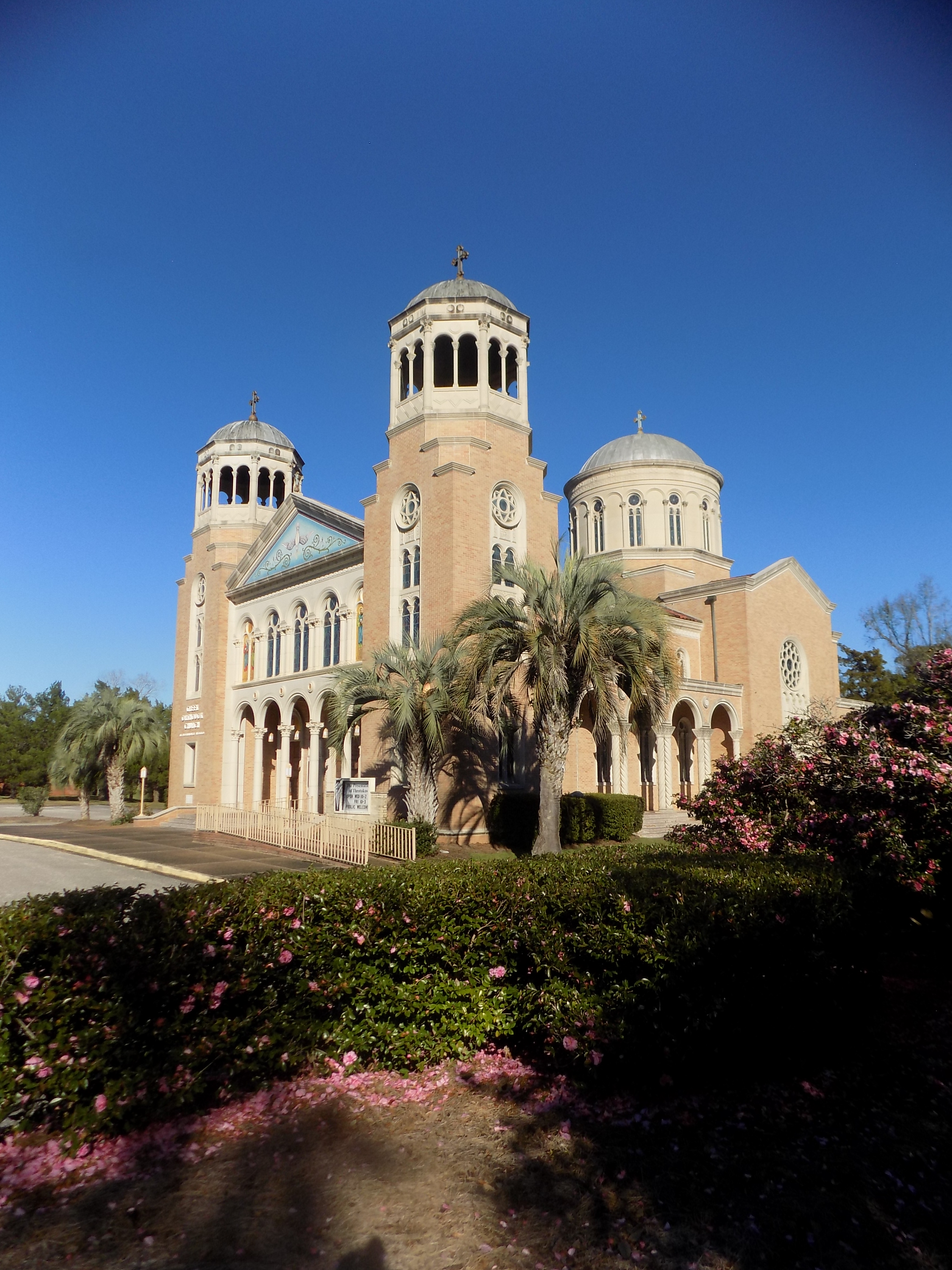 My Christmas card this year features a church that has been on my wish list of images for years. Malbis Memorial Church (its official name is much more ornate) is a Greek Orthodox structure in Baldwin County, Alabama, near Daphne. It was built in 1965 as a memorial to Jason Malbis, a Greek immigrant who founded the self-sufficient Malbis Plantation in 1906. Over time, the plantation became a thriving community of Greek immigrants with influence in Baldwin County and in the city of Mobile across the bay.
Jason Malbis died on a trip to Greece in 1942 and the Malbis community built the memorial church that he had dreamed of. Greek and Italian artists and artisans did the highly detailed mosaics and iconography that give the church its wonder and majesty. Red marble columns and pilasters in the church’s interior create a splendor that belies the relatively small size of the building.
Nowadays, the church and plantation, which once existed in relative isolation, are on a busy highway surrounded by the sprawl of twenty-first century suburbia. Once at the church, however, it is not difficult to block out the noise of the traffic and forget the increasingly encroaching sprawl and find a place of peace and quiet meditation.
Happy Holidays and Peace in the New Year, everyone.
 Professional Southerner