Tag Archives: Alabama

Gatherings – Part 2: Montgomery … and some birds

Saturday – Montgomery

Court Square Fountain, Montgomery

My main purpose for going to Montgomery is to see a matinee at Alabama Shakespeare Festival, but I get there in plenty of time to hang out in Blount Cultural Park, the 175-acre sprawling English-style park that is home to Alabama Shakespeare Festival and the Montgomery Museum of Fine Arts.

I lived in Montgomery for three years when I worked at Alabama Shakespeare Festival and my apartment was on property that adjoined the Park. On days when I didn’t need to use my car, I could walk from my front door to my office in less than five minutes. A jasmine-covered arch marked the entrance to the parkland from my apartment complex and the moment of entering the park never got old. It’s still a special moment when the winding road through the park rounds a curve and you get your first view of the theatre across the lake.
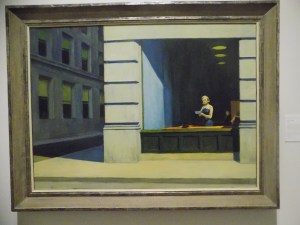
New York Office (1962); Edward Hopper

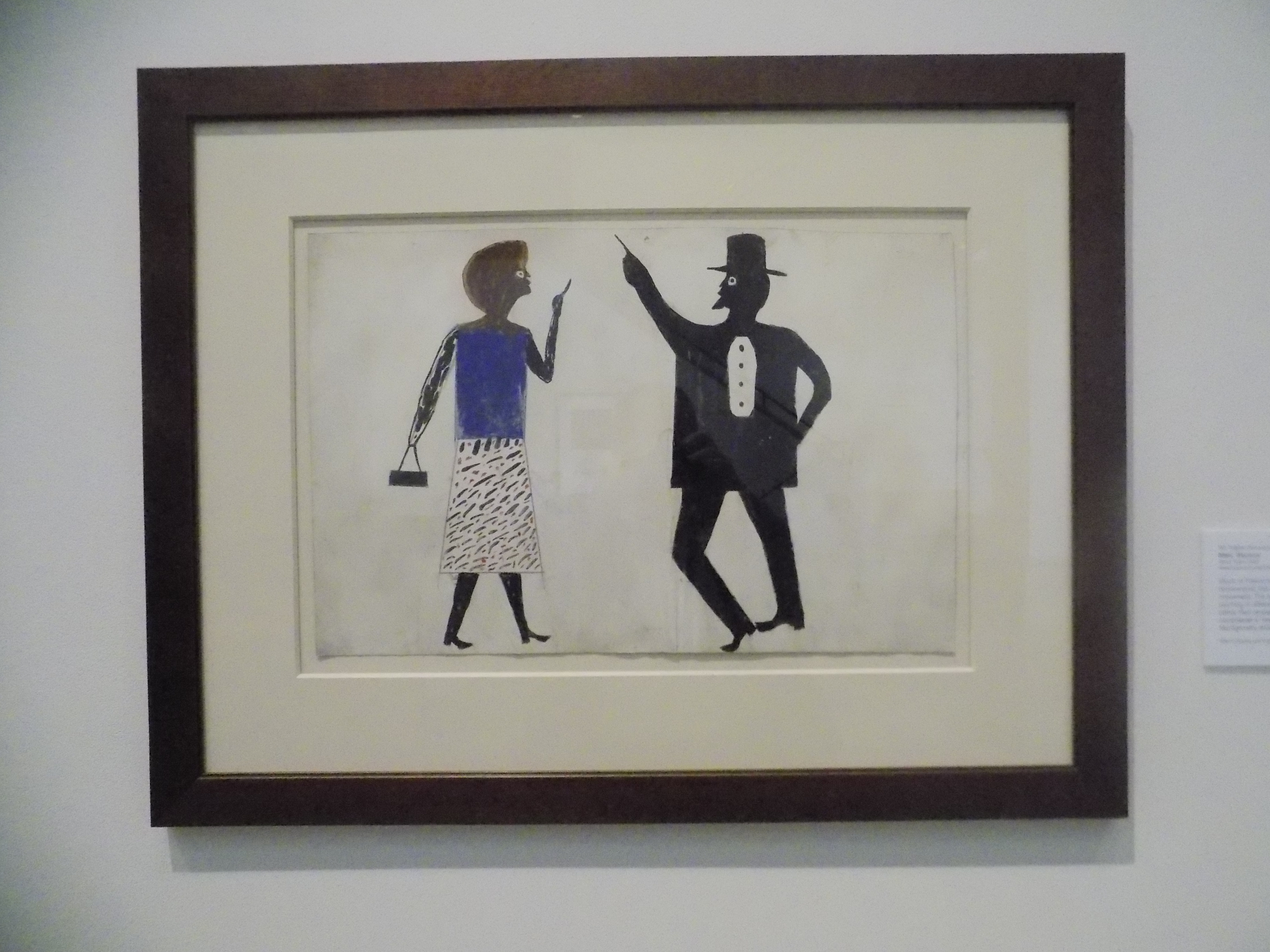
Man, Woman; Bill Traylor

I have time to head to the museum and its eclectic collection of treasures. When I worked at ASF, the museum was a favorite place to go for a relaxing lunch or a quick break. The museum is larger now, and there is a significant sculpture garden. The collection is a somewhat quirky combination of American art of the 18th-21st centuries with a strong dose of vernacular art. One of my favorite Edward Hopper works, New York Office, is there, along with works by Montgomery artist Bill Traylor. Born into slavery, Traylor started making art works in 1939 when he was in his eighties and completed around 1500 works for ten years until his death in 1949.

Sunset Landscape (1899); Charles Warren Eaton

Sunset Landscape by Charles Warren Eaton reminded me of Hwy. 82 and I am always drawn to Christenberry’s Providence Church sculpture. I also like to pay homage to Zelda Sayre Fitzgerald, an artist, Montgomery native, and F. Scott’s wife, whose artwork is usually on view. It was missing on this trip, waiting to be re-hung for an upcoming exhibition. I always asked friends visiting Montgomery, “What other museum can you visit to see paintings by Zelda Fitzgerald?”
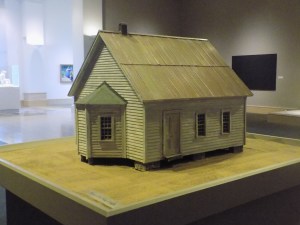
Providence Church (1976); William Christenberry


I could have lingered longer at the museum but it was time to take the short drive across the park to the theatre and the real purpose for being back in Montgomery. In the museum parking lot, I heard the cheerful song of a mockingbird. Moving toward the sound, I found the soloist perched in a tree; as I moved closer, the bird paid me no mind, just joyful in the day.

I’ve lost track of how many years it has been since I was last at Alabama Shakespeare Festival to see a show, but it still felt familiar. When I was there, it was still a classically-based, Shakespeare-heavy theatre. There was a true repertory season that extended well into the summer, a brilliant resident company of actors, and a thriving graduate acting program affiliated with the University of Alabama. I had friends from near and far who would travel to Montgomery annually to spend a weekend seeing up to six plays in rep. I’m not sure we truly valued what we had back then. Over the years, Shakespeare titles are less abundant and the season is greatly reduced, but we’re fortunate it’s still there.
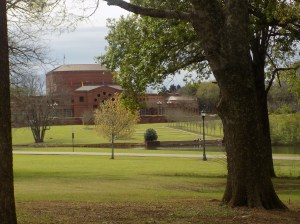
Alabama Shakespeare Festival

From the parking lot, I have to duck in to the Shakespeare Garden before going to the box office to pick up the ticket. The Shakespeare Garden is next to the theatre – a bucolic place with an intimate amphitheatre, featuring plants mentioned in the writing of Shakespeare. I would often take a respite in the garden during my time at ASF. A large statue of Puck is tucked away at the top of terraced levels for seating.

Outside the box office, a lone duck has decided to swim around a small fountain. People take out their cameras to photograph him. Occasionally, he steps up to the edge and quacks at bystanders. This is my place! he seems to say.

I stop for a moment to watch the audience assemble – another gathering. When I lived in this neighborhood, I would often come to the park an hour or so before a performance to watch the cars begin to arrive and the people eagerly go through the doors of the theatre. Like the night before in Tuscaloosa, this gathering takes on a new resonance.

Wandering through the lavish lobby, I catch site of the open door of the Patron’s Room at the far end. It is almost time for ASF’s resident dramaturg Susan Willis to give a fifteen-minute talk about the play we are about to see. The room is full. It’s good to see that Dr. Willis is still giving the talks. She was already there when I came to the theatre years ago; I’ve learned a lot from those talks over the years.

Pre-show is over and, ultimately, the play’s the thing … And today’s play is The Tempest, Shakespeare’s final and farewell play (although Dr. Willis would fine tune and clarify that statement a bit).

I have seen several productions of this play in various places over the years, and have seen at least three different versions at Alabama Shakespeare Festival. I am mainly here today because the actor Greta Lambert has announced her retirement from the theatre and is wrapping it up by playing the role of Prospero in The Tempest. Greta has been with ASF since its premiere production of A Midsummer Night’s Dream in Montgomery in 1985; she played Titania.

Over the years, Greta has gifted audiences with some of the most memorable performances of my life. She’s played most of the major Shakespeare women, along with Blanche DuBois, Hedda Gabler, Eliza Doolittle, Candida, The Glass Menagerie’s Amanda, and so many others. Coming full circle, she was Miranda to Philip Pleasants’s Prospero in a 1986 production of The Tempest.

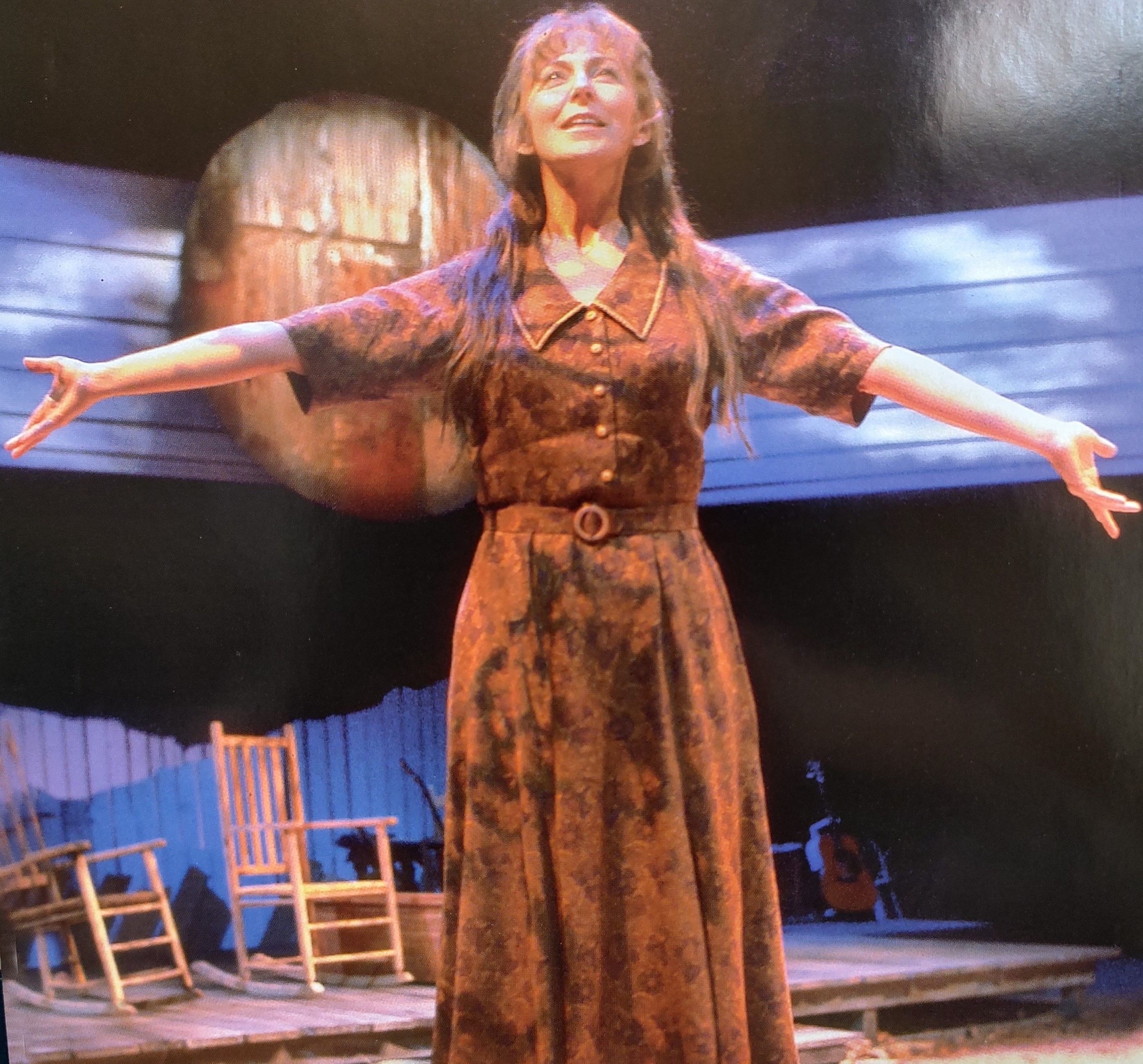
Greta Lambert in Fair and Tender Ladies (2000)

But my most cherished role played by Greta Lambert was her performance as Ivy Rowe in Fair and Tender Ladies, a musical adaptation of the Lee Smith novel. In it, Ivy Rowe ages from a young girl to an old woman. The production Greta starred in was directed by Susan Willis. I had the good fortune to manage a tour of the show in the fall of 2000 and it was a thrill to watch audience’s response each performance. I had toured with shows in the past, but Fair and Tender Ladies is the one I never tired of.

Greta Lambert’s interpretation of Prospero was, of course, wonderful. She establishes an immediate connection with the audience and her presence on stage, even in scenes where she is just an observer, is mesmerizing. It always has been.

In Fair and Tender Ladies, after the audience has watched Ivy Rowe’s life unfold on the stage, there is the moment when the elderly Ivy Rowe slowly walks off the stage for the final time. On tour, I tried to never miss that moment and, after dozens of viewings, was always moved by it along with the audience seeing it for the first time. In The Tempest, Prospero’s final speeches took on another level of resonance in Greta’s delivery. Our revels now are ended …We are such stuff as dreams are made on …release me from my bands with the help of your good hands … Greta has announced her retirement from ASF, but not, necessarily, from the stage, so we may have future opportunities to see her act. But these moments seemed to signal the end of an era. I shall always remember them.

It’s hard to leave the theatre and I vow to come back more often. I linger in the park for a bit and finally leave, taking a drive through the grounds before turning toward town.

_____________________

I was honestly not thrilled to move to Montgomery in 1999. I loved the theatre and mostly enjoyed my job there, but the city itself, despite its historical significance, had never seemed to have much to offer. By the time I moved away, in 2002, I had grown to appreciate the place more. Now, though, after a couple of decades of more progressive leadership, the city is enjoying a revival of sorts and what used to be a dead downtown, where I am going to spend the night, is teeming with activity when I pull in to the Renaissance Montgomery Hotel, my address for the night.

My room is across from the city’s Riverfront Park and historic Union Station along the Alabama River and I am eager to go for a walk and see what the city has to offer these days. I’ve stopped in town a few times for a quick meal or to check out Equal Justice Initiative’s Legacy Museum and the National Memorial for Peace and Justice, but this will be my first time to explore on foot since I lived here.

Blues music greets me when I start my walk and the statue of Hank Williams has been moved from its previous location to a more prominent site on Commerce Street. Lots of tourists wander the streets, lots of dining spots and bars are open, and I realize what a difference has occurred since the city began to embrace its Civil Rights legacy and has become a prime location for Civil Rights tourism.

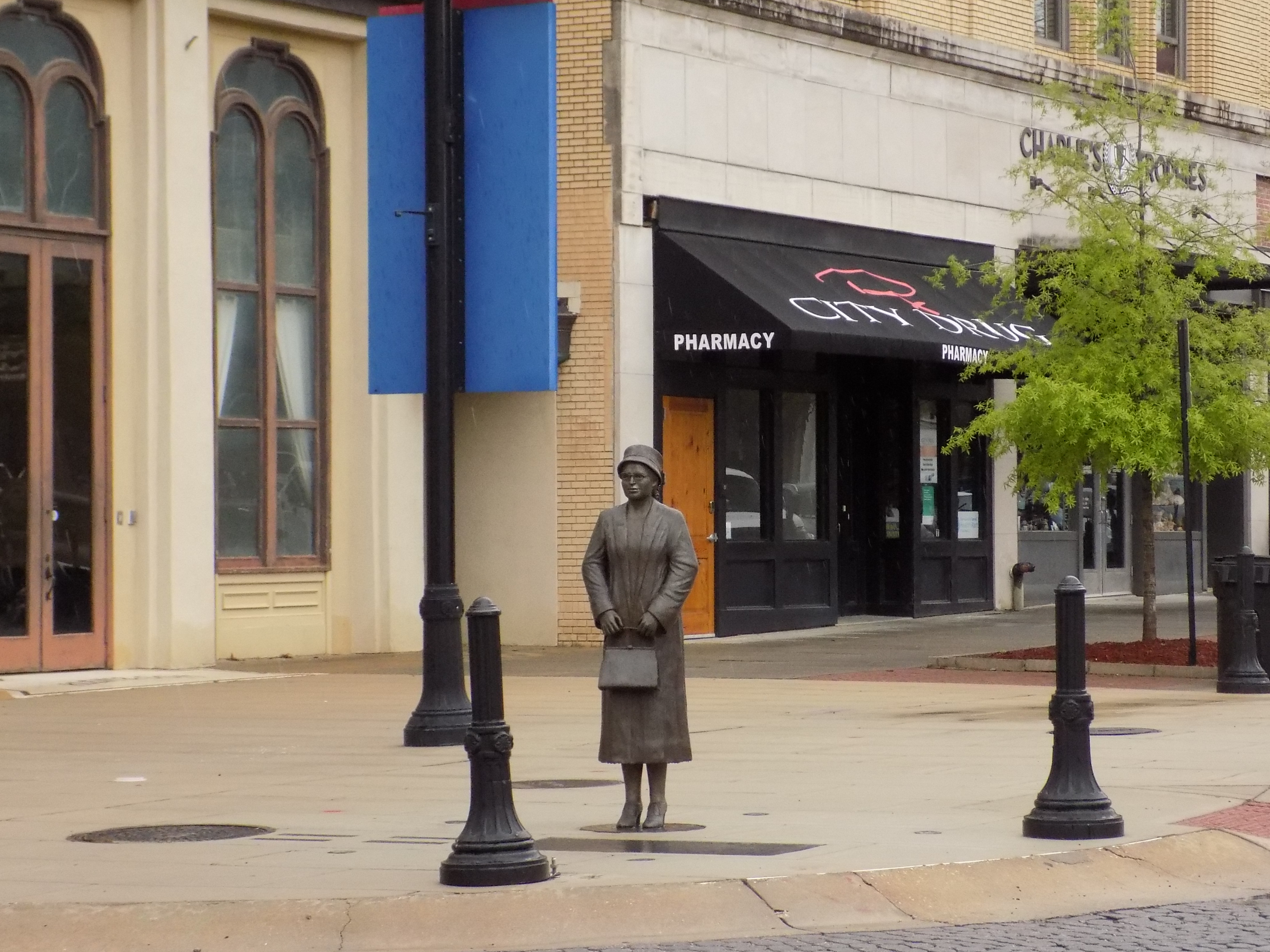
The fountain at Court Square, at the bottom of Dexter Avenue, now has “Black Lives Matter” painted on the sidewalk around its base and a quiet statue of Rosa Parks waits patiently across the street. The state capitol building is at the top of Dexter, while Dexter Avenue Baptist Church, where Martin Luther King, Jr. was the pastor in 1955 during the bus boycott,  is just down to the right of the first capitol of the Confederacy. Montgomery has a complex and colorful history, to say the least, and this current embrace of the past somehow makes the city feel more forward-looking.

I’m liking Montgomery more and more. A memorable and imaginative dinner at Central Restaurant, a locally-owned and locally-sourced restaurant helmed by executive chef Jason McGarry on Coosa Street, is the appropriate topper for a pretty terrific day. A woman I met at the Hall of Fame dinner in Tuscaloosa gave it a glowing recommendation; she didn’t know that I already had a reservation. Her recommendation was spot-on and I’m glad that I sought this gem out.

There are lots of gems to discover in Montgomery these days, it seems. I head home the next morning determined to return for more. And determined to squeeze in more roadtrips.

Rosa Parks; Montgomery

Gatherings – Part 1: Tuscaloosa and Highway 82

Friday

Driving into Tuscaloosa at rush hour on a Friday, I remember why I avoided rush hour traffic during my years in Tuscaloosa. It was easy then, actually, since I didn’t own a car for most of my college years. Today,  I’m running a little late and catching every traffic light between Cottondale and DCH, grateful that I stayed away from McFarland, where the traffic would be even more annoying.

After the April 2011 tornado devastated a large portion of the city, unexpected vistas opened up because the trees were gone. Even twelve years later, the changes to the city since the tornado are shocking, but the tornado is not the problem with the traffic which will likely never get better, especially as the university continues its unprecedented growth and building. As an alumnus of the University of Alabama, I have mixed feelings about all of it.

But it’s a quick trip and I didn’t come to complain. In fact, I came to celebrate Alabama authors at the latest induction of eight writers into the Alabama Writers Hall of Fame. And that makes it all worth the effort. This induction ceremony was postponed due to the pandemic so it was especially nice to be among a crowd gathering for a special purpose.

The purpose of my attendance was to write about the festivities for Alabama Writers’ Forum. I will share that piece on this site after it’s posted to www.writersforum.com.

I was struck, though, with the stirrings I had as I watched attendees of the Hall of Fame dinner and induction ceremony walk toward the gathering at the Bryant Conference Center. It has been three years since I was able to attend such gatherings; previous efforts have been tentative at best, with reduced crowds and caution dominant. A string quartet playing Vivaldi’s “Spring” as I entered the pre-dinner reception reinforced that sense of awakening; a violinist wearing a mask was a reminder that the threat is not quite over yet.

Saturday – Hwy 82

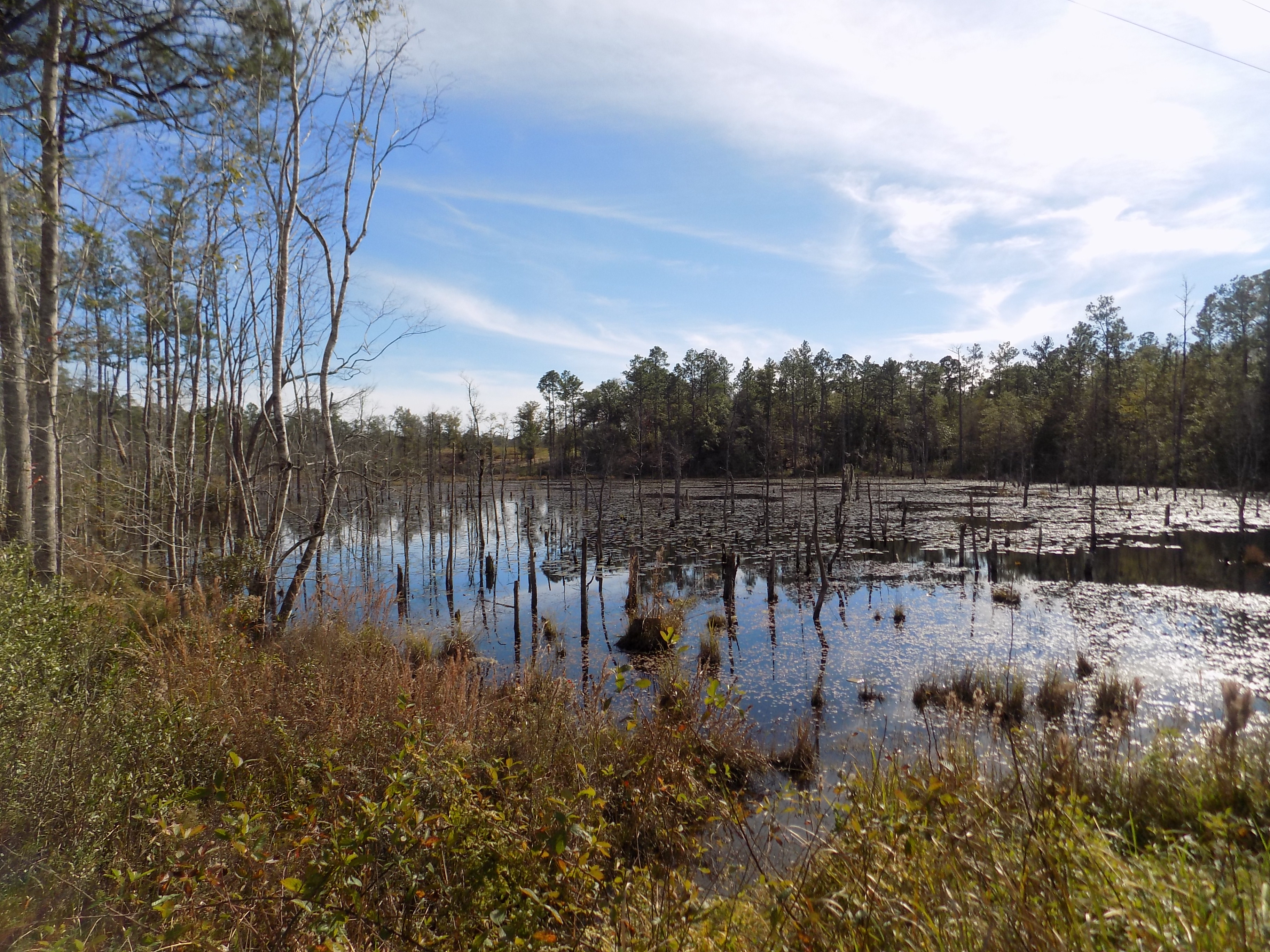
With fresh and inspiring memories of the Hall of Fame induction, I’m heading out of Tuscaloosa early to spend the day in Montgomery. To be honest, I think I’m most excited about traveling Highway 82 to get there. The Highway 82 route between Tuscaloosa and Montgomery was a well-worn path for me when I lived in Montgomery and my parents were still in Tuscaloosa. It takes you off the interstates and out of city traffic, past swamps, fields, and prairies through farmland in the southernmost Appalachian foothills. Best of all, it takes you along what I call the “Peach Highway” – a series of farm and peach stands along the two-lane stretch of 82 that goes through Chilton County.

Sandy Chapel Church; Bibb County

In years past, the highway took you through the Bibb County town of Centreville. A new section now bypasses Centreville after crossing the Cahaba River. That stretch was new to me and when I spotted the back of an old wood-framed church off the highway, I took the next road off the highway to check it out. I soon got to the church and saw that it was the Sandy Chapel Church – the church that inspired my series of country-church themed Christmas cards more than twenty years ago. In fact, it was the image on my first Christmas card of the series. I was used to seeing it from the front on the old road, but it also provides a striking glimpse as you travel down the newer highway.

Past Centreville, the highway looks the same, but there is more clear-cutting going on than I like to see (or think about). Abandoned and decaying buildings that always intrigued me are mostly still there, and some have disappeared altogether. They remind me of some of my favorite subjects by the artist William Christenberry, whose Hale County is not far away. Sedate farm houses and their attendant barns and outbuildings appear along the way, as do churches, mobile homes, country stores, and an occasional place to eat.

Harrison Fruit Farms; Chilton County

Peach orchards begin to pop up as the highway nears Chilton County. Peach season is still a couple of months away and an erratic winter may have spoiled parts of it, but there are trees in early bloom and I look forward to my first trip down to Harrison’s Fruit Farms’ roadside stand around Mothers Day.

On this March Day, the farm stand sits serene and quiet at the place where County Road 15 ends at Highway 82. Mr. Jimmie Harrison, the patriarch of Harrison’s Fruit Farms, passed away last fall. Because of my own family emergencies, I wasn’t able to make a “peach run” in summer 2022 but I still have baskets in the trunk from my visits in 2021. I stop by the abandoned stand and leave the baskets to be re-used in the next season. I remember “Mr. Jimmie” and look forward to seeing his family back there soon.

The road finally takes me toward Prattville in Autauga County. But first, I make the quick detour to see if W.C. Rice’s Cross Garden installation is still intact. Mr. Rice was inspired to create a garden of crosses and warnings of damnation (HELL IS HOT HOT HOT) on his property spanning what is otherwise a quiet suburban street. Rice died in 2004 but the rambling, weathered remains of his “garden” are mostly still there. I think about taking pictures, but not this time; I find Mr. Rice’s grim Pentecostal fatalism focusing only on the most frightening parts of scripture to be a little depressing, but I admire his commitment to his message and vision.

On to Montgomery.

Jimmie Harrison’s Fruit Stand; Chilton County

Roadside Attraction: Malbis Memorial Church

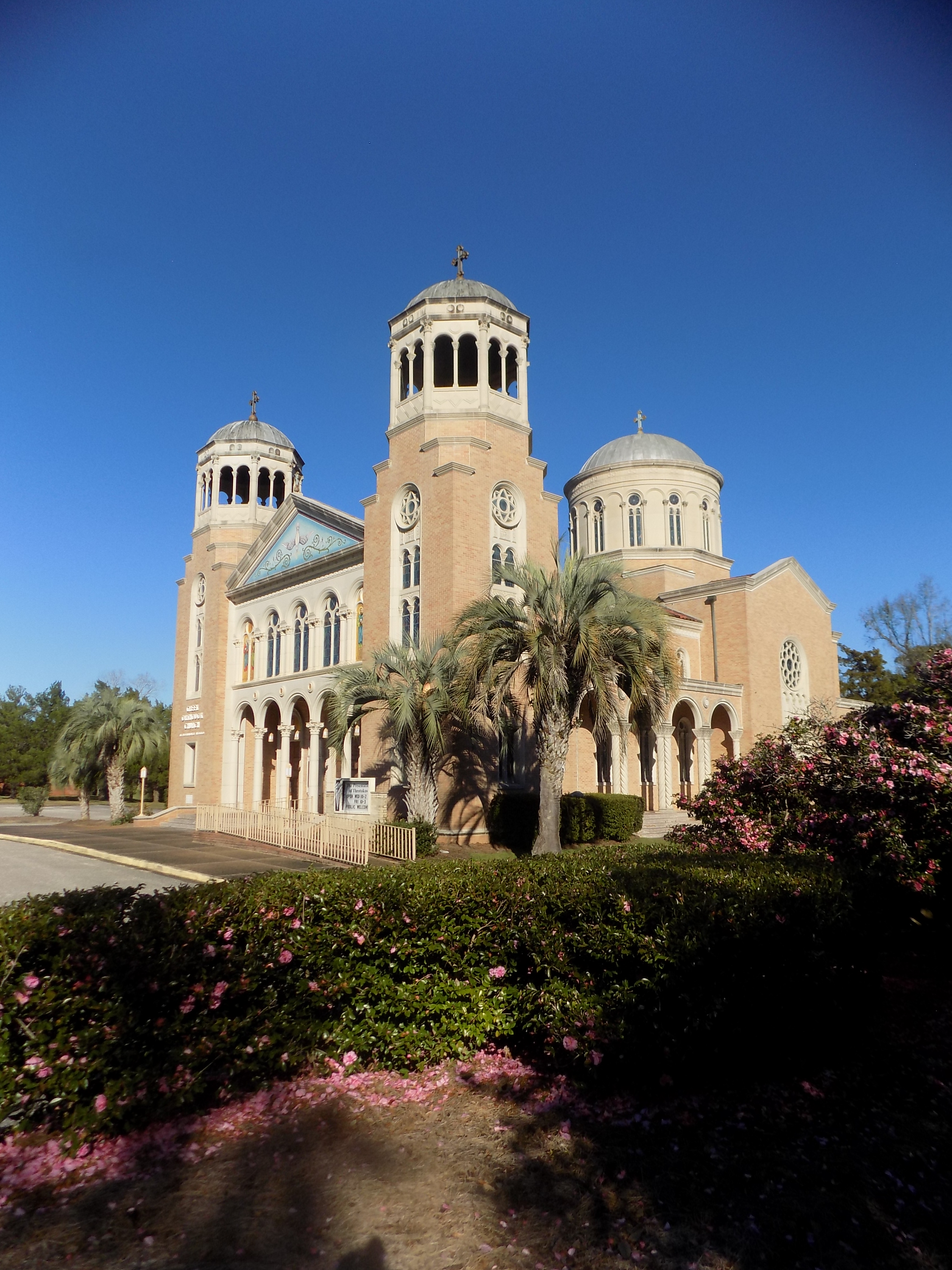
Malbis Memorial Church

Traveling through Baldwin County’s Eastern Shore near Daphne, be sure to find your way to AL Hwy 181 and the Malbis Memorial Church, a place of worship and devotion that is also a monument to the power and industry of immigrant culture.

Jason Malbis (born Iason Antonios Markopoulos in Doumena, Greece, in 1869) spent his early life in a Greek Orthodox monastery. He immigrated to the United States in the early twentieth century. After travels around the country, he settled in Mobile and worked mostly in the food industry. Malbis and a fellow immigrant, William Papageorge, bought 120 acres of land across Mobile Bay and started a self-sufficient plantation that became a successful colony for Greek immigrants. Malbis Plantation continued to grow in the coastal countryside and Malbis himself remained active in civic endeavors in Mobile. The colony’s popular Malbis Bakery became a mainstay in downtown Mobile.

Jason Malbis was in Greece on family business when the United States entered World War II and he was subsequently unable to return to his home in Baldwin County. He died in Greece in 1942. Prior to his death, he expressed his wish for his body to be returned to Malbis Plantation and for a church to be built there.

The Sacred Patriarchal and Stavropegial Monastery of the Presentation of Theotokos – better known as Malbis Memorial Church – was dedicated in 1965. Once surrounded by the plantation’s farmland, the impressive church now sits quietly at a busy intersection, the historic buildings and remaining property of the plantation threatened by residential and commercial properties close by.

photo (2016) by Carmen K. Sisson

The church boasts an impressive Byzantine Revival exterior, with domes, arches, arcades, pediments, and mosaics representing Christian icons. But the real splendor happens once you enter the building. Beyond the vestibule, two rows of Corinthian columns in red marble support a brilliant blue arched ceiling in the nave. White marble is used extensively in the apse, which is crowned by a full dome with a rendering of Christ floating above at the very top. It seems that every inch of the space is covered with paintings, stained glass, murals, mosaics, and carvings. It is an unexpected find in an unlikely location – a place of intense devotion and meditation.

Each time I go there, I find it hard to fully believe the level of profound magnificence in a relatively small house of worship.

A quiet cemetery is just to the south of the church, among the live oaks. It is the resting place for many of the Greeks who made a home at Malbis plantation. Back inside the church, the remains of Jason Malbis are interred in a crypt. Home at last.

Capote’s “A Christmas Memory”

On this Christmas morning, as I walked across frozen ground to refill the bird feeder, I was reminded of Truman Capote’s autobiographical short story, “A Christmas Memory,” and his elderly child-like cousin’s declaration of “Oh my, it’s fruitcake weather.” This is the start of an annual Depression-era adventure in which the boy and his cousin count their change and set out to buy the ingredients for thirty-one fruitcakes – including moonshine whiskey from Mr. Haha Jones – with just shy of $13.

On this Christmas in central Alabama, we’re far beyond Sook Faulk’s frosty fruitcake weather as the past few days have stayed well below freezing. This is clearly not a big deal to our friends in Buffalo and locales north, suffering mightily under feet of snow, but some records were set here in Alabama and the thermometer crept only a couple of degrees above freezing on Christmas afternoon. That’s enough winter weather to last me for a good long while.

I re-read “A Christmas Memory” at the height of our current freeze and was struck again by the moving prose of a young Capote. My own memory was stirred to remember the Christmas of 2014 – the last Christmas my ailing father was able to spend at home.

On that Christmas Eve, Dad was resting in bed and Mother and I had finished most of our last-minute preparations for the next day. I retired to a bedroom and started reading “Á Christmas Memory.” When I came to the part where the narrator describes his cousin’s reaction to chocolate-covered cherries – “I could live on them, Buddy, Lord yes I could – and that’s not taking His name in vain” – I glanced at the clock, saw that it was 5:40, and threw on a coat, telling Mother that I had to go out for a last-minute errand.

Dad loved chocolate-covered cherries, the cheap kind that you always find on drug store shelves in the Christmas season. His love for the sweets was well-known and over the years friends would gift him a box at Christmastime. He appreciated the home-made chocolate-covered cherry mice that my sister-in-law and nephew would bring; I tried to up the ante with annual boxes of the fancier chocolate-covered cherries ordered from the Harry and David catalog, but it was clear that Dad preferred the gooier, less expensive Queen Anne brand from a drugstore shelf.

By 2014, many of those friends who could always be depended on to send over a box of chocolate-covered cherries were themselves ailing, or gone, and Sook’s declaration reminded me that there were no boxes for Dad on Christmas Day. I rushed into the closest pharmacy just minutes before its Christmas Eve closing time of 6:00 p.m., grabbed a box of chocolate-covered cherries, went back to the house, and placed the box under the tree.

_________________________________________

Late in Truman Capote’s life, I attended a reading he gave at the University of Alabama. The selections were a sample of writings from his career, delivered in that simpering manner that was always his trademark. He ended with “A Christmas Memory.” Finally, gone were the affectations and snarling attitude Capote was famous for, replaced by a middle-aged man’s simple recitation of an authentic cherished memory. That performance has become a cherished memory for me, too.

__________________________________________

A few days before Christmas this year, I stopped at a drugstore to pick up a prescription. As I was getting out of the car, Mother said, “If you see a box of chocolate-covered cherries, get them.”

“Why?” I asked. “You don’t eat them and neither do I.”

“Just for old times’ sake,” she said.

As we pulled away from the drugstore, Mother asked, “Do we have time to go by the cemetery?”

We headed a few miles to Elmwood and to my father’s grave, decorated already with Christmas greenery and a University of Alabama flag. As we sat in the car, Mother said, “Let’s put the chocolates at his grave.”

Done.

Sense | Memory

Grand Hotel Sunset, December 2022

Point Clear, Alabama. Alabama State Route 225 in Baldwin County connects the towns of Stockton and Spanish Fort. On my annual trip to the Grand Hotel in Point Clear, just south of Fairhope, I leave I-65 to travel 225 to its southern terminus at U.S. 31. Just before arriving in Spanish Fort, there is a bridge at a fish camp and, if one looks to the right across the brackish waters that mark the start of Mobile Bay, the Mobile skyline appears – dream-like and fuzzy in the distance on a foggy day.

Sense memory is an acting technique that I taught through the years. It basically requires the actor to store up personal emotions that can be triggered to create an authentic emotional response onstage. I have taken this trip to Point Clear so many times that I have sensory triggers practically every mile of the way. I have written about this trip so many times that I realize there’s not much else to say. I have documented the sights and smells, the sunsets and fog horns, flora and fauna, my favorite culinary haunts (food memory is a very powerful tool), the churches and vernacular architecture to the point that the archived essays pretty much tell the story.

I started making this annual escape to Mobile Bay in 2003. In 2004, the resort was still recovering from Hurricane Ivan and services were severely curtailed. The property was closed in 2005 in the disastrous aftermath of Hurricane Katrina and the COVID pandemic forced me to regretfully cancel my 2020 reservation. This year’s trip was iffy due to personal demands, but family members rallied to the cause and I was able to make the trip.

I suspect that if I had started coming here when I was younger, I would have found the place a little staid and boring. But coming here at a time when I craved a respite and a more relaxing pace made me a fan forever and I will probably continue the December tradition for as long as I am able.

It has become a standing tradition that never gets old, providing memories that see me through challenging days. When I was teaching, I would have to sit through endless faculty meetings and faculty-staff convocations – ask almost any teacher and you’ll learn that faculty meetings are the worst thing about the job. At one particularly grueling convocation, as the university president was droning on with an acrostic, a colleague leaned to me and said, “How are you staying so calm and content during this?” I leaned back to her and said, “Oh, I’m replaying my last trip to Point Clear and just got to the warm stone massage. I haven’t heard a word he’s saying.”

A college friend, tiring of my natural skepticism, once demanded, “I insist that you become sentimental.” He didn’t realize that I harbored sentiment all along – the skeptical cynic I presented myself as was, I’m sure, a defense mechanism, forged in my teenage years when I was the perennial “new kid” in a succession of schools. A school bully in Nashville, impressed, I guess, by my riposte to an insult he hurled, warned me that I was a “small man with a big voice” and that I better watch out as that mouth would get me in a lot of trouble one day. My dad gave me the same warning back then. He didn’t realize what the Nashville bully did – the smart mouth was there to waylay abuse.

I wonder if people who knew me back then remember the cynicism I used to affect and if that’s how they think I’ve turned out (if they even remember me). I was hosting a small get-together at an apartment in another city many years ago and remember overhearing someone who knew me in my college days tell another guest, who had complimented my apartment, that “You should’ve seen where he lived while he was in grad school – it was a dump.”

She was right. But I wonder if people who haven’t seen me since grad school envision me still living in a hovel in some student ghetto somewhere.

My reflective driving soundtrack on this holiday trip is always George Winston’s classic piano solo recording, December. I only listen to it in its titular month – another sentimental habit stretching back over decades, and it inevitably conjures a memory of a cold December midnight, sitting on a dock in New London, Connecticut. It had been a challenging day on a theatre tour of A Christmas Carol; we had to let a technician go that day and I needed a chilly late-night walk and George Winston’s calming music to fortify myself for the next days to come.

These are some of the memories that come to me every December on my trip to Point Clear. The Grand Hotel was an aspirational goal for me when I first heard about it as a teenager from a neighbor in Jackson, Mississippi. She and her husband had been there for a business conference and her photographs of the place were spectacular. I vowed to go there one day, but I never envisioned its necessity in my life.

It’s a place where I still feel compelled to dress for dinner, even though the dress code has loosened and almost anything goes. That hovel-dwelling cynic that some may remember from my college days would have sneered at the idea of being required to dress up for dinner, and probably would have avoided any place that enforced a code. More recently, however, having dinner at Arnaud’s in New Orleans, I bristled when a party came in with one of their number wearing a Hawaiian shirt and shorts; they let him in and I was appalled.

So, I still dress for dinner (but, alas, no tie) at the Grand’s fine Southern Roots dining room as a sign of respect and as a nod to the tradition of a resort that has existed in this same spot on Mobile Bay for 175 years.  When I first started coming to the Grand, each room still had a valet stand – a handy piece of furniture for setting out your day’s wardrobe. I used it even if it was just for jeans, a tee-shirt, and sneakers, and I miss it in these spiffily updated rooms now. A piece of furniture called a “valet stand” – these are the kinds of things that those who never learned cursive writing will never even know to miss. But it’s their loss, I reckon.

This trip is so tradition-bound for me that I always stay in the same room in the spa building. When I arrived at my building a few days ago, I unwittingly parked next to a couple misbehaving in a Corvette in the parking deck under the building. I noticed and then made a great effort not to look their way as I unloaded the car. Out of the corner of my eye, I sensed a different state of deshabille each time I returned to gather my things from the car. On my last trip down, they were walking toward me in the corridor on my floor. I glanced back as I turned the corner, hoping that they would not be in the room next to mine. To my relief, they continued down the hallway past my room. On the elevator down, I wondered If they had a room, why were they compelled to utilize the Corvette for playtime?

I’ll never know, but that’s one memory of this place that I’d rather not trigger in the future.

Merry Christmas, everybody.

Christmas at the Grand

Another 5th of July

When I was taking a shower the other morning, Bob Dylan’s “My Back Pages” started playing in my head. You know, the one with the refrain that goes “Ah, but I was so much older then / I’m younger than that now.” (Actually, it was the Byrds’ version of that Dylan song that was playing in my head.) I can’t remember the last time I actually heard that song so it’s strange that it started playing in my head in the shower on a Saturday. I’ve been thinking about it since, though. Many consider the lyric to be a turning point and Dylan’s rejection of sorts of the more strident protest lyrics of his early career.

Pondering “My Back Pages” made me recall Billy Joel’s “Angry Young Man,” a lyric that I once identified with. The title character martyrs himself “With his foot in his mouth and his heart in his hand,” and “he’s fair and he’s true and he’s boring as hell.” The song’s narrator confesses that “I once believed in causes too, / I had my pointless point of view, /
And life went on no matter who was wrong or right.”

In Lanford Wilson’s play Fifth of July, June Talley – a former ‘60s activist, tells her daughter, “You’ve no idea the country we almost made for you. The fact that I think it’s all a crock now does not take away from what we almost achieved.”

Be warned, I need to vent now.

I’m not sure why these thoughts (and songs, and lines) are coming into my head, but I have a hunch: With all of the news about gun violence, a frightening activist conservative Supreme Court wreaking havoc with gun control, the environment, and women’s rights, and the general divisiveness in the country, I wonder what I can do about it and previous history tells me not much. Of course, I can vote, but we are now plagued with a generation of Alabama Republican politicians that would make George Wallace look progressive and I am finally acknowledging – after decades of preaching to students that their vote does count, that my vote in Alabama no longer counts for much. The Republican women running for Alabama state office feel the need to show themselves with firearms in their commercials and to demonstrate regrettable misinterpretation of the second amendment. The concept of separation of church and state is equally misinterpreted by those same people; they don’t seem to realize that its intent was to protect their religious freedom. Even though a known January 6 insurrectionist was defeated in his bid for the Republican nomination for the U.S. Senate from Alabama, the chirpy, gun-totin’ woman who defeated him managed to seem even worse.

I love Alabama and my family’s roots run deep here. I realize that my politics don’t align with the conservative majority, but I also know a lot of Alabamians whose politics align with my old-fashioned liberalism. What irks me is the way these politicians talk is if they represent all Alabamians; for the record, they don’t represent me. Even more galling, perhaps, is the fact that national progressive and liberal politicians seem to write off Alabama as hopeless to their politics and ability to gain votes. I feel overlooked and ignored from both sides of the spectrum.

I watch the protests on television and usually think bless their hearts. I’m with them in spirit, but I’m not sure I have much confidence in what they’re accomplishing other than looking a little silly with their rote chants and their predictable signs. I’ve seen it all before and, beyond the Civil Rights era, I’m not sure it’s still effective. Maybe it makes the protesters feel better at the end of the day; I certainly understand the desperation that drives them there.

I notice that we Baby Boomers seem to catch the blame for all of the evils in the world today, especially in snarky online posts, and especially among Generation Z types. But I have a different take. The three Supreme Court justices appointed by the previous occupant of the Oval Office, all of whom lied or misled during their confirmation hearings, are all post-Baby Boom (one of them, born in 1965, is on the cusp, actually). My theory is that the current regression of American culture is being fueled by the legacy of Ronald Reagan, who was idolized by many of that post-Baby Boom generation and whose political tenure was the beginning of all the things that so many of us are lamenting right now.

I have always taken comfort in the aspirational phrase “in Order to form a more perfect Union” in the preamble to the U.S. Constitution. It always seemed to mean we’re not perfect yet, but this is what we’re working toward. Throughout my lifetime, progress has been made – slowly but surely – toward that ideal. Today, though, it feels a little like we’re going backward and the conservative unbalance in the Supreme Court is going to plague us for a long while.

As I composed these thoughts, word came across that a seventh victim of the mass shooting at the Highland Park, Illinois, 4th of July parade, has died. Three people were gunned down a few weeks ago at a potluck supper at an Episcopal church just a few miles from my house in Birmingham. There are reports that the white supremacy domestic terrorist group, Patriot Front, is making its presence known in Birmingham on the eve of the opening of the 2022 World Games.

I may have to hit the streets in protest yet.

Of Bricks and Stones

Ensley High School

I got a brick for Christmas. And it was one of the more meaningful presents I received.

It was a brick from the ruins of the demolished Ensley High School, my father’s alma mater, on Birmingham’s west side. The building held its first classes in 1910 and closed at the end of the 2005-2006 academic year. A fire gutted the abandoned school in 2018 and its final demolition began in 2021 to make way for a multi-use complex.

Grover Journey graduated from Ensley in the early 1950s and was student body vice-president in his senior year. Mother and I always marveled that, wherever we might be, Dad could sniff out an Ensley grad from his era.

Listening to Dad’s stories, I always had the impression that their bitterest high school rivals were in Woodlawn, across the city on the east side of town. The Woodlawn community is having a resurgence these days and Ensley, which went into a rapid decline when its steel mills closed in the ‘70s, is now looking forward to its own renaissance. It has a long way to go. Dad’s boyhood home is one of only two houses still standing on the once crowded block where he grew up and met Mother.

Along with the pink-ish tan exterior brick, my special Christmas gift included a well-worn and annotated copy of Shakespeare’s King Henry the Eighth from what was once a voluminous Ensley High School Library. The card in the book has signatures of withdrawals dating from the 1920s to the 1950s. A student named Charles Ingram checked it out seven times in succession in 1956. My mother also received a brick and a Shakespeare volume and I now worry about the fate of all of the other books from the EHS Library. I’m hoping there is an effort to preserve them.

That precious Ensley High School brick now joins another brick from a long-gone Birmingham landmark. The Tutwiler Hotel, opened in 1914 on Twentieth Street downtown, was the grande dame of the city’s hotels until it closed for good in 1972. It was imploded in 1974. The implosion did not go quite as planned; one part of the building crumbled to the ground – I remember watching it live on television – and another part stayed up and was eventually demolished by more conventional methods.

Not long after the demolition, I made my way through an opening in the fence at the construction site and grabbed a brick as a keepsake of the place. It has now been with me spanning six decades and many moves. In fact, I am looking at it as I write these words.

Tutwiler Hotel

The Ridgely Apartments, near Linn Park and a few blocks from the old Tutwiler, were refurbished and re-christened as the “Tutwiler Hotel” in 1986. The Ridgely building was actually built a year earlier than the original Tutwiler with the involvement of some of the same developers and architects, so I guess it’s a fair enough trade-off if the original had to go. I’ve stayed there a few times, but when somebody tells me they are staying at “the Tutwiler,” I am quick to point out that there was once a grander, “real and original,” Tutwiler.


Preservation efforts in Birmingham have never fully recovered from the loss of Birmingham’s magnificent Terminal Station in a 1969 demolition. The building’s elaborate Beaux-Arts design featured two 130-foot towers and an elaborate dome covered in tile and a decorative glass skylight. Its loss opened eyes, spurred other cities’ preservation efforts, and made Birmingham preservationists more tenacious.

Birmingham’s Southern Research Institute (SR), an affiliate of the University of Alabama at Birmingham (UAB), has dealt a blow to Birmingham preservation with its acquisition of and plans to destroy Quinlan Castle, a medieval-inspired, stone-clad former apartment building on a rise in Birmingham’s Southside, built in 1927.

SR’s CEO, in a sketchy, badly-composed justification of the institute’s decision to demolish the building, describes the proposed bland replacement building as a “castle for the 21st Century.” He also has the bad taste and gall to cite the collapse of the Surfside condo in Miami as a motivating factor for the decision to destroy the castle.

Nobody is fooled. It is clear to anyone who knows that building that it could never have become a research laboratory and I’m not sure why Southern Research has to use that ruse as a justification for the demolition of a historic element of local urban architecture. UAB and Southern Research have the clout to do about anything they care to on the Southside. UAB already blighted part of the Southside skyline by erecting an eyesore – an oversized parking shed that they refer to as the football team’s “practice field.” So I think the big question for many of us now is why the SR expansion has to happen on the Quinlan Castle site.

In 1990, when I was moving to Birmingham to take a theatre job, my apartment hunting began with Quinlan Castle. It was already pretty run-down, and closed a few years later, but the charm of the building was intact and it had mighty potential. The small apartments, which would have been quite snazzy in the Roaring ‘20s, opened onto a central courtyard. There were even cannons in a couple of the turrets along the crenellated roof. It would have been perfect for me as a college student, but I had moved on and opted for a more modern abode up the mountain. Still, the castle gave me a smile each day as I passed it on the way to work.

I went to Quinlan Castle around Christmas, just to see if it is still standing. As of a couple of weeks ago, it’s still there. A part of me hopes that cooler heads have prevailed and that SR is considering other sites for its “21st Century castle” of innocuous sterile labs.

If you’re in the area, go over to 2030 9th Avenue South and pay homage to another endangered part of Birmingham architectural history while it still stands.

Quinlan Castle, December 2021

The Poetry of Charlie Brown

The Grand Hotel – December 2021

Point Clear, Alabama. I drive down I-65 this week, renewing my annual holiday trip to the Grand Hotel, the venerable resort at Point Clear, on the eastern shore of Mobile Bay. It’s my first attempt at a vacation in two years.

On the drive down, somebody on the radio plays an audio clip from “A Charlie Brown Christmas” (1965), the first and best of the animated specials based on Charles Schultz’s “Peanuts” cartoon strip. You know the scene: Charlie Brown, in frustration, asks if anybody knows the true meaning of Christmas. This is Linus’s cue to step into the spotlight and recite the Christmas story from the Gospel of Luke.

What strikes me in this listening is the simple, forthright performance of the script by the child actors. Charlie Brown (Peter Robbins) asks, “Doesn’t anybody / know / what Christmas / is all about?” and the line has a haiku-like cadence that captures the wistful innocence of youth.


At Point Clear, the massive live oaks seem untouched by pandemic and recent hurricanes; Christmas lights around the lagoon are as profusely tasteful and satisfying as ever and the Civil War cannon is fired in the distance, maintaining a daily ritual. Ancient branches of live oaks drape over the pathways, belighted as natural arches for the season.

This trip – after a longer than usual absence and the factors that delayed it – is more reflective. A CD of George Winston’s classic album, December, found under a stack of CDs in the car, becomes the soundtrack for the trip. In the room, I stream podcasts by my friend, Lily Miceli, who hosts “InBetween the Music” for Wisconsin Public Radio. She recently shared two Christmas-themed programs:

www.podcasts.com/inbetween-the-music-9c45b7b5a/episode/IBM-Music-Dickens-ee75

www.podcasts.com/inbetween-the-music-9c45b7b5a/episode/IBM-Music-Christmas-d31d

Libby Rich, who ran an amazing garden shop called Plant Odyssey in Birmingham’s Lakeview neighborhood for years, now shares her expertise on Libbyrich’s Blog https://libbyrich.wordpress.com/2021/12/13/a-roll-of-quarters.  My gardening inspiration growing up was my Granddaddy Harbison, but it was in Libby’s Lakeview shop that I honed my knowledge of plants and gardens. She is a formidable presence with a kind heart and voluminous knowledge of growing things. Libby’s Christmas-themed essay, “A Roll of Quarters,” is about a customer who always bought his Christmas poinsettias at Plant Odyssey, leaving a roll of quarters for her to treat her staff. My dad collected coins, mainly quarters, in his retirement and often gifted special people with a roll. Libby’s post, read on my balcony overlooking the lagoon and Mobile Bay beyond, is especially poignant in this season of remembrance.

Along for the ride, also, are a well-worn copy of Truman Capote’s “A Christmas Memory” and a brand-new copy of the first novel by artist Julyan Davis, whom I have known for many years. Davis’s A History of Saints is a jaunty satire set in Asheville, North Carolina. It reminds me, in ways, of the Alabama author Eugene Walter, who thought parenthetically and found the joy in eccentricity all around him. I won’t quite finish Julyan’s book on this trip, but I’m enjoying the ride https://smpbooks.com/product/a-history-of-saints.


On the first full day here, I go out in search of old churches I haven’t yet photographed in the area. After photographing a promising prospect near the town of Foley, I have car trouble in Summerdale and call AAA for a tow. The first AAA dispatcher I talk to (who I later learned was talking to me from California) is rude when I tell her I am in an unfamiliar place and don’t know where my car should be towed. She tells me that she can’t assist me until I tell her where I want my car to be towed; I respond, “I don’t know – isn’t that your job?” and she disconnects me.

“… a promising prospect near Foley”

On the next try, I reach a more helpful AAA dispatcher who connects me with a local towing company and auto mechanics in Foley who couldn’t be nicer. The unexpected adventure turns out fine in the end and introduces me to a helpful cab driver, a charming hotel shuttle driver, concerned workers at the Summerdale Civic Complex, and Gelato Joe’s Italian Restaurant and Tiki Bar (www.gelato-joes.com).

My car spent the night in Foley but I can’t be unhappy to be “stranded” at the Grand and enjoy catching up with familiar and new faces among the resort staff, while noting that some favorite faces have moved on in the two years since I was last here.

I usually make the trip alone and enjoy it; occasionally, I am able to rendezvous with old friends, and that is pleasant, too. This trip has been a solo experience, so I have had plenty of opportunity to observe and chat with new people.


On the first night here, while dining at Southern Roots at the resort, I notice a party of four. A couple of nights later, at a restaurant in downtown Fairhope, I spot the same foursome at a table across the room.  Back at the hotel, waiting for the elevator, one of the women of the group emerges with a motorized scooter. “Were you just at Camellia Café?” I ask.

“Are you the guy who was eating at the end of the bar?” she responds. “We were talking about you.”

“Why?” I ask. She says that I was an interesting looking person dining alone at the bar and they wondered what my story was.

“My story was that I was having dinner.”

I explain that this trip is my annual pre-Christmas escape and that I usually travel solo. This leads to an interesting conversation and I ask my new acquaintance (who is now on my Christmas card list) if that’s her mother waiting for her at the car. Indeed, the second lady of the foursome, my new acquaintance’s mother, stands patiently in the parking lot, waiting for her transport.


I may have seemed alone to the party of four, but I feel surrounded by friends down here. I have been to the Grand so many times that it feels like a kind of “home” to me (I even manage to stay in the same room each visit). I have caught up with people I see on every trip, had my annual massage in the spa, and grabbed a meal at some favorite places.

The Hope Farm

I have felt the presence of friends – Lily, Libby, Julyan, and others – as I relax in my room. It’s my final night and I try a place that’s new, that wasn’t here on my last trip, before the world shifted in March 2020. The Hope Farm (www.thehopefarm.com) is a sprawling urban farm complex off Fairhope’s main drag with a restaurant and wine bar and a steadfast commitment to local, fresh, and sustainable nourishment. After failing to find fresh oysters on the half-shell in my first few meals down here, I am pleased to find fresh Murder Point oysters, my favorite from Bayou La Batre across the bay, at The Hope Farm restaurant, which instantly becomes another of my favorite places to eat in Fairhope. I make a note to return often on regular sojourns to Baldwin County.

In the morning, I will drive back home to Birmingham after stopping for relishes at Punta Clara Kitchen, a bag of satsumas at Harrison Farms roadside stand, and pecans for Christmas and New Year’s dinners. I will pick up a Po’Boy at Market by the Bay in Daphne to eat along the way. I have a list of historic churches for photos on detours heading north. Like Charlie Brown and Linus, I will continue to find poetry in the season and remain hopeful for better days in the year ahead.

Sunset at the Grand

Happy Holidays.

Van Gogh Is Visiting Birmingham

 A favorite memory of the day after Thanksgiving is of my parents taking me to Pizitz department store in downtown Birmingham and taking the escalators to the sixth floor and Santa’s Enchanted Forest. The memory of that tradition that stands out most for me was probably in the mid ‘60s. The line wound through cheerful displays of reindeer, winter scenes, and elves at work in their workshop. At the end of the path, Santa on his throne was there to greet all. After Pizitz, we trekked across the street to check out the holiday windows at Loveman’s and went a few blocks north to see the city’s newly-lit Christmas tree in Woodrow Wilson (now Linn) Park. Finally, my parents took me to a book store on Southside and treated me to a book of my choosing. In this particular memory, it was a Dr. Seuss book.

Pizitz is now a residential building where I go to see indie films at Sidewalk Cinema and to grab a bite in the expansive food hall. Loveman’s long ago became a children’s science museum. But I never go to that part of town without remembering that one special night after Thanksgiving.


I thought of Santa’s Enchanted Forest this week when I took my mother to the Birmingham-Jefferson Convention Center for “Beyond Van Gogh: The Immersive Experience.” People of all ages wandered through the three rooms of the event and I realized, as I watched kids scamper around, that a memorable holiday experience was being created for a lot of people that night.

One of the odd cultural touchstones of this second year of pandemic is the fact that about half a dozen “immersive” shows inspired by the art of Vincent Van Gogh have sprung up and been attended by enthusiastic responses wherever they landed around the world. The iteration playing in Birmingham through January 2 is the creation of French-Canadian Mathieu St-Arnaud and his team at Montreal’s Normal Studio. A Monet immersion is beginning to make the rounds and I understand that a Frida Kahlo event is in the works for 2022.

The art of each of those artists seems ripe for the sort of trippy experience I witnessed in Birmingham. The “Beyond Van Gogh” immersion begins with a line moving through a room that serves as a primer for Van Gogh, with panels providing capsule synopses of the artist’s often tortured life, interspersed with comments that include quotes from letters between Vincent and his brother, Theo. The viewer then enters the “Waterfall Room,” which seems to be there primarily to acclimate the audience to the main room. Vertigo is a real risk as the flowing abstractions move down the wall and across the floor. I realized that I needed to be careful about looking down.

The main room, which the publicity bills as “masterpieces … freed from frames” is the reason for the experience. Scored to instrumental music, with an occasional voiceover, the room has projected images flowing across all walls, on three tall triangular pillars in the middle, and over the floor. Some projections are reproductions of Van Gogh’s work but much of the event is flowing abstractions and layering of images from line to detail to color to a recognizable painting. When we entered the room, almond blossoms covered the walls and floor; some of the flora was static while other petals floated gracefully all around. It was a breathtaking moment to enter.

The audience is free to move around. Several sat on the floor. Some moved constantly, others stayed in one place; cameras and selfies were abundant all around. The experience is truly beautiful and mesmerizing in many ways. As I get older, I am more drawn to contemplative experiences, art that frees the mind to wander and find connections. Several dozen people of all ages were in the room and it seemed that each viewer was having a singular experience.

The musical score is often soothing, often soaring, and generally adds to the grandeur of the experience. There is, for me at least, one jarring exception: A lovely instrumental version of Paul Simon’s “America” plays in conjunction with the almond blossoms and beyond. That song is so familiar, at least to a Boomer like me, that I found myself humming along and distracted. Why I thought is “America” part of a Van Gogh exhibit? I still haven’t figured it out.


There have been snarky reviews and comments about the various Van Gogh immersions by art critics around the country. (I’ve written a fair amount of critical essays and reviews through the years and I know snark when I see it; I have perpetrated it on occasion.) The reviews seem to feel that the public domain status of Van Gogh’s work is being exploited and that the various immersions cheapen the work. They don’t think the works’ complexity is given its due or something like that. They don’t think it educates enough – or something like that.

Mainly, however, the snark seems to be aimed at the audience: They take too many selfies; they miss out on the true experience of viewing the works in a museum. There are children running around. It’s all just too “commercial.” The producers make a bald-faced appeal to the audience, especially the “influencers,” to take photos and spread the word. The gift shop is offensive … Or something like that. I saw one article that even told readers which museums they could go to and see the actual works represented in the immersion. That piece was by a New York writer.

I get their righteous snark. I really do; there were moments during the event when I felt that I was being a little bit suckered. But they miss the point. These enterprises are clearly commercial and are buoyed by the entertainment aspect of a necessary and mostly pleasant escapism inspired by the art of Vincent Van Gogh. All audiences do not necessarily have the access to the authentic art of Van Gogh that a New York audience might. And I suspect that the majority of the audience for an “immersive” art experience already has at least a basic knowledge of the art they’re being immersed in; that’s probably why they bought the ticket to begin with (and it’s not a cheap ticket). Others, who may not know the work but are drawn in by the enthusiastic word-of-mouth, may be inspired to learn more after the experience. As for the children, I was amazed at how well-behaved they were. And I was delighted when something would happen that would stop them – wide-eyed and gaping – in their tracks.

My mother, for one, left the experience “a little sad.” Viewing the work, and watching the audience response, she found it sad that Vincent did not live to experience the acclaim he achieved in his post-mortem.

These immersive experiences are certainly destined for oversaturation and for the waning popularity of audience-pleasers of the past like Cirque du Soleil and Riverdance. But, for now, they are achieving their goals and providing an interesting footnote and diversion for our need to readjust and recalculate in the face of a pandemic that doesn’t seem to fade away gracefully.


In Act Two, scene nine of Sam Shepard’s 1980 play, True West, a mother returns home from her vacation and announces to her son that “Picasso’s in town.” Her son replies that “Picasso’s dead, Mom.” The mother insists, replying, “No, he’s not dead. He’s visiting the museum.”

In the final weeks of 2021, at least, Vincent Van Gogh is not dead; he’s visiting Birmingham’s convention center and he’s providing a pleasant and enjoyable hour or so of community and escape.

Book Review: From Preaching to Meddling by Francis X. Walter

See my latest book review for Alabama Writers’ Forum:

https://www.writersforum.org/news_and_reviews/review_archives.html/article/2021/09/02/from-preaching-to-meddling-a-white-minister-in-the-civil-rights-movement