Tag Archives: Barry Hannah

Long, Last, Barry

After a night out with friends in 1979, I returned to my apartment on Caplewood, a pleasant winding residential street at the end of the Strip, down the road from the University of Alabama. As I put the key in the lock, my neighbor Mike walked out on the porch. “Barry was here earlier,” he said.

“Yeah?”

“Yeah. I kinda had to run him off.”

“What was he doing?”

“Actually, he was trying to break into your apartment.”

“Really … did he happen to say why?”

“He said he was a writer and he needed inspiration and that you had a record album he needed to listen to tonight, right now. He was pretty adamant.”

“And …”

“I told him it looked like you weren’t home and he needed to leave, that I couldn’t let him break in.”

“How’d he take it?”

“He was annoyed and argued a little, but he left. Do you know what he was looking for?”

“I do.”

The next day, I grabbed Planet Waves from my record stack and walked a couple of doors down to Barry’s studio in the backyard of a neighbor’s house.

He was in.

“Here’s the album you were looking for last night,” I said. “Take it. Keep it. You can have it, and please don’t come knocking at my door anymore. And don’t ever try to break into my house again. Please.”

___________________________________________

Barry Hannah, the novelist that Truman Capote called “the maddest writer in the USA” and whom Alfred Kazin praised as “a writer of violent honesty and power” was my neighbor in Tuscaloosa in 1979. His studio was two doors down and his house was farther down on the curve that pointed Caplewood back toward the university.

When I heard that Hannah was coming to the University of Alabama to teach creative writing, I grabbed his first novel, Geronimo Rex, and was transfixed by the vibrant energy and muscle of the words on the page. He always wrote like nobody else with a style that was impossible to emulate – for anyone foolhardy enough to try.

I started hearing “Barry stories” from my writer friends as soon as Barry hit town, but I didn’t meet him until his hugely acclaimed volume of short stories, Airships, was released and I got a copy signed at Another Roadside Attraction, a bookstore on the Strip. He asked my name, proclaimed it a “great name,” and inscribed the book to me with a comment about my name.

I later loaned that signed copy of Airships to a friend and he never returned it. I asked him about it and he denied that he borrowed it, but I know he did. I always remember people who borrow and steal my books. (I’m talking about you, Jim.) After I started hanging out with Barry, he signed another copy of Airships, but the inscription was less personal.

After I moved into the apartment down the street from Barry’s house, we began to run into each other more often. He’d occasionally show up at my door and I was occasionally invited down to his house or studio.

One night late, a friend and I were sitting in Barry’s living room and Frampton Comes Alive! was on the turntable. When “Do You Feel Like We Do?” came on and the signature talk box guitar solo kicked in, Barry picked up his trumpet and began to blow, trying to match the talk box sound. It was a bizarre moment in time, but Barry’s effort was so earnest that we weren’t sure how to react. Once it was over, I think I offered a noncommittal wow.

_______________________________________________

But my most bizarre “Barry story” begins on another late night at Barry’s house. Barry suddenly turned to me and said, “The Paris Review wants to publish an interview with me. I’ve told them I will only do it if I can choose the interviewer. Edward, do you want to do my Paris Review interview?”

Remember, this was forty-four years ago and I was trying to keep up with Barry, so some details are fuzzy. I have no clue if Paris Review was trying to do a Barry Hannah interview in 1979, and I was skeptical that I would be considered to write it, but it was a promising adventure and I didn’t hesitate to go along.

I was even more skeptical when Barry said we would do the interview the next morning at the studio, but I called in to take the day off, gathered a cassette recorder and blank tapes, and showed up at the studio at the appointed time. I was pretty sure I wasn’t prepared to do a proper Paris Review interview.

Barry, drink in hand, was waiting for me when I got to the studio. We chatted for a while until I finally asked if we could start the interview. Barry insisted that I needed something to drink and poured a glass full of something rancid that he referred to as white wine. It had a strong chemical smell and something unsavory was floating on the bottom. I thanked him, put the glass to the side, and started the recorder.

I wasn’t really prepared for a writer interview with twelve hours’ notice, so I asked him about his childhood in Mississippi, his family, other Mississippi writers and influences, autobiographical elements in his stories, teaching creative writing. I rambled and so did he. His responses were tangential and he kept coming back to a poem he had just written, called “Certain Feelings.” “I have certain feelings about this room / I have certain feelings about doom …” and on like that. I was pretty sure we weren’t having a Paris Review-level interview. I wasn’t sure if Barry was putting me on, making a fool of me, or was just that far gone. I wasn’t sure how I should respond to the bad poetry of “Certain Feelings.”

After a very long time, Barry looked at my wine glass. “Why didn’t you drink the wine?” he asked. I told him that I thought the wine had turned, or something. He grabbed the glass and shrieked in horror and said he gave me the “wrong glass.”

The interview basically was over when he said, “Let’s go get a drink.” I agreed and Barry picked up the phone, called Lee’s Tomb, a downtown bar and music venue at a former loading dock, and ordered four cocktails to go. We climbed into Barry’s MG convertible and drove the few blocks to Lee’s Tomb, where a bartender stood on the side of the road with a tray and four cocktails. Barry tipped the bartender, told him to put it on his tab, and roared off, announcing that we were going for some barbecue.

As we crossed the river into Northport, Barry announced that he wanted to go get his kids and drove to a neighborhood. He stopped at the end of the drive where his ex-wife lived and told me his kids were inside and he wanted them to go get barbecue with us.

“She’ll get mad if I go to the door,” he said. “You’ll have to go. Tell her you’re a writer for The Paris Review, interviewing me, and that we want to take my kids for barbecue.”

As I got out of the car, he said, “Use a French accent.” After all these years, I blush to admit that I took his suggestion.

I walked up the long drive to the front door and rang the bell. It opened immediately; she was waiting for me. “Bonjour, madame,” I said in the worst attempt to have a French accent ever. “I am in town to interview Barry Hannah for The Paris Review. He would like to take his children out for barbecue and I would like to meet his children.”

She scowled at me, at the MG, and at me again. It was a practiced scowl that I’m sure she had been called upon to use frequently with Barry’s “associates.”

“Go home,” she said, and closed the door.

I took the long walk back to the MG. “She said we should go home – no kids today.”

Barry looked back at the house for a long time. Finally, he took a long breath and said, “Let’s kill her.” I’m sure he didn’t mean it.

“Let’s go get some barbecue,” I said. And we pulled away and went to Archibald’s. The meat was good, but the wind was taken out of the day and we ate and went back to the studio on Caplewood, stopping again for curb service at Lee’s Tomb on the way. Barry said we’d have to finish the “interview” some other time and that was the last time the Paris Review interview was mentioned.

________________________________________________

But Barry and I kept hanging out for a while. Occasionally he would summon me down to the studio to hear something he was writing. One night, very late, he knocked on my door, woke me up, and said he wanted me to look at something he’d just written. I dressed and went down to the studio, he made a drink, and I read a few paragraphs about Judy Moody, a charismatic young woman who had recently made a run for mayor of Tuscaloosa and lost in a close runoff. Barry describes her as “a true person waiting to talk to you and comfort you.”

On another night, he saw my lights on and dropped by. I was listening to Planet Waves, the first album collaboration between Bob Dylan and The Band. The Last Waltz documentary was recently released and I was going though a major The Band phase.  Barry wanted to listen to Planet Waves over and over. I have no idea which song was so important to him but the next night he was breaking into my house for the album.

That led to the incident that opened this essay.

__________________________________________

I mostly avoided Barry after that. Occasionally, we’d see each other out and about and nod in passing. Sometimes, I’d hear the trumpet being played on the balcony down the street, its often shrill notes breaking the peace of Caplewood. One weekend, a group from a party I was hosting decided it would be fun to roll Barry’s yard. I didn’t find out until after the fact and worried that there might be a confrontation. The next day, I walked down to see Barry’s yard and trees covered in toilet paper; the following day, it was gone. Nothing ever came of it.

Barry was never very happy in Tuscaloosa and his legendary drinking contributed to a preponderance of local “Barry stories.” I heard the famous story about him pointing a gun at a student in a fiction writing workshop and every version was a little different. I even heard the story from the grad student that the gun was allegedly pointed at; according to him, the story was true. Barry’s version was much more sanitized – something about using the gun to illustrate the various parts of a short story. No matter whose version you heard, though, Barry brought a gun to a creative writing class.

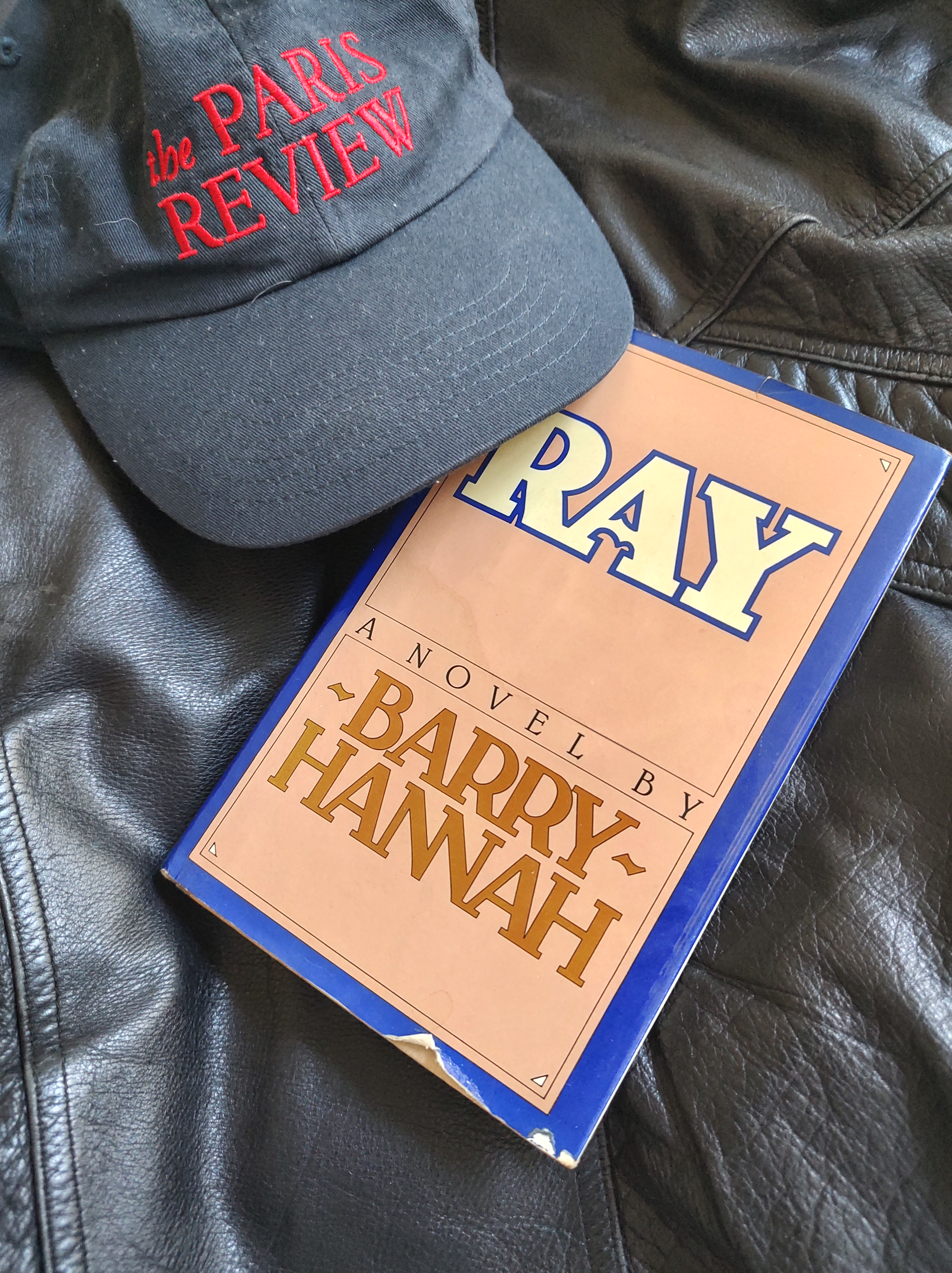
I moved away from Caplewood later in ’79 and saw Barry out and about less and less. I bought Ray as soon as it came out in 1980. In Ray, Barry writes about sex and violence and frequently uses the n-word with what we used to call “reckless abandon.”

_______________________________________________

There was a terrible movie called Walking Tall that came out in the early ‘70s. The head of a local movie chain gave his personal endorsement of that movie in radio ads. “Walking Tall is rated R for violence, not sex,” he said. “So bring the whole family.”

You can’t make that up. It was the ‘70s.

_____________________________________________

When I read Ray, I realized that the rambling stream of consciousness is partially a surreal recap of Barry’s experiences during the writing of that short novel. I realized that some of his rambles during the “interview” were a test run for passages that wound up in the book. That passage about Judy Moody is there – section XVIII, as is the “Certain Feelings” poem that he recited to me off and on throughout the interview day (XIV). In the novel, a student recites “Certain Feelings” to Ray and Ray slugs him. I finally knew how I was supposed to respond to that poem.

I haven’t told my “Barry story” very often. Partially, I was embarrassed by the out-of-control aspect of the whole series of episodes, especially the French accent episode at his ex-wife’s house. His name would come up in conversation now and then and I would sometimes mention that I had known him briefly in Tuscaloosa. During a conversation with members of an Atlanta-based New Wave band, Swimming Pool Qs, a band member cited Barry Hannah as an influence in their music and I mentioned that I had hung out with him at one time. My cred immediately rose with the band.

I ran across those Paris Review interview cassettes as I was packing for a move sometime in the ‘90s, listened to a few minutes, was mortified, and tossed them. If they had been found, they would have been an embarrassment to Barry and me. Sorry. I couldn’t let them exist.

______________________________________________

After Barry left Tuscaloosa, he worked with filmmaker Robert Altman for a while, and then he went to Oxford, Mississippi, to teach at Ole Miss. I heard stories about his drinking in the first years there and then I heard he got sober. I would run into people who had been in Oxford and knew Barry and it was the tale of two Barrys. Some stories were from the heavy drinking phase and others were from the sober phase. Overall, Oxford seems to have been the right place for him to land. I’m sure he had plenty of barbecue with his kids there.

I thought about trying to get back in touch, but never did. Eventually, Barry had a series of health problems and reported seeing Jesus in his hospital room.

The Paris Review ran Lacey Galbraith’s interview with Barry Hannah in Winter 2004, twenty-five years after our trial run. I re-read it not long ago and it’s a great interview. Look it up in the archives – “ Barry Hannah, The Art of Fiction no. 184.”

Long, Last, Happy was a posthumous collection of short stories published not long after Barry died in 2010. He’s buried in the same Oxford cemetery as Faulkner and some of his friends slapped one of those I’D RATHER BE READING AIRSHIPS stickers on Faulkner’s grave shortly afterward. I bought a copy of Long, Last, Happy at Faulkner House Books on a trip to New Orleans with my brother in 2011. Late that night, back at the hotel, I started randomly reading the stories – many of which I already knew from Airships and other collections – while my brother tried to sleep on the other side of the room. I giggled heartily way into the early morning.

When the proprietor of the bookstore had seen what I was buying, she said, “A good Southern boy.” Did she mean me for reading it? Or Barry for writing it? I think she meant both.

Digressions after Reading McInerney

  A few years ago, I reconnected with a college acquaintance whom I hadn’t seen in decades. He recalled that I had a tendency, during my long grad school stint, to wear Oxford cloth button-down shirts with the collar unbuttoned. This was true but I had never called attention to it and didn’t realize anyone had noticed, much less remembered.

I liked the shirts but never liked button-downs and I guess the look was a subtle rebuke to the preppy movement of the day. Indeed, I still don’t like button-downs but occasionally I will accidentally buy one. Life’s too short to return clothes that fit so, more often than not, I will wear the button-down with the collar unbuttoned. I guess it’s an affectation, but it’s a subtle and harmless one … until now, when I have announced it.

This memory was sparked by the fact that I just finished Jay McInerney’s latest novel, Bright, Precious Days (Knopf, 2016). In it there is a flashback to the ‘80s in which one of the characters asks another – a bad boy novelist – why he wears his button-downs unbuttoned. His reply is that he likes to have options.

One good thing about all of this is that it seems that I am regularly reading novels again. Over the past couple of years, I have abandoned old habits like going to movies and plays and hiking and reading fiction and so it’s good to see that my attention to novels and short stories, at least, seems to be renewed.

I bought the McInerney book on a whim when it hit the shelves last summer and never opened it. A couple of weeks ago, looking for new reading material, there it was.


Jay McInerney exploded onto the literary scene in 1984 with his first novel, Bright Lights, Big City. He became an instant celebrity with a novel that captured the 80s zeitgeist with precision and skill while harking back to his literary predecessors, especially unmistakable allusions to F. Scott Fitzgerald. Quickly, McInerney became the slightly elevated figure of the “literary brat pack” pantheon that included himself, Bret Easton Ellis, and Tama Janowitz.

The first edition of Bright Lights, Big City was released in paperback with the Vintage Contemporaries imprimatur and it became the triple threat of a cool book with a cool cover and a cool marketing strategy.  The fact that it was also very well written didn’t hurt. Raymond Carver, a McInerney mentor, had a blurb on the front cover; Barry Hannah, who I knew from his time teaching in Tuscaloosa, had a blurb on the back cover.

McInerney is less than a month older than me. That burns a little.

The author’s Icarus-like ascent prompted almost immediate backlash and the inevitable fall and McInerney’s fame often backfired on him with the idea that he was a one-book wonder. It was difficult for anything he did to live up to the success and hype of Bright Lights.

The book’s biggest and well-controlled gimmick was that it is a second person narrative in which the narrator’s name is never revealed. The book takes you on a drug-fueled romp through jaded 1980s Manhattan night life as the nameless narrator deals with the loss of his fashion model wife, his job, and his dignity. The book’s relentless rhythm makes one’s pulse race.

I annually read passages from Bright Lights, Big City to my Oral Interpretation students as an example of the second-person narrative voice. With the disinterested looks from that audience – which sometimes seems unaware of any art, music, or literature pre-Beyonce’s “Lemonade” – I might as well be reading Dickens to them (and I sometimes do). A few usually perk up when I drop the tidbit that “Bolivian marching powder” is the narrator’s pet name for cocaine.

My friends and I liked Bright Lights, Big City immediately; the book fueled our imaginations about the writer’s struggle and that sordid siren call of 1980s Manhattan. Despite the author’s fervent denials, we all assumed the book’s narrator was McInerney’s doppelganger. A running joke among us was the narrator’s self-pitying reference to “The Brotherhood of Unfulfilled Early Promise”; we declared ourselves charter members.

Despite occasional setbacks and the occasional stinker in his literary output, McInerney is not a member of the brotherhood he imagined. His steady output of fiction is supplemented by stints as a wine columnist for House and Garden and, these days, The Wall Street Journal. The wine writing has yielded three well-received books on the subject.


That wine knowledge and some level of culinary snobbery come to play in the character of Russell Calloway in Bright, Precious Days. He exhibits that smugness that often comes across in the work of New Yorkers as he drops names of people, places, art, designer labels – a trait that is pretty much a constant in McInerney’s work.

Manhattan writers have a tendency to drop names and the audience congratulates itself on knowing what they’re talking about. Never mind that, if we’re reading or looking at their work, we probably have read the same books, seen the same movies, followed the same artists, and shared the same popular culture. Woody Allen’s Manhattan movies are the same in that regard; we in the audience congratulate ourselves for catching the references even though they’re not really so obscure, especially if we’ve seen other Woody Allen movies.

On my first visit to New York City – in the 80s, actually, not long after the publication of Bright Lights – I was staying with a buddy and his girlfriend on the Upper East Side. Neither was a native (she was Ohio and he was Jersey shore) but they had been in the city long enough to develop the smug insider façade. As we traveled around the city, my hosts took great pleasure in turning a corner and then turning to me with a smirk and wide eyes and asking me if I knew what that building, landmark, etc. might be. They seemed deflated whenever I got it right (Rockefeller Center, St. Patrick’s, the Guggenheim, Chrysler Building, the Dakota, Seagram Building, Elaine’s, Lever House, Carnegie Hall, et al.). They were really easy challenges and I always got it right.

The Budweiser Clydesdales were grazing outside Tavern on the Green, for some reason. I recognized them, too, on the same morning that I passed Arthur Ashe exiting the Pierre.

One night, coming up from the subway downtown, my hosts seemed shocked – SHOCKED! – that I immediately recognized the World Trade Center, for goodness sake. “How do you know all of this about the city?” demanded the guy, seriously. “You said you’d never been here,” said his girlfriend, accusingly. I didn’t know what to say; I had been watching movies and television, reading books, newspapers, and magazines, reading about modern architecture, most of my life. Why wouldn’t I recognize those places?

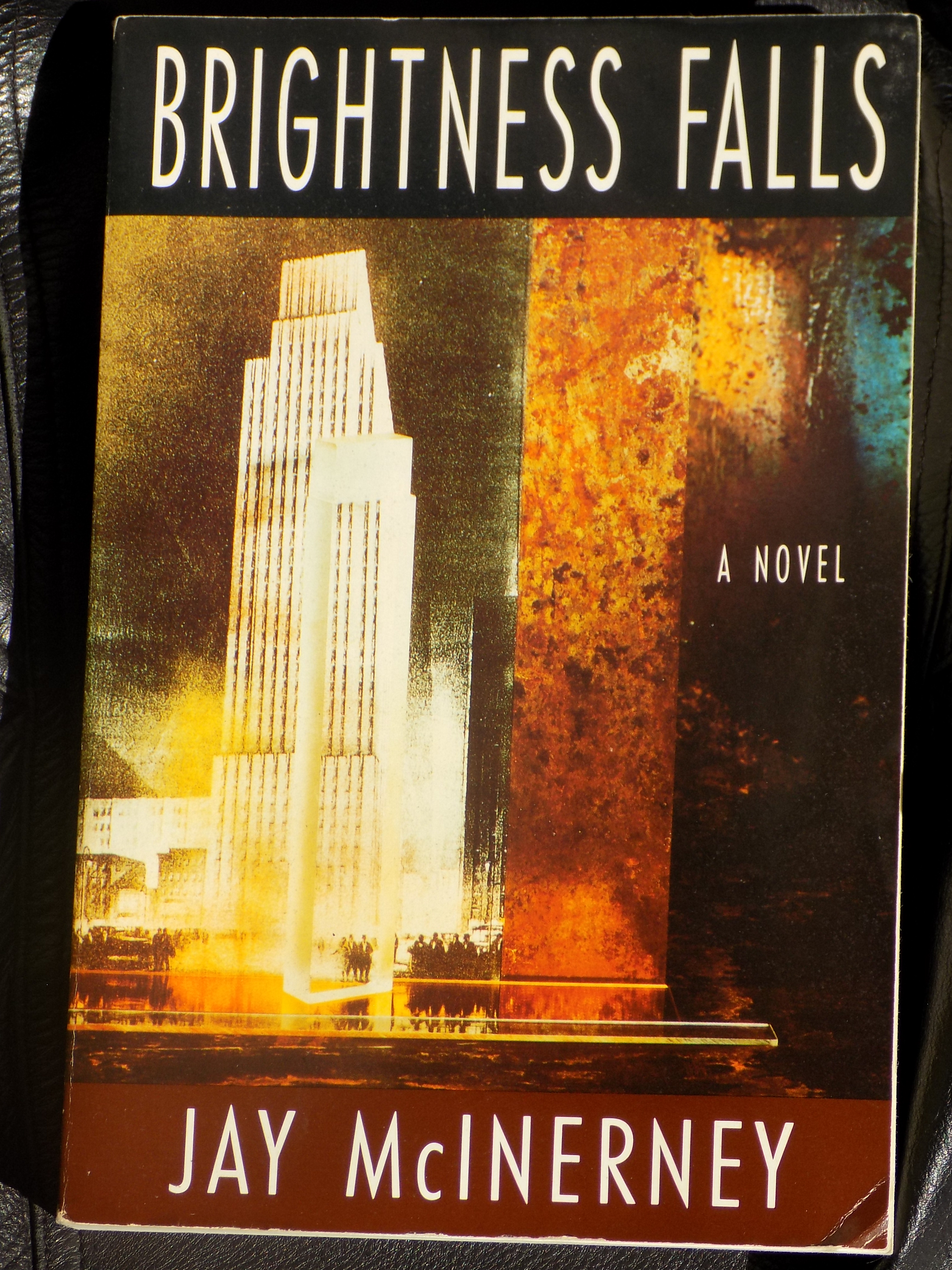
Bright, Precious Days is McInerney’s third novel starring Corrine and Russell Calloway. This Calloway saga was preceded by Brightness Falls and The Good Life. The latest installment begins as Corrine and Russell are about to turn 50 and continues through the 2008 financial crisis and the Obama election. Many of the characters from the previous two books make cameos, take strong supporting roles, or appear in flashbacks.

McInerney has morphed into an elder statesman of his genre and the new novel purports to be a novel of the 2000s, but the 1980s, the era that galvanized the novelist and his career, are omnipresent – not only in the flashbacks, but in the angst and tastes and longings of its principals. In fact, I kept thinking of it as an 80s novel and identified with too many of the references and memories of that era it evoked.

In a flashback scene with Corrine and Jeff Pierce, the doomed writer who is central to the Brightness Falls plot, Jeff puts on Marquee Moon by Television – my favorite album by one of my favorite 1970s punk / new wave bands. Television was second only to Talking Heads in my book and Talking Heads gets an obligatory mention in the novel, too.

Several of the novel’s characters have traits and backgrounds that are strongly evocative of McInerney’s own biography and it’s hard not to linger on comparisons. One of the (many) writers in the novel observes that “most novels are memoirs and most memoirs are actually novels” – a factoid that’s hard to dismiss when dealing with McInerney.

In reading Bright, Precious Days I found myself annoyed with prose and characters that were occasionally too clever by half and impatient with frequent and extended explication. I sometimes wished that McInerney had paid attention to the thoughts he gives to his character Russell who congratulates himself for his editing work with a young and reckless Tennessee wunderkind whose book is a sensation:

The climactic action all happened in less than a page – what had once been three pages describing her thoughts and feelings, until Russell had cut and pared much of it away, saving the essentials and exposing, as he saw it, the hard, adamantine core. It was all there, but Jack had told too much in his original draft, hadn’t trusted his material, when, in fact, he’d already set it all up and provided everything the reader needed to know.”

I read that passage a couple of times, wishing that McInerney had Russell as his editor.

Even so, Bright, Precious Days is a good and compelling book, enjoyable and relevant. I stayed up late into the night to finish it. Each of the Calloway trilogy novels has significant adultery in its plot and McInerney’s evolution of the response of the adulterer as well as the adulterated is intriguing to consider. There is passion and truth as well as comedy and foolish missteps and nobody, it seems, is immune.

As soon as I finished this latest book, I took down and reread Brightness Falls, which many consider to be the author’s best work, but I still prefer Bright Lights, Big City.

I recently heard Ann Beattie, another of my favorite Boomer authors, comment that she didn’t think that much was being written about aging Baby Boomers because aging “is not really a sexy topic, you know?” I don’t know what Beattie is reading these days but I am seeing a lot of writing about aging out there.

Corrine and Russell – and McInerney and Beattie and I and all of our Baby Boomer buddies – are quickly passing out of middle age and facing the abyss and it’s always fun to see where that path will take us in McInerney’s deft hand. It has been fun to age along with him, his characters and stories.

And, lest we forget, Sam Shepard is 73 now.

Miss Jane’s Solitary Life

dscn0555 When Brad Watson’s remarkable short story collection The Last Days of the Dog Men first appeared, I kept gifting it to readers I know. Read it, Read it, Read it I would say and let me know if it’s as good as I think it is. Those who followed my exhortation tended to agree with me. Finally somebody said to me “I love it, but you gave me this same book last year.” I told her to keep it and pass it on and I gave her another book to replace it.

I have known great dogs all of my life and no writer has ever captured a dog’s essence in quite the way that Watson does in that compulsively readable and often brilliant first short story collection.

Watson followed up Last Days … with the fine novel The Heaven of Mercury and then Aliens in the Prime of Their Lives, a second short story collection full of mystique and wonder. Now his second novel, Miss Jane, is on the shelves. It is a book of painstaking empathy and precision inspired in part by the true story of one of Watson’s great-aunts.

The title character, Jane Chisholm, is born before her organs are fully developed and has a genital birth defect which obliterates the demarcation between her reproductive, bowel, and urinary functions. This does not sound like a promising premise for a fascinating and distinctive novel but in Brad Watson’s skilled hands Jane overcomes the odds and her handicaps to live a full and courageous life and that singular life is the book’s clear focus.

Watson tells the story in a straightforward and fluid way, avoiding maudlin sentimentality, and exploring the life of Jane while skillfully rendering the few people in her orbit in a rural area near the fictional town of Mercury, Mississippi (which has much in common with Watson’s home town of Meridian).

Jane’s parents, Ida and Sylvester, are stoic and grim, accepting their troubles as their due and finding ways to blame themselves for both Jane’s careless conception and her physical challenges. The married couple has long drifted away from each other and each tries to find ways to find peace and calm in their existence. Jane’s older sister, Grace, is anything but graceful as she schemes and connives to remove herself from her parents’ farm and move to town.

Most interesting of all Jane’s acquaintances is Dr. Eldred Thompson, the country doctor who makes a special effort to cultivate and educate Jane from the moment of her birth. The frank and honest relationship between the woman and her doctor makes a striking centerpiece for a unique and brave novel.

Watson’s ability to provide much detail in a sparse and efficient matter is a hallmark of his work and he is at his peak in Miss Jane. He weaves his story seamlessly and compellingly and a life passes before the reader without interruption. Jane is a toddler and suddenly five years have passed and she’s going to school; Jane is an adolescent and suddenly she is working with her sister as a young woman in Mercury. Jane becomes an old woman.

Without dwelling on Jane’s challenges, Watson shows a girl – later a woman – who finds ways to control her incontinence and mostly successfully keep it from interfering with her functioning in the world around her. He presents a vivid character forced by biology and culture to live a solitary life but shows that it can be a satisfying and fulfilling one, and one perhaps more successful than the flawed conventional lives of those she encounters.

Jane comes to an early realization that child-bearing and a “normal” sex life are beyond her capabilities and comes to a calm and healthy acceptance of the facts of life as they apply to her circumstances. Even so, a beautiful young man, Elijah, falls for her and she for him and Jane immediately begins to calculate how far she can allow the teenage romance to progress. Jane and Elijah’s delicate and bittersweet relationship is acutely explored until the time when the doctor and Jane’s family decide it is in the best interest of both to put a stop to it. It’s interesting that this same theme of the world making decisions about the sensual life of one with disabilities is also explored in Jeannie Thompson’s The Myth of Water, a series of poems about the life of Helen Keller. Well-meaning “normal” people are not always aware of the spiritual harm they might inflict by looking out for the perceived “best interests” of others.

I knew Brad Watson casually when we were both students at Alabama. He was known as a serious and skilled writer even then and his composure and bearing always seemed to take him above the muck and petty politics that occasionally mar the creative graduate school experience. Writer Barry Hannah was teaching at Alabama at the time Brad Watson was there and when Watson’s work began to be published Hannah’s great quote was “Only the Irish geniuses wrote like this.”

It is always an especially exciting time when one can open a crisp new book by Brad Watson. With Miss Jane he has created a character that will endure and inspire.  Read it, Read it, Read it …

Communion: Haitian Vodou Flags at the Birmingham Museum of Art


DSCN0143   The Birmingham Museum of Art has always been my museum. It has been there, across the street from the north end of downtown’s Linn Park, as long as I can remember. It’s the first museum I knew; I still remember my first visit on a Sunday afternoon with Mother, Aunt Polly, and a cousin when I was about 7-years-old. When Dad’s office was downtown, I would occasionally go to work with him and idle away a morning or afternoon in the museum collection. Since then, I have always felt at home there. Even when I lived far away from Birmingham I would try to work a visit to the museum into each trip home.

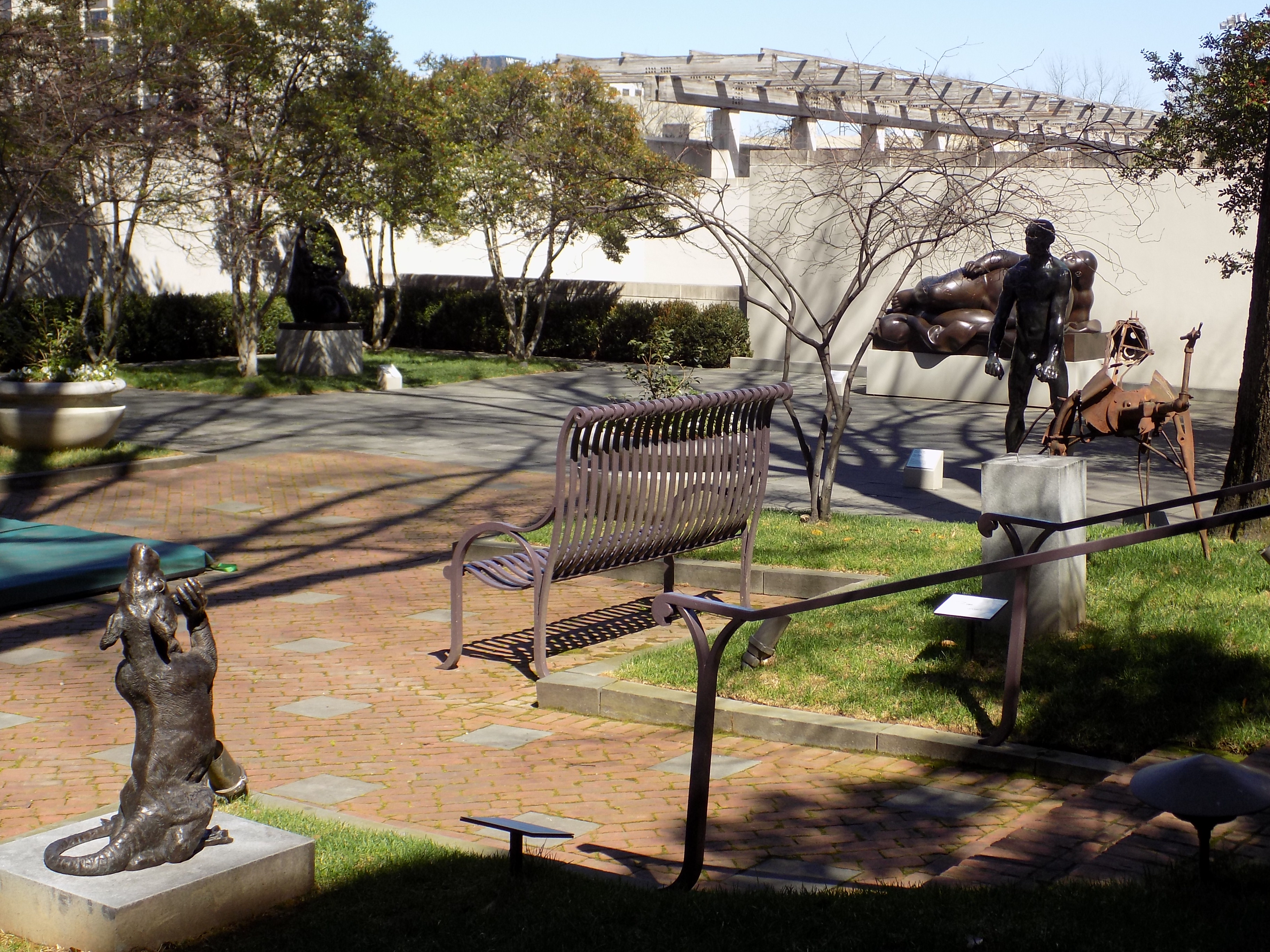
Beyond my sentimental attachment, the Birmingham Museum of Art is also an excellent museum with an impressive and wide-ranging collection ranging from African, Asian, Native American, and Pre-Columbian Art to American, contemporary, folk, European, and decorative arts. One of my favorite places at the museum is a multi-level sculpture garden where I like to be at any time of the year. I didn’t appreciate how good the Birmingham museum was until I started traveling around the country and visiting other museums. DSCN0136

Most importantly, the Birmingham Museum is a city-owned museum that is still free to the public (except for the occasional special exhibition).

I spent the morning there visiting a current exhibit, “Haitian Vodou Flags from the Cargo Collection.” The small but impressive exhibition is shown in a dark room with lights highlighting the colorful flags and accompanied by video of a Haitian Vodou ceremony. Vodou was a religion established with the Africans’ arrival in Haiti in the 1500s; because Vodou was outlawed by the European colonial powers, it was practiced in secret and evolved to include Catholic saints and symbols along with the loa – Vodou spirits. There are links with American “voodoo” but Haitian Vodou has distinctions which set it apart from the American tradition most identified with New Orleans.

DSCN0122The flags on display are generally colorful square patches bedazzled with beads and sequins. As evidenced in the video, the flags may be hung, flown, or draped over the shoulders and backs of celebrants. Images combine iconography of Christian, African, and Masonic traditions and recognizable types include a Madonna and St. Patrick, snakes writhing at his feet. The textiles are stunning in intricacy, vibrance, and design detail.

I enjoyed the exhibit in its own right but another incentive was to view the legacy of Robert and Helen Cargo. In the late-70s, between undergrad and graduate school, I lived in an apartment taking up half of the ground floor of a two-story white frame house on Tuscaloosa’s Caplewood Drive near the University of Alabama campus. My landlords, Robert and Helen Cargo, lived directly across the street. Dr. Cargo taught French at the University. They were good landlords and I remember when I took the apartment Mrs. Cargo instructed me that I could open and close the blinds in the front windows but not to raise them because that would look “tacky.”

When Hurricane Frederick moved inland from the Gulf and Mobile Bay and dumped a tree on my house, I was at work on the University campus. Mrs. Cargo called me to let me know that my apartment was not damaged but that the tree which had toppled onto my house was the “biggest uprooting I ever saw.” Indeed, the house I lived in was included in a segment on Frederick’s damage that night on the “NBC Nightly News.”

I hope I was a good tenant; I think I was. But once I threw a party at my place on the Saturday night of Labor Day weekend and some of the party-goers got the bright idea to go down the street and t.p. writer Barry Hannah’s front yard. I didn’t hear about the escapade until after the fact; I expected to get an earful about it from Mrs. Cargo first and Barry second but fortunately I never got the reprimand from either source.

Not long after I moved on from the Caplewood house, Robert Cargo Folk Art Gallery opened up on 6th Street in downtown Tuscaloosa. The Cargos were important collectors of folk and outsider art – I had admired some of their pieces on the very few occasions I had been in their house – and the downtown storefront provided a place to share the collection, interact with dealers, and continue acquisitions. The Robert and Helen Cargo African American Quilt Collection was probably the most notable part of the impressive collection.

Robert Cargo died in 2012, preceded by Helen Cargo a few years earlier. A year after Dr. Cargo’s death, their daughter Caroline donated approximately 700 items of the Robert Cargo Folk Art Collection and the quilt collection to the Birmingham Museum of Art. The gift included over 75 Vodou flags the Cargos collected from the makers over the course of several trips to Haiti during the 80s and 90s. Many of those flags are included in the current exhibit.

Over the twenty years the Cargo Folk Art Gallery was open in downtown Tuscaloosa, I had visited and was well aware of the impressive quilt collection and numerous other works of folk and outsider art but the Vodou flags were unknown to me until the museum announced the current exhibition.

The last time I visited with Dr. Cargo at his gallery was in November 2003, the day after the legendary Tuscaloosa dive, the Chukker, closed its doors. Dr. Cargo was making plans to close the Tuscaloosa gallery and ship the collection to Caroline in Philadelphia where the Gallery would continue. I told him that the gallery’s closing would be a loss to Tuscaloosa. “Ahh,” he mused, “I don’t think it will be as momentous as losing the Chukker, but I hope some people might miss us.”

Robert and Helen Cargo were gracious people and passionate collectors. It was good to remember them and commune with their spirits today at my favorite museum amidst some of the objects they collected and loved. DSCN0141

.

Alabama Barbecue and the “White Sauce” Anomaly

100_1583   It is often written that there is no indigenous “Alabama-style” of barbecue and it seems that circumstance may be a key to our abundance of options. Opinions about barbecue in Alabama – indeed, throughout the South – are as strong as those about football, religion, or politics. Everybody has a favorite place and favorite style and it is often based on tradition and habit as much as quality and taste.

I don’t put much stock into website rankings, but a 2014 online study by “Estately Blog,” using five statistical criteria for all fifty states, ranked Alabama as the most “Barbecue-Crazed State in America.” Among the criteria in which Alabama ranked highest are the overall percentage of restaurants devoted to barbecue (1st — 8.27% of all restaurants in the state are barbecue places according to this report) and number of barbecue restaurants per capita (3rd). I have seen previous reports that ranked Alabama as 1st in that “per capita” category also.

With such an abundance to choose from, I long ago stopped taking the time to grill out or barbecue since there are so many better options from which to choose.

A few days ago, I saw another online article with the title “Are These the Most Iconic Restaurants in Every State?” I try to avoid those articles because it’s inevitable that they’ll annoy me; that’s the reason they’re there. But it was about food and I had to take a look. Before I opened the webpage I began to imagine the possibilities and the various ways to define “iconic” and wondered what might be the selection for Alabama. Candidates that immediately came to mind were Highlands Bar and Grill, the fine dining restaurant in Birmingham’s Five Points South; The Bright Star, the Bessemer institution for over a century; and Dreamland, the superior barbecue joint in Tuscaloosa.

The website’s choice, alas, was Big Bob Gibson Bar-B-Que (www.bigbobgibson.com) in Decatur. Congratulations to them for their designation but this is one of those selections where personal taste has to speak up. (“They’re not even the best barbecue in Decatur,” said a friend who is a longtime resident of Decatur.) I was aware of Big Bob Gibson’s and know they are a force on the competition circuit. I even like their food fine. But it seems that their “iconic” status is based on something this Alabamian was unaware of until he moved to the Tennessee Valley of north Alabama: white sauce slathered on barbecue (chicken, usually). This is not a béchamel but a mayonnaise-based sauce for barbecued meat.

White sauce is a staple for most barbecue places in this part of north Alabama. I was unaware of its existence until I moved to the area over twelve years ago. I tried it out – more than once and at more than one place – and I don’t like it. I like all of the ingredients – mayonnaise, vinegar, pepper, occasionally horseradish – but I declared the combination “nasty” the first time I tried it and have not waivered on subsequent attempts. I know people who love it and they are entitled to their taste. It’s not for me. I have met people who claim that they ship it by the case to people who want it and can’t get it in other parts of the country. Feel free to give them my share. Please.

To add insult to injury – and I think this was fueled by the Food Network – the sauce is now commonly being referred to as “Alabama sauce.” I first heard this appelation on the Food Network and have now encountered it in other national media including PBS. This rankles me a bit. I could live with it being called “Decatur Sauce” or “Tennessee Valley Sauce” or “North Alabama Sauce.” Jim ‘n Nick’s, a Birmingham stalwart, refers to it as “Morgan Co. White Sauce.” I’m good with that. But I find that white barbecue sauce is an anomaly outside north Alabama. And my vote is for it to stay that way.

Since the website listings of “iconic” eateries chose to represent Alabama with barbecue, I began to brainstorm my favorite Alabama restaurants for barbecue. The first names that came to mind were places around Birmingham and the part of Alabama that is most familiar to me. I have eaten Bob Sykes Bar-B-Q (www.bobsykes.com) most of my life. Its location in Bessemer, just outside Birmingham, is always busy and the product is consistent. It’s a good sauce and the pulled pork is my favorite. Jim ‘n Nick’s Community Bar-B-Q (www.jimnnicks.com) is a Birmingham-based brand that has only been around since 1985 (short-lived by barbecue standards) but has quickly become iconic with its support of community, locally grown ingredients, and far-reaching philanthropy backed up by truly high quality product. There are now Jim ‘n Nick’s in a number of states and the corporate and quality policies are consistent throughout the franchise. Corporate policy forbids freezers at Jim ‘n Nick’s.

For me, and for many Alabamians who grew up away from the pull of Big Bob’s white sauce, the barbecue mecca for Alabama is still Tuscaloosa County. There is some difference of opinion on who tops the Tuscaloosa ‘cue culture but it’s a happy dilemma since the debate focuses on two long-time joints – Dreamland and Archibald’s.

The original Dreamland (www.dreamlandbbq.com) was opened by “Big John” Bishop in 1958, the year Bear Bryant came to coach at Alabama. It is located in the community of Jerusalem Heights in southeast Tuscaloosa fairly near US Hwy. 82 and I-59/20. Turn onto Jug Factory Road, drive the curvy road to the top of the hill, and take a right to Dreamland. Follow your nose if you get turned around and you will sometimes know the place by the happiest parking lot dogs to be found.

Dreamland has franchised and can be found in other locations but Jerusalem Heights, the “OG,” is the end of the barbecue rainbow for me. The original place used to serve only ribs and white bread (“No Fries, No Slaw, Don’t Ask” said a sign over the register at one time) and that is enough. It’s a cinderblock temple with noisy screen doors. “Alabama” is a Native American word meaning “Here We Rest” and that is the phrase that comes to mind whenever I am in Mr. Bishop’s original Jerusalem Heights establishment. The ribs are available as a sandwich, a plate, or a slab, and the sauce is amazing with sweet undertones beneath a bold vinegary bite.

While I would have to vote for Dreamland as the best and most iconic barbecue in the state, cross the river from Tuscaloosa into Northport and there is amazing and even more rustic competition from Archibald’s. The late writer Barry Hannah introduced me to Archibald’s in the late ’70s. It is basically a shed surrounding a pit with a few seats on the inside and a few picnic tables around the small parking lot. The menu is minimal but the quality is splendid, and the sauce is more mustardy. Archibald’s is a little bit off the beaten path and I haven’t eaten there nearly as often as I’ve eaten at Dreamland but I’d venture to guess that if I had been introduced to Archibald’s first, it might be my favorite. As it is, it’s almost a toss-up between Dreamland and Archibald’s for me.

And there’s not a drop of white sauce to be found at either place.