
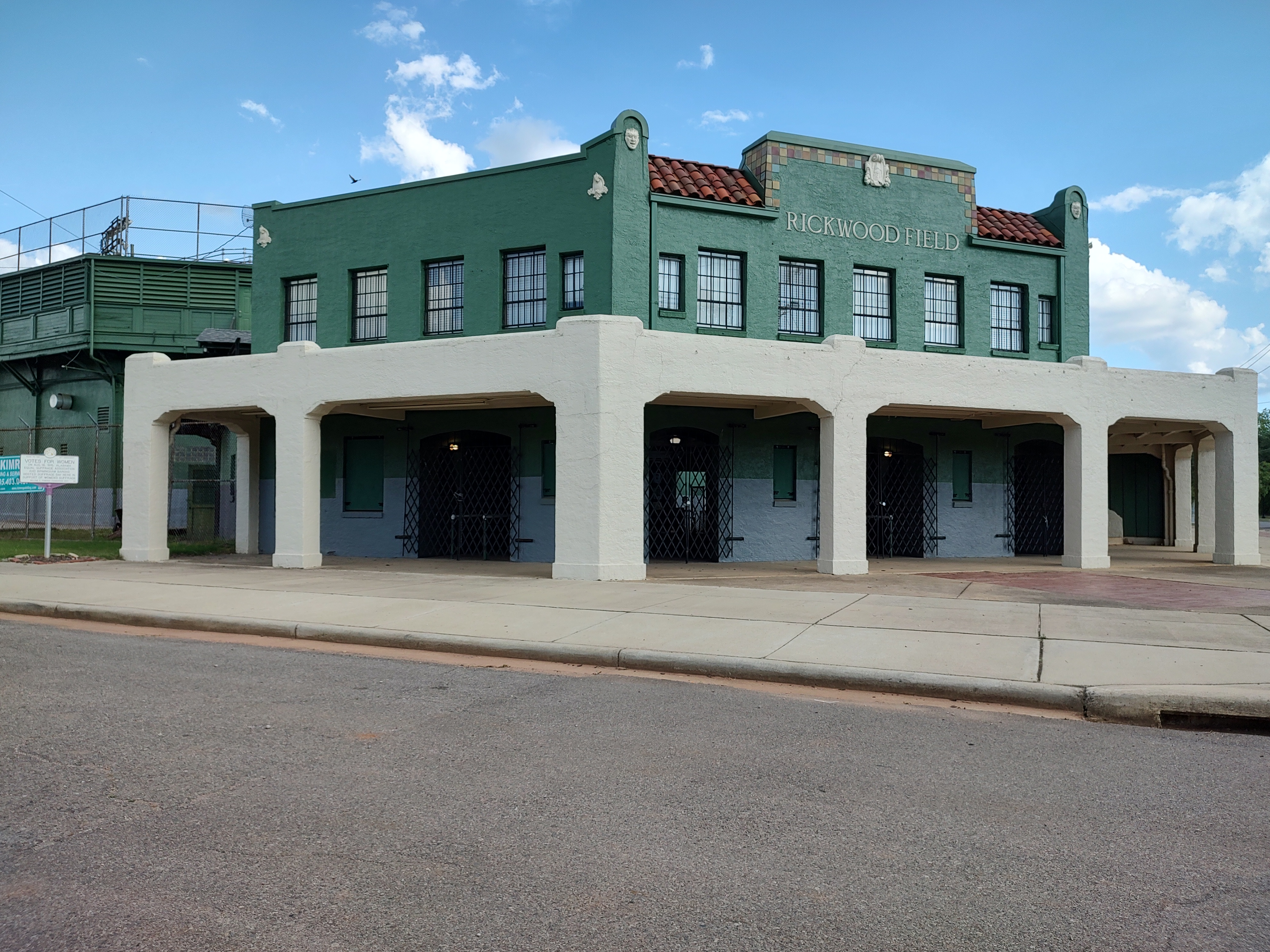
Rickwood Field; Birmingham
When Chicago’s Comiskey Park was demolished in 1991, Birmingham’s Rickwood Field, built in 1910, became the oldest professional baseball park in the United States (www.rickwood.com). The history of the storied baseball field in what is now a less-traveled section of Birmingham’s West End will be revealed to a wider audience on June 20, 2024, when Rickwood hosts Major League Baseball’s nationally televised tribute to the Negro Leagues with a regular season game between the San Francisco Giants and the St. Louis Cardinals. Birmingham native and Hall of Famer Willie Mays, who began his professional baseball career as a Birmingham Black Baron in 1948, will be the honoree.
In the years of segregation, the Birmingham Black Barons shared Rickwood with the Birmingham Barons. Even for those who are not big baseball fans, lists of the ballplayers who played at Rickwood – either as members of the local teams or with exhibitions or traveling teams – is impressive to the point of being daunting. In addition to Willie Mays, there are Hank Aaron, Vida Blue, Ty Cobb, Piper Davis, Dizzy Dean, Joe DiMaggio, Lou Gehrig, “Shoeless Joe” Jackson, Mickey Mantle, Stan Musial, Satchell Paige, Jackie Robinson, Babe Ruth, Honus Wagner, and so many more. When Birmingham native Charlie O. Finley owned the Oakland A’s, his 1967 minor league Birmingham A’s roster boasted Dave Duncan, Rollie Fingers, Reggie Jackson, Tony LaRussa, and Joe Rudi.
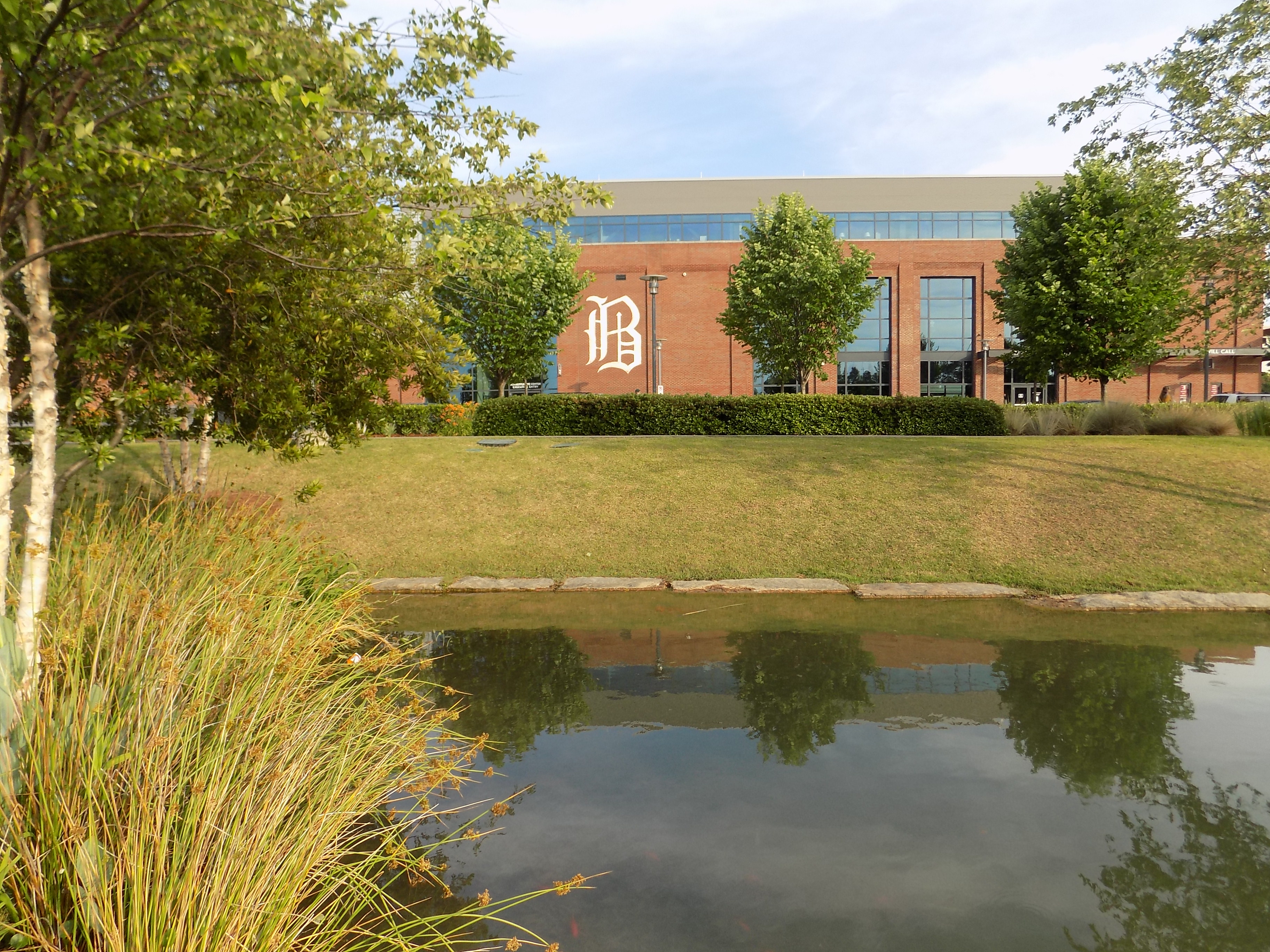
The Birmingham Barons’ current home is Regions Field in downtown but they play a throwback game at Rickwood every season. Rickwood is listed on the National Register of Historic Places. A very active Friends of Rickwood organization has worked for decades to nurture and refurbish the baseball park, which remains a facility for a local college and Birmingham city schools. Major League Baseball has chipped in with upgrades over the past year, since the Negro Leagues salute was announced. Sneak peeks indicate that the changes and upgrades have not diminished the essential character of the proud structure or its infield. I can still imagine my dad as a teenager riding his bicycle from Ensley to Rickwood to sell concessions in the stands. From Rickwood Field, one can see 3rd Avenue West.
__________________________________
When I was a kid, Birmingham was still a center of heavy industry and factory-life was going strong in areas like the U.S. Steel works in Fairfield and Ensley and other industrial sites. Because of shift work, the commercial areas of these places were twenty-four-hour districts.
To a young boy, the bustle and energy of western Birmingham was exciting. I had grandparents in Ensley and Fairfield Highlands and lived in the Green Acres community from second to eighth grade; much of my growing up years was spent in those areas.
In those days before the interstate, 3rd Avenue West was the central thoroughfare of west Birmingham. Going east on 3rd Avenue West, it became 3rd Avenue North and went downtown into the theatre district. Going west, it became Bessemer Super Highway. Bessemer Super Highway was originally modelled on the German autobahn and was destined to be the first controlled-access highway in the United States. Funding dried up in the Depression, but the four-lane with wide medians was still impressive for its time.
I particularly remember a row of motels including a Wigwam Village Motor Court, a chain featuring teepee-shaped cabins around a central teepee main building. My parents bowled at the Holiday Bowl and Alabama’s first Holiday Inn was along that stretch.
Occasionally, we would hear about a “gas war” up on the highway. Gas stations would start competing for the lowest prices and cars would line up to take advantage as long as it lasted. I can remember gas getting as low as ten cents a gallon before a filling station owner blinked and gas prices began to make their way back up to the average price of 31 cents a gallon.
5 Points West Shopping City was a sprawling shopping center with a large variety of shopping options. My mother has particularly fond memories of New Williams and Parisian department stores at the site. A Parisian saleslady would lay aside boys’ clothes that she thought Mother might like to consider for me.
Across from the shopping center was the Alabama State Fairgrounds. In those days it was a real fall state fair with agricultural exhibitions, a grandstand, and a large midway with carnival rides. Kiddieland Park was the small amusement park on the southwest corner of the fairgrounds. Fair Park Drive-In Theatre was at the other end and the Birmingham International Raceway occupied the grandstand area. The Birmingham Crossplex, an athletic facility, occupies the space now.
There were other favorites along 3rd Avenue like El Charro, a Mexican restaurant in a time before there were Mexican restaurants and fast-food joints everywhere. Spinning Wheel was a local chain of ice cream drive-ins. It was close by Lowe’s Skating Rink, a popular spot where my parents had dated. Carnaggio’s had traditional Italian. A unique dining choice where my family was regular was Porter’s Cafeteria, a meat and three on a balcony overlooking a drugstore.
Those places always felt special to me.
________________________________
Memory gets burnished with time. And, as time erases remnants, younger generations who were not first-hand witnesses are strained to give credibility to those memories. That’s true of many areas in Birmingham’s West End. Much of the news from 3rd Avenue West is negative these days, but there are still places of pride and plenty of good memories in the western part of town. Rickwood Field’s upcoming moment in the spotlight should help to revive memories of that area’s importance to local history. Perhaps, also, it might inspire further positive development.


 Professional Southerner