Tag Archives: Joni Mitchell

UPC at Alabama

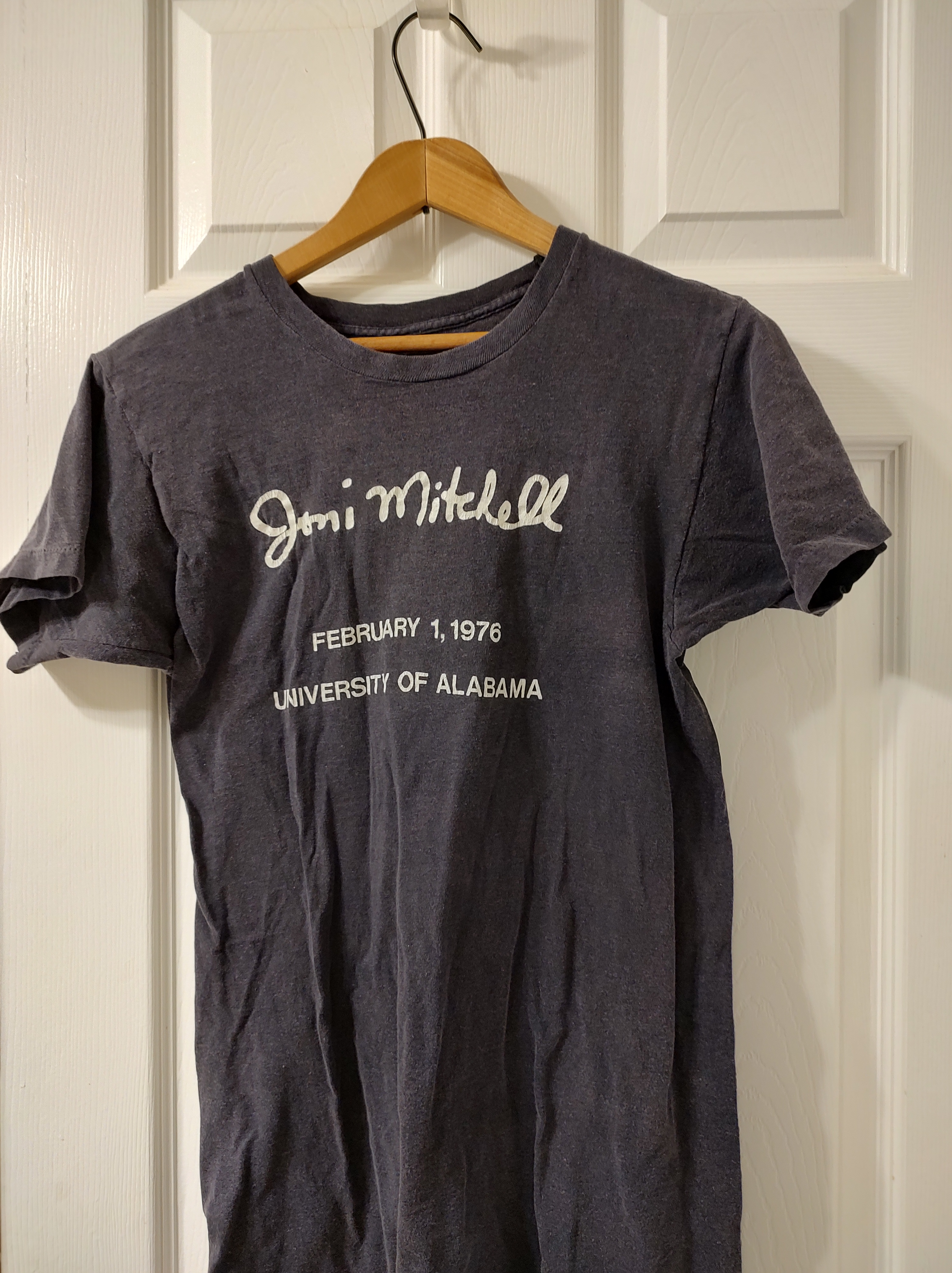
Joni Mitchell

When I started attending the University of Alabama in the mid-70s, Paul “Bear” Bryant’s Crimson Tide dynasty was at its peak. Family moves had meant that I attended six junior and senior high schools in three states and I was determined to stay at one university for the full four years and dive into everything college life had to offer. Everything, that is, except Greek life – it was the post-60s Seventies and Greek participation was at a historic low, even at Alabama. That was fine with me. In the summer before I started, I received a recruitment letter from the Interfraternity Council. I was a scrappy guy back then and took out a red pen, marked the grammar and spelling errors, and sent the letter back with a note to get back to me when they found somebody who could proofread their correspondence; I never heard back.

But I did go to the Supe Store, bought one of those crimson felt “A” hats, and attended every home football game in the days when half the home games were still played at Birmingham’s Legion Field and Tuscaloosa’s Denny Stadium held a mere 60,000.

Tuscaloosa was a great college town in those years. The Strip had not been gentrified and was lined with indie businesses – laundromats, book stores, barber shop, movie theater, clothes shops, head shops, deli, waterbed store, Sneaky Pete’s, Kwik Snak, Krystal, Morrison’s Cafeteria, and a Greek-oriented men’s clothing store (where I bought button-downs to be ironic). Legislation at that time did not allow bars within a certain distance of the campus, so there were none. When the law changed, the Strip began to change drastically.

I continued to follow Alabama football, but ditched the felt hat and immersed myself in all the other things a university has to offer. The music scene, readings, concerts, art shows, lectures, movies, plays – I enhanced my education through extracurricular activities.

Leon Redbone

The University Program Council at Alabama was a truly stand-out organization. It was student-run and was the most productive producer of a wide range of high-quality entertainment in the region with large concerts at the Coliseum, and smaller concerts, speakers, and events at venues including Morgan Hall, Foster Auditorium, the theater at Ferguson Center, and the Bama Theatre downtown. I hesitate to try to list acts that played on the campus because I will inevitably leave out something amazing.

Allman Brothers Band


I soon became a UPC volunteer and began to get more responsibilities as I worked within the organization. I often worked “Security” and over time I began to get assigned to backstage “Artist Relations” duties. I have often remarked that it’s amazing what we’d do for a free tee-shirt back then, but we also had the opportunity to see a lot of the top acts and influential people of that era. I still have a few of those tee-shirts, wrinkled and way too small to wear. My favorite design, for Traffic / Little Feat, was worn so much that it has become see-through.

Here are a few memories:

  1. At a drum solo during a Jethro Tull concert, Ian Anderson came and sat next to me backstage and tried to start a conversation. I admitted to him that I had a “splitting headache” and didn’t really feel like chatting.
  2. When the Rolling Stones were in town, a friend was working at an ice cream shop. On the afternoon of the concert, a group of people came in and ordered ice cream. When they left, my friend asked, “Who was that blind guy?” It was Stevie Wonder, the Stone’s opening act.
  3. The mother of one of the Commodores insisted that I eat with the family backstage after she declared me “too skinny.”
  4. After supervising the removal of furniture from Robert Palmer’s dressing room after a concert (he had opened for Gary Wright), on my final check I found Palmer – fully dressed, soaking wet, still looking great – reclining in the shower. I apologized, saying that I wouldn’t have removed the furniture if I had realized he was still there. “It’s fine; I’m not using the furniture,” he replied.
  5. Working backstage during a Lily Tomlin stand-up appearance, she invited me to come to her dressing room and eat with her. Apparently, people felt a need to feed me back then.
  6. I picked up the phone at the UPC office before one of Elvis Presley’s several Tuscaloosa appearances to find Col. Tom Parker on the other end. He insisted that no women should be backstage because “women can’t control themselves in the presence of Elvis.” I assured him that the women of our backstage crew were totally professional and would contain themselves.
  7. I worked the Ferguson Center box office for presales of Elvis tickets. Patrons were outraged that Elvis tickets were $20. It was outrageous then. Most UPC events had $2-3.00 student prices and general admission was usually around $5 at the time.
  8. Buckingham Nicks, a band that had a large following in the Birmingham metro due to rigorous radio airplay, did two Morgan Hall concerts just days before Lindsey Buckingham and Stevie Nicks announced they were joining Fleetwood Mac.
  9. Backstage before the Grateful Dead concert, their traveling chef fed me a bite and introduced me to Jerry Garcia. I’m missing a finger on my left hand and Garcia was missing a finger on his right hand. I thought a good conversation opener would be to say to Garcia that “We share a deformity.” It wasn’t.
  10. During that same Grateful Dead concert, I somehow found myself rolling a toy truck back and forth in front of the stage with the toddler son of band members Keith and Donna Godchaux.
  11. Muddy Waters opened for Eric Clapton. Need I say more?
  12. At the Joni Mitchell concert – well, I’ve told that one too many times, probably. There’s another essay about my very brief encounter with Joni somewhere on this website.
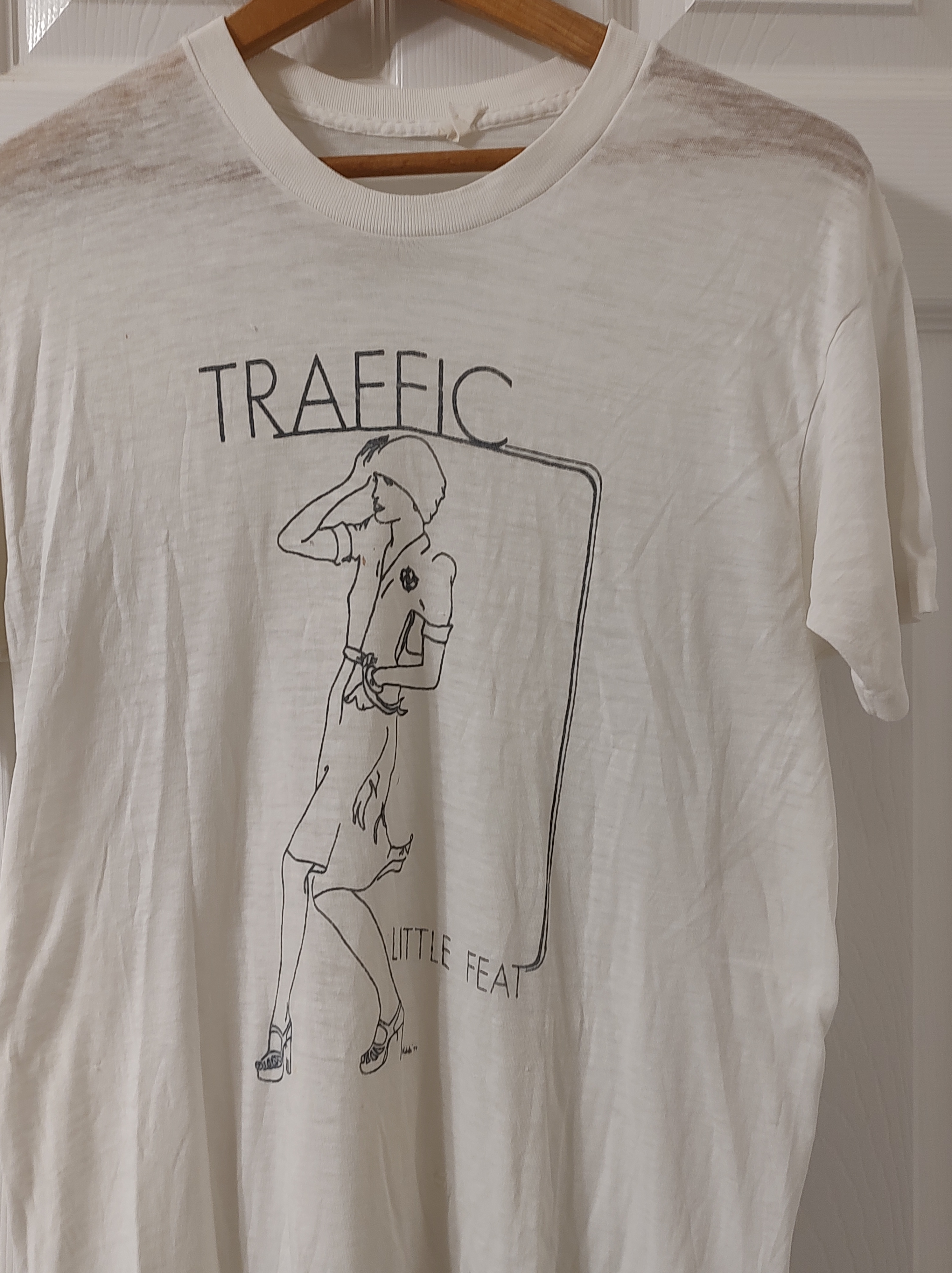
Traffic / Little Feat

These memories are ignited by a new website launched by David Muscari and others who were involved in the University Program Council back in the ‘60s and ‘70s. I heard from David for the first time since college not long ago, asking for my input and support on a new website to chronicle the history of a unique and significant period in the history of the University of Alabama. While I was communicating with David, I also reconnected with Barry Bukstein, who was the brainchild behind UPC’s “Laughter under the Stars” series which gave me that opportunity to hang for a few minutes with Lily Tomlin.

UPC was a life-changing volunteer opportunity for so many people as well as a way to expose a large audience to diverse voices, world-class artists and entertainment, and cultural enrichment. The new website is a snapshot of an integral period of the University and the nation.
UPC logo

Whether you are an Alabama student or alum or have never set foot on the campus, the website is a great way to brush up on what was going on at a very specific time in our cultural history. It was a lot of work by a lot of people. And it was a lot of fun. It was key to my education and beyond. Check it out: https://www.upcalabama.com


Revisiting a Joni Mitchell Moment

This was fun. Out of the Blue, Lee Hedgepeth, a reporter from Birmingham radio station CBS42, called me a couple of days ago and asked if I would be willing to be interviewed about Joni Mitchell’s 1976 Tuscaloosa concert. He contacted me after reading my post, “Love Song for Joni,” on “Professional Southerner.” Perhaps I come across as a little too much of a “fanboy,” but I always appreciate the opportunity to praise a unique musical icon.

https://www.cbs42.com/news/local/a-birthday-a-rose-and-a-little-white-lie-45-years-later-fans-remember-joni-mitchells-only-alabama-concert/

December 2020

Strawberry Fields; Central Park by S. Greg Panosian

November 2020 in north Alabama ended with a day of persistent wet snow flurries. There were temperatures in the 70s last week; the ground was far too warm for accumulation, but November snow is rare and seemed to energize the people in the grocery check-out.

My cashier asked if I was enjoying the snow; I am sorry that I truthfully answered that I am not a big fan of snow and cold weather. It turned out she was from Alaska and was excited to see any snow, so the remainder of our transaction was a bit chilly (pun intended, I guess).

As this dismal year draws to a close, I look forward to a responsible conclusion to the holiday season. I relish the start of a new year and a new administration and the promise it holds.


In this December of 2020, I am startled to realize that in a few days we will mark the 40th anniversary of John Lennon’s murder. For most Baby Boomers, the event is one that is etched in memory.

In that week of December 1980, I was completing my first semester in graduate school and giving final exams to my English 101 composition students as a graduate teaching assistant. On Monday night, I had just completed grading a round of exams when my friend Bill Golightly dropped by to see if I wanted to go downtown to the Chukker; I had no exams on Tuesday, as either a student or a teacher, so I grabbed a jacket and we headed out.

In those days, the Chukker proudly did not have a phone or a television. It had a sparse menu, drinks, pool, pinball, and music.

Most people seem to have first heard about the death of John Lennon from Howard Cosell during Monday Night Football’s Dolphins-Patriots game.

Cosell’s voice wasn’t heard in the Chukker that night, but Bill and I noticed that the bartender, Deborah, had walked into the back room and was quietly weeping. When she had collected herself, we called her over and asked if she was okay.

“John Lennon was shot. He’s dead,” was her answer.

One of her friends had apparently stopped by to tell her the news. The entire room went silent. Of course, we asked the pointless question, “Are you sure?”

Bill and I decided we needed confirmation. “Barry will know,” I said. “Let’s call Barry.” The nearest pay phone was a block away so we hurried there to call our friend, Barry, who always seemed to be an insider with the latest news from the music scene. By that time, though, cars were cruising down 6th Street with John Lennon or classic Beatles songs blaring from car radios and stereos. So, we knew.

I called Barry anyway. He picked up on the first ring. “Is it true?”

“It’s true.”

Bill and I headed back to my neighborhood, which I fondly referred to as the “student ghetto.” Music by the Beatles and Lennon was coming out of every window, it seemed, as other friends joined us for what turned into an impromptu wake at my place.

I had no reason to be on campus the next day, so I stayed in on Tuesday. The phone rang often. Friends from all over the country felt a need to call and commiserate. We were all checking on one another.

I won’t embellish: I was never really a major Beatles fanatic. I enjoyed the music as soon as it hit and appreciated its overwhelming brilliance and cultural influence; some of the Beatles songs are among my favorites. On the night that the Beatles made their live American debut on “The Ed Sullivan Show,” we were at church. But at a fellowship at someone’s home later, the kids gathered in one of the bedrooms and played “I Wanna Hold Your Hand” over and over.

I would like for “In My Life” to be played at my memorial. The unobtrusive George was my favorite Beatle. Post-Beatles, I rooted for John Lennon in his challenges and was happy that he seemed to have gotten himself and his music in a good place.

His passing – and so violently – was a generational touchstone for so many of us. Our years of coming to consciousness were marked by Cold War, Vietnam, assassinations, and social upheaval. To have one of our icons – the auteur of “Give Peace a Chance” – gunned down on Central Park West, outside his home with his wife looking on, defied, for the moment, logic and rational comprehension.

On Wednesday of that week, I returned to campus to give a final to one of my freshman composition classes. The final part of the exam was a short essay – an analysis of a contemporary song lyric. The options were lyrics by Bob Dylan, Joni Mitchell, and Bruce Springsteen. One of my students chose Mitchell’s “Shades of Scarlett Conquering” for his explication essay. He entitled it “Give Peach a Chance.” The title was a stretch, but much appreciated.

A few years later, on my first trip to New York City, the only photographs I took were at Strawberry Fields, the area of Central Park dedicated to the memory of John Lennon. This was not intentional; when I got home, I realized that in five days in New York the Central Park memorial was the only time I took a picture.


The Chukker is long closed. Bill Golightly died on January 2 of this year. And John Lennon would be 80 if he had lived.

I am embracing the holiday spirit, but a piece of music that sticks in my mind today is Olivier Messiaen’s chamber piece, “Quartet for the End of Time.” Messiaen composed the piece while he was a prisoner of war in a German stalag during World War II. The quartet premiered in a 1941 prison performance with other prisoners of war playing the other parts. It is an introspective and solemn work; somehow, too, it is jubilant and hopeful. It seems to be an ideal composition for an uncertain time.

Impending December

Thirty years ago, as the first day of December eased in on a cold midnight, I was sitting at the City Pier on the New London, Connecticut, waterfront. I was in the former whaling center and seaport on tour with a theatre group and had just completed a long and difficult work day in a long and occasionally demanding schedule.

As late and as cold as it was, I had walked through the quiet, empty town toward the water in a light snow to let the frigid sea air clear my head. The walk to the waterfront includes a charming statue of an earnest Eugene O’Neill as a boy, writing intently on his tablet. The acclaimed playwright spent boyhood summers at his family’s Monte Cristo Cottage a couple of miles down the harbor.

As I sat at the harbor, I listened to George Winston’s classic 1982 album December on my Walkman. That music became a frequent companion on the fall 1989 tour. It relaxed me in particularly stressful times.

As each December approaches, I find myself thinking about the soothing music of December. It speaks to the title’s power of suggestion that I only think about that album when December approaches; I would never think of listening to it after New Year’s Eve. Winston’s meditative solo piano perfectly captures the mood of the winter holiday season with its long dark nights, bittersweet memories, pensive moods, and festive gatherings.

December is upon us in this Thanksgiving week of late November. Holiday decorations are beginning to pop up in neighborhoods and stores are already a frenzy of commercial Christmas “cheer.” I plan to find my Christmas wreath at this Saturday’s Pepper Place Market in downtown Birmingham. My Christmas cards are boxed up and ready to be taken to the post office on December 1.

Everything in Alabama will seem to grind to a standstill on the afternoon of November 30 as the annual Iron Bowl football game between Alabama and cross-state rival Auburn occurs – the 84th time that this rivalry has been played. For years it was played in Birmingham’s Legion Field; now it alternates between Tuscaloosa and Auburn. It is as entrenched as any holiday tradition.

My annual December trip to the Grand Hotel on Mobile Bay is on hold. I took too long to figure out my dates and there seem to be no rooms at the inn. I will keep working on it, and I could always go somewhere else – or even take a room somewhere near Point Clear – but the pull of the Grand is strong for me this time of year and I am determined to still make it happen. Memories of Spanish moss hanging from holly trees on the lagoon are always a strong pull.

Another piece of music that comes to mind around December is Joni Mitchell’s classic, “River,” which writer Dan Chiasson calls “the song that, almost two thousand years late, made the Christmas season bearable.” “It’s coming on Christmas,” Mitchell sings, “They’re cutting down trees / Putting up reindeer / Singing songs of joy and peace // Oh I wish I had a river I could skate away on …”

I prefer my rivers unfrozen, but the sentiment is clear. As dear as the Christmas holiday is, it can also be a time of stress and tension and feelings of loss. Whenever I hear somebody say, “I’ll be glad when the holidays are over,” I cringe a little.

But I get it, too.

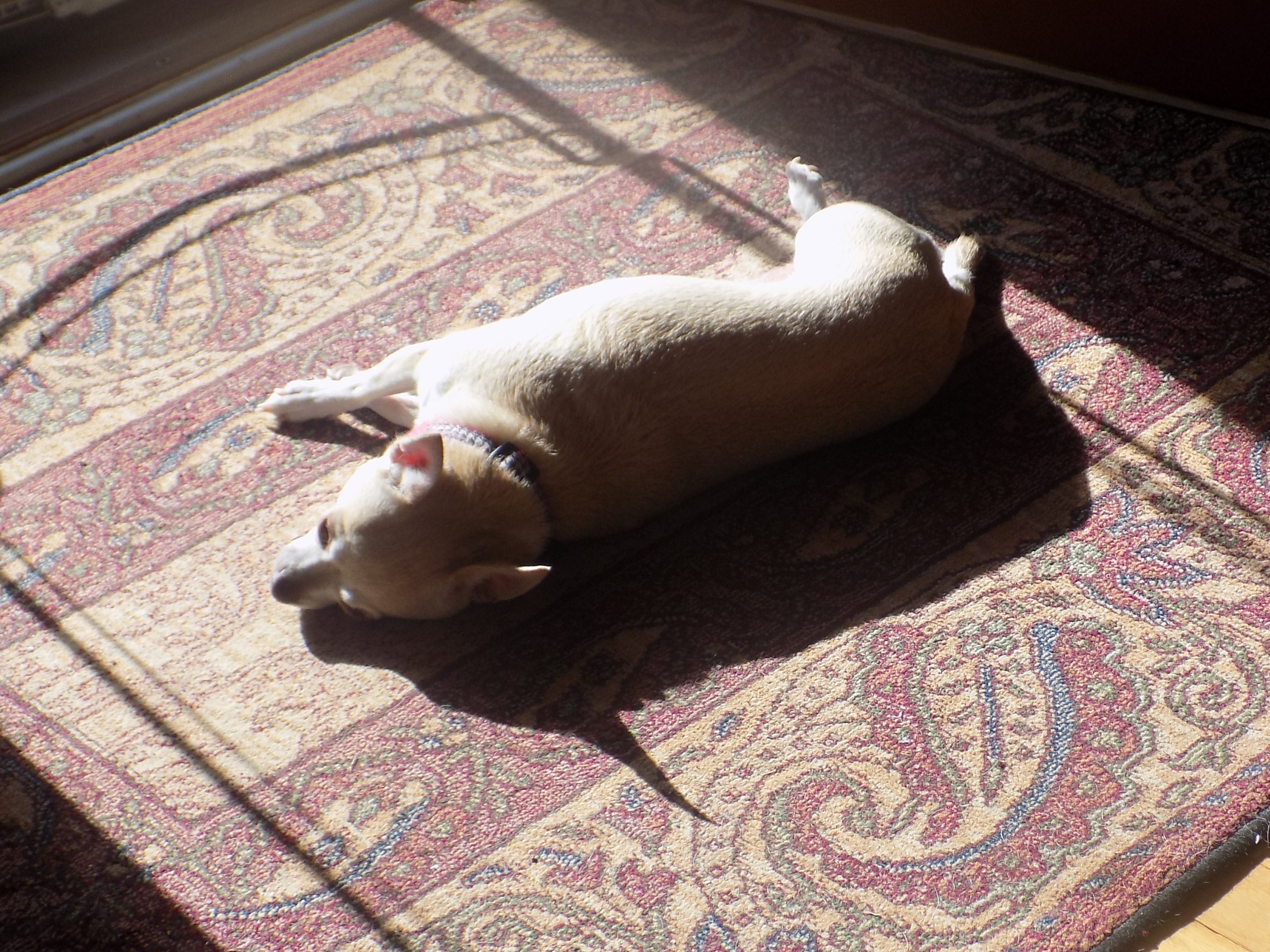
In the meantime, I will celebrate the holidays and – like my mother’s dog, Lulu – I will seek out my warm spot in the sunshine until I find a river I can sail away on.