Tag Archives: the south

Highlands Bar and Grill

IMG_1509  My first extended post-Katrina visit to New Orleans in 2007 coincided with the New Orleans Wine and Food Experience. Held in May, that event showcases local restaurants and is a draw for food and wine aficionados from many places. I met a couple who were restaurateurs from Napa and the husband’s work required him to travel all over the world. When I mentioned that I was from Birmingham, he said, “You know, Birmingham is a great food city. Not many people know that.”

I already knew but it was nice to hear it from somebody from the west coast.

Growing up in Birmingham, there was good dining to be had and there was always an abundance of Greek-owned eateries from hot dog stands to white tablecloth establishments. The place has long been a mecca for classic southern “meat and three” places and the quality and variety of barbecue and barbecue styles in the area is an embarrassment of riches.

But when Frank Stitt opened Highlands Bar and Grill (www.highlandsbarandgrill.com) in Five Points South in 1982, the bar for Birmingham dining was significantly raised. A few years later Stitt opened Bottega and Bottega Café (www.bottegarestaurant.com) a few blocks away on Highland Avenue and then Chez Fonfon (www.fonfonbham.com), a more casual bistro, next door to Highlands.

Add to that a preponderance of good eats from other chefs, many of whom worked for Stitt before striking out on their own. There are always a new attitude and a new swagger creating a great and unpretentious urban destination for dining at every level and taste. In the Five Points South area near Highlands, I am partial to Ocean (www.oceanbirmingham.com) and Hot and Hot Fish Club (www.hotandhotfishclub.com) but every time I go to Birmingham lately it seems that a “must visit” new dining option has opened somewhere in the city. I am falling way behind on keeping up and checking them out.

Highlands, however, is still the flagship. It is pricey and elegant and provides an unmistakable sense of occasion when one enters the door. However, it is never snooty nor pretentious, it features the best locally grown and fresh ingredients, and a meal at Highlands is always an opportunity to relax and breathe. Frank Stitt and his wife, Pardis, create gracious and memorable dining experiences for their guests.

The wait staff is knowledgeable, efficient, and playful. I like to eat seafood from the Gulf when I am at Highlands; for my taste, Highlands prepares fish better than anybody. But everything on the menu pleases. We celebrated my mother’s milestone birthday at Highlands last summer and she declared her steak that night to be “the best steak I’ve ever eaten.” The menu is seasonal and changes often but Highlands baked grits, a signature dish, is always on the menu.

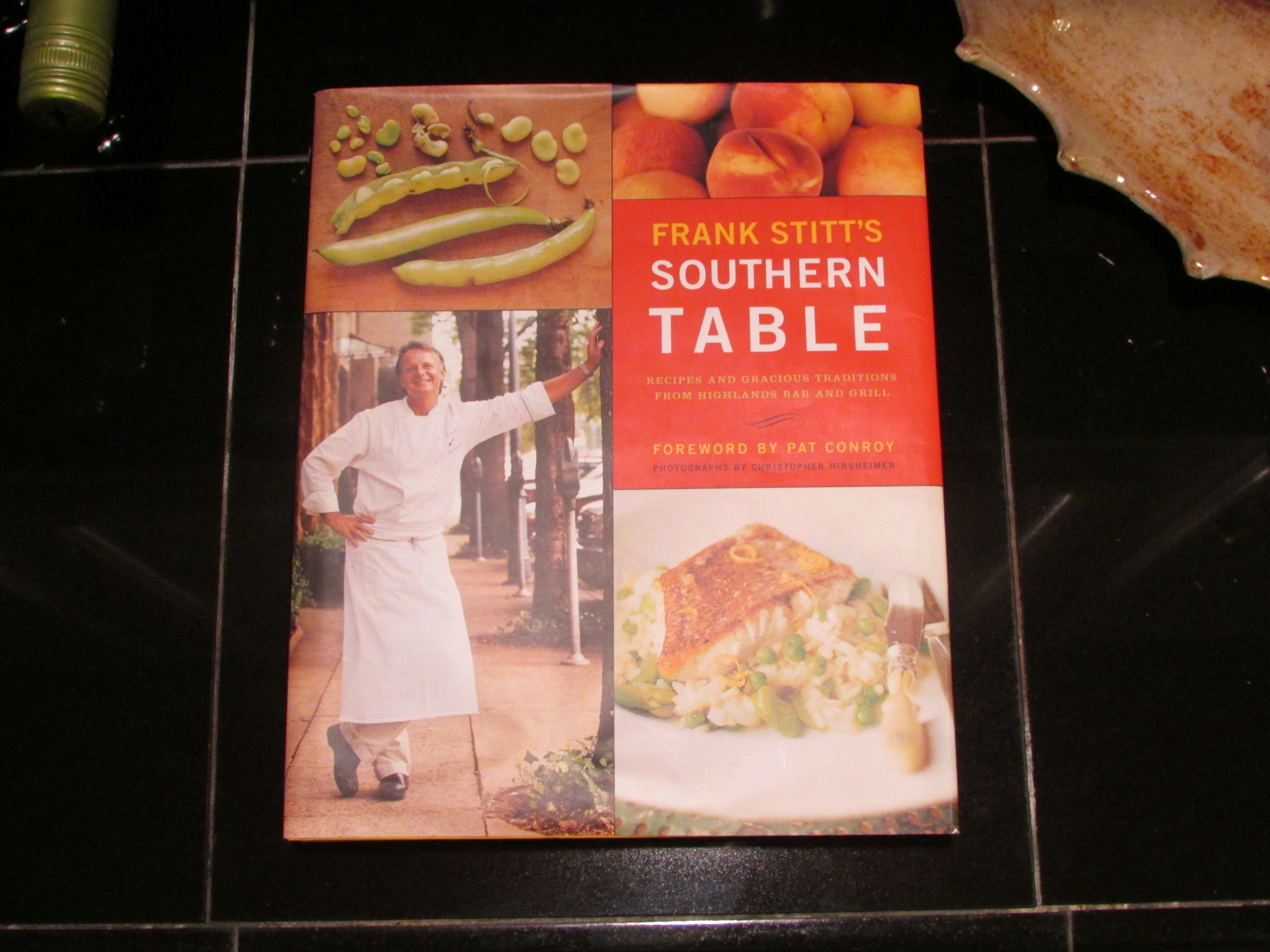
Two of my most often thumbed through cookbooks are by Frank Stitt. The first, an instant classic, is Frank Stitt’s Southern Table. It was followed by Frank Stitt’s Bottega Favorita. In each, the reader and cook find a delicious assortment of unique takes on food preparation and presentation culled from Stitt’s extensive experience. Stitt is a native of Cullman, Alabama, who attended college at Tufts and Berkeley, apprenticed and cooked in France and the Caribbean, and ultimately opened his restaurants less than an hour from where he was born.

Highlands Bar and Grill and Frank Stitt are on my mind this week because the 25th presentation of the James Beard Awards (JBAs) for restaurants and chefs will be held in Chicago on Monday, May 4, 2015. Highlands Bar and Grill is one of the five finalists for Outstanding Restaurant for the seventh year in a row. The other four finalists this year are in New York.

I have been paying attention to the JBAs (www.jamesbeard.org) for many years and have paid particularly close attention since Stitt and Highlands have been regular contenders. Stitt was inducted into the JBA Who’s Who of Food and Beverage in 2011 and was named Best Chef – Southeast in 2001. I find that very often the winner for Outstanding Restaurant is a top five finalist several times before it wins so every year I tune in to see if this year is Highlands’ “turn.” I feel good about lucky 7.

A confession: I will be watching the James Beard Awards on Monday night. They are streamed every year on livestream.com and I am just enough of a food nerd to watch a couple of hours of restaurant awards. I want to be a witness when Highlands gets its much deserved honor. It will be an honor for the whole city. On the down side, it may make it even harder to get a reservation at Highlands Bar and Grill.

Mother and Truman at Highlands in June 2014

(The photograph is of my mother, Jean Journey, and my nephew, Truman, outside Highlands in June 2014.)
 

The Paint Rock Valley and “Green, Green Grass of Home”

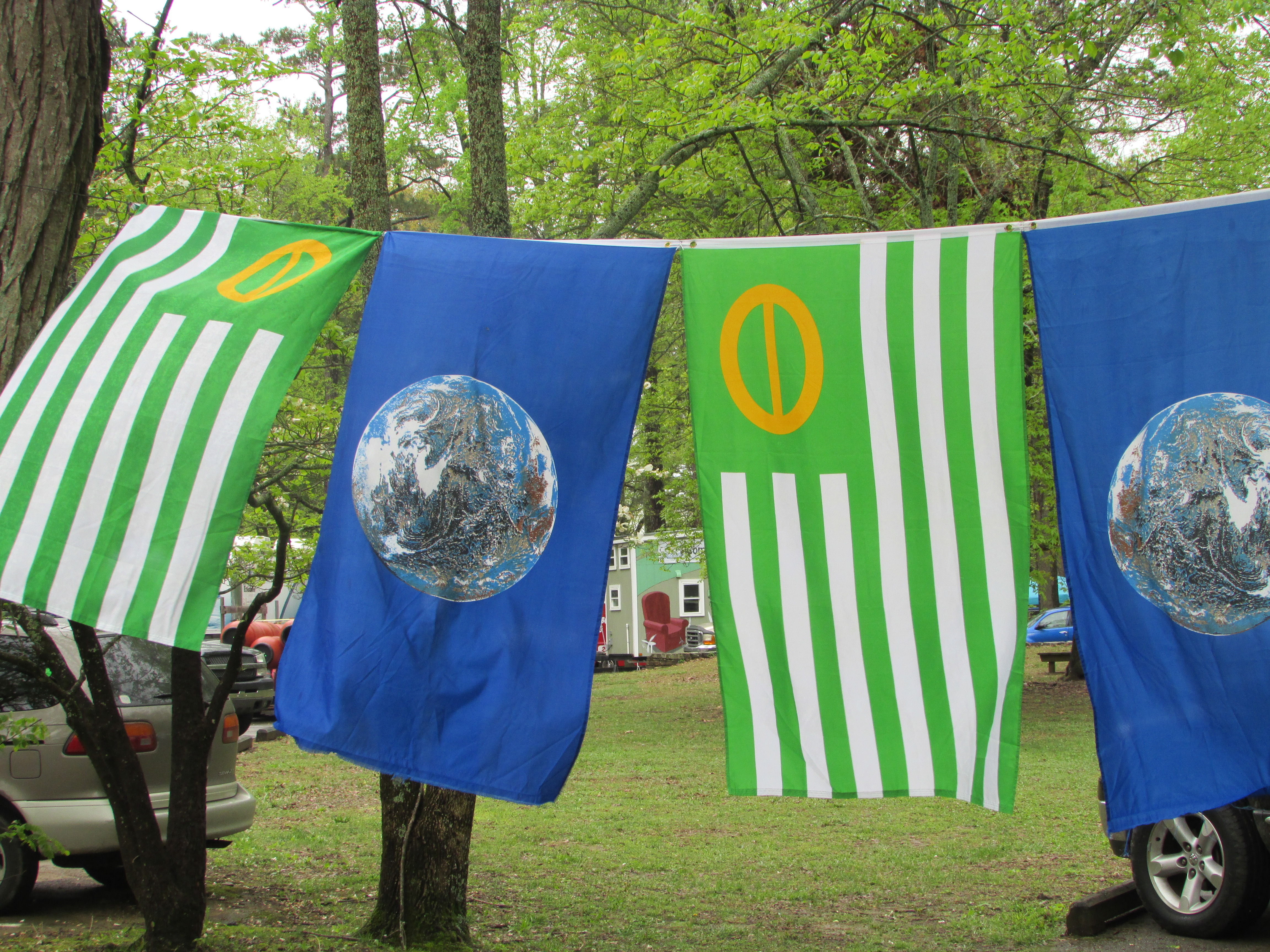
IMG_1474  It was a soggy Earth Day 2015 event at Monte Sano State Park in Huntsville on Sunday, April 19. It was raining when I arrived shortly after the noon opening and the early attendance was sparse with some exhibitors either absent or late for set-up.

IMG_1473Even so, my favorite local goat cheese purveyor, Paul Spell of Humble Heart Farms in Elkmont (www.humbleheartfarms.com), was open for business and busy giving out samples. I bought my usual, Humble Heart’s Tuscan blend, and a package of the French blend. At another booth I picked up some herbs – chives, mint, and rosemary – to continue to pot up this year’s herb garden in the back yard. I already have some mint and lots of basil growing back there.

Despite the rain, I hit a few of the tables and booths that were set up and had a chat with Steve Northcutt of the Nature Conservancy. One of the reasons I made a special effort to get to the Earth Day event this year was because my friend Judy Prince from Birmingham planned to be there to recruit support for her initiatives and clean-up projects serving her native Paint Rock Valley in northeast Alabama along the Paint Rock River’s winding path to the Tennessee River. Because of health and the weather, Judy was not able to attend and in her absence Steve was handling a drawing for a Paint Rock River canoe trip. I am planning two canoe trips for this year — the Paint Rock River and the Cahaba River.

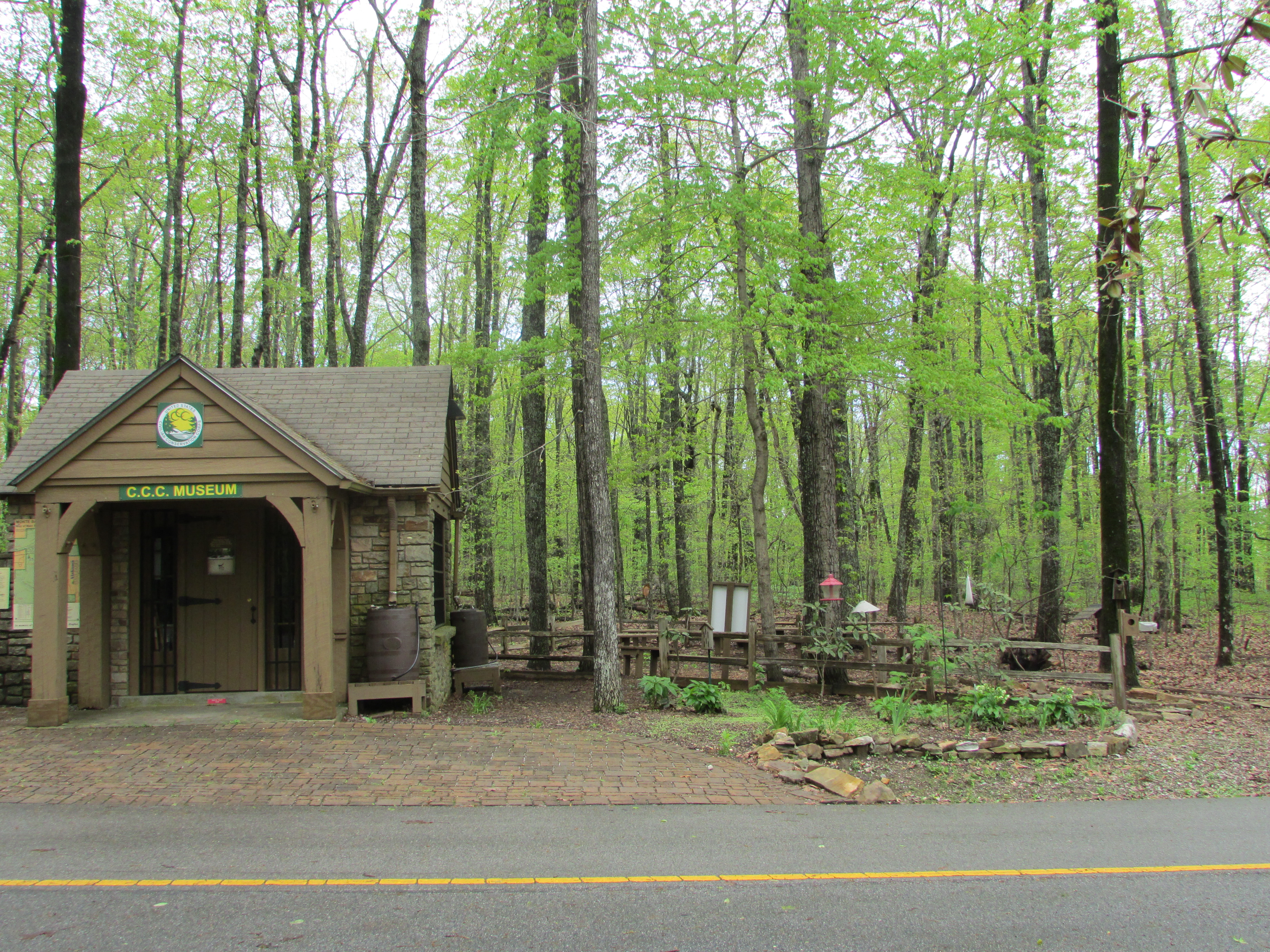
IMG_1483After leaving the Earth Day event, I wandered through the park, winding up at a scenic overlook that also has a small museum and memorial dedicated to the Civilian Conservation Corps of Democrat Franklin D. Roosevelt’s New Deal. At a time when Alabama’s Republican elected officials seem to be on the verge of closing down a number of state parks, it was a reminder of how much this part of Alabama owes to FDR and his Depression-era recovery policies. Every town in the Tennessee Valley should have a monument to Roosevelt.

As I left Monte Sano, there was a break in the rain and more people seemed to be arriving at the Earth Day festivities. Since the Paint Rock Valley was on my mind I decided to make the short drive to Jackson County and drive through the upper Paint Rock Valley for a while.

The Paint Rock River meanders for about sixty river miles from its origins in northernmost Alabama to where it enters the Tennessee next to a spectacular bluff known as Paint Rock. I saw the Paint Rock on a boating day trip along the Tennessee from Guntersville Dam to Decatur a couple of years ago. It is only accessible from the river and is worth checking out if you get the opportunity.

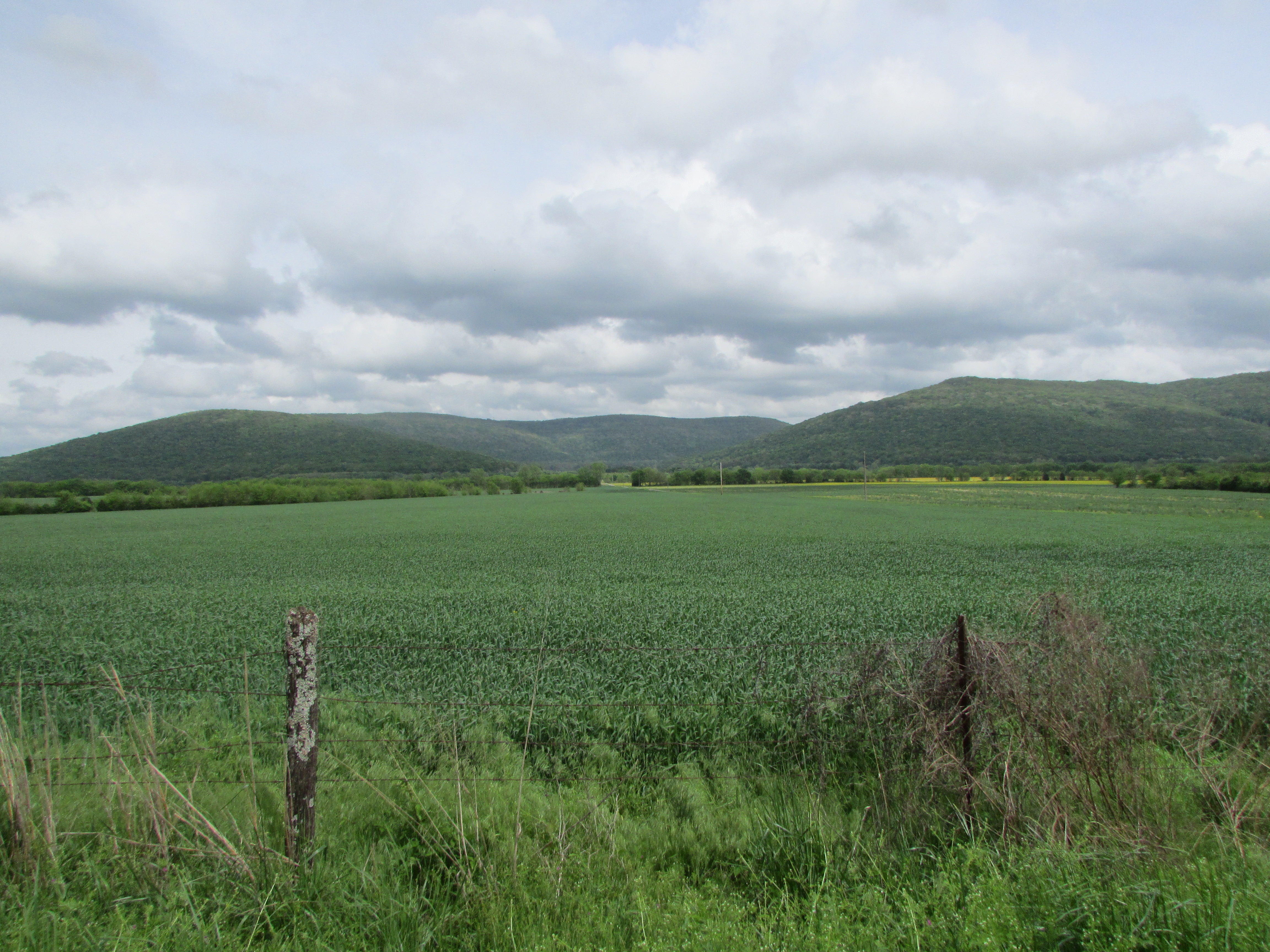
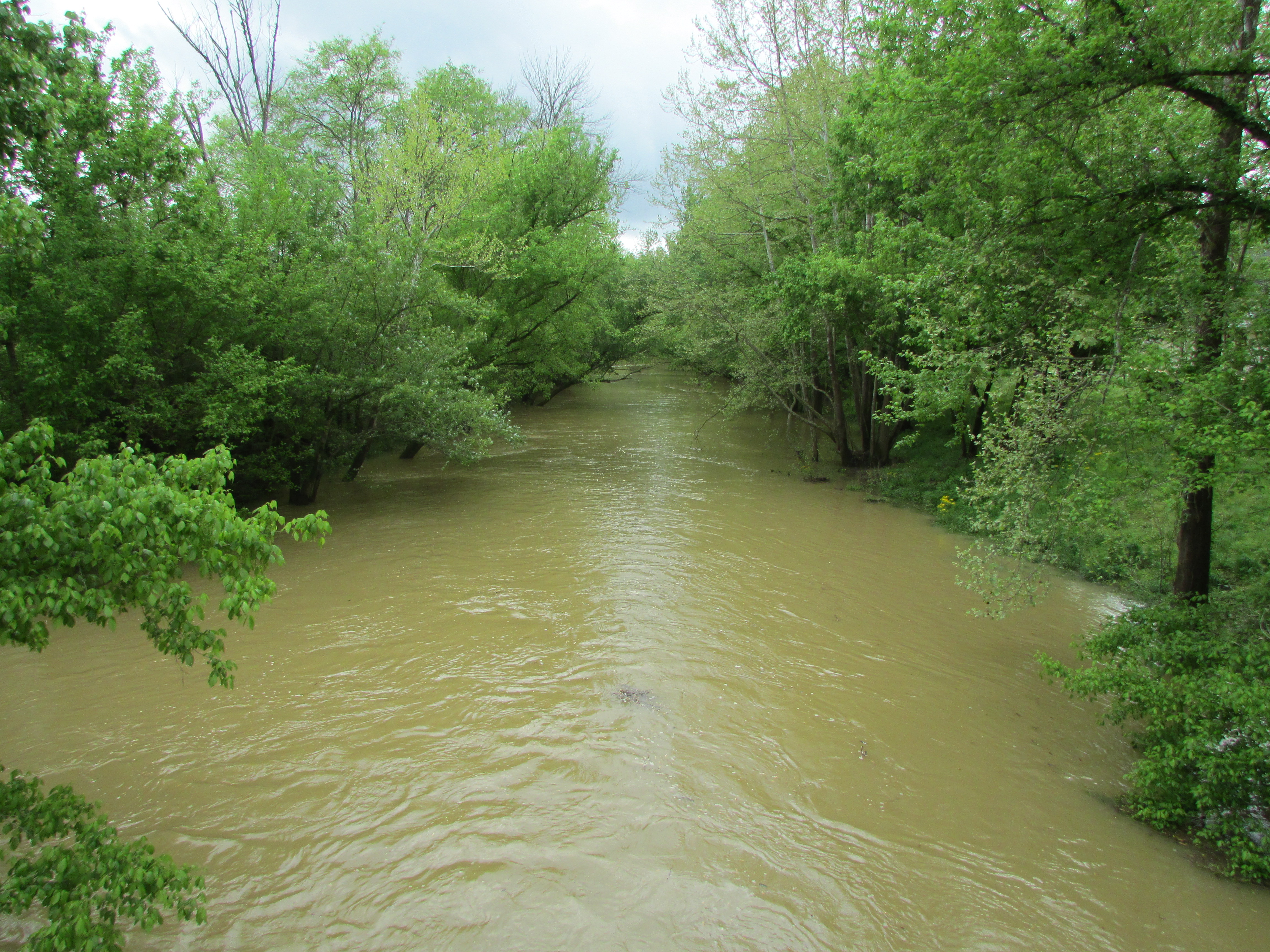
IMG_1506My Sunday drive, however, took me into the upper reaches where the headwaters come together and form the small but ecologically significant Paint Rock River and its surrounding valley. Due to recent rains and storms, the river was flowing fast with a lot of mud and debris and was beginning to overflow its banks. There are a number of places along the two-lane highway through the valley where the road goes alongside the river. The area is sparsely populated and there are abundant farmland and animals grazing in pastures along the river’s course. IMG_1486

Occasionally you pass through a more settled area. The towns of Princeton and Trenton huddle close to the road. My afternoon drive took me as far into the valley as the town of Estillfork. One of the things that struck me along the drive is the way most of the houses, stores, and churches are right on the road, even where there was space to build farther back.

My friend Judy Prince is a psychotherapist based in Birmingham but her roots are in the upper Paint Rock Valley and in Estillfork, where her family ran a country store for decades. Judy has been active with various projects to enrichen the valley and preserve and pay homage to its beauty, community life, history, and heritage. It is through visits to the area in conjunction with Judy’s Paint Rock Valley History Project and Connect UP (CUP) initiatives that I have been introduced to the upper Paint Rock Valley. There are multiple goals, part of which is building connections and community with the area’s Appalachian and Native American cultures. “Building community” has become a theme for me lately, it seems.

Judy has been active in using a “rolling store” to dispense heirloom Cherokee Purple tomato seedlings and seeds. The rolling store idea is in honor of her father, Pete Prince, who once operated a rolling store in the valley in addition to his stationary store in Estillfork. IMG_1491

Judy has ongoing plans for a History Store and Working Farm as a wellness and healing center to serve the community and people in need from the community and beyond including those with physical and mental challenges, veterans, the elderly, and youth. One of her goals is to utilize the projects to connect residents of the area with those from outside the community and to increase interaction and exchange from diverse communities. Judy speaks passionately about all of these projects and her enthusiasm is contagious. She wants to bring more visitors into the valley while also enabling those in the community to venture forth and seek broader exposure to other options of doing and living.

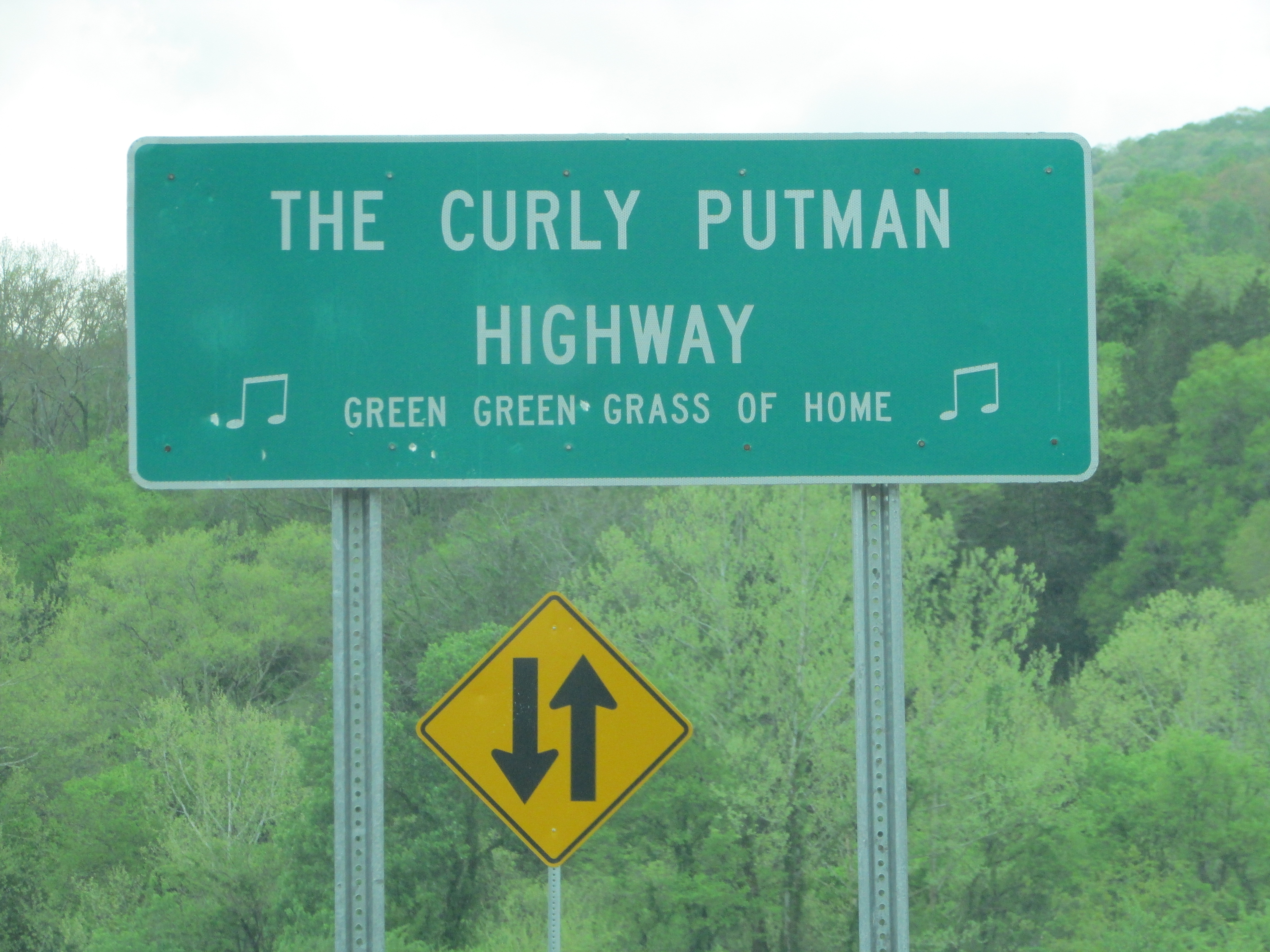
IMG_1500Highway 65, the curving road that follows the Paint Rock River through the valley, is named “The Curly Putman Highway” in honor of songwriter Claude “Curly” Putman, the Paint Rock Valley native (Princeton) who wrote “Green, Green Grass of Home.” That song, written in the 1960s, was an often covered tune that was a country hit for Porter Wagoner and later an international hit for pop star Tom Jones.

As I drove through the Paint Rock Valley with Curly Putman’s plaintive song in my head, I was reminded of a road trip I took many years ago through another mostly rural area of central Alabama. I was with a friend who was visiting the area from Los Angeles. At one point, I veered off the main road to show her a quaint small town that was just off the highway. She was quiet and gazed out the window as we drove down the street that ran through the middle of the town, past neat little houses and a docile town square surrounded by a few small local businesses and a few shuttered storefronts. After a moment, she turned to me and said, “Why would anyone choose to live here?”

I was caught off-guard and didn’t have a ready answer at that moment but I have often thought about her question over the years. Why does anyone live anywhere? And how many of us have the luxury of choosing where to live? I have lived all over the country and I don’t think I ever really got to choose. You live where you were born and then you live where life, family, education, career, circumstances, and serendipity take you.

There are people who live in the upper Paint Rock Valley. Some stay there their entire lives and some leave as soon as they are able. Some return at some point and some never come back. Others come and stay or come and go. For some it is “home” and for others it’s just a place along the road. The country is full of communities like those along the Paint Rock River. They deserve our discovery, our attention, and our respect. They can learn from us; more importantly, we can learn from them.

IMG_1495

(For more information about Joys of Simplicity Wellness Adventures and the Connect UP Program, and for contact information for Judy Prince, check her website at www.tinyurl.com/lutybme).

Mooresville

IMG_1370 Mooresville, Alabama, was incorporated as a town in 1818, the year before Alabama became a state (www.mooresvilleal.com). Its location in Limestone County, just off Wheeler Lake and the Tennessee River and between Huntsville and Decatur, is an area that is rapidly growing. The expansive farming fields of just a few years ago are giving way to more prosaic development. I have lived in north Alabama for more than twelve years and am still astonished at how much farmland has disappeared from the area in just the past decade.

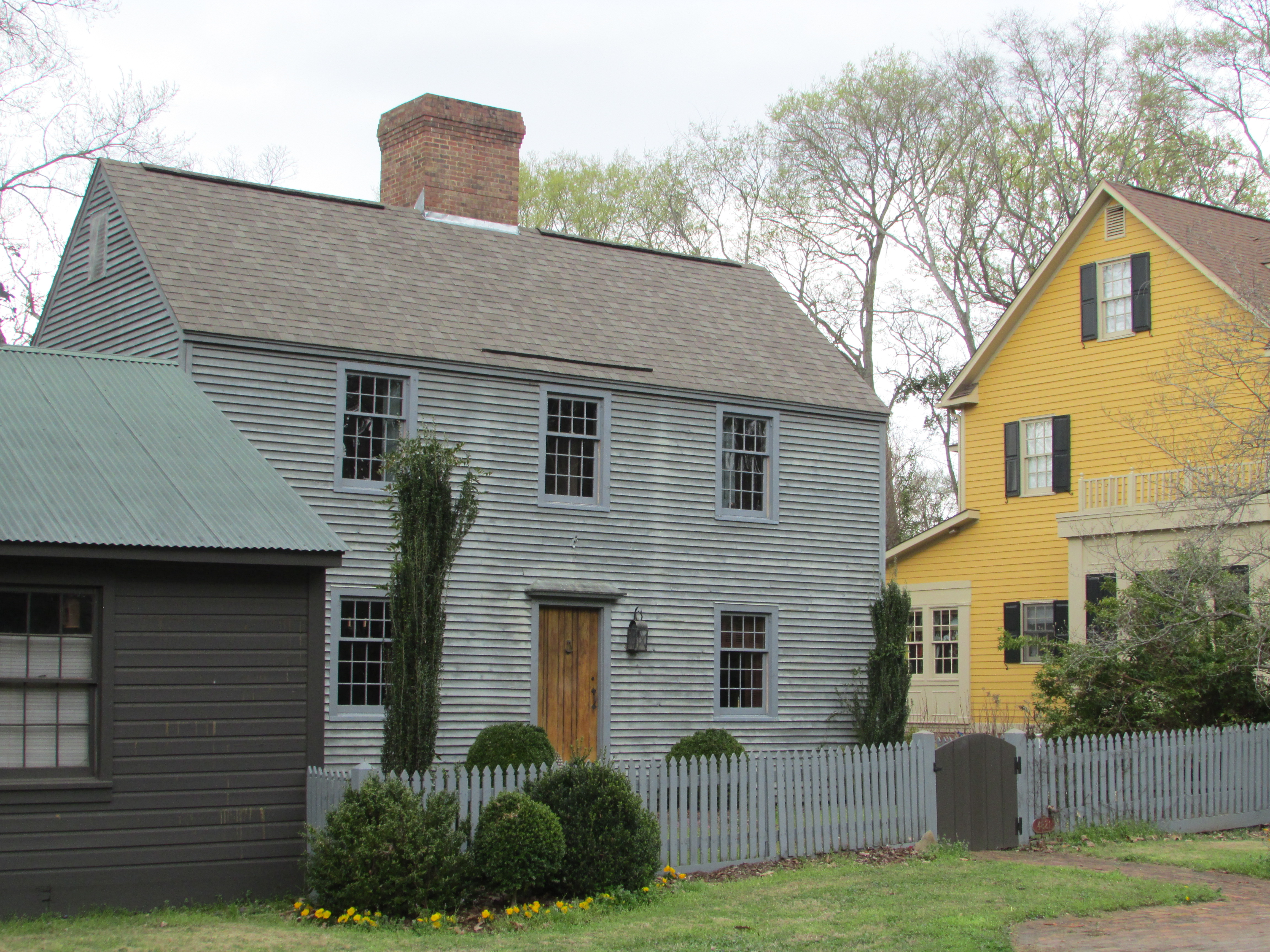
All of Mooresville, however, is in the National Register of Historic Places. It retains the feel of a village from another time and is worth the short exit off the interstate when you are in the area and have time for a breather. Its residents are good stewards of their community and the town is well-maintained, protected, and cared for. IMG_1337

Only a few dozen people live in Mooresville and it is small enough that one can park the car and walk the entire village in a fairly short time. There are large houses of note and smaller houses of charm; lovely private gardens; and ample green space. IMG_1327


Two particularly great old church buildings are located in the town. Mooresville Church of Christ has held services since 1854. Future president James A. Garfield preached a sermon in that building when he was stationed nearby as a federal soldier during the Civil War. It is a simple white clapboard building with Greek Revival basics and minimal adornment.

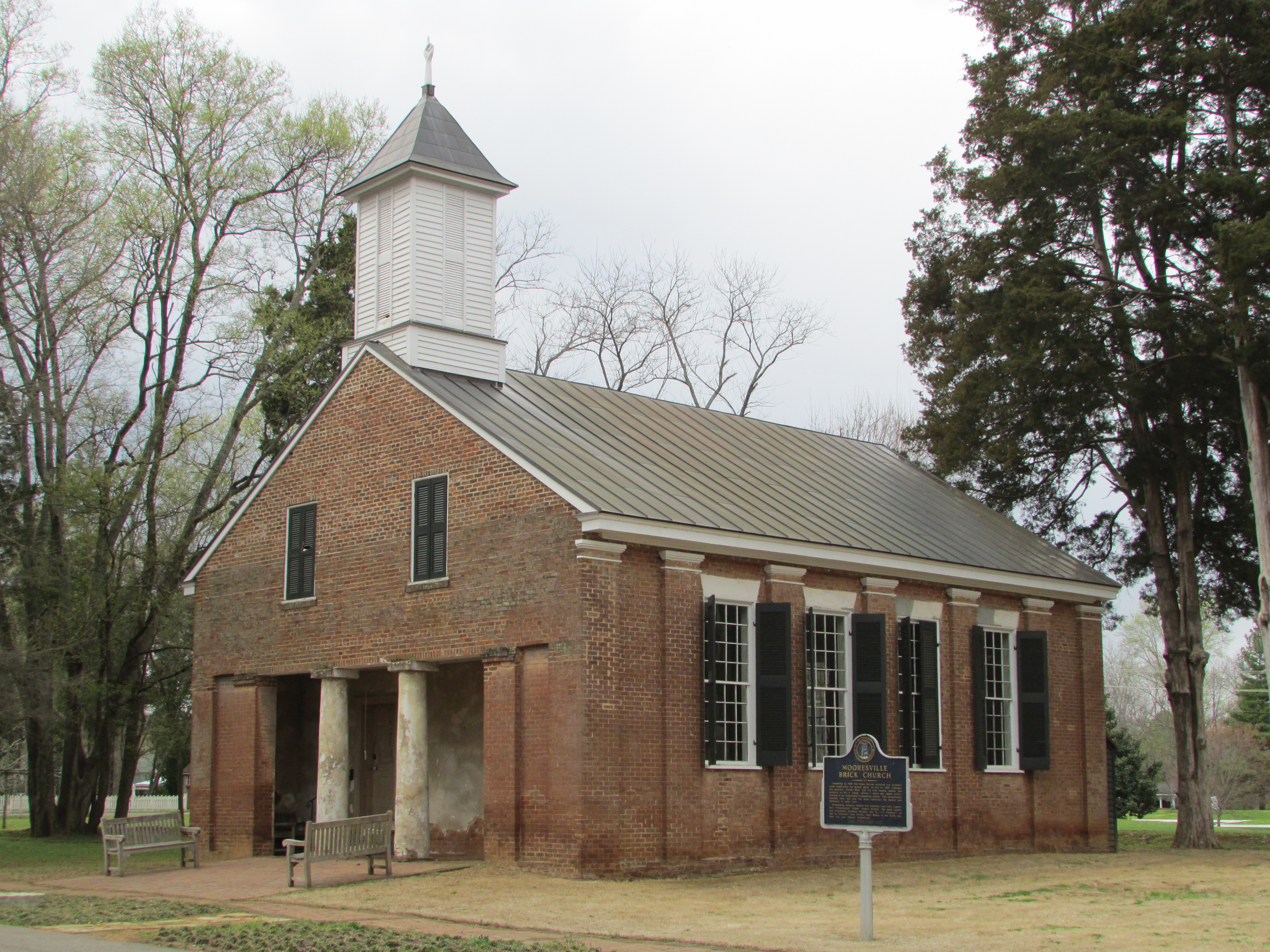
IMG_1377The Old Brick Church, built in 1839, is a Greek Revival brick structure with an elegantly sculpted hand at the tip of its steeple pointing directly up to the heavens. The Old Brick Church is available for weddings and special occasions but lacks modern conveniences and no longer holds regular services. IMG_1373

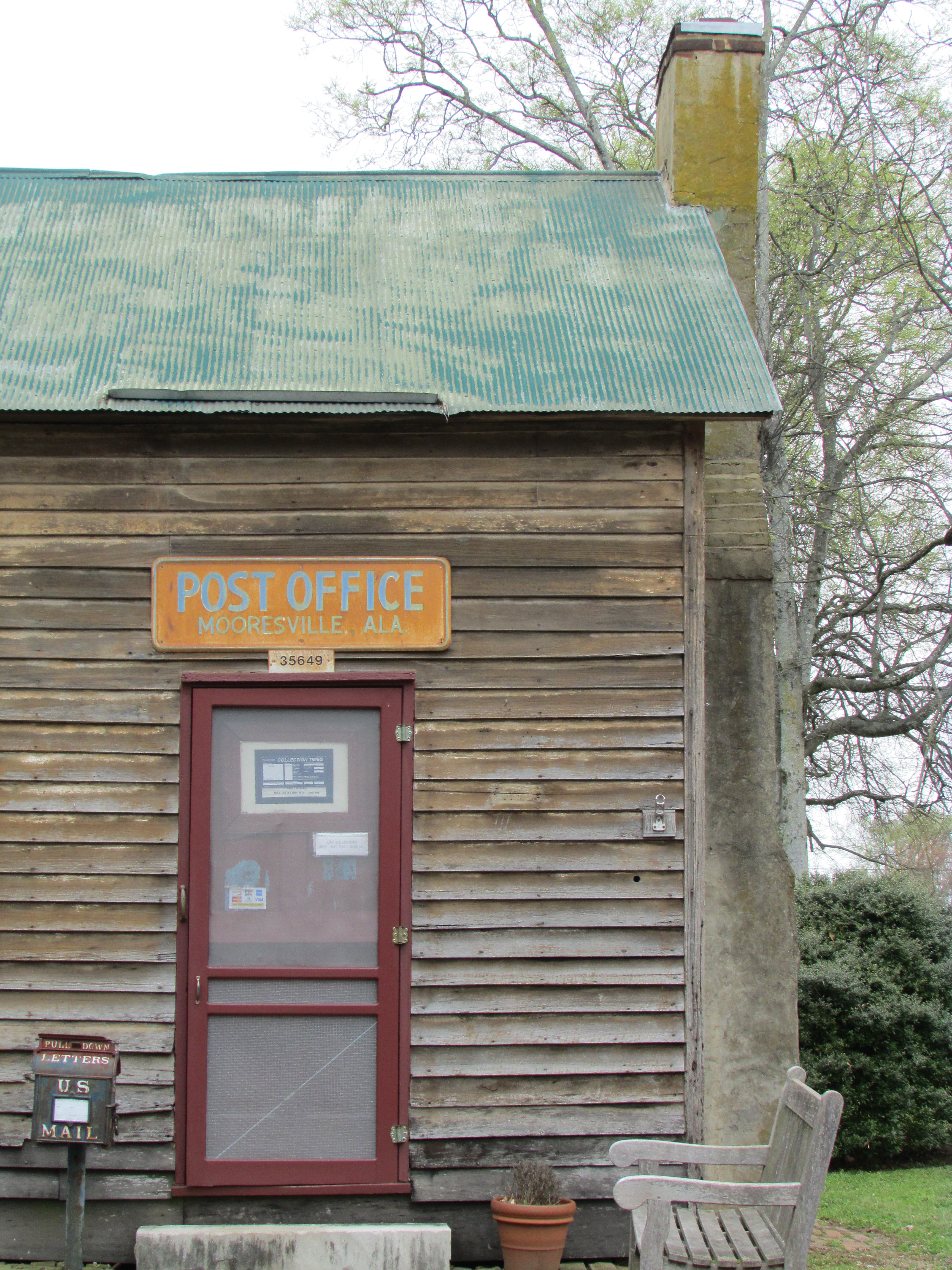
There are other small businesses in the village including the 1818 Farm (www.1818farms.com), a fairly recent enterprise with various happy farm animals and a strong organic orientation. When I was a boy and a ravenous reader of history and historical trivia,  I first heard about Mooresville as the site of the oldest still operating post office in the state. I am happy to report that the Mooresville Post Office is still there and still operational. IMG_1382

The whole village covers just a few blocks but some of the town’s roads continue on into the woods and backwaters of the lake and the river. I stopped to take a photograph on one of the backroads on a recent visit and realized that I was parked next to an ancient and overgrown cemetery. Tombstones from the 19th century, some of them broken, were scattered through the trees and brambles and provided intriguing history of the area.

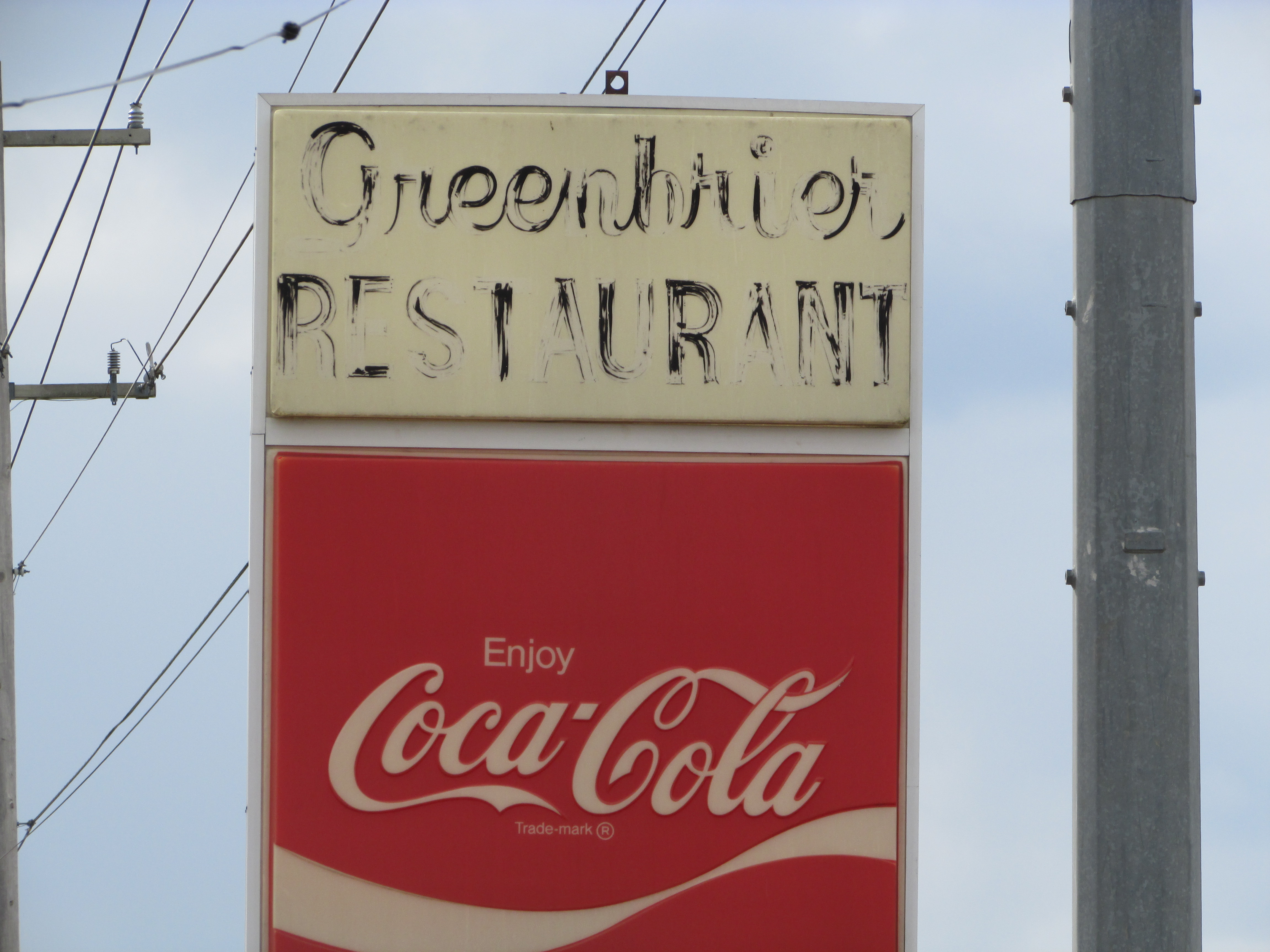
Whenever I go to Mooresville, I try to head over to Greenbrier and Greenbrier Restaurant (www.oldgreenbrier.com) before I head back into town. From Mooresville, you cross over the Interstate and take the road past Belle Mina (the name of both a 19th century mansion and the community that surrounds it). Turn on Old Highway 20, go past massive fields and farmland to the four-way stop at Greenbrier, and Greenbrier Restaurant is on your right at the stop sign. It’s known for its barbecue but I’m partial to the fried catfish. The fish is flaky and moist in the middle with a peppery crisp crust. The place also has the finest hushpuppies I have ever tasted and a generous portion of succulent hushpuppies comes with the meal.

I sometimes grab a catfish plate to go. The order will come with a paper bag of hushpuppies that I put on the seat next to me and pop as I head into Huntsville. The hushpuppies are always gone by the time I pass the Space and Rocket Center and re-enter the 21st Century. IMG_1403

Unexpected Repose at the Shrine of the Most Blessed Sacrament

IMG_1318   My pick for one of the most unexpected attractions in Alabama is the Shrine of the Most Blessed Sacrament at Our Lady of the Angels Monastery. It’s near the town of Hanceville in Cullman County north of Birmingham. My mother’s family hails from Cullman County and for that reason I tend to think of the area as a Protestant enclave of Scotch-Irish descendants. In reality, though, the town of Cullman was founded by Germans and its German Catholic roots are deep. Indeed, the Cullman skyline is dominated by Sacred Heart Catholic Church; St. Bernard Abbey of Benedictine monks and the Saint Bernard School are prominent in the town. Ave Maria Grotto and its companion “Little Jerusalem” replicas of world religious destinations on the Abbey grounds have long been Cullman’s best-known tourist attraction.

A little farther south of “Cullman town,” past Hanceville, the Shrine is the vision of Mother Angelica, the doctrinaire nun who started Eternal Word Television Network (EWTN), now the largest religious media network in the world, out of a garage in 1981. EWTN is headquartered in Irondale, a Birmingham suburb. I am not now nor have I ever been a Roman Catholic but curiosity and fascination with the scope of the network would drive me to occasionally look in on “Mother Angelica Live,” Mother Angelica’s daily show in the early years of EWTN. Mother Angelica has a certain charm, sharp wit, and charisma and is to be admired for her drive and commitment but sometimes her dogmatic proclamations and venomous rebukes made her sound a bit like a Christopher Durang creation. Still, it is an amazing thing that she started and the network continues to have massive global influence today.

As the network grew and began 24-hour non-stop Catholic programming, Mother Angelica began to search for a place to relocate the monastery away from the bustle of the network. IMG_1279 In 1995, she was able to acquire acreage to build a monastery and small working farm in Cullman County north of Birmingham. Soon, though, her modest plan exploded into a massive vision as she felt divinely called (by a voice emanating from a statue of the Divine Child in Bogota, Colombia) to build a Shrine.

The result is a mind-boggling and somewhat surreal achievement in the rolling hills and valleys of north central Alabama. One exits the interstate and passes through Hanceville and drives past farms and country stores. Eventually, at the turn to the Shrine, there is a long curving drive lined with white fences. There are small guest houses for those making an extended visit to the Shrine.

At the main gate, a sign advises visitors that the grounds are under video surveillance and that armed guards are on the premises (‘kumbaya,” right?). The farmland and pastures come into view and finally the buildings. IMG_1278There are substantial barns and farm buildings, and occasional religious sculptures, and then the main church, chapels, and related buildings are visible in the distance.

Currently there are a substantial working farm; the cloistered monastery for the Poor Clares of Perpetual Adoration; the main church, The Temple of the Divine Child; a Shroud of Turin Display and Lower Church; massive colonnades and Stations of the Cross on either side of the main piazza; a life-size Nativity inside a small chapel; a small castle, Castle San Miguel, containing meeting rooms and the Gift Shop of El Nino; the John Paul II Eucharistic Center; and a replica of the Lourdes Grotto in France along the Mulberry Fork of the Black Warrior River. IMG_1295

It’s a Roman Catholic Disneyland.

And it is truly a magnificent and peaceful place. Standing in the middle of the huge piazza and looking at the large Romanesque-Gothic main church, the bell tower, and the surrounding colonnades inspired by 13th Century Franciscan architecture, one can’t help but be reminded of the great pilgrimage destinations of the world. The marble, limestone, and granite construction, the bronze doors, the gilding throughout, the magnificent statuary inside the various buildings and throughout the grounds, and the German-crafted stained glass windows add to the site’s sense of commitment and purpose, regardless of one’s spiritual stance. IMG_1292

There are regular reminders to “remain silent out of respect for those in prayer” and throughout the place there are opportunities for quiet reflection and meditation. On the occasions when I have visited, there have been vehicles from all over the country in the parking lot and tourists and pilgrims from all over the world but it never seems rushed, noisy, or crowded. IMG_1306

Walking down the path to the river and the replica of the Lourdes Grotto is probably my favorite part of the visit. The imposing rocky structure looms with the marble statues of Our Lady of Lourdes on high and Bernadette kneeling below. IMG_1305Votive candles burn on several levels against the curving back of the structure. The only sounds I heard were the waters of the Mulberry Fork rushing over rocks in the riverbed, birds singing in early spring, and bees busily buzzing among the spring blossoms.

Mother Angelica, who had the vision and doggedly plowed it through to fruition, is almost 92 now and lives in the monastery she envisioned. Reruns of “Mother Angelica Live” still air on EWTN but Mother Angelica is silent. She suffered a severe stroke in 2001 and her speaking ability was greatly impaired. According to her fellow cloistered nuns, she moves her lips in prayer, takes meals in her room, and often watches EWTN when she’s awake. IMG_1311

On Food Memory and Alabama Literature

2014-01-01 02.22.58   Harper Lee’s To Kill a Mockingbird is about to have an additional impact on Alabama in the form of current legislation proposing that the Lane Cake, which has an undisputed Alabama provenance and is mentioned several times in Lee’s novel, be designated as the state’s official dessert.

I am often intrigued with the ways in which writers use food. Good writing about food is all around us – in cookbooks and food magazines and newspapers; in memoirs and novels and short stories and scripts for performance on stage or screen. In much culinary writing, including that of the legendary food critics James Beard and Craig Claiborne, the idea of “food memory” is pervasive. The powerful connections that food tastes and smells evoke are a shared sensibility providing powerful associations, emotions, and longings.

It is this sense of the sacrament of food which has led me increasingly to seek out and savor food writing. Writers – whether they intend to or not – use this idea of “food memory” to stoke and create a shared sense of ritual and place with the reader. As my career took me around the country and far from Alabama and the South, I found that some of the most visceral emotional connections that I have to my roots are memories of food and of food associated with family.

Food is frequently prominent in the writing of a number of writers with Alabama roots including Rick Bragg, Mary Ward Brown, Mark Childress, Melissa Delbridge, Fannie Flagg, Charles Gaines, Winston Groom, Zora Neale Hurston, and others. In looking at Alabama authors and their writing about food, it is hard to find something that is truly unique about a certain community because rich or poor, black or white, rural or urban, our food heritage is so universally “local.” “Southern cooking” and “soul food” are essentially the same and a love for barbecue is ubiquitous. I looked for obvious delineations but I found instead that there were constants. Is it any wonder, really, that many of the earliest battlegrounds of the Civil Rights movement were department store lunch counters?

Scout’s assertion in To Kill a Mockingbird that “Neighbors bring food with death and flowers with sickness and little things in between” captures a key memory of Southern existence. We are defined by the tastes and memories of our youth. This is one of the reasons that Sook’s declaration that “it’s fruitcake weather” resonates so vividly for readers of Capote’s “A Christmas Memory” whether we grew up in Monroeville’s dusty streets or under the sooty skies of mid-20th century Birmingham. I grew up in Birmingham and did not have first-hand experience with the adventures Capote describes but still, because of that story, I thought I had a clear sense of when “fruitcake weather” had arrived on crowded Avenue N in Birmingham’s Green Acres neighborhood.

In Capote’s lesser-known Monroeville story “The Thanksgiving Visitor” he describes nostalgia for the breakfast repasts of

ham and fried chicken, fried catfish, fried squirrel (in season), fried eggs, hominy grits with gravy, black-eyed peas, collards with collard liquor and cornbread to mush it in, biscuits, pound cake, pancakes and molasses, honey in the comb, homemade jams and jellies, sweet milk, buttermilk, coffee chicory-flavored and hot as Hades.

Capote’s litany of memory inspired me to pull down a favorite passage in James Agee’s Let Us Now Praise Famous Men. The book’s subject matter is firmly entrenched in the soil of Alabama’s Black Belt. Here is Agee’s description of the Depression-era Hale County tenant family’s breakfast ritual:

the gestures of a day here begin; and in just such silence and solitude: the iron lids are lifted; the kindling is laid in the grate: and the lids replaced: and a squirting match applied beneath: and the flour is sifted through shaken window-screen, and mixed with lard and water, soda, and a little salt: the coffee is set on the stove, its grounds afloat on the cold water: more wood laid in: the biscuits poured, and stuck into the oven: and the meat sliced and sliding, spitting, in the black skillet: and the eggs broken, and their shells consigned; and the chairs lifted from the porch to the table, and the sorghum set on, and the butter, sugar, salt, pepper, a spoon straightened, the lamp set at the center; the eggs turned; the seething coffee set aside; the meat reheated; the biscuits looked at; the straight black hair, saturated with sweat and smoke of pork, tightened more neatly to the head between four black pins; the biscuits tan, the eggs ready, the coffee ready, the meat ready, the breakfast ready.

Norman McMillan, in his memoir Distant Son, tells us that

Summers meant lots of food. We didn’t think about it that way but we were more or less vegetarians. During the summer when we were at home, each lunch table was filled with seven or eight bowls every day. Pans of golden cornbread or plates of thick biscuits accompanied the vegetables. Except for white meat, which was used to season the vegetables, we saw little meat at all. Occasionally Daddy would bring steak home, and after pounding it with the side of a saucer he would fry it and make gravy. At times we raised a few chickens and we also ate squirrel and rabbit in the winter, and sometimes even possum and coon.

From the time I received a copy of The Alice B. Toklas Cookbook as a gift I have savored cookbooks which also have a literary flair. Birmingham and Cullman, Alabama’s native son Frank Stitt went from studying philosophy at Berkeley to becoming an acclaimed chef and restaurateur. As the owner of Highlands Bar and Grill in Birmingham, a perennial finalist for the annual James Beard “Outstanding Restaurant” award, he is the acknowledged master of contemporary Alabama food. His 2004 cookbook Frank Stitt’s Southern Table includes the following discourse on tradition:

As an adult, I came to appreciate the blessing as a time to open our minds to a greater awareness of the beauty of the food we are about to eat. Instead of asking my family to endure a rote blessing, I wanted to pay homage to food as a sacrament. I have since refined this idea, incorporating it into the at-table stories I share with friends and family. I want everyone to come to understand the ancient rhythms of life, to know what it felt like to break bread at my mother’s table, to understand why upon walking by my maternal grandmother’s long-closed smokehouse I was transported back to the days when our people slaughtered their own hogs. I want them to understand that such acts were honorable, that to harvest a hog with your own hands, by the sweat of your own brow, was to know intimately the consequences and benefits of humanity.

Pat Conroy’s entertaining The Pat Conroy Cookbook includes a chapter entitled “The Pleasures of Reading Cookbooks No One Has Ever Heard Of” which includes lengthy considerations of several Junior League and church-sponsored cookbooks, including several from Alabama. One passage in Cotton Country, the Decatur Junior League cookbook, particularly pleases Conroy. He quotes this passage describing Mrs. Barrett Shelton Sr.’s Stuffed Country Ham:

To call this merely “Stuffed Ham” is an injustice. “Spectacular” is the only word to describe this ham: spectacular in appearance and taste. Trouble – perhaps – but for a buffet dinner or cocktail party mainliner, nothing could do more for your reputation as a good cook or hostess.

This passage sends Conroy into a spasm of appreciation. He writes,

Have you ever seen three sentences more confidently rendered by a hand so fine and sure – the disdainful dashes surrounding that intimidating “perhaps” and that bold, two-eyed colon stopping you in mid-stream for emphasis. A small history of the South could be composed just by studying the cadences and assuredness of position in Mrs. Barrett Shelton Sr.’s place in Decatur society. It would be paradisiacal for me to pass down a Decatur street and have the imperious Mrs. Shelton whisper to a group of lunching friends, “Mr. Conroy’s new in town, but I think he has the makings of a cocktail party mainliner.”

Indeed, much of my favorite food writing takes on such a lyrical and meditative tone. Mobile’s inimitable Eugene Walter seasons his recipe for pot likker with this advice: “Take a day off and wash wash wash 3 or 4 big bunches of fresh (yes, I said fresh) turnip greens, younger the better. Then sit down and pluck the leaves. … This takes time. Sit down, put on some Mozart.”

I find that there are few “grand themes” about the place of food in writing. There are, instead, comforts. The comforts come in familiarity, common ritual, and respect for the sacrament of being at table with friends, with family, with peers and, on occasion, with adversaries.

Shadows and Light: Wichahpi Commemorative Stone Wall

IMG_1244   Just off the Natchez Trace Parkway, near the place where that historic road moves from Tennessee into northwest Alabama near the Shoals, is a man-made wall commemorating a moving story of the “Trail of Tears.” The “Trail of Tears” was an aftermath of the Indian Removal Act of 1830, the episode of American history which forcibly removed Native Americans from their homes in the east to the Oklahoma territories.

Tom Hendrix has built a monumental stone wall to honor his great-great-grandmother, Te-lah-nay, a member of the Yuchi tribe, who walked with her sister and others from her home near the Tennessee River – the Native Americans called it “the Singing River” – to Oklahoma. According to family lore, the young woman was disappointed to find that the waters of Oklahoma did not sing and resolved to walk back to Alabama and her “Singing River.” The journey home took five years.IMG_1254

Mr. Hendrix, who is now in his 80s, has been working on the wall for over thirty years. It is estimated that there are 8.5 million pounds of stones in the project. It is reputed to be the world’s longest memorial to a Native American and to a woman. It is the longest non-mortared rock wall in the United States. Mr. Hendrix, the maker, says that it honors not just his great-great-grandmother Te-lah-nay but all Native American women. IMG_1247

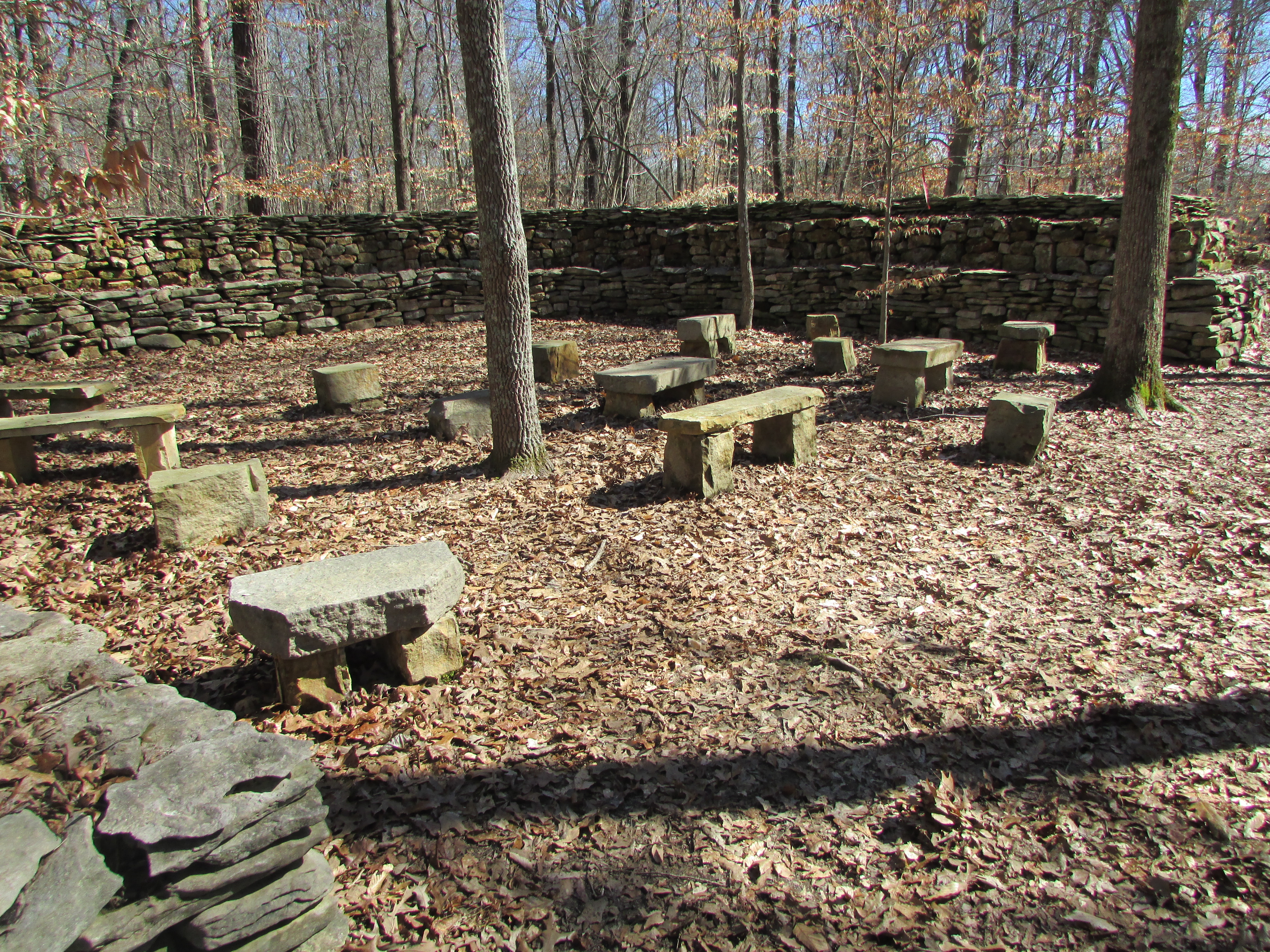
Mr. Hendrix, inspired by the stories and journals passed down through his family, began to build the wall with stones he had brought to the site at his home a few yards from the Natchez Trace. Each stone, he says, represents a step of Te-lah-nay’s journey. Now there are paths along well over a mile of wall, each stone placed by Mr. Hendrix. It is a spiritual and peaceful place with curves, benches, levels, and prayer circles. At some places the wall is high and at other places it is low enough to sit on. At some places it is tight and closed in and at others it opens out. People have sent stones to Mr. Hendrix from all over the world to be placed in the wall. Occasionally a seashell appears along the path. IMG_1246

When I arrived on a warm late winter afternoon in mid-March, Mr. Hendrix greeted me. From his driveway, there are paths going in either direction. He told me the path to the left represents Te-lah-nay’s walk to Oklahoma and that the path to my right represents her return home. I asked which one I should take first and he said it didn’t matter. I chose the path to the left.

IMG_1237That part of the path was closed in. At the end there was a bench. I sat at the bench for a moment but felt the need to move on. Upon arriving back at the entrance, Mr. Hendrix said “That was the dark path. The other side is completely different.”

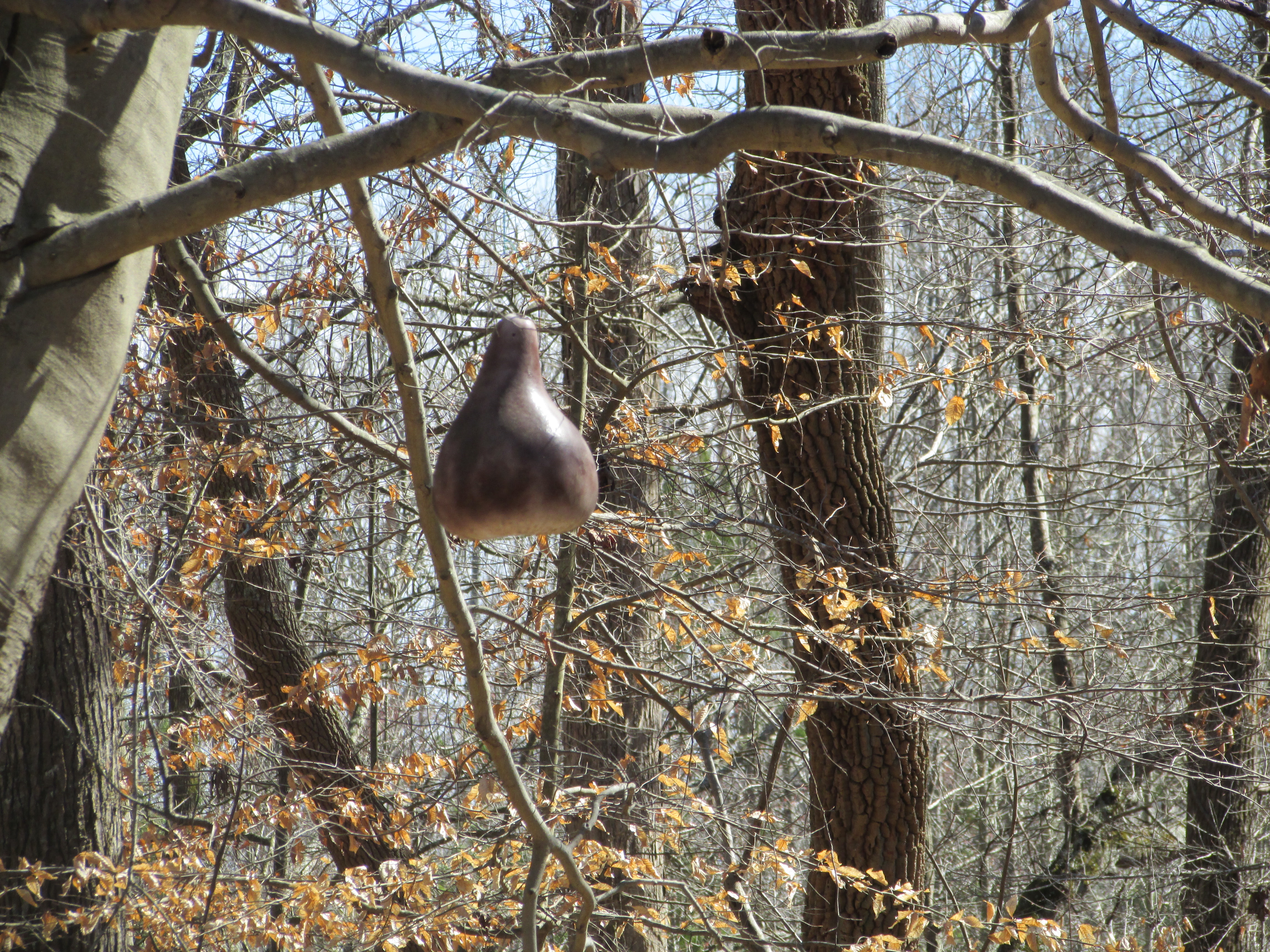
Taking the path to the right, I soon moved along a wall of rocks with what appear to be spirits peering out. Continuing along the path, there are openings, areas of benches and congregation, a single gourd hanging from a tall tree. IMG_1248 I was a short distance from the first path, but the feeling was much lighter and more free. At times the wall meandered off and the sunlight through the still bare trees glistened and darted in the slight breeze. Again I sat on a bench in the path and this time I relaxed and stayed for a while. IMG_1241

The memorial is called “Wichahpi,” which means “like the stars.” The path’s symbolism comes from an elder who told Tom Hendrix that ultimately “all things shall pass. Only the stones will remain.”

When my journey along the wall was complete, Mr. Hendrix was there to answer questions and explain. He has written a book about Te-lah-nay’s journey called If the Legends Fade and copies are available for sale at the site (www.ifthelegendsfade.com). Also available are stone carvings by Mr. Hendrix including spiritual images, images of animals, and benches and birdbaths.

I asked him how far the site is from Te-lah-nay’s “Singing River” and he directed me nine miles southwest to the place where the Natchez Trace crosses the Tennessee. It is a lovely and peaceful spot and the river is wide there. IMG_1260_1Mr. Hendrix says that the song from the river is more faint now that the river has been tamed and industry crowds much of its shores. But there is no sign of these things at the spot where the Natchez Trace bridge crosses the water; Mr. Hendrix says he still hears the river’s song almost every day.

Shopping for Cast Iron in South Pittsburg

IMG_1232   The first time I heard about the small town of South Pittsburg, Tennessee, I was living in Indiana and a friend mentioned that his mother’s family hails from South Pittsburg. I asked if there was a North Pittsburg in Tennessee and he was pretty sure there was not. Since then, I have learned that the closest thing they have to North Pittsburg is that Pittsburgh up in western Pennsylvania, one of my favorite cities.

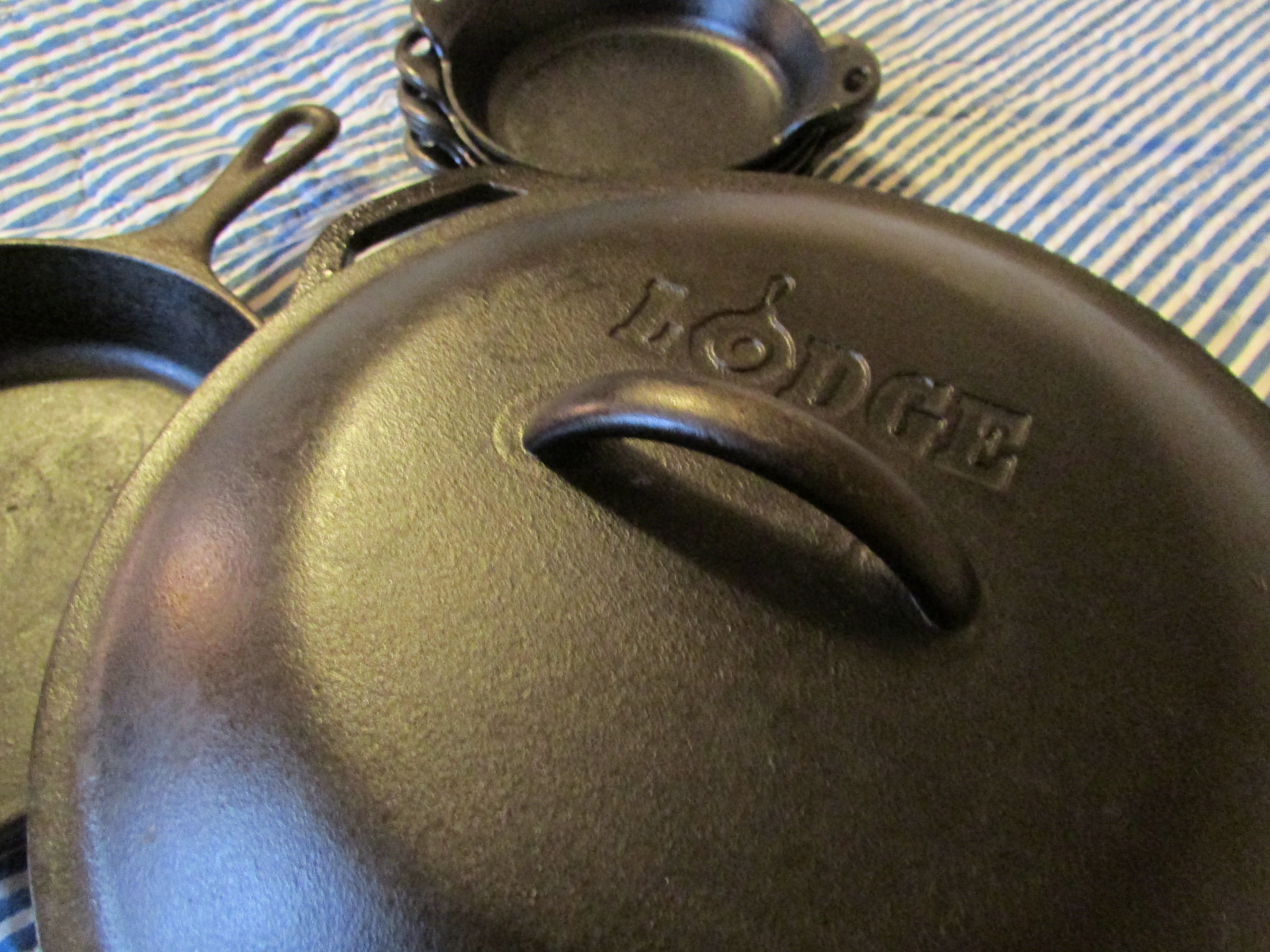
IMG_1229Years later, when I found myself living in north Alabama, I discovered on my first trip from Huntsville to Chattanooga that South Pittsburg is on Hwy. 72 on the Tennessee River nestled against the Cumberland Plateau and the Alabama state line. It is a little over an hour from my house. Most interesting was the discovery that South Pittsburg is the home of Lodge Manufacturing Co., makers of Lodge cast iron cookware – the only cast iron cookware still made in the United States. I try to have plenty of it on hand.

IMG_1220Now, whenever I go to Chattanooga, I try to schedule a stop in South Pittsburg at the Lodge Cast Iron Factory Store near the foundry. For anybody who loves cooking with cast iron, this is a pilgrimage to take. The store is full of cast iron cookware in about any configuration one might imagine. I must show restraint in my purchases, but the place is filled floor to ceiling with shelves of cast iron temptation. The parking lot always has cars with tags from all over. On my recent visit, a Lodge cast iron hibachi grill was calling my name.

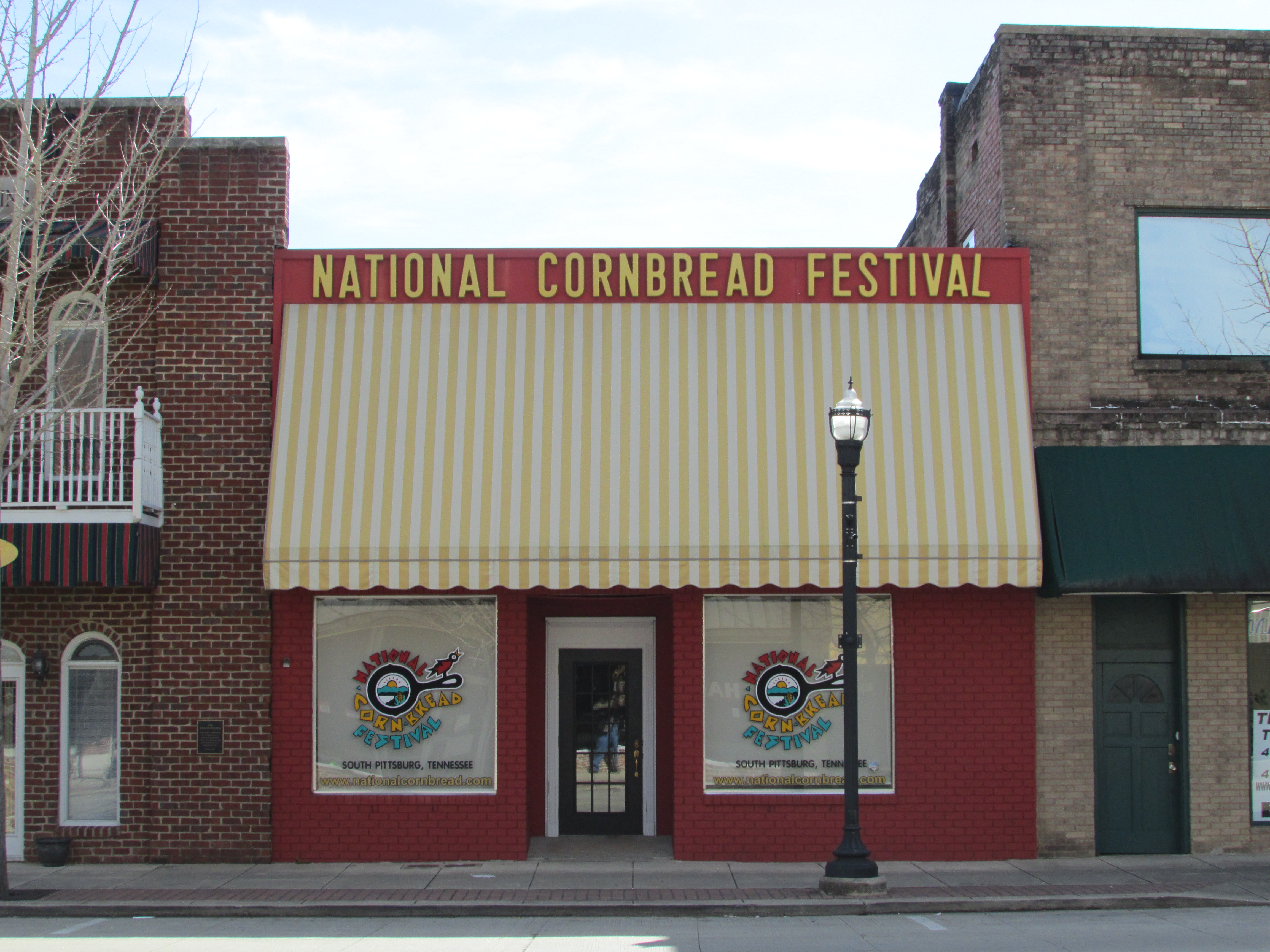
It should be no surprise that the home of cast iron skillets is also home to the National Cornbread Festival on the last full weekend in April. The calendar of events includes all kinds of cornbread cook-offs, “Cornbread Eatin’, Buttermilk Chuggin’, and Ice Cream Eatin’ Contests,” and the crowning of a slew of Miss National Cornbread Festivals from various age groups.IMG_1224

A short walk through the cozy downtown reveals a historical marker commemorating South Pittsburg’s baffling and sad “Christmas Night Shootout” of 1927. I am interested in the history of the labor movement in the South, and especially in the Birmingham iron and steel industry, but the South Pittsburg event is news to me. It stemmed from a labor dispute at a local stove factory and pitted local law enforcement officers against one another. According to one account, the county sheriff and his deputies supported the strikers and the town police force sided with the factory owners. At the end of the shootout, six officers were killed including the Chief of Police and the Sheriff.

On a happier note, down the street from the “Shootout” marker, I saw a coin-operated horse named Thunder on the sidewalk. I have not seen one of those in ages. It was in front of a music store (I think) that bills itself “The Most Unique Store in Tennessee.” I have to trust the sign since the store was closed when I was there. The fact that Jim Morrison was staring down at Thunder from an old Doors poster was delight enough and I’ll try to catch the unique store sometime when it’s open … perhaps at the next National Cornbread Festival. IMG_1227

Take time to discover small towns. There’s always something interesting to learn.

A Menu for the End of the Carnival Season

IMG_1134  My attraction to Mardi Gras is directly tied to my attraction to the Gulf Coast. Growing up inland, Mardi Gras always seemed mysterious and somehow “foreign” and like a place I’d rather be. I would see news reports of the activities in New Orleans and Mobile and other celebrations on a smaller scale along the Gulf and they seemed to be in stark contrast to the grey late-winter life around me. I was raised in the Southern Baptist church and we did not observe Ash Wednesday. When I realized the Christian tie-in to the revelry of Mardi Gras and better understood the season that begins on Epiphany and ends precisely at midnight on Shrove Tuesday, that knowledge gave the events of the season even more mystery and appeal.

Age, experience, and knowledge began to de-mystify the events of the carnival season leading up to Mardi Gras and more and more the events began to move farther inland. When I was living and teaching in Indiana in the 90s, I began to throw beads at the end of my Fat Tuesday classes to give myself a sense of connection to my home region. Huntsville, where I live now, had its 2nd annual Mardi Gras parade on Saturday, February 14, but it’s a sad substitute for the real deal on the coast.

I am a bit of a traditionalist and a purist when it comes to the proper way to do things and I bristle a bit at the fact that one can now stand beneath a New Orleans Bourbon Street balcony and be showered with Mardi Gras beads on virtually any night of the year. In my mind, Mardi Gras beads should only be thrown in the season. And then they should be packed away until the following January.

The appeal of tradition and the desire to recapture the mystique of “The Season” on the Gulf Coast of the Deep South is one of the reasons Joe Cain Day, observed in Mobile on the Sunday preceding Fat Tuesday (and the subject of my previous essay), has engaged me.

I hosted my first Joe Cain Day celebration this Sunday, February 15, and it brought some levity to a blustery February afternoon in north Alabama as still another cold front – “the weather of northern aggression” I call it – moved into the area. On the invitations I wrote “Masks and mourning attire optional.” My guests, some of them wearing masks and almost all dressed in some form of black in “mourning” for Joe Cain, enjoyed the respite before the cold and icy work week resumed.

IMG_1128One of my favorite images in New Orleans is that of Mardi Gras beads that never came down to earth during parades and got caught in the live oaks along the parade routes. They hang there throughout the year, gradually fading but always a reminder that the season has gone but will always come back again in January. I look for these stray beads on streetcar rides along St. Charles. With that image in mind, I threw beads from my second story bedroom window on the day before the party and let them catch in the cherry tree in my front yard so that my guests would have that image of beads in the trees upon arrival. (Now I will spend the rest of February retrieving Mardi Gras beads from the cherry tree.)

I designed the menu to reflect regional and seasonal tastes and as usual there was much more food than was needed. I made a lot of the food myself. I purchased other things from favorite vendors. Here’s my menu.

A Joe Cain Day Celebration / February 15, 2015

Boiled Peanuts

Cheese Straws

Breads, Toasts, and Crackers for dipping and spreading

Gumbo

Lobster and Shrimp Salad

Alabama Gulf Shrimp w/cocktail and garlic buttermilk sauces

Hot Seafood Dip w/ shrimp and crabmeat

Mardi Gras Chicken

Chocolate Truffles

Moon Pies

King Cake

Bloody Marys, Hurricane Punch and assorted beverages

The gumbo was ordered from Wintzell’s (www.wintzellsoysterhouse.com), a Mobile-based oyster house and restaurant that makes one of my favorite gumbos. The King Cake, a carnival season standard, came from Paul’s Pastry Shop (www.paulspastry.com) in Picayune, Mississippi. My friends G. Todd and Anita brought a couple of other dishes — a crawfish beignet with a savory sauce and crostini topped with shrimp, red pepper jelly, and sweet potato. The chocolates were from the Chocolate Gallery in Huntsville (www.chocolategalleryal.com).

IMG_1133“Mardi Gras Chicken” was a clear favorite of the day. When I was on the Gulf Coast in December, I was toying with the idea of a Joe Cain Day party. I asked my friends, the Brunsons – who are natives of Mobile, for a dish that their mother, Jean Brunson, would have made for Mardi Gras and Joe Cain Day. The response was unanimous – “Mardi Gras Chicken!” – and a recipe was produced. Mrs. Brunson was the caterer for the First Baptist Church of Mobile for many years and had a sizable repertoire. “Mardi Gras Chicken” is really an adaptation of a chicken tetrazinni recipe but Mrs. Brunson always made it around Mardi Gras and her children still refer to it as “Mardi Gras Chicken.”

I made my own revisions to the recipe and my adaptation of Mrs. Brunson’s adaptation is what I’m offering here. It’s a hit.

Mardi Gras Chicken

1¼ lbs. boiled chicken

1 large pkg. rotelli pasta

1 cup green, red, and yellow peppers, diced

1 medium onion, chopped

6 pieces of celery, diced

6 strips of pimento, chopped

2 cans of cream of mushroom soup

¾ cup of sour cream

1 cup of sharp cheddar cheese, finely grated

4 ozs. almonds, minced

Cook rotelli pasta in chicken broth. Since it will be baked in a casserole, it is best to cook it until it is fairly limp. Drain pasta. Add chicken to pasta (chop chicken into fairly large bites). Add peppers, onion, celery, and pimento. Stir in cream of mushroom soup, sour cream, and ½ cup cheese.

Place mixture in large casserole dish and top with ½ cup cheese and minced almonds. Bake at 350 degrees for I hour.

Happy Mardi Gras!

IMG_1146

Joe Cain Day in Mobile


IMG_1124 On Sunday, February 15, I am hosting a pre-Mardi Gras celebration for Joe Cain Day. Joe Cain Day is an event that is unique to Mobile, Alabama. It is always celebrated on the Sunday before Fat Tuesday. I have heard about it for decades but only got really intrigued with its origins and traditions in recent years. The more I learned the more fun it sounded. My little get-together is a way of sharing the tradition with my friends in north Alabama.

Of course, most Alabamians know and proudly assert that Mobile was the site of the first Mardi Gras celebrations in the present-day United States. Mobile was founded in 1703, fifteen years before New Orleans, and had established New World Carnival celebrations under French rule early on. There is still banter back and forth between the two cities about the legitimacy of Mobile’s claim to being the first. And a New Orleans friend once told me, “Well, Mobile may have started it, but New Orleans taught them how it ought to be done.”

There is no controversy, however, over the origins of Joe Cain Day.

Joseph Stillwell Cain (1832-1904) is credited with reviving Mardi Gras in Mobile after the Civil War. It all started in 1866 when he paraded through downtown Mobile in fanciful Native American garb. This act is considered the rebirth of modern Mardi Gras in Mobile.

Joe Cain was a Mobile native and as a teenager was a charter member of the Tea Drinkers Society (TDS), a Mobile mystic society that paraded on New Year’s Eve. Prior to the Civil War, pre-Lenten celebrations in Mobile were customarily tied into New Year’s observances.

When the Civil War began, Joe Cain was a private in the Confederate Army. When his military service was over he lived for a time in New Orleans and participated in New Orleans Mardi Gras observances.

In 1866, when Cain returned to his hometown from New Orleans, he decided to revive Mardi Gras in the city. He and six other members of TDS decorated a charcoal wagon, dressed in Native American garb, and frolicked through the streets of Mobile. Cain led the procession dressed as a fictional Chickasaw chief, “Chief Slackabamarinico,” and declared an end to Mobile’s suffering and the return of pre-Lenten carnival celebrations.

Joe Cain’s actions had an impact and led to the city officially moving the culmination of carnival festivities from the New Year’s season to traditional Fat Tuesday. Cain was a founding member of the mystic society called Order of Myths. Order of Myths adopted the emblem of Folly chasing Death around a broken column. This is assumed to be symbolic of the Civil War, a Lost Cause for the rebel South.

Cain remained active in Mardi Gras. Later in life, he and his wife moved from Mobile to the fishing village of Bayou La Batre, Alabama. Cain died in 1904 and was buried near Bayou La Batre. After Cain’s death, Mobile’s Mardi Gras remained popular but exclusive. The mystic societies had closed memberships. Most of the citizens of the city could only participate as onlookers.

In 1966, Julian Lee Rayford, a local author, set out to honor Joe Cain and open Mardi Gras participation to more people. Cain and his wife’s bodies were moved from Bayou La Batre to Mobile’s Church Street Cemetery. Cain’s interment was accompanied by a Mardi Gras parade, jazz band, and mourners. His tombstone has a jester’s image and reads “Here Lies Old Joe Cain, the Heart and Soul of Mardi Gras in Mobile.”

The popularity of Cain’s reburial inspired the creation of “Joe Cain Day,” observed on the Sunday before Fat Tuesday. The Joe Cain Day Parade, also known as “The People’s Parade” because anyone may participate (although it eventually became so big that the number of participants had to be capped), is led by a person chosen to dress as Chief Slackabamarinico. The parade concludes at Church Street Cemetery where revelers dance atop Cain’s grave.

Throughout the day, a mystic society of mourning-clad women known as “Joe Cain’s Merry Widows” wail over the loss of their beloved Joe Cain and declare “He loved me best!” The Merry Widows wail at the grave, toast the deceased from the front porch of his house on Augusta Street, and ride in a place of honor in the Parade. In 2003, another all-woman mystic society, “Mistresses of Joe Cain,” appeared. The Mistresses are also veiled, but dress all in scarlet and proclaim that “Of course he loved us best!” They parade alongside the vehicle carrying the Widows in the Parade, taunting them along the route and creating a general caterwaul.

Rumor has it that still another all-woman mystic society might be in the works that will be Joe Cain’s “ladies of the evening” – or some more earthy variation. In any case, Joe Cain Day in Mobile is a great representation of the silliness and release of the Mardi Gras season.

(The image is of the cherry tree in my front yard, bedecked with beads for Joe Cain and Mardi Gras.)

The Bright Star


     100_2314  Bessemer, AL It seems that every family has a restaurant where it convenes for special events and commemorations – the place where the family goes to celebrate graduations, birthdays, and anniversaries, and to gather after funerals and hospital visits and other more somber occasions. For my family, that restaurant in the Birmingham area is The Bright Star west of the city in Bessemer. The Bright Star, Alabama’s oldest restaurant, opened in 1907 and has been family-owned ever since. The Bright Star was awarded as an “America’s Classic” by the James Beard Foundation in 2010.

Mine is a family of strong, vocal, and often divergent opinions on pretty much everything, including food. The Bright Star is one of the places that is in every family member’s “comfort zone.” In addition to being a safe choice, it also has a good and diverse menu with offerings for every taste. I always look forward to eating at The Bright Star, whether it is a quick lunch or a leisurely evening meal.

Frank Stitt triggered Birmingham’s ascent on the national culinary map with the opening of Highlands Bar and Grill in the 1980s. But the culinary history of the Birmingham area is full of the stories of Greek families and immigrants who opened restaurants. Many of their descendants are still restaurateurs into the 21st century. The Bright Star is the anchor of that Greek-influenced dining tradition in Birmingham with off-shoots that range from fine dining establishments to fish markets, barbecue joints, and hot dog stands.

The Bright Star was started by Tom Bonduris and has been continuously owned by Bonduris and Koikos family members ever since. Jimmy and Nick Koikos, sons of long-time owners Bill and Tasia Koikos, are the current faces of the restaurant, along with a large and long-serving support staff. Much of my recent planning with the restaurant has been coordinated through the invaluable  and gracious help of Jimmy and Nick’s niece, Stacey Craig, and maître d’ Marlon Tanksley. The restaurant always bustles and the place is full of regulars as well as people who are traveling through or have made the effort to come to Bessemer just to check it out.

The Bright Star has grown over the years in its current building in the middle of downtown Bessemer. The vibe of The Bright Star reminds some of New Orleans’ Galatoire’s. (It is a lesser known fact that the first Galatoire’s was in downtown Birmingham before Jean Galatoire ended up in New Orleans and opened his iconic Bourbon Street bistro.) The Bright Star menu that features seafood and steaks in the evenings serves a classic Southern “meat and three” lunch menu each day. The shredded cabbage with the signature slaw dressing is a staple, as is a superior bread pudding and an array of fine pies. The Bright Star serves one of my favorite gumbos. Tipping its hat to the New Orleans influences on the menu, The Bright Star does an annual “Taste of New Orleans” event in August that usually features the executive chef of New Orleans’ Commander’s Palace.

Fresh seafood is delivered daily and Alabama Cattlemen’s Association has named Bright Star’s beef the best steak in Alabama. The large foyer entrance to the restaurant is full of memorabilia including awards, national magazine and newspaper articles, and archival photographs of the many celebrities and dignitaries who have enjoyed a meal at The Bright Star. One finds photos of Sandra Bullock and her father dining there among an array of celebrities and sports figures from earlier times.

The main dining room is flanked with highly varnished pastoral murals painted by an itinerant German painter in 1915. A century of varnishing and cigarette smoke creates a warm glow from the murals and the combination of the murals and the high wooden booth backs creates an intimate and cozy feeling in the large room, even as the aisles are full of servers and patrons coming and going.

Far in the back of the main dining room is the enclosed booth that was Alabama Coach Paul “Bear” Bryant’s favorite booth. For a recent birthday dinner, my mother reserved the Bryant booth and I dined there for the first time with a large portrait of “the Coach” looking down from the west wall.

When The Bright Star turned 100 in 2007, a book, A Centennial Celebration of The Bright Star Restaurant, was released. The book, a project by nieces of Jim and Nick Koikos with assistance from Niki Sepsas, is a compilation of history, memories, recipes, and photographs of the restaurant. IMG_1119

Bessemer, a vibrant industrial town in the early 20th Century, lost much of its industry in the 1970s and has suffered economic downturns and redefinition. Through it all The Bright Star has endured. I was in the restaurant this past weekend and am convinced that The Bright Star will be serving good meals to happy patrons for generations to come.

Note: The top image is a detail from Scott Smith’s assemblage, “Ensley” (2010), featuring the menu listing for The Bright Star’s “famous snapper almondine.” “Ensley” was a commission celebrating my parents’ marriage. Each pin represents a place they have lived during the marriage. Images of Ensley, the Birmingham neighborhood where they met, and other aspects of their marriage are represented, including images from The Bright Star menu.