Tag Archives: The University of Alabama

The Price of Complicity

ICE agents seized graduate student Alireza Doroudi, an Iranian national pursuing a PhD in mechanical engineering at the University of Alabama, from his home near the university in March 2025. There was no apparent reason for his arrest and the university was cooperative with his oppressors. This opinion piece by Brian Lyman for the Montgomery Advertiser pretty well sums up the issues raised by the University of Alabama’s complicit response to this crisis. In  light of the resistance by Harvard University to the executive branch’s overreach, the Doroudi event is an even larger embarrassment for “the Capstone.”

Be sure to read the Lyman article here:

https://www.montgomeryadvertiser.com/story/opinion/contributors/2025/05/26/welcome-to-the-university-of-alabama-hope-some-of-you-have-an-attorney-brian-lyman/83786155007/

UPC at Alabama

Joni Mitchell

When I started attending the University of Alabama in the mid-70s, Paul “Bear” Bryant’s Crimson Tide dynasty was at its peak. Family moves had meant that I attended six junior and senior high schools in three states and I was determined to stay at one university for the full four years and dive into everything college life had to offer. Everything, that is, except Greek life – it was the post-60s Seventies and Greek participation was at a historic low, even at Alabama. That was fine with me. In the summer before I started, I received a recruitment letter from the Interfraternity Council. I was a scrappy guy back then and took out a red pen, marked the grammar and spelling errors, and sent the letter back with a note to get back to me when they found somebody who could proofread their correspondence; I never heard back.

But I did go to the Supe Store, bought one of those crimson felt “A” hats, and attended every home football game in the days when half the home games were still played at Birmingham’s Legion Field and Tuscaloosa’s Denny Stadium held a mere 60,000.

Tuscaloosa was a great college town in those years. The Strip had not been gentrified and was lined with indie businesses – laundromats, book stores, barber shop, movie theater, clothes shops, head shops, deli, waterbed store, Sneaky Pete’s, Kwik Snak, Krystal, Morrison’s Cafeteria, and a Greek-oriented men’s clothing store (where I bought button-downs to be ironic). Legislation at that time did not allow bars within a certain distance of the campus, so there were none. When the law changed, the Strip began to change drastically.

I continued to follow Alabama football, but ditched the felt hat and immersed myself in all the other things a university has to offer. The music scene, readings, concerts, art shows, lectures, movies, plays – I enhanced my education through extracurricular activities.

Leon Redbone

The University Program Council at Alabama was a truly stand-out organization. It was student-run and was the most productive producer of a wide range of high-quality entertainment in the region with large concerts at the Coliseum, and smaller concerts, speakers, and events at venues including Morgan Hall, Foster Auditorium, the theater at Ferguson Center, and the Bama Theatre downtown. I hesitate to try to list acts that played on the campus because I will inevitably leave out something amazing.

Allman Brothers Band


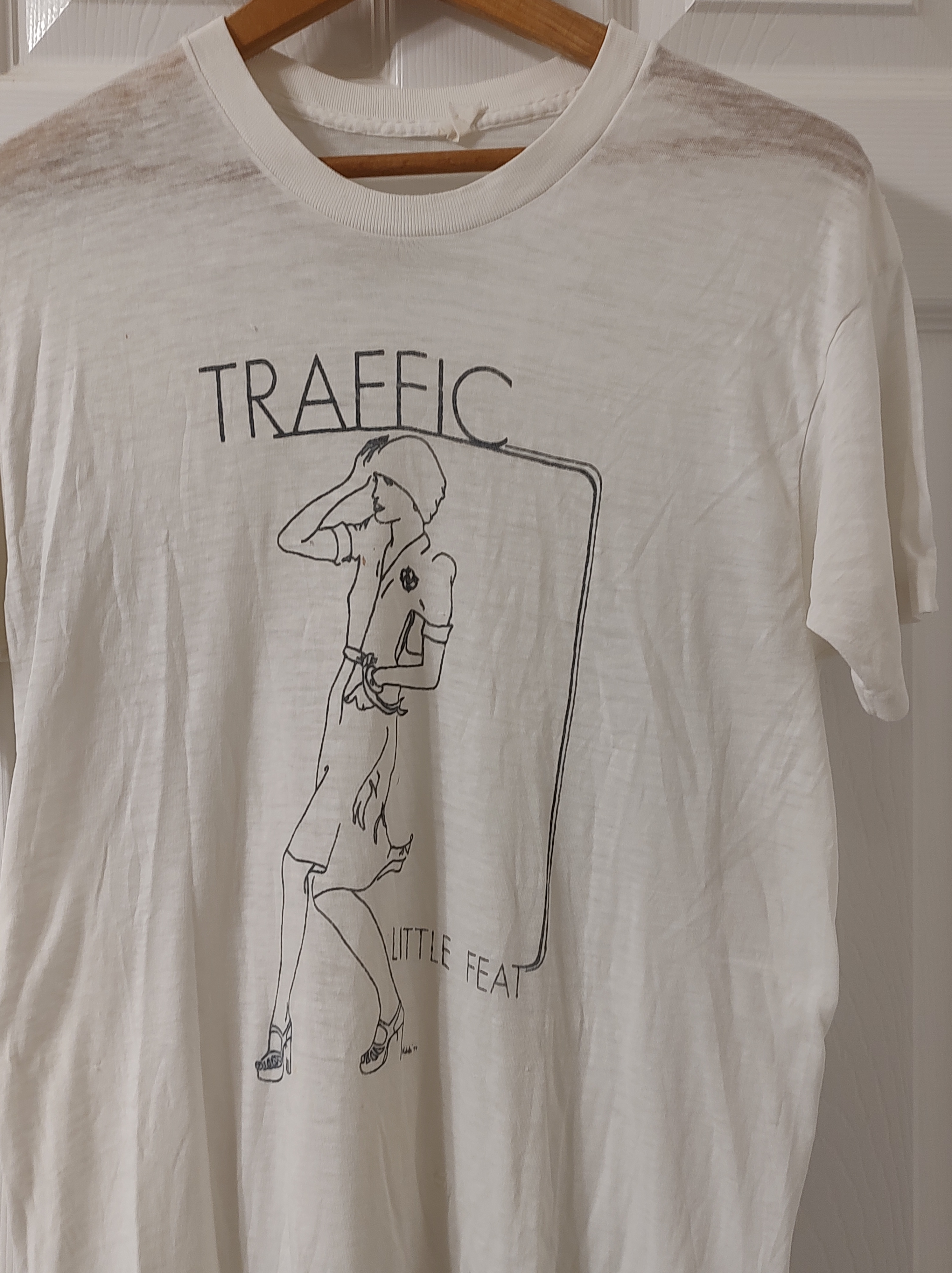
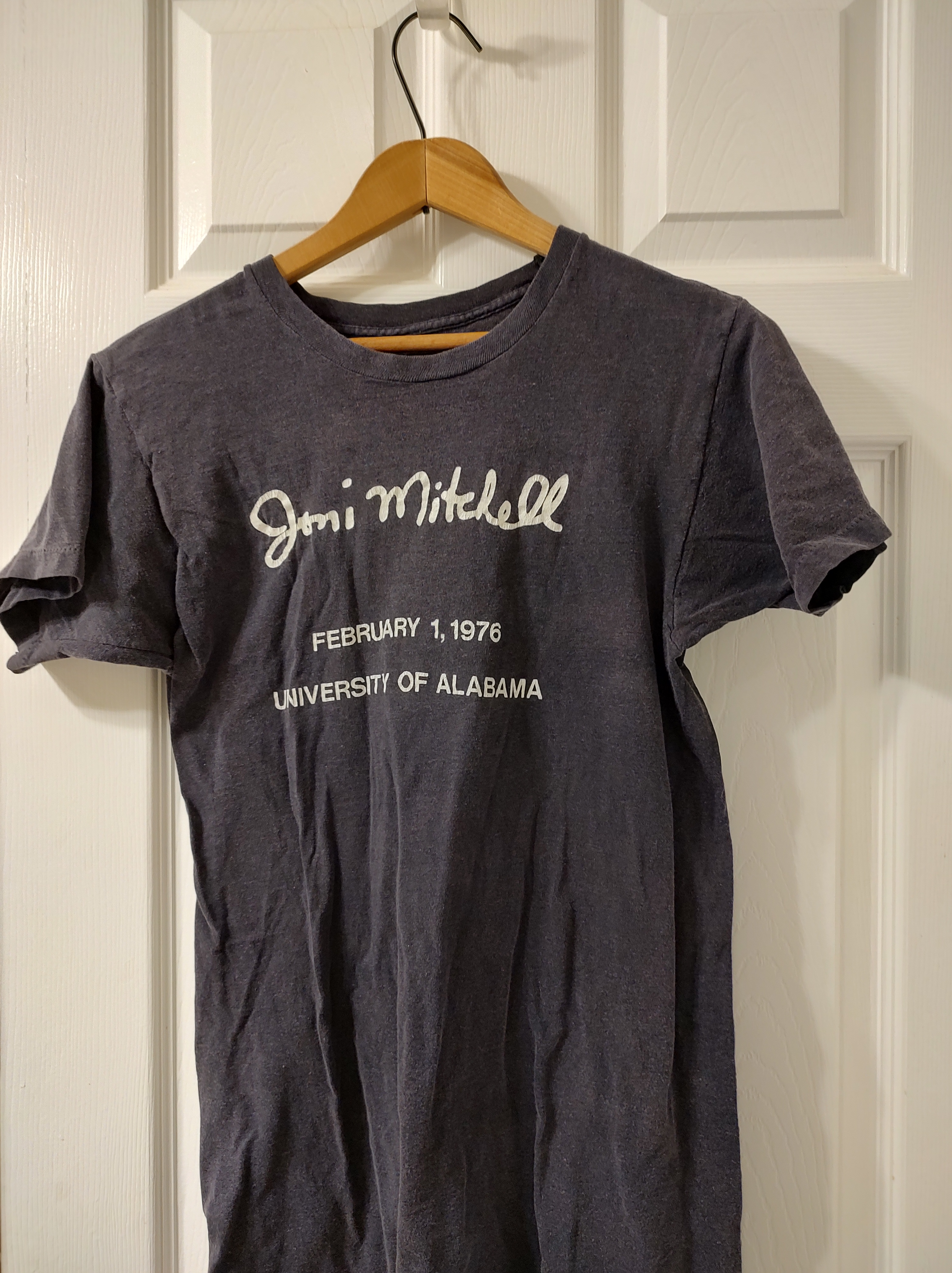
I soon became a UPC volunteer and began to get more responsibilities as I worked within the organization. I often worked “Security” and over time I began to get assigned to backstage “Artist Relations” duties. I have often remarked that it’s amazing what we’d do for a free tee-shirt back then, but we also had the opportunity to see a lot of the top acts and influential people of that era. I still have a few of those tee-shirts, wrinkled and way too small to wear. My favorite design, for Traffic / Little Feat, was worn so much that it has become see-through.

Here are a few memories:

  1. At a drum solo during a Jethro Tull concert, Ian Anderson came and sat next to me backstage and tried to start a conversation. I admitted to him that I had a “splitting headache” and didn’t really feel like chatting.
  2. When the Rolling Stones were in town, a friend was working at an ice cream shop. On the afternoon of the concert, a group of people came in and ordered ice cream. When they left, my friend asked, “Who was that blind guy?” It was Stevie Wonder, the Stone’s opening act.
  3. The mother of one of the Commodores insisted that I eat with the family backstage after she declared me “too skinny.”
  4. After supervising the removal of furniture from Robert Palmer’s dressing room after a concert (he had opened for Gary Wright), on my final check I found Palmer – fully dressed, soaking wet, still looking great – reclining in the shower. I apologized, saying that I wouldn’t have removed the furniture if I had realized he was still there. “It’s fine; I’m not using the furniture,” he replied.
  5. Working backstage during a Lily Tomlin stand-up appearance, she invited me to come to her dressing room and eat with her. Apparently, people felt a need to feed me back then.
  6. I picked up the phone at the UPC office before one of Elvis Presley’s several Tuscaloosa appearances to find Col. Tom Parker on the other end. He insisted that no women should be backstage because “women can’t control themselves in the presence of Elvis.” I assured him that the women of our backstage crew were totally professional and would contain themselves.
  7. I worked the Ferguson Center box office for presales of Elvis tickets. Patrons were outraged that Elvis tickets were $20. It was outrageous then. Most UPC events had $2-3.00 student prices and general admission was usually around $5 at the time.
  8. Buckingham Nicks, a band that had a large following in the Birmingham metro due to rigorous radio airplay, did two Morgan Hall concerts just days before Lindsey Buckingham and Stevie Nicks announced they were joining Fleetwood Mac.
  9. Backstage before the Grateful Dead concert, their traveling chef fed me a bite and introduced me to Jerry Garcia. I’m missing a finger on my left hand and Garcia was missing a finger on his right hand. I thought a good conversation opener would be to say to Garcia that “We share a deformity.” It wasn’t.
  10. During that same Grateful Dead concert, I somehow found myself rolling a toy truck back and forth in front of the stage with the toddler son of band members Keith and Donna Godchaux.
  11. Muddy Waters opened for Eric Clapton. Need I say more?
  12. At the Joni Mitchell concert – well, I’ve told that one too many times, probably. There’s another essay about my very brief encounter with Joni somewhere on this website.

Traffic / Little Feat

These memories are ignited by a new website launched by David Muscari and others who were involved in the University Program Council back in the ‘60s and ‘70s. I heard from David for the first time since college not long ago, asking for my input and support on a new website to chronicle the history of a unique and significant period in the history of the University of Alabama. While I was communicating with David, I also reconnected with Barry Bukstein, who was the brainchild behind UPC’s “Laughter under the Stars” series which gave me that opportunity to hang for a few minutes with Lily Tomlin.

UPC was a life-changing volunteer opportunity for so many people as well as a way to expose a large audience to diverse voices, world-class artists and entertainment, and cultural enrichment. The new website is a snapshot of an integral period of the University and the nation.

UPC logo

Whether you are an Alabama student or alum or have never set foot on the campus, the website is a great way to brush up on what was going on at a very specific time in our cultural history. It was a lot of work by a lot of people. And it was a lot of fun. It was key to my education and beyond. Check it out: https://www.upcalabama.com

Long, Last, Barry

After a night out with friends in 1979, I returned to my apartment on Caplewood, a pleasant winding residential street at the end of the Strip, down the road from the University of Alabama. As I put the key in the lock, my neighbor Mike walked out on the porch. “Barry was here earlier,” he said.

“Yeah?”

“Yeah. I kinda had to run him off.”

“What was he doing?”

“Actually, he was trying to break into your apartment.”

“Really … did he happen to say why?”

“He said he was a writer and he needed inspiration and that you had a record album he needed to listen to tonight, right now. He was pretty adamant.”

“And …”

“I told him it looked like you weren’t home and he needed to leave, that I couldn’t let him break in.”

“How’d he take it?”

“He was annoyed and argued a little, but he left. Do you know what he was looking for?”

“I do.”

The next day, I grabbed Planet Waves from my record stack and walked a couple of doors down to Barry’s studio in the backyard of a neighbor’s house.

He was in.

“Here’s the album you were looking for last night,” I said. “Take it. Keep it. You can have it, and please don’t come knocking at my door anymore. And don’t ever try to break into my house again. Please.”

___________________________________________

Barry Hannah, the novelist that Truman Capote called “the maddest writer in the USA” and whom Alfred Kazin praised as “a writer of violent honesty and power” was my neighbor in Tuscaloosa in 1979. His studio was two doors down and his house was farther down on the curve that pointed Caplewood back toward the university.

When I heard that Hannah was coming to the University of Alabama to teach creative writing, I grabbed his first novel, Geronimo Rex, and was transfixed by the vibrant energy and muscle of the words on the page. He always wrote like nobody else with a style that was impossible to emulate – for anyone foolhardy enough to try.

I started hearing “Barry stories” from my writer friends as soon as Barry hit town, but I didn’t meet him until his hugely acclaimed volume of short stories, Airships, was released and I got a copy signed at Another Roadside Attraction, a bookstore on the Strip. He asked my name, proclaimed it a “great name,” and inscribed the book to me with a comment about my name.

I later loaned that signed copy of Airships to a friend and he never returned it. I asked him about it and he denied that he borrowed it, but I know he did. I always remember people who borrow and steal my books. (I’m talking about you, Jim.) After I started hanging out with Barry, he signed another copy of Airships, but the inscription was less personal.

After I moved into the apartment down the street from Barry’s house, we began to run into each other more often. He’d occasionally show up at my door and I was occasionally invited down to his house or studio.

One night late, a friend and I were sitting in Barry’s living room and Frampton Comes Alive! was on the turntable. When “Do You Feel Like We Do?” came on and the signature talk box guitar solo kicked in, Barry picked up his trumpet and began to blow, trying to match the talk box sound. It was a bizarre moment in time, but Barry’s effort was so earnest that we weren’t sure how to react. Once it was over, I think I offered a noncommittal wow.

_______________________________________________

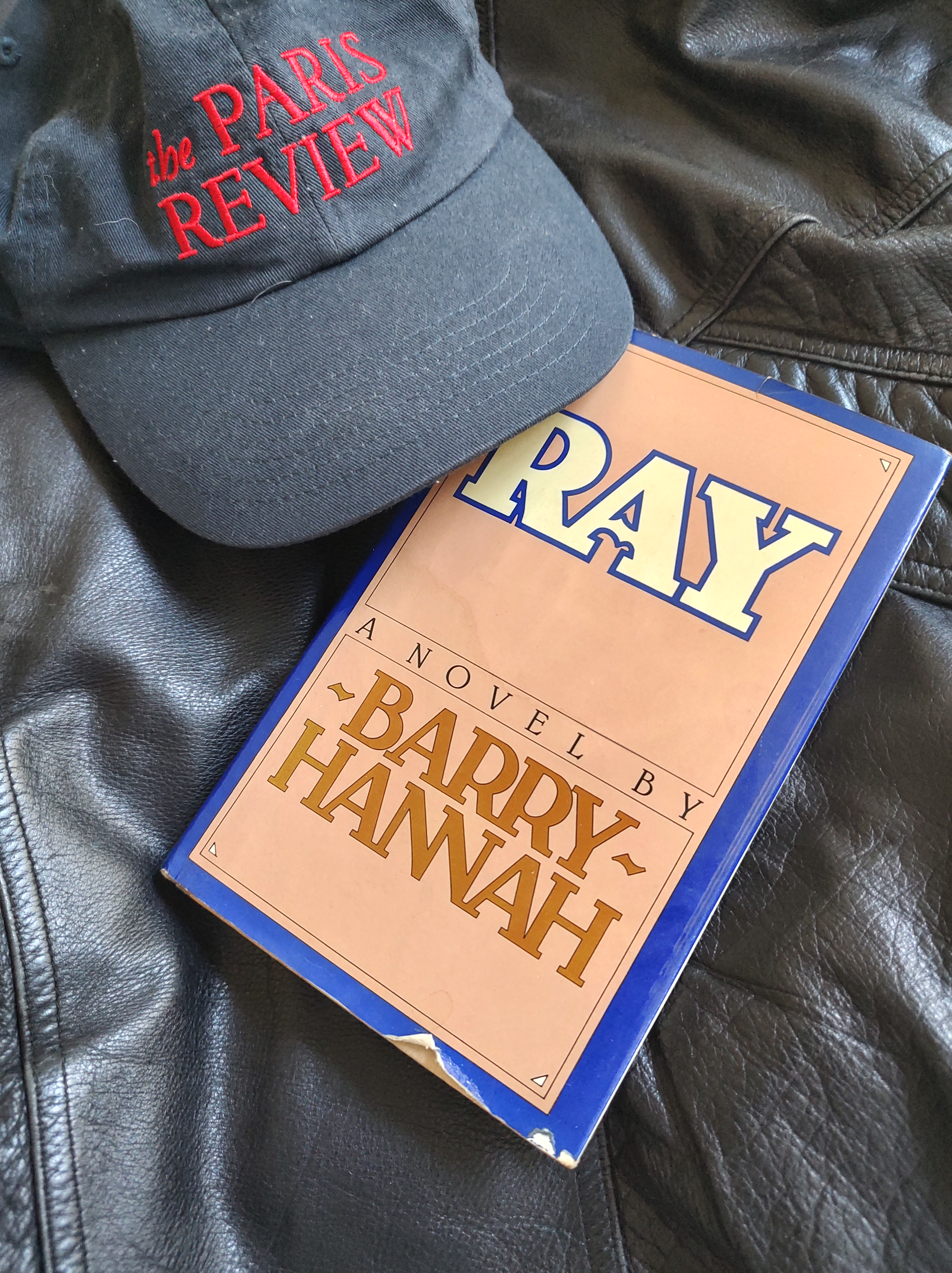
But my most bizarre “Barry story” begins on another late night at Barry’s house. Barry suddenly turned to me and said, “The Paris Review wants to publish an interview with me. I’ve told them I will only do it if I can choose the interviewer. Edward, do you want to do my Paris Review interview?”

Remember, this was forty-four years ago and I was trying to keep up with Barry, so some details are fuzzy. I have no clue if Paris Review was trying to do a Barry Hannah interview in 1979, and I was skeptical that I would be considered to write it, but it was a promising adventure and I didn’t hesitate to go along.

I was even more skeptical when Barry said we would do the interview the next morning at the studio, but I called in to take the day off, gathered a cassette recorder and blank tapes, and showed up at the studio at the appointed time. I was pretty sure I wasn’t prepared to do a proper Paris Review interview.

Barry, drink in hand, was waiting for me when I got to the studio. We chatted for a while until I finally asked if we could start the interview. Barry insisted that I needed something to drink and poured a glass full of something rancid that he referred to as white wine. It had a strong chemical smell and something unsavory was floating on the bottom. I thanked him, put the glass to the side, and started the recorder.

I wasn’t really prepared for a writer interview with twelve hours’ notice, so I asked him about his childhood in Mississippi, his family, other Mississippi writers and influences, autobiographical elements in his stories, teaching creative writing. I rambled and so did he. His responses were tangential and he kept coming back to a poem he had just written, called “Certain Feelings.” “I have certain feelings about this room / I have certain feelings about doom …” and on like that. I was pretty sure we weren’t having a Paris Review-level interview. I wasn’t sure if Barry was putting me on, making a fool of me, or was just that far gone. I wasn’t sure how I should respond to the bad poetry of “Certain Feelings.”

After a very long time, Barry looked at my wine glass. “Why didn’t you drink the wine?” he asked. I told him that I thought the wine had turned, or something. He grabbed the glass and shrieked in horror and said he gave me the “wrong glass.”

The interview basically was over when he said, “Let’s go get a drink.” I agreed and Barry picked up the phone, called Lee’s Tomb, a downtown bar and music venue at a former loading dock, and ordered four cocktails to go. We climbed into Barry’s MG convertible and drove the few blocks to Lee’s Tomb, where a bartender stood on the side of the road with a tray and four cocktails. Barry tipped the bartender, told him to put it on his tab, and roared off, announcing that we were going for some barbecue.

As we crossed the river into Northport, Barry announced that he wanted to go get his kids and drove to a neighborhood. He stopped at the end of the drive where his ex-wife lived and told me his kids were inside and he wanted them to go get barbecue with us.

“She’ll get mad if I go to the door,” he said. “You’ll have to go. Tell her you’re a writer for The Paris Review, interviewing me, and that we want to take my kids for barbecue.”

As I got out of the car, he said, “Use a French accent.” After all these years, I blush to admit that I took his suggestion.

I walked up the long drive to the front door and rang the bell. It opened immediately; she was waiting for me. “Bonjour, madame,” I said in the worst attempt to have a French accent ever. “I am in town to interview Barry Hannah for The Paris Review. He would like to take his children out for barbecue and I would like to meet his children.”

She scowled at me, at the MG, and at me again. It was a practiced scowl that I’m sure she had been called upon to use frequently with Barry’s “associates.”

“Go home,” she said, and closed the door.

I took the long walk back to the MG. “She said we should go home – no kids today.”

Barry looked back at the house for a long time. Finally, he took a long breath and said, “Let’s kill her.” I’m sure he didn’t mean it.

“Let’s go get some barbecue,” I said. And we pulled away and went to Archibald’s. The meat was good, but the wind was taken out of the day and we ate and went back to the studio on Caplewood, stopping again for curb service at Lee’s Tomb on the way. Barry said we’d have to finish the “interview” some other time and that was the last time the Paris Review interview was mentioned.

________________________________________________

But Barry and I kept hanging out for a while. Occasionally he would summon me down to the studio to hear something he was writing. One night, very late, he knocked on my door, woke me up, and said he wanted me to look at something he’d just written. I dressed and went down to the studio, he made a drink, and I read a few paragraphs about Judy Moody, a charismatic young woman who had recently made a run for mayor of Tuscaloosa and lost in a close runoff. Barry describes her as “a true person waiting to talk to you and comfort you.”

On another night, he saw my lights on and dropped by. I was listening to Planet Waves, the first album collaboration between Bob Dylan and The Band. The Last Waltz documentary was recently released and I was going though a major The Band phase.  Barry wanted to listen to Planet Waves over and over. I have no idea which song was so important to him but the next night he was breaking into my house for the album.

That led to the incident that opened this essay.

__________________________________________

I mostly avoided Barry after that. Occasionally, we’d see each other out and about and nod in passing. Sometimes, I’d hear the trumpet being played on the balcony down the street, its often shrill notes breaking the peace of Caplewood. One weekend, a group from a party I was hosting decided it would be fun to roll Barry’s yard. I didn’t find out until after the fact and worried that there might be a confrontation. The next day, I walked down to see Barry’s yard and trees covered in toilet paper; the following day, it was gone. Nothing ever came of it.

Barry was never very happy in Tuscaloosa and his legendary drinking contributed to a preponderance of local “Barry stories.” I heard the famous story about him pointing a gun at a student in a fiction writing workshop and every version was a little different. I even heard the story from the grad student that the gun was allegedly pointed at; according to him, the story was true. Barry’s version was much more sanitized – something about using the gun to illustrate the various parts of a short story. No matter whose version you heard, though, Barry brought a gun to a creative writing class.

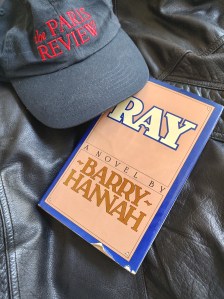
I moved away from Caplewood later in ’79 and saw Barry out and about less and less. I bought Ray as soon as it came out in 1980. In Ray, Barry writes about sex and violence and frequently uses the n-word with what we used to call “reckless abandon.”

_______________________________________________

There was a terrible movie called Walking Tall that came out in the early ‘70s. The head of a local movie chain gave his personal endorsement of that movie in radio ads. “Walking Tall is rated R for violence, not sex,” he said. “So bring the whole family.”

You can’t make that up. It was the ‘70s.

_____________________________________________

When I read Ray, I realized that the rambling stream of consciousness is partially a surreal recap of Barry’s experiences during the writing of that short novel. I realized that some of his rambles during the “interview” were a test run for passages that wound up in the book. That passage about Judy Moody is there – section XVIII, as is the “Certain Feelings” poem that he recited to me off and on throughout the interview day (XIV). In the novel, a student recites “Certain Feelings” to Ray and Ray slugs him. I finally knew how I was supposed to respond to that poem.

I haven’t told my “Barry story” very often. Partially, I was embarrassed by the out-of-control aspect of the whole series of episodes, especially the French accent episode at his ex-wife’s house. His name would come up in conversation now and then and I would sometimes mention that I had known him briefly in Tuscaloosa. During a conversation with members of an Atlanta-based New Wave band, Swimming Pool Qs, a band member cited Barry Hannah as an influence in their music and I mentioned that I had hung out with him at one time. My cred immediately rose with the band.

I ran across those Paris Review interview cassettes as I was packing for a move sometime in the ‘90s, listened to a few minutes, was mortified, and tossed them. If they had been found, they would have been an embarrassment to Barry and me. Sorry. I couldn’t let them exist.

______________________________________________

After Barry left Tuscaloosa, he worked with filmmaker Robert Altman for a while, and then he went to Oxford, Mississippi, to teach at Ole Miss. I heard stories about his drinking in the first years there and then I heard he got sober. I would run into people who had been in Oxford and knew Barry and it was the tale of two Barrys. Some stories were from the heavy drinking phase and others were from the sober phase. Overall, Oxford seems to have been the right place for him to land. I’m sure he had plenty of barbecue with his kids there.

I thought about trying to get back in touch, but never did. Eventually, Barry had a series of health problems and reported seeing Jesus in his hospital room.

The Paris Review ran Lacey Galbraith’s interview with Barry Hannah in Winter 2004, twenty-five years after our trial run. I re-read it not long ago and it’s a great interview. Look it up in the archives – “ Barry Hannah, The Art of Fiction no. 184.”

Long, Last, Happy was a posthumous collection of short stories published not long after Barry died in 2010. He’s buried in the same Oxford cemetery as Faulkner and some of his friends slapped one of those I’D RATHER BE READING AIRSHIPS stickers on Faulkner’s grave shortly afterward. I bought a copy of Long, Last, Happy at Faulkner House Books on a trip to New Orleans with my brother in 2011. Late that night, back at the hotel, I started randomly reading the stories – many of which I already knew from Airships and other collections – while my brother tried to sleep on the other side of the room. I giggled heartily way into the early morning.

When the proprietor of the bookstore had seen what I was buying, she said, “A good Southern boy.” Did she mean me for reading it? Or Barry for writing it? I think she meant both.

Edward O. Wilson Biography

My review of Richard Rhodes’s new biography of naturalist Edward O. Wilson, Scientist, is now available on the Alabama Writers’ Forum website.

http://www.writersforum.org/news_and_reviews/review_archives.html/article/2022/02/21/scientist-e-o-wilson-a-life-in-nature

Revisiting a Joni Mitchell Moment

This was fun. Out of the Blue, Lee Hedgepeth, a reporter from Birmingham radio station CBS42, called me a couple of days ago and asked if I would be willing to be interviewed about Joni Mitchell’s 1976 Tuscaloosa concert. He contacted me after reading my post, “Love Song for Joni,” on “Professional Southerner.” Perhaps I come across as a little too much of a “fanboy,” but I always appreciate the opportunity to praise a unique musical icon.

https://www.cbs42.com/news/local/a-birthday-a-rose-and-a-little-white-lie-45-years-later-fans-remember-joni-mitchells-only-alabama-concert/

Dr. Wilson and the Ants

The University of Alabama, my alma mater, brands itself as “Where Legends Are Made.” I think it’s a good brand, although I am wary of the fact that all institutions of higher education nowadays seem to be more about the branding than about their academic distinction. Even so, I think that one of our university’s truest legends is author / biologist / ecologist / naturalist Edward O. Wilson.

Wilson, a native of Birmingham, grew up around Washington, D.C., and Alabama’s Gulf Coast, has the distinction of being considered the world’s foremost expert in myrmecology – the study of ants, and is frequently called the primary Darwinist of our time. Retired now, but still active, he received his B.S. and M.S. degrees in biology at the University of Alabama and his Ph.D. at Harvard, where he spent most of his professional teaching career. He has been regularly ranked as one of the most important scientists in history.

So, Roll Tide.

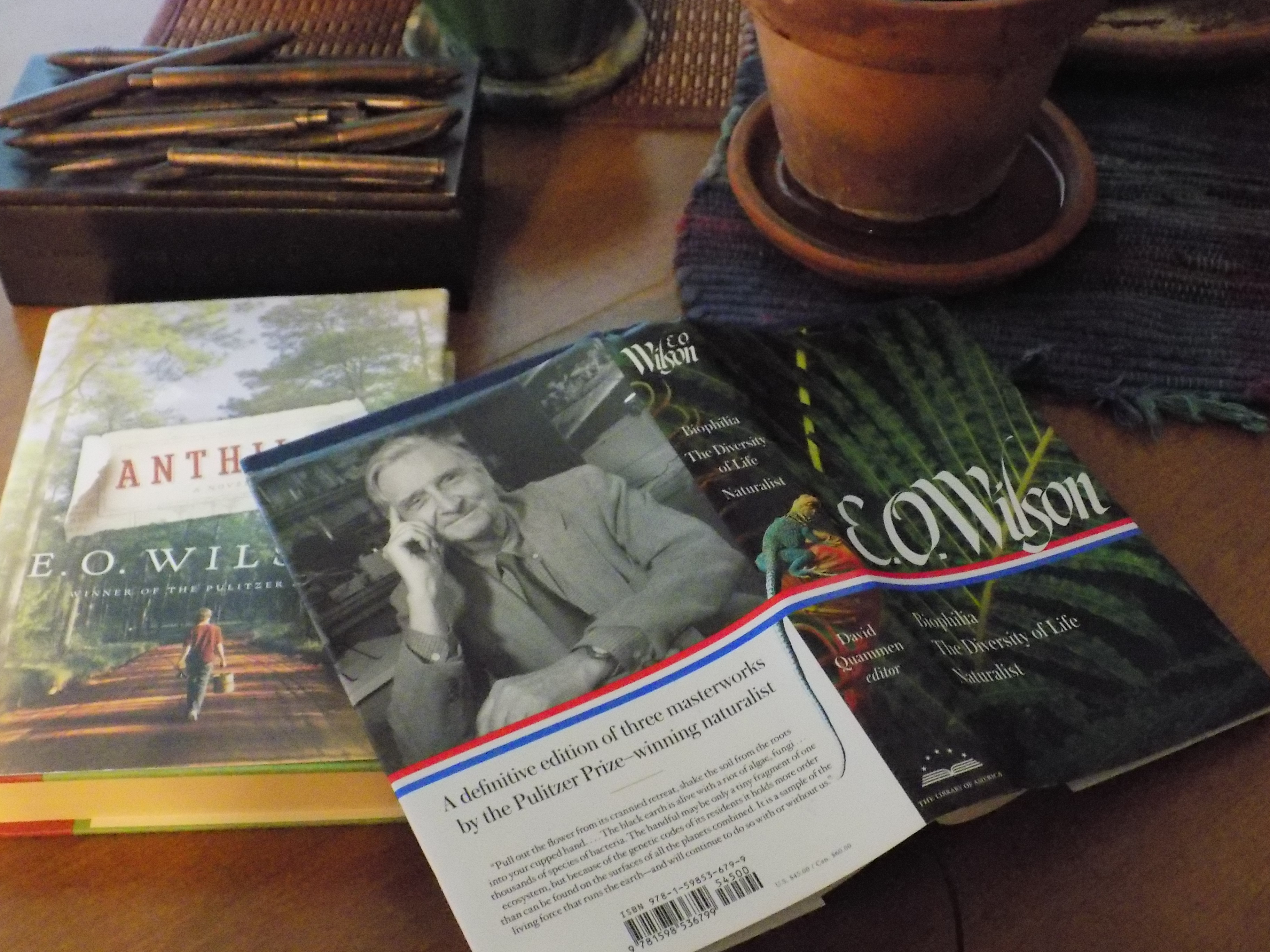
One of the few benefits of Pandemic isolation was the opportunity to read more widely, including a more in-depth exploration of Wilson’s award-winning writing. My most recent reading of Wilson was motivated by The Library of America’s Spring 2021 publication of three of his most acclaimed books in a single volume. Included are Biophilia (1984), The Diversity of Life (1992), and Wilson’s autobiography, Naturalist (1994).

In The Library of America compilation, Biophilia is a brief and user-friendly examination of the interdependence and connectedness of human beings and nature. Wilson, a dyed-in-the-wool scientist, has the vision of a poet and his ability to translate his scientific passion to accessible terms for those, like me, who are essentially non-scientific, is an impressive one. After reading Wilson, you will never look at an ant bed the same again. For that matter, you shouldn’t be able to take nature for granted again.

The text of The Diversity of Life is a little more textbook-y at times. The first part of that carefully researched book details the history of evolution. Wilson addresses the five previous periods of extinction on the planet and the millions of years it took for the Earth to repair itself after each. He convincingly asserts that we are now in the midst of the sixth great extinction, caused by human activity, and that there may be no recovery from this one unless we act quickly and with purpose. Wilson is pragmatic in his approach, presenting options for human progress while working with nature rather than against it. The fact that The Diversity of Life was written almost thirty years ago makes it even more compelling, given Wilson’s prescient observations.

I’ll admit that parts of The Diversity of Life were a slog for me and I found myself putting the book down to take a breather for a few days on a few occasions. I was not bored – just overwhelmed by the amount of information. So, it was a pleasure when I moved on to Naturalist, Wilson’s very entertaining autobiography. It is a compulsively readable book that explains the passion the scientist brings to his more scholarly texts. His writing is candid and his detailed description of the flora and fauna of the everyday as well as the exotic are breathtaking.


Finishing Naturalist, I was eager to move on to Wilson’s one novel, Anthill (2010). It is clear, having read the autobiography, that Anthill has many autobiographical elements as it tells the story of Raphael Semmes (Raff) Cody, who grows up in south Alabama and becomes obsessed with a parcel of wild forest near his fictional hometown, Clayville, in Nokobee County. We follow Raff’s childhood explorations and his growing fascination with the ant colonies of the Nokobee forest.

As enticing as the coming-of-age story of Raff may be, the novel becomes singular in its appeal and uniquely E.O. Wilson in its mastery and finesse with “The Anthill Chronicles,” the novel’s centerpiece. The “Chronicles” comprises nine chapters and seventy-one pages. It is a memorable and impactful rendition of the life and death of woodland ant colonies from the perspective of the ants. Margaret Atwood calls it the “Iliad of the ants.” “The Anthill Chronicles” cunningly provides keen science-based parallels into the challenges and evolution of the human species. The action of the battle scenes, when rival ant colonies vie for dominance, are as action-packed and suspenseful as any war story you might have read. It’s hard not to be moved by the death of a colony’s queen and the methodically efficient way in which the duty-bound ants handle the aftermath of that colonial tragedy. I am still surprised at how invested I became in dozens of pages of the lifestyles of the ants. Wilson doesn’t give his ants the human traits that a Disney version might; his ants view the humans who come into their territory as “moving trees.” Wilson’s ants are guided by instinct and genetics.

As the “Chronicles” conclude, the reader is back into Raff’s story as he finishes an undergraduate degree at Florida State and heads to Harvard law school. By this time, Raff has a clear path in mind for his goals to use his law degree to advocate for conservation causes. He makes the conscious but unexpected decision to go into practice with a Mobile development company which does not have a good record on environmental issues. We find a direct correlation between the fate of the ant colonies of the “Chronicles” and the story of the developers.

Wilson masterfully uses his fiction to illuminate his naturalist concerns; the book is rife with twists and turns, colorful and disturbing characters. Raff’s environmental activism attracts the attention of a fundamentalist, violent, and anti-conservation religious sect, leading to an unexpected, violent, and thrilling climax. Wilson’s choice of narrative style, shifting effortlessly from an omniscient narrator to the first-person observations of one of Raff’s ecology professors at Florida State, raises intriguing questions about Raff’s destiny at the book’s closing.

E.O. Wilson is a writer who should appeal to the casual reader as well as the environmentally-committed. He’s a “good read,” as we say.

Minerva at Tuscaloosa

In December 2019, my alma mater, and the university my father proudly served until his retirement, dedicated a statue and installation on the Black Warrior River, which flows on the northern boundary of the campus. The University of Alabama gifted a statue of Minerva, Roman goddess of knowledge and wisdom, to the city of Tuscaloosa in honor of Tuscaloosa’s bicentennial. The 30-foot statue stands on the edge of the river in the park at Manderson Landing. Leading up to the mirrored pedestal on which Minerva lands in a silvery splash of water is a bronze outline of the river set in a concrete walk and punctuated with a timeline of significant moments in the city’s history. The history timeline is presented alongside the river’s circuitous path from Tuscaloosa to Demopolis.

Sculptor Caleb O’Connor created the Minerva statue and Craig Wedderspoon, who directs the sculpture program at the University, designed the timeline walk.


When I was a student at the University, Manderson Landing was a dirt parking lot on the side of the river. River Road (now Jack Warner Parkway) followed the path of the river from the community of Holt to downtown Tuscaloosa. During my time in Tuscaloosa, I was struck by how little the town interacted with its river. For a time, I lived at Rose Towers, which was the northernmost building on the campus and the nearest to the river. From my 11th floor window, I could see the river’s path all the way to downtown but, other than towboats and barges, human activity on the river was basically non-existent.

Rose Towers was imploded years ago and fresh new-ish student housing predominates on the north side of campus. The riverside has been developed from town to the campus with commercial interests, a farmers market, walking trails, and abundant park lands. Campus enrollment has doubled since my time there and the campus itself is packed with new roads, new campuses, new buildings, and never-ending construction.

Overall, the campus is more beautiful and maintained than it was in my time, but the various fraternity and sorority rows are even tackier and more obscene than they were “in my day.” My pride in the campus wilts a little when I have to pass through the overblown houses of the ostentatious panhellenic ghettoes. My disgust with that element of college life dates back to my pre-college days and it seems to grow more intense rather than mellow with time. (In the summer before my freshman year at the University, I received a recruitment letter from the Interfraternity Council; I corrected the grammar and spelling and sent it back. They never bothered me again, which was my intent.)


But I was in town this time to visit Minerva and the river. A visit was planned soon after the dedication, but the lost year of 2020 put a halt to the plan.

The goddess of wisdom adorns the seal of the University of Alabama. I must admit that, through my undergraduate and graduate school years, I was always led to understand that the goddess on the seal is Athena, the Greek original for Minerva. The origin stories and realm are the same, but in the years since I left Tuscaloosa, Athena has apparently been transmogrified into her Roman persona.

Works for me, I guess …but I have always preferred my Greek mythology to the Roman appropriation. Even so, I am proud of Vulcan, the Roman god of the forge and metalworking, who is the symbol for Birmingham. I know that his Greek predecessor is Hephaestus, but the name Vulcan seems to wield more power.

O’Connor’s Minerva is a stunning addition to Tuscaloosa’s riverscape. She is a modernized creation with flowing hair replacing the traditional helmet. Luminous raiment flows against her taut and powerful body. She appears to be landing in water after a flight and her right arm releases an owl into the firmament. The sculpture is not monochrome; a subdued and powerful mix of hues captures and plays with the light, giving the form an even more changeable and human presence. She is inspiring and spectacular.

Minerva’s mirrored and curving pedestal emerges from the rocks of the landing and provides added luminescence to the goddess who towers above the river to anchor the north side of the campus. Wedderspoon’s history-laden walkway provides historic context and a sense of place to a dramatic interlude in the local landscape.

For an alumnus of the University of Alabama, who has begun to feel a sense of distance from the place, the inspiring monument at Manderson Landing has reignited a sense of connection and community that I found on that campus all those years ago.