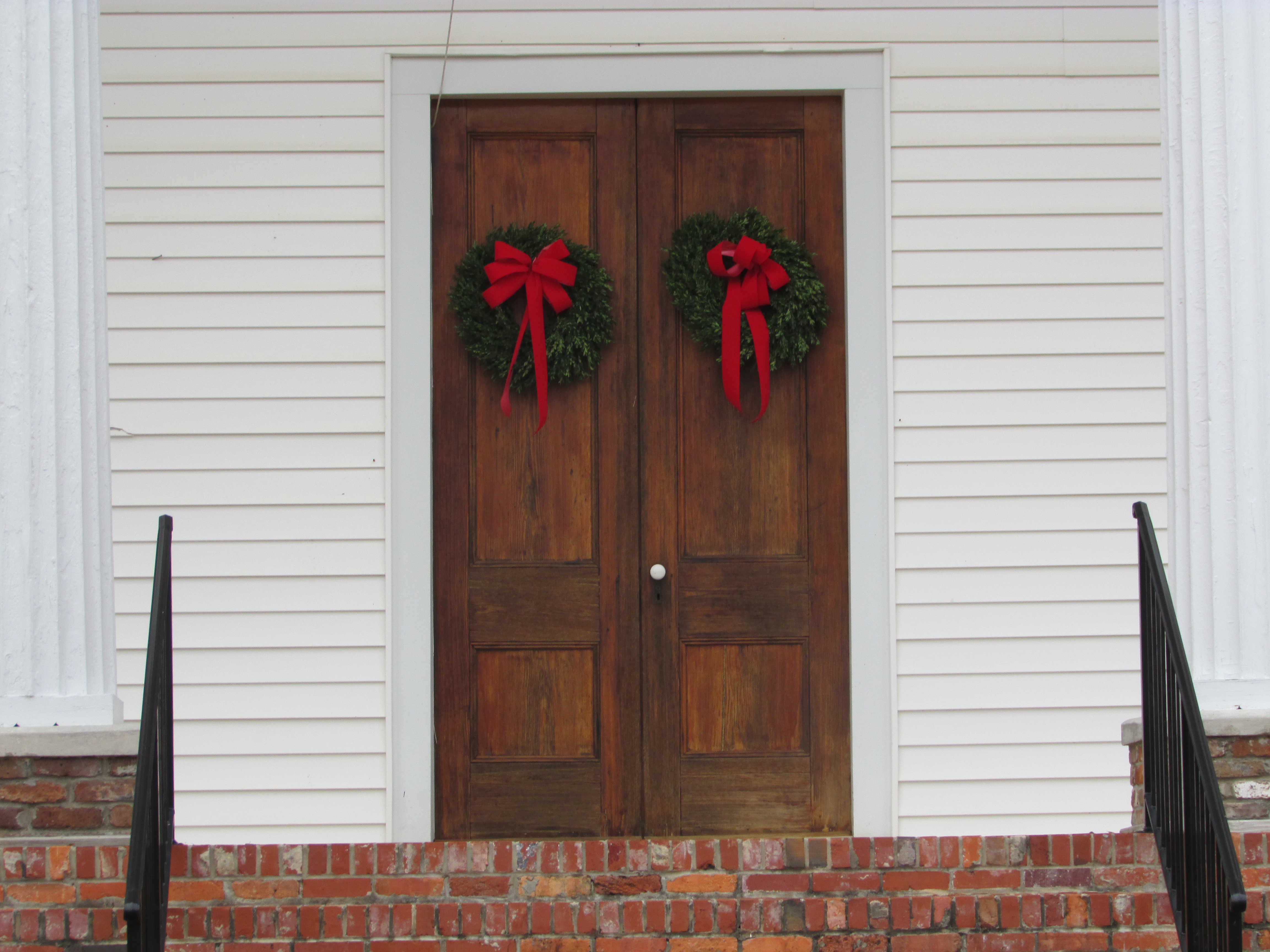
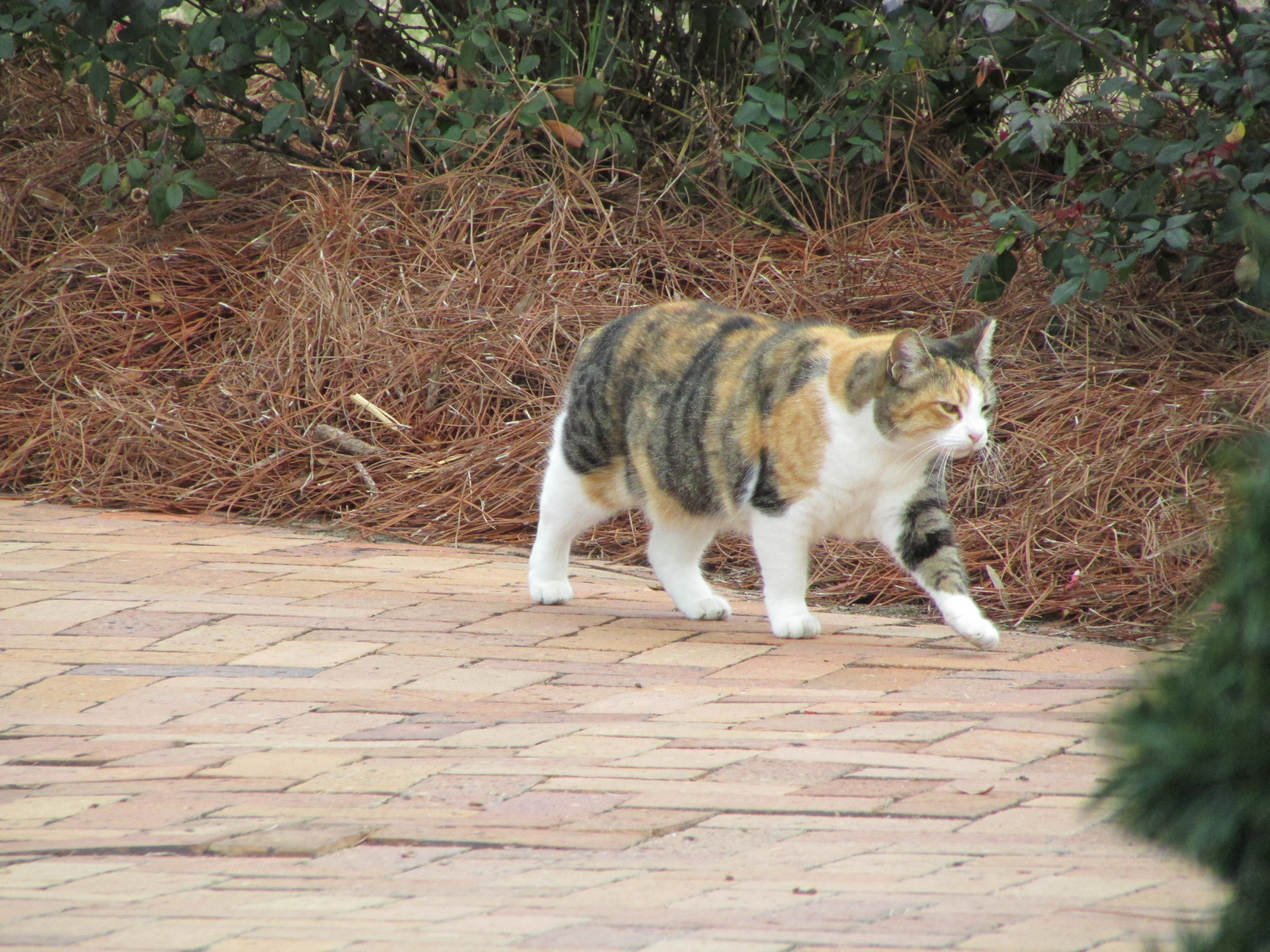
Tag Archives: travel

Shadows and Light: Wichahpi Commemorative Stone Wall

IMG_1244   Just off the Natchez Trace Parkway, near the place where that historic road moves from Tennessee into northwest Alabama near the Shoals, is a man-made wall commemorating a moving story of the “Trail of Tears.” The “Trail of Tears” was an aftermath of the Indian Removal Act of 1830, the episode of American history which forcibly removed Native Americans from their homes in the east to the Oklahoma territories.

Tom Hendrix has built a monumental stone wall to honor his great-great-grandmother, Te-lah-nay, a member of the Yuchi tribe, who walked with her sister and others from her home near the Tennessee River – the Native Americans called it “the Singing River” – to Oklahoma. According to family lore, the young woman was disappointed to find that the waters of Oklahoma did not sing and resolved to walk back to Alabama and her “Singing River.” The journey home took five years.IMG_1254

Mr. Hendrix, who is now in his 80s, has been working on the wall for over thirty years. It is estimated that there are 8.5 million pounds of stones in the project. It is reputed to be the world’s longest memorial to a Native American and to a woman. It is the longest non-mortared rock wall in the United States. Mr. Hendrix, the maker, says that it honors not just his great-great-grandmother Te-lah-nay but all Native American women. IMG_1247
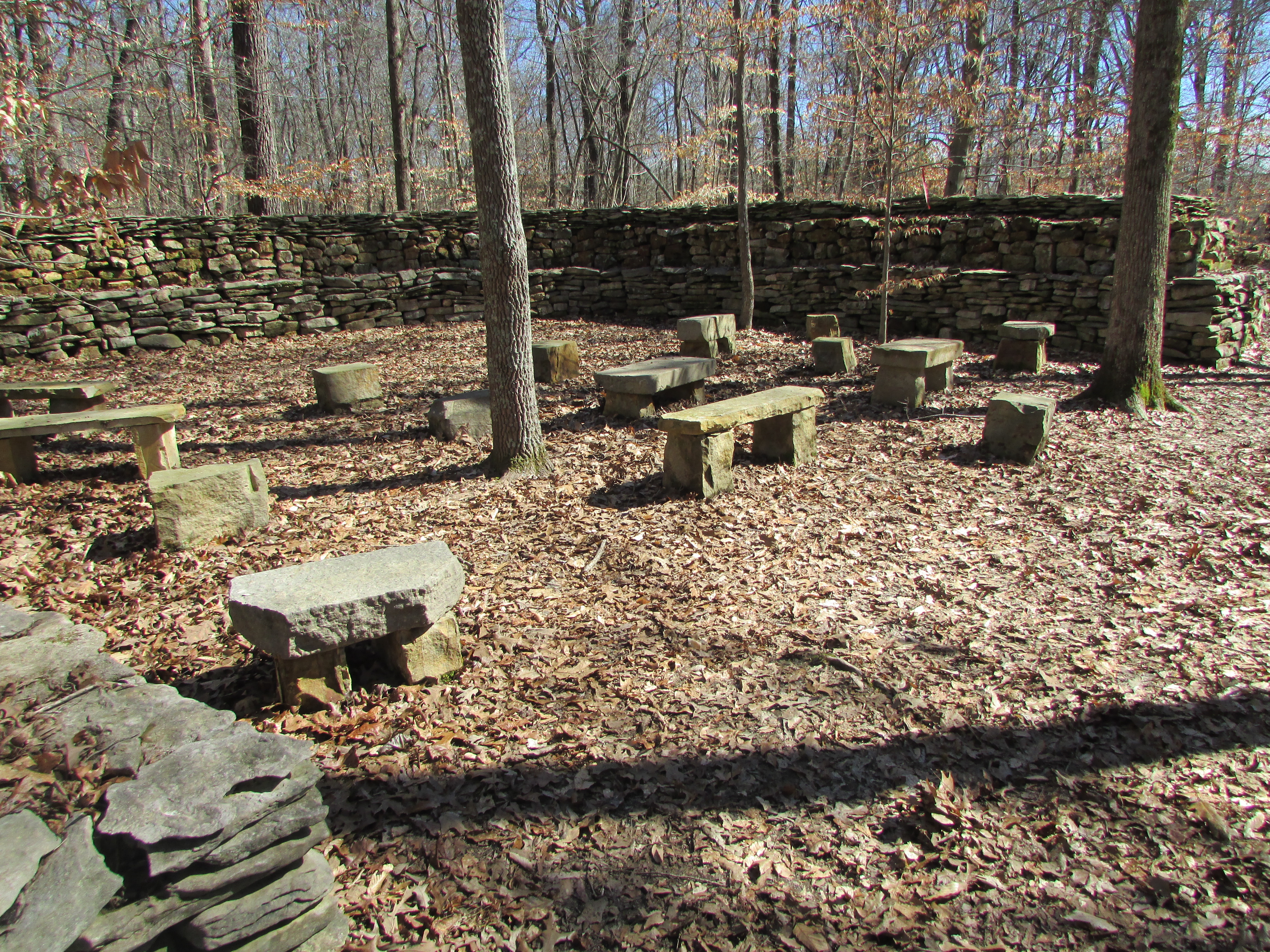
Mr. Hendrix, inspired by the stories and journals passed down through his family, began to build the wall with stones he had brought to the site at his home a few yards from the Natchez Trace. Each stone, he says, represents a step of Te-lah-nay’s journey. Now there are paths along well over a mile of wall, each stone placed by Mr. Hendrix. It is a spiritual and peaceful place with curves, benches, levels, and prayer circles. At some places the wall is high and at other places it is low enough to sit on. At some places it is tight and closed in and at others it opens out. People have sent stones to Mr. Hendrix from all over the world to be placed in the wall. Occasionally a seashell appears along the path. IMG_1246

When I arrived on a warm late winter afternoon in mid-March, Mr. Hendrix greeted me. From his driveway, there are paths going in either direction. He told me the path to the left represents Te-lah-nay’s walk to Oklahoma and that the path to my right represents her return home. I asked which one I should take first and he said it didn’t matter. I chose the path to the left.

IMG_1237That part of the path was closed in. At the end there was a bench. I sat at the bench for a moment but felt the need to move on. Upon arriving back at the entrance, Mr. Hendrix said “That was the dark path. The other side is completely different.”

Taking the path to the right, I soon moved along a wall of rocks with what appear to be spirits peering out. Continuing along the path, there are openings, areas of benches and congregation, a single gourd hanging from a tall tree. IMG_1248 I was a short distance from the first path, but the feeling was much lighter and more free. At times the wall meandered off and the sunlight through the still bare trees glistened and darted in the slight breeze. Again I sat on a bench in the path and this time I relaxed and stayed for a while. IMG_1241
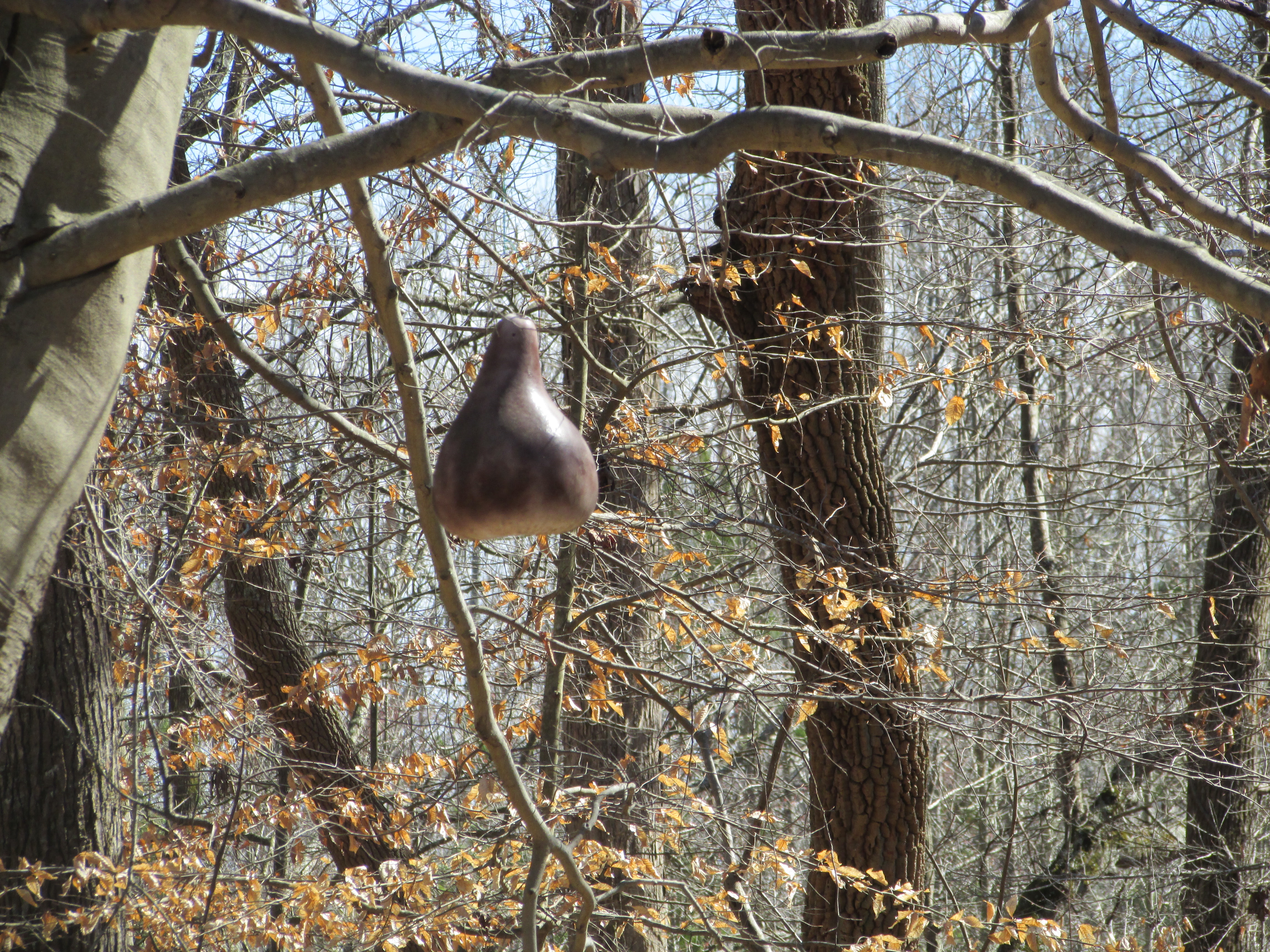
The memorial is called “Wichahpi,” which means “like the stars.” The path’s symbolism comes from an elder who told Tom Hendrix that ultimately “all things shall pass. Only the stones will remain.”

When my journey along the wall was complete, Mr. Hendrix was there to answer questions and explain. He has written a book about Te-lah-nay’s journey called If the Legends Fade and copies are available for sale at the site (www.ifthelegendsfade.com). Also available are stone carvings by Mr. Hendrix including spiritual images, images of animals, and benches and birdbaths.

I asked him how far the site is from Te-lah-nay’s “Singing River” and he directed me nine miles southwest to the place where the Natchez Trace crosses the Tennessee. It is a lovely and peaceful spot and the river is wide there. IMG_1260_1Mr. Hendrix says that the song from the river is more faint now that the river has been tamed and industry crowds much of its shores. But there is no sign of these things at the spot where the Natchez Trace bridge crosses the water; Mr. Hendrix says he still hears the river’s song almost every day.
Shopping for Cast Iron in South Pittsburg

IMG_1232   The first time I heard about the small town of South Pittsburg, Tennessee, I was living in Indiana and a friend mentioned that his mother’s family hails from South Pittsburg. I asked if there was a North Pittsburg in Tennessee and he was pretty sure there was not. Since then, I have learned that the closest thing they have to North Pittsburg is that Pittsburgh up in western Pennsylvania, one of my favorite cities.

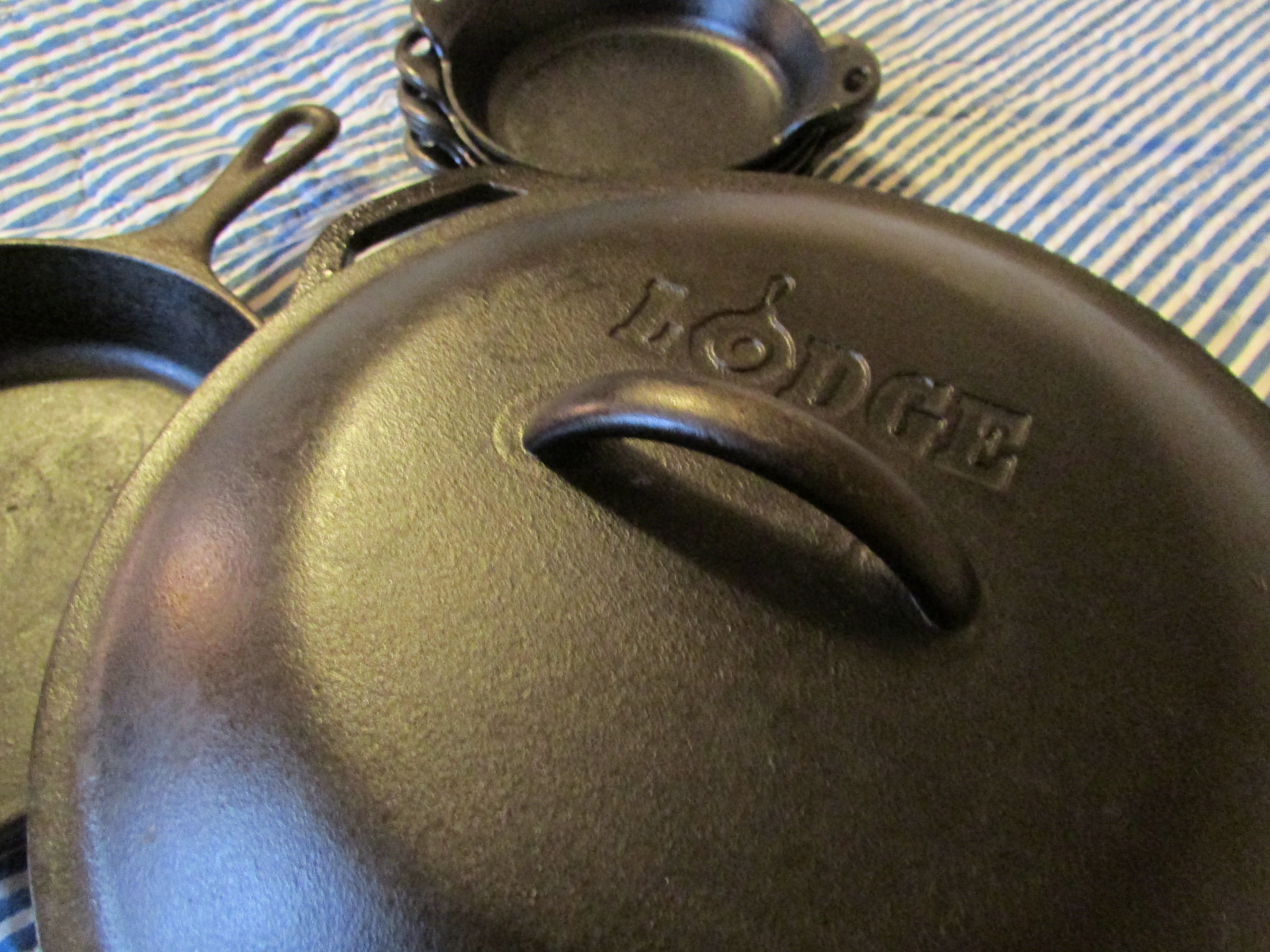
IMG_1229Years later, when I found myself living in north Alabama, I discovered on my first trip from Huntsville to Chattanooga that South Pittsburg is on Hwy. 72 on the Tennessee River nestled against the Cumberland Plateau and the Alabama state line. It is a little over an hour from my house. Most interesting was the discovery that South Pittsburg is the home of Lodge Manufacturing Co., makers of Lodge cast iron cookware – the only cast iron cookware still made in the United States. I try to have plenty of it on hand.

IMG_1220Now, whenever I go to Chattanooga, I try to schedule a stop in South Pittsburg at the Lodge Cast Iron Factory Store near the foundry. For anybody who loves cooking with cast iron, this is a pilgrimage to take. The store is full of cast iron cookware in about any configuration one might imagine. I must show restraint in my purchases, but the place is filled floor to ceiling with shelves of cast iron temptation. The parking lot always has cars with tags from all over. On my recent visit, a Lodge cast iron hibachi grill was calling my name.

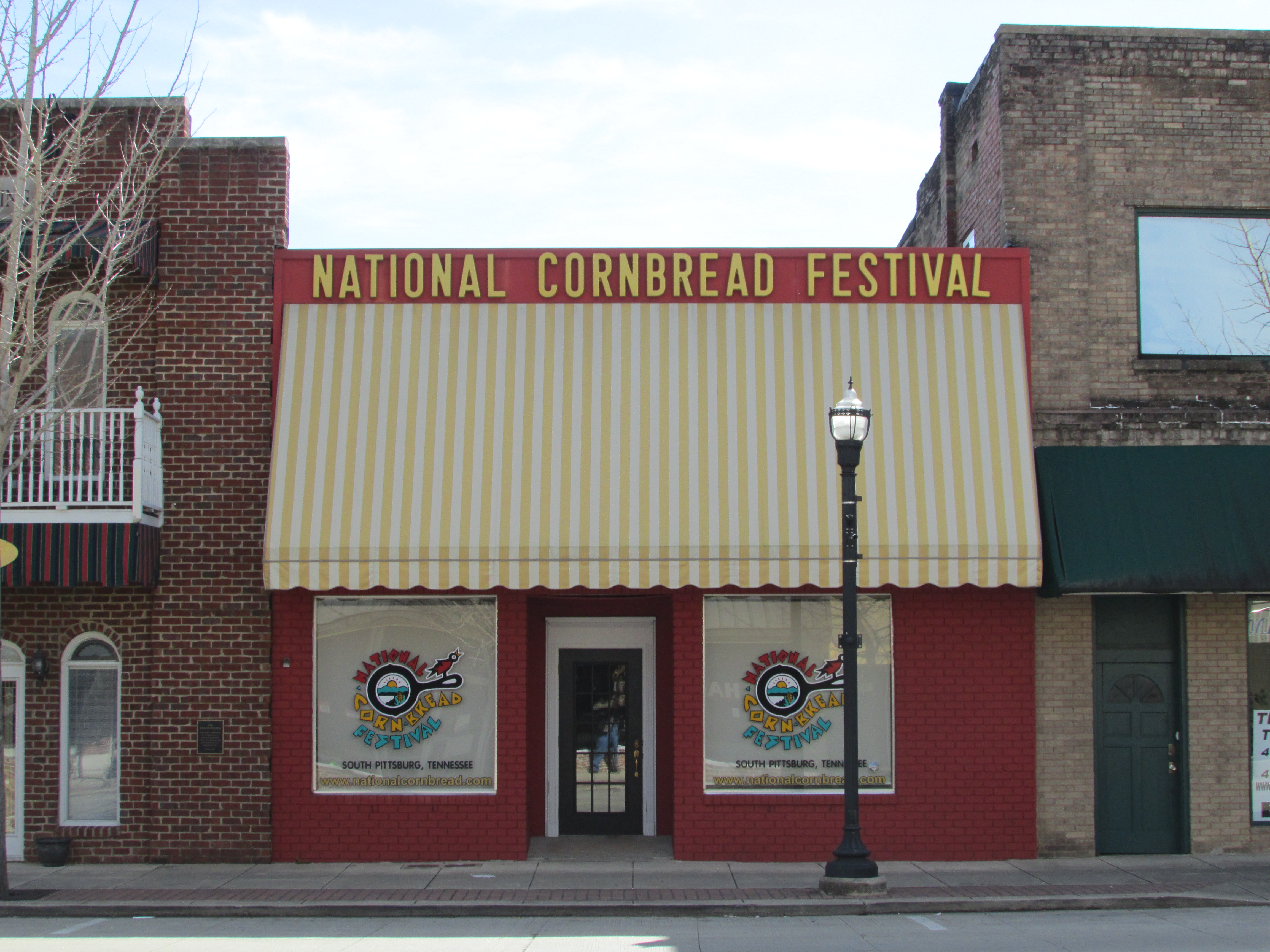
It should be no surprise that the home of cast iron skillets is also home to the National Cornbread Festival on the last full weekend in April. The calendar of events includes all kinds of cornbread cook-offs, “Cornbread Eatin’, Buttermilk Chuggin’, and Ice Cream Eatin’ Contests,” and the crowning of a slew of Miss National Cornbread Festivals from various age groups.IMG_1224

A short walk through the cozy downtown reveals a historical marker commemorating South Pittsburg’s baffling and sad “Christmas Night Shootout” of 1927. I am interested in the history of the labor movement in the South, and especially in the Birmingham iron and steel industry, but the South Pittsburg event is news to me. It stemmed from a labor dispute at a local stove factory and pitted local law enforcement officers against one another. According to one account, the county sheriff and his deputies supported the strikers and the town police force sided with the factory owners. At the end of the shootout, six officers were killed including the Chief of Police and the Sheriff.

On a happier note, down the street from the “Shootout” marker, I saw a coin-operated horse named Thunder on the sidewalk. I have not seen one of those in ages. It was in front of a music store (I think) that bills itself “The Most Unique Store in Tennessee.” I have to trust the sign since the store was closed when I was there. The fact that Jim Morrison was staring down at Thunder from an old Doors poster was delight enough and I’ll try to catch the unique store sometime when it’s open … perhaps at the next National Cornbread Festival. IMG_1227

Take time to discover small towns. There’s always something interesting to learn.

“Muscle Shoals”

IMG_0279    “You’re in rock ‘n’ roll heaven, man,” growls Keith Richards in an interview in Muscle Shoals, the documentary about the musical heritage of the Shoals area of northwest Alabama. The film focuses on the intertwined stories of Rick Hall’s FAME Studios and Muscle Shoals Sound Studio. It is a compelling story that needs to be told and director Greg “Freddy” Camalier tells it with brisk pacing and verve using music recorded in the area and ample interviews with the makers of the magic that came out of the place in a specific time in American musical history.

IMG_0708I was fortunate to see Muscle Shoals on August 24, 2013, at the Sidewalk Film Festival in Birmingham and have viewed it a couple of times since. My first screening at the Alabama Theatre was as part of a packed house in advance of the film’s official release on September 27, 2013. Even for a viewer familiar with the musical heritage of the Shoals, the movie is full of new information and insights by interview subjects including Gregg Allman, Bono, Clarence Carter, Jimmy Cliff, Aretha Franklin, Donna Godchaux, Mick Jagger, Alicia Keys, Keith Richards, Percy Sledge, Candi Staton, and Steve Winwood.

The powerful conceit running through the movie is that there is music in the magical waters of the Tennessee River around the Shoals. The Tennessee curves through Alabama from its northeast corner to its northwest corner, cutting a crescent in the northernmost part of the state. The Native Americans’ word for the river meant “the river that sings” and the four towns of Florence, Muscle Shoals, Sheffield, and Tuscumbia straddle the river in northwest Alabama in the area commonly referred to as “the Shoals.”

W.C. Handy, the “Father of the Blues,” and Sam Phillips, who discovered Elvis Presley and other legends, were both from the Shoals. The movie spends time at the Wichahpi Commemorative Stone Wall in Florence. Tom Hendrix built the mammoth serpentine wall as a memorial to his ancestor who was exiled to Oklahoma as part of the Trail of Tears and walked back to the Shoals to be near the “singing river.” The film even pulls Tuscumbia native Helen Keller into the mix, finding a connection with the fact that the deaf, blind, and mute child’s breakthrough word was “water.”

The film focuses on Rick Hall’s FAME Studios and “the Swampers.” “The Swampers” are the Muscle Shoals Rhythm Section who left FAME to open Muscle Shoals Sound Studio on Jackson Highway and who are primarily represented in the documentary by “Swampers” Roger Hawkins, David Hood, and Jimmy Johnson. Rick Hall’s biography alone includes enough tragedy to fuel any number of plaintive country ballads and his compelling and compulsive drive is the centerpiece of the film.

On occasion, Muscle Shoals may go a little overboard in its effort to tell a coherent story and the “singing river” idea might feel a bit stretched at times. Sometimes, liberal use of misleading stock footage is distracting. For example, when the documentary discusses the Shoals hospital where Percy Sledge worked before embarking on his musical career, the stock footage that is shown makes it look like a World War I-era European hospital.

Each time I watch the movie, I am confused as to which of Aretha Franklin’s hits were actually recorded in Muscle Shoals – the filmmakers are a little ambiguous there but a little research reveals that “I Never Loved a Man” was definitely recorded there (and the Muscle Shoals Rhythm Section was brought to New York to record other hits with her). Based on the way the documentary presents the story, one might think that Rick Hall wrote the schmaltzy Clarence Carter hit “Patches” (he didn’t; he produced Carter’s cover – and this documentary manages to make me respect “Patches” in a way I never had before).

Even so, it is the actual footage of Shoals sessions, the Rolling Stones, and other artists in the recording studio, and the director’s passion for the sounds that came out of the place that propel the movie and make it indispensable. Fans of the Maysles Brothers’ 1970 documentary Gimme Shelter about the Rolling Stones’ 1969 tour and the disastrous Altamont Free Concert that ended it will recognize much of the Stones’ Muscle Shoals footage from that earlier film. The Stones recorded “Brown Sugar” and “Wild Horses” in Muscle Shoals.

Ultimately, it’s the music that supports the story that makes Muscle Shoals such a treasure and I challenge any Baby Boomer or fan of twentieth century American popular music to sit through Muscle Shoals without finding at least a few favorite songs that were recorded in those studios. Percy Sledge recorded “When a Man Loves a Woman” there. Aretha Franklin, Bob Dylan, Paul Simon, The Staples, Boz Scaggs, Etta James, Wilson Pickett, Traffic, Bob Seger, Rod Stewart, the Osmonds, Cher, Lynyrd Skynyrd, Jimmy Cliff, … recorded there, and on and on; it makes your head explode that so much essential music came out of such a small town. The tradition currently continues with groups such as the Birmingham-based soul band St. Paul and the Broken Bones whose recent album Half the City was recorded in the Shoals.

For me, an added treat in the movie is interview footage with Donna Godchaux, a Shoals native who, with her late husband Keith, was a member of the Grateful Dead in the ‘70s (the Dead never recorded in Muscle Shoals as far as I know). Donna got her start as a session singer in the Shoals and she lives there now. I very briefly met her when I was working backstage at the Grateful Dead concert in Tuscaloosa on May 17, 1977 (I also met Jerry Garcia that day). It was an amazing concert but my most vivid memory of it is hanging out in front of the stage for a bit during the show with the Godchaux’s toddler, Zion. We were rolling a toy Texaco truck back and forth. Zion would be in his forties now and is part of the band BoomBox.

If you haven’t seen Muscle Shoals yet, check it out. I promise it will leave you smiling.

A Menu for the End of the Carnival Season

IMG_1134  My attraction to Mardi Gras is directly tied to my attraction to the Gulf Coast. Growing up inland, Mardi Gras always seemed mysterious and somehow “foreign” and like a place I’d rather be. I would see news reports of the activities in New Orleans and Mobile and other celebrations on a smaller scale along the Gulf and they seemed to be in stark contrast to the grey late-winter life around me. I was raised in the Southern Baptist church and we did not observe Ash Wednesday. When I realized the Christian tie-in to the revelry of Mardi Gras and better understood the season that begins on Epiphany and ends precisely at midnight on Shrove Tuesday, that knowledge gave the events of the season even more mystery and appeal.

Age, experience, and knowledge began to de-mystify the events of the carnival season leading up to Mardi Gras and more and more the events began to move farther inland. When I was living and teaching in Indiana in the 90s, I began to throw beads at the end of my Fat Tuesday classes to give myself a sense of connection to my home region. Huntsville, where I live now, had its 2nd annual Mardi Gras parade on Saturday, February 14, but it’s a sad substitute for the real deal on the coast.

I am a bit of a traditionalist and a purist when it comes to the proper way to do things and I bristle a bit at the fact that one can now stand beneath a New Orleans Bourbon Street balcony and be showered with Mardi Gras beads on virtually any night of the year. In my mind, Mardi Gras beads should only be thrown in the season. And then they should be packed away until the following January.

The appeal of tradition and the desire to recapture the mystique of “The Season” on the Gulf Coast of the Deep South is one of the reasons Joe Cain Day, observed in Mobile on the Sunday preceding Fat Tuesday (and the subject of my previous essay), has engaged me.

I hosted my first Joe Cain Day celebration this Sunday, February 15, and it brought some levity to a blustery February afternoon in north Alabama as still another cold front – “the weather of northern aggression” I call it – moved into the area. On the invitations I wrote “Masks and mourning attire optional.” My guests, some of them wearing masks and almost all dressed in some form of black in “mourning” for Joe Cain, enjoyed the respite before the cold and icy work week resumed.

IMG_1128One of my favorite images in New Orleans is that of Mardi Gras beads that never came down to earth during parades and got caught in the live oaks along the parade routes. They hang there throughout the year, gradually fading but always a reminder that the season has gone but will always come back again in January. I look for these stray beads on streetcar rides along St. Charles. With that image in mind, I threw beads from my second story bedroom window on the day before the party and let them catch in the cherry tree in my front yard so that my guests would have that image of beads in the trees upon arrival. (Now I will spend the rest of February retrieving Mardi Gras beads from the cherry tree.)

I designed the menu to reflect regional and seasonal tastes and as usual there was much more food than was needed. I made a lot of the food myself. I purchased other things from favorite vendors. Here’s my menu.

A Joe Cain Day Celebration / February 15, 2015

Boiled Peanuts

Cheese Straws

Breads, Toasts, and Crackers for dipping and spreading

Gumbo

Lobster and Shrimp Salad

Alabama Gulf Shrimp w/cocktail and garlic buttermilk sauces

Hot Seafood Dip w/ shrimp and crabmeat

Mardi Gras Chicken

Chocolate Truffles

Moon Pies

King Cake

Bloody Marys, Hurricane Punch and assorted beverages

The gumbo was ordered from Wintzell’s (www.wintzellsoysterhouse.com), a Mobile-based oyster house and restaurant that makes one of my favorite gumbos. The King Cake, a carnival season standard, came from Paul’s Pastry Shop (www.paulspastry.com) in Picayune, Mississippi. My friends G. Todd and Anita brought a couple of other dishes — a crawfish beignet with a savory sauce and crostini topped with shrimp, red pepper jelly, and sweet potato. The chocolates were from the Chocolate Gallery in Huntsville (www.chocolategalleryal.com).

IMG_1133“Mardi Gras Chicken” was a clear favorite of the day. When I was on the Gulf Coast in December, I was toying with the idea of a Joe Cain Day party. I asked my friends, the Brunsons – who are natives of Mobile, for a dish that their mother, Jean Brunson, would have made for Mardi Gras and Joe Cain Day. The response was unanimous – “Mardi Gras Chicken!” – and a recipe was produced. Mrs. Brunson was the caterer for the First Baptist Church of Mobile for many years and had a sizable repertoire. “Mardi Gras Chicken” is really an adaptation of a chicken tetrazinni recipe but Mrs. Brunson always made it around Mardi Gras and her children still refer to it as “Mardi Gras Chicken.”

I made my own revisions to the recipe and my adaptation of Mrs. Brunson’s adaptation is what I’m offering here. It’s a hit.

Mardi Gras Chicken

1¼ lbs. boiled chicken

1 large pkg. rotelli pasta

1 cup green, red, and yellow peppers, diced

1 medium onion, chopped

6 pieces of celery, diced

6 strips of pimento, chopped

2 cans of cream of mushroom soup

¾ cup of sour cream

1 cup of sharp cheddar cheese, finely grated

4 ozs. almonds, minced

Cook rotelli pasta in chicken broth. Since it will be baked in a casserole, it is best to cook it until it is fairly limp. Drain pasta. Add chicken to pasta (chop chicken into fairly large bites). Add peppers, onion, celery, and pimento. Stir in cream of mushroom soup, sour cream, and ½ cup cheese.

Place mixture in large casserole dish and top with ½ cup cheese and minced almonds. Bake at 350 degrees for I hour.

Happy Mardi Gras!

IMG_1146

Joe Cain Day in Mobile


IMG_1124 On Sunday, February 15, I am hosting a pre-Mardi Gras celebration for Joe Cain Day. Joe Cain Day is an event that is unique to Mobile, Alabama. It is always celebrated on the Sunday before Fat Tuesday. I have heard about it for decades but only got really intrigued with its origins and traditions in recent years. The more I learned the more fun it sounded. My little get-together is a way of sharing the tradition with my friends in north Alabama.

Of course, most Alabamians know and proudly assert that Mobile was the site of the first Mardi Gras celebrations in the present-day United States. Mobile was founded in 1703, fifteen years before New Orleans, and had established New World Carnival celebrations under French rule early on. There is still banter back and forth between the two cities about the legitimacy of Mobile’s claim to being the first. And a New Orleans friend once told me, “Well, Mobile may have started it, but New Orleans taught them how it ought to be done.”

There is no controversy, however, over the origins of Joe Cain Day.

Joseph Stillwell Cain (1832-1904) is credited with reviving Mardi Gras in Mobile after the Civil War. It all started in 1866 when he paraded through downtown Mobile in fanciful Native American garb. This act is considered the rebirth of modern Mardi Gras in Mobile.

Joe Cain was a Mobile native and as a teenager was a charter member of the Tea Drinkers Society (TDS), a Mobile mystic society that paraded on New Year’s Eve. Prior to the Civil War, pre-Lenten celebrations in Mobile were customarily tied into New Year’s observances.

When the Civil War began, Joe Cain was a private in the Confederate Army. When his military service was over he lived for a time in New Orleans and participated in New Orleans Mardi Gras observances.

In 1866, when Cain returned to his hometown from New Orleans, he decided to revive Mardi Gras in the city. He and six other members of TDS decorated a charcoal wagon, dressed in Native American garb, and frolicked through the streets of Mobile. Cain led the procession dressed as a fictional Chickasaw chief, “Chief Slackabamarinico,” and declared an end to Mobile’s suffering and the return of pre-Lenten carnival celebrations.

Joe Cain’s actions had an impact and led to the city officially moving the culmination of carnival festivities from the New Year’s season to traditional Fat Tuesday. Cain was a founding member of the mystic society called Order of Myths. Order of Myths adopted the emblem of Folly chasing Death around a broken column. This is assumed to be symbolic of the Civil War, a Lost Cause for the rebel South.

Cain remained active in Mardi Gras. Later in life, he and his wife moved from Mobile to the fishing village of Bayou La Batre, Alabama. Cain died in 1904 and was buried near Bayou La Batre. After Cain’s death, Mobile’s Mardi Gras remained popular but exclusive. The mystic societies had closed memberships. Most of the citizens of the city could only participate as onlookers.

In 1966, Julian Lee Rayford, a local author, set out to honor Joe Cain and open Mardi Gras participation to more people. Cain and his wife’s bodies were moved from Bayou La Batre to Mobile’s Church Street Cemetery. Cain’s interment was accompanied by a Mardi Gras parade, jazz band, and mourners. His tombstone has a jester’s image and reads “Here Lies Old Joe Cain, the Heart and Soul of Mardi Gras in Mobile.”

The popularity of Cain’s reburial inspired the creation of “Joe Cain Day,” observed on the Sunday before Fat Tuesday. The Joe Cain Day Parade, also known as “The People’s Parade” because anyone may participate (although it eventually became so big that the number of participants had to be capped), is led by a person chosen to dress as Chief Slackabamarinico. The parade concludes at Church Street Cemetery where revelers dance atop Cain’s grave.

Throughout the day, a mystic society of mourning-clad women known as “Joe Cain’s Merry Widows” wail over the loss of their beloved Joe Cain and declare “He loved me best!” The Merry Widows wail at the grave, toast the deceased from the front porch of his house on Augusta Street, and ride in a place of honor in the Parade. In 2003, another all-woman mystic society, “Mistresses of Joe Cain,” appeared. The Mistresses are also veiled, but dress all in scarlet and proclaim that “Of course he loved us best!” They parade alongside the vehicle carrying the Widows in the Parade, taunting them along the route and creating a general caterwaul.

Rumor has it that still another all-woman mystic society might be in the works that will be Joe Cain’s “ladies of the evening” – or some more earthy variation. In any case, Joe Cain Day in Mobile is a great representation of the silliness and release of the Mardi Gras season.

(The image is of the cherry tree in my front yard, bedecked with beads for Joe Cain and Mardi Gras.)

Photographing Churches

IMG_1059    O! How I love time spent south of the salt line in December! We were all doubtful that I’d be able to see my friends Deb and Jeana Brunson in Fairhope this year but they arrived in town on Thursday, my last day at The Grand, from Las Cruces, New Mexico, and Tallahassee, Florida, respectively.

We gathered for afternoon tea at The Grand with Deb and Jeana, their brother Richard and his wife, Allison, and Allison and Richard’s dapper youngest son, William, who insisted on wearing a tie for tea at The Grand. I helped him tie the tie and commented that with his blue blazer, button-down shirt and tie, and khakis, he looked like an Alabama frat boy headed to a game. All of the Brunsons had a Christmas concert to attend but Deb, Jeana, Allison, Richard, and I met later for a memorable meal at Dragonfly Foodbar in downtown Fairhope.

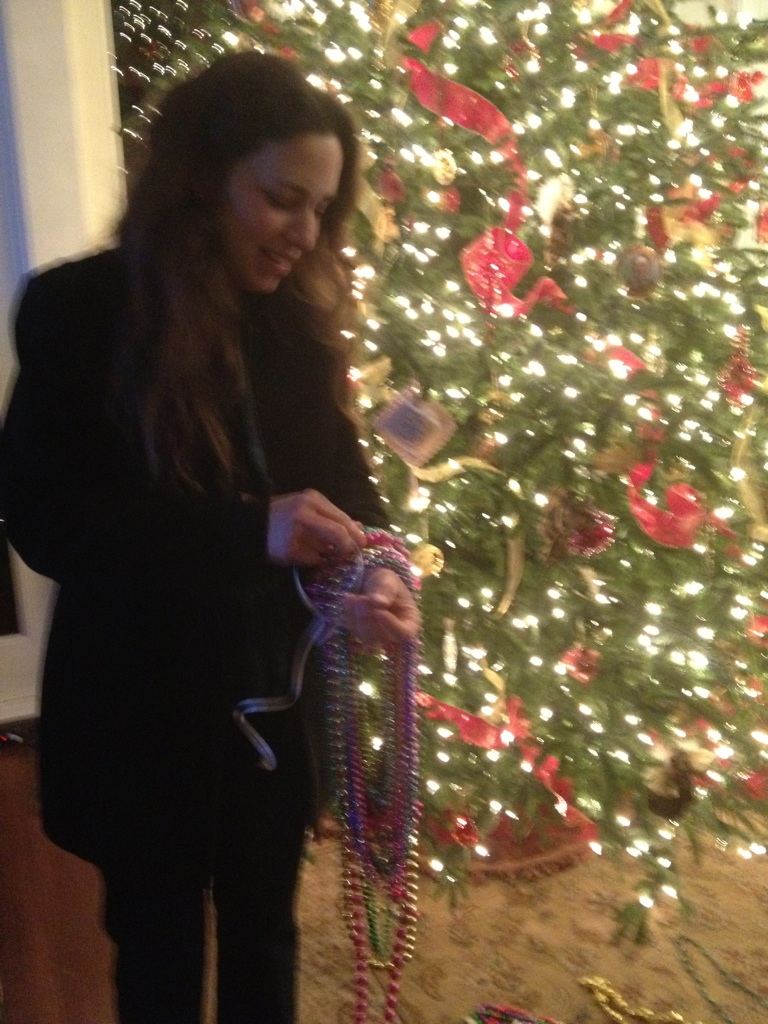
During dinner, I mentioned that I was out of Mardi Gras beads and Allison and Richard insisted that I stop by their house and get some of their stash. Later, at their beautiful home on Mobile Bay, Allison and Richard not only brought out a load of shiny beads from storage, but they also insisted on untangling them, separating them by size, and tying each bundle together before they loaded them into a huge box which should fulfill my Mardi Gras bead needs for a while. Allison Brunson sorting Mardi Gras beads  Richard Brunson sorting Mardi Gras beads

It is a true friend, I realize, who will sort and tie your Mardi Gras beads.

As I headed north from Point Clear on Friday, I realized that it was December 19 and I had not photographed any churches for my 2015 Christmas card. Realizing that there was still plenty of time and that there were a couple of back-up buildings I might use in north Alabama, I decided to keep my eyes open for any Christmas card-worthy churches along the drive home. In an earlier post for this journal, I recount my criteria for my annual Christmas card designs. I look for buildings that are often vernacular, were photographed in the month of December, and are always honest.

IMG_1011

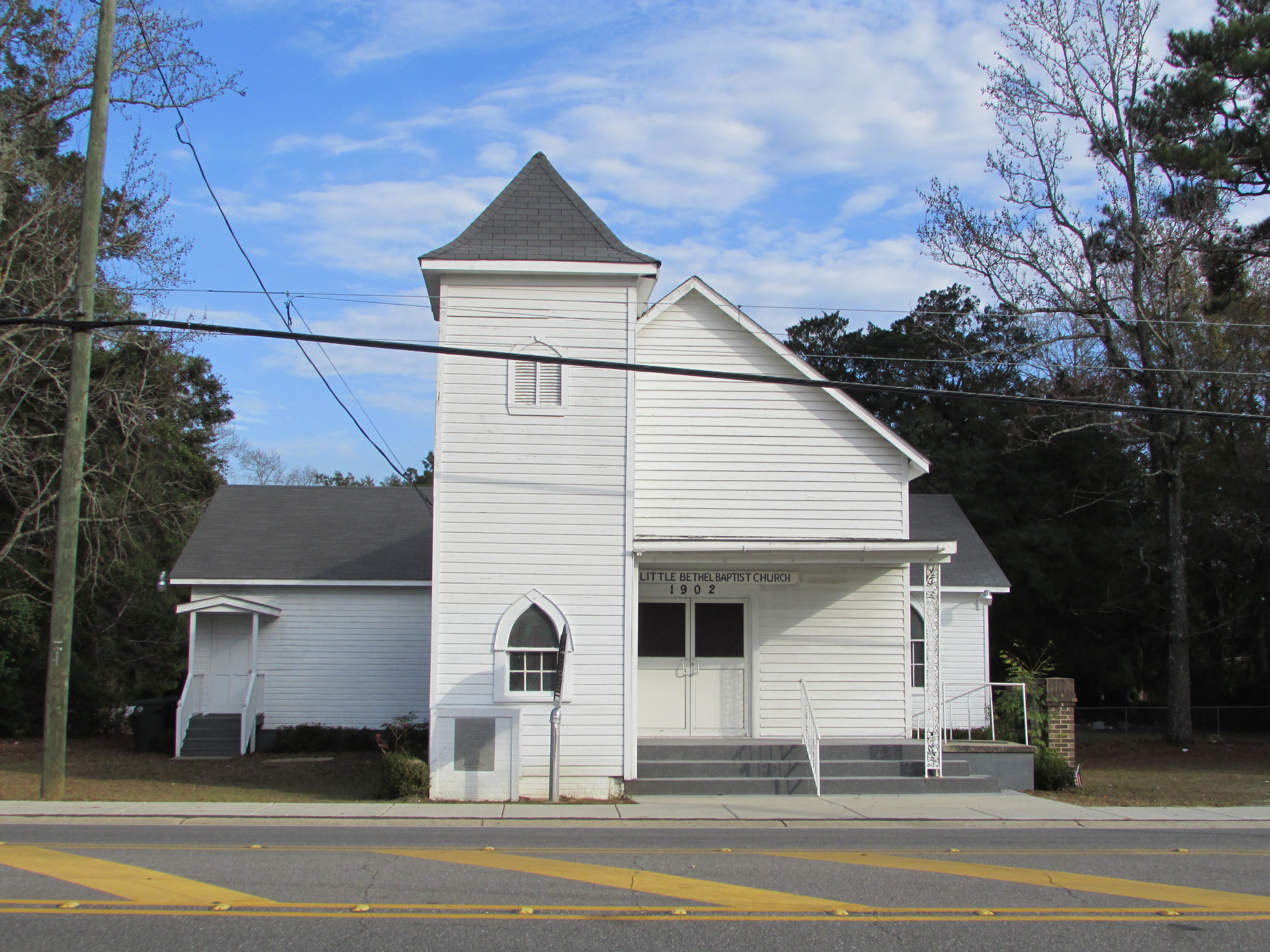
On this most recent trip, I had already taken photographs of Little Bethel Baptist Church in Daphne. Traveling along Alabama SR 225 in rural Baldwin County, I decided to check out St. John’s, a small yellow Catholic chapel that I had passed many times before but never photographed. As I pulled away from St. John’s, I noticed a small white building through the trees. I pulled off the road again and discovered what looks like a former schoolhouse that is now designated as “James E. Cook Memorial Presbyterian Chapel.” It is a charming little church I had never before noticed.

IMG_1021  IMG_1024

A few hours later, approaching Montgomery, I remembered the small town of Lowndesboro off U.S. Highway 80 between Selma and Montgomery. Highway 80 from Selma to Montgomery has been designated by the National Park Service as the “Selma to Montgomery National Voting Rights Trail,” a national scenic byway. Turning off 80 onto CR 29 into Lowndesboro, one travels through an impressive and well-maintained collection of antebellum architecture compressed into a very brief stretch of road. I have been to the town several times now, but it is always a shock to see such pristine examples of domestic and non-secular architecture in such a compact little community (population 140).

A particular oddity among the roadside attractions of Lowndesboro is the C.M.E. church, erected around 1830. Instead of a traditional steeple, the building is topped by a structure which was the original dome of the first Alabama state capitol in Cahaba. It was moved to Lowndesboro and mounted on the church when the original capitol building in Cahaba was demolished. IMG_1042

IMG_1035St. Paul’s Episcopal is a stately and dignified structure. Lowndesboro Baptist has intricate Carpenter Gothic detailing in the wooden columns on its portico. Lowndesboro Presbyterian (pictured at the front of this post) has simple Doric columns. IMG_1047

The only one of the impressive old churches that did not make the cut was Lowndesboro United Methodist. The main structure is very handsome but I couldn’t get past the steeple, which just couldn’t quite live up to the building’s base. Alabama-native writer Eugene Walter, who was quoted in an earlier post, referred to such steeples as “little-prick.” I now regret not taking a picture of the building, since it was a lovely church (other than that unfortunate steeple) and I likely won’t be back in Lowndesboro for a while.

Lowndesboro was a treasure trove in my search for picturesque churches. After roaming the street and photographing for about an hour, I drove away with the certainty that I have now found my Christmas card image for 2015. The challenge will be choosing just one out of many.

A playwright friend recently sent a note from Los Angeles and said “it isn’t Christmas at our house until your church arrives!” It is because of such kind words from many friends and correspondents that I take particular pride and effort in my December sojourn to photograph churches and other images of the season throughout Alabama.

Merry Christmas.IMG_1055

Postcard from The Grand

     IMG_0938  Point Clear, AL. People have been coming to a hotel at this spot for rest and rejuvenation since the 1830s. For me, a visit to The Grand Hotel in Point Clear, Alabama, (www.Mariott.com/Point-Clear) has become an annual December event. I occasionally get down here at warmer times of the year but the pre-Christmas visit is my constant.

IMG_0948


The Grand Hotel is located on the Eastern Shore of Mobile Bay, a short distance south of the town of Fairhope, at a point where the bay broadens as it gets closer to the Gulf of Mexico. The various buildings overlook the Bay and out toward the Gulf on one side and a peaceful lagoon surrounded by ancient, Spanish moss-dripping live oaks and walking paths on the other. The grounds are expansive and beautifully landscaped with paths along the bay. Pathways open to the public radiate beyond the resort and one is welcome to stroll past the private sides of bay-front Point Clear homes and get a sense of local living.

In the warm months the place bustles. A huge swimming pool is full of sun-worshippers and all kinds of outdoor activities – biking, kayaking, croquet, beach bonfires, etc. – are available throughout the grounds.

Now, in December, it is more quiet and less crowded and I have found that this trip is a perfect and much-needed way to shake off my job after a demanding semester and to brace for the holidays with family and friends.

IMG_0941

As might be expected from such a place, there is a feel of tradition. Hurricane Katrina did massive damage to the Alabama coast in 2005 and the hotel was closed for over a year while renovations occurred. When I returned in December 2006 after the renovation, I was relieved to see that the restoration had taken pains to restore the look and feel of the place prior to the storm.

The site has history and tradition and it manages to retain the feel without overwhelming one with the past. Every afternoon there is a small military procession through the grounds ending at a Civil War-era cannon. After the hotel’s military history is recounted – it served as a military hospital during the Civil War, was fired upon during the Battle of Mobile Bay, and the grounds include a Confederate cemetery containing the remains of many casualties of the Battle of Vicksburg (which happened 250 miles away) – the cannon is fired and can be heard throughout the area.

While the cannon fires outside, an afternoon tea is held around the grand fireplace every afternoon at 4:00. There is a blazing fire and a huge Christmas tree this time of year.

IMG_0927

Outside Bucky’s Birdcage Lounge, also located in the main building, is a sunset bell that is rung thirty minutes before sunset each day. It is a reminder to move toward the lounge and toward the Bay-front to observe and celebrate what is almost always a spectacular sunset. “Bucky” Miller was a beloved employee of the Grand for 61 years and a life-sized statue of Bucky stands outside his namesake lounge, his hand extended in greeting. Bucky’s cats still roam the grounds – or by now maybe Bucky’s cats’ descendants. I was greeted by one of Bucky’s cats as I went into the main building for check-in yesterday.

IMG_0933    IMG_0925

I have heard about the Grand my whole life but I didn’t start coming down for regular visits until over a decade ago in the early 2000s. Several years ago an acquaintance who used to come to the Grand for decades remarked, when I told him I was about to come down, “I hear the Grand isn’t so ‘grand’ anymore.” (Isn’t there always that guy?) Things change and the events of the past may not be happening with the velocity they once had, but my Grand experience is always peaceful and invigorating and exactly as grand as I want it to be. The fact that I always splurge and treat myself to a massage at the hotel’s highly-rated spa makes my experience that much more grand.

In the earlier years of the Grand’s history, it was owned by individuals and families. It is now a Marriott resort owned by Retirement Systems of Alabama, part of Alabama’s much lauded Robert Trent Jones Golf Trail (the property includes Lakewood Country Club). The staff is international and far-flung in origin but there are many locals who work here too and there are faces and names that are familiar to me trip after trip. It may all be an act, but I will say that the employees at the Grand always seem happy and they make every guest feel special and welcome. It’s a wonderful place for families and couples but I am usually here as a single and feel totally at home and comfortable as such.

IMG_0959

I was already in my 40s when my recurring “Grand experience” began. I know people who started coming here with their families when they were very young. There are always happy children and young people at play when I make my visits. However, I have always felt that I started coming at just the right time for me – at a time when I was looking for stability and peace of mind in my life. I worry that if I had started my annual treks even a decade earlier I might have found the place a little staid and slow.

I have a long list of places I still want to visit in this world, but, for me, if I want to relax and regroup, coming back to a place I know and a place where I feel like I can just sit on the balcony and while the day away with a good book is the ticket to a perfect vacation (New Orleans is another of those places for me). After staying in buildings all over the resort, I now have and always request my favorite room in the Spa building. IMG_0911


So, the Grand it is and the Grand it will be for this December and, I hope, many Decembers to come.

IMG_0939


“The Professional Southerner” — and why

IMG_3349I think I was living in Indiana the first time I was referred to as a “professional southerner.” As I recall, it was around 1994 and I was frustrated because I had been unable to find okra in the produce sections of the local grocers. Someone innocently asked why I ate okra and my shock made me launch into a monologue of the virtues of okra and all the ways in which it could be consumed. But my favorite way was breaded and fried in the particular way my Grandmother Harbison had always made it and I had been craving fried okra around that time of that Indiana summer.

This led to questions about other ways in which okra could be consumed (I told them pickled okra was my favorite Bloody Mary garnish), other foods I like, and other queries about Southern foodways. Someone in the group mumbled, “I never realized you were such a professional Southerner,” and we all laughed but over the years, as I lived and traveled in other parts of the country, I became aware that I was often the go-to guy for issues dealing with the South and what it means to be Southern.

Having said that, I am a proud Southerner but very few people would classify me as a “typical” Southern male with all of the misconceptions and stereotypes that label evokes. But I realized, after traveling and working in different places – and to my surprise, really – that not only was the South my home, but that it was the place I best understood and the place where I felt most comfortable. It was the place I wanted to come back to. My politics, for one thing, are not typical of the South, but they are also not as atypical as some might suppose and I resent the whole “Blue State / Red State” way of thinking because it gives such a divisive idea of what is really happening in our country.

Not long ago, my friend Cindy and I attended a “Piggy Bank” dinner at the Factory of Alabama-based fashion designer Natalie Chanin in Florence, Alabama. The event was to honor Southern food and to benefit Southern Foodways Alliance. The chef for the evening was Vivian Howard who owns and runs Chef and the Farmer, a farm to table fine dining restaurant in Kinston, North Carolina, with her husband Ben Knight. Between the entrée and the dessert, Shonna Tucker, an Alabama-born musician who has recently moved to Florence after many years on the road, sang her striking and original songs. The dinner guests were a wide range of people who shared an amazing communal meal and one of the most convivial and relaxed evenings I have enjoyed in a long time. At the end of the evening, all of the diners stood and sang “You Are My Sunshine” to Vivian Howard, led by Natalie Chanin, one of the most innovative and conscious fashion designers working today.

That night, walking from the Factory to the car, I commented to my friend that “This is one of those nights when I can’t imagine living anyplace else but Alabama.” And I decided that I – who have always detested the idea of blogs and the label of “blogger” – would make an effort to record and share some of the things that make my South so special to me. Plus, I have been told that I “think loudly.” Maybe, by writing this online journal, my loud thoughts will become more specific and defined.