Author Archives: gedwardjourney

Unknown's avatar

About gedwardjourney

Edward Journey is a writer, theatre artist, and retired university professor. "Professional Southerner" is an online journal focusing on topics -- Southern and other -- that stoke Edward's interests. Edward may be reached at likatrip@yahoo.com.

Two Southern Cookbooks


dscn0552 Back when I first got interested in learning about food and foodways, I discovered the pleasure of reading well-written cookbooks by chefs with a point of view. I read them cover to cover like a novel – focusing on the commentary and comments. I generally skim over the individual recipes, making note of particular dishes I might like to come back to and tackle at some point.

In the last year I haven’t had a lot of time to check out cookbooks. However in the past month I made the time to read two great ones by two Southern chefs whose food I’ve had the pleasure of enjoying at those wonderful Alabama Chanin dinners at the company’s Florence factory.

Vivian Howard was the chef for my first Friends of the Café dinner. At the time the PBS show A Chef’s Life was already chronicling her restaurant Chef and the Farmer in Kinston, North Carolina. That award-winning program has familiarized audiences with Howard’s point of view and with her husband and partner, Ben Knight, her parents and family, and staff. Many people first learned about Glenn Roberts and his preservation of endangered grains at his South Carolina Anson Mills operation through an episode of A Chef’s Life. Farmer Warren Brothers and his staffer Lillie Hardy are popular semi-regulars on the series. I was able to access a bushel of my mother’s childhood favorite apples, Hackworths, based on an apple episode of A Chef’s Life.

In each episode of her show, Vivian Howard explores a local ingredient by going to the source. She then features a traditional preparation of the ingredient and goes back to her restaurant and “exalts” the ingredient with her restaurant’s culinary take on the basics.

Vivian Howard’s long-anticipated Deep Run Roots: Stories and Recipes from My Corner of the South (Little, Brown and Company; 2016), with photographs by Rex Miller, hit the shelves in October. I bought it on the day of its release. Actually, I showed up at my local bookseller a day early and had to come back the next day to get a copy.

Anyone who is familiar with the television show will be immediately at home with the packed cookbook. Each section focuses on an ingredient and features Howard’s essay (she’s an excellent writer, by the way) and a blend of recipes suited to every kitchen and skill level.

When people who are familiar with Chef Howard find out that I attended Howard’s Friends of the Café dinner at the Factory, the first question is “Did she serve Tom Thumb?” I regret that she did not (although she did serve a version of her famed Cherokee purple tomato sandwich, so there!) but Howard aficionados know that Tom Thumb is a sausage mix stuffed into the cleaned and rinsed cavity of a pig’s appendix. It is unique, apparently, to eastern North Carolina where she grew up. Her Tom Thumb recipe comes from her father’s mother’s family. You can find the details in the book but I will never tackle that one. I’ll wait until I can taste Vivian Howard’s preparation of it one day.

Howard’s book also includes her mother’s recipe for chicken and rice that she and her mother, Scarlett Howard, made famous on the show. I can vouch for that one.

Vivian Howard is endearing and prickly and I suspect that her show’s award-winning success is due in part to the way those qualities are balanced. Her show is addictive and her book is compulsory for any cook who wants to explore authentic Southern cuisine off the beaten path. She writes:

This is a Southern cookbook, but not one that treats the South like one big region where everybody eats the same fried chicken, ribs, shrimp and grits, collard greens, and gumbo. Instead, I interpret Southern cooking the way we understand French, Italian, and Chinese food: as a complex cuisine with variations shaped by terrain, climate, and people.

Vivian Howard is what my Grandmother Harbison would have called a “pistol ball.”

dscn0554

So is Chef Sean Brock. His cookbook, Heritage, with photographs by Peter Frank Edwards (Artisan; 2014), synthesizes his Virginia heritage with his culinary training and his adult experience as the acclaimed chef of Charleston’s McCrady’s and of Husk, with locations in Charleston and Nashville.

Sean Brock was the chef of my most recent meal at Friends of the Café in Florence.  Now, after eating his meal and reading his cookbook, I feel like he might have been my best buddy in another life.

Heritage is as compulsively readable as Deep Run Roots and each treads some of the same territory, albeit with somewhat different perspectives. Brock’s passion for farm to table seems even more compulsive than Vivian Howard’s and his gorgeous book is an educational text as much as it is an autobiographical and culinary one.

Brock plays loose and free with his opinions on every page of Heritage. While Vivian Howard focuses each chapter of her book on a specific ingredient, Brock  titles his chapters with subjects like “The Garden,” “The Yard,” “The Creek and the Sea,” “The Public House,” and “The Sweet Kitchen,” etc. and includes a plethora of applications for each category. I love anything pickled but have had a fear of the pickling process; Sean Brock and Vivian Howard have given me the courage to pickle, maybe.

Sean Brock’s respect for his heritage, his ingredients, his colleagues, and his methods are contagious. I was already inquisitive about food and foodways and now I want to find out even more. I realize that questioning the growers, chefs, home cooks, and purveyors is not invasive but a way of preserving and “exalting” a culture and its ingredients. I already knew that but Heritage reinforced it.

A few years ago Alabama native chef Scott Peacock moved to Marion, Alabama, and was interviewing older home cooks throughout the state in an effort to archive and preserve their methods and techniques. This is a mission that Brock and Howard exemplify and carry forward in their debut cookbooks.

If you are a cook, or if you just appreciate thoughtful and well-prepared food with a human touch, these are texts you will cherish.

Chef Sean Brock

sean-brock-photo I admit that there is very little that inspires me to make the two hour drive up I-65 to Nashville these days. I have lived there twice and used to visit fairly regularly but eventually I felt like I had gotten all of the sugar out of the Nashville gum – or perhaps all of the Goo Goo out of the Nashville cluster.

Now that I have finally sampled Chef Sean Brock’s food, I long to get back to Nashville soon to enjoy a meal at the Nashville version of his award-winning restaurant, Husk (www.huskrestaurant.com), which opened in Music City in 2013.

Sean Brock is the James Beard and multi-award winning chef most identified with the original Husk in Charleston. Heritage, Brock’s 2014 cookbook, is one of the most beautiful and certainly most readable cookbooks ever. Brock challenges himself to only use Southern indigenous ingredients in his restaurants – often from his own garden and herd of pigs – and the results are creative and special. “If it ain’t Southern, it ain’t walkin’ in the door” is my favorite Sean Brock quote. Heritage contains a recipe for “cornbread and buttermilk soup” that I will be making forever. It was inspired by the chef’s early habit of crumbling cornbread into a cup of buttermilk — a meal my Granddaddy Harbison ate regularly.

Sean Brock is humble and authentic.

I finally had my first Sean Brock meal at the Alabama Chanin Factory in Florence last Saturday evening when my friend Anne and I travelled over for the most recent Friends of the Café dinner. We got off to a bad start at the Factory when someone in the Alabama Chanin organization had misplaced our reservation and a staffer was a little rude to us before they found their mistake. It’s the first time I was ever made to feel uncomfortable at a Factory event and the lack of grace with which the situation was handled tainted the good feelings about the Factory that I have written about so many times in the past.

That early unpleasantness faded quickly, however, when Sean Brock’s food made its first appearance and a series of passed hors d’oeuvres circulated among assembling diners. Jimmy Red Johnny Cakes with pimento cheese, grilled oysters on the half shell with ‘nduja sausage and lovage, and beef tartare lettuce wraps were carried around accompanied by the first of the pairings from Grassroots Wine, a stalwart of the Southern Foodways Alliance. Southern Foodways Alliance was once again one of the beneficiaries of the dinner’s proceeds. A last minute decision was made to share those proceeds with victims of Hurricane Matthew which was bearing down on Sean Brock’s beloved Charleston as we gathered.

When it was time to be seated, Anne and I were reunited with our friend, Barbara from Tulsa, who we met at the Adam Evans Factory dinner in August, and introduced to Barbara’s friends, Carol and Paul from Chicago, and to Cindy, a Florence local. A hallmark of the Factory dinners has always been the instant community that is formed. I quickly enlisted Jason at the table behind me to keep me posted on the Alabama-Arkansas score.

Before the first course arrived, each diner was presented with a benne-buttermilk roll accompanied by a smear of butter — a Husk tradition. The courses arrived amid oohs and aahs from those gathered and with enough time in between to cultivate conversation and camaraderie. When a tomato and okra stew was served as the first course, some people bristled at the grilled pig tail that garnished it but when they tasted it they were delighted. A gentleman at another table who introduced himself as “a Jew from New York who is not quite sure why I’m here” declared the pig tail “delicious.” dscn0525

The second course, a savory and exceptional shrimp and eggplant purloo, brought together a number of Brock’s influences. Purloo, a South Carolina Lowcountry standard, is reminiscent of Gulf Coast jambalaya, which is itself closely related to Spanish paella. The third course was a perfectly grilled Denver steak with black truffle and sweet potato. The portions, the flavors, and the aesthetic were perfection. dscn0527

Finally, a panna cotta made with Cruze Farm’s buttermilk, muscadines, and brown butter completed, once again, one of the very best meals I have ever tasted. Several of those meals have been consumed in Florence, Alabama.

I have regularly written about the magic and community that make the regular pilgrimages to the Florence Friends of the Café meals so special. Like an author with his books, it’s hard to choose a favorite among the Factory meals – it always seems like the most recent is my favorite.

Either way, Sean Brock is now one of my very favorite chefs. He signed cookbooks after the event and his courtesy and patience, his eagerness to talk about his food and how honored he was to be serving us, his pride and his passion for locally grown and sourced food – were infectious and inspiring. He is also the source of my favorite anecdote about Birmingham chef Frank Stitt.

This was the final 2016 dinner for the Factory series. May 2017’s line-up be equally inspired. And may Sean Brock keep exploring and teaching what Southern food really means. sean-brock-photo-2

“The American Way …”

dscn0522 There was a joke back in the 70s that went like this:

Q: When will we know that the Baby Boomers are getting old?

A: When “New York” magazine runs a cover story on “The Hottest New Funeral Homes.”

I think we’re there. I’ve done my last will and advance directive documents. I’m an organ donor. But I haven’t gotten around to making arrangements for disposal of my remains when the inevitable happens.

One reason for my hesitance may be that I read and never forgot Jessica Mitford’s brilliant expose of the American funeral industry, The American Way of Death (1963), and her updated revision, The American Way of Death Revisited (1998). In both volumes Mitford addresses the ways in which the funeral industry exploits the grief and shock of the bereaved to charge jacked-up prices for often unnecessary services. The 1998 update asserts that things have gotten even worse with the conglomerates swallowing up the local mom and pop operations which once dominated the industry.

It’s like this: The corrupt and sadistic medical insurance industry plays games with our mental and physical health and then, at the end, the funeral industry delivers the final punch in the face.

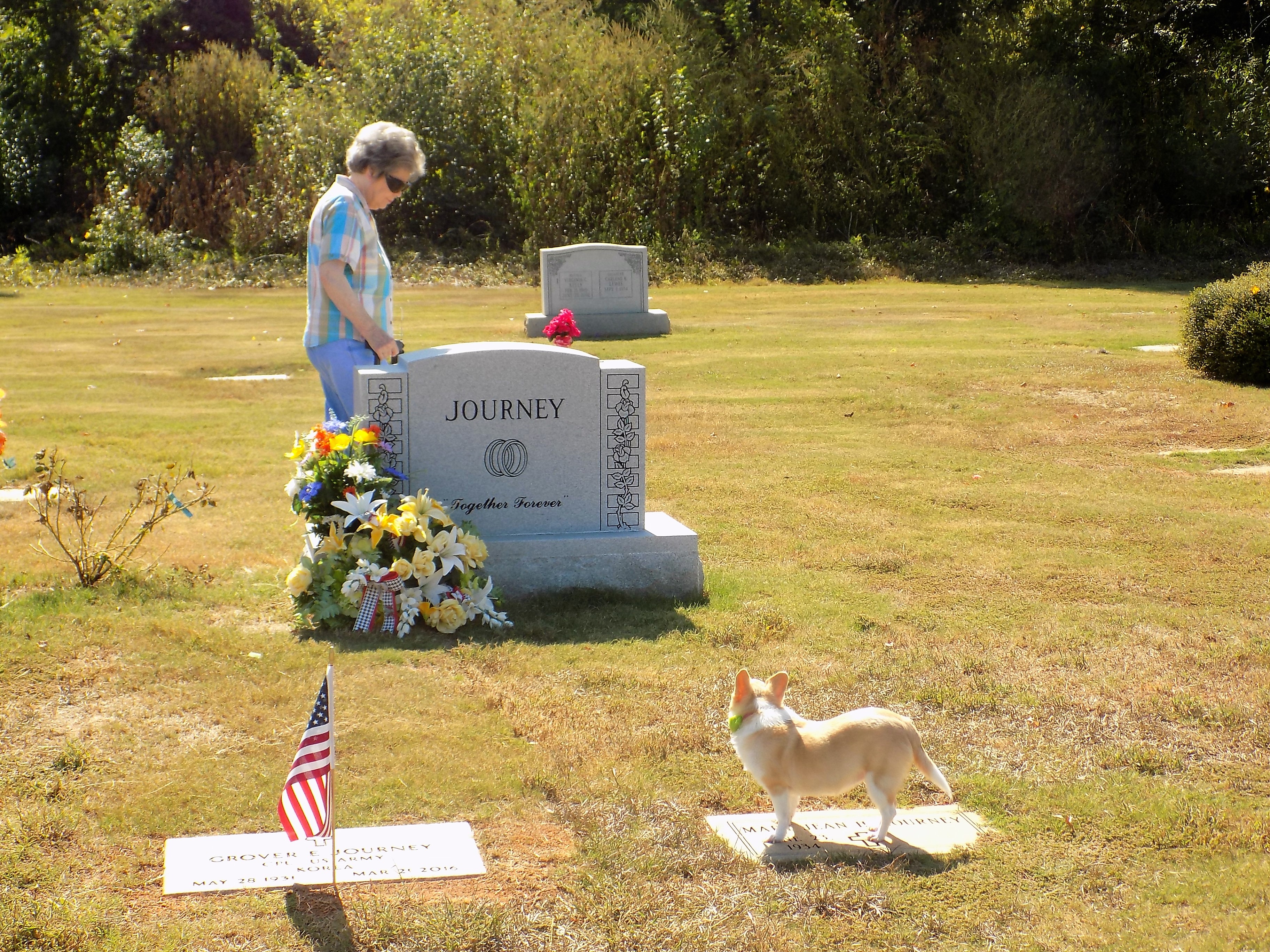
This comes to mind because I’ve had to think about death and dying more than usual this year. And, as I commented to my mother recently, I’ve spent more hours in cemeteries this year than I ever imagined spending in my entire life. My mother visits my father’s grave every day and when I’m in town I go over there with her.

My parents have four plots in Elmwood Cemetery in Birmingham. Dad is there and Mother will be beside him but the two extra plots haven’t been claimed. Mother’s hints that she wants me to take one of the remaining plots have become gradually more frequent and more insistent.

Elmwood is a beautiful cemetery, one of Birmingham’s oldest and one of the largest in the country. It’s a beautiful and peaceful place and its inhabitants are a composite of the social, cultural, political, artistic, medical, academic, industrial, and sports history of the city. The Elmwood staff was lovely to my family as we made arrangements for Dad’s memorial and burial there earlier this year.

If I decide to be buried, I would be perfectly happy to be buried at Elmwood if they allowed natural burials. There is still a lot of confusion and misunderstanding about what kind of burial is “natural.” It’s ironic, really, since most Americans had some form of natural burial before modern times and modern laws and the emergence of a very powerful funeral lobby.

There is a history of embalming throughout civilization, of course, but modern funeral practices and preservation really took hold in the United States during the Civil War when embalming became a way of preserving soldiers’ bodies so they might be returned to their families. “Morticians” around that time re-classified themselves as “Funeral Directors” and the modern death mega-industry was born.

Here’s what I mean when I say I want a natural burial: I want my physical remains and the vessel that contains them to go back to the earth as naturally as possible. My preference is to be buried in a pine coffin without any sort of preservative and let nature take its course and reclaim my remains. That means no embalming or preservation of any kind, a coffin that is biodegradable, and no burial vault.

As I’ve researched natural burial, I have found that the tree-huggers can be just as rigid in their own way as the funeral conglomerates. For example, many natural burial sites do not allow tombstones or markers, or they mandate burial in shrouds. I’d personally like an upright stone marker at my grave and I wouldn’t mind being buried wearing clothes.

I would always prefer gentle and natural burial to harsh cremation (who among us really wants to be burned to a crisp in a fire?) but the restrictions imposed by the industry do not necessarily support my preferences. The only reason I might consider cremation is if I am unable to be guaranteed the kind of natural burial I desire. The options of cemeteries that allow natural burials are still few and far between and I have found only one in Alabama and it’s too far from home. Having my ashes cremated and scattered is the closest thing I can conjure to natural decaying as a way of returning to the land if I can’t be buried according to my wishes.

I realize that I will not be around when all of this comes about and that, at that point, it really doesn’t matter what becomes of my remains. Even so, I want my end-of-life rituals to be based on personal and spiritual decisions – not corporate ones. I have always liked the concept of “ashes to ashes and dust to dust.”

I know that thinking too much about such things may seem (and is) morbid, but after a year of the deaths of several loved ones and friends, it’s better to be safe than sorry.

As a friend of Dad’s said (with a nod to Hemingway) many years ago, reacting to the unexpected death of a mutual acquaintance – “It seems like people are dying these days that have never died before!”

Helen Keller. The Myth of Water. Jeanie Thompson

dscn0515  Helen Keller (1880-1968) is arguably the most famous person to ever come from Alabama. The story about how the young deaf and blind Helen was given words by her teacher, Anne Sullivan, is still well known. She went on from the water pump in Tuscumbia to become a Radcliffe graduate – the first deaf and blind person to ever earn a B.A.; an acclaimed and much translated author and lecturer; a world traveler who knew French, Latin, Greek, and German, in addition to English, sign language, and Braille – and she could read lips with her fingers!; and an advocate for the rights of people with disabilities.

She was an American Socialist, a member of Industrial Workers of the World, and a pacifist who visited Hiroshima before the bomb and again afterward to lament the harm mankind is capable of perpetrating. We know that she fell in love with and planned to marry a man who served briefly as secretary for her and Sullivan and that the planned elopement never occurred. This was in a time when people with disabilities were most often discouraged from having romantic relationships.

It seems she knew all of the most prominent people of her time: Alexander Graham Bell, Enrico Caruso, Charlie Chaplin, sculptor Jo Davidson, the Roosevelts, and Mark Twain were among her friends and she knew every American president from Grover Cleveland to Lyndon Johnson.

Helen Keller had handicaps but seems to have overcome all barriers which were placed before her. Alabama chose her to represent the state on its state quarter in 2003 (the only U.S. coin to feature Braille) and Alabama chose a statue of seven-year-old Helen at the water pump to represent the state in the U.S. Capitol Visitors Center as one of two Alabamians in the National Statuary Hall Collection (Gen. “Fightin’ Joe” Wheeler is the other). Of course there is irony in the circumstance that what is considered one of the most conservative states in the nation is so prominently represented by such a progressive liberal. I love that irony.

Helen Keller was a subversive in many ways.

At her reading at Carnegie Visual Arts Center in Decatur, Alabama, on September 15, poet Jeanie Thompson commented that nowadays a traditional poetry reading almost seems to be a “subversive act” since such events are so rarely done anymore.

Jeanie Thompson’s new book, The Myth of Water (www.uapress.ua.edu), is a lovely collection of poems “from the life of Helen Keller.”  Each poem is an imagistic contemplative meditation in a first person voice. The persona is usually Helen but there are also poems in the voices of those who encountered her in her life.

It thrilled me to know that Jeanie Thompson has a new collection on the shelves. I have known her poetry since we were both at the University of Alabama and her books like White for Harvest: New and Collected Poems and Litany for a Vanishing Landscape have a permanent home on my bookshelves.

In The Myth of Water Thompson weaves a life from childhood to death and beyond in a series of brief and often breath-taking poems which attempt to break through the silence and explore what Helen Keller must have been thinking, feeling, seeing in her heart and in her mind’s eye. These are 34 poems of loss and longing, heightened consciousness and humanity, the challenges and triumphs of an unvanquished spirit hungry for life. Thompson’s is an ambitious and daunting project, flawlessly rendered.

By entering a sensory-deprived existence, which found ways to not only compensate but to prevail, Thompson’s poems heighten the reader’s own senses and awareness. I thought I knew what I needed to know about Helen Keller. Now, after reading these poems, I long to learn more. The Helen Keller quote – in English and in Braille – on the Statuary Hall statue is “The best and most beautiful things in the world can’t be seen or even touched, they must be felt with the heart.” Thompson has made an imaginative journey into Helen’s heart.

After the reading, I took the Upper River Road south of the Tennessee on the drive back to Huntsville from Decatur. A full moon shone down on cotton bolls that had just burst open, glowing white and pure in the dark fields, the first cotton I have seen this year.

A light rain began to fall as I parked and headed to my back door. I turned to look up at the full moon, still showing through thin clouds. The cool water fell softly on my face as if for the first time.

Friends of the Café Dinner: Adam Evans

dscn0460  I’ve stopped trying to rank the meals I’ve had at the Friends of the Café dinners at the Alabama Chanin factory in Florence. When I think a Factory meal can’t be topped, I travel over to the Shoals and have another meal that once again makes me appreciate food in a new way.

I have missed a few of the Factory events but I think I have now attended six or seven starting with an amazing dinner featuring the food creations of chef Vivian Howard in July 2014.

The Factory’s own executive chef, Zachariah Chanin, and his staff created a truly memorable Spring Harvest dinner in May 2016 that blew me away with its exquisite simplicity and low-key elegance. That meal was not long after the legendary Frank Stitt and South Carolina pitmaster Rodney Scott teamed up for an amazing spread featuring Scott’s savory whole hog and a slough of accompanying sides by Stitt and his crew. dscn0472

So it was with great excitement and anticipation that my friend Anne and I trekked back to the Shoals for a late-summer dinner featuring chef Adam Evans, a Shoals native, and benefiting Southern Foodways Alliance. Evans is transitioning now after several years in Atlanta with gigs at The Optimist and Brezza Cucina; exciting rumors were circulating at the dinner about where he may launch his next culinary venture and, if they are true, I may have many more opportunities to sample his exciting food.

I have written in more than one essay about how Natalie Chanin promotes community in her work and design and in her outreaches such as the Factory dinners. At Zach’s dinner in May we sat across from a charming couple from Indianapolis and at the Evans dinner our dining partners were another great couple from Tulsa.

Chef Adam’s meal was personal and full of surprises, telling his story of working in restaurants in many locales with the feast “beginning and ending right here in Alabama” as the menu note stated. Passed around hors d’oeuvres included grilled oysters and lemon butter, pork belly and watermelon, lobster roll bites, and tomato and bacon tea cake sandwiches. The big surprise of the hors d’oeuvres was a chicken stew soup dumpling which demanded to be downed in one satisfying bite. The savory dumpling had a filling of actual chicken soup that was a surprise and a unique treat. There were wine pairings with every course. fullsizerender-4

When the diners were seated, we were served a beautiful garden salad harvested from the garden of “Henry H.” – the chef’s late grandfather. Henry’s garden is still maintained by chef Adam’s father. The chef’s story of the garden was as moving as the salad was good.

The surprises continued with a second course of a seafood gumbo with a lot of heat. In lieu of the serving of rice that usually accompanies gumbo, this gumbo had a dollop of potato salad on top. It might not sound good but everybody was raving about the gumbo – potato salad combination. John T. Edge of the Southern Foodways Alliance was among the diners and asked for the chef to come out and explain the potato salad with the gumbo. It turns out Evans picked it up from the father of a friend when he was working in New Orleans. He said the man made a great gumbo and always put potato salad on top. It’s a touch I plan to remember and steal. Indeed, I think Chef Evans managed to introduce a southern food way that surprised even John T. Edge.

fullsizerender-4The third course featured pancetta wrapped guinea hen with chanterelle mushroom, husked cherry, and Swiss chard. Just when it seemed the chef couldn’t possibly top himself, the fourth course arrived with duckfat poached Gulf swordfish with Carolina Gold rice grits, corn, charred okra, and shrimp chili butter.

Finally, a muscadine and fig crisp was served for dessert, the staff was introduced, and fond partings were exchanged with the community that had assembled for the evening in the very special place that Alabama Chanin has built in Florence in the Alabama Shoals.

At some point during the evening, the people at our table were discussing careers and I said, “I’m a university professor but I’d rather be a ‘lifestyle guru’. I didn’t realize that was an option when I was coming up.”

If I had known that “lifestyle guru” would be a thing that people might make a living at, and if I had managed to become one, I’m sure I would be proselytizing for the Alabama Chanin aesthetic and, after the meal of a couple of weeks ago, for the homegrown and brilliant culinary aesthetic of Adam Evans.

As always, I can’t wait for the next Friends of the Café dinner in October. img_4211

Pounding the Sidewalk, 2016

DSCN0490 When I arrived in Birmingham on Friday afternoon for the 2016 edition of the Sidewalk Film Festival it never occurred to me that of the eighteen movies I would see over 48 hours, I would drive home on Sunday night most pumped about a documentary that featured performances by high school color guards.

Contemporary Color is directed by Bill Ross IV and Turner Ross, the filmmaking brothers whose 2010 documentary 45365 about nine months in the life of Sidney, Ohio, is still one of my favorite movies to be screened at Sidewalk ever. The Ross Brothers’ latest, Contemporary Color, was conceived and produced by David Byrne, one of my musical heroes, and documents a one-night only event at Brooklyn’s Barclays Center. Byrne invited ten high school color guard units to perform live performances set to original music written especially for the event by contemporary artists including David Byrne, Nelly Furtado, Devonte Hines, How to Dress Well, Lucious, and St. Vincent. Each of the artists performs their compositions along with the color guards live at Barclays.

It’s hard to explain, really.

The Ross Brothers take the live event and turn it into a hypnotic meditation on color guards, interspersing concert footage with individual profiles, backstage glimpses, rehearsal footage, artful segues, and, at one point, the voice of an enthusiastic New Jersey grandfather cheering in the arena. The cinematography, sound, and editing are stunning. Especially powerful are shots of a young color guard performer doing his routine alone in the garage of a house juxtaposed with his powerful performance at the actual event. Contemporary Color is a fierce and brave movie presented without irony. I kept being reminded somehow of Godfrey Reggio’s “Qatsi trilogy” of trance-inducing films scored by Philip Glass that were released between 1983 and 2002.

The thing that can be most frustrating about Sidewalk is also one of the things that I enjoy most about it. Nearly 200 titles of all lengths and genres are presented on ten screens at seven locations on the north side of Birmingham’s city center in a single weekend. With ten or more screenings running simultaneously from early morning to late at night, you must plan carefully to get the full benefit. Even with the most precise planning, one is always going to miss out on something he wanted to or should have seen. That is part of the charm of the event — keep them wanting more.

Contemporary Color was the biggest surprise of the weekend but there was plenty to enjoy and savor; I only walked out of one screening (which shall remain nameless).

A nice little character-driven narrative feature called Little Men, directed by Ira Sachs and screened at the Alabama, was my kick-off to a Saturday full of screenings. Sachs has the restraint to end his film at the exact right moment. Little Men is full of fine performances by grown-ups like Greg Kinnear and Jennifer Ehle but the breakout performance is by a young newcomer – a kid named Michael Barbieri, playing “Tony.” I look forward to seeing more of his work in the future.

DSCN0513My Sunday screenings started off at the newly restored Lyric Theatre with DePalma, a talky documentary about Brian DePalma, one of my personal “guilty pleasure” directors. DePalma, directed by Noah Baumbach and Jake Paltrow, is packed with scenes from DePalma’s classics like Carrie and Dressed to Kill, Scarface and The Untouchables, and a generous sampling of other directors’ movies that influenced the quirky and opinionated DePalma.

Sidewalk brings in motion pictures, audiences, and filmmakers from all over the world but it has always been notably generous in finding room to showcase Alabama filmmakers. I always work some of those screenings into the weekend. Clearly the most popular of the Alabama-centric titles this year was Gip, Patrick Sheehan’s award-winning documentary about gravedigger / blues musician Henry “Gip” Gipson. Gip, who cites his age as “somewhere between 80 and 100,” is the proprietor of the last remaining juke joint in Alabama

DSCN0488Birmingham’s central city core is undergoing a resurgence and that is partially a result of the efforts of Sidewalk at the festival and throughout the year. At opening night, it was announced that the multi-use refurbishment of the old Pizitz department store building (Pizitz was my favorite of the big downtown department stores as a youth) is set to include permanent offices for Sidewalk and two 100-seat movie theatres.  The new development will be “The Pizitz.”

Downtown Birmingham on the final weekend in August is an indie film lover’s paradise, full of memorable characters on the screens and in the streets. I always leave inspired. DSCN0493

The Farmers Market on Finley Avenue

  DSCN0456 Recently, when I didn’t feel motivated to navigate the hordes crowding into the more trendy local farmers’ markets, I headed out to Finley Avenue and Birmingham’s old Alabama Farmers Market (www.alabamafarmersmarket.org), a sprawling complex of open air sheds and rows of warehouses where truck farmers sell their seasonal harvests 24/7 and resident vendors display their agricultural products.

DSCN0449As far back as I can remember that big farmers market has been on Finley Avenue in Birmingham’s westside. The Jefferson County Truck Growers Association formed in 1921 and the Association’s Alabama Farmers Market moved to its Finley Avenue location in 1956.

When I was a child we would take Grandmother Harbison to Finley Avenue where she would stock up on fresh produce for the amazing meals she seemed to always be cooking. She would also can and “put up” for the winter in the big chest freezer down in the basement. Grandmother seemed to always have a large pot of homemade vegetable soup warming on the stove no matter the season. DSCN0450

I am an ardent supporter of local food and community farmers; I might hit three farmers markets over the course of any given week during the warm months. I’m talking about those weekly pop-up markets with farmers selling their wares in avenues of tented stalls for three to five hours.  If you pay attention, you can find such markets almost every day of the week at a church or parking lot near you.

These weekly neighborhood markets have become ubiquitous and popular– which is great — and many have expanded to include artisans and musicians, deejays and demos. I used to feel refreshed after a Saturday morning stroll through Birmingham’s Pepper Place Market but these days I mostly feel stressed and relieved to get away from too many people, too much noise, animals and their people hogging the pathways, and unnecessarily wide baby strollers. The carnival atmosphere begins to distract from the market’s original purpose to get local food to local residents.

So it was a refreshing change to go out to Finley Avenue after too many years away and get back down to just the basics of a farmers market with growers selling off the backs of trucks. The mechanical pea-shellers were cranking out bushels of peas in mere minutes. Some vendors featured rows of canned items with assorted pickles, local honey, chow chow, soups and such.  In August there are abundant mounds of watermelons, cantaloupes, and tomatoes. DSCN0451

The sights, sounds, and aromas took me back to a time when farmers’ markets were less abundant but the shoppers were probably more earnest about their fresh local food. The people who frequented these markets weren’t just seeking out the coolest heirloom tomato (I’m a fan of heirloom tomatoes, too, by the way) but were focused on the values of locally sourced food and finding ways to feed a family in healthy, sustainable, and economical ways.

The originals like Alabama Farmers Market on Finley will be around for a long time. DSCN0457

Peaches, 2016


DSCN0447  We’re not even to the halfway point of calendar summer and I’m already starting to miss it. Nowadays public schools start ridiculously early and the place where I teach will be starting its fall semester before long. All of these things contribute to the feeling that summer is almost over. At least there is the salve of the impending start of college football season.

What really triggers my late-summer doldrums is the prospect of another local peach season coming to an end. On my most recent trip to Jimmie’s Peach Stand in Chilton County, one of the Harrison sons predicted that their peach trees would only be yielding for another ten days to two weeks this year. The drive to Chilton County and along back country roads to Jimmie’s is always a tonic for me and I hate to see it end each year around this time.

I have written about Jimmie’s in the past and about my regular trips during their season which usually commences around Mother’s Day and ends in late-July and occasionally into August. I try to get down every two weeks during the season and I try to only eat Chilton County peaches purchased at Jimmie’s.

In a conversation a few years ago, I asked Jimmie Harrison for recommendations of good peaches in north Alabama. “I always thought Mr. Isom grew a good peach,” he said, referring to Isom’s peach orchards near Athens. So when the Jimmie’s crop is depleted, I can usually rely on Isom’s for another basket or two (www.isomsorchard.com).

Jimmie’s peaches without any embellishment are perfect and this year’s crop seems to bear an overall larger fruit than usual. It’s impossible to have a surfeit of peaches but occasionally they get pretty ripe before I can get to them and I have some fallback recipes to make sure that not a single peach is wasted. I don’t make many pies so when I’m ready to throw peaches in the oven it’s usually in a cobbler.

Over the years I have collected some ways to take full advantage of peach season and their abundance and, with the local season’s end upon us, it’s time to share a couple of fresh and simple peach recipes.

The peach salsa is simple and has multiple uses. Use it however you would use any other type of salsa but I love it on a fish taco. The following recipe makes a nice batch.

Peach Salsa

2 large ripe peaches, peeled, pitted, and diced

3 tablespoons thinly sliced green onions (white and green parts)

1 teaspoon grated lime zest

1½ tablespoons fresh lime juice

1 tablespoon chopped parsley

¼ jalapeno pepper, seeded and minced

Cayenne pepper to taste

salt to taste

Simply mix all ingredients together and serve.

The Peaches and Beaujolais dessert recipe originally came from Frank Stitt’s Southern Table cookbook. Over time I have used it so much without referencing the cookbook that I think it has morphed into my own version. In fact, I pulled out his recipe not long ago to copy for a friend and realized that I have taken liberties with the original. I had forgotten that the original uses granulated sugar along with the brown sugar.  Here  is how I basically make it these days:

Peaches and  Beaujolais

1 medium ripe peach, peeled, pitted, and quartered

1½  tablespoon dark brown sugar

4-6 ounces good Beaujolais or Morgon

Put half of the dark brown sugar in the bottom of a wine glass. Put peach quarters in glass. Drizzle the other half of dark brown sugar over the top of the peaches. Pour Beaujolais (or Morgon) over the peach and sugar mixture. For a really decadent variation, embellish the Beaujolais with Cointreau or Grand Marnier. Garnish with mint leaves.

Both of these peach recipes capture the freshness and vibrancy of the summer season for me and enhance that distinctive peach essence in an exciting way.

Make the most of the rest of your summer. Hmm … shouldn’t local figs be here soon?

5th of July


Fallout Shelter Logo  One of my credit cards was compromised online recently by an Uber patron, it seems. The problem was addressed and headed off fairly quickly but when I told my mother about it in a telephone conversation she began to lament all of the crime and evil that are taking place around us and that thread inevitably lead to concern over our politicians, gun laws, and the hopeless impending election. I thought about that for a while and finally I said, “Well, yeah, but at least we don’t have to worry about the stagecoach getting held up by a bunch of armed bandits.”

We’re always living in scary times, I guess.

I was too young to fully participate in the 1960s. But I was there and aware and curious as a young boy – reading the daily newspaper from an early age and never missing the national news that aired each evening at 5:30. I knew (kind of) what was going on in the world around me.

It was pretty interesting. And pretty scary at times.

In October 1962 when the Cuban Missile Crisis was happening, I was nearing the end of my second month of second grade. I wasn’t sure what was going on but was aware of the gravity in the voices of the newscasters and the hushed tones of my parents as they discussed the news of the day. The teachers at school would huddle together outside the classroom, whispering and looking anxiously back at their charges.

In the television in the den the grim voices were reporting on foreboding things that I didn’t quite comprehend. We usually watched Huntley and Brinkley in those days.  I remember going out into the back yard and looking up at the skies at the dark clouds gathering. Or is that just my imagination playing tricks with my memory?

I didn’t understand what was happening but I was aware when the threat of the Cuban Missile Crisis was past and there was a palpable sigh of relief among the grown-ups.

Radio Free Europe was an agency that was broadcasting news and programming from the west into the communist bloc behind the “Iron Curtain.” In the ‘60s, regular television public service announcements would raise awareness about Radio Free Europe. Those PSAs would feature a European deejay behind the controls at a radio station introducing the American song “On Broadway” by The Drifters.

1964 presidential candidate Barry Goldwater’s campaign ads featured the image of Soviet premier Nikita Khrushchev warning the west that “We will bury you!” For many Baby Boomers, I suspect that Khrushchev’s was the face of the boogeyman.

In addition to the usual attractions and agricultural exhibitions of a state fair, I remember a trip to the state fair at the old fairgrounds on 3rd Avenue West in Birmingham in the 60s that also featured fallout shelters for the home back yard. Climbing into the tight quarters, there was information on how many supplies would be needed to survive nuclear fallout. Civil defense signs indicating the locations of fallout shelters were still scattered around when I was grown.

During the time that I was discovering the Beatles, the Stones, Dylan, and Motown, I was also living in Birmingham at the height of the Civil Rights movement. Anticipation about the Cold War was augmented by consciousness of the various social movements afoot stateside.

Back then “Breaking News” reports on the television were really breaking news and we would stop and wait to see what had happened. The PTA at Green Acres School had just finished its drive to supply a television for every classroom (largely by collecting S&H Green Stamps) so my third grade class was able to watch live as the announcement was made that President Kennedy had been shot and killed.

Schools had regular bomb drills and “duck and cover” was a mantra promoted in instructional films by a helmeted “Bert the Turtle.” Green Acres was a neighborhood school and most of its students lived within easy walking distance. I lived a block from the school and even had permission to go home for lunch.

So I wasn’t concerned when we got a note to take to our parents saying that on a selected day all city school students would be dismissed promptly at 3:00 and were to walk, not run, to their home. This applied to the children who were picked up at school as well as the majority of us who walked. The directive said that somebody should be at the student’s home to record precisely what time the student arrived. For the majority of us in my neighborhood in the ‘60s that person would have been our mothers.

The next day we were instructed to return the filled out time sheet to our teachers. The result of this exercise was that those of us who could walk home within a certain amount of minutes would be released to our homes in the event of an impending air attack. The rest would remain at the school with their teacher to “duck and cover” I guess.

I was a young and naïve schoolboy but I was pretty sure even then that the duck and cover routine wasn’t going to be any kind of protection if the Soviets started bombing us. There was solace in the fact that I would at least get to be home when it happened.

The 1960s continued and in October 1969 I was in junior high in Nashville. On the day of the Vietnam Peace Moratorium I got to school and heard whispering all around. Some of the students were organizing a massive school walk-out at 1:00 p.m. to protest the war. It was hard to concentrate in class with the tension and anticipation. Between classes, in classes, and during lunch people kept asking, “Are you walking out?”

I kept saying, “I don’t know. Let’s wait and see what happens.” But deep down I knew I probably wouldn’t. I’d get in trouble with Dad and Mother if I left school without permission.

At 12:55 the nervous energy was bubbling throughout the school. I had overheard some of the teachers talking together and trying to decide the best course of action when the walk-out occurred.

Suddenly the static-filled school PA system came on and an assistant principal made an announcement that the entire school would go outside at 1:00 p.m. and stand in silence for ten minutes to honor the soldiers who were serving or who had been killed in Vietnam and that regular classes would resume at 1:15.

There were grumbles among the student organizers that their thunder had been stolen by the administration. For me and probably most of my classmates there was relief that we would not have to make a decision about civil disobedience that afternoon. When our ten minutes were up the majority of us went back to class; a few walked down the street and away …

The 1960s was a combustible and scary time – albeit one with a fabulous soundtrack and lots of style.  Looking back from the perspective of a much more complicated world half a century later, the struggles of the 1960s seem better defined, much less confusing, and – frankly – much less threatening than the world we are dealing with in today’s 24-hour never-ending news cycle.

Back then, we could more easily put a face with the threat and the moral boundaries seemed more clear. Nowadays, not so much. The fireworks and celebrations of Independence Day are always followed by the realities of July 5.

Ensley

DSCN0435 Each person’s Ensley narrative varies but the through-line boils down to this: Ensley is a proud and tight-knit community on the west side of Birmingham that once was a bustling steel-making industrial center with omnipresent smokestacks, industrial barns and sheds, shift whistles, train traffic, and massive blast furnaces. Because it was a 24-hour town full of shift-workers, many Ensley businesses in the early to mid-20th century were 24/7 operations.

The jazz standard “Tuxedo Junction” is about a club at an Ensley streetcar crossing. Erskine Hawkins, a Birmingham native, is the composer of that tune. My favorite rendition is Glenn Miller and his Orchestra’s chart-topping 1940 big band arrangement.

When U.S. Steel shut down its Ensley works in the early-1970s, the area’s population and businesses began to disperse.

DSCN0399Today, ghosts of Ensley abound; much of the community is semi-abandoned and desolate. Birmingham media have a tendency to report anything that occurs in western Birmingham as happening in “Ensley” and you have the additional burden of a bad rep and the not always accurate impression of an abundance of crime.

Crime is definitely a problem these days in Ensley but the community seems to get more blame than it deserves. Recently, when I was visiting my mother in her over-the-mountain Birmingham neighborhood, a local television news report was covering a recent shooting in “Ensley.” When the address of the crime was given Mother looked at me and said “That’s a Central Park address – why are they calling it Ensley?” For some reason any bad news from the west side of the city automatically gets attributed to Ensley.

DSCN0430Katherine Webb’s 2014 article “Who Is Ensley?” in Weld (www.weldbham.com/blog/2014/01/29/who-is-ensley) provides a good overview of efforts to resurrect present-day Ensley from the challenges it has encountered since the steel mills were shut down. The article provides plenty of first-person evidence of the pride that still hangs strong in the community.

My father was raised on Avenue D and Mother moved around the corner from him to 25th Street as a teenager. Ensley was the starting point for Grover and Jean Journey’s 63-year marriage. Dad and Mother left Ensley for good in the early 1950s but Dad never ceased to be a proud “Ensley boy.” DSCN0429

Mother still talks about shopping in Ensley as a young woman and I remember visiting Ensley department stores such as Cotton’s and Goldstein & Cohen with Mother and Grandmother when I was a little boy. Dad’s first job was at the poultry shop that Fred Trucks owned over on Avenue E. Marino’s grocery store, which operated then, still operates on Avenue E across from what used to be Ensley Lanes bowling alley.

One could get a meat and three at Ensley Grill or “all you can eat” catfish at Catfish King’s Avenue E location in the building that was once the Franklin Theatre. In Catfish King, tables were set along each side of a center aisle on raised sections that once held rows of theatre seats and the stage was still there (the grand drape too, as I recall).  These places were still around when I hit my teens.

Dad’s childhood home, in drastically altered form, is still standing and inhabited on Avenue D but the house that Mother’s family lived in around the corner is gone. A house that was once owned by Mother’s grandfather, Houston McCarn – who lived in Cullman but invested in Birmingham real estate when the city was still young, still stands on the corner down the street from Dad’s house. It has been long abandoned.  DSCN0407

It is these ghosts of the past and the hope for community renewal that still draw me to Ensley. But my main draw these days is an ongoing fascination with the beauty and decay of the former Ensley industrial sites that were abandoned when the steel mills shut down. The railroad tracks are still active through the site and the viaduct over the tracks where 20th Street-Ensley becomes Birmingport Road heading out to the river is a good spot to linger and observe the buildings and remaining stacks that are being rapidly reclaimed by nature.

On a clear day, peering down from the middle of the Ensley viaduct toward Fairfield, you can see to U.S. Steel’s Fairfield plant where the remaining blast furnace was idled in 2015. Fairfield and Ensley steelmaking operations have gone from tens of thousands of workers at their peak to a few hundred at the pipe mill in Fairfield today.

On a hot June morning, the mimosas are prolific at the Ensley plant. Rusty railings and sagging metal buildings with broken windows sit along abandoned roads that used to teem with trucks and industrial vehicles. The few remaining stacks stand tall amid the ruin and rubble. A train creeps through the site, taking loads to more remote locations that are not yet abandoned. DSCN0420

In the modern post-industrial era, things come and go more quickly than in earlier epochs but, to me at least, these 20th century industrial remains have a pride and dignity equal to that of ancient ruins of early civilizations. The craggy, mineral-laden ground that now nourishes the mimosas, poke weed, kudzu, and wild vegetation of the Ensley ruins is the same ground that nourished my family in a recent past that seems impossibly far away.

I will always go back to check on Ensley. DSCN0404