Author Archives: gedwardjourney

Unknown's avatar

About gedwardjourney

Edward Journey is a writer, theatre artist, and retired university professor. "Professional Southerner" is an online journal focusing on topics -- Southern and other -- that stoke Edward's interests. Edward may be reached at likatrip@yahoo.com.

Mobile and Havana: Sisters across the Gulf

Serendipity happens. As I was traipsing around south Mobile County, Alabama Writers’ Forum posted my latest book review of Mobile and Havana: Sisters across the Gulf. For anyone interested in Mobile, there are so many recent books being written about the area. And this one includes a huge helping of history and architecture and the compelling history of Havana.

Here’s a link to that review:

Mobile and Havana

Christmas Card – 2024 Edition

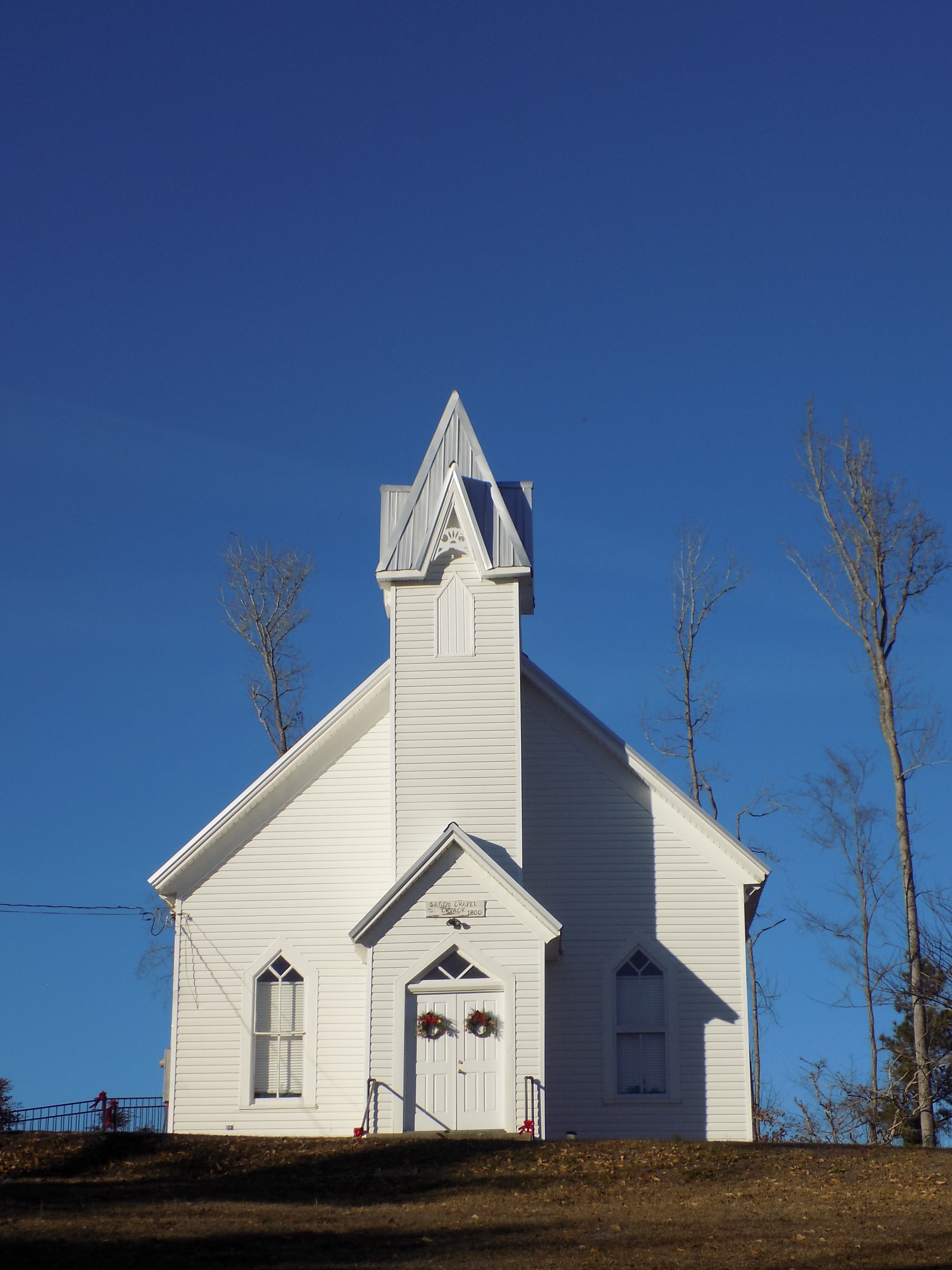
My Christmas card project began twenty-something years ago when I spotted a little white church off the highway between Montgomery and Tuscaloosa. There were wreaths on the door and I thought it would be a perfect Christmas card image to celebrate where I was in the world – without much snow and seldom a snowman (things that had turned me off of so many cards in the past). I photographed the little church and had cards made the next Christmas. It was not intended to become a years-long project, but after the responses I got, I decided to keep it up.

I’ve explained what I’m looking for before, but I usually seek out older Alabama churches and the photo should be taken in the month of December, whether the building is decorated for the season or not. Since that first card, I have shared images of over twenty churches from all over the state and am always on the lookout for next year’s church. A couple of times, I didn’t have a church picture I wanted to use and substituted images from my annual holiday visit to Baldwin County. I sent an image of a dock on Mobile Bay one time and a photo of a live oak on the grounds of the Grand Hotel on another.

Believe it or not, those non-church images got pushback. One of my favorite former college professors praised the dock image but added that she “much preferred” my church photos; I felt like I had disappointed her with a mediocre class paper.

Last year, on a drive from a ceremony in Tuscaloosa to a theatre performance in Montgomery, I was on the new section of Highway 82 that bypasses the Bibb County town of Centreville. I caught sight of the back of a gleaming white country church off to the west and took the next turn off the highway to check out a building I suspected I’d never seen before. When I got to the building, it was the same church that inspired that first Christmas card project around 2002; it used to be on the main highway before a bypass was built and I had never seen it from the back before. It looked great – freshly painted a vibrant white, new roof, no longer an air-conditioning unit in a front window.

Even though the Sandy Chapel Church (est. 1800) just outside Centreville had been the debut church in my Alabama Christmas card series, I decided it deserved an encore. Last year, on the way back from Point Clear to Birmingham, I detoured onto Highway 82 to get a December shot of the building. It was a perfect, cloudless afternoon and the building shone beautifully atop its hill.

The cards went out on the first of December. This week, I am back in Baldwin County and keeping my eyes open for ideas for my 2025 card. Happy Holidays. And try to keep hope alive for 2025.

Joyland

I’ve been following Chef Sean Brock’s career for about a decade now. The Pound, Virginia, native first hit my radar because of his roles at Charleston restaurants Husk and McCrady’s and for his devotion to and preservation of Southern foodways and Appalachian cuisine. Brock has since moved his base of operations to Nashville where his restaurants, Audrey and June, and his “hi-fidelity vinyl bar and lounge,” Bar Continental, are drawing enthusiastic responses. Two of my favorite recent cookbooks are Brock’s Heritage (2014) and South (2019) in which he writes succulently and memorably about food and ingredients.

Sharing a laugh with Sean Brock in Florence

I have only had the opportunity to eat a complete Sean Brock dinner on one occasion. He helmed a Friends of the Café dinner in Florence, Alabama, at the Alabama Chanin design factory. From the tomato and okra stew with a grilled pig tail garnish to a shrimp and eggplant purloo, grilled steak with black truffle and sweet potato, and the panna cotta dessert, it was one of the finest of many fine meals I’ve had at that cherished spot.

I have been hoping he would get around to opening a restaurant in Birmingham, “the dinner table of the South” and home to a disproportionate share of James Beard Award winners, finalists, and nominees. My hope has finally come to fruition – although perhaps not quite in the way I expected.

Sean Brock has partnered with Nick Pihakis and the Pihakis Restaurant Group to open a location of Brock’s Joyland family restaurant in Birmingham’s Avondale neighborhood. The Pihakis restaurant portfolio is extensive and its various brands are ubiquitous in the Birmingham area and beyond. I must admit that I seem to be on a first-name basis with the staff at Rodney Scott’s BBQ’s Homewood location. Pihakis began with his father at Jim ‘N Nick’s Bar-B-Q in Lakewood. From there, the Pihakis group has expanded to restaurants featuring Gulf seafood, Greek, Italian, Mexican, breakfast, donuts, Rodney Scott’s, and now, Joyland – essentially an elevated breakfast and burger joint.

Joyland’s signature Crustburger features a thin hamburger patty, cheese, and onion between a flattened potato bun, skillet-toasted to a crusty crunch and served with a side of joysauce. A more traditional hamburger, fried chicken, Chicago dogs, an impossible burger, and chicken on a stick are also available. Sides include fries and hashbrowns. A breakfast and biscuit menu has a nice selection of options and sides, including a shake menu. An apple hand pie was a joyful completion to the meal. A bar is available as are “boozy shakes.” Everything I tried was good.

But the real reason I want to talk about Joyland is how committed the place seems to be to its name. From the sunburst mural on the side of the building to the sparkling primary colors throughout the retro interior and spacious courtyard, there is a bright vibe to the place. A disco ball, probably left over from the Rodney Scott’s BBQ that was previously in that location (all of Rodney Scott’s restaurants have a disco ball), dots the entrance area with dancing light and the music kept me moving in my seat. The television screens show cartoons and several children were going between the courtyard and the dining room. The urge to stand up and dance when Talking Heads’ “And She Was” came on was strong.  The staff is friendly and even seemed happy to be there.

And the food is tasty and cleverly straightforward.

Joy. What a concept.

The Birds of Autumn

Through an unusually hot and deplorable November amid drought conditions, the activity of the birds at the backyard feeders has provided respite. Trees and plants seem confused and bees, wasps, flies, and mosquitoes are taking advantage of the extended warmth, but butterflies have recently been spotted in the lantana that still bloomed in the raised bed until this week. Every time Lulu, the dog, goes out, a mosquito comes in.

The bird population seems to have thinned out but they still frequent the feeders. Cardinal sightings are more likely in early morning and dusk and the mourning doves still come in groups but they don’t hang out on the fence quite as much. I always leave the hummingbird feeders out longer than necessary; I always think there may be a stray after the rest have left. In fact, the last hummingbird we saw this year was quite late and seemed more frantic than usual to get fed and get gone around the time a hurricane was churning down in the Gulf.

A murder of crows converge on occasion. Lulu loves to dash out the door to chase them away. On first chase, the crows usually just fly up into a nearby pine to wait her out. If we go back out and I clap my hands and she barks, black crows can be seen scattering off in all directions, caw-fussing as they go. Once, I banged some pot lids and Lulu joined in with her happy dance, hopping up and down on her front legs. Neighbors were pleased with the commotion, no doubt.

A frost is forecast for sometime next week. Maybe some rain. I dread cold weather, but the earth sorely needs it. The plants will save up some energy, the leaves that haven’t decided yet will turn. I have tried to let the last grass mowing wait for the leaves to fall but it’s past time to mow the grass and the leaves can just take their time. The bugs will go away. The birds that stay will stay. The birds that go away will go.

______________________________

I didn’t realize it until recently, but I have found some peace in watching birds as long as I can remember. Even when they are acting up, they bring me peace. The grace and freedom they seem to represent may be part of the attraction. My grandparents had glass bird figurines on the mantel, in the china cabinet, and around the house, one of which lingers on my mother’s mantel. I have been looking at those cardinals all my life.  Mother also has a cabinet full of hummingbird-related items – plates, figurines, ornaments. My one and only piece of Howard Finster art is a white crane sculpture covered with his scribbled preaching. “My entire life is a sacrifice for you,” he writes.

Margaret Renkl’s book, The Comfort of Crows: A Backyard Year, is a beautiful book of essays published last year. Renkl knows how to watch and appreciate birds and savor the nature all around us if we just pay attention. A big edition of Audubon’s The Birds of America sits on the coffee table in my living room. I visit it often when I am at home. In admiration for Mr. Audubon’s work, I contribute to the Audubon Society. I support the society’s mission, but I’m not really interested in becoming a “birder.” I can identify the birds that I need to identify by their obvious characteristics, but I don’t identify the ubiquitous small greyish birds that are delightful and plentiful and look too much alike to my untrained eye. I misidentified a nesting bird in this space a year or two ago and got my hands slapped by a reader. So I appreciate them, but I keep their (perhaps mistaken) identity to myself. An organized bird-watching expedition sounds as deadly dull to me as the wine aficionado who can’t enjoy the glass without extemporizing ad nauseum on its qualities (or lack of). It’s kind of like a round of golf; I’m bored with the game but I enjoy the walk in nature.

Rarely am I aware when a bird has died. They come and go and I like to assume that the returnees are the same birds I watched last year and years before. I guess that’s the reason I think Alison Krauss and Gillian Welch’s version of the old hymn “I’ll Fly Away” would be a good selection for my funeral, if I have one.

‘tis the season for pensive posts, I guess. This is what’s on my mind this morning. So savor your birds. Enjoy their songs. Feed them and protect them to the extent possible. Make it a good fall. Despite …

Mobile, Alabama’s Antebellum Image

Historian Mike Bunn’s This Southern Metropolis examines the antebellum history and character of Mobile, Alabama, through the eyes of its myriad visitors.  It’s an intriguing dive into a unique Southern city. I reviewed it for Alabama Writers’ Forum.

This Southern Metropolis

Tanya and Dorise Play “Hallelujah”

November 6, 2024. One night several years ago, while in New Orleans for a conference, I was walking down Royal Street toward my hotel and heard music down the block. Two musicians were playing in a doorway on a corner. The song they were playing was Leonard Cohen’s “Hallelujah” and, even though it is a perhaps overused piece of music (apparently even Leonard Cohen thought so), it is still beautiful and haunting and splendid. On that night, I was going through some challenges back home and my dad was in the last six months of his life. The calming music stopped me in my tracks and sustained me for a while. I stayed and listened until a street parade and second line passed, the duo stopped playing, and the crowd dispersed.

The musicians were Tanya and Dorise. Dorise Blackmon, from New Orleans, was the guitarist and Tanya Huang, from Taiwan, was the violinist. They were regulars in the Quarter for fifteen years, announcing their retirement from busking in 2017. Fortunately, videos of their performances can be found online and they left some recordings that can still be purchased. I like to listen to them when I need a calming break.

The music ranges from classical to jazz to standards to pop and rock. Pachelbel, U2, Led Zeppelin, “Amazing Grace,” and “I Will Survive” are in the mix. You can find Tanya and Dorise’s performance of “Bohemian Rhapsody” online; that one becomes a raucous and joyous singalong. I distinctly remember them covering “Smells Like Teen Spirit” when I was there. Whenever I watch them, I am struck by Tanya’s intense concentration, despite the boisterous chatter of passing crowds or police sirens down the block. Dorise is equally concentrated on the music, but with a clear eye on the crowd, ready to intercept any disturbance that might hinder the performance. One can see people walking down the street who suddenly stop and listen, enrapt, as I was those years ago by the unsuspected interlude and its contrast with the chaos just up the street.

I learned recently that Dorise passed away in 2023.

_____________________________________________

This morning, I woke up thinking about Tanya and Dorise’s performance of “Hallelujah” that night on Royal Street. I needed the peace and calm I knew such thoughts would bring. And the memories. I have tried to stay calm about yesterday’s election and stay hopeful, but I am heartbroken and scared. I have seen people get passionate about this election who have mostly ignored elections in the past. I have watched friendships dissolve. I have listened in dismay as people I used to respect repeat nonsense they’ve heard from an ill-bred compulsive liar, insurrectionist, and convicted felon. Election Day is past and the trauma and the threat remain; insurrectionists gotta insurrect, I reckon. I am ashamed for my country and its amnesia. I reach for a bright spot and cling to the fact that one more Alabama congressional district was flipped by the Democrats last night. Even so, I wonder if our country will be worth saving in four years.

I mostly keep quiet and watch. As I was working toward my political theory degree way back during Watergate, my major professor urged us not to follow American politics: “It will completely distort your understanding of the theory and the process,” he smirked. But it’s hard not to rubberneck at a wreck.

I hope you will take a few quiet minutes to hear Tanya and Dorise. By the way, Dorise’s shirt says “Stop Bitchin’, Start a Revolution!” Amen and hallelujah.

Tanya & Dorise – Hallelujah

Titus Kaphar’s “Exhibiting Forgiveness”

My first awareness of the artist Titus Kaphar is learning about his provocative painting, “Behind the Myth of Benevolence” (2014). In it, Rembrandt Peale’s famous portrait of Thomas Jefferson is ripped back to partially reveal a woman representing Sally Hemings, Jefferson’s enslaved and assumed mistress and mother to six children the third U.S. president allegedly fathered.

Much of Kaphar’s art deals with the deconstruction and reassembly of American history, exposing secrets and lies and hypocrisies in a stunning conceptual conceit. Here in Alabama, his work may be viewed at the Birmingham Museum of Art and at Montgomery’s Legacy Museum of the Equal Justice Initiative.

_________________________________

When I taught directing classes, I stressed how directing for stage and, especially film, is a visual medium. If an audience gathers to watch a show, it is the director’s job to give them something to watch and not just listen. A major part of telling the story is delivering the visual cues. So it always interests me when artists from another visual medium make a film. The films of painter Julian Schnabel are always fascinating to watch, especially for their visual intensity (Basquiat, Before Night Falls, The Diving Bell and the Butterfly). Similarly, I admire films directed by fashion designer Tom Ford for their crisp visual discipline and precise characterizations (A Single Man, Nocturnal Animals). In each, the artist makes the film an extension of his visual aesthetic.

Which brings me back to Titus Kaphar and his powerful directing debut, Exhibiting Forgiveness. The film, from a script by Kaphar, is intensely personal, clearly biographical, and an offshoot of “The Jerome Project,” a documentary about Kaphar’s strained relationship with his father. Exhibiting Forgiveness tells of an artist on the rise as he is pulled back into a traumatic past that he never really left.

André Holland plays the artist, Tarrell, living an idyllic-seeming life with his musician wife, Aisha (Andra Day), and their impossibly adorable young son, Jermaine (Daniel Michael Barriere). André and Aisha take “turns” attending to their art and the scenes of their domestic life are calm and blissful. We spend time in Tarrell’s home studio and are privileged to see his art and technique take form through Holland’s sensitive and deft performance.

It is during a visit to Tarrell’s mother’s house that the artist is forced to face his recovering addict father. Aunjanue Ellis-Taylor, as the mother, Joyce, delivers a delicate performance as a forgiving and deeply religious woman trying to forge a reconciliation with the son and the father who abused him. John Earl Jelks is La’Ron, the father who has worked tirelessly all his life, acted destructively toward his family, and been given too many second chances. Ian Foreman as Young Tarrell also merits a mention. His scenes are primarily flashbacks and few moments are as moving as the look on his face as he is forced to cut the grass after an intense injury to his foot.

Kaphar’s script gives each principal scenes in which they can shine in performances that illuminate and enhance the film. As the film goes on, it becomes clear that there are no true villains here; each reacts to victimhood in their own way.

Kaphar’s haunting and evocative large-scale paintings are featured throughout the film, illuminating the memories that haunt Tarrell. The cinematographer Lachlan Milne has captured the film in ways that emulate Kaphar’s art. The urban landscapes lend authenticity and memory to the film’s lush images. A scene at a gallery opening captures the artist’s frustration at having his privacy violated after a volatile encounter. It is a rewarding movie to watch.

____________________________

In 2018, at the height of the movement to remove Confederate statues, I heard an interview with Titus Kaphar and was impressed by his rational response to the conflict. He said:

We’re having a national conversation right now about public monuments. And in this discussion … we have this sort of binary conversation about keeping these sculptures up or taking them down. And I actually think that that binary conversation is problematic. I think there is another possibility, and I think that possibility has to do with bringing in new work that speaks in conversation with this old work. It’s about a willingness to confront a very difficult past.

In Exhibiting Forgiveness, Kaphar confronts a difficult personal past with grace and authority. It is a stunning piece of art.

Book Review: Seven Shades of Evil

Robert McCammon, a master of suspense/thriller literature, is about to release Labyrinth, the final volume of his ten-volume Matthew Corbett series. Until that release, you might whet your appetite with the stories of the penultimate Corbett book, Seven Shades of Evil. I recently reviewed Seven Shades of Evil for Alabama Writers’ Forum. Read it here:

Seven Shades of Evil

Bhatt | Chanin

In October 2019, my friend Anne and I headed to Florence for the final Friends of the Café dinner of the 2019 season. The chef was Tandy Wilson of Nashville. As the diners gathered, we were treated to music by Single Lock Records musician Caleb Elliott, accompanied by violinist Kimi Sampson. It was, as always, a relaxing, magical evening at the former t-shirt factory – now the headquarters of Natalie Chanin and Project Threadways, the 501(c)(3) umbrella that guides the work of the Alabama Chanin fashion brand and The School of Making (Project Threadways | Alabama Chanin).

Nobody suspected that in five months the world would stop and that would be our final trip to Florence for several years.

Now, five years later, Anne and I are once again traveling to the Shoals on a beautiful fall evening toward the end of cotton season. Cotton fields are on each side of the highway, farm vehicles head home for the night, and cotton lint dusts the shoulder of the road like the aftermath of a winter flurry. When we received word that another Friends of the Café event was in the offing, it didn’t take long to text each other Let’s go. We also wondered if it would still be as magical an experience as some of the past dinners.

This most recent dinner was helmed by Vishwesh Bhatt, James Beard Award-winner at Oxford, Mississippi’s Snackbar (citygroceryonline.com). Born in Gujarat, India, Bhaat’s culinary training began in his mother’s kitchen and was further honed in the United States, where he moved as a teenager. Indian culinary influences mesh beautifully with his adaptation of dishes and ingredients of the Southern U.S. His 2022 cookbook, I Am from Here, illustrates Bhatt’s creativity and blend of unique but related styles.

Arriving at the Factory felt like a homecoming of sorts after five years and, after over two dozen of these events, I felt like we were Friends of the Cafe “O.G.s.” We didn’t know a lot of people there but were happy to see them. When we arrived, Natalie Chanin warmly greeted people at the door as the staff handed out glasses of brut rosé. Passed hors d’oeuvres included a lamb keema shepherd’s pie, royal red shrimp salad on a cornbread cracker, and Benedictine on rye topped with paddlefish roe. These preliminary bites were a tasty enticement for the meal to come.   Entering the Factory, guests encounter the showroom featuring Alabama Chanin’s latest line and other items of interest, including books, art, and dinnerware. Farther back, and behind a curtain of lights, is the inviting café area with places casually set at expansive wooden tables. We briefly discussed with Natalie the changes wrought by the pandemic and agreed that so many things had been changed by that period that will never be the same.

The guests took their seats in the café and introductions were made. All proceeds from the dinner will benefit Project Threadways and, at Chef Bhatt’s request, his chef’s fee will be donated to Giving Kitchen (thegivingkitchen.org), a nonprofit that provides emergency assistance for food service workers, including financial support and other community resources. Chef Bhatt’s charming and insightful comments evoked the textile history of his childhood home in India and the textile history of the Shoals area of Alabama. The first platters began to arrive for a family-style course – an impressive platter of sprouted lady cream pea chaat with apples, onions, chilies, sweet and spicy chutneys, and corn tortilla “sev.” It was a delicious mix of tastes with a pleasing heat that came in with subtle notes at the end. The next dish was a bowl of crab and fregula in a refreshing tomato-chile broth, brightened by fresh herbs.

Everyone at our table seemed delighted. Which brings up another highlight of the Factory dinners: I am always impressed by the range and variety of guests in attendance. We have met and dined with people from all over the country and, indeed, around the world at these events. I have met people I have stayed in touch with and some who have become friends. At the Vishwesh Bhatt event, we lucked into sharing a table with a young couple named Kristy and Ben who own a record store / bodega in downtown Florence — an “elevated bodega,” according to one report. There are always intriguing and entertaining people “at table” at the Alabama Chanin Factory and Ben and Kristy filled us in on the events and artists forthcoming at fashion designer Billy Reid’s Shindig, which was taking over the town that weekend.

The final family-style course of the dinner was a platter of ginger-peanut braised beef short ribs on a bed of Anson Mills pencil cob grits, served with a side dish of roasted okra. The fork-tender beef and the gravy from the various juices and herbs were succulent and perfect and the okra was a fresh and bright reminder of the season just past.

Chef Bhatt made some parting remarks and dessert was a chocolate-tahini tart with spiced honey. Need I say more? As we left, I commented to Natalie that Anne and I had worried that the experience might not be as magical as it had been in years past. “Was it?” she asked.

Oh yes. It was good to be back.

New Book Review: Survivors of the Clotilda

Hannah Durkin’s Survivors of the Clotilda is a recent entry in the many books about the Africans who are reputed to be the last enslaved people to be brought into U.S. waters. Through detailed research and first-hand narratives, Durkin brings life and distinct personalities to the kidnapped captives and their plight after leaving their homeland.

Survivors of the Clotilda