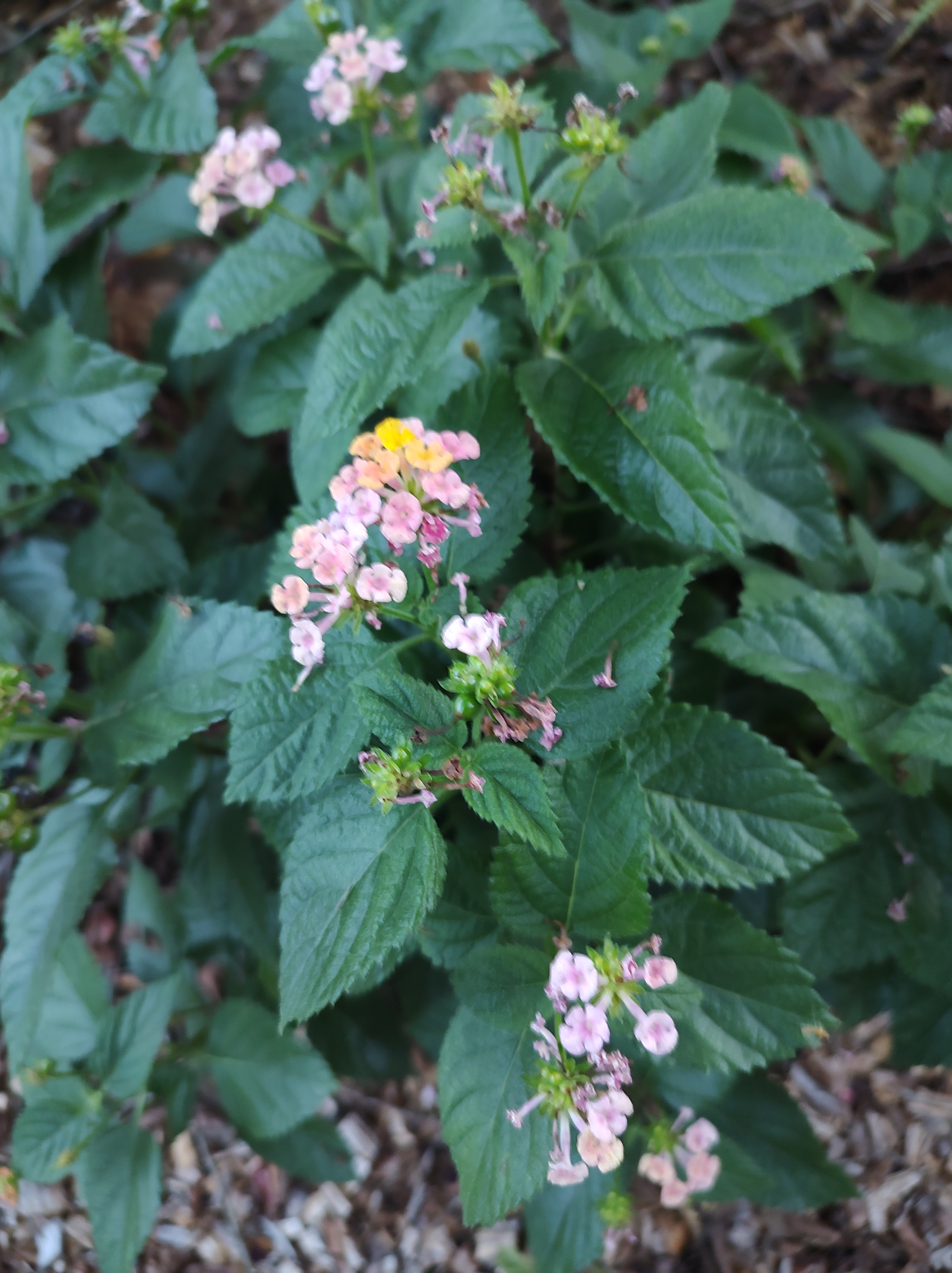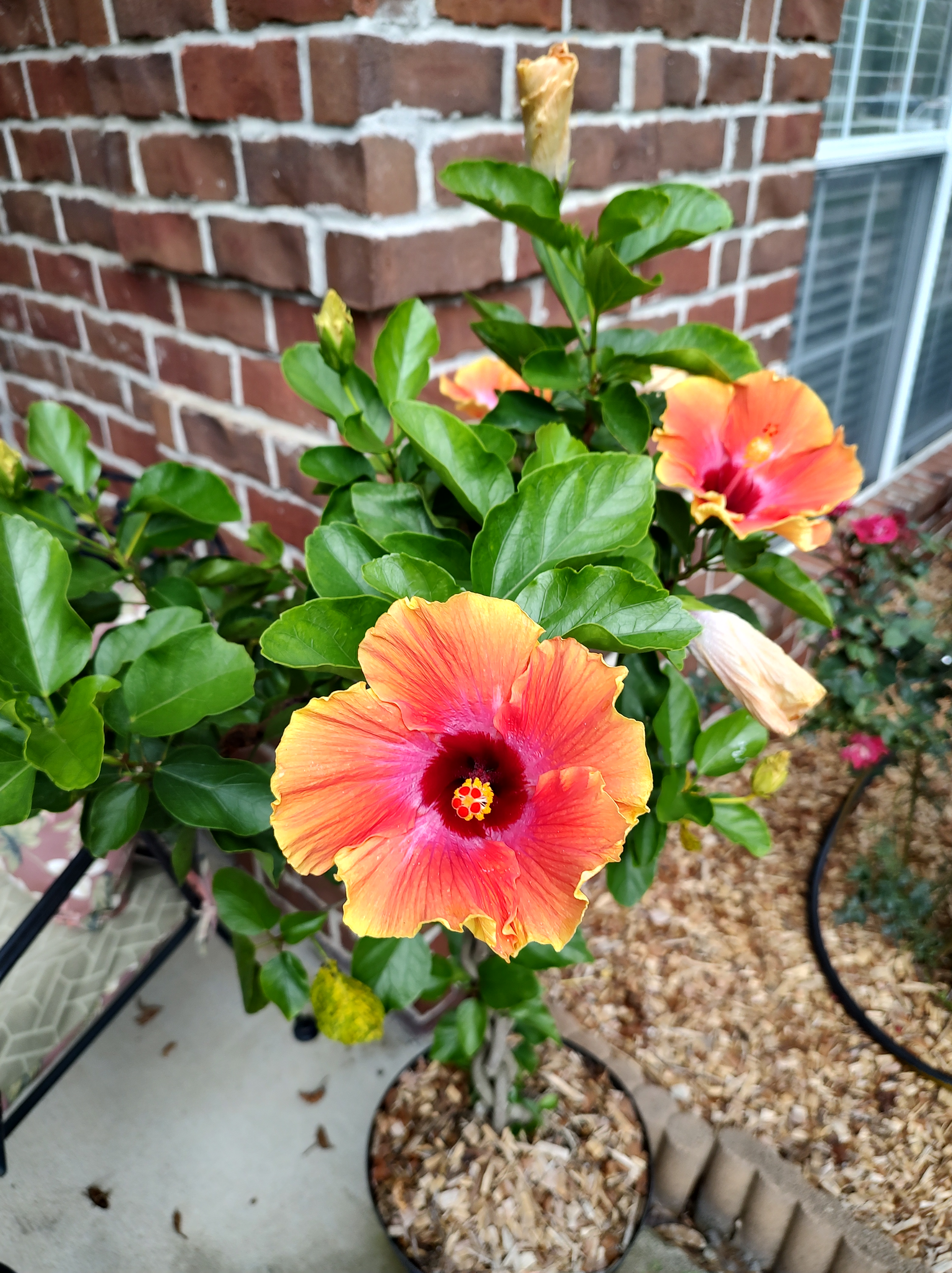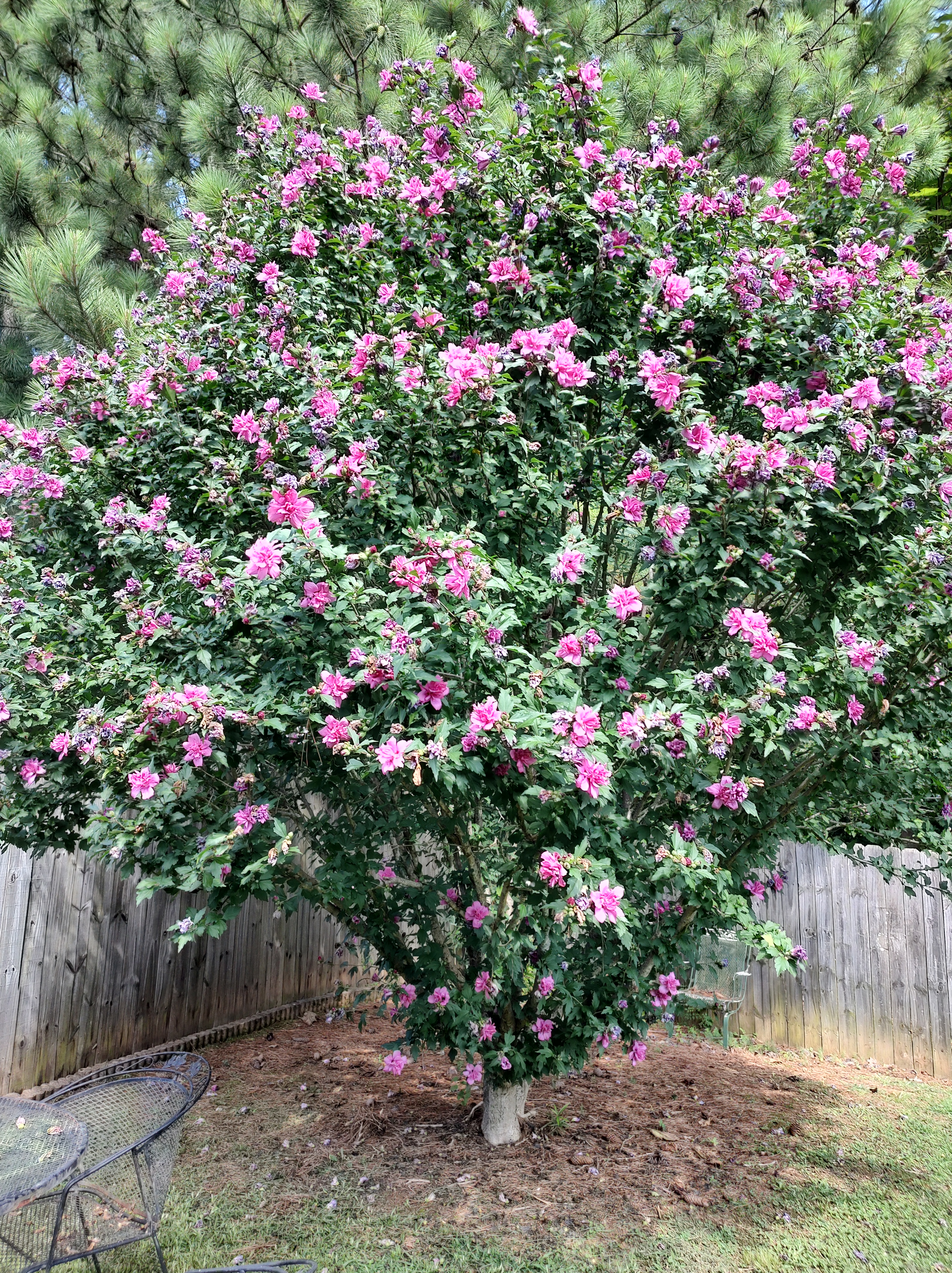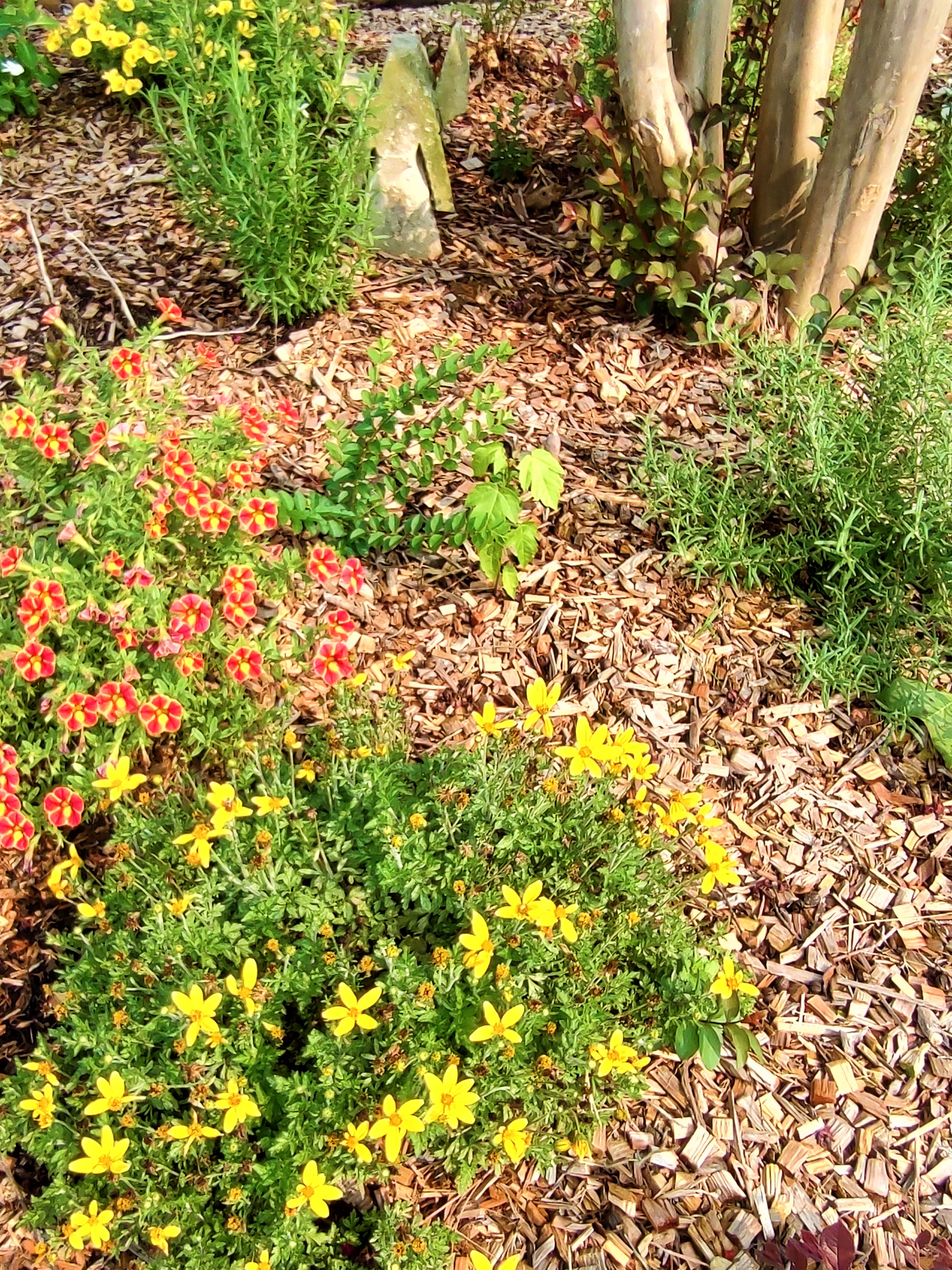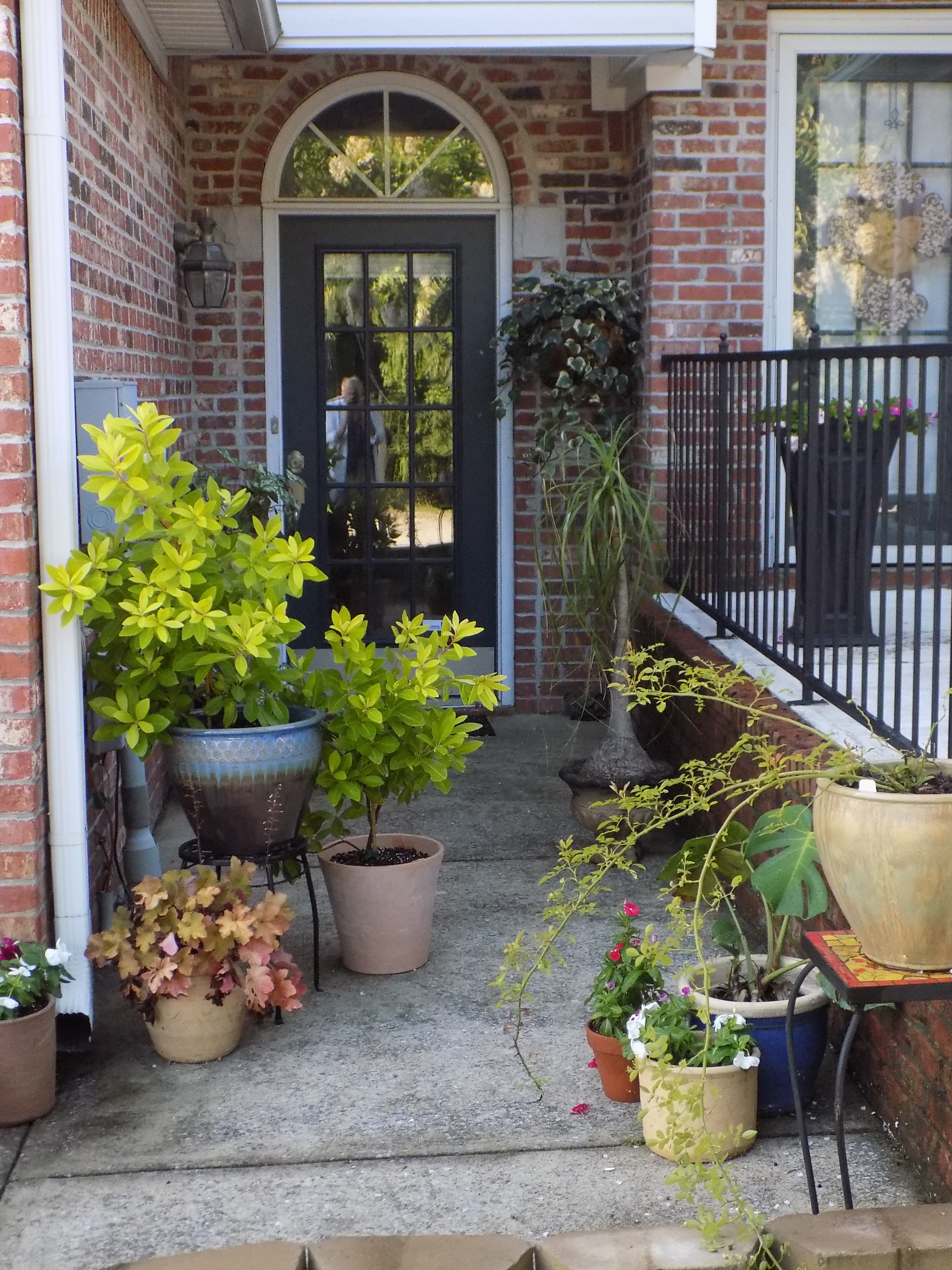
Front walkway before (2022)
Since my visits to my own house are occasional, owing to my full-time caregiving responsibilities at my parents’ house, I’m afraid that I don’t check on my own backyard that often. I do, however, offer thanks for the HOA that keeps my grass cut and my drive and walkway blown so that my exterior doesn’t look neglected. The back patio – well, that’s another story.
Before my transition into full-time caregiving, I was going for a lush New Orleans-y vibe on the walk leading to the front door of my townhouse. In my large collection of books that I can’t give up, the volume entitled Gardens of New Orleans: Exquisite Excess, by Lake Douglas and Jeannette Hardy with photographs by Richard Sexton, is the one I return to most often. That book, and my Granddaddy Harbison’s master touch with plants, have served as my gardening inspiration for years. I often enjoy the formal style of plantings at other’s homes, but my personal taste – not unlike much of New Orleans and my grandfather’s yard – leans heavily on serendipity. 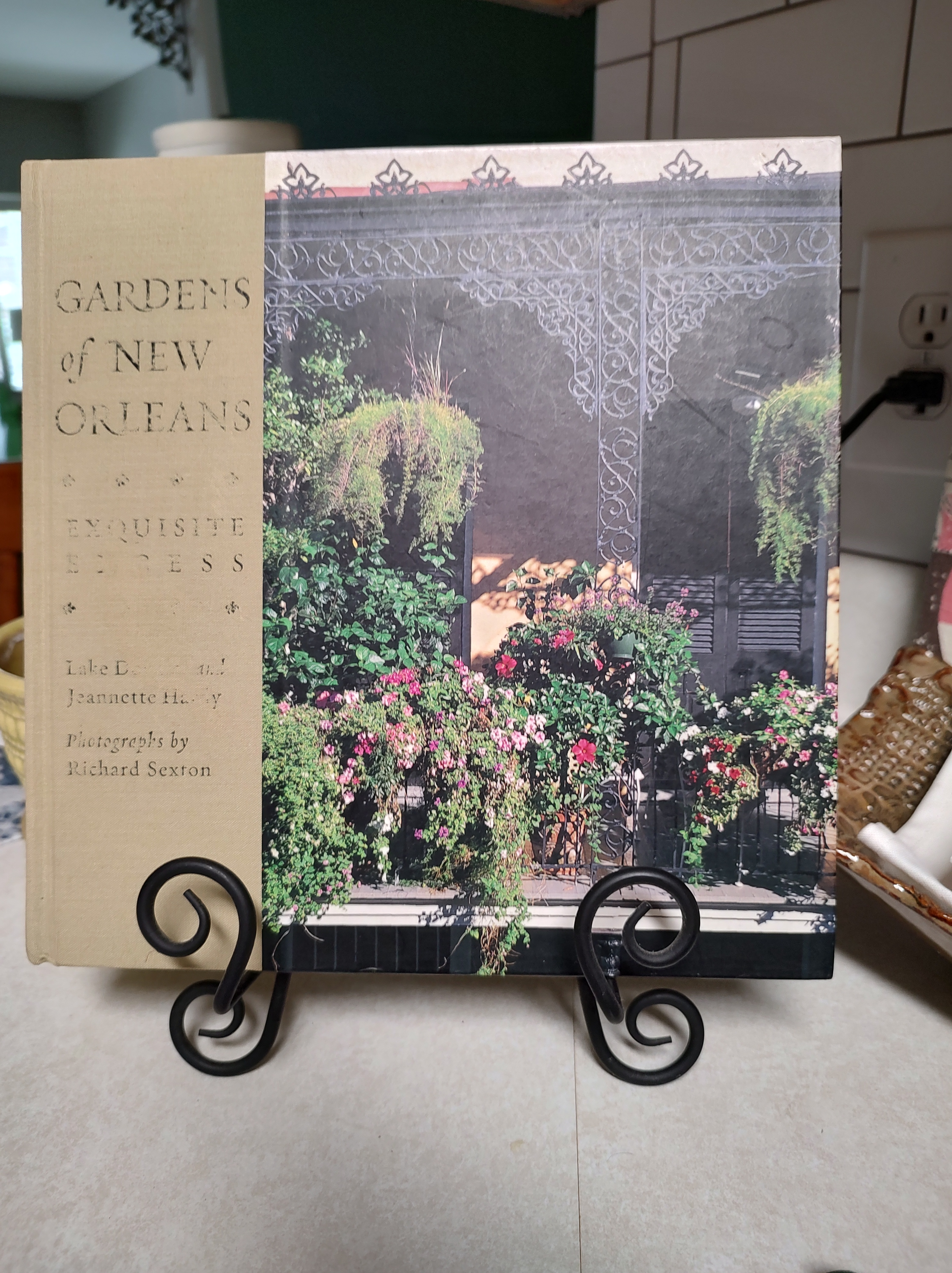
When my caregiving became a full-time job, my outdoor plants at the townhouse, most of them in pots, were abundant. I left them alone, watered them and my indoor plants when I was at the house, and they thrived for most of the summer – even in the August heat. I learned that a neighbor who knew my situation had been watering my plants when they started looking thirsty between my trips home.
As fall came and the plants began to falter, I started moving the pots onto the back patio where my herb garden in two large concrete containers, potted hydrangeas, and other potted plants were homed. The backyard boasted bird feeders that regularly drew local deer wandering down from the steep forested hillside that begins where my brief backyard ends. By the end of the summer, I had to abandon the feeders, too. Pretty soon the patio was cluttered with pots, dead and dying plants, and my promise to sort it all out at some point.
Time passed, as they say.
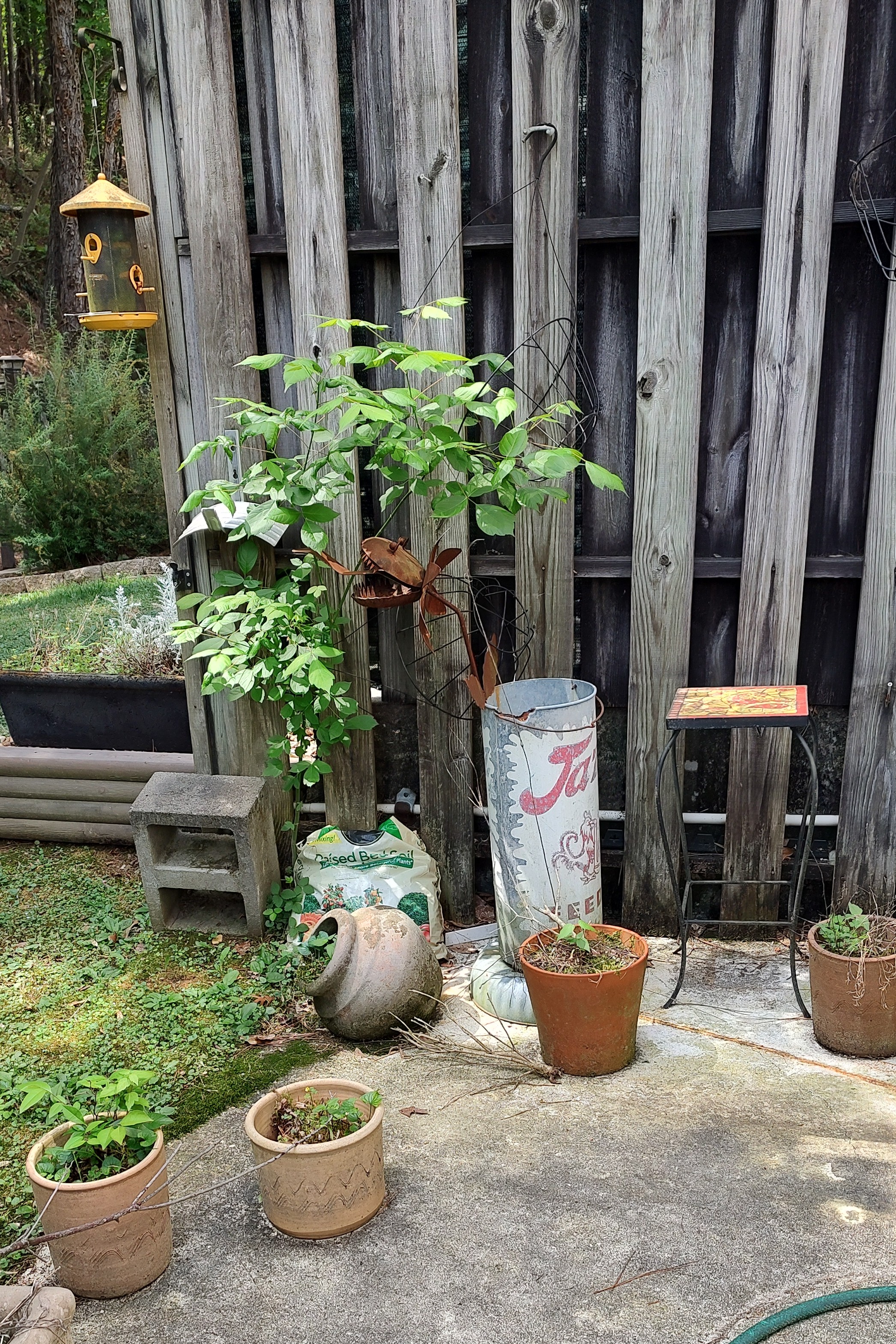 Over time, I started trying not to look at the back patio except to check that the metal wind sculpture of a feather was still there in the grass. But on a visit to my house over the weekend, I was hit with the strong sweet scent of honeysuckle as I got out of the car on a glorious Spring morning. It was time to venture back to the patio and survey the “damage.” I girded my loins, went out on my patio, and sat at the bistro table for the first time in years. The honeysuckle aroma was even stronger than at the front of the house, and I noted that honeysuckle had climbed up a lone mimosa among the pines. Looking around, there is a lot to be attended, but the overall effect isn’t unpleasant. Mint is growing from plants I set out four years ago. The hydrangeas are barely hanging on. The bird feeders are empty, but a gentle breeze was moving that mobile feather around on its pole.
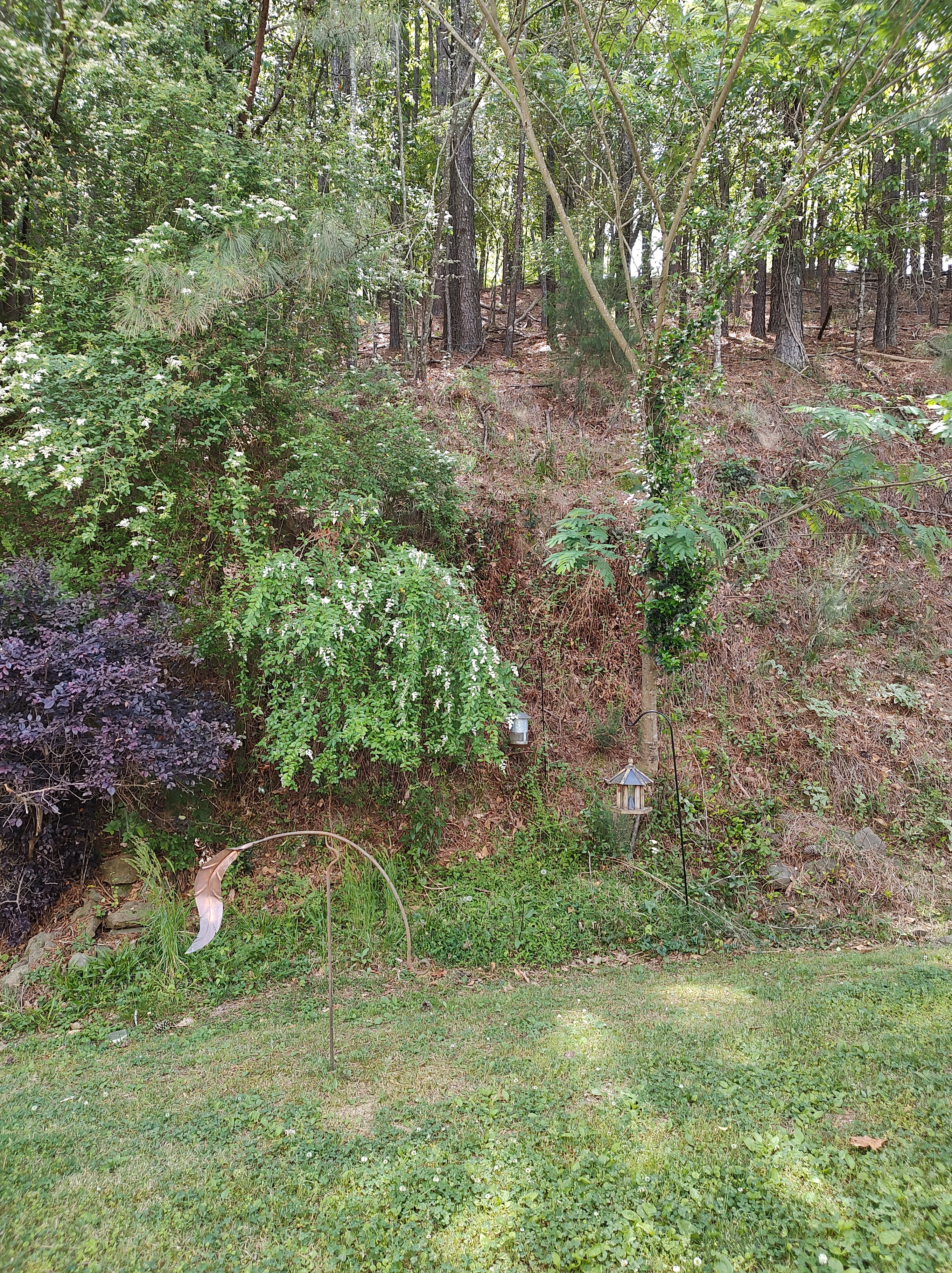 The volunteers intrigued me most. Small pines have spung up next to the mint in that former herb garden. Most of the pots are hosting some kind of plant life – put there by passing birds and not always identifiable. But they’re living plants in a place that has suffered from my benign neglect.
Back at the front, a stalwart heuchera has once again weathered the few cold spells in the winter past and looks braced for another sizzling summer. It’s the only front plant that never had to be moved. I moved the ponytail palm from its winter spot in the living room to the front walk for the next seven months. When I received it as a gift twenty-eight years ago, I plunked it into a concrete planter my grandfather had given me from his garden. It has grown tall and thrived in that same cramped planter ever since; I don’t dare repot it.
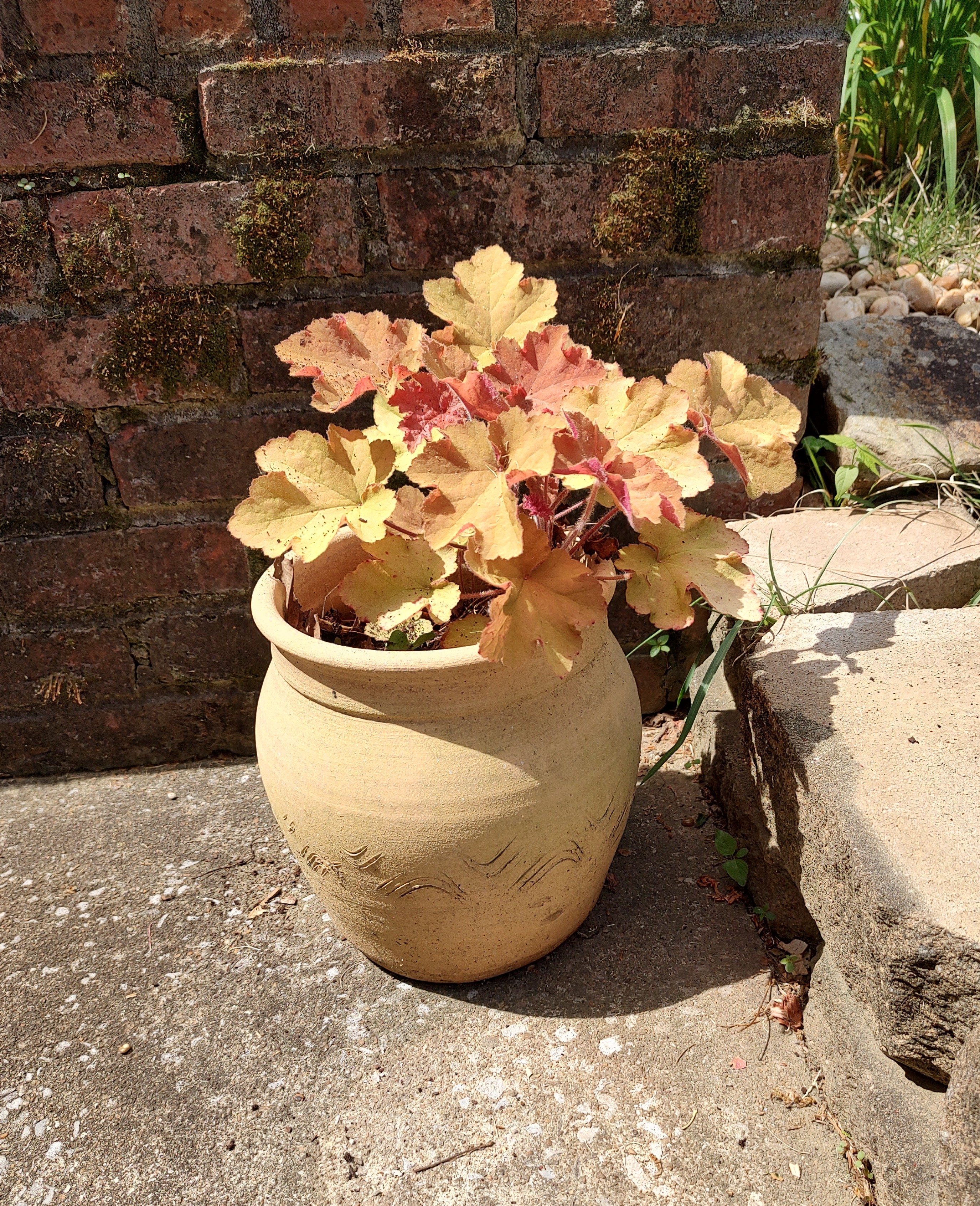
Heuchera
The front walkway is fine in its bareness, I think. That palm and heuchera will signal that it hasn’t been completely abandoned. That back patio … well, it’s interesting and not really an eyesore. I need to spend some quality time whipping it back into shape. For now, though, I think I’ll watch it more carefully. Some of those volunteers might earn the right to be recruited to the cause.