Category Archives: Uncategorized

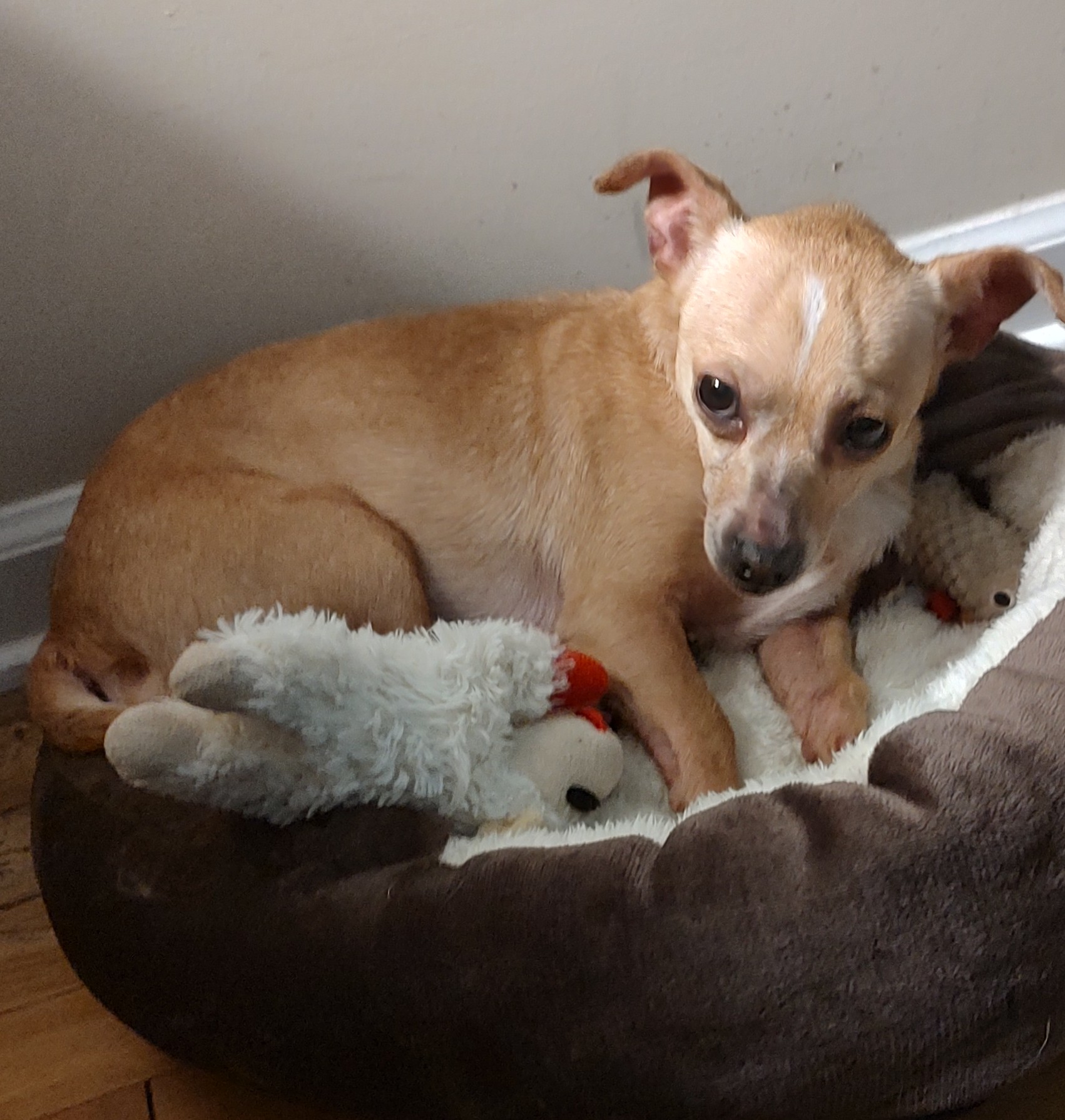
Tallulah

Not long after Lulu died in September, my mother got anxious to get another dog for “company.” The fact that I am staying with her full-time now doesn’t seem to count.

A neighbor took it upon himself to find Mom a dog and started forwarding regular posts of dogs needing to be rehomed. Most of them were no-go. Too young. Too old. Too male. Too big. Finally, Luna popped up. She was advertised as a three-year-old chihuahua, affectionate and calm. Her family was letting her go because their two youngest children didn’t know how to play with a dog. I texted that my mother might be interested and showed my mom the photo and description. Mom was interested and the phone rang soon after.

The woman said that they loved Luna and hated to let her go. They had gotten her from another lady who decided she didn’t need a dog. Luna had been with them for seven months and “we’d love to keep her …” She sang Luna’s praises and said we could come meet her that day if we wanted to. She lived about an hour away. I asked Mom if she wanted to meet the dog and she said yes without hesitation. I was pretty sure we’d be bringing a dog back later.

After an hour-long drive, we met the woman and Luna at a city park. Mom stayed in the car as she petted Luna’s head and I asked what I hoped were the right questions about food, house training, shots. The woman wasn’t sure about many things. Finally, I took a deep breath and asked if the dog had been spayed. Not sure, but she thought she’d had a litter of puppies at some point. I was sure the dog hadn’t been spayed. I looked at Mother. “Mom, she probably hasn’t been spayed.” The response was immediate – “We’ll get her spayed.”

I already knew the answer to my next question. “Do you want to take her?”

“Yes. I like her.”

Luna rode with us back to Mother’s house and was a perfect, well-behaved passenger with no signs of anxiety. I called the vet, told them Mom had adopted a new dog and we needed to get her checked out. Told them she likely needed to be spayed. Made an appointment for Saturday morning. Luna seemed to adjust to the house quickly but was hesitant to go outside without me. As she explored, I noticed that she was spotting blood. I tried to check her underside but she wasn’t having it. Finally, I let Mom know what I was seeing.. “She seems to be bleeding a bit. Do you think she’s in heat?”

Mom assured me that she was not and that I should take her to the vet the next day. Early the next morning, after cleaning up little bloody spots on the floor, I called the clinic and asked if they might work her in that day. I explained the problem and the receptionist said, “She’s in season. See you Saturday.” They’re calling it “in-season” now.

Thus began my training to be a canine gynecologist. I found out about the four phases of female dog heat and saw that Luna was in the first phase. I bought a wrap to keep the bleeding in check but Luna was having none of it. In the meantime, Mom, whose first response to the news had been “What have I done?” was becoming attached to her new buddy. “What have I done?” became “Poor thing, she can’t help it.”

The name, however, was a problem. Lulu had been “Luna” before Mother changed it. And now she had another Luna. She has some sort of aversion to that name and vowed she’d get used to it this time, but it kept causing her trouble. She wanted to say “Lulu” or “Lula” or anything but “Luna.” Finally, she decided to rename the dog but agreed that a new name should not be too far removed from the one Luna had been used to for three years.

Inspiration hit. Not long ago, I reviewed a book about the Bankhead political family of Alabama. An offspring of that family was Tallulah Bankhead, an acclaimed and colorful actor of the early twentieth century stage. Tallulah was prone to outrageous and unfettered behavior and, in a movie magazine interview, she lamented how long she had been without a man. “I need a man!” she moaned. Her Aunt Marie, back in Alabama, wrote a letter to her niece, scolding her for her outbursts and accusing her of the “yapping of a hot canine …”

“I have a solution,” I said. “You have a hot canine – name her Tallulah and call her ‘Lula’. She’ll have a name you’re more comfortable with and I’ll have a story.”

So “Lula” it is. The vet declared her healthy, gave her shots, and will schedule surgery after her current situation has passed. I am learning first-hand about the second stage of heat as I follow Lula around with a damp rag to wipe up the tiny bloody spots. The female’s tail takes on a snaky life of its own. Based on my canine gyno training, this is her way of signaling that she, in Tallulah’s words, “needs a man.”  And, as the Persian proverb says, “This too shall pass.”
Tallulah


Civility

The switch on the bedside lamp stopped working a few days ago. It seemed like a simple enough repair and even I, who have never been a handyman, thought I could fix it. I took the lamp to the kitchen table and took it apart. I knew what was wrong – something in the switch would not catch – but after messing with the workings for a bit, I decided I needed a professional and reassembled the lamp.

I had noticed a sign in the neighborhood hardware store window that said “Professional Lamp Repair” so I put the lamp in the car and decided to check that out the next time I was in the neighborhood. That morning, after a doctor’s appointment, I swung by the hardware store and asked if they still did lamp repairs (the sign wasn’t in the window). They did, and I went back to the car to retrieve the lamp. The clerk took my name and phone number and told me the lamp repair guy might be in later that day and, if not, he’d be in on Thursday. They’d call when my lamp was ready.

A couple of hours later, the phone rang and the guy on the phone told me my lamp was ready. I happened to be running errands in the area and told him I would be by within the next half hour.

“You need to stop by the bank on the way,” he said. “It’s gonna cost you $1.61.”

I laughed and told him I’d see him soon.

Twenty minutes later, I walked into the store and a couple of guys were standing behind the counter. I told them my name and the guy who had repaired the lamp turned and took it off the shelf while I took out my wallet.

The repairman said, “$1.61.”

I had a five in the wallet. “Here, take five,” I said, “for your trouble.” I gave the five to the guy at the register who took the bill and opened the register.

“It was no trouble,” the repairman said, “and it only costs $1.61.” Meanwhile, the other guy was standing there, holding my five-dollar bill. The repairman turned to him and said, “Give him his change.”

I insisted but he countered that I only owed $1.61 so I relented, took my change and the lamp, thanked him, and headed for the door. A simple act had earned this customer’s loyalty.

_______________________________________

A moment of civility. It made my day. And I felt better the rest of the day because of it. I keep thinking about why I was so impacted by such a small but decent and honest gesture. Then I started thinking about the world around us and how rare a decent, honest, and civil gesture has become in a world driven by hate, greed, and division – when the sorriest role models are those who are supposed to be in charge.

It’s time to set a new standard. Practice civility. Seek it out. Vote for it. And find out what a difference a simple gesture can make.

New Book Review: Survivors of the Clotilda

Hannah Durkin’s Survivors of the Clotilda is a recent entry in the many books about the Africans who are reputed to be the last enslaved people to be brought into U.S. waters. Through detailed research and first-hand narratives, Durkin brings life and distinct personalities to the kidnapped captives and their plight after leaving their homeland.

Survivors of the Clotilda

Calm

 A friend sent a brief message to me last week. It was “a wish for calm.” He knows that I am going through a challenging time as a caregiver and I can think of no better wish than for calm to wash over me and the person I’m assisting. I responded that I perhaps should wish for “stoicism” also.

In times like these, the day-to-day distractions become ever more dear. Keeping the backyard bird feeders filled has become a veritable obsession that pays off, on occasion, with dozens of birds crowding two feeders, the ground, and a birdbath. Hummingbird feeders hang ready but there have only been a few sightings here in mid-April. Docile mourning doves predominate. When I come out to refresh the feeders, I see the doves sitting in the branches of the trees beyond the fence, watching and softly cooing.

The cardinals seem to prefer to visit in early morning and dusk. Two cardinal couples are around daily, and occasionally others will join in.

Spring happened fast this year. Suddenly, everything was green and lush. There has been no time to work in the flower beds, but perennials have popped up and winter pansies are hanging on until warmer weather settles in for the season. Easter came along faster than the Easter lilies this year. My mother has two patches of Easter lilies that look like they don’t plan to bloom for a while. The winter view down into Oxmoor Valley is now hidden by the curtain of green.

My life-long monitoring of the bird activity was heightened by the months of pandemic. Indeed, my whole endurance of another home-bound time of life was prepared, perhaps, by the pandemic experience. One of the few online sites that I follow is “Diary of a Gen-X Traveler” in which a midwestern couple shares their experiences as European travelers – primarily in Greece and Italy. During the pandemic, they shared adventures hiking and walking around places near their home in Iowa. The freshness of those takes on everyday things made the pandemic posts as interesting to me as the spectacular continental sights that they usually shared.

More recently, I look forward to three weekly posts by Garrison Keillor on his “Garrison Keillor and Friends” website. At eighty going on eighty-one, Keillor seems to be awestruck by his age. He has become assertively cheerful in extolling daily life in Manhattan and in his travels for solo performances across the United States. A proud Democrat, he finds common bonds across party lines and beyond the trivia of the “red state / blue state” dichotomy. His is a fresh wisdom nurtured through years of astute empathy and observation and he never fails to make me smile and sometimes laugh heartily.

My endurance of the news of the day has finally waned and whole days go by without the television being turned on. I keep up, more or less, in magazines and online and try to stave off the existential dread that will dominate the rest of the year. Reading is, as always, my favorite escape and even if I read about troubling things, there is solace in sitting with a book or magazine close at hand.

In addition to calm stoicism, I strive also for “comfort and joy” – a favorite phrase from “God Rest Ye Merry, Gentlemen,” a favorite Christmas song. Really, who could wish for more in their life than to have comfort and joy? Just to be clear, I don’t base my life on upbeat Christmas carol lyrics; another favorite Christmas lyric is Christina Rosetti’s “In the Bleak Midwinter,” which paints a cold and grim picture of the nativity.

Today, the tidings of joy make way for the promise of summer and hope for calm, peace, and justice to come.

A Poem for New Year’s Day

gedwardjourney's avatarProfessional Southerner

Sometime in the ’90s I decided that trying to have fun and frivolity in a crowd of intoxicated people on New Year’s Eve was a fool’s errand. Instead, I stay home on New Year’s Eve and invite friends over for a hearty lunch of Southern good luck staples on New Year’s Day. The menu changes, but it always involves pork, greens, black-eyed peas, cornbread, and an ambrosia.

On New Year’s Day of 2014, instead of a traditional toast, I decided to launch the meal with a favorite poem by American poet Richard Tillinghast, who is from Memphis but has lived in Ireland for many years. I think “Table” is a fitting way to launch a new year full of hope and possibilities. For New Year’s Day 2015, I want to share it with you. May your table be full and steady. Happy New Year.


Table
by Richard Tillinghast      from the…

View original post 221 more words

Books for the New Year

Two of my recent book reviews have just been published on the Alabama Writers’ Forum website (www.writersforum.org). Fight Songs by Ed Cotton is particularly appropriate on the day of the NCAA college football championship game.

https://www.writersforum.org/news_and_reviews/review_archives.html/article/2022/01/10/fight-songs

Hank Lazer’s field recordings   of mind    in morning is a contemplative book of poems which asserts that “living now / must be / elegiac.” The book is accompanied by music by Holland Hopson.

https://www.writersforum.org/news_and_reviews/review_archives.html/article/2022/01/10/field-recordings-of-mind-in-morning


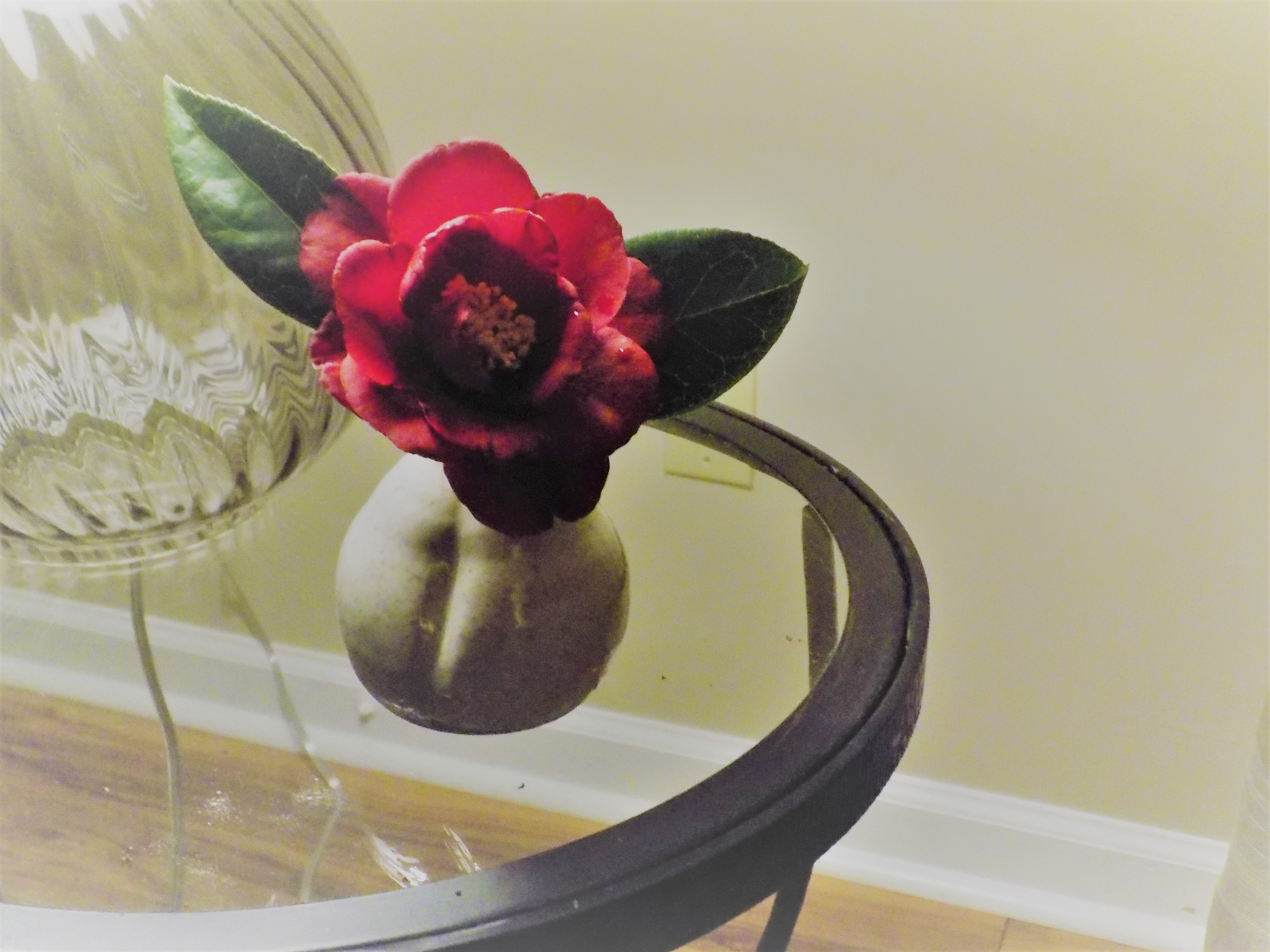
Camellia

Everything that’s going on now is causing me a lot of stress — from online instruction, to parental care, to day-to-day activity, to taking care of oneself. When I got home tonight, my camellia bush — which has been a dud since I planted it two years ago — suddenly had burst forth. I choose to see this as a sign of hope.

Take care of yourself. We’ll meet up on the other side.

Another Roadside Attraction: The Corn Palace

dscn0653  When I was growing up, we didn’t often travel too far from home. There were picnics and day trips but most excursions were of short distance and duration. I mostly grew up in Birmingham but when Dad’s work began to transfer us fairly regularly we moved around a lot; most of the moves were fairly close to home: Jackson, Nashville, Tuscaloosa.

The lengthier vacations were usually to Panama City, Florida, on the Gulf. My Journey grandparents had a fishing cottage on the Black Warrior River in Walker County, not far from Birmingham, and my Harbison grandparents had a weekend place on their farm land in Cullman County near Smith Lake, about an hour away. There were occasional trips to New Orleans, Atlanta. Montgomery, and we often went on overnight business trips with Dad to nearby towns. The bulk of the travel was within a 350-mile radius of wherever we lived at the time.

I wasn’t widely-travelled, but I had limitless wanderlust. In that heyday of magazines, my family’s magazine rack was always full. I was a voracious reader from an early age and I would read anything in the house from cover to cover whether it matched my interests or not. My Granddaddy Harbison raised hunting hounds and subscribed to The Hunter’s Horn, a magazine about hunting and hounds; I avidly read that also, even though I had no interest in hunting and my only hound was a pet beagle named Spotty with an ear-splitting bark back when I was in elementary school.

Any book was fair game. I was lucky enough to have parents who encouraged and never censored my reading and I attribute much of the success of my education to my reading habits. I would walk in a room and instantly sit with my face buried in a book. My teenage nephew now does much the same with his electronic gadgets and I’m hoping that is enhancing his knowledge the way printed matter enhanced mine.

In every magazine I read, I was particularly attentive to the travel ads. If there was a coupon to order a travel guide I would carefully clip it and send it to the address that was advertised.

So, even though I wasn’t widely-travelled in my actual life, I would sit for hours and ponder travel guides that took up a full drawer in my bedroom dresser. Through those printed guides I travelled the length and breadth of the country and the world. On my first trip to New York City, friends tried to surprise me by pointing out landmarks and asking if I knew what that building was, what that church or museum was, what park I was entering. I always knew the answer from reading books and magazines and watching movies. It all felt familiar even if I was seeing it live in person for the very first time.

In one 1960s South Dakota travel guide my youthful imagination was captured by an image of something called the “Corn Palace” in Mitchell, South Dakota (www.cornpalace.com). It was a multi-use municipal auditorium such as most communities built in the early twentieth century. What set it apart was its Moorish-style adornment with onion domes and minarets. Most exciting of all was that the Corn Palace sprang from a turn of the century movement of building “crop palaces” throughout the Great Plains. Mitchell’s iteration of this trend was entirely covered with corn murals.

I vowed then and there that if I ever found myself in South Dakota I would have to make a pilgrimage to Mitchell’s Oz-like Corn Palace.

Over time I grew out of my childhood travel guide obsession and eventually cleared my drawers of the books and brochures. Fast forward to 1989 and I am hired by Omaha’s Nebraska Theatre Caravan to stage manage their east coast tour of A Christmas Carol. Even though it was billed as an East Coast tour, our show had to get from Omaha to the East and tour dates were scheduled along the way in South Dakota, Iowa, Illinois, and Ohio. Looking over the itinerary in a phone conversation with one of the Playhouse staff, I was told we would play Mitchell, South Dakota.

I stopped her immediately. “Are we by any chance playing the Corn Palace in Mitchell?” She said we were – did I know the Corn Palace? I told her that indeed I did and that I had planned to visit it for years. She was amused that someone in Alabama had a mission to visit the Corn Palace.

Mitchell was one of our first stops on the tour and we drove there from a gig in tiny Sioux Center, Iowa. We arrived on Mitchell’s main street just at sunrise on a bitterly cold November Sunday morning. I was driving and most of the technical crew in the van was sleeping. I caught a glimpse of sunlight glinting off an onion dome a couple of blocks away and knew that my childhood goal had been reached. I shouted “There it is!” and woke several crew members who did not share my enthusiasm and were annoyed that their sleep was interrupted.

We were early for our load-in and had time to go grab breakfast. But first, one of our tour crew took pictures of me standing in front of the Palace. I know those photos are stored away somewhere but I haven’t been able to find them for years. All I can find are blurred photos of the Palace taken as we were leaving town that night and of a mural inside the auditorium. dscn0656

The Corn Palace continues to be a busy venue, I hear. Our show followed a Barbara Mandrell performance the night before. Mitchell is a small town but the great local crew was I.A.T.S.E. union members and I found out that many of the union guys were also local farmers, at least one of whom provided the corn for the murals. The Palace’s exterior murals have an annual theme which changes each year so the façade of the building takes on a whole new look from year to year.

The crows were having a field day on the façade of the Corn Palace. Our show was on Sunday afternoon and we didn’t spend the night in Mitchell so I spent as much of my break time as I could exploring the unique roadside attraction appeal of the facility and the town.

As we reboarded the crew van and set off for Des Moines, I vowed to return to Mitchell and the Corn Palace some day when I had more time to absorb the unique local vibe. I haven’t returned yet but when friends tell me they’re going anywhere near South Dakota I always implore them to take the detour into Mitchell and gawk at what bills itself as “The World’s Only Corn Palace.” I think their effort will be rewarded.