America’s Amazon

I remember traveling as a young boy with my father and grandfather to the earthen dam being built on the Sipsey Fork of the Black Warrior River by Alabama Power Company. It ultimately created Lewis Smith Lake in 1961, a popular recreation spot and the deepest lake in the state, touching Cullman, Walker, and Winston counties. My grandmother, who grew up in the area, could point out places under the lake where farms used to be; she could also point out a spot where a covered bridge was somewhere “down there.” The tiny Winston County town of Fall’s City was entirely submerged, as were cemeteries throughout the area. Some families chose to move their loved ones, while others chose to let them lie in peace at the bottom of the lake.

A few years later, traveling with my dad to a business appointment in Anniston, I was confused when I saw a series of docks and rock jetties jutting out onto dry land off I-20. Dad explained that the area was about to be flooded to create Lake Logan Martin. These soon-to-be “lake homes” were getting a jump on their lakeside property. Another Alabama Power Company project.

I understand the reasons for these mid-century projects, and I have always admired Franklin D. Roosevelt’s “New Deal” legislation during the Depression and the benefits those initiatives, such as the Tennessee Valley Authority, brought to rural areas of north Alabama. But I have also been concerned about what was lost as we grow increasingly aware of costs to the environment from human intervention in the past couple of centuries.

_________________________________________________

My reading has taken an environmental turn over the last few years. Some of it was from a commitment to read more of the writing of biologist / environmentalist E.O. Wilson. But the bulk of it is just a growing environmental awareness that has increased as the threats to our well-being from environmental abuse and neglect have become more obvious.

Here is some of the reading I have been doing over the past couple of years, illustrating the wide variety of environmental writing available. A good sampler is The Gulf South: An Anthology of Environmental Writing (2021), edited by Tori Bush and Richard Goodman, with content stretching back into the 1800s. Salleyland (2023), by Whit Gibbons, documents the Gibbons family’s adventures on 100-acres of South Carolina land. The Overstory (2018), by Richard Powers, is a brilliant novel in which the trees become the protagonists.

Occasionally, there are peripheral essays that fit the bill, such as “Homewood’s Salamander Migration and Festival” in James Seay Brown Jr.’s Distracted by Alabama (2022), about a salamander crossing at a creek near me. A friend recently alerted me to “Some Thoughts on the Common Toad” (1946), a lovely essay by George Orwell that fits neatly into modern sensibilities about appreciating the nature around us.

My reading of E. O. Wilson’s 1994 autobiography, Naturalist, led me to move on to read and review Richard Rhodes’s biography, Scientist: E. O. Wilson: A Life in Nature (2021), which was a nice augmentation to the autobiography. That inspired me to seek out another Rhodes biography, John James Audubon: The Making of an American (2004), which, in turn, inspired me to finally acquire John James Audubon: The Birds of America, a collection of prints of the original watercolors from Audubon’s 1827-1838 series.

One novel is nestled among the over thirty books that comprise E. O. Wilson’s oeuvre. Anthill (2010) is a coming-of-age story set in Alabama, partially in an area that calls to mind the wilderness of the Mobile-Tensaw Delta. It’s fitting then, that E. O. Wilson wrote the Foreword to Ben Raines’s Saving America’s Amazon: The Threat to Our Nation’s Most Biodiverse River System (2020) about the Mobile-Tensaw Delta.

Lest that book title seems like hyperbole, consider these facts from the book’s first pages:

There are more species of oaks on a single hillside on the banks of the Alabama River than you can find anywhere else in the world … Thanks to the Mobile River Basin, the state of Alabama is home to more species of freshwater fish, mussels, snails, turtles and crawfish than any other state.

For instance, Alabama is home to ninety-seven crawfish species. Louisiana, famous the world over for boiled crawfish, has just thirty-two species; California, three times the size of Alabama, has but nine. There are four hundred and fifty species of freshwater fish in the state, or about one-third of all species known in the entire nation … When it comes to turtles, … the Mobile-Tensaw Delta has eighteen species … More than the Amazon. More then the Mekong. More than any other river system on Earth.

Here’s one more startling passage:

[T]he Cahaba River is home to one hundred and fifty species of fish, more species than you find in the entire state of California. Imagine, roughly one-sixth of all the freshwater fish species known in the United States live in a single Alabama river that is just one hundred and ninety-four miles long.

Raines complements his writing about the Mobile-Tensaw Delta with his stunning photography of the natural vistas throughout the region, parts of which can only be reached by wading long distances through swamps and wetlands. Raines knows the area well; his team found the remains of the Clotilda, the last slave ship to illegally enter the country, its charred remnants buried in the Mobile-Tensaw Delta. Raines’s 2022 book, The Last Slave Ship: The True Story of How Clotilda Was Found, Her Descendants, and an Extraordinary Reckoning, explores that important find.

Much of what Raines writes about the Mobile-Tensaw Delta was gathered through his many years as an environmental reporter, documentary filmmaker, and executive director of the Weeks Bay Foundation. He speaks truth to the negligence of Alabama political leaders to rigorously enforce environmental guidelines and writes about the environmental damage caused by the dams that utility companies have built along waterways statewide. As Raines celebrates the Mobile-Tensaw Delta and the vast river system that feeds into it, he also addresses the impediments to annual fish migrations that the networks of dams imposed – something I naively wondered about as a kid watching those lakes emerge.

With its lead in environmental riches and diversity, the state of Alabama spends less on environmental protection than any other state. Raines examines the state’s dilemma: Will Alabama continue to be the most ecologically diverse place on the continent, or will it lead the nation with the most species’ extinctions? It cannot continue to be both.

Raines exposes some ludicrous things: When an organization he headed won the Alabama Wildlife Foundation’s annual “Governor’s Conservation Award,” the award featured an image of a mountain goat that has never been found in Alabama and is primarily native to the Canadian Rockies. An award-winning documentary by an Alabama public radio station about Alabama’s beleaguered prison system was entitled “Deliberate Indifference.” That title could just as easily be applied to the state’s handling of our vast natural resources. Unfortunately, it’s normal for Alabamians who love the place to be constantly ashamed and embarrassed by our public officials.

Raines clearly loves the place, especially its abundance of natural, untouched resources. Saving America’s Amazon is his clarion call for us to work harder to preserve them.

“Celebrate Books”

It was my honor to attend and report on the 2023 Alabama Writers Hall of Fame induction ceremony. The literary arts in Alabama are thriving, thanks in part to these fine writers. Read my article from the Alabama Writers’ Forum website.

The Gathering: Alabama Writers Hall of Fame Induction Ceremony, March 10, 2023

Gatherings – Part 2: Montgomery … and some birds

Saturday – Montgomery

Court Square Fountain, Montgomery

My main purpose for going to Montgomery is to see a matinee at Alabama Shakespeare Festival, but I get there in plenty of time to hang out in Blount Cultural Park, the 175-acre sprawling English-style park that is home to Alabama Shakespeare Festival and the Montgomery Museum of Fine Arts.

I lived in Montgomery for three years when I worked at Alabama Shakespeare Festival and my apartment was on property that adjoined the Park. On days when I didn’t need to use my car, I could walk from my front door to my office in less than five minutes. A jasmine-covered arch marked the entrance to the parkland from my apartment complex and the moment of entering the park never got old. It’s still a special moment when the winding road through the park rounds a curve and you get your first view of the theatre across the lake.

New York Office (1962); Edward Hopper

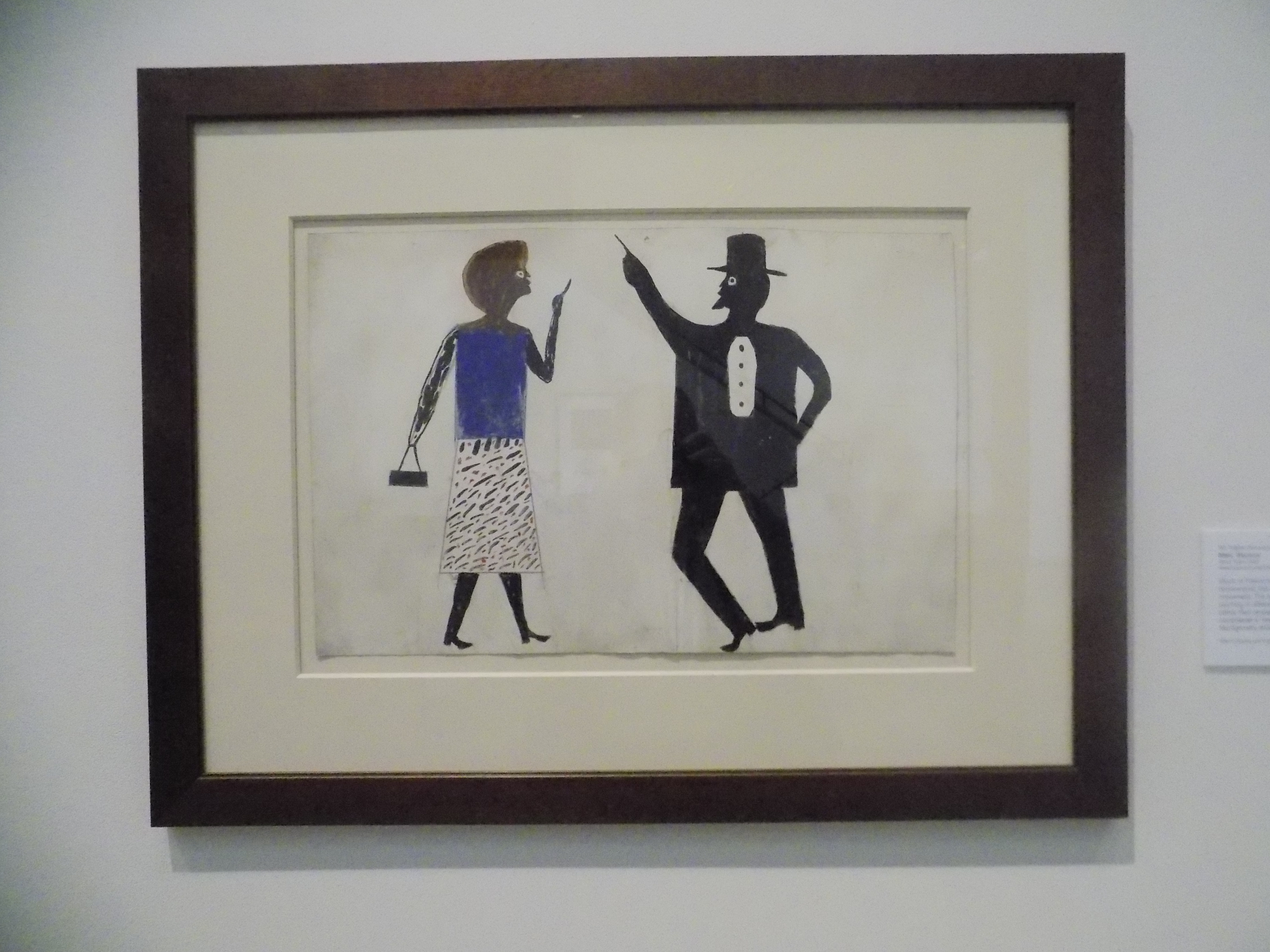
Man, Woman; Bill Traylor

I have time to head to the museum and its eclectic collection of treasures. When I worked at ASF, the museum was a favorite place to go for a relaxing lunch or a quick break. The museum is larger now, and there is a significant sculpture garden. The collection is a somewhat quirky combination of American art of the 18th-21st centuries with a strong dose of vernacular art. One of my favorite Edward Hopper works, New York Office, is there, along with works by Montgomery artist Bill Traylor. Born into slavery, Traylor started making art works in 1939 when he was in his eighties and completed around 1500 works for ten years until his death in 1949.

Sunset Landscape (1899); Charles Warren Eaton

Sunset Landscape by Charles Warren Eaton reminded me of Hwy. 82 and I am always drawn to Christenberry’s Providence Church sculpture. I also like to pay homage to Zelda Sayre Fitzgerald, an artist, Montgomery native, and F. Scott’s wife, whose artwork is usually on view. It was missing on this trip, waiting to be re-hung for an upcoming exhibition. I always asked friends visiting Montgomery, “What other museum can you visit to see paintings by Zelda Fitzgerald?”

Providence Church (1976); William Christenberry


I could have lingered longer at the museum but it was time to take the short drive across the park to the theatre and the real purpose for being back in Montgomery. In the museum parking lot, I heard the cheerful song of a mockingbird. Moving toward the sound, I found the soloist perched in a tree; as I moved closer, the bird paid me no mind, just joyful in the day.

I’ve lost track of how many years it has been since I was last at Alabama Shakespeare Festival to see a show, but it still felt familiar. When I was there, it was still a classically-based, Shakespeare-heavy theatre. There was a true repertory season that extended well into the summer, a brilliant resident company of actors, and a thriving graduate acting program affiliated with the University of Alabama. I had friends from near and far who would travel to Montgomery annually to spend a weekend seeing up to six plays in rep. I’m not sure we truly valued what we had back then. Over the years, Shakespeare titles are less abundant and the season is greatly reduced, but we’re fortunate it’s still there.

Alabama Shakespeare Festival

From the parking lot, I have to duck in to the Shakespeare Garden before going to the box office to pick up the ticket. The Shakespeare Garden is next to the theatre – a bucolic place with an intimate amphitheatre, featuring plants mentioned in the writing of Shakespeare. I would often take a respite in the garden during my time at ASF. A large statue of Puck is tucked away at the top of terraced levels for seating.

Outside the box office, a lone duck has decided to swim around a small fountain. People take out their cameras to photograph him. Occasionally, he steps up to the edge and quacks at bystanders. This is my place! he seems to say.

I stop for a moment to watch the audience assemble – another gathering. When I lived in this neighborhood, I would often come to the park an hour or so before a performance to watch the cars begin to arrive and the people eagerly go through the doors of the theatre. Like the night before in Tuscaloosa, this gathering takes on a new resonance.

Wandering through the lavish lobby, I catch site of the open door of the Patron’s Room at the far end. It is almost time for ASF’s resident dramaturg Susan Willis to give a fifteen-minute talk about the play we are about to see. The room is full. It’s good to see that Dr. Willis is still giving the talks. She was already there when I came to the theatre years ago; I’ve learned a lot from those talks over the years.

Pre-show is over and, ultimately, the play’s the thing … And today’s play is The Tempest, Shakespeare’s final and farewell play (although Dr. Willis would fine tune and clarify that statement a bit).

I have seen several productions of this play in various places over the years, and have seen at least three different versions at Alabama Shakespeare Festival. I am mainly here today because the actor Greta Lambert has announced her retirement from the theatre and is wrapping it up by playing the role of Prospero in The Tempest. Greta has been with ASF since its premiere production of A Midsummer Night’s Dream in Montgomery in 1985; she played Titania.

Over the years, Greta has gifted audiences with some of the most memorable performances of my life. She’s played most of the major Shakespeare women, along with Blanche DuBois, Hedda Gabler, Eliza Doolittle, Candida, The Glass Menagerie’s Amanda, and so many others. Coming full circle, she was Miranda to Philip Pleasants’s Prospero in a 1986 production of The Tempest.

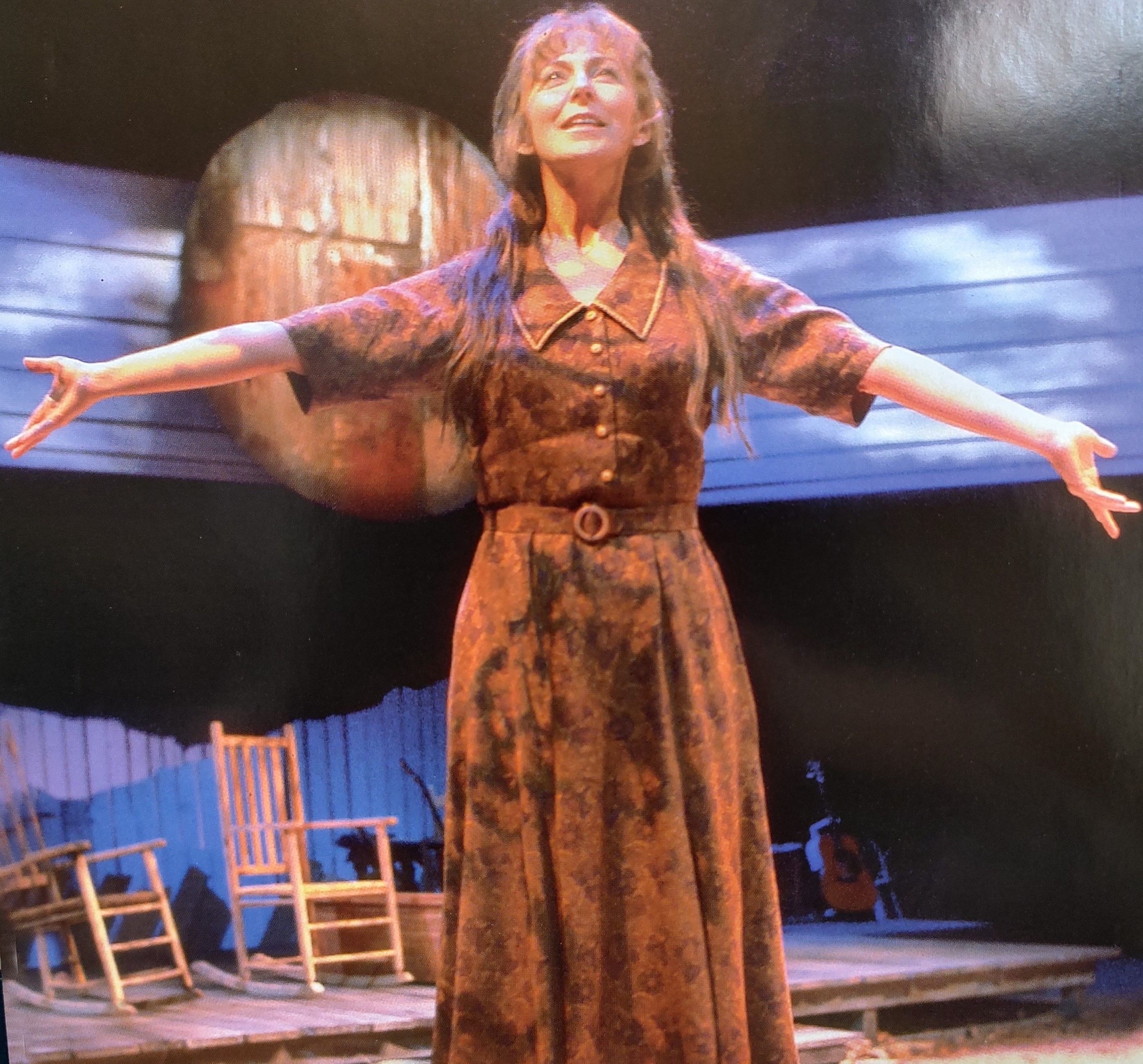
Greta Lambert in Fair and Tender Ladies (2000)

But my most cherished role played by Greta Lambert was her performance as Ivy Rowe in Fair and Tender Ladies, a musical adaptation of the Lee Smith novel. In it, Ivy Rowe ages from a young girl to an old woman. The production Greta starred in was directed by Susan Willis. I had the good fortune to manage a tour of the show in the fall of 2000 and it was a thrill to watch audience’s response each performance. I had toured with shows in the past, but Fair and Tender Ladies is the one I never tired of.

Greta Lambert’s interpretation of Prospero was, of course, wonderful. She establishes an immediate connection with the audience and her presence on stage, even in scenes where she is just an observer, is mesmerizing. It always has been.

In Fair and Tender Ladies, after the audience has watched Ivy Rowe’s life unfold on the stage, there is the moment when the elderly Ivy Rowe slowly walks off the stage for the final time. On tour, I tried to never miss that moment and, after dozens of viewings, was always moved by it along with the audience seeing it for the first time. In The Tempest, Prospero’s final speeches took on another level of resonance in Greta’s delivery. Our revels now are ended …We are such stuff as dreams are made on …release me from my bands with the help of your good hands … Greta has announced her retirement from ASF, but not, necessarily, from the stage, so we may have future opportunities to see her act. But these moments seemed to signal the end of an era. I shall always remember them.

It’s hard to leave the theatre and I vow to come back more often. I linger in the park for a bit and finally leave, taking a drive through the grounds before turning toward town.

_____________________

I was honestly not thrilled to move to Montgomery in 1999. I loved the theatre and mostly enjoyed my job there, but the city itself, despite its historical significance, had never seemed to have much to offer. By the time I moved away, in 2002, I had grown to appreciate the place more. Now, though, after a couple of decades of more progressive leadership, the city is enjoying a revival of sorts and what used to be a dead downtown, where I am going to spend the night, is teeming with activity when I pull in to the Renaissance Montgomery Hotel, my address for the night.

My room is across from the city’s Riverfront Park and historic Union Station along the Alabama River and I am eager to go for a walk and see what the city has to offer these days. I’ve stopped in town a few times for a quick meal or to check out Equal Justice Initiative’s Legacy Museum and the National Memorial for Peace and Justice, but this will be my first time to explore on foot since I lived here.

Blues music greets me when I start my walk and the statue of Hank Williams has been moved from its previous location to a more prominent site on Commerce Street. Lots of tourists wander the streets, lots of dining spots and bars are open, and I realize what a difference has occurred since the city began to embrace its Civil Rights legacy and has become a prime location for Civil Rights tourism.

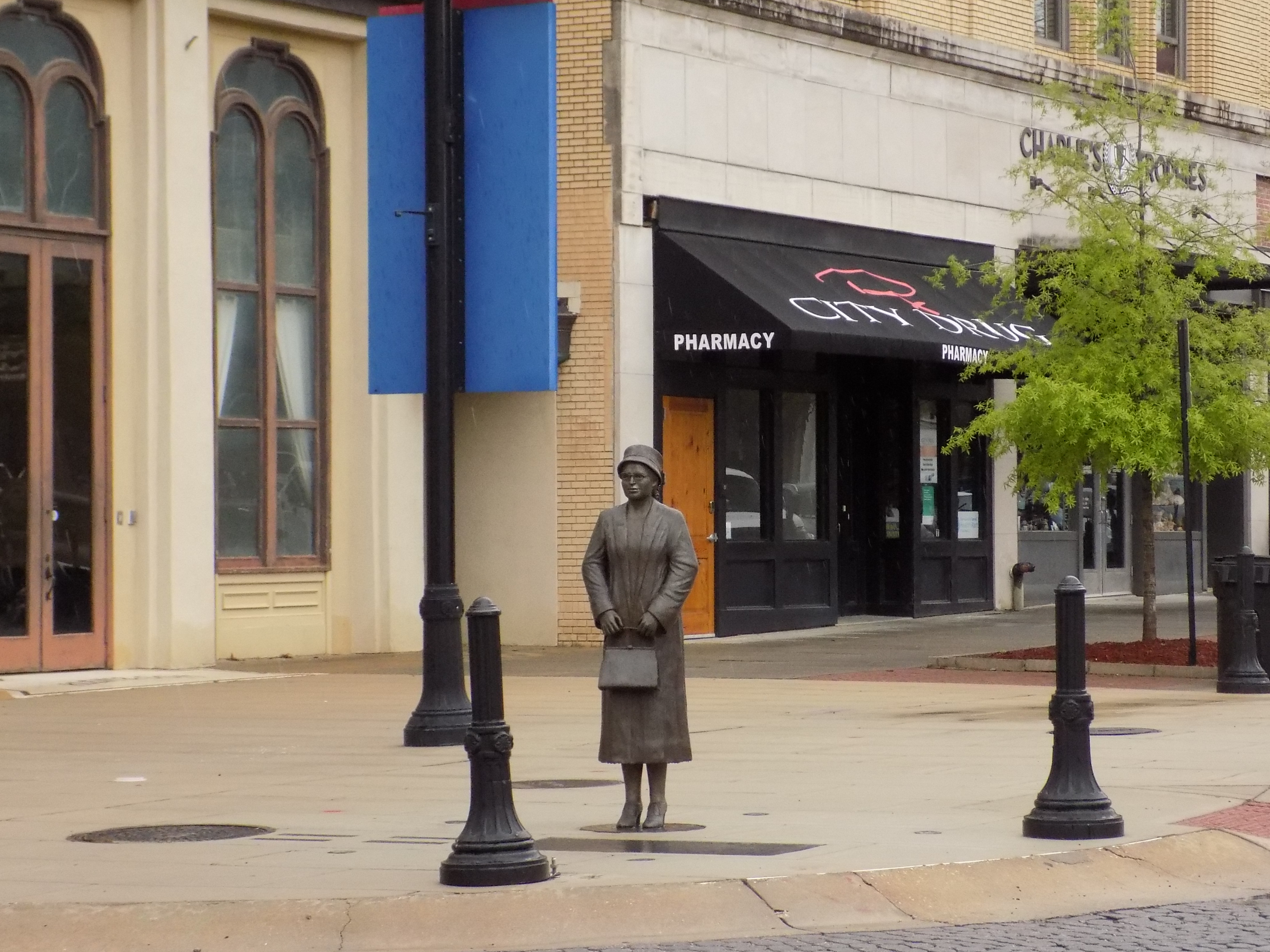
The fountain at Court Square, at the bottom of Dexter Avenue, now has “Black Lives Matter” painted on the sidewalk around its base and a quiet statue of Rosa Parks waits patiently across the street. The state capitol building is at the top of Dexter, while Dexter Avenue Baptist Church, where Martin Luther King, Jr. was the pastor in 1955 during the bus boycott,  is just down to the right of the first capitol of the Confederacy. Montgomery has a complex and colorful history, to say the least, and this current embrace of the past somehow makes the city feel more forward-looking.

I’m liking Montgomery more and more. A memorable and imaginative dinner at Central Restaurant, a locally-owned and locally-sourced restaurant helmed by executive chef Jason McGarry on Coosa Street, is the appropriate topper for a pretty terrific day. A woman I met at the Hall of Fame dinner in Tuscaloosa gave it a glowing recommendation; she didn’t know that I already had a reservation. Her recommendation was spot-on and I’m glad that I sought this gem out.

There are lots of gems to discover in Montgomery these days, it seems. I head home the next morning determined to return for more. And determined to squeeze in more roadtrips.

Rosa Parks; Montgomery

Gatherings – Part 1: Tuscaloosa and Highway 82

Friday

Driving into Tuscaloosa at rush hour on a Friday, I remember why I avoided rush hour traffic during my years in Tuscaloosa. It was easy then, actually, since I didn’t own a car for most of my college years. Today,  I’m running a little late and catching every traffic light between Cottondale and DCH, grateful that I stayed away from McFarland, where the traffic would be even more annoying.

After the April 2011 tornado devastated a large portion of the city, unexpected vistas opened up because the trees were gone. Even twelve years later, the changes to the city since the tornado are shocking, but the tornado is not the problem with the traffic which will likely never get better, especially as the university continues its unprecedented growth and building. As an alumnus of the University of Alabama, I have mixed feelings about all of it.

But it’s a quick trip and I didn’t come to complain. In fact, I came to celebrate Alabama authors at the latest induction of eight writers into the Alabama Writers Hall of Fame. And that makes it all worth the effort. This induction ceremony was postponed due to the pandemic so it was especially nice to be among a crowd gathering for a special purpose.

The purpose of my attendance was to write about the festivities for Alabama Writers’ Forum. I will share that piece on this site after it’s posted to www.writersforum.com.

I was struck, though, with the stirrings I had as I watched attendees of the Hall of Fame dinner and induction ceremony walk toward the gathering at the Bryant Conference Center. It has been three years since I was able to attend such gatherings; previous efforts have been tentative at best, with reduced crowds and caution dominant. A string quartet playing Vivaldi’s “Spring” as I entered the pre-dinner reception reinforced that sense of awakening; a violinist wearing a mask was a reminder that the threat is not quite over yet.

Saturday – Hwy 82

With fresh and inspiring memories of the Hall of Fame induction, I’m heading out of Tuscaloosa early to spend the day in Montgomery. To be honest, I think I’m most excited about traveling Highway 82 to get there. The Highway 82 route between Tuscaloosa and Montgomery was a well-worn path for me when I lived in Montgomery and my parents were still in Tuscaloosa. It takes you off the interstates and out of city traffic, past swamps, fields, and prairies through farmland in the southernmost Appalachian foothills. Best of all, it takes you along what I call the “Peach Highway” – a series of farm and peach stands along the two-lane stretch of 82 that goes through Chilton County.

Sandy Chapel Church; Bibb County

In years past, the highway took you through the Bibb County town of Centreville. A new section now bypasses Centreville after crossing the Cahaba River. That stretch was new to me and when I spotted the back of an old wood-framed church off the highway, I took the next road off the highway to check it out. I soon got to the church and saw that it was the Sandy Chapel Church – the church that inspired my series of country-church themed Christmas cards more than twenty years ago. In fact, it was the image on my first Christmas card of the series. I was used to seeing it from the front on the old road, but it also provides a striking glimpse as you travel down the newer highway.

Past Centreville, the highway looks the same, but there is more clear-cutting going on than I like to see (or think about). Abandoned and decaying buildings that always intrigued me are mostly still there, and some have disappeared altogether. They remind me of some of my favorite subjects by the artist William Christenberry, whose Hale County is not far away. Sedate farm houses and their attendant barns and outbuildings appear along the way, as do churches, mobile homes, country stores, and an occasional place to eat.

Harrison Fruit Farms; Chilton County

Peach orchards begin to pop up as the highway nears Chilton County. Peach season is still a couple of months away and an erratic winter may have spoiled parts of it, but there are trees in early bloom and I look forward to my first trip down to Harrison’s Fruit Farms’ roadside stand around Mothers Day.

On this March Day, the farm stand sits serene and quiet at the place where County Road 15 ends at Highway 82. Mr. Jimmie Harrison, the patriarch of Harrison’s Fruit Farms, passed away last fall. Because of my own family emergencies, I wasn’t able to make a “peach run” in summer 2022 but I still have baskets in the trunk from my visits in 2021. I stop by the abandoned stand and leave the baskets to be re-used in the next season. I remember “Mr. Jimmie” and look forward to seeing his family back there soon.

The road finally takes me toward Prattville in Autauga County. But first, I make the quick detour to see if W.C. Rice’s Cross Garden installation is still intact. Mr. Rice was inspired to create a garden of crosses and warnings of damnation (HELL IS HOT HOT HOT) on his property spanning what is otherwise a quiet suburban street. Rice died in 2004 but the rambling, weathered remains of his “garden” are mostly still there. I think about taking pictures, but not this time; I find Mr. Rice’s grim Pentecostal fatalism focusing only on the most frightening parts of scripture to be a little depressing, but I admire his commitment to his message and vision.

On to Montgomery.

Jimmie Harrison’s Fruit Stand; Chilton County

Tom Verlaine

Television

When George Gershwin died, his friend, the writer John O’Hara, wrote, “George Gershwin died on July 11, 1937, but I don’t have to believe it if I don’t want to.” I thought of that quote when I read that the writer and composer Tom Verlaine died on January 28, 2023.

“Tom Verlaine” was “Trending Now” on my computer screen on that Saturday and I knew what it meant even before I clicked on the name. Sure enough, there were the obituaries. He died at the age of 73 and his death was announced by Patti Smith’s daughter, Jesse Paris Smith. There’s some poetic closure in that.

I wanted to tell somebody when I heard and realized that I had lost track of many of my contacts who would even recognize the name. Instead, I found myself checking out all of the media coverage I could find and pulling up favorite tracks. Finally, on Sunday, I received a text message from a long-time friend: “Just saw that Tom Verlaine died. Man oh man! … It really doesn’t seem possible or maybe right, does it?”

Television, Tom Verlaine’s band with Richard Lloyd, Billy Ficca, and Fred Smith, was a favorite of mine in the late-70s. The band’s initial incarnation was short-lived – they only released two albums – but their music and lyrics are among the best sounds of that era for my taste. Television transcended the punk rock with which it is often identified.

I’m not sure how I first heard about Television. I probably first read about the band in the Village Voice, the alternative weekly from New York where I kept up with the CBGB scene years before I’d ever been to New York. Maybe one of my more progressive musichead friends told me about them. But I clearly remember being hooked as soon as I heard the first guitar riffs of the title song of their first album, Marquee Moon. It was a more polished sound than that of their raw and aggressive punk contemporaries, embellished by the slightly tortured, yet ethereal, quality of Verlaine’s voice.  Patti Smith recently remembered that Verlaine “possessed the child’s gift of transforming a drop of water into a poem that somehow begat music.” As usual, Patti Smith is right.

Verlaine’s death hits particularly hard because Television kinda marks the last time that I was closely keeping up with current trends in music. In fact, when Television announced their split after their second album, Adventure, in 1978, I wrote a letter to Verlaine asking him to reconsider (the only time I ever did something like that). The Night, Patti Smith and Tom Verlaine’s 1976 chapbook, still resides on my book shelf, ensconced with Smith’s more recent memoirs.

I continued to keep up with Verlaine and his solo career and noted when Television reunited for another album in 1992. Verlaine’s guitar stylings were as singular and significant as his voice and his lyrics; his influences were broad and inclusive. I recently listened to an NPR podcast from 2006, “All Songs Considered,” featuring Verlaine as its guest deejay. Among the tracks he played were a jazz cut from Charles Mingus’s Ah Um, a theme from film composer Bernard Herrmann’s The Day the Earth Stood Still soundtrack, and a lush orchestration by Henry Mancini.

After Television, Talking Heads, Patti Smith, and a few others my taste veered more to jazz, instrumental, and ambient music and has stayed there ever since. But it’s always nice to take a U-turn. And I never lost my taste for the music of Television and Verlaine. The two songs that have been running through my head most in the past week are “Venus” (“I fell right into the arms of Venus de Milo”) and “See No Evil.” Makes me feel like a kid again.

Roadside Attraction: Malbis Memorial Church

Malbis Memorial Church

Traveling through Baldwin County’s Eastern Shore near Daphne, be sure to find your way to AL Hwy 181 and the Malbis Memorial Church, a place of worship and devotion that is also a monument to the power and industry of immigrant culture.

Jason Malbis (born Iason Antonios Markopoulos in Doumena, Greece, in 1869) spent his early life in a Greek Orthodox monastery. He immigrated to the United States in the early twentieth century. After travels around the country, he settled in Mobile and worked mostly in the food industry. Malbis and a fellow immigrant, William Papageorge, bought 120 acres of land across Mobile Bay and started a self-sufficient plantation that became a successful colony for Greek immigrants. Malbis Plantation continued to grow in the coastal countryside and Malbis himself remained active in civic endeavors in Mobile. The colony’s popular Malbis Bakery became a mainstay in downtown Mobile.

Jason Malbis was in Greece on family business when the United States entered World War II and he was subsequently unable to return to his home in Baldwin County. He died in Greece in 1942. Prior to his death, he expressed his wish for his body to be returned to Malbis Plantation and for a church to be built there.

The Sacred Patriarchal and Stavropegial Monastery of the Presentation of Theotokos – better known as Malbis Memorial Church – was dedicated in 1965. Once surrounded by the plantation’s farmland, the impressive church now sits quietly at a busy intersection, the historic buildings and remaining property of the plantation threatened by residential and commercial properties close by.

photo (2016) by Carmen K. Sisson

The church boasts an impressive Byzantine Revival exterior, with domes, arches, arcades, pediments, and mosaics representing Christian icons. But the real splendor happens once you enter the building. Beyond the vestibule, two rows of Corinthian columns in red marble support a brilliant blue arched ceiling in the nave. White marble is used extensively in the apse, which is crowned by a full dome with a rendering of Christ floating above at the very top. It seems that every inch of the space is covered with paintings, stained glass, murals, mosaics, and carvings. It is an unexpected find in an unlikely location – a place of intense devotion and meditation.

Each time I go there, I find it hard to fully believe the level of profound magnificence in a relatively small house of worship.

A quiet cemetery is just to the south of the church, among the live oaks. It is the resting place for many of the Greeks who made a home at Malbis plantation. Back inside the church, the remains of Jason Malbis are interred in a crypt. Home at last.

A Poem for New Year’s Day

gedwardjourney's avatarProfessional Southerner

Sometime in the ’90s I decided that trying to have fun and frivolity in a crowd of intoxicated people on New Year’s Eve was a fool’s errand. Instead, I stay home on New Year’s Eve and invite friends over for a hearty lunch of Southern good luck staples on New Year’s Day. The menu changes, but it always involves pork, greens, black-eyed peas, cornbread, and an ambrosia.

On New Year’s Day of 2014, instead of a traditional toast, I decided to launch the meal with a favorite poem by American poet Richard Tillinghast, who is from Memphis but has lived in Ireland for many years. I think “Table” is a fitting way to launch a new year full of hope and possibilities. For New Year’s Day 2015, I want to share it with you. May your table be full and steady. Happy New Year.


Table
by Richard Tillinghast      from the…

View original post 221 more words