Legion Field

dscn0633 The massive steel girders and beams of Birmingham’s Legion Field have thrilled me since I was a kid growing up in the city.  “The Old Gray Lady” is 90-years-old and, even though her best days are likely behind her, she maintains a majesty and charm. Another proud old sports arena, Rickwood Field, sits a short drive from Legion Field and is the oldest remaining professional baseball field in the country. Rickwood opened in 1910 and the first Legion Field game was played in 1927.

When I was in college, the University of Alabama’s significant games and major rivalries were played at Legion Field. In those days, Denny Stadium on campus in Tuscaloosa was a perfect little 60,000 seat bowl and half of the home games were played there while the other half went up the highway to Birmingham. This is years before Bryant-Denny became the 101,000+ seat behemoth that it is today and before big-time college football had become so “corporate.” dscn0624

Coach Paul “Bear” Bryant was the coach then and, depending on which national polls you’re counting, my freshman year was the year of Alabama’s ninth national championship and Bryant’s fourth of six. The most enduring memory of my years attending Alabama games at Legion Field is the image of Bear Bryant, hat always in place (despite the legend, it wasn’t always a houndstooth hat), leaning casually against the goal post and watching the team warm-up. One time, when Alabama offered Bryant a significant boost in salary (which would be paltry by today’s standards), he commented that it would be unseemly for the football coach to make more than the college president. Times have changed.

In those pre-ESPN days of a finite number of television channels and networks, the weekly choice of televised college football games was limited and it was always a treat when Alabama football was nationally televised – usually on ABC and usually with the great sports broadcaster Keith Jackson calling the game (“Whoa, Nellie!” and “Hold the phone!” Jackson would say at particularly exciting moments).

In 1981 Bryant broke the record of the most wins by any college football coach up to that time. Keith Jackson was in the booth. The opponent was Auburn and the game was played in Legion Field. The final score was 28-17. At halftime, Bryant growled to interviewer Verne Lundquist that his players were acting “like they’re afraid they’ll hurt somebody’s feelings or something.”

During those years the upper deck was in place on the east side of the stadium and the capacity of the stadium was around 70,000 with more expansions to come. For many years the words “Football Capital of the South” were displayed inside Legion Field and for most of those years that was true. At its peak, Legion Field could hold over 83,000. When a structural review in 2004 determined that the upper deck was not up to code, the city removed the deck and the stadium now seats about 71,000.

With the increased capacity of Bryant-Denny in Tuscaloosa, the University of Alabama began to schedule more home games away from Legion Field. The annual “Iron Bowl” between Alabama and Auburn was always played at Legion Field from 1948 to 1988. Tickets were split evenly between the schools and they alternated the “home team” each year. After Auburn moved the game to Auburn in their “home team” years, Alabama would continue to play the game in Birmingham in their “home” years until the end of the century. The Birmingham location is the reason that the game is called the “Iron Bowl” in the first place. And the game is still and forever the “Iron Bowl’ even though it will probably never be played in Birmingham again.

The last time I lived in Birmingham, I could see Legion Field across town from my apartment on Red Mountain. When an Alabama game was televised I would host watch parties at my place; if the game was at Legion Field and something went wrong I was known to go out on the balcony and yell toward the stadium (a couple of times, maybe more …).

In the heyday of big stadium concerts, Legion Field hosted acts like the Rolling Stones, U2, and Pink Floyd. The last time I saw the Stones live was at Legion Field for the 1989 “Steel Wheels” tour. dscn0625

Among the monumental architecture at the entrance to Legion Field, which was named to honor the American Legion, are two reclining lions and, at the base of the two flag poles, American bald eagles. A later monument, centered between the flag poles, memorializes Bear Bryant. A quote from Reagan at the time of Bryant’s death is engraved beneath Bryant’s bust on one side and Bryant’s own words about what it takes to be a “winner” are on another.  On the façade of the stadium these days are the words “Built by Legends.” dscn0628

The Iron Bowl is gone but Legion Field still hosts annual games like the “Magic City Classic” between Alabama A&M and Alabama State. The Classic has been played in Birmingham for seventy years. The Birmingham Bowl is the latest and longest lasting in a series of post-season bowl games played in the stadium. The first two SEC championship games were at Legion Field. The stadium has been the site for high school football and major soccer events and was home to local football teams of the several short-lived efforts to challenge the NFL (WFL, USFL, XFL, etc.).

Legion Field will once again be the home field for the resuscitated University of Alabama at Birmingham Blazers football team in fall 2017. For those of us who remember the Old Gray Lady’s glory years, it’s somewhat sad to see the mostly empty stands for UAB games.

Legion Field was already in its fifth decade when the Houston Astrodome opened and was declared the “Eighth Wonder of the World” in 1965. These days, the Astrodome is virtually obsolete — empty and avoiding the wrecking ball – but Legion Field soldiers on.

Long may she live. Roll Tide. dscn0635

Walking in Your Own Landscape

img_1314  The end of a year is a time for reflection — not only on the year that’s passing but on the events of one’s life. It is a time also for looking ahead.

For years I would spend a part of the new year’s eve speculating about where I might be living when the next year rolled around. As a youth, my father’s job transferred the family frequently; as an adult, my work often required me to relocate. My speculations were rarely correct and I would often welcome the new year from a place I  never imagined I would be.

With time, the reflections become more textured and poignant and contemplative. One of my favorite quotes from the painter Willem De Kooning was this: “There is a time when you just take a walk and you walk in your own landscape.”

Poet May Sarton’s “New Year Resolve” captures a tone that I find fitting, reflective, and hopeful for the days to come.

New Year Resolve

by May Sarton

The time has come
To stop allowing the clutter
To clutter my mind
Like dirty snow,
Shove it off and find
Clear time, clear water.

Time for a change,
Let silence in like a cat
Who has sat at my door
Neither wild nor strange
Hoping for food from my store
And shivering on the mat.

Let silence in.
She will rarely speak or mew,
She will sleep on my bed
And all I have ever been
Either false or true
Will live again in my head.

For it is now or not
As old age silts the stream,
To shove away the clutter,
To untie every knot,
To take the time to dream,
To come back to still water.

“New Year Resolve” by May Sarton, from Collected Poems 1930-1993. © W.W. Norton & Co., 1993.

Have a hopeful and clutter-free 2017.

Conecuh Sausage for the New Year

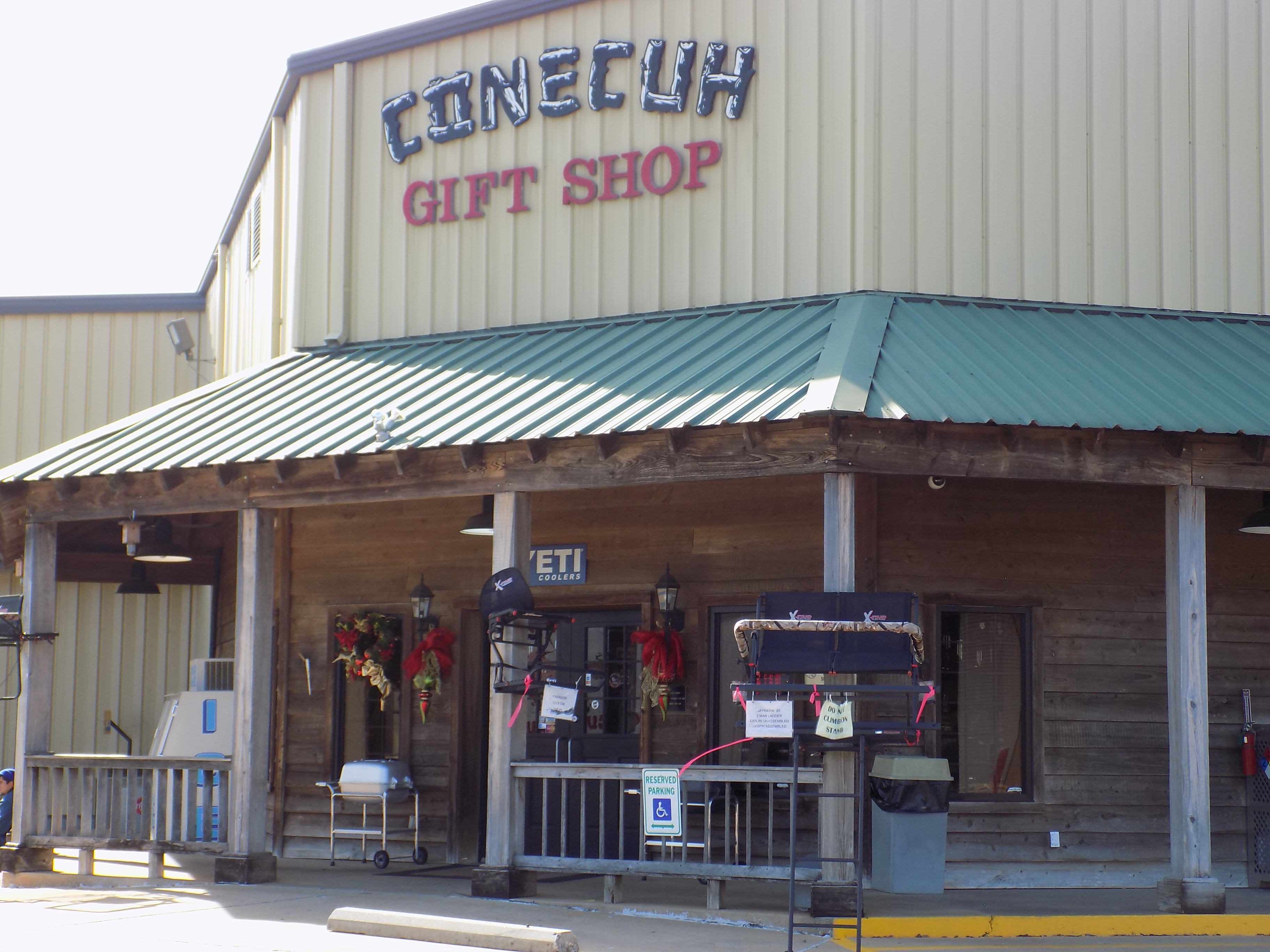
dscn0600 Traveling north on I-65 from Mobile Bay, the aroma of hickory smoked sausage is too tempting to resist at exit 96 in Evergreen so I had to stop to check out the Conecuh Sausage Company’s store.

Conecuh Sausage (www.conecuhsausage.com) is made in Evergreen, Conecuh County, Alabama, in a factory visible east of I-65 about halfway between Montgomery and Mobile. The business, still owned by descendants of founder Henry Sessions, has been in operation since 1947. The family protects Sessions’s original recipes and still uses his distinctive smoking techniques. It is only fairly recently that the products have been available on a wide scale. When I followed the enticing smell of hickory smoke to the factory recently, trucks were bustling in and out, headed in all directions with their tasty cargo. dscn0601

Conecuh Sausage Co. products include hickory-smoked sausages, hams, bacons, and turkeys in a variety of flavors and with a range of heat. A unique blend of seasonings makes the flavors stand out and it quickly became my sausage of choice. I always keep Conecuh sausage on hand and I have to be careful when I open a package; once it’s opened, it’s quickly gone.

Fortunately, Conecuh brand sausage is available throughout Alabama and is featured in restaurants all over the state. On a recent visit to Mobile Bay, I saw dishes featuring Conecuh sausage on three separate menus.

Not that long ago Conecuh sausage was only available in south Alabama locales so I was surprised to find out recently that it is now distributed in over twenty states throughout the southeast, as far west as Kansas, along the Great Lakes, and up the east coast into New England (where it would be an excellent addition to a clambake or a lobster boil). The products are also available for shipment throughout the continental U.S.

Conecuh sausage is great on the grill or cooked in an iron skillet on the stovetop as an appetizer. It’s my favorite for turnip green soup or jambalaya and is a good seasoning for greens and pots of beans. The company’s website includes a variety of recipes.

Here’s one I particularly like, just in time for New Year’s celebrations:

New Year’s Soup

2 tablespoons olive oil

2 cups chopped yellow onion

2 tablespoons minced fresh garlic

1 pound Conecuh Hickory Smoked Sausage, chopped

3 quarts chicken broth

1 28-ounce can diced tomatoes, drained

8 cups chopped fresh turnip greens

1 tablespoon Conecuh Pork, Poultry, and Wild Game Seasoning

3 tablespoons apple cider vinegar

1½ teaspoons salt

3 15.8 ounce cans black-eyed peas, drained

In a large Dutch oven, heat olive oil over medium high heat. Add onion, garlic, and sausage. Cook, stirring frequently, until lightly browned, about 6 minutes. Add broth and tomatoes; bring to a boil. Add greens, Conecuh seasoning, vinegar, salt, and peas. Reduce heat to low; simmer until greens are tender. 10-12 servings dscn0619

“In the Bleak Midwinter”

  dscn0020 Point Clear, Alabama. The thing that makes me happiest about the Winter Solstice is that the daylight begins to creep up minute by minute and the days begin to get gradually longer. I do not care for long dark nights and cold temperatures when my seasonal allergies are always at their worst.

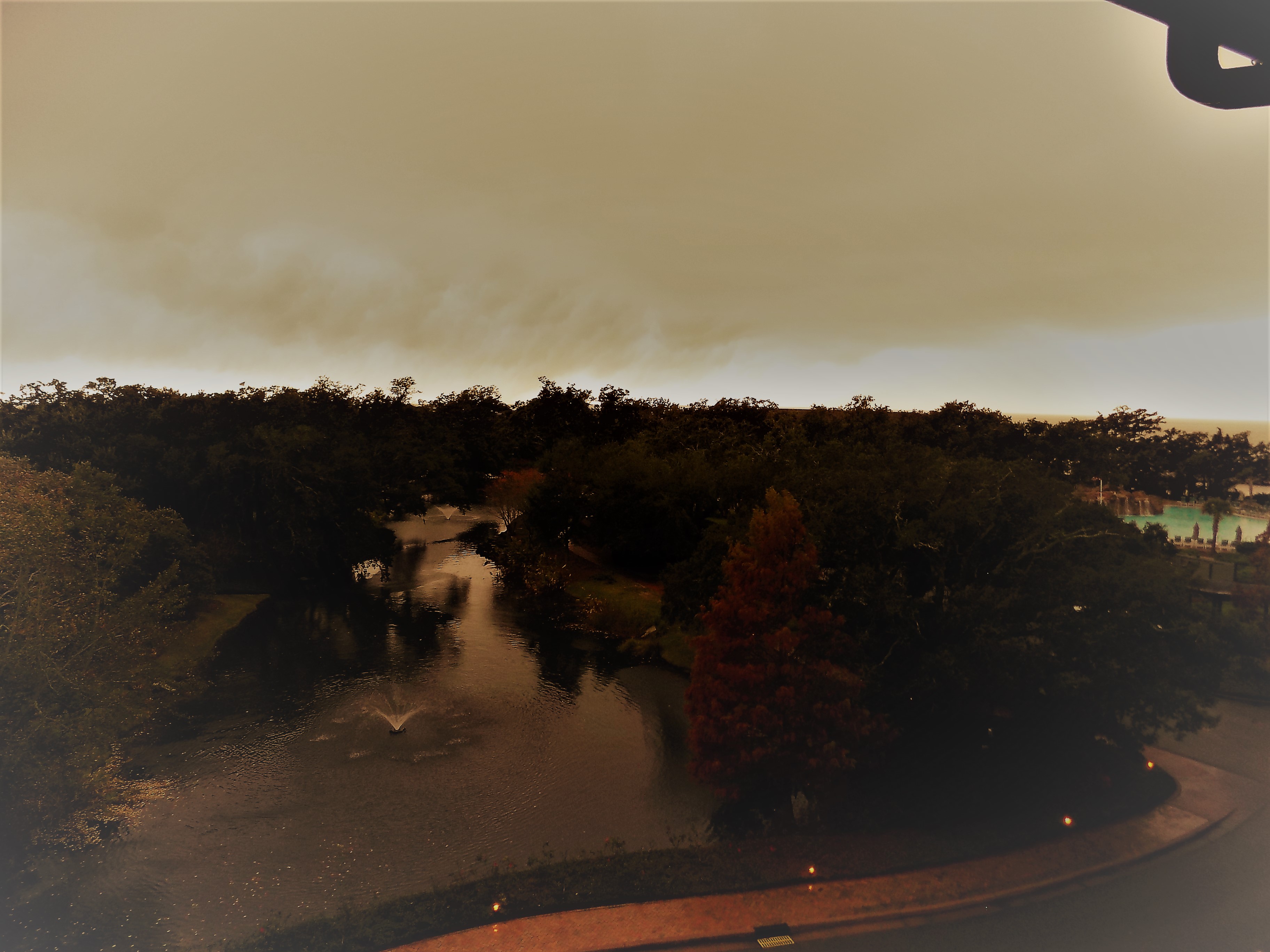
I made my annual escape to the Grand Hotel at Point Clear, Alabama, on Mobile Bay this week before Christmas – a pleasant and much needed break in a challenging year. When I arrived, temperatures were in the 70s and shorts and flip flops were much in evidence.

dscn0587The seasonal shift became tangible and abrupt on Sunday. The morning was still warm and I was drinking coffee on my balcony when a dark cloud appeared over on the Mobile side of the bay moving rapidly toward the eastern shore. Suddenly the wind was howling and vicious, the trees were bending, and the ducks in the lagoon were quacking crazily. There were whitecaps on the bay and in the lagoon as the rains moved in. Minutes later the temperature had dropped drastically and monsoon rains enveloped the area. The good part is that this area, like the rest of the state, is suffering a drought and rains are much needed.

After a couple of dreary days, the first day of winter is showing some promise for rising temperatures and more sunshine. Last night’s final sunset of fall was stunning. The sun, which had been invisible all day, suddenly dipped beneath a heavy layer of grey cloud cover and provided a bright brief and brilliant fuchsia flash to what had been a colorless cold day. Just as quickly, it was gone. dscn0594

Early now on the first day of winter, as I pack to head north, temperatures are brisk but climbing and the sun is promising to make more than a perfunctory appearance. Christmas day temperatures here are projected to be back in the 70s.

It has always pleased me that there is a Christmas carol that captures the gloomier aspects of the season. “In the Bleak Midwinter,” with 19th century lyrics by Christina Rossetti of Pre-Raphaelite fame, does not skimp on references to the gloom and dreariness of the winter. Years ago, in my directing days, I opened a production of A Christmas Carol with a group of darkly-clad carolers singing “In the Bleak Midwinter” in a dusky light. It seemed a fitting way to introduce Ebenezer Scrooge’s pre-transformational world.

“Earth stood hard as iron,” Rosetti writes, “Water like a stone / Snow had fallen, snow on snow / Snow on snow / In the bleak midwinter / Long ago.” I particularly like that repetition of “snow on snow” – it gives me a chill to type it now.

Fortunately the bleak midwinter I am heading to in Birmingham and more northern climes of Alabama will not hold snow on snow. In fact, warmer temperatures are forecast. and it promises to be a warmer contemplative time after a difficult year.

Here in Point Clear I have reunited with old friends, had some memorable meals both at restaurants and at the home of friends, and started some new traditions. It is a preview, I hope, of pleasant hours spent with family on Christmas day and a hopeful new year ahead.

Merry Christmas and Happy Holidays, wherever you may be, and however bleak the winter. img_1005

More Brief Meditations

100_1587-3  My Christmas cards went in the mail this week. Previous essays have chronicled my long-standing project of photographing old Alabama churches during the month of December for my next year’s Christmas card. I have written about how signing and addressing each card has become a “brief meditation” on the recipient.

2016 was a challenging year for my family and me. Last year at this time Dad was already hospitalized and there was no opportunity to go on photography expeditions. But many of my friends have begun to expect my annual Christmas card and I feel a responsibility to complete the task. The process of choosing the annual design, verse, and photo has become a welcome annual ritual that I use as an escape from day to day pressures.

Since I didn’t take any church photographs in December 2015, I went back through my files to look at previous photographs of churches that I haven’t used. I kept returning to a 2007 image of Havana Methodist Church, an 1870 structure visible on Highway 69 in the small Black Belt community of Havana between Moundville and Greensboro.

The Havana church was a frequent subject of artist William Christenberry, whose long career was centered on photographs, paintings, sculptures, and assemblages inspired by the Black Belt, especially Hale County where Christenberry’s grandparents lived. Christenberry visited and photographed his humble architectural and landscape subjects year after year, photographing their decline and bringing fame to a green barn, a Sprott church, and a Palmist sign hanging upside down in the broken window of an abandoned store, among other iconic images. When I photographed the church in 2007 I visited the family plots of Christenberry’s ancestors buried in the small churchyard cemetery. 100_1589

Christenberry always photographed full images of the Havana church so I decided to use a detail of the church’s handsome roof as the main image on the front of my card and put a thumbnail of the full church on the back. The church’s elegant simplicity inspired me to use a verse from Joseph Brackett’s “Simple Gifts,” a Shaker dance song, as the inside message for the card. The “Simple Gifts” tune is probably best known from composer Aaron Copland’s orchestral adaptation of it for “Appalachian Spring,” the score he first composed for a Martha Graham dance.

On the back I provided the photograph credit and the note that the photograph was inspired by Christenberry along with a memorial statement for Dad, who passed away in the spring.

Ironically, as I was leaving the post office on the day that I mailed my large batch of cards, I heard the news that William Christenberry died at age 80 on November 28. That news about one of my favorite artists and fellow University of Alabama MFAs (who received his three decades before I received mine) made a bittersweet holiday season even more so.

Even bittersweet, I still look forward to a bright and pleasant holiday season full of comfort and joy and I still have a fervent hope for a better and more restful year to come.

Happy Holidays. 100_1587

Miss Jane’s Solitary Life

dscn0555 When Brad Watson’s remarkable short story collection The Last Days of the Dog Men first appeared, I kept gifting it to readers I know. Read it, Read it, Read it I would say and let me know if it’s as good as I think it is. Those who followed my exhortation tended to agree with me. Finally somebody said to me “I love it, but you gave me this same book last year.” I told her to keep it and pass it on and I gave her another book to replace it.

I have known great dogs all of my life and no writer has ever captured a dog’s essence in quite the way that Watson does in that compulsively readable and often brilliant first short story collection.

Watson followed up Last Days … with the fine novel The Heaven of Mercury and then Aliens in the Prime of Their Lives, a second short story collection full of mystique and wonder. Now his second novel, Miss Jane, is on the shelves. It is a book of painstaking empathy and precision inspired in part by the true story of one of Watson’s great-aunts.

The title character, Jane Chisholm, is born before her organs are fully developed and has a genital birth defect which obliterates the demarcation between her reproductive, bowel, and urinary functions. This does not sound like a promising premise for a fascinating and distinctive novel but in Brad Watson’s skilled hands Jane overcomes the odds and her handicaps to live a full and courageous life and that singular life is the book’s clear focus.

Watson tells the story in a straightforward and fluid way, avoiding maudlin sentimentality, and exploring the life of Jane while skillfully rendering the few people in her orbit in a rural area near the fictional town of Mercury, Mississippi (which has much in common with Watson’s home town of Meridian).

Jane’s parents, Ida and Sylvester, are stoic and grim, accepting their troubles as their due and finding ways to blame themselves for both Jane’s careless conception and her physical challenges. The married couple has long drifted away from each other and each tries to find ways to find peace and calm in their existence. Jane’s older sister, Grace, is anything but graceful as she schemes and connives to remove herself from her parents’ farm and move to town.

Most interesting of all Jane’s acquaintances is Dr. Eldred Thompson, the country doctor who makes a special effort to cultivate and educate Jane from the moment of her birth. The frank and honest relationship between the woman and her doctor makes a striking centerpiece for a unique and brave novel.

Watson’s ability to provide much detail in a sparse and efficient matter is a hallmark of his work and he is at his peak in Miss Jane. He weaves his story seamlessly and compellingly and a life passes before the reader without interruption. Jane is a toddler and suddenly five years have passed and she’s going to school; Jane is an adolescent and suddenly she is working with her sister as a young woman in Mercury. Jane becomes an old woman.

Without dwelling on Jane’s challenges, Watson shows a girl – later a woman – who finds ways to control her incontinence and mostly successfully keep it from interfering with her functioning in the world around her. He presents a vivid character forced by biology and culture to live a solitary life but shows that it can be a satisfying and fulfilling one, and one perhaps more successful than the flawed conventional lives of those she encounters.

Jane comes to an early realization that child-bearing and a “normal” sex life are beyond her capabilities and comes to a calm and healthy acceptance of the facts of life as they apply to her circumstances. Even so, a beautiful young man, Elijah, falls for her and she for him and Jane immediately begins to calculate how far she can allow the teenage romance to progress. Jane and Elijah’s delicate and bittersweet relationship is acutely explored until the time when the doctor and Jane’s family decide it is in the best interest of both to put a stop to it. It’s interesting that this same theme of the world making decisions about the sensual life of one with disabilities is also explored in Jeannie Thompson’s The Myth of Water, a series of poems about the life of Helen Keller. Well-meaning “normal” people are not always aware of the spiritual harm they might inflict by looking out for the perceived “best interests” of others.

I knew Brad Watson casually when we were both students at Alabama. He was known as a serious and skilled writer even then and his composure and bearing always seemed to take him above the muck and petty politics that occasionally mar the creative graduate school experience. Writer Barry Hannah was teaching at Alabama at the time Brad Watson was there and when Watson’s work began to be published Hannah’s great quote was “Only the Irish geniuses wrote like this.”

It is always an especially exciting time when one can open a crisp new book by Brad Watson. With Miss Jane he has created a character that will endure and inspire.  Read it, Read it, Read it …

Two Southern Cookbooks


dscn0552 Back when I first got interested in learning about food and foodways, I discovered the pleasure of reading well-written cookbooks by chefs with a point of view. I read them cover to cover like a novel – focusing on the commentary and comments. I generally skim over the individual recipes, making note of particular dishes I might like to come back to and tackle at some point.

In the last year I haven’t had a lot of time to check out cookbooks. However in the past month I made the time to read two great ones by two Southern chefs whose food I’ve had the pleasure of enjoying at those wonderful Alabama Chanin dinners at the company’s Florence factory.

Vivian Howard was the chef for my first Friends of the Café dinner. At the time the PBS show A Chef’s Life was already chronicling her restaurant Chef and the Farmer in Kinston, North Carolina. That award-winning program has familiarized audiences with Howard’s point of view and with her husband and partner, Ben Knight, her parents and family, and staff. Many people first learned about Glenn Roberts and his preservation of endangered grains at his South Carolina Anson Mills operation through an episode of A Chef’s Life. Farmer Warren Brothers and his staffer Lillie Hardy are popular semi-regulars on the series. I was able to access a bushel of my mother’s childhood favorite apples, Hackworths, based on an apple episode of A Chef’s Life.

In each episode of her show, Vivian Howard explores a local ingredient by going to the source. She then features a traditional preparation of the ingredient and goes back to her restaurant and “exalts” the ingredient with her restaurant’s culinary take on the basics.

Vivian Howard’s long-anticipated Deep Run Roots: Stories and Recipes from My Corner of the South (Little, Brown and Company; 2016), with photographs by Rex Miller, hit the shelves in October. I bought it on the day of its release. Actually, I showed up at my local bookseller a day early and had to come back the next day to get a copy.

Anyone who is familiar with the television show will be immediately at home with the packed cookbook. Each section focuses on an ingredient and features Howard’s essay (she’s an excellent writer, by the way) and a blend of recipes suited to every kitchen and skill level.

When people who are familiar with Chef Howard find out that I attended Howard’s Friends of the Café dinner at the Factory, the first question is “Did she serve Tom Thumb?” I regret that she did not (although she did serve a version of her famed Cherokee purple tomato sandwich, so there!) but Howard aficionados know that Tom Thumb is a sausage mix stuffed into the cleaned and rinsed cavity of a pig’s appendix. It is unique, apparently, to eastern North Carolina where she grew up. Her Tom Thumb recipe comes from her father’s mother’s family. You can find the details in the book but I will never tackle that one. I’ll wait until I can taste Vivian Howard’s preparation of it one day.

Howard’s book also includes her mother’s recipe for chicken and rice that she and her mother, Scarlett Howard, made famous on the show. I can vouch for that one.

Vivian Howard is endearing and prickly and I suspect that her show’s award-winning success is due in part to the way those qualities are balanced. Her show is addictive and her book is compulsory for any cook who wants to explore authentic Southern cuisine off the beaten path. She writes:

This is a Southern cookbook, but not one that treats the South like one big region where everybody eats the same fried chicken, ribs, shrimp and grits, collard greens, and gumbo. Instead, I interpret Southern cooking the way we understand French, Italian, and Chinese food: as a complex cuisine with variations shaped by terrain, climate, and people.

Vivian Howard is what my Grandmother Harbison would have called a “pistol ball.”

dscn0554

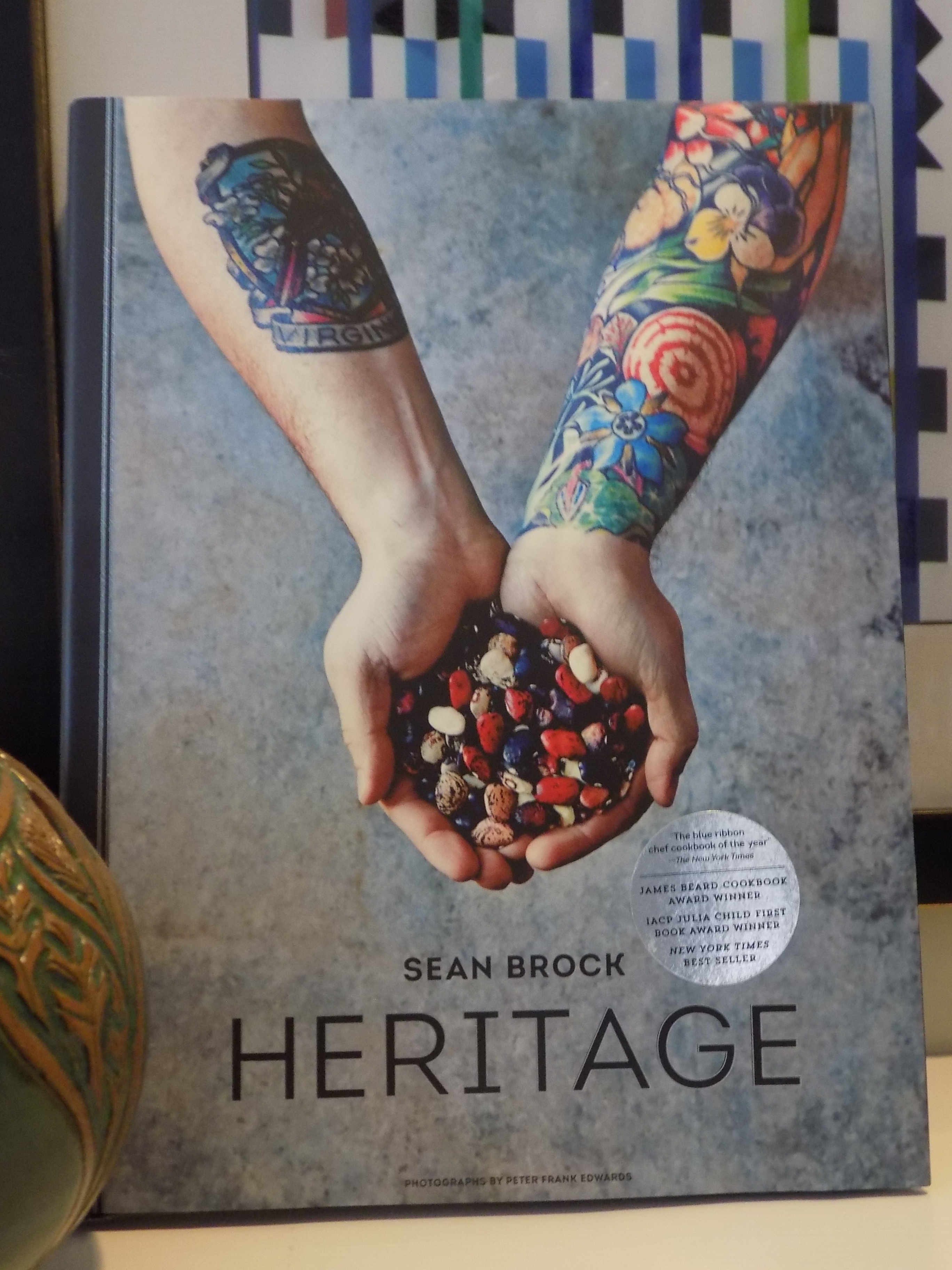
So is Chef Sean Brock. His cookbook, Heritage, with photographs by Peter Frank Edwards (Artisan; 2014), synthesizes his Virginia heritage with his culinary training and his adult experience as the acclaimed chef of Charleston’s McCrady’s and of Husk, with locations in Charleston and Nashville.

Sean Brock was the chef of my most recent meal at Friends of the Café in Florence.  Now, after eating his meal and reading his cookbook, I feel like he might have been my best buddy in another life.

Heritage is as compulsively readable as Deep Run Roots and each treads some of the same territory, albeit with somewhat different perspectives. Brock’s passion for farm to table seems even more compulsive than Vivian Howard’s and his gorgeous book is an educational text as much as it is an autobiographical and culinary one.

Brock plays loose and free with his opinions on every page of Heritage. While Vivian Howard focuses each chapter of her book on a specific ingredient, Brock  titles his chapters with subjects like “The Garden,” “The Yard,” “The Creek and the Sea,” “The Public House,” and “The Sweet Kitchen,” etc. and includes a plethora of applications for each category. I love anything pickled but have had a fear of the pickling process; Sean Brock and Vivian Howard have given me the courage to pickle, maybe.

Sean Brock’s respect for his heritage, his ingredients, his colleagues, and his methods are contagious. I was already inquisitive about food and foodways and now I want to find out even more. I realize that questioning the growers, chefs, home cooks, and purveyors is not invasive but a way of preserving and “exalting” a culture and its ingredients. I already knew that but Heritage reinforced it.

A few years ago Alabama native chef Scott Peacock moved to Marion, Alabama, and was interviewing older home cooks throughout the state in an effort to archive and preserve their methods and techniques. This is a mission that Brock and Howard exemplify and carry forward in their debut cookbooks.

If you are a cook, or if you just appreciate thoughtful and well-prepared food with a human touch, these are texts you will cherish.

Chef Sean Brock

sean-brock-photo I admit that there is very little that inspires me to make the two hour drive up I-65 to Nashville these days. I have lived there twice and used to visit fairly regularly but eventually I felt like I had gotten all of the sugar out of the Nashville gum – or perhaps all of the Goo Goo out of the Nashville cluster.

Now that I have finally sampled Chef Sean Brock’s food, I long to get back to Nashville soon to enjoy a meal at the Nashville version of his award-winning restaurant, Husk (www.huskrestaurant.com), which opened in Music City in 2013.

Sean Brock is the James Beard and multi-award winning chef most identified with the original Husk in Charleston. Heritage, Brock’s 2014 cookbook, is one of the most beautiful and certainly most readable cookbooks ever. Brock challenges himself to only use Southern indigenous ingredients in his restaurants – often from his own garden and herd of pigs – and the results are creative and special. “If it ain’t Southern, it ain’t walkin’ in the door” is my favorite Sean Brock quote. Heritage contains a recipe for “cornbread and buttermilk soup” that I will be making forever. It was inspired by the chef’s early habit of crumbling cornbread into a cup of buttermilk — a meal my Granddaddy Harbison ate regularly.

Sean Brock is humble and authentic.

I finally had my first Sean Brock meal at the Alabama Chanin Factory in Florence last Saturday evening when my friend Anne and I travelled over for the most recent Friends of the Café dinner. We got off to a bad start at the Factory when someone in the Alabama Chanin organization had misplaced our reservation and a staffer was a little rude to us before they found their mistake. It’s the first time I was ever made to feel uncomfortable at a Factory event and the lack of grace with which the situation was handled tainted the good feelings about the Factory that I have written about so many times in the past.

That early unpleasantness faded quickly, however, when Sean Brock’s food made its first appearance and a series of passed hors d’oeuvres circulated among assembling diners. Jimmy Red Johnny Cakes with pimento cheese, grilled oysters on the half shell with ‘nduja sausage and lovage, and beef tartare lettuce wraps were carried around accompanied by the first of the pairings from Grassroots Wine, a stalwart of the Southern Foodways Alliance. Southern Foodways Alliance was once again one of the beneficiaries of the dinner’s proceeds. A last minute decision was made to share those proceeds with victims of Hurricane Matthew which was bearing down on Sean Brock’s beloved Charleston as we gathered.

When it was time to be seated, Anne and I were reunited with our friend, Barbara from Tulsa, who we met at the Adam Evans Factory dinner in August, and introduced to Barbara’s friends, Carol and Paul from Chicago, and to Cindy, a Florence local. A hallmark of the Factory dinners has always been the instant community that is formed. I quickly enlisted Jason at the table behind me to keep me posted on the Alabama-Arkansas score.

Before the first course arrived, each diner was presented with a benne-buttermilk roll accompanied by a smear of butter — a Husk tradition. The courses arrived amid oohs and aahs from those gathered and with enough time in between to cultivate conversation and camaraderie. When a tomato and okra stew was served as the first course, some people bristled at the grilled pig tail that garnished it but when they tasted it they were delighted. A gentleman at another table who introduced himself as “a Jew from New York who is not quite sure why I’m here” declared the pig tail “delicious.” dscn0525

The second course, a savory and exceptional shrimp and eggplant purloo, brought together a number of Brock’s influences. Purloo, a South Carolina Lowcountry standard, is reminiscent of Gulf Coast jambalaya, which is itself closely related to Spanish paella. The third course was a perfectly grilled Denver steak with black truffle and sweet potato. The portions, the flavors, and the aesthetic were perfection. dscn0527

Finally, a panna cotta made with Cruze Farm’s buttermilk, muscadines, and brown butter completed, once again, one of the very best meals I have ever tasted. Several of those meals have been consumed in Florence, Alabama.

I have regularly written about the magic and community that make the regular pilgrimages to the Florence Friends of the Café meals so special. Like an author with his books, it’s hard to choose a favorite among the Factory meals – it always seems like the most recent is my favorite.

Either way, Sean Brock is now one of my very favorite chefs. He signed cookbooks after the event and his courtesy and patience, his eagerness to talk about his food and how honored he was to be serving us, his pride and his passion for locally grown and sourced food – were infectious and inspiring. He is also the source of my favorite anecdote about Birmingham chef Frank Stitt.

This was the final 2016 dinner for the Factory series. May 2017’s line-up be equally inspired. And may Sean Brock keep exploring and teaching what Southern food really means. sean-brock-photo-2

“The American Way …”

dscn0522 There was a joke back in the 70s that went like this:

Q: When will we know that the Baby Boomers are getting old?

A: When “New York” magazine runs a cover story on “The Hottest New Funeral Homes.”

I think we’re there. I’ve done my last will and advance directive documents. I’m an organ donor. But I haven’t gotten around to making arrangements for disposal of my remains when the inevitable happens.

One reason for my hesitance may be that I read and never forgot Jessica Mitford’s brilliant expose of the American funeral industry, The American Way of Death (1963), and her updated revision, The American Way of Death Revisited (1998). In both volumes Mitford addresses the ways in which the funeral industry exploits the grief and shock of the bereaved to charge jacked-up prices for often unnecessary services. The 1998 update asserts that things have gotten even worse with the conglomerates swallowing up the local mom and pop operations which once dominated the industry.

It’s like this: The corrupt and sadistic medical insurance industry plays games with our mental and physical health and then, at the end, the funeral industry delivers the final punch in the face.

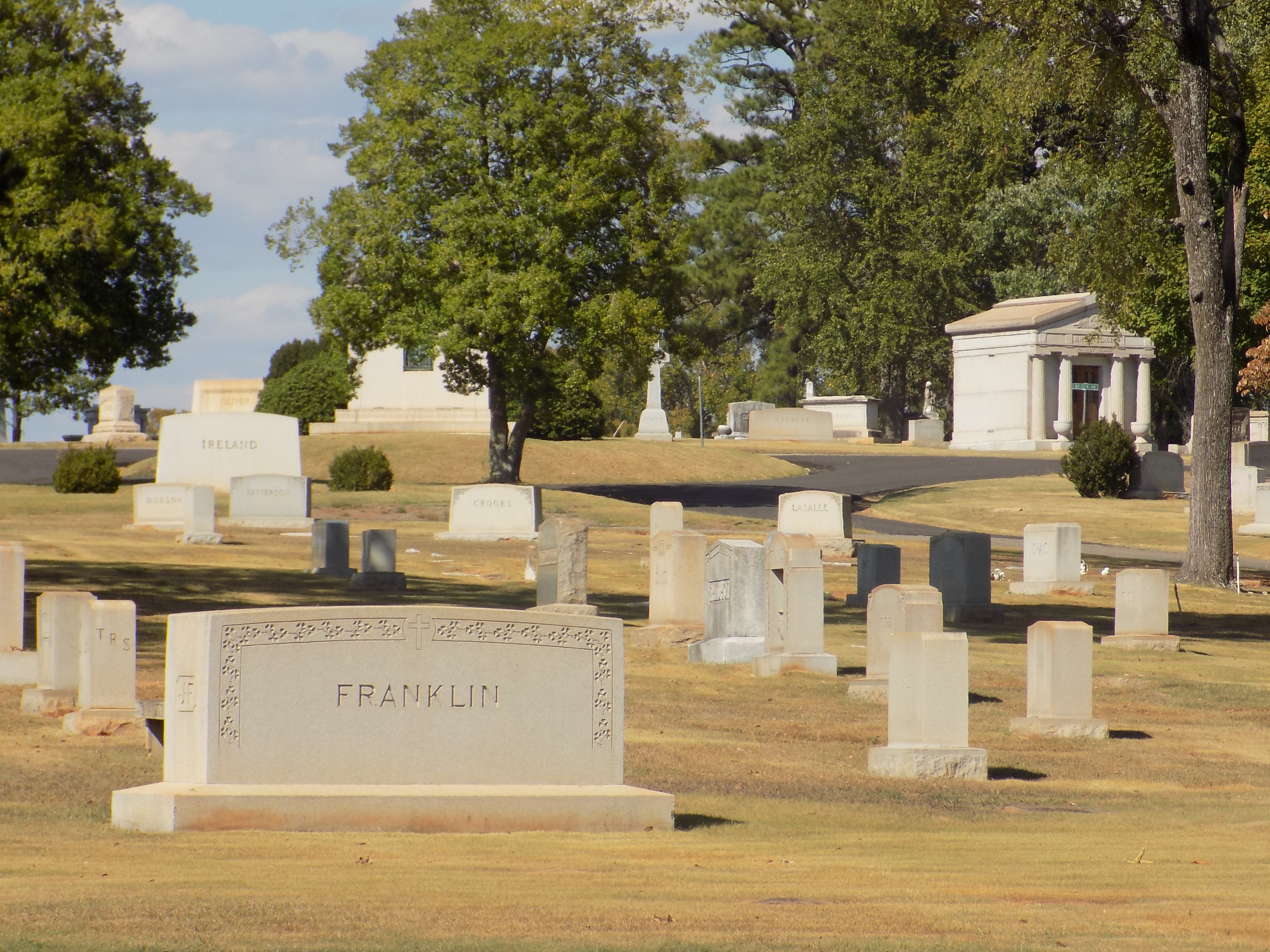
This comes to mind because I’ve had to think about death and dying more than usual this year. And, as I commented to my mother recently, I’ve spent more hours in cemeteries this year than I ever imagined spending in my entire life. My mother visits my father’s grave every day and when I’m in town I go over there with her.

My parents have four plots in Elmwood Cemetery in Birmingham. Dad is there and Mother will be beside him but the two extra plots haven’t been claimed. Mother’s hints that she wants me to take one of the remaining plots have become gradually more frequent and more insistent.

Elmwood is a beautiful cemetery, one of Birmingham’s oldest and one of the largest in the country. It’s a beautiful and peaceful place and its inhabitants are a composite of the social, cultural, political, artistic, medical, academic, industrial, and sports history of the city. The Elmwood staff was lovely to my family as we made arrangements for Dad’s memorial and burial there earlier this year.

If I decide to be buried, I would be perfectly happy to be buried at Elmwood if they allowed natural burials. There is still a lot of confusion and misunderstanding about what kind of burial is “natural.” It’s ironic, really, since most Americans had some form of natural burial before modern times and modern laws and the emergence of a very powerful funeral lobby.

There is a history of embalming throughout civilization, of course, but modern funeral practices and preservation really took hold in the United States during the Civil War when embalming became a way of preserving soldiers’ bodies so they might be returned to their families. “Morticians” around that time re-classified themselves as “Funeral Directors” and the modern death mega-industry was born.

Here’s what I mean when I say I want a natural burial: I want my physical remains and the vessel that contains them to go back to the earth as naturally as possible. My preference is to be buried in a pine coffin without any sort of preservative and let nature take its course and reclaim my remains. That means no embalming or preservation of any kind, a coffin that is biodegradable, and no burial vault.

As I’ve researched natural burial, I have found that the tree-huggers can be just as rigid in their own way as the funeral conglomerates. For example, many natural burial sites do not allow tombstones or markers, or they mandate burial in shrouds. I’d personally like an upright stone marker at my grave and I wouldn’t mind being buried wearing clothes.

I would always prefer gentle and natural burial to harsh cremation (who among us really wants to be burned to a crisp in a fire?) but the restrictions imposed by the industry do not necessarily support my preferences. The only reason I might consider cremation is if I am unable to be guaranteed the kind of natural burial I desire. The options of cemeteries that allow natural burials are still few and far between and I have found only one in Alabama and it’s too far from home. Having my ashes cremated and scattered is the closest thing I can conjure to natural decaying as a way of returning to the land if I can’t be buried according to my wishes.

I realize that I will not be around when all of this comes about and that, at that point, it really doesn’t matter what becomes of my remains. Even so, I want my end-of-life rituals to be based on personal and spiritual decisions – not corporate ones. I have always liked the concept of “ashes to ashes and dust to dust.”

I know that thinking too much about such things may seem (and is) morbid, but after a year of the deaths of several loved ones and friends, it’s better to be safe than sorry.

As a friend of Dad’s said (with a nod to Hemingway) many years ago, reacting to the unexpected death of a mutual acquaintance – “It seems like people are dying these days that have never died before!”

Helen Keller. The Myth of Water. Jeanie Thompson

dscn0515  Helen Keller (1880-1968) is arguably the most famous person to ever come from Alabama. The story about how the young deaf and blind Helen was given words by her teacher, Anne Sullivan, is still well known. She went on from the water pump in Tuscumbia to become a Radcliffe graduate – the first deaf and blind person to ever earn a B.A.; an acclaimed and much translated author and lecturer; a world traveler who knew French, Latin, Greek, and German, in addition to English, sign language, and Braille – and she could read lips with her fingers!; and an advocate for the rights of people with disabilities.

She was an American Socialist, a member of Industrial Workers of the World, and a pacifist who visited Hiroshima before the bomb and again afterward to lament the harm mankind is capable of perpetrating. We know that she fell in love with and planned to marry a man who served briefly as secretary for her and Sullivan and that the planned elopement never occurred. This was in a time when people with disabilities were most often discouraged from having romantic relationships.

It seems she knew all of the most prominent people of her time: Alexander Graham Bell, Enrico Caruso, Charlie Chaplin, sculptor Jo Davidson, the Roosevelts, and Mark Twain were among her friends and she knew every American president from Grover Cleveland to Lyndon Johnson.

Helen Keller had handicaps but seems to have overcome all barriers which were placed before her. Alabama chose her to represent the state on its state quarter in 2003 (the only U.S. coin to feature Braille) and Alabama chose a statue of seven-year-old Helen at the water pump to represent the state in the U.S. Capitol Visitors Center as one of two Alabamians in the National Statuary Hall Collection (Gen. “Fightin’ Joe” Wheeler is the other). Of course there is irony in the circumstance that what is considered one of the most conservative states in the nation is so prominently represented by such a progressive liberal. I love that irony.

Helen Keller was a subversive in many ways.

At her reading at Carnegie Visual Arts Center in Decatur, Alabama, on September 15, poet Jeanie Thompson commented that nowadays a traditional poetry reading almost seems to be a “subversive act” since such events are so rarely done anymore.

Jeanie Thompson’s new book, The Myth of Water (www.uapress.ua.edu), is a lovely collection of poems “from the life of Helen Keller.”  Each poem is an imagistic contemplative meditation in a first person voice. The persona is usually Helen but there are also poems in the voices of those who encountered her in her life.

It thrilled me to know that Jeanie Thompson has a new collection on the shelves. I have known her poetry since we were both at the University of Alabama and her books like White for Harvest: New and Collected Poems and Litany for a Vanishing Landscape have a permanent home on my bookshelves.

In The Myth of Water Thompson weaves a life from childhood to death and beyond in a series of brief and often breath-taking poems which attempt to break through the silence and explore what Helen Keller must have been thinking, feeling, seeing in her heart and in her mind’s eye. These are 34 poems of loss and longing, heightened consciousness and humanity, the challenges and triumphs of an unvanquished spirit hungry for life. Thompson’s is an ambitious and daunting project, flawlessly rendered.

By entering a sensory-deprived existence, which found ways to not only compensate but to prevail, Thompson’s poems heighten the reader’s own senses and awareness. I thought I knew what I needed to know about Helen Keller. Now, after reading these poems, I long to learn more. The Helen Keller quote – in English and in Braille – on the Statuary Hall statue is “The best and most beautiful things in the world can’t be seen or even touched, they must be felt with the heart.” Thompson has made an imaginative journey into Helen’s heart.

After the reading, I took the Upper River Road south of the Tennessee on the drive back to Huntsville from Decatur. A full moon shone down on cotton bolls that had just burst open, glowing white and pure in the dark fields, the first cotton I have seen this year.

A light rain began to fall as I parked and headed to my back door. I turned to look up at the full moon, still showing through thin clouds. The cool water fell softly on my face as if for the first time.