Serendipity under a Strawberry Moon

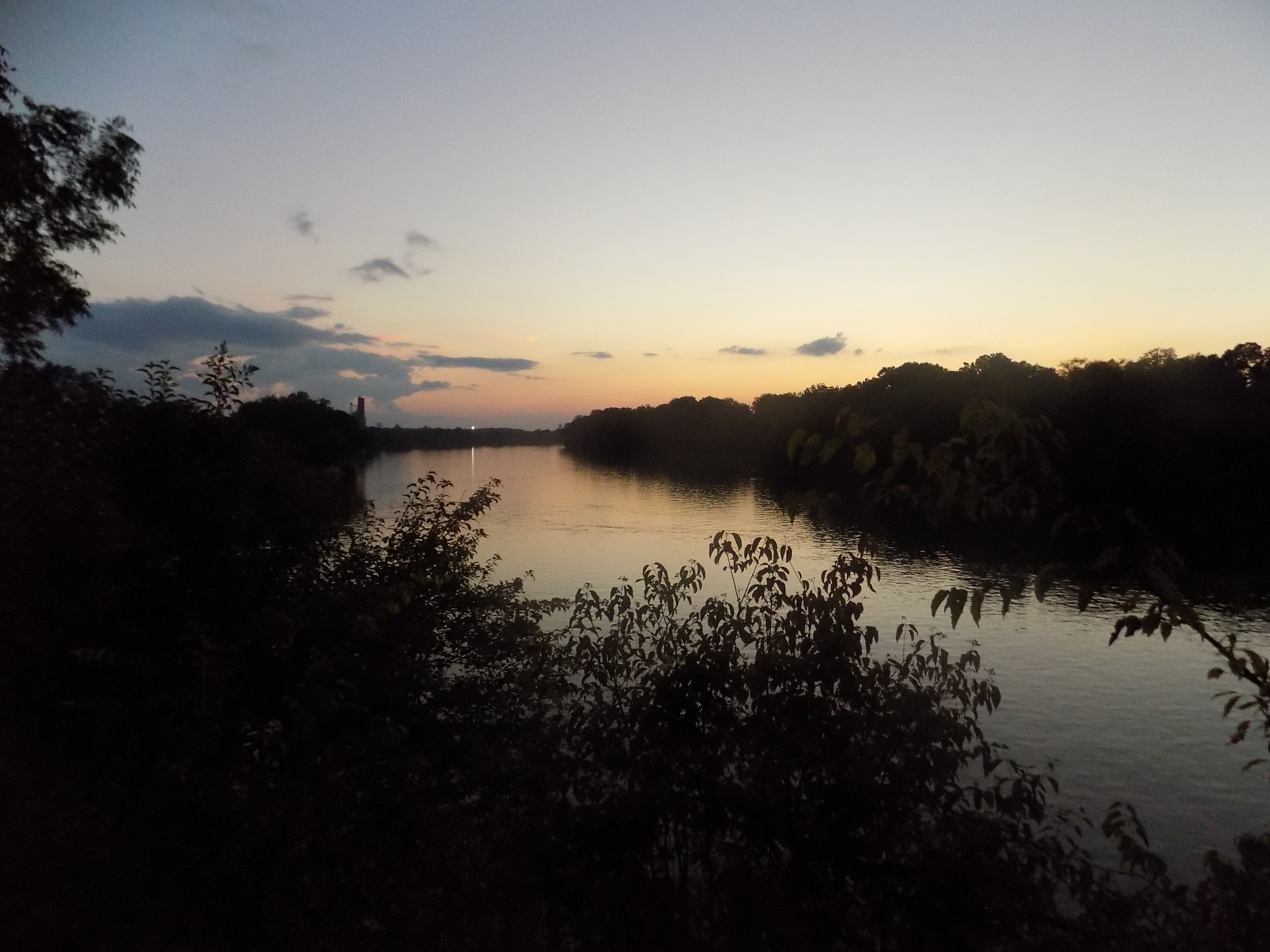
 Bird song and the comforting sounds of barnyard animals filled the late Spring air as the first fireflies of the evening began to twinkle in the woods of the Wheeler National Wildlife Refuge amid the backwaters of the Tennessee River.

 A group was gathered for dinner under the open pavilion at 1818 Farms (www.1818farms.com) in the northwest corner of the quaint and historic town of Mooresville, Alabama (pop. 54), in Limestone County between Huntsville and Decatur. In the wildlife refuge, a canoe glided by in the distance, adding a magical moment to the dinner; I hoped the canoe party looked to their right and saw our gathering beneath the Italian globe lights and flaming torches so that a glimpse of the farm through the trees might add to the magic of their journey at dusk.

It is the rare weekend when I am not traveling so when my friend Anne contacted me on Thursday to see if I might be interested in attending the 1818 Farms “Farm to Table” dinner on Friday, it was serendipitous that I had already made plans to stay at home.

1818 Farms covers three acres in tiny Mooresville. It is owned and lovingly tended by Natasha and Laurence McCrary and their family. A stroll through the property includes visits with chickens, cats and kittens, goats, pigs, sheep, and a Great Pyrenees dog to guard the assorted livestock. All of the animals seem incredibly content. Anne and I visited with three tiny kittens; one was designated to remain on the farm and the McCrarys were looking for good homes for the other two.

The farm is beautifully curated and a sense of calm begins at the front gate. Everywhere one looks there is a place to rest the eye. The animals are friendly and accessible, the raised garden beds are lush and filled with bloom and beauty, and the woods and wetlands of the wildlife refuge provide the western boundary beyond the border fence. A mellow instrumental duo provided music at the edge of the pavilion throughout the evening.

This was my first time to attend one of the 1818 Farms dinners. The meals started a few years ago in collaboration with Chef Jake Reed, the charismatic owner of the charming Albany Bistro, a great neighborhood restaurant in Decatur (www.albanybistro.net). Reed is winding down the Albany Bistro business (which now is open for catering and special events only) and has recently opened the new Table in the Garden eatery (www.tblrestaurant.com) at Huntsville Botanical Gardens.

“Chef Jakob” is a committed devotee to the “farm to table” philosophy and every meal I had at Albany Bistro is evidence that he practices what he preaches in creative and dynamic ways. His modern takes on local ingredients are fresh and innovative but he frequently acknowledges the enduring lessons he learned in the kitchens of his mother and grandmother.

Passed around hors d’oeuvres included fried green tomatoes with a horseradish sauce, wonton cups with herbed chevre and summer vegetables (the cheese was from Humble Heart Farms www.humbleheartfarms.com in Elkmont, my favorite goat cheese purveyor), and possibly the best sausage balls I have ever tasted.

After the assembled guests were seated and the meal was introduced by Natasha and Chef Jakob, the first course of a summer vegetable tart in a puffed pastry crust was presented. It was followed by green bean and potato salad with lemon terragon vinaigrette.

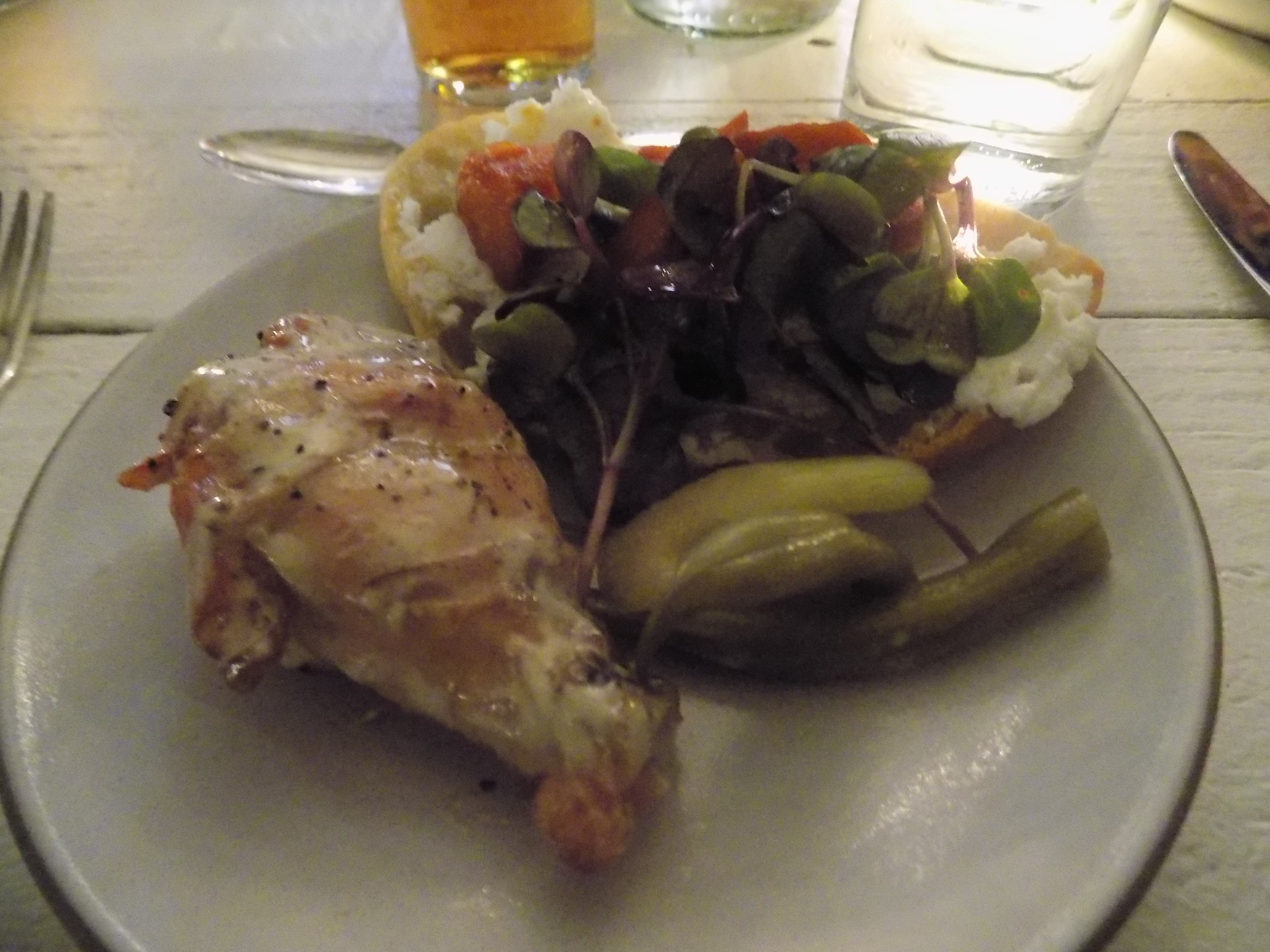
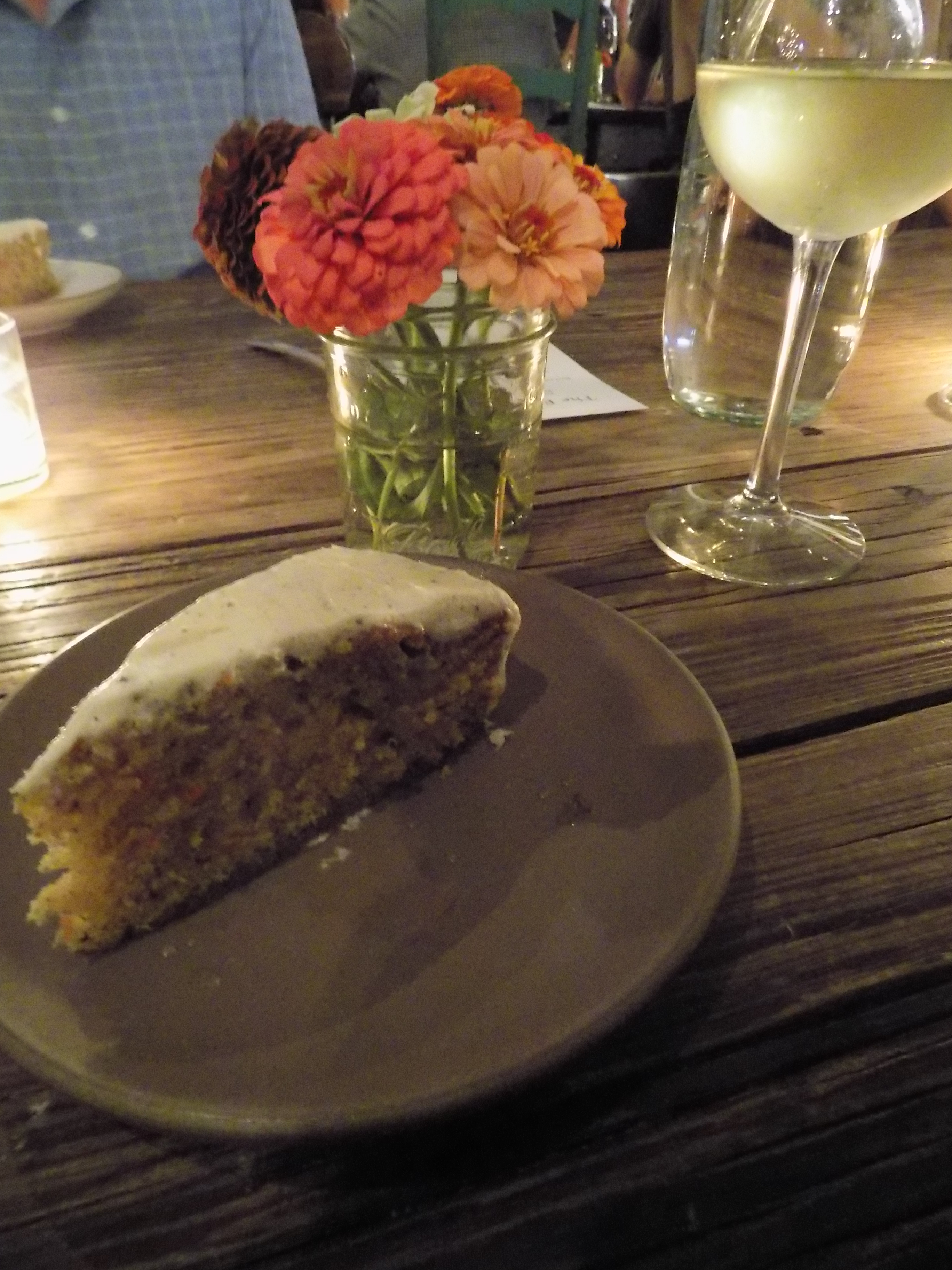
The main course was grilled chicken with a balsamic peach glaze, grilled peach, and arugula. For dessert, Chef Jakob presented a bacon and bourbon cupcake. As shocking as a bacon and bourbon cupcake might sound, the result tasted like a fairly traditional cupcake but with interesting notes and hints throughout; I especially liked the crisp bacon crumbles on the top.

Chef Jakob created a lovely dinner that was reserved and memorable – unmistakably fresh, local, and seasonal. The presentation and ambience of the event were lovingly executed.

By the end of the meal, the twilight had turned to deep darkness and the animals were settling in for the night. Natasha was gathering up provisions for a couple who had decided to adopt one of the kittens and photographs were being taken to commemorate the adoption. As we stopped to check in on the roosting chickens in their spacious coop, Natasha passed. “They don’t realize how lucky they are,” she said of her menagerie.

Indeed, I felt lucky to be able to visit their home for a few hours. During the dinner, I had noticed a full moon beginning to peek through the canopy of trees. Native Americans refer to the first full moon of June as the “strawberry moon.” That strawberry moon shone brightly as I hit the highway for home and a restful sleep.


Food Memory: Bread Pudding

I have never met two bread puddings that are exactly alike and I rarely meet one that I don’t like. When I eat at a new place and bread pudding is listed on the menu, I almost always have to try it and see what version this particular kitchen has deemed acceptable.

Some version of bread pudding shows up on the menu of many southern dining establishments and dining rooms; some are dense and cake-like and others are more loose and cobbler-like. The Bright Star in Bessemer, near Birmingham, serves a tasty bread pudding with a rich bourbon sauce. The signature dessert at the Wash House in Point Clear on Mobile Bay is a Key Lime bread pudding that doesn’t sound promising but is actually quite good. It is also huge and filling and every time I’ve ordered it I have had to request a go box. Fat Girls, a tiny little barbecue joint on Highway 82 in Billingsley, Alabama, had a terrific bread pudding but it shut its doors a few years ago.

There seem to be as many versions of bread puddings in New Orleans as there are places to eat.

I don’t recall either of my grandmothers ever making a bread pudding so I have no family recipes to honor.

But recently I had some of Mrs. London’s bread from her family kitchen over in Madison sitting around and some Chilton County peaches that were getting pretty ripe and I decided that I needed to do something about it.  Scoot’s organic eggs from the farmer’s market were in the refrigerator and I decided to see what it was like to make my own bread pudding.

I do pretty well in the kitchen but whenever I make something I’ve never made before I need to do some research before I get started. I pulled down the cookbooks and culled the bread pudding recipes and then set to work.

I followed the basics based on what I read and then set about making my own version. I must say that this is such an easy dessert to make that I’m not sure why I never thought to make it sooner; I guess I was just satisfied to order it at restaurants.

The final result bears repeating, I think, and I’ll share it for whenever the urge might hit. I was frankly thrown a little off-guard with how basic and simple it was to make a pretty good bread pudding. I guess since I never thought to make it, I never thought about the process.

Here’s what I did; I messed with it a bit and, even though raisins are pretty traditional for bread puddings, I wanted to do peaches in mine. This is a very giving recipe and anybody cooking a bread pudding should tweak it with whatever their tastes suggest.

Peach Bread Pudding with Bourbon Sauce

For the bread pudding:

1 cup milk

1 cup Half and Half

¼ cup unsalted butter

½ cup granulated sugar

1 teaspoon ground cinnamon

¼ teaspoon salt

2 eggs, beaten

6 cups dry bread cubes

1 cup sliced peaches

  1. Pre-heat oven to 350 degrees.
  2. Heat milk, Half and Half, and butter over medium heat until butter is melted and milk is hot.
  3. Whisk sugar, cinnamon, salt, and eggs together.
  4. Stir in bread and peaches.
  5. Stir in milk, ½ and ½, and butter mixture.
  6. Pour it all into a 2-quart baking dish.
  7. Bake uncovered for 45 minutes.

For the bourbon sauce:

1 cup brown sugar

½ cup unsalted butter

3 tablespoons Half and Half

4 tablespoons bourbon (non-alcoholic vanilla extract may be substituted for the bourbon)

  1. In heavy sauce pan, stir and heat all sauce ingredients to boiling over medium heat until sugar dissolves. Simmer, stirring frequently.
  2. When ready to serve, spoon sauce over the warm bread pudding.

The Rosenbaum House; Florence, Alabama

 I am not sure when I became a fan of Frank Lloyd Wright (1867-1959) but I suspect it had something to do with seeing a picture of Fallingwater, his 1935 house for the Kaufmann family built over a waterfall in western Pennsylvania, near Pittsburgh. As I learned about his myriad other buildings – the houses in Oak Park, the two Taliesins, New York’s Guggenheim Museum, etc. – I was hooked on the style and philosophy of Wright architecture, and on the life of the prickly and headstrong architect. I love the buildings and the art of the man but I’m not sure I would have liked him much personally.

By the time I actually visited Fallingwater, in 1993, I was pretty well-versed in Wright’s architecture and biography. Seeing Fallingwater for the first time was a spiritual pilgrimage and when I left the house and ventured onto the grounds to look back at the 20th century masterpiece – which has been called the most famous private house ever built – it was hard to drag me away. The combination of the sounds of the creek and the waterfall and the magnificence of the architecture is mesmerizing.

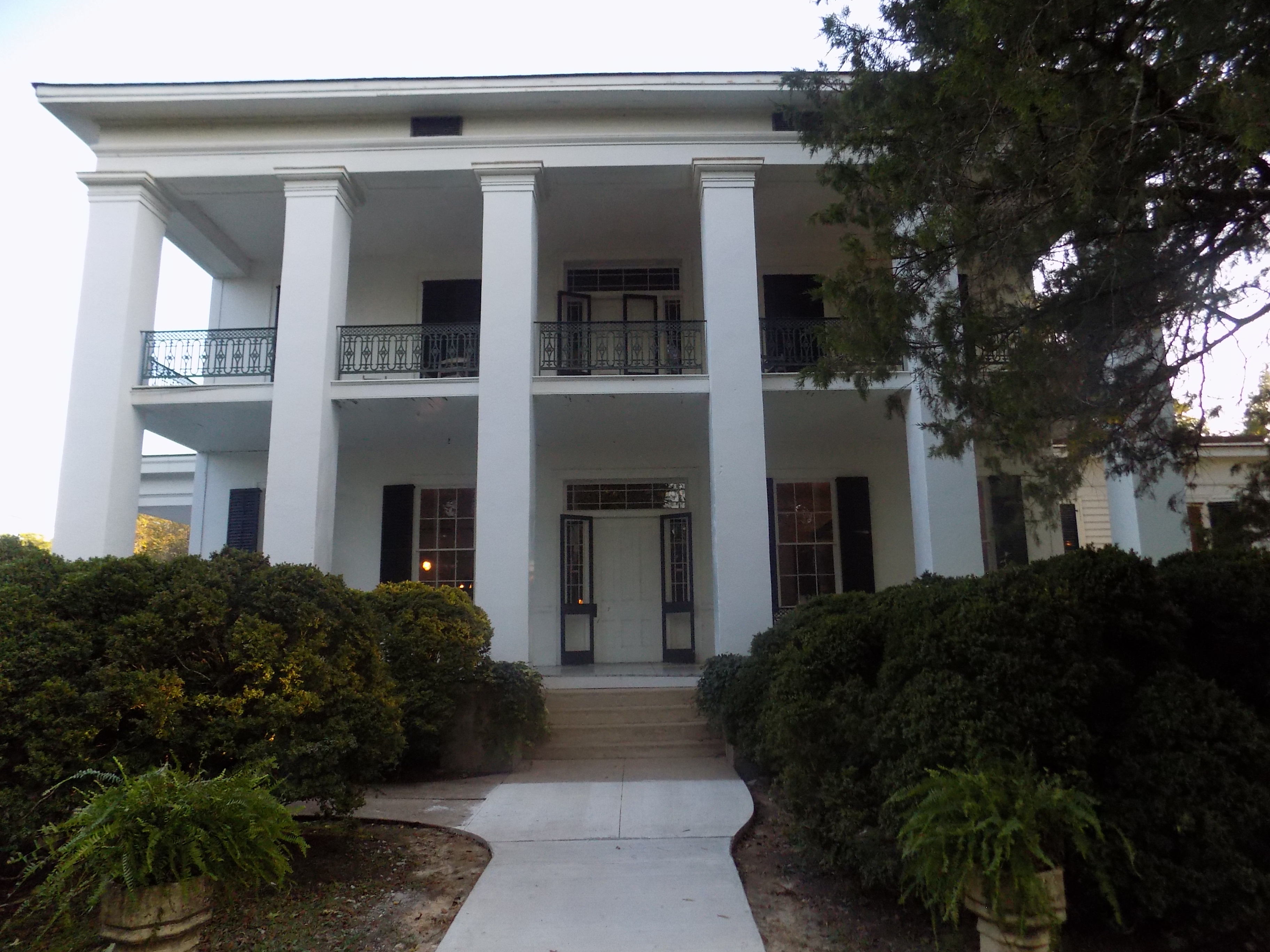
The Rosenbaum House, located in Florence, is the only Frank Lloyd Wright-designed building in Alabama. Like all Wright buildings, Stanley and Mildred Rosenbaum’s house had its flaws and challenges – leaky roof; dysfunctional heating system; doors, ceiling, and openings built to the scale of the diminutive Mr. Wright; defective chimneys – but it is still a work of a genius architectural vision and the Rosenbaum family lived in it for almost sixty years until Mildred Rosenbaum finally gave it up in 1999.

The Rosenbaums commissioned the house as newlyweds in 1939. It is the second house executed in Wright’s “Usonian” style – a utopian ideal of building practical, organic, and low-cost houses for American families. Some architecture writers consider the Rosenbaum house to be the purest example of Wright’s “Usonian” architecture.

The Rosenbaums agreed to a budget of $7,500 for their house and with construction delays and cost overruns the final building came out closer to $14,000. Problems with leaks and the heating system presented themselves early on and the Rosenbaums had to butt heads with the “old man” on many occasions.

The Rosenbaum house is sited on a pleasant and traditional residential street. It presents a fortress-like demeanor facing Riverview Drive with a brick and cypress wall interrupted by minimal glass at the front door and high windows along the low horizontal façade. There is a cantilevered roof for a carport. Carports were a Wright invention.

Once one steps into the interior of the house, there is abundant light streaming in through floor to ceiling windows and doors looking onto the back yard gently sloping to the Tennessee River. When the house was built, there was a river view. Now, with  tall trees going down to the river, the river itself is only sensed.

The original L-shaped house was 1,540 square feet. Wright’s built-ins – desks, shelves, tables – provide a distinctive Wright feel to the space. The narrow hall in the bedroom wing adds extra drama when one steps into the light and views from each bedroom.

Despite the design flaws, the Rosenbaums treasured their masterpiece and turned to Wright to build an addition when the family outgrew the original space. That 1,084 square foot addition, also L-shaped, incorporates a more spacious kitchen, a guest room, a “dormitory” with bunk beds for the four Rosenbaum boys, and a second cantilevered carport for Mrs. Rosenbaum. The L-shape of the addition embraces a walled Japanese garden.

The Rosenbaums budgeted $15,000 for the 1948 addition; the final cost was closer to $40,000. Such cost overruns are ubiquitous in Wright’s architectural history and homeowners were willing to pay them to live in a Wright house, flaws and all.

In 1999 when the city of Florence acquired the house from Mildred Rosenbaum, a city inspector recommended demolition. The house was overrun with damage from leaks and termites and restoring it seemed to be more than the city could handle. Led by Florence’s mayor and a dedicated group of civic leaders, the city took on the task of restoration and turning the Rosenbaum House into a house museum.

The restored house is now an integral part of Florence’s evolving cultural landscape, drawing thousands of visitors annually. Rosenbaum family effects are still in the house and as much of the Wright-designed furniture as could be retained or reproduced.

I first toured the house when it was newly opened as a museum and find that I return periodically to savor the feel of the place. There is a sense of tranquility and completeness that permeates the building and its grounds. It was a treasure for the Rosenbaums for decades and now it is a treasure for the Shoals.

The life of the house is beautifully chronicled in Frank Lloyd Wright’s Rosenbaum House: The Birth and Rebirth of an American Treasure by Barbara Kimberlin Broach, Donald E. Lambert, and Milton Bagby (Pomegranate, 2006).

A Notable Addition to Lincoln Lore

  For a couple of years in the ‘90s I worked for a theatre at Lincoln State Park (www.indianasabelincoln.org)  in southwestern Indiana that presented an annual summer musical, Young Abe Lincoln. Lincoln’s boyhood years in Indiana from ages 7 to 21 were full of sorrow – he lost his mother and his sister there; much of his lifelong melancholy has its roots there – but crowds could flock to the park on a summer night to watch that story being told in song and dance.

The show was performed in a beautiful outdoor amphitheatre. On the drive to the theatre, one passed the churchyard where Lincoln’s sister, Sarah, is buried. Lincoln’s mother, Nancy, is buried across from the state park in what is now the Lincoln Boyhood National Memorial (nps.gov/libo). Young Abe Lincoln was sweet and charming and it played fast and loose with the history.

One rejected marketing pitch for Young Abe Lincoln was “Walk in Lincoln’s Shoes by Day, Dance in Them at Night!” It wasn’t used but it made me smile.


The mythology and biography of Abraham Lincoln is in constant revision. In a timely discussion of unpopular U.S. Presidents not long ago, I mentioned that Abraham Lincoln was so disliked in many quarters that there were those who did not think he would live through his first inauguration.

Somebody said, “But everybody loved Lincoln.”

Such is the filter of time on history. Even though Lincoln is almost universally revered and practically deified today, he was widely reviled by many Southerners and Northerners alike when he assumed the presidency in 1861. Of course some were so fearful of his presidency that there was mass secession and civil war.

Even so, as an elementary school student in a still all-white public school in Birmingham during the height of the civil rights movement and the centennial of the American Civil War, my history lessons presented Lincoln as the epitome of goodness – loved and revered by all, the Great Emancipator, the man who brought unity from division. He was the leader of the northern troops during a bloody civil war but my southern teachers, in teaching that war, always painted Lincoln in a beatific light.

My parents were taught that same reverence for Lincoln in southern classrooms two decades before me.

The dichotomy is not lost on me.


Lincoln has been a popular persona of American culture since his death, celebrated by artists from Walt Whitman’s sublime “O Captain! My Captain” to the ridiculous Seth Grahame-Smith novel Abraham Lincoln: Vampire Hunter and its subsequent film adaptation.

Since the advent of film, it seems every generation produces a definitive biographical film about Lincoln. New Lincoln titles are added to book lists annually.

Like most Americans, at least from Baby Boomers back, Lincoln’s life and legacy have been a constant. On my one and only trip to Springfield, Illinois, in the ‘90s, my only objective was to visit Lincoln’s tomb.

On a recent visit to Lexington, Kentucky, I found myself stumbling across places that had relevance to Mary Todd Lincoln’s early life even though I wasn’t necessarily looking for them.

Several birthdays ago, I received Angels and Ages: A Short Book about Darwin, Lincoln, and Modern Life by Adam Gopnik (Alfred A. Knopf, 2009) as a gift to commemorate the bicentennial of Lincoln’s birth. Lincoln and Charles Darwin were born on the exact same day – February 12, 1809. Gopnik explores the profound impact those two distinct 19th century lives had on society and culture in the two centuries since their births.


Now comes an extraordinary novel, Lincoln in the Bardo (Random House, 2017). The title character of Lincoln in the Bardo, the first novel by George Saunders (who is already wildly acclaimed as a short story writer), is Willie Lincoln, not Abraham. Willie, Abraham and Mary Todd Lincoln’s third son, died at age 11 in 1862, barely a year into the War. It is known that, after Willie’s funeral, Lincoln travelled alone to the cemetery at night to be with his son’s body, to mourn and weep over him.

That element of fact provides the impetus for Saunders’s highly entertaining choral meditation on death and grief. He uses the night of Willie’s burial as the material for a brilliantly compelling work of robust, complex, and unique fiction.

Lincoln in the Bardo is hypnotic and hallucinogenic. The virtuosic structure combines real historical accounts with fictional historical accounts and, most intriguingly, a chorus of the voices of spirits whose bodies are laid to rest in the Oak Hill Cemetery in Georgetown where Willie has just been interred in a borrowed crypt.

The “bardo” of the title is a liminal state – a concept in Tibetan Buddhism that refers to the transition from one life to the next. The spirits of Lincoln in the Bardo have, for a variety of reasons, not moved on and are in denial about their own deaths. They refer to their coffins as “sick-boxes” and, despite their supernatural abilities and extreme permutations, await the time when they might return to their normal earthly lives.

I hesitate to divulge too much about Lincoln in the Bardo since it is best to encounter the book with a fresh eye. Suffice it to say that the novel begins with a poignant narrative about an unconsummated marriage and ends with a moment that is thrilling in its abrupt and surprising impact. In between are dozens of distinct voices that narrate the struggle for young Willie Lincoln’s soul, framed by historical documents providing further context for the political and emotional struggles of his father.

Abraham Lincoln’s appearances in the book provide a hush and urgency to the turmoil of the night of Willie’s burial. Saunders captures Lincoln’s insurmountable grief through many eyes and illuminates the undependable nature of personal perception.

In the course of the book, observers call Lincoln “The ugliest man I have ever put my eyes on” and “The homeliest man I ever saw.” A page later someone comments that “He never appeared ugly to me, for his face … had the stamp of intellectual beauty” and another adds that “neighbors told me that I would find Mr. Lincoln was an ugly man, when he is really the handsomest man I ever saw in my life.” Such contradictions abound in the historical testimony of the novel.

Such moments of human and otherworldly cacophony make Lincoln in the Bardo a triumphant read despite its grim and often disturbing subject matter.

I am not an aficionado of audiobooks but I am curious about this one. Each character is voiced by a different performer – 166 in all, including Don Cheadle, Julianne Moore, Susan Sarandon, David Sedaris, Ben Stiller, and George Saunders. I may have to listen to it. In fact, while reading the book, I kept envisioning it as a play or a staged reading event. Its theatricality is undeniable.

Lincoln in the Bardo is certainly not typical summer reading fare and it’s definitely not going to be to everybody’s taste, but for an adventurous reader willing to tackle it, it’s easy to be quickly drawn into this original, magnificent, and challenging book.

Pesto from “The Watercress Capital of the World”

 Inspired by my recent experience at the “Friends of the Café” dinner helmed by Chef Scott Peacock at the Alabama Chanin factory in Florence – and by the wonderful salad featuring fresh watercress that was served at that meal – I decided to make something that has been on my kitchen to-do list for a while.

It has always pleased me to know that Huntsville and Madison County, where I have lived for over 14 years, was known as the “Watercress Capital of the World” before Wernher von Braun and his team arrived from Germany after World War II to accelerate the space race and Huntsville dubbed itself “Rocket City.”

It’s becoming harder to find reminders of the pre-NASA days here in 21st century Huntsville but the watercress connection has intrigued me ever since I learned about it when I first moved to the area. Although more watercress was distributed from the Madison County area than from any other place in the nation until about 1960, there is only one major distributor of the crop left, in New Market, just north of Huntsville (www.bwqualitygrowers.com).

Buoyed by my Alabama Chanin experience, I decided to go on the hunt for fresh watercress – which is no easy task, even in the former watercress capital of the world.

After locating fresh watercress at a local market I set about to make a watercress pesto. I love pesto and usually keep enough basil plants around the back yard in season to make a batch of basil pesto now and then throughout the summer.

I looked at watercress pesto recipes and they mostly seem to follow the basic basil-based recipe, just substituting watercress for basil. For this latest experiment, however, I wanted to use fresh watercress and as many local or Alabama-sourced products as possible. I took down the basil pesto recipe that lives on my refrigerator door and began to doctor it up.

In addition to the watercress substitution for basil, I used pecans instead of pine nuts; I used pecan oil instead of olive oil. I kept Parmesan cheese for the texture, but split it with Humble Heart goat cheese from Humble Heart Farms (www.humbleheartfarms.com) just up the road in Elkmont. The result was a wonderful fresh pesto with a rich but milder flavor than more traditional basil pesto.

It’s been good with everything so far. Here’s my recipe:

Watercress Pesto

3 cups lightly chopped and loosely packed watercress
¼ cup chopped pecans
4 cloves chopped garlic
¼  cup grated Parmesan cheese
½ cup crumbled plain goat cheese
½ cup virgin pecan oil
Juice of ½ lemon

Mix and blend ingredients together into a finely textured paste. Yields about 2 cups of pesto.

The Elusive Scott Peacock

 Every Friends of the Café event at the Alabama Chanin (www.alabamachanin.com) factory in Florence is special. I have not found its match in any other similar event I have attended. The sense of community and camaraderie is unparalleled and once one attends, one is hooked. When I was leaving the Factory this past weekend, Natalie Chanin, who hosts the dinners with her amazing staff, asked me what had been my favorite dinner so far (since I’ve attended most of them). I just started naming names and had no clear favorite. There is no clear favorite; each has been singular and memorable.

The April 15 dinner last week was especially noteworthy since Chef Scott Peacock was in the kitchen. In 2010, Peacock, the James Beard Award-winning Alabama native, left his position as head chef of Watershed in the Atlanta area, moved to Marion, Alabama, in the middle of the Black Belt, and became, for many who knew of him, a bit of a mystery man.

I first heard that Peacock was in Marion when a friend in Greensboro told me that Scott had contacted his mother to be interviewed for a documentary project about older Alabama cooks and their foodways. Over the past few years, I heard less and less about that project and wasn’t even sure if Peacock was still kicking around Marion. He has been a columnist for Better Homes and Gardens and I know he might occasionally be sighted at events such as a Rural Studio supper in the Black Belt.

His cookbook, The Gift of Southern Cooking (Knopf, 2003), is a collaboration with Edna Lewis that is full of wisdom, information, and fresh takes on traditional recipes. It is an indispensable part of my kitchen library. Ms. Lewis, a Virginia native and expert on Southern food, gained fame as a cookbook author and in the kitchen at several New York restaurants. She and Peacock became close friends and she lived with him in Georgia where he cared for her in the last several years of her life.

In fall 2016 Natalie Chanin’s online journal did a piece on Scott Peacock’s experimentation with indigo and other plant-based dyes at his Marion home base and ended that fascinating conversation with the information that she and Peacock would be hosting a Friends of the Café dinner in Florence in spring 2017. Proceeds from the event would benefit Southern Foodways Alliance (www.southernfoodways.org), one of Alabama Chanin’s favorite causes.

On the afternoon of the event I met my friend Cindy in Cullman and we made the trek to the Alabama Chanin Factory on a beautiful Holy Saturday evening in the Shoals.

As the passed hors d’oeuvres began to make the rounds among the assembling guests, there was much excitement about the varieties and tastes on display. In fact, the entire meal was a lesson in simplicity and finding the best flavors in the best ingredients. Most importantly, allow those ingredients to speak for themselves.

The hors d’oeuvres included iced oysters on the half shell with Edna Lewis’s spicy dipping sauce. The dipping sauce was simple and elegant with salt and vinegar, green onions and shallots, garlic, peppercorns, and parsley. It was phenomenal, as were the Gulf oysters.

Other hors d’oeuvres included fresh radishes with a bowl of whipped butter for garnishing. One of the diners asked if it was a “Southern thing” to eat buttered radishes; I wasn’t aware that it was but after tasting those, it is now – at least at my house. Beautiful and delicious halved soft boiled eggs from Cog Hill Farm were passed around with a garlic-parsley sauce.

Beside the radishes were razor-thin slices of Pineywoods beef sausage from the Black Belt. The Pineywoods cattle are an endangered breed directly descended from cattle left on the Gulf Coast by Spanish explorers in the 15th and 16th centuries. A renewed effort is being made to locate the breed, which lived for centuries in the wild, and replenish them (www.pcrba.org).

The final hors d’oeuvres to be passed were tomato and goat cheese toasts that had the crowd exclaiming. The goat cheese was rich and buttery and one of the servers said it was from Humble Heart Farm in Elkmont (www.humbleheartfarms.com), I regularly buy my goat cheese and other products from the Spells at Humble Heart and was delighted to see them represented at this very special dinner.

As the diners were seated for the meal, the three-course menu sounded deceptively simple: salad, stew, and dessert. The simplicity of the menu allowed the fresh and carefully mixed ingredients to take center stage and the flavors built on one another as a seemingly simple meal created a complexity of tastes and discoveries.

The salad featured fresh watercress that Natalie Chanin had gathered from just down the road earlier in the day. The watercress was mixed with a number of other foraged greens dressed in a simple but perfect vinaigrette. It was noted later that Scott Peacock had assembled each of the several dozen salads himself.

The second course was a steaming “Straddle Stew” with chicken and ham broth, onion, garlic, peppers, turnips, carrots, tomatoes, Carolina Gold rice, peas, and collards. It was a hearty and delicious stew accompanied by servings of Peacock’s mother’s “hot water cornbread.” The recipe for Dorothy Peacock’s hot water cornbread is in The Gift of Southern Cooking and I look forward to making it soon. The stew was paired with a Z. Alexander Brown pinot noir; I knew the label but did not know until this dinner that the proprietor of this winery is Zac Brown of Zac Brown Band fame (www.zalexanderbrown.com).

The dessert course was a delectable strawberry shortcake with soft whipped cream. Sugared strawberries were generously paired with sweet cream biscuits topped with crushed sugar cubes and covered with a spectacular slightly sweet whipped cream.

The final offering was coffee and “three kisses goodnight” as the diners were presented with small plates overflowing with tiny tea cakes, benne brittle, and tiny chocolate truffles.

Finally, Scott Peacock emerged from the kitchen and shared thoughts and charm with the assembled diners. He introduced the staff that had helped him in the kitchen and talked about the good works of Heirloom Harvest (www.heirloomharvest.org), Will Dodd’s non-profit that cultivates a better and more sustainable connection between Alabama farmers and Alabama restaurants and consumers. Heirloom Harvest had gathered much of the food we consumed that night.

It turns out that Scott Peacock is not elusive at all. He was warm, funny, and giving as he met with diners and signed cookbooks at the end of the night.

In the past, I have praised Natalie Chanin and her cultivation of community. In gathering my thoughts about the Scott Peacock dinner, I realize how much she also cultivates education – about purveyors, products, movements – that her diners might not hear about otherwise. Heirloom Harvest. Cog Hill Farm. Pineywoods cattle. Z. Alexander Brown. These are things I had to research as soon as I got home from Florence.

The 2017 Friends of the Café season is underway with four more events to come between now and October; I am happy to be able to participate.

Clover

  I have been accused of a lack of sentimentality. Constant moving around when I was growing up, I think, forced me to develop a hard shell. As the perennial “new kid,” I did not want to appear vulnerable.

Over time I have softened and am less hesitant to show my feelings.

My mother’s dog, Clover, died on April 3 and my heart is broken.

Growing up, my family always had dogs and the occasional cat. Mother and Dad’s last dogs, Sheba and Picasso, died when they were still living in Tuscaloosa and, by the time my parents moved back to Birmingham, Dad’s health was precarious; even though Mother wanted to get a dog, Dad’s health issues seemed to preclude it. When Dad passed away in spring 2016, Mother decided to get a companion and rescued a 5-year-old chihuahua with medium length hair.

The chihuahua had come into the shelter with a group of small dogs that we were told the owner could no longer take care of and the shelter had dubbed her “Great Aunt.” My mother renamed her “Clover.”

From the first day at the house, Clover was a sweet and considerate dog. At first, she seemed a little timid and was clearly afraid she might do something wrong in this new place where people were trying so hard to make her feel welcome. I asked Mother, “Have you ever heard her bark?” We weren’t sure if she even barked and we didn’t hear her bark for the first several days.

It didn’t take long for Clover to acclimate and eventually she started to bark. She had no interest in toys and, because she didn’t have many teeth, treats had to be carefully chosen. Her devotion to Mother was unwavering and she would sleep on the chair next to Mother’s bed, watching her through the night. If Mother got up to go to the bathroom, Clover would step inside to see that she was alright and then would go lie outside the door until Mother came back to bed.

She would never walk in front of people so she was never underfoot; we were amused by her nimble maneuvering to always be a step or two behind us. If someone came near Mother that Clover wasn’t sure of, Clover would subtly and strategically position herself between that person and Mother. She was basically toothless and not big enough to do much damage, probably, but she didn’t know that.

Mother would take Clover to the cemetery with her and Clover would eagerly jump out of the car and then step to the side until Mother emerged. Then, she would walk quietly behind Mother to Dad’s grave. While Mother visited, Clover liked to lie on Dad’s foot marker.  

When I spent the night at Mother’s house, I would hear Clover during the night walking to my bedroom door to check on me. If I sat up she would eagerly run to the side of the bed to be petted for a moment and then she would run back through the house to keep watch over Mother.

She loved to go for a ride in the car. If you said, “Clover, let’s go for a ride ,” she would bounce up and start dancing around; she couldn’t wait to jump in the car and go for a ride. She had a fascination with drive-thrus at restaurants and ATM drive-thrus. She would watch with curious interest as the cashier passed the food and exchanged money out the window and she loved the beeping sounds the ATMs made.

Clover had a preternatural love of belly rubs. Her eyes would roll back in her head ecstatically and after a good belly rub she would go to her bed and wallow in the after-effect.

Clover had a prodigious tongue. She could keep it contained inside her mouth if she wanted to but she rarely wanted to.

I credit Clover with helping Mother to get through the first year after Dad’s death. She brought some happiness and an element of joy back into a sad house. She helped me a lot, too, in that first year. When I would arrive at the house for a visit, I would ring the doorbell. The doorbell drove Clover crazy; she would stop whatever she was doing and start barking toward the door. But when I walked in the barking would stop and Clover’s entire body would shake as she would prance and dance around me and anticipate the first of many weekend belly rubs.

On an afternoon almost exactly a year after Dad’s death, Clover slowed down suddenly and without warning. She was lethargic, lacked energy. Mother was concerned and I joked “Oh, she’s been one of us for a year now; she’s just taking on the family trait – depression.”

But Clover wasn’t herself. When we would go for a ride in the car, she would wait to be picked up to get in the car. She wouldn’t jump out eagerly when we got to our destination.

I left her with Mother on Sunday afternoon, assuring Mother that Clover would snap out of whatever was wrong. After all, she had been given a clean bill of health just a few weeks earlier.

On Monday, Mother called me that Clover couldn’t walk and I rushed back to Birmingham to take her to the vet, Dr. Nikki Williams, who did several tests, found some blood irregularities, and kept Clover for a few days.

By the next weekend, Clover was back home and although she was clearly recovering she was not 100%. Still, she was back to as many of her old ways as she could muster and when I left the house on Sunday I felt good about her prognosis.

The next day, Mother called me and Clover had collapsed and had some sort of seizure. As soon as I could leave work, I rushed back to Birmingham but Mother and my sister-in-law had already gotten Clover back to Dr. Williams.

By Friday, Dr. Williams sent a very sick Clover to spend the weekend with us, thinking that a “couple of days of loving” with her family might help. Despite Clover’s valiant attempts, she seemed to be deteriorating rather than progressing and by Sunday afternoon Dr. Williams picked her up to care for her. On Monday, the vet informed Mother that there seemed to be no chance for improvement and Clover died in her vet’s arms on Monday night.

I may be being overly sentimental here, but it seemed in some ways that Clover was a bit of a guardian angel helping Mother get through the first year of losing Dad.  After that first rough year of comfort and love, her little body gave out on her.

She was irreplaceable. At the risk of cliché, I have no shame in saying our hearts are broken.

Notes on Didionland

 My most enduring images of California are fictional ones: Maria compulsively driving the freeways in Play It as It Lays; the snakes on the highway or coiled in the blanket of dead newlyweds or the rattlesnake in the playpen in the same novel.

Joan Didion’s 1970 Hollywood novel captured, for me, the angst and despair that I always associate with the sunny carefree surface California tries – still tries – to project despite the earthquakes, landslides, droughts, floods, and fire seasons that are the inevitable nightmare of the West Coast dream. Didion, with her detached style, digs to the core.

On my first and only trip to California – to L.A. for some auditions – it took over three hours for my hired car to get me from LAX to my Burbank hotel.

Beyond the auditions, the only thing I particularly cared to do was visit the Getty Center in Brentwood. I was more interested in the Richard Meier architecture and the Central Garden designed by Richard Irwin than the art, but it was nice to see Van Gogh’s “Irises.”

The beautiful, marble-clad buildings of the complex are stately and dignified. Even though they contain art, they feel barren in their context. There are hazy views of the city and the mountains and a vista of the Pacific to the west. Sounds of water over rocks, down runnels, splashing in fountains are ubiquitous. After living in the desert of southwestern Utah, I learned to understand the Southwest’s obsession with water and fountains and found it magnified in L.A.

My lunch at the Getty Center restaurant included one of the best Cobb salads I’ve ever had. It was my birthday so I had a dessert.

Throughout that Los Angeles trip, thoughts of images of travel forged in the wrought texts of Joan Didion were constantly evoked. The city was a reminder of Didion’s prose and of how that prose elicits a certain morbid fascination with California, even though the place holds no allure for me.


Didion’s essay, “In Bed,” about dealing with migraines, has for some reason stuck with me ever since I first read it in The White Album in 1990.

Then the pain comes, and I concentrate only on that. Right there is the usefulness of migraine, there in that imposed yoga, the concentration on the pain. For when the pain recedes, ten or twelve hours later, everything goes with it, all the hidden resentments, all the vain anxieties.

I have occasional migraines. Because Didion wrote that passage, I associate migraines with California, too.

The Year of Magical Thinking (2005), Didion’s most celebrated book of the 21st century, explores the nature of mourning and grief. It chronicles the year after Didion’s husband, John Gregory Dunne, dies unexpectedly. Before that book was published, Didion and Dunne’s daughter, Quintana Roo, died after an extended illness. Didion’s follow-up book, Blue Nights, focuses on Quintana’s death and expands on the themes of Magical Thinking.

A couple of years after The Year of Magical Thinking was published, a friend notified me of the death of her husband in an email. In the subject line, she wrote “Magical Thinking.” I thought Has Didion now defined grief, too?

Students tell me they plan to go to California after graduation. I say supportive things but I’m always thinking Why?

Didion would say Why not?

I never once planned to go to California.

Despite spending much of her adult life in New York, Didion always identifies and is identified with the West and California. She attempts to define her California identity in 2003’s Where I Was From, a collection of essays which explores the dichotomies and complexities of the place.

The first time anyone ever referred to me as an “Easterner” was on a trip to New Mexico in the 1980s. Prior to that I had only been called a “Southerner.” I remember that I was intrigued by the label and maybe a little pleased. Since then, I have realized that I am always most at home east of the Mississippi River.


I will read anything Joan Didion writes. That point is driven home by the fact that I just finished her latest “book,” South and West: From a Notebook (Alfred A. Knopf, 2017), which is a very compact compilation of some Didion journal notes from the 1970s.

South and West contains notes for stories that never quite came to fruition. “Notes on the South” is a document of a road trip Didion and Dunne took through Louisiana, Mississippi, and Alabama in 1970. “California Notes” is notes for a magazine piece about the Patricia Hearst trial but Patty Hearst is barely mentioned in that brief entry for a Rolling Stone article that never happened.

Still, the notes in themselves, with that contemplative Didion style, make for intriguing reading. The impetus for publishing the book of recycled notes at just this moment in time seems to be in response to the recent election cycle. In the “Notes on the South” section, Didion writes, about her decision to explore the South:

I had only some dim and unformed sense …that for some years the South and particularly the Gulf Coast had been for America what people were still saying California was, and what California seemed to me not to be: the future, the secret source of benevolent and malevolent energy, the psychic center.

Starting in New Orleans, Didion meanders, stops over in small towns, spends time in larger cities, doesn’t do what she planned to do, and doesn’t meet with people she planned to meet.

She observes beauticians, good ol’ boys, women at laundromats, men at diners watching soap operas, women at conventions talking about soap operas, ER doctors, men watching her swim in a bikini at a motel pool, Walker Percy, and snakes – lots of snakes. At dinner in Birmingham with Ivy League-educated locals, she muses on her dinner partners’ “rococo denial of their own sophistication, which I found dizzying to contemplate.”

For some reason, she couldn’t find William Faulkner’s grave in the Oxford cemetery where he’s buried. That perplexes me since I have visited that grave many times and it’s not that hard to find; I wish she had asked somebody for directions.

Her incisive observational eye provides details into the psyches of her subjects and, most effectively, sensory impressions. She finds that “everyone in Mississippi begins on the defensive.”

In Meridian, Mississippi, after a driving tour of the town with the white owner of the black radio station, she observes,

A few black women were on the streets, and they carried umbrellas against the sun. It was almost five o’clock. In the middle of 22nd Avenue, the main street of Meridian, there was a man holding a shotgun. He had on a pink shirt and a golfing cap, and in one ear there was a hearing aid. He raised the shotgun and shot toward the roof of a building several times.

The man is shooting at pigeons. “In this one demented afternoon,” Didion writes, “Mississippi lost much of its power to astonish me.”

The book presents “Notes on the South” as if the Zeitgeist-finding trip was never useful in producing a piece but it is surprising how much of that trip found its way – occasionally verbatim – into Didion’s 1977 novel, A Book of Common Prayer. That novel focuses on political upheaval in a Central American country, in the fictional Boca Grande, but much of the story of Charlotte involves semi-comatose road tripping through the American South and frequent references to an event that transpired at Birmingham’s Mountain Brook Country Club. In retrospect, “Notes on the South” is very present in A Book of Common Prayer.

107 pages of South and West are devoted to “Notes on the South.” The final section, “California Notes,” is a scant thirteen pages which mention Patricia Hearst but focus on Didion’s reflections and impressions of growing up and her family and cultural history there. Some of the material found its way into Where I Was From thirty years later.

“In the South,” she writes, “they are convinced that they have bloodied their place with history. In the West we do not believe that anything we do can bloody the land, or change it, or touch it.”

Ultimately in “Notes on California,” there is a search for what “home” means.

I am at home in the West. The hills of the coastal ranges look “right” to me, the particular flat expanse of the Central Valley comforts my eye. The place names have the ring of real places to me. I can pronounce the names of the rivers, and recognize the common trees and snakes. I am easy here in a way that I am not easy in other places.

Through Didion’s precise, distant, dry, and often bleak prose, every place she observes becomes Didionland.

Labyrinth

  During my time in Tuscaloosa, I lived in the student ghetto of houses and apartments behind The Strip of shops, bars, and restaurants on University Boulevard near the campus. Bryce and Partlow state mental health facilities were just past the campus and group homes and halfway houses were scattered among the student housing.

One particular resident, who stood out since he was always wearing a football helmet, had a routine which fascinated me. I would regularly see him start at one end of a block-long parking lot behind The Strip and walk a straight line to the other end. He would stop for a moment, turn, and walk precisely to the middle of the parking lot, stop, turn, and once again cut his previous distance in half. He would do this until the distance was so short that he would finally almost turn in a circle a few times. Finally, he would stop, mission completed, and go on his way. I watched him do this ritual on several occasions; his precision was prodigious.


Breathe, contemplate, take the first step … I have recently started walking labyrinths.

And even though I don’t classify walking a labyrinth the same as the helmeted guy’s routine, I do think about him on occasion when I am going through my labyrinth ritual.

I have always needed solitary meditative activities for my spiritual wellness and a labyrinth seems to fulfill that need. The symbolism of the activity – walking a unicursal path to the center and back – almost demands a contemplative state of mind. Since a modern labyrinth is not (usually) a maze, there is no need to think about the curves and turns of the path – one just goes with the flow.

I find the experience of walking a labyrinth akin to the feeling of visiting and walking the length of Tom Hendrix’s Wichahpi Commemorative Stone Wall off the Natchez Trace Parkway near Florence; the simple activity stirs a variety of thoughts and emotions along the way. Mr. Hendrix’s symbolism of a relative’s journey on the Trail of Tears becomes entangled with the visitor’s own thoughts and emotions in the moment.

The labyrinth has existed in various forms throughout cultures and history. In Greek mythology, the labyrinth was a complex maze used to contain the Minotaur.

It seems that the principal models for the contemporary labyrinths I have found are those found within medieval cathedrals. The labyrinth at the cathedral at Chartres is the most cited example and there are a number of versions of how it was used and what it symbolized within the medieval Christian church. Some sources assert that it symbolized the pilgrimage to Jerusalem but that seems to be a post-medieval concept.

Nowadays, modern labyrinths are found at churches, hospitals, wellness facilities,  educational institutions, private homes, and other locations. They seem mostly used for meditation, prayer, and focus; the symbolism is personal.

There are no rules for labyrinth walks but there seem to be traditions. It is traditional to take one’s shoes off, if practical, before entering the labyrinth. Take a moment to contemplate before embarking on the path. When the center is reached, take a moment before turning around and going back to where you began; it seems traditional to leave something behind in the center – a coin, a stone. When the labyrinth is completed, turn back and look at the path you have taken. Deep breaths at key points are recommended.

I have started taking the time to walk a labyrinth on my way home from work when I am able. It allows me to disconnect from the stress and the job and re-focus on other things I need to deal with.

There is a website, www.labyrinthlocator.com, that helps find labyrinths in any location. Once I found the website, I was surprised at how many there are and realized that I regularly pass labyrinth locations without realizing it. The World-Wide Labyrinth Locator database lists over 5300 labyrinths in over 80 countries. Twenty-nine are listed in Alabama and I have recently learned of one more, not listed, in Birmingham.

The one I just discovered is located at Trinity United Methodist Church in the Birmingham suburb of Homewood. It is a part of the church’s Prayer Garden and Columbarium. The church is on a busy road but the garden is below street level and that location, plus a trickling fountain at the entrance, filters out the street sounds and provides an added element of privacy to the space. The fact that the labyrinth is in front of a burial space makes it even more serene and introspective.

Walking the labyrinth, for me, is a compressed version of taking a contemplative nature walk. I find it calming and sensory. Since you can’t get “lost” walking a labyrinth, it becomes a “right brain task,” and a thoughtful exercise, like cutting the grass or sewing a button. (Or swimming laps, if you’re a better swimmer than I am.)

Such activities center me, somehow.

Breathe, contemplate, take the first step

Victuals

 For Americans of my generation, the word “victuals,” pronounced ‘vi-dls and sometimes spelled “vittles,” conjures up images of Granny Clampett of “The Beverly Hillbillies” cooking up something for Jed and the family. My own Grandmother Harbison occasionally used the word to refer to the scrumptious real food she was always preparing.

The word comes to us, after some alterations through French and English, from the Late Latin victualia meaning provisions for human consumption. My grandmother’s use of it probably harks to her Anglo-Saxon roots filtered through Appalachia. Those Anglo-Saxon roots are also likely the reason she sometimes still used the word “poke” to refer to a sack or bag.

These memories were conjured by the book I just read. I enjoy cookbooks that read like a narrative and few cookbooks fulfill that purpose as beautifully as Ronni Lundy’s Victuals: An Appalachian Journey, with Recipes (New York: Clarkson Potter / Publishers, 2016) with photographs by Johnny Autry.

Victuals explores and extols the foodways of the Southern Appalachians. The book has agendas: sustainable farming and environmental concerns come through loud and clear. But ultimately it is a celebration and explanation of a part of the country and a way of living that is sometimes undervalued and marginalized.

It is ironic that the trendiest chefs and food styles are discovering a way of food and living that has never gone away in the southern tangents of the great eastern mountain range. John Stehling of Asheville’s Early Girl Eatery observes, about southern Appalachia, “This place and its food have never died off, and it inspires me.” Indeed, a 2011 study declared southern and central Appalachia “the most diverse foodshed in North America.”

Lundy is among the founding members of Southern Foodways Alliance and has written extensively on Southern food, culture, and roots music over the years. With Victuals she digs deep into Appalachian roots in eight distinct, beautifully written, and well-documented sections which present stories, recipes, and individuals as well as document the threats that menace the noble and well-established way of living in the region. The sociology of Victuals is as compelling as its culinary focus in sections with titles like “Roots and Seeds,” “Apple-achia,” “Preserving,’ and “Husbandry.”

Victuals introduces the reader to a variety of farmers and butchers, chefs and cooks, purveyors, environmentalists, and food experts throughout the region. Many faces are new and others are familiar names like Chefs Sean Brock and John Fleer, and Chef Erik Neil of Chattanooga’s Easy Bistro and Main Street Meats. I was pleased to see a mention of Big Horse Creek Farm in Lansing, North Carolina, where a few years ago Suzanne and Ron Joyner were able to hook me up with some of the Hackworth apples that my mother remembered from her youth in Cullman County, Alabama.

Johnny Autry’s enticing photographs set one’s mouth to watering even before the text can be read. Soon after I received the book I casually opened it to a photo of English Pea Salad with Cream Dressing; it made me long for a taste and brought up memories of a long-forgotten dish. The recipe for Spiced Pickled Peaches makes my longing for the start of the spring Chilton County peach crop in a couple of months even stronger. There is even a mouth-watering section about chili buns and slaw dogs.

Other recipes inspire new ideas, such as “Buttermilk Cabbage Soup with Black Walnut ‘Pesto’” or “Ginger Bean Chowchow.” There is a piece on greens that is as informative as anything I’ve ever read about those Southern standards.

Lundy’s exploration of Appalachia extends from southern Ohio and West Virginia to northern Georgia. She does not include the southernmost Appalachian regions of northwest and north central Alabama but much of her reportage rings familiar to what I know and other segments, going deeper into the heart of the region, hold surprises.

Lundy is confronted with and explores the idea of “aspirational eating” – a foodways theory that suggests that the move from home-grown foods to convenience foods and commercial products was fueled not by convenience, availability, and taste but by the “aspiration” of the region to be more like the mainstream families seen in print ads and on television. This is apparently a new concept to Lundy (as it was to me) when she is first asked about it by an oral historian, but as she encounters the idea more she feels compelled to consider and address it.

Her best response comes from one of her book’s subjects, Walter Harrill, who owns Imladris Farm, near Asheville, with his wife, Wendy. Lundy says the Harrills have become the Asheville area’s premium suppliers of locally crafted jams and preserves. When asked about “aspirational eating,” Harrill muses:

“See, I think assuming ‘aspirational’ for a motivation assumes that those of us living here, in the mountains, are trying to be a part of the world ‘out there’. But the truth of it is, we look ‘out there,’ at the rest of the world, and then we kind of shake our heads and say, ‘Well, I just hate it for them’.”

Victuals is full of that kind of true and direct mountain wisdom.