In Therapy with Joan Didion

“What makes Iago evil? Some people ask. I never ask.”

Those are the opening words of Joan Didion’s 1970 novel Play Is as It Lays. I do not tend to memorize lines from books, but those three lines have rung in my memory ever since I first read that book and fell in fascination with the writer who created that detached, precise, and misleadingly cool voice. The famous photos of Didion with her Stingray and of Didion, drink and cigarette in hand, standing on her Malibu deck with her husband, writer John Gregory Dunne, and their daughter, Quintana, are iconic symbols of her place in the culture as a commentator for a distant and captivating California cool. She always seemed to harbor secrets.

Didion’s central California upbringing informed her prose, even as she spent most of her adult life in Manhattan, writing books, essays, and film scripts about all manner of topics. A decade ago, I presented a paper at a literary symposium proposing Didion as a California regionalist. In that presentation, I commented that since I first read Didion’s essay “In Bed,” in which she memorably chronicles how she deals with chronic migraines, a migraine always makes me think of California. It was a light-hearted comment, based in fact.

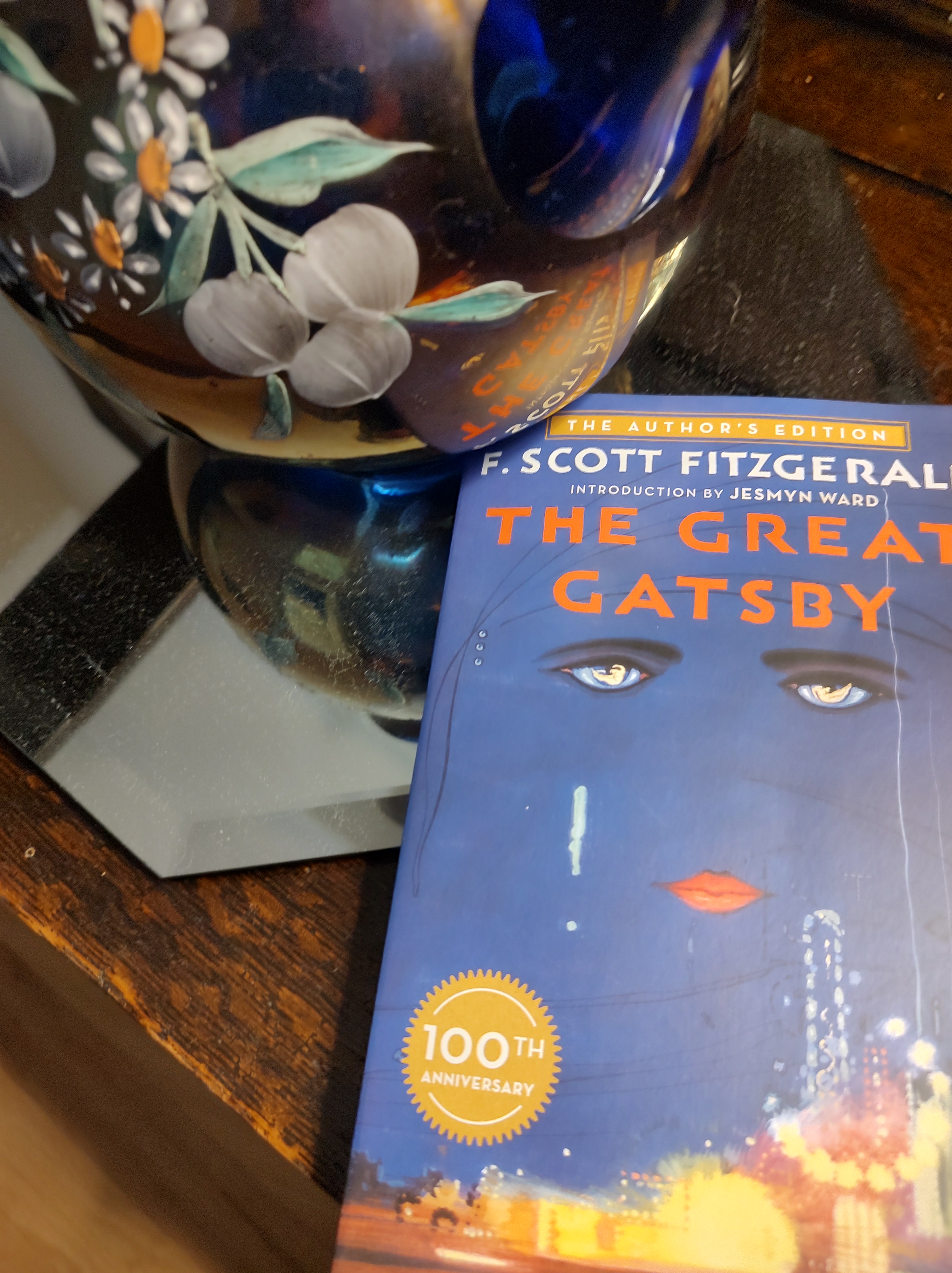
Didion died in 2021, but when I heard that a new book of her writing was being released this year, I immediately pre-ordered. Notes to John, a book of Didion’s detailed notes to her husband about her therapy sessions from 1999 to 2003, is controversial. One reviewer called it the “saddest and strangest book you will read this year.” Some people ask if the publication is ethical – would Didion want these notes to be public? Are these details about her family that she would choose to share? Are notes intended for her husband only in good enough shape to be published in book form? Who authorized the publication, and why? Who edited the notes? Who wrote the introduction and the afterword?

I never ask. But I read the book and, once I got started, I found it hard to stop. I did wonder, though, about some things. Since the notes were written for John, to keep him up on the trajectory of her therapy, I wonder if she edited what she wrote for his consumption. They were married for almost forty years; surely she had complaints about John to discuss with a therapist. Yet, in her detailed notes, she never quite criticizes her husband. When someone asked John about going into therapy himself, he groused, “I’m a Catholic, we have confession.” (After which the questioner asked how long it had been since he went to confession; this makes Joan’s Dr. MacKinnon laugh.) Much of Dr. MacKinnon’s commentary in the sessions is verbatim. One wonders if Didion’s memory was really that prodigious.

The tragic context for the notes, and for the therapy, is the problems Quintana is going through with alcoholism and a general lack of direction. Quintana’s therapist, Dr. Koss, suggested that Joan see a therapist, recommending Dr. MacKinnon. My biggest concerns about ethics come from the detail – throughout the notes – that Dr. Koss and MacKinnon are freely sharing details of their sessions with each other and discuss certain details about those sessions with Joan and Quintana. I must assume that Joan and Quintana gave permission for the sharing of information.

Didion’s essay on Georgia O’Keefe in The White Album (1979) gives a charming snapshot of the seven-year-old Quintana. Didion writes about seeing an O’Keefe exhibit in Chicago with her daughter. While they view O’Keefe’s cloud paintings, Quintana, mesmerized, asks her mother “Who drew this?” When she is told the painter’s name, she says, “I need to talk to her.” Quintana was a recurring presence in her mother’s writing and was a central presence in Didion’s two important twenty-first century works, The Year of Magical Thinking and Blue Nights – books which dealt with Didion’s reaction to the death of her husband and, later, her daughter. Quintana’s struggles as an adult are full of hope and decline and serious alcohol abuse. These notes provide insights into her struggles and the collateral damage to her parents.

There is damage all around. In her sessions, Didion reflects on her own life – the legacy she leaves behind and the time she has left in her life. I realized that, at the time of these therapy sessions, Didion was close to my current age. She speaks of moving around during her growing up years and the feeling of frequently being the “new kid” in school. She speaks of taking jobs for the money – often her screenwriting assignments – and sacrificing time she would rather spend on activities and writing that she had a passion for. She speaks of her California family and of the values they instilled, and the values she rebelled against. In an intriguing California aside, Didion informs Dr. MacKinnon that the New York-style cocktail party is not a fixture in California; because of the distances involved in entertaining, she says, Californians entertain their guests at dinner instead, and everybody leaves around ten. Such details are sprinkled throughout a therapy that touches on issues of codependency, dysfunction in families, detachment, displacement, aging, and personality disorders.

As much as I admire Didion’s writing, I always wondered if I would like the writer. After reading Notes to John, I think I might; we have much more in common than I realized. I feel, as many might, that in eavesdropping on Didion’s intimate and extensive notes, I have garnered knowledge and insight into my own circumstances as a caregiver, sharing in the challenges of a life that was quite different from my own.

Notes to John is a heady book. It’s hard to know Didion’s intent, but it’s so well-written and true to the writer’s style that I suspect she foresaw that her notes might have a life beyond John’s eyes. The principals in this story have all passed on, and I hope they would appreciate their story and struggles bringing support to readers. I am grateful that this challenging chunk of their life was shared.

Addendum

Recently, I shared a justifiably angry letter to the President of the University of Alabama, expressing my concern over the announcement that the current Resident of the White House plans to speak at the University in conjunction with the University’s spring graduation.

Since then, I have gathered more information and it has become clear that the Resident was not invited for the occasion but has coerced himself into the weekend and that the University has complied by adding a special ticketed event for anyone who cares to listen to the speech (I assure you, the speech will likely be well-attended). I suspect that this was the brainstorm of people like Katie Britt, Alabama’s junior Senator who specializes in earnestly smiling through fake tears whenever she has an audience, and the Alabama Republican Party, which has a strong influence these days on anything that happens in our state.

Some Context: I am reminded of a series of Garry Trudeau’s “Doonesbury” comics from 1974, at the height of the Watergate scandal. Nixon’s people are trying to find a place in the United States where he might be welcomed. They find the (fictional) town of “Fritters, Alabama! Population 1,635. All white. 95% of work force working on government contracts! It’s perfect, sir!” I don’t want my alma mater to be the next Fritters.

It’s sad, but true, and I understand the University administration’s dilemma. However, I still question the complicity. Based on what I can gather, the University has either entered into a Faustian bargain or capitulated like Vichy France. Or both. Either way, it’s a disgrace and embarrassment for many who were once proud graduates of the University. I’m not proud today.

Obviously, I am taking this personally. The University has been very concerned with its “brand” in recent years. The brand is taking a major hit now. I hope steps are being taken to address the damage. I have an easy first suggestion: The University President should sign onto “A Call for Constructive Engagement,” a document signed by dozens of college and university presidents addressing federal overreach in higher education. It is an outstanding statement addressing the current crisis in American education. I was surprised that the University of Alabama was not among the signatories.

It’s not too late to fix this, President Bell. And, in the meantime, University of Alabama doctoral student Alireza Doroudi is still being held in ICE detention.


“I’m done.” An Open Letter to the President of the University of Alabama

Mr. Stuart Bell:
 
I woke up this morning to the startling news that the current Resident of the White House plans to be a commencement speaker at the University of Alabama. If this is true — at a time when the executive branch is wreaking havoc on higher education and free speech in this country, at a time when University of Alabama doctoral student Alireza Doroudi was seized from his Tuscaloosa apartment and is held in detention by ICE thugs, at a time when Harvard University is taking a bold stand for the rights of educational institutions throughout the United States — then I, as an alumnus of the University (B.A. — political theory, 1977; M.F.A. — theatre, 1988), am done with you and with the University.
 
As a retired educator, I do not have a lot of money to give to my alma mater, but I have dutifully kept up my alumni memberships, donated to scholarship funds, and given what and when I can. I have been a voice for the University’s integrity and have been a messenger for its academic excellence. I have often made the case that the University is much more than a football school (although I usually wore the colors proudly on game days). I have frequently voiced my distaste for the influence the University’s greek system and the Machine have on campus life, but I have also stressed the value of the University experience above and beyond that unfortunate reality.
 
The point is, I have always been a proud and vocal two-time graduate of the University. The announcement this morning, if true, has managed to instantly erase my loyalty and support. I am not denying the Resident’s free speech opportunities; he has plenty of bully pulpits and acolytes in which to spread his lies and misinformation. I am hoping that the graduation podium at an Alabama commencement will not be stained by his rambling authoritarian ideology at a time when his administration has launched a full-throttle attack on the meanings and purposes of free speech and the academy.
 
Over the years, I have often been surprised at the people chosen to deliver Alabama commencement speeches. They can do so much better than that, I have thought. I implore you to do better now.
 
Edward Journey
 
RESIST TYRANNY
 
RESIST TYRANNY

Alabama Writers Hall of Fame 2025 Induction

The number of accomplished writers to emerge from Alabama and with significant ties to the state is a source of hope and pride. Here is a link to my piece on the March 7 induction of the 2025 class. Check out the list of previous inductees at the end.

Alabama Writers Hall of Fame

Review: Deep Water, Dark Horizons by Suzanne Hudson

Occasionally, while reading Suzanne Hudson’s collection Deep Water, Dark Horizons, I felt like I might be eavesdropping on some kinfolks — y’know, those kinfolks you don’t necessarily like to claim. The collection commemorates Hudson’s 2025 Truman Capote Prize and you can read my review for Alabama Writers’ Forum here:

Deep Water, Dark Horizons

The Golden Promise of Spring

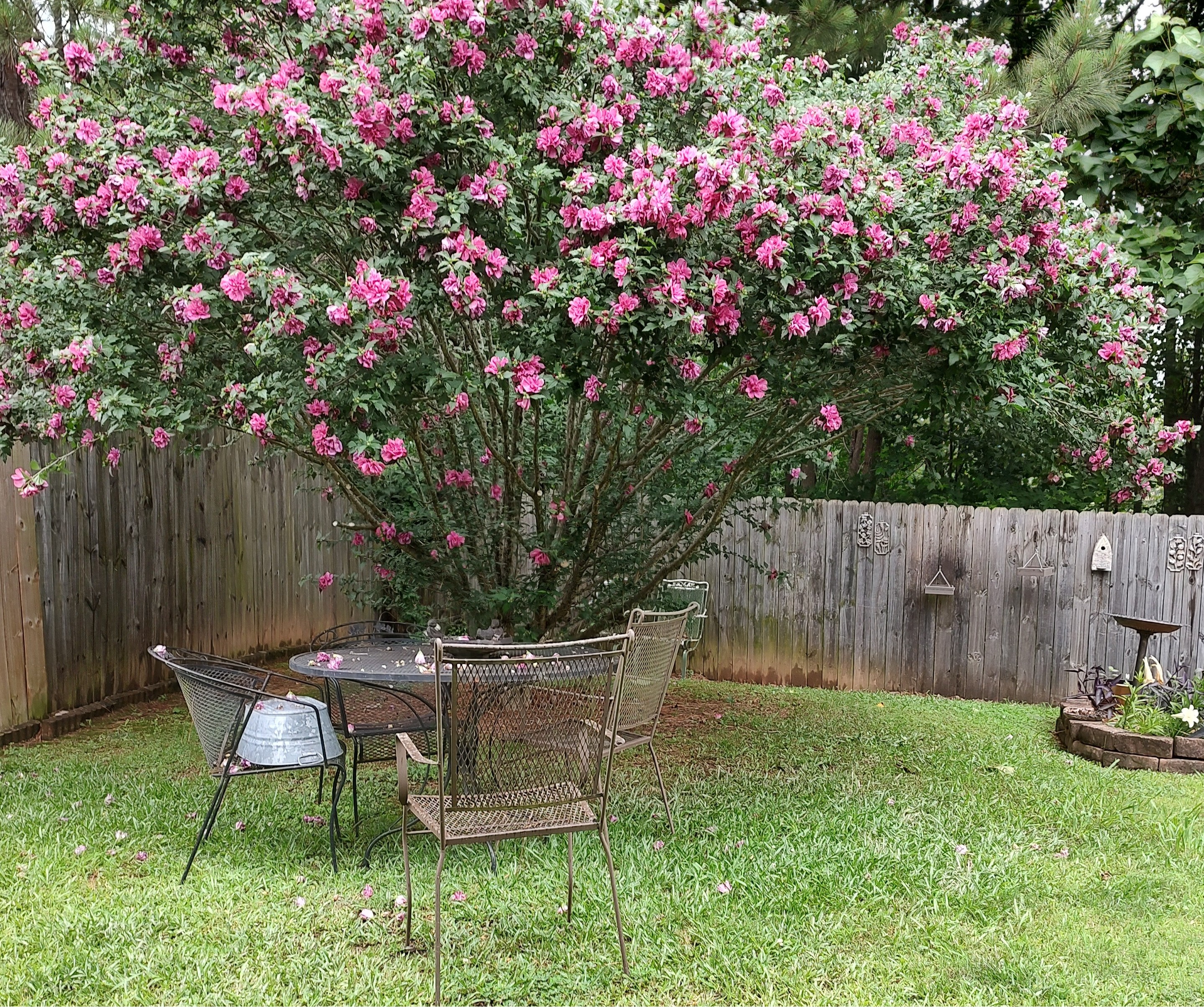
On a bright and chilly morning after a weekend of storms, the promise of Spring is murmured in little things. The flocks of migrating birds that filled the yards, the feeders, and the trees in the woods beyond for a few weeks seem to have moved on. A solitary male cardinal sits in the bare limbs of the Rose of Sharon. The hummingbird feeders will go up soon.

When I opened the blinds a few days ago, six blue jays were gathered on the grass, feeding peacefully amidst a couple of cardinals. I’ve never seen six bluejays together before. A covey of crows fussed from high in the pines and the smaller birds were busy on the edges. It was a peaceable kingdom until Lulu the chihuahua bounded out for her morning constitutional.

The foliage of lilies to come peeks out from the straw in the flower bed. Perhaps their blooms will coincide with this year’s late Easter. I thinned out the lilies after last year’s bloom but it appears they have multiplied again.

 A closer look at the Rose of Sharon yields the buds beginning to pop forth. The foliage down the mountain is slowly emerging, but the busy intersection at the foot of the mountain is still clearly visible through the trees. Soon, the thick foliage down the mountain will make the intersection vanish in a curtain of green.


There is an appealing subtlety to Spring. It’s constantly sneaking up on us. One day the crocus bloom and just as quickly they’re gone in a couple of weeks. I have just noticed the blooms have popped out on the pine trees. A neighbor’s Carolina jasmine, pronounced dead after a hard late freeze a couple of years ago, is back and blooming more lushly than ever.

Finding the beauty and blatant symbolism in the heralds of Spring brings peace and tranquility and, always, a hope for better days to come.  

The Problem of the Hero — How to Watch

NOTE: In 2023, I posted this essay about a new movie about novelist Richard Wright, playwright Paul Green, and their collaboration with Orson Welles on a stage production of Native Son. I am reposting that essay and attaching exciting news about the streaming release.

The Problem of the Hero is a compelling historical drama about the clash between men of principle in 1941. The men are novelist Richard Wright and playwright Paul Green, liberal Southerners – one Black, one White.

The two writers have been collaborating on a stage adaptation of Wright’s landmark novel, Native Son, to be produced on Broadway, directed by Orson Welles. (Orson Welles directing Native Son might also be a source of contention today.) The film explores the conflict between Wright and Green about the final page of the stage adaptation. Green wants the final scene to offer a hope of redemption for Wright’s protagonist, Bigger Thomas; Wright does not. Green feels the need to cater to what will be a mostly White audience on Broadway; Wright has no intention of catering to anybody.

The film highlights the efforts of two men, each an advocate for civil rights, who view that advocacy from very different perspectives. At one point, Richard Wright (J. Mardrice Henderson) reminds Paul Green (David zum Brunnen) of the “difference between knowing and empathizing.” He asserts that Green has the luxury of choice – a luxury not available to Bigger Thomas and the downtrodden he represents. Green’s responses often echo the confusion that comes to those who try to do what is right, but don’t know how it might be received.

Although the movie is set in 1941, its pertinence rings strongly today in ongoing discussions of agency and who has the right to speak for, and represent, whom. It’s a discussion that applies to much more than writers; it’s a discussion now that is essentially changing the definition of what it means to be an actor.

Director Shaun Dozier masterfully presents The Problem of the Hero with cinematic finesse from a screenplay by James A. Hodge and Ian Finley, from Finley’s one-act play, “Native.” It’s a beautiful film to look at with cinematography by Steve Milligan and editing by Dozier. Most of the action takes place in and around New York’s St. James Theatre during final rehearsals for Green and Wright’s stage version of Native Son. That setting provides the background for creative presentation of the story as Green and Wright’s discussions take place backstage, in the auditorium, in dressing rooms, onstage, in rehearsals, during a light check. On a few occasions, the relative quiet of the film is broken by the bluster of Orson Welles (Charlie Cannon) who, true to form, sucks the air out of the room each time he enters the frame.

The Problem of the Hero features grown-up debates between formidable sparring partners about issues simmering for centuries, that have come to a more urgent forefront again within our own past decade. Eight decades after the events chronicled in this film, the conversations are as timely as they’ve ever been.

Wright and Green are articulate spokesmen for points of view that are heading generally in the same direction, but inevitably come to an impasse. Still, their discussion remains courteous, patient, and forthright. On those occasions when anger flares, it’s best to pay close attention. Canada Lee (Brandon Haynes), the actor playing Bigger Thomas in the play, comments to Green that he and Wright “fight like brothers.” Paul Green remarks that “not every friendship can survive the artistic process.”

This is intimate filmmaking. Green and Wright each have exceptional scenes with others. Green reveals his frustrations to Canada Lee in an unhurried cigarette break. Wright recounts a troubling childhood memory to actor Nell Harrison (Josephine Hall) during a dressing room visit. There is a pause when his story is over. Nell’s perfect response is a simple sigh, “oh.”

Mostly, however, the screen belongs to Green and Wright, in the beautifully paired casting of David zum Brunnen and  J. Mardrice Henderson. The conviction and level of their discourse is rare in films these days. Green is a patriot in the old-fashioned sense, with a firm belief that the country is headed in the right direction, despite its setbacks. You can see his pain when he realizes his friend and collaborator is an atheist, a communist. Wright has no delusions about the forces of racism in his native land – yearning to find freedom in Paris, even at a time when Nazis are occupying France. When Green scoffs at racist utterances, calling such things “nonsense,” Wright replies, “There’s danger in nonsense, Mr. Green. Enough people speak the same nonsense at the same time and it might as well be the truth.” Thinking of our current national situation, I found myself sighing oh.

The Problem of the Hero carries a subtle metaphor about a single candle being held in vigil outside a prison where an execution is taking place. A futile gesture, perhaps, but it is gradually joined by other candles in the darkness.

The Problem of the Hero is currently playing on the film festival circuit with distribution news forthcoming. The early reviews I have seen have been unanimously positive. I would encourage you to remember this title and seek out this film at your first opportunity.  Here’s the trailer:

(https://vimeo.com/786684025)

______________________________________________________

Now, here’s new information about how you can watch The Problem of the Hero:

EbzB Productions/WhyNot Theatricals remains deeply humbled by your support on this journey, and we hope it continues.  Our recent distribution deal with Buffalo8 is only the beginning. This film is a testament to the dedication of over 100 artists (most of them from North Carolina) who brought this story to life. Please help us to amplify its impact.

As The Problem of the Hero prepares for release on Apple TV and Amazon in the U.S. and North America, we’re thrilled to announce its availability in regions worldwide, spanning the Caribbean, Europe, Asia, and Africa. But we don’t want to stop there—we want this film to reach even more people, sparking conversations and broadening perspectives.

📢 Here’s how you can support:
✅ Preorder on Apple TV starting March 14, 2025.
✅ Share the news with friends, colleagues, and film lovers.
✅ Forward this email or repost on social media.

✅ Share the trailer:  https://www.youtube.com/watch?v=xPFbKbCWcWg

Your voice is powerful. Your support is invaluable. Thank you for being part of this journey!