Giving Thanks

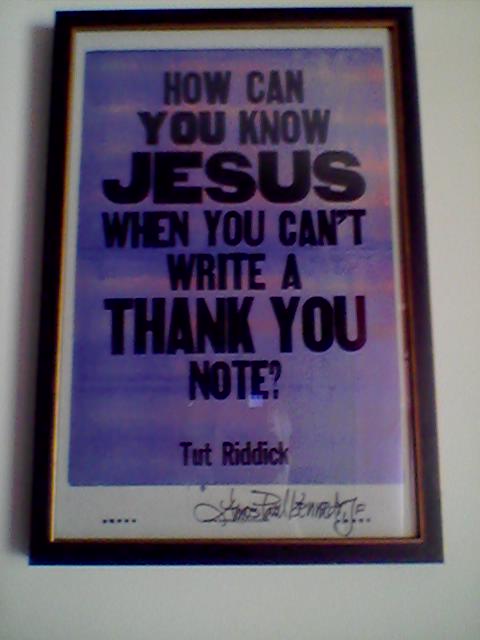
Tut Riddick quote  The first time I saw Amos Kennedy’s letterpress poster print containing the quote “How can you know Jesus when you can’t write a Thank You note?” I knew it belonged on my wall. The quote is attributed to Mobile-based artist-collector (and sage) Tut Riddick and it had immediate resonance with me.

I am from perhaps one of the last generations of school children who were trained in the art of writing letters and thank you notes, business letters, and other forms of civilized correspondence. I was taught these things in elementary school. These skills were not taught as stuffy “etiquette” lessons but as basics for polite and successful living. I listened and learned the lesson well. Even during my rebellious authority-flouting years I understood the necessity of properly thanking people for kindnesses and generosity and, once learned, these are habits that never fade away. (Perhaps I was some sort of a Junior Leaguer in a previous life since all Junior League joke punchlines seem to hinge on the writing of thank you notes.)

The late George Carlin had a whole routine about phrases he considered to be oxymorons – “military intelligence,” “business ethics,” “jumbo shrimp,” and “young Republicans” were on Carlin’s list, as I recall. I might put “compassionate conservative” in the category.

And these days, I would suggest adding “social media.”

The interaction done under the label of “social media” seems too often to be the death of appropriate social engagement and courteous exchange. Things done in the interest of saving time too often come across as thoughtless and inconsiderate. I don’t fault the technology for this. Instead, I fault the users who use social media as an excuse to take shortcuts and minimize opportunities for true meaningful contact. I suspect that if more people realized that the same rules that apply to effective written communication apply to online media, we would see less of a decline in essential communication skills. This is an ongoing concern for me as a teacher, as a reader, and as a writer.

One can be literate and courteous through social media outlets but too often those who depend on such outlets for their primary social contact rely on shortcuts, sub-literate constructions, and curtness bordering on rudeness. Or they forward a cute cat picture or something someone else said and think that they’ve made social contact.

Over the years, my stock reply when I was asked why I don’t have a Facebook account was “because I’m an adult.” Nowadays my students scoff at the mention of Facebook; they’ve all moved on and see Facebook as the domain of their parents and grandparents. I can’t say I was ahead of the trend – I was just totally disinterested.

But even with the preponderance of media outlets, I don’t know anyone who doesn’t still appreciate a thoughtful handwritten “thank you” note or letter, even if they can’t muster the wherewithal to write one themselves. The irony is, whenever somebody tells me they don’t have “the time” to write thank you notes, I am thinking that it doesn’t really take that much time. I can usually get a proper thank you written and posted in under five minutes.

I make a point of having good stationery and postage stamps on hand and when the occasion arises for a thank you note to be sent, I try to get it written and posted within 24 hours (otherwise, like most everybody else, I will forget about it). Only a few sentences are needed; say enough to let the recipient know that you know why and to whom you are writing. Simple and succinct is fine.

It’s a civilized and gracious thing to do and I guarantee you’ll feel good when you do it. Even better, the recipient will value and remember the gesture and may even pass it on.

Iced Tea Digressions

IMG_1412 In December 1989 I was in New England traveling with a theatre tour. In a tiny joint near the waterfront in New London, Connecticut, I ordered iced tea with lunch. The crusty waitress eyed me suspiciously and said, “It’s December. We don’t have iced tea in December.”

“Fair enough,” I said. “Now here’s a question: Do you serve hot coffee in July?”

She admitted that she did and laughed as she walked away. I channeled the diner scene in Five Easy Pieces for a moment but I let it go and had a glass of water with my meal.

There is always at least one pitcher of tea in my refrigerator at any given time. I have never been much of a coffee drinker but I mostly fit the Southern stereotype about iced tea; I drink it frequently and year-round. A glass of iced tea is the first thing I pour when I get up in the morning and the first thing I pour when I come home at the end of the workday. I bring a thermal tumbler of iced tea to my office each day and am usually able to nurse it until time to go home.

Iced tea is one of the many great things that was popularized during the St. Louis World’s Fair of 1904 but it goes back farther than that date. It is ubiquitous at Southern tables and in Southern restaurants and “sweet or unsweet?” is the standard question when iced tea is ordered in a restaurant in the South.

When I am out, I usually order “sweet” but the sweet iced tea in restaurants is often a little too sweet for my taste. I like it a little sweet and what I make at home tends to be much less sweet than what is served at many restaurants, especially the chains. As I have become more wary of processed sugars, I have begun to use alternative sweeteners, sometimes with a little honey added, to sweeten my home-made tea.

I was once given an electric iced tea maker as a gift. It seemed heretical at the time, but I got used to it, began to like the way I could easily add mint, orange peel, and other seasonal flavors into the mix, and even bought a new iced tea maker when the first one broke. My replacement broke a few months ago and I intended to replace it but haven’t gotten around to it yet. I am enjoying the stove-top process again although I had to tweak my formulas just a bit to get it right.

Growing up, the teabags in our house and at Grandmother’s were usually Lipton and occasionally Red Diamond, a tea and coffee brand based in Birmingham, or Luzianne out of New Orleans. When I was out on my own, I gravitated to Lipton and that was my iced tea brand of choice for a long time.

That all changed after Hurricane Katrina in 2005 when I heard on a television report that the Luzianne factory did not lay off any employees post-storm and, in fact, continued paying employees their full checks during the time that the operation was closed in the aftermath of the flood. I have not been able to confirm that story, but Luzianne became my iced tea brand of choice from then on. Such corporate loyalty to employees is rare these days and deserves our support.

A key to serving iced tea is to have lemon wedges and long-handled teaspoons nearby. Also, one must always have plenty of ice cubes on hand. In the days before most refrigerators had ice dispensers, I would go into friends’ kitchens and fill their ice trays upon arrival if I knew these were people who were negligent about what I consider to be the essential task of constant in-home ice production. I still keep full ice trays in the freezer in case of an emergency.

Last Christmas, friends who know my affinity for iced drinks gave me a gift of spherical ice — plastic contraptions that each produce one perfectly round and substantial circle of ice. They’re a modern miracle and a perfect gift – the ice globe is pleasing to look at, melts slowly, and just fits in an old-fashioned glass. Two will work for a tall glass of tea. At lunch on New Year’s Day, people were whipping out their phones like the paparazzi to photograph my drink with a round globe of ice sitting majestically inside.

After a brutal Winter, it’s finally Spring and warmer weather is settling in. Wherever we live or travel, we should all be able to drink our fill of iced tea without having to explain ourselves.

Back in 1989, during that same theatre tour that took me to New London, I was in a restaurant in downtown Burlington, Vermont, a few days before Christmas. The waiter asked for my drink order and I said “iced tea.” He wrote down my order and went back to the kitchen.

A few minutes later, the owner of the restaurant came out from the back and introduced himself.

“Where are you from?’ he asked.

“Alabama.”

“I’m from South Carolina,” he said. “That’s why we serve iced tea in December.” It turned out that his wait staff had instructions to inform him whenever a patron ordered iced tea during cold months. He said that was always a signal that another Southerner was in the house.

Love Song for Joni


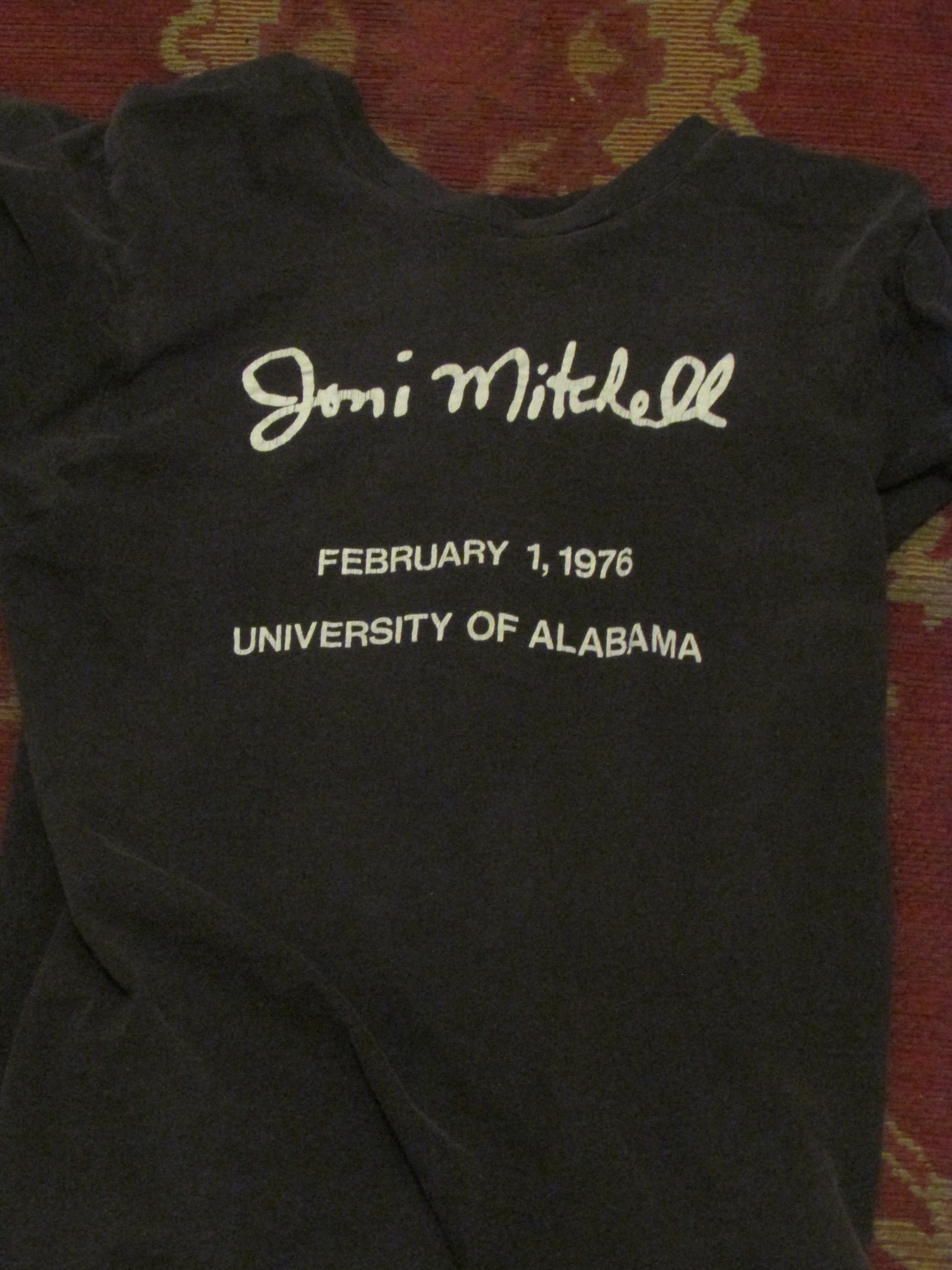
IMG_1407  Joni Mitchell was born in Canada in November 1943 so she missed being a “Baby Boomer” by a little more than a year. The influence she continues to wield on millions of Baby Boomers renders that trivial detail totally inconsequential.

My friends from the ‘70s in Tuscaloosa are likely to remember that my obsession with Joni was perhaps alarming at times. I once decided to see if I could reach her on the phone to wish her a happy birthday. Of course, this was an unsuccessful mission but during the course of the night I managed to contact somebody at Beat poet Allen Ginsberg’s house in New York (his number was always listed and I had read that he had “everybody’s” phone number); her sound engineer’s babysitter in Los Angeles; and somebody in Saskatchewan who was very courteous but not very helpful (and who may or may not have been a relative).

I bought every album on the day it was released and listened to it until it was etched completely in my memory. If prompted, I might still be able to sing the entire Court and Spark album from beginning to end. Just hum “Love came to my door / with a sleeping roll …” to me and I’m off. When I was living in a tiny studio apartment near the campus in the mid-70s my neighbor June once knocked on my apartment door and said, “I love Joni Mitchell, too, but could you play something other than Blue for a few days?”

I became aware of Joni Mitchell as a songwriter and folkie in the late ‘60s and primarily through other singers’ covers of her songs. Judy Collins had major success covering Joni Mitchell’s songs, most notably “Both Sides Now,” and the Crosby, Stills and Nash cover of “Woodstock” was a generational anthem.

I first saw Joni herself and her inimitable style as a performer when she appeared on the first episode of “The Johnny Cash Show” in 1969. If she had the Cash imprimatur, I was on-board.

Blue, Joni’s fourth album, was the breakthrough album in 1971. Blue’s moody and reflective and achingly personal series of songs signaled the maturation, musical sophistication, and exploration that mark her entire career. The classic Court and Spark arrived in 1974 and was followed in the same year by the great live album, Miles of Aisles. This was the time in her career when Joni was most popular and receiving the most radio play. Whenever I hear or see the name of music and movie mogul David Geffen I start humming “Free Man in Paris,” which Joni wrote with him in mind.

The Hissing of Summer Lawns was released in 1975 and was the most recent album when Joni played a magnificent concert at Memorial Coliseum in Tuscaloosa on February 1, 1976. That’s when my obsession became complete.

One of the highlights of my extracurricular undergraduate life (and a key part of my education) was volunteering for the University Program Council, a student-run entity that presented concerts, lectures, movies, stand-up comedy, touring theatre, and other events on the University of Alabama campus. I worked my butt off for the organization and I joke with friends that it was amazing what we would do to get a free t-shirt back then.

By the time Joni arrived on campus, I was most often working on “artist relations” and doing my volunteer duty backstage, making sure dressing rooms and catering were up to par and contract riders were fulfilled. But I didn’t plan to forego the opportunity to watch Joni perform and got assigned to “security” and a position in front of the stage. It was one of those transformative concerts that people who attended still remember vividly and talk about. She played songs we knew but also included songs from Hejira, her next album, which would hit later in 1976.

At the end of the show and after an encore of “Twisted” from Court and Spark, I moved toward the backstage area. One of the UPC “honchos” (Gary Weinberger, I think) intercepted me because I did not have a backstage pass for that concert. I said, “Who’s gonna stop me?” (Have I mentioned that I was a cocky kid back then? … 5’6” and 115 pounds with a smart mouth — Anybody could’ve stopped me). He smirked, laughed, and stepped aside.

One of the reasons that I often worked backstage is because it was known that I would leave the talent alone; I was back there to do my job, not to hobnob with celebrities. I didn’t want to bother Joni that night, but I felt the need for one more moment in her presence.

There was already a group of people with backstage passes gathered around the dressing room door. Finally, Joni emerged holding an armful of long-stemmed roses. The crowd began to crowd her and she was gracious as she moved toward her waiting car at the ramp leading out of the building. I stood out of the way as the crowd continued to vie for her ear and attention. As she slowly made her way through the crowd, she began to hand out roses to the people around her. Others began to reach out for a rose.

I stood quietly back against the wall as she passed. A moment later, she turned around, made eye contact with me, and said, “You look like you need a rose.” She walked a couple of steps back and handed me one of the roses … Bingo.

At that time I was a full-time student and worked part-time as part of the surly crew making sandwiches behind the counter at a sketchy deli on the Strip off the University campus. The day after the concert, I went to classes in the morning and showed up for my deli shift that afternoon. I still had a literal “contact high” from the events of the previous night’s show.

As I worked my shift, friends from the Program Council came to taunt me with the fact that they had managed to get into an informal after-concert get-together at Joni’s room at the Hotel Stafford downtown. Later, other friends rushed in to let me know that Joni had just been at The Dickery, a record store down the Strip, buying albums. I was fine with that; I felt I had gotten my moment already.

Joni Mitchell never stopped to rest on her laurels as a singer and I have continued to follow her the whole time. She has never stopped her artistic growth and experimentation as both a musician and a painter.

A burglary in 1990 wiped out my entire record collection and I no longer have a complete Joni collection, but I replaced quite a few of the older albums and continued to buy new recordings as they came out.

Her musical evolution has been constant and uncompromising. She has moved from folk to rock to jazz and more experimental sounds and has always defied labeling. Her voice frolics over lush and tricky wordplay and intricate phrasing; since she mostly sings the words she wrote, her voice truly becomes a versatile multi-faceted instrument full of meaning and deep emotion.

She speaks her mind without apology in interviews and in song. Her voice transformed over her career and she reached a point when the crystalline and aching high notes were unreachable but her smoky lower register serves her well and allowed her to re-examine and transform some of the early hits. Just listen to her re-recording of “Both Sides Now” in 2000; now juxtapose it with her 1969 version. In addition to vocal virtuosity,  she is also an amazing and innovative guitarist.

I recently pulled down an old college yearbook from my bookshelves to see if that rose still survives inside the front cover. The stem is still intact but I guess the petals turned to dust years ago.

Doesn’t matter … I still have the moment.

Mooresville

IMG_1370 Mooresville, Alabama, was incorporated as a town in 1818, the year before Alabama became a state (www.mooresvilleal.com). Its location in Limestone County, just off Wheeler Lake and the Tennessee River and between Huntsville and Decatur, is an area that is rapidly growing. The expansive farming fields of just a few years ago are giving way to more prosaic development. I have lived in north Alabama for more than twelve years and am still astonished at how much farmland has disappeared from the area in just the past decade.

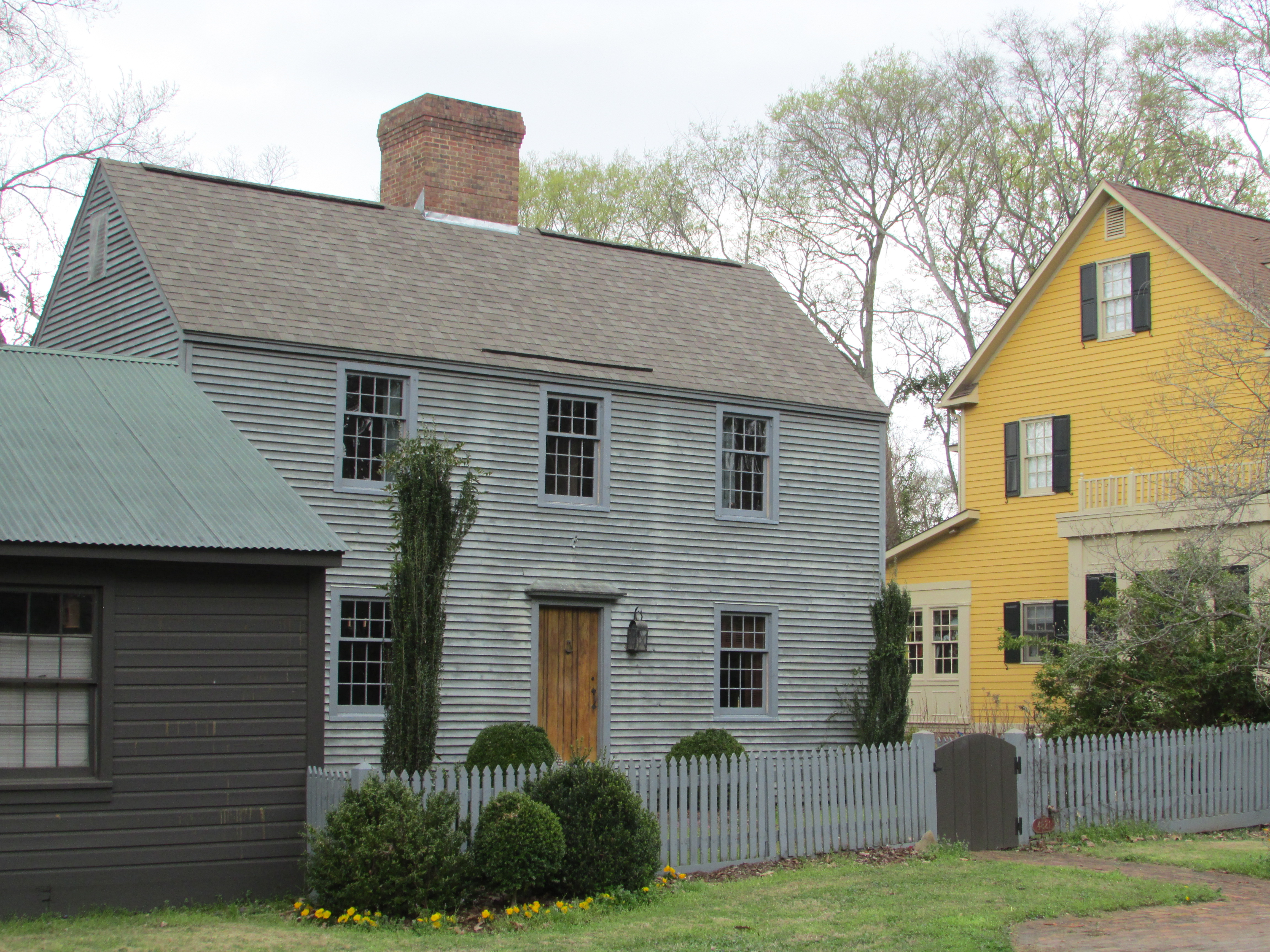
All of Mooresville, however, is in the National Register of Historic Places. It retains the feel of a village from another time and is worth the short exit off the interstate when you are in the area and have time for a breather. Its residents are good stewards of their community and the town is well-maintained, protected, and cared for. IMG_1337

Only a few dozen people live in Mooresville and it is small enough that one can park the car and walk the entire village in a fairly short time. There are large houses of note and smaller houses of charm; lovely private gardens; and ample green space. IMG_1327


Two particularly great old church buildings are located in the town. Mooresville Church of Christ has held services since 1854. Future president James A. Garfield preached a sermon in that building when he was stationed nearby as a federal soldier during the Civil War. It is a simple white clapboard building with Greek Revival basics and minimal adornment.

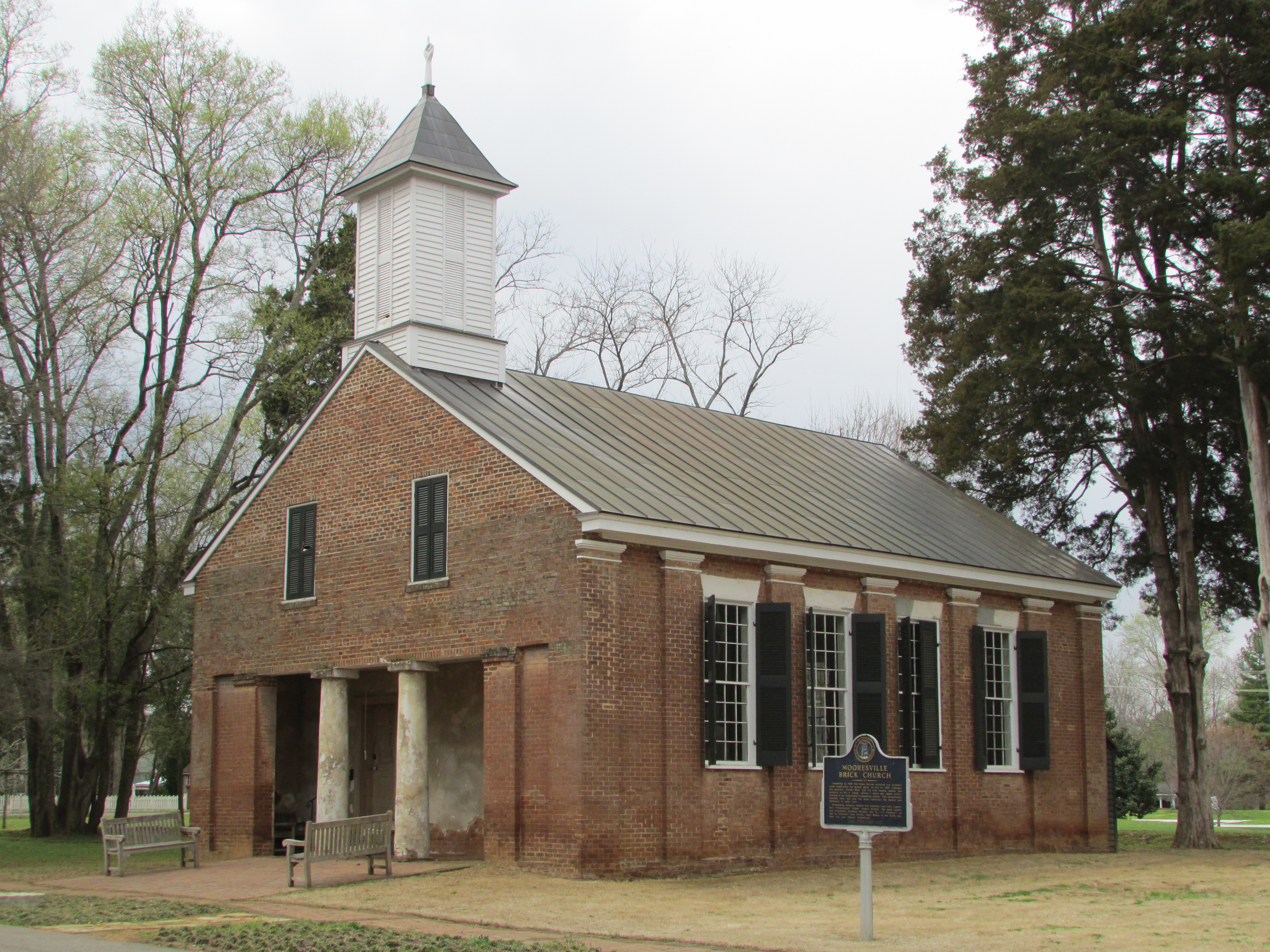
IMG_1377The Old Brick Church, built in 1839, is a Greek Revival brick structure with an elegantly sculpted hand at the tip of its steeple pointing directly up to the heavens. The Old Brick Church is available for weddings and special occasions but lacks modern conveniences and no longer holds regular services. IMG_1373

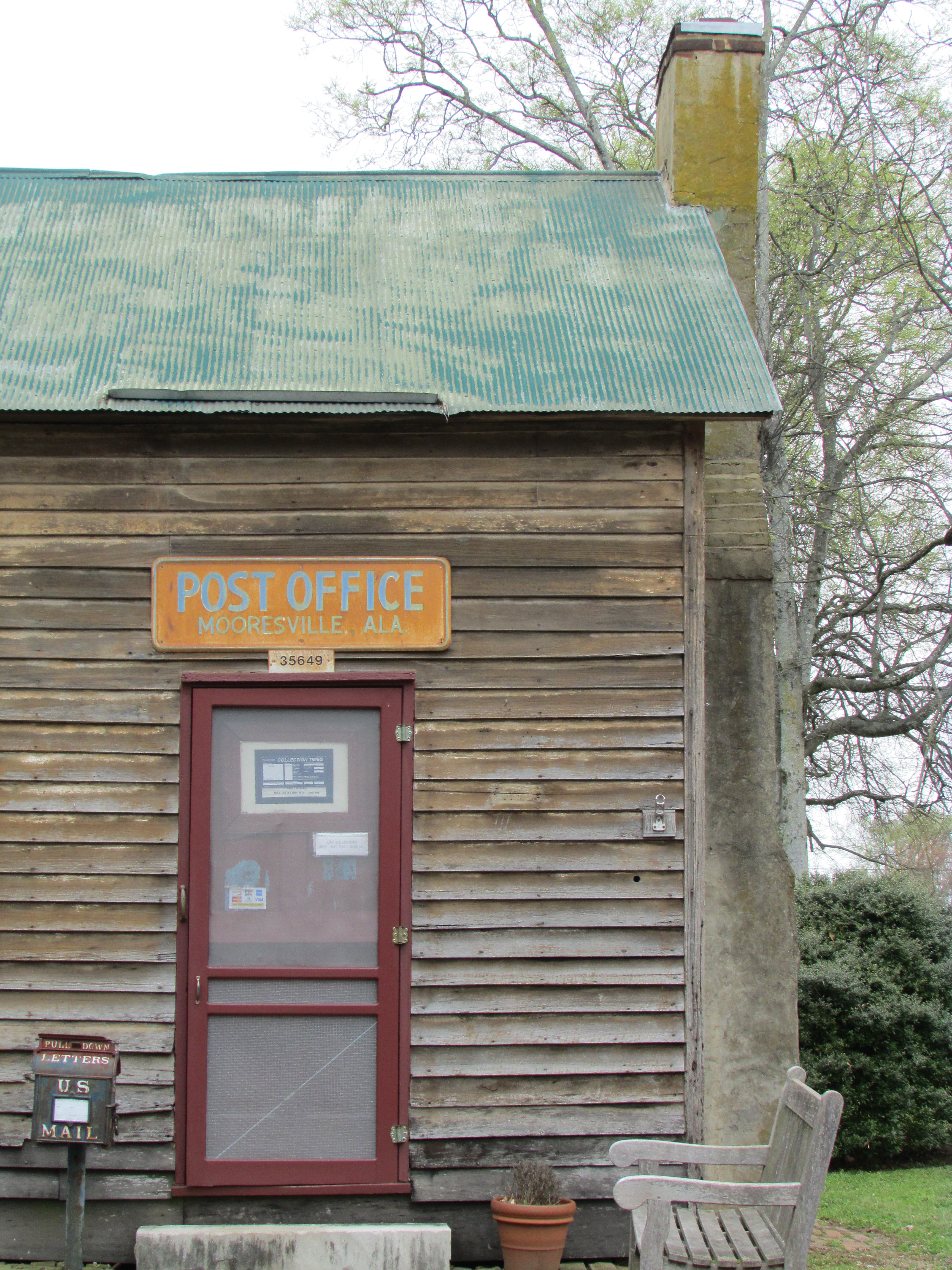
There are other small businesses in the village including the 1818 Farm (www.1818farms.com), a fairly recent enterprise with various happy farm animals and a strong organic orientation. When I was a boy and a ravenous reader of history and historical trivia,  I first heard about Mooresville as the site of the oldest still operating post office in the state. I am happy to report that the Mooresville Post Office is still there and still operational. IMG_1382

The whole village covers just a few blocks but some of the town’s roads continue on into the woods and backwaters of the lake and the river. I stopped to take a photograph on one of the backroads on a recent visit and realized that I was parked next to an ancient and overgrown cemetery. Tombstones from the 19th century, some of them broken, were scattered through the trees and brambles and provided intriguing history of the area.

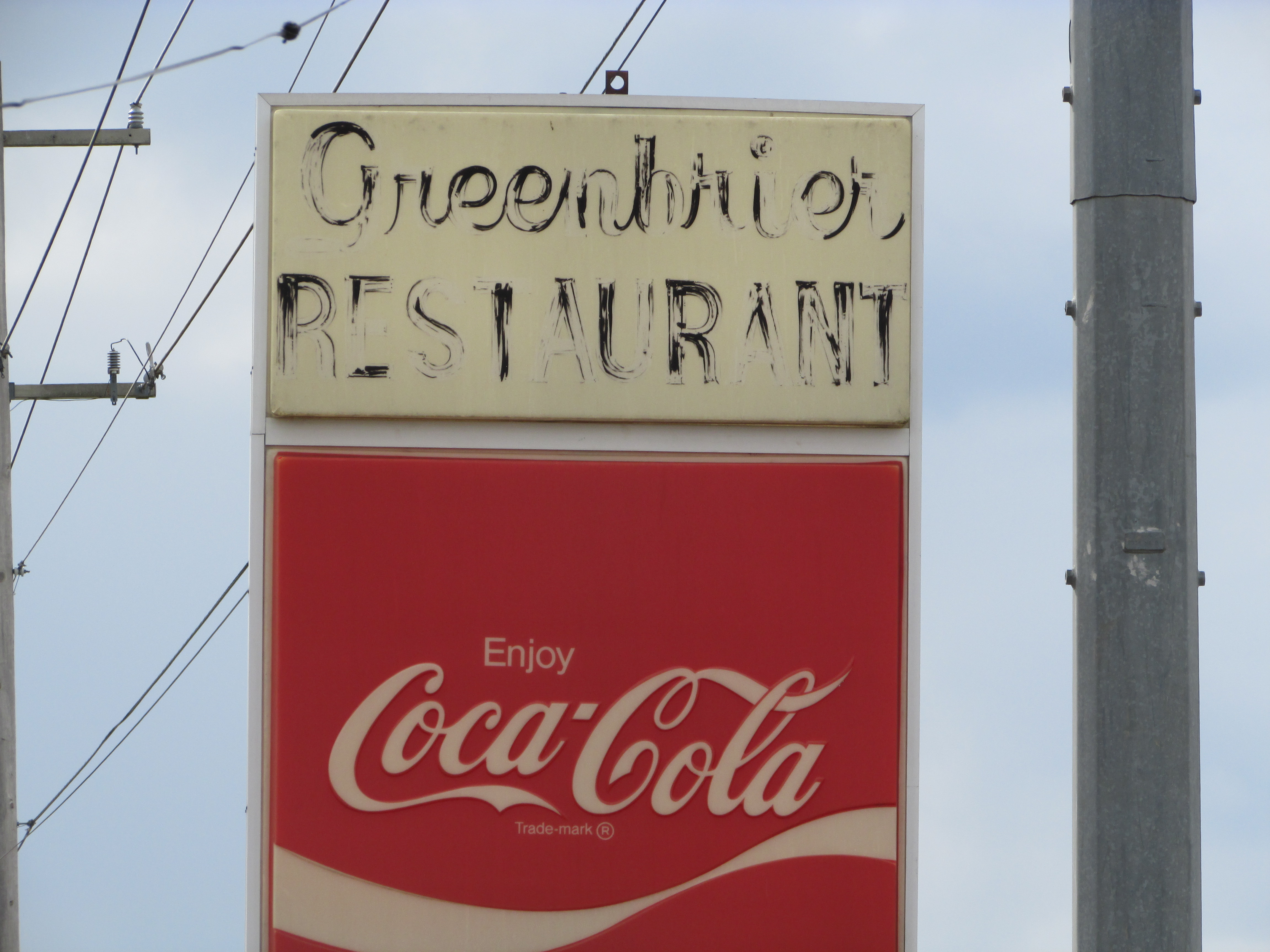
Whenever I go to Mooresville, I try to head over to Greenbrier and Greenbrier Restaurant (www.oldgreenbrier.com) before I head back into town. From Mooresville, you cross over the Interstate and take the road past Belle Mina (the name of both a 19th century mansion and the community that surrounds it). Turn on Old Highway 20, go past massive fields and farmland to the four-way stop at Greenbrier, and Greenbrier Restaurant is on your right at the stop sign. It’s known for its barbecue but I’m partial to the fried catfish. The fish is flaky and moist in the middle with a peppery crisp crust. The place also has the finest hushpuppies I have ever tasted and a generous portion of succulent hushpuppies comes with the meal.

I sometimes grab a catfish plate to go. The order will come with a paper bag of hushpuppies that I put on the seat next to me and pop as I head into Huntsville. The hushpuppies are always gone by the time I pass the Space and Rocket Center and re-enter the 21st Century. IMG_1403

Unexpected Repose at the Shrine of the Most Blessed Sacrament

IMG_1318   My pick for one of the most unexpected attractions in Alabama is the Shrine of the Most Blessed Sacrament at Our Lady of the Angels Monastery. It’s near the town of Hanceville in Cullman County north of Birmingham. My mother’s family hails from Cullman County and for that reason I tend to think of the area as a Protestant enclave of Scotch-Irish descendants. In reality, though, the town of Cullman was founded by Germans and its German Catholic roots are deep. Indeed, the Cullman skyline is dominated by Sacred Heart Catholic Church; St. Bernard Abbey of Benedictine monks and the Saint Bernard School are prominent in the town. Ave Maria Grotto and its companion “Little Jerusalem” replicas of world religious destinations on the Abbey grounds have long been Cullman’s best-known tourist attraction.

A little farther south of “Cullman town,” past Hanceville, the Shrine is the vision of Mother Angelica, the doctrinaire nun who started Eternal Word Television Network (EWTN), now the largest religious media network in the world, out of a garage in 1981. EWTN is headquartered in Irondale, a Birmingham suburb. I am not now nor have I ever been a Roman Catholic but curiosity and fascination with the scope of the network would drive me to occasionally look in on “Mother Angelica Live,” Mother Angelica’s daily show in the early years of EWTN. Mother Angelica has a certain charm, sharp wit, and charisma and is to be admired for her drive and commitment but sometimes her dogmatic proclamations and venomous rebukes made her sound a bit like a Christopher Durang creation. Still, it is an amazing thing that she started and the network continues to have massive global influence today.

As the network grew and began 24-hour non-stop Catholic programming, Mother Angelica began to search for a place to relocate the monastery away from the bustle of the network. IMG_1279 In 1995, she was able to acquire acreage to build a monastery and small working farm in Cullman County north of Birmingham. Soon, though, her modest plan exploded into a massive vision as she felt divinely called (by a voice emanating from a statue of the Divine Child in Bogota, Colombia) to build a Shrine.

The result is a mind-boggling and somewhat surreal achievement in the rolling hills and valleys of north central Alabama. One exits the interstate and passes through Hanceville and drives past farms and country stores. Eventually, at the turn to the Shrine, there is a long curving drive lined with white fences. There are small guest houses for those making an extended visit to the Shrine.

At the main gate, a sign advises visitors that the grounds are under video surveillance and that armed guards are on the premises (‘kumbaya,” right?). The farmland and pastures come into view and finally the buildings. IMG_1278There are substantial barns and farm buildings, and occasional religious sculptures, and then the main church, chapels, and related buildings are visible in the distance.

Currently there are a substantial working farm; the cloistered monastery for the Poor Clares of Perpetual Adoration; the main church, The Temple of the Divine Child; a Shroud of Turin Display and Lower Church; massive colonnades and Stations of the Cross on either side of the main piazza; a life-size Nativity inside a small chapel; a small castle, Castle San Miguel, containing meeting rooms and the Gift Shop of El Nino; the John Paul II Eucharistic Center; and a replica of the Lourdes Grotto in France along the Mulberry Fork of the Black Warrior River. IMG_1295

It’s a Roman Catholic Disneyland.

And it is truly a magnificent and peaceful place. Standing in the middle of the huge piazza and looking at the large Romanesque-Gothic main church, the bell tower, and the surrounding colonnades inspired by 13th Century Franciscan architecture, one can’t help but be reminded of the great pilgrimage destinations of the world. The marble, limestone, and granite construction, the bronze doors, the gilding throughout, the magnificent statuary inside the various buildings and throughout the grounds, and the German-crafted stained glass windows add to the site’s sense of commitment and purpose, regardless of one’s spiritual stance. IMG_1292

There are regular reminders to “remain silent out of respect for those in prayer” and throughout the place there are opportunities for quiet reflection and meditation. On the occasions when I have visited, there have been vehicles from all over the country in the parking lot and tourists and pilgrims from all over the world but it never seems rushed, noisy, or crowded. IMG_1306

Walking down the path to the river and the replica of the Lourdes Grotto is probably my favorite part of the visit. The imposing rocky structure looms with the marble statues of Our Lady of Lourdes on high and Bernadette kneeling below. IMG_1305Votive candles burn on several levels against the curving back of the structure. The only sounds I heard were the waters of the Mulberry Fork rushing over rocks in the riverbed, birds singing in early spring, and bees busily buzzing among the spring blossoms.

Mother Angelica, who had the vision and doggedly plowed it through to fruition, is almost 92 now and lives in the monastery she envisioned. Reruns of “Mother Angelica Live” still air on EWTN but Mother Angelica is silent. She suffered a severe stroke in 2001 and her speaking ability was greatly impaired. According to her fellow cloistered nuns, she moves her lips in prayer, takes meals in her room, and often watches EWTN when she’s awake. IMG_1311

On Food Memory and Alabama Literature

2014-01-01 02.22.58   Harper Lee’s To Kill a Mockingbird is about to have an additional impact on Alabama in the form of current legislation proposing that the Lane Cake, which has an undisputed Alabama provenance and is mentioned several times in Lee’s novel, be designated as the state’s official dessert.

I am often intrigued with the ways in which writers use food. Good writing about food is all around us – in cookbooks and food magazines and newspapers; in memoirs and novels and short stories and scripts for performance on stage or screen. In much culinary writing, including that of the legendary food critics James Beard and Craig Claiborne, the idea of “food memory” is pervasive. The powerful connections that food tastes and smells evoke are a shared sensibility providing powerful associations, emotions, and longings.

It is this sense of the sacrament of food which has led me increasingly to seek out and savor food writing. Writers – whether they intend to or not – use this idea of “food memory” to stoke and create a shared sense of ritual and place with the reader. As my career took me around the country and far from Alabama and the South, I found that some of the most visceral emotional connections that I have to my roots are memories of food and of food associated with family.

Food is frequently prominent in the writing of a number of writers with Alabama roots including Rick Bragg, Mary Ward Brown, Mark Childress, Melissa Delbridge, Fannie Flagg, Charles Gaines, Winston Groom, Zora Neale Hurston, and others. In looking at Alabama authors and their writing about food, it is hard to find something that is truly unique about a certain community because rich or poor, black or white, rural or urban, our food heritage is so universally “local.” “Southern cooking” and “soul food” are essentially the same and a love for barbecue is ubiquitous. I looked for obvious delineations but I found instead that there were constants. Is it any wonder, really, that many of the earliest battlegrounds of the Civil Rights movement were department store lunch counters?

Scout’s assertion in To Kill a Mockingbird that “Neighbors bring food with death and flowers with sickness and little things in between” captures a key memory of Southern existence. We are defined by the tastes and memories of our youth. This is one of the reasons that Sook’s declaration that “it’s fruitcake weather” resonates so vividly for readers of Capote’s “A Christmas Memory” whether we grew up in Monroeville’s dusty streets or under the sooty skies of mid-20th century Birmingham. I grew up in Birmingham and did not have first-hand experience with the adventures Capote describes but still, because of that story, I thought I had a clear sense of when “fruitcake weather” had arrived on crowded Avenue N in Birmingham’s Green Acres neighborhood.

In Capote’s lesser-known Monroeville story “The Thanksgiving Visitor” he describes nostalgia for the breakfast repasts of

ham and fried chicken, fried catfish, fried squirrel (in season), fried eggs, hominy grits with gravy, black-eyed peas, collards with collard liquor and cornbread to mush it in, biscuits, pound cake, pancakes and molasses, honey in the comb, homemade jams and jellies, sweet milk, buttermilk, coffee chicory-flavored and hot as Hades.

Capote’s litany of memory inspired me to pull down a favorite passage in James Agee’s Let Us Now Praise Famous Men. The book’s subject matter is firmly entrenched in the soil of Alabama’s Black Belt. Here is Agee’s description of the Depression-era Hale County tenant family’s breakfast ritual:

the gestures of a day here begin; and in just such silence and solitude: the iron lids are lifted; the kindling is laid in the grate: and the lids replaced: and a squirting match applied beneath: and the flour is sifted through shaken window-screen, and mixed with lard and water, soda, and a little salt: the coffee is set on the stove, its grounds afloat on the cold water: more wood laid in: the biscuits poured, and stuck into the oven: and the meat sliced and sliding, spitting, in the black skillet: and the eggs broken, and their shells consigned; and the chairs lifted from the porch to the table, and the sorghum set on, and the butter, sugar, salt, pepper, a spoon straightened, the lamp set at the center; the eggs turned; the seething coffee set aside; the meat reheated; the biscuits looked at; the straight black hair, saturated with sweat and smoke of pork, tightened more neatly to the head between four black pins; the biscuits tan, the eggs ready, the coffee ready, the meat ready, the breakfast ready.

Norman McMillan, in his memoir Distant Son, tells us that

Summers meant lots of food. We didn’t think about it that way but we were more or less vegetarians. During the summer when we were at home, each lunch table was filled with seven or eight bowls every day. Pans of golden cornbread or plates of thick biscuits accompanied the vegetables. Except for white meat, which was used to season the vegetables, we saw little meat at all. Occasionally Daddy would bring steak home, and after pounding it with the side of a saucer he would fry it and make gravy. At times we raised a few chickens and we also ate squirrel and rabbit in the winter, and sometimes even possum and coon.

From the time I received a copy of The Alice B. Toklas Cookbook as a gift I have savored cookbooks which also have a literary flair. Birmingham and Cullman, Alabama’s native son Frank Stitt went from studying philosophy at Berkeley to becoming an acclaimed chef and restaurateur. As the owner of Highlands Bar and Grill in Birmingham, a perennial finalist for the annual James Beard “Outstanding Restaurant” award, he is the acknowledged master of contemporary Alabama food. His 2004 cookbook Frank Stitt’s Southern Table includes the following discourse on tradition:

As an adult, I came to appreciate the blessing as a time to open our minds to a greater awareness of the beauty of the food we are about to eat. Instead of asking my family to endure a rote blessing, I wanted to pay homage to food as a sacrament. I have since refined this idea, incorporating it into the at-table stories I share with friends and family. I want everyone to come to understand the ancient rhythms of life, to know what it felt like to break bread at my mother’s table, to understand why upon walking by my maternal grandmother’s long-closed smokehouse I was transported back to the days when our people slaughtered their own hogs. I want them to understand that such acts were honorable, that to harvest a hog with your own hands, by the sweat of your own brow, was to know intimately the consequences and benefits of humanity.

Pat Conroy’s entertaining The Pat Conroy Cookbook includes a chapter entitled “The Pleasures of Reading Cookbooks No One Has Ever Heard Of” which includes lengthy considerations of several Junior League and church-sponsored cookbooks, including several from Alabama. One passage in Cotton Country, the Decatur Junior League cookbook, particularly pleases Conroy. He quotes this passage describing Mrs. Barrett Shelton Sr.’s Stuffed Country Ham:

To call this merely “Stuffed Ham” is an injustice. “Spectacular” is the only word to describe this ham: spectacular in appearance and taste. Trouble – perhaps – but for a buffet dinner or cocktail party mainliner, nothing could do more for your reputation as a good cook or hostess.

This passage sends Conroy into a spasm of appreciation. He writes,

Have you ever seen three sentences more confidently rendered by a hand so fine and sure – the disdainful dashes surrounding that intimidating “perhaps” and that bold, two-eyed colon stopping you in mid-stream for emphasis. A small history of the South could be composed just by studying the cadences and assuredness of position in Mrs. Barrett Shelton Sr.’s place in Decatur society. It would be paradisiacal for me to pass down a Decatur street and have the imperious Mrs. Shelton whisper to a group of lunching friends, “Mr. Conroy’s new in town, but I think he has the makings of a cocktail party mainliner.”

Indeed, much of my favorite food writing takes on such a lyrical and meditative tone. Mobile’s inimitable Eugene Walter seasons his recipe for pot likker with this advice: “Take a day off and wash wash wash 3 or 4 big bunches of fresh (yes, I said fresh) turnip greens, younger the better. Then sit down and pluck the leaves. … This takes time. Sit down, put on some Mozart.”

I find that there are few “grand themes” about the place of food in writing. There are, instead, comforts. The comforts come in familiarity, common ritual, and respect for the sacrament of being at table with friends, with family, with peers and, on occasion, with adversaries.

Shadows and Light: Wichahpi Commemorative Stone Wall

IMG_1244   Just off the Natchez Trace Parkway, near the place where that historic road moves from Tennessee into northwest Alabama near the Shoals, is a man-made wall commemorating a moving story of the “Trail of Tears.” The “Trail of Tears” was an aftermath of the Indian Removal Act of 1830, the episode of American history which forcibly removed Native Americans from their homes in the east to the Oklahoma territories.

Tom Hendrix has built a monumental stone wall to honor his great-great-grandmother, Te-lah-nay, a member of the Yuchi tribe, who walked with her sister and others from her home near the Tennessee River – the Native Americans called it “the Singing River” – to Oklahoma. According to family lore, the young woman was disappointed to find that the waters of Oklahoma did not sing and resolved to walk back to Alabama and her “Singing River.” The journey home took five years.IMG_1254

Mr. Hendrix, who is now in his 80s, has been working on the wall for over thirty years. It is estimated that there are 8.5 million pounds of stones in the project. It is reputed to be the world’s longest memorial to a Native American and to a woman. It is the longest non-mortared rock wall in the United States. Mr. Hendrix, the maker, says that it honors not just his great-great-grandmother Te-lah-nay but all Native American women. IMG_1247

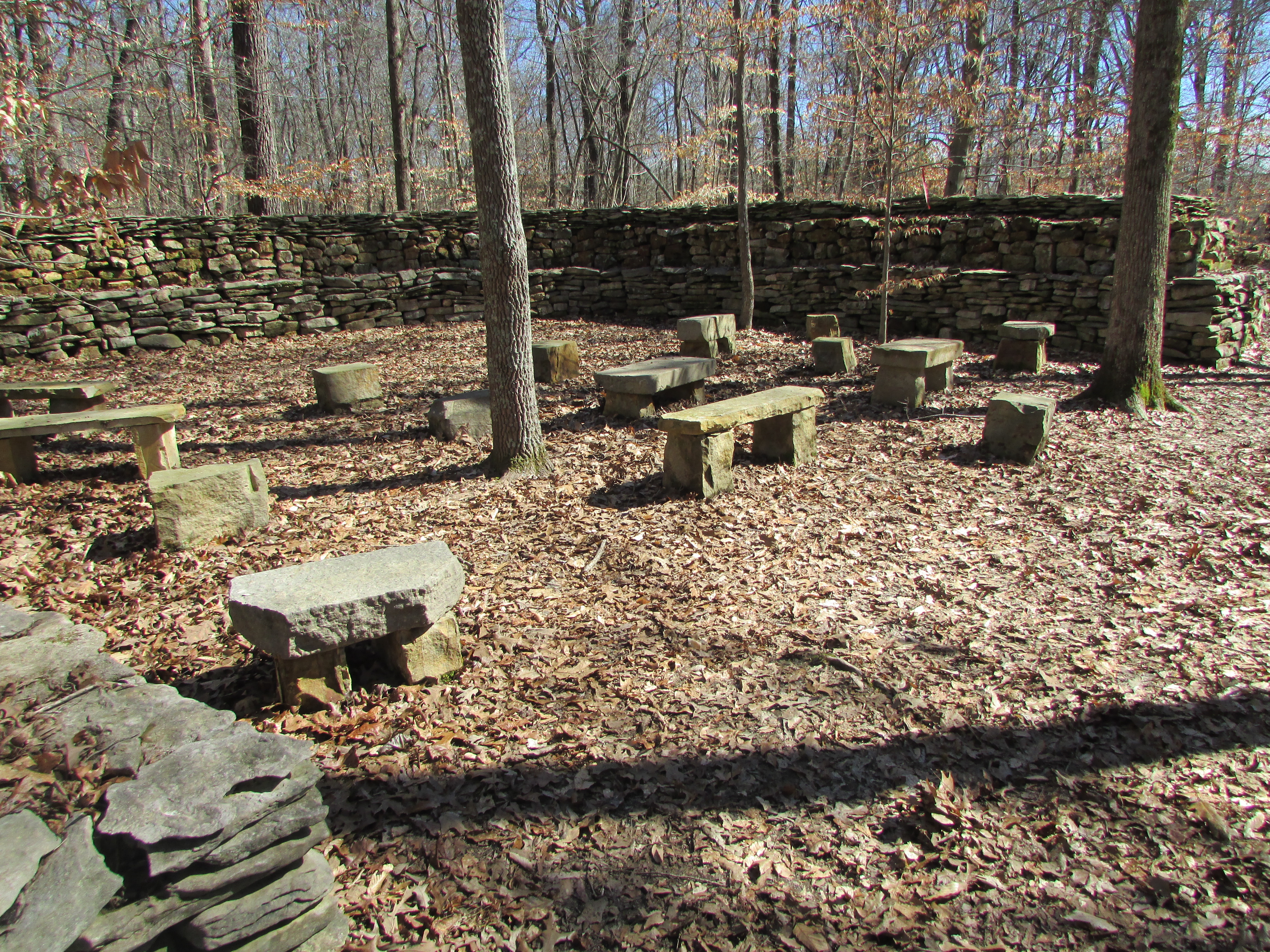
Mr. Hendrix, inspired by the stories and journals passed down through his family, began to build the wall with stones he had brought to the site at his home a few yards from the Natchez Trace. Each stone, he says, represents a step of Te-lah-nay’s journey. Now there are paths along well over a mile of wall, each stone placed by Mr. Hendrix. It is a spiritual and peaceful place with curves, benches, levels, and prayer circles. At some places the wall is high and at other places it is low enough to sit on. At some places it is tight and closed in and at others it opens out. People have sent stones to Mr. Hendrix from all over the world to be placed in the wall. Occasionally a seashell appears along the path. IMG_1246

When I arrived on a warm late winter afternoon in mid-March, Mr. Hendrix greeted me. From his driveway, there are paths going in either direction. He told me the path to the left represents Te-lah-nay’s walk to Oklahoma and that the path to my right represents her return home. I asked which one I should take first and he said it didn’t matter. I chose the path to the left.

IMG_1237That part of the path was closed in. At the end there was a bench. I sat at the bench for a moment but felt the need to move on. Upon arriving back at the entrance, Mr. Hendrix said “That was the dark path. The other side is completely different.”

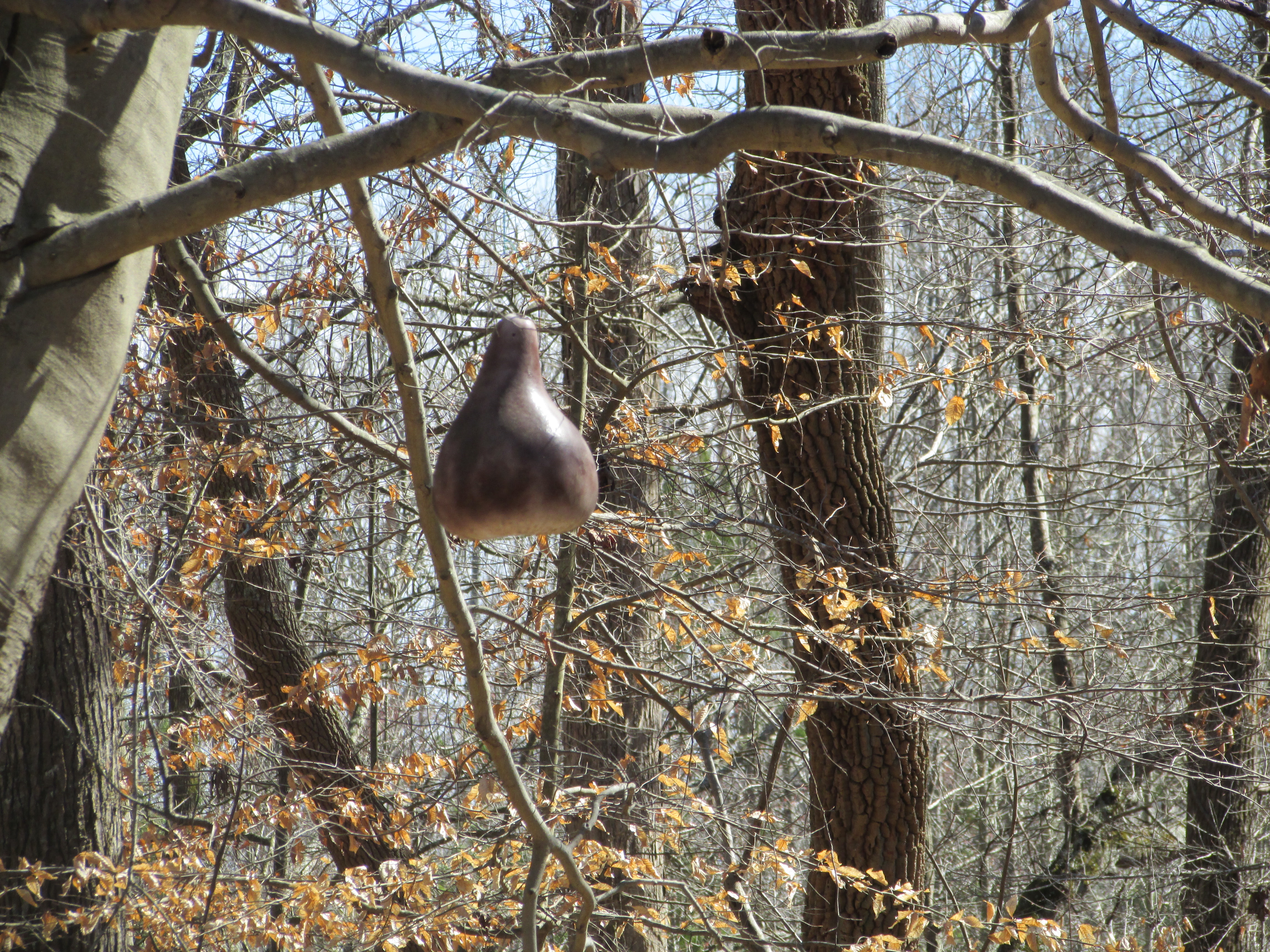
Taking the path to the right, I soon moved along a wall of rocks with what appear to be spirits peering out. Continuing along the path, there are openings, areas of benches and congregation, a single gourd hanging from a tall tree. IMG_1248 I was a short distance from the first path, but the feeling was much lighter and more free. At times the wall meandered off and the sunlight through the still bare trees glistened and darted in the slight breeze. Again I sat on a bench in the path and this time I relaxed and stayed for a while. IMG_1241

The memorial is called “Wichahpi,” which means “like the stars.” The path’s symbolism comes from an elder who told Tom Hendrix that ultimately “all things shall pass. Only the stones will remain.”

When my journey along the wall was complete, Mr. Hendrix was there to answer questions and explain. He has written a book about Te-lah-nay’s journey called If the Legends Fade and copies are available for sale at the site (www.ifthelegendsfade.com). Also available are stone carvings by Mr. Hendrix including spiritual images, images of animals, and benches and birdbaths.

I asked him how far the site is from Te-lah-nay’s “Singing River” and he directed me nine miles southwest to the place where the Natchez Trace crosses the Tennessee. It is a lovely and peaceful spot and the river is wide there. IMG_1260_1Mr. Hendrix says that the song from the river is more faint now that the river has been tamed and industry crowds much of its shores. But there is no sign of these things at the spot where the Natchez Trace bridge crosses the water; Mr. Hendrix says he still hears the river’s song almost every day.

Shopping for Cast Iron in South Pittsburg

IMG_1232   The first time I heard about the small town of South Pittsburg, Tennessee, I was living in Indiana and a friend mentioned that his mother’s family hails from South Pittsburg. I asked if there was a North Pittsburg in Tennessee and he was pretty sure there was not. Since then, I have learned that the closest thing they have to North Pittsburg is that Pittsburgh up in western Pennsylvania, one of my favorite cities.

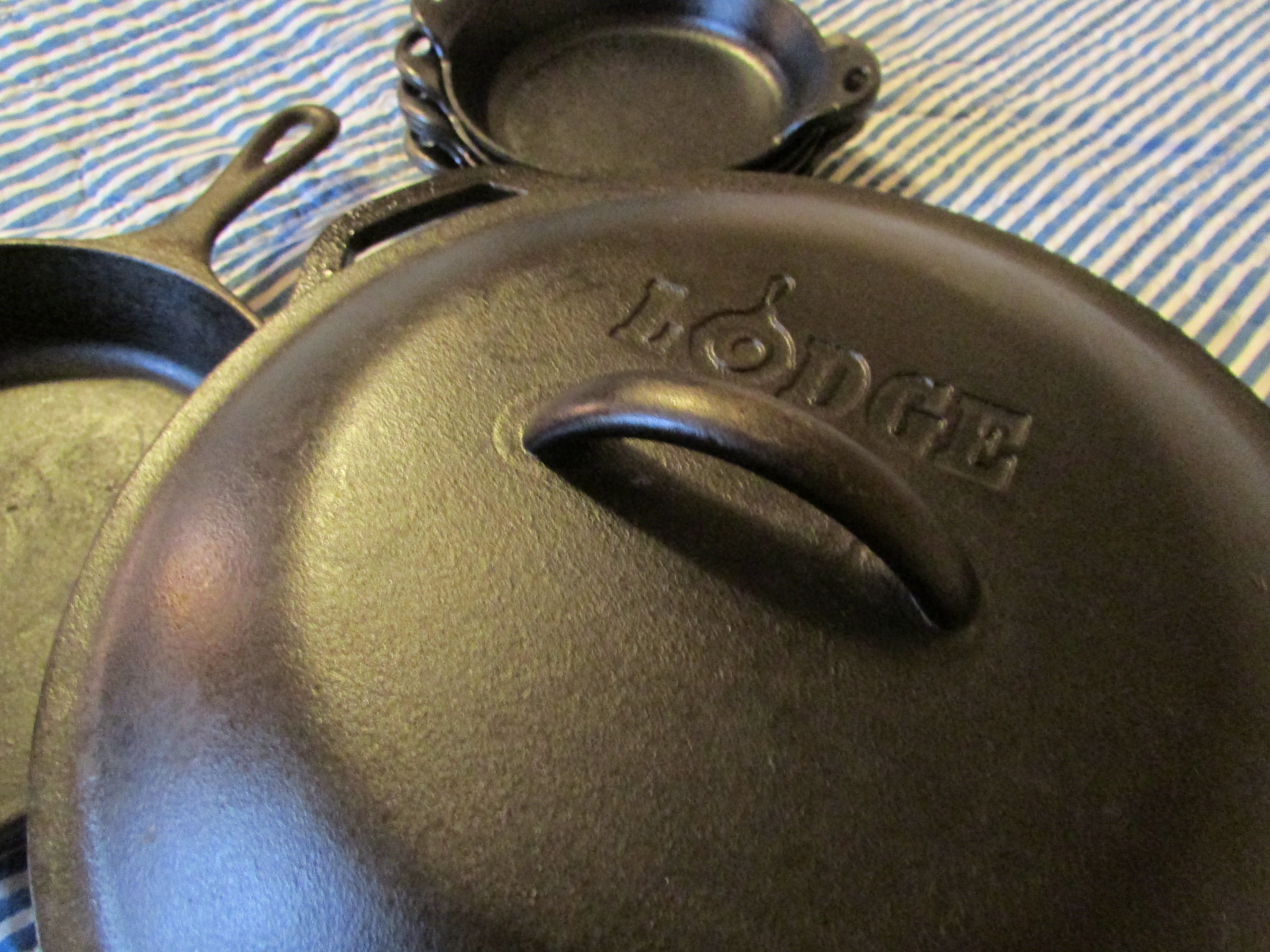
IMG_1229Years later, when I found myself living in north Alabama, I discovered on my first trip from Huntsville to Chattanooga that South Pittsburg is on Hwy. 72 on the Tennessee River nestled against the Cumberland Plateau and the Alabama state line. It is a little over an hour from my house. Most interesting was the discovery that South Pittsburg is the home of Lodge Manufacturing Co., makers of Lodge cast iron cookware – the only cast iron cookware still made in the United States. I try to have plenty of it on hand.

IMG_1220Now, whenever I go to Chattanooga, I try to schedule a stop in South Pittsburg at the Lodge Cast Iron Factory Store near the foundry. For anybody who loves cooking with cast iron, this is a pilgrimage to take. The store is full of cast iron cookware in about any configuration one might imagine. I must show restraint in my purchases, but the place is filled floor to ceiling with shelves of cast iron temptation. The parking lot always has cars with tags from all over. On my recent visit, a Lodge cast iron hibachi grill was calling my name.

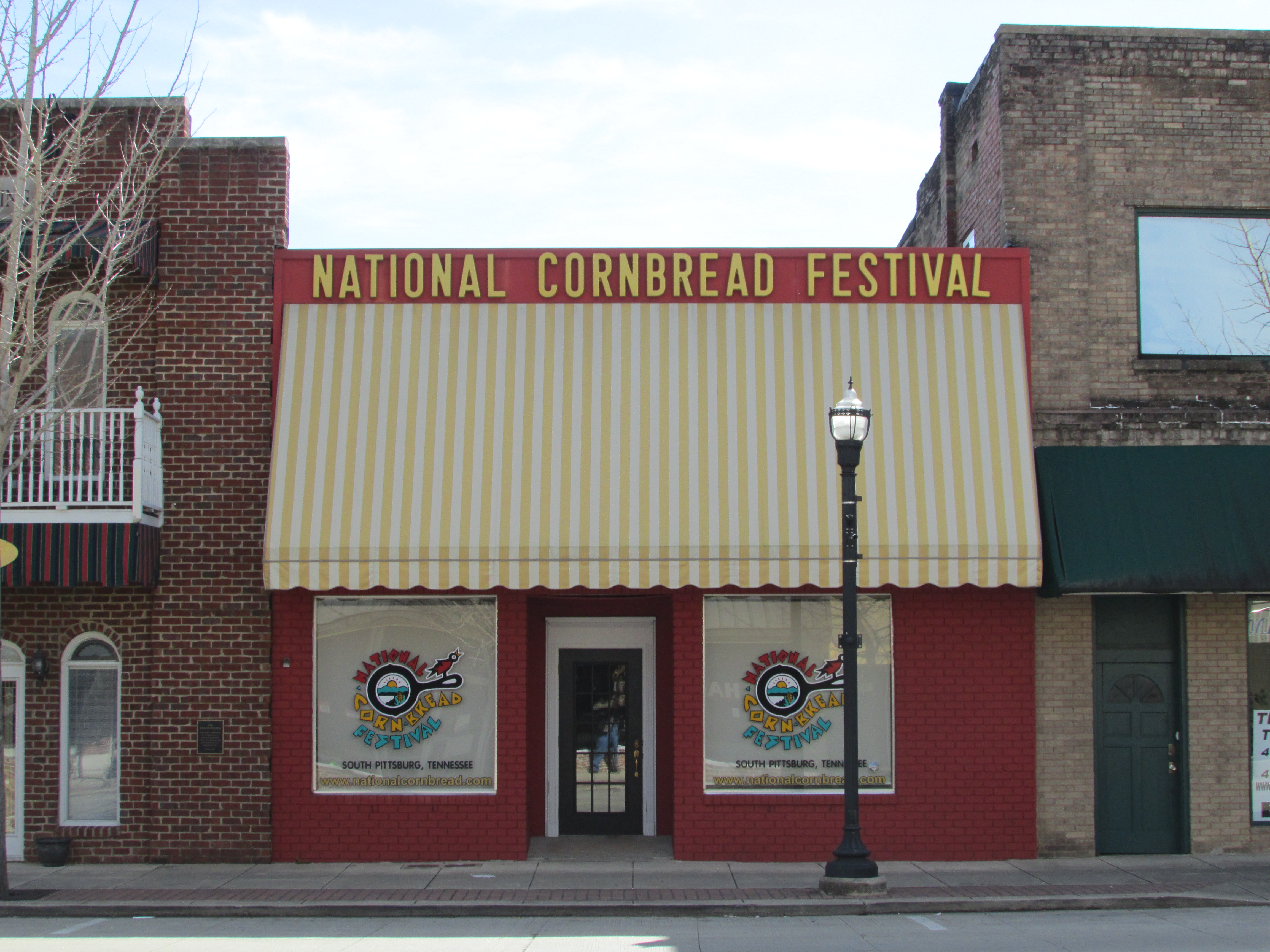
It should be no surprise that the home of cast iron skillets is also home to the National Cornbread Festival on the last full weekend in April. The calendar of events includes all kinds of cornbread cook-offs, “Cornbread Eatin’, Buttermilk Chuggin’, and Ice Cream Eatin’ Contests,” and the crowning of a slew of Miss National Cornbread Festivals from various age groups.IMG_1224

A short walk through the cozy downtown reveals a historical marker commemorating South Pittsburg’s baffling and sad “Christmas Night Shootout” of 1927. I am interested in the history of the labor movement in the South, and especially in the Birmingham iron and steel industry, but the South Pittsburg event is news to me. It stemmed from a labor dispute at a local stove factory and pitted local law enforcement officers against one another. According to one account, the county sheriff and his deputies supported the strikers and the town police force sided with the factory owners. At the end of the shootout, six officers were killed including the Chief of Police and the Sheriff.

On a happier note, down the street from the “Shootout” marker, I saw a coin-operated horse named Thunder on the sidewalk. I have not seen one of those in ages. It was in front of a music store (I think) that bills itself “The Most Unique Store in Tennessee.” I have to trust the sign since the store was closed when I was there. The fact that Jim Morrison was staring down at Thunder from an old Doors poster was delight enough and I’ll try to catch the unique store sometime when it’s open … perhaps at the next National Cornbread Festival. IMG_1227

Take time to discover small towns. There’s always something interesting to learn.

Eating around Chattanooga

IMG_1202    Chattanooga, TN. My parents honeymooned in Chattanooga, Tennessee, in the early 1950s. Knowing that from an early age has given me a sense of familiarity with Chattanooga that probably exceeds my actual knowledge and experience of the place.

When I was a very young elementary school student, I traveled with my parents from Birmingham to Chattanooga for a weekend getaway in the early ‘60s. We hit the highlights of the time which included Rock City, Ruby Falls, the Incline railway, and the Confederama.

The Confederama, unfortunately, fell victim to political correctness and now exists farther up Lookout Mountain, I hear, in an altered and watered-down form as “The Battles for Chattanooga Museum” in Point Park somewhere near Rock City. As I recall the Confederama from 50+ years ago, it was a relief diorama of the area around Chattanooga with lights and teeny soldier replicas illustrating the Civil War battles; as I recall, there was a distinct Confederate bias. I remember thrilling to the tiny red flashes of guns being fired as a somber recording gave the history lesson.

We are entering the last month of the 150th anniversary of the Civil War, an anniversary that began in 2011. When I was an elementary school student in the early 1960s, the Civil War Centennial was ubiquitous. I have been saddened – but not surprised – that the nation has seemed hesitant to discuss that defining moment of our national history for the sesquicentennial. Perhaps right now it’s just too complicated to evaluate.

The annual Spring convention of Southeastern Theatre Conference (SETC) is the largest theatre convention in the United States. I have been attending it most years since 1983 with a few gaps here and there. Because of the logistical demands of the event, a few southeastern cities seem to be on the convention’s regular rotation and Chattanooga has been the most frequent host city of the event over the past decade.

I spent hours each day at the convention; this year my main obligations were presenting a paper and attending editorial board meetings for Southern Theatre magazine. I decided that in my rare off-time I wanted to check out the current new culinary offerings of Chattanooga, a town in perpetual transition.

Even though it was my plan to adventure into some new eateries, as it turned out I only dined at Chattanooga restaurants I had enjoyed on previous visits. My desire to return speaks well for the restaurants and the fact that each managed to surprise and delight me anew speaks volumes.

IMG_1217When I arrived in Chattanooga on Wednesday evening, I realized that I hadn’t eaten all day and wandered down Broad Street toward the aquarium and the river to check out the options. Among all of the options I remembered a good SETC meal several years back at Easy Bistro and Bar (www.easybistro.com) in a space that used to house “the world’s first Coca-Cola bottling plant.” It’s a lovely space and a good respite from the abundant tourists on the street in that tourist-driven part of town. The chef is New Orleans native Erik Niel and the menu is adventurous and ever-changing and reflects the influences of New Orleans adapted for the hills, rivers, lakes, and tastes of eastern Tennessee. I decided to try a couple of small plates and had Crispy Chicken Skins 3-Ways and a lovely and filling beet salad with feta and onions. Both dishes were creative, beautifully plated, and delicious.

Thursday was a busy day full of meetings – bitterly cold and windy with sleet and rain all day – and my dining plans were limited to grabbing quick snacks at the convention and hotel.

I presented my convention paper on Friday morning and had already planned to treat myself to lunch at Public House (www.publichousechattanooga.com), a Chattanooga eatery I discovered and loved in 2012. I ordered a couple of small plates at Public House three years ago and have such fond memories of a plate of fried chicken livers with grits and a plate of pimento cheese with fried pickles that I debated eating the same things all over again. But in the interest of expanding my knowledge of the Public House menu I opted for a vegetable plate so I could sample an assortment of dishes. I ordered perfectly prepared collard greens, cheesy mashed potatoes, and a rich mac and cheese combo.

IMG_1209Public House is located in a downtown development called Warehouse Row and is one of those places that emphasizes environmental consciousness and lists many of its local and specialty purveyors on the menu. The space is full of windows and the design is simple, warm, and inviting. Many items on the menu are traditional Southern favorites as mentioned earlier but the preparation and presentation is skilled and a meal there feels uptown and special. The pimento cheese is exceptional – a member of the wait staff told me they use the same recipe that I use (Miss Verba’s from Frank Stitt’s Southern Table cookbook) – and even though I didn’t order it this visit, I found it delightfully stuffed in an olive.

My server at Easy had strongly recommended the restaurant’s weekend brunch so I made a second trip to Easy and managed to get there in time for Saturday’s brunch after my last session at the convention. For brunch I had Easy’s version of Eggs Jonathan which was Eggs Benedict with fried oysters added. Once again, it was delicious.

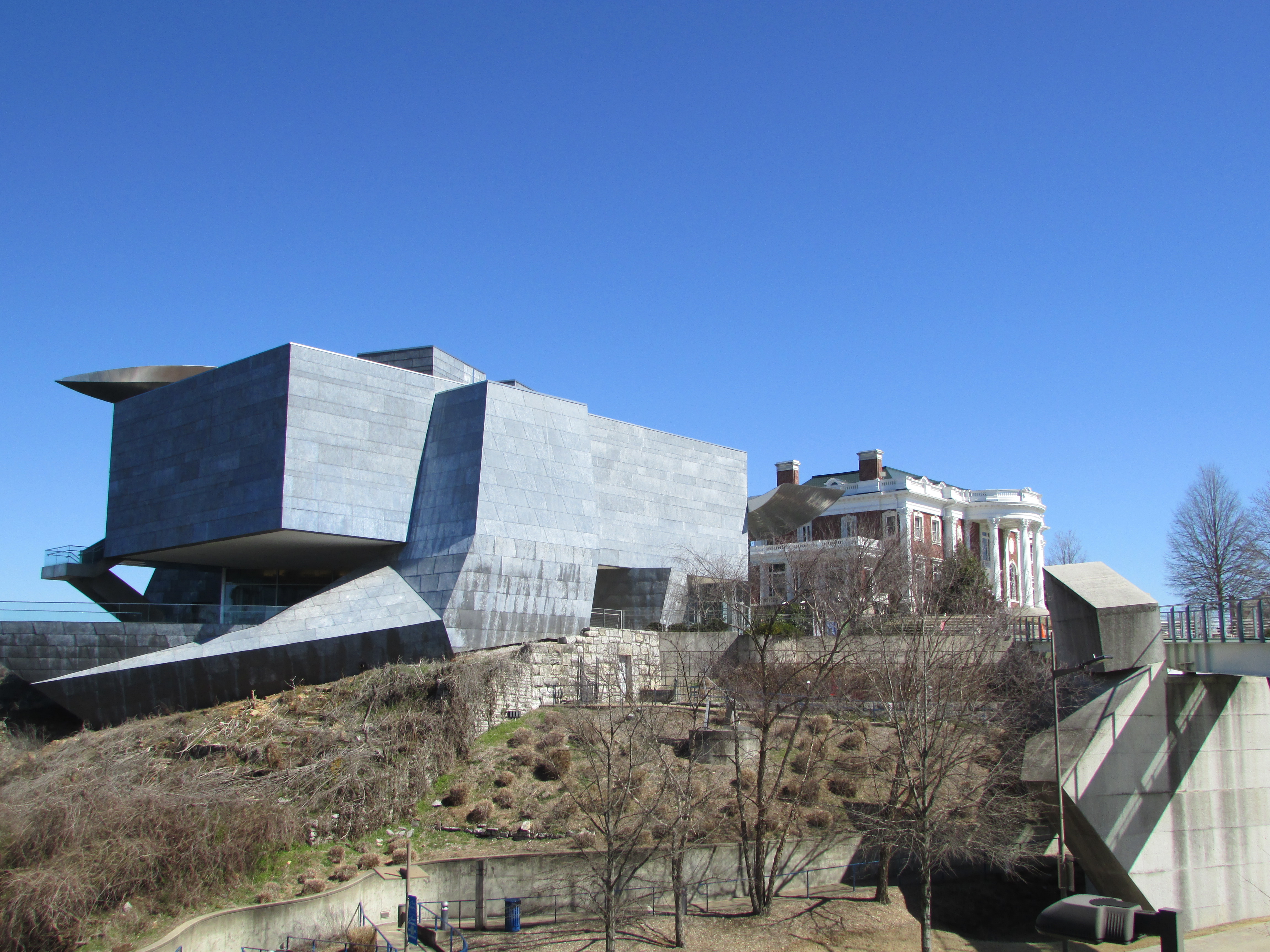
Before heading back to the hotel, I wandered down to the riverfront close to the aquarium and up a hill past the Hunter Museum to the Bluff View Art District (www.bluffviewartdistrict.com) with its River Gallery Sculpture Garden overlooking the Tennessee River. IMG_1206  After a rigorous convention and the ice and snow of this past February, it seemed like a good portent of Spring approaching and was a relaxing brief escape. Chattanooga’s City Center is compact and very walkable but there is also a good free shuttle that travels between the aquarium and the Choo-Choo, the town’s old train station that is now a hotel.

Over the years, it has become traditional for me to meet with a group of friends for a stress-free meal on Saturday night of the SETC convention. This is after the papers have been presented, the workshops presented and attended, the auditions are ended, and the booths are struck. Six of us decided to congregate at Porter’s Steakhouse (www.porterssteakhouse.com) on the street level of The Read House, the historic downtown hotel where I was staying. Sometimes a traditional steakhouse with good company is the perfect way to relax and this Porter’s fit the bill entirely. We enjoyed an exuberant meal, excellent and very patient service, and an evening full of anecdotes and laughter. I go back three decades with some of the people in my dining party and there is always plenty to talk about and to catch up and reminisce about. And there are always plenty of things to laugh about. IMG_1214

A perusal of websites shows a wide range of opinions about Porter’s at The Read House but this is my second time to end a Chattanooga SETC there and I was totally pleased. My steak was cooked perfectly and everybody in my group had good comments about their meals. When we were all full, a dessert cart was rolled up and we decided to order one of everything and share. The perfect way to cap the evening was when Russell, a member of our group, revealed that he had ordered a Brandy Alexander for everybody at the table. This is the sort of classic establishment where you know that a Brandy Alexander will be done correctly and ours were.

Whenever I leave an SETC convention, I am utterly exhausted and feel a need to sleep for a few days. It’s a nice thought but work always starts again bright and early on Monday morning. IMG_1199

Note on artworks pictured: The sculpture overlooking the river is “Icarus” by Russell Whiting in the River Gallery Sculpture Garden. The end photo is “Roll Wave” by Christopher Fennell, on the riverfront near the aquarium. The lead photograph is the Hunter Museum of American Art.

“Muscle Shoals”

IMG_0279    “You’re in rock ‘n’ roll heaven, man,” growls Keith Richards in an interview in Muscle Shoals, the documentary about the musical heritage of the Shoals area of northwest Alabama. The film focuses on the intertwined stories of Rick Hall’s FAME Studios and Muscle Shoals Sound Studio. It is a compelling story that needs to be told and director Greg “Freddy” Camalier tells it with brisk pacing and verve using music recorded in the area and ample interviews with the makers of the magic that came out of the place in a specific time in American musical history.

IMG_0708I was fortunate to see Muscle Shoals on August 24, 2013, at the Sidewalk Film Festival in Birmingham and have viewed it a couple of times since. My first screening at the Alabama Theatre was as part of a packed house in advance of the film’s official release on September 27, 2013. Even for a viewer familiar with the musical heritage of the Shoals, the movie is full of new information and insights by interview subjects including Gregg Allman, Bono, Clarence Carter, Jimmy Cliff, Aretha Franklin, Donna Godchaux, Mick Jagger, Alicia Keys, Keith Richards, Percy Sledge, Candi Staton, and Steve Winwood.

The powerful conceit running through the movie is that there is music in the magical waters of the Tennessee River around the Shoals. The Tennessee curves through Alabama from its northeast corner to its northwest corner, cutting a crescent in the northernmost part of the state. The Native Americans’ word for the river meant “the river that sings” and the four towns of Florence, Muscle Shoals, Sheffield, and Tuscumbia straddle the river in northwest Alabama in the area commonly referred to as “the Shoals.”

W.C. Handy, the “Father of the Blues,” and Sam Phillips, who discovered Elvis Presley and other legends, were both from the Shoals. The movie spends time at the Wichahpi Commemorative Stone Wall in Florence. Tom Hendrix built the mammoth serpentine wall as a memorial to his ancestor who was exiled to Oklahoma as part of the Trail of Tears and walked back to the Shoals to be near the “singing river.” The film even pulls Tuscumbia native Helen Keller into the mix, finding a connection with the fact that the deaf, blind, and mute child’s breakthrough word was “water.”

The film focuses on Rick Hall’s FAME Studios and “the Swampers.” “The Swampers” are the Muscle Shoals Rhythm Section who left FAME to open Muscle Shoals Sound Studio on Jackson Highway and who are primarily represented in the documentary by “Swampers” Roger Hawkins, David Hood, and Jimmy Johnson. Rick Hall’s biography alone includes enough tragedy to fuel any number of plaintive country ballads and his compelling and compulsive drive is the centerpiece of the film.

On occasion, Muscle Shoals may go a little overboard in its effort to tell a coherent story and the “singing river” idea might feel a bit stretched at times. Sometimes, liberal use of misleading stock footage is distracting. For example, when the documentary discusses the Shoals hospital where Percy Sledge worked before embarking on his musical career, the stock footage that is shown makes it look like a World War I-era European hospital.

Each time I watch the movie, I am confused as to which of Aretha Franklin’s hits were actually recorded in Muscle Shoals – the filmmakers are a little ambiguous there but a little research reveals that “I Never Loved a Man” was definitely recorded there (and the Muscle Shoals Rhythm Section was brought to New York to record other hits with her). Based on the way the documentary presents the story, one might think that Rick Hall wrote the schmaltzy Clarence Carter hit “Patches” (he didn’t; he produced Carter’s cover – and this documentary manages to make me respect “Patches” in a way I never had before).

Even so, it is the actual footage of Shoals sessions, the Rolling Stones, and other artists in the recording studio, and the director’s passion for the sounds that came out of the place that propel the movie and make it indispensable. Fans of the Maysles Brothers’ 1970 documentary Gimme Shelter about the Rolling Stones’ 1969 tour and the disastrous Altamont Free Concert that ended it will recognize much of the Stones’ Muscle Shoals footage from that earlier film. The Stones recorded “Brown Sugar” and “Wild Horses” in Muscle Shoals.

Ultimately, it’s the music that supports the story that makes Muscle Shoals such a treasure and I challenge any Baby Boomer or fan of twentieth century American popular music to sit through Muscle Shoals without finding at least a few favorite songs that were recorded in those studios. Percy Sledge recorded “When a Man Loves a Woman” there. Aretha Franklin, Bob Dylan, Paul Simon, The Staples, Boz Scaggs, Etta James, Wilson Pickett, Traffic, Bob Seger, Rod Stewart, the Osmonds, Cher, Lynyrd Skynyrd, Jimmy Cliff, … recorded there, and on and on; it makes your head explode that so much essential music came out of such a small town. The tradition currently continues with groups such as the Birmingham-based soul band St. Paul and the Broken Bones whose recent album Half the City was recorded in the Shoals.

For me, an added treat in the movie is interview footage with Donna Godchaux, a Shoals native who, with her late husband Keith, was a member of the Grateful Dead in the ‘70s (the Dead never recorded in Muscle Shoals as far as I know). Donna got her start as a session singer in the Shoals and she lives there now. I very briefly met her when I was working backstage at the Grateful Dead concert in Tuscaloosa on May 17, 1977 (I also met Jerry Garcia that day). It was an amazing concert but my most vivid memory of it is hanging out in front of the stage for a bit during the show with the Godchaux’s toddler, Zion. We were rolling a toy Texaco truck back and forth. Zion would be in his forties now and is part of the band BoomBox.
If you haven’t seen Muscle Shoals yet, check it out. I promise it will leave you smiling.