The Golden Promise of Spring

On a bright and chilly morning after a weekend of storms, the promise of Spring is murmured in little things. The flocks of migrating birds that filled the yards, the feeders, and the trees in the woods beyond for a few weeks seem to have moved on. A solitary male cardinal sits in the bare limbs of the Rose of Sharon. The hummingbird feeders will go up soon.

When I opened the blinds a few days ago, six blue jays were gathered on the grass, feeding peacefully amidst a couple of cardinals. I’ve never seen six bluejays together before. A covey of crows fussed from high in the pines and the smaller birds were busy on the edges. It was a peaceable kingdom until Lulu the chihuahua bounded out for her morning constitutional.

The foliage of lilies to come peeks out from the straw in the flower bed. Perhaps their blooms will coincide with this year’s late Easter. I thinned out the lilies after last year’s bloom but it appears they have multiplied again.

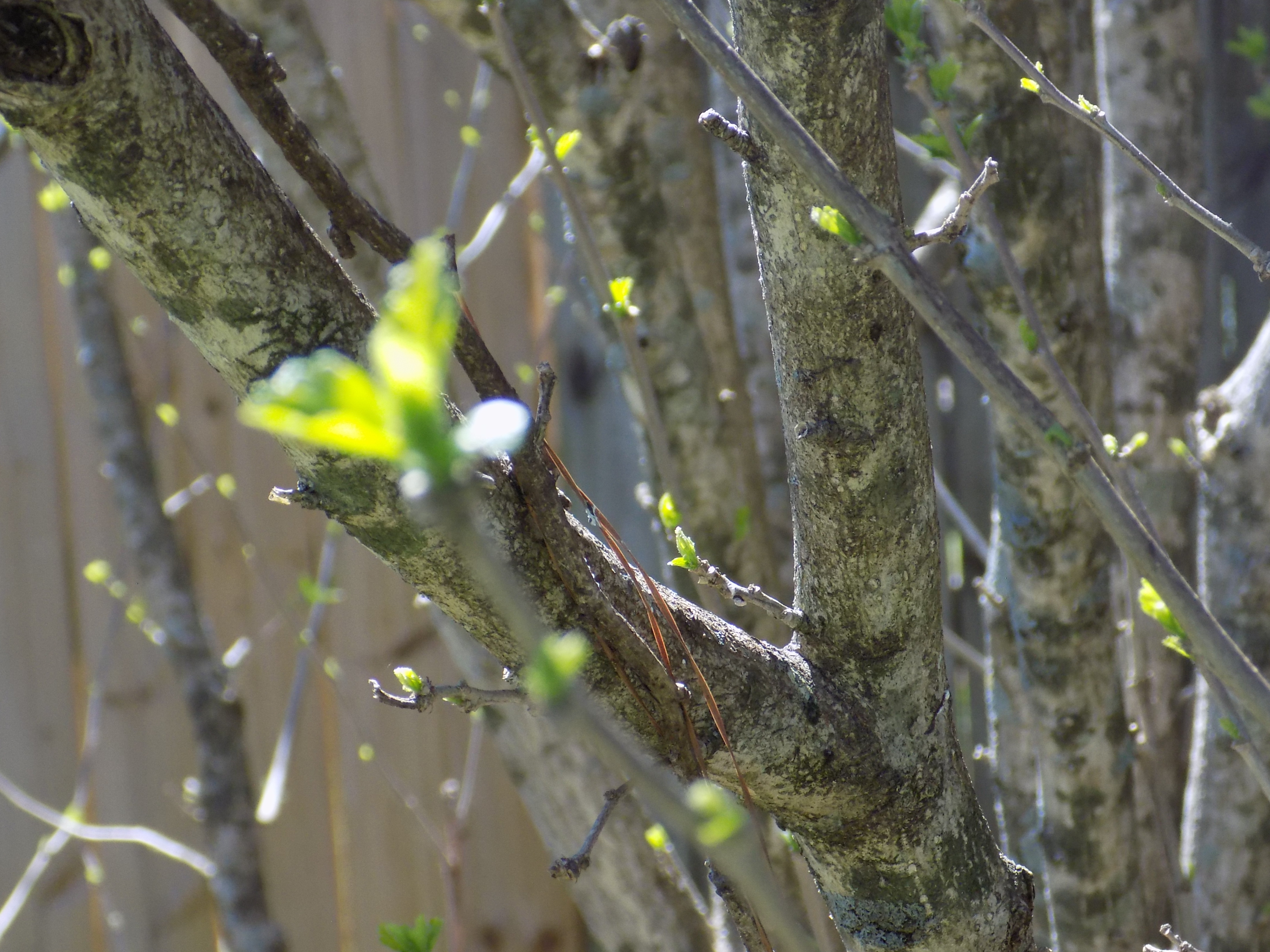
 A closer look at the Rose of Sharon yields the buds beginning to pop forth. The foliage down the mountain is slowly emerging, but the busy intersection at the foot of the mountain is still clearly visible through the trees. Soon, the thick foliage down the mountain will make the intersection vanish in a curtain of green.


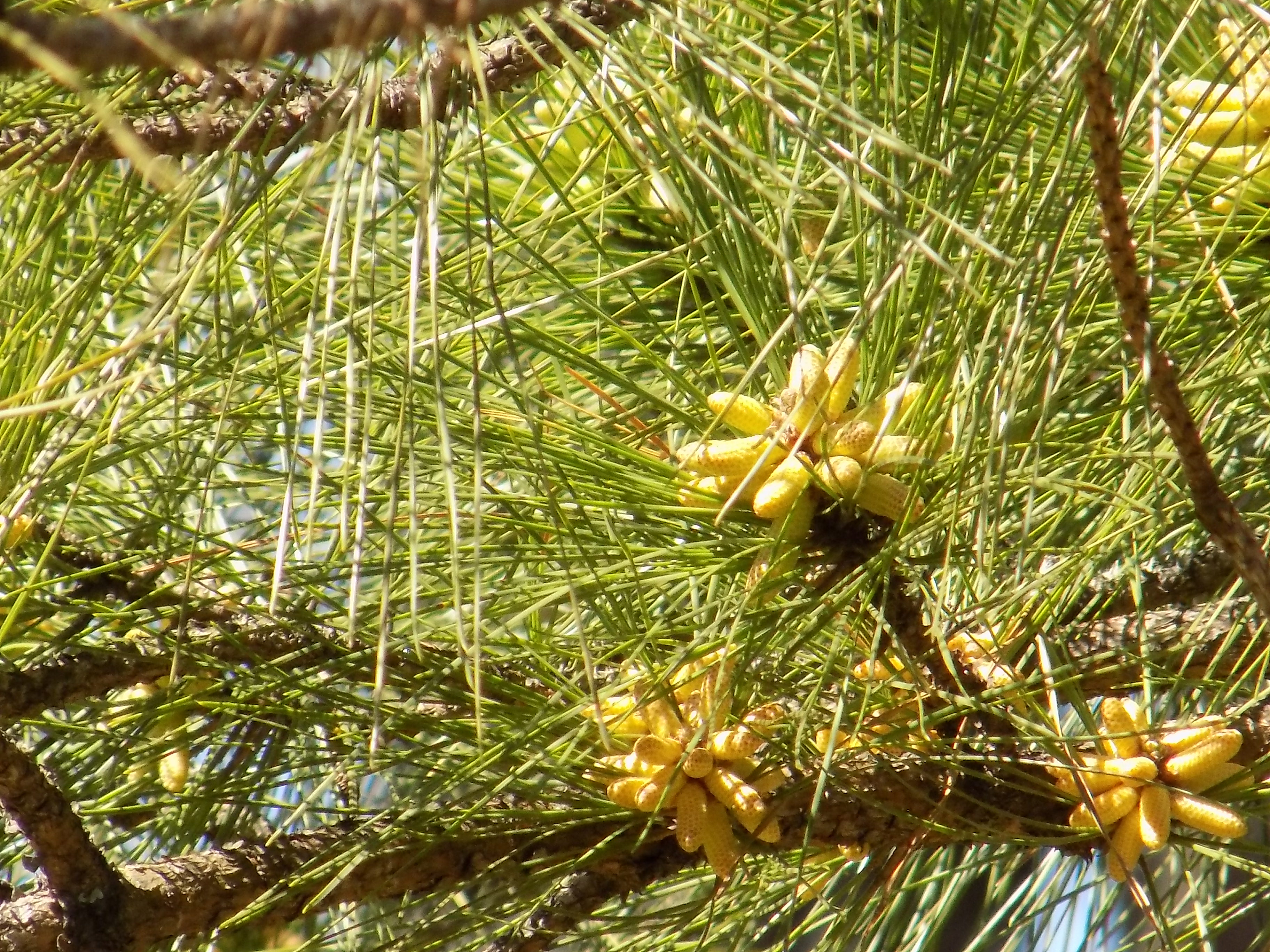
There is an appealing subtlety to Spring. It’s constantly sneaking up on us. One day the crocus bloom and just as quickly they’re gone in a couple of weeks. I have just noticed the blooms have popped out on the pine trees. A neighbor’s Carolina jasmine, pronounced dead after a hard late freeze a couple of years ago, is back and blooming more lushly than ever.

Finding the beauty and blatant symbolism in the heralds of Spring brings peace and tranquility and, always, a hope for better days to come.  

The Problem of the Hero — How to Watch

NOTE: In 2023, I posted this essay about a new movie about novelist Richard Wright, playwright Paul Green, and their collaboration with Orson Welles on a stage production of Native Son. I am reposting that essay and attaching exciting news about the streaming release.

The Problem of the Hero is a compelling historical drama about the clash between men of principle in 1941. The men are novelist Richard Wright and playwright Paul Green, liberal Southerners – one Black, one White.

The two writers have been collaborating on a stage adaptation of Wright’s landmark novel, Native Son, to be produced on Broadway, directed by Orson Welles. (Orson Welles directing Native Son might also be a source of contention today.) The film explores the conflict between Wright and Green about the final page of the stage adaptation. Green wants the final scene to offer a hope of redemption for Wright’s protagonist, Bigger Thomas; Wright does not. Green feels the need to cater to what will be a mostly White audience on Broadway; Wright has no intention of catering to anybody.

The film highlights the efforts of two men, each an advocate for civil rights, who view that advocacy from very different perspectives. At one point, Richard Wright (J. Mardrice Henderson) reminds Paul Green (David zum Brunnen) of the “difference between knowing and empathizing.” He asserts that Green has the luxury of choice – a luxury not available to Bigger Thomas and the downtrodden he represents. Green’s responses often echo the confusion that comes to those who try to do what is right, but don’t know how it might be received.

Although the movie is set in 1941, its pertinence rings strongly today in ongoing discussions of agency and who has the right to speak for, and represent, whom. It’s a discussion that applies to much more than writers; it’s a discussion now that is essentially changing the definition of what it means to be an actor.

Director Shaun Dozier masterfully presents The Problem of the Hero with cinematic finesse from a screenplay by James A. Hodge and Ian Finley, from Finley’s one-act play, “Native.” It’s a beautiful film to look at with cinematography by Steve Milligan and editing by Dozier. Most of the action takes place in and around New York’s St. James Theatre during final rehearsals for Green and Wright’s stage version of Native Son. That setting provides the background for creative presentation of the story as Green and Wright’s discussions take place backstage, in the auditorium, in dressing rooms, onstage, in rehearsals, during a light check. On a few occasions, the relative quiet of the film is broken by the bluster of Orson Welles (Charlie Cannon) who, true to form, sucks the air out of the room each time he enters the frame.

The Problem of the Hero features grown-up debates between formidable sparring partners about issues simmering for centuries, that have come to a more urgent forefront again within our own past decade. Eight decades after the events chronicled in this film, the conversations are as timely as they’ve ever been.

Wright and Green are articulate spokesmen for points of view that are heading generally in the same direction, but inevitably come to an impasse. Still, their discussion remains courteous, patient, and forthright. On those occasions when anger flares, it’s best to pay close attention. Canada Lee (Brandon Haynes), the actor playing Bigger Thomas in the play, comments to Green that he and Wright “fight like brothers.” Paul Green remarks that “not every friendship can survive the artistic process.”

This is intimate filmmaking. Green and Wright each have exceptional scenes with others. Green reveals his frustrations to Canada Lee in an unhurried cigarette break. Wright recounts a troubling childhood memory to actor Nell Harrison (Josephine Hall) during a dressing room visit. There is a pause when his story is over. Nell’s perfect response is a simple sigh, “oh.”

Mostly, however, the screen belongs to Green and Wright, in the beautifully paired casting of David zum Brunnen and  J. Mardrice Henderson. The conviction and level of their discourse is rare in films these days. Green is a patriot in the old-fashioned sense, with a firm belief that the country is headed in the right direction, despite its setbacks. You can see his pain when he realizes his friend and collaborator is an atheist, a communist. Wright has no delusions about the forces of racism in his native land – yearning to find freedom in Paris, even at a time when Nazis are occupying France. When Green scoffs at racist utterances, calling such things “nonsense,” Wright replies, “There’s danger in nonsense, Mr. Green. Enough people speak the same nonsense at the same time and it might as well be the truth.” Thinking of our current national situation, I found myself sighing oh.

The Problem of the Hero carries a subtle metaphor about a single candle being held in vigil outside a prison where an execution is taking place. A futile gesture, perhaps, but it is gradually joined by other candles in the darkness.

The Problem of the Hero is currently playing on the film festival circuit with distribution news forthcoming. The early reviews I have seen have been unanimously positive. I would encourage you to remember this title and seek out this film at your first opportunity.  Here’s the trailer:

(https://vimeo.com/786684025)

______________________________________________________

Now, here’s new information about how you can watch The Problem of the Hero:

EbzB Productions/WhyNot Theatricals remains deeply humbled by your support on this journey, and we hope it continues.  Our recent distribution deal with Buffalo8 is only the beginning. This film is a testament to the dedication of over 100 artists (most of them from North Carolina) who brought this story to life. Please help us to amplify its impact.

As The Problem of the Hero prepares for release on Apple TV and Amazon in the U.S. and North America, we’re thrilled to announce its availability in regions worldwide, spanning the Caribbean, Europe, Asia, and Africa. But we don’t want to stop there—we want this film to reach even more people, sparking conversations and broadening perspectives.

📢 Here’s how you can support:
✅ Preorder on Apple TV starting March 14, 2025.
✅ Share the news with friends, colleagues, and film lovers.
✅ Forward this email or repost on social media.

✅ Share the trailer:  https://www.youtube.com/watch?v=xPFbKbCWcWg

Your voice is powerful. Your support is invaluable. Thank you for being part of this journey!

Muscoda

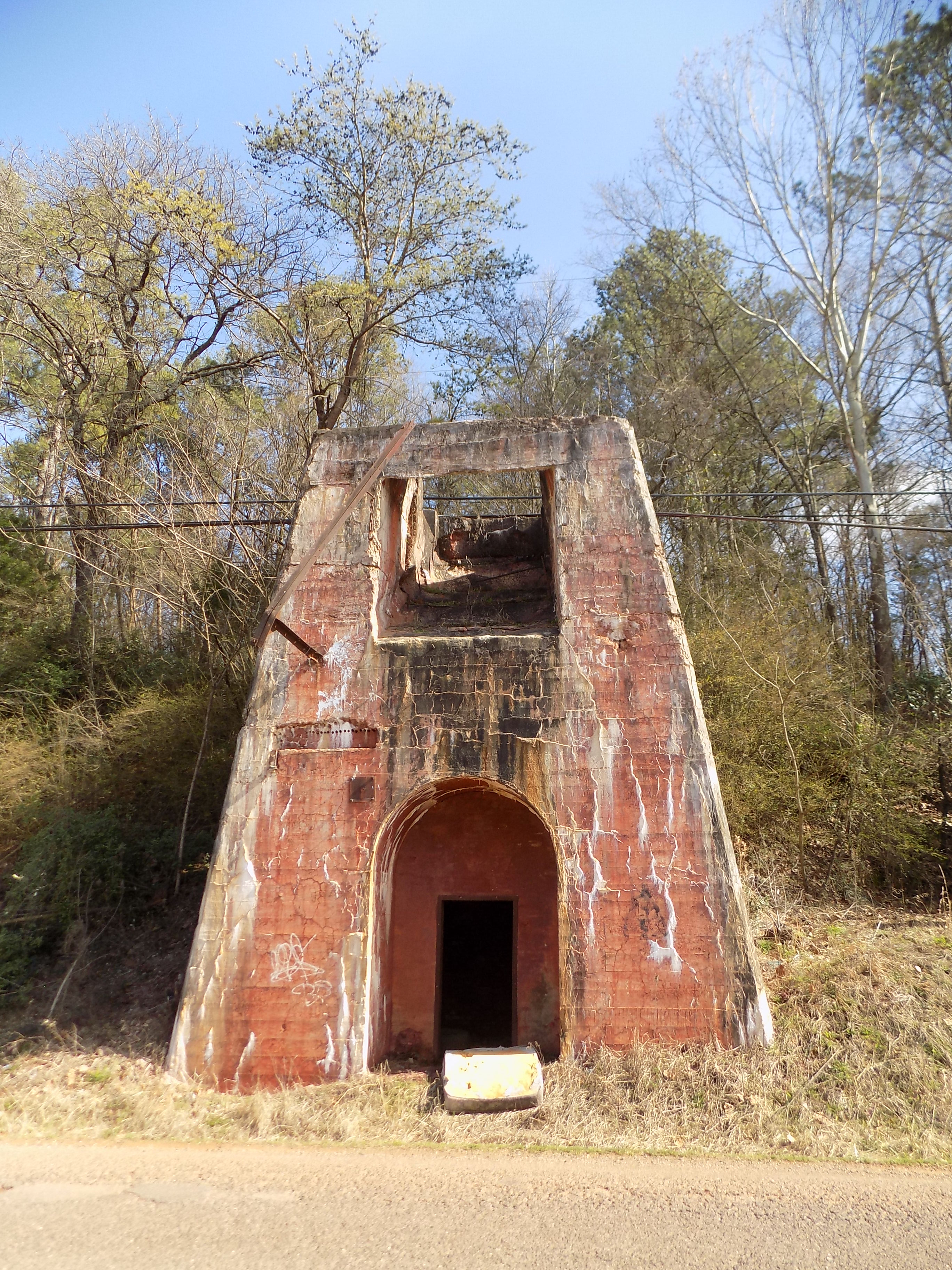
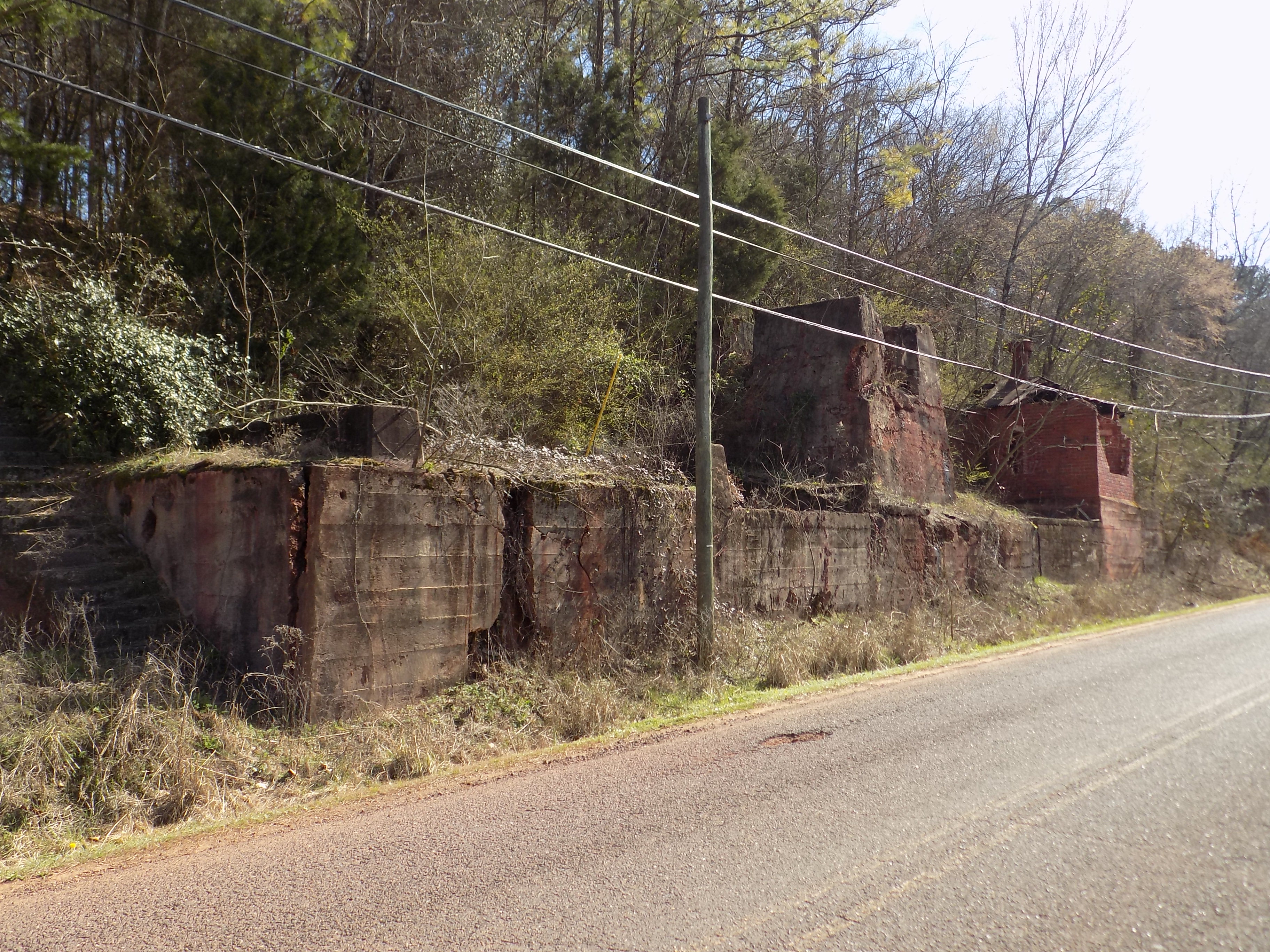
Taking a shortcut to a doctor’s appointment a while back, I absent-mindedly missed my turn. The trigger that cued me was the gaping and abandoned entrance to a mine structure which was sitting right there on the side of the road. I had never seen it before, realized I had just missed my turn, and vowed to come back and photograph the place when I had more time.

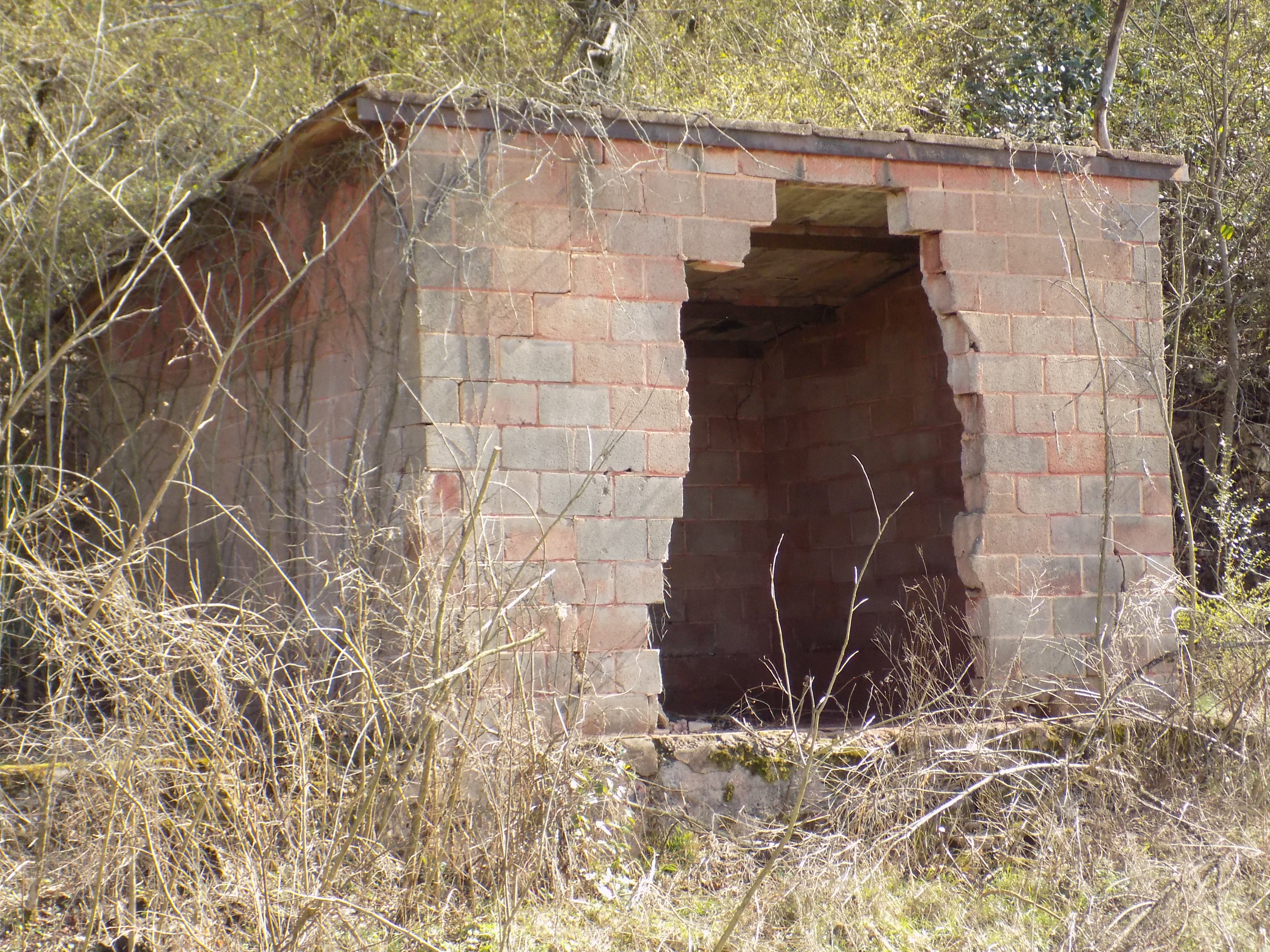
This new-to-me site was near a community of mining-cottage style houses that I had passed often, remnants of the Muscoda red ore mining operation. Back when the miners lived in company housing, communities would pop up of mostly uniform houses of vernacular design. In the Muscoda community of Bessemer, a few miles from Birmingham, these houses can still be found dotting the area. The particularly striking style that seems to predominate around certain parts of Bessemer is recognizable by its pyramidal roof topped by a chimney. These houses typically were four rooms with a living and kitchen area to one side, two bedrooms on the other side, and a central fireplace to heat the house. Some of the houses still standing appear to have been amended and expanded over time, bathrooms for sure have been added, but others seem to have remained essentially true to their original design. To me, they are elegant in their simplicity; the masonry of the mine structures is elegant decay.

These reminders of the Birmingham district’s industrial past are everywhere and I am always pleased when I discover ones I did not notice before. Remnants of mining railroads, steel factories, and coal mines dot the area; some might find them unsightly but they are vivid reminders of what ignited and sustained the area in the not-so-distant past. Many are vine covered, decaying, returning to the earth they came from. The hiking trails in sprawling Red Mountain Park, on land once owned by U.S. Steel, often go past abandoned mine entrances and structures related to local heavy industry. Such history amid lush nature is a powerful statement.

These places are as important to an understanding of the relatively short post-colonial history of this place as Greek and Roman antiquities are in Europe and ancient Native mound cities that can be found not that far away. Perhaps I romanticize a bit, but both of my grandfathers were factory workers in the Birmingham steel industry so it becomes personal to understand it better. I can remember when Birmingham made national headlines in the early 1970s for industrial pollution crises so there is undeniable advantage to the area’s shift to a “cleaner” economic base; the industry was damaging to the environment and the work was brutal and we must keep in mind the lives and value of the workers who did it and those who still do it every day. Birmingham’s dominant employer now is the UAB medical district, an ever-expanding entity that practices its own brand of tyranny. Such is American capitalism, I reckon.

My Muscoda discovery, along the waning ridges of Red Mountain, was a delight since I had not seen it mentioned in guides to industrial sites in the Birmingham area. In Oxmoor Valley, along Shades Creek at the foot of Shades Mountain, is the site of the Confederate-era Oxmoor furnaces, the first in Jefferson County. Unlike the Muscoda mines, no structures remain at that site – only a historic marker and a cemetery down the road.

I will continue to miss my turn and check on those Muscoda structures now and again. Like the Alabama-born photographer William Christenberry in his beloved Hale County, I will keep track of the progress of decay. Someday, probably after I am gone, only vines and brambles and crumbling brick shards will remain to mark what was.

Book Review: Leviathan by Robert McCammon

Robert McCammon, a true master of suspense, will be inducted into the Alabama Writers Hall of Fame in March 2025. His most recent novel, Leviathan, is the tenth and final book in the popular Matthew Corbett series. I recently reviewed it for Alabama Writers’ Forum:

Leviathan

Trying to Find the Humor

When American composer George Gershwin died at age 38, novelist John O’Hara wrote, “George Gershwin died on July 11, 1937, but I don’t have to believe it if I don’t want to.” A few days ago, I woke up with those words on my mind. To shamelessly borrow from O’Hara, Donald J. Trump was inaugurated on January 20, 2025, but I don’t have to believe it if I don’t want to.

Actually, unlike Trump in 2020, I acknowledge the results of the 2024 election, so his unlikely win (not a “mandate,” by the way) is shocking. And I’m shocked that those who voted for him appear to have forgotten the events around the January 6, 2021, insurrection. They are rewriting the history, but we watched it live. It seemed like something we could never forget. Obviously, many did.

There are so many despicable, egregious, and absurd things Trump has done in just a few days. He does and says things that would have been unthinkable and inexcusable not that long ago. In the world he is trying to create, the words “diversity, equity, and inclusion” have become objectionable to far too many people. His mental acuity and stability are clearly in a diminished state. And he never seemed that bright to begin with.

I try to remember Garrison Keillor’s suggestion that whenever Trump speaks we should imagine him in a sparkly red gown with dangly earrings. Try it; it helps – especially when he talks about renaming the Gulf of Mexico.

It’s hard to laugh, however, when he pardons almost 1500 of his fellow January 6 insurrectionists. Felons have to look out for each other, I reckon. It’s hard to laugh when the President of the United States uses Israeli hostages and their families as a backdrop prop at one of his Inauguration Day mob scenes as he calls the insurrectionists “hostages.” The January 6 cartoon character known as the “QAnon Shaman” announced that with this pardon he was “gonna buy some motha f—ing guns.” An Alabama insurrectionist, in a locally televised interview, expressed gratitude that his 2nd Amendment rights were being restored. The desire to buy weapons seems to be the priority of newly-pardoned insurrectionists.

Let’s think about that for a moment.

________________________________________________

It seems to me that the opposition to Trump and his MAGA movement decided to tone it down after he won the election, to give him the benefit of the doubt. We were too easy on him, too civil. He needs to be called out for what he is. American citizens need to be reminded, whether they want to hear it or not.

A lesser-known part of my biography is that I have an undergraduate degree in political science, with a concentration in political theory. I say that only to give credence to my belief that Trump has fascist tendencies. I won’t call him a fascist outright since he is not bright or well-read enough to have any specific political ideology. He goes where his whims and the promise of money blow him. But we must keep pointing out the crimes he committed and is being accused of, the crimes he fomented by his words and actions, and the disgrace he continues to bring on our country and its reputation. He is an international laughing stock.

I was very proud of what Rev. Budde said to Trump in support of her Christian faith at the prayer service at the National Cathedral this week. Trump doesn’t sit in a church pew very often, so I think it is incumbent on our spiritual leaders to preach humanity and humility to him when they get the rare chance. It won’t stick, but it’s worth the effort.

Whew. I needed to get that off my chest. I’ll keep trying to find the humor in the situation whenever I can.

Jimmy Carter’s Literary Legacy

As we continue to evaluate and honor the legacy of President Jimmy Carter, a new book of essays has been released that considers the many books Carter authored. The Literary Legacy of Jimmy Carter: Essays on the President’s Books is a comprehensive consideration of the dozens of books that Carter, who never used a ghostwriter, wrote — mostly in the years of his post-Presidency. I reviewed it for Alabama Writers’ Forum:

The Literary Legacy of Jimmy Carter


Fairhope + Point Clear: Part 2, Old Favorites

Hesitant to leave the tranquil environment of the French Quarter Chateau in downtown Fairhope, it was time to move on to the next stop – the Grand Hotel, a few miles down the bay in Point Clear. But there were a few hours to fill prior to check-in and I started at the Warehouse, an eatery I wasn’t aware of until Allison’s enthusiastic recommendation. It’s a big room, crowded and friendly, with a big menu, serving breakfast all day and lunch. I ordered a memorable shrimp and grits, with Conecuh sausage added, that I wanted to reorder as soon as I finished my first serving. It became a new “must-go” on my already crowded list of essential Eastern Shore dining rooms (Warehouse Bakery & Donuts).

Warehouse, Fairhope

There was an urge to stay and sample more of the Warehouse menus, but I had promised myself a drive around Baldwin County before returning to the already familiar Grand. Silverhill is a small town a few miles out of Fairhope; I have enjoyed the short drive to Silverhill past pecan orchards and farmland in the past and pegged it as a good place to start. When I arrived at the main intersection in Silverhill, a woman was standing on a park bench doing what looked like modern interpretive dance. Perhaps it was modern dance – or maybe it was a very Westernized and dramatic version of tai chi. Whatever it was, it was a momentary distraction on a slow chilly morning and the woman looked content.

Moving past Silverhill, I realized that I have not been to the southernmost point of Baldwin County at the Gulf of Mexico in about fourteen years and headed south through towns I have passed through and occasionally stopped at throughout my life. Crossing into Gulf Shores, I headed east toward Gulf State Park and parked near the beach. The deserted beach was a pleasant place for a brief, bracing walk.

After a drive past the dunes, trails, and waterways of the park, it was time to head back toward Fairhope and Point Clear. The back roads took me to Bon Secour, Magnolia Springs, and Weeks Bay – places I have lingered before and will linger again. Along the way, I saw a couple of satsuma trees so loaded with the fruit that the branches were sagging to the ground. It was a good reminder that I had not yet stopped for a bag of satsumas at my regular place, Harrison Farms on Highway 98 (not to be confused with Harrison Fruit Farm in Chilton County – my peach source).

As usual, the Harrisons had the truck parked on the highway with the big SATSUMAS NOW! sign and bags of fruit lining the truck bed. It is on the honor system so I picked my sack of fruit, put money in the box, and went on my way. Because of unusually warm temperatures, the outside was greener than usual, but the fruit inside was as orange, juicy, and tasty as always. Down the road, a stop at B&B Pecan Company and then it was on to the Grand.

As I get older, I am more and more a creature of ritual and tradition. In my first days in Fairhope, I intentionally steered clear of Point Clear where the Grand Hotel Spa and Resort is located. I did not want to spoil the moment of arrival at the Grand’s gates. Finally, satsumas and pecans in tow, it was time to check in. Normally, when I make my December trip to the Grand, it is very quiet. On this arrival, the place was packed as people took in the Christmas decorations on the grounds, the gingerbread village in the lobby, and all the things the Grand has to offer for the holidays. My peace and quiet came when I got to my preferred room (I have been staying in the same room for years) and caught the last color of the recent sunset off to the west from my balcony.

I dressed for a dinner reservation at Southern Roots, the Grand’s more formal dining room. When I got there, there was a course of Murder Point oysters calling my name. My preferences from a year ago had been noted by the attentive manager, Susan Margaretha; this is one of many reasons that I must stay at the Grand every December. When I ordered the grouper dish, the server explained that the sauce had changed from when I had the dish a year ago and that she suspected I would like the change; she was right.

After a sumptuous meal at Southern Roots and a walk through the lagoon gardens back to my room, I sat for a while on the balcony, read for a while in the room, and went to sleep early. This Mobile Bay trip had been designated for pure rest and relaxation. My balconies got a workout.

The next morning was my annual morning massage at the Grand spa with Claudia. She and I tried to figure out how many years this December ritual – a morning warm stone massage with Claudia – has been going on. We settled on fifteen years, at least. I look forward to it all year.

I usually linger in the spa’s Quiet Room after the massage, but this year I had an inspiration. After my eager consumption of Murder Points over the past few years – and singing their praises to anyone who might listen – I should go to the source since it was only about an hour away. So, I scuttled my plan for a quiet day of reading at the Grand, ate the West Indies Salad I had taken out from Southern Roots the night before (perfect lunch after a massage), set the GPS for Murder Point Oysters in Bayou La Batre, and headed across the causeway toward Mobile.

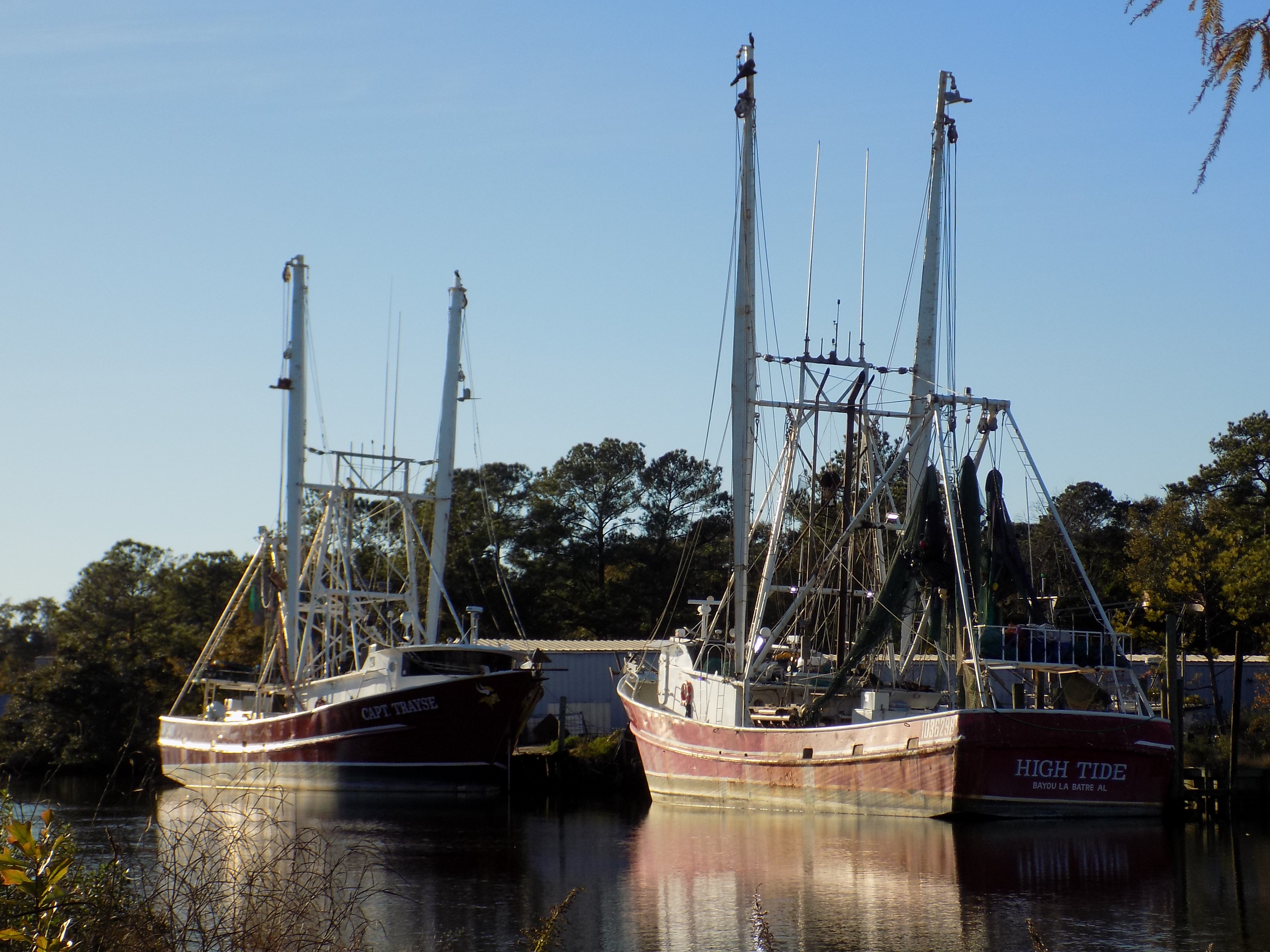
Over the years I have travelled through Bayou La Batre a couple of times; I have heard of it most of my life, mainly because of the annual Blessing of the Fleet every spring. As a traveler at the Grand reminded me, it was also the home of Bubba Gump Shrimp. When I reached the fishing village about an hour before sunset, the Murder Point Oysters shop was the target. Set just off the bayou, the store is full of oyster and seafood-themed products and you can buy oysters on the half-shell – even just a single one – for a fresh taste. Click this: Murder Point Oyster Company. Now, if that doesn’t inspire you to go out and eat a dozen oysters, I guess you’re not an oyster lover (not that there’s anything wrong with that).

I had hoped to go in search of those oyster beds. Whenever I am dining out at a seafood place, I request Murder Points. It is not just that they are an Alabama family-grown product, but they are quite simply the best-tasting oysters I have ever had – buttery and clean, with a nice pop of salt at the end. But it was getting late in the Bayou and time to head back to Point Clear. The oyster beds will still be there next time.

Bayou La Batre

Back at Point Clear and a mile down the road from the Grand, the Wash House has been a special place for a great dinner since I began this annual pilgrimage. I usually save it for the final night of the trip and have had memorable Wash House meals with friends many times over the years. There were no Murder Point oysters, but a silky she-crab soup was a delicious starter to a final dinner of this edition of my December respite.

Early enough the next morning – after a good sleep and coffee on the balcony, watching groundskeepers at the lagoon, guests heading over for breakfast, and children feeding ducks made it hard to leave. But leave I did, with festive thoughts of another restful getaway to the coast and ready to brave the busy highway north.

A refreshing trip to Mobile Bay. I highly recommend it – even, and maybe especially — in December. 

Fairhope + Point Clear: Part One, New Angles

My annual December respite to Mobile Bay got off to an amazing start as I stayed at a new place above downtown Fairhope’s French Quarter alley of quaint shops and a popular eatery. The French Quarter Chateau is a spacious one-bedroom apartment with a huge balcony overlooking the French Quarter and one of Fairhope’s main streets. The balcony wraps around two sides of the apartment and, due to Fairhope’s mild climate, is comfortable throughout the year. There are multiple places to sit outside and, depending on your selection, you can sit and watch the foot and motor traffic on Section Street or watch people come and go at the French Quarter or both from my favorite nook beside a trickling fountain amid wisteria vines.

The chateau became an instant special place; for me, it is made even more special by its location – in the middle of a bustling small town at Christmas time – and its peace and solitude. The host, Allison, has furnished and equipped the place to charming perfection and I am content just to stay there and read, or people watch, or occasionally doze off. You, too, can be content there: French Quarter Chateau in Lovely Downtown Fairhope – Apartments for Rent in Fairhope, Alabama, United States – Airbnb.

The location makes it possible to park the car and walk to whatever is needed. Greer’s, a local market, is just across the street; as soon as I arrived, I crossed the street for basics for the refrigerator before dashing down the street for a dinner reservation.

In the morning, after coffee in the apartment, I walk down the spiral staircase through lush greenery for more coffee and beignets at Panini Pete’s in the French Quarter courtyard, beside the fountain among the specialty shops. It was raining, but plastic enclosures shielded the outdoor tables from the soft December trickle.

“Marble,” one of the French Quarter cats, stood outside the kitchen door begging for treats. “Are you waiting for some turkey?” asked a server. “Let’s see what I can find.” Marble patiently took a seat at a nearby table and waited for the treats that another server soon sprinkled in a corner of the patio, eating quietly as other morning diners gathered and rain trailed down clear plastic. Finally, brushing the dusting of powdered sugar off my shirt and pants, I head back up to the apartment, stopping to give Miss Fancy, the dowager of the French Quarter cats, a rub on the head and chin (no stomach rubs, please). Do not mistake Fancy for homeless and take her back to Birmingham as some “well-meaning” tourists did not long ago (it made the news).

As the rain stopped, I headed back down the stairs and casually browsed some of the shops, picking up some Christmas presents along the way. My first stop in downtown Fairhope (after Greer’s) is usually Page and Palette, a bookstore and community gathering place since 1968, with a coffee shop, Latte Da, and Book Cellar bar attached. Just down De La Mare Avenue from Page and Palette is Happy Olive, a go-to place for specialty olive oils and vinegars. Other shops a block over along Fairhope Avenue yield other pleasures and gift ideas.

The pull of the chateau balcony is strong, however, and I spend the bulk of the afternoon out there – reading, finishing a book review, napping. I rouse myself long enough to go out for my first plate of raw oysters of the trip at Sunset Pointe. Of course, it’s Murder Point oysters from across the Bay near Bayou La Batre, a storied fishing village.

With the oyster urge satisfied for a while, it’s back to the apartment. It is my long-time habit to read Truman Capote’s “A Christmas Memory” sometime during the holiday season, usually somewhere near Alabama’s Eastern Shore. After running across a newspaper article about the filming of the 1966 television version of the short story, I decided to watch the television “special” – my first exposure to the story when I was a boy. It is a wondrous thing. Filmed in Alabama, starring Geraldine Page as “Sook,” directed by Frank Perry, and narrated by Capote himself – the very definition of “bittersweet.” You can watch the full film here: Truman Capote’s A Christmas Memory (1966 Emmy Winner) – DVD Color.

One of my favorite casual dining spots in downtown Fairhope was Dragonfly foodbar. I read earlier in the year that Dragonfly had left its downtown location for a spot farther south. Wandering around before the rains moved in on my last full day at the apartment, I happened to pass the old location and was pleased to see that it is now occupied by one of my favorite places up the highway in Daphne. Market by the Bay has just moved into the Dragonfly location and I was pleased to have the opportunity to have one of their unbeatable shrimp po’boys.

That night, I enjoyed dinner at Dragonfly with friends Allison and Richard. Doug Kerr’s creative menu, heavy on tacos and bowls, was as enticing as ever in the expansive and noisy new digs. By the time Allison and Richard dropped me off at the apartment, the rain was getting harder. The rest of the evening was spent on the balcony watching the rain. Distant lightning was visible from the Gulf. Sounds of people chattering and laughing as they left the Book Cellar and hopped puddles to their cars mixed with the sounds of the rain.

It was hard to leave the balcony and go to bed. But tomorrow is moving day and I need to pack and leave my downtown oasis for the bay views of the Grand Hotel down at Point Clear.