Hannah Durkin’s Survivors of the Clotilda is a recent entry in the many books about the Africans who are reputed to be the last enslaved people to be brought into U.S. waters. Through detailed research and first-hand narratives, Durkin brings life and distinct personalities to the kidnapped captives and their plight after leaving their homeland.
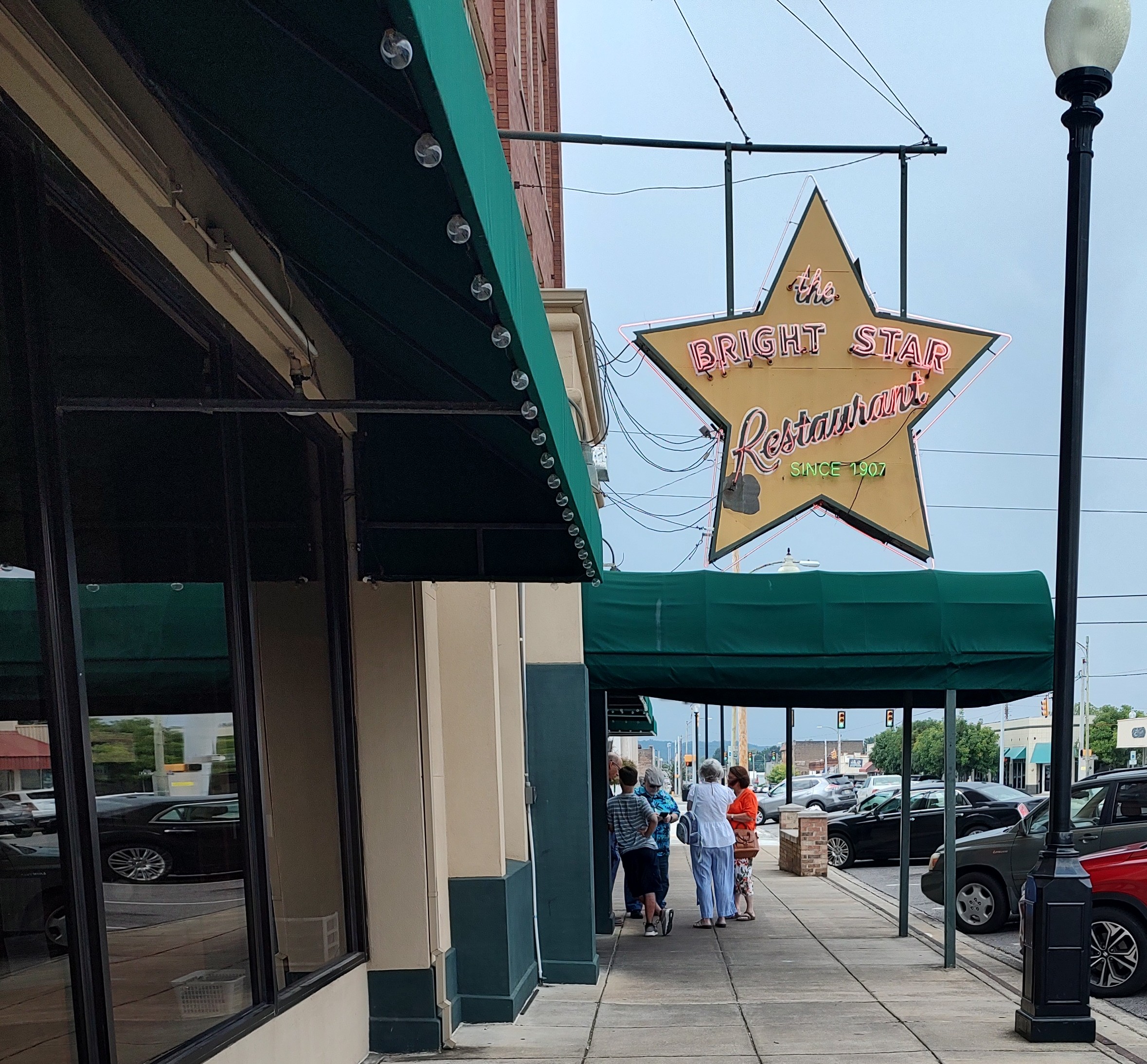
My mother shares a June birth date with her long-time friend Ruth in Tuscaloosa. In years past, when my parents were living in Tuscaloosa, Mom and Ruth would have a lunch to celebrate around birthday time. They renewed the tradition last year, with Ruth driving up from Tuscaloosa to meet Mother at Bessemer’s venerable Bright Star, a Birmingham-area institution since 1907 (History | Bright Star Restaurant (thebrightstar.com). They had to delay this year’s celebration, which was a landmark birthday for my mother, but they met at Bright Star not long ago.
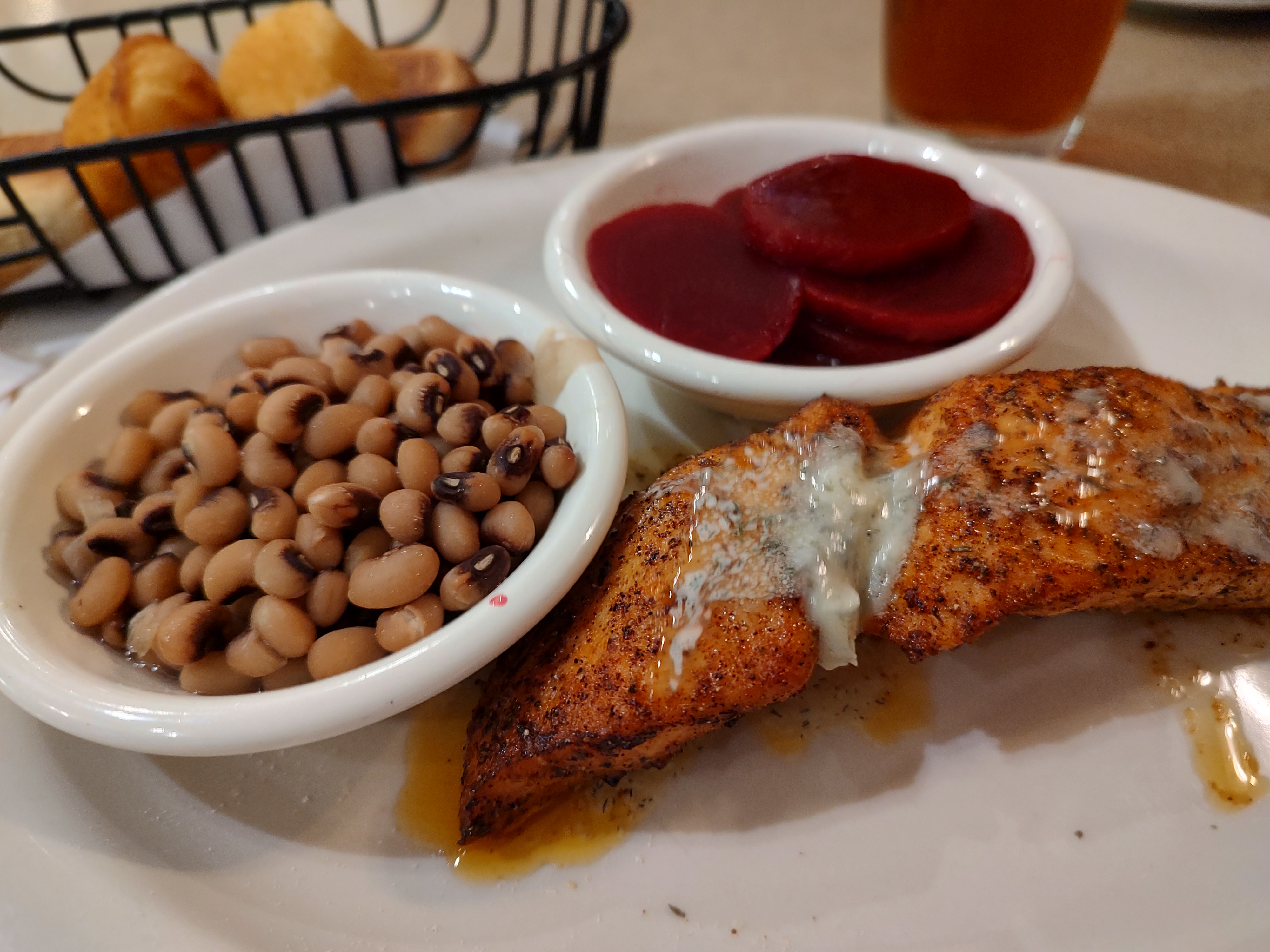
It is my habit to drive Mother to the luncheon, send her and Ruth to a booth in the main dining room, and take a table away from them to have lunch on my own. I am not always the best company for my mother, I think, and she and Ruth always have a fine old time. So I stay away and let them celebrate as long as they like. As I sat in a small booth, enjoying one of Bright Star’s specialty seafood dishes, I was once again moved by the history and tradition of the place. Bessemer is a small city about fifteen minutes from downtown Birmingham and, when most of the heavy industrial plants, including a Pullman railroad car plant, left town, a good chunk of the economy left with it.
Through it all, the Bright Star has stayed strong since opening as a 12-seat bar in 1907. It is now a sprawling restaurant in the heart of downtown Bessemer which serves as a meat-and-three by day and shifts to a more fine-dining oriented menu in the evening. The Bright Star is the kind of place one goes to for special occasions – a birthday, before a wedding, after a funeral, an anniversary. It runs a brisk business before or after Alabama football games. Coach Bear Bryant’s favorite booth is in the back, close to the kitchen, and Coach Nick Saban’s booth in the 1907 Room has been added to the seating options. A friend and I were having dinner there on a Sunday night in the ’80s when it seemed like every priest in the metro was passing our table on the way to a private room in the back. Jimmy Koikos, one of the owners, on one of his passes, said, “They come most Sundays.” Actor Sandra Bullock brought her dad, who had Alabama roots, there for Father’s Day one time.
Members of the same Greek-American family have owned the Bright Star since the beginning. It was honored with a James Beard American Classics Award in 2010. In my years going there it has mostly been run by brothers Jimmy and Nick Koikos. “Mr. Jimmy,” who greeted guests and is featured in many of the photos that line the lobby, passed away a few years ago and now the restaurant is owned by Nick, his niece manager Stacey Craig, and cousin Executive Chef Andreas Anastassakis. The Greek heritage is reflected on the menu, as are Southern staples. They serve great steaks but I usually have a Greek-style seafood entrée.
In the main dining room, landscape murals line the upper walls above the wainscotting. These were painted by itinerant German painters in 1915. I have never heard names for these painters but I have always wanted to know more about their story. For most of my life, the murals were glazed a deep golden brown. The restaurant did a restoration of the murals in the early-2000s and the transformation was startling. The brown tint was the result of decades of tobacco smoke in the earlier days before smoking restrictions were in force. The subtle shades of the restored murals cast a much lighter ambiance to the room.
__________________________
Sitting separately from my mom and Ruth, old friends with many stories to share, I would occasionally hear the pleasant sound of laughter from the back of the room. I have never been one for chitchat and don’t seem to have the ability to make my mother laugh that much, so it was good to hear her celebrating her birthday with someone who can always make her laugh.
My mother’s favorite Bright Star dessert is their decadent lemon icebox pie. I had two slices sent back to the table to top off an extended and celebratory lunch date. While they were visiting, a thunderstorm and windswept rain had come and gone and the city streets were glistening wet in sunlight when we emerged.
The two friends looked out at the wet street in surprise. “It rained?” they asked. The Bright Star had worked its magic one more time.
“The earnest and sometimes deadpan narrative voices Garrett Ashley so ably creates make the impossible plausible, and the bizarre becomes something to be blithely accepted … The collection is a spectacular debut.”
Sometimes I open a book without any idea what I am about to read. Garrett Ashley’s Periphylla, and Other Deep Ocean Attractions, a collection of short stories, was completely new to me. Here’s my review for Alabama Writers’ Forum:
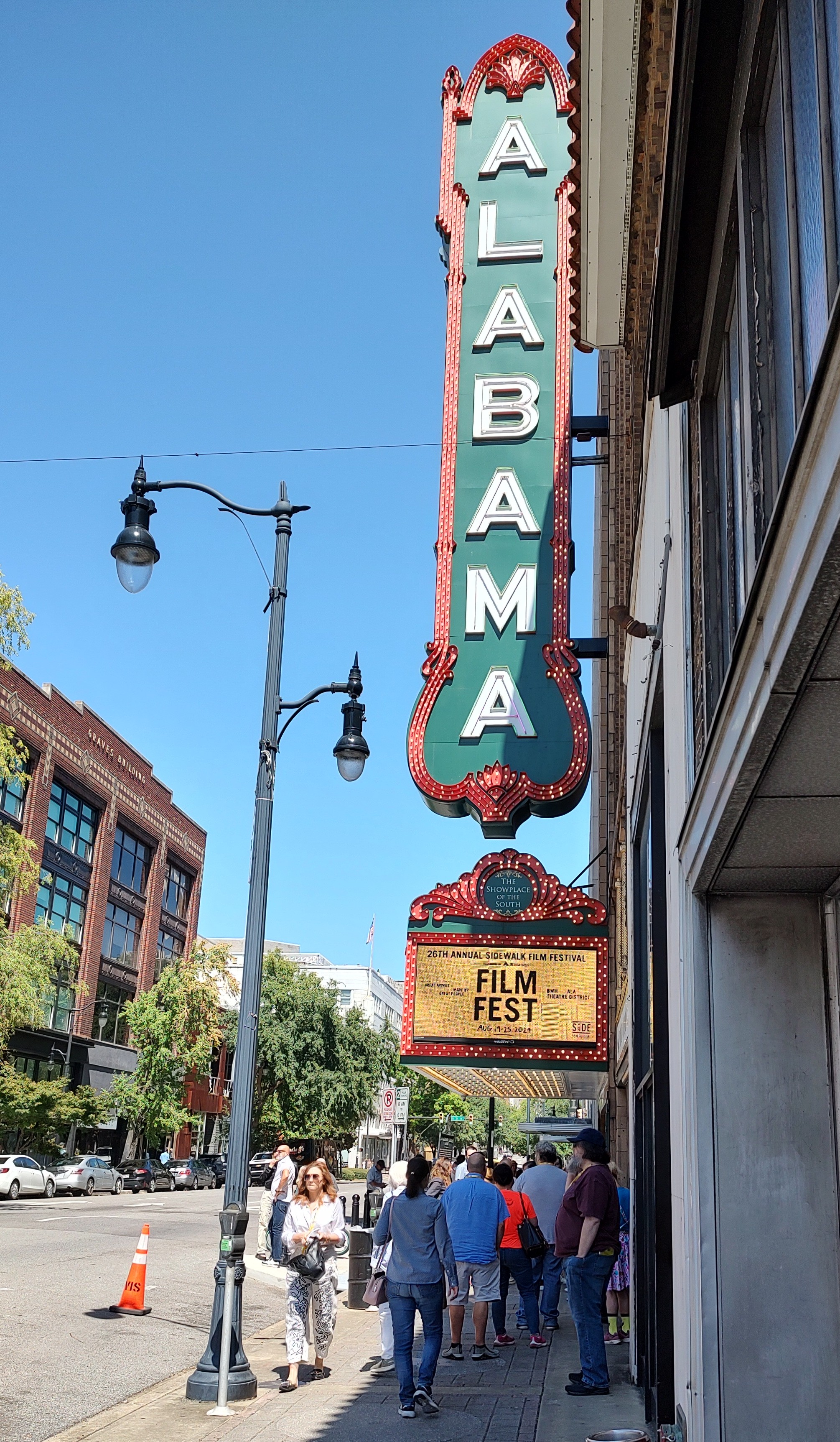
Each year, on the final August weekend before the start of college football season, Birmingham’s Sidewalk Film Festival fills the north side of downtown with screenings, workshops, panels, and events focused on what’s happening in the world of independent filmmaking. Sidewalk has garnered many designations from film media over the years, including nonspecific adjectives like “coolest” and “fabulous.” It was also, more specifically, designated as one of the “Great Film Festivals for First-Time MovieMakers.” I’ve been present for the majority of the twenty-six iterations of Sidewalk and am delighted and proud that it became what it has become. Sidewalk Film Center + Cinema, in the basement of the Pizitz building, houses two cinemas showing movies year-round in intimate state-of-the art theaters that have become my favorite places to catch a movie in the city. The Festival even went on in 2020, at the height of the pandemic, in a drive-in theatre format at an outlet mall just outside the city. “Cool,” right?
It is my habit to book a room at the Elyton Hotel, on the southern edge of the festival, at the proverbial “Heaviest Corner on Earth,” ditch the car, and walk and walk … and walk among ten downtown venues showing about 250 titles from morning to late-night. A filmmaker friend who showed his film at Sidewalk years ago quipped that “now I understand why they call it ‘Sidewalk’.”
The 26th Annual Sidewalk opened at the Alabama Theatre on Friday night with Exhibiting Forgiveness, the debut film by visual artist Titus Kaphar starring Alabama native Andre Holland.
Easing in to a full day of movie watching on Saturday, I decided to watch “Saturday Morning Cartoons” at the Sidewalk Cinemas where sugary cereals and milk, coffee, cold pizza, Bloody Marys, and mimosas were on hand. Cleansed by cartoons and breakfast food, I walked over to the next block to catch a live organ performance by Nathan Avakian at the Alabama Theatre, Birmingham’s 1927 vintage “Showplace of the South.” Avakian provided accompaniment for a classic Harold Lloyd short and several three-minute contemporary films from the International Youth Silent Film Festival (IYSFF), all of which were directed by talented youth between the ages of thirteen and twenty.
Refreshed and awake, it was time to dive into the real business of the day and start watching movies. I am not keeping up with cinema like I used to so my selections were based largely on instinct. I am relieved to say that my instincts were good. My first full-length screening, Family Portrait (2023) at Sidewalk Cinema, was my best choice, but more about that later.
At the Birmingham Museum of Art, Chaperone (2024), directed by Zoe Eisenberg, features a compelling, sometimes painful, performance by Mitzi Akaha as an almost-thirty slacker who, despite pressures to accept responsibility, is content in her life until she accidentally gets romantically involved with a much younger guy.
Rushing back down to the Lyric Theatre, the night was closed out with My Name Is Alfred Hitchcock (2022), a high-concept documentary caper by Mark Cousins. The film is narrated in a voice, purported to be Hitchcock’s, about the various elements of Hitch’s filmography. It’s an entertaining ruse and a relaxing opportunity to revisit snippets of Hitchcock’s films and reexamine his mastery of suspense.
Sunday morning was the time for Sleep (South Korea, 2024), directed by Jason Yu. Yu’s suspenseful film, about a young couple suddenly beset with sleepwalking that quickly becomes a nightmare, is a deftly handled debut by Yu with strong and affecting performances by Jung Yu-mi and Lee Sun-kyun as the besieged couple.
My Sunday schedule is often heavy with documentaries and Resynator, directed by Alison Tavel, explores Tavel’s search for information about a father she never knew. Her father, Don Tavel, invented a synthesizer in the 1970s. In discovering the history of the Resynator synthesizer, Alison also forges a connection with her father.
Turning to more locally-focused fare – which is a Sidewalk standard, A Symphony Celebration: The Blind Boys of Alabama with Dr. Henry Panion III (2024), directed by Michael Edwards and Henry Panion, played at the recently-renovated Carver Theatre. My fandom of the Blind Boys took hold in the ‘80s when I was fortunate enough to attend The Gospel at Colonus, Lee Breuer and Bob Telson’s brilliant stage adaptation of the ancient Greek play, Oedipus at Colonus by Sophocles. The production featured Morgan Freeman as the Messenger and the Blind Boys of Alabama, collectively, as Oedipus. A Symphony Celebration chronicles a Birmingham performance by the Blind Boys with full orchestra and chorus. A centerpiece of the performance is the Blind Boys’ signature rendition of “Amazing Grace” to the tune of “House of the Rising Sun,” a controversial choice that has become the Blind Boys’ most enduring hit.
The Almost Lost Story of Tuxedo Junction (2024), directed by Katie Rogers, is about a spot in the Ensley neighborhood of west Birmingham that is both mythologized and forgotten. My dad grew up on Avenue D in Ensley and I have known the humble building that stands at what was once a streetcar junction for as long as I can remember. Also, I cannot help tapping my toes whenever I hear the Erskine Hawkins-composed jazz standard, “Tuxedo Junction,” a piece inspired by that now-neglected place. It was heartening to see the large crowd that filled the Carver to watch the documentary; maybe more people remember than we realize.
_________________________________
Now, if I’m lucky, I will see at least one movie each year at Sidewalk that I won’t forget. Most of what I saw in this 2024 edition was of fine quality and merit. However, the film that I can’t stop pondering is Family Portrait (2023), directed by Lucy Kerr.
A large family is gathered at an idyllic riverside home on a warm summery day. It is the appointed day to take the annual family photo for the Christmas card before the gathered begin to disperse. The news of the mysterious death of a distant relative begins to spread through the house. The family matriarch, who meticulously plans the annual card, walks away and seems to disappear. As the rest of the family goes blithely through their carefree day, daughter Katy (Deragh Campbell) becomes increasingly anxious – to take the picture, to find her mother. The mood of this quiet film becomes increasingly frantic, desperate, foreboding.
Family Portrait is a beautiful film – beautiful cinematography by Lidia Nikonova, beautifully edited by Karlis Bergs, brilliant sound design by Nikolay Antonov and Andrew Siedenburg. In a dreamlike prologue, the family aimlessly gathers at the river and the camera follows first one and then another, moving carefully back and forth and among the family members. Santa Claus hats are being handed out on a bright warm day; a man is given a hat, places it on a passing child’s head, and, when the child discards it, the man reluctantly picks it up and walks toward the others as the camera glides to another point of interest. Sound begins to bleed in, subconsciously at first – faint childish chatter, adult banter, nature sounds … and then the opening titles appear.
Exposition is casual and dialogue overlaps. We learn that the family are Texan. Katy is not married to her Polish partner, Oleg (Chris Galust); he has been designated the photographer for the portrait since he’s not “family.” A relative’s iconic World War II photograph was appropriated for Vietnam War propaganda of some sort. There is a brief sequence in which Katy and Oleg read an excerpt from a Barbara Bush memoir they have pulled from a shelf (I recognized the book cover from my mother’s bookshelves). A couple of hired workers go about their business inside and outside the house. Something is amiss and the specter of Covid is clearly looming here, but has not yet become a conscious issue for the family. A lyrical underwater swim late in the movie raises many questions as Katy emerges, soaking wet, and walks back toward the house. A slice of life story becomes surreal, off-balance. It seems that nobody remembers that Katy and Oleg are late for a ride to the airport.
Movies like Family Portrait are the reason I go to film festivals.
Pete Candler’s A Deeper South is an intriguing deep dive into the American South — its history, legacy, attractions, and complexities. In his search, Candler also discovers things he never knew about his prominent Georgia family. It’s a wild read. Here’s my review for Alabama Writers’ Forum:
During the years that I have reviewed books for Alabama Writers’ Forum, I occasionally run across a mention of somebody I know, especially in those books with Alabama roots. I was recently asked to review Accidental Activist: Changing the World One Small Step at a Time (Livingston Press, 2024). Accidental Activist is the memoir by Alabama-born progressive activist Mary Allen Jolley, who passed away in 2023. Jolley, who worked for years in Washington, D.C., was instrumental in programs and legislation that were beneficial nationally and to Alabama.
Early in the memoir, Jolley mentions an early teaching position at Cold Springs School in Cullman County. My mother attended Cold Springs School and I realized she might have been a student there when Mary Allen was a teacher. I asked, “Do you happen to recall a teacher at Cold Springs named Mary Allen?”
Mother’s face brightened. “Mary Allen was one of my favorite teachers!” she responded and began to recount memories of Mary Allen and classmates at the time.
The Cold Springs experience is a very small part of Jolley’s memoir, but knowing that Mary Allen of Sumter County was known and remembered fondly by my mom gave the story and the life a more vivid resonance.
Whether or not you have a personal connection to Mary Allen Jolley, her story is an inspiring one, recounting a remarkable life. Here’s my review:
Harry Moore’s new poetry exhibits a contemporary social consciousness in a series of poems about history and conscience. Here’s the Alabama Writers’ Forum review.
When I started attending the University of Alabama in the mid-70s, Paul “Bear” Bryant’s Crimson Tide dynasty was at its peak. Family moves had meant that I attended six junior and senior high schools in three states and I was determined to stay at one university for the full four years and dive into everything college life had to offer. Everything, that is, except Greek life – it was the post-60s Seventies and Greek participation was at a historic low, even at Alabama. That was fine with me. In the summer before I started, I received a recruitment letter from the Interfraternity Council. I was a scrappy guy back then and took out a red pen, marked the grammar and spelling errors, and sent the letter back with a note to get back to me when they found somebody who could proofread their correspondence; I never heard back.
But I did go to the Supe Store, bought one of those crimson felt “A” hats, and attended every home football game in the days when half the home games were still played at Birmingham’s Legion Field and Tuscaloosa’s Denny Stadium held a mere 60,000.
Tuscaloosa was a great college town in those years. The Strip had not been gentrified and was lined with indie businesses – laundromats, book stores, barber shop, movie theater, clothes shops, head shops, deli, waterbed store, Sneaky Pete’s, Kwik Snak, Krystal, Morrison’s Cafeteria, and a Greek-oriented men’s clothing store (where I bought button-downs to be ironic). Legislation at that time did not allow bars within a certain distance of the campus, so there were none. When the law changed, the Strip began to change drastically.
I continued to follow Alabama football, but ditched the felt hat and immersed myself in all the other things a university has to offer. The music scene, readings, concerts, art shows, lectures, movies, plays – I enhanced my education through extracurricular activities.
Leon Redbone
The University Program Council at Alabama was a truly stand-out organization. It was student-run and was the most productive producer of a wide range of high-quality entertainment in the region with large concerts at the Coliseum, and smaller concerts, speakers, and events at venues including Morgan Hall, Foster Auditorium, the theater at Ferguson Center, and the Bama Theatre downtown. I hesitate to try to list acts that played on the campus because I will inevitably leave out something amazing.
Allman Brothers Band
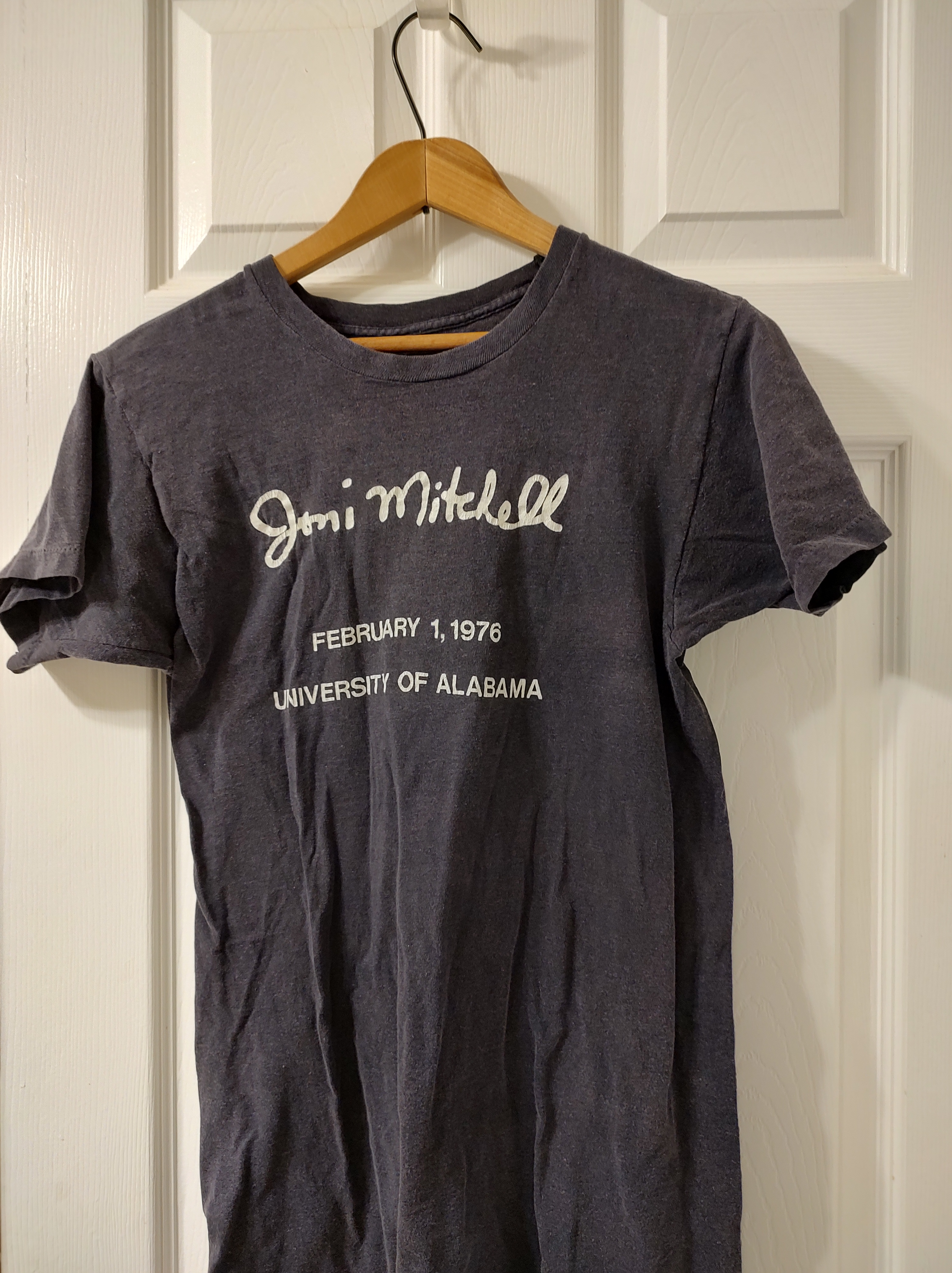
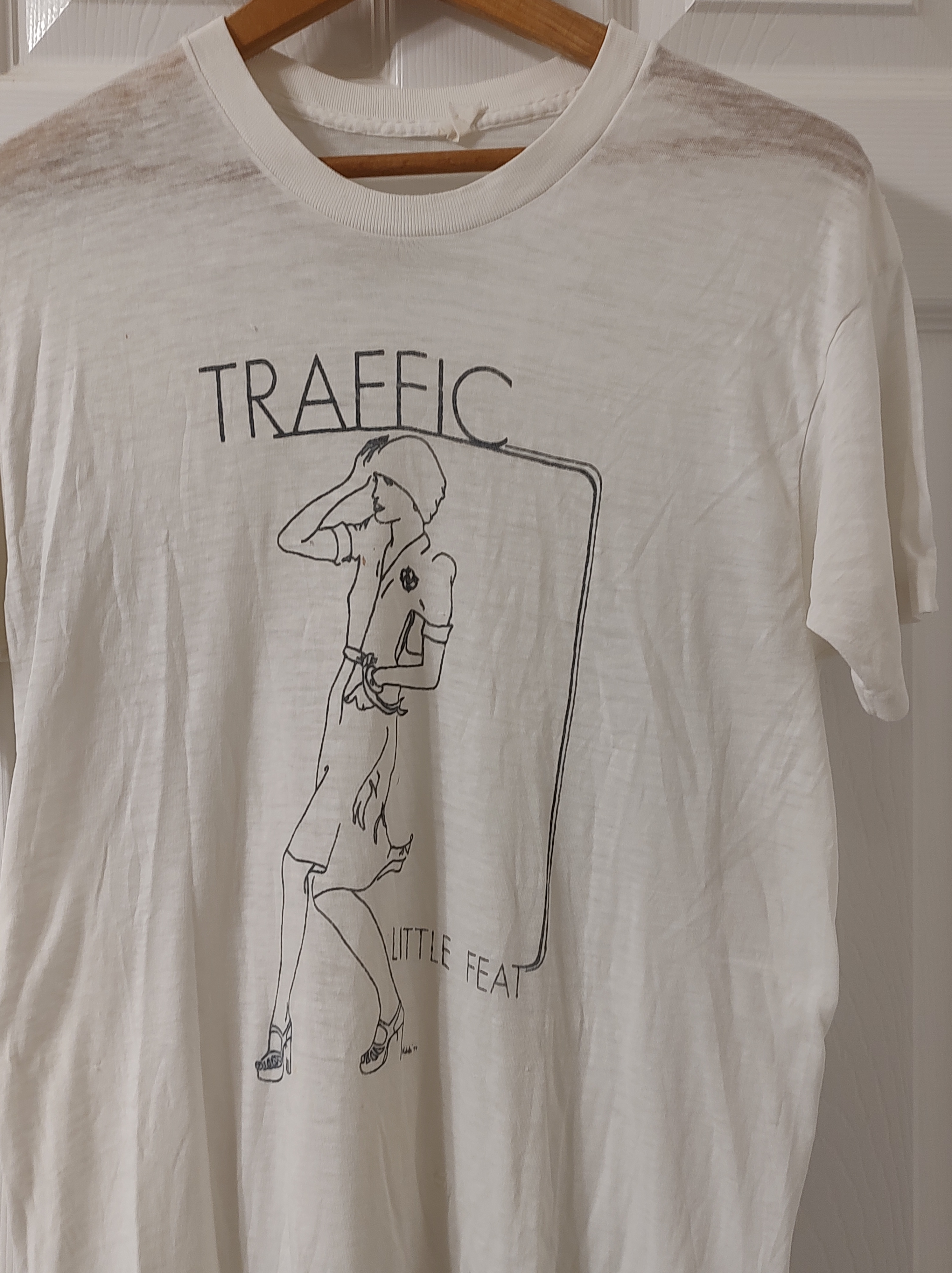
I soon became a UPC volunteer and began to get more responsibilities as I worked within the organization. I often worked “Security” and over time I began to get assigned to backstage “Artist Relations” duties. I have often remarked that it’s amazing what we’d do for a free tee-shirt back then, but we also had the opportunity to see a lot of the top acts and influential people of that era. I still have a few of those tee-shirts, wrinkled and way too small to wear. My favorite design, for Traffic / Little Feat, was worn so much that it has become see-through.
Here are a few memories:
At a drum solo during a Jethro Tull concert, Ian Anderson came and sat next to me backstage and tried to start a conversation. I admitted to him that I had a “splitting headache” and didn’t really feel like chatting.
When the Rolling Stones were in town, a friend was working at an ice cream shop. On the afternoon of the concert, a group of people came in and ordered ice cream. When they left, my friend asked, “Who was that blind guy?” It was Stevie Wonder, the Stone’s opening act.
The mother of one of the Commodores insisted that I eat with the family backstage after she declared me “too skinny.”
After supervising the removal of furniture from Robert Palmer’s dressing room after a concert (he had opened for Gary Wright), on my final check I found Palmer – fully dressed, soaking wet, still looking great – reclining in the shower. I apologized, saying that I wouldn’t have removed the furniture if I had realized he was still there. “It’s fine; I’m not using the furniture,” he replied.
Working backstage during a Lily Tomlin stand-up appearance, she invited me to come to her dressing room and eat with her. Apparently, people felt a need to feed me back then.
I picked up the phone at the UPC office before one of Elvis Presley’s several Tuscaloosa appearances to find Col. Tom Parker on the other end. He insisted that no women should be backstage because “women can’t control themselves in the presence of Elvis.” I assured him that the women of our backstage crew were totally professional and would contain themselves.
I worked the Ferguson Center box office for presales of Elvis tickets. Patrons were outraged that Elvis tickets were $20. It was outrageous then. Most UPC events had $2-3.00 student prices and general admission was usually around $5 at the time.
Buckingham Nicks, a band that had a large following in the Birmingham metro due to rigorous radio airplay, did two Morgan Hall concerts just days before Lindsey Buckingham and Stevie Nicks announced they were joining Fleetwood Mac.
Backstage before the Grateful Dead concert, their traveling chef fed me a bite and introduced me to Jerry Garcia. I’m missing a finger on my left hand and Garcia was missing a finger on his right hand. I thought a good conversation opener would be to say to Garcia that “We share a deformity.” It wasn’t.
During that same Grateful Dead concert, I somehow found myself rolling a toy truck back and forth in front of the stage with the toddler son of band members Keith and Donna Godchaux.
Muddy Waters opened for Eric Clapton. Need I say more?
At the Joni Mitchell concert – well, I’ve told that one too many times, probably. There’s another essay about my very brief encounter with Joni somewhere on this website.
Traffic / Little Feat
These memories are ignited by a new website launched by David Muscari and others who were involved in the University Program Council back in the ‘60s and ‘70s. I heard from David for the first time since college not long ago, asking for my input and support on a new website to chronicle the history of a unique and significant period in the history of the University of Alabama. While I was communicating with David, I also reconnected with Barry Bukstein, who was the brainchild behind UPC’s “Laughter under the Stars” series which gave me that opportunity to hang for a few minutes with Lily Tomlin.
UPC was a life-changing volunteer opportunity for so many people as well as a way to expose a large audience to diverse voices, world-class artists and entertainment, and cultural enrichment. The new website is a snapshot of an integral period of the University and the nation.
UPC logo
Whether you are an Alabama student or alum or have never set foot on the campus, the website is a great way to brush up on what was going on at a very specific time in our cultural history. It was a lot of work by a lot of people. And it was a lot of fun. It was key to my education and beyond. Check it out: https://www.upcalabama.com
The astonishing fiction of Brad Watson (1955-2020) is available in a new collection, There Is Happiness: New and Selected Stories, an enduring record of a fearless writer whose work should be treasured.
It was my pleasure to review There Is Happiness for Alabama Writers’ Forum. Read the full review here:
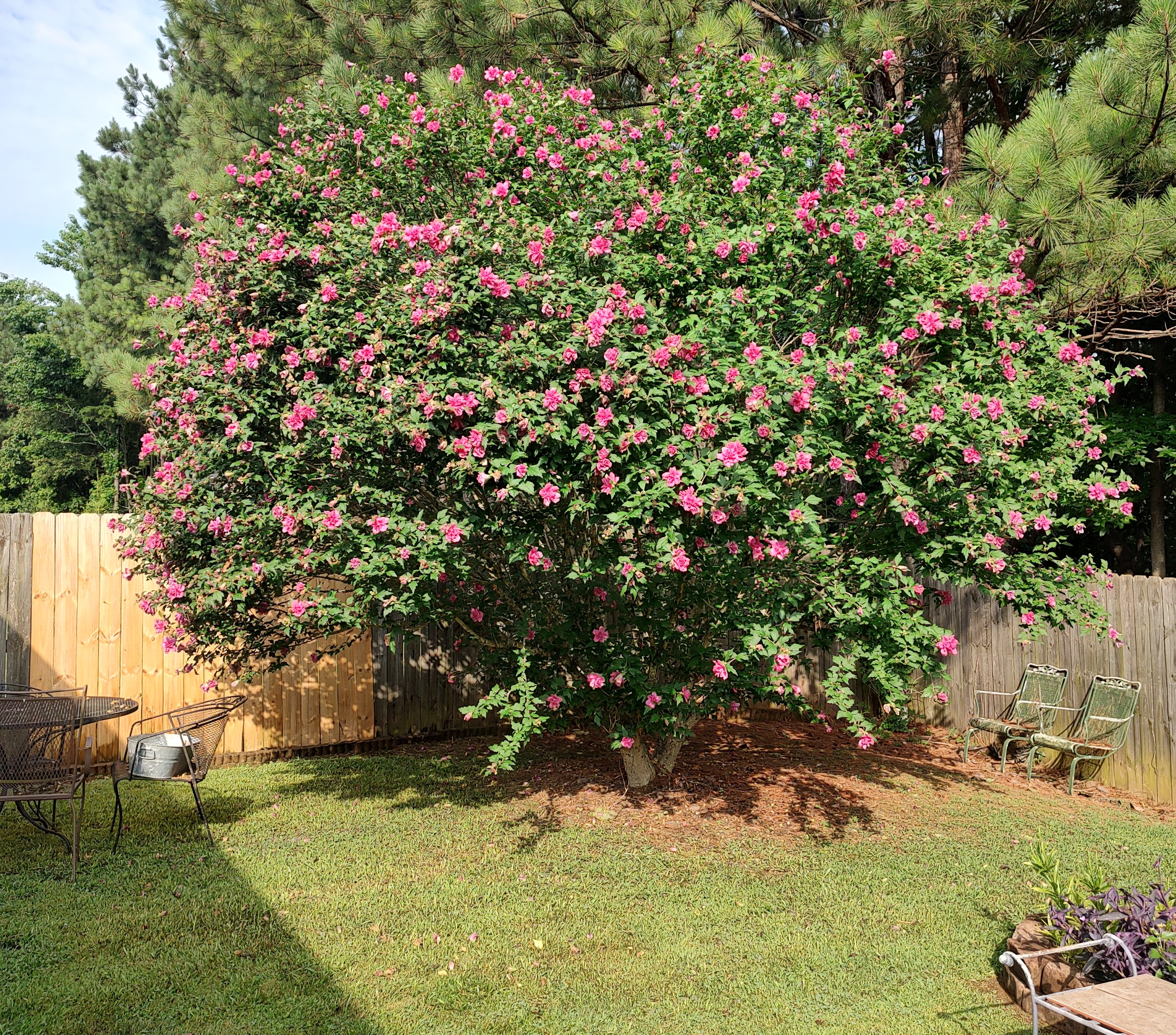
The Rose of Sharon in a corner of the backyard hums with the sounds of bees plying their trade among its fuchsia blooms. Walking out the back door, the sounds of birds and wind through the forest beyond cannot drown out the steady buzz of the bees at work; it sounds like the tree itself is humming its mantra. In addition to bees, the Rose of Sharon attracts butterflies and hummingbirds. On a recent damp morning, I caught sight of a cardinal chasing a hummingbird out of the middle of the tree, something I have never seen before; it left me to wonder what the cardinal has going on in the depths of the tree.
This tree was a gift to my mother from a woman who owns a nursery in Tuscaloosa. It was a stick, but she assured Mother that it would become a presence in the yard. I’ve had Roses of Sharon in my own yards that eventually perished of old age and strain, but this one seems bound for antiquity. That stick has become a towering tree spreading a generous shade across a large chunk of the yard.
As I stay at my mother’s house to assist her, I have tried to find time to take on her plantings and keep them fresh. After a refresh of the plants in a circular bed beneath a tall crape myrtle, the focus of my effort became a small sitting area outside the front door. It’s not a porch, not quite a stoop since it has no step up, but it is a pleasant place to sit on a dusky evening as the heat of the day begins to wane and neighbors begin to take their evening walks – mostly with a dog or toddlers in tow.
This year, red mandevilla frames the entrance, caladiums sit on stands, and a wall-hung planting of red and white begonias and creeping jenny frame my mom as she takes her evening break. Coral bells, a potted hydrangea, and a Katrina-rose from my house complete the setting.
June has been unusually hot – more like August heat – this year. I, who never complain about heat in the summer, have been surprised with the intensity of the heat and, even though I enjoy hot weather, the specter of climate change is undeniable. Warnings of a “flash drought” are in our local weather forecast and I attempt to be prudent with watering, but I also want to keep the plants alive; lately, if a day goes by without rain or a watering, even the hardier native plants begin to droop.
The most recent “first world problem” on this street is a plant thief who stalked the neighborhood and everybody knows who she is. When people first began to report stolen plants, the first suspect was a neighbor who has been known to wander too far into people’s yards with a flashlight in the wee hours of the morning and even browse through other people’s trash and recyclables on occasion. There were guarded sidewalk chats and everyone seemed to jump to the same conclusion. A blurry video from a doorbell camera showed a woman of similar stature and style of dress, shopping plants with a flashlight, and stealing a plant from a front porch. We thought the culprit had been identified.
But then, another neighbor crossed the street to share video from his security camera. This was very clear video and showed a different woman, also from the neighborhood, wandering onto his front porch, wielding a flashlight, and picking up and walking off with a specimen tree in a pot. The video was time stamped about 4:30 a.m. Soon after, still another neighbor showed another clear video of that very same woman about thirty minutes later, still trolling. That “obvious” first suspect was, it seemed, exonerated.
No plants were missing from my mother’s property, but on the night in question I woke up to see a flashlight in the front of the house in the middle of the night. I turned on a light, the flashlight went away, I assumed it was the woman we first suspected on her nightly rounds, turned over, and went back to sleep.
After the plant thief was identified to everybody’s satisfaction, it became a habit to slow down when passing her house to see what was up with the pilfered plants. A variety of plants in pots and in the ground were there; they were of all varieties with no obvious pattern or connection in how they were displayed and planted. There seemed to be one of everything, which makes sense considering how they were apparently acquired.
This is a quiet, safe, and serene neighborhood with little fodder for scandal and gossip, so tongues were wagging. “If she wanted a plant, why couldn’t she ring a doorbell at a decent hour and ask for a cutting?” went one observation. “Heck,” said another, “if she had asked, I might have just given her the whole pot.”
Others suggested more passive-aggressive approaches: “I think we should all take a potted plant to her driveway and just leave it there.” Another suggested that the HOA should give her the neighborhood’s “Beautification Award” as a way of saying We know what you did.
In a place where practically every resident has some kind of security surveillance, why would this person, who lives in the neighborhood, go barefaced to front doors and brazenly pick up and walk off with property? That house will be known as “the plant thief’s house” for a long time.
________________________________________________
Oh well. The neighborhood gossip cycle has moved on and the plant thefts are no longer a topic of conversation. The evenings are hot and steamy, but a breeze provides a bit of relief and dogs are walked, babies are strolled, and neighbors catch up with each other’s travel. A beach boy/surfer type, a friendly fellow fairly new to the neighborhood, strolls by shirtless with a George Hamilton tan and we worry about his health due to over-exposure to the sun. “I guess he hasn’t heard that that’s bad for you,” is one comment.
Water hoses come out to refresh the scalded plants in moderation and we discuss whose crape myrtle is in full flower and whose is taking its sweet time this year, wondering what level of blame can go to climate change. Even the ever-loyal vincas are looking a little drained.
We worry about the election but have to be careful what we say, and to whom, since we realize that many in the neighborhood may not share our views about the convicted felon and his cult (although my usually apolitical mother has taken the passionate stance that she must try to help people see the light and frets that the felon’s unfitness ought to be obvious to anybody “with a lick of sense”).
The summer moves on, and much too quickly, as we monitor the plant pilcher’s yard – which seems to evolve daily; there have been no further reports of missing plants so that yard has become merely a blasé point of passing interest.
The bees labor on, unfettered by any drama that surrounds them. A wary wasp sidles down the inside of a small water fountain to get a drink and is startled when the fountain suddenly spurts. It’s those little things that make the summer special.









 Professional Southerner