Tag Archives: Alabama

Dr. Wilson and the Ants

The University of Alabama, my alma mater, brands itself as “Where Legends Are Made.” I think it’s a good brand, although I am wary of the fact that all institutions of higher education nowadays seem to be more about the branding than about their academic distinction. Even so, I think that one of our university’s truest legends is author / biologist / ecologist / naturalist Edward O. Wilson.

Wilson, a native of Birmingham, grew up around Washington, D.C., and Alabama’s Gulf Coast, has the distinction of being considered the world’s foremost expert in myrmecology – the study of ants, and is frequently called the primary Darwinist of our time. Retired now, but still active, he received his B.S. and M.S. degrees in biology at the University of Alabama and his Ph.D. at Harvard, where he spent most of his professional teaching career. He has been regularly ranked as one of the most important scientists in history.

So, Roll Tide.

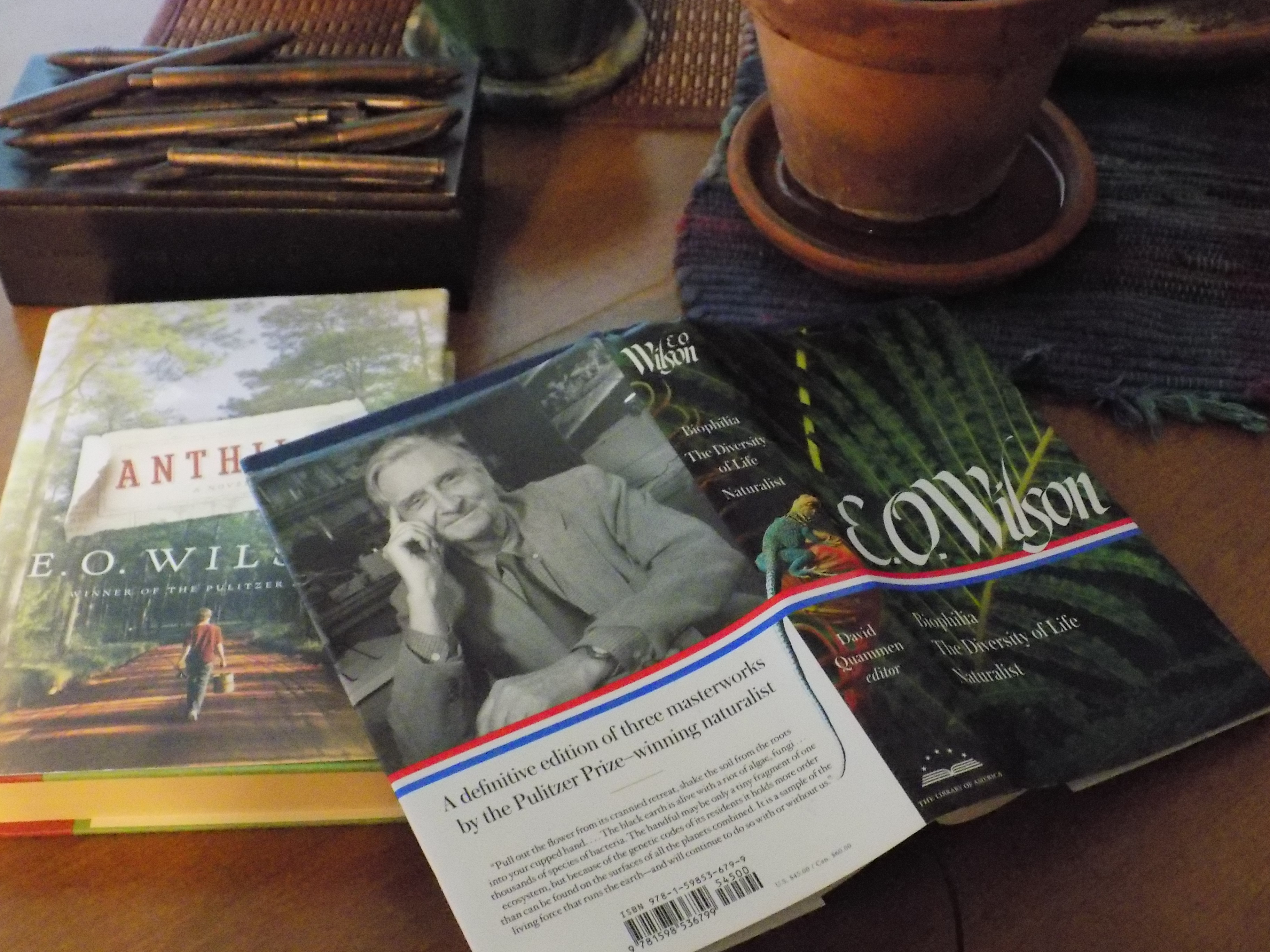
One of the few benefits of Pandemic isolation was the opportunity to read more widely, including a more in-depth exploration of Wilson’s award-winning writing. My most recent reading of Wilson was motivated by The Library of America’s Spring 2021 publication of three of his most acclaimed books in a single volume. Included are Biophilia (1984), The Diversity of Life (1992), and Wilson’s autobiography, Naturalist (1994).

In The Library of America compilation, Biophilia is a brief and user-friendly examination of the interdependence and connectedness of human beings and nature. Wilson, a dyed-in-the-wool scientist, has the vision of a poet and his ability to translate his scientific passion to accessible terms for those, like me, who are essentially non-scientific, is an impressive one. After reading Wilson, you will never look at an ant bed the same again. For that matter, you shouldn’t be able to take nature for granted again.

The text of The Diversity of Life is a little more textbook-y at times. The first part of that carefully researched book details the history of evolution. Wilson addresses the five previous periods of extinction on the planet and the millions of years it took for the Earth to repair itself after each. He convincingly asserts that we are now in the midst of the sixth great extinction, caused by human activity, and that there may be no recovery from this one unless we act quickly and with purpose. Wilson is pragmatic in his approach, presenting options for human progress while working with nature rather than against it. The fact that The Diversity of Life was written almost thirty years ago makes it even more compelling, given Wilson’s prescient observations.

I’ll admit that parts of The Diversity of Life were a slog for me and I found myself putting the book down to take a breather for a few days on a few occasions. I was not bored – just overwhelmed by the amount of information. So, it was a pleasure when I moved on to Naturalist, Wilson’s very entertaining autobiography. It is a compulsively readable book that explains the passion the scientist brings to his more scholarly texts. His writing is candid and his detailed description of the flora and fauna of the everyday as well as the exotic are breathtaking.


Finishing Naturalist, I was eager to move on to Wilson’s one novel, Anthill (2010). It is clear, having read the autobiography, that Anthill has many autobiographical elements as it tells the story of Raphael Semmes (Raff) Cody, who grows up in south Alabama and becomes obsessed with a parcel of wild forest near his fictional hometown, Clayville, in Nokobee County. We follow Raff’s childhood explorations and his growing fascination with the ant colonies of the Nokobee forest.

As enticing as the coming-of-age story of Raff may be, the novel becomes singular in its appeal and uniquely E.O. Wilson in its mastery and finesse with “The Anthill Chronicles,” the novel’s centerpiece. The “Chronicles” comprises nine chapters and seventy-one pages. It is a memorable and impactful rendition of the life and death of woodland ant colonies from the perspective of the ants. Margaret Atwood calls it the “Iliad of the ants.” “The Anthill Chronicles” cunningly provides keen science-based parallels into the challenges and evolution of the human species. The action of the battle scenes, when rival ant colonies vie for dominance, are as action-packed and suspenseful as any war story you might have read. It’s hard not to be moved by the death of a colony’s queen and the methodically efficient way in which the duty-bound ants handle the aftermath of that colonial tragedy. I am still surprised at how invested I became in dozens of pages of the lifestyles of the ants. Wilson doesn’t give his ants the human traits that a Disney version might; his ants view the humans who come into their territory as “moving trees.” Wilson’s ants are guided by instinct and genetics.

As the “Chronicles” conclude, the reader is back into Raff’s story as he finishes an undergraduate degree at Florida State and heads to Harvard law school. By this time, Raff has a clear path in mind for his goals to use his law degree to advocate for conservation causes. He makes the conscious but unexpected decision to go into practice with a Mobile development company which does not have a good record on environmental issues. We find a direct correlation between the fate of the ant colonies of the “Chronicles” and the story of the developers.

Wilson masterfully uses his fiction to illuminate his naturalist concerns; the book is rife with twists and turns, colorful and disturbing characters. Raff’s environmental activism attracts the attention of a fundamentalist, violent, and anti-conservation religious sect, leading to an unexpected, violent, and thrilling climax. Wilson’s choice of narrative style, shifting effortlessly from an omniscient narrator to the first-person observations of one of Raff’s ecology professors at Florida State, raises intriguing questions about Raff’s destiny at the book’s closing.

E.O. Wilson is a writer who should appeal to the casual reader as well as the environmentally-committed. He’s a “good read,” as we say.

Homecoming

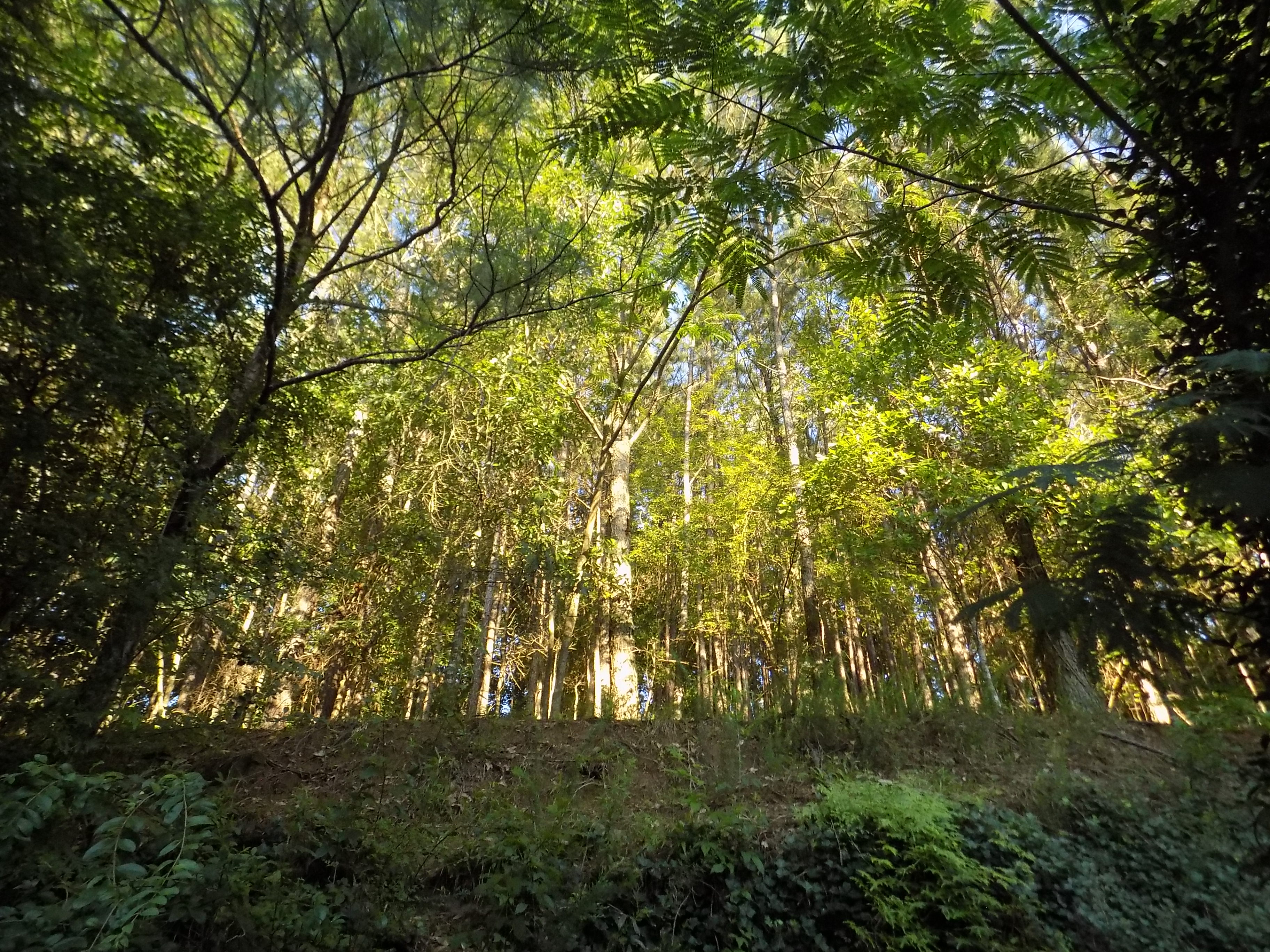
On the first morning waking up in my new house, I opened the upstairs bedroom shutters to a foggy warm morning. A family of deer grazed on the pine-forested hill just beyond the back yard – at eye level, maybe thirty feet from the window. A solitary cardinal perched on a branch of a mimosa, his bright red plumage dazzling against the frond-like leaves and feathery pink blossoms of the mimosas climbing the abrupt hill toward the pines.

I took it all as a good omen after retirement and a challenging fifteen months of social distancing culminating in an exhausting move. I decided to get my camera and take a picture; by the time I got back, they were all gone.


In the current crazy housing market, my house in north Alabama sold in one day with multiple offers. Then, I became the “buyer” and was quickly schooled on how challenging it is to buy a house these days.

I started out with high hopes of finding a place downtown or on Birmingham’s Southside, where I had last lived in an apartment on Red Mountain overlooking the city. It was a small and inexpensive apartment with a priceless view.


I always answer “Birmingham” when I’m asked the inevitable Southern question, “Where are you from?” Some may argue with my answer since I wasn’t born in Birmingham; I don’t know anybody born on an army base who considers the army base their home town, and we left the army for Birmingham when I was about a month old.

Birmingham is where my grandparents lived and where we spent our holidays when I was growing up. With frequent moves while I was growing up, and even more frequent moves for my career, I have lived away from Birmingham more than I have lived in the city, but this most recent move feels like a homecoming after twenty-seven years living in other places.


My house hunt started in the city and gradually moved farther south. The downtown and Southside places in my price range were usually too small and the ones I liked were gone before I could make up my mind. I looked at a twelfth-floor flat in a historic skyscraper in my idea of a perfect location in the central city; I loved it, but realized that I needed to have at least a balcony close by.

My realtor was patient and, more importantly, he was calm. Our search spread to townhouses south of the city and things began to look up as I found places with manageable and sufficient space for my “stuff” and enough outdoor space to satiate my need to get my hands in the dirt, plant some herbs, and have a place to sit in the sun.

When I found a townhouse looking out onto a tranquil park sloping down to the Cahaba River, my perspective changed and I decided I wanted a place near the river. Another place, with a terrace looking down at the river, shored up my resolve. Both were grabbed up before I could make an offer and my realtor assured me that the right thing would come along at the right time.

We scheduled a tour of the house I bought on the first morning it was on the market and made an offer on the spot. These are things you quickly pick up if you are a buyer in the current housing market. Later that day, I was surprised to learn my offer was accepted (you must also prepare yourself for disappointment if you are a buyer in the current housing market).

This house is not on the Cahaba, but the river is less than a half mile away. And it has those lovely woods behind it. I had told my realtor that I wanted to either be in the middle of things or in relative seclusion. I got the latter. I can hear traffic from an interstate when I’m in the front yard and one billboard pokes up above the trees in the distance. Downtown Birmingham is just a few minutes away, but the place itself seems remote and peaceful and surprisingly secluded.

I hosted my family for Independence Day, so the place has been given a social trial run. One morning I decided to work on plants for the walk leading to the front door. Thumbing through a book on New Orleans gardens with my morning tea, I felt fortified to tackle some pot gardening and headed to a nearby nursery.

There’s still a big “to-do” list to complete, but now that I’m no longer coming in to a stack of unpacked boxes and furniture to be rearranged, and now that my books are all organized neatly on the shelves, coming in has started to feel like coming home.

Last night, as I drove into the neighborhood, five deer stood watching from the side of the road. As I passed, they disappeared behind a house and up into the woods. Once again, there was no camera close by.

Finally, the timing was right … August 4, 2021

Book Review: Fourteenth Colony by Mike Bunn

Here is my latest review for Alabama Writers’ Forum. Fourteenth Colony is a fascinating look at a marginal and mostly forgotten part of the American Revolution.

Alabama Writers’ Forum : News & Reviews : Book Review Archives : Fourteenth Colony: The Forgotten Story of the Gulf South During America’s Revolutionary Era (writersforum.org)

Review: Shaking the Gates of Hell by John Archibald

My latest review for Alabama Writers’ Forum:

Alabama Writers’ Forum : News & Reviews : Book Review Archives : Shaking the Gates of Hell: A Search for Family and Truth in the Wake of the Civil Rights Revolution (writersforum.org)

Other Windows

Front porch display

It’s still mild enough for the potted pansies and violas, left over from the winter, to flourish a little longer before the heat gets to them. They are joined now by the green and sprouting abundance of spring. In the midst of what is turning into an extended house hunt, opportunities to breathe deep and think hard are welcome in the ever-changing landscape of an assertive Spring.

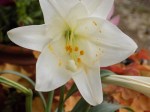
Over the years, it has become my habit to plant declining Easter lilies in spots in my parents’ back yard. They have come back and bloomed over time to the point that the backyard flower beds have an ancillary “lily season” each April. A pink calla lily, a Mother’s Day gift to my mother from my brother’s family a few years ago, surprised us last year when it popped up amidst a pot of fading pansies. This year it’s sprouting again, in a pot all its own.

Easter lily

The dogwoods took their Easter cue and had their brief peak a couple of weeks ago. Red roses in the back have sprung forth while the rose bushes in front are taking their time.  The crape myrtles and Rose of Sharon are revving up now for blooms throughout the warm season.

Out the back window, lavender wisteria cascades among the foliage down the mountain. Three fresh bird feeders await discovery by the many birds that come and go; so far, they’re being ignored. We’re trying to discover why the mourning doves, so plentiful in the past, have disappeared. Several cardinals have become regulars in their absence. A hummingbird feeder perches in a window, replacing the one that succumbed to old age several months ago.

More variety is available at the farmers’ markets that reopen and spring up everywhere. Strawberries now mark the procession of fruits that help to gauge the season. The lengthening of days and warming temperatures always give me a lift.


I try to be even more aware than usual of nature around me as I continue reading a new Library of America volume of three books by naturalist E.O. Wilson. I am not very science savvy, but I appreciate nature and always find Wilson’s explanations of the evolutionary processes all around us to be well-written and accessible. He explains a lot of what we’re seeing, if we will just pay attention.

Wilson, an Alabama native, is considered the world’s foremost expert on ants; his expertise seems equally astute on other flora and fauna of the world. He has been repeatedly named as one of the most influential scientists in history. Reading Dr. Wilson at the same time that I install a fieldstone and pea gravel walk in my parents’ side yard gives an added dimension of curiosity for every stone that’s overturned. Wilson is a formidable companion and guide to the wonders of the back yard and the world beyond.


A more nonsecular companion on the reading nightstand is one I just discovered. Recently, while writing a review of the latest collection of essays by writer Rick Bragg, I ran across a title that was new to me. Wooden Churches: A Celebration (1999) has an introduction by Bragg; the bulk of the book, however, is black and white photographs of (mostly old) wooden churches and services with literary excerpts from a long list of writers.

Since my annual Christmas card usually features a photograph of a wooden Alabama church, I was curious to see what this book has to offer. It’s a charming book to browse. Some of the photographs are familiar, by noted photographers, and others are more personal and obscure. There are several haunting old photographs of churches in the aftermath of Civil War battles.

Any period of life that involves real estate is a challenge. These days, while I’m neck-deep in house-hunting, the simple pleasures outside the windows, simple projects outdoors, and compelling reading are welcome distractions in brief interludes. Prospects of change become somehow less daunting in the views through other windows.

Wisteria

Window

Outside the upstairs bedroom window, I see the upper branches of my Chinese cherry tree and beyond. It has become the place from which I preview the weather of the day and gauge the seasons as the sunrise moves back and forth across Green Mountain.

That cherry tree is the last of the blooming trees on this section of the street to show. The first blossoms of the season appear in the treetop just as the final russet blooms of the crabapple next door give way to its bronze-hued leaves. The cherry tree in a neighbor’s backyard is on a different schedule from mine and bursts forth with white blossoms filling the back guest room window just a couple of weeks before my Chinese cherry begins its stunning, short-lived moment of full bloom.

In the back yard, the young Japanese maple, introduced last year, is budding with promise and I sigh with relief that it weathered its first winter. The camellia finally went crazy in February with crimson blooms. A few rainstorms caused them to droop to the ground and the remaining camellia blooms, holding steady, will soon drop, too. Both wild roses in the back yard – the one that belonged to my grandfather and the one I foraged from a lake shore – are fully-leafed and will start to bloom by Easter.  The recently acquired Peggy Martin “Katrina” rose is thriving in its pot, ready for a suitable place to start climbing.


I managed to strain my back on the second day of unpacking when I moved to this house years ago and the doctor ordered three days of bedrest. My bedroom had been the first room I set up so I closed the door and let it be my refuge while I got back in shape. During the day time, I would open the curtains and watch the activity of the birds in the trees and the traffic and pedestrians on the road beyond. It was the perfect place to read.

Over the years, I have observed robins busily building nests in the cherry tree, eggs hatching, and one year I happened to be home on the morning that the babies left the nest. I pulled up a chair and quietly watched. Within an hour, they were all gone and oblivious to me cheering them on.

When a deadly outbreak of tornadoes ravaged much of Alabama in April 2011, the storms took out the power grids and cell towers throughout a wide swath of north Alabama. My neighborhood was without power, internet, and phones for five days. The night sky was amazing with no power for more than fifty miles in all directions. There was a dusk to dawn curfew and my sleep was erratic. At all hours of the night, I found myself lying in bed and staring out the window at the empty dark landscape and the night sky above. An occasional utility truck or police car might pass and any unexpected sound would prompt shining a flashlight out the window, often highlighting the stop sign on the corner. It was much later when I worried that my bright flash of light might have shone into the windows of the houses over in that direction.

Over time, the pattern was established of a retreat to the bedroom and the window whenever a break was needed. Nowadays, I am in the habit of opening the curtains first thing in the morning and reading as the sky goes from dawn to daylight and I prepare to face the day. Reading before rising seems to bring clarity to the day.


This week, I am busily packing to move to another city in a few days. The town I’m moving from after eighteen and a half years has never felt like home, but this house – with my books, and art, family mementos, and “stuff” – has.

And the view from my window has sustained and fortified me through all times and challenges. This morning, outside the window, the first hints of pinkish blooms on the cherry tree are beginning to show.

It will be full of blossoms in a few days. And I’ll be gone.

Alabama Marble

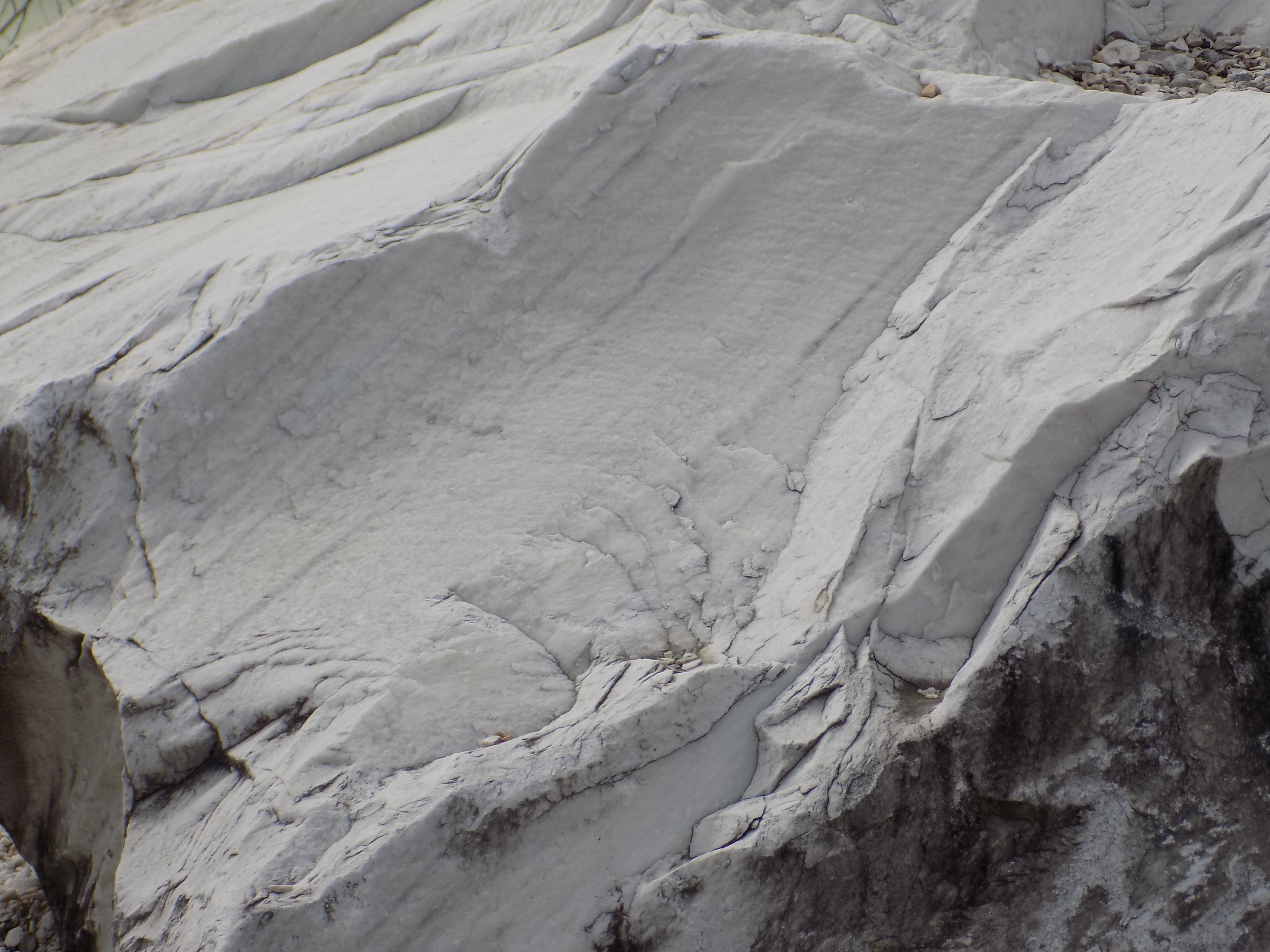
Sylacauga marble


Back when I thought I should at least feign an interest in the writing of Ayn Rand, I heard architect Howard Roark (Gary Cooper) utter the following line of dialogue to Dominique Francon (Patricia Neal) in King Vidor’s overwrought film version of Rand’s The Fountainhead (1949):

“This is Alabama marble – very high grade, very hard to find.”

I watched The Fountainhead many years ago, and I suspect that quote was my first inkling of the quality of Alabama marble. It is usually referred to as “Sylacauga marble,” for the Talladega County town in which the vein of marble is focused. The seam is thirty-two miles long, 1.5 miles wide, 400 to 600 feet deep, runs from the Coosa River to near the town of Talladega and is the longest marble deposit in the world. 500 million years old and 98% calcium carbonate – Sylacauga marble is considered one of the purest and whitest in the world and is often compared to Italian Carrara.

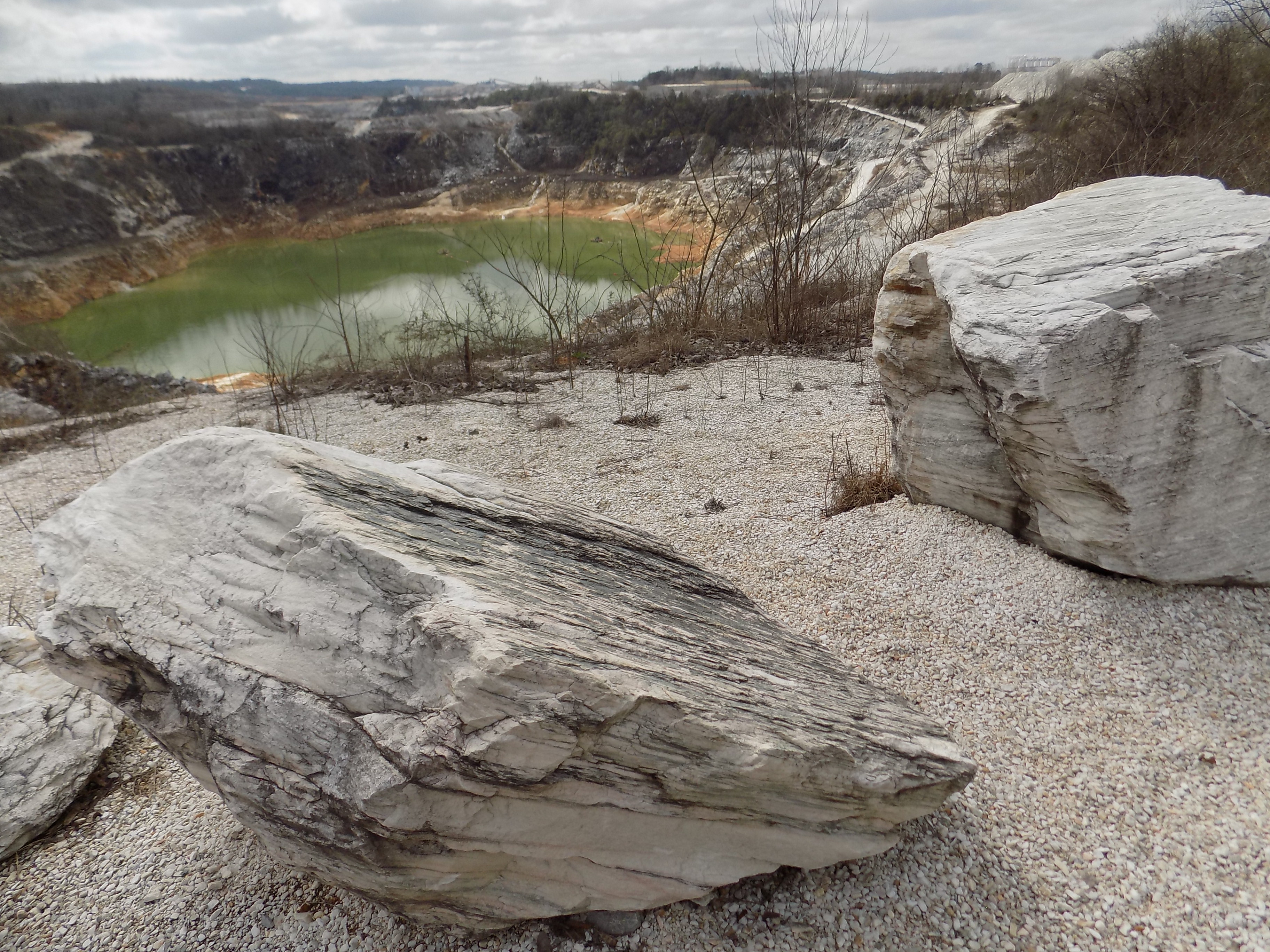
Gantt’s Quarry

Edward Gantt was the first entrepreneur to develop marble quarries in the Sylacauga area in the 1830s. One of Gantt’s abandoned quarries is open for public view. At the Gantt’s Quarry Overlook, 10-ton blocks of marble line the viewing platform. White mining roads wind through the grey chasm and down to the greenish water filling the abandoned quarry floor.

Italian sculptor Giuseppi Moretti began to use Sylacauga marble while in Alabama designing Birmingham’s mammoth cast iron statue of Vulcan – Roman god of fire, metalwork, and the forge – for the 1904 World’s Fair in St. Louis. Moretti and partners opened marble quarries around Sylacauga in the early 20th Century.

“Head of Christ” by Giuseppi Moretti

Moretti’s first art sculpture from Sylacauga marble was his Head of Christ, which was displayed in St. Louis in 1904 along with Vulcan. It is a sculpture for which Moretti claimed great pride and which travelled with him for the rest of his life. He expressed a wish that the Head of Christ would be displayed eternally in Alabama and it can be seen today at the Alabama Department of Archives and History in Montgomery.

Sculptor Gutzon Borglum’s bust of Abraham Lincoln, on view in the U.S. Capitol, is carved from Sylacauga marble. Sylacauga marble is prominent in the architecture of the Lincoln Memorial, the United States Supreme Court Building, and other notable architecture and art throughout the United States.

More prosaic uses for marble include as a soil additive, as a whitening agent in paint and paper coating, and as an antacid (think Alka-Seltzer and Tums), among other things.

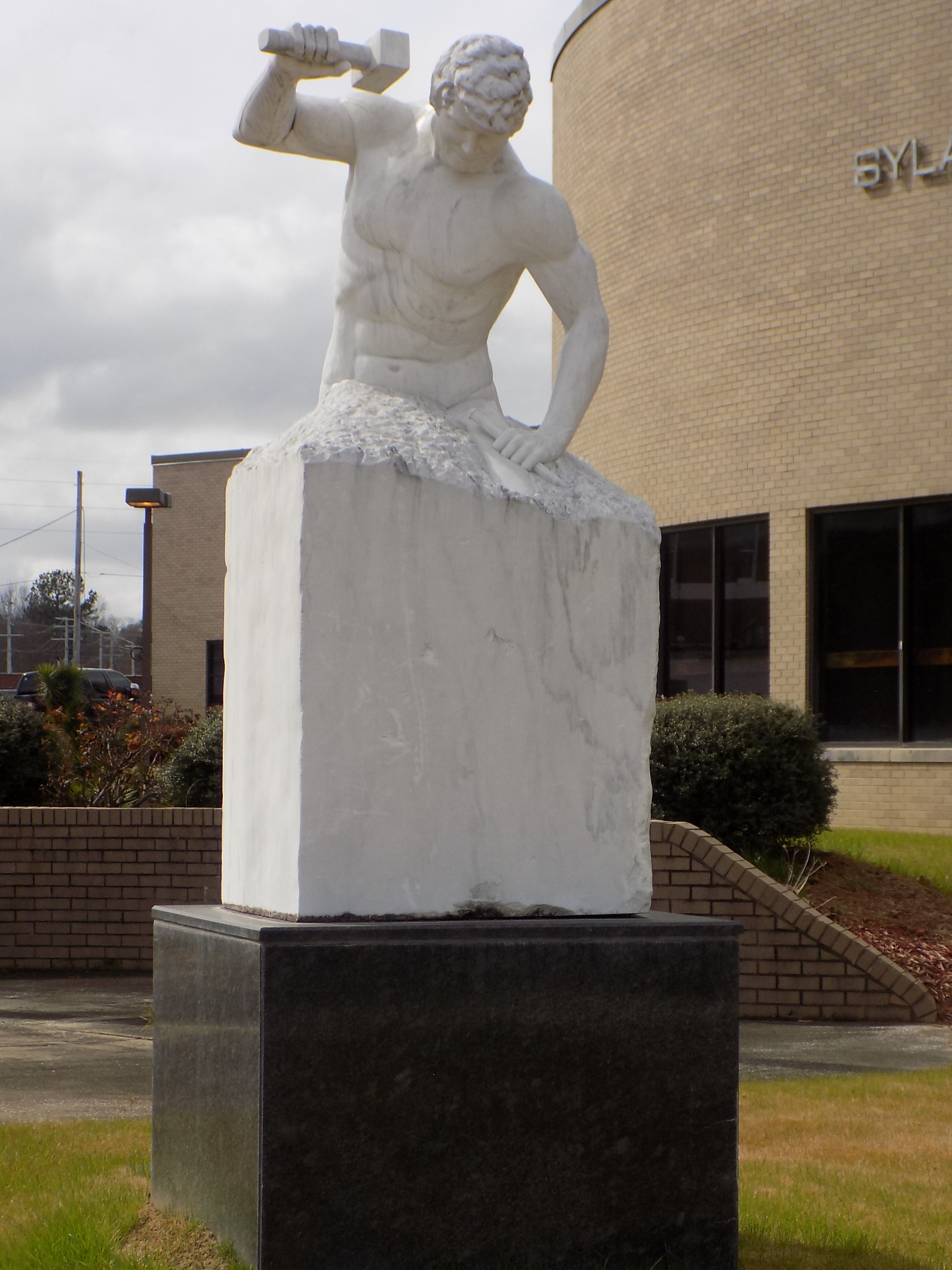
“Sylacauga Emerging” by Craigger Browne

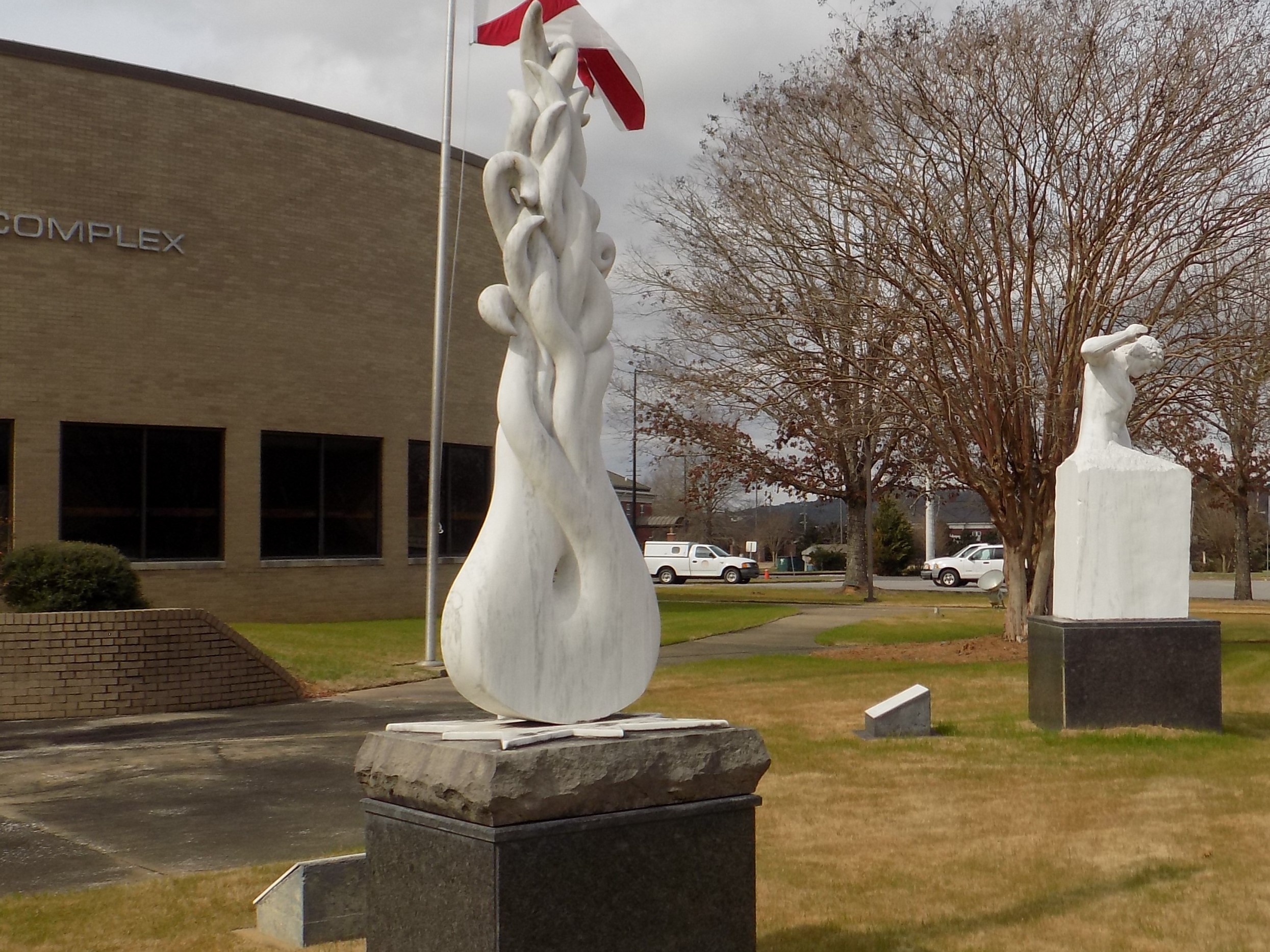
Sylacauga marble is having a renaissance for artistic applications as evidenced in outdoor installations throughout downtown Sylacauga. Sylacauga Emerging by Alabama sculptor Craigger Browne is an impressive work in front of the Sylacauga Municipal Complex. It depicts a worker carving himself out of a block of marble. Nearby is Don Lawler’s Falling Star, commemorating the Hodges Meteorite, which crashed through a farmhouse roof outside Sylacauga in 1954, striking Ann Hodges, asleep on her couch.

If in the Sylacauga area, keep a watch for numerous examples of the pristine marble that is native to the region. Chances are, you’ve already seen it or used it in other places.

“Falling Star” by Don Lawler (foreground)

Minerva at Tuscaloosa

In December 2019, my alma mater, and the university my father proudly served until his retirement, dedicated a statue and installation on the Black Warrior River, which flows on the northern boundary of the campus. The University of Alabama gifted a statue of Minerva, Roman goddess of knowledge and wisdom, to the city of Tuscaloosa in honor of Tuscaloosa’s bicentennial. The 30-foot statue stands on the edge of the river in the park at Manderson Landing. Leading up to the mirrored pedestal on which Minerva lands in a silvery splash of water is a bronze outline of the river set in a concrete walk and punctuated with a timeline of significant moments in the city’s history. The history timeline is presented alongside the river’s circuitous path from Tuscaloosa to Demopolis.

Sculptor Caleb O’Connor created the Minerva statue and Craig Wedderspoon, who directs the sculpture program at the University, designed the timeline walk.


When I was a student at the University, Manderson Landing was a dirt parking lot on the side of the river. River Road (now Jack Warner Parkway) followed the path of the river from the community of Holt to downtown Tuscaloosa. During my time in Tuscaloosa, I was struck by how little the town interacted with its river. For a time, I lived at Rose Towers, which was the northernmost building on the campus and the nearest to the river. From my 11th floor window, I could see the river’s path all the way to downtown but, other than towboats and barges, human activity on the river was basically non-existent.

Rose Towers was imploded years ago and fresh new-ish student housing predominates on the north side of campus. The riverside has been developed from town to the campus with commercial interests, a farmers market, walking trails, and abundant park lands. Campus enrollment has doubled since my time there and the campus itself is packed with new roads, new campuses, new buildings, and never-ending construction.

Overall, the campus is more beautiful and maintained than it was in my time, but the various fraternity and sorority rows are even tackier and more obscene than they were “in my day.” My pride in the campus wilts a little when I have to pass through the overblown houses of the ostentatious panhellenic ghettoes. My disgust with that element of college life dates back to my pre-college days and it seems to grow more intense rather than mellow with time. (In the summer before my freshman year at the University, I received a recruitment letter from the Interfraternity Council; I corrected the grammar and spelling and sent it back. They never bothered me again, which was my intent.)


But I was in town this time to visit Minerva and the river. A visit was planned soon after the dedication, but the lost year of 2020 put a halt to the plan.

The goddess of wisdom adorns the seal of the University of Alabama. I must admit that, through my undergraduate and graduate school years, I was always led to understand that the goddess on the seal is Athena, the Greek original for Minerva. The origin stories and realm are the same, but in the years since I left Tuscaloosa, Athena has apparently been transmogrified into her Roman persona.

Works for me, I guess …but I have always preferred my Greek mythology to the Roman appropriation. Even so, I am proud of Vulcan, the Roman god of the forge and metalworking, who is the symbol for Birmingham. I know that his Greek predecessor is Hephaestus, but the name Vulcan seems to wield more power.

O’Connor’s Minerva is a stunning addition to Tuscaloosa’s riverscape. She is a modernized creation with flowing hair replacing the traditional helmet. Luminous raiment flows against her taut and powerful body. She appears to be landing in water after a flight and her right arm releases an owl into the firmament. The sculpture is not monochrome; a subdued and powerful mix of hues captures and plays with the light, giving the form an even more changeable and human presence. She is inspiring and spectacular.

Minerva’s mirrored and curving pedestal emerges from the rocks of the landing and provides added luminescence to the goddess who towers above the river to anchor the north side of the campus. Wedderspoon’s history-laden walkway provides historic context and a sense of place to a dramatic interlude in the local landscape.

For an alumnus of the University of Alabama, who has begun to feel a sense of distance from the place, the inspiring monument at Manderson Landing has reignited a sense of connection and community that I found on that campus all those years ago.

Cancelled

Based on years past, I should be a couple of hours away from my annual December getaway to Point Clear on Mobile Bay as I type this sentence. A couple of months ago, I optimistically booked a room at the Grand Hotel for December 13 through 18. I knew I might have to cancel, but I wanted to be ready just in case things had changed by now.

When I booked my room, the resort was still dealing with damage from Hurricane Sally in September. I have been exceptionally conscious and careful during the pandemic and was impressed with the safety protocols the resort has in place. My plan was to stay close to my room, reading and writing, to take regular walks around the grounds and community, and to have room service and takeout. It seemed to me to be a responsible way to get a break and finally to celebrate my retirement.

As the dates got closer and the news reports grew more grim, I realized that the responsible thing is to cancel for the time being. The world around us and people depending on us make it feel imperative to take a stand. And, as my friend Deborah says, now that I’m retired, I can go down any time I please … once the health crisis has passed, anyway.

It will be the first time I have missed the December escape since 2005 – the year of Hurricane Katrina and its extensive damage to Mobile and Baldwin Counties.


Even as I entered my cancellation, the music and memories of Baldwin County and Mobile Bay invaded my thoughts. I think about downtown Fairhope, the intersection of Section Street and Fairhope Avenue, and the light-bedecked trees along the sidewalks. The planters, hanging from the light posts, complement the plantings of poinsettias and pansies in the ground-level beds.

I think of the Camellia Café, Dragonfly, Panini Pete’s, the Wash House, and other places to grab a great meal. I think of Market by the Bay and its abundance of fresh catch seafood.

I think of drives to lonely overlooks across the bay, to Magnolia Springs, and to the search for bags of fresh local pecans and satsumas.

At the Grand, the gentle surf grazes the docks and, beyond the marina, the lights of Mobile, across the bay, glisten beyond the traffic of the causeway.

The Grand sunset, usually spectacular, will still be there when I return. And, upon that return, I think I will cherish the place more than ever.


For now, I slowly and surely prepare my house to sell and keep my eyes and ears open for possible places to move in Birmingham.

To stay grounded, I read as much as possible. After reading stacks of magazines, a few books, and news articles, I have found comfort and solace in reading a couple of very good cookbooks. Sean Brock’s second book, South: Essential Recipes and New Explorations, is as thoughtful and thorough a consideration of Southern foodways and contemporary thought on the subject as one might find. Kelly Fields’s chatty The Good Book of Southern Baking: A Revival of Biscuits, Cakes, and Cornbread is as inspiring as one might expect from the dedicated and well-travelled James Beard Award-winning pastry chef.

I feel grateful, as I read these books on food, to have spoken with and experienced meals prepared by both of these chefs. I first had Brock’s food at an unforgettable dinner at Alabama Chanin’s factory in Florence. I met and broke bread with Fields at two dinners at the same place. Her New Orleans bakery and restaurant, Willa Jean, is a singular New Orleans experience.

I am also, grudgingly perhaps, becoming more susceptible to the necessity of streaming video. I have even fallen prey to the New Age-y call of calm.com, and especially its hypnotic video series, “The World of Calm.” My most frequent stream, however, has been the Spike Lee-directed concert movie, David Byrne’s American Utopia, which is a most hopeful document of our country and its current situation. I have lost touch with how many times I’ve watched it already.

To satisfy my former habit to watch a movie in an honest-to-goodness cinema, I have been able to venture to Sidewalk Cinema + Film Center in the basement of the Pizitz building in downtown Birmingham. The not-for-profit indie theatre limits each screening to twelve patrons in well-spaced seats in a 100-seat theatre and I have enjoyed welcome escapes there to view films like On the Rocks and Mank. Each visit to Sidewalk Cinema makes me more anxious to move back home to Birmingham when the time is right.

Holiday season 2020 is a unique and memorable one. Perhaps it has made us a little more aware of the pleasures of the simple things. Be safe as we move into a promising new year.

October Waning

Marigolds; Fall 2020

There are so many things happening right now. I am excited and anxious about the election, but friends in the Midwest are seeing major snows earlier than anticipated and wildfires, beyond biblical proportions, are ravaging the West. To the South, and nearer to me, Zeta percolates in the Gulf.

And then there’s COVID. I don’t really have the “fatigue”; I have just run out of things to say. As I said, I am excited and anxious about the election.

A day or two ago, I made my annual reservation for my December getaway in Point Clear on the eastern shore of Mobile Bay.

I asked my usual contact, “How’s it going down there?”

“I’ll let you know when Zeta has passed,” she responded.

My regular room choice is closed post-Sally, awaiting carpet replacement, but I managed to snag an almost identical room still available for the Christmas season.

My checkbook howls, but my spirit soars. December in Point Clear has become an annual rite of renewal.’


In the long list of things to ponder, a last look at the season now coming to a close has captured my wandering attention,

The indoor plants were moved indoors a few weeks ago and the outdoor annuals were committed back to the earth. A peace lily, that had been given up for lost in the summer, decided to sprout a week ago and I am trying to coax it along. Most of what was left, though, was left to fend for itself. I thought I had washed my hands of it all except for the raking and maintenance of the debris.

Over the past week, all of that was turned asunder.


I returned home to find a single gardenia in full bloom. My potted gardenia is temperamental in the best of times and never blooms beyond early summer, so I still ponder what inspired its late-October solitary flourish. Even so, the silky sexiness of a gardenia is hard to beat.

My Granddaddy Harbison’s heirloom rose, which has to be at least a half-century old and is now spread over gardens across the South, had a final burst of blossoms that are both spectacular and later than ever.

A couple of months ago, only the forget-me-nots had flowered from several packets of seeds sent to my mother with a charity solicitation in the Spring. When I got home a few days ago, the marigolds from that same set of packets had decided to take their turn. Those few blooms epitomize the shades of Autumn without the aid of the more predictable chrysanthemums.

It is truly time to cut back the purple hearts that thrive next to the front door. This late-October, however, they are far too exuberant to thwart just yet, and I will encourage them to bloom as long as they like.

We have frosts in our forecasts, so this might be the final homage to the warm weather culture for a while.

Please, whatever you do, VOTE on November 3. Every vote matters.