Tag Archives: Rose of Sharon tree

Rose of Sharon

I take mental refuge in watching nature, even just the plot of land where I spend the bulk of my time these days – halfway up the western slope of Shades Mountain, just below Bluff Park, eight miles from my own house which is mostly fending for itself in terms of outdoor maintenance. I’m grateful for the HOA to keep the grass cut on my own home front.

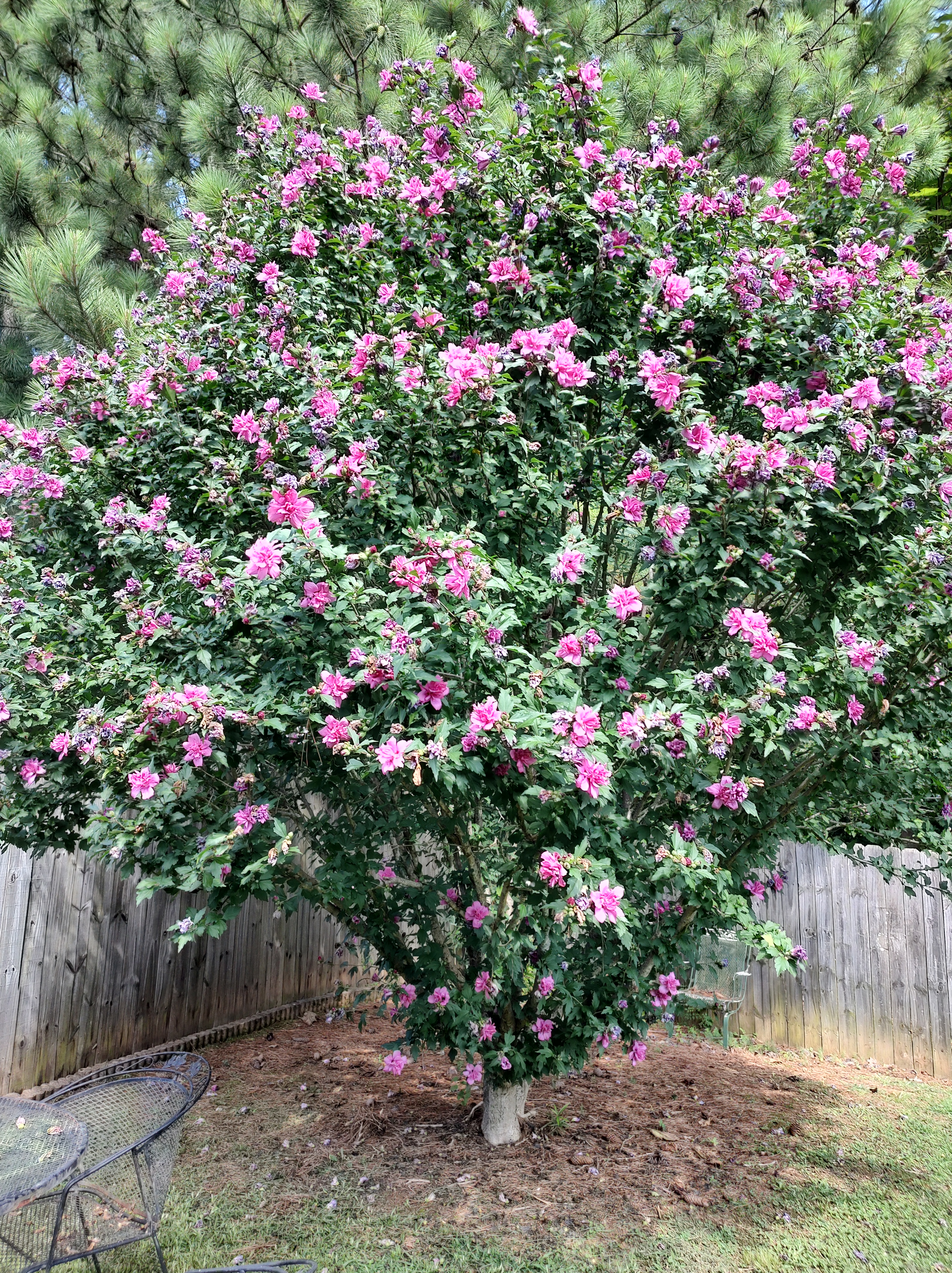
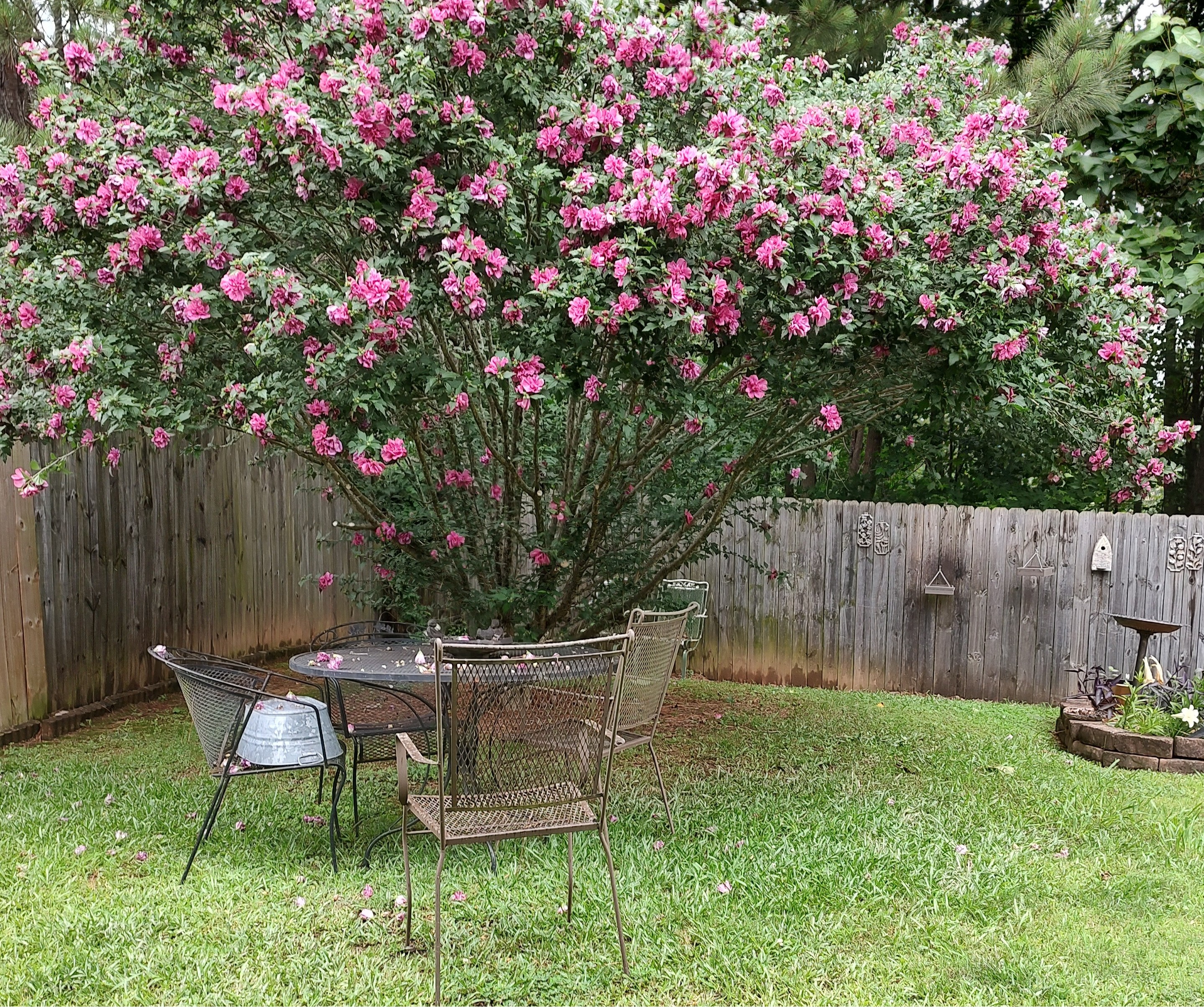
At different points in the year, certain flora gets my attention. This week, it has been the rose of Sharon tree that has drawn the bulk of my notice. It started as a twig soon after my parents moved to this house almost sixteen years ago. Mom asked her friend Margaret, at Brown’s Nursery in Tuscaloosa, for a suggestion of a flowering plant to place in a backyard location; the twig was her response. Margaret didn’t tell her what it was.

Back in Birmingham, Mom told Dad she’d like it planted in a place where it would be visible from the street – if it ever grew that tall. He chose a spot visible from the front gate and from the back door and the large window in the breakfast nook. Before too long, it grew tall and spread wide and the fuchsia flowers, which began to burst forth a couple of weeks ago, are visible from the street and fill the windows in that door and nook with magnificence. It’s hard not to smile when the blinds are opened in the morning and that abundance hits.

I didn’t limb up the rose of Sharon last year and the last time Joseph, the man who keeps my mother’s lawn mown, was here, he had a hard time getting under and around the tree, its branches hanging low due to the weight of hundreds of blooms and buds and recent heavy rains. He asked if he should prune or did I want to handle it. I enjoy pruning and the rose of Sharon had been on my to-do list since late-winter.

The next day, I worked my way around the tree, pruning the obstacles to passage and trying to retain the tree’s natural integrity, while preserving as many low buds as possible. The results are pleasing, I think.

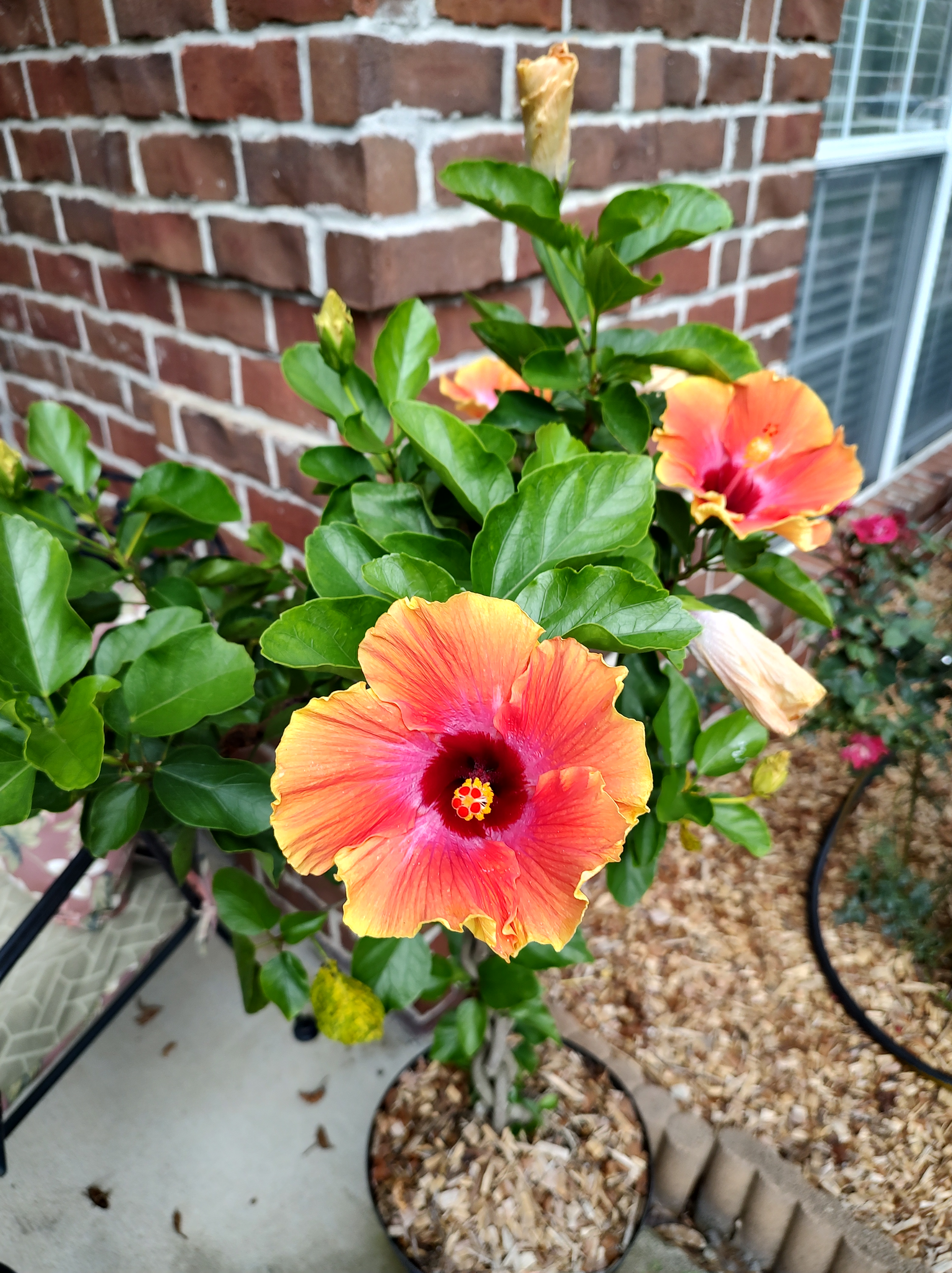
Rose of Sharon is the common hibiscus (Hibiscus syriacus), also known as “althea.” I have always preferred to call hibiscus “rose of Sharon” due to its evocative literary use in the Old Testament, especially in Song of Solomon, and its Christian adaptation as a symbol for beauty, grace, and love. John Steinbeck memorably creates the character named Rose of Sharon Joad (“Rosasharn”) in The Grapes of Wrath and the plant is referenced in other literature.

But I do not always view the backyard tree with such lofty significance. It has become a spectacular harbinger of the summer. From the moment in early spring when the tree begins to leaf and the buds begin to pop forth, the anticipation of that first flower mounts until, one sunny morning, a flower appears. From that point, more flowers arrive – quickly, vividly, profusely – and the tree itself buzzes with the sound of bees busily at work. Most years, a nest is tucked away in the upper branches. Always, the perching of birds, especially the cardinals, adds a bold splash of color to the already gaudy mix.

I had thought this essay might lead to a life lesson. Perhaps not. Just this: Spring has sprung and summer awaits. Savor the moment.



“Oh, for a bee’s experience …

Of clover and of noon!” – “The Bee” by Emily Dickinson

Trying to savor the summer while having some restraints on my activities, I have been thinking a lot about the bees. I have been watching them a lot, keeping in mind alarms about declining bee populations. Specifically, I have been staying at my mother’s house full-time, so I shifted focus from attracting bees to my own small yard in Rocky Ridge to observing the activity around her garden home community on the steep west slope of Shades Mountain.

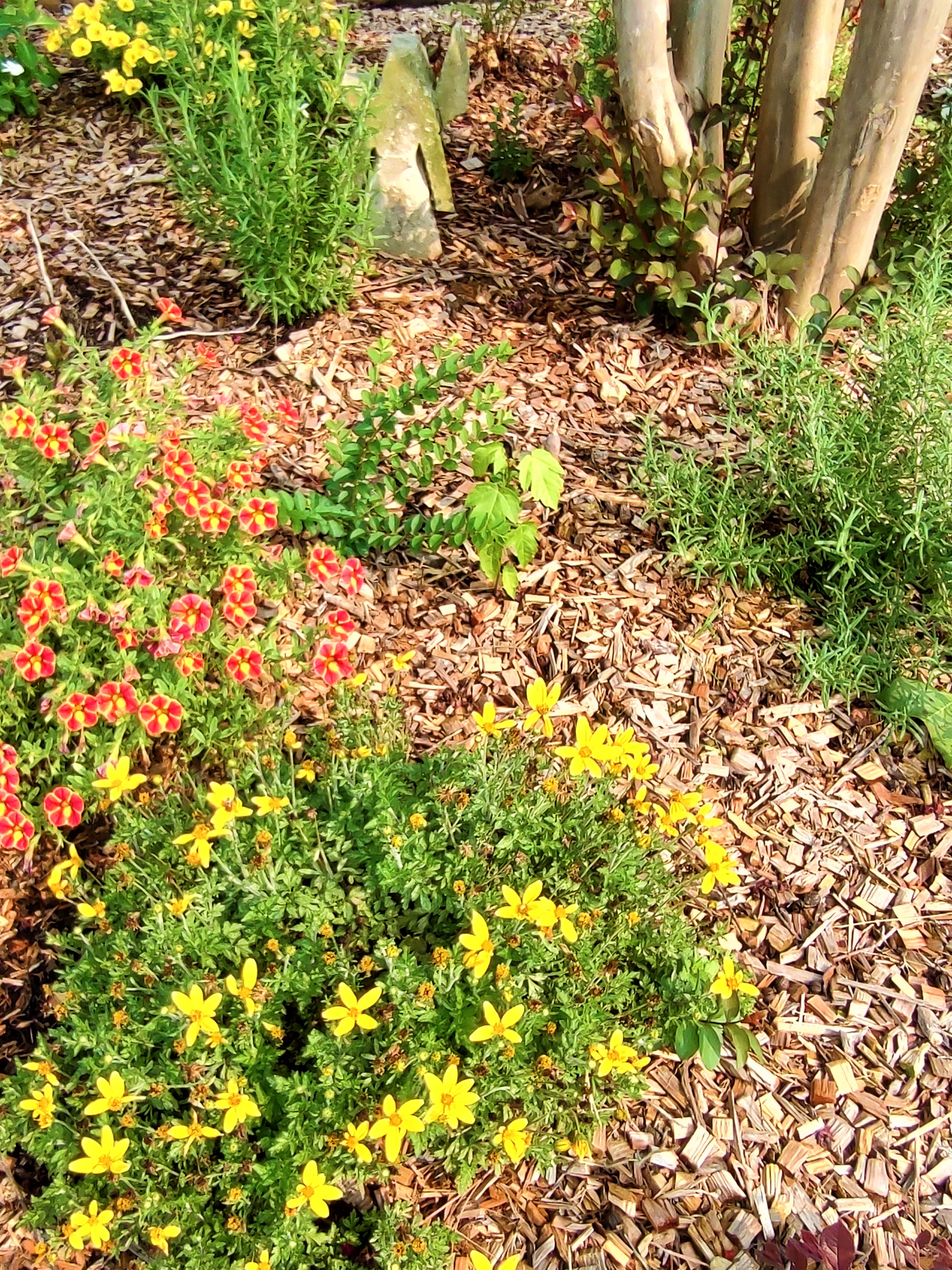
A late freeze brought the demise of a large loropetalum shrub encircling a tall crape myrtle in Mother’s front yard. When the loropetalum was removed, we decided to plant a variety of blooming and leafy plants in its stead. It turned out to be a good move – with compact bidens, calibrachia, rosemary, vinca, and Japanese painted ferns putting on a frisky, flourishing show beneath the deep crimson blooms of the crape myrtle. I keep a careful watch over the volunteers – some are welcome; others will take over if left alone.

On the porch, a yellow begonia holds court in a hanging container, with lysimachia flowing toward the ground. The large blooms of a braided mandevilla in a unique coral and golden hue are a favorite of my mom’s, but the blooms drop after one day, leaving the plant leafy without flowers on occasion. It shields an always trustworthy heuchera which was joined this year by a lacy volunteer that was just too charming to eliminate. The lacy foliage will wither away in late-fall, but the heuchera, if it acts according to habit, will still be flourishing next year.

As you come into the entry space, a ruellia – commonly called a “wild petunia” and known for an invasive nature – stands confined in a container, grounded by impatiens and lysimachia. Its delicate morning blooms fall off daily, to be replaced by new blooms the next morning. The roses in a bed next to the house have seen better days, but they are hanging in there. Bees, butterflies, and the occasional hummingbird show up and regular rainfall and diligent watering are keeping everything happy so far in the stifling July heat.

But here’s the kicker: There’s a Rose of Sharon in my parent’s backyard that grew from a sprout and is probably in excess of twelve feet now. It’s covered with fuchsia blooms and – at any given time – hundreds of bees. I know Rose of Sharon is a common name used for a number of plants – this one is a hibiscus – but I like the tradition and antiquity of the appellation and plan to use it until the plant police come knocking. Bees have always loved this specimen, but this year seems to be a banner year for its bee population from early morning to sunset. There is a constant low buzz from the tree when we wander into the yard.

Slightly to the side of the Rose of Sharon is a raised bed my dad created. I haven’t had a chance to properly tend to it this year, but it is lush and beautiful in its wildness anyway. Purple heart and yellow lantana grow in a bed with four less-than-stellar rose bushes. The in-ground Easter lilies bloomed late and those plants have taken their time fading away. Like many other plants, the odd weather seems to have confused them; one healthy looking lily has developed three new bulbs (in the middle of July!) but I do not expect them to bloom.

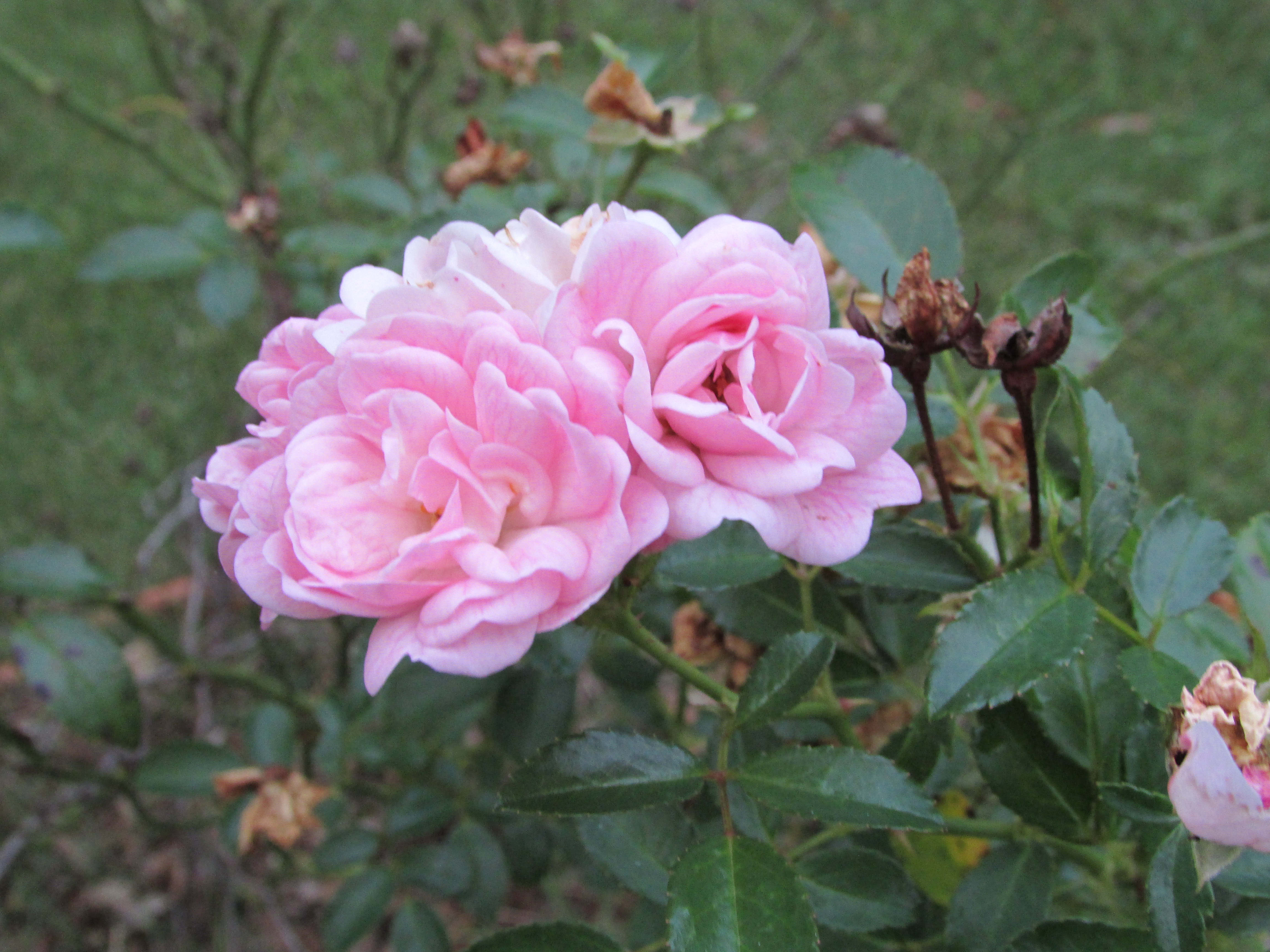
It hasn’t been a great few years for the roses of any kind and my grandfather’s ancient rose bushes, grown from cuttings of the mother plant, have struggled to flower. The hummingbird feeders do not seem as busy as usual, but an occasional hummer is spotted at the feeders and among the bees in the Rose of Sharon. It’s a challenge to keep the bird feeders stocked; it’s a bigger challenge to keep the squirrels away, but Lulu, the prancing chihuahua, likes nothing better than to chase the squirrels. Mourning doves are the primary customers at the feeders, but a pair of cardinals are frequent visitors since late-winter, as are an occasional bluebird and blue jay and a red-headed woodpecker. Wrens and chickadees are also in evidence, I think, but I hesitate to say much since a reader pointed out recently that I don’t seem to know the difference. I pay my annual due diligence to the Audubon Society and the Arbor Day Foundation but I’m not always good at the identification part of the test.

These are the things that inhabit my alternate garden in summer 2023.

Autumn 2015: A Place for the Eye to Rest

IMG_1979  The advent of the fall season often catches me by surprise even though I pay attention to the calendar and know when cold weather and shorter days are upon us.

There is poetry in the autumn but too much of it is the poetry of decay and endings. Football season, other seasonal events, and the approach of the cold weather holidays are a consolation but I am a fan of hot sultry summers and always feel a little cheated when those fade away – especially if I haven’t had the time to take full advantage of the season.

Let me put it another way: The arrival of pumpkin spices in everything does not bring a song to my heart.

Arriving for dinner at the home of friends the other evening one of my hosts greeted me with the admonishment to not look at her yard because “it’s a mess.” The yard looked fine but I agreed with her that it’s hard to keep a southern yard looking pristine after the relentless heat of August and as the trees get ready to start shedding their leaves.

IMG_1970 Surveying my own small back yard last night and deciding which plants would need to be moved inside and which would be left out to fend for themselves I noted that my yard somehow weathered the hottest part of the summer quite well. I didn’t lose anything to the heat this year; I had more hummingbirds than usual; my basil held out throughout the season of tomato sandwiches on freshly baked white bread.

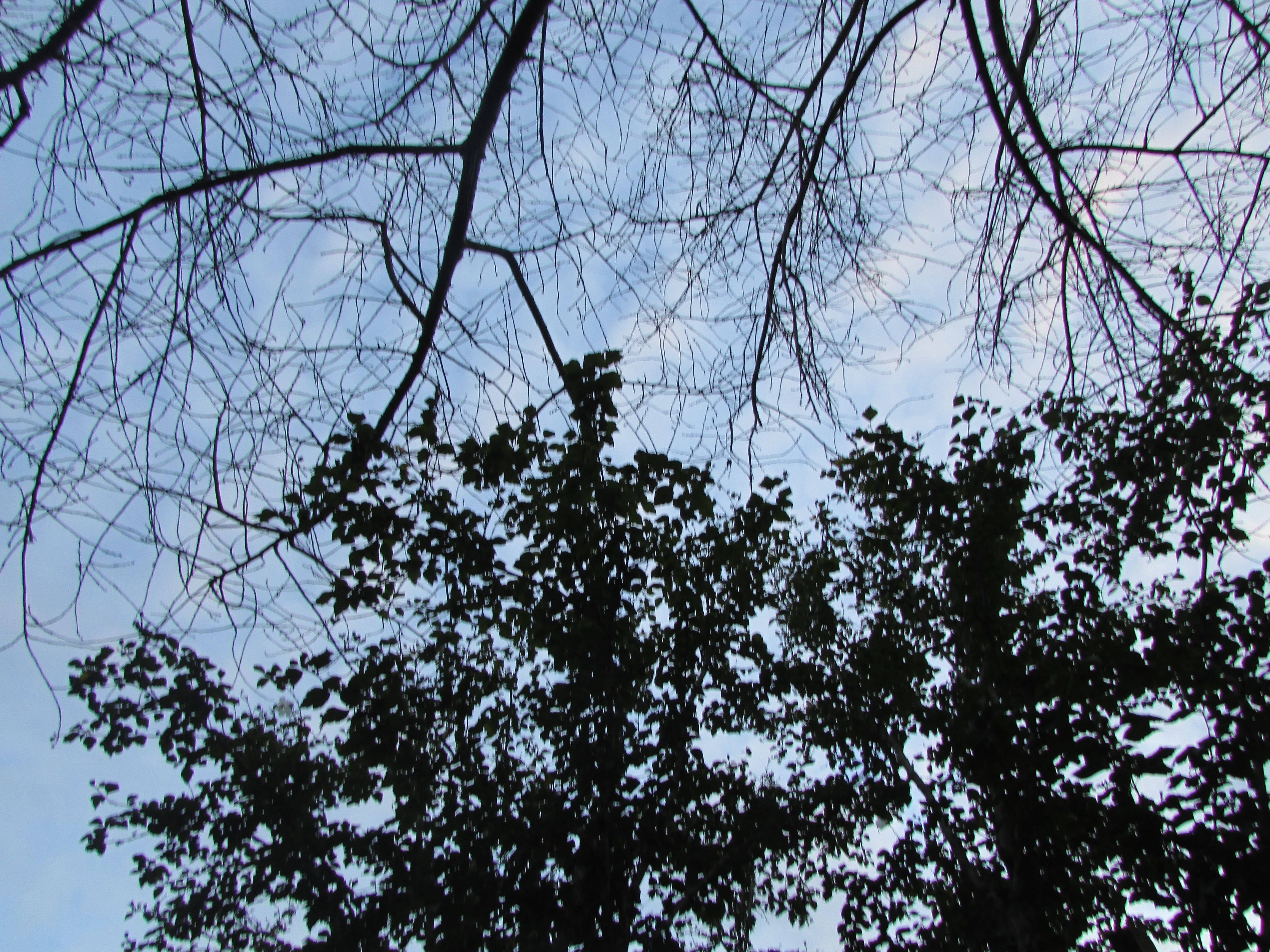
The sweet potato vines in rust and green, grown for decoration rather than edible roots, went wild this year — overflowing their large pots outside the back gate. My neighbor’s backyard cherry tree, much of which overhangs the fence and blends with the branches of my tall Rose of Sharon tree, is already bare of leaves. It blooms magnificently before almost everything else in the late winter and starts dropping its leaves in late July before anything else is even thinking of the fall. IMG_1980

The Rose of Sharon still has most of its leaves and is almost finished blooming for the year, with just a handful of new buds appearing on new branches near the bottom of the trunk. I’m glad I resisted the urge to prune those a few weeks back. The final roses are in bloom on my grandfather’s wild rose bush which I rooted from a cutting. I took a cutting with buds for inside the house so that I could have a few last roses of summer both inside and out.

As plants in containers start being moved in the house and other plants die down or away, the wind sculpture, empty pots, architectural artifacts, and found objects take precedence and give points of interest as I come home at the end of the workday. The plan has always been for my back yard to capture the abundance and “collected” presence and feel of New Orleans courtyard gardens. In fact, I have a classic New Orleans garden book with an inviting photograph of a cluttered and magical courtyard garden marked for reference (pages 106-107 of Gardens of New Orleans: Exquisite Excess, 2001, by Jeannette Hardy and Lake Douglas, with photographs by Richard Sexton).

IMG_1972My own back yard garden is not there yet but my goal is in sight. For now, though, in every season there is always a place for the eye to rest as it surveys my long and narrow back yard. I consider that a good start. IMG_1968