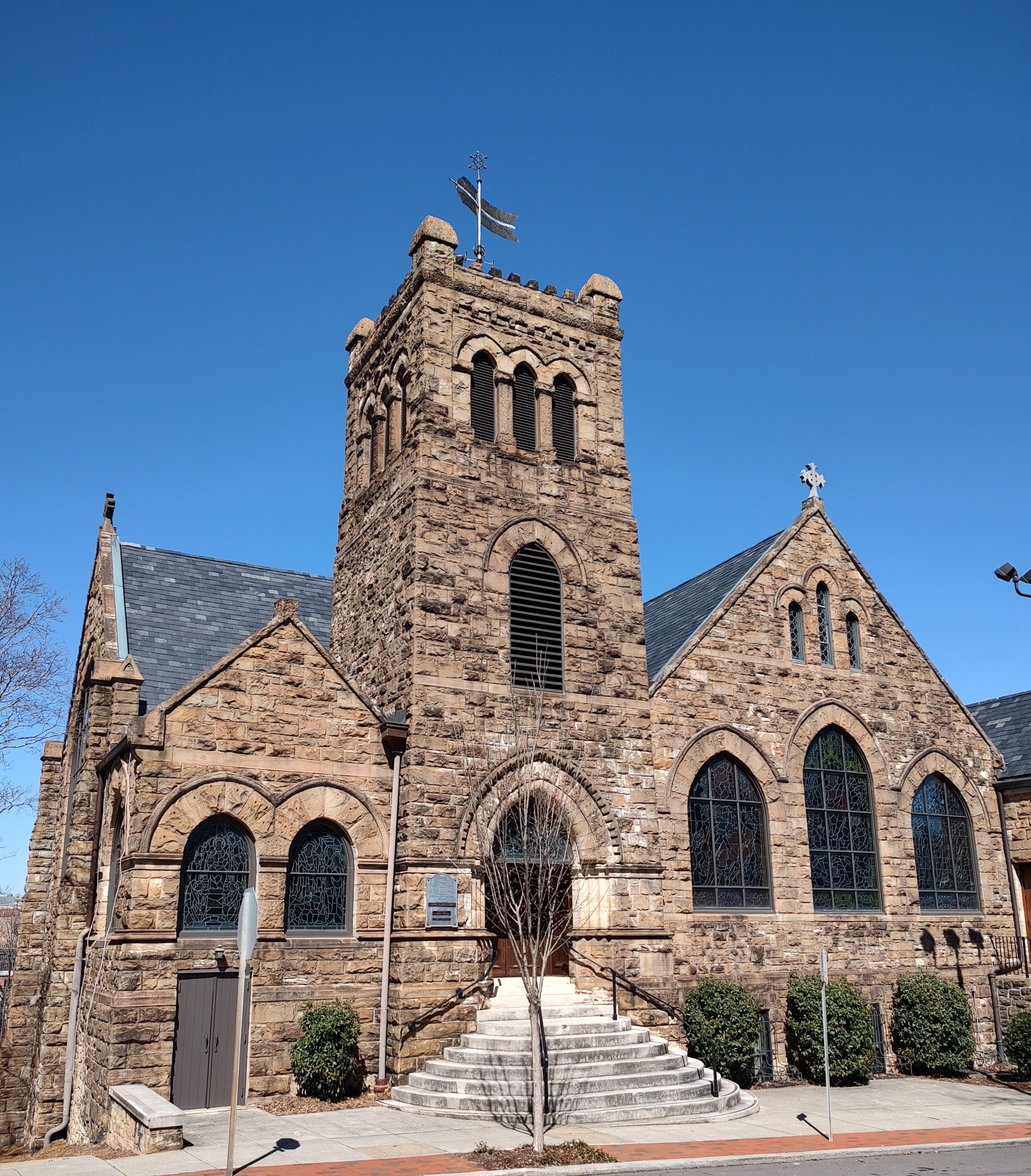
 On All Saints’ Day, I arrived early at St. Mary’s on the Highlands and slipped into the back row as the choir reviewed parts for their presentation of Bradley Ellingboe’s Requiem, to be performed in its entirety during the 10:30 service. A cadre of musicians were on hand to accompany the choir and the ever-present pipe organ. Sitting in back of the almost empty nave, listening to the choir sing and the musicians warm up, was a peaceful and reflective interlude before parishioners filled the pews and the service began with a blast from the organ. The music and the service were lovely. There were two baptisms, a naming of the St. Mary’s parishioners who had died in the past year, and the Requiem that underscored the ritual throughout.
Leaving St. Mary’s and walking down to the center of Five Points South to get a coffee after the service, I looked forward to what I had planned for later that day without realizing how it would all tie in to the All Saints’ service I had just left. Obviously, I recognized the connection to the place I would go immediately after the coffee – to place flowers on my parents’ graves at Elmwood – but it wasn’t until my next stop at Lakeview Marina’s amphitheatre that the dots began to fully connect.
Lakeview Marina was the venue for a benefit concert for the Southern Music Research Center, founder Burgin Mathews’s mission to preserve as much of the history and sounds of the music of the South as he can get his hands on. It is becoming an encyclopedic and indispensable archive for anyone interested in Southern music and its history. www.southernmusicresearch.org 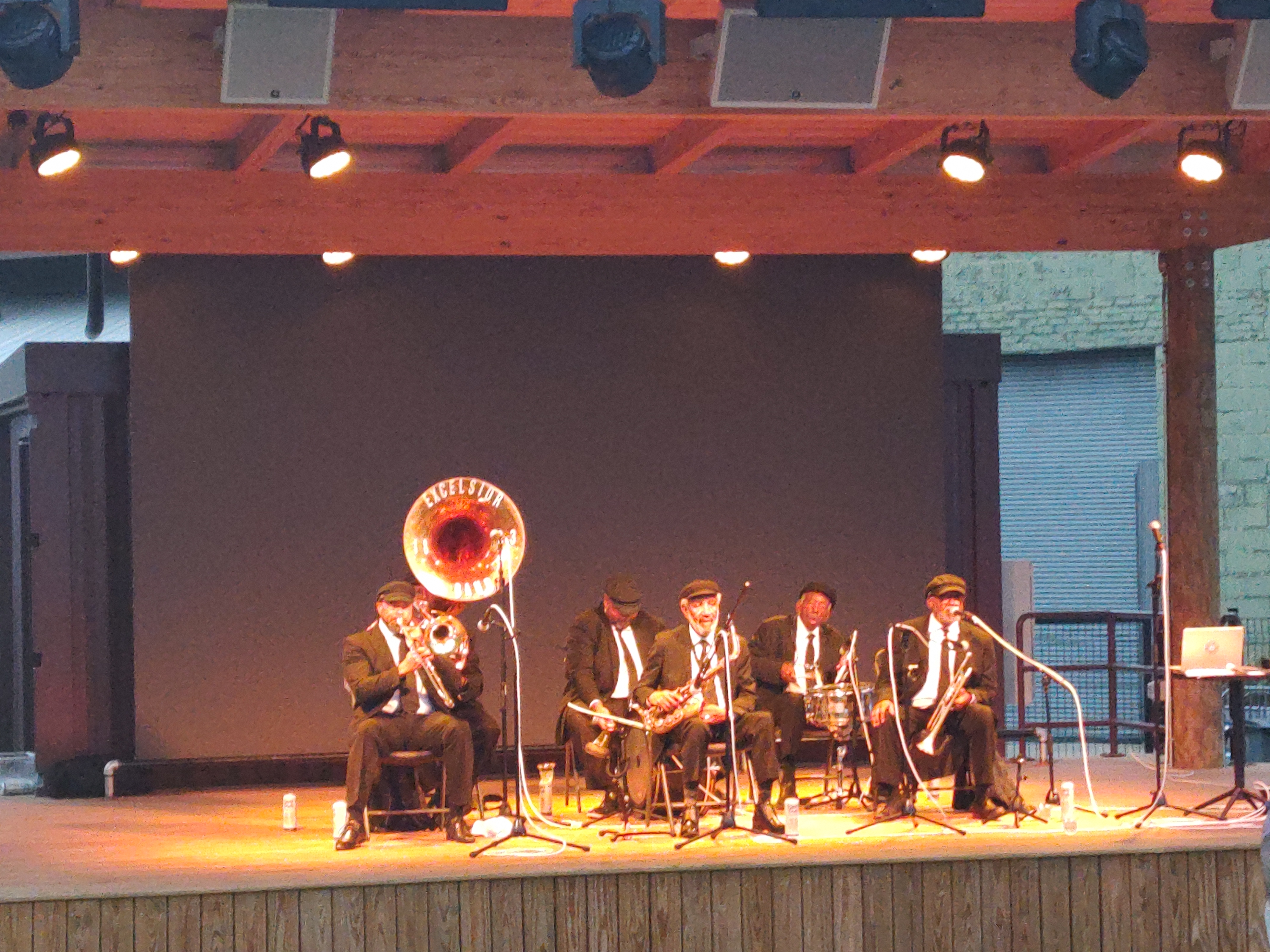
The musical guest for the benefit was the Excelsior Band of Mobile, Alabama. Founded in 1883, Excelsior is the oldest active marching jazz band in the United States. It wasn’t until they marched in and started playing that I realized how appropriate it was to be seeing them on All Saints’ Day. Bands like Excelsior are most often associated with Mardi Gras celebrations, but they are also mainstays of other life events and the jazz funeral is among the most memorable.
Jazz funerals are occasionally staged as events to show tourists what it’s like, but I had the opportunity to attend an authentic one while in New Orleans years ago. The deceased is followed to the cemetery by a jazz band, playing dirge-like funeral hymns. The mourners follow the band, with the brass band and mourners forming the “main line.” Bystanders and onlookers then fall in behind the main line, forming the “second line.” The funeral music continues until the deceased is laid to rest. After the final prayers are sent up, the event becomes a celebration of the life of the deceased, the band begins to make a joyful noise, and the main line and second line dance away from the grave. At the jazz funeral I attended, the widow of the deceased – in her eighties, dressed in full mourning, wearing sensible pumps – led the dance. I may never attend another jazz funeral in my life, but the sights and sounds of that one will linger with me forever.
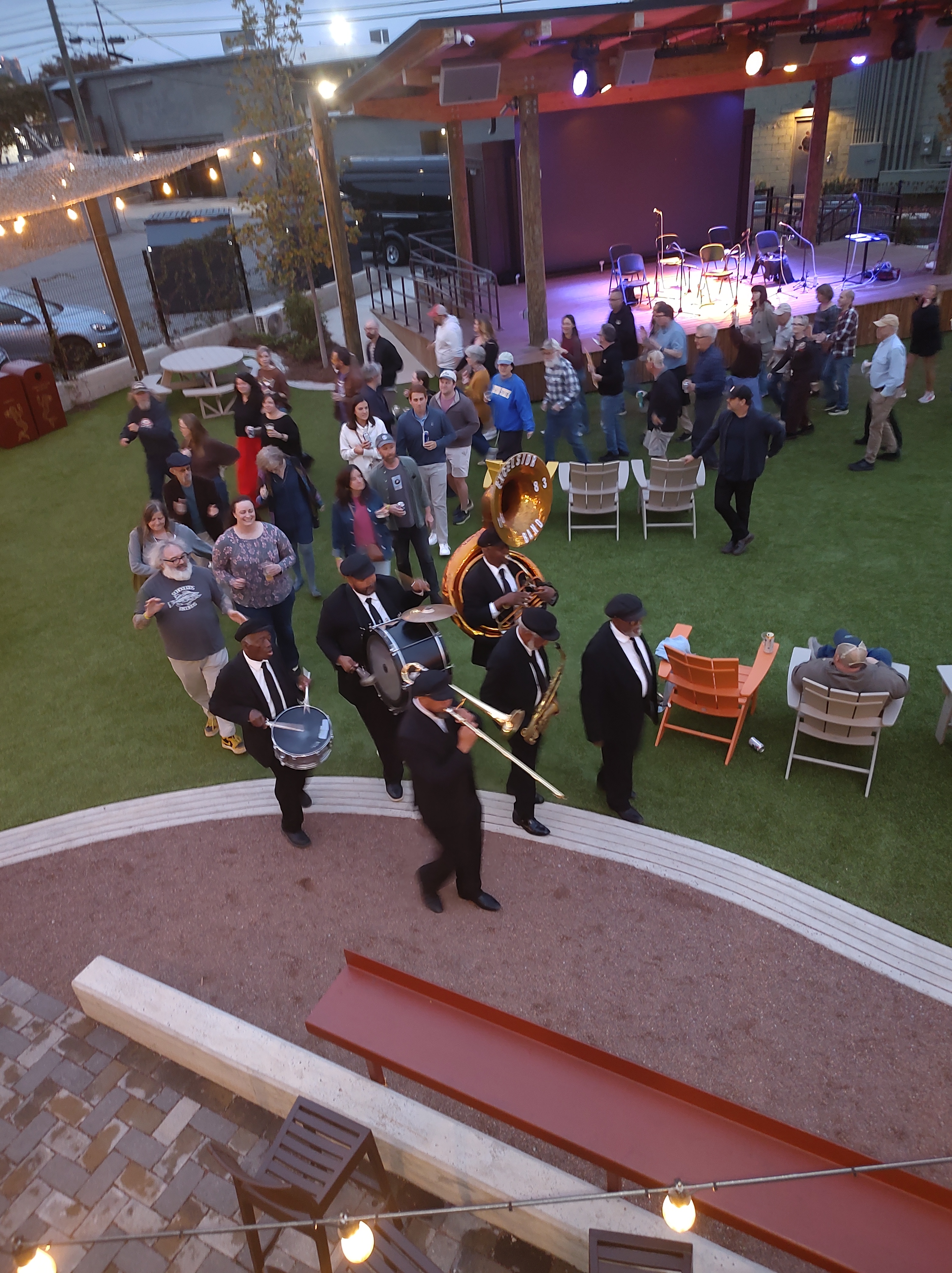 Excelsior was not playing a funeral, of course, but there were hymns in their set and the band did leave the stage and marched around the amphitheatre grounds as a second line formed behind them. In fact, the band implored the gathered, who started out sitting and listening respectfully, to get up and dance. “Don’t just sit there – we’re not that type of band!” one of the members said. It didn’t take long to get the crowd on its feet and, when the second line happened, most were ready to join in. And, of course, “When the Saints Go Marching In” was part of the program – as were the Birmingham classic, “Tuxedo Junction,” and the jazz standard, “Stars Fell on Alabama.” http://www.excelsiorband1883.com
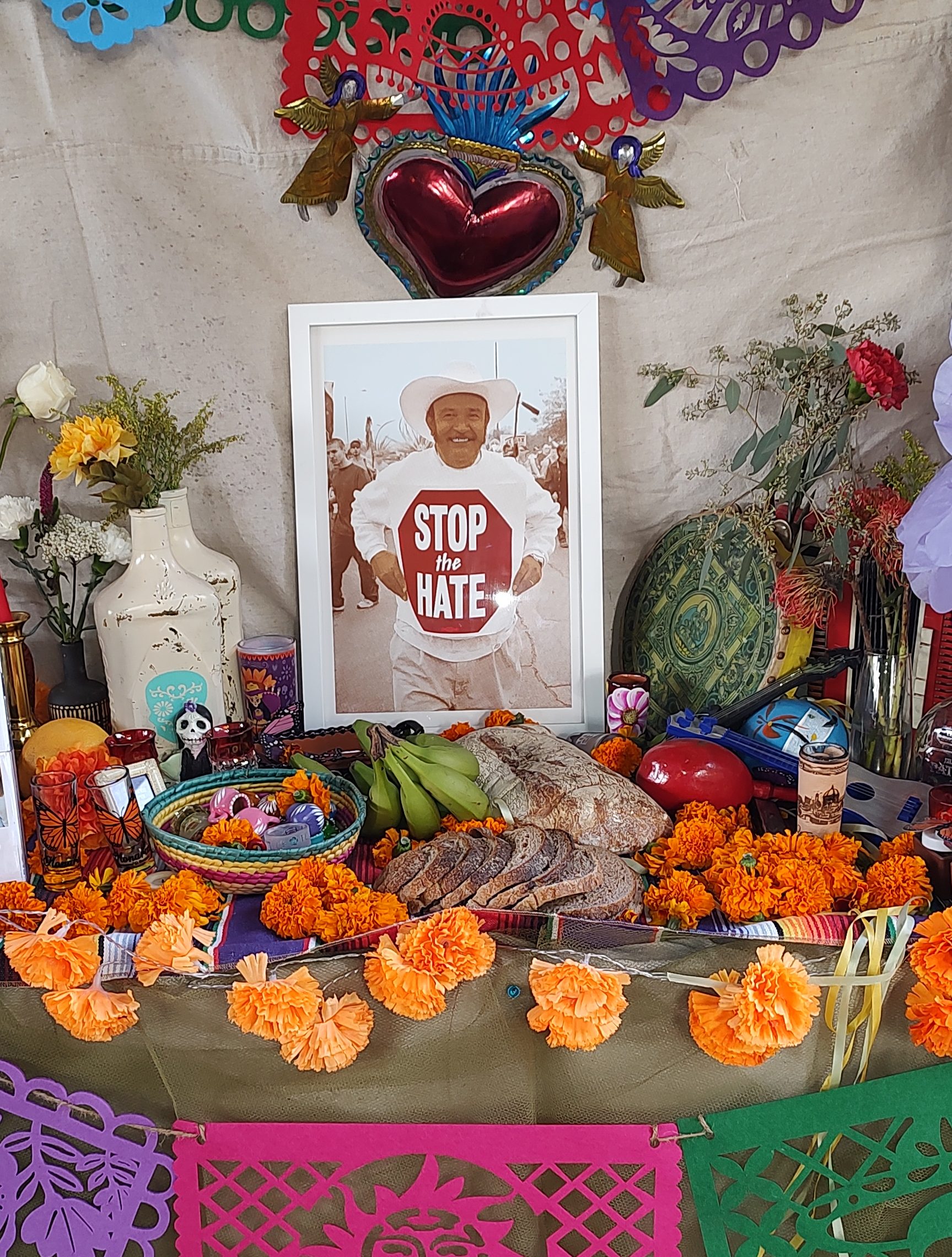
The next day was All Souls’ Day. At dusk, I headed out to Sloss Furnaces for the annual Dia de los Muertos, presented by Bare Hands, a Birmingham arts nonprofit. The event spreads throughout the Sloss grounds with performances, food trucks, a jazz-style procession, and a Memorial Roll Call. But the main draw is the large display of ofrendas, altars to the dead, which spreads underneath the First Avenue North overpass. Ranging from photographs hung on a line and cigar box ofrendas to large multi-level spreads, the scope and imagination that go into these displays is a sensory overload. It’s challenging to find a focus since there’s always something to catch the eye. Many come in costume and the people working the event circulate through the crowds in striking costumes also. Dancers and musicians roam the grounds and performances take over the stage in the Sloss shed. http://www.barehandsinc.org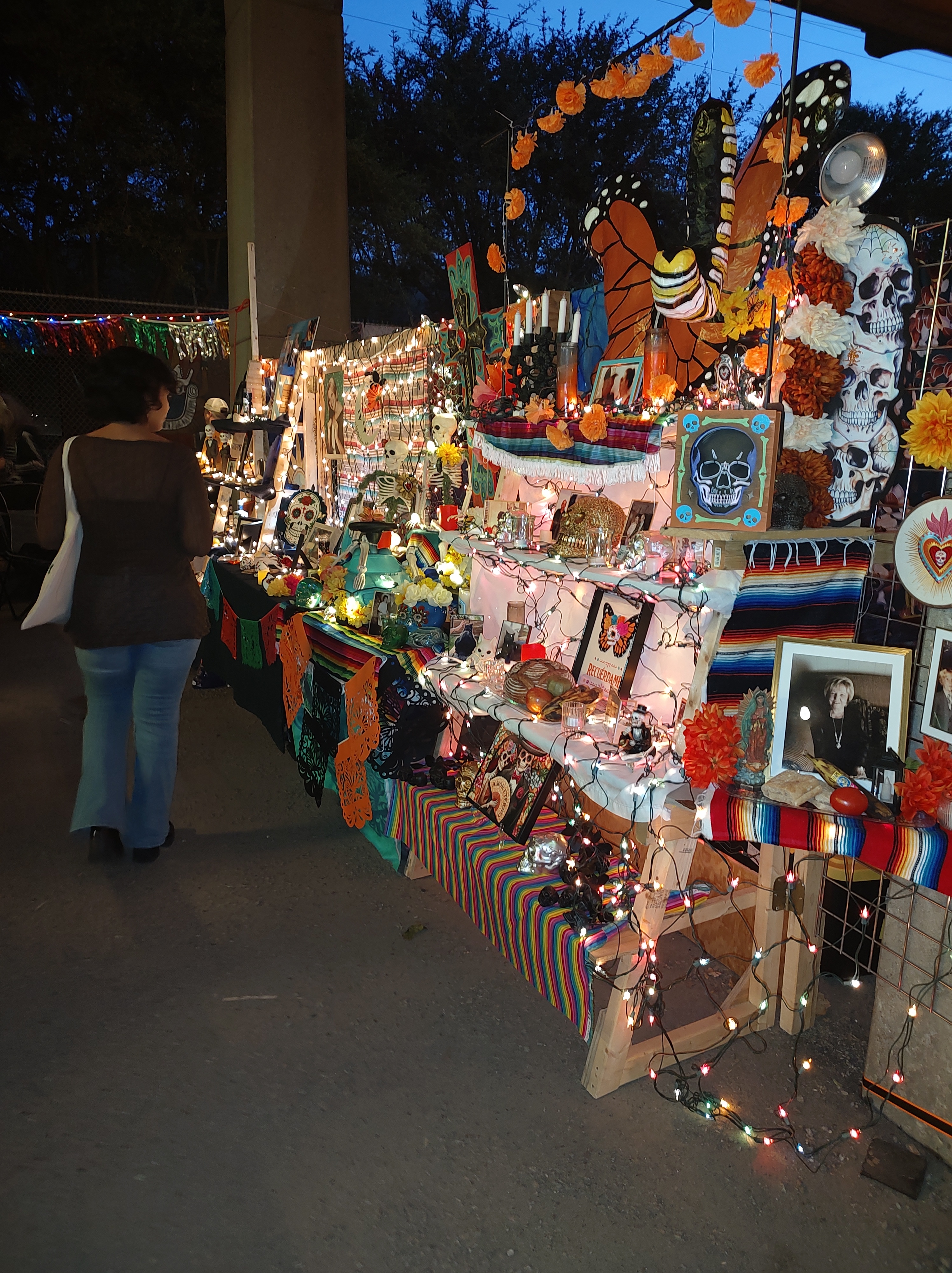
Although the Bare Hands’ Dia de los Muertos has been happening annually since 2003, this was my first time to catch it. It seemed like this was the year to start going. Having gone, I intend to make it a permanent event on my calendar. 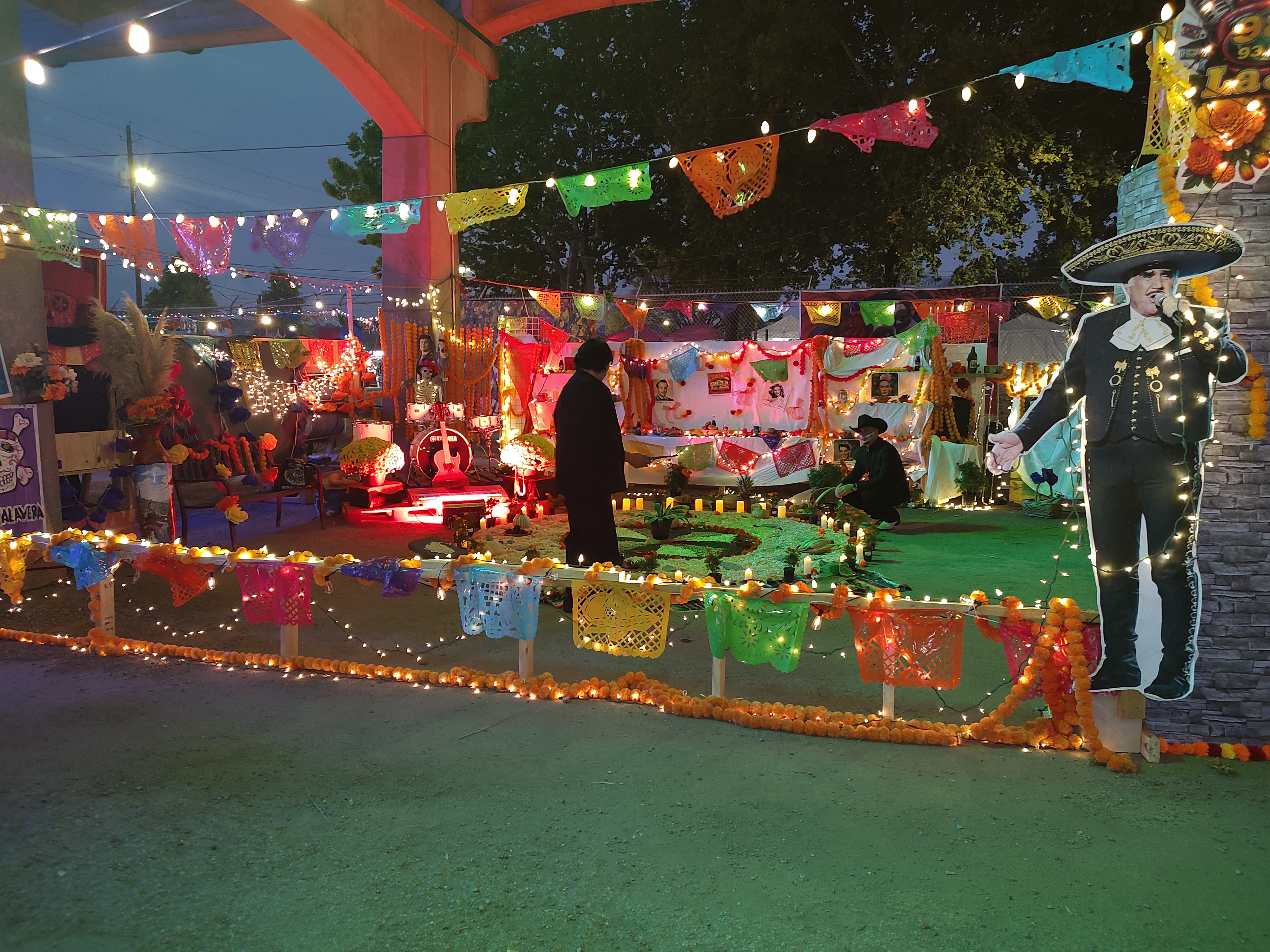
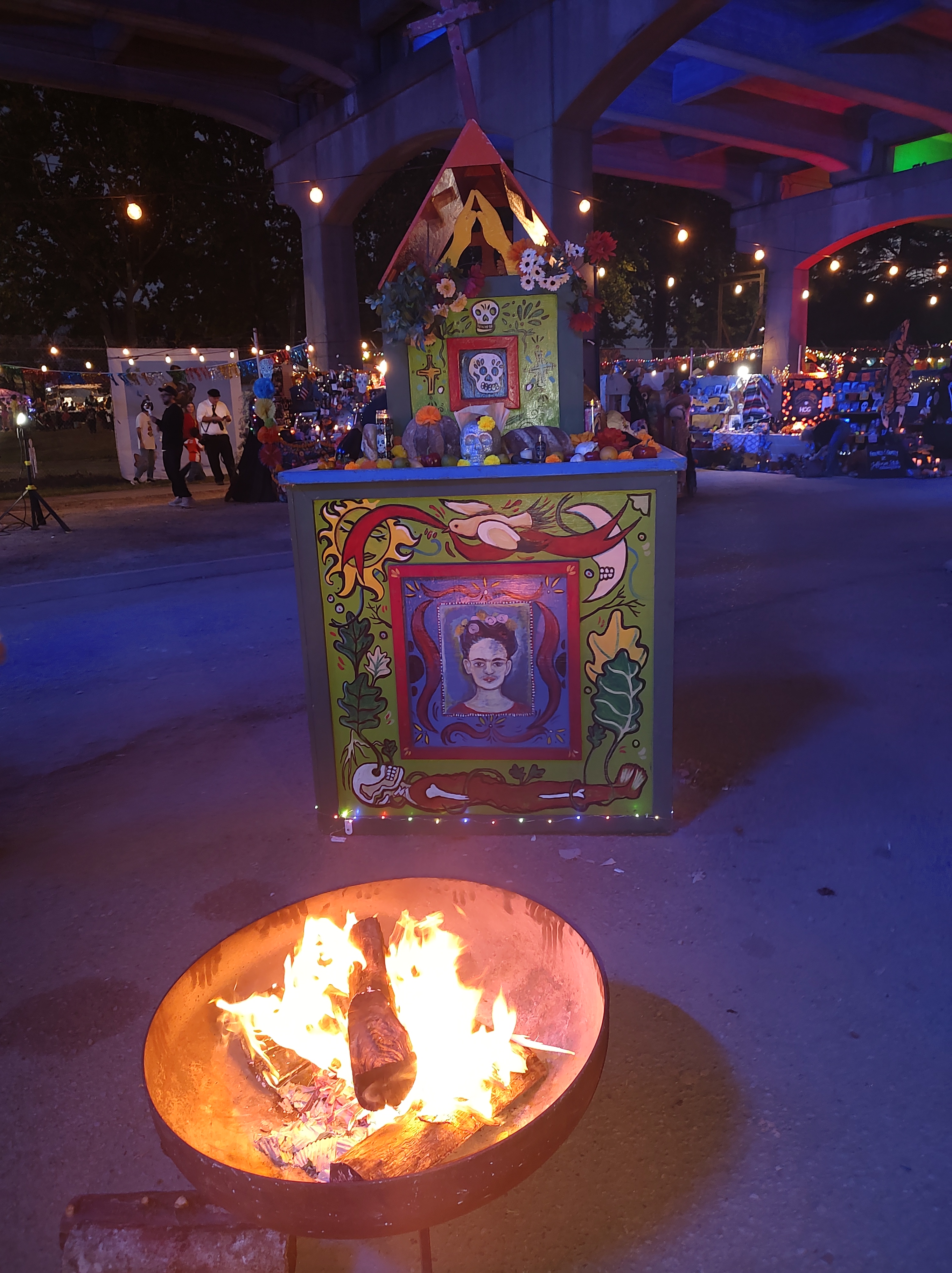
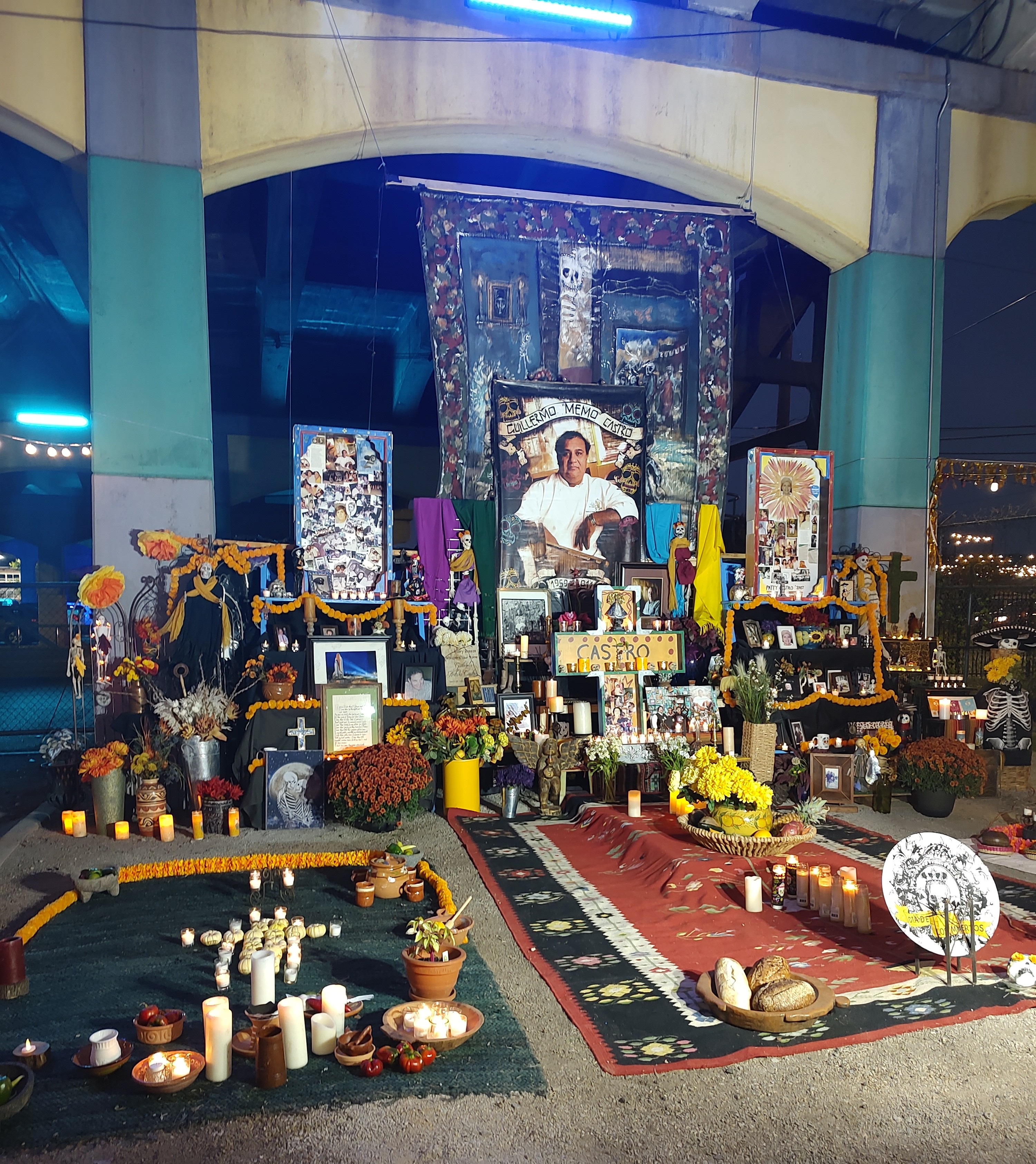 When I pulled up to the gate at Sloss, a loud man was pacing outside the gates, shouting at everyone not to go into this “place of Satan worship!” He was being ignored. Clearly he had no idea what was going on beyond the gates and was missing the point of a fete of reverence and positive outflow – a celebration of life and of lives lived. All Saints’ Day, All Souls’ Day, and Dia de los Muertos observances honor and remember those who have passed on, but the exuberance that permeates is an inspiration to make the most of the time we have with those we treasure. No one is ever truly gone as long as those left behind who remember, honor, and cherish their memory. These events of November are a reminder that we too shall pass, but our legacy will live on. Let’s make that legacy a positive force in the world.