Narratives that Transform

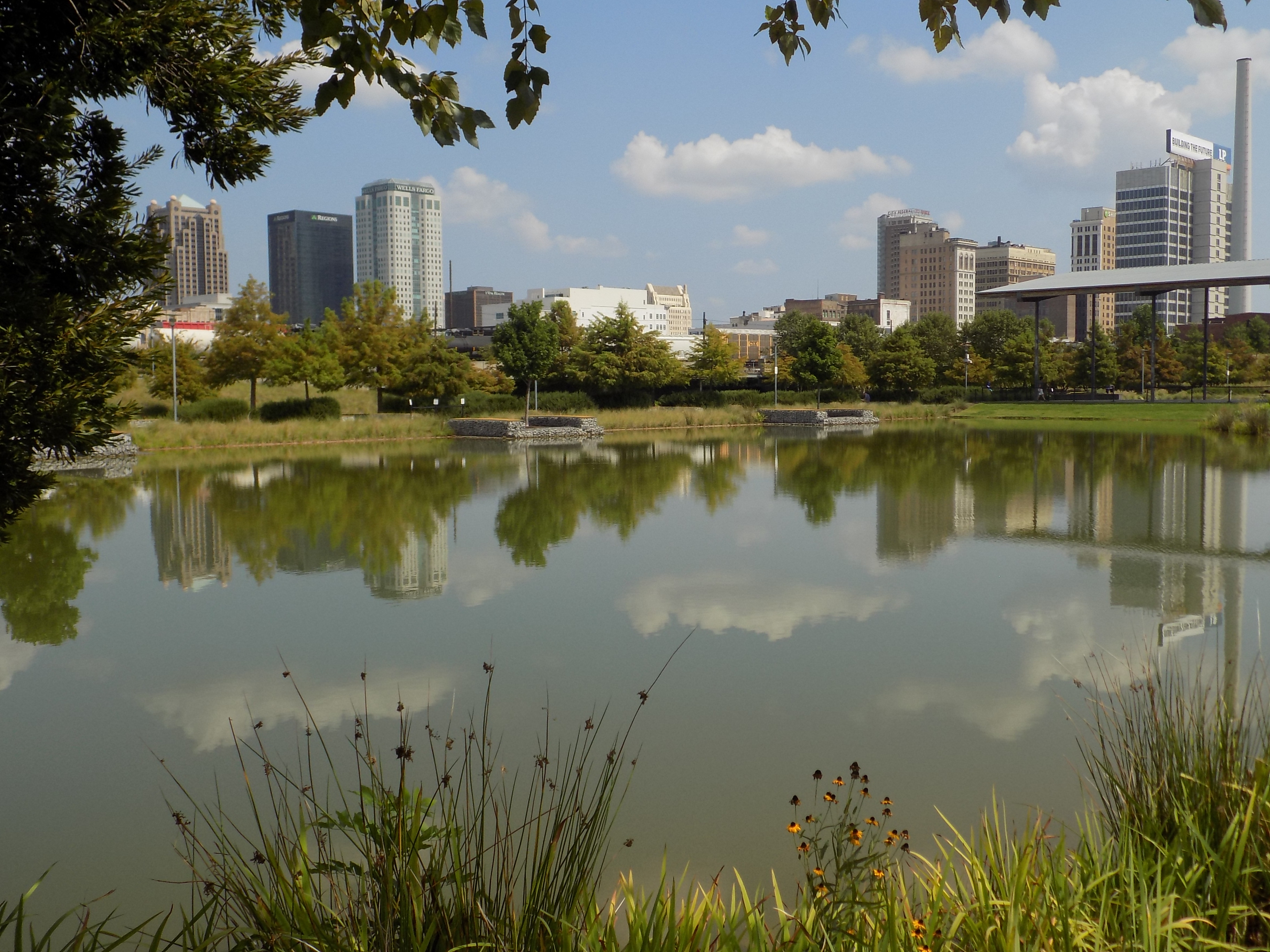
Birmingham; Friday, February 23, 2018. The Southern Foodways Alliance 2018 winter symposium, “Narratives that Transform,” began its narrative on Friday night with a reception on a loading dock behind a chain-link fence at an apparently abandoned building in an industrial district near the edge of downtown Birmingham (www.southernfoodways.org).

Although it is late February, it was a balmy evening with temperatures hovering in the 80s all day.

I drove past the place twice to be sure I had the right address.

When I parked the car and got out, the aromas drew me in to what was already a bustling gathering in progress. Grills were smoking and guests were gathered around picnic-style tables, creating a convivial spirit that enlivened the surroundings.

The ragtag location is the future site of chef Adam Evans’s new Birmingham restaurant that will open later this year. I first had Adam Evans’s food at a Friends of the Café dinner at the Alabama Chanin factory in Florence in August 2016; I still remember that evening as one of the best meals I have eaten at that venue. The rumor was already circulating back then that Evans, a Shoals native who had recently left The Optimist in Atlanta, was contemplating a “new concept” in Birmingham and I have been regularly checking for news ever since.

At the reception Evans’s pass-arounds included Gulf clam chowder, Gulf oysters, and salt-baked fish. It all lived up to my expectations.


Saturday morning, February 24, 2018: When I told my mother that I would be spending most of the day at a food symposium in downtown Birmingham, she asked, as she is wont to do, how much I was paying for the event.

When I answered her, she said, “That’s a lot of money to listen to people talk about food all day.”

When I told her that Dolester Miles was making breakfast, Mother – remembering past desserts from Highlands Bar and Grill — laughed and said, “Well, it may be worth it then.”

The symposium venue was WorkPlay, the southside multi-purpose entertainment and work facility where food professionals, writers, and enthusiasts gathered for a packed day of presenters and food.

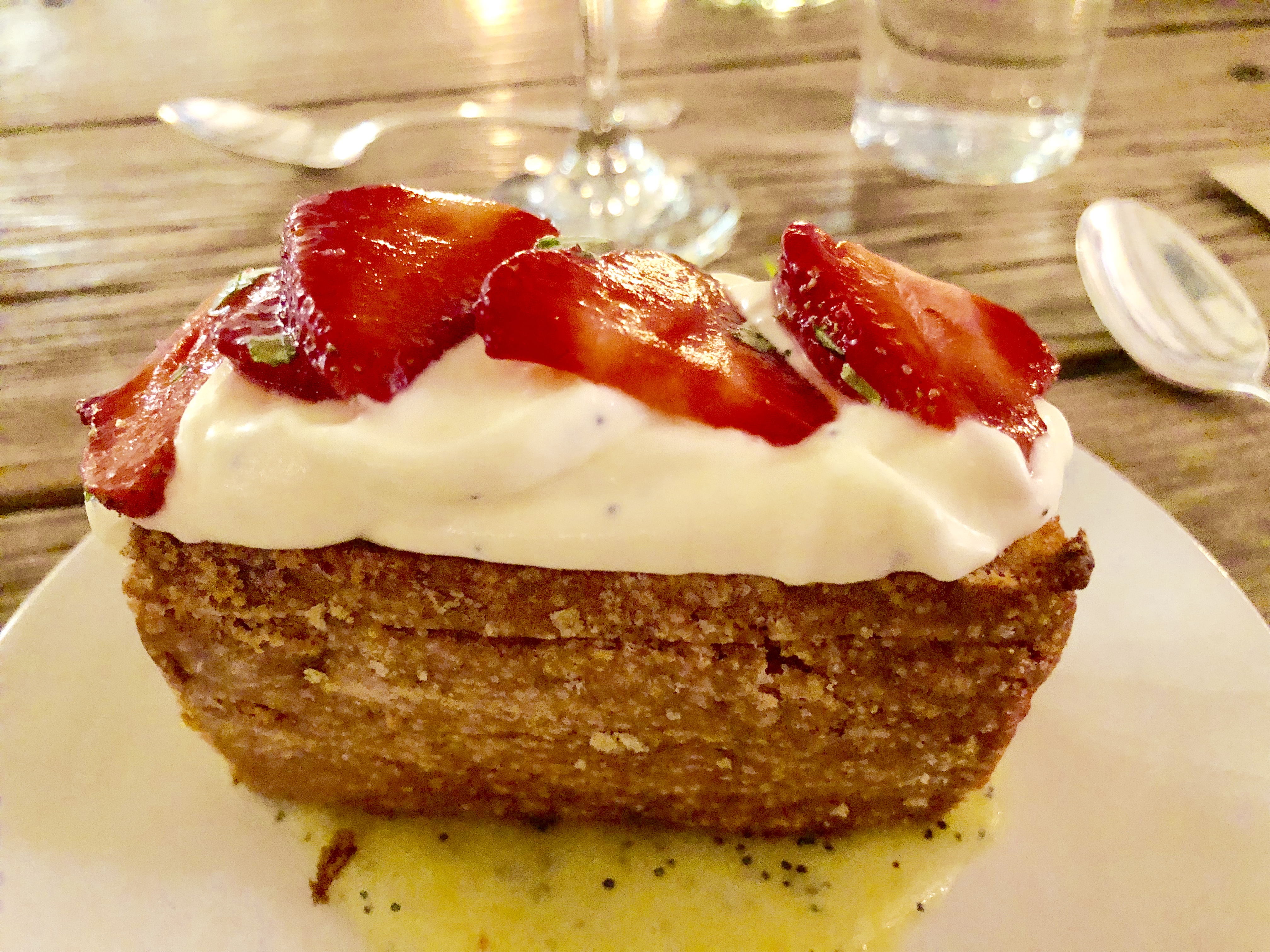
As participants arrived early on Saturday morning, Royal Cup coffee was being served on the WorkPlay sidewalk and Dolester Miles was plating up her cornmeal cake with strawberry preserves in the lobby. Ms. Miles is the James Beard-nominated pastry chef for chef Frank Stitt’s family of Birmingham restaurants and her dessert offerings are things of beauty and exquisite taste.

I ran into my friend, reporter Bob Carlton, who introduced me to Rusty Tucker, the force behind Rusty’s Bar-B-Q in Leeds, Alabama (www.rustysbarbq.com).The three of us sat together for most of the event. I have not been to Rusty’s, but I remembered him as one of the featured pitmasters in the documentary Q: Alabama’s Barbecue Legends that aired on Alabama Public Television and PBS. After hearing Tucker’s take on food and particularly barbecue throughout the day, I plan to make it a priority to drive over to Leeds to check his place out soon.

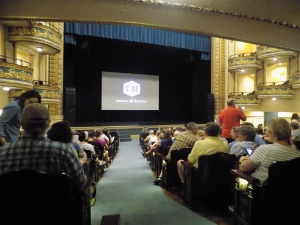
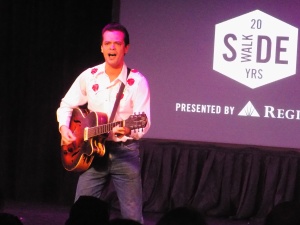
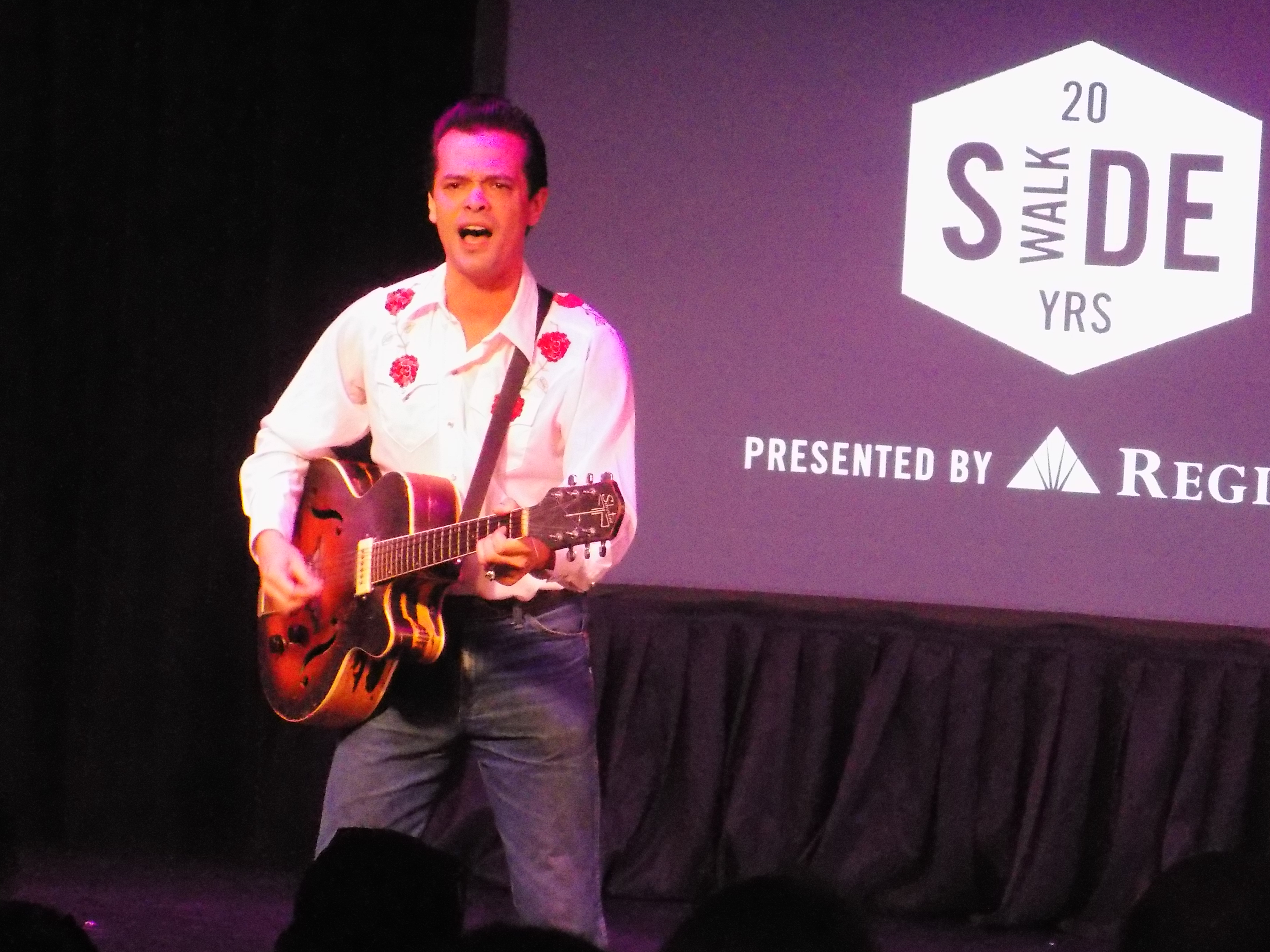
After breakfast, the gathering assembled in the WorkPlay soundstage for “Morning Corridos” – narrative protest ballads performed by La Victoria, a three-piece all-woman mariachi band based in Los Angeles. As they travel, the musicians meet with immigrants in each location, compiling stories and creating new corridos for each locality. With Birmingham-based Latino activists and residents on the stage, they performed “Heart of Alabama,” their newest ballad of Birmingham. 

It was a good way to wake the audience.

Two papers followed in the morning session. Moni Basu of CNN presented a powerful discussion of how narratives can influence change. She began with her memories of being a young Indian girl relocated to Tallahassee after living around the world. Later, she told of the homeless girl, Dasani, whose mother named her “after a bottle of water she could never afford.” The greatest takeaway for me of Basu’s presentation was her statement that we are “compelled to share our stories for our sake as well as yours.”

In the presentation “Whiskey and Credit,” writers Clay Risen of The New York Times and Fawn Weaver explored the story of Nearest Green, the African-American man who shared his methods for distilling whiskey with Jack Daniel in the 19th century. Green’s story was largely lost until Clay Risen published a recent piece about it in the Times. Weaver, influenced by Risen’s narrative, was inspired to buy a farm and move from Los Angeles to Lynchburg, Tennessee, to dig deeper into the Green story. She shares an uplifting story of how the various families associated with the Jack Daniel saga – Daniel, Green, Motlow – have assisted and supported her in her undertaking. Most intriguing is Weaver’s conviction that Jack Daniel’s spirit is somehow behind the unearthing and renaissance of Mr. Green’s narrative. She asserted several times that “Jack wants this story to be told.”


Saturday afternoon, February 24, 2018: An appetizer, of sorts, before the lunch service, was a preview screening of Ava Lowrey’s short SFA film, “Dol,” about Birmingham pastry chef Dolester Miles. The lovingly shot film, to be released in March 2018, is deliberate and sumptuous in its presentation of Miles’s techniques and of her food that always looks as wonderful as it tastes. Among her many desserts over the years, I still particularly savor the memory of her Bastille Day cake I had at Chez Fonfon years ago. Miles has been with Frank and Pardis Stitt’s restaurants since 1982 when Highlands Bar and Grill opened.

After the “Dol” screening, a generous “Family Lunch without Tweezers” was served by Duane Nutter of Southern National in Mobile. Southern National is a semi-finalist for the James Beard Foundation’s 2018 Best New Restaurant award. The meal included Kung Pao chicken breasts and a pea and Gulf shrimp salad along with a preponderance of other sides – a packed plate of delicious, hearty food. 

David Hagedorn, a Washington, D.C.-based writer on food and dining, was born in Gadsden, Alabama, and summered at his family’s house on nearby Lake Guntersville. His presentation, “The Thank You / Screw You Paradigm,” ultimately seemed to be questioning the efficacy of exploiting and exalting his Southern heritage in his food writing and expertise, when he is so ambivalent about the South as it relates to his identity as a gay Jew from a prominent Southern family. His narrative was hilarious and heart-breaking – sometimes simultaneously; his bitterness was tempered with affection, generosity, and clarity.

During the Q&A that followed the talk, an undocumented woman, also from Gadsden, asked Hagedorn about his prognosis for Gadsden’s future. His response was empathetic but grim, prompting SFA executive director John T. Edge to say, to Hagedorn, “I’ll claim you if you’ll claim me.”  Alas, Hagedorn sighed but had no ready response.

Writer, recipe developer, and activist Julia Turshen spoke about the process of putting together her new book, Feed the Resistance: Recipes and Ideas for Getting Involved, in which chefs who are politically active provide suggestions for a synthesis of food activity with political activism. Chapter titles include “Easy Meals for Folks Who Are Too Busy Resisting to Cook” and “Feeding the Masses: Food for Crowds.”

Writers and scholars Ralph Eubanks and Tom Ward presented “Still, Still Hungry,” in which an upcoming reissue of Still Hungry in America, a 1969 book featuring photographs by Al Clayton and a text by Robert Coles, was discussed. The book grew out of Lyndon Johnson’s “War on Poverty” and Clayton’s photographs provide stark evidence of the dire poverty of areas of America including Appalachia and the Mississippi Delta.  The session was introduced by Clayton’s daughter and the presenters provided sobering contemporary evidence of the ongoing blight of American poverty and the government’s failure to confront it effectively.

The final presentation, by Rosalind Bentley, a reporter for the Atlanta Journal-Constitution, was a master class in how to present transformative narrative. “Radical Hospitality” was a memoir of Bentley’s relatives and role models – Aunt Lucy, Cousin Carol, and Sandra, women who each participated in her own way in the Augusta, Georgia, chapter of the 1960s Civil Rights Movement. Aunt Lucy and Cousin Carol “fed the Movement” with home-cooked meals for the activists and their attorneys. Sandra “fed the movement” as a teenager jailed for marching, who shared care packages from her family with her fellow political prisoners.

Bentley built her narrative with care, seasoning it with the perfect amounts of humor and family stories, and building to a powerful climax and conclusion which provided the ideal resolution for a deeply felt and moving day of food-fueled activism.

As the day ended, Becky Satterfield and her crew from Satterfield’s, a Birmingham restaurant, were in the lobby serving a Conecuh County sausage gumbo as part of the event’s closing happy hour.


The 2018 SFA symposium is over, but its narrative, which began at the make-do reception on the loading dock, will end in a year at a reception at the same spot to launch the 2019 winter symposium. Next year, however, the site will have transformed into Adam Evans’s spanking new Gulf seafood restaurant and oyster bar.

The narrative of southern food and foodways is always, after all, a continuing saga.

I’ll be there.

More Harbingers

We seem far from the official start of spring here in north Alabama, even though it’s only a month away and temperatures are mild in the last several days. This has been a relatively rough winter at times, especially compared to the almost non-existent winter weather of 2016-2017. Today, however, in mid-February, the temperatures are in the 70s and I couldn’t help but get giddy for the return of warm and hot weather as the norm – a giddiness that always kicks in once Mardi Gras has passed.

This feeling has been coming for days now and I have noted the hopeful signs in my own winter- ravaged yard, which has become a little spongy after a spate of hard rains. Even so, there are harbingers of spring popping up daily and everywhere if you pay attention. Spunky robins are lurking around the back yard in growing numbers and daffodils are abundant in nearby yards. 

In my own little front yard this week, I spotted a single blooming crocus and a bunch of crocus foliage that clearly has no plans to bloom this year. When I moved into my house eight years ago, I randomly planted sixty crocus bulbs around the front yard. In the first couple of years after planting, the tiny flowers would appear in profusion around the yard. I haven’t had time to maintain the yard as carefully as I used to and the crocus attrition rate has accelerated, but the few hardy plants that persist are a tiny little pleasure to discover as February hurries through.

The cherry tree in my front yard always puts on a grand show for a couple of weeks in early spring. We’ll have to see how it fares this time around since it underwent a pretty extreme pruning in the fall. In the meantime, my neighbor’s back yard cherry tree, which continues to grow unfettered and provides a significant canopy in my own yard, usually blooms a few weeks earlier than my cherry tree and will hopefully once again provide a magnificent borrowed view out the back windows. It is normal for my cherry tree to burst forth with blossoms just as the neighbor’s cherry blossoms are giving way to lush green foliage.

A ponytail palm that has been with me for twenty years now, flourishing in a cramped concrete planter that belonged to my Grandfather Harbison, seemed to bite the dust when I had prematurely moved it outside before the freeze last year; by mid-summer it had sprouted new ribbons of leaves and again graces my living room as beautifully as ever. I plan to wait longer this year before I put it outside the front door as a welcoming beacon.

In the back yard, the pots that held herbs in the 2017 growing season are sitting on a garden table outside my library window, waiting to be replanted. I usually have pots of mint and rosemary, thyme, parsley, oregano, and basil – lots of basil. This week, chives began to push up in one of the pots and I wonder what other volunteers might reappear. Many plants that began to flourish early last spring were killed off by that unexpected hard freeze in April while others eventually came back, a little worse for wear, and still others re-emerged better than ever.

The deep red camellia bush that replaces the tall 35-year-old Rose of Sharon that died last year is all abloom and I look forward to its off-season blooms and its evergreen presence just inside the back gate for this and years to come. The four potted crape myrtles just outside my back door always take their sweet time to get going, but they look healthy and I’m sure they’ll provide profuse color by mid-summer.

Outside the back gate, the potted wild rose that was foraged from a lakeside in Owens Cross Roads over in the Flint River Valley is already sprouting – as eager as I to get the warm weather underway.

Tulips that were left by the previous owner of my house are coming up but they don’t always bloom and I’ll be curious to see what they do this time around. At my mother’s house in Birmingham this week, I was greeted by a vase of burgundy tulips on the dining room table. These are just another temptation to make me long for spring to set in for a spell.

I have a list on my refrigerator of things I want to do in my backyard garden and I wonder how much of the list I might be able to tackle this year. In the library hangs a sketch, drawn by my nephew when he was about six or seven, of a plan for my back yard garden that includes specific spots for sitting areas and plantings, a grill, and a large central fountain. I regularly consult that sketch to see how it connects with my own plans. In lieu of the fountain, I may move the birdbath from the front yard to the back. It was originally placed to cover a bare spot in front of the window but that bare spot is now lush with plantings and the birdbath has gotten lost from view.

The yard is a constant work in progress with no master plan. Every warm evening that I sit at the bistro table in the rear of the little yard the list changes and I know the plan, like nature’s own evolution, will never reach completion. 

Homage to Sam

“There are times when I can’t help thinking about the past. I know the present is the place to be. It’s always been the place to be. I know I’ve been recommended by very wise people to stay in the present as much as possible, but the past sometimes presents itself. The past doesn’t come as a whole. It always comes in parts.

In fact it comes apart…”

When Sam Shepard died in July 2017, I wrote about what a strong influence his writing has been for me through the years. His final work, Spy of the First Person (Penguin Random House, 2017), is an undeniably autobiographical work of “fiction” written by Sam Shepard in his final year as he suffered from ALS.

The book is a labor of community and love. When Shepard began the book, he could still write. As his motor skills weakened, his children and sisters devised ways to help him keep the work going – recording devices, transcription, dictation. Shepard’s long-time friend and erstwhile collaborator Patti Smith assisted the writer in editing the book into final shape. Shepard’s involvement in the book continued until his death; he even chose the haunting cover photograph for the publication – a Graciela Iturbide photograph of a weathered man looking up at birds flying overhead.

When Shepard died, his children took the book to fruition and publication. The triumphant result is a book that reminds us what a masterful writer Shepard is and how masterful he remained until the end. In a touching twist, the book is dedicated to the writer by his children.

The book’s first-person narration is a duality of the observer and the observed. An unnamed man watches a sick man on a screened porch across the street, musing on the man’s situation and the events he can make out through the screen. The sick man, aware of being watched, becomes alternately paranoid and reflective as his memory travels far into his past – and childhood and youthful experiences become juxtaposed with visits to medical clinics.

The narrative consciousness of nature around us is strong and vivid, with detailed descriptions of landscapes and wildlife – particularly birds. One is reminded of playwright Shepard’s skill with monologues and all of the memorable moments he gave his characters in raw and mind-bending dramas spanning decades.

The narrative flow between the two voices is fluid and we lose track of which speaker’s voice we are reading. That is fitting as it becomes clear that the narrative voices are almost certainly of the same man, pondering his sickness and observing his physical degradation with a still sharp brain.

Spy of the First Person culminates with a celebratory dinner at a Mexican restaurant teeming with “a lot of noise and a lot more tequila.” The sick man is surrounded by his children, his sisters, and friends. In these final pages the man reveals the names of the people around him – Jesse and Walker – his sons; his daughter, Hannah; Roxanne and Sandy – his sisters. The names are the same as Sam Shepard’s children and sisters.

As the group leaves the festive restaurant, the man says, “The thing I remember most is being more or less helpless and the strength of my sons. A man pushed by his sons in a wheelchair from a crowded restaurant to a street with nobody on it. A man sitting on shaggy wool with a Navajo blanket across his knees.”

Sam Shepard the man is gone but Sam Shepard the artist lives on in a body of work that had majesty and resonance to the very end.

Photo of Sam Shepard by Grant Delin

Red Beans Road Show

When I was first visiting New Orleans on a regular basis, Buster Holmes restaurant on the corner of Burgundy and Orleans was still in operation serving distinctive New Orleans food at amazingly reasonable prices. It was a no-frills place with a jukebox and a diverse clientele. It was well-known for catering to New Orleans musicians and was famous for its simple and excellent food.

Buster’s was best known for red beans and rice, that hearty New Orleans kitchen stalwart that was the traditional meal for Mondays – “wash day” for many households. Cooks could put on a big pot of red beans, let it simmer, go about their other chores, and have a good nutritious meal to eat on throughout the rest of the day.

Buster’s came to mind recently as I traveled with my friend Madeleine – who has been known as “Bunny” her entire life – to Florence for my first dinner of 2018 at the Alabama Chanin Factory (www.alabamachanin.com). The January dinner was a special Factory add-on and was not part of the Factory’s “Friends of the Café” series which will kick off its fourth season of dinners by award-winning chefs in April.

New Orleans-based writer, photographer, and raconteur Pableaux Johnson has been presenting the “Red Beans Road Show” for a few years now in a variety of locales. The event hearkens back to Johnson’s childhood memories of meals around his grandmother’s large round kitchen table. When that same table came into his possession, he felt a need to “feed the table” with informal Monday night red beans and rice dinners. Subsequently, epicurious.com recently named Pableaux Johnson to its list of “100 Greatest Home Cooks of All Time.” That “of All Time” phrase is pretty heady stuff (www.pableaux.com).

The ensuing “Red Beans Road Show” project is a series of traveling pop-up dinners inspired by meals around Johnson’s grandmother’s table and Pableaux’s desire to share Louisiana culture (www.redbeansroadshow.com).

It’s a simple premise. A local host provides the venue, the starters, and the dessert, and Johnson provides the heart of the meal – red beans and rice with skillet cornbread. Diners eat family-style around a table and lively conversation and new friendships accrue.

The Alabama Chanin Factory, helmed by Natalie Chanin with the Factory kitchen run by chef Ray Nichols, is the perfect setting for the concept; the precedent set by the “Friends of the Café” series makes it comfortable and familiar.

Bunny and I were greeted by Natalie Chanin when we arrived on a rainy Thursday night with a brutal cold front moving in. The crowd was mingling and exploring the racks of the Alabama Chanin showroom as appetizers were circulated. Pableaux Johnson’s photographs of Mardi Gras Indians were displayed on Factory walls and provided additional visual stimulation to the perfectly curated Factory space. We were a little late and I only got to the deviled eggs but I caught sight of other starters across the room.

Pableaux Johnson provided an animated introduction and explanation of the evening to the guests before we moved on to our seats at the many tables set up in the space. Once seated, huge bowls of rice appeared followed by bowls full of red beans. The assembled began to fill our bowls as plates of cornbread arrived to complete the serving.

Over the years I have realized that there are as many opinions about what constitutes the proper red beans and rice as there are people who eat it. Pableaux Johnson’s recipe for “Monday Night Red Beans” hits all of the high points and is a superior palate pleaser. Briefly, his version uses Louisiana-sourced Camellia brand red beans, andouille sausage, Tony Cachere’s Creole Seasoning, and Crystal Hot Sauce, along with the expected herbs, vegetables, and seasoning. It’s a pretty basic red bean recipe – no extreme frills or flourishes or experimentation – and it’s delicious.

The cornbread was a source of some culinary controversy as Johnson warned the gathering in advance that his cornbread contains a small amount of sugar. Those are fightin’ words in some quarters (including in my family) but the cornbread was very tasty nevertheless and a good complement to the savory dish. In Pableaux’s defense (if he needs one), the bit of sugar is part of his family’s cornbread recipe and that’s good enough justification for me. In fact, after a brief conversation with Pableaux in which I let him know that my mother is a bit of a cornbread snob, he brought over a couple of slices of the cornbread for me to take to Birmingham for her inspection.

Between the red beans course and the dessert, Pableaux discussed the Mardi Gras Indian portraits which lined two walls of the dining area. The Mardi Gras Indians have a rich and literally colorful history and tradition that is uniquely New Orleans and Pableaux’s respect for their craft and folkways is evident in his art and in his rendering of their story. It was satisfying to see the intricate details of the Indians’ painstakingly rendered and hand-sewn regalia sharing space with the meticulously crafted and hand-sewn garments of the Alabama Chanin showroom.

Chef Ray Nichols’s kitchen provided the dessert, a beautiful banana pudding that provided the ideal tasty end to a relaxing and rejuvenating evening at the Factory. As the guests departed, there was a washtub full of bags of Camellia red beans. Each guest received a bag of beans and a copy of Pableaux’s “Monday Night Red Beans” recipe.

Exchanging goodbyes with Natalie Chanin, we noted how nice it was to have an event such as the Red Beans Road Show so near the end of the holiday season (and, also, to kick off the Carnival season commencing on the Gulf Coast). I’m hoping there will be other such events at the Factory to signal the start of years and Mardi Gras seasons to come.

Bunny and I made our way home through a winter mist and fog and, by the time we got home, work and school were cancelled for the next day due to inclement weather. I’m happy the hard freeze waited until the Florence version of the Red Beans Road Show had reached its successful end. 

Cathedral

The Cathedral of Saint Paul, Birmingham

In Raymond Carver’s glorious short story, “Cathedral,” a regular guy, stoned and semi-drunk, tries to communicate the actuality of a cathedral to a blind man – a houseguest who is practically a stranger to him. The task is pursued with the seeing man holding a ballpoint pen to paper and the blind man following the movement of the hand and the verticality of the movement.

“You got it, bub. I can tell. You didn’t think you could,” says the blind man. By story’s end, the seeing man is the one who has been enlightened about the majesty and meaning of cathedral architecture.

My ongoing project of photographing old churches is inspired by an interest in ecclesiastical architecture and architecture in general. I am often drawn to the quaint and forgotten small churches found on remote byways but church architecture of all types is interesting to me.

I am a fan of modern architecture but too many modern church structures are bland, utilitarian, and boring, it seems, with no architectural distinction whatsoever; I have seen charming buildings demolished to make way for eyesores, usually alongside major highways.

Cathedral Church of the Advent, Birmingham

Fortunately, there are still distinctive old church buildings in the northside city center of downtown Birmingham with congregations founded within a year or two of the 1871 founding of the city.

The Cathedral Church of the Advent, an 1883 Gothic sandstone structure, stands on 20th Street across from the Harbert Tower (www.adventbirmingham.org). When I worked in downtown Birmingham in the ‘90s, I would often take a lunchtime break in the peaceful Advent church garden to read and reflect. A block away, on the other side of the Harbert building, is the First United Methodist Church’s brooding Romanesque structure built in 1891 (www.firstchurchbham.com).

Cathedral Church of the Advent garden, Birmingham

It is noteworthy that the architecture of the 1989 post-modern Harbert office tower – formally known as the Regions-Harbert Plaza – acknowledges its proximity to Cathedral Church of the Advent and First Methodist in its building materials and architectural set-backs and flourishes.

A few blocks northwest of First Methodist (now known as First Church Birmingham) is downtown’s most famous church, 16th Street Baptist – site of the horrific 1963 bombing that killed four young girls and galvanized the Civil Rights Movement (www.16thstreetbaptist.org). The building, completed in 1911, is a distinguished Byzantine-Romanesque structure that anchors Birmingham’s Civil Rights National Monument.

Built in 1888, the Victorian Gothic First Presbyterian Church (www.fpcbham.org), east of 20th Street, is only a block over from the Cathedral of Saint Paul (www.stpaulsbhm.org), a Neo-Gothic building completed in 1893, whose brick masonry is so reminiscent of many of the downtown structures from Birmingham’s early decades.

Cathedral of Saint Paul, Birmingham

On a recent Saturday morning a couple of days before Christmas, I went into the Cathedral. A couple of parishioners were in the sanctuary preparing for mass. The majestic impact of the soaring room was heightened by the Moller pipe organ that was at that time filling the building with bright and vibrant sacred music of the season.

Outside, the day was overcast, but the stained glass windows shone brightly as the sun occasionally burst through grey December clouds. I sat in a pew toward the back and listened to the music for a while, savoring the solitude and peace of the room and the history it encompassed. Then it was time to travel out into the busy streets and continue with holiday preparations.

Cathedral of Saint Paul, Birmingham

May 2018 bring good news. Look for and savor the beauty that surrounds you. Happy New Year.

Notes from the Point – 2017

Point Clear, Alabama. The long etymology of the word “vacation” seems to suggest that it’s more about what you’re leaving behind than where you’re going.

That works for me.

I have been making an annual pre-Christmas getaway to the Grand Hotel in Point Clear, Alabama, just down the eastern shore of Mobile Bay from Fairhope, for about fifteen years (www.marriottgrand.com). There is a time on the trip down from north Alabama when I forget that I have a job and that is one of the rewards, for me, of any sort of vacation time.

The first time I came to the Grand there was a rare hard freeze and it was miserable outside during my short stay. Even so, I wandered the resort grounds, explored the public walkway that runs between the bay-front houses and the water, ate some great meals in area restaurants, and decided that a December tradition had instantly begun.

Most Decembers the weather is milder; occasionally it’s tee-shirt and shorts weather. This time it’s somewhere in between – slightly chilly with a warm front threatening to bring some rain before my visit is over.

The drive down seemed better than usual; traffic was just right and my spirits were heightened by the results of the recent special election for an Alabama U.S. Senate seat. For a change, Alabama voters came through; I will be embarrassed again by Alabama politicians and Alabama voters – and soon, probably – but for the holidays I am going to cherish and savor the current hopeful moment. Everything looked brighter and more beautiful on the drive down. I always love my home state, but this week it looks brighter than usual. Maybe it’s my imagination, but people seemed friendlier.

Near the end of the drive, at a traffic light in Fairhope on a Friday afternoon, two women shoppers burst into spontaneous dance to the holiday pop music piped in from a street speaker. When they got their signal to walk, they beamed brightly and continued to dance across the street, doubling over with laughter as they reached the sidewalk.

It’s easy to forget that the 2017 hurricane season was brutal but I was reminded as I drove down Scenic 98 and saw that every pier along the waterfront was damaged by Hurricane Nate, including a public pier that I have photographed many times.


The Grand itself is undergoing a massive (non-hurricane-related) property-wide renovation and upon arrival I passed barricaded construction sites. The main building is completely closed. Upon check-in I was told that my usual room on the top floor of the Spa Building was not available. After some searching and discussion, a manager determined that it was available and, if I’m not mistaken, I am the first guest in that room post-renovation.

After staying all over the Grand property in my first years coming here, I honed in on my favorite room and I have vowed to stick with it. It is on the top floor of the tallest building and faces out over the lagoon and property. From the balcony, one can view the property with the bonus feature that one can also see over the live oaks and across the wide part of the Bay past Gulf Shores to the open gulf. Looking to the west, one can see across the pool to Mobile Bay just before it widens significantly at the place that gives Point Clear its name.
The footprint of my favorite room is the same but the re-model has made it seem more spacious, more luxurious, and much more contemporary. It is perfectly curated with less furniture – but what is there is more practical. In my king room, the reclining sofa against one wall with a movable tabletop is a welcome addition and one I spent hours using for rest as well as more productive activities.

The room still includes the ubiquitous Nall print – common, it seems, to all properties that are part of the Robert Trent Jones Golf Trail, but the new selection is less dense and more easily lived with.

Since the main building is closed, the Jubilee Poolside Grill in the pool pavilion has been tasked with all of the dining service for the property. The dining staff is doing a really good job with limited kitchen and dining space and I ate well there – from gumbo on arrival to a plate of peel-and-eat Gulf shrimp for my final dinner there.

After my first night’s sleep, I had an appointment for a warm stone massage at the Grand Spa at 9:00 a.m. The Spa, too, is undergoing massive renovation like the rest of the property but the attendant, J.C., who has been taking care of me since my first spa visit, and my favorite massage therapist, Claudia, are still on hand to make me feel as welcome and pampered as ever. I am not a man who indulges in many luxuries but the annual warm stone massage has become an essential part of my December holiday and I will feel no guilt for that particular indulgence.


As I drive back to the hotel after a dinner at Camellia Café (www.camelliacafe.com) in downtown Fairhope at 9-something on a Saturday night, I see a figure walking hurriedly along the sidewalk on Scenic 98. As I get closer, I realize it is Jesus in full white robe, blue under-garment, sandals, and a flowing mane. He clearly has a purpose, looking straight ahead with a determined stride. I’m not sure why Jesus would be walking quickly down Scenic 98 on a Saturday night nine days before Christmas, but the image sticks with me.

I’m sure it wasn’t really Jesus, but he definitely had something. I probably should’ve taken a picture but He didn’t look like he wanted to be disturbed.

The next morning I attended an Anglican Advent service at St. Francis at the Point (www.stfrancisatthepoint.org), a stunning modern white church building full of rich wood tones and light streaming through towering clear glass windows. The windows are decorated with magnolia leaves and white candles and a towering Christmas tree fills the arched window of the church façade. The tiny old chapel at the corner of this same church property was my Christmas card image a few years back.


I always return from Baldwin County with bags of satsumas – the efficient little citrus fruit that thrives along Mobile Bay. I heard several rumors that there was a smaller than usual satsuma crop this year and that I might not be able to find any.

The search for satsumas took me on a drizzly drive over to Silverhill, a Baldwin County town founded as a settlement by Scandinavians in the 1890s. Silverhill was a charming place – new to me – but there were no satsumas to be found.


That night, I had a rude encounter with political reality as I dined at the Wash House (www.washhouserestaurant.com), my favorite Point Clear restaurant. A loud and bitter Republican, unfortunately within earshot, was spouting excuses for his candidate’s recent loss in the Senate election. Inevitably his vitriol settled on the various accusers in the various current political and celebrity sexual misconduct scandals.

“I’m sorry they decided they didn’t have fun forty years later,” he snorted. “I’ll bet they enjoyed it back then!” He then felt the need to recount to his relatively silent male dining companion the women who could come forward to accuse himself of previous encounters; he seemed to believe there were quite a few. “I’d tell them they seemed to enjoy it at the time …” he bragged, and more.

Unfortunately, I had no volume control, but I felt privy to a new strategy of excuses for sexual misconduct. Nevertheless, my Wash House meal was still excellent, despite the abrasive live vocal soundtrack interfering with the more pleasant holiday music.


On my final full day on the bay, I visited with my friend Richard to deliver cheese straws to him and his family at their inviting home overlooking Mobile Bay. I mentioned my satsuma search and he pointed me to an orange tree full of fruit on the edge of his property, near the house of his recently deceased aunt-in-law, Bessie Montgomery – doyenne of Fairhope’s popular French Quarter shopping district. He filled me a bag of Bessie’s oranges for the road.

Thus armed, I headed over to B&B Pecan Co. on the main highway. Just before I got to B&B, a sign proclaiming “SATSUMAS Now” beckoned me to a truck bed with bags of fresh satsumas and an honor box with instructions for paying. Finally…

So our Christmas ambrosia will again be graced with Baldwin County citrus and pecans. 

After a lunch of a wild ostrich burger at Locals (www.localsburger.com), a new downtown Fairhope eatery, I headed back to the Grand and a final walk along the grounds and the Bay before a cloudy, foggy sunset. My walk coincided with the Resort’s daily military history lesson and firing of the Civil War cannon. On this particular afternoon, a boat full of rowdy boys emerged from the fog to observe the cannon firing and to play, loudly, the national anthem at the conclusion of the observance.

My final night at the Point was quiet, foggy, and peaceful. I safely harbored on the sofa, catching up on reading, with a streaming soundtrack from the “Peace, Be Still” channel on the Hearts of Space website playing in the background.

It was a good night of rest with a wet day of driving to follow, buoyed by pleasant memories of another blissful respite at Point Clear.

Merry Christmas. Peace on Earth. 

“… a brief meditation …” – Take 3

Church (c. 1871); Maplesville, Alabama; December 2016

 Here, again, is an updated version of an essay, “Why I Mail Christmas Cards,” from December 2014. Each year, I am asked about my Christmas card project so here’s another take:

My Christmas cards went in the mail on December 1. I started designing my own Christmas cards in 2004 and it has become something many of my correspondents seem to appreciate. And now expect.

I looked forward to receiving and looking at Christmas cards when I was a child and many of the people who sent cards to my parents every year were people I never met but felt I knew from the stories my mother would share about them each December when the card arrived. Genevieve O’Brien in Chicago, Christine Allen in Georgia, and Doris and Bill Fuller in Fort Worth are among the annual cards we received without fail from people I never met. When I was grown and out on my own, I would send Christmas cards as often as I could but sometimes work schedules or finances would make it prohibitive.

From a very young age I had set opinions about Christmas greetings and Christmas décor. For example, I am a Southerner and never quite understood why so many Southerners would buy into the Madison Avenue version of Christmas and send out pristine snow scenes and winter scenes depicting images that were not part of my reality of the season growing up in Alabama. I have traveled and worked all over the country and I have had white Christmases a few times. But the Christmases of most of my life have been bracing Alabama Christmases with a chill in the air and no snow. Actually, I’m not a fan of snow and have never once dreamed of a white Christmas.

When I decided to design my own Christmas cards I wanted to feature photographs that represented December in the South. I developed rules: 1) The photograph had to be taken during the month of December and 2) the photograph had to be taken somewhere in Alabama. Those are the only hard and fast rules but over time most of the photographs have been of old country churches I have discovered around the state. A couple of times the image has been landscapes around Mobile Bay where I try to spend some time each December. The project began shortly after 9/11 and every card since then has included the phrase “Peace on Earth.”

The only exception was in 2005, the year of Hurricane Katrina. I didn’t design the card that year; instead, I purchased museum holiday cards with a detail from a still life of a bountiful holiday table which somehow reminded me of good times on the Gulf and in New Orleans.

I developed rituals: I try to get my card to the printer around October 1 each year. I start signing and addressing the cards by November 1. On December 1, my cards are in the mail. Over time the mailing list has gotten quite large. Most of the people on my list don’t send cards anymore. For me, however, it’s a way of keeping in touch with old friends and acquaintances all over the world. Some of them are people I may never see again but I like to keep a connection. I’ve moved around a lot in my life and the Christmas card list is something that keeps me in touch and grounded.

Most people who know about or receive my Christmas cards are grateful and look forward to them each year. Someone might ask if I’ve picked next year’s image yet or they’ll send me a new mailing address to ensure that they won’t miss this year’s card.

But occasionally someone will grouse “I don’t know why you do it. Who has the time? It’s so expensive. And so much trouble.” Here’s my response: If you don’t want to do it, don’t do it. I do it because it gives me pleasure. I look forward to it. I want to do it.

With each card I sign and with each address I write on an envelope, it’s a brief meditation on that recipient.

When I first moved to Huntsville, there was a lady, Grace Clark, who lived in my apartment complex. We didn’t see each other often, but whenever we did we’d have a very pleasant conversation. I added her to my Christmas card list. She never mentioned my cards but when I moved from that apartment to my house I kept sending Christmas cards to Mrs. Clark. A couple of years ago, when Christmas was past, I received a note from a woman I didn’t know. She was Mrs. Clark’s daughter telling me that her mother had recently passed away. She told me that when she was going through her mother’s papers, she found a stack of my Christmas cards. Mrs. Clark had saved each one over the years.

If you don’t have time to send Christmas cards, I totally understand. I’m busy too. I have no time for Facebook and Twitter. We each choose what we have time to do.

The 2017 image, by the way, is a church in Maplesville, Chilton County, Alabama, that was built around 1871, the year that Birmingham was founded. It sits serenely beside a railroad track, down the street from the town’s old train depot

I have realized that the frequent choice of little white country churches for the annual mailing almost makes it seem like I’m sending the same card every year. I’m toying with the idea of some changes for next year’s Christmas card. Stay tuned …

and Happy Holidays. 

Third Space

Entrance to Third Space, Birmingham Museum of Art

The last thing I care to do on the day between Thanksgiving and the Iron Bowl is shop. Instead, I try to find some free time to do something relaxing and just for myself.

This Thanksgiving weekend I found time to go to the Birmingham Museum of Art (www.artsbma.org) to catch an exhibition I’ve been wanting to see since it opened in January. “Third Space: Shifting Conversations about Contemporary Art” will be up until January 2019. It incorporates a number of contemporary pieces from the Museum’s permanent collection and explores correlations between diverse media, artists, and themes.

Birmingham Museum of Art regulars are already familiar with some of the featured Alabama artists like William Christenberry, Thornton Dial, Lonnie Holley, Kerry James Marshall, and Moses Tolliver. They are all represented in “Third Space.” The exhibit also gives the opportunity to view lesser-seen pieces, monumental pieces, and video installations by international artists that are rarely viewed.

“Big Fish Eat All the Little Fish” by Thornton Dial

The exhibit is organized into groupings with labels like “migration / diaspora / exile”; “gaze / agency / representation”; “spirit / nature / landscape”; “traditions / histories / memory.” Those categories, peppered with contemporary art buzzwords, prepare the viewer for the dominant themes of victimization and resentment which are so prevalent in much current contemporary art.

There are exciting images throughout the venue and around each corner is something to please and/or challenge the senses. Out of the corner of my eye I thought I spotted one of Jim Dine’s Pinocchios but moving closer it was a sculpture by Cuban artist Esterio Segura. In “La historia se muerda la cola (History Bites Its Tail),” Pinocchio’s nose, which grows when he lies, has grown into a rope that binds him. Not only did I ponder the symbolism of the nose in the Segura piece but it lead me to consider why Dine is also drawn to the character and has presented him in so many ways.

“La historia se muerda la cola” by Esterio Segura with “Old Salem: A Family of Strangers (Series One)” by Fred Wilson and “Making the Bed” by David Salle (far right)

I have a quote from art critic Cay Sophie Rabinowitz on my office wall; I regularly discuss it in my directing classes. She wrote, “When agency is replaced by agenda, the intelligence and poetry of art often get sacrificed.” I found myself thinking about that quote during my time at the Third Space exhibit. “Third Space” is a challenging exhibit, raising questions and issues at every juncture. However, the artists’ agenda in the approximately hundred works on view usually does not take precedence over the provocative agency of the artists’ accomplishments. I was often drawn to a work’s skillful execution before being drawn into the artist’s more powerful and subtle intent. At times, I had no clue to the intent.

For example, Laylah Ali’s “President” is a puzzling collection of small sketchy drawings of each U.S. president pre-Obama. Exhibition notes say the artist gave no instruction for how the portraits should be ordered so the curator has arranged them from president with most hair to president with least. A few of the presidents are being gazed at (taunted?) by little orange heads. There was no apparent rhyme or reason as to why Ali chose the presidents she did for these puzzling cartoon additions. Still, I kept looking.

“among the weeds, plants, and peacock feathers” by Ebony G. Patterson

One of the prettiest pieces is also abruptly disturbing. “among the weeds, plants, and peacock feathers” by Ebony G. Patterson compels with its sparkles and bangles until one notices the shoes in the tapestry and realizes they are attached to a human body.

Probably the most aesthetically pleasing painting for me was David Salle’s “Making the Bed,” a striking work on canvas in which an armada hovers over a shadowy reclining figure. A blood red streak of paint connects the two images.

“Gravity’s Rainbow” by Odili Donald Odita as seen from inside “2x’s” by Rural Studio

One of the galleries in the exhibit is grounded by a large piece built by Rural Studio architect/artisans. “2x’s” (two bys) is an aggregation of boards that would be used in building one of Rural Studio’s “20K Home” projects. The assemblage has built-in seating areas and provides a unique and personal perspective to the work that surrounds it. When the Third Space exhibition closes in 2019, the boards of “2x’s” will return to the Black Belt to be used in a new 20K Home.

On most visits to the Birmingham Museum, I head first to the modern galleries where I have favorites I like to revisit. It’s good to have “Third Space” available for another year with some of those familiar pieces and others with which I have just established an acquaintance.

View of “Third Space” at Birmingham Museum of Art with “Soundsuit” by Nick Cave in the foreground

Harbingers

While I was in Birmingham on the weekend before Thanksgiving, the inevitable November storm passed through. It had been a pleasant warm day but after dark a thunderstorm blew up accompanied by a strong wind; the leaves – many of which had barely turned – began to swirl around and cover the back yard. By the next morning, sunny skies were flirting with freezing temperatures and the back yard was a wind-blown mess.

Mother’s house is on a slope of Shades Mountain with a back yard ending at a steep bluff that looks down onto the Oxmoor Valley. The Oxmoor Furnaces – the first blast furnaces in this area – used to stand in that valley more than a century ago. Now it’s a valley of industrial buildings, residential areas, and golf courses. At the end of the day after the storm, when it was almost dark at Mother’s house, I peered over the fence into the valley below where the setting sun was still making a final brilliant show across the valley before nightfall.

I am a hot weather guy but that first rush of cold air in Alabama, which always makes a dramatic entrance, is full of energy. It is usually a harbinger of the holiday season, usually happening just a few days before Thanksgiving.

Of course, temperatures were back in the 70s by the beginning of the week. Cold snaps rarely last long here. But that sudden chill gives a new urgency to the impending holiday season and I went ahead and made the reservation for my annual December trip to Point Clear on Mobile Bay. The resort is undergoing extensive renovations so it will be an adventure to see what is finished and what is still underway. I already know that the spa will be a work in progress but was still able to book a massage with Claudia, an amazing massage therapist who has been treating me every December for over a decade now.

As much as I like Thanksgiving, it is also the preamble to a hectic time at work. When I return to classes on Monday, there is only a week of classes left and for some of my students that becomes a week of excuses about late or missing assignments leading to final exam week and fall graduation. Graduation always brings its own challenges as we often go up to the last minute before we know for sure that all of our majors who plan to graduate have fulfilled the requirements to do so.

That push to the end of the semester and graduation makes a Christmas break even more welcome and necessary. The news of the nation and of the world is chilling, foreboding, and depressing but the holidays provide a welcome – if temporary – distraction. They make the long nights and cooler temperatures more bearable and provide a bit of a breather in the midst of work and personal stress and concerns. The promise of new beginnings and the fervent hope for a better year ahead lend an extra sparkle to the season of lights.

May your Thanksgiving be stress-free.

Harvest and Rejuvenation

The cotton fields – which are still abundant between Decatur and Florence, Alabama – were peaking and startlingly beautiful with their fluffy and practical white yield as my friend  Anne and I made our way to the Alabama Chanin factory and the last dinner of the 2017 season (www.alabamachanin.com).

It was in this in-between area, around the community of Trinity, that I was one of many volunteers that helped out for a morning or a day with Alabama Chanin and Billy Reid’s 2012 experiment in growing organic cotton in north Alabama. With the industrialization and outsourcing of cotton harvesting, working the field was a “back to the roots” experience which helped me to recognize and honor the hard work of my own relatives who worked the cotton fields and harvests of their own Alabama farms in the first half of the twentieth century.

Inventive souls are finding new uses for local cotton these days, including downtown Birmingham’s Redmont Distillery which features an “Alabama Cotton Gin,” a spirit which is “distilled through Alabama cotton” and infused with other local product (www.redmontdistilling.com).

The most recent Alabama Chanin dinner was a celebration of the fall harvest, helmed by Ray Nichols, the new in-house chef for the Café at the Factory, who comes with an already impressive resume and who, before joining Alabama Chanin, was at Odette, a charming dining spot in downtown Florence. It was a rich season of Friends of the Café meals starting with Chef Scott Peacock re-emerging for an Easter season event and moving forward with the return of Chef Ashley Christensen for her second meal of the series. In August, in conjunction with the Billy Reid Shindig, Chef Asha Gomez presented a meal combining her American Southern experiences with her roots in southern India.

Chef Nichols’s dinner was a sold-out mix of locals, regulars, and new faces. Our friend Carol from Chicago showed up accompanied by a charming Chicago friend. We met guests from Hawaii and Colorado and a yoga master from Gray Bear Lodge in nearby Hohenwald, Tennessee. I have written before that there are times when the former tee-shirt factory in the industrial section of Florence seems like the center of the universe; chance meetings and serendipity abound.

Young Chef Nichols impressively held his own with his predecessors with a hearty dinner featuring the harvest of the region along with a couple of tasty imports, like Conway Cup oysters from Prince Edward Island. The mildly briny oyster was topped with a Harvest Roots kimchi from Mentone, a scenic village on Lookout Mountain in northeast Alabama. The oysters on the half shell were pass-arounds at the start of the evening along with deviled eggs topped with a Harvest Roots curtido.

The pre-dinner beverage was served in a brown sugar-rimmed glass partially filled with cider from Florence’s Singin’ River Brewery. The cider was cut with Prosecco and the drink was finished with a splash of Sangria. 

When the guests were seated and the preliminary introductions were completed, platters of smoked chicken wings, pickled vegetables, and toasts topped with Bonnie Blue goat cheese were served family-style. The chicken was coated with a white sauce (this is, after all, north Alabama), and the goat cheese was from Waynesboro, Tennessee, just off the Natchez Trace.

A harvest salad with an abundance of greens and local harvest from area farms was served next with a burnt honey–sweet potato dressing. The main course featured Bear Creek pork served two ways. A large and tasty pork rib was presented alongside a ham steak. Both were accompanied by farro verde, turnips, and muscadine.

The dessert lived up to its preamble. A crumbly sweet potato cake and a creamy semolina pudding were garnished with cashews and citrus. 

Ray Nichols’s debut for an Alabama Chanin factory special dinner was a triumph with every bite, heralding a bright new presence in the Factory kitchen that will maintain and enhance an already impressive standard.

The yoga master asked me at some point during the evening if I spent my time going from one amazing dining experience to another. I wish … but no, I do not. Such evenings are few and far between in my schedule and each is anticipated with pleasure. I feel rejuvenated and ready to face the day to day challenges when I have the opportunity to eat an amazing meal in a singular place in the company of delightful people.