Sustenance

Sustenance does not come only from food and drink. In my own food memory, I am sustained by vivid recall of meals I had, with whom I had them, the service and the conversation and the ambience of the room; sometimes, though, when I remember such an event, I have only a vague recall of what I actually ate – only that the meal itself was an indispensable part of the memorable event.

Natalie Chanin’s “Friends of the Café” dinners at her Alabama Chanin factory in Florence (www.alabamachanin.com) provide many levels of sustenance – only a part of which comes from the food and drink and the amazing chefs that create them.
My most recent Florence dinner was helmed by Asha Gomez, a native of India who has been in the United States for several decades and who has been creating food memories in Atlanta for most of the past ten years.

The Gomez “Friends of the Café” dinner on a Thursday in August anticipated the beginning of Billy Reid’s annual “Shindig” weekend. Reid, the other internationally acclaimed fashion designer based in Florence (www.billyreid.com), hosts a late summer event featuring his clothing line, concerts and screenings, and chefs and meals in various venues that create a “go to” weekend for arts, fashion, food, camaraderie, and innovation in the Shoals.

Alabama Chanin’s pre-Shindig dinner is always sold out and includes the regulars who travel from near and far for her dinner as well as fashion, food, and entertainment professionals in town for Shindig.

The sustenance comes from being in a place where forward-thinking Southerners and others are gathered together and one realizes that – despite the headlines and political turmoil and despite the international joke that Washington, D.C. has become – we are not alone.

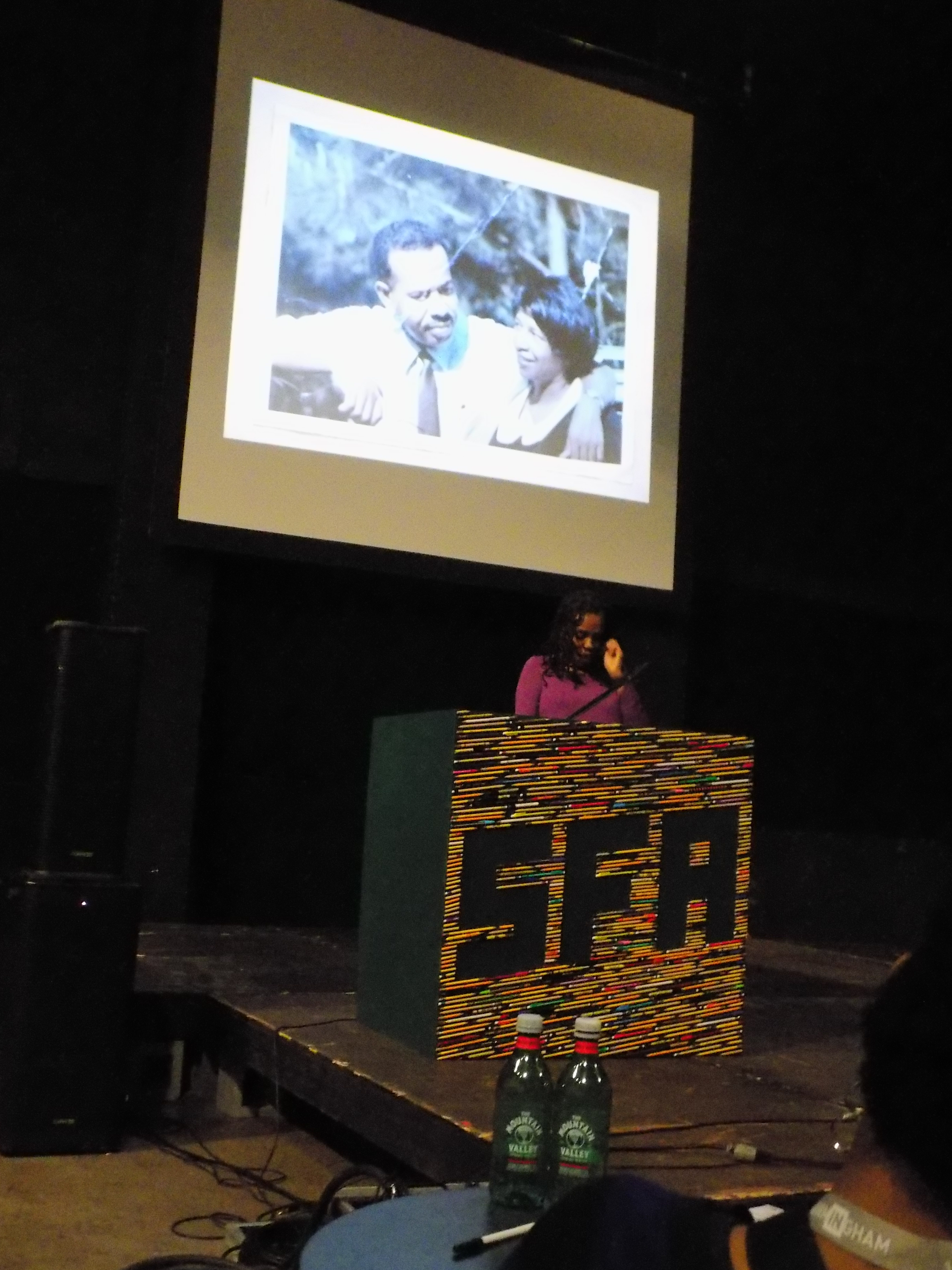
The sustenance comes from the “Friends” events’ long-standing relationship with Southern Foodways Alliance (www.southernfoodways.org), which is the beneficiary of proceeds from most of the dinners. John T. Edge, Director of SFA, is a regular attendee at the dinners and his passionate introduction to the recent meal and to Asha Gomez was a masterful and positive statement on current events, a response to the “immigrant” issue as exemplified by Gomez, and a positive evocation of the forward-thinking and amalgamated South “just over the horizon – always just over the horizon.”

Gomez’s book on cooking, My Two Souths: Blending the Flavors of India into a Southern Kitchen (Running Press, 2016), is an honestly detailed journey into her life and how her two souths, southern India and the American South, have created the sensibility of her aesthetic and cuisine. In her opening comments preceding the dinner, she balked at the word “fusion” – calling it “the other f-word.” Her food is personal, evolving from her roots in Kerala, India, and ever-expanding with the discovery of new foodways, new ingredients, and the commonalities contained therein. For Gomez, Southern fried chicken was nothing new; she brought her own strong tradition of fried chicken from Kerala.

Gomez claims both Southern India and the Southern U.S. as “home” and her food is a reflection and immersion into the rich compatibility of those shared homes, shared and unique flavorings, and Gomez’s personal interpretation of all of it.

Gomez understands why someone like me might be skeptical about Indian cuisine. I have been known to say that it is my least favorite of the international cuisines readily available in the States. I like the taste profile, the ingredients, and the spices of Indian cuisine well enough but have never been enchanted with its presentation in many Indian restaurants I have tried – usually at the urging of more enthusiastic friends. Gomez knows that the cuisine of her homeland is not represented by “the $4.99 buffets” and other iterations common to the American landscape and seeks to exalt it in a more authentically representative manner.

Sustenance comes in meeting new friends and getting better acquainted with others. My friend Cindy and I were seated at a table full of food professionals in town for Shindig. I was seated next to John T. Edge and across from Vanessa and Rick, a lovely Florence couple, and the conversation was lively and far-reaching. “I hear you’re in town to sign your 300th book,” I said to Edge. “Only 250, I think,” he blithely replied (actually, it’s over a dozen). John T. Edge’s latest, The Potlikker Papers (Penguin Press, 2017), is billed as “A Food History of the Modern South.”

Cindy was sitting beside a group of pastry chefs and other food professionals from New Orleans and the hilarity was pretty much non-stop off to my right side.

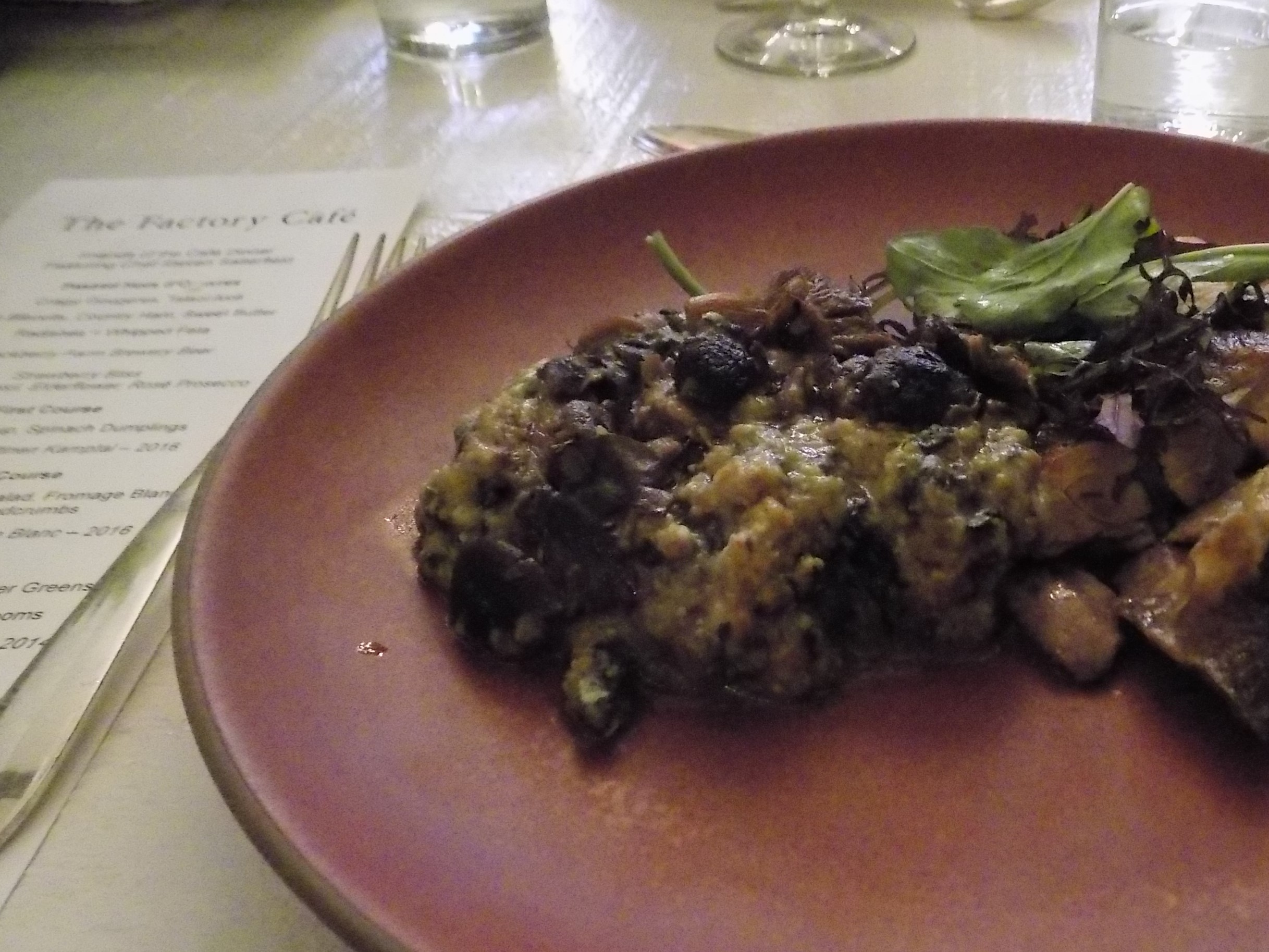
The evening commenced with hearty passed hors d’oeuvres including black pepper and black salt spiced roasted cashews, fry bread with mint chutney and quick pickled carrots, and curry chicken samosa pockets. The featured beverage, the “Muscadine Vine,” was a combination of muscadine wine, vinho verde. Prosecco, lime, and mint which successfully tamed and enhanced the tricky sweetness of muscadine wine. 

A first course of Sunday Vegetable Stew featured chunky vegetables in a lovely coconut milk base. A Kerala Fish Curry with kichidi grits and tempered mustard oil was the second offering. The fish beautifully rested on a lush bed of perfectly seasoned and perfectly cooked grits and the sauce melded the flavors in a pleasing manner.

Beef Biryani was the third course, served family style. In My Two Souths, Gomez describes biryani as a “celebration dish” and describes the traveling biryani chefs of India as being similar to American barbecue pit masters. Her version for the recent dinner featured chunks of beef over rice with an intensely diverse panoply of spices and seasonings. Each course was accompanied by a complementary wine pairing.

After three very hearty and satisfying dishes, the undisputed star for the diners at my table seemed to be the dessert course. The Three Spice Carrot Cake arrived to a chorus of delighted responses and the first bite did not disappoint.

The sustenance of the evening came to fruition with the sustenance of the actual meal that brought us all together in a spirit of community and enlightenment. During Edge’s opening remarks about the Southern community being forged throughout the region by forward-thinking people of all stripes, Natalie Chanin quipped about it being found “in a former tee-shirt factory in the industrial section of Florence, Alabama.” She was right. The “Friends of the Café” events are forging that community three or four times a year at her factory and in events like Shindig.

I always leave these events with rejuvenated inspiration. I admit that I still have a somewhat wary relationship with Indian cuisine, but Asha Gomez has opened my mind and broadened my perspective. Indian restaurants may not become my first dining choice, but I will eagerly consume and find sustenance in the boundary-breaking cuisine of Asha Gomez. 

Taste of New Orleans 2017

Bright Star (www.thebrightstar.com), a 2010 James Beard “American Classics” award-winner, has always had a touch of New Orleans and Creole cuisine on its daily menu. Opened by Greek immigrant Tom Bonduris in 1907 when Bessemer – just thirteen miles from downtown Birmingham – was a bustling factory town in its own right, the restaurant is designated as the oldest restaurant in Alabama. The family-owned stalwart, which has been owned and operated by Jim and Nick Koikos since 1966, is a prime example of Birmingham’s culinary tradition of Greek-flavored restaurants with deep Southern roots.

Bright Star has a classic “meat and three” menu by day and transforms into more upscale dining for evening service. It is known for its seafood. People unfamiliar with Birmingham often don’t realize that the city is only a few hours from the Gulf and daily deliveries of fresh seafood are commonplace in area restaurants. Gulf shrimp, snapper, and crab are menu features and fried snapper throats are a house specialty at the Bright Star. The Greek-style beef tenderloin is another popular offering and the restaurant has one of the best seafood gumbos around.

About five or so hours down I-59 from Bessemer is New Orleans. A Bright Star tradition since 1990 has been the annual “Night in New Orleans” event in which a guest chef from a New Orleans restaurant takes over the Bright Star kitchen to offer a special menu of that chef’s Louisiana-influenced dishes.

“Night in New Orleans” usually occurs in August and past guest chefs include Jamie Shannon and Tory McPhail of Commander’s Palace, Richard Bickford and Marcus Woodham of Tujaque’s, and Jared Tess of John Besh’s Luke.

For the 2017 edition, the Bright Star staff pulled out the beads and featured a special menu from Thomas Finch, Executive Chef of Cellardoor (www.cellardoornola.com), a newish restaurant in a circa-1830s building on Lafayette Street in the Central Business District.

Finch and Cellardoor are new to me but he’s a native of the New Orleans area, from the North Shore of Lake Pontchartrain around Slidell.  He has done his requisite term of service in the Commander’s Palace kitchen and has picked up knowledge in culinary school and around the world.

As is usual for the New Orleans event, the Bright Star offered a two-sided menu. One side featured Bright Star classics like Greek-style snapper, Greek-style tenderloin, Greek-style chicken, and Snapper Almondine along with gumbo, crab claws, and shrimp cocktail and a selection of the restaurant’s famous pies.

Chef Finch’s offerings included appetizers of Crispy Oyster and Pork Belly Rockefeller and Soft Shell Crab Bisque, and a Creole Tomatoes and Crab Boil Mozzarella Salad. The chef’s featured entrees were Cracklin’ Crusted Red Snapper, Gulf Shrimp Lafayette, and BBQ Braised Boneless Beef Short Ribs.

I opted for the oyster and pork belly appetizer which was a pleasing line-up of crisp fried oysters and braised belly. The “Rockefeller” sauce was a modern take on a traditional classic – a green puree spread generously on the plate.

The tastes of New Orleans were prevalent in the entrée. I ordered the red snapper which was generously topped with brown butter poached lobster and presented over a creamy smooth salsa verde. This dish is where the true complexity of New Orleans cuisine was capsulized with a nice level of spice and a multitude of tastes popping forth in each bite. The crispy snapper crust complemented the mild and tasty meat and all was enhanced by the rich sweetness of the lobster.

Chef Finch’s dessert offering was Oreo Beignets. The classic tradition of the New Orleans beignet was modified with an Oreo twist, full of chocolate flavor and dusted with powdered sugar. The plate of three beignets arrived on a brandy praline sauce with a scoop of vanilla ice cream.

The Bright Star has been a family tradition in my family for decades. It’s nice to grab the opportunity to share in the Koikos family’s “Night in New Orleans” tradition every few years. 

In a Summer without Peaches

This year’s first trip down to Chilton County to get peaches at Jimmie’s Peach Stand on Highway 82 was delayed a couple of weeks; it usually happens on Mothers’ Day weekend but when I arrived at the stand near the end of May there were few baskets left for the day. Mrs. Harrison and her son, Lynn, told me their peach crop was going to be truncated this year.

According to news reports, the same sparsity occurred throughout the 2017 Southern peach crop.  I had worried about the effect that a late brutal cold snap might have on this year’s peaches but the Harrisons assured me that it had not been that but the lack of enough cold weather in the 2016-17 winter.

So, I bought all of the peaches the stand had left that day to try to satisfy the promises I had made to people in North Alabama.

For years, I have tried to save a Jimmie’s peach to have on Labor Day night. The people at Jimmie’s said this year’s crop would likely be finished by mid-June; it usually lasts until the end of July and has been known to go deep into August. I promised to make one more trip to Chilton County before the stand closed for the season; I never made it back down but the one basket of Jimmie’s peaches I had this year was as delicious as always and quickly gone.

In the meantime, I tried to satisfy my peach cravings with the offerings of the Tennessee River Valley closer to my house and by trips to the Saturday morning Pepper Place Market and the Alabama Truck Farmers Market in Birmingham. Often, when I got to Pepper Place, the vendors with peaches were sold out early in the day due to smaller than usual supplies.

And the prices went up – sometimes drastically – for what peaches there were.

My favorite Tennessee River Valley peach vendor, Isom’s in Athens, was a no-show this year at the Thursday evening Greene Street Market that I frequent in Huntsville. I settled for a couple of other Greene Street vendors with peaches but was disappointed in the product. So far I’ve had the best luck with Reeve’s Peach Stand on highway 36 outside Hartselle.

I haven’t seen a single local fig this year but that has become commonplace. My friends with fig trees have been lamenting the lack of figs for several years now.

My time spent in my own yard has been limited during the warm season due to travel back and forth to Birmingham but the drought ended this summer and my back yard, which is usually pretty hopeless by the heat of August, is still lush and green. The grass is being cut weekly and needs it more often than that.

That very late freeze in the spring killed off some of the house plants that had already been moved outside and many of the outside plants were already in bud and bloom when the freeze got them so the schedule has been off this year. The Brunson begonia, an ancient begonia that I grew from cuttings friends gave me several years ago, was a casualty of the freeze as were a schefflera and nine-foot ficus, but other things sprang back to life, I acquired new plants, and “volunteer” plants filled the gaps.

My grandfather’s wild rose took the freeze as a minor setback and then took off with a vengeance. Its blooms and buds have occupied my back yard and occupied a small bud vase on the coffee table in the living room all season. Another wild rose at the back gate that my friends Scott and his daughter Cecilia foraged with me from the lake across the street from their house has had to be pruned back several times already; it produced exactly one bloom this year, which is exactly three less than it produced last year – but it is still a welcoming and lively green and thorny thing outside the gate.

The small beds and containers in the front yard recovered quickly after the freeze and have reemerged more prolific than ever. A pony-tail palm that I have nurtured for almost twenty years in the same concrete container given to me by my Granddaddy Harbison almost thirty years ago lives in the house most of the year and had just been moved outdoors when the freeze hit while I was out of town. I had given up on it but now it seems rejuvenated by its near-death experience and is coming back even more elegantly than before.

The four crape myrtles outside the back door were flourishing until the freeze killed them back; they have only just now recovered and begun to bloom. The Rose of Sharon – which has become a tree – is still full of white blooms but is cowered by the neighbor’s towering cherry tree which encroaches on its sunlight. My Rose of Sharon seems to be dying away slowly. I sit and wonder how to address the situation: My neighbor loves her cherry tree and it puts on a magnificent show for the two or three weeks it is in bloom in early spring. I appreciate the opportunity to share the view and shade as it overhangs my back fence.

But it is becoming very evident that my Rose of Sharon can’t compete much longer and I contemplate how to fill in the gap in the back corner of my yard that its loss will create.

The season’s greatest surprise, though, is the redbud that I picked up at a plant giveaway at Mother’s church over a year ago. It was essentially a stick in the ground with one struggling leaf when I got it. I put it in my back room with a lot of light and nursed it through the winter with no success. I moved it outside and it was trying to bud until it became another of the casualties of that late freeze.

It sat there, in its container, in the corner of the yard by the house like a dead stick because I didn’t have time to get rid of it. The guy who cuts my grass assured me that there was no hope. By June the little redbud began to bud and now it’s flourishing. I think I’ll let it winter inside for one more year and put it in the ground next spring. 

My time enjoying my little postage stamp of yard has been limited this year, but it still has provided hours of stolen pleasure with many weeks to go. I’m already hatching plans for next year’s improvements and looking forward to next summer being one with an abundance of peaches to savor; I will have to make up for my summer without peaches.

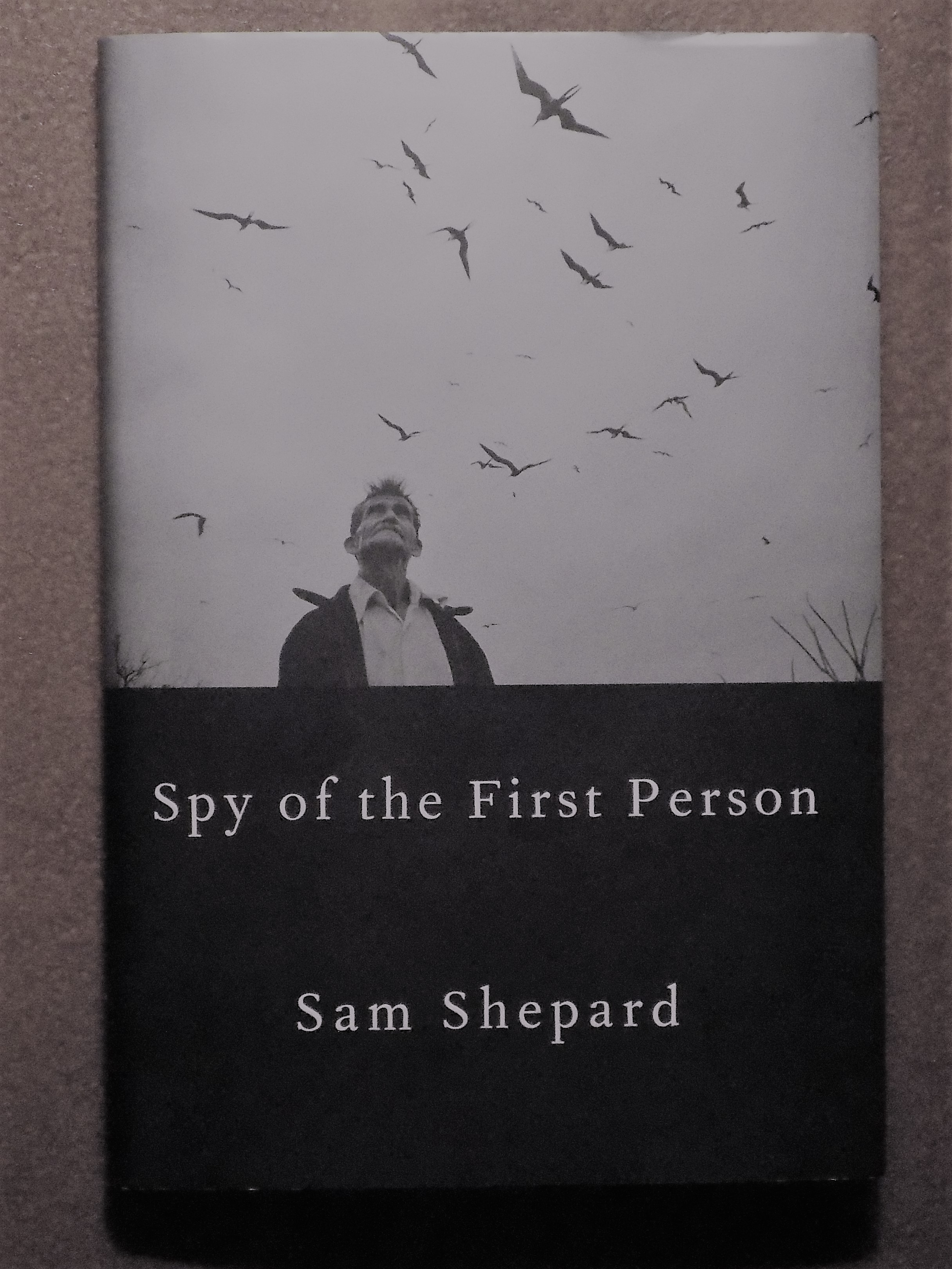
Sam Shepard (1943-2017)

  At the start of my directing classes, I often mention a quote by Sam Shepard that I read somewhere a long time ago. The playwright says that what he likes about live theatre is the same thing he likes about music: “It goes out into the air,” he says, “and it disappears.”

The first show I directed in graduate school was Shepard’s “Fool for Love” and when I was a young director starting out I said that I would be happy to direct nothing but Sam Shepard plays for the rest of my career.

That didn’t happen and I did broaden my horizons but I kept close track of Shepard as both a playwright and as an actor and looked for the opportunities to pull his plays into the classroom when I was a teacher. I only directed one more Shepard play, “Action,” for the public; in that play, a roasted Thanksgiving turkey is torn apart and a raw fish appears in a tub of water. In True West, radios, toasters, and typewriters are beaten to a pulp with a golf club. Shepard’s plays are demons to prop.

I frequently use Shepard’s plays and monologues in acting and directing classes and still harbor a desire to direct and act in his long monologue, “Killer’s Head,” in which a blind-folded guy strapped in the electric chair rambles on about horses and the blue pickup truck he plans to buy today.

I plan to pair Shepard’s True West with Suzan-Lori Parks’s Topdog/Underdog in my fall directing class. It seems to be an interesting project for analysis – two plays exploring brothers in conflict.

When I heard about Shepard’s death, at 73, a few days ago, I felt like an old friend was gone. My first memories of Shepard are probably from reviews of off-off Broadway productions in the Village Voice in the early ‘70s. I think the first time I heard about Patti Smith was when she and Shepard had collaborated on the play Cowboy Mouth. In addition to writing plays, Shepard was an erstwhile drummer for the Holy Modal Rounders and co-wrote with Bob Dylan. His plays sounded like hallucinations of American life, of family life, of the lie of the American dream; they sounded like the kinds of statements I wanted to bring to life as a director.

When I began to read those early plays, I was not disappointed. They are full of humor and pathos, complex and transient characters who might live in an altered reality just a few blocks away, and images that never leave the memory.

Shepard’s popularity spread as much due to coolness of character and nonchalance to increasing fame as to the skill and beauty of his writing. No one else could wear jeans and a tee with such effortless style. The camera loved him and it was inevitable that he would become a strong presence in film. His face, the squint, the shock of brown hair that he constantly pushed back, the crooked teeth that seemed to add to the appeal rather than diminish it, and his lanky gait made him the logical subject for photographers like Bruce Weber (whose portrait of Shepard illustrates this essay).

He was ornery, opinionated, and cantankerous, even when he was young. He took advantage of his aging and a changing society around him to become even more of a character. “I don’t have a computer,” he said. “I don’t have an Internet. I don’t have the e-mail. I don’t have any of that shit.”

His plays are a joy for actors and directors because he leaves so much room to explore, so much acreage for the imagination to roam. There are no answers, I imagine him saying, and that’s the answer.

One of the most enduring Shepard images – in plays and films full of enduring images – is the tale of the eagle and the tom cat that ends Curse of the Starving Class. The eagle and the tom cat are fighting over lamb testes and the eagle lifts the cat into the air:

…They fight like crazy in the middle of the sky. That cat’s tearing his chest out, and the eagle’s trying to drop him, but the cat won’t let go because he knows if he falls he’ll die. …And the eagle’s being torn apart in midair. The eagle’s trying to free himself from the cat, and the cat won’t let go. …And they come crashing down to the earth. Both of them come crashing down. Like one whole thing.

In Shepard’s works, like in Harold Pinter’s plays, the playwright introduces an outsider into the dysfunction who tries to find some logic and order in the turmoil and often just confuses things further.  Shepard’s Pulitzer Prize-winning Buried Child memorably uses this device and Martin, May’s hapless date, serves that purpose in “Fool for Love.”

In “Fool for Love,” the bed in the middle of the room creates the literal and figurative obstacle between the doomed lovers, Eddie and May. They bicker and fight and embrace under the watchful but distracted eye of a spectral Old Man who may be their common biological father.

“HEEZ MY HAAAAAAAAAAAAAAAART!!!” Beth wails about the man who almost killed her in A Lie of the Mind.

Sam Shepard wrote plays in which the love spiral and the death spiral are often indistinguishable.

Sam Shepard has gone out into the air now, and disappeared. His plays will be around as long as theatre-goers like a challenge.

Old Dog, New Tricks … Sprouting

Sometime in the ‘70s, when Harmony Natural Foods opened along the University Boulevard Strip in Tuscaloosa, the store was a radical change from everything else on the Strip. It was close to my apartment and I would occasionally drop in for lunch – a sandwich or a salad. Harmony was really the only place in town to get the particular kinds of natural foods it was serving.

Harmony was an outgrowth of the hippy movement moreso than it was a harbinger of the food movements to come but it has managed to straddle both; it moved from the University Strip to Tuscaloosa’s McFarland commercial drag, changed its name to Manna Grocery and Deli, and is still in operation spanning five decades.

Back when I was a Harmony customer, I would dash across the street to Charles and Co. and grab a Coke before I went to have my “healthy” meal. I wasn’t always in the mood for the juices and herb teas that were the Harmony beverage options.

The food was generally good, but I remember an abundance of alfalfa sprouts on everything. I realized I am not a fan of alfalfa sprouts – they were fine as they were being eaten but had a metallic and lingering aftertaste that was and is unpleasant to me. Finally I started specifying “no sprouts” when I placed my order.

After all of these years, if I am ordering something that I suspect might have alfalfa sprouts, I will ask to have them left off.

Recently, though, while I was strolling through Pepper Place Saturday Market in Birmingham, one of the guys from the Iron City Organics microgreens stall motioned me over. “I want you to try something,” he said, and almost before I could say okay he clipped off a couple of tiny sprouts from a tray and I put them in my mouth.

The fleshy green sprouts popped with a burst of summer that was tangy and refreshing.

“What is that?” I asked.

“Sunflower sprouts,” he replied.

I had to have some and I took them home and used them in salads and as a garnish for various dishes. When I ran out of that first batch, I was anxious to get more.

Last week, when I went to Pepper Place, a visit to Iron City Organics was the absolute priority. There were trays of fresh sprouts still in the dirt and, after sampling, I came home with more sunflower sprouts, added wasabi microgreens to the mix, and am now thinking of all the ways I might use these and all of the other Iron City Organic crop. In addition to the variety of microgreen sprouts, Iron City also has full grown produce – kale, mustard, radishes, etc. – and a fine array from which to choose.

The guys at the stall are so passionate and take such pride in the product they are nurturing and providing that it’s hard not to catch their enthusiasm. They clearly know how to run a business and serve their customers; a search of their online presence backs up that perception.

I have recently become obsessed with accessing fresh watercress, which is hard to find, and now, thanks to the guys at Iron City Organics, I am embarking on a whole new sprouting angle to my menus.

But I’m still avoiding the alfalfa sprouts, thank you. 

Digressions after Reading McInerney

  A few years ago, I reconnected with a college acquaintance whom I hadn’t seen in decades. He recalled that I had a tendency, during my long grad school stint, to wear Oxford cloth button-down shirts with the collar unbuttoned. This was true but I had never called attention to it and didn’t realize anyone had noticed, much less remembered.

I liked the shirts but never liked button-downs and I guess the look was a subtle rebuke to the preppy movement of the day. Indeed, I still don’t like button-downs but occasionally I will accidentally buy one. Life’s too short to return clothes that fit so, more often than not, I will wear the button-down with the collar unbuttoned. I guess it’s an affectation, but it’s a subtle and harmless one … until now, when I have announced it.

This memory was sparked by the fact that I just finished Jay McInerney’s latest novel, Bright, Precious Days (Knopf, 2016). In it there is a flashback to the ‘80s in which one of the characters asks another – a bad boy novelist – why he wears his button-downs unbuttoned. His reply is that he likes to have options.

One good thing about all of this is that it seems that I am regularly reading novels again. Over the past couple of years, I have abandoned old habits like going to movies and plays and hiking and reading fiction and so it’s good to see that my attention to novels and short stories, at least, seems to be renewed.

I bought the McInerney book on a whim when it hit the shelves last summer and never opened it. A couple of weeks ago, looking for new reading material, there it was.


Jay McInerney exploded onto the literary scene in 1984 with his first novel, Bright Lights, Big City. He became an instant celebrity with a novel that captured the 80s zeitgeist with precision and skill while harking back to his literary predecessors, especially unmistakable allusions to F. Scott Fitzgerald. Quickly, McInerney became the slightly elevated figure of the “literary brat pack” pantheon that included himself, Bret Easton Ellis, and Tama Janowitz.

The first edition of Bright Lights, Big City was released in paperback with the Vintage Contemporaries imprimatur and it became the triple threat of a cool book with a cool cover and a cool marketing strategy.  The fact that it was also very well written didn’t hurt. Raymond Carver, a McInerney mentor, had a blurb on the front cover; Barry Hannah, who I knew from his time teaching in Tuscaloosa, had a blurb on the back cover.

McInerney is less than a month older than me. That burns a little.

The author’s Icarus-like ascent prompted almost immediate backlash and the inevitable fall and McInerney’s fame often backfired on him with the idea that he was a one-book wonder. It was difficult for anything he did to live up to the success and hype of Bright Lights.

The book’s biggest and well-controlled gimmick was that it is a second person narrative in which the narrator’s name is never revealed. The book takes you on a drug-fueled romp through jaded 1980s Manhattan night life as the nameless narrator deals with the loss of his fashion model wife, his job, and his dignity. The book’s relentless rhythm makes one’s pulse race.

I annually read passages from Bright Lights, Big City to my Oral Interpretation students as an example of the second-person narrative voice. With the disinterested looks from that audience – which sometimes seems unaware of any art, music, or literature pre-Beyonce’s “Lemonade” – I might as well be reading Dickens to them (and I sometimes do). A few usually perk up when I drop the tidbit that “Bolivian marching powder” is the narrator’s pet name for cocaine.

My friends and I liked Bright Lights, Big City immediately; the book fueled our imaginations about the writer’s struggle and that sordid siren call of 1980s Manhattan. Despite the author’s fervent denials, we all assumed the book’s narrator was McInerney’s doppelganger. A running joke among us was the narrator’s self-pitying reference to “The Brotherhood of Unfulfilled Early Promise”; we declared ourselves charter members.

Despite occasional setbacks and the occasional stinker in his literary output, McInerney is not a member of the brotherhood he imagined. His steady output of fiction is supplemented by stints as a wine columnist for House and Garden and, these days, The Wall Street Journal. The wine writing has yielded three well-received books on the subject.


That wine knowledge and some level of culinary snobbery come to play in the character of Russell Calloway in Bright, Precious Days. He exhibits that smugness that often comes across in the work of New Yorkers as he drops names of people, places, art, designer labels – a trait that is pretty much a constant in McInerney’s work.

Manhattan writers have a tendency to drop names and the audience congratulates itself on knowing what they’re talking about. Never mind that, if we’re reading or looking at their work, we probably have read the same books, seen the same movies, followed the same artists, and shared the same popular culture. Woody Allen’s Manhattan movies are the same in that regard; we in the audience congratulate ourselves for catching the references even though they’re not really so obscure, especially if we’ve seen other Woody Allen movies.

On my first visit to New York City – in the 80s, actually, not long after the publication of Bright Lights – I was staying with a buddy and his girlfriend on the Upper East Side. Neither was a native (she was Ohio and he was Jersey shore) but they had been in the city long enough to develop the smug insider façade. As we traveled around the city, my hosts took great pleasure in turning a corner and then turning to me with a smirk and wide eyes and asking me if I knew what that building, landmark, etc. might be. They seemed deflated whenever I got it right (Rockefeller Center, St. Patrick’s, the Guggenheim, Chrysler Building, the Dakota, Seagram Building, Elaine’s, Lever House, Carnegie Hall, et al.). They were really easy challenges and I always got it right.

The Budweiser Clydesdales were grazing outside Tavern on the Green, for some reason. I recognized them, too, on the same morning that I passed Arthur Ashe exiting the Pierre.

One night, coming up from the subway downtown, my hosts seemed shocked – SHOCKED! – that I immediately recognized the World Trade Center, for goodness sake. “How do you know all of this about the city?” demanded the guy, seriously. “You said you’d never been here,” said his girlfriend, accusingly. I didn’t know what to say; I had been watching movies and television, reading books, newspapers, and magazines, reading about modern architecture, most of my life. Why wouldn’t I recognize those places?

Bright, Precious Days is McInerney’s third novel starring Corrine and Russell Calloway. This Calloway saga was preceded by Brightness Falls and The Good Life. The latest installment begins as Corrine and Russell are about to turn 50 and continues through the 2008 financial crisis and the Obama election. Many of the characters from the previous two books make cameos, take strong supporting roles, or appear in flashbacks.

McInerney has morphed into an elder statesman of his genre and the new novel purports to be a novel of the 2000s, but the 1980s, the era that galvanized the novelist and his career, are omnipresent – not only in the flashbacks, but in the angst and tastes and longings of its principals. In fact, I kept thinking of it as an 80s novel and identified with too many of the references and memories of that era it evoked.

In a flashback scene with Corrine and Jeff Pierce, the doomed writer who is central to the Brightness Falls plot, Jeff puts on Marquee Moon by Television – my favorite album by one of my favorite 1970s punk / new wave bands. Television was second only to Talking Heads in my book and Talking Heads gets an obligatory mention in the novel, too.

Several of the novel’s characters have traits and backgrounds that are strongly evocative of McInerney’s own biography and it’s hard not to linger on comparisons. One of the (many) writers in the novel observes that “most novels are memoirs and most memoirs are actually novels” – a factoid that’s hard to dismiss when dealing with McInerney.

In reading Bright, Precious Days I found myself annoyed with prose and characters that were occasionally too clever by half and impatient with frequent and extended explication. I sometimes wished that McInerney had paid attention to the thoughts he gives to his character Russell who congratulates himself for his editing work with a young and reckless Tennessee wunderkind whose book is a sensation:

The climactic action all happened in less than a page – what had once been three pages describing her thoughts and feelings, until Russell had cut and pared much of it away, saving the essentials and exposing, as he saw it, the hard, adamantine core. It was all there, but Jack had told too much in his original draft, hadn’t trusted his material, when, in fact, he’d already set it all up and provided everything the reader needed to know.”

I read that passage a couple of times, wishing that McInerney had Russell as his editor.

Even so, Bright, Precious Days is a good and compelling book, enjoyable and relevant. I stayed up late into the night to finish it. Each of the Calloway trilogy novels has significant adultery in its plot and McInerney’s evolution of the response of the adulterer as well as the adulterated is intriguing to consider. There is passion and truth as well as comedy and foolish missteps and nobody, it seems, is immune.

As soon as I finished this latest book, I took down and reread Brightness Falls, which many consider to be the author’s best work, but I still prefer Bright Lights, Big City.

I recently heard Ann Beattie, another of my favorite Boomer authors, comment that she didn’t think that much was being written about aging Baby Boomers because aging “is not really a sexy topic, you know?” I don’t know what Beattie is reading these days but I am seeing a lot of writing about aging out there.

Corrine and Russell – and McInerney and Beattie and I and all of our Baby Boomer buddies – are quickly passing out of middle age and facing the abyss and it’s always fun to see where that path will take us in McInerney’s deft hand. It has been fun to age along with him, his characters and stories.

And, lest we forget, Sam Shepard is 73 now.

Friends of the Cafe: Ashley Christensen

The first day of Summer 2017 ushered Tropical Storm Cindy up from the Gulf and energized the air farther inland in Birmingham, where I was helping to celebrate my mother’s birthday. It has been a few years since I experienced the typical effects of a tropical storm and – while I always hope there is no significant damage or injury – I always find the balmy air and windy bands of sporadic rain to be invigorating and energizing.

I reread The Great Gatsby as I have done for years on the Summer Solstice.

I was in my twenties when I began my annual reading of The Great Gatsby and the ritual has almost taken on a superstitious nature; if I missed a year, I would feel like something was awry. But I always manage to get in my June reading of the book and, after dozens of readings, I always find something new in Fitzgerald’s writing. And my heart always pounds in anticipation of the book’s inevitable ending.

On this most recent reading, I was struck near novel’s end by Nick Carraway’s account of a recurring West Egg nightmare – “a night scene by El Greco” in which a bejeweled drunken woman in a white evening dress is borne on a stretcher by “four solemn men in dress suits” to the wrong house. “But no one knows the woman’s name, and no one cares.”  That particular paragraph had never stopped me in my tracks until this reading.

Perhaps that passage stood out this time because I read it while sitting in a car in the parking lot in Tuscaloosa in a steady tropical rainstorm, while Mother was in a beauty shop appointment. Those meteorological conditions just added to the gloom of Gatsby’s rain-soaked funeral in which he is laid to rest with only Nick, Gatsby’s father, a few servants, the local mailman, and the owl-eyed former party guest in attendance. I usually reread Gatsby outdoors in the sunlight so the weather definitely added a different perspective this year.


­­­­­­­­­­­­­­­­­By the time Saturday afternoon rolled around, the weather had cleared and the balmy weather turned blistering. Summer’s advent and Cindy dominated the days leading up to the most recent Friends of the Café event at the Alabama Chanin Factory in Florence (www.alabamachanin.com). North Carolina chef Ashley Christensen of Poole’s Diner and other Raleigh dining venues (www.ac-restaurants.com), was helming the meal. Once again, the event was a benefit for Southern Foodways Alliance (www.southernfoodways.org). I am proud to be a long-time member of the SFA, helping in a small way to support all of the good works the organization does.

Friends Anne, Michelle, Scott, and I traveled to the Shoals for the meal. Arriving at the Factory we were warmly greeted by Natalie Chanin, the creative force behind Alabama Chanin and the impetus for many community-building events, including an awesome schedule of Friends of the Café dinners.

The gathering was already going strong when we arrived. A delicious array of passed hors d’oeuvres included fried green tomatoes topped with Alabama jumbo lump crab salad and Hook’s three-year cheddar pimento topping a cucumber slice. Along the serving table were shots of a sweet corn mousse with piquillo pepper.  The mousse literally melted in one’s mouth like a passing dream of sweet corn taste. A “Summer Cindy” libation was poured – Prosecco and Jack Rudy grenadine with a sprig of rosemary.

The seated meal began with a salad of local lettuces and vegetables dressed with buttermilk and roasted garlic. Next came a slice of heirloom tomato pie with spicy greens and sherry. My quest for the perfect tomato pie began years ago with the tomato pie competition that was an annual event at Decatur’s Willis-Gray Gallery (now Kathleen’s). The Decatur event hasn’t been held in several years but Ashley Christensen’s take on tomato pie is now the hands-down winner.

The third course was chargrilled Bear Creek ribeye steak cooked perfectly and served family style along with Poole’s macaroni au gratin and a room temperature marinated summer succotash which brought back vivid memories of my Grandmother Harbison’s take on hearty southern succotash.

The dessert course of a coffee panna cotta with Irish whisky caramel and North Carolina pecan granola crunch was served with a deep and earthy port.

I have never been disappointed in a meal at the Factory and Christensen’s recent menu continues to raise the bar.

Christensen seems to be as warm, down-to-earth, and authentic as the carefully selected ingredients she elevates. I think I have attended all but three of the Friends of the Café dinners and Ashley Christensen was the chef for my second in 2013.

When Natalie Chanin asked me recently which had been my favorite of the meals over the years, Ashley Christensen’s name was one of the first that came up. Now, Ashley Christensen is the first of the guest chefs in the series to come back for an encore. It seemed unlikely that she could top her first memorable performance at the space, but last Saturday night she did.

Copies of Christensen’s cookbook. Poole’s: recipes and stories from a modern diner (Berkeley: Ten Speed Press, 2016), were available for purchase and signing at the end of the event. It is a cookbook chock-full of exciting, well-explained recipes as well as a good introduction to the founding of Poole’s and to the James Beard Award-winning chef’s culinary aesthetic. It also provides the stories and impetus behind her restaurant empire of seven downtown Raleigh establishments. Chanin referred to her friend as “badass” and the book is full of Christensen’s warm and earthy takes on the food world (she refers often to an affinity for “beer flavored beer”).

For me, thanks to the friends who went with me, to Alabama Chanin, and, especially, to Ashley Christensen, that turbulent first week of summer 2017 ended on a high note indeed.

Serendipity under a Strawberry Moon

 Bird song and the comforting sounds of barnyard animals filled the late Spring air as the first fireflies of the evening began to twinkle in the woods of the Wheeler National Wildlife Refuge amid the backwaters of the Tennessee River.

 A group was gathered for dinner under the open pavilion at 1818 Farms (www.1818farms.com) in the northwest corner of the quaint and historic town of Mooresville, Alabama (pop. 54), in Limestone County between Huntsville and Decatur. In the wildlife refuge, a canoe glided by in the distance, adding a magical moment to the dinner; I hoped the canoe party looked to their right and saw our gathering beneath the Italian globe lights and flaming torches so that a glimpse of the farm through the trees might add to the magic of their journey at dusk.

It is the rare weekend when I am not traveling so when my friend Anne contacted me on Thursday to see if I might be interested in attending the 1818 Farms “Farm to Table” dinner on Friday, it was serendipitous that I had already made plans to stay at home.

1818 Farms covers three acres in tiny Mooresville. It is owned and lovingly tended by Natasha and Laurence McCrary and their family. A stroll through the property includes visits with chickens, cats and kittens, goats, pigs, sheep, and a Great Pyrenees dog to guard the assorted livestock. All of the animals seem incredibly content. Anne and I visited with three tiny kittens; one was designated to remain on the farm and the McCrarys were looking for good homes for the other two.

The farm is beautifully curated and a sense of calm begins at the front gate. Everywhere one looks there is a place to rest the eye. The animals are friendly and accessible, the raised garden beds are lush and filled with bloom and beauty, and the woods and wetlands of the wildlife refuge provide the western boundary beyond the border fence. A mellow instrumental duo provided music at the edge of the pavilion throughout the evening.

This was my first time to attend one of the 1818 Farms dinners. The meals started a few years ago in collaboration with Chef Jake Reed, the charismatic owner of the charming Albany Bistro, a great neighborhood restaurant in Decatur (www.albanybistro.net). Reed is winding down the Albany Bistro business (which now is open for catering and special events only) and has recently opened the new Table in the Garden eatery (www.tblrestaurant.com) at Huntsville Botanical Gardens.

“Chef Jakob” is a committed devotee to the “farm to table” philosophy and every meal I had at Albany Bistro is evidence that he practices what he preaches in creative and dynamic ways. His modern takes on local ingredients are fresh and innovative but he frequently acknowledges the enduring lessons he learned in the kitchens of his mother and grandmother.

Passed around hors d’oeuvres included fried green tomatoes with a horseradish sauce, wonton cups with herbed chevre and summer vegetables (the cheese was from Humble Heart Farms www.humbleheartfarms.com in Elkmont, my favorite goat cheese purveyor), and possibly the best sausage balls I have ever tasted.

After the assembled guests were seated and the meal was introduced by Natasha and Chef Jakob, the first course of a summer vegetable tart in a puffed pastry crust was presented. It was followed by green bean and potato salad with lemon terragon vinaigrette.

The main course was grilled chicken with a balsamic peach glaze, grilled peach, and arugula. For dessert, Chef Jakob presented a bacon and bourbon cupcake. As shocking as a bacon and bourbon cupcake might sound, the result tasted like a fairly traditional cupcake but with interesting notes and hints throughout; I especially liked the crisp bacon crumbles on the top.

Chef Jakob created a lovely dinner that was reserved and memorable – unmistakably fresh, local, and seasonal. The presentation and ambience of the event were lovingly executed.

By the end of the meal, the twilight had turned to deep darkness and the animals were settling in for the night. Natasha was gathering up provisions for a couple who had decided to adopt one of the kittens and photographs were being taken to commemorate the adoption. As we stopped to check in on the roosting chickens in their spacious coop, Natasha passed. “They don’t realize how lucky they are,” she said of her menagerie.

Indeed, I felt lucky to be able to visit their home for a few hours. During the dinner, I had noticed a full moon beginning to peek through the canopy of trees. Native Americans refer to the first full moon of June as the “strawberry moon.” That strawberry moon shone brightly as I hit the highway for home and a restful sleep.


Food Memory: Bread Pudding

I have never met two bread puddings that are exactly alike and I rarely meet one that I don’t like. When I eat at a new place and bread pudding is listed on the menu, I almost always have to try it and see what version this particular kitchen has deemed acceptable.

Some version of bread pudding shows up on the menu of many southern dining establishments and dining rooms; some are dense and cake-like and others are more loose and cobbler-like. The Bright Star in Bessemer, near Birmingham, serves a tasty bread pudding with a rich bourbon sauce. The signature dessert at the Wash House in Point Clear on Mobile Bay is a Key Lime bread pudding that doesn’t sound promising but is actually quite good. It is also huge and filling and every time I’ve ordered it I have had to request a go box. Fat Girls, a tiny little barbecue joint on Highway 82 in Billingsley, Alabama, had a terrific bread pudding but it shut its doors a few years ago.

There seem to be as many versions of bread puddings in New Orleans as there are places to eat.

I don’t recall either of my grandmothers ever making a bread pudding so I have no family recipes to honor.

But recently I had some of Mrs. London’s bread from her family kitchen over in Madison sitting around and some Chilton County peaches that were getting pretty ripe and I decided that I needed to do something about it.  Scoot’s organic eggs from the farmer’s market were in the refrigerator and I decided to see what it was like to make my own bread pudding.

I do pretty well in the kitchen but whenever I make something I’ve never made before I need to do some research before I get started. I pulled down the cookbooks and culled the bread pudding recipes and then set to work.

I followed the basics based on what I read and then set about making my own version. I must say that this is such an easy dessert to make that I’m not sure why I never thought to make it sooner; I guess I was just satisfied to order it at restaurants.

The final result bears repeating, I think, and I’ll share it for whenever the urge might hit. I was frankly thrown a little off-guard with how basic and simple it was to make a pretty good bread pudding. I guess since I never thought to make it, I never thought about the process.

Here’s what I did; I messed with it a bit and, even though raisins are pretty traditional for bread puddings, I wanted to do peaches in mine. This is a very giving recipe and anybody cooking a bread pudding should tweak it with whatever their tastes suggest.

Peach Bread Pudding with Bourbon Sauce

For the bread pudding:

1 cup milk

1 cup Half and Half

¼ cup unsalted butter

½ cup granulated sugar

1 teaspoon ground cinnamon

¼ teaspoon salt

2 eggs, beaten

6 cups dry bread cubes

1 cup sliced peaches

  1. Pre-heat oven to 350 degrees.
  2. Heat milk, Half and Half, and butter over medium heat until butter is melted and milk is hot.
  3. Whisk sugar, cinnamon, salt, and eggs together.
  4. Stir in bread and peaches.
  5. Stir in milk, ½ and ½, and butter mixture.
  6. Pour it all into a 2-quart baking dish.
  7. Bake uncovered for 45 minutes.

For the bourbon sauce:

1 cup brown sugar

½ cup unsalted butter

3 tablespoons Half and Half

4 tablespoons bourbon (non-alcoholic vanilla extract may be substituted for the bourbon)

  1. In heavy sauce pan, stir and heat all sauce ingredients to boiling over medium heat until sugar dissolves. Simmer, stirring frequently.
  2. When ready to serve, spoon sauce over the warm bread pudding.

The Rosenbaum House; Florence, Alabama

 I am not sure when I became a fan of Frank Lloyd Wright (1867-1959) but I suspect it had something to do with seeing a picture of Fallingwater, his 1935 house for the Kaufmann family built over a waterfall in western Pennsylvania, near Pittsburgh. As I learned about his myriad other buildings – the houses in Oak Park, the two Taliesins, New York’s Guggenheim Museum, etc. – I was hooked on the style and philosophy of Wright architecture, and on the life of the prickly and headstrong architect. I love the buildings and the art of the man but I’m not sure I would have liked him much personally.

By the time I actually visited Fallingwater, in 1993, I was pretty well-versed in Wright’s architecture and biography. Seeing Fallingwater for the first time was a spiritual pilgrimage and when I left the house and ventured onto the grounds to look back at the 20th century masterpiece – which has been called the most famous private house ever built – it was hard to drag me away. The combination of the sounds of the creek and the waterfall and the magnificence of the architecture is mesmerizing.

The Rosenbaum House, located in Florence, is the only Frank Lloyd Wright-designed building in Alabama. Like all Wright buildings, Stanley and Mildred Rosenbaum’s house had its flaws and challenges – leaky roof; dysfunctional heating system; doors, ceiling, and openings built to the scale of the diminutive Mr. Wright; defective chimneys – but it is still a work of a genius architectural vision and the Rosenbaum family lived in it for almost sixty years until Mildred Rosenbaum finally gave it up in 1999.

The Rosenbaums commissioned the house as newlyweds in 1939. It is the second house executed in Wright’s “Usonian” style – a utopian ideal of building practical, organic, and low-cost houses for American families. Some architecture writers consider the Rosenbaum house to be the purest example of Wright’s “Usonian” architecture.

The Rosenbaums agreed to a budget of $7,500 for their house and with construction delays and cost overruns the final building came out closer to $14,000. Problems with leaks and the heating system presented themselves early on and the Rosenbaums had to butt heads with the “old man” on many occasions.

The Rosenbaum house is sited on a pleasant and traditional residential street. It presents a fortress-like demeanor facing Riverview Drive with a brick and cypress wall interrupted by minimal glass at the front door and high windows along the low horizontal façade. There is a cantilevered roof for a carport. Carports were a Wright invention.

Once one steps into the interior of the house, there is abundant light streaming in through floor to ceiling windows and doors looking onto the back yard gently sloping to the Tennessee River. When the house was built, there was a river view. Now, with  tall trees going down to the river, the river itself is only sensed.

The original L-shaped house was 1,540 square feet. Wright’s built-ins – desks, shelves, tables – provide a distinctive Wright feel to the space. The narrow hall in the bedroom wing adds extra drama when one steps into the light and views from each bedroom.

Despite the design flaws, the Rosenbaums treasured their masterpiece and turned to Wright to build an addition when the family outgrew the original space. That 1,084 square foot addition, also L-shaped, incorporates a more spacious kitchen, a guest room, a “dormitory” with bunk beds for the four Rosenbaum boys, and a second cantilevered carport for Mrs. Rosenbaum. The L-shape of the addition embraces a walled Japanese garden.

The Rosenbaums budgeted $15,000 for the 1948 addition; the final cost was closer to $40,000. Such cost overruns are ubiquitous in Wright’s architectural history and homeowners were willing to pay them to live in a Wright house, flaws and all.

In 1999 when the city of Florence acquired the house from Mildred Rosenbaum, a city inspector recommended demolition. The house was overrun with damage from leaks and termites and restoring it seemed to be more than the city could handle. Led by Florence’s mayor and a dedicated group of civic leaders, the city took on the task of restoration and turning the Rosenbaum House into a house museum.

The restored house is now an integral part of Florence’s evolving cultural landscape, drawing thousands of visitors annually. Rosenbaum family effects are still in the house and as much of the Wright-designed furniture as could be retained or reproduced.

I first toured the house when it was newly opened as a museum and find that I return periodically to savor the feel of the place. There is a sense of tranquility and completeness that permeates the building and its grounds. It was a treasure for the Rosenbaums for decades and now it is a treasure for the Shoals.

The life of the house is beautifully chronicled in Frank Lloyd Wright’s Rosenbaum House: The Birth and Rebirth of an American Treasure by Barbara Kimberlin Broach, Donald E. Lambert, and Milton Bagby (Pomegranate, 2006).