A Thanksgiving Dressing


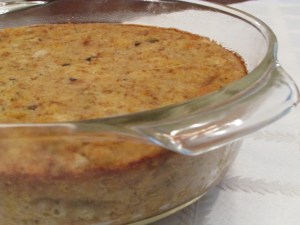
IMG_2069  No Southerner I know stuffs the bird. In my experience we always serve dressing on the side. My Grandmother Harbison made a cornbread dressing and Grandmother Journey served a fancier oyster dressing, still using cornbread as a base. I like both but Mother is partial to a plain cornbread dressing without oysters so her cornbread dressing is what we have for the holidays.

Near Thanksgiving last year I shared memories of my Grandmother Harbison’s kushmagudi, a cornbread and potlikker dish which has become a staple of our cold weather holiday table. During my father’s extended hospital stay, Mother has often mixed up a quick kushmagudi when she gets home from the hospital at night.

As my Grandmother Harbison’s health made it more challenging for her to cook the holiday feasts, Mother began to make her own cornbread dressing from a recipe she found somewhere. It’s a very easy recipe, moist and rich, and even though it wasn’t exactly the same as Grandmother Harbison’s dressing, it got Grandmother Harbison’s seal of approval.

The celery in the cornbread recipe reminds me of another Thanksgiving tradition at my family’s house. In addition to using celery in the dressing, Mother has always put out a dish of raw celery sticks with our turkey. I grew up with raw celery as part of the Thanksgiving meal and never thought it was unusual until people from outside the family informed me that they had never heard of such a thing. Even so, it is a nice complement to turkey and dressing and cranberry sauce. We put celery sticks on our turkey sandwiches on Friday and that is a crunchy and delicious addition to the Thanksgiving leftover tradition too.

Even though circumstances dictate a spartan Thanksgiving this year, I packed Mother’s cornbread dressing recipe just in case I find the time to make it. And remember that a proper cornbread recipe does not include sugar.

Simple Cornbread Dressing

4 cups crumbled cornbread
2-3 slices crumbled white bread
½ cup chopped celery
1 cup chopped onion
2 large eggs
Sage, to taste
¼ teaspoon black pepper
2 cups chicken broth
1 can cream of chicken (or cream of mushroom) soup, undiluted

Combine all ingredients and mix well. Refrigerate for at least 1 hour (or overnight) for flavors to blend. Pour into 2-quart baking dish. Bake at 350 degrees for 25-30 minutes.

Happy Thanksgiving.

Thanksgiving 2015: “Simple Gifts”

IMG_2063    Abraham Lincoln declared the national holiday of Thanksgiving in 1863 amidst some of the darkest days of the Civil War. Lincoln hoped the gesture might be a unifying measure. That didn’t really happen back then but Thanksgiving has since become a time of celebration and unity that transcends the crass commercialism that accompanies it. We take a day – or maybe only a moment – to pause and give thanks for whatever blessings we may have. Lincoln’s gesture reminds us that at the worst and most hopeless of times, we should remember what we have to be grateful for.

2015 has been a tough year for my family. As I write this, my father is in his fifth week in an intensive care unit. It has been very touch and go but after some pretty radical procedures Dad will soon be moved to a specialty care facility at another hospital where the goal is for him to progress to the point that he can come back home.

This would be good news for everybody, but especially for my mother who has been by Dad’s side every single day, holding his hand for hours on end and diligently making tough decisions about his care. My parents have been married almost 63 years and the bond between them is unusually strong, especially in the tough times. Mother is a cancer survivor; when malignant melanoma was found in one of her eyes thirty years ago Dad was beside her, fighting tirelessly with her the whole way. They have been a formidable and indominatable team throughout their decades together. Now it’s Mother’s turn to speak for Dad and she is showing how tough, resolute, and resilient she can be.

In the six months since my Dad’s health issues began a noticeable decline, some of my friends and acquaintances have faced their own challenges, serious illness, and a few deaths. Back in the summer I remarked to a friend that “I’m not ready for this part of my life.”

Who is?

So we take it day by day and try to be as positive as possible, even on the bad days and through the dreaded phone calls in the middle of the night. Dad still can’t speak but this weekend he wrote a few sketchy notes. He asked for his glasses and then wrote “How do I get out of here?” When Mother arrived at the hospital he wrote “I love love you.”

Mother said last week that there would be no Thanksgiving celebration this year. I understand how she feels and know how difficult it will be to work in Thanksgiving among the hospital visits.

Yet, remembering Lincoln’s gesture as well as the gesture of the English immigrants and indigenous people at that proverbial first American thanksgiving, it seems that the hardest of times may call for the most fervent of thanks. These times give us an opportunity to reflect on what we still have and appreciate and hope for.

We may not have a feast with a bird and all the fixings but I am sure my family and I will find time enough and reasons to give thanks on Thursday.

IMG_2067Simple Gifts (Shaker dance tune)
– Joseph Brackett (1848)
‘Tis the gift to be simple, ’tis the gift to be free,
‘Tis the gift to come down where we ought to be,
And when we find ourselves in the place just right,
‘Twill be in the valley of love and delight.

I thank you for reading my journal.

Finding the Links in the Paint Rock Valley

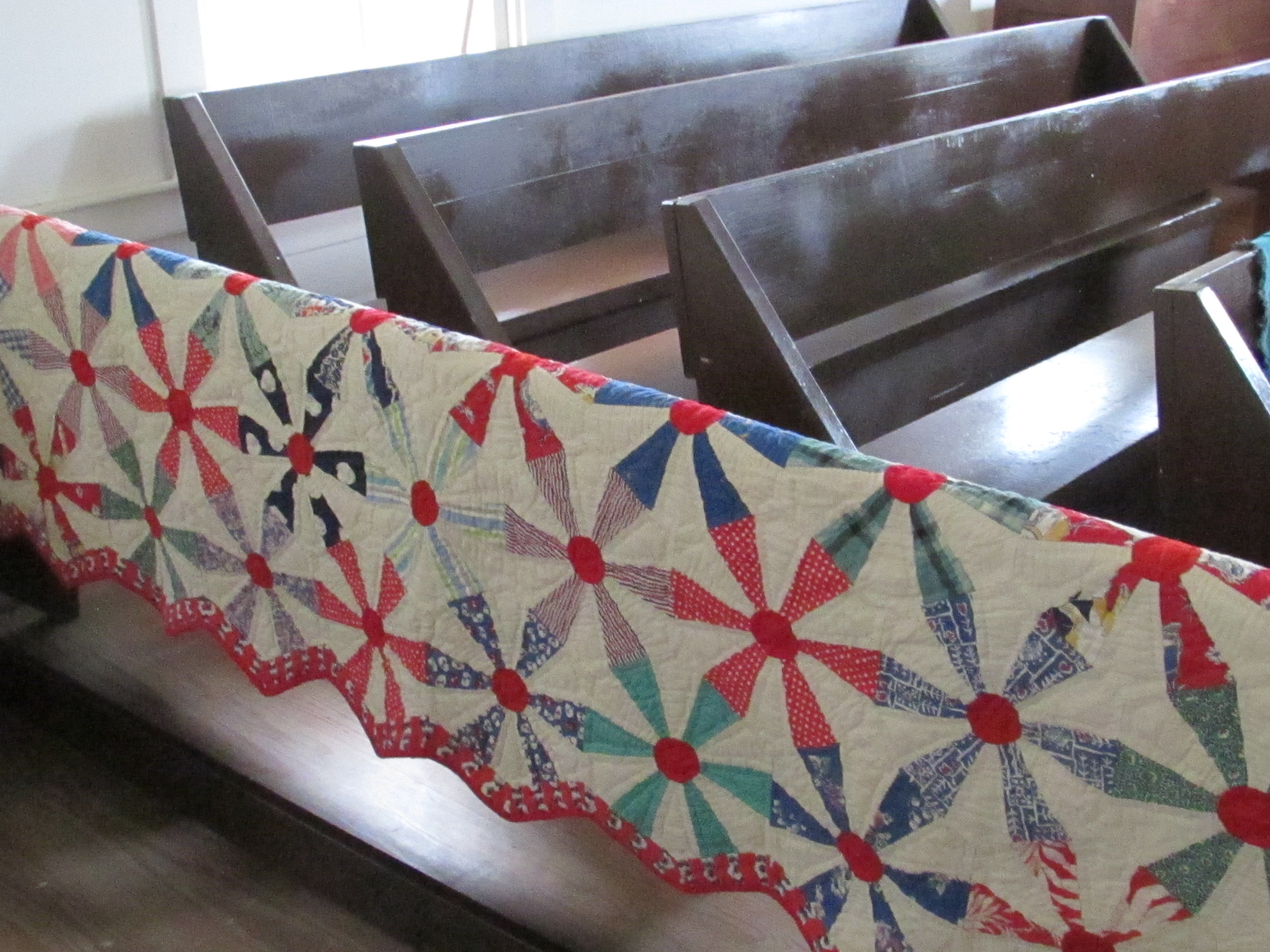
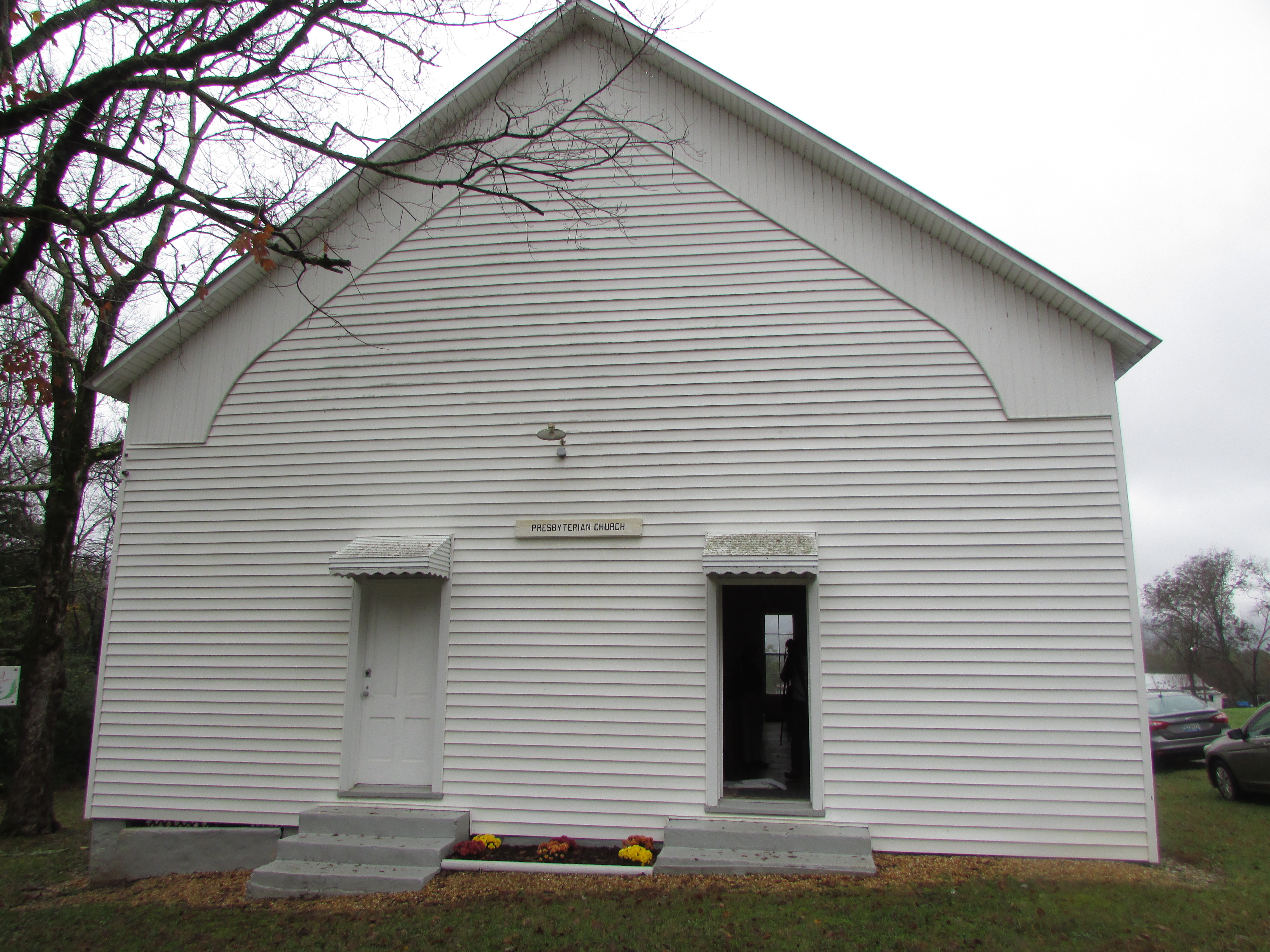
IMG_2019  The small white wood-frame Presbyterian church building in the community of Trenton, Alabama, in the Paint Rock River Valley of northeast Alabama is the sort of simple church architecture I seek out in my travels. The church was built in 1903 and held its last service in 2008. The building’s current owner, Trenton native Jean Arndt, graciously opens it for community events. It no longer has heat and electricity; when I first visited in 2013 there were handmade quilts draped over each pew for the visitors to wrap themselves against the November chill.  IMG_2006

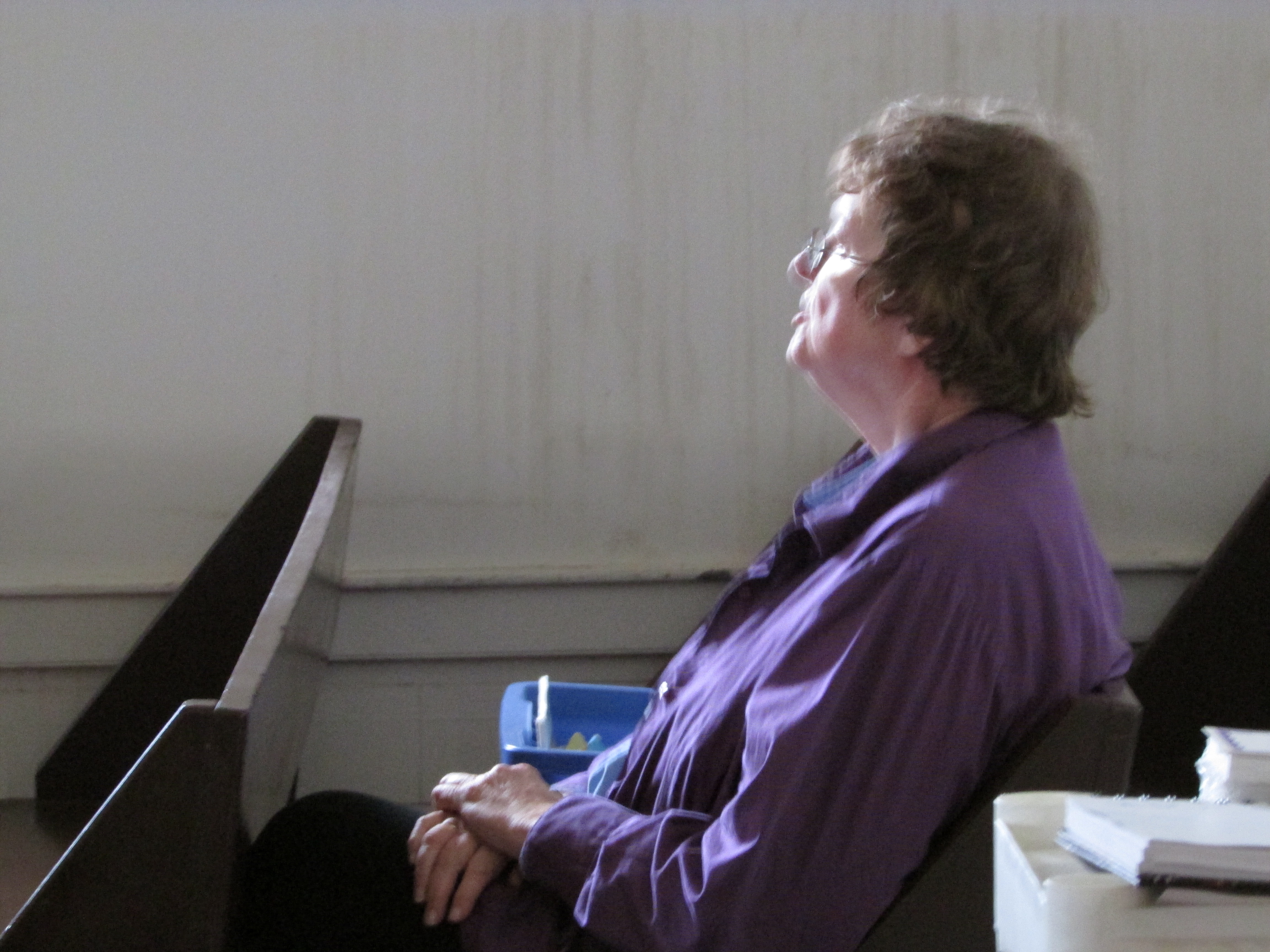
The ambience, along with the soft light filtering through the many windows, created a warm, cozy venue against a chilly rainy mid-autumn Saturday when I returned to Trenton Presbyterian Church for the second time recently. The event was the Heritage Harvest Festival 2015, part of the effort of my friend Judy Prince and her network of supporters to build and nurture community in the Paint Pock Valley.

IMG_2016

I travelled down early with three communication arts videographers – Howard Melton, Julian Johnson, and L’Debra Henderson – who are my students at Alabama A&M. We were there to shoot the event to provide video documentation. The bad weather caused the turnout to be small but the gathering was engaging and responsive.

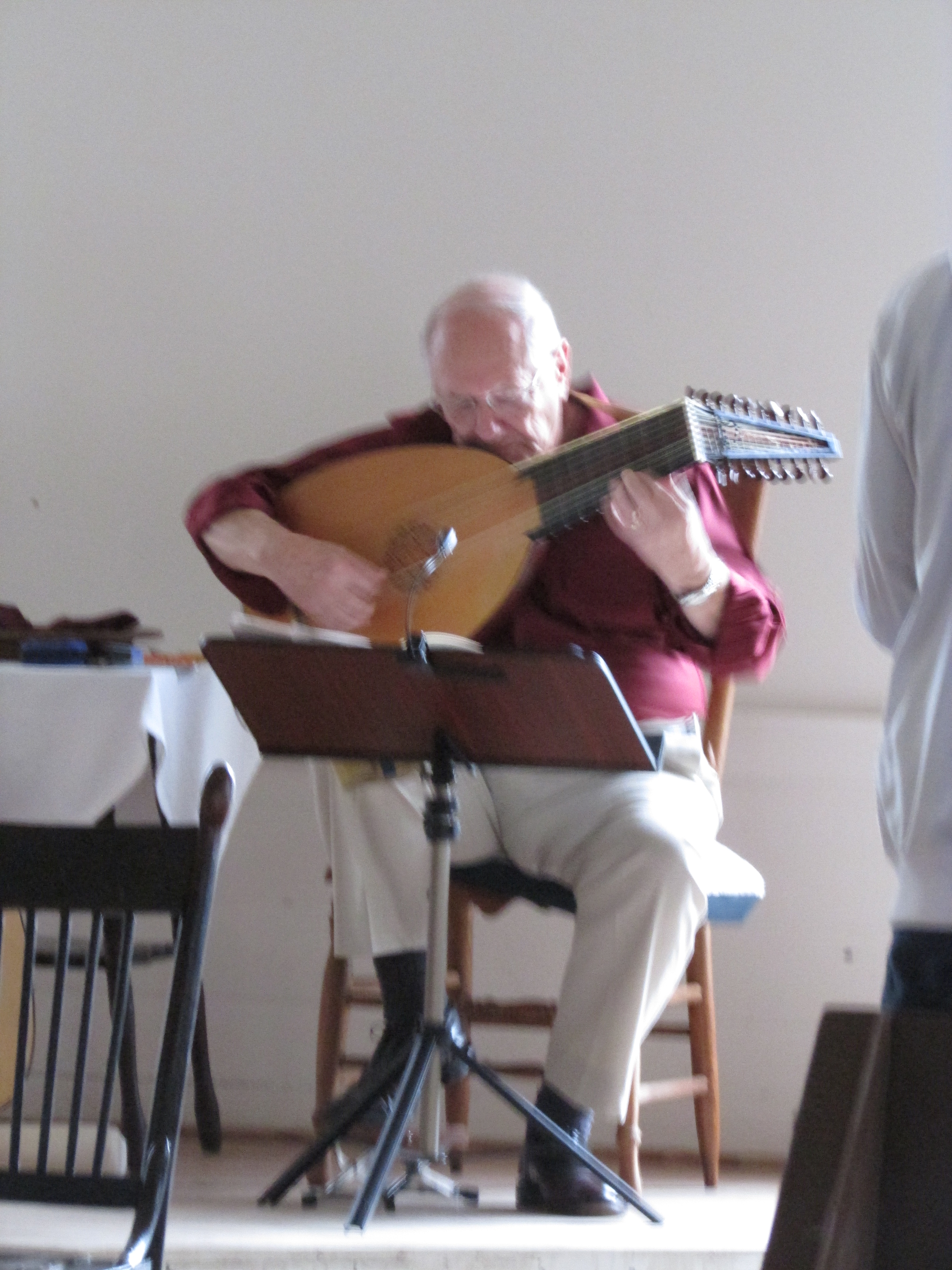
Musicians and storytellers were among those in attendance. Trenton native Billy Smith performed a set of 17th Century Scottish tunes on the lute. His performance was prefaced with memories of his family and of growing up in Trenton. He also included a history lesson on the Moorish origins of the lute and the instrument’s adaptations over the years. IMG_2035

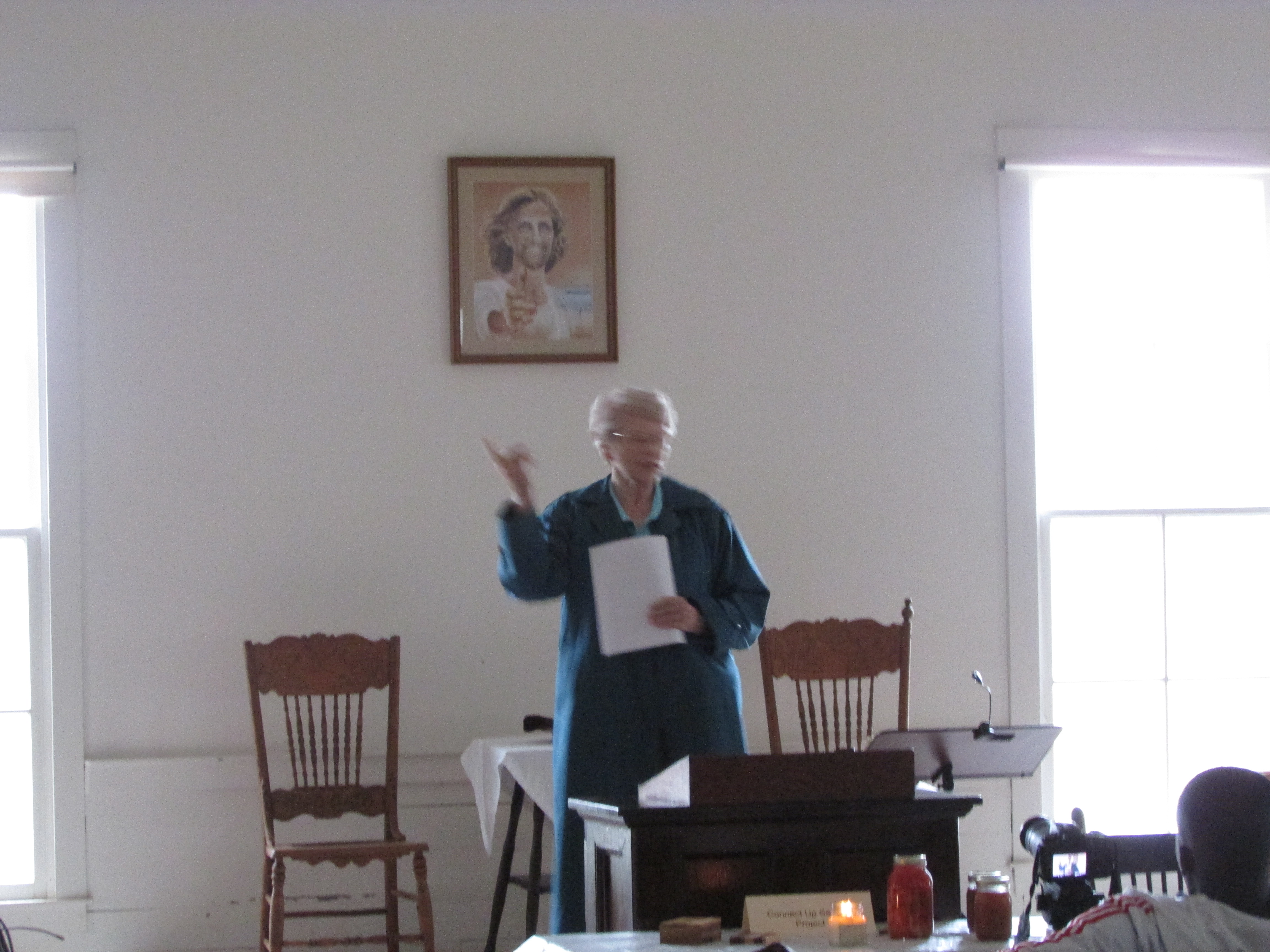
Jean Arndt gave an informative history of the church and her family’s generations-long affiliation with it. She had a particularly evocative account of car headlights illuminating her night-time baptism in the nearby Paint Rock River in the ‘40s.

The area’s rich Native American history – particularly with the Cherokee nation – was remarked upon and Judy Prince gave her personal testimony about the history of the area and her efforts to build community throughout her life and career not only in the Paint Rock Valley but as a social worker and Civil Rights activist in Birmingham and Mississippi in the 1960s. IMG_2043

Trenton native Randy Jones provided musical accompaniment on the church’s old piano as the gathering sang cherished heritage hymns including “What a Friend We Have in Jesus” (my mother’s favorite), “Amazing Grace,” and “Simple Gifts,” the Shaker hymn. Jones later performed the adaptation of “Simple Gifts” from Aaron Copland’s “Appalachian Spring.”IMG_2055

Observing the gathering, I realized that the goals of Paint Rock Valley’s cozy harvest gathering have much in common with the recent Friends of the Café dinner I attended at the Alabama Chanin factory in Florence. Although these were very different proceedings, each sought to bring diverse communities together to build a unified and productive whole.

A theme of the Florence event was a celebration of handmade items and locally grown and sourced foods and the concept of the “maker” in all of its incarnations. Similar themes come to play in the efforts of Judy and others in the Paint Rock Valley. The burgeoning revivals of handcrafted and farm to table, the various “roots” movements, and the call to be better stewards of the land and our natural environment are themes that Paint Rock Valley and Alabama Chanin have in common although each comes at it from a different place. While Alabama Chanin originates with a Shoals-based fashion designer, Judy Prince’s Connect UP efforts find focus in a rural and comparatively isolated valley along the lyrical Paint Rock River. IMG_2022

Driving down to Birmingham on Saturday afternoon, I mulled the lessons and similarities of these two discrete but intricately related gatherings. The links are clear and the aims are the same. It is up to all of us to make the connections.

It may be the case that with increased awareness, participation, and attention to the honest and talented people in and from Paint Rock Valley, Paint Rock Valley’s time in the spotlight may be imminent. IMG_2056

Community activist Judy Prince is pictured above. More information about the Joys of Simplicity Wellness Adventures and the Connect UP Program may be found at Judy’s website, www.tinyurl.com/lutybme.

Makers and Others at the Alabama Chanin Factory

IMG_1991 I live in a high tech town full of engineers, IT, military, and rocket scientists. That is all well and good for them and they speak of the place as a mecca but I am a liberal arts guy from Birmingham who has lived and traveled all over the country working in the performing arts. I have lived in Huntsville for thirteen years now and have a difficult time finding my niche in that community.

So I was fortunate indeed to be able to travel over to Florence again to attend the most recent Friends of the Café dinner at the Alabama Chanin Factory on Saturday, October 24. This is a trying and stressful time for my family with my father in the hospital; my mother, bless her, knew I had reservations for the dinner and insisted that I travel up for the night. IMG_1993

I have attended several of these Alabama Chanin (www.alabamachanin.com) events over the past sixteen months. Natalie Chanin is doing great things to spark community from her design business based in the Shoals and she and her phenomenal staff always create a lovely and memorable evening of food and camaraderie. In addition to Chanin’s amazing hand-sewn fashion designs and clothing, the Factory store features books, pottery, art, and other products, most of them crafted by various makers from the South and beyond. The aesthetic of the place is flawless and I am always restored and inspired when I leave the Factory. When I attend the Alabama Chanin dinners I feel like I have found a place where I “belong.”

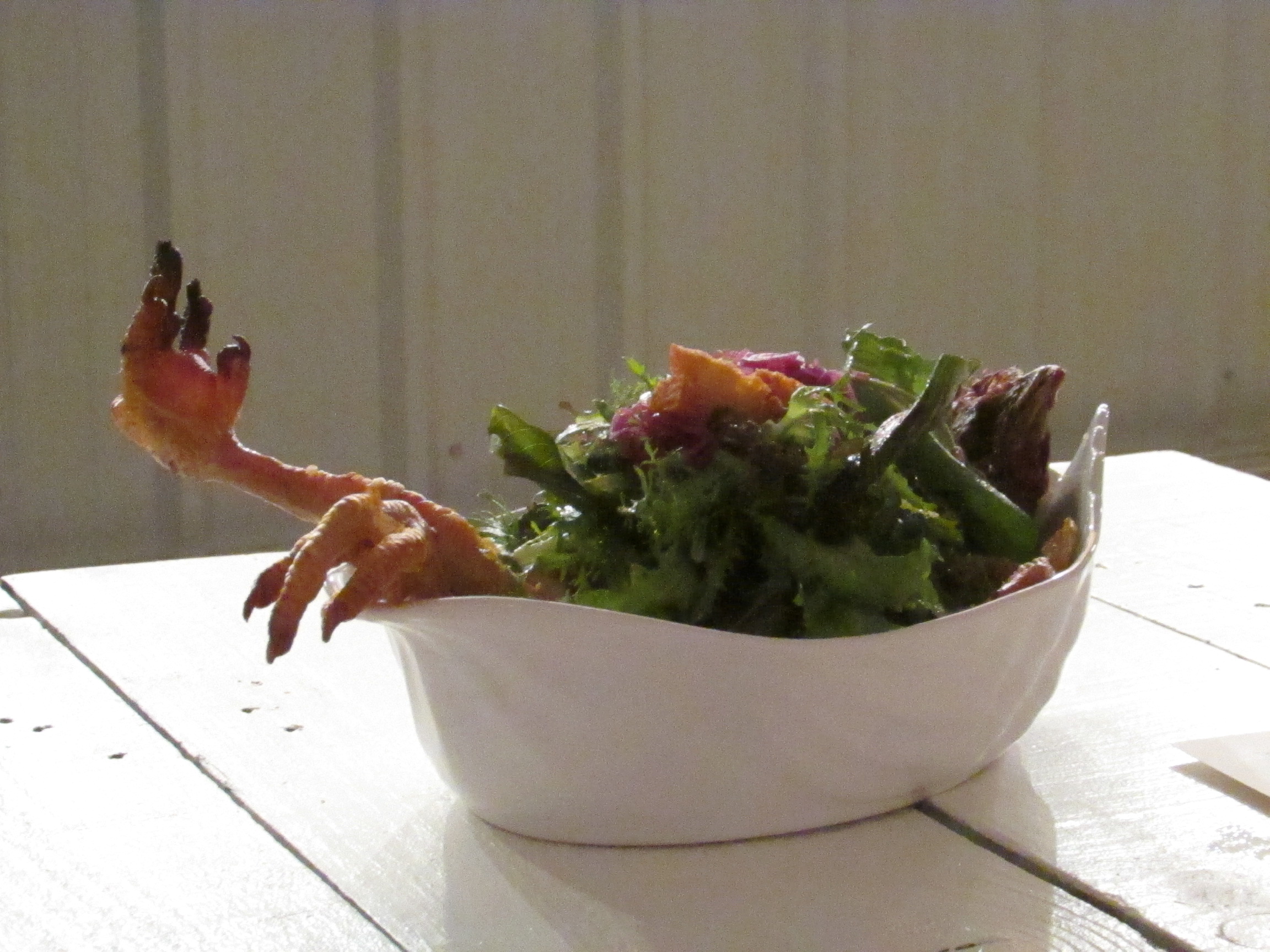
IMG_1995Chef Anne Stiles Quatrano of Bacchanalia (www.starprovisions.com) and other Atlanta food destinations was the guest chef for the evening. After cocktails and an assortment of passed hors d’oeuvres, diners sat down to a four course meal with wine pairings starting with a Georgia white shrimp cocktail. The second course was served family-style and featured a whole roasted Green Circle chicken in a large vessel with bitter greens and roasted chicken jus vinaigrette.

A simple and elegant cheese course featured Grayson cheese with hazelnuts and crispy honeycomb presented on a circle of fine wood. Finally, the dessert course was canales with a rich coffee cream and Revelator coffee (www.revelatorcoffee.com).IMG_1999

“Southern Makers,” an Alabama collective of artists and artisans (www.southernmakers.com), was a sponsor of the event and guests received a “Maker Box” of Alabama-made products introduced by Garlan Gudger of Cullman’s Southern Accents Architectural Antiques (www.sa1969.com). Oxford American magazine (www.oxfordamerican.org), another sponsor, is now partnering with Southern Makers to expand the collective to include artisans, artists, and makers from throughout the South. Lee Sentell of the Alabama Tourism Department took the opportunity to discuss the upcoming “Year of Alabama Makers” during which makers throughout the state will be featured in tourism publicity and events.

Finally, Chef Quatrano brought and signed copies of her gorgeous cookbook Summerland: Recipes for Celebrating with Southern Hospitality. This is one of the prettiest cookbooks I have seen with a long and varied collection of recipes and commentary.

During the comments throughout the evening, someone mentioned that even though people travel from faraway destinations to see Alabama Chanin’s operation and to have the Factory experience, many Alabamians have not yet heard about her business, what she does, and her wide-spread  influence. The word is getting out, however, and with the continued efforts of Alabama Chanin, Southern Makers, Oxford American, Alabama Tourism, and many other makers and supporters throughout the state more people will be aware of the hidden treasures to be found and nurtured throughout Alabama and the region.

A night at the Factory in Florence always gives me hope.

IMG_1997

Let Us Now Praise Greensboro, Alabama … (and Randall Curb)

100_3060  Greensboro, Alabama, is about 45 minutes due south of Tuscaloosa in the area referred to as Alabama’s “Black Belt.” The designation “Black Belt” originally referred to the region’s rich dark topsoil but the population of the area is mostly African-American and the designation is so frequently misconstrued to refer to the area’s demographic that “Black Belt” now has different meanings for different people. I stick with the traditional meaning (and frankly find the subsequent meanings to be borderline offensive).

Greensboro is the county seat of Hale County with a population of about 2500. It was a thriving town prior to the Civil War but now the Black Belt is among the economically poorest areas in the United States. Even though the area is poor economically, it is culturally and historically rich and abundant.

Greensboro is off the beaten path but through the years pilgrims of all sorts have come to follow the origins of James Agee and Walker Evans’s book Let Us Now Praise Famous Men, Agee’s epic examination of three sharecropper families in the Black Belt with Evans’s now-iconic photographs. It was on Greensboro’s courthouse square that Agee first met the sharecroppers who lived in nearby Mills Hill and would become the book’s foci. 100_3058

The text which became the book Let Us Now Praise Famous Men originated as Agee’s commission for an article for Fortune magazine on Southern sharecroppers under the New Deal. Agee brought Evans onto the project to provide the photographs. The resulting essay was more ambitious and sprawling than Fortune could deal with and the magazine never published Agee’s piece. When Agee expanded the article into a book that was published in 1941 the tome famously sold a scant 600 copies.

Let Us Now Praise Famous Men was rediscovered in the 1960s and has developed followings among each generation ever since. It still serves as a totem and inspiration for writers and a searing portrait of the lives of people who might be forgotten.

Greensboro appears in the book as “Centerboro.” The famous photographs by Evans of the families and the town are enduring images of 20th Century American photography. Greensboro is a quaint town, full of patina and charm. Writers, artists, photographers, architects, and various and sundry “do-gooders” and others show up there to wander around the area or put down stakes. The town’s Main Street looks much like it looked when Evans photographed it; the town wasn’t prosperous enough to deface or demolish the buildings. Houses along Main Street and Tuscaloosa Street stay essentially the same although many of the owners no longer have the means to keep them as pristine and polished as they once were.

The Greensboro area and Hale County are places that are central to the oeuvre of contemporary photographer William Christenberry. Contemporary painter Julyan Davis has used the town and its environs as subject matter over the years. Auburn University’s Rural Studio, conceived by architect Samuel (“Sambo”) Mockbee to provide innovative affordable housing for people who need it, is headquartered in Newbern near Greensboro. Pie Lab, which was envisioned as a place where locals and others might come together to have a piece of pie, a cup of coffee, and discuss solutions to the area’s challenges, is located on Main Street, as is a shop where bicycles are crafted from bamboo. 100_2281

I have traveled to Greensboro all of my life and have had friends there for decades. Many old houses in Greensboro still have names like Glencairn and Magnolia Grove. I have fond memories of traveling from Tuscaloosa to a summer lawn party on the grounds of Glencairn where most of the rambling guests were wearing summer whites and a croquet game was taking place on a flat area of lawn. Costume designer Walter Brown McCord would entertain with lubricated dinner parties at the Queen Anne-style home of his parents, “The Colonel” and Octavia McCord, on Main Street. Walter Brown’s dinners always included his signature Eggs Benedict somewhere on the menu.

100_3073Greensboro holds mostly good memories for me as a visitor. I occasionally have students from Greensboro in my classes. A few years ago when I was telling one of my students that her hometown was one of my favorite places to visit she pondered the idea for a moment and said, “You might not feel that way if you grew up there.”

It is no surprise then that novelist and travel writer Paul Theroux traveled to the Black Belt and to Greensboro for his recently published book Deep South, an ambitious excursion into the lesser-traveled parts of the South. He spends time in rural South Carolina and Georgia near the Savannah River nuclear facility, in Alabama’s Black Belt, in Mississippi’s Delta, and in the hills and hollows of the Arkansas Ozarks, among other detours. 100_3087

It is also no surprise that Janet May, proprietor of Blue Shadows Bed and Breakfast in Greensboro, asked Theroux, in apparent exasperation at his incessant questioning, “Do you know our Randall Curb?”

I have known Greensboro’s Randall Curb since my college days in Tuscaloosa in the 1970s. I had been hearing about him before we met. Mutual acquaintances had assured me that I must know the man one of them referred to as “the blind sage of 12th Avenue.” I finally met Randall when these same acquaintances and Randall were leaving an afternoon screening of Alien at the Tide Theatre on “The Strip” as I was arriving for the next screening.

After that meeting and over time I became a regular at Randall’s house on 12th Avenue, spending many pleasant hours in the closest thing I will probably ever find to the enlightened and civilized salon  of Gertrude Stein and Alice B. Toklas at 27 rue de Fleurus in Paris. There were always good books to discuss, good programs to watch, good music to appreciate, good magazines to skim, and good and erudite company to be had.

Randall has partial vision and is legally blind but that has not stopped him from being one of the most widely-read and discerning readers I have known. He avidly attends movies and theatre when he has the opportunity and has a keen interest in the visual arts. For years, Randall has made numerous trips to England – especially in the summers when he likes to escape the Alabama heat; I have never encountered a more devoted Anglophile. In my personal collection of postcards there are some beautiful ones from Randall detailing his adventures in London, Oxford, and other far-flung English locales.

We stayed in touch and I have visited regularly since Randall returned to Greensboro and I left Tuscaloosa for good. On most visits, I am treated to food and desserts prepared by Maxie Curb, Randall’s gentle and soft-spoken mother who lives nearby and usually joins us for a time during my visits. She is one of the great Southern home cooks, always astounding with her kitchen skills and culinary insight.

Despite Greensboro’s relative isolation, it seems much of the world comes to Randall’s door. During the years I have known him he has been a friend and correspondent of writers, painters, photographers, and all kinds of other interesting people. He is a particularly perceptive and generous critic and some of his impressive correspondences were started by the subject’s response to things Randall wrote. Throughout our friendship I have been constantly amazed at the people Randall just happens to know. Of the dozens of photographs on display throughout Randall’s house, one of my favorites is the one of a young dapper Randall standing alongside Eudora Welty.

So it seems inevitable that Paul Theroux ended up at Randall’s door and writes about him at length throughout his book and during his travels in Greensboro and the Black Belt. After reading Deep South, I’m convinced that Theroux may think Randall is the only Southern man who reads books and listens to classical music.

It is through Randall that Theroux met the nonagenarian Alabama short story writer Mary Ward Brown. He writes fondly of his time with her and Randall at her home near Marion. As it turns out, she passed away just weeks after their meeting.

Traveling the back roads of Theroux’s ambitious book, it is nice to occasionally run across familiar places and old friends. They bring back memories of past pleasures and a wanderlust to find new roads to explore and to return to Greensboro before too long.100_3150(The photograph above was taken in Newbern, Alabama, of Randall Curb and Maxie Curb.  The other photographs in this essay are taken in Greensboro. All photographs were taken by the author of the essay.)

Autumn 2015: A Place for the Eye to Rest

IMG_1979  The advent of the fall season often catches me by surprise even though I pay attention to the calendar and know when cold weather and shorter days are upon us.

There is poetry in the autumn but too much of it is the poetry of decay and endings. Football season, other seasonal events, and the approach of the cold weather holidays are a consolation but I am a fan of hot sultry summers and always feel a little cheated when those fade away – especially if I haven’t had the time to take full advantage of the season.

Let me put it another way: The arrival of pumpkin spices in everything does not bring a song to my heart.

Arriving for dinner at the home of friends the other evening one of my hosts greeted me with the admonishment to not look at her yard because “it’s a mess.” The yard looked fine but I agreed with her that it’s hard to keep a southern yard looking pristine after the relentless heat of August and as the trees get ready to start shedding their leaves.

IMG_1970 Surveying my own small back yard last night and deciding which plants would need to be moved inside and which would be left out to fend for themselves I noted that my yard somehow weathered the hottest part of the summer quite well. I didn’t lose anything to the heat this year; I had more hummingbirds than usual; my basil held out throughout the season of tomato sandwiches on freshly baked white bread.

The sweet potato vines in rust and green, grown for decoration rather than edible roots, went wild this year — overflowing their large pots outside the back gate. My neighbor’s backyard cherry tree, much of which overhangs the fence and blends with the branches of my tall Rose of Sharon tree, is already bare of leaves. It blooms magnificently before almost everything else in the late winter and starts dropping its leaves in late July before anything else is even thinking of the fall. IMG_1980

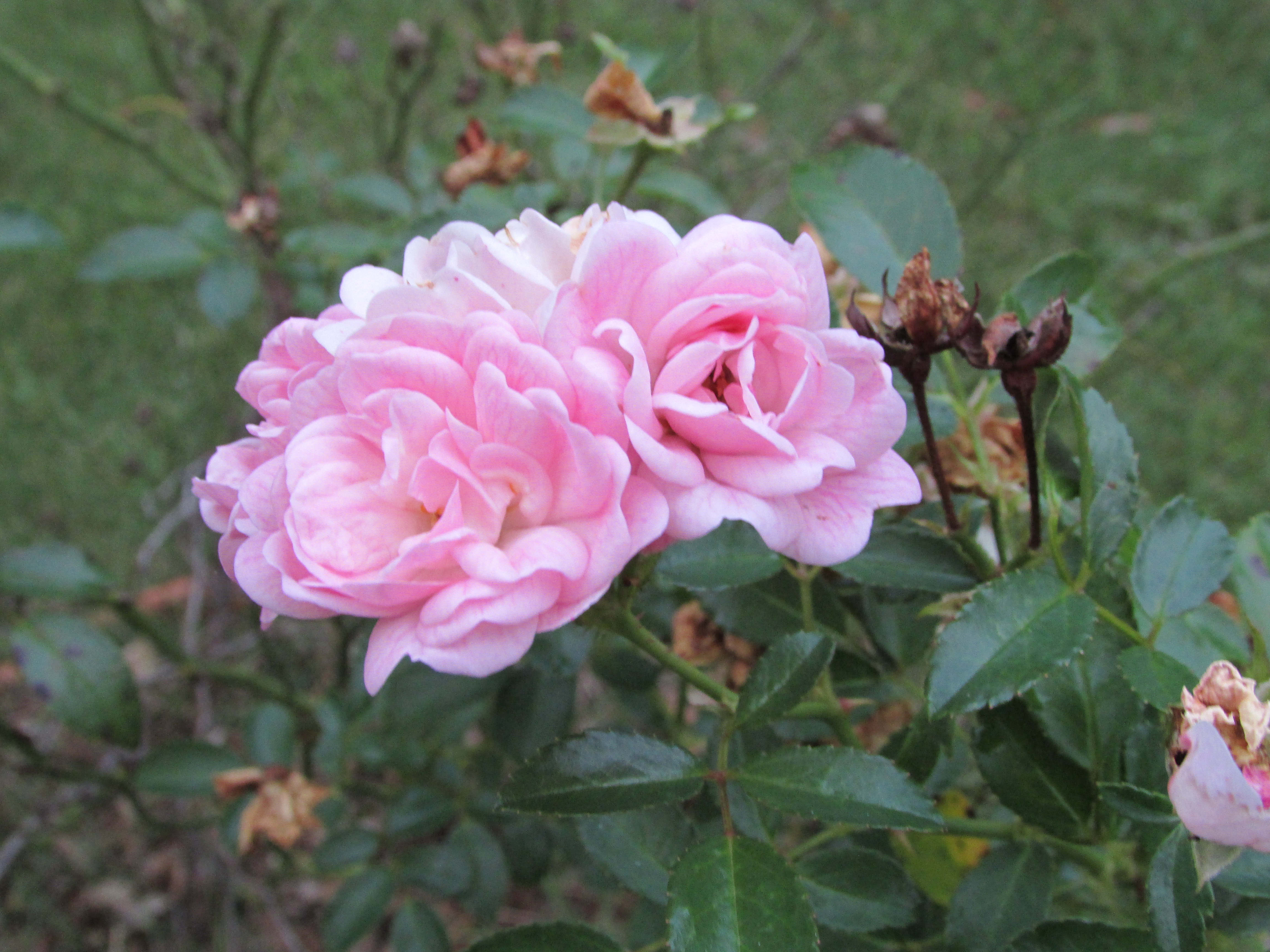
The Rose of Sharon still has most of its leaves and is almost finished blooming for the year, with just a handful of new buds appearing on new branches near the bottom of the trunk. I’m glad I resisted the urge to prune those a few weeks back. The final roses are in bloom on my grandfather’s wild rose bush which I rooted from a cutting. I took a cutting with buds for inside the house so that I could have a few last roses of summer both inside and out.

As plants in containers start being moved in the house and other plants die down or away, the wind sculpture, empty pots, architectural artifacts, and found objects take precedence and give points of interest as I come home at the end of the workday. The plan has always been for my back yard to capture the abundance and “collected” presence and feel of New Orleans courtyard gardens. In fact, I have a classic New Orleans garden book with an inviting photograph of a cluttered and magical courtyard garden marked for reference (pages 106-107 of Gardens of New Orleans: Exquisite Excess, 2001, by Jeannette Hardy and Lake Douglas, with photographs by Richard Sexton).

IMG_1972My own back yard garden is not there yet but my goal is in sight. For now, though, in every season there is always a place for the eye to rest as it surveys my long and narrow back yard. I consider that a good start. IMG_1968

Ghosts of New Orleans

IMG_1955  When I drive to New Orleans from Alabama I have the habit of tuning my car radio to 90.7 somewhere between Laurel and Hattiesburg, Mississippi. I initially meet with static but somewhere between Hattiesburg and Lake Pontchartrain the static resolves itself into WWOZ-FM (www.wwoz.org), the great public radio station broadcasting from the French Market, and that’s what I listen to in my car and in my hotel room throughout my New Orleans stay.

At the top of every two hours (on the uneven numbers) the “Livewire” music calendar presents an exhaustive list of all of the live music in the clubs and performance venues throughout the city on that particular day. It was on the “Livewire” calendar many years ago during a drive into town that I learned about an authentic jazz funeral that was going to happen during my stay. I began immediately to make plans to be in that second line of the funeral for a veteran New Orleans drummer and the next day I attended the first real jazz funeral of my life.

I was in New Orleans this past weekend to deliver a paper at an American Literature Association symposium at the Hotel Monteleone in the French Quarter. While there, I got an abundant dose of the variety of music available from the diverse volunteer deejays gracing the WWOZ airwaves. The collective musical knowledge of the WWOZ deejays is itself a thing of wonder. One deejay was a new father and all of his music for two hours contained the word “baby” in the title or refrain; early on Saturday morning, all of the music dealt with addiction, drugs, or alcohol but was leavened with songs of redemption and atonement.

Of course you can get a live web feed of WWOZ from anywhere in the world nowadays but there’s something about hearing it on the radio and actually being below the Salt Line.

New Orleans has always had the reputation of being a haunted city but that has not been a huge factor in my New Orleans. This trip was a little different, though, and more heavily influenced by my recent landmark birthday and other family events than I thought it would be. Perceptions are influenced by what’s happening in one’s life and it seemed that this particular trip – while mostly work-oriented and still a lot of fun — was a more elegiac experience of New Orleans than usual. There were constant reminders of experiences and people past; passing comments and glimpses were suddenly fraught with meaning.

IMG_1940 On the first night, after checking into my room at the Monteleone and picking up my credentials for the symposium, I dashed a few blocks to the Napoleon House for dinner. The Napoleon House (www.napoleonhouse.com) contains decades of memories for me and centuries of memories for its city. The dusk and carriages outside, the patinated walls and classical music of the old house, and the blended patter — of locals and tourists, young romantic couples and aging habitues, the sometimes surly and always knowledgeable waiters and bartenders in their tuxedo shirts and bowties, a rowdy group of guys in town for a bachelor party — all melded into a series of personal memories of people and events and time spent in a city that I never get tired of visiting.

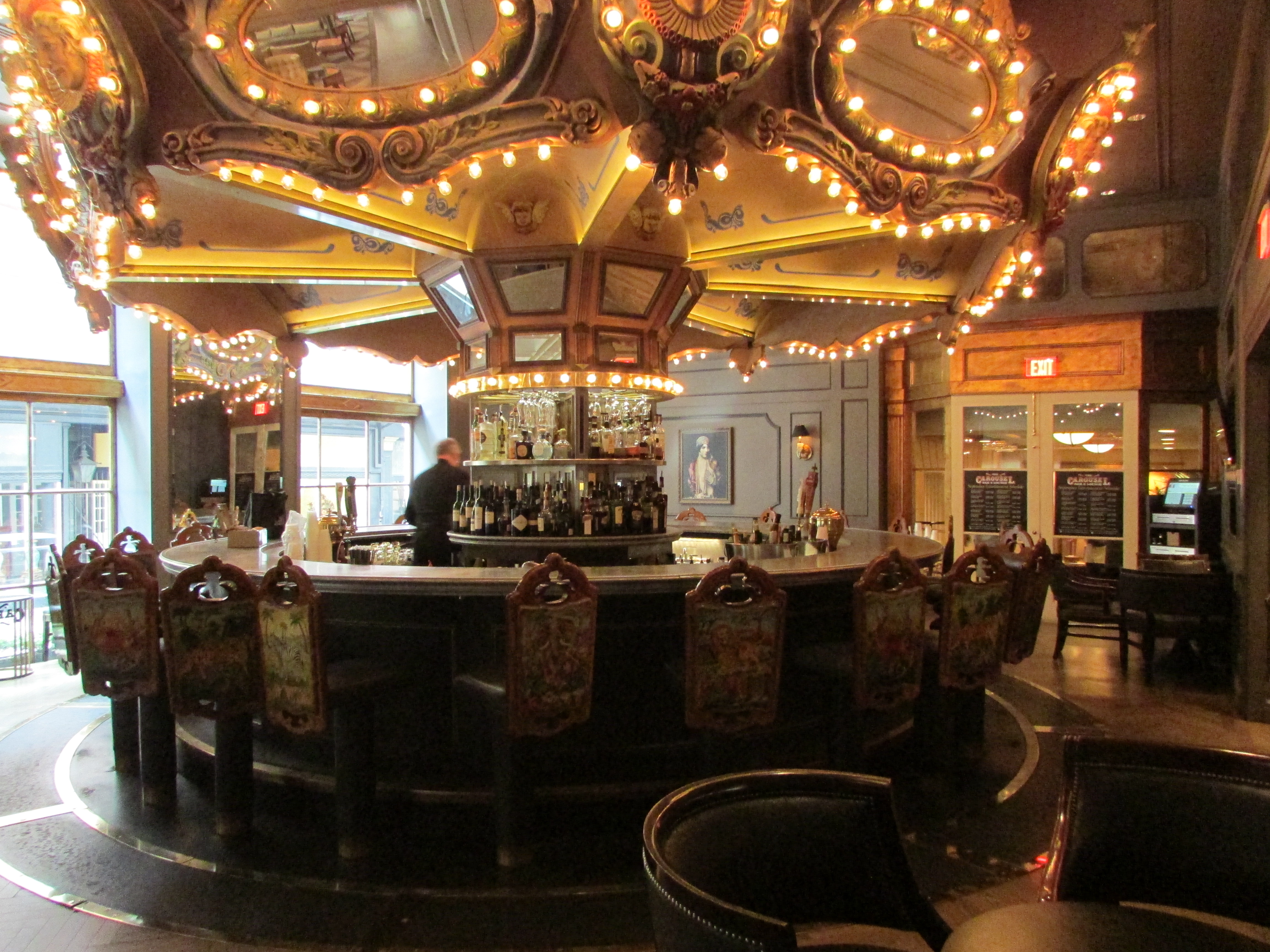
Leaving the Napoleon House, I walked uptown into the Central Business District and then back downriver on Decatur to Marigny and the music of Frenchmen Street. After an evening spent walking and reviewing my paper to be presented I found myself sitting in the Carousel Lounge at the Monteleone (www.hotelmonteleone.com). I sat looking out a window at Royal Street – watching the passing parade – while also watching NFL football (Steelers vs. the evil Patriots) and the revolving bar.

On separate occasions that night, and in separate places, I overheard snatches of conversation by symposium attendees and others recounting stories about the likes of Faulkner, Capote, Hemingway, Welty, and Williams and their time in the city. They are all long gone. But all of them spent time in the Monteleone and at the Carousel, as did so many others over the years. Those stories and that history are among the reasons the Monteleone and the Carousel are popular tourist attractions and always so crowded.

One day — in the not that distant future, probably (it’s all relative) – I will be gone too and my trips to New Orleans will be over. But the revelers will still come and the Quarter will be full of frivolity and the Carousel Bar will still rotate and the gracious and raucous life of the Quarter and the city will endure whether I’m there to share it or not. More stories will be told; more memories will be formed; more ghosts will come and go.

IMG_1942

That’s the kind of trip New Orleans was for me this time.

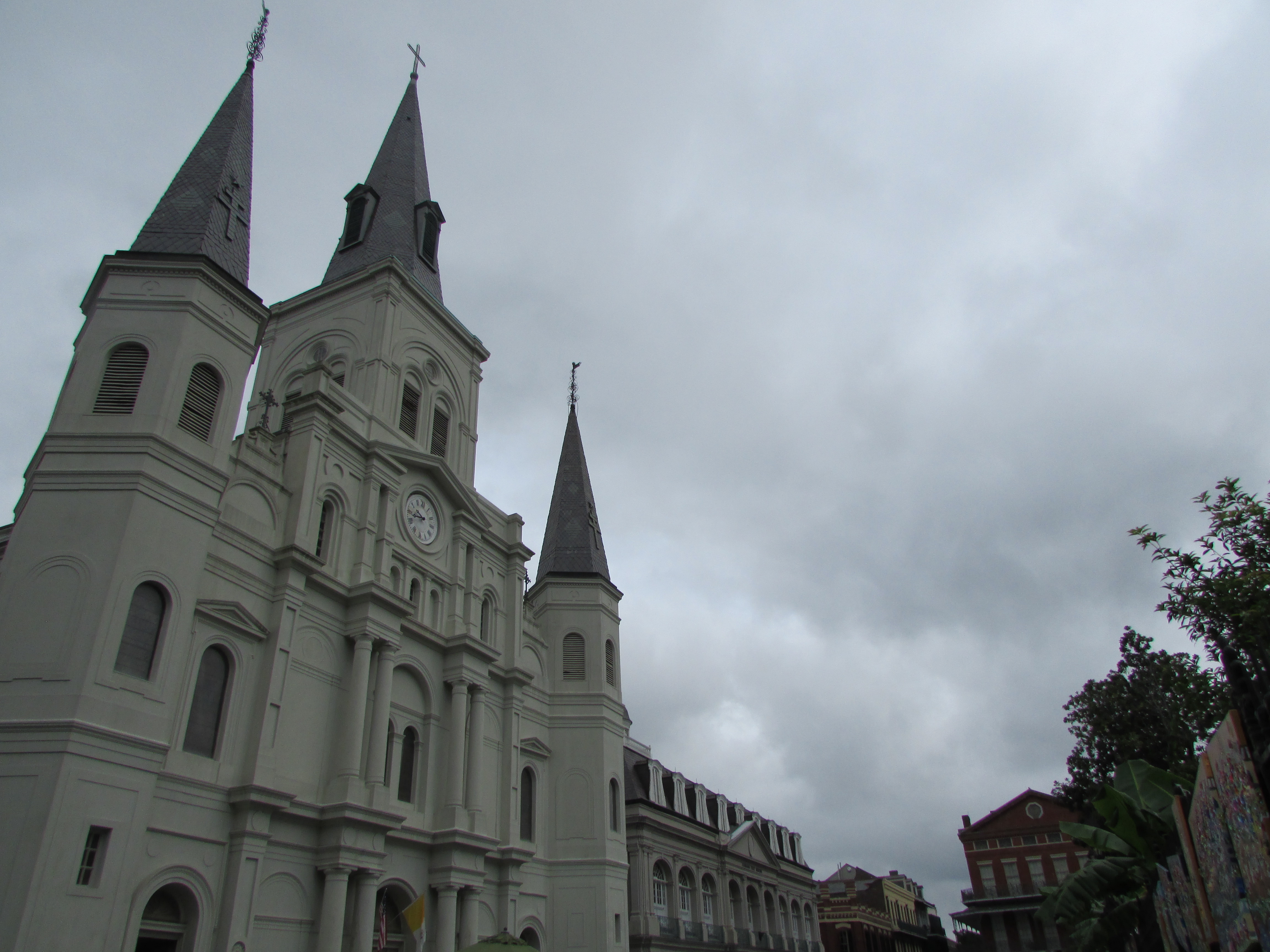
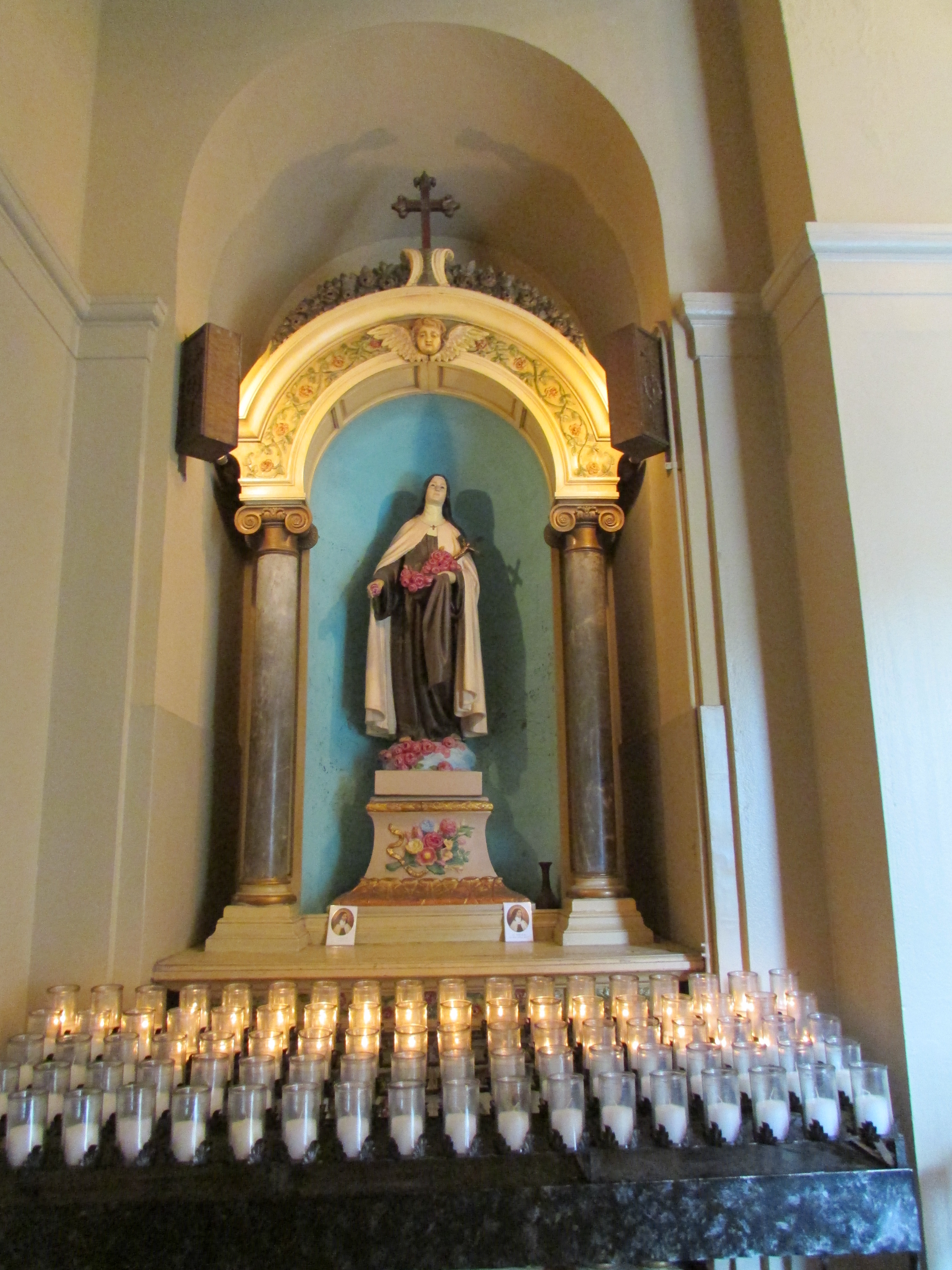
Each morning I got up early and wandered down to Jackson Square and St. Louis Cathedral for some quiet time before the symposium sessions began. I have been going to that cathedral early in the morning for years but this time I found myself lighting candles for family and friends in trouble and in need. I’m not a Catholic but it couldn’t hurt and right now we all need all the help we can get. 100_2265

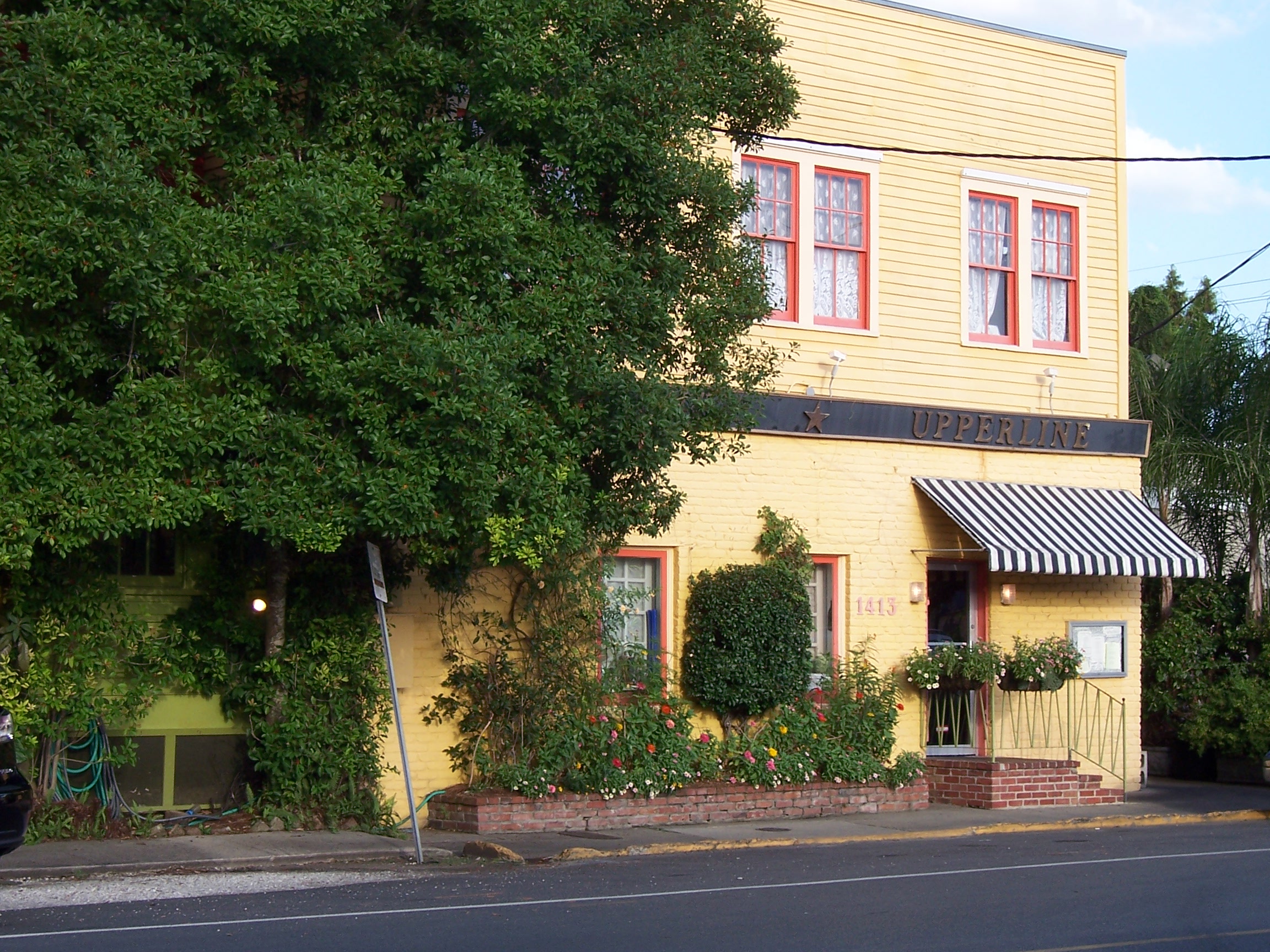
On my final night I went uptown to a favorite restaurant, Upperline (www.upperline.com). As always, JoAnn Clevenger, the restaurateur, was presiding over the restaurant like the seasoned pro she is, making everyone feel welcome and special from the moment they walked in the door. As she dropped by the table we discussed the fact that it had been a long three and a half years since my last visit. JoAnn explained the genesis of the “Dorothy Parker on the Bayou” cocktail she created with Dorothy Parker gin, various liqueurs, and orange bitters. “Dorothy Parker” is garnished with three Red Hots.  Fittingly …

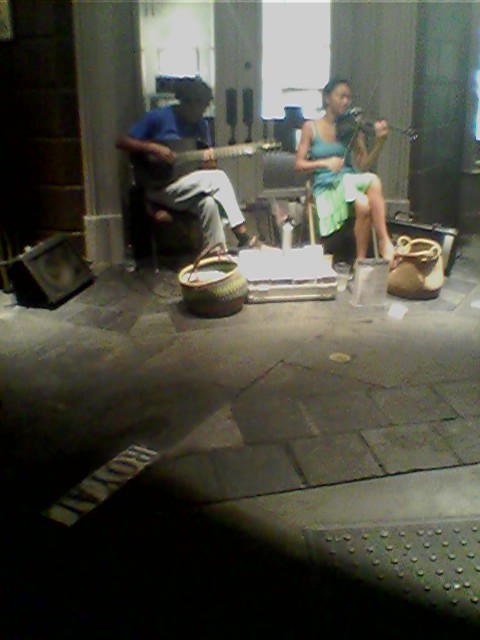
After dinner I returned to the hotel. I had a long drive the next day but I walked back down Royal Street and listened to a lovely duo of street performers on the corner of Royal and St. Louis. Tanya and Dorise (www.tanyandorise.com) have attracted a following in the Quarter with their violin and guitar renditions of an amazing array of music. Although they play a little bit of everything, when I last saw them – close to 11:00 p.m. – they were playing contemplative and thoughtful songs like Leonard Cohen’s “Hallelujah” and the Pachelbel Canon.”  When Tanya and Dorise broke into Nirvana’s “Smells like Teen Spirit”  the gathering crowd erupted. The mood was shifting again but then a brass band appeared up the street, leading a wedding party and its second line back to the Monteleone. As the second line passed, I took it as a cue to trail behind and return to the hotel myself with the sounds of Tanya and Dorise floating in the sultry air behind me. The brass band dispersed outside the hotel as the last of the wedding party disappeared into the lobby. Tanya and Dorise

I left Sunday morning to drive back to Alabama. WWOZ was playing gospel as I approached the lake. Past the north shore, another WWOZ deejay was playing a show about “letters” with early bluegrass and country music like the Carter Family, Hank Williams, Ralph Stanley, and the Louvin Brothers. In her second hour she interviewed a local band about a square dance they were playing on Monday night. Just before Hattiesburg, the intermittent signal had disappeared completely and the deejay, “Hazel the Delta Rambler,” was gone.

She had become another ghost of New Orleans.

IMG_1946

Meandering at the Sidewalk

IMG_1910 The Sidewalk Film Festival in Birmingham (www.sidewalkfest.com) has become one of my annual milestones. Held in downtown on the last full weekend of August, Sidewalk’s 2015 edition had over 250 screenings on nine screens in six locations within sweaty walking distance during roughly a 52-hour period. There are also workshops and panels, outdoor concerts, and nightly after-parties.

What I like most about this particular event is its intense brevity. Basically the screenings start with an opening night event on Friday at the Alabama Theatre and everything ends with an awards show, back at the Alabama, late on Sunday (www.alabamatheatre.com). This leads to exhaustion but it also provides an opportunity for lovers of indie movie-making to experience total immersion in a short span of time at venues that are in reasonably close proximity. There’s no way to see everything one wants to see and participants know that going in. As the name suggests, it keeps the downtown sidewalks busy. And it brings movies and movie-makers to Birmingham that would likely not play the city otherwise.

2015 marks the 17th Sidewalk. The event began as the Sidewalk Moving Picture Festival (a name I prefer since it is more reflective of 21st century media) but common usage won out and it is now officially the Sidewalk Film Festival. Sidewalk is produced by the Alabama Moving Image Association and has steadily grown in size and influence since its 1999 debut. Much is still made of Sidewalk’s designation a few years ago by Time magazine as one of the “Top 10 Film Festivals for the Rest of Us.” Birmingham’s SHOUT LGBTQ Film Festival, another AMIA production (www.bhamshout.com), joined the Sidewalk line-up in 2006 and shares dates and venues annually.

While Sidewalk is international in scope and programming, it makes an earnest effort to screen local product and give Alabama artists a showcase. Scattered throughout the event are screenings of Alabama-centric features and documentaries as well as programs of Alabama narrative and documentary shorts. The Sidewrite screenplay competitions include a separate category for scripts by Alabama writers. The festival has been a proven catalyst for the emergence of a much more vital and energetic film community in Birmingham and throughout the state.

One of my must-see screenings this year was Norton Dill’s documentary, Q: Alabama’s Barbecue Legends, a production of the Alabama Tourism Department in honor of 2015 as “The Year of Alabama Barbecue.” Q is an enjoyable survey of the scope of barbecue in the state with the usual suspects featured as well as a few lesser-known joints. The diversity of attitudes and opinions captures the complexity and variety of barbecue in Alabama. It’s a good documentary although I had hoped for it to soar.

IMG_1917Even though I am a film buff, one of the particular pleasures of Sidewalk for me is the opportunity to just wander around downtown Birmingham and soak up atmosphere. The historic 4th Avenue Business District hosts a jazz festival on the same weekend as Sidewalk and it’s always fun to hang out on 4th Avenue and listen to the music between screenings. The 4th Avenue District is home to a favorite quirky Birmingham attraction, the Eddie Kendrick Memorial Park, dedicated to Eddie Kendricks, lead singer of The Temptations (Eddie Kendrick apparently added the “s” to his last name when he joined the group). IMG_1911

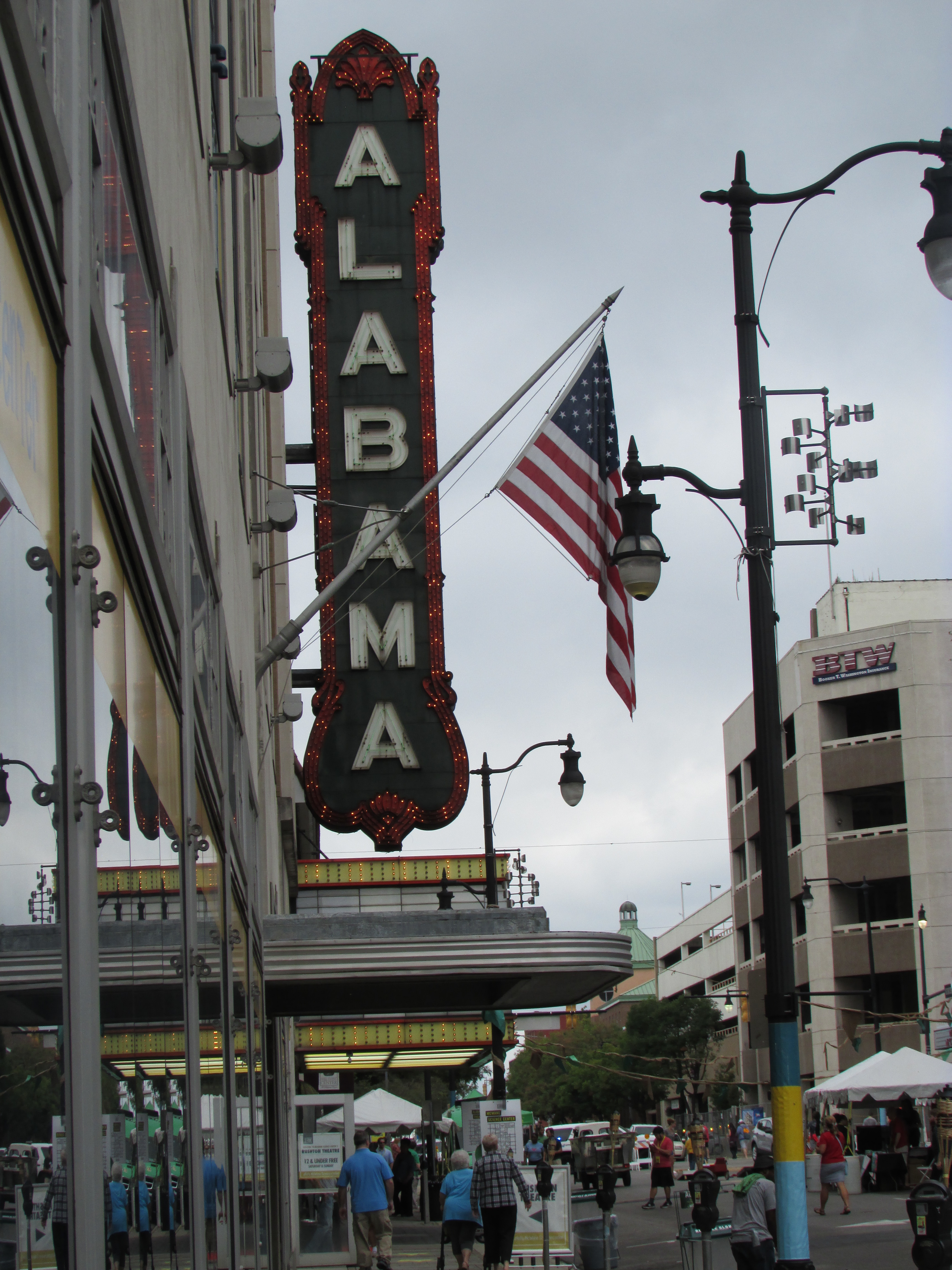
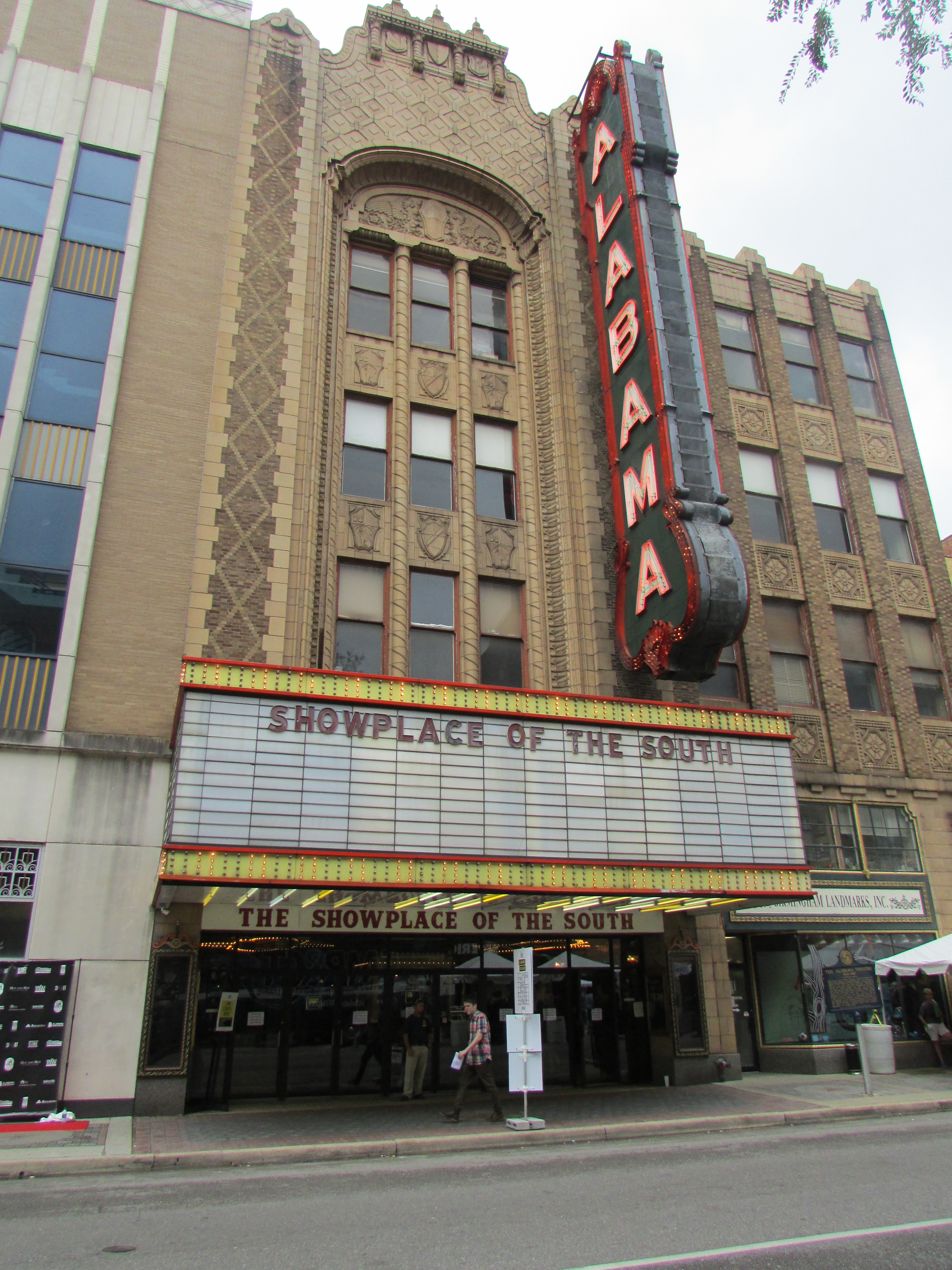
The Alabama Theatre, a 1920s movie palace and the centerpiece venue of Sidewalk, is part of Birmingham’s “Theatre District.” This might seem to be an odd designation since the Alabama is the only historic theatre still in operation on that part of 3rd Avenue North. However, there was a time – and I am old enough to remember the latter part of it – when the Alabama was in the center of a group of at least fourteen movie and live theatre venues stretching from 17th to 21st Streets around the 3rd Avenue core. Before suburban megaplexes, downtown Birmingham around 3rd Avenue North was where one went to see movies. I well remember as a child and even into my college years when the neon movie marquees along 3rd Avenue were bright, plentiful, and enticing. IMG_1923

Today, there is the Alabama. The McWane Science Center next door has a state-of-the-art IMAX theatre and Red Mountain Theatre Company has a cabaret performance space in the basement of the old Kress Building. The Carver Theatre around the block in the 4th Avenue District does double duty as a performance and screening space and the home of the Alabama Jazz Hall of Fame (www.jazzhall.com).

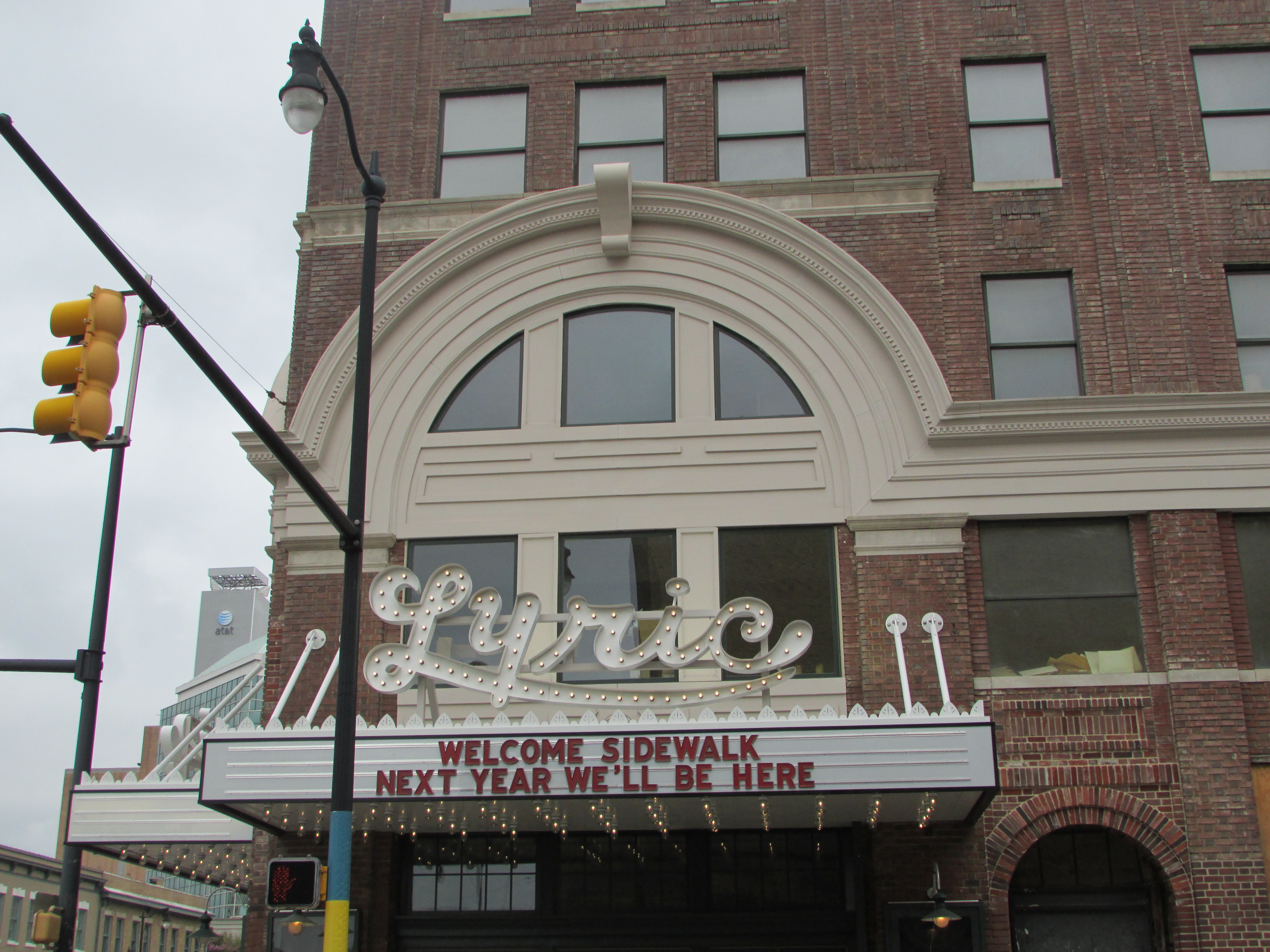
Still, Birmingham’s Theatre District is lackluster when compared to its former neon-lit grandeur. A hopeful sign in downtown this year was on the old Lyric Theatre, caddy-corner across 3rd Avenue from the Alabama. Its marquee proclaimed

WELCOME SIDEWALK

NEXT YEAR WE’LL BE HERE

The Lyric was a 1000-seat performance venue built in 1914 for live vaudeville shows. The Marx Brothers, Mae West, and Milton Berle are listed among its marquee attractions. As movies and the Alabama began to dominate, the Lyric became a second-run movie theatre and by the 1970s it was a seedy adult movie house. People still talk about Deep Throat’s run at the Lyric; by that time the Lyric was known as the Roxy. The Lyric made a memorable cameo in the climactic scene of Bob Rafelson’s 1976 Birmingham film Stay Hungry in which a bunch of bodybuilders poses on the Lyric’s fire escape. After the Lyric closed in the 70s, it went through a sad decline; after the restoration of the Alabama, attention returned once again to the Lyric. Its renovation is well underway and it is slated to once again become a venue for live performance (www.lightupthelyric.com).

After years of photographing the Lyric, it will be nice to relax and enjoy a Sidewalk movie there in 2016. IMG_1913

Hackworths!

IMG_1901  Finally my years-long search for Hackworth apples took me to this entry on the website for Big Horse Creek Farm in Lansing, North Carolina (www.bighorsecreekfarm.com):

HACKWORTH: A long-time popular variety that most likely originated with Dr. Nichodemus Hackworth (1816-1893) of Morgan County, Alabama. A letter sent to the USDA by T.W. Dermington of Lavonia, Georgia, in 1907 stated that the apple arose as a chance seedling on a creek bank from seeds washed down from an old orchard upstream. It is believed that Dr. Nichodemus obtained starts from this original tree. As described in an old nursery catalog, it was a great summer apple which “bears fruit every day in August.” Fruit medium with yellow skin overlaid with a few red stripes and splashes. Flesh is yellow, granular, and aromatic. Ripens July to August.

Hackworth is an heirloom variety of apple that my mother remembers from her days as a child in Cullman County, Alabama. She speaks fondly of one particular place that her family lived in the community of Jones Chapel. This was in the days when my grandfather was farming in Cullman County, before the family moved to Birmingham and he began factory work. Mother often talks about the fruit orchards and grapevines on this particular property. They took such a place for granted back then; it sounds paradisiacal to me.

A few years ago when we were at the Saturday morning Pepper Place Market in Birmingham, Mother was excited to see Hackworths at one of the stands. She bought some and said they had been a favorite of hers as a child. She told me to get her some Hackworths if ever I happened to run across them.

Since that one time at Pepper Place I have looked for but have never been able to find Hackworths again. Over the years I inquired about Hackworths at Pepper Place and other farmers’ markets and farm stands, did searches, and called places that might be able to help me. I’ve even driven the back roads a few times seeking out orchards that I was told about that might have potential. Each path was a dead end.

Over time I gave up. I would occasionally ask somebody if they knew anything about Hackworths and was generally met with blank stares.

A few weeks ago after a trip to Birmingham I remembered that Hackworths had been a summer apple and did one more half-hearted on-line search, not really expecting anything of substance to pop up. That’s when I found the website for Big Horse Creek Farm in North Carolina, in high country near the place where North Carolina, Virginia, and Tennessee meet. I did a search for Hackworths and ran across the entry that begins this essay. The site indicated that Big Horse Creek Farm specializes in antique and heirloom apple trees and provides specialty services to graft trees for customers looking for specific heirloom varieties.

Finally, a ray of hope. I sent an email to the nursery, told them of Mother’s fondness for Hackworths and how I had been trying to track some down for years, and asked if they might know where I could find Hackworth apples for purchase. I received a nice reply from the nursery’’s owners, Suzanne and Ron Joyner, telling me that they had just picked a couple of bushels from their one Hackworth tree on the previous day and would be selling them at a farmers market the following day.

Since I was in Alabama I would not be able to get to their farmers market but I thanked them for their reply. Almost as an afterthought, I added “Do you ship?” Based on the nature of their business, I was certain that they did not ship fresh apples, only trees.

A couple of days later I received a reply. It began “We are a small specialty nursery operation and don’t normally ship fresh apples but here’s what we can do…” They had been touched by my mother’s request and suddenly, after years of searching, I arranged to have ten pounds of the elusive Hackworth apple shipped to my parents’ house.

The shipment arrived on Friday. I traveled down to Birmingham the next day and was eager to bite into one of the long sought-after apples. The Joyners included a note to Mother explaining that they sent some slightly underripe fruits to ensure safer shipping and longevity. The apples are small to medium-sized, ruddy, and randomly marked with green and gold accents; they have a firm fresh real apple taste with a semi-tart bite. They’re full of possibilities. It’s easy to see how one would remember them all of her life.

I always feel fortunate when I discover kind-hearted and caring people like the Joyners who are truly and quietly making a difference. Their mission is to preserve a part of our horticultural heritage. In so doing, I think they plant hope.

In the case of my mother, they made a distant memory real again. IMG_1903

“The Most Essential City in America”

100_1065  One July Sunday morning during my Tuscaloosa years I was awakened around 5:30 by the ringing telephone. On the other end was my friend Beth Thompson with her soothing Mississippi drawl.

“Are you up?”

“No.”

“Well get up. I’m thinking we should go down to New Orleans for lunch today. I’m craving a Napoleon House muffaletta.”

Instantly I was wide awake. “When are we leaving?”

“I’ll pick you up in half an hour.”

100_2248We got to the Napoleon House around noon, had our lunch, and spent the rest of the day wandering the French Quarter and the city. Later we parked on St. Charles near Audubon Park and walked to Cooter Brown’s at Riverbend for oysters. After an afternoon and early evening of rambling, we swung by the Maple Leaf to catch a set of jazz and arrived back in Tuscaloosa in the wee hours of Monday morning. That is just one example of a perfect trip to New Orleans.

For me, they’re almost always perfect.

Beth and I took pictures on my cheap camera during that trip in 1983. When I got them developed and shared them with her I apologized that almost all of them were fuzzy and out of focus. “Isn’t that what New Orleans looks like?” asked Beth. Beth passed away in 2002; I still miss her.


“New Orleans is the most essential city in America.” I heard those words spoken by a Chicago-based printmaker whose work was featured in a New Orleans gallery opening I attended in 2012.

That was the first time I heard it put in quite that way but I immediately understood what he meant and wholeheartedly agree.

100_1099The singularity of New Orleans – its people, cuisine, music, ambience, architecture, landscape, culture, “below the Salt Line” attitude – is often imitated but the city has a feel and a vibe that is only authentic in New Orleans. A friend – a jazz aficionado who has never visited New Orleans – once told me point blank that he “hates” New Orleans jazz. I was not offended and assured him that if he ever heard New Orleans jazz played in New Orleans he would probably feel differently.

In 1994, I took a friend from Indiana to New Orleans for his first visit. We exited the interstate, turned onto Rampart, and took a right onto Toulouse to get to the hotel. I’ve always enjoyed the shock of that moment when one turns into the Vieux Carre. As we drove down Toulouse my friend grabbed my arm and said, “Are we still in America?” From the back seat I heard my friend Joe mutter, “Are we still in the 20th Century?” It’s debatable.100_2255

I have long had a passion for New Orleans and some of my favorite memories occurred there. I first visited the city with my family on a Sunday day trip in 1971 when we were living in Jackson, Mississippi. I was 16, we were only there for a few hours, we ate at a Burger King on St. Charles on the way out of town, and I fell for the place hard and fast. As we drove down Bourbon Street and out of the French Quarter at dusk I remember thinking I’m going to have to explore this place more and often when I grow up.

By the time I was in graduate school I was fulfilling the promise I made to myself at 16. Tuscaloosa is only a five hour drive from New Orleans but, since I didn’t have a car through most of my college years, I became a regular traveler on Amtrak when I couldn’t catch a ride with friends who were heading down. I could hop the Crescent in Tuscaloosa shortly after noon on a Friday and the train would be crossing Lake Pontchartrain before sunset. Local friends would meet me at the train station in New Orleans and I’d cram as much of the city into a day and a half as possible. More than once I’d be at the Café Du Monde at sunrise on Sunday drinking chicory cafe au lait and eating beignets before heading back to the train station to catch the 7:30 Crescent back to Tuscaloosa. I usually slept on that trip home, alerting the conductor to be sure I was awakened as we got to Tuscaloosa.

In my salad days I would brag that I could go to New Orleans with very little money and still have a great time and great food. It seemed to be that no matter how much cash I left with, I’d pull into Tuscaloosa with a dollar left in my pocket. Remember the red beans and rice at Buster Holmes’s place on Burgundy? I recall wonderful meals at Buster’s with the sassy waitresses delivering the mounds of food and Fats Domino’s “Blueberry Hill” playing on the jukebox.

As soon as I pull into New Orleans I take a deep breath and relax. There are many places that I love but my passion for and comfort in New Orleans is unique and special. There are always new places to explore but I am drawn also to the places and people I have known and returned to for decades: Acme Oyster House; Arnaud’s and Galatoire’s; Brigtsen’s; Faulkner House Books; hanging out on Frenchmen Street; Fritzel’s European Jazz Pub; Herbsaint; Muriel’s; Napoleon House; Snug Harbor; Upperline, with JoAnn Clevenger circulating graciously among the diners as if we were in her very special private salon; and more. 100_2262


As the tenth anniversary of Katrina and the flood approaches, I still remember the agonizing aftermath of the storm. I had spent a few days in New Orleans in August 2005 just a couple of weeks before the storm. For some reason, I had an impulse to take the long way down and had headed down to Mobile and left the interstate. I drove through the fishing village of Bayou La Batre in Alabama and into Mississippi taking the coastal highway along the Gulf past Ocean Springs, Biloxi, Gulfport, Pass Christian, and Bay St. Louis and into the backroads of southeastern  Louisiana.  The sights and sounds of that detour stick with me today; it was my last view of those places “before the deluge.” They will never be the same.

That trip was fresh in my mind on the Sunday night before the storm hit as I watched the grim forecasts until late into the night. One anchor even suggested that “we might lose a major American city tomorrow” and I switched the channel. He might have been right but I was in no mood to hear that kind of talk.

I finally went to bed and turned the television on early Monday morning to see what had happened overnight. It looked like New Orleans had been spared the direct hit and the brunt of Katrina and I began to focus on the Mississippi and Alabama Gulf coasts, both of which had suffered more extensive hurricane damage.

Later that day the reports about the flooding in New Orleans began to appear and I watched the man-made disaster of the levees breaking with horror, sadness, and disgust as the various levels of government inefficiency were slowly revealed. I still remember the next weeks as a dazed period when I could not get the developing story out of my mind. For the weeks that followed if anybody dared say anything that I thought was insensitive to the situation of New Orleans, the Alabama and Mississippi Gulf coasts, and the plight of the people down there, my anger could clear the room (and did a few times).

I returned to New Orleans four months after the storm. I had to be a first-hand witness. Starting in Mississippi a few hours from the city I was stunned as the damage and sheared trees began to appear along the interstate. My horror only increased as I approached Slidell, north of Lake Pontchartrain, and crossed the shaky temporary I-10 bridge over the lake at 25 mph. Abandoned vehicles still lined the interstate and much of the city was still pitch black at night. There were signs of life and vitality when I pulled into the French Quarter on a Friday night but much of the revelry felt more like a wake than a celebration. I drove away from the city shaken by what I had seen.

I made a quick day trip four months after that to have lunch at Galatoire’s and celebrate the reopening of that legendary restaurant. John Fontenot, my Galatoire’s preferee, was living in a FEMA trailer but was cheerful as ever. “Tell people to come back,” he said. “The city needs them to come down and spend their money.”

I have tried to get back at least once a year since the storm and it is amazing to see how much progress is made although if one looks closely it’s very clear that there is still a lot to be done. Many businesses have come back and some never reappeared. New businesses are popping up and there are hundreds more restaurants now than there were before the storm even though the population is still decreased. The areas frequented by tourists have recovered nicely. Open your eyes and pay attention, though, and there is plenty of healing and rebuilding that still must be done.

Even though I have never lived there I always feel that New Orleans is “mine” in some special way. My grief and depression when the flood happened ten years ago felt unique to me but I know that people all over the world felt that their experience of the tragedy was unique as well. And none of us non-residents will ever fully understand the grief and loss of the citizens of New Orleans who lost everything in the flood. Many of them were never able to return.

Despite our different experiences of the event, what we all shared was the hope and certainty that New Orleans would be back.

In the aftermath of the flood I found myself constantly thinking of the Louis Armstrong cover of the standard “Do You Know What It Means to Miss New Orleans?” It constantly was playing in my head and frequently was playing for real in my music system at home and in the car. The tune sustained and inspired me somehow.

Those of us who viscerally missed New Orleans in the aftermath of Katrina know all too well what it means. And those memories make us cherish the place even more “each night and day.” 100_2227