Tag Archives: Alabama

Africatown

The Clotilda, the last known ship to illegally transport kidnapped and enslaved Africans to American shores, was set afire just above Mobile Bay in 1860. Since the African trans-Atlantic slave trade had been outlawed since 1808, the ship was destroyed so it could not be used as evidence of the illegal crossing. The Africans onboard had been transferred to a riverboat before the abandoned schooner was burned and scuttled. Despite this, the perpetrators of the crime were boastful about the activity, which had been undertaken as part of a bet, and the story of the Clotilda was well-known in the area. The story became legend and, because of the lack of evidence, some considered it a myth.

The Civil War followed and some of the Africans from the Clotilda, who were technically free at the war’s conclusion, eventually founded Africatown on the west bank of the Mobile River. Africatown is distinctive for being founded by Africans who had recently arrived on American shores and maintained their customs, language, and traditions in the running of the community. The African natives were, on occasion, denigrated by the descendants of earlier Africans who had spent their entire lives in America.

Africatown still survives and descendants of the founders remain active there. The community, however, was split by a highway, hemmed in, and poisoned by industrial pollution, and now has about 2,000 residents.

Meanwhile, the remains of the Clotilda lay at the bottom of the Mobile-Tensaw River Delta. Ben Raines, an Alabama environmentalist and journalist with keen knowledge of the Mobile-Tensaw Delta, organized expeditions to find the remains of the Clotilda in an area that has the remains of a number of ship wrecks. In 2019, the Alabama Historical Commission confirmed that the remains found by a Raines expedition were those of the Clotilda. After almost 160 years in the waters, some of the ship is still partially intact. There is ongoing research into how best to preserve what is left. Fascinating documentation of the history of the Clotilda and its recent discovery may be found in The Last Slave Ship: The True Story of How Clotilda Was Found, Her Descendants, and an Extraordinary Reckoning (Simon and Schuster, 2022) by Ben Raines.

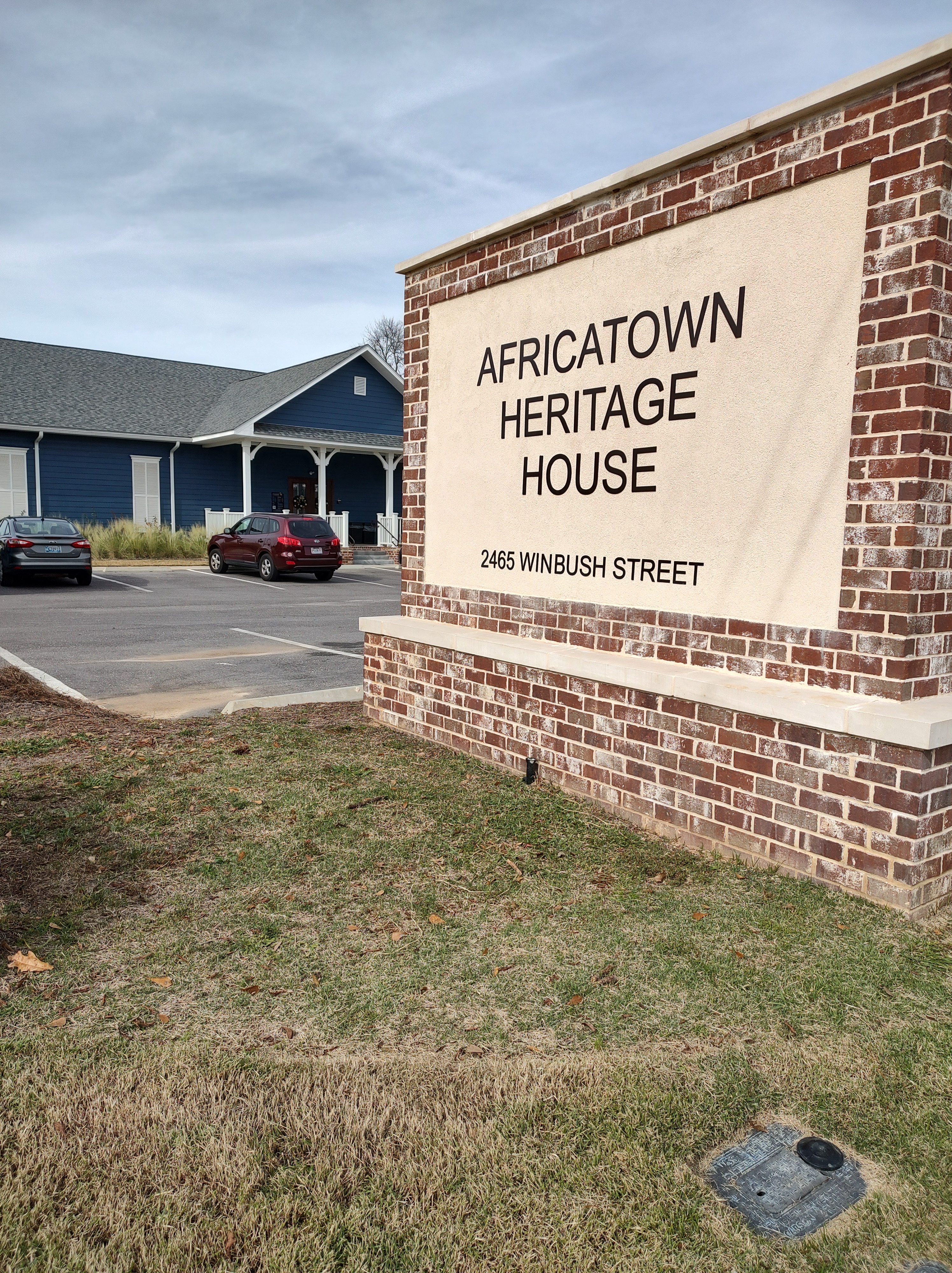
Due in part to Raines’s discovery and to ongoing efforts by Africatown residents and descendants, the Africatown community is attracting attention once again and revitalization plans are in the works. The History Museum of Mobile has opened a fourth space, the Africatown Heritage House, in the community. “Clotilda: The Exhibition” is currently on display at the Heritage House (www.clotilda.com).

I traveled to Africatown for the first time recently. I went to see the powerful exhibit which presents timelines, documentation, and artifacts from the life of the founders of the community. Included are artifacts of their captivity, trans-Atlantic crossing, American enslavement, founding of the community, and a hopeful vision for the future. Among the soundscapes of the exhibit is the sound of water. The sound of lapping waters permeates the exhibition, always there, like the treacherous waters of the Atlantic crossing and the brackish Delta waters that preserved the evidence of the Clotilda and its cargo. The remains of the Clotilda itself are not that far away, still at rest in the Mobile River.

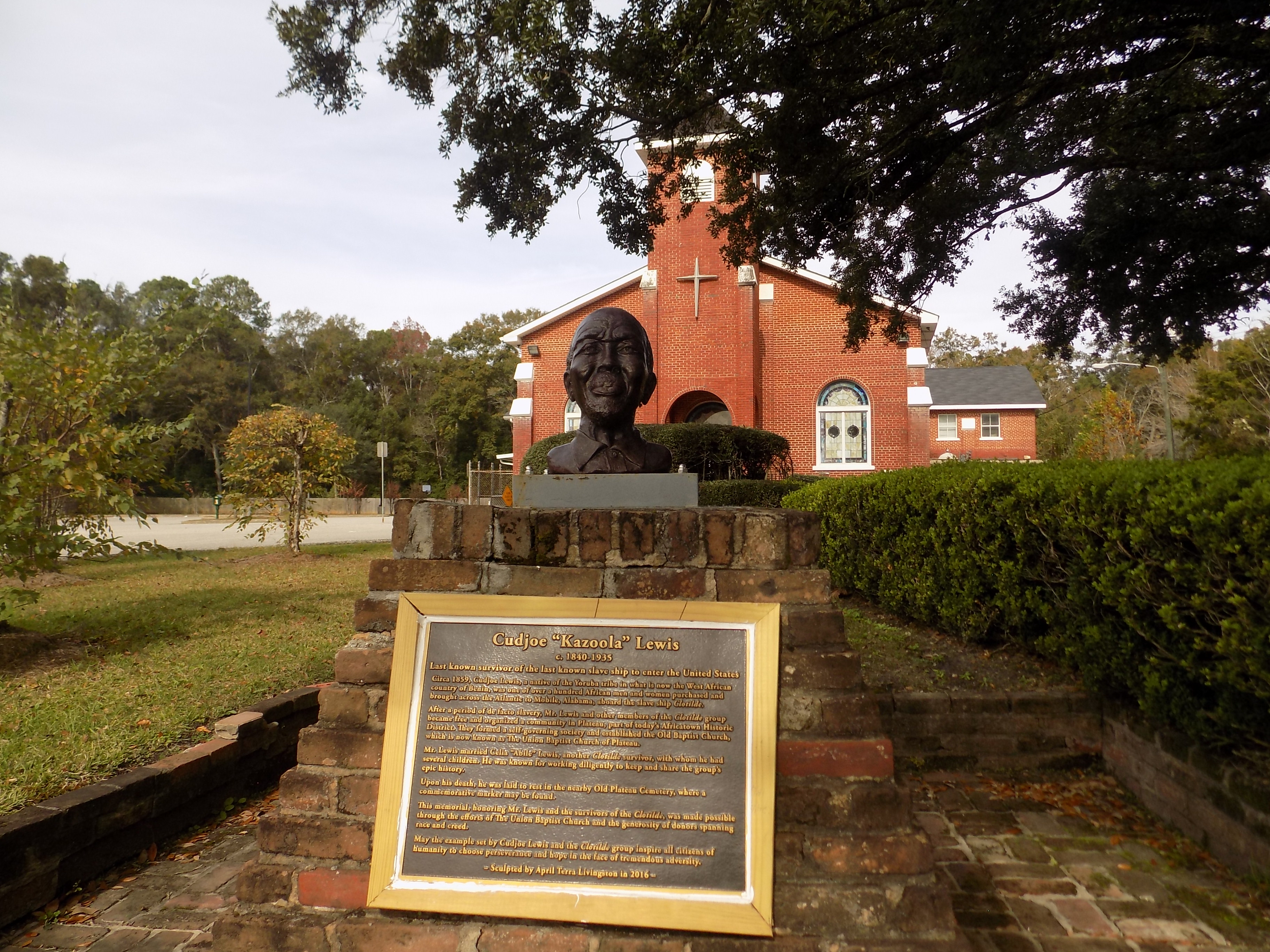
Oluale Kazoola, later known as “Cudjoe Lewis,” was an original inhabitant and landowner of Africatown. It was thought that he was the last living survivor of the captives of the Clotilda, but two other survivors were later located. Writer Zora Neale Hurston spent time in Africatown and with Kazoola, and recorded and filmed him. Her manuscript, Barracoon: The Story of the Last “Black Cargo,” documenting her conversations with Kazoola, was finally published in 2018. Snippets of Kazoola’s story, in his own words, are interspersed throughout the exhibition with the audio guide that each visitor carries through the rooms.

After leaving the Heritage House exhibit, a drive around Africatown gives evidence of what is being done, what still needs to be done. Among the houses – vintage or newer, abandoned or proudly occupied, unkempt or carefully maintained, there were two that stood out for me. One was a tiny shotgun house, one of my favorite vernacular styles, and the other was boldly adorned with an image of the African continent against a red, black, and green field. Both appealed to my inner-William Christenberry.

Back at the noisy highway that transects Africatown stands the community’s spiritual center, Union Missionary Baptist Church, with a bust of Kazoola mounted in front. Across the highway, not exempt from the clamor of factory traffic, is the peaceful Africatown cemetery with remains of the original settlers and their descendants. The site of an upcoming Africatown Welcome Center is just across the road.

I knew much of the story of Africatown and the Clotilda from readings and documentaries, but it is an inspiration to actually be in Africatown, the home of such courage. This community, forged by people forcibly removed from their home, illustrates the power and conviction to create a new home in an often hostile foreign land. The community, the Africatown Heritage House, the church, and the burial ground remain as symbols and reminders of an unfaltering spirit.
Ghosts of Evenings Past

My friends Russell and Janet died recently. But that’s not what this is about. It’s about what we do in life and how we’re remembered by those who know us.

I met Janet Gray and Russell Luke, a couple of theatre professionals, when I took a job at a theatre in Jackson, Mississippi. They were a delightful couple. Janet was lovely and intense, and Russell reminded me of Tennessee Williams, whose plays he loved. He also shared my affinity for Eugene Walter. By the time I moved to Jackson, Janet had already left and was working as a costume designer and professor at a university in South Carolina.

My time in Jackson was brief. Russell, a director and stage manager, moved on to South Carolina to teach and be with Janet. I moved on to a gig at Alabama Shakespeare Festival. In those days, Alabama Shakespeare Festival was a repertory theatre and I would host Janet and Russell when they arrived for a few days each summer to catch the rep.

We also ran into each other every March at the Southeastern Theatre Conference (SETC) convention. It was held in a different city each year and we usually managed at least one meal together.  Over time, we formalized our annual meal to a dinner on Saturday, the last night of the convention, finding just the right combination of menu and ambiance in a variety of Southern cities.

Kitty and Patty, my friends from graduate school, also attended the theatre conference annually, representing their college in Florida. We quickly became a group of five and our Saturday night dinners became a cherished tradition that eventually – for me, at least – superseded the week’s other activities.

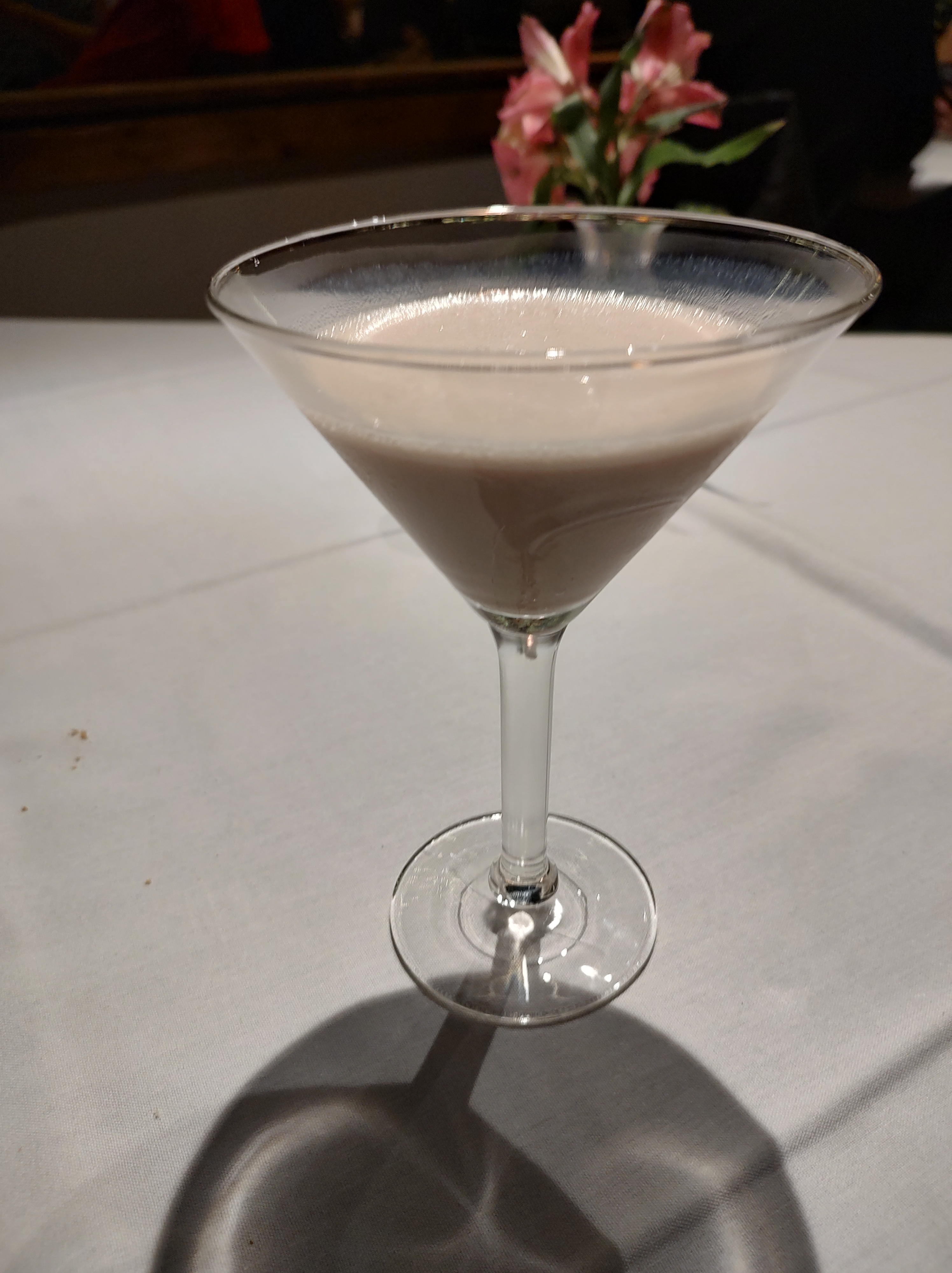
At each of these meals, Russell would quietly excuse himself toward dinner’s end. He would just as quietly return. A few minutes later, a server would arrive with a tray of five Brandy Alexanders for the table. This was Russell’s annual parting gesture for the group. The evening ended with a toast and a vow to reconvene a year later in another city.

Twice during those years, the convention was held in Mobile. On Saturday night, the five of us piled into my car and headed across Mobile Bay to the Eastern Shore. The first of our Eastern Shore dinners was at the Wash House, a restaurant in Point Clear. The by-now requisite tray of Brandy Alexanders appeared to end the evening.

This tradition went on for years. The last time the five of us gathered together was at the convention in Louisville in 2020. Janet had some health problems, but the prognoses seemed promising. It was a lovely, relaxing evening, culminating in a tray of Brandy Alexanders and a promise to do it again in Memphis in 2021.

The next week, everything shut down for COVID-19.

During the pandemic, there was no 2021 convention. I kept up with Russell about Janet’s health problems. There were challenges but Russell always assured me that they were doing “okay.”

In March 2022, SETC finally had its on-site Memphis convention. Kitty and Patty were unable to come and our group of five became three. I had retired and was rotating off the SETC magazine editorial board and had announced that 2022 would be my final SETC. At the restaurant on Saturday night, Russell did his usual disappearing act, Brandy Alexanders arrived, and we toasted our missing friends, Kitty and Patty. As the dessert course wound down, Russell said he felt like we should order one more round in honor of my last SETC.

After that final SETC, Janet began to have more serious health problems. Russell was dealing with health issues, too, although he never said much about it. In our final communication, in late-spring 2023, Russell said they were preparing to go to a reception in honor of Janet’s retirement and that things were going “as well as can be expected.” SETC will be in Mobile in 2024 and Russell said that he and Janet were discussing coming down if they were able. Since I wouldn’t be attending, he suggested I come down anyway and we could go to the Eastern Shore for dinner on Saturday night. I promised to think about it.

While running errands on November 14, I received word that Russell had died that day and that Janet had preceded him in death on October 18.

When I notified Kitty and Patty, Kitty had the perfect remembrance:

Our Saturday nights at SETC were always so special. Their twinkling wicked wits, dry humor, and genuine warmth made them such good company. I hope they are together teasing, needling and ribbing one another at this very moment. I’ll picture them that way for sure.

____________________________________________________________________________________________

I am in Point Clear this week. I had dinner at the Wash House and ordered a piece of pecan pie and a Brandy Alexander for dessert. Two ladies at a table across from me asked what I was having. The Wash House pecan pie needed no explanation, but I explained that the Brandy Alexander was in honor of a couple of friends who had recently passed away, that we always ended our meals together with a Brandy Alexander and that one of those special meals had been at the Wash House.

“What were their names?” asked one of the ladies. When I told their names, the ladies raised their glasses in unison.

“Here’s to Janet and Russell,” they said. Janet and Russell would be pleased.

AL225: December 2023

On my annual December retreat to the Grand Hotel in Point Clear on the Eastern Shore of Mobile Bay, I leave the interstate at the Stockton exit just before the interstate crosses the Mobile-Tensaw River Delta. That exit feeds onto Alabama Route 225 and runs about twenty miles through coastal plain from Stockton to Spanish Fort.

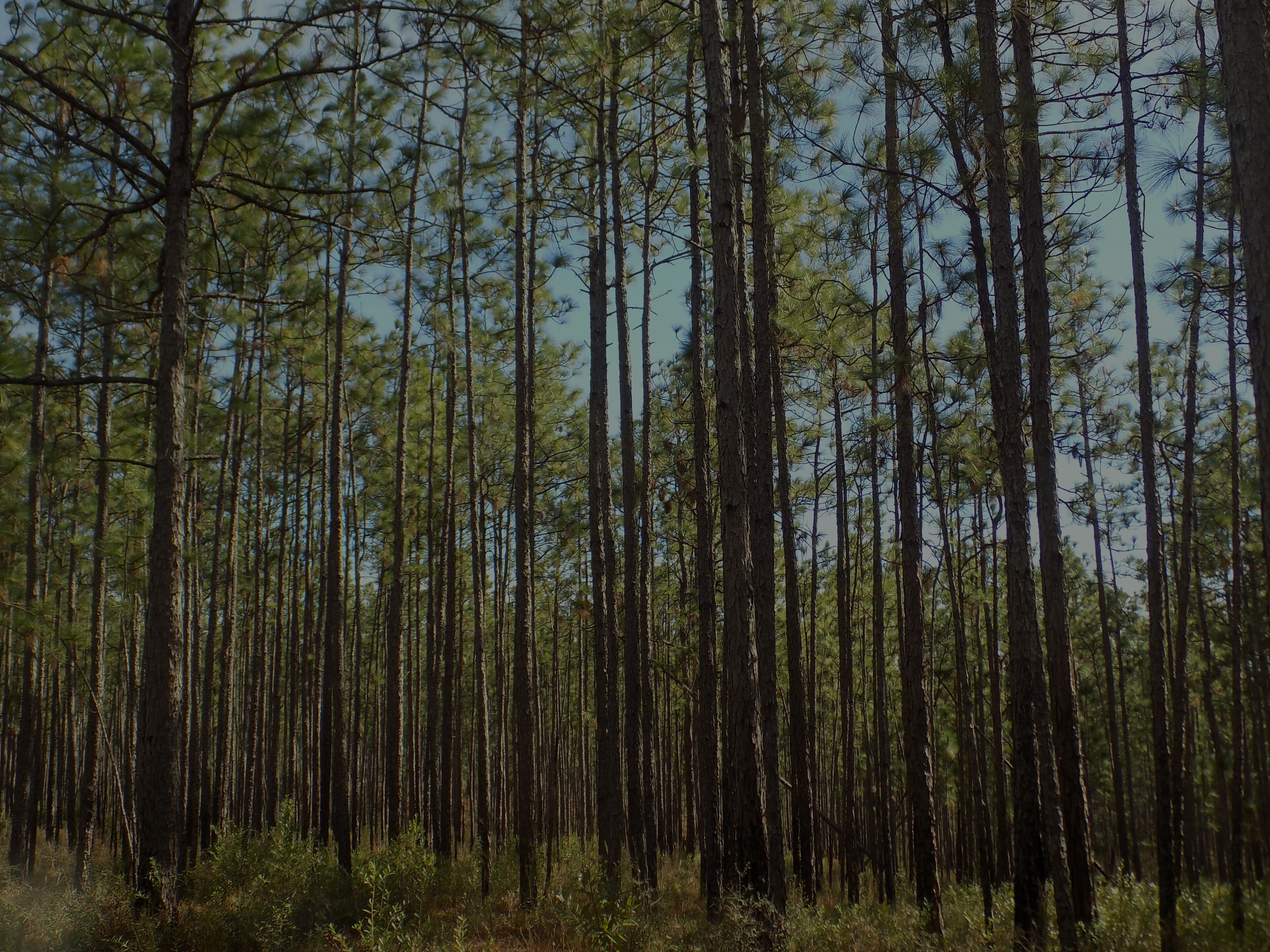
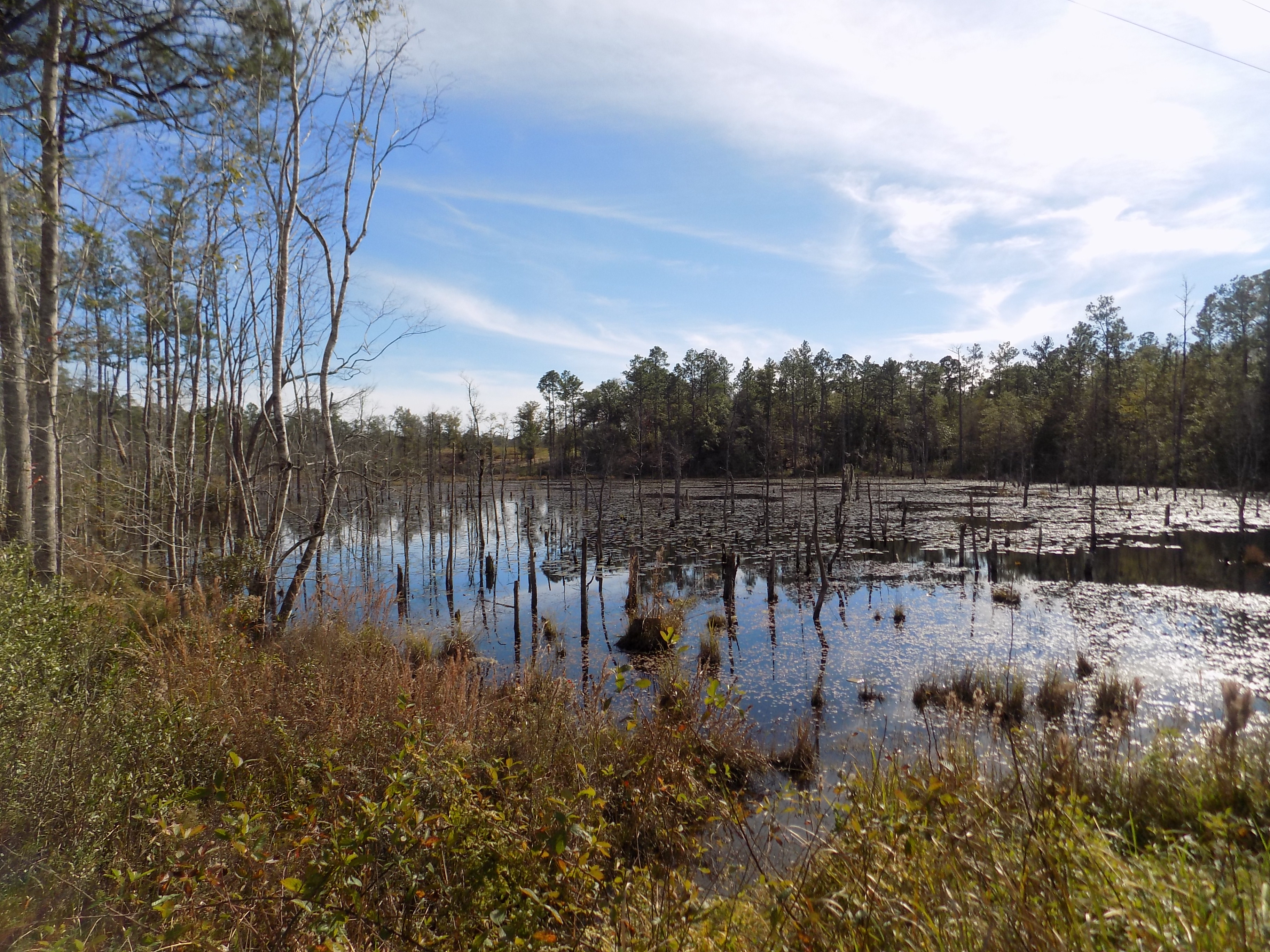
Over the years, that short stretch of Baldwin County road has become one of my favorite roads to drive. There’s nothing spectacular going on, and that’s the point. For the first few miles, the road runs through pine forests and the distinctive December low angle light brushes the trees with a graceful autumnal glow. The fact that you are now “below the Salt Line” is unmistakable. Even on a chilly day, I must roll down the window to catch the air. The road frequently crosses small streams, creeks, and branches and glimpses of water shine through the trees. I frequently feel my body relax. I exhale.

Houses are sparse at first, and the landscape is dotted with mobile homes, ancient farmsteads, and the occasional new construction. Small business districts pop up occasionally and I could swear I spotted two Dollar General stores within a mile of each other. There’s one traffic light at a crossroads.

On my most recent trip, I decided to turn off the main road to see some of the boat launches on the nearby Tensaw River. A short drive on a narrow road on a slow nippy day and suddenly there’s a river rolling softly toward the bay.Back on AL225, I must check out the churches along the way. A small Catholic church in the woods has grown and been renovated since I last photographed it. Steps away is a sweet white Presbyterian chapel. Christmas decorations adorn most houses. A mobile home has a straight row of inflatables proclaiming insistent Christmas cheer; I do not normally approve of inflatables, but the determined neatness of this display makes me smile, as does the bundled-up toddler joyfully dashing in and out between the cheerful Christmas icons. I stop to take a photograph, but I see a fretful mother staring out the door and I think maybe not.

As AL225 gets closer to Spanish Fort and its southern terminus, Buzbee boat launch and fish camp appears to the east. It’s a landmark on this highway. Look to your west from the bridge that goes across at Buzbee and you get a glimpse of Mobile’s skyline across brackish waters. Look back east to the fish camp and you go back in time.

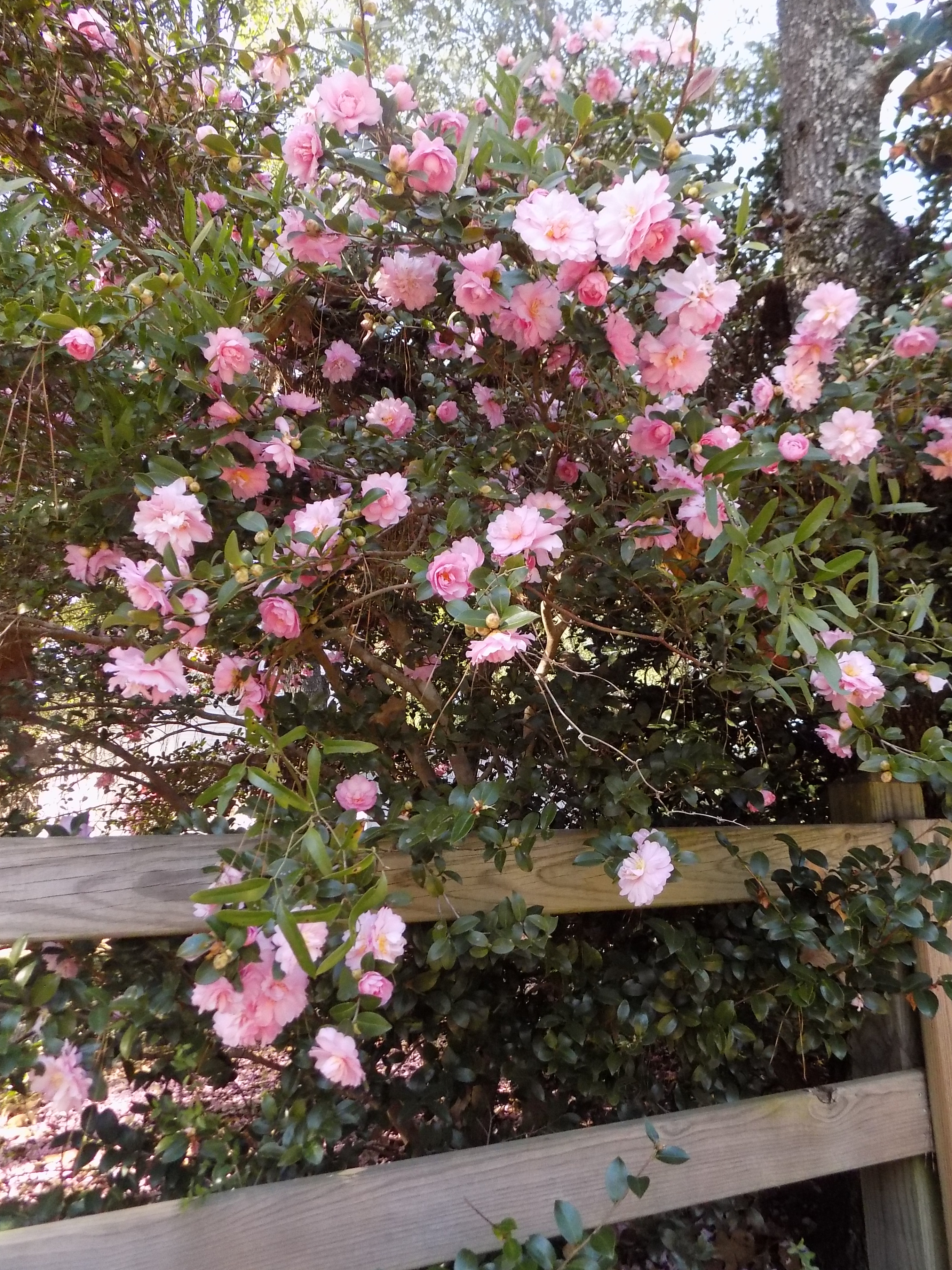
After passing Buzbee and the veterans cemetery, suburban communities begin to appear and Spanish Fort is not far now. Manicured lawns become more prominent and, this time of year, the camellias are in full bloom.  I know, camellias are not native to Alabama. But they are the state flower, like it or not, and I do get a bit of a rush seeing a bush drooping with camellia blooms on a brisk December day. It is traditional, it is expected, and I’m okay with it. In fact, it makes me happy.

AL225 ends at U.S. Highway 31 in Spanish Fort. Take a quick right turn, crossing three lanes of traffic, and there is Mobile Bay, choppy today, before you turn left at the next traffic light and head due south toward Daphne and Fairhope. The prize at the end is a brilliant sunset from my balcony at Point Clear.

I think about that turn all year. It still sends a gush of energy through my soul.

Christmas Time Is Here

photo (2016) by Carmen K. Sisson

Twenty years ago, my Christmas card was not intended to be the start of an annual tradition. I saw a white country church on a hill in Bibb County one December and commented that it would be a nice Christmas card image. A year later, I stopped to photograph that church and, a year later, I had Christmas cards made featuring one of those images.

The authenticity of the image pleased me and the response was positive and I decided to do it again if I found the proper image. Now it has become not just a personal tradition but a ritual, the planning for which commences each December. As soon as my cards are at the post office on December 1, I begin – like a Mardi Gras krewe planning a float down on the coast – to think about next year’s Christmas card.

It usually has to feature an old Alabama church – preferably white and wood-framed. These are the preferences of my recipients, actually. I have on occasion featured something other than a house of worship – a boathouse on Mobile Bay, a sprawling live oak – and I have heard what amount to complaints for not sending out another church. As printing costs and postage rates have increased, so has my Christmas card list. Friends around the country and across the world promptly notify of changes of address so that “we don’t miss out on this year’s Christmas card.”

For me, it has become a welcome distraction. I do not go overboard for Christmas – a wreath on the door, a bow on the mailbox – but I do find escape and peace in the personal meditation of signing and addressing a Christmas card. I have written about that kinship in the past. This year, unexpected passings have altered the names on my address list – they always do – but there always seem to be new names to add and the list grows rather than shrinks.

_________________________________________________

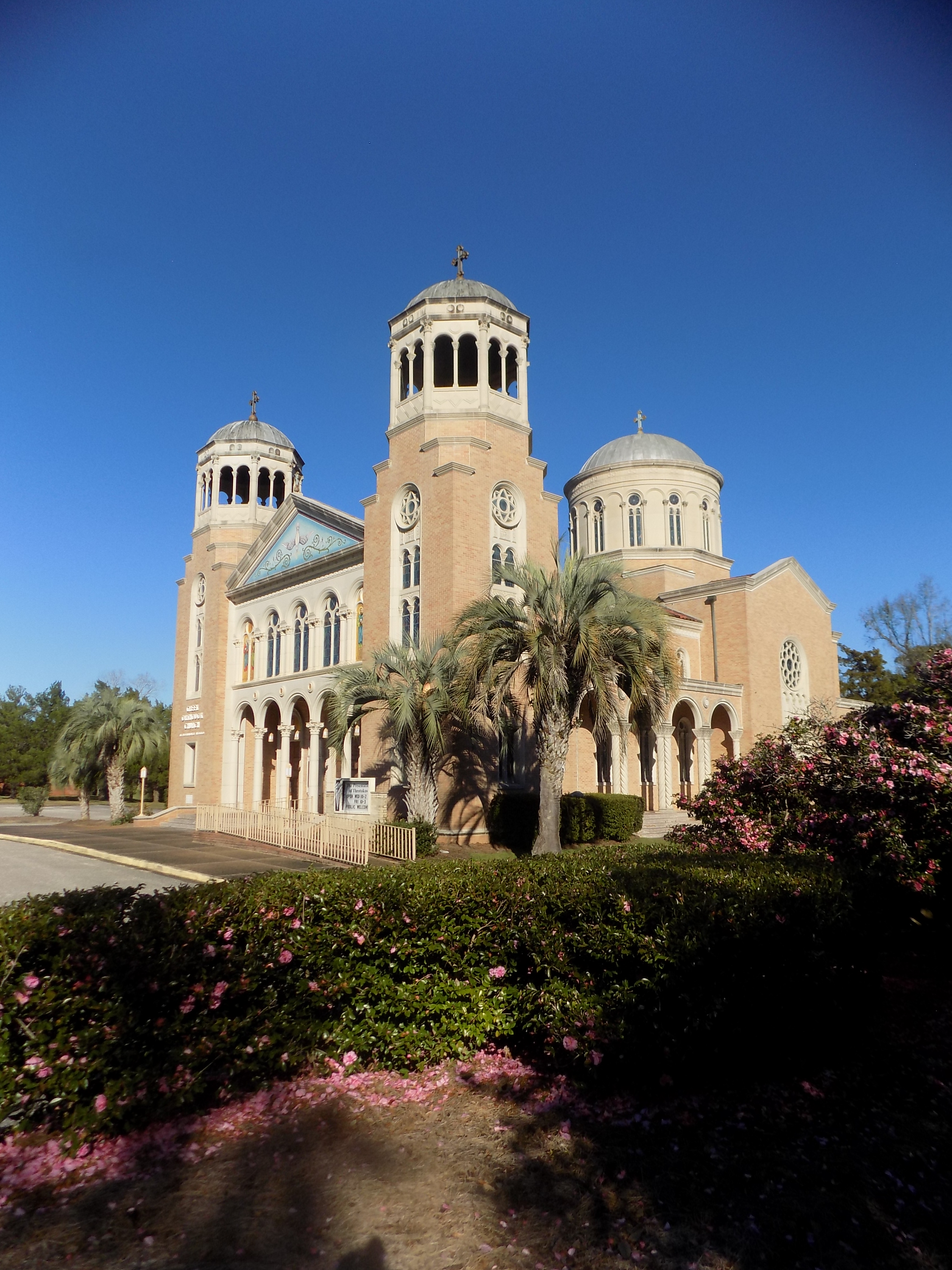
My Christmas card this year features a church that has been on my wish list of images for years. Malbis Memorial Church (its official name is much more ornate) is a Greek Orthodox structure in Baldwin County, Alabama, near Daphne. It was built in 1965 as a memorial to Jason Malbis, a Greek immigrant who founded the self-sufficient Malbis Plantation in 1906. Over time, the plantation became a thriving community of Greek immigrants with influence in Baldwin County and in the city of Mobile across the bay.

Jason Malbis died on a trip to Greece in 1942 and the Malbis community built the memorial church that he had dreamed of. Greek and Italian artists and artisans did the highly detailed mosaics and iconography that give the church its wonder and majesty. Red marble columns and pilasters in the church’s interior create a splendor that belies the relatively small size of the building.

Nowadays, the church and plantation, which once existed in relative isolation, are on a busy highway surrounded by the sprawl of twenty-first century suburbia. Once at the church, however, it is not difficult to block out the noise of the traffic and forget the increasingly encroaching sprawl and find a place of peace and quiet meditation.

Happy Holidays and Peace in the New Year, everyone.

Finding the Tribe

 I think there is a certain kind of pride in being from Alabama that people from outside the state – and many inside – don’t completely understand. Despite the ongoing embarrassment of the state by its politicians – which, of course, has to be blamed on the state’s electorate – those of us who aspire to be better plod on and remain hopeful that the political fervor and fever around us may somehow break. The more progressive thinkers among us feel almost like an underground movement since we don’t get much attention – but we’re here.

Birmingham, by far the most progressive Alabama city, tried to raise its minimum wage and elected to become a “sanctuary city” years ago; both moves were thwarted by a Republican governor and state legislature propped up by an Alabama constitution that dates back to 1901, geared at the time toward advancing Jim Crow and limiting “home rule” for Alabama’s city and towns. When Birmingham hosted the 2022 World Games and mayor Randall Woodfin wore a tee-shirt declaring “I am from the Great State of Birmingham,” I knew exactly what he meant.

________________________________________________________________

I found a proud Alabama tribe recently when I attended an event at Birmingham’s Grand Bohemian Hotel that reminded me that we who hope (and work) for a better Alabama are not alone. Alabama Humanities Alliance (AHA) presented the Alabama Colloquium honoring its Alabama Humanities Fellows of 2023.

The 2023 honorees are David Mathews and Imani Perry. David Mathews was the president of the University of Alabama when I was an undergraduate in the 1970s. At the time, he was the youngest president of a major university in the country. Mathews, from Grove Hill, Alabama, was Secretary of the Department of Health, Education, and Welfare in the Gerald Ford administration. He left Alabama to become the longtime director and CEO of the Kettering Foundation with a mission to strengthen democracy through community involvement. Alabama’s Center for Civic Life at American Village was renamed the David Mathews Center for Civic Life in his honor. His books include Politics for People, Together: Building Better, Stronger Communities, and With.

Scholar and writer Imani Perry is a Birmingham native and a professor of everything, it seems (law, literature, history, cultural studies), at Harvard University. Her most recent book, South to America, was a 2022 National Book Award winner that everyone should read. She is the recent recipient of a 2023 MacArthur Fellowship – the much-vaunted “genius grant.” Her books include Looking for Lorraine: The Radiant and Radical Life of Lorraine Hansberry and May We Forever Stand: A History of the Black National Anthem.   

CNN’s Kaitlan Collins, another Alabamian, was originally scheduled to moderate the conversation between Perry and Mathews and had to bow out after being sent to cover the war in Israel. She sent a video greeting and a “Roll Tide” from Tel Aviv, however, and was ably replaced by NPR’s Priska Neely, managing editor of the Gulf States Newsroom based in Birmingham. The ensuing conversation was wide-ranging, entertaining, astute, and riveting.

I was seated with friends and colleagues from Alabama Writers’ Forum, which supports literary arts, education, and awareness from around the state. The audience was diverse, and I definitely spotted some known Republicans in the mix, but the reputation of Alabama as a “deeply red” state – while evidenced by the politicians who seem to be perennially elected here – is misunderstood and misleading, perhaps, outside our borders. The “red state / blue state” trope, I’m afraid, emphasizes our differences more than our commonalities.

What strikes me is the fact that many people outside our state don’t comprehend that these sorts of public events and conversations happen frequently within our borders. In a time of condemning stereotypes, I’m afraid that certain condescending Southern stereotypes are still given credence by misinformed people.

Even so, it was rewarding to be in the company of like-minded and engaged Alabamians with a national influence and to note the ever-present hope and potential for our state and our nation moving forward. It’s always more productive, I think, to work for progress and change from within than to criticize from without.

Falling Leaves

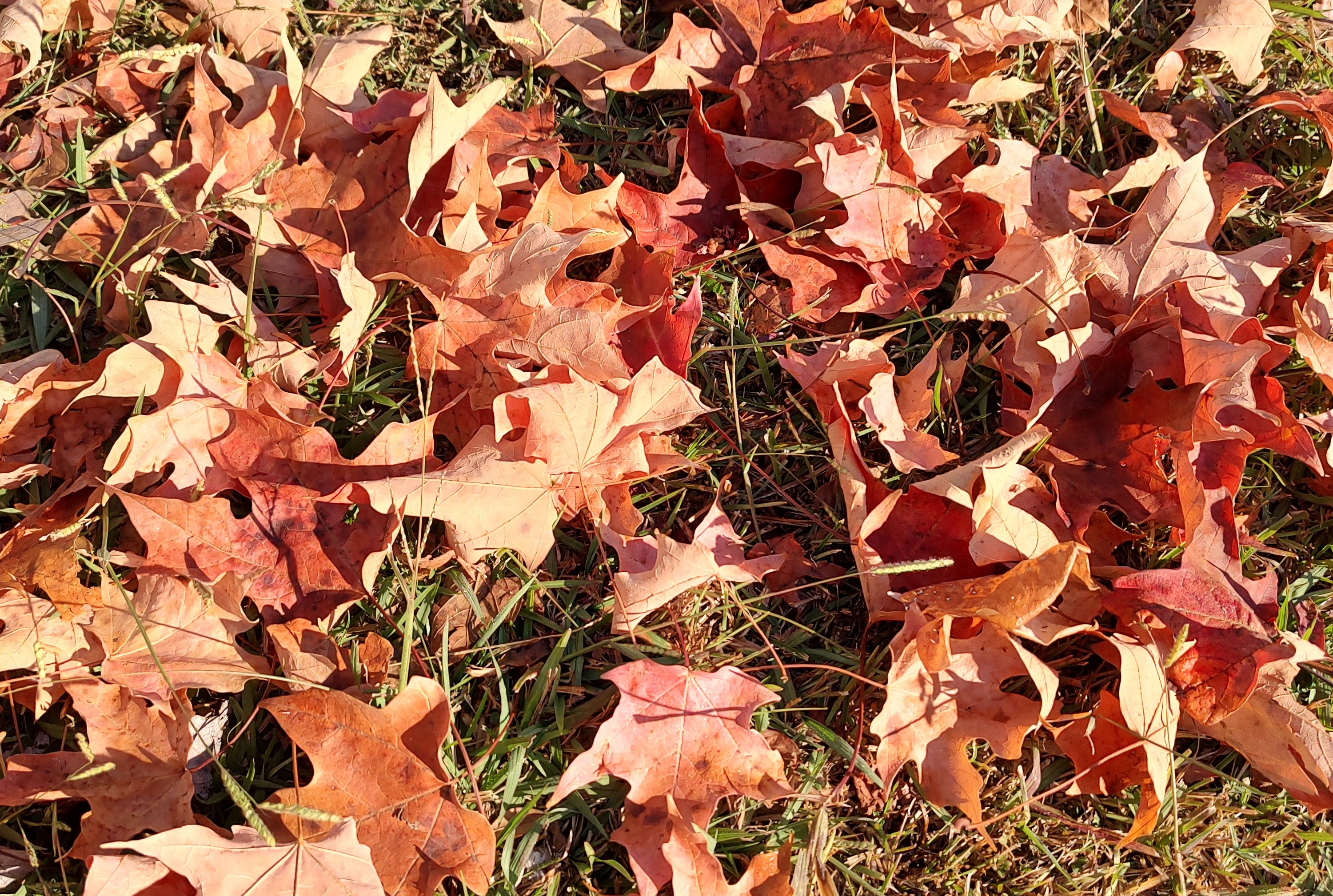
For the first time in my memory, my mom has decided she likes fall leaves on the ground. On her afternoon walks up the neighborhood streets, she has been admiring the beauty of the leaves on the ground – and even says she hopes the neighbors don’t rush to rake or blow them away.

This is noteworthy because I remember a childhood of being told how messy the leaves looked and having to rake them repeatedly throughout the fall. It was frustrating to rake all Saturday afternoon with leaves still falling all around me. Even then, I would stress the virtues of letting the leaves decay where they lay; only years later did I learn that I was right.

Those afternoons were made sweeter if I had a radio nearby broadcasting John Forney and Doug Layton announcing another Alabama football victory with Coach Paul “Bear” Bryant at the helm.

Mother is particularly taken with a young maple in the front yard across the street. Its bronzy saffron leaves almost covered the yard and a brisk breeze would send them dancing into the street and neighboring yards. Its foliage turned color from the top down and now there is a thin layer of colorful leaves at the bottom, crowned by the bare limbs.

Early this morning, the neighbor’s yard maintenance guy arrived. Within a half hour, the maple leaves on the ground were gone. An hour after he left, a healthy amount of the striking leaves was already drifting down, covering the grass again.

Unless you go the short distance from Shades Mountain into the higher mountains, this area is not known for a brilliant fall display. The fall color is even more subdued and muted this year, with a significant drought building since September. As much as I despise cold weather, however, there is an undeniable energy in the air when the weather begins to change and the fleeting beauty of Nature takes hold for a few weeks before the holiday season fully kicks in.

As the sun sets and more leaves fall, trees become more visible down the hill, creating a brief and peaceful display down the mountain toward the creek.

This year, most of the warm weather plants were damaged in a short-lived freeze. Some plants weathered it and others gave up. They have been replaced by pansies, which my mom loves (although I prefer violas for cool weather blooms). More pansies will be added over time, complemented with violas probably, as more of the remaining plants fade away.

A bag of bulbs arrived recently and are now in the ground; I planted them but will be surprised when they start popping up in late winter. Years ago, at my house in another town, I randomly planted ninety crocuses in the front yard one November. I planted them so I knew they were there. Even so, I was always startled when the first bud appeared in early February.

Pre-planned serendipity.

Book Review: Magic City

My review for Magic City by Burgin Mathews was just posted on the Alabama Writers’ Forum website. Magic City, to be released in November, explores the rich heritage of jazz that emerged from the Birmingham area and went on to have national influence. Here’s a preview:

Magic City: How the Birmingham Jazz Tradition Shaped the Sound of America

“Oh, for a bee’s experience …

Of clover and of noon!” – “The Bee” by Emily Dickinson

Trying to savor the summer while having some restraints on my activities, I have been thinking a lot about the bees. I have been watching them a lot, keeping in mind alarms about declining bee populations. Specifically, I have been staying at my mother’s house full-time, so I shifted focus from attracting bees to my own small yard in Rocky Ridge to observing the activity around her garden home community on the steep west slope of Shades Mountain.

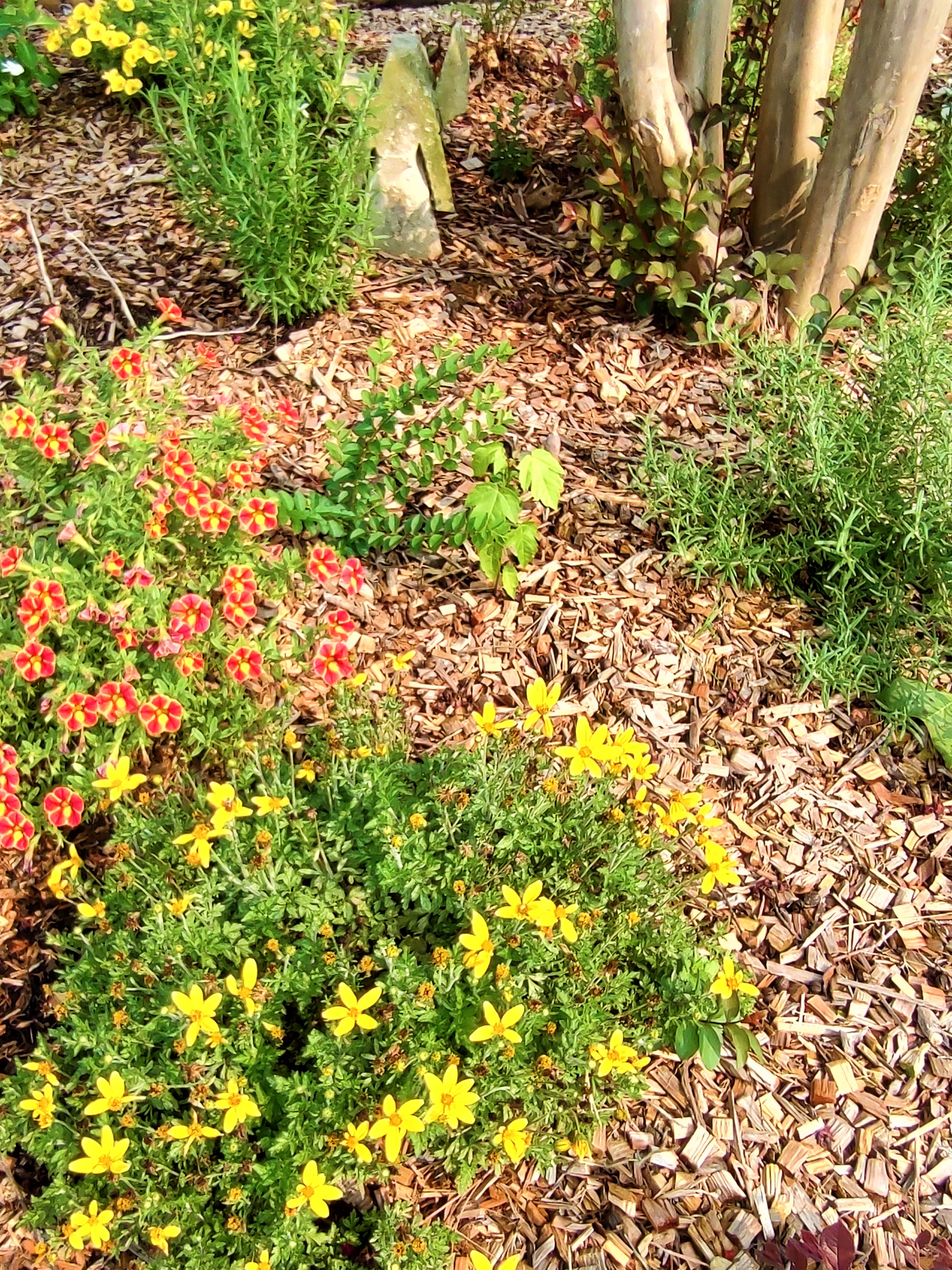
A late freeze brought the demise of a large loropetalum shrub encircling a tall crape myrtle in Mother’s front yard. When the loropetalum was removed, we decided to plant a variety of blooming and leafy plants in its stead. It turned out to be a good move – with compact bidens, calibrachia, rosemary, vinca, and Japanese painted ferns putting on a frisky, flourishing show beneath the deep crimson blooms of the crape myrtle. I keep a careful watch over the volunteers – some are welcome; others will take over if left alone.

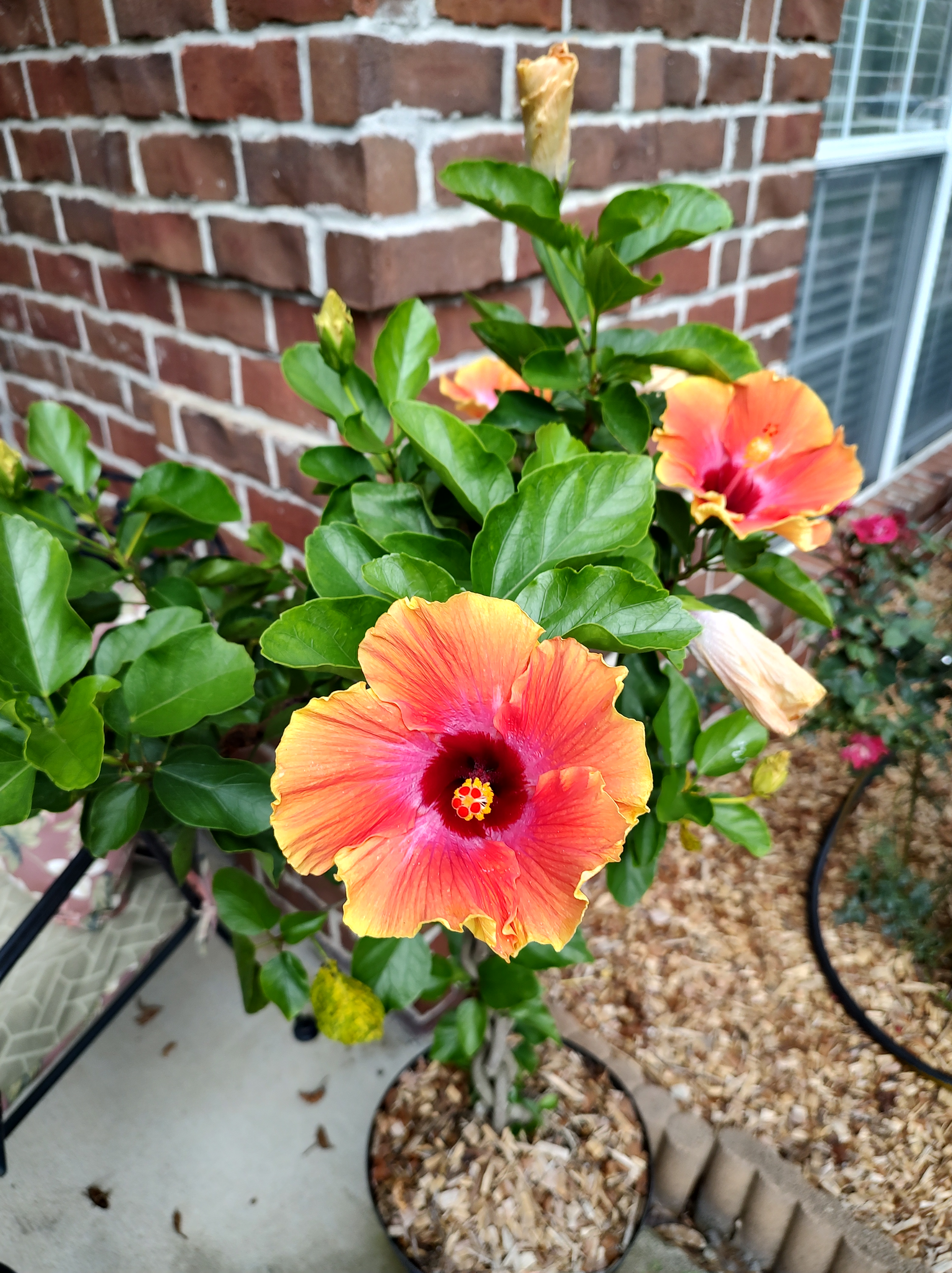
On the porch, a yellow begonia holds court in a hanging container, with lysimachia flowing toward the ground. The large blooms of a braided mandevilla in a unique coral and golden hue are a favorite of my mom’s, but the blooms drop after one day, leaving the plant leafy without flowers on occasion. It shields an always trustworthy heuchera which was joined this year by a lacy volunteer that was just too charming to eliminate. The lacy foliage will wither away in late-fall, but the heuchera, if it acts according to habit, will still be flourishing next year.

As you come into the entry space, a ruellia – commonly called a “wild petunia” and known for an invasive nature – stands confined in a container, grounded by impatiens and lysimachia. Its delicate morning blooms fall off daily, to be replaced by new blooms the next morning. The roses in a bed next to the house have seen better days, but they are hanging in there. Bees, butterflies, and the occasional hummingbird show up and regular rainfall and diligent watering are keeping everything happy so far in the stifling July heat.

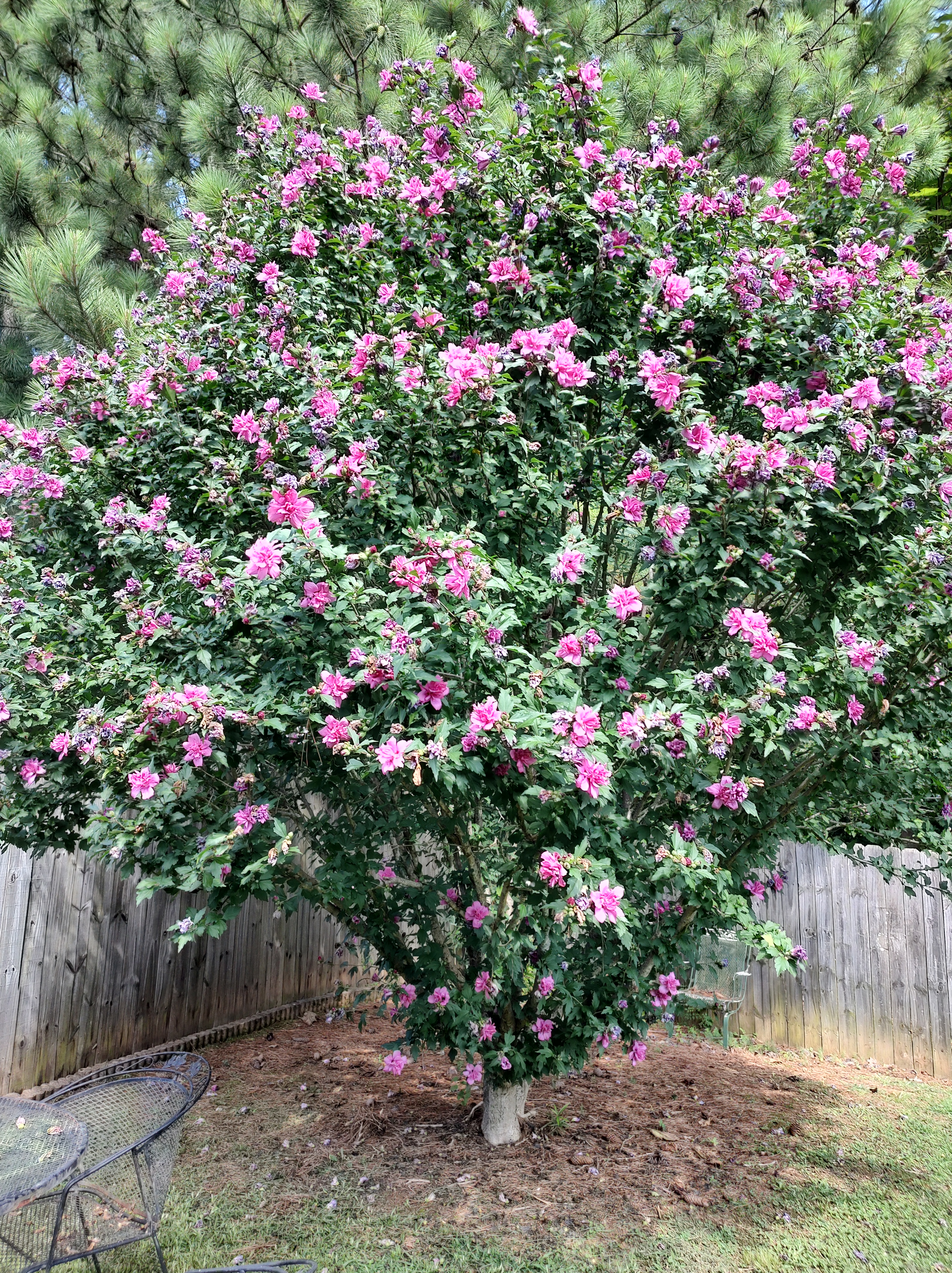
But here’s the kicker: There’s a Rose of Sharon in my parent’s backyard that grew from a sprout and is probably in excess of twelve feet now. It’s covered with fuchsia blooms and – at any given time – hundreds of bees. I know Rose of Sharon is a common name used for a number of plants – this one is a hibiscus – but I like the tradition and antiquity of the appellation and plan to use it until the plant police come knocking. Bees have always loved this specimen, but this year seems to be a banner year for its bee population from early morning to sunset. There is a constant low buzz from the tree when we wander into the yard.

Slightly to the side of the Rose of Sharon is a raised bed my dad created. I haven’t had a chance to properly tend to it this year, but it is lush and beautiful in its wildness anyway. Purple heart and yellow lantana grow in a bed with four less-than-stellar rose bushes. The in-ground Easter lilies bloomed late and those plants have taken their time fading away. Like many other plants, the odd weather seems to have confused them; one healthy looking lily has developed three new bulbs (in the middle of July!) but I do not expect them to bloom.

It hasn’t been a great few years for the roses of any kind and my grandfather’s ancient rose bushes, grown from cuttings of the mother plant, have struggled to flower. The hummingbird feeders do not seem as busy as usual, but an occasional hummer is spotted at the feeders and among the bees in the Rose of Sharon. It’s a challenge to keep the bird feeders stocked; it’s a bigger challenge to keep the squirrels away, but Lulu, the prancing chihuahua, likes nothing better than to chase the squirrels. Mourning doves are the primary customers at the feeders, but a pair of cardinals are frequent visitors since late-winter, as are an occasional bluebird and blue jay and a red-headed woodpecker. Wrens and chickadees are also in evidence, I think, but I hesitate to say much since a reader pointed out recently that I don’t seem to know the difference. I pay my annual due diligence to the Audubon Society and the Arbor Day Foundation but I’m not always good at the identification part of the test.

These are the things that inhabit my alternate garden in summer 2023.

America’s Amazon

I remember traveling as a young boy with my father and grandfather to the earthen dam being built on the Sipsey Fork of the Black Warrior River by Alabama Power Company. It ultimately created Lewis Smith Lake in 1961, a popular recreation spot and the deepest lake in the state, touching Cullman, Walker, and Winston counties. My grandmother, who grew up in the area, could point out places under the lake where farms used to be; she could also point out a spot where a covered bridge was somewhere “down there.” The tiny Winston County town of Fall’s City was entirely submerged, as were cemeteries throughout the area. Some families chose to move their loved ones, while others chose to let them lie in peace at the bottom of the lake.

A few years later, traveling with my dad to a business appointment in Anniston, I was confused when I saw a series of docks and rock jetties jutting out onto dry land off I-20. Dad explained that the area was about to be flooded to create Lake Logan Martin. These soon-to-be “lake homes” were getting a jump on their lakeside property. Another Alabama Power Company project.

I understand the reasons for these mid-century projects, and I have always admired Franklin D. Roosevelt’s “New Deal” legislation during the Depression and the benefits those initiatives, such as the Tennessee Valley Authority, brought to rural areas of north Alabama. But I have also been concerned about what was lost as we grow increasingly aware of costs to the environment from human intervention in the past couple of centuries.

_________________________________________________

My reading has taken an environmental turn over the last few years. Some of it was from a commitment to read more of the writing of biologist / environmentalist E.O. Wilson. But the bulk of it is just a growing environmental awareness that has increased as the threats to our well-being from environmental abuse and neglect have become more obvious.

Here is some of the reading I have been doing over the past couple of years, illustrating the wide variety of environmental writing available. A good sampler is The Gulf South: An Anthology of Environmental Writing (2021), edited by Tori Bush and Richard Goodman, with content stretching back into the 1800s. Salleyland (2023), by Whit Gibbons, documents the Gibbons family’s adventures on 100-acres of South Carolina land. The Overstory (2018), by Richard Powers, is a brilliant novel in which the trees become the protagonists.

Occasionally, there are peripheral essays that fit the bill, such as “Homewood’s Salamander Migration and Festival” in James Seay Brown Jr.’s Distracted by Alabama (2022), about a salamander crossing at a creek near me. A friend recently alerted me to “Some Thoughts on the Common Toad” (1946), a lovely essay by George Orwell that fits neatly into modern sensibilities about appreciating the nature around us.

My reading of E. O. Wilson’s 1994 autobiography, Naturalist, led me to move on to read and review Richard Rhodes’s biography, Scientist: E. O. Wilson: A Life in Nature (2021), which was a nice augmentation to the autobiography. That inspired me to seek out another Rhodes biography, John James Audubon: The Making of an American (2004), which, in turn, inspired me to finally acquire John James Audubon: The Birds of America, a collection of prints of the original watercolors from Audubon’s 1827-1838 series.

One novel is nestled among the over thirty books that comprise E. O. Wilson’s oeuvre. Anthill (2010) is a coming-of-age story set in Alabama, partially in an area that calls to mind the wilderness of the Mobile-Tensaw Delta. It’s fitting then, that E. O. Wilson wrote the Foreword to Ben Raines’s Saving America’s Amazon: The Threat to Our Nation’s Most Biodiverse River System (2020) about the Mobile-Tensaw Delta.

Lest that book title seems like hyperbole, consider these facts from the book’s first pages:

There are more species of oaks on a single hillside on the banks of the Alabama River than you can find anywhere else in the world … Thanks to the Mobile River Basin, the state of Alabama is home to more species of freshwater fish, mussels, snails, turtles and crawfish than any other state.

For instance, Alabama is home to ninety-seven crawfish species. Louisiana, famous the world over for boiled crawfish, has just thirty-two species; California, three times the size of Alabama, has but nine. There are four hundred and fifty species of freshwater fish in the state, or about one-third of all species known in the entire nation … When it comes to turtles, … the Mobile-Tensaw Delta has eighteen species … More than the Amazon. More then the Mekong. More than any other river system on Earth.

Here’s one more startling passage:

[T]he Cahaba River is home to one hundred and fifty species of fish, more species than you find in the entire state of California. Imagine, roughly one-sixth of all the freshwater fish species known in the United States live in a single Alabama river that is just one hundred and ninety-four miles long.

Raines complements his writing about the Mobile-Tensaw Delta with his stunning photography of the natural vistas throughout the region, parts of which can only be reached by wading long distances through swamps and wetlands. Raines knows the area well; his team found the remains of the Clotilda, the last slave ship to illegally enter the country, its charred remnants buried in the Mobile-Tensaw Delta. Raines’s 2022 book, The Last Slave Ship: The True Story of How Clotilda Was Found, Her Descendants, and an Extraordinary Reckoning, explores that important find.

Much of what Raines writes about the Mobile-Tensaw Delta was gathered through his many years as an environmental reporter, documentary filmmaker, and executive director of the Weeks Bay Foundation. He speaks truth to the negligence of Alabama political leaders to rigorously enforce environmental guidelines and writes about the environmental damage caused by the dams that utility companies have built along waterways statewide. As Raines celebrates the Mobile-Tensaw Delta and the vast river system that feeds into it, he also addresses the impediments to annual fish migrations that the networks of dams imposed – something I naively wondered about as a kid watching those lakes emerge.

With its lead in environmental riches and diversity, the state of Alabama spends less on environmental protection than any other state. Raines examines the state’s dilemma: Will Alabama continue to be the most ecologically diverse place on the continent, or will it lead the nation with the most species’ extinctions? It cannot continue to be both.

Raines exposes some ludicrous things: When an organization he headed won the Alabama Wildlife Foundation’s annual “Governor’s Conservation Award,” the award featured an image of a mountain goat that has never been found in Alabama and is primarily native to the Canadian Rockies. An award-winning documentary by an Alabama public radio station about Alabama’s beleaguered prison system was entitled “Deliberate Indifference.” That title could just as easily be applied to the state’s handling of our vast natural resources. Unfortunately, it’s normal for Alabamians who love the place to be constantly ashamed and embarrassed by our public officials.

Raines clearly loves the place, especially its abundance of natural, untouched resources. Saving America’s Amazon is his clarion call for us to work harder to preserve them.

Gatherings – Part 2: Montgomery … and some birds

Saturday – Montgomery

Court Square Fountain, Montgomery

My main purpose for going to Montgomery is to see a matinee at Alabama Shakespeare Festival, but I get there in plenty of time to hang out in Blount Cultural Park, the 175-acre sprawling English-style park that is home to Alabama Shakespeare Festival and the Montgomery Museum of Fine Arts.

I lived in Montgomery for three years when I worked at Alabama Shakespeare Festival and my apartment was on property that adjoined the Park. On days when I didn’t need to use my car, I could walk from my front door to my office in less than five minutes. A jasmine-covered arch marked the entrance to the parkland from my apartment complex and the moment of entering the park never got old. It’s still a special moment when the winding road through the park rounds a curve and you get your first view of the theatre across the lake.

New York Office (1962); Edward Hopper

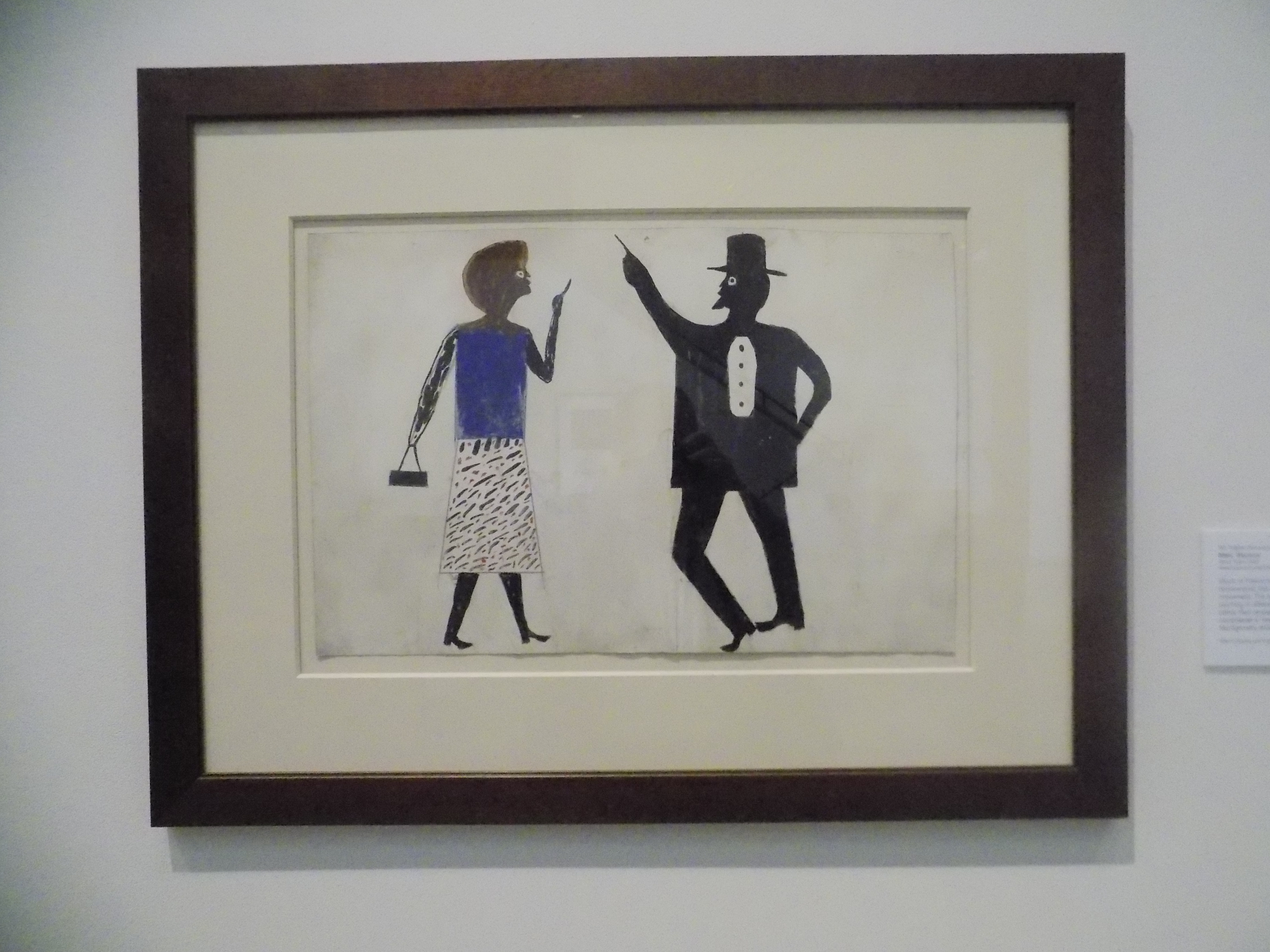
Man, Woman; Bill Traylor

I have time to head to the museum and its eclectic collection of treasures. When I worked at ASF, the museum was a favorite place to go for a relaxing lunch or a quick break. The museum is larger now, and there is a significant sculpture garden. The collection is a somewhat quirky combination of American art of the 18th-21st centuries with a strong dose of vernacular art. One of my favorite Edward Hopper works, New York Office, is there, along with works by Montgomery artist Bill Traylor. Born into slavery, Traylor started making art works in 1939 when he was in his eighties and completed around 1500 works for ten years until his death in 1949.

Sunset Landscape (1899); Charles Warren Eaton

Sunset Landscape by Charles Warren Eaton reminded me of Hwy. 82 and I am always drawn to Christenberry’s Providence Church sculpture. I also like to pay homage to Zelda Sayre Fitzgerald, an artist, Montgomery native, and F. Scott’s wife, whose artwork is usually on view. It was missing on this trip, waiting to be re-hung for an upcoming exhibition. I always asked friends visiting Montgomery, “What other museum can you visit to see paintings by Zelda Fitzgerald?”

Providence Church (1976); William Christenberry


I could have lingered longer at the museum but it was time to take the short drive across the park to the theatre and the real purpose for being back in Montgomery. In the museum parking lot, I heard the cheerful song of a mockingbird. Moving toward the sound, I found the soloist perched in a tree; as I moved closer, the bird paid me no mind, just joyful in the day.

I’ve lost track of how many years it has been since I was last at Alabama Shakespeare Festival to see a show, but it still felt familiar. When I was there, it was still a classically-based, Shakespeare-heavy theatre. There was a true repertory season that extended well into the summer, a brilliant resident company of actors, and a thriving graduate acting program affiliated with the University of Alabama. I had friends from near and far who would travel to Montgomery annually to spend a weekend seeing up to six plays in rep. I’m not sure we truly valued what we had back then. Over the years, Shakespeare titles are less abundant and the season is greatly reduced, but we’re fortunate it’s still there.

Alabama Shakespeare Festival

From the parking lot, I have to duck in to the Shakespeare Garden before going to the box office to pick up the ticket. The Shakespeare Garden is next to the theatre – a bucolic place with an intimate amphitheatre, featuring plants mentioned in the writing of Shakespeare. I would often take a respite in the garden during my time at ASF. A large statue of Puck is tucked away at the top of terraced levels for seating.

Outside the box office, a lone duck has decided to swim around a small fountain. People take out their cameras to photograph him. Occasionally, he steps up to the edge and quacks at bystanders. This is my place! he seems to say.

I stop for a moment to watch the audience assemble – another gathering. When I lived in this neighborhood, I would often come to the park an hour or so before a performance to watch the cars begin to arrive and the people eagerly go through the doors of the theatre. Like the night before in Tuscaloosa, this gathering takes on a new resonance.

Wandering through the lavish lobby, I catch site of the open door of the Patron’s Room at the far end. It is almost time for ASF’s resident dramaturg Susan Willis to give a fifteen-minute talk about the play we are about to see. The room is full. It’s good to see that Dr. Willis is still giving the talks. She was already there when I came to the theatre years ago; I’ve learned a lot from those talks over the years.

Pre-show is over and, ultimately, the play’s the thing … And today’s play is The Tempest, Shakespeare’s final and farewell play (although Dr. Willis would fine tune and clarify that statement a bit).

I have seen several productions of this play in various places over the years, and have seen at least three different versions at Alabama Shakespeare Festival. I am mainly here today because the actor Greta Lambert has announced her retirement from the theatre and is wrapping it up by playing the role of Prospero in The Tempest. Greta has been with ASF since its premiere production of A Midsummer Night’s Dream in Montgomery in 1985; she played Titania.

Over the years, Greta has gifted audiences with some of the most memorable performances of my life. She’s played most of the major Shakespeare women, along with Blanche DuBois, Hedda Gabler, Eliza Doolittle, Candida, The Glass Menagerie’s Amanda, and so many others. Coming full circle, she was Miranda to Philip Pleasants’s Prospero in a 1986 production of The Tempest.

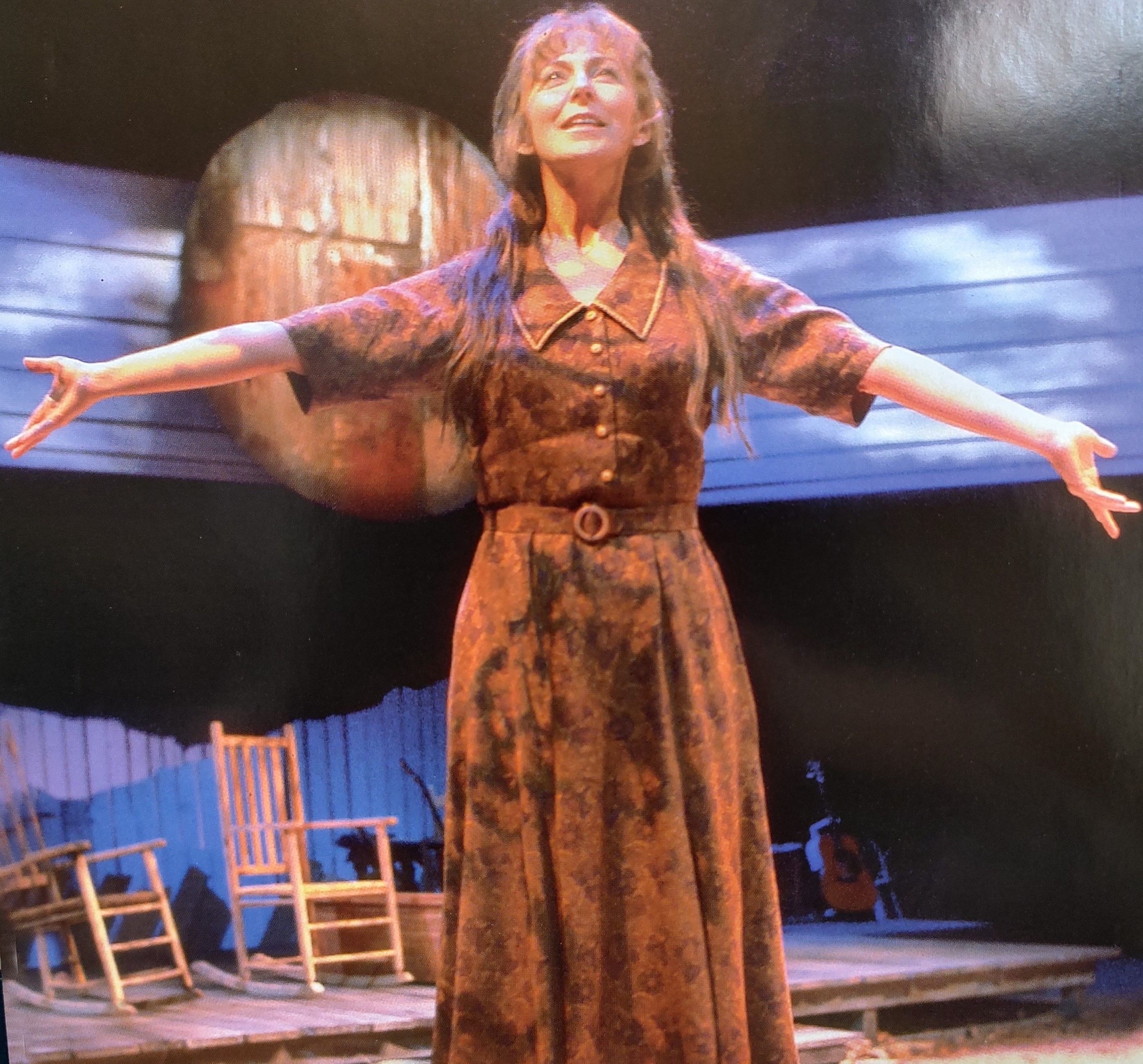
Greta Lambert in Fair and Tender Ladies (2000)

But my most cherished role played by Greta Lambert was her performance as Ivy Rowe in Fair and Tender Ladies, a musical adaptation of the Lee Smith novel. In it, Ivy Rowe ages from a young girl to an old woman. The production Greta starred in was directed by Susan Willis. I had the good fortune to manage a tour of the show in the fall of 2000 and it was a thrill to watch audience’s response each performance. I had toured with shows in the past, but Fair and Tender Ladies is the one I never tired of.

Greta Lambert’s interpretation of Prospero was, of course, wonderful. She establishes an immediate connection with the audience and her presence on stage, even in scenes where she is just an observer, is mesmerizing. It always has been.

In Fair and Tender Ladies, after the audience has watched Ivy Rowe’s life unfold on the stage, there is the moment when the elderly Ivy Rowe slowly walks off the stage for the final time. On tour, I tried to never miss that moment and, after dozens of viewings, was always moved by it along with the audience seeing it for the first time. In The Tempest, Prospero’s final speeches took on another level of resonance in Greta’s delivery. Our revels now are ended …We are such stuff as dreams are made on …release me from my bands with the help of your good hands … Greta has announced her retirement from ASF, but not, necessarily, from the stage, so we may have future opportunities to see her act. But these moments seemed to signal the end of an era. I shall always remember them.

It’s hard to leave the theatre and I vow to come back more often. I linger in the park for a bit and finally leave, taking a drive through the grounds before turning toward town.

_____________________

I was honestly not thrilled to move to Montgomery in 1999. I loved the theatre and mostly enjoyed my job there, but the city itself, despite its historical significance, had never seemed to have much to offer. By the time I moved away, in 2002, I had grown to appreciate the place more. Now, though, after a couple of decades of more progressive leadership, the city is enjoying a revival of sorts and what used to be a dead downtown, where I am going to spend the night, is teeming with activity when I pull in to the Renaissance Montgomery Hotel, my address for the night.

My room is across from the city’s Riverfront Park and historic Union Station along the Alabama River and I am eager to go for a walk and see what the city has to offer these days. I’ve stopped in town a few times for a quick meal or to check out Equal Justice Initiative’s Legacy Museum and the National Memorial for Peace and Justice, but this will be my first time to explore on foot since I lived here.

Blues music greets me when I start my walk and the statue of Hank Williams has been moved from its previous location to a more prominent site on Commerce Street. Lots of tourists wander the streets, lots of dining spots and bars are open, and I realize what a difference has occurred since the city began to embrace its Civil Rights legacy and has become a prime location for Civil Rights tourism.

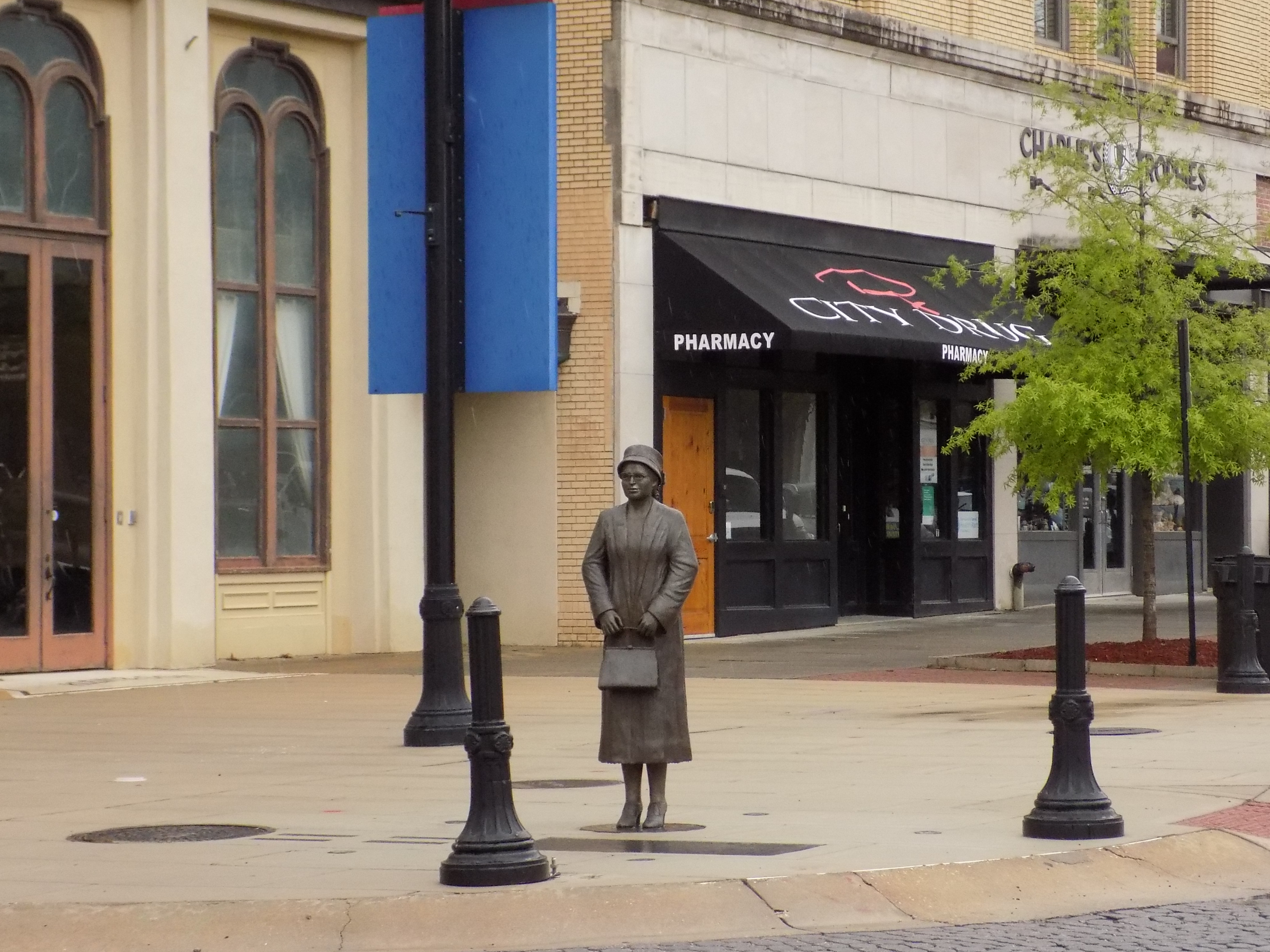
The fountain at Court Square, at the bottom of Dexter Avenue, now has “Black Lives Matter” painted on the sidewalk around its base and a quiet statue of Rosa Parks waits patiently across the street. The state capitol building is at the top of Dexter, while Dexter Avenue Baptist Church, where Martin Luther King, Jr. was the pastor in 1955 during the bus boycott,  is just down to the right of the first capitol of the Confederacy. Montgomery has a complex and colorful history, to say the least, and this current embrace of the past somehow makes the city feel more forward-looking.

I’m liking Montgomery more and more. A memorable and imaginative dinner at Central Restaurant, a locally-owned and locally-sourced restaurant helmed by executive chef Jason McGarry on Coosa Street, is the appropriate topper for a pretty terrific day. A woman I met at the Hall of Fame dinner in Tuscaloosa gave it a glowing recommendation; she didn’t know that I already had a reservation. Her recommendation was spot-on and I’m glad that I sought this gem out.

There are lots of gems to discover in Montgomery these days, it seems. I head home the next morning determined to return for more. And determined to squeeze in more roadtrips.

Rosa Parks; Montgomery