Wallowing | Contemplation: Chilly Scenes of Winter

January 22: It was never my plan to wake up at 5:30 this morning, but I did. Opening the bedroom curtains, a gentle post-rain fog hovered over the street, blurring the street and occasional headlights. Last night I was in the middle of reading a Calvin Tomkins 1970s essay on the Experiments in Art and Technology (E.A.T.)-designed pavilion for Expo ’70 in Osaka, Japan. That geodesic-dome architecture was perennially surrounded by Fujiko Nakaya’s installation of artificial water vapor – a thing I would have loved to see.

Being awake in the fog at 5:30 this morning, there seemed no better time to finish the Tomkins essay, so I retrieved the Tomkins book, took a seat by the open window looking over the foggy road, and began to finish the essay as the fog dispersed and the sun eventually shone. The ground was white grey, the trees were frosted, and the mist was frozen.

Eventually the sun broke through with a golden light. A bright red cardinal, lurking in the bushes, flew onto a tree branch. He was transformed, for a moment, into a brilliant golden glow. In the past year, cardinals have become, for me, some kind of omen.

So was this one.


Such contemplative moments are a luxury always, but today – at the beginning of a welcome new administration in the Oval Office – they are especially cherished.

I think that most of us have taken on a more philosophical mindset during these months of relative isolation. “Look around you and pay attention” was a directive I often gave to acting and directing students and it’s a directive I find myself following closely in this challenging period of an early COVID-driven retirement.

It seems that, in these moments of privation, I am drawn to things that try to make sense of our challenges. I seek escapism, but also those things that make sense of this current moment in time.


COVID19 SUTRAS, by Hank Lazer, is a new book of poems and sutra-like meditations that deals with our cultural isolation, division, and longing in ways that inspire, incite, and calm the soul.

Intimations, the new book of COVID-inspired essays by Zadie Smith, gives a sort of skeptical hope. Smith — intuitively – knows the landscape, but approaches it with humor, acid, and civility. She remains among my favorite living authors. Her thoughts on our current time lend strength.

Don DeLillo’s The Silence is a brief and pointed novel – written before the pandemic – about a time when social entitlements are suddenly, inexplicably, withdrawn. What happens, DeLillo wonders, when electronic assumptions fail and society is left to wander, cluelessly? It is significant, I think, that DeLillo’s cultural deprivation occurs on a Super Bowl Sunday.

The Silence was most evocative, to me, of Edward Albee’s 1966 play, A Delicate Balance. In Albee’s play, a group of individuals comes together in incomprehensible fear of something existential and undefined.

In a recent New Yorker, Lawrence Wright’s intense investigation of COVID19 and the American response – “The Plague Year” – provides insight into a real-life crisis of existence and our current moment that can’t be wished away.


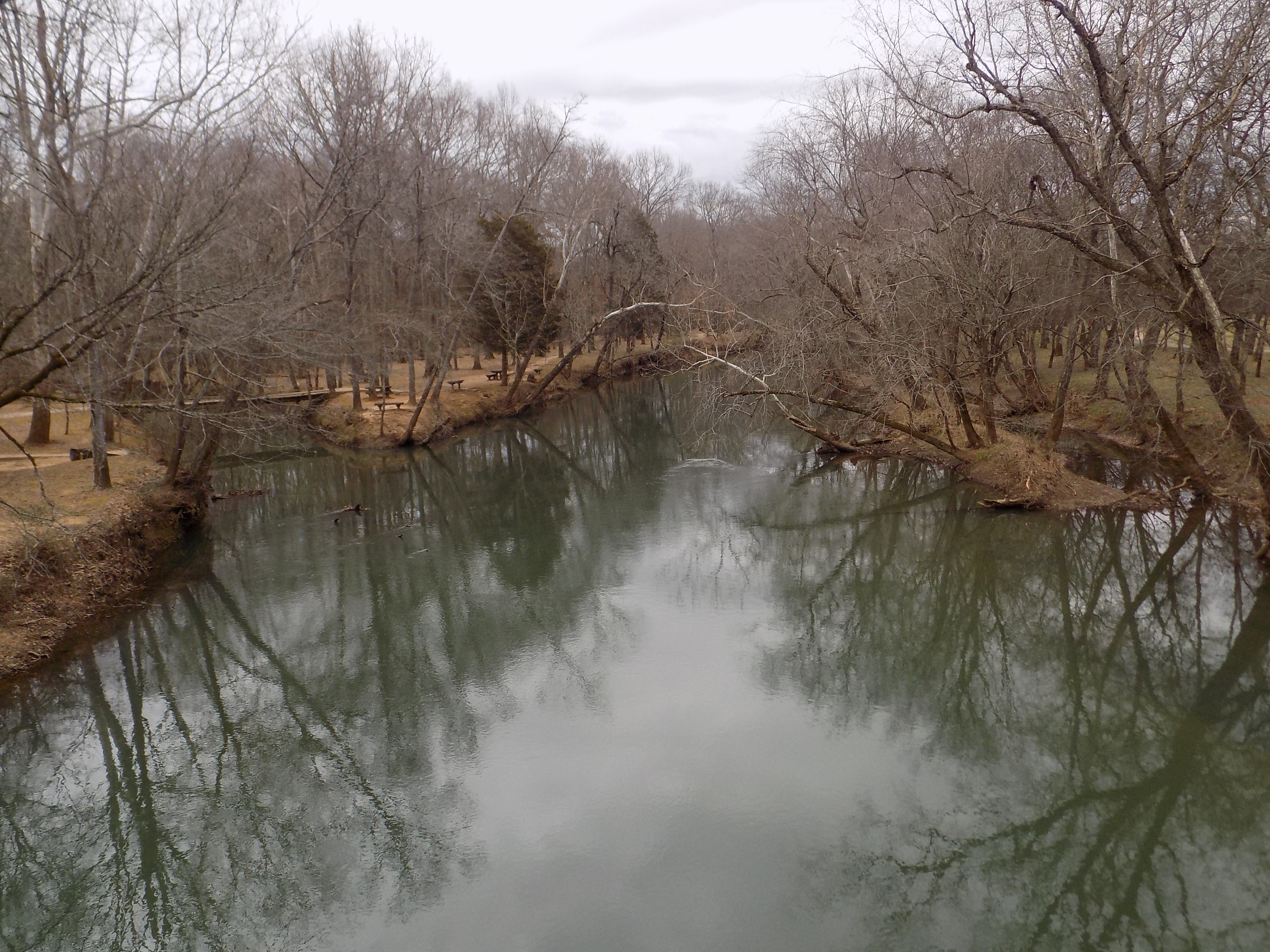
The bookshelf landscape is not completely bleak, however. One grey morning this week, I was reading Verlyn  Klinkenborg and Calvin Tomkins near the bank of the Flint River in southeast Madison County.

There is strength in the essays of Verlyn Klinkenborg. His essays on “The Rural Life” in the New York Times were an anticipated feature in my readings of that newspaper through the years and I am now making my way through the sequel, More Scenes from the Rural Life. I also look forward to reading Klinkenborg’s The Last Fine Time, the chronicle of a family-owned tavern in Buffalo and, especially, Several Short Sentences about Writing, his tome of advice for all writers.

The aforementioned six-volume collection by Calvin Tomkins, The Lives of Artists, is making me most happy. Starting with a profile of Marcel Duchamp in 1962, Tomkins’s essays, spanning seven decades, present a very personal history of art in the second half of the 20th Century and beyond.

This crucible year of the 21st Century challenges our strength and stamina. Great writing currently explores it; great writing also provides an escape from the day-to-day obstacles it offers.

At one point in Intimations, Smith writes, “The people sometimes demand change. They almost never demand art.” That might be true, but in times of stress and change, we often look to the artists for sustenance, understanding, and courage.

Christmas Card 2020: Looking Forward

Sacred Heart Chapel; Mobile Bay, Alabama

A holiday ritual that wasn’t curtailed this year was the sending of Christmas cards. Professional Southerner posts in previous years have detailed my annual search for historic and/or picturesque churches to be found around Alabama during the December holiday season. One of these structures usually is featured on the next year’s Christmas greeting.

This year’s church, Sacred Heart Chapel, overlooking Mobile Bay from Baldwin County’s Eastern Shore, is a church that dates from the 1880s.  I’ve photographed the chapel many times over the years. Until 2019, none of my images struck my fancy as being Christmas card-worthy, although the building is a lovely example of 19th Century Southern coastal architecture. Its large front porch is a particularly charming feature.

The chapel is only used for summer services. A year ago, walking along the deserted grounds, I was struck by the simple grace of the Gothic windows against the white planks of the building. Beyond the porch, the broad churchyard sweeps down to a vista across Mobile Bay, interrupted only by the ruins of an old pier from a previous hurricane.

Even before the pandemic, I had decided that the side view of Sacred Heart would be the 2020 Christmas card image. There was something hopeful in that outward view. Comes the pandemic, and I was firm in my conviction that whatever hope I saw in that particular image would be part of a holiday message this year.

The main message inside the card includes the message “Looking Forward to Christmas and the Year to Come.” And, as always, “Peace on Earth.”


The search for an image for the 2021 Christmas card is more abbreviated this year since I was not able to travel the length of the state to photograph churches and other scenes of December.

Among the tourism trails of north Alabama is the North Alabama Hallelujah Trail (www.northalabama.org/trails/hallelujah) featuring thirty-two places of worship that are at least 100 years old and stand on their original sites. Many of these are examples of vernacular Southern church architecture, others are Gothic or grander, one is a synagogue, and one is simply an open-air facility with cedar posts and a roof.

My mother’s family is from Cullman County, Alabama, — the descendants of Scotch-Irish immigrants who landed in Virginia and the Carolinas in the late 18th-early 19th century and settled in the frontier of Alabama soon afterward. My annual Christmas cards have featured churches from all over Alabama but I never located one in Cullman county that called out to be used. Family-related churches in Cullman around the communities of Kinney Grove, Ryan’s Creek, and Bethany – some of which were built by some of those ancestors – have been replaced by more prosaic modern buildings that don’t make the Christmas card cut.

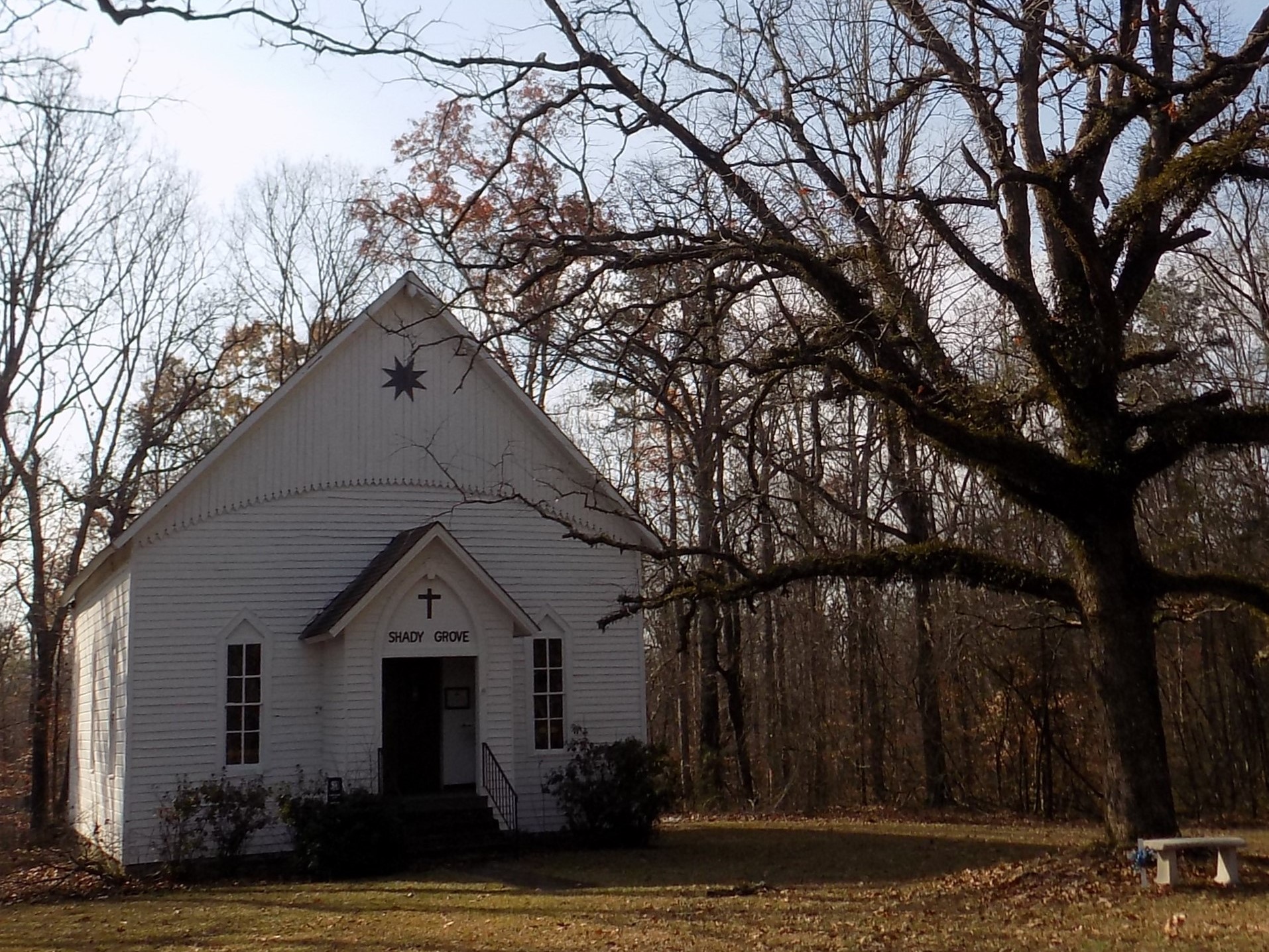
Shady Grove Church; Cullman County, Alabama

The Hallelujah Trail features a church in the Cullman County community of Logan. A couple of weeks ago, I had the perfect opportunity to travel down to see it in person. Much of Cullman County is off-the-beaten-path and Logan seems even more remote than most. It’s beautiful hilly country with plenty of farms, pine thickets, and ponds along the narrow roads.

At the end of one particular road is Shady Grove Church, which started out in the 19th Century as pews in an arbor. The current building dates to the late 1800s. It’s a serene place on a lonely road, surrounded by the quiet of pristine forests. Across the road from the church is an old cemetery which holds generations of locals along with the remains of soldiers from both the Union and Confederate armies.

Shady Grove Church interior; Cullman County, Alabama

The doors to the building were locked but, through a window in the front door, the entirety of the church interior is visible. A unique touch, a hand-carved church structure, decorates the arched cove behind the pulpit. A wooden outhouse provides necessary services behind the building. Somebody had made the effort to install fresh flowers in small vessels in each window; it’s a small touch – but one that speaks to the dedication that keeps Shady Grove Church a place worthy of a remote road trip.

In activist/poet/writer Katha Pollitt’s “Plague Poem,” she muses, “Perhaps it is best that we go away now” as she considers ongoing environmental and social sins. It’s an interesting thought, but this Christmastime, I choose to hope for the best and for an opportunity to right the wrongs that plague us when we get to the end of this current spate of unfortunate circumstances.

Merry Christmas … And all hope for an amazing and triumphant New Year.

Shady Grove Church window; Cullman County, Alabama

Cancelled

Based on years past, I should be a couple of hours away from my annual December getaway to Point Clear on Mobile Bay as I type this sentence. A couple of months ago, I optimistically booked a room at the Grand Hotel for December 13 through 18. I knew I might have to cancel, but I wanted to be ready just in case things had changed by now.

When I booked my room, the resort was still dealing with damage from Hurricane Sally in September. I have been exceptionally conscious and careful during the pandemic and was impressed with the safety protocols the resort has in place. My plan was to stay close to my room, reading and writing, to take regular walks around the grounds and community, and to have room service and takeout. It seemed to me to be a responsible way to get a break and finally to celebrate my retirement.

As the dates got closer and the news reports grew more grim, I realized that the responsible thing is to cancel for the time being. The world around us and people depending on us make it feel imperative to take a stand. And, as my friend Deborah says, now that I’m retired, I can go down any time I please … once the health crisis has passed, anyway.

It will be the first time I have missed the December escape since 2005 – the year of Hurricane Katrina and its extensive damage to Mobile and Baldwin Counties.


Even as I entered my cancellation, the music and memories of Baldwin County and Mobile Bay invaded my thoughts. I think about downtown Fairhope, the intersection of Section Street and Fairhope Avenue, and the light-bedecked trees along the sidewalks. The planters, hanging from the light posts, complement the plantings of poinsettias and pansies in the ground-level beds.

I think of the Camellia Café, Dragonfly, Panini Pete’s, the Wash House, and other places to grab a great meal. I think of Market by the Bay and its abundance of fresh catch seafood.

I think of drives to lonely overlooks across the bay, to Magnolia Springs, and to the search for bags of fresh local pecans and satsumas.

At the Grand, the gentle surf grazes the docks and, beyond the marina, the lights of Mobile, across the bay, glisten beyond the traffic of the causeway.

The Grand sunset, usually spectacular, will still be there when I return. And, upon that return, I think I will cherish the place more than ever.


For now, I slowly and surely prepare my house to sell and keep my eyes and ears open for possible places to move in Birmingham.

To stay grounded, I read as much as possible. After reading stacks of magazines, a few books, and news articles, I have found comfort and solace in reading a couple of very good cookbooks. Sean Brock’s second book, South: Essential Recipes and New Explorations, is as thoughtful and thorough a consideration of Southern foodways and contemporary thought on the subject as one might find. Kelly Fields’s chatty The Good Book of Southern Baking: A Revival of Biscuits, Cakes, and Cornbread is as inspiring as one might expect from the dedicated and well-travelled James Beard Award-winning pastry chef.

I feel grateful, as I read these books on food, to have spoken with and experienced meals prepared by both of these chefs. I first had Brock’s food at an unforgettable dinner at Alabama Chanin’s factory in Florence. I met and broke bread with Fields at two dinners at the same place. Her New Orleans bakery and restaurant, Willa Jean, is a singular New Orleans experience.

I am also, grudgingly perhaps, becoming more susceptible to the necessity of streaming video. I have even fallen prey to the New Age-y call of calm.com, and especially its hypnotic video series, “The World of Calm.” My most frequent stream, however, has been the Spike Lee-directed concert movie, David Byrne’s American Utopia, which is a most hopeful document of our country and its current situation. I have lost touch with how many times I’ve watched it already.

To satisfy my former habit to watch a movie in an honest-to-goodness cinema, I have been able to venture to Sidewalk Cinema + Film Center in the basement of the Pizitz building in downtown Birmingham. The not-for-profit indie theatre limits each screening to twelve patrons in well-spaced seats in a 100-seat theatre and I have enjoyed welcome escapes there to view films like On the Rocks and Mank. Each visit to Sidewalk Cinema makes me more anxious to move back home to Birmingham when the time is right.

Holiday season 2020 is a unique and memorable one. Perhaps it has made us a little more aware of the pleasures of the simple things. Be safe as we move into a promising new year.

December 2020

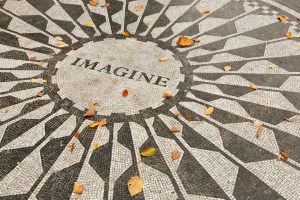
Strawberry Fields; Central Park by S. Greg Panosian

November 2020 in north Alabama ended with a day of persistent wet snow flurries. There were temperatures in the 70s last week; the ground was far too warm for accumulation, but November snow is rare and seemed to energize the people in the grocery check-out.

My cashier asked if I was enjoying the snow; I am sorry that I truthfully answered that I am not a big fan of snow and cold weather. It turned out she was from Alaska and was excited to see any snow, so the remainder of our transaction was a bit chilly (pun intended, I guess).

As this dismal year draws to a close, I look forward to a responsible conclusion to the holiday season. I relish the start of a new year and a new administration and the promise it holds.


In this December of 2020, I am startled to realize that in a few days we will mark the 40th anniversary of John Lennon’s murder. For most Baby Boomers, the event is one that is etched in memory.

In that week of December 1980, I was completing my first semester in graduate school and giving final exams to my English 101 composition students as a graduate teaching assistant. On Monday night, I had just completed grading a round of exams when my friend Bill Golightly dropped by to see if I wanted to go downtown to the Chukker; I had no exams on Tuesday, as either a student or a teacher, so I grabbed a jacket and we headed out.

In those days, the Chukker proudly did not have a phone or a television. It had a sparse menu, drinks, pool, pinball, and music.

Most people seem to have first heard about the death of John Lennon from Howard Cosell during Monday Night Football’s Dolphins-Patriots game.

Cosell’s voice wasn’t heard in the Chukker that night, but Bill and I noticed that the bartender, Deborah, had walked into the back room and was quietly weeping. When she had collected herself, we called her over and asked if she was okay.

“John Lennon was shot. He’s dead,” was her answer.

One of her friends had apparently stopped by to tell her the news. The entire room went silent. Of course, we asked the pointless question, “Are you sure?”

Bill and I decided we needed confirmation. “Barry will know,” I said. “Let’s call Barry.” The nearest pay phone was a block away so we hurried there to call our friend, Barry, who always seemed to be an insider with the latest news from the music scene. By that time, though, cars were cruising down 6th Street with John Lennon or classic Beatles songs blaring from car radios and stereos. So, we knew.

I called Barry anyway. He picked up on the first ring. “Is it true?”

“It’s true.”

Bill and I headed back to my neighborhood, which I fondly referred to as the “student ghetto.” Music by the Beatles and Lennon was coming out of every window, it seemed, as other friends joined us for what turned into an impromptu wake at my place.

I had no reason to be on campus the next day, so I stayed in on Tuesday. The phone rang often. Friends from all over the country felt a need to call and commiserate. We were all checking on one another.

I won’t embellish: I was never really a major Beatles fanatic. I enjoyed the music as soon as it hit and appreciated its overwhelming brilliance and cultural influence; some of the Beatles songs are among my favorites. On the night that the Beatles made their live American debut on “The Ed Sullivan Show,” we were at church. But at a fellowship at someone’s home later, the kids gathered in one of the bedrooms and played “I Wanna Hold Your Hand” over and over.

I would like for “In My Life” to be played at my memorial. The unobtrusive George was my favorite Beatle. Post-Beatles, I rooted for John Lennon in his challenges and was happy that he seemed to have gotten himself and his music in a good place.

His passing – and so violently – was a generational touchstone for so many of us. Our years of coming to consciousness were marked by Cold War, Vietnam, assassinations, and social upheaval. To have one of our icons – the auteur of “Give Peace a Chance” – gunned down on Central Park West, outside his home with his wife looking on, defied, for the moment, logic and rational comprehension.

On Wednesday of that week, I returned to campus to give a final to one of my freshman composition classes. The final part of the exam was a short essay – an analysis of a contemporary song lyric. The options were lyrics by Bob Dylan, Joni Mitchell, and Bruce Springsteen. One of my students chose Mitchell’s “Shades of Scarlett Conquering” for his explication essay. He entitled it “Give Peach a Chance.” The title was a stretch, but much appreciated.

A few years later, on my first trip to New York City, the only photographs I took were at Strawberry Fields, the area of Central Park dedicated to the memory of John Lennon. This was not intentional; when I got home, I realized that in five days in New York the Central Park memorial was the only time I took a picture.


The Chukker is long closed. Bill Golightly died on January 2 of this year. And John Lennon would be 80 if he had lived.

I am embracing the holiday spirit, but a piece of music that sticks in my mind today is Olivier Messiaen’s chamber piece, “Quartet for the End of Time.” Messiaen composed the piece while he was a prisoner of war in a German stalag during World War II. The quartet premiered in a 1941 prison performance with other prisoners of war playing the other parts. It is an introspective and solemn work; somehow, too, it is jubilant and hopeful. It seems to be an ideal composition for an uncertain time.

Thanks + Giving

My friend Lily Miceli has a lovely podcast called “InBetween the Music.” Her recent broadcast for the Thanksgiving season is particularly gratifying. I hope you enjoy it. Be grateful for Simple Gifts. And Happy Thanksgiving.

http://www.podcasts.com/inbetween-the-music-9c45b7b5a/episode/IBM-Music-of-Thanks-Giving-c001

COVID19 SUTRAS — poetry by Hank Lazer

Here’s my most recent book review for Alabama Writers’ Forum. Hank Lazer is an innovative, exciting, and experienced writer whose new book is a milestone for our current time.

https://www.writersforum.org/news_and_reviews/review_archives.html/article/2020/11/03/covid19-sutras

Notes on Cursive Writing

My great-grandfather John Houston McCarn was born in 1865, the year that Lincoln was assassinated. He lived until 1959. That is significant for me because I vaguely remember seeing Grandpa McCarn when I was a pre-schooler. We went to his house in Cullman “town”; I got impatient that the old gentleman was hard of hearing and things had to be repeated all the time.

When I was older, I realized that Houston McCarn was born the year the Civil War ended; I was impressed that I had known a person with that particular direct connection to history.

Grandpa McCarn was a highly educated man and a school teacher. Based on the amount of land and real estate he managed to accrue in Cullman, Jefferson, and Walker counties in his long lifetime, he was a savvy investor as well. Six of his seven children were alive when he died and the property was split in many directions, so none, I suspect, got a lot.

I remember going to the Cullman county community of Bremen with my mother and grandmother to witness an auction of one of Houston McCarn’s rural schoolhouses, just a few hundred yards away from the “home place” where my grandmother Eula McCarn Harbison and her siblings grew up.

Mother remembers Grandpa McCarn’s large library. We have no clue what happened to his books when he died, but I shudder to think of the probability that they were discarded.

The discipline of clear penmanship was part of every school teacher’s domain in the days when Grandpa was teaching and I would look at samples of Grandpa McCarn’s elegant writing in letters and penmanship exercises in my grandmother’s chests of drawers when I was young.

After Grandmother Harbison died, I came to be in possession of two faded sheets of Grandpa’s writing. One sheet has his stylish rendering of the letter “E” with a few sample words starting with that letter. One of the words, coincidentally, is the name “Edward.” Even though the writing predates me by decades, the coincidence is neat.

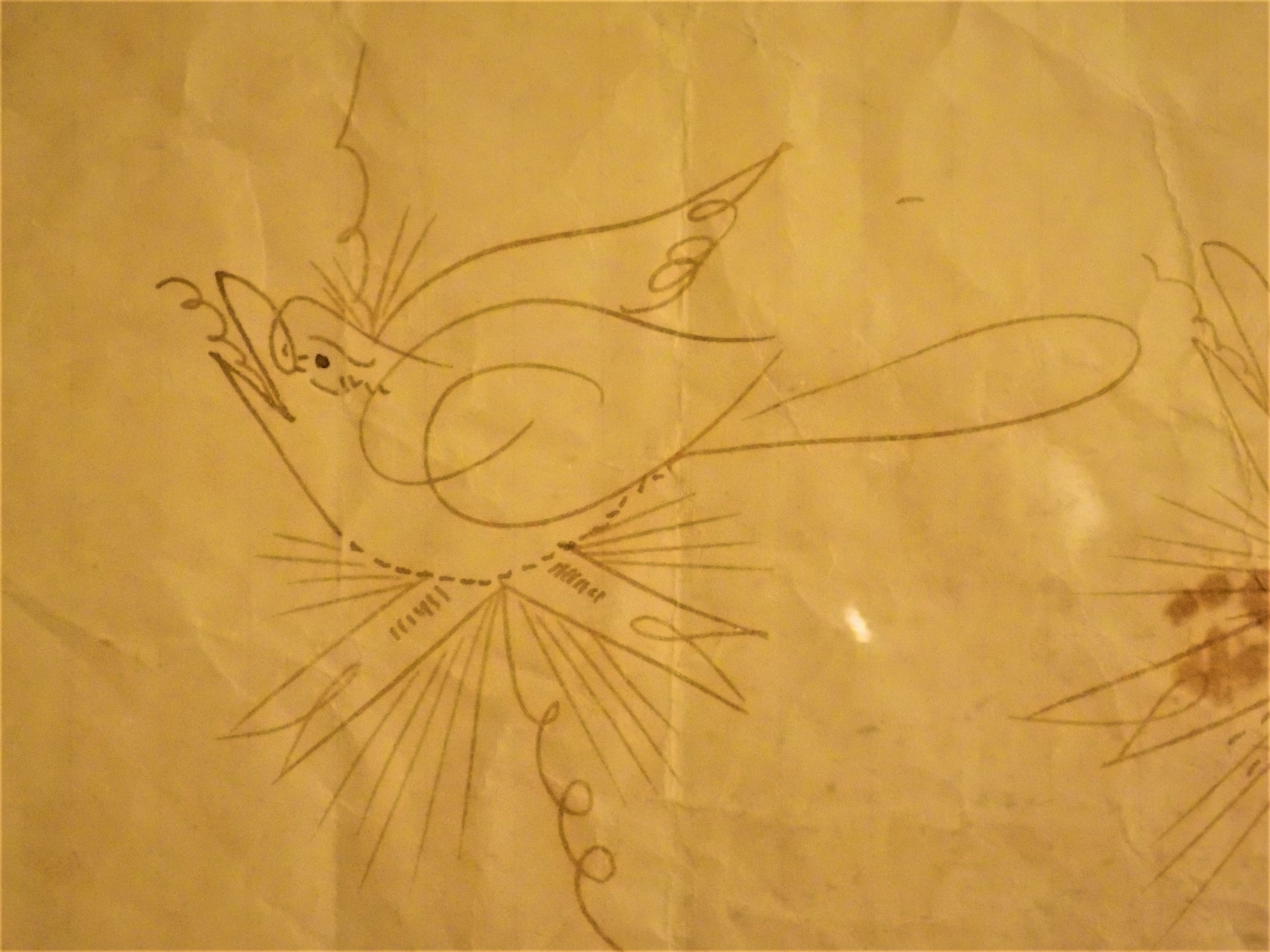
The second sheet is the rendering of two images of birds. Grandpa McCarn used these images to teach the basic strokes of cursive writing. I have wondered how his students – farm boys and girls in rural Alabama in the late 19th and early 20th centuries – reacted to the rigorous discipline of Houston’s exercises in cursive penmanship.

I had the fading sheets of writing framed and they hang in my bedroom. I know they will seem worthless to anyone who runs across them when I am gone, but they are remarkably valuable to me. Houston would probably be stunned to know that his doodling from a century ago or more is hanging in a place of honor in the home of that 4-year-old boy.

Grandpa McCarn’s son-in-law, my grandfather Leonard Harbison, was a farmer’s son from a large family. He lacked a lengthy formal education, but he had mastered Grandpa McCarn’s deliberate and stylized birds and was still drawing them into his old age. I remember Granddaddy Harbison’s skilled rendering of the birds in the margins of books. He lived to age 93, almost as long as his scholarly father-in-law.


Over a decade after Grandpa McCarn died, those of us in Birmingham city schools had weekly classes in penmanship. I remember that in second grade, when we shifted from printing to cursive, it was referred to as “real writing.”

I have thought of it in those terms ever since.

At that time, Birmingham City Schools employed handwriting specialists – teachers who came to schools to ensure that the students’ cursive writing was up to par. In addition, we took weekly handwriting classes as part of our curriculum and were assigned a grade for penmanship in our report cards.

One time in fifth grade, my straight-A report card was marred by a “C” in penmanship from Mrs. Caskey. I think the shock of that “C” instilled in me a life-long commitment to be conscientious about my handwriting. Over the years, it has changed drastically; as I get older, it loses a bit of its confidence, but it’s still a source of pride.


It saddens me that cursive writing is no longer taught to elementary school students. A “good hand,” as it was called in the past, was once a mark of an educated person. Now, I list cursive writing as a “special skill” on my vita.

Nowadays, when I write notes to young people, I struggle with whether or not I should write in cursive. More often than not, I print the text and sign my name in cursive. I worry that I might insult the recipient either way: Am I insinuating they can’t read cursive? or Am I deliberately writing in a style they can’t read?


Literacy in general is a touchy area in dealing with youth, for whom “literacy” may take on a very different meaning than it did when I was their age. A young friend tactfully put me in my place recently. I was accustomed since her birth to sending picture books to her for Christmas and her birthday. The last time I gave her a picture book, she wrote a polite thank you note with a gentle reprimand, telling me, “I am reading chapter books now.”

I got her point, vowed to gift her no more picture books, and was delighted that she knew to send a handwritten thank you note.


“That’s not writing; it’s just typing” (or words to that effect) was Truman Capote’s catty dismissal of the Beat writers in general, and Jack Kerouac in particular, in the 1950s.

I wonder how he might respond to our age of tweets and posts, blogs and instant messaging, to the obsolescence of typewriters and handwriting in general. How might he and his contemporaries react to the fact that cursive writing has become a lost art?

October Waning

Marigolds; Fall 2020

There are so many things happening right now. I am excited and anxious about the election, but friends in the Midwest are seeing major snows earlier than anticipated and wildfires, beyond biblical proportions, are ravaging the West. To the South, and nearer to me, Zeta percolates in the Gulf.

And then there’s COVID. I don’t really have the “fatigue”; I have just run out of things to say. As I said, I am excited and anxious about the election.

A day or two ago, I made my annual reservation for my December getaway in Point Clear on the eastern shore of Mobile Bay.

I asked my usual contact, “How’s it going down there?”

“I’ll let you know when Zeta has passed,” she responded.

My regular room choice is closed post-Sally, awaiting carpet replacement, but I managed to snag an almost identical room still available for the Christmas season.

My checkbook howls, but my spirit soars. December in Point Clear has become an annual rite of renewal.’


In the long list of things to ponder, a last look at the season now coming to a close has captured my wandering attention,

The indoor plants were moved indoors a few weeks ago and the outdoor annuals were committed back to the earth. A peace lily, that had been given up for lost in the summer, decided to sprout a week ago and I am trying to coax it along. Most of what was left, though, was left to fend for itself. I thought I had washed my hands of it all except for the raking and maintenance of the debris.

Over the past week, all of that was turned asunder.


I returned home to find a single gardenia in full bloom. My potted gardenia is temperamental in the best of times and never blooms beyond early summer, so I still ponder what inspired its late-October solitary flourish. Even so, the silky sexiness of a gardenia is hard to beat.

My Granddaddy Harbison’s heirloom rose, which has to be at least a half-century old and is now spread over gardens across the South, had a final burst of blossoms that are both spectacular and later than ever.

A couple of months ago, only the forget-me-nots had flowered from several packets of seeds sent to my mother with a charity solicitation in the Spring. When I got home a few days ago, the marigolds from that same set of packets had decided to take their turn. Those few blooms epitomize the shades of Autumn without the aid of the more predictable chrysanthemums.

It is truly time to cut back the purple hearts that thrive next to the front door. This late-October, however, they are far too exuberant to thwart just yet, and I will encourage them to bloom as long as they like.

We have frosts in our forecasts, so this might be the final homage to the warm weather culture for a while.

Please, whatever you do, VOTE on November 3. Every vote matters.


Sewanee – Jubilate Deo

On occasion, Sewanee beckons.

On a crisp early autumn morning, the sun through the trees filled me with a fresh wanderlust that is charmed and rare in this current year of pandemic. I needed to get out of the house for a few hours and the call of Sewanee was sweet.

Sewanee – The University of the South, is barely eighty minutes from my front door; the drive, through rural roads and towns, is one of carefree pleasure. On this most recent drive, I realized that I missed the siren call of cotton fields this year. In a normal year, I see many cotton fields in their fluffy glory on regular trips to the Shoals. When I first moved to north Alabama, there were still impressive cotton fields within the city limits. In my eighteen years in this place, those have almost all disappeared.

Upon crossing the Flint River, I rediscovered this year’s missing cotton-growing culture in communities, outside the city limits, with evocative names like Buckhorn and New Market.

Eventually, the two-lane enters Tennessee and, after going through Winchester and Cowan, the road begins to climb the Cumberland Plateau to the village of Sewanee. The place is not enchanted, but it certainly gives that impression. Brigadoon comes to mind.The University of the South is a haven for writers and one quickly feels the draw, exploring the campus, the surrounding virgin forests, and the quaint business district. Tennessee Williams left his estate to the University as a memorial to his grandfather, who attended the School of Theology in the late-19th Century. The University’s School of Letters has an active program in creative writing and annual writers’ conferences are renowned events. The literary magazine, The Sewanee Review, is the oldest continuously published quarterly in the country and has held a leadership role in literary art and criticism over its century-plus existence.

As tempting as those writer credentials are, I go there for the peacefulness of the place, to walk the grounds among the massive Gothic-style stone buildings of the original quad and their connecting cloisters.  Even with classes in session, the campus is quiet and contemplative. Occasionally, a begowned student or faculty member is spotted rushing across campus – a member of the University’s “Order of the Gown,” still practicing the ancient tradition of the daily wearing of academic robes for class and campus activities.

After spending some time wandering around the peaceful campus, it is my habit to sit for a spell in the grandeur of All Saints’ Chapel. On this most recent visit, an organist was playing the Chapel’s magnificent organ and sunlight was streaming brilliantly through the stained glass. I took a seat beneath the rose window near the back and listened. It was just the organist and me in the massive space defined by vaulted ceilings and traditional ecclesiastical architecture inspired by the great cathedrals of Europe.


In one of the cloisters, there was a flyer, crudely hung with masking tape, announcing a student organization-sponsored “Flash Scream” for 8:13 p.m. on October 14.

“Wherever you are,” it said, “Whatever you’re doing / Just take a moment to scream.”

I noted the time and, even though I was eighty minutes away from the Domain that is Sewanee, I let out a therapeutic scream at 8:13 precisely on Wednesday, October 14. It seemed to help for a moment or two. If anyone else decides to host a “flash scream,” let me know. I’ll be happy to participate.

The Promise of Cardinals

The remnants of tropical storm Beta moved through my part of the world recently, with steady rains most of the day. It intrigues me how often the weather seems to take its cues from the calendar and, on these first days after the official start of Autumn, the weather suddenly has the unmistakable signs of the new season.

The next morning, I awoke to the storm’s final mists. Looking out a back window, down the mountain into the forest beyond the fence, fog was creeping slowly through the trees from the direction of Shades Creek in the valley.

Two pairs of cardinals were perched on the fence – two females in their prim ashes of roses feathers and two males, pluming themselves in bold Vatican red. They soon scattered, moving back and forth from the forest to the yard to the fence and back again.

One pair of cardinals moved to the branches of the stately rose of Sharon which seems to have finished its flowering for the year. My eyes were drawn upward by the steady hum of a hummingbird in the top of the rose of Sharon, searching, I suppose, for a few more drops of nectar from the fading purple blooms before that tree bids farewell to 2020 (something we’re all eager to do, I suspect).

Later, a couple of hummingbirds began to jockey for position at the feeder by the kitchen window; mourning doves converged on birdseed at the back fence. Soon the mist was gone, the fog had lifted, birds and bird song filled the sunny yard and the woods beyond, and Mother’s curious dog Lulu kept watch over it all.

The flower garden is having its final hurrah, and butterflies flew among the red roses, yellow lantana, and purple heart. One multi-colored butterfly kept coming back and catching my eye. I realized that it had a damaged wing, but that could not detract from its graceful ballet among the blooms. Another butterfly, almost exactly the color of the lantana blooms, was almost missed – blending in perfectly with the flowers.

That morning I forgot, for a brief while, all of the bad things that are going on in the world, the scary fascist running for re-election, and my dread of cold weather and short days. At the beginning of Spring 2020, as the gravity of this pandemic was taking hold, I wrote an essay called “The Panic of Cardinals” about a pair of cardinals trying to escape from their entrapment on the top floor of the conference center in Louisville.

I’ve decided to interpret my early Autumn sighting of four cardinals sitting on the back fence – and the glorious day they ushered in – as the promise of brighter and more positive days to come.