Tag Archives: Alabama

Let Us Now Praise Greensboro, Alabama … (and Randall Curb)

100_3060  Greensboro, Alabama, is about 45 minutes due south of Tuscaloosa in the area referred to as Alabama’s “Black Belt.” The designation “Black Belt” originally referred to the region’s rich dark topsoil but the population of the area is mostly African-American and the designation is so frequently misconstrued to refer to the area’s demographic that “Black Belt” now has different meanings for different people. I stick with the traditional meaning (and frankly find the subsequent meanings to be borderline offensive).

Greensboro is the county seat of Hale County with a population of about 2500. It was a thriving town prior to the Civil War but now the Black Belt is among the economically poorest areas in the United States. Even though the area is poor economically, it is culturally and historically rich and abundant.

Greensboro is off the beaten path but through the years pilgrims of all sorts have come to follow the origins of James Agee and Walker Evans’s book Let Us Now Praise Famous Men, Agee’s epic examination of three sharecropper families in the Black Belt with Evans’s now-iconic photographs. It was on Greensboro’s courthouse square that Agee first met the sharecroppers who lived in nearby Mills Hill and would become the book’s foci. 100_3058

The text which became the book Let Us Now Praise Famous Men originated as Agee’s commission for an article for Fortune magazine on Southern sharecroppers under the New Deal. Agee brought Evans onto the project to provide the photographs. The resulting essay was more ambitious and sprawling than Fortune could deal with and the magazine never published Agee’s piece. When Agee expanded the article into a book that was published in 1941 the tome famously sold a scant 600 copies.

Let Us Now Praise Famous Men was rediscovered in the 1960s and has developed followings among each generation ever since. It still serves as a totem and inspiration for writers and a searing portrait of the lives of people who might be forgotten.

Greensboro appears in the book as “Centerboro.” The famous photographs by Evans of the families and the town are enduring images of 20th Century American photography. Greensboro is a quaint town, full of patina and charm. Writers, artists, photographers, architects, and various and sundry “do-gooders” and others show up there to wander around the area or put down stakes. The town’s Main Street looks much like it looked when Evans photographed it; the town wasn’t prosperous enough to deface or demolish the buildings. Houses along Main Street and Tuscaloosa Street stay essentially the same although many of the owners no longer have the means to keep them as pristine and polished as they once were.

The Greensboro area and Hale County are places that are central to the oeuvre of contemporary photographer William Christenberry. Contemporary painter Julyan Davis has used the town and its environs as subject matter over the years. Auburn University’s Rural Studio, conceived by architect Samuel (“Sambo”) Mockbee to provide innovative affordable housing for people who need it, is headquartered in Newbern near Greensboro. Pie Lab, which was envisioned as a place where locals and others might come together to have a piece of pie, a cup of coffee, and discuss solutions to the area’s challenges, is located on Main Street, as is a shop where bicycles are crafted from bamboo. 100_2281

I have traveled to Greensboro all of my life and have had friends there for decades. Many old houses in Greensboro still have names like Glencairn and Magnolia Grove. I have fond memories of traveling from Tuscaloosa to a summer lawn party on the grounds of Glencairn where most of the rambling guests were wearing summer whites and a croquet game was taking place on a flat area of lawn. Costume designer Walter Brown McCord would entertain with lubricated dinner parties at the Queen Anne-style home of his parents, “The Colonel” and Octavia McCord, on Main Street. Walter Brown’s dinners always included his signature Eggs Benedict somewhere on the menu.

100_3073Greensboro holds mostly good memories for me as a visitor. I occasionally have students from Greensboro in my classes. A few years ago when I was telling one of my students that her hometown was one of my favorite places to visit she pondered the idea for a moment and said, “You might not feel that way if you grew up there.”

It is no surprise then that novelist and travel writer Paul Theroux traveled to the Black Belt and to Greensboro for his recently published book Deep South, an ambitious excursion into the lesser-traveled parts of the South. He spends time in rural South Carolina and Georgia near the Savannah River nuclear facility, in Alabama’s Black Belt, in Mississippi’s Delta, and in the hills and hollows of the Arkansas Ozarks, among other detours. 100_3087

It is also no surprise that Janet May, proprietor of Blue Shadows Bed and Breakfast in Greensboro, asked Theroux, in apparent exasperation at his incessant questioning, “Do you know our Randall Curb?”

I have known Greensboro’s Randall Curb since my college days in Tuscaloosa in the 1970s. I had been hearing about him before we met. Mutual acquaintances had assured me that I must know the man one of them referred to as “the blind sage of 12th Avenue.” I finally met Randall when these same acquaintances and Randall were leaving an afternoon screening of Alien at the Tide Theatre on “The Strip” as I was arriving for the next screening.

After that meeting and over time I became a regular at Randall’s house on 12th Avenue, spending many pleasant hours in the closest thing I will probably ever find to the enlightened and civilized salon  of Gertrude Stein and Alice B. Toklas at 27 rue de Fleurus in Paris. There were always good books to discuss, good programs to watch, good music to appreciate, good magazines to skim, and good and erudite company to be had.

Randall has partial vision and is legally blind but that has not stopped him from being one of the most widely-read and discerning readers I have known. He avidly attends movies and theatre when he has the opportunity and has a keen interest in the visual arts. For years, Randall has made numerous trips to England – especially in the summers when he likes to escape the Alabama heat; I have never encountered a more devoted Anglophile. In my personal collection of postcards there are some beautiful ones from Randall detailing his adventures in London, Oxford, and other far-flung English locales.

We stayed in touch and I have visited regularly since Randall returned to Greensboro and I left Tuscaloosa for good. On most visits, I am treated to food and desserts prepared by Maxie Curb, Randall’s gentle and soft-spoken mother who lives nearby and usually joins us for a time during my visits. She is one of the great Southern home cooks, always astounding with her kitchen skills and culinary insight.

Despite Greensboro’s relative isolation, it seems much of the world comes to Randall’s door. During the years I have known him he has been a friend and correspondent of writers, painters, photographers, and all kinds of other interesting people. He is a particularly perceptive and generous critic and some of his impressive correspondences were started by the subject’s response to things Randall wrote. Throughout our friendship I have been constantly amazed at the people Randall just happens to know. Of the dozens of photographs on display throughout Randall’s house, one of my favorites is the one of a young dapper Randall standing alongside Eudora Welty.

So it seems inevitable that Paul Theroux ended up at Randall’s door and writes about him at length throughout his book and during his travels in Greensboro and the Black Belt. After reading Deep South, I’m convinced that Theroux may think Randall is the only Southern man who reads books and listens to classical music.

It is through Randall that Theroux met the nonagenarian Alabama short story writer Mary Ward Brown. He writes fondly of his time with her and Randall at her home near Marion. As it turns out, she passed away just weeks after their meeting.

Traveling the back roads of Theroux’s ambitious book, it is nice to occasionally run across familiar places and old friends. They bring back memories of past pleasures and a wanderlust to find new roads to explore and to return to Greensboro before too long.100_3150(The photograph above was taken in Newbern, Alabama, of Randall Curb and Maxie Curb.  The other photographs in this essay are taken in Greensboro. All photographs were taken by the author of the essay.)

On (re)Reading Walker Percy

IMG_1782  One of my assignments during graduate school was to assist the surly and pompous professor who briefly headed up the playwriting and dramaturgy program. He was a Boston native, out of Yale and Carnegie-Mellon, and some kind of Orson Welles scholar. His current assignment was at a Southern university but he made no effort to disguise his contempt for Southerners and the South.

I found him rude and offensive but tolerably amusing and treated him with a level of respect he had not earned. One afternoon we sat in his office discussing scripts that had been submitted to the department’s playwriting program and that conversation veered off onto a number of topics.

“Welles Scholar” leaned back in his chair, eyed me seriously, and said, “I like you, Journey. You’re that rare breed – an intelligent Southerner.”

I seriously eyed him back and said, “Y’know, that may be one of the most insulting things that’s ever been said to me.” I told him I had to get to a seminar and politely excused myself, fuming.

From that moment on, I detested “Welles Scholar” and was delighted to see him leave at the end of that academic year. I’m sure he meant the statement as a compliment to me but the cluelessness, arrogance, and stupidity which informed the comment made me angry and still makes me angry whenever I think about it.

I had not thought of the Welles Scholar story for a number of years but it came back to me this week as I was renewing my acquaintance with the writing of Walker Percy.

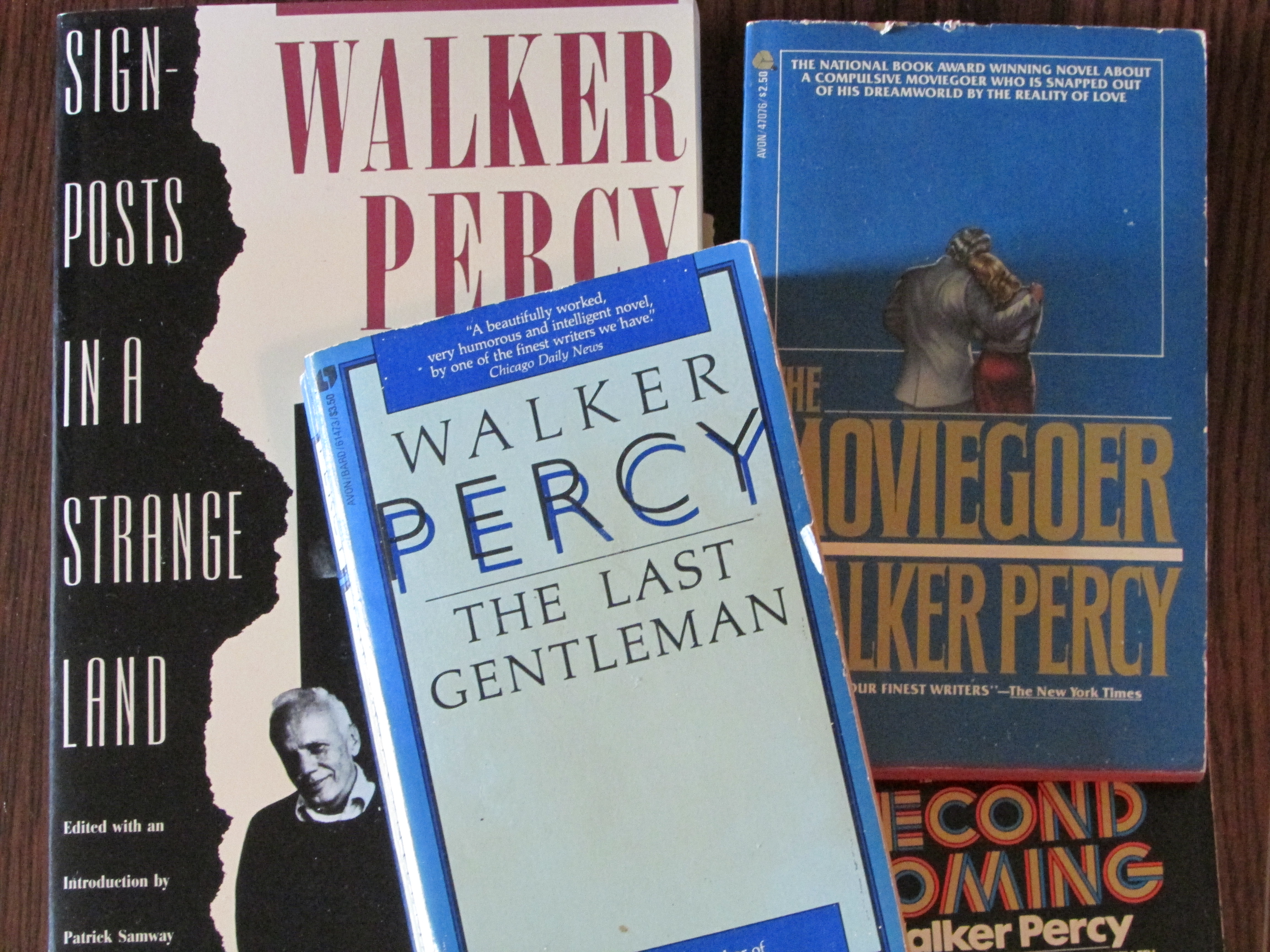
The great writer Walker Percy (1916-1990) is legitimately claimed by three states – Alabama, Louisiana, and Mississippi. He was born in Birmingham and lived there until he was 13. After the death of his father, his mother moved the family to Georgia. When she died, he and his brothers were taken in by a bachelor uncle in Greenville, Mississippi. He graduated from the University of North Carolina, earned a medical degree from Columbia, and contracted tuberculosis that lead to a lengthy recovery at a sanitorium in upstate New York. Percy spent the bulk of his adult years in the New Orleans area, eventually settling with his wife, Mary Bernice (“Bunt”), and children across Lake Pontchartrain in Covington, Louisiana.

Percy’s writing is deeply probing and intellectual, mixing Existentialist philosophy and scientific inquiry with Roman Catholic theology and the search for spiritual fulfillment. He deals brilliantly with the South and the complexity of the Southern “character.” He writes with amused suspicion and insight about both the South and other parts of the country but the observations are always filtered through a sense of what it means to be “Southern” in all of its forms.

Percy’s novels often focus on a flawed protagonist who doesn’t quite seem to belong anywhere but continues the quest for meaning and belonging nevertheless. Percy’s books are challenging and they tackle some weighty issues with an underlying wit, compassion, and turn of phrase that make them compelling and entertaining.

Percy’s first published novel, The Moviegoer (1961), is still his most acclaimed. I discovered that book, and Percy, early in my college years and it is still a favorite literary discovery; I find new areas for focus with each reading.

Until this week, I had not read Percy in a while. I ran across an item about him recently and decided it was time to revisit him. Since I had never read his second novel, The Last Gentleman (1966), I pulled it from my bookshelf and started to read. Here’s the odd thing: I began to run across passages that had been obviously underlined by me – they were the sorts of sentences and words that I would have underlined. The book was also full of evidence of previously dog-eared pages.

I still underline passages in books and frequently dog-ear pages. I was never one to write comments in the margins, although I occasionally do that too. This is one of the reasons I will always want to deal with the object of the book; I take pleasure in the tactile physical presence as I do in the words contained therein.

So I was quickly aware that I had already read The Last Gentleman at some point in time. At the beginning I thought Okay, it will start coming back to me as I read on. I read on. It all felt new to me and the last moment of the last page surprised me as if it were brand new. It was an eerie and enjoyable experience. The effect was heightened by the fact that the main character, Will Barrett (usually referred to, ironically, as “the engineer”), suffers from episodes of déjà vu and amnesia. My previously underlined passages were a form of déjà vu for me, the reader, and the fact that I had no memory of the story was my amnesia.

Another odd thing is that the city in which much of the book takes place is clearly based on Birmingham (Walker Percy confirmed as much) and a frequently mentioned landmark in the book is clearly a veiled reference to George Ward’s old “Vestavia” estate on the crest of Shades Mountain that gave Birmingham’s Vestavia Hills suburb its name. (That estate, by the way, is now the location of Vestavia Hills Baptist Church for those readers who know Birmingham geography.) I am surprised that I didn’t remember any of that from my previous reading.

Although I still don’t recall reading the book the first time, I’m sure that I thoroughly enjoyed it that first time just as I thoroughly enjoyed it this week. That certainty is based on the passages I underlined.

Buoyed by my rediscovery of The Last Gentleman, I grabbed The Moviegoer and had the opposite experience of total recall and recognition. It was like revisiting an old friend and I remembered and enjoyed each juicy detail. The Moviegoer is a New Orleans novel and Percy makes no effort to disguise the geography or the names of the actual places. The Moviegoer is the “Ur-text” for all of Percy’s concerns and themes in his novels, essays, and philosophical writings to come.

I wonder if any other writer uses the word “malaise” as often as Percy. The word peppers the text of The Moviegoer. Even so, I think Percy has an ongoing optimism tempered with realism that informs all of his writing. It is much-discussed in Percy scholarship that his early life was dogged by suicide – his grandfather and father committed suicide and he always believed that his mother’s fatal car wreck was a suicide.

The novels I read this week are at least half a century old but I still share the protagonists’ sense of displacement and mistrust in a modern world transitioning to post-modern (post-future? – where are we now?) modes. The changes seem large to the ’60s protagonists – how would the world appear to and discombobulate them half a century later?

The issues that occupy Percy and his characters never go away or find resolution; they just morph as the decades fall into place, one after another. How fortunate we are to have access to timeless writing that deals with these issues so searchingly, so entertainingly, and with such compassion and humor.

That Welles Scholar comment about the rarity of the “intelligent Southerner” came back to me while I was reading Percy, one of the most probingly intelligent of 20th Century American writers — as well as one of the most Southern. I fantasized a face-off between “Welles Scholar” and Percy.

Percy would have eaten him alive.

The Peach Highway and Jimmie’s Peach Stand

One of my earliest essays on “Professional Southerner” was about the peaches of Chilton County, Alabama, and the family-run peach stand of the Harrison family. I made my first “peach run” of the season last week and, in honor of the 2015 peach season, I am going to revisit that 2014 essay.

gedwardjourney's avatarProfessional Southerner

100_1927  I get a little reflective as the Alabama peach season draws to a close. The state of Georgia, of course, has appropriated all of the peach titles and has done an admirable job of marketing its peaches as if they are something special. But a growing number of Southerners have discovered the rich and considerable delights of peaches grown in Chilton County, Alabama. On a May morning in the French Market in New Orleans a few years ago, I was pleased to hear a local shopper ask a vendor if any Chilton County peaches had arrived yet. He replied that he didn’t have any but that the lady a couple of stalls down had just gotten her first delivery of the season that very morning – “and they sure are good this year.” The shopper grinned like a child on Christmas and rushed to buy a basket.

I have…

View original post 677 more words

The Cahaba Lily

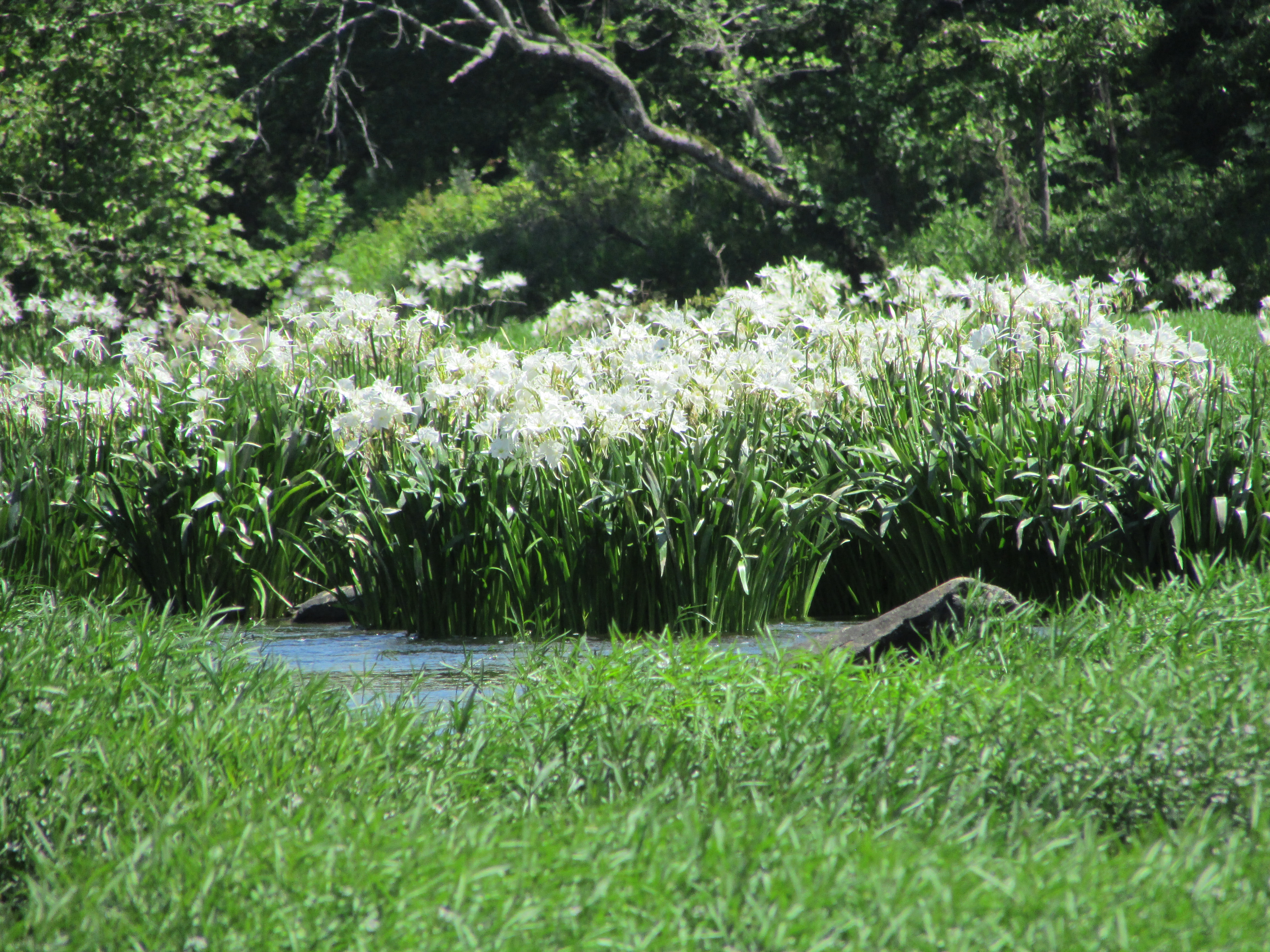
IMG_1753 I always forget how spectacular a Cahaba lily is until I come upon a stand of the flowers on a gentle bend in Alabama’s Cahaba River. The Cahaba lily is a rare lily that only grows in a very few spots in Alabama, Georgia, and South Carolina under very specific conditions. There must be swiftly flowing water over rocks. There must be abundant sunlight.

IMG_1752The Cahaba River National Wildlife Refuge near West Blocton, Alabama, is a prime viewing spot for the lilies during their brief growing season from May into June (roughly Mother’s Day to Father’s Day). Each of the fragrant flowers blooms in early evening and only stays for one day. The flowers go through their pollination cycle, dropping seeds into the stream where they become lodged in the rocks and shoals and await their vibrant display a year later.

There are a couple of significant stands of lilies visible from the narrow dirt and gravel road through the wildlife refuge. The water rushes over rocks and through tall grasses and hundreds of stunning white lilies show off their elegant beauty. It never fails to take my breath away.

IMG_1734The Cahaba River is one of the most significant of Alabama’s abundant natural treasures. At almost 200 miles long, it is the longest free-flowing river in the state and provides water for a quarter of Alabama’s population. Its path takes it from St. Clair County, through the suburbs of Birmingham, and into rural Alabama and the Black Belt where it empties into the Alabama River at the ghost town of Cahaba near Selma.

IMG_1742According to the U.S. Fish and Wildlife Service, the Cahaba River is home to 131 fish species – more per mile than any other river in North America. Eighteen of these fish species are found only in the Cahaba River and Mobile River Basin. The refuge is a habitat for at least a dozen threatened or endangered species including migratory birds and bats as well as assorted fish, mussels, snails, insects, and plants.

IMG_1754In addition to being a star in its own right, the Cahaba lily is significant to the area because its beauty and popularity help draw attention to the other aspects of the Cahaba River, its watershed, its significance and dependents. The ever-growing popularity and fan base for the lily help to draw attention to the support groups like the Cahaba River Society (www.cahabariversociety.org) which strive tirelessly to protect this rare and beautiful place.

Beyond all of that, the Cahaba lily in bloom simply belongs on every nature lover’s list of things to see. IMG_1746

Exploring Little River Canyon

IMG_1690 The trip to Little River Canyon from my house involves a drive through profoundly rural areas of northeast Alabama and a few small towns and communities. It feels at times like time travel but it takes less than a couple of hours.

The road passes the Paint Rock Valley before the backwaters of the Tennessee River and Guntersville Lake appear and then the town of Scottsboro. There, the Tennessee River is crossed and the road immediately climbs a steep grade to the top of Sand Mountain, a sprawling sandstone plateau near the southern end of the Appalachians. The myths, mysteries, and culture of Sand Mountain are legend in the rest of Alabama and I’ll admit that even though I have been to various parts of Sand Mountain several times and have been aware of it most of my life it remains a mystery to be unraveled for me.

After driving across Sand Mountain, the road drops again to a valley containing I-59 and the town of Fort Payne. A quick ramble through Fort Payne leads to another steep climb to the top of Lookout Mountain.

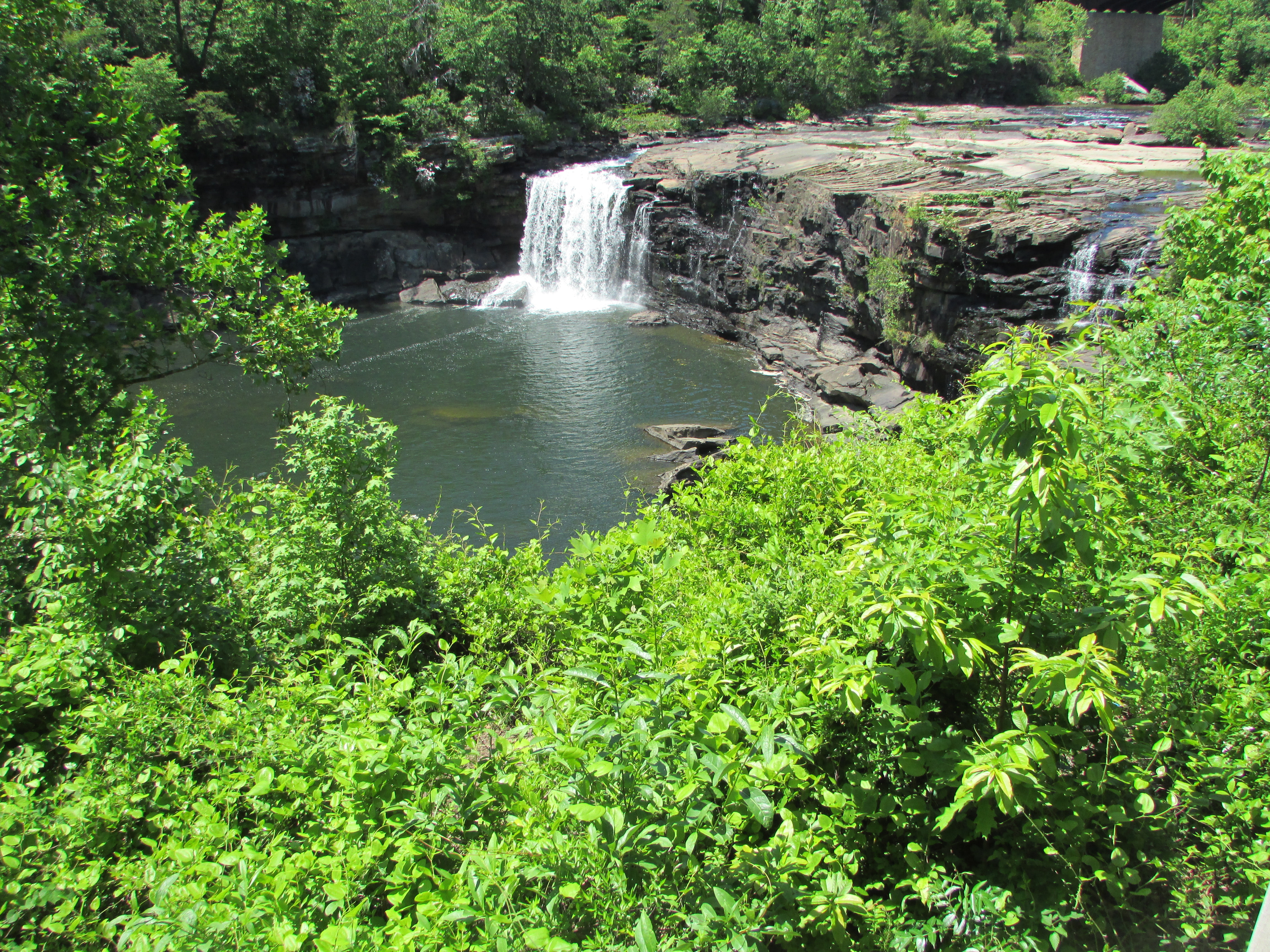
Little River in northeast Alabama mostly flows along the top of Lookout Mountain. This feature of the untamed river flowing along the mountain top is one of its most distinguishing characteristics. The canyon starts to form past DeSoto Falls at a wide plummeting Little River Falls and gets deeper, wider, and more steep as it moves down through the mountain.

On a recent mid-May trip, the water level was fairly low but the sound of the rushing rapids could be heard from the west rim even when the lush green canopy made the river invisible far below. The canopy also helped to block the view of houses encroaching on the east rim. IMG_1701

Since I was scoping out hiking trails for future trips, I mostly stayed on the Canyon Rim Drive which is part of the Little River Canyon National Preserve and meanders for eleven miles along the west rim. It passes a number of trailheads and provides a good opportunity to inspect the challenging terrain.

Regular overlooks provide scenic views into and across the canyon. Trails afford steep access to the river and the canyon floor. Grace’s High Falls is visible across the canyon from an outlook on the drive. A dramatic 133-foot plunge during the rainy season, Grace’s High Falls was just a trickle during my recent visit. As the weather gets less humid it will dry up altogether.

Canyon Rim Drive affords quick and easy access to the canyon’s majesty and mystique. A little farther upriver are an informative visitors’ center and DeSoto State Park with additional backcountry trails and accommodations. The National Park Service operates a boardwalk and trails on the east side of Little River Falls which provide access to the river and a close-up view of the falls.

Little River Canyon is wild and feels extremely remote but it is actually centrally located in the region and only a couple of hours or less from Birmingham, Chattanooga, and Atlanta. A quest for this year is to continue to find great outdoor opportunities close to home. The bounty of Little River Canyon and the surrounding area definitely fits with that mission. IMG_1723

The Authentic Vision: Brother Joseph’s Ave Maria Grotto

IMG_1617  Authenticity in folk art (“outsider” art, self-taught artists – whatever the current designation of choice may be) is a topic that has long intrigued me. There are any number of phonies – some of them the off-spring of the real thing – who try to cash in on the folk art market. The idea of the authentic artist who creates art from an impulse that comes from within is what I seek in the work of “outsiders.”

IMG_1614Brother Joseph Zoetl (1878-1961), a Bavarian-born monk who spent the bulk of his life at St. Bernard Abbey, a Benedictine monastery in Cullman, Alabama, is an example of that inspired authenticity, I think. Brother Joseph had no training as an artist but created historical and fantasy structures that are a lasting tribute to inspiration and faith. His Ave Maria Grotto (www.avemariagrotto.com) is nestled on the Abbey grounds along with the still active monastery and the St. Bernard Preparatory School which replaced St. Bernard College when it closed in 1979.

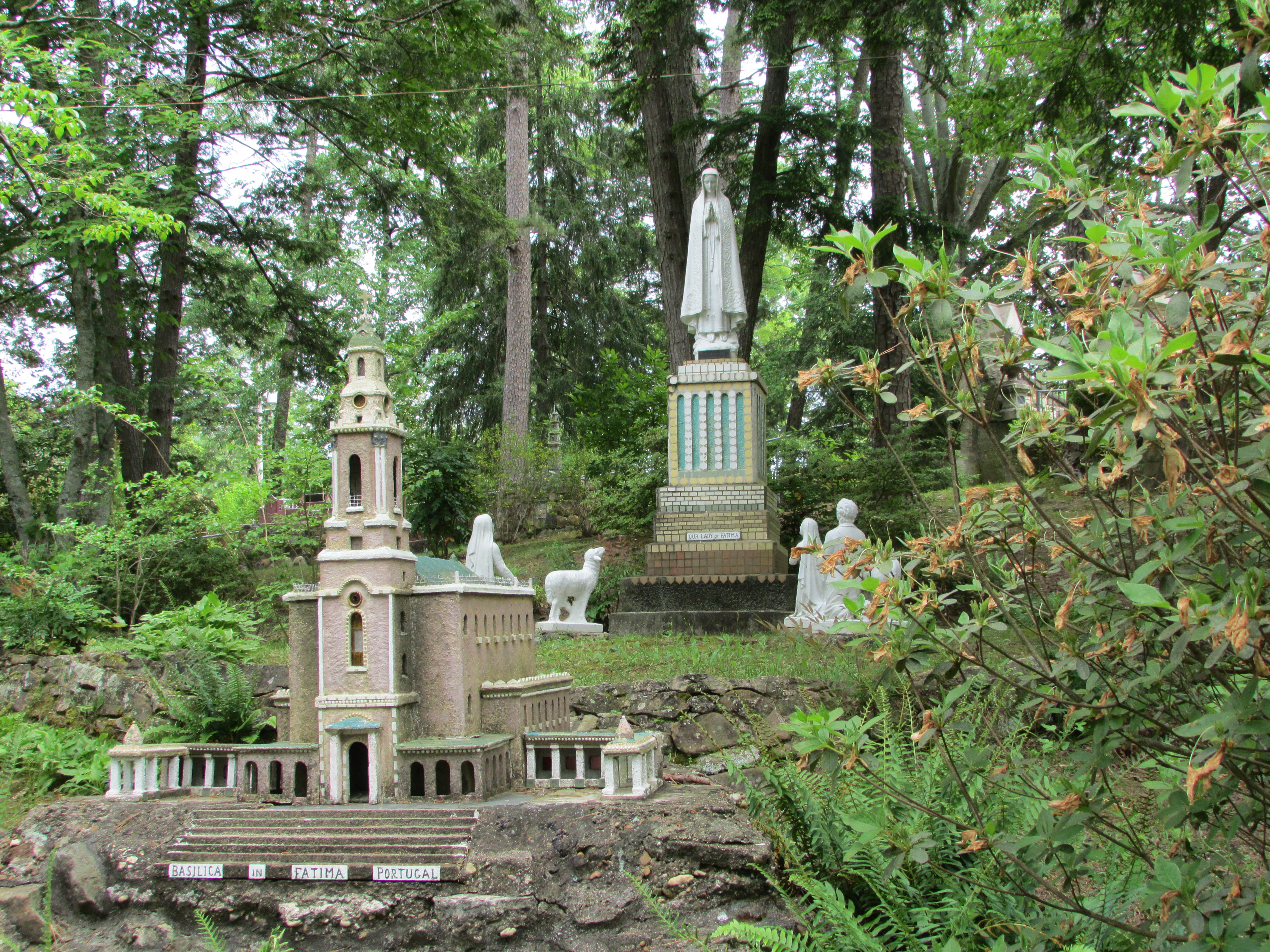
IMG_1631Brother Joseph’s impressive installation in the abandoned quarry of the Abbey includes at least 125 structures created out of stone, cement, and discarded items. The centerpiece of the four-acre park is the large Ave Maria Grotto but its focal points are structures – real and fantasy, sectarian and non-sectarian – taken from world culture. The structures span the globe but a large number of them are based on buildings and sites in Rome and Jerusalem. When I was growing up everybody referred to Ave Maria Grotto as “Little Jerusalem.”

IMG_1637I first saw the place as a young boy in the days of “roadside attractions” before the interstate system was ubiquitous. I remembered it fondly as a kitschy place with edifices constructed of concrete and broken glass, broken marble and colorful discarded gaming marbles, costume jewelry and cold cream jars.  IMG_1602 One fanciful monument is topped by green Irish fishing floats. I remembered a miniature Noah’s Ark installation with plastic animals and a fantasy piece called “Hansel and Gretel Visit the Temple of the Fairies” complete with a fierce dragon bound by a chain underneath. A life-size statue of Pope Pius X is just down the hill from a miniature Egyptian-style pyramid. A miniature section of the Great Wall of China hovers close to touching memorials to “St. Bernard Boys” who died in various 20th Century wars in which the United States was involved. There are a 48-star American flag made with marbles, glass, and cement and a replica of the World Peace Church, the Catholic Cathedral at Hiroshima. IMG_1647

All of these things are still there.

Brother Joseph’s first structures were crafted around 1912 and his last, an impressive replica of the Lourdes Basilica, was built in 1958. I remembered the place as a quirky roadside attraction but on a recent visit I was struck by the level of craft and artistry, spirituality, and personal mission represented in the little monk’s life’s work. He was not a world traveler and had only personally viewed a handful of the structures he created – those from his Bavarian home town of Landshut and those on the grounds of the Abbey in Cullman. The rest were composed from photographs, the Bible and other written texts, and his imagination. Brother Joseph started constructing the buildings in his spare time when his job was to shovel coal at the Abbey’s power station. IMG_1627

A few structures have been added to the installation since Brother Joseph died including a life-size bronze statue of Brother Joseph facing his monumental Grotto. After one has toured the installation, a shaded path with the Stations of the Cross leads to the Abbey Cemetery where the monks, including Brother Joseph, are laid to rest. A small stone chapel stands watch over the cemetery. It is a quiet and reflective place, conducive to meditation and contemplation. IMG_1685

“Complex Vision” and a Medical Visionary

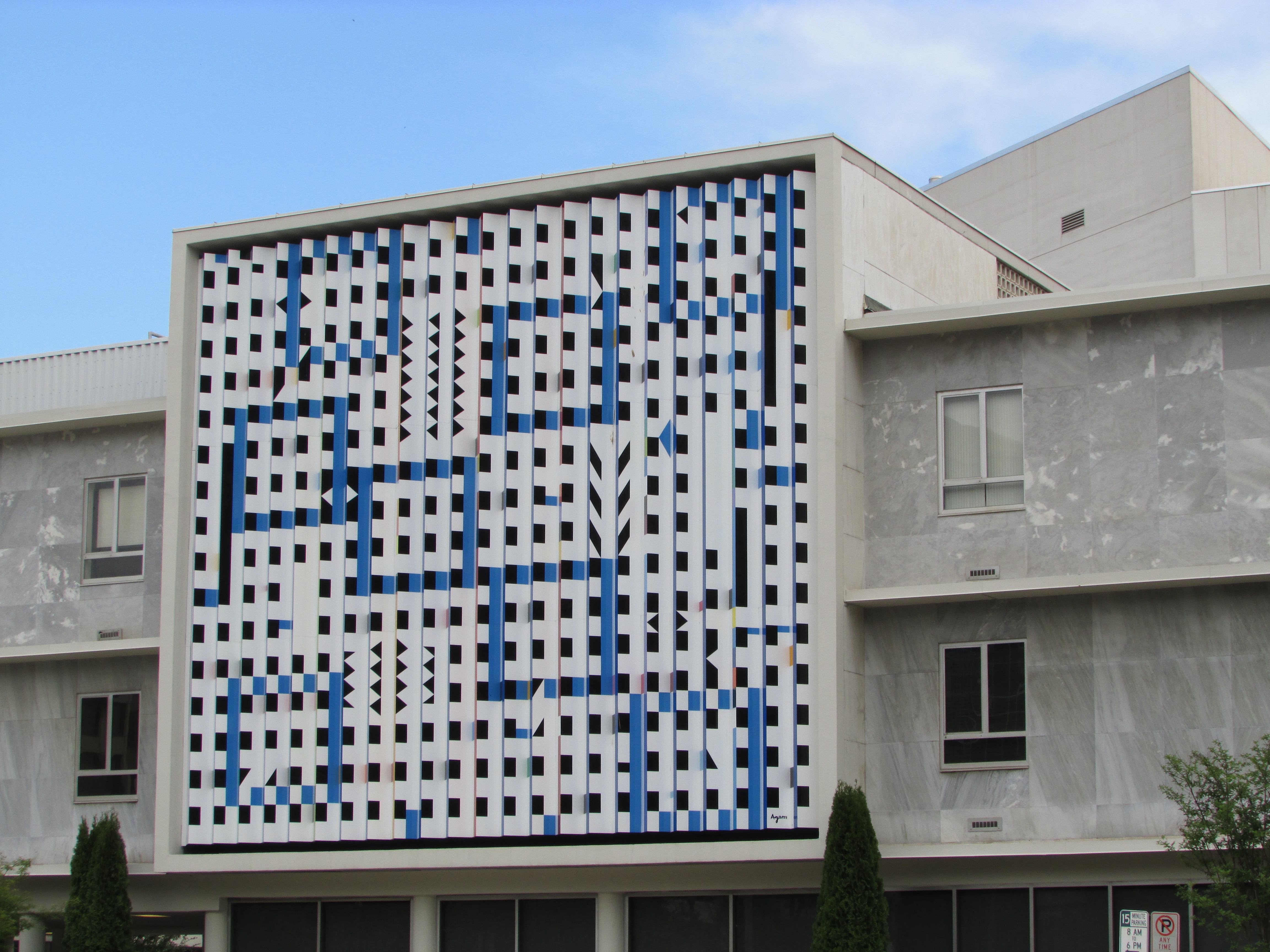
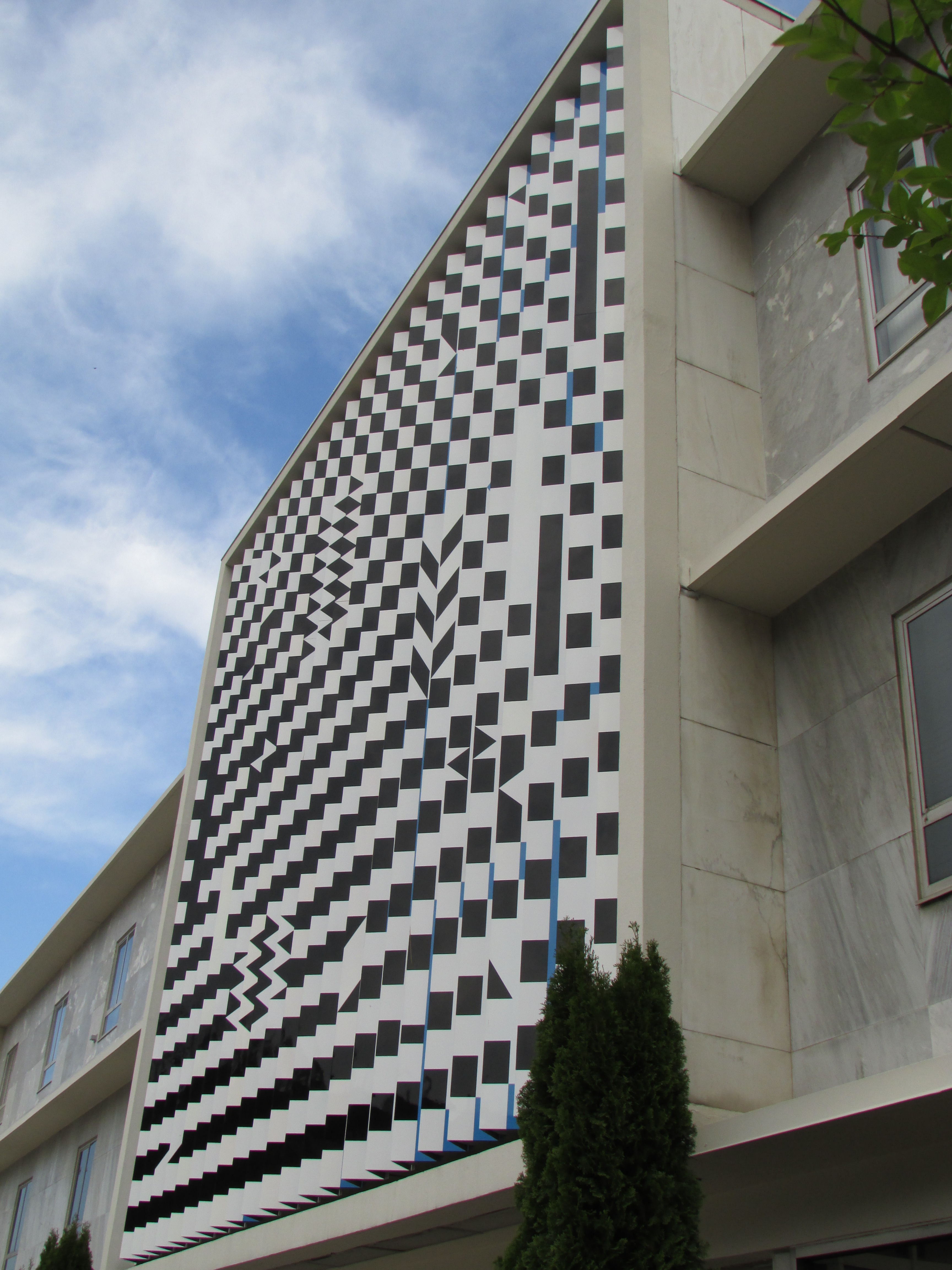
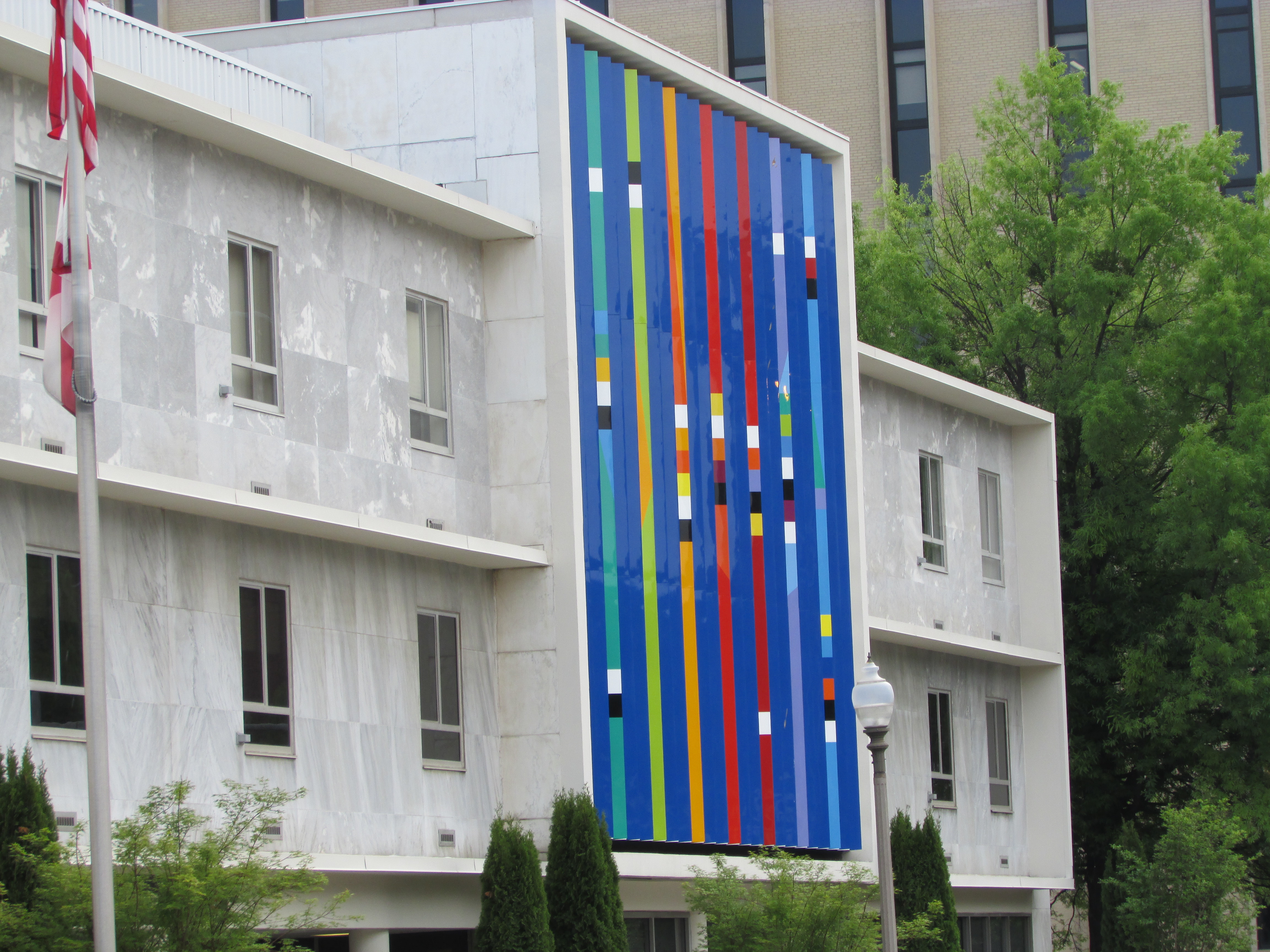
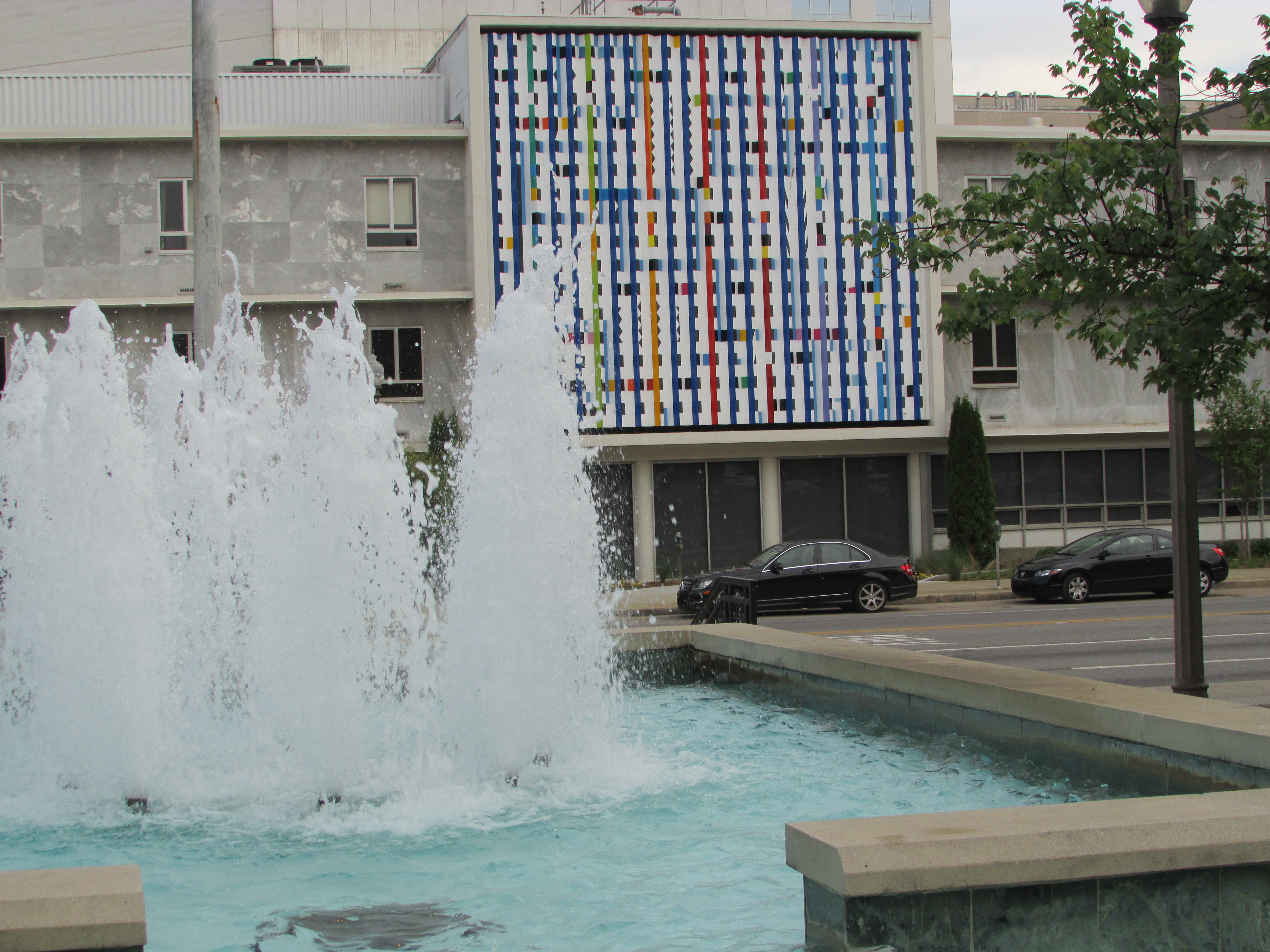
IMG_1541  After a year of restoration under the artist’s supervision in Florida, Yaakov Agam’s “Complex Vision” is back at home on the University Boulevard façade of the Callahan Eye Hospital in Birmingham. The Israeli artist’s 30’x30’ kinetic mural, commissioned by Dr. Alston Callahan (1911-2005), the ophthalmology pioneer and founder of the Eye Foundation Hospital (www.uabmedicine.org/locations/uab-callahan-eye-hospital) that now bears his name, has been a striking landmark in Birmingham’s sprawling medical center since the 1970s. IMG_1545

My mother has a strong bond with the Eye Foundation and a visceral affection for Agam’s mural. After being misdiagnosed for a problem with her left eye by another doctor in another town, her malignant melanoma was diagnosed by Dr. Callahan at the Eye Foundation in 1986. Immediate surgery led to loss of the eye but the cancer was removed and there has been no recurrence. She is now cancer-free for over twenty-nine years.

The Callahan Eye Hospital and its patients seem to become like family. My mother’s ongoing relationship with the hospital and members of its staff is powerful. She is now the patient of “Dr. Mike” Callahan, Alston Callahan’s son, and maintains friendships with employees whose time with the hospital dates back to her 1986 life-saving and life-changing surgery. IMG_1559

Dr. Callahan seems to have envisioned the Agam sculpture as a gift for his patients. He imagined the patient who arrived at the Eye Foundation with impaired vision being able to leave to appreciate the full color and beauty of the mural. Symbolically, from one perspective the mural is black and white; as one moves past it, it reveals itself in its full array of vivid panels of primary colors and patterns.

IMG_1550

I know that Mother wants to view it each time she visits the hospital and she likes to drive by it whenever she’s downtown. She missed it over the past year and is delighted at its return. The mural was spectacular as it was but the renovation has clarified, brightened, and reinforced its vibrant splendor. IMG_1553

Dr. Alston Callahan’s lasting influence extends far beyond the Eye Foundation Hospital and the many patients he served. He and his wife, Eivor Holst Callahan, left an impressive legacy as philanthropists and art collectors. Much of their extensive Asian art collection was bequeathed to the Birmingham Museum of Art. The museum’s Indian and Southeast Asian gallery,  a meditative room with a window looking across to Linn Park and the skyline beyond, is named the Eivor and Alston Callahan Gallery in their honor. The museum also has an annual Eivor and Alston Callahan Lecture series focusing on Asian art.

In addition to all of that, Dr. Callahan was a seasoned world traveler who went on expeditions to both the North and South Poles. Those adventures, in addition to the Eye Foundation, are commemorated on his gravestone.

The Callahan’s home atop Red Mountain overlooked Birmingham with a direct view across the road to Vulcan, Birmingham’s iconic iron man statue. I once lived in an apartment around the curve from Vulcan and that house and was a fan of the architecture before I ever knew who lived there. The Moshe Safdie-designed house was a modernist vision of dramatic mystery and unexpected angles. It was the kind of house that made one wonder what treasures were to be found inside. It went on the market after Dr. Callahan’s death (his wife preceded him in death in 2002). Unfortunately, the new owners razed the Callahan house and built another more traditional big house in its place. It’s a perfectly fine house, I guess. But now it’s just another big house on the mountain. The Callahan house was one that was destined to live in the memory. IMG_1562

The loss of the Callahan house, however, does not diminish the impressive legacy of Dr. Callahan. That legacy lives on in Birmingham and beyond in the Eye Foundation; the Callahan Eye Hospital; the International Retinal Research Foundation; the art his family collected and shared; the BMA’s Callahan Gallery and Asian lecture series; and the thousands of doctors and patients who are touched directly or indirectly by his influence. Given his impact on my family, Mother’s Day seems to be a perfect time to honor him.

The magnificently restored Agam mural is perhaps the most visible and accessible piece of that legacy. And now it’s back where it belongs. IMG_1557

Highlands Bar and Grill

IMG_1509  My first extended post-Katrina visit to New Orleans in 2007 coincided with the New Orleans Wine and Food Experience. Held in May, that event showcases local restaurants and is a draw for food and wine aficionados from many places. I met a couple who were restaurateurs from Napa and the husband’s work required him to travel all over the world. When I mentioned that I was from Birmingham, he said, “You know, Birmingham is a great food city. Not many people know that.”

I already knew but it was nice to hear it from somebody from the west coast.

Growing up in Birmingham, there was good dining to be had and there was always an abundance of Greek-owned eateries from hot dog stands to white tablecloth establishments. The place has long been a mecca for classic southern “meat and three” places and the quality and variety of barbecue and barbecue styles in the area is an embarrassment of riches.

But when Frank Stitt opened Highlands Bar and Grill (www.highlandsbarandgrill.com) in Five Points South in 1982, the bar for Birmingham dining was significantly raised. A few years later Stitt opened Bottega and Bottega Café (www.bottegarestaurant.com) a few blocks away on Highland Avenue and then Chez Fonfon (www.fonfonbham.com), a more casual bistro, next door to Highlands.

Add to that a preponderance of good eats from other chefs, many of whom worked for Stitt before striking out on their own. There are always a new attitude and a new swagger creating a great and unpretentious urban destination for dining at every level and taste. In the Five Points South area near Highlands, I am partial to Ocean (www.oceanbirmingham.com) and Hot and Hot Fish Club (www.hotandhotfishclub.com) but every time I go to Birmingham lately it seems that a “must visit” new dining option has opened somewhere in the city. I am falling way behind on keeping up and checking them out.

Highlands, however, is still the flagship. It is pricey and elegant and provides an unmistakable sense of occasion when one enters the door. However, it is never snooty nor pretentious, it features the best locally grown and fresh ingredients, and a meal at Highlands is always an opportunity to relax and breathe. Frank Stitt and his wife, Pardis, create gracious and memorable dining experiences for their guests.

The wait staff is knowledgeable, efficient, and playful. I like to eat seafood from the Gulf when I am at Highlands; for my taste, Highlands prepares fish better than anybody. But everything on the menu pleases. We celebrated my mother’s milestone birthday at Highlands last summer and she declared her steak that night to be “the best steak I’ve ever eaten.” The menu is seasonal and changes often but Highlands baked grits, a signature dish, is always on the menu.

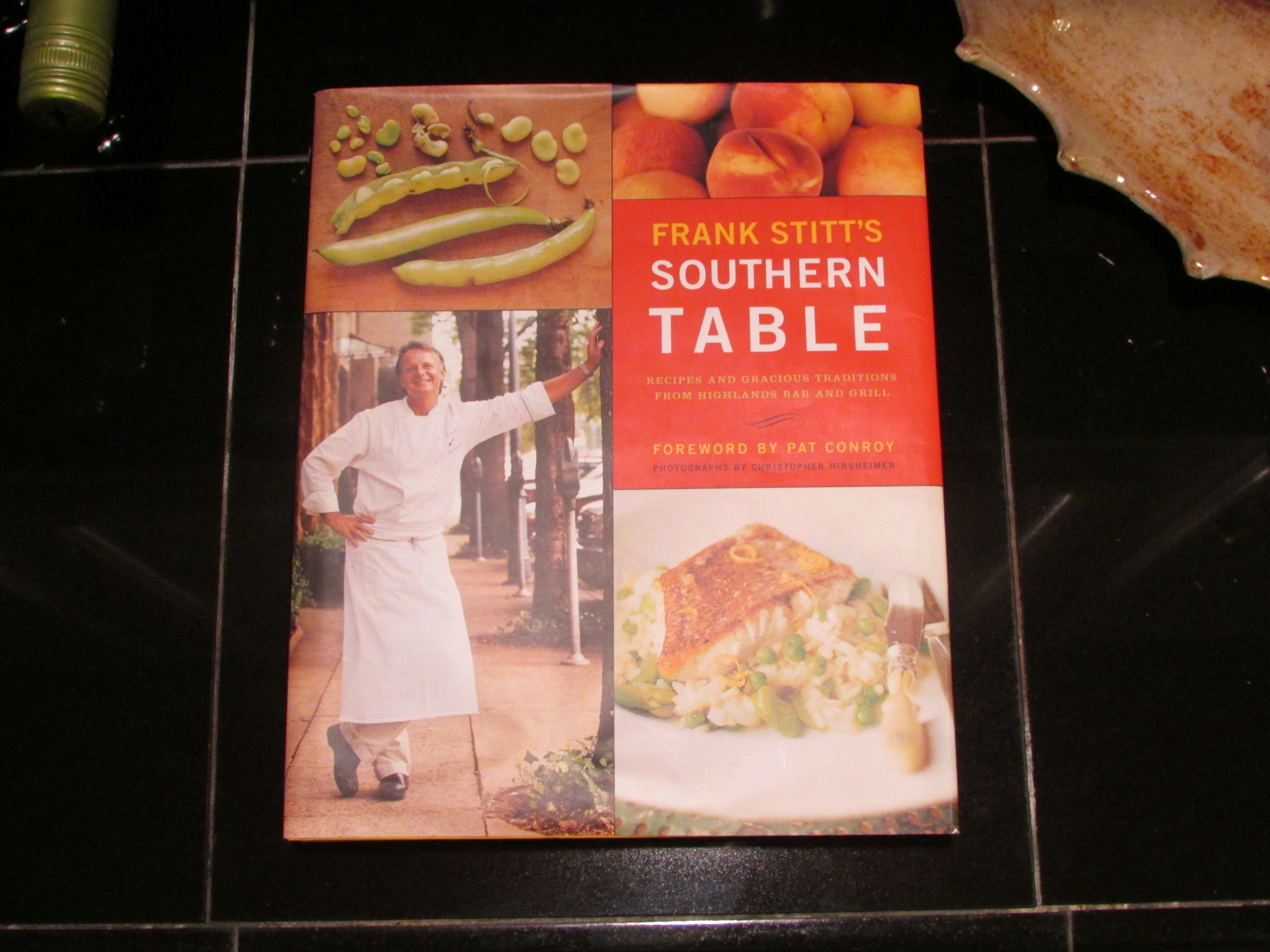
Two of my most often thumbed through cookbooks are by Frank Stitt. The first, an instant classic, is Frank Stitt’s Southern Table. It was followed by Frank Stitt’s Bottega Favorita. In each, the reader and cook find a delicious assortment of unique takes on food preparation and presentation culled from Stitt’s extensive experience. Stitt is a native of Cullman, Alabama, who attended college at Tufts and Berkeley, apprenticed and cooked in France and the Caribbean, and ultimately opened his restaurants less than an hour from where he was born.

Highlands Bar and Grill and Frank Stitt are on my mind this week because the 25th presentation of the James Beard Awards (JBAs) for restaurants and chefs will be held in Chicago on Monday, May 4, 2015. Highlands Bar and Grill is one of the five finalists for Outstanding Restaurant for the seventh year in a row. The other four finalists this year are in New York.

I have been paying attention to the JBAs (www.jamesbeard.org) for many years and have paid particularly close attention since Stitt and Highlands have been regular contenders. Stitt was inducted into the JBA Who’s Who of Food and Beverage in 2011 and was named Best Chef – Southeast in 2001. I find that very often the winner for Outstanding Restaurant is a top five finalist several times before it wins so every year I tune in to see if this year is Highlands’ “turn.” I feel good about lucky 7.

A confession: I will be watching the James Beard Awards on Monday night. They are streamed every year on livestream.com and I am just enough of a food nerd to watch a couple of hours of restaurant awards. I want to be a witness when Highlands gets its much deserved honor. It will be an honor for the whole city. On the down side, it may make it even harder to get a reservation at Highlands Bar and Grill.

Mother and Truman at Highlands in June 2014

(The photograph is of my mother, Jean Journey, and my nephew, Truman, outside Highlands in June 2014.)


The Paint Rock Valley and “Green, Green Grass of Home”

IMG_1474  It was a soggy Earth Day 2015 event at Monte Sano State Park in Huntsville on Sunday, April 19. It was raining when I arrived shortly after the noon opening and the early attendance was sparse with some exhibitors either absent or late for set-up.

IMG_1473Even so, my favorite local goat cheese purveyor, Paul Spell of Humble Heart Farms in Elkmont (www.humbleheartfarms.com), was open for business and busy giving out samples. I bought my usual, Humble Heart’s Tuscan blend, and a package of the French blend. At another booth I picked up some herbs – chives, mint, and rosemary – to continue to pot up this year’s herb garden in the back yard. I already have some mint and lots of basil growing back there.

Despite the rain, I hit a few of the tables and booths that were set up and had a chat with Steve Northcutt of the Nature Conservancy. One of the reasons I made a special effort to get to the Earth Day event this year was because my friend Judy Prince from Birmingham planned to be there to recruit support for her initiatives and clean-up projects serving her native Paint Rock Valley in northeast Alabama along the Paint Rock River’s winding path to the Tennessee River. Because of health and the weather, Judy was not able to attend and in her absence Steve was handling a drawing for a Paint Rock River canoe trip. I am planning two canoe trips for this year — the Paint Rock River and the Cahaba River.

IMG_1483After leaving the Earth Day event, I wandered through the park, winding up at a scenic overlook that also has a small museum and memorial dedicated to the Civilian Conservation Corps of Democrat Franklin D. Roosevelt’s New Deal. At a time when Alabama’s Republican elected officials seem to be on the verge of closing down a number of state parks, it was a reminder of how much this part of Alabama owes to FDR and his Depression-era recovery policies. Every town in the Tennessee Valley should have a monument to Roosevelt.

As I left Monte Sano, there was a break in the rain and more people seemed to be arriving at the Earth Day festivities. Since the Paint Rock Valley was on my mind I decided to make the short drive to Jackson County and drive through the upper Paint Rock Valley for a while.

The Paint Rock River meanders for about sixty river miles from its origins in northernmost Alabama to where it enters the Tennessee next to a spectacular bluff known as Paint Rock. I saw the Paint Rock on a boating day trip along the Tennessee from Guntersville Dam to Decatur a couple of years ago. It is only accessible from the river and is worth checking out if you get the opportunity.

IMG_1506My Sunday drive, however, took me into the upper reaches where the headwaters come together and form the small but ecologically significant Paint Rock River and its surrounding valley. Due to recent rains and storms, the river was flowing fast with a lot of mud and debris and was beginning to overflow its banks. There are a number of places along the two-lane highway through the valley where the road goes alongside the river. The area is sparsely populated and there are abundant farmland and animals grazing in pastures along the river’s course. IMG_1486

Occasionally you pass through a more settled area. The towns of Princeton and Trenton huddle close to the road. My afternoon drive took me as far into the valley as the town of Estillfork. One of the things that struck me along the drive is the way most of the houses, stores, and churches are right on the road, even where there was space to build farther back.

My friend Judy Prince is a psychotherapist based in Birmingham but her roots are in the upper Paint Rock Valley and in Estillfork, where her family ran a country store for decades. Judy has been active with various projects to enrichen the valley and preserve and pay homage to its beauty, community life, history, and heritage. It is through visits to the area in conjunction with Judy’s Paint Rock Valley History Project and Connect UP (CUP) initiatives that I have been introduced to the upper Paint Rock Valley. There are multiple goals, part of which is building connections and community with the area’s Appalachian and Native American cultures. “Building community” has become a theme for me lately, it seems.

Judy has been active in using a “rolling store” to dispense heirloom Cherokee Purple tomato seedlings and seeds. The rolling store idea is in honor of her father, Pete Prince, who once operated a rolling store in the valley in addition to his stationary store in Estillfork. IMG_1491

Judy has ongoing plans for a History Store and Working Farm as a wellness and healing center to serve the community and people in need from the community and beyond including those with physical and mental challenges, veterans, the elderly, and youth. One of her goals is to utilize the projects to connect residents of the area with those from outside the community and to increase interaction and exchange from diverse communities. Judy speaks passionately about all of these projects and her enthusiasm is contagious. She wants to bring more visitors into the valley while also enabling those in the community to venture forth and seek broader exposure to other options of doing and living.

IMG_1500Highway 65, the curving road that follows the Paint Rock River through the valley, is named “The Curly Putman Highway” in honor of songwriter Claude “Curly” Putman, the Paint Rock Valley native (Princeton) who wrote “Green, Green Grass of Home.” That song, written in the 1960s, was an often covered tune that was a country hit for Porter Wagoner and later an international hit for pop star Tom Jones.

As I drove through the Paint Rock Valley with Curly Putman’s plaintive song in my head, I was reminded of a road trip I took many years ago through another mostly rural area of central Alabama. I was with a friend who was visiting the area from Los Angeles. At one point, I veered off the main road to show her a quaint small town that was just off the highway. She was quiet and gazed out the window as we drove down the street that ran through the middle of the town, past neat little houses and a docile town square surrounded by a few small local businesses and a few shuttered storefronts. After a moment, she turned to me and said, “Why would anyone choose to live here?”

I was caught off-guard and didn’t have a ready answer at that moment but I have often thought about her question over the years. Why does anyone live anywhere? And how many of us have the luxury of choosing where to live? I have lived all over the country and I don’t think I ever really got to choose. You live where you were born and then you live where life, family, education, career, circumstances, and serendipity take you.

There are people who live in the upper Paint Rock Valley. Some stay there their entire lives and some leave as soon as they are able. Some return at some point and some never come back. Others come and stay or come and go. For some it is “home” and for others it’s just a place along the road. The country is full of communities like those along the Paint Rock River. They deserve our discovery, our attention, and our respect. They can learn from us; more importantly, we can learn from them.

IMG_1495

(For more information about Joys of Simplicity Wellness Adventures and the Connect UP Program, and for contact information for Judy Prince, check her website at www.tinyurl.com/lutybme).

Iced Tea Digressions

IMG_1412 In December 1989 I was in New England traveling with a theatre tour. In a tiny joint near the waterfront in New London, Connecticut, I ordered iced tea with lunch. The crusty waitress eyed me suspiciously and said, “It’s December. We don’t have iced tea in December.”

“Fair enough,” I said. “Now here’s a question: Do you serve hot coffee in July?”

She admitted that she did and laughed as she walked away. I channeled the diner scene in Five Easy Pieces for a moment but I let it go and had a glass of water with my meal.

There is always at least one pitcher of tea in my refrigerator at any given time. I have never been much of a coffee drinker but I mostly fit the Southern stereotype about iced tea; I drink it frequently and year-round. A glass of iced tea is the first thing I pour when I get up in the morning and the first thing I pour when I come home at the end of the workday. I bring a thermal tumbler of iced tea to my office each day and am usually able to nurse it until time to go home.

Iced tea is one of the many great things that was popularized during the St. Louis World’s Fair of 1904 but it goes back farther than that date. It is ubiquitous at Southern tables and in Southern restaurants and “sweet or unsweet?” is the standard question when iced tea is ordered in a restaurant in the South.

When I am out, I usually order “sweet” but the sweet iced tea in restaurants is often a little too sweet for my taste. I like it a little sweet and what I make at home tends to be much less sweet than what is served at many restaurants, especially the chains. As I have become more wary of processed sugars, I have begun to use alternative sweeteners, sometimes with a little honey added, to sweeten my home-made tea.

I was once given an electric iced tea maker as a gift. It seemed heretical at the time, but I got used to it, began to like the way I could easily add mint, orange peel, and other seasonal flavors into the mix, and even bought a new iced tea maker when the first one broke. My replacement broke a few months ago and I intended to replace it but haven’t gotten around to it yet. I am enjoying the stove-top process again although I had to tweak my formulas just a bit to get it right.

Growing up, the teabags in our house and at Grandmother’s were usually Lipton and occasionally Red Diamond, a tea and coffee brand based in Birmingham, or Luzianne out of New Orleans. When I was out on my own, I gravitated to Lipton and that was my iced tea brand of choice for a long time.

That all changed after Hurricane Katrina in 2005 when I heard on a television report that the Luzianne factory did not lay off any employees post-storm and, in fact, continued paying employees their full checks during the time that the operation was closed in the aftermath of the flood. I have not been able to confirm that story, but Luzianne became my iced tea brand of choice from then on. Such corporate loyalty to employees is rare these days and deserves our support.

A key to serving iced tea is to have lemon wedges and long-handled teaspoons nearby. Also, one must always have plenty of ice cubes on hand. In the days before most refrigerators had ice dispensers, I would go into friends’ kitchens and fill their ice trays upon arrival if I knew these were people who were negligent about what I consider to be the essential task of constant in-home ice production. I still keep full ice trays in the freezer in case of an emergency.

Last Christmas, friends who know my affinity for iced drinks gave me a gift of spherical ice — plastic contraptions that each produce one perfectly round and substantial circle of ice. They’re a modern miracle and a perfect gift – the ice globe is pleasing to look at, melts slowly, and just fits in an old-fashioned glass. Two will work for a tall glass of tea. At lunch on New Year’s Day, people were whipping out their phones like the paparazzi to photograph my drink with a round globe of ice sitting majestically inside.

After a brutal Winter, it’s finally Spring and warmer weather is settling in. Wherever we live or travel, we should all be able to drink our fill of iced tea without having to explain ourselves.

Back in 1989, during that same theatre tour that took me to New London, I was in a restaurant in downtown Burlington, Vermont, a few days before Christmas. The waiter asked for my drink order and I said “iced tea.” He wrote down my order and went back to the kitchen.

A few minutes later, the owner of the restaurant came out from the back and introduced himself.

“Where are you from?’ he asked.

“Alabama.”

“I’m from South Carolina,” he said. “That’s why we serve iced tea in December.” It turned out that his wait staff had instructions to inform him whenever a patron ordered iced tea during cold months. He said that was always a signal that another Southerner was in the house.